Vitamin D3 Dose Requirement That Raises 25-Hydroxyvitamin D to Desirable Level in Overweight and Obese Elderly
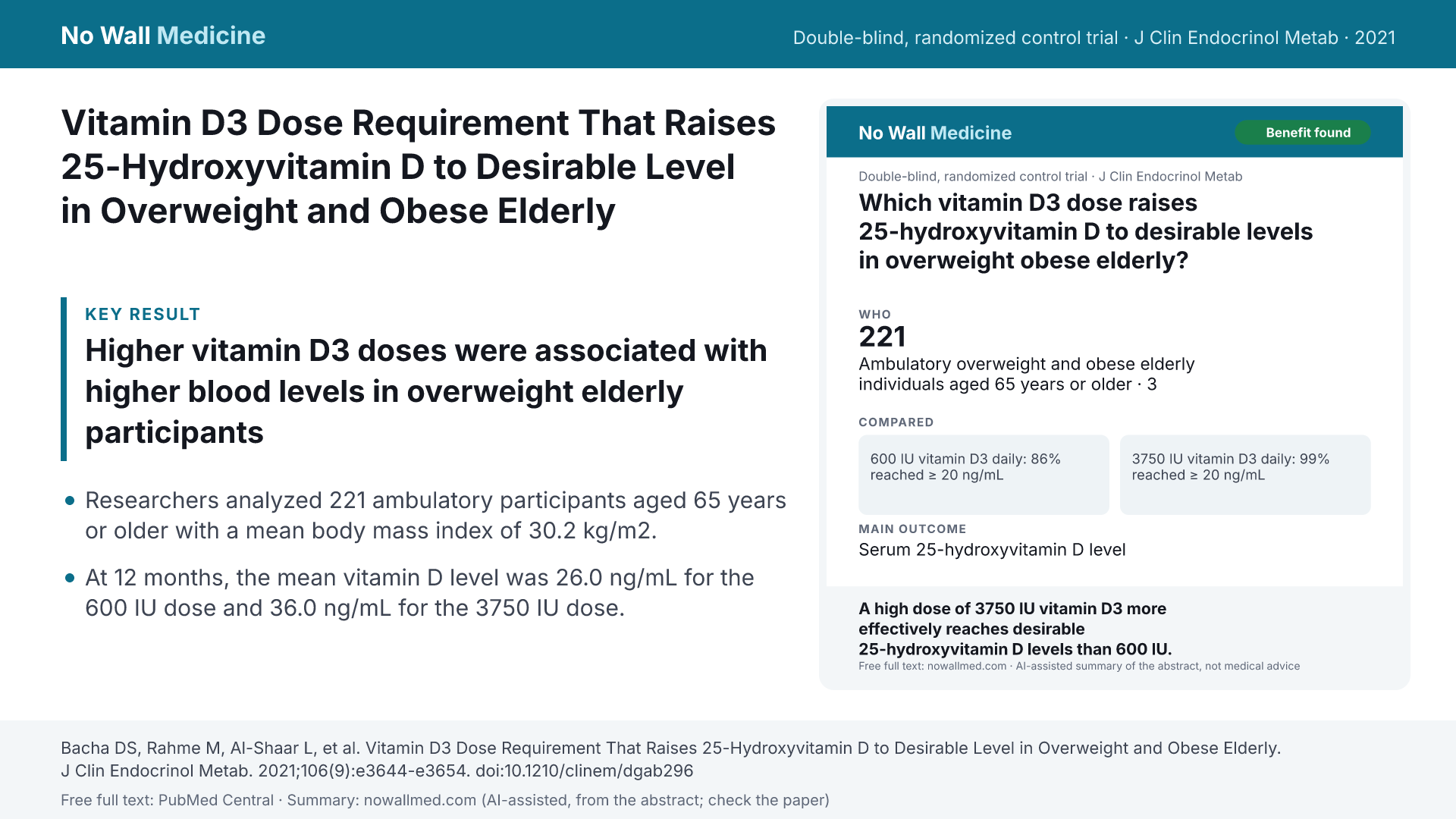
Key result: Higher vitamin D3 doses were associated with higher blood levels in overweight elderly participants
Secondary analysis of a trialBenefit found
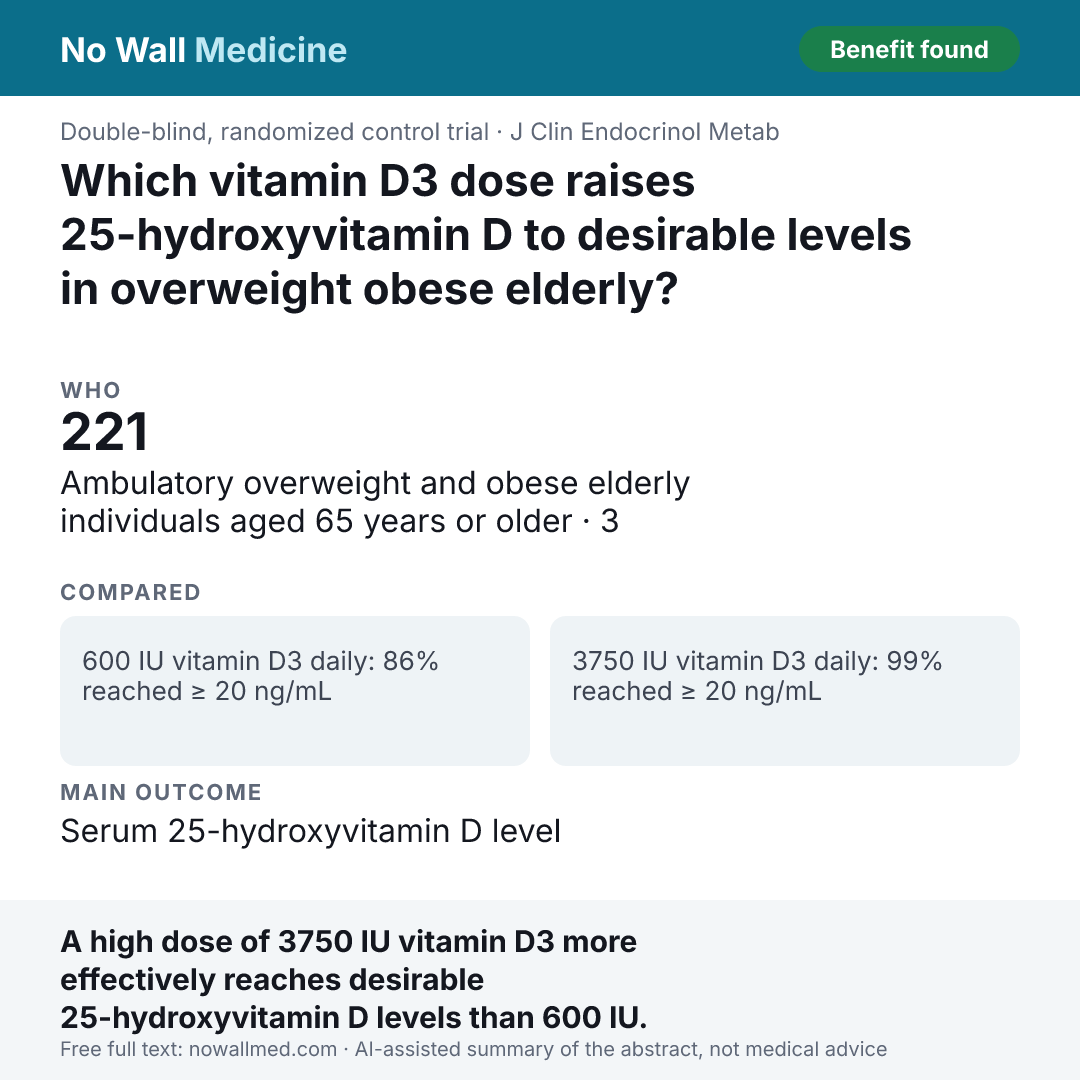
Which vitamin D3 dose raises 25-hydroxyvitamin D to desirable levels in overweight obese elderly?
Who
221
Ambulatory overweight and obese elderly individuals aged 65 years or older · 3 outpatient centers in Lebanon
Compared
600 IU vitamin D3 daily: 86% reached ≥ 20 ng/mL
3750 IU vitamin D3 daily: 99% reached ≥ 20 ng/mL
Main outcome
Serum 25-hydroxyvitamin D level
Bottom line: A high dose of 3750 IU vitamin D3 more effectively reaches desirable 25-hydroxyvitamin D levels than 600 IU.
J Clin Endocrinol Metab · 2021-05-07 · Save PNG
Key points
- Researchers analyzed 221 ambulatory participants aged 65 years or older with a mean body mass index of 30.2 kg/m2.
- At 12 months, the mean vitamin D level was 26.0 ng/mL for the 600 IU dose and 36.0 ng/mL for the 3750 IU dose.
- The proportion of participants reaching a level of 20 ng/mL or higher was 86% in the low dose group and 99% in the high dose group.
Why it matters: Global guidelines for vitamin D supplementation dosages vary widely, and it is unclear which doses effectively raise vitamin D levels in overweight elderly populations.
Discussion prompts
- Would these patients look like yours? Who was left out?
- Is the main outcome one that matters to patients?
- Is the difference large enough to change what you do?
Cite: Bacha DS, Rahme M, Al-Shaar L, et al. Vitamin D3 Dose Requirement That Raises 25-Hydroxyvitamin D to Desirable Level in Overweight and Obese Elderly. J Clin Endocrinol Metab. 2021;106(9):e3644-e3654. doi:10.1210/clinem/dgab296
Free full text: PubMed Central · Summary and visual abstract: nowallmed.com/a/vitamin-d3-dose-requirement-that-raises-25-hydroxyvitamin-d-to-1cp259j/ (AI-assisted from the abstract; check the paper before relying on it).