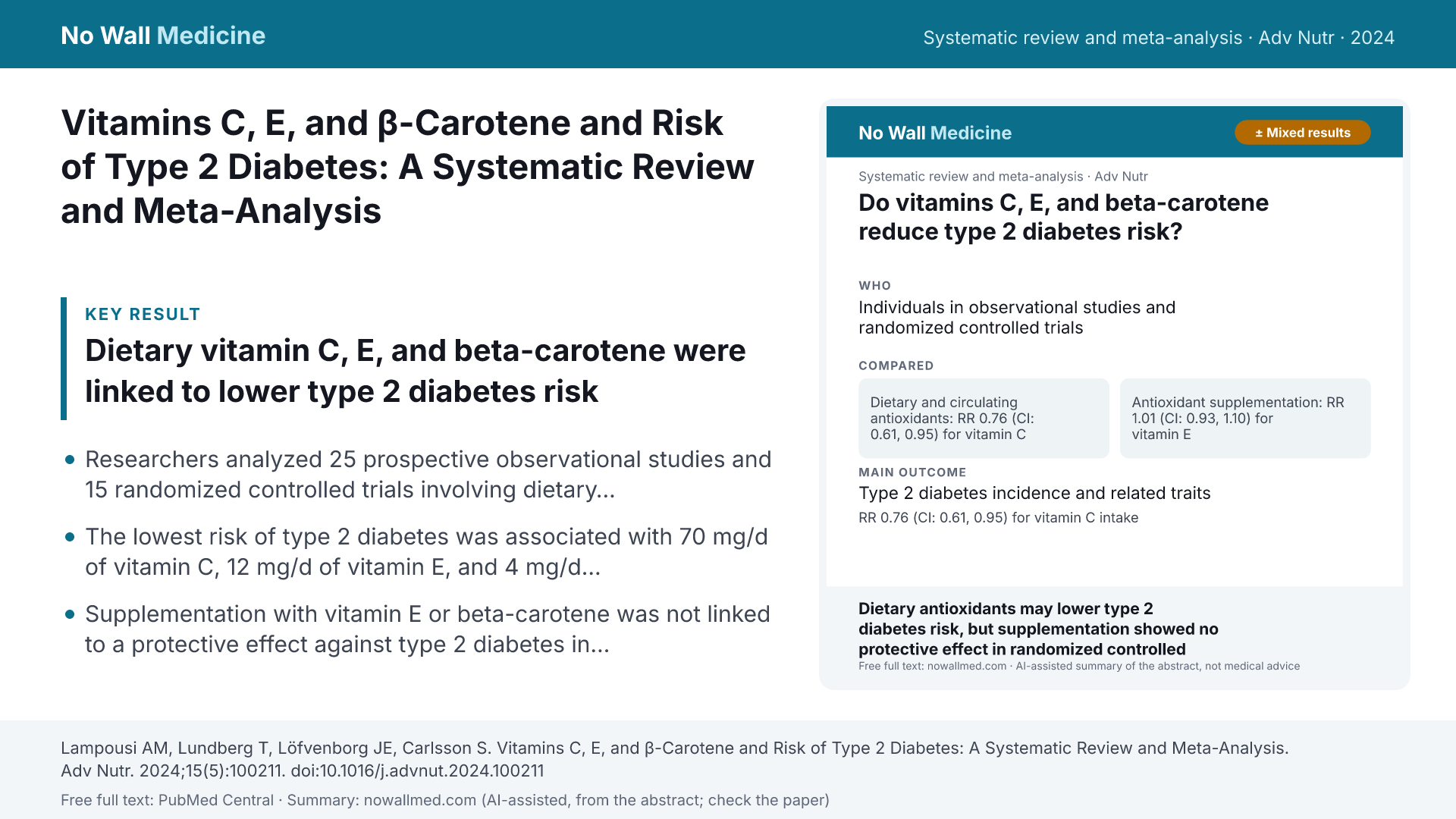
Dietary vitamin C, E, and beta-carotene were linked to lower type 2 diabetes risk
Vitamins C, E, and β-Carotene and Risk of Type 2 Diabetes: A Systematic Review and Meta-Analysis
Systematic review and meta-analysisMixed results
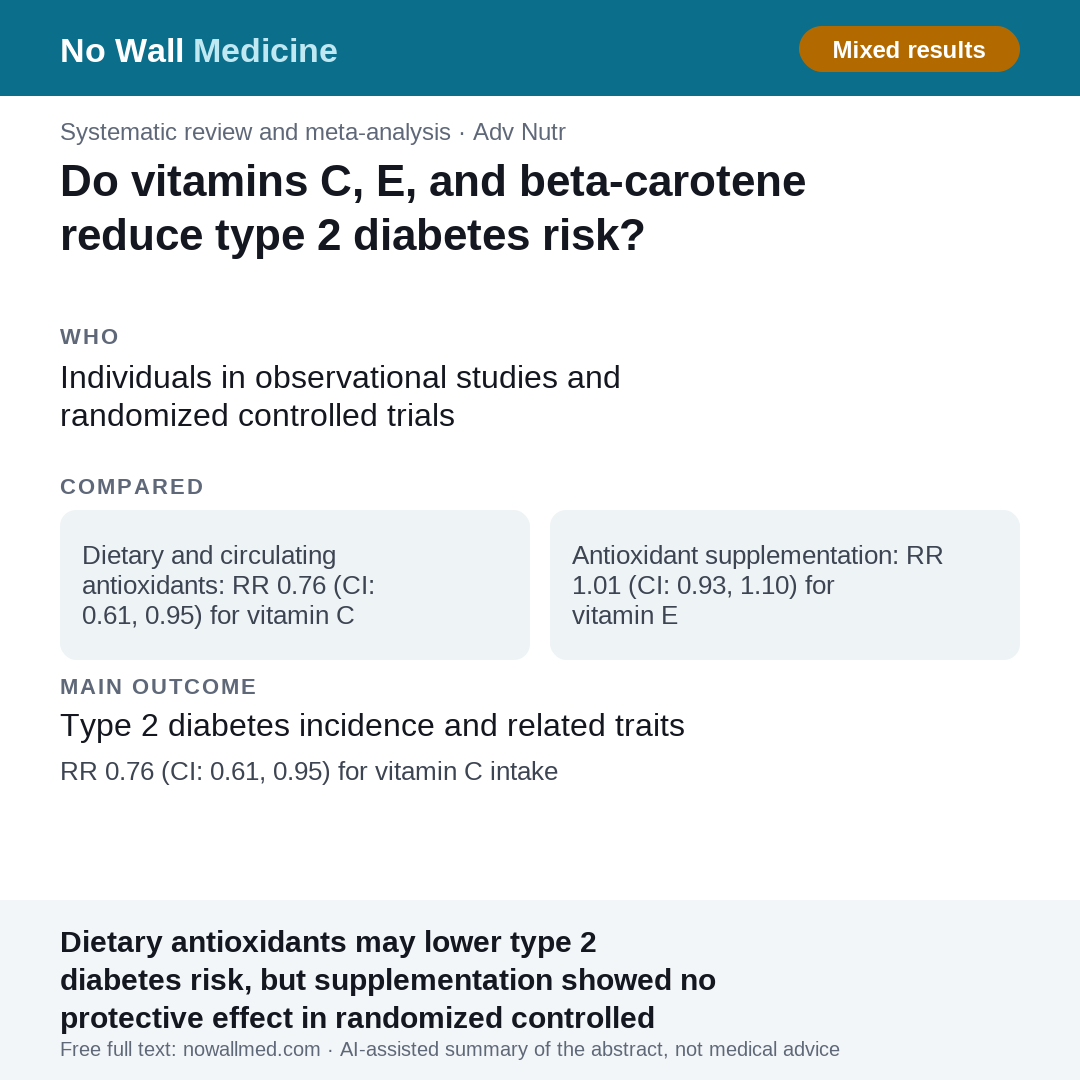
Do vitamins C, E, and beta-carotene reduce type 2 diabetes risk?
Who
Individuals in observational studies and randomized controlled trials
Compared
Dietary and circulating antioxidants: RR 0.76 (CI: 0.61, 0.95) for vitamin C
Antioxidant supplementation: RR 1.01 (CI: 0.93, 1.10) for vitamin E
Main outcome
Type 2 diabetes incidence and related traits
Result: RR 0.76 (CI: 0.61, 0.95) for vitamin C intake
Bottom line: Dietary antioxidants may lower type 2 diabetes risk, but supplementation showed no protective effect in randomized controlled trials.
Limitation: Certainty of evidence was low to moderate for several associations.
Adv Nutr · 2024-03-15Download image
Clinical question: Do vitamins C, E, and beta-carotene reduce type 2 diabetes risk?
Key points
- Researchers analyzed 25 prospective observational studies and 15 randomized controlled trials involving dietary intake, supplementation, or blood levels of antioxidants.
- The lowest risk of type 2 diabetes was associated with 70 mg/d of vitamin C, 12 mg/d of vitamin E, and 4 mg/d of beta-carotene.
- Supplementation with vitamin E or beta-carotene was not linked to a protective effect against type 2 diabetes in randomized controlled trials.
Limitation the authors note: The certainty of evidence was low to moderate for several associations, and data on vitamin C supplementation was limited.
Headline and key points written with AI from the paper’s abstract, with every number checked against it. Read the paper before relying on them.
Was this summary helpful?
Subject terms
Headline, design, result, key points, caveat and citation as plain text.
Cite this article
Lampousi AM, Lundberg T, Löfvenborg JE, Carlsson S. Vitamins C, E, and β-Carotene and Risk of Type 2 Diabetes: A Systematic Review and Meta-Analysis. Adv Nutr. 2024. doi:10.1016/j.advnut.2024.100211
Spotted a mistake? Suggest a correction