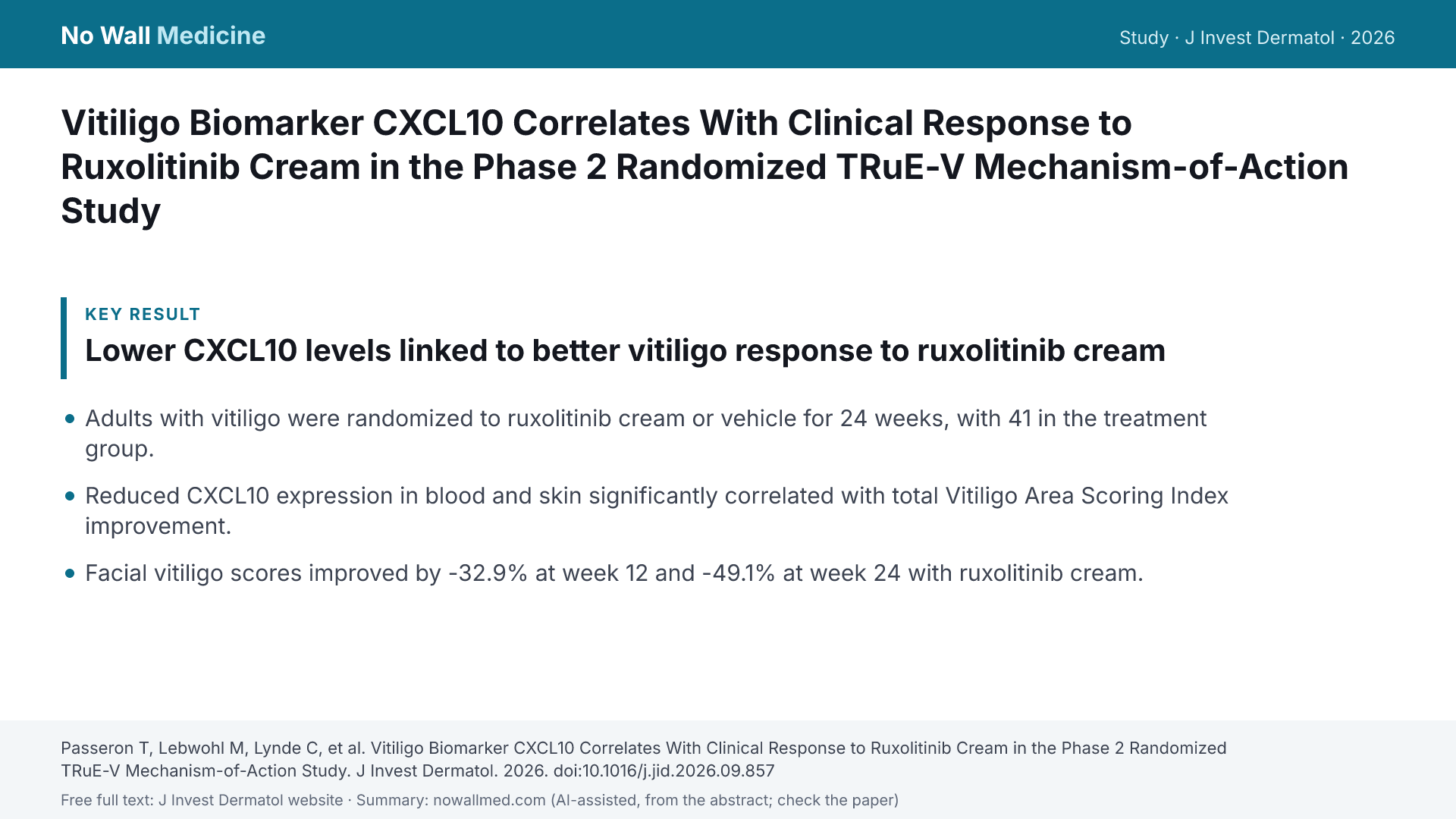
Lower CXCL10 levels linked to better vitiligo response to ruxolitinib cream
Vitiligo Biomarker CXCL10 Correlates With Clinical Response to Ruxolitinib Cream in the Phase 2 Randomized TRuE-V Mechanism-of-Action Study
Why it matters: The specific biomarker mechanism linking ruxolitinib cream treatment to clinical repigmentation in vitiligo was not previously confirmed.
Key points
- Adults with vitiligo were randomized to ruxolitinib cream or vehicle for 24 weeks, with 41 in the treatment group.
- Reduced CXCL10 expression in blood and skin significantly correlated with total Vitiligo Area Scoring Index improvement.
- Facial vitiligo scores improved by -32.9% at week 12 and -49.1% at week 24 with ruxolitinib cream.
Headline and key points written with AI from the paper’s abstract, with every number checked against it. Read the paper before relying on them.
Was this summary helpful?
Cite this article
Passeron T, Lebwohl M, Lynde C, et al. Vitiligo Biomarker CXCL10 Correlates With Clinical Response to Ruxolitinib Cream in the Phase 2 Randomized TRuE-V Mechanism-of-Action Study. J Invest Dermatol. 2026. doi:10.1016/j.jid.2026.09.857
Spotted a mistake? Suggest a correction