Web-based self-management program did not reduce symptom burden or healthcare resource use in cancer patients
Web-Based Cancer Symptom Self-Management System: A Randomized Clinical Trial
Randomized clinical trialNo clear difference
Does web-based self-management reduce symptom burden
Who
1614
Adult patients with cancer or cancer survivors · Northwestern Memorial HealthCare system
Compared
Enhanced care: no difference
Usual care: no difference
Main outcome
Symptom burden and health care use
Result: no statistically significant differences
Bottom line: Web-based program did not reduce symptom burden
JAMA Netw Open · 2025-05-01Download image
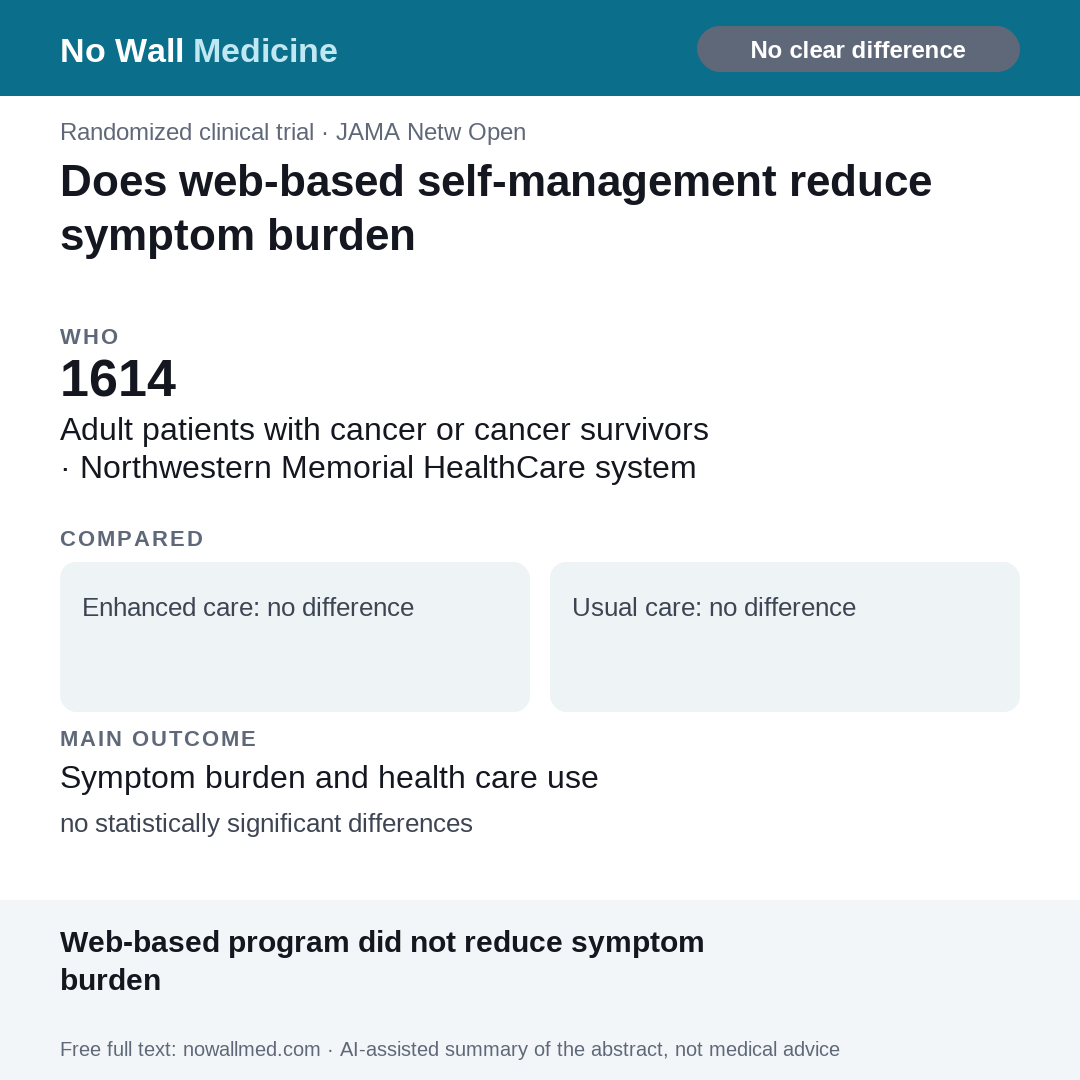
Why it matters: It is unclear if adding a web-based self-management program to electronic health record-integrated symptom assessments can reduce symptom burden and healthcare resource use.
Key points
- Researchers studied 1614 adult cancer patients or survivors who were randomized to either usual care or enhanced care with a bilingual web-based self-management program.
- There were no statistically significant differences between the groups for anxiety, depression, fatigue, pain interference, physical function, or healthcare resource use over 12 months.
- Only 52.1% of the enhanced care group accessed the website, and the median time spent per visit was 45 seconds.
Headline and key points written with AI from the paper’s abstract, with every number checked against it. Read the paper before relying on them.
Topics
Cite this article
Cella D, Lancki N, Kuharic M, Yanez B, Bass M, Garcia MG. Web-Based Cancer Symptom Self-Management System: A Randomized Clinical Trial. JAMA Netw Open. 2025. doi:10.1001/jamanetworkopen.2025.8353
Spotted a mistake? Suggest a correction
Top studies every Monday
The week’s key trials and guidelines in your specialties, by email. Free.
Get the weekly digest