Web-based cognitive behavioral self-help therapy decreased bulimic episodes in people with bulimia nervosa
Web-Based Cognitive Behavioral Treatment for Bulimia Nervosa: A Randomized Clinical Trial
Randomized clinical trialBenefit found
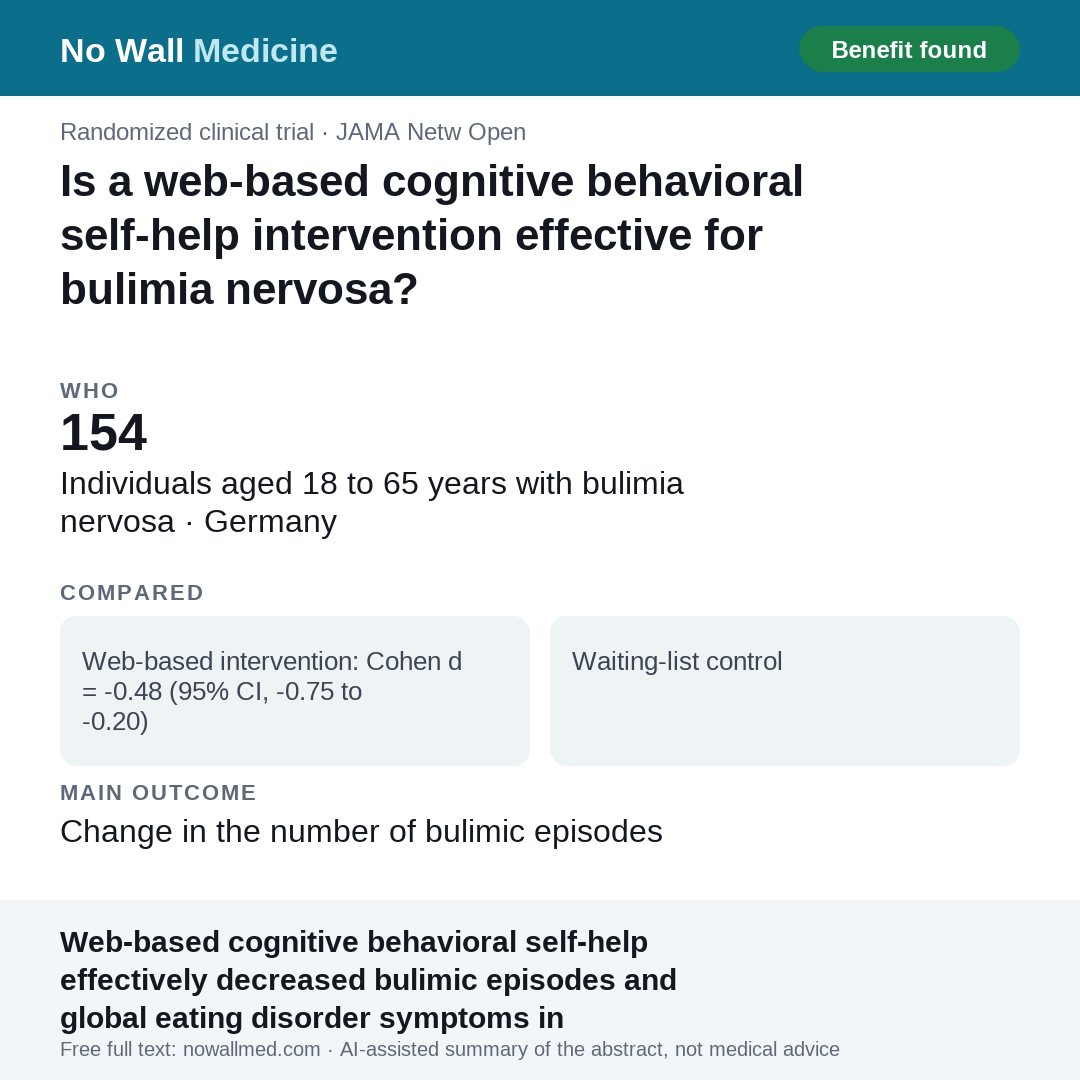
Is a web-based cognitive behavioral self-help intervention effective for bulimia nervosa?
Who
154
Individuals aged 18 to 65 years with bulimia nervosa · Germany
Compared
Web-based intervention: Cohen d = -0.48 (95% CI, -0.75 to -0.20)
Waiting-list control
Main outcome
Change in the number of bulimic episodes
Result: Cohen d = -0.48 (95% CI, -0.75 to -0.20)
Bottom line: Web-based cognitive behavioral self-help effectively decreased bulimic episodes and global eating disorder symptoms in individuals with bulimia nervosa.
JAMA Netw Open · 2024-07-01Download image
Clinical question: Is a web-based cognitive behavioral self-help intervention effective for bulimia nervosa?
Why it matters: Many individuals with bulimia nervosa do not receive evidence-based therapies, and it is unknown if digital interventions can effectively reach these patients.
Key points
- The study randomized 154 participants, mostly female, to receive either a 12-week web-based cognitive behavioral self-help program or routine care on a waiting list.
- The web-based group showed a significantly greater decrease in bulimic episodes (Cohen d = -0.48) and binge-eating episodes (Cohen d = -0.61) compared to the control group.
- The intervention was associated with improvements in global eating disorder symptoms and clinical impairment, but not in compensatory behaviors, well-being, or work capacity.
Headline and key points written with AI from the paper’s abstract, with every number checked against it. Read the paper before relying on them.
Topics
Cite this article
Hartmann S, Timm C, Barnow S, Rubel JA, Lalk C, Pruessner L. Web-Based Cognitive Behavioral Treatment for Bulimia Nervosa: A Randomized Clinical Trial. JAMA Netw Open. 2024. doi:10.1001/jamanetworkopen.2024.19019
Spotted a mistake? Suggest a correction
Top studies every Monday
The week’s key trials and guidelines in your specialties, plus any topics you follow. By email, free.
Get the weekly digest