Weekly adaptive radiotherapy did not decrease dry mouth symptoms compared to standard radiotherapy
Weekly Adaptive Radiotherapy vs Standard Intensity-Modulated Radiotherapy for Improving Salivary Function in Patients With Head and Neck Cancer: A Phase 3 Randomized Clinical Trial
Phase 3 randomized clinical trialNo clear difference
Does adaptive radiotherapy improve salivary function compared with standard intensity-modulated radiotherapy?
Who
132
Patients aged 18 to 75 with stage III-IVB squamous oropharyngeal cancer · 11 French centers
Compared
Adaptive radiotherapy: 630 (450) mg/min
Standard intensity-modulated radiotherapy: 584 (464) mg/min
Main outcome
frequency of xerostomia measured by stimulating salivary flow with paraffin
Bottom line: Adaptive radiotherapy did not demonstrate a benefit in decreasing xerostomia compared with standard intensity-modulated radiotherapy.
JAMA Oncol · 2023-06-01Download image
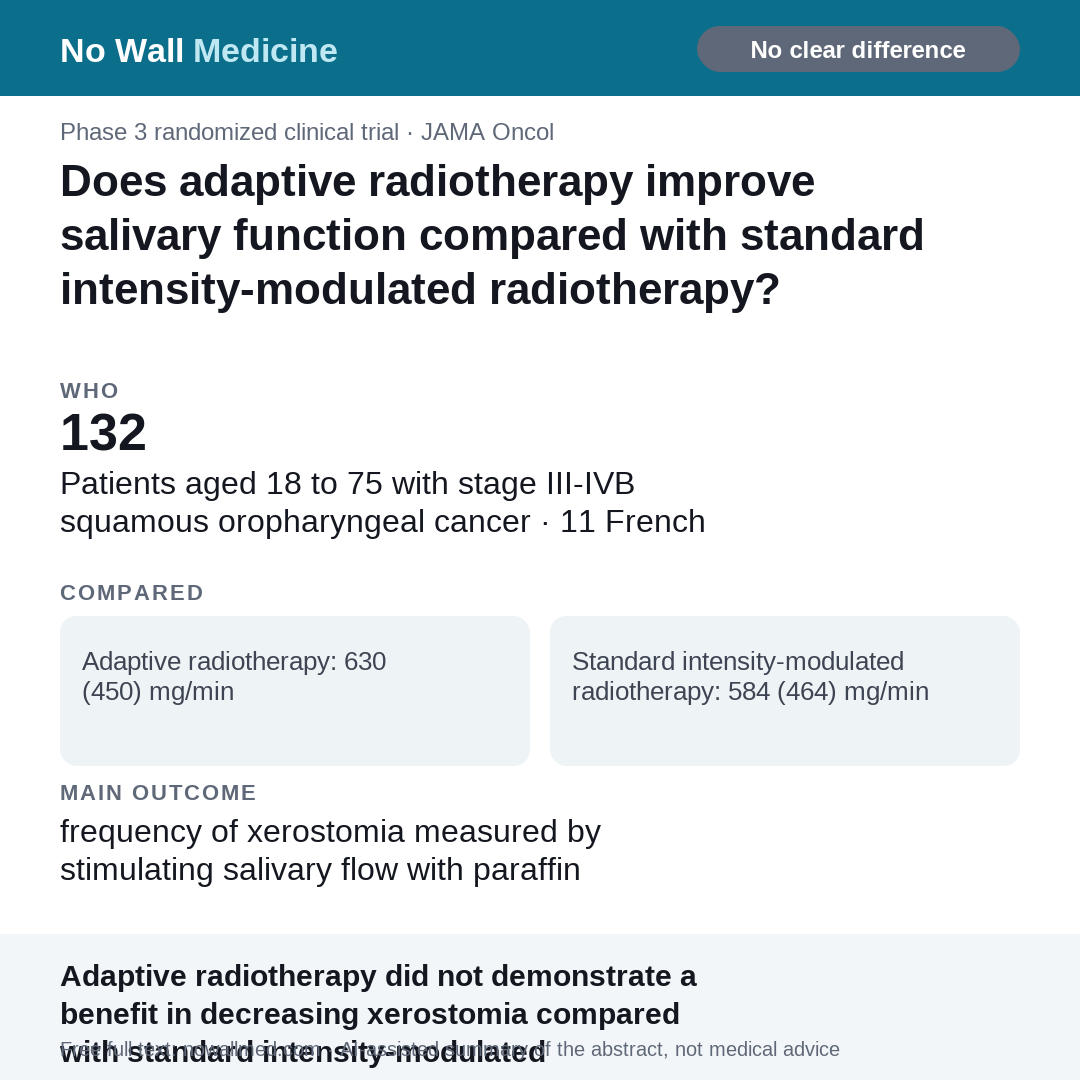
Clinical question: Does adaptive radiotherapy improve salivary function compared with standard intensity-modulated radiotherapy?
Why it matters: It is unknown if weekly adaptive radiotherapy, which involves systematic replanning, improves salivary function and reduces dry mouth in patients receiving chemoradiotherapy for oropharyngeal cancer.
Key points
- Researchers randomized 132 patients with stage III-IVB oropharyngeal cancer to receive either weekly adaptive radiotherapy or standard intensity-modulated radiotherapy.
- The mean salivary flow at 12 months was 630 (450) mg/min for the adaptive group and 584 (464) mg/min for the standard group (P = .64).
- While parotid gland excretory function was higher in the adaptive group at 48% (17%) versus 41% (17%), there were no significant differences in survival.
Headline and key points written with AI from the paper’s abstract, with every number checked against it. Read the paper before relying on them.
Was this summary helpful?
Subject terms
Cite this article
Castelli J, Thariat J, Benezery K, Hasbini A, Gery B, Berger A. Weekly Adaptive Radiotherapy vs Standard Intensity-Modulated Radiotherapy for Improving Salivary Function in Patients With Head and Neck Cancer: A Phase 3 Randomized Clinical Trial. JAMA Oncol. 2023. doi:10.1001/jamaoncol.2023.1352
Spotted a mistake? Suggest a correction
Top studies every Monday
The week’s key trials and guidelines in your specialties, plus any topics you follow. By email, free.
Get the weekly digest