Weekly epistaxis duration as an indicator of epistaxis severity in hereditary hemorrhagic telangiectasia-Preliminary results from a randomized controlled trial
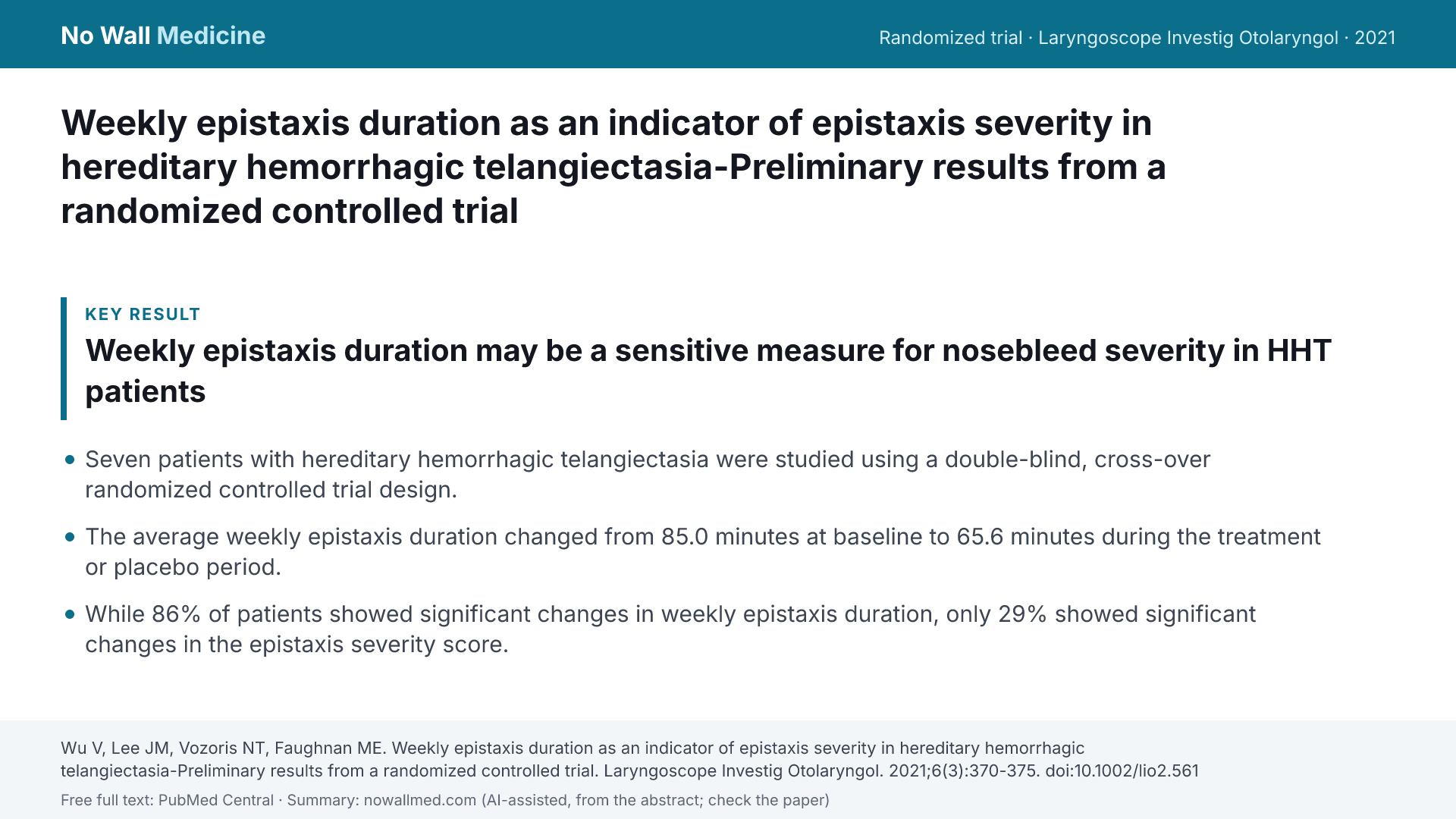
Key result: Weekly epistaxis duration may be a sensitive measure for nosebleed severity in HHT patients
Key points
- Seven patients with hereditary hemorrhagic telangiectasia were studied using a double-blind, cross-over randomized controlled trial design.
- The average weekly epistaxis duration changed from 85.0 minutes at baseline to 65.6 minutes during the treatment or placebo period.
- While 86% of patients showed significant changes in weekly epistaxis duration, only 29% showed significant changes in the epistaxis severity score.
Why it matters: Previous randomized controlled trials for hereditary hemorrhagic telangiectasia may have failed due to poorly characterized outcome measures for nosebleeds.
Discussion prompts
- Would these patients look like yours? Who was left out?
- Is the main outcome one that matters to patients?
- Is the difference large enough to change what you do?
Cite: Wu V, Lee JM, Vozoris NT, Faughnan ME. Weekly epistaxis duration as an indicator of epistaxis severity in hereditary hemorrhagic telangiectasia-Preliminary results from a randomized controlled trial. Laryngoscope Investig Otolaryngol. 2021;6(3):370-375. doi:10.1002/lio2.561
Free full text: PubMed Central · Summary and visual abstract: nowallmed.com/a/weekly-epistaxis-duration-as-an-indicator-of-epistaxis-severity-in-17uunxw/ (AI-assisted from the abstract; check the paper before relying on it).