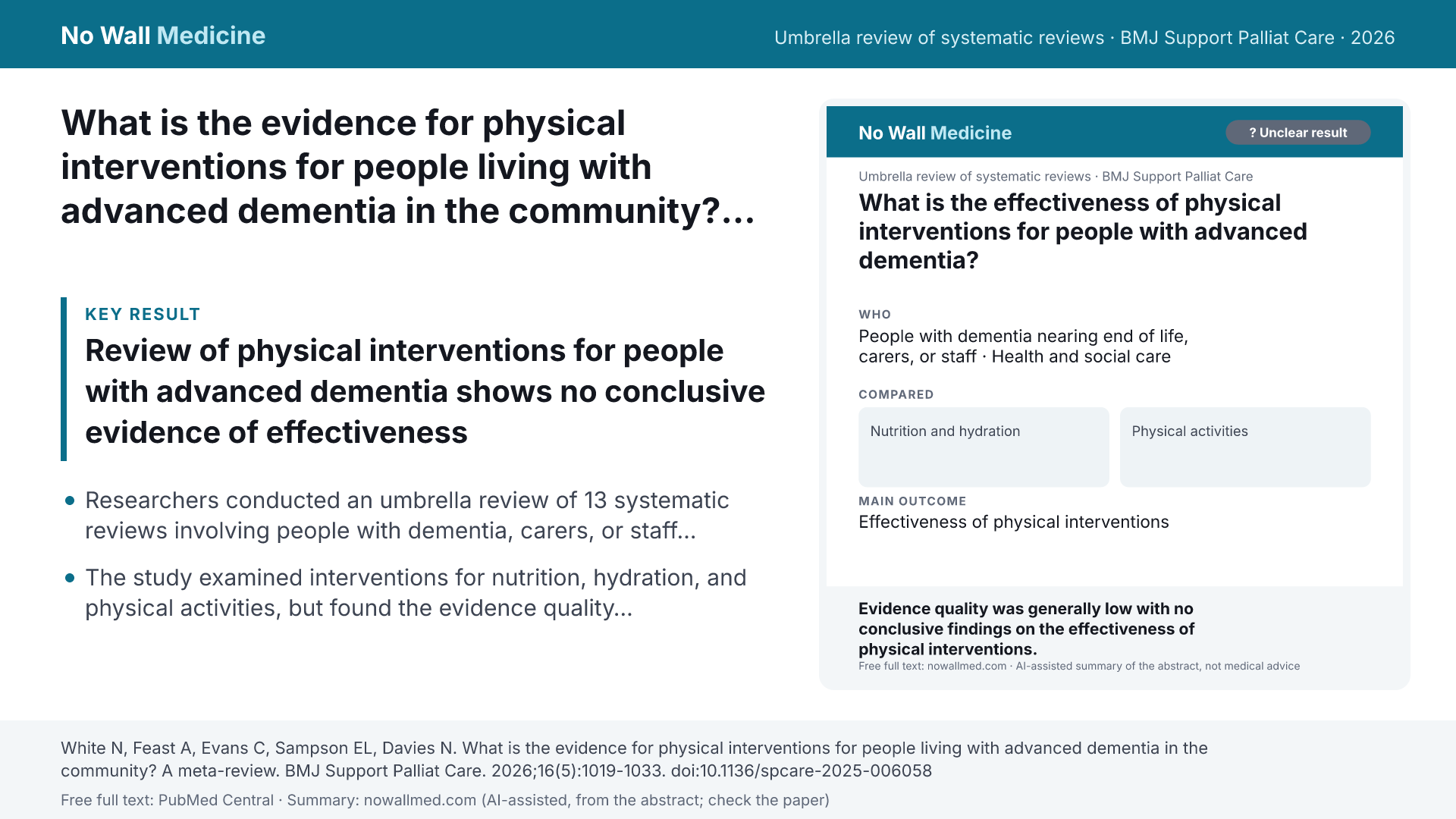
Review of physical interventions for people with advanced dementia shows no conclusive evidence of effectiveness
What is the evidence for physical interventions for people living with advanced dementia in the community? A meta-review
Umbrella review of systematic reviewsUnclear result
What is the effectiveness of physical interventions for people with advanced dementia?
Who
People with dementia nearing end of life, carers, or staff · Health and social care settings
Compared
Nutrition and hydration
Physical activities
Main outcome
Effectiveness of physical interventions
Bottom line: Evidence quality was generally low with no conclusive findings on the effectiveness of physical interventions.
Limitation: Evidence quality was generally low, with no conclusive findings on effectiveness.
BMJ Support Palliat Care · 2026-08-28Download image
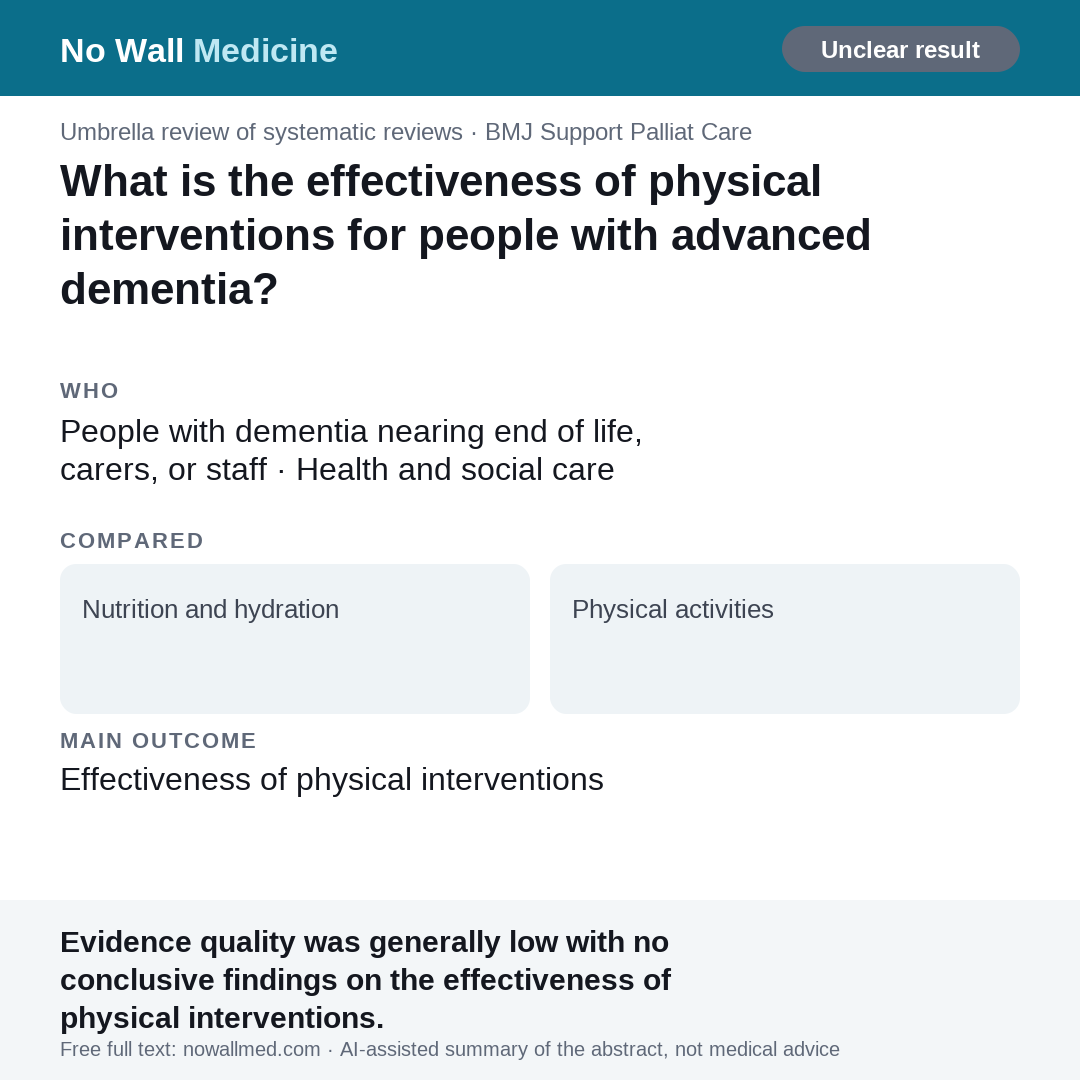
Clinical question: What is the effectiveness of physical interventions for people with advanced dementia?
Key points
- Researchers conducted an umbrella review of 13 systematic reviews involving people with dementia, carers, or staff in health and social care settings.
- The study examined interventions for nutrition, hydration, and physical activities, but found the evidence quality was generally low with no conclusive findings.
- Most research focused on well-being and function, while leaving gaps in evidence regarding carer support, holistic assessment, or medical management.
Limitation the authors note: The evidence quality across the included systematic reviews was generally low.
Headline and key points written with AI from the paper’s abstract, with every number checked against it. Read the paper before relying on them.
Was this summary helpful?
Abstract
Background
Dementia is a major global cause of death, with cases projected to rise from 57.4 million in 2019 to 152.8 million by 2050. As the disease progresses, individuals experience growing frailty, complex health needs and multiple comorbidities, requiring comprehensive support to maintain quality of care. Non-pharmacological physical interventions, targeting either the physical body or immediate environment, may help address these needs, especially in advanced dementia nearing end of life. Aim
To map, appraise and synthesise evidence on the effectiveness of physical interventions for people with dementia nearing end of life. Design
An umbrella review of systematic reviews on physical interventions, part of a broader palliative dementia care series. Data sources
MEDLINE, Epistemonikos and ASSIA were searched for systematic reviews from 1980 to May 2024 involving people with dementia, carers or staff in health and social care settings. Physical interventions were defined as non-pharmacological approaches focusing on the body or physical environment. Results
From 6052 records, 13 reviews met the inclusion criteria. Interventions grouped into two categories: (1) nutrition and hydration (including enteral feeding) and (2) physical activities (including exercise, massage and approaches to reduce care resistance). Evidence quality was generally low, with no conclusive findings on effectiveness. Most interventions addressed well-being and function, with limited evidence for carer support, holistic assessment or medical management. Conclusion
Research has primarily targeted well-being and functional outcomes, leaving key gaps in carer support and holistic management, warranting further investigation. Trial registration
PROSPERO CRD42020162887.
Abstract reproduced under the article’s CC BY licence.
Subject terms
Headline, design, result, key points, caveat and citation as plain text.
Cite this article
White N, Feast A, Evans C, Sampson EL, Davies N. What is the evidence for physical interventions for people living with advanced dementia in the community? A meta-review. BMJ Support Palliat Care. 2026;16(5):1019-1033. doi:10.1136/spcare-2025-006058
Spotted a mistake? Suggest a correction