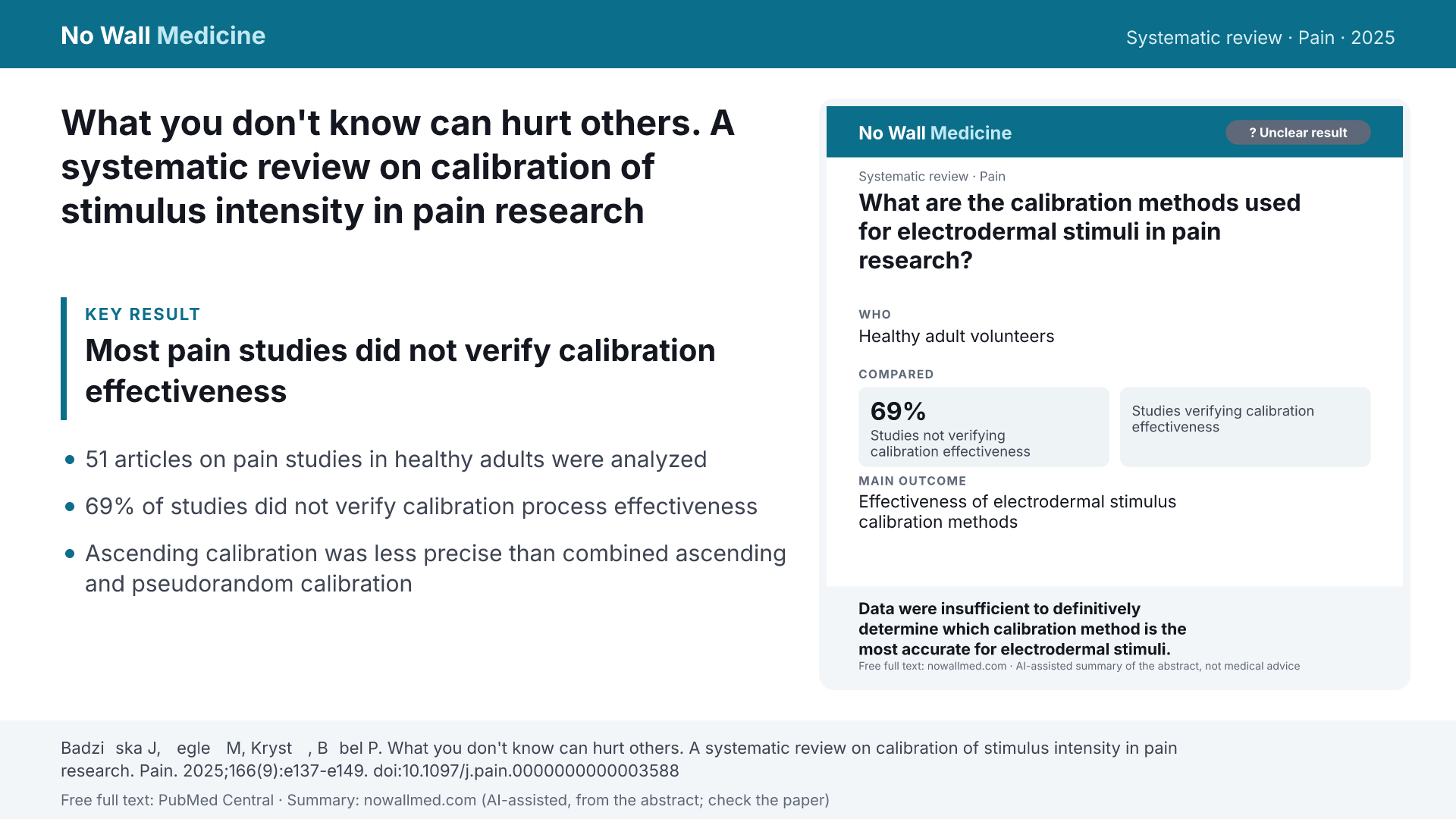
Most pain studies did not verify calibration effectiveness
What you don't know can hurt others. A systematic review on calibration of stimulus intensity in pain research
Systematic reviewUnclear result
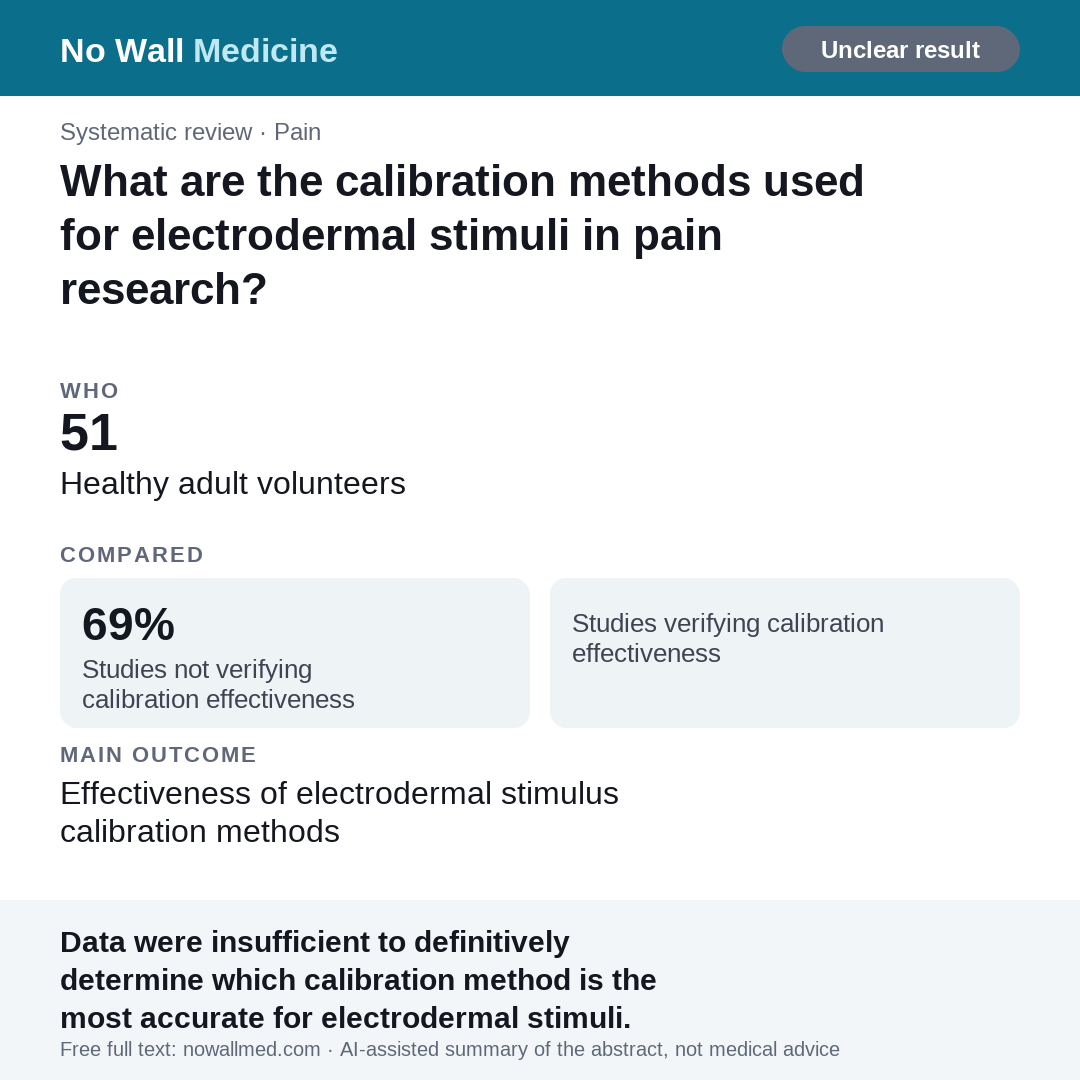
What are the calibration methods used for electrodermal stimuli in pain research?
Who
51
Healthy adult volunteers
Compared
69%Studies not verifying calibration effectiveness
Studies verifying calibration effectiveness
Main outcome
Effectiveness of electrodermal stimulus calibration methods
Bottom line: Data were insufficient to definitively determine which calibration method is the most accurate for electrodermal stimuli.
Limitation: Data were insufficient to definitively determine which method was the most accurate.
Pain · 2025-03-27Download image
Clinical question: What are the calibration methods used for electrodermal stimuli in pain research?
Why it matters: Lack of precise calibration descriptions hinders study replication
Key points
- 51 articles on pain studies in healthy adults were analyzed.
- 69% of studies did not verify calibration process effectiveness.
- Ascending calibration was less precise than combined ascending and pseudorandom calibration.
Headline and key points written with AI from the paper’s abstract, with every number checked against it. Read the paper before relying on them.
Was this summary helpful?
Subject terms
Cite this article
Badzińska J, Żegleń M, Kryst Ł, Bąbel P. What you don't know can hurt others. A systematic review on calibration of stimulus intensity in pain research. Pain. 2025. doi:10.1097/j.pain.0000000000003588
Spotted a mistake? Suggest a correction