Brain white matter properties were linked to heart rate changes and depression treatment response
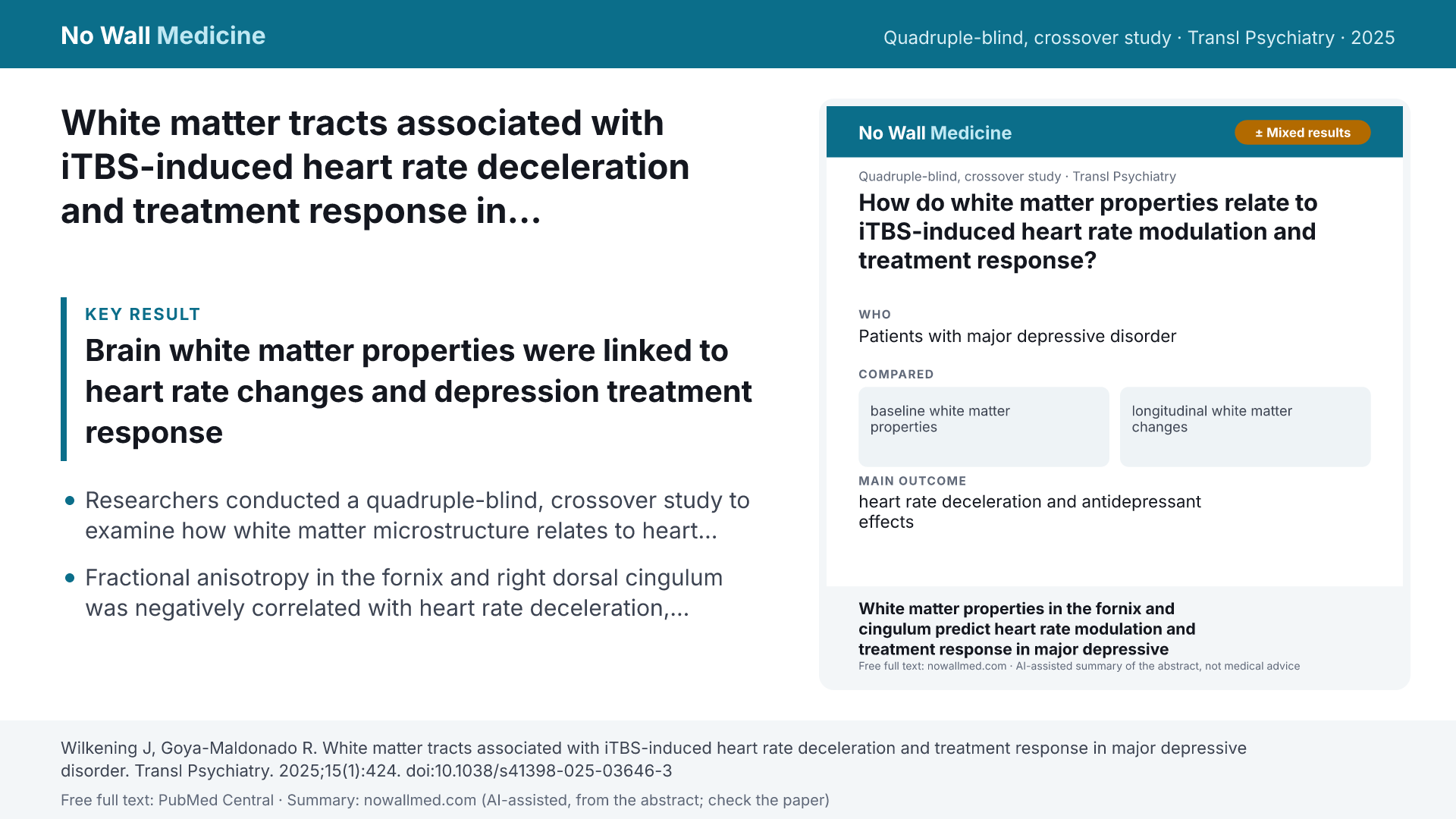
White matter tracts associated with iTBS-induced heart rate deceleration and treatment response in major depressive disorder
Quadruple-blind, crossover studyMixed results
How do white matter properties relate to iTBS-induced heart rate modulation and treatment response?
Who
Patients with major depressive disorder
Compared
baseline white matter properties
longitudinal white matter changes
Main outcome
heart rate deceleration and antidepressant effects
Bottom line: White matter properties in the fornix and cingulum predict heart rate modulation and treatment response in major depressive disorder.
Transl Psychiatry · 2025-10-20Download image
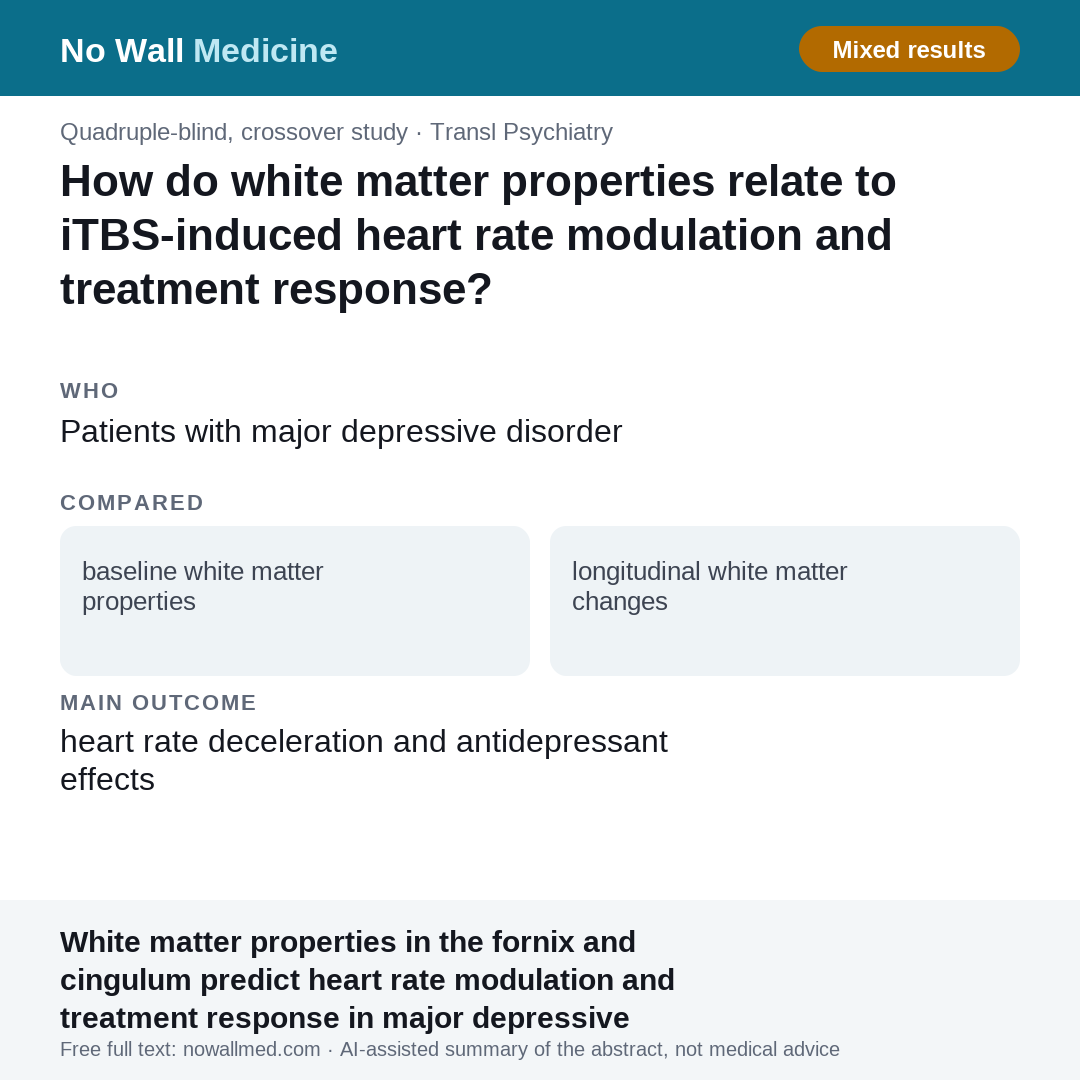
Clinical question: How do white matter properties relate to iTBS-induced heart rate modulation and treatment response?
Why it matters: Predicting how patients with major depressive disorder will respond to intermittent theta burst stimulation remains a challenge.
Key points
- Researchers conducted a quadruple-blind, crossover study to examine how white matter microstructure relates to heart rate changes and antidepressant effects from intermittent theta burst stimulation.
- Fractional anisotropy in the fornix and right dorsal cingulum was negatively correlated with heart rate deceleration, while increases in left cingulum fractional anisotropy were associated with greater symptom alleviation.
- White matter properties in the fornix and cingulum showed predictive value for both heart rate modulation and clinical response to the treatment.
Headline and key points written with AI from the paper’s abstract, with every number checked against it. Read the paper before relying on them.
Was this summary helpful?
Subject terms
Cite this article
Wilkening J, Goya-Maldonado R. White matter tracts associated with iTBS-induced heart rate deceleration and treatment response in major depressive disorder. Transl Psychiatry. 2025. doi:10.1038/s41398-025-03646-3
Spotted a mistake? Suggest a correction