Whole-body vibration training versus conventional balance training in patients with severe COPD-a randomized, controlled trial
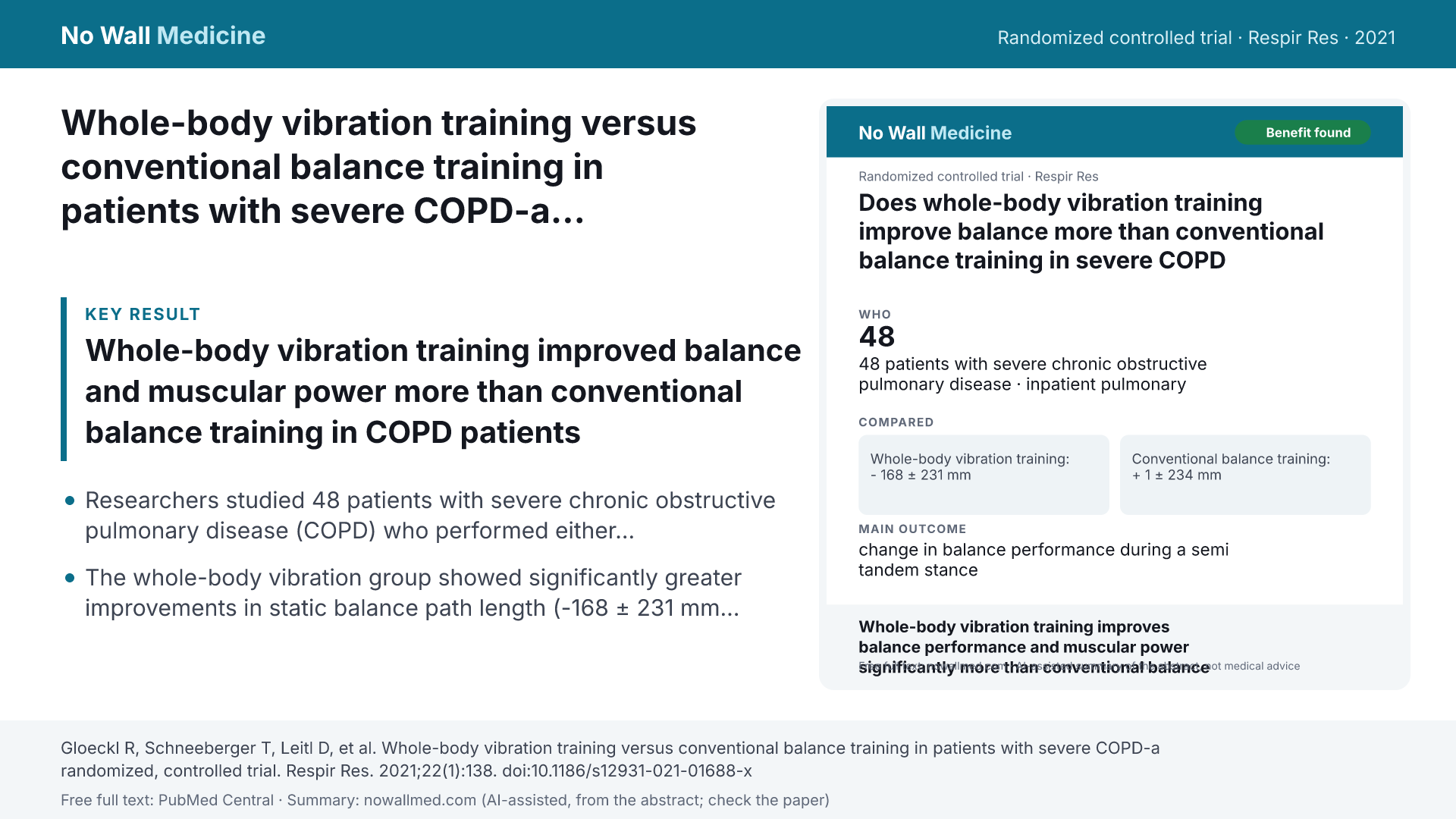
Key result: Whole-body vibration training improved balance and muscular power more than conventional balance training in COPD patients
Randomized controlled trialBenefit found
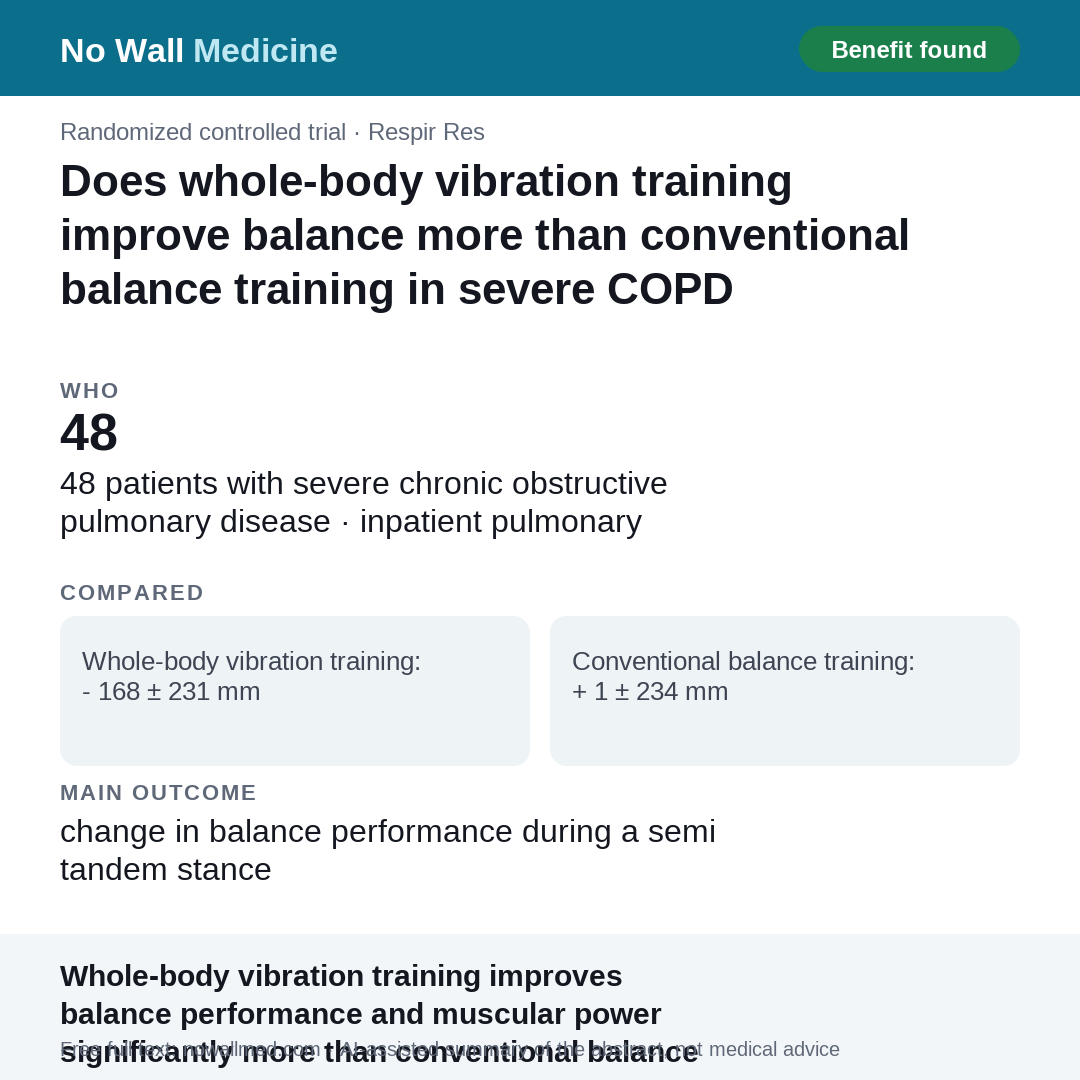
Does whole-body vibration training improve balance more than conventional balance training in severe COPD patients?
Who
48
48 patients with severe chronic obstructive pulmonary disease · inpatient pulmonary rehabilitation
Compared
Whole-body vibration training: - 168 ± 231 mm
Conventional balance training: + 1 ± 234 mm
Main outcome
change in balance performance during a semi tandem stance
Bottom line: Whole-body vibration training improves balance performance and muscular power significantly more than conventional balance training in severe COPD patients.
Respir Res · 2021-05-04Download image
Key points
- Researchers studied 48 patients with severe chronic obstructive pulmonary disease (COPD) who performed either whole-body vibration training or conventional balance board exercises for 3 weeks.
- The whole-body vibration group showed significantly greater improvements in static balance path length (-168 ± 231 mm vs. +1 ± 234 mm) and muscular power (+2.3 ± 2.5 W/kg vs. -0.1 ± 2.0 W/kg).
- While both groups improved their 6 minute walk distance, the whole-body vibration group had a significantly higher increase in 4 meter gait speed (0.08 ± 0.14 m/s2 vs. 0.01 ± 0.11 m/s2).
Discussion prompts
- Would these patients look like yours? Who was left out?
- Is the main outcome one that matters to patients?
- Is the difference large enough to change what you do?
Cite: Gloeckl R, Schneeberger T, Leitl D, et al. Whole-body vibration training versus conventional balance training in patients with severe COPD-a randomized, controlled trial. Respir Res. 2021. doi:10.1186/s12931-021-01688-x
Free full text: PubMed Central · Summary and visual abstract: nowallmed.com/a/whole-body-vibration-training-versus-conventional-balance-training-in-189njyp/ (AI-assisted from the abstract; check the paper before relying on it).