Visual abstracts
New randomized trials and meta-analyses from leading journals at a glance: who was studied, what was compared, and what was found. Every paper is free to read in full.
All specialtiesCardiology 4877Oncology 4138Gastroenterology & Hepatology 1942Infectious Disease 3837Neurology 1905Psychiatry & Mental Health 2273Pulmonology 2143Critical Care 1365Endocrinology & Diabetes 2580Pediatrics 2980Surgery 2559Orthopedics & Sports Medicine 931Neurosurgery 537Cardiothoracic & Vascular Surgery 674Plastic & Reconstructive Surgery 591Nephrology 1133Rheumatology 823Hematology 1109Dermatology 621Ophthalmology 543Obstetrics & Gynecology 1686Public & Global Health 1058Radiology & Imaging 648Anesthesiology 986Urology 764ENT (Otolaryngology) 503Emergency Medicine 511Allergy & Immunology 313Geriatrics 981Family Medicine & Primary Care 562Medical Genetics & Genomics 676Pathology & Laboratory Medicine 159Physical Medicine & Rehabilitation 757Palliative Care 444Nutrition 1588Digital Health & AI 2201General Medicine 321
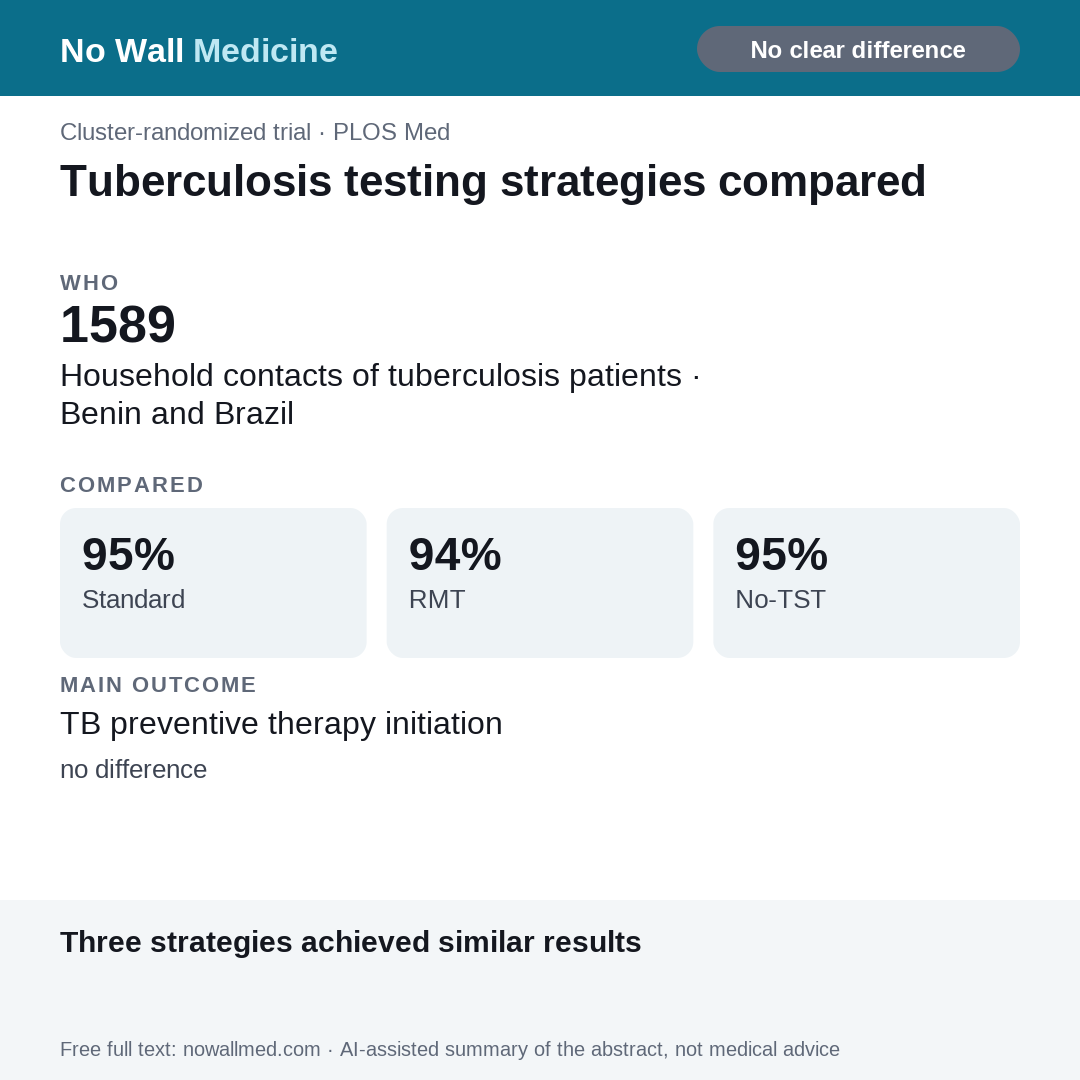
Rapid molecular testing or chest X-ray or tuberculin skin testing for household contact assessment of tuberculosis infection: A cluster-randomized trial
Cluster-randomized trialNo clear difference
Tuberculosis testing strategies compared
Who
1589
Household contacts of tuberculosis patients · Benin and Brazil
Compared
95%Standard
94%RMT
95%No-TST
Main outcome
TB preventive therapy initiation
Result: no difference
Bottom line: Three strategies achieved similar results
Limitation: potential study effect
PLOS Med · 2025-07-28Download image
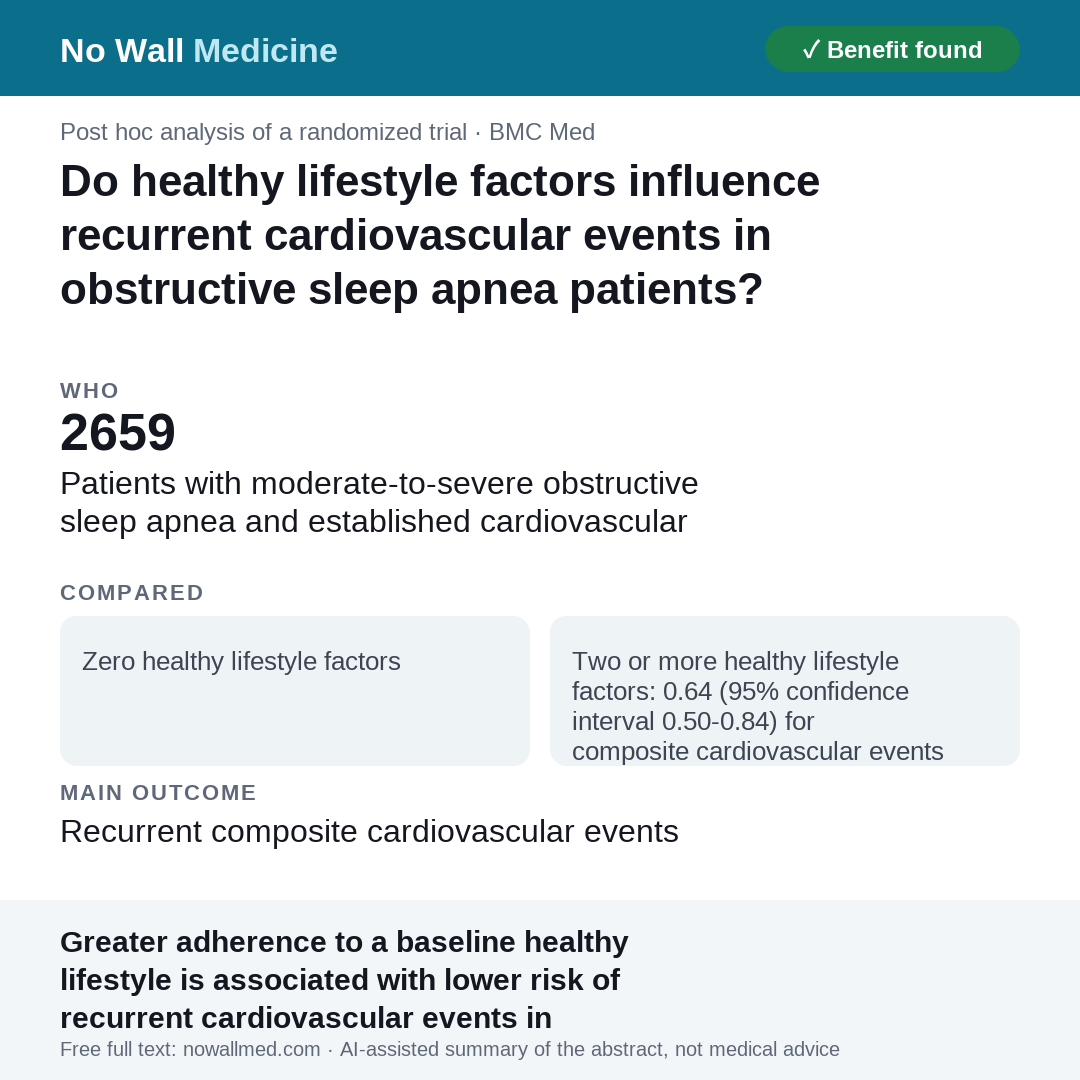
Healthy lifestyle factors and recurrent cardiovascular events in patients with OSA: the SAVE study
Post hoc analysis of a randomized trialBenefit found
Do healthy lifestyle factors influence recurrent cardiovascular events in obstructive sleep apnea patients?
Who
2659
Patients with moderate-to-severe obstructive sleep apnea and established cardiovascular disease
Compared
Zero healthy lifestyle factors
Two or more healthy lifestyle factors: 0.64 (95% confidence interval 0.50-0.84) for composite cardiovascular events
Main outcome
Recurrent composite cardiovascular events
Result: hazard ratio 0.64 (95% CI 0.50-0.84)
Bottom line: Greater adherence to a baseline healthy lifestyle is associated with lower risk of recurrent cardiovascular events in obstructive sleep apnea patients.
BMC Med · 2025-07-28Download image
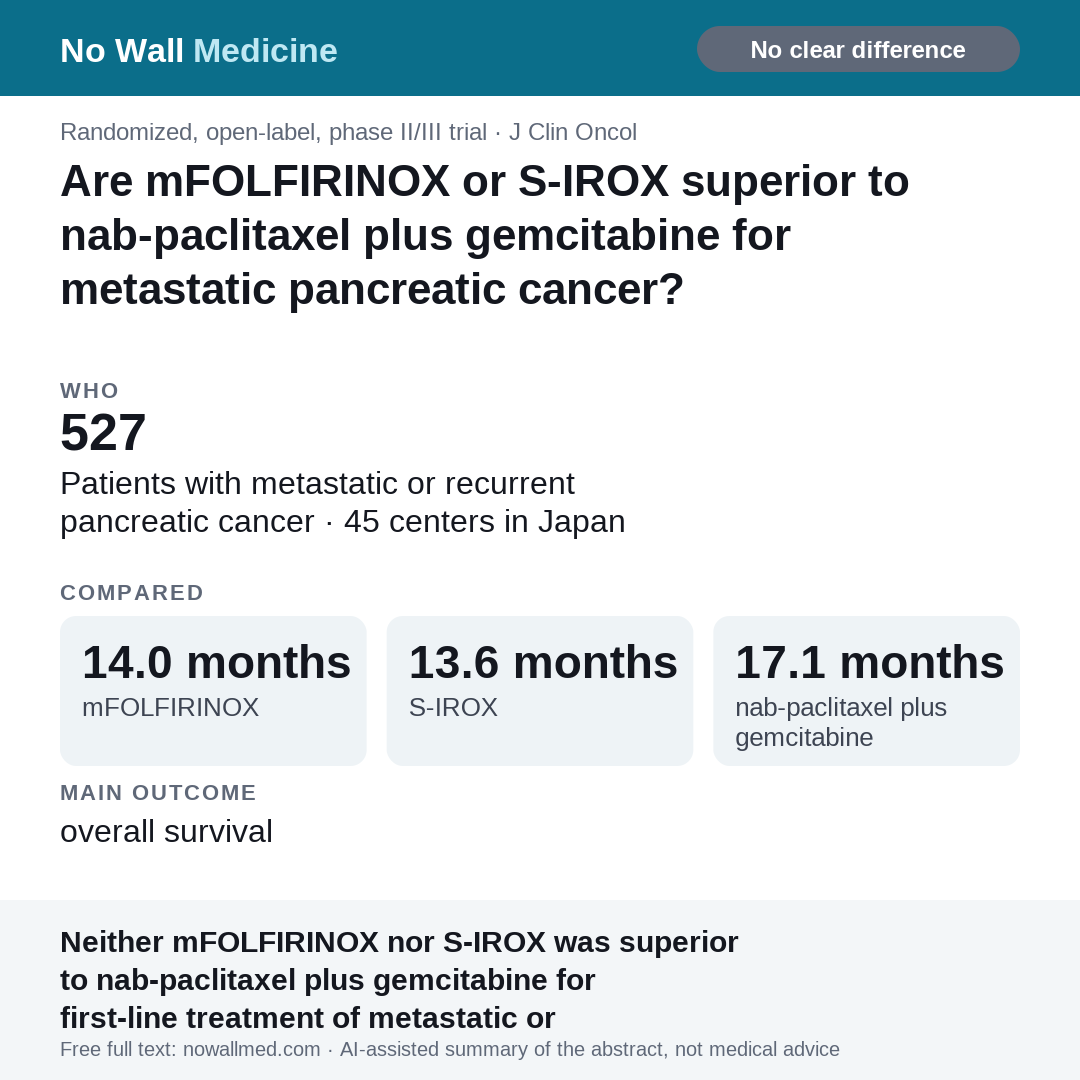
Modified Fluorouracil, Leucovorin, Irinotecan, and Oxaliplatin or S-1, Irinotecan, and Oxaliplatin Versus Nab-Paclitaxel + Gemcitabine in Metastatic or Recurrent Pancreatic Cancer (GENERATE, JCOG1611): A Randomized, Open-Label, Phase II/III Trial
Randomized, open-label, phase II/III trialNo clear difference
Are mFOLFIRINOX or S-IROX superior to nab-paclitaxel plus gemcitabine for metastatic pancreatic cancer?
Who
527
Patients with metastatic or recurrent pancreatic cancer · 45 centers in Japan
Compared
14.0 monthsmFOLFIRINOX
13.6 monthsS-IROX
17.1 monthsnab-paclitaxel plus gemcitabine
Main outcome
overall survival
Result: hazard ratio 1.31 (95% CI 0.97 to 1.77)
Bottom line: Neither mFOLFIRINOX nor S-IROX was superior to nab-paclitaxel plus gemcitabine for first-line treatment of metastatic or recurrent pancreatic cancer.
J Clin Oncol · 2025-07-28Download image
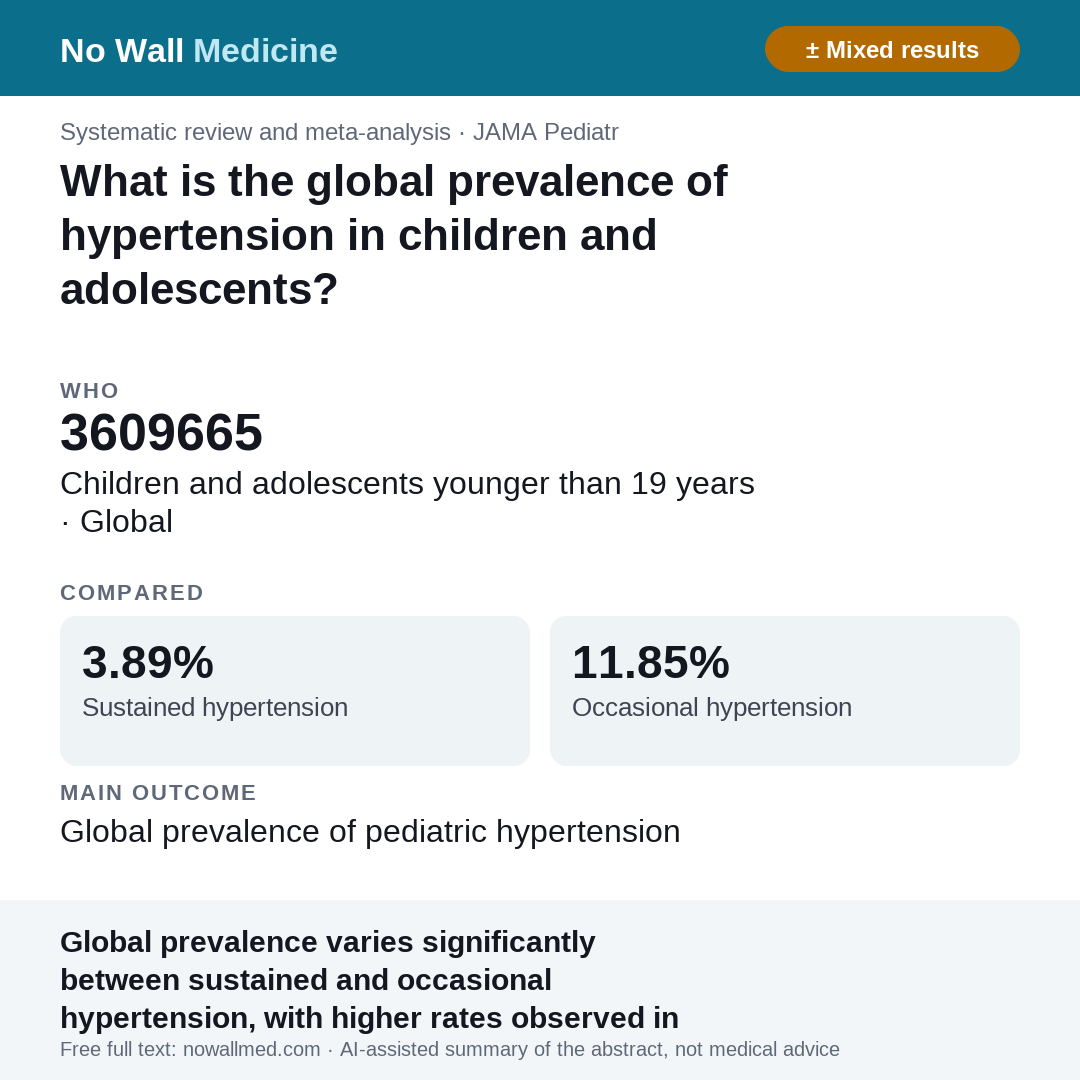
Global Prevalence of Hypertension in Children and Adolescents Younger Than 19 Years: A Systematic Review and Meta-Analysis
Systematic review and meta-analysisMixed results
What is the global prevalence of hypertension in children and adolescents?
Who
3609665
Children and adolescents younger than 19 years · Global
Compared
3.89%Sustained hypertension (95% CI, 3.27%-4.62%)
11.85%Occasional hypertension (95% CI, 10.98%-12.75%)
Main outcome
Global prevalence of pediatric hypertension
Bottom line: Global prevalence varies significantly between sustained and occasional hypertension, with higher rates observed in children with obesity or overweight.
JAMA Pediatr · 2025-07-28Download image
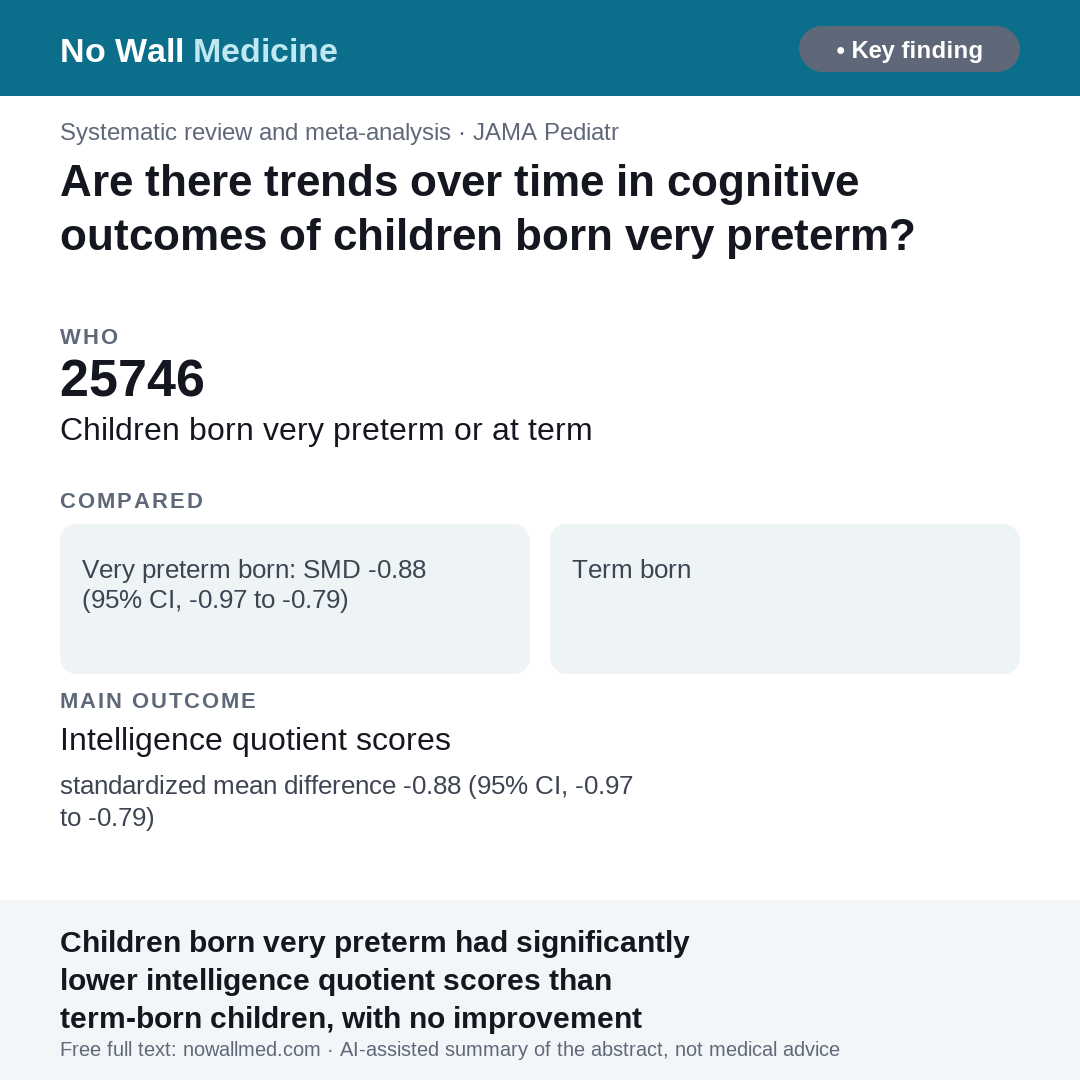
Trends Over Time in Cognitive Outcomes of Children Born Very Preterm: A Systematic Review and Meta-Analysis
Systematic review and meta-analysisHarm found
Are there trends over time in cognitive outcomes of children born very preterm?
Who
25746
Children born very preterm or at term
Compared
Very preterm born: SMD -0.88 (95% CI, -0.97 to -0.79)
Term born
Main outcome
Intelligence quotient scores
Result: standardized mean difference -0.88 (95% CI, -0.97 to -0.79)
Bottom line: Children born very preterm had significantly lower intelligence quotient scores than term-born children, with no improvement observed over four decades.
JAMA Pediatr · 2025-07-28Download image
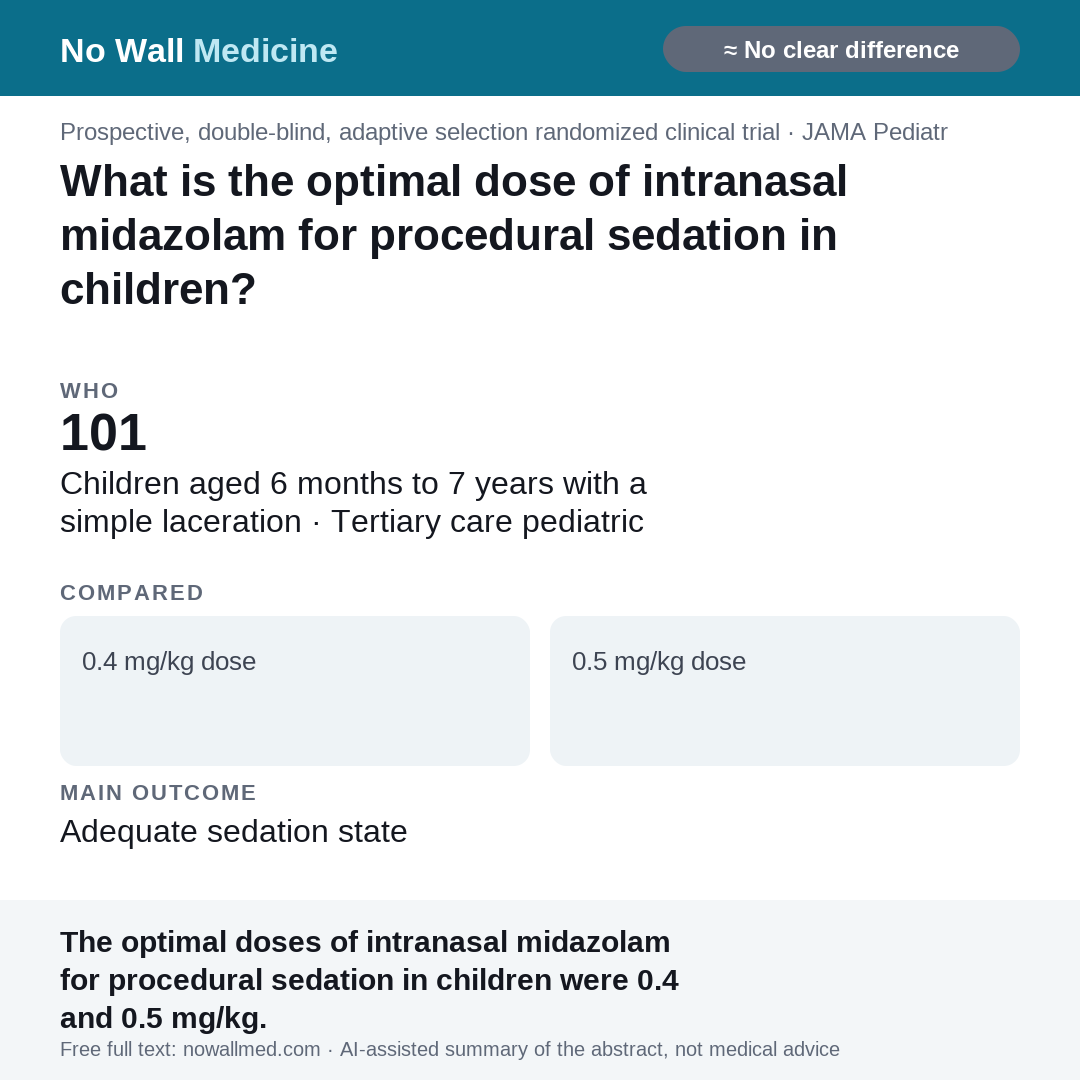
Optimal Dose of Intranasal Midazolam for Procedural Sedation in Children: A Randomized Clinical Trial
Prospective, double-blind, adaptive selection randomized clinical trialNo clear difference
What is the optimal dose of intranasal midazolam for procedural sedation in children?
Who
101
Children aged 6 months to 7 years with a simple laceration · Tertiary care pediatric emergency department
Compared
0.4 mg/kg dose
0.5 mg/kg dose
Main outcome
Adequate sedation state
Bottom line: The optimal doses of intranasal midazolam for procedural sedation in children were 0.4 and 0.5 mg/kg.
JAMA Pediatr · 2025-07-28Download image
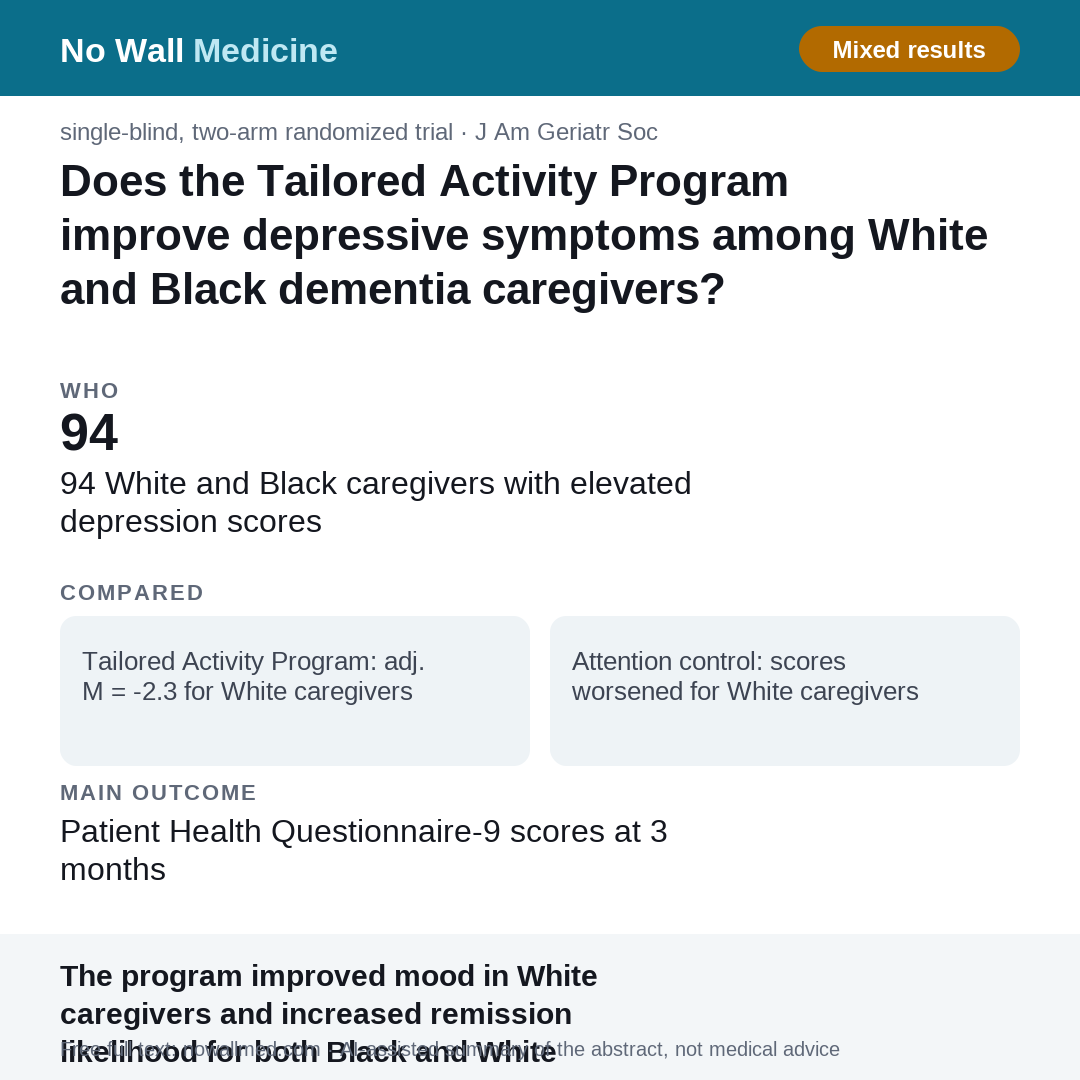
Impact of the Tailored Activity Program (TAP) on Depressive Symptoms Among White and Black Dementia Caregivers
single-blind, two-arm randomized trialMixed results
Does the Tailored Activity Program improve depressive symptoms among White and Black dementia caregivers?
Who
94
94 White and Black caregivers with elevated depression scores
Compared
Tailored Activity Program: adj. M = -2.3 for White caregivers
Attention control: scores worsened for White caregivers
Main outcome
Patient Health Questionnaire-9 scores at 3 months
Result: odds ratio = 3.24, 95% CI = 1.05-10.14
Bottom line: The program improved mood in White caregivers and increased remission likelihood for both Black and White caregivers.
J Am Geriatr Soc · 2025-07-28Download image
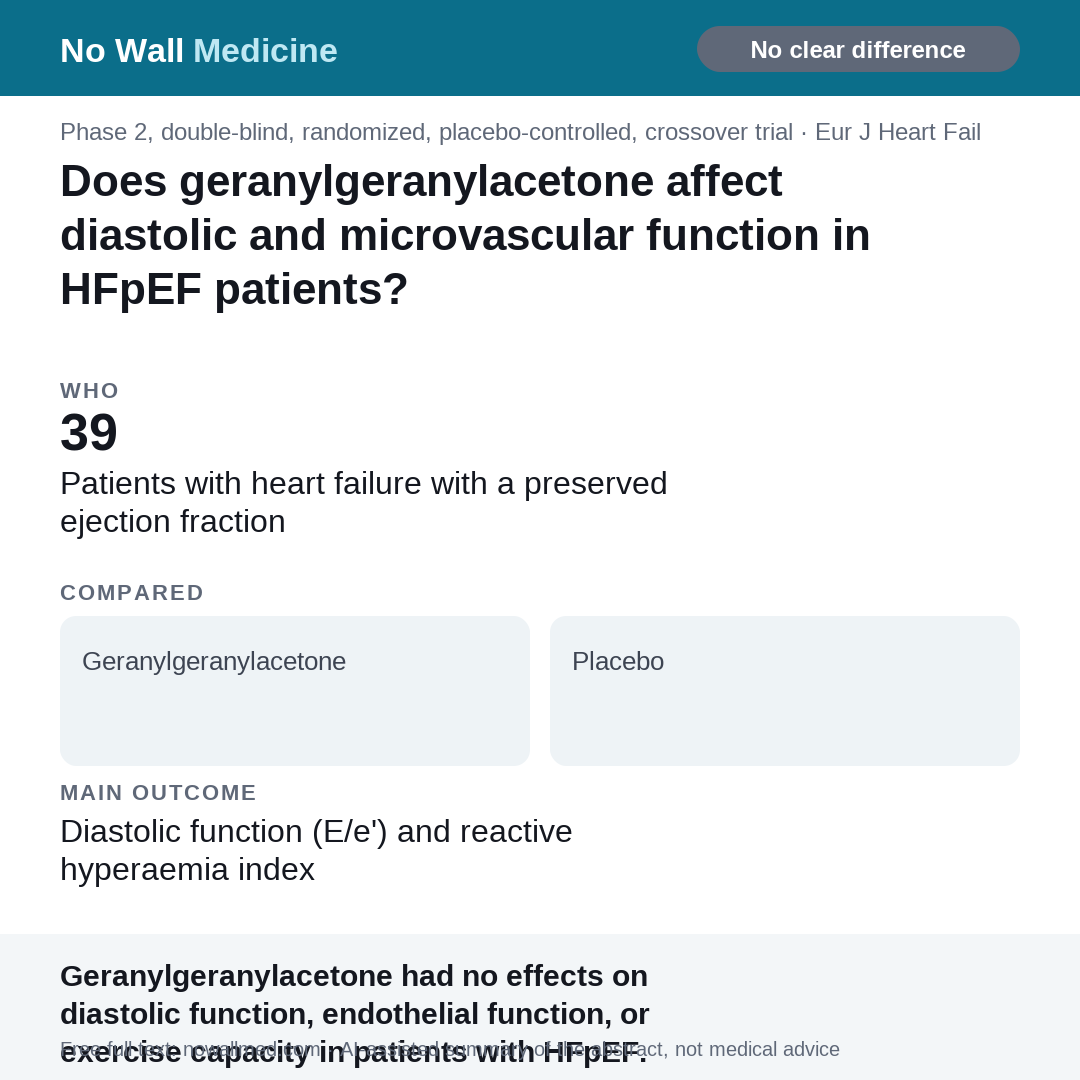
Effects of geranylgeranylacetone on diastolic and microvascular function in patients with heart failure with a preserved ejection fraction: A phase 2, randomized, placebo-controlled, crossover trial
Phase 2, double-blind, randomized, placebo-controlled, crossover trialNo clear difference
Does geranylgeranylacetone affect diastolic and microvascular function in HFpEF patients?
Who
39
Patients with heart failure with a preserved ejection fraction
Compared
Geranylgeranylacetone
Placebo
Main outcome
Diastolic function (E/e') and reactive hyperaemia index
Result: E/e' -0.24 (95% CI -0.90 to 0.41), RHI -0.02 (95% CI -0.36 to 0.33)
Bottom line: Geranylgeranylacetone had no effects on diastolic function, endothelial function, or exercise capacity in patients with HFpEF.
Eur J Heart Fail · 2025-07-28Download image
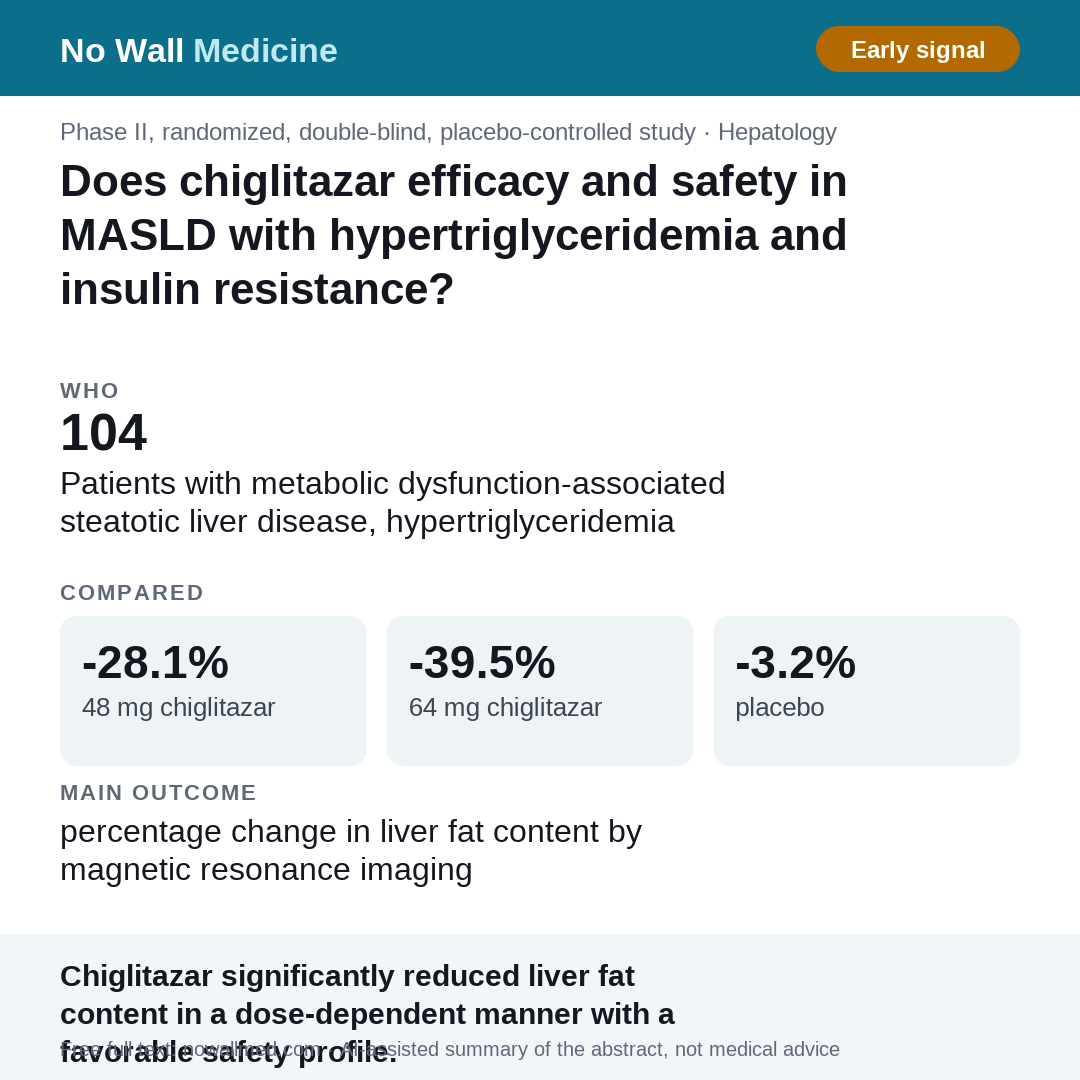
Chiglitazar in MASLD with hypertriglyceridemia and insulin resistance: A phase II, randomized, double-blind, placebo-controlled study
Phase II, randomized, double-blind, placebo-controlled studyBenefit found
Does chiglitazar efficacy and safety in MASLD with hypertriglyceridemia and insulin resistance?
Who
104
Patients with metabolic dysfunction-associated steatotic liver disease, hypertriglyceridemia and insulin resistance · multicenter
Compared
-28.1%48 mg chiglitazar (95% CI -37.5 to -18.7)
-39.5%64 mg chiglitazar (95% CI -49.0 to -30.0)
-3.2%placebo (95% CI -16.8 to 10.4)
Main outcome
percentage change in liver fat content by magnetic resonance imaging
Bottom line: Chiglitazar significantly reduced liver fat content in a dose-dependent manner with a favorable safety profile.
Hepatology · 2025-07-28Download image
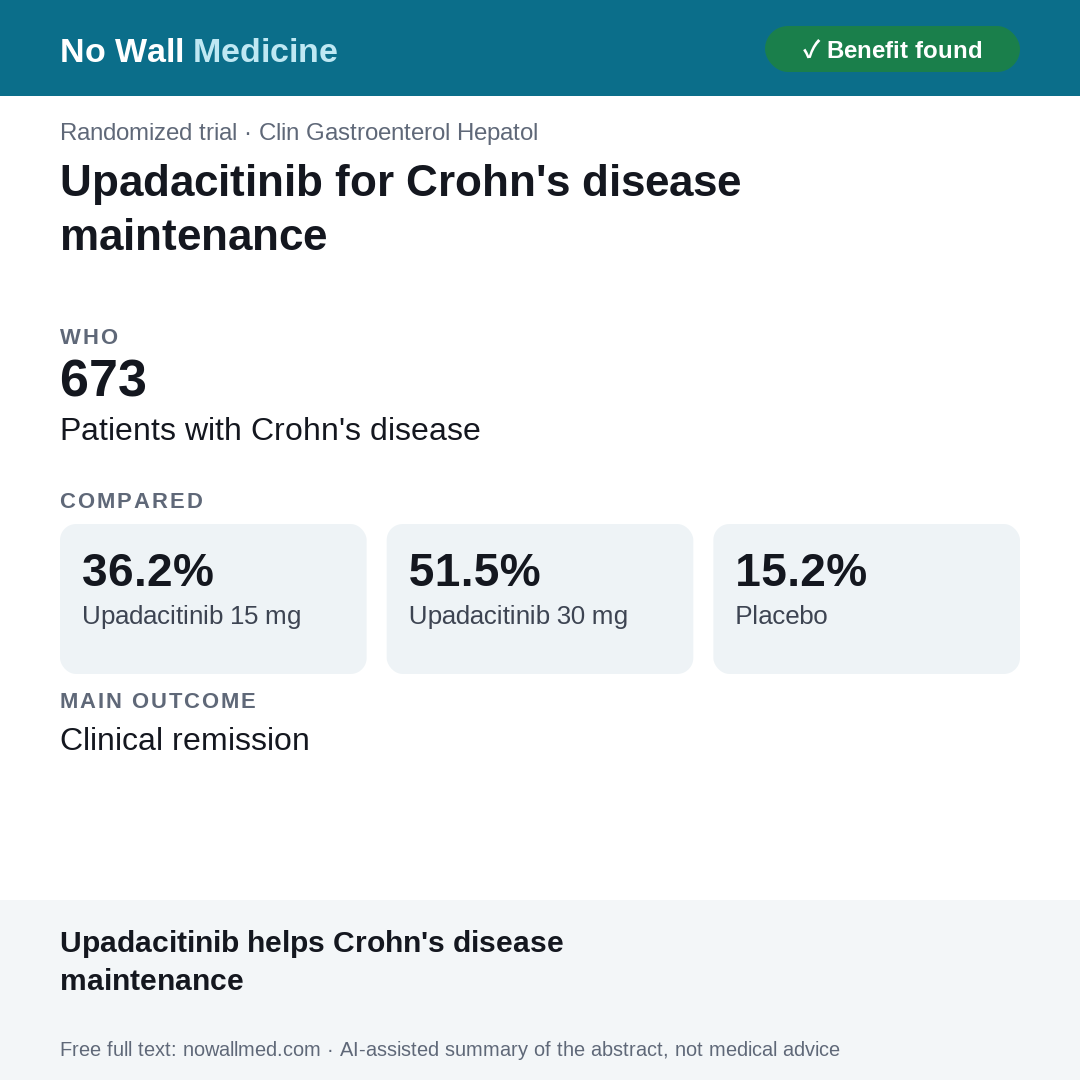
Upadacitinib Maintenance Therapy in Crohn's Disease: Final Results From the Randomized Phase 3 U-ENDURE Study
Randomized trialBenefit found
Upadacitinib for Crohn's disease maintenance
Who
673
Patients with Crohn's disease
Compared
36.2%Upadacitinib 15 mg
51.5%Upadacitinib 30 mg
15.2%Placebo
Main outcome
Clinical remission
Bottom line: Upadacitinib helps Crohn's disease maintenance
Clin Gastroenterol Hepatol · 2025-07-28Download image
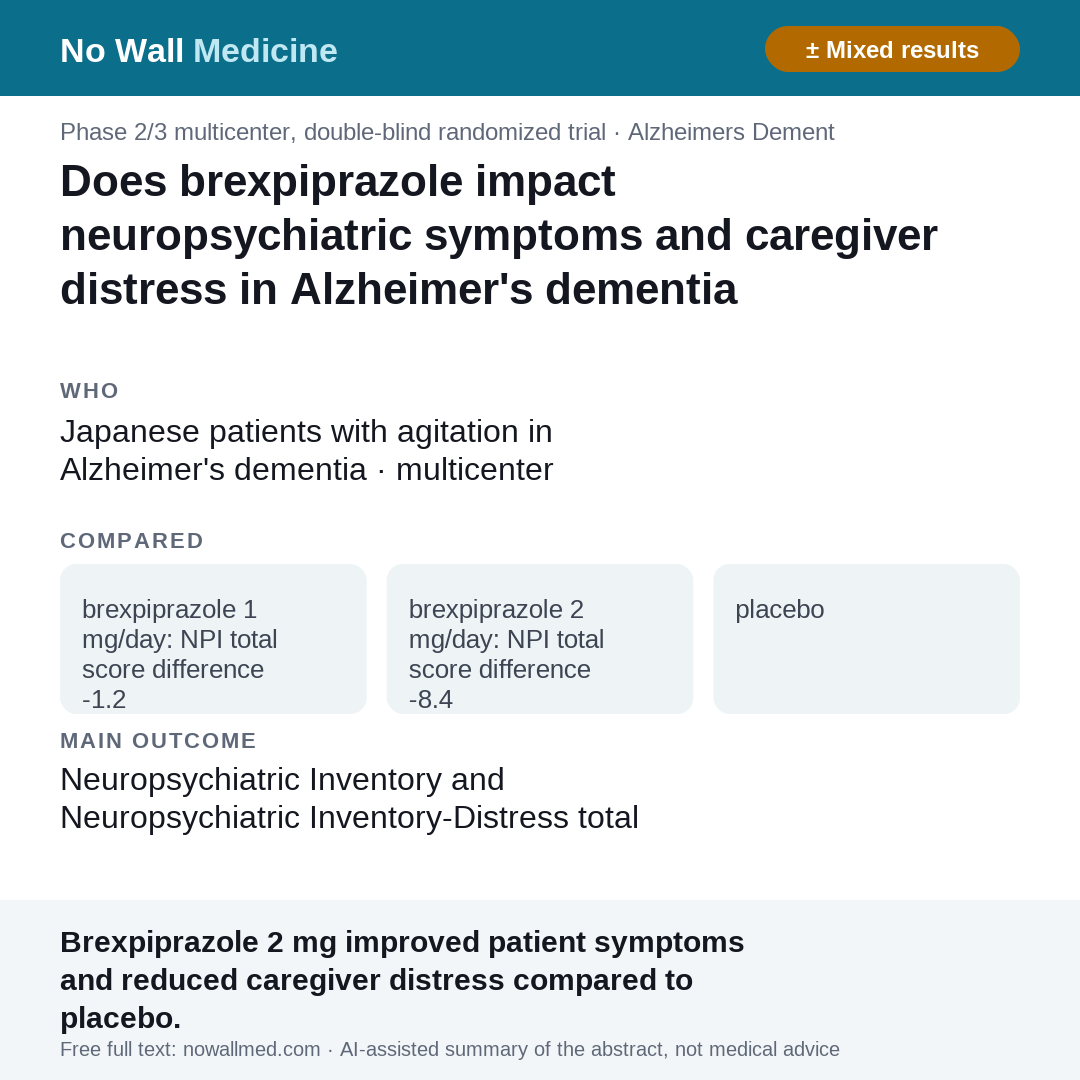
Brexpiprazole's impacts on patients and caregivers in agitation in Alzheimer's dementia
Phase 2/3 multicenter, double-blind randomized trialMixed results
Does brexpiprazole impact neuropsychiatric symptoms and caregiver distress in Alzheimer's dementia agitation?
Who
Japanese patients with agitation in Alzheimer's dementia · multicenter
Compared
brexpiprazole 1 mg/day: NPI total score difference -1.2
brexpiprazole 2 mg/day: NPI total score difference -8.4
placebo
Main outcome
Neuropsychiatric Inventory and Neuropsychiatric Inventory-Distress total scores
Bottom line: Brexpiprazole 2 mg improved patient symptoms and reduced caregiver distress compared to placebo.
Alzheimers Dement · 2025-07-28Download image
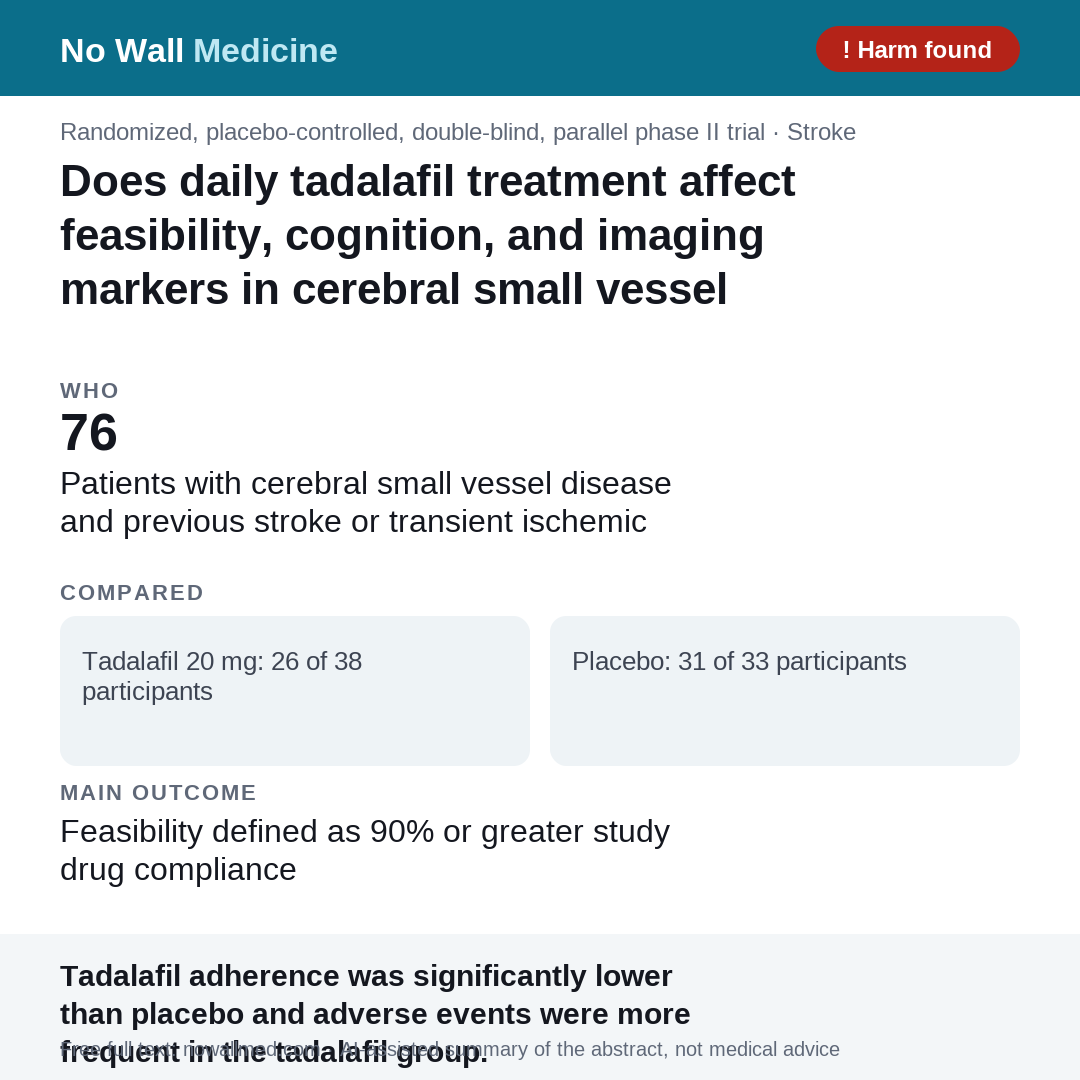
Tadalafil Treatment in Patients With Cerebral Small Vessel Disease: The ETLAS-2 Randomized Clinical Trial
Randomized, placebo-controlled, double-blind, parallel phase II trialHarm found
Does daily tadalafil treatment affect feasibility, cognition, and imaging markers in cerebral small vessel disease?
Who
76
Patients with cerebral small vessel disease and previous stroke or transient ischemic attack · Capital Region of Denmark
Compared
Tadalafil 20 mg: 26 of 38 participants
Placebo: 31 of 33 participants
Main outcome
Feasibility defined as 90% or greater study drug compliance
Result: odds ratio 0.13 (95% CI 0.03-0.69)
Bottom line: Tadalafil adherence was significantly lower than placebo and adverse events were more frequent in the tadalafil group.
Stroke · 2025-07-28Download image
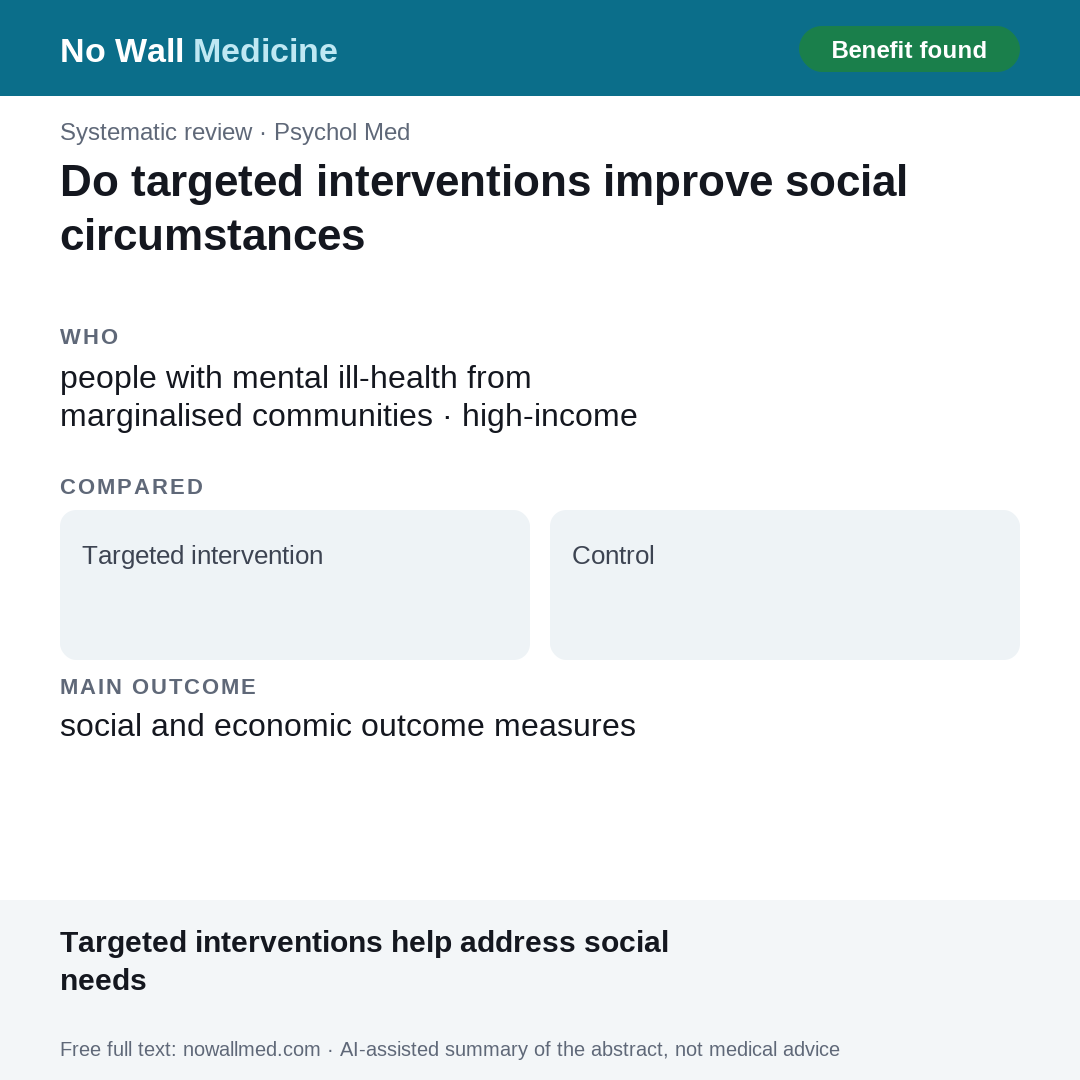
Targeted interventions to improve the social and economic circumstances of people with mental ill-health from marginalised communities: a systematic review
Systematic reviewBenefit found
Do targeted interventions improve social circumstances
Who
people with mental ill-health from marginalised communities · high-income countries
Compared
Targeted intervention
Control
Main outcome
social and economic outcome measures
Bottom line: Targeted interventions help address social needs
Limitation: evidence base is sparse
Psychol Med · 2025-07-28Download image
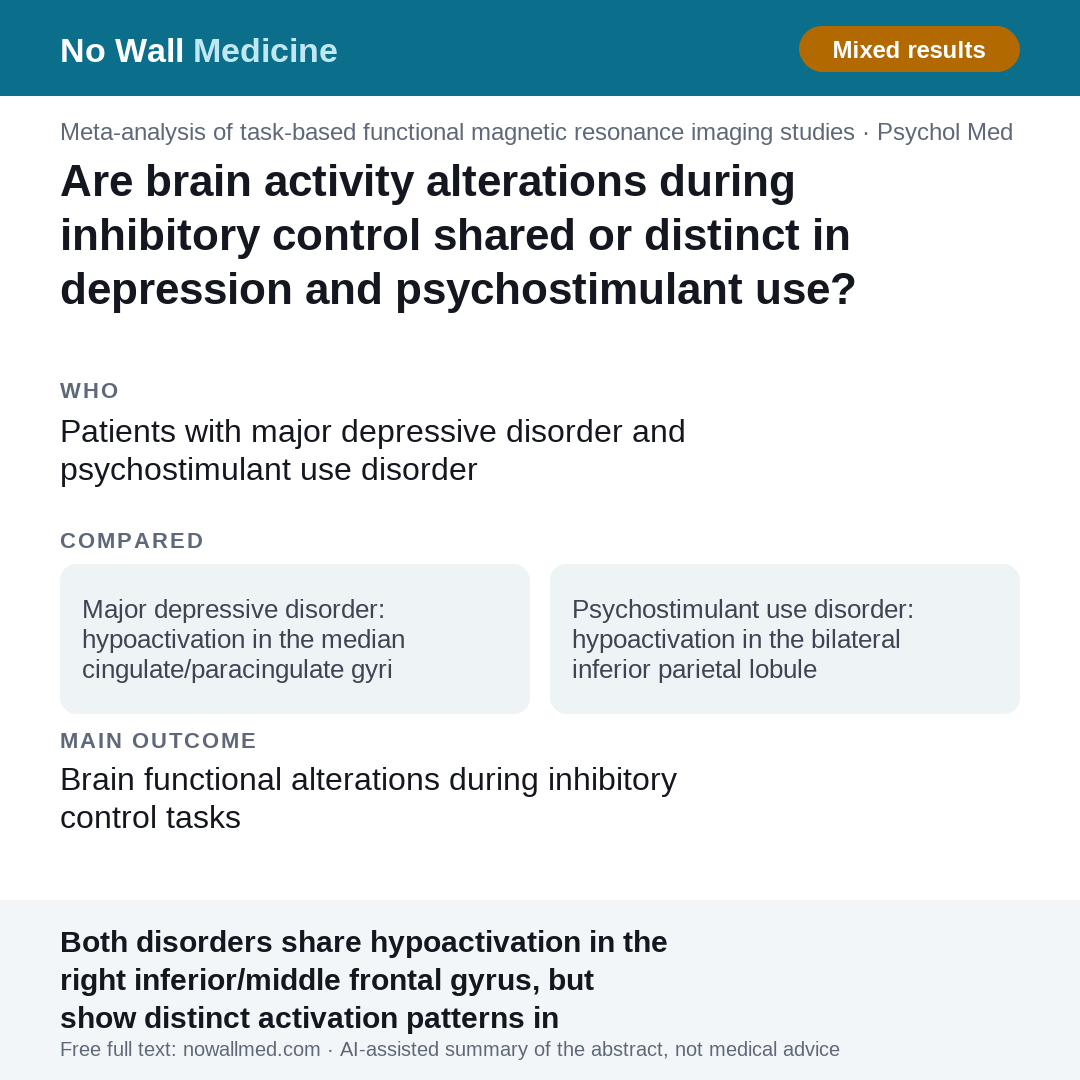
Common and distinct patterns of brain activity alterations during inhibitory control in depression and psychostimulant users: a comparative meta-analysis of task-based fMRI studies
Meta-analysis of task-based functional magnetic resonance imaging studiesMixed results
Are brain activity alterations during inhibitory control shared or distinct in depression and psychostimulant use?
Who
Patients with major depressive disorder and psychostimulant use disorder
Compared
Major depressive disorder: hypoactivation in the median cingulate/paracingulate gyri
Psychostimulant use disorder: hypoactivation in the bilateral inferior parietal lobule
Main outcome
Brain functional alterations during inhibitory control tasks
Bottom line: Both disorders share hypoactivation in the right inferior/middle frontal gyrus, but show distinct activation patterns in cingulate and parietal regions.
Psychol Med · 2025-07-28Download image
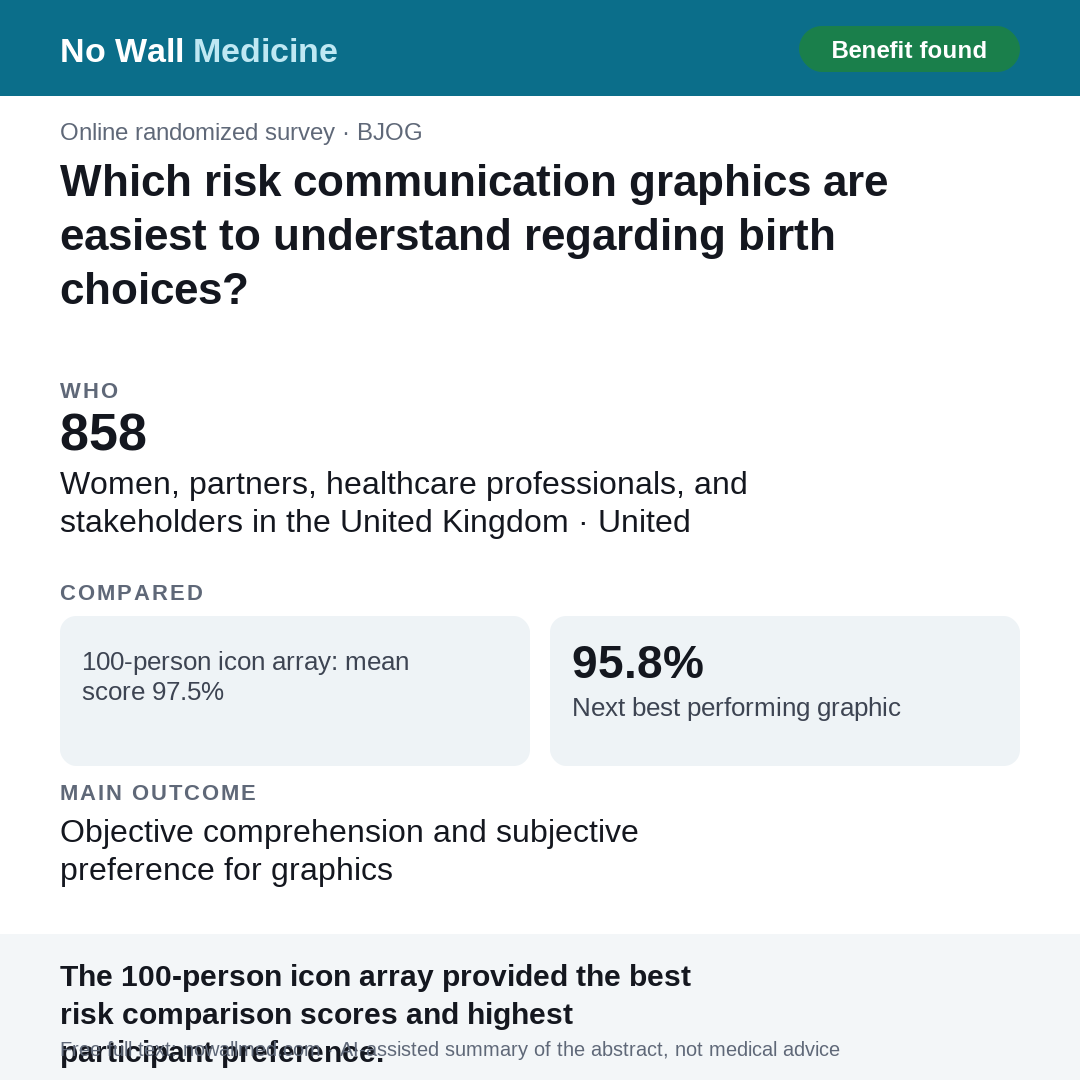
How Should We Communicate Information Regarding Birth Choices to Women?: An Online Randomised Survey
Online randomized surveyBenefit found
Which risk communication graphics are easiest to understand regarding birth choices?
Who
858
Women, partners, healthcare professionals, and stakeholders in the United Kingdom · United Kingdom
Compared
100-person icon array: mean score 97.5%
95.8%Next best performing graphic
Main outcome
Objective comprehension and subjective preference for graphics
Bottom line: The 100-person icon array provided the best risk comparison scores and highest participant preference.
BJOG · 2025-07-28Download image
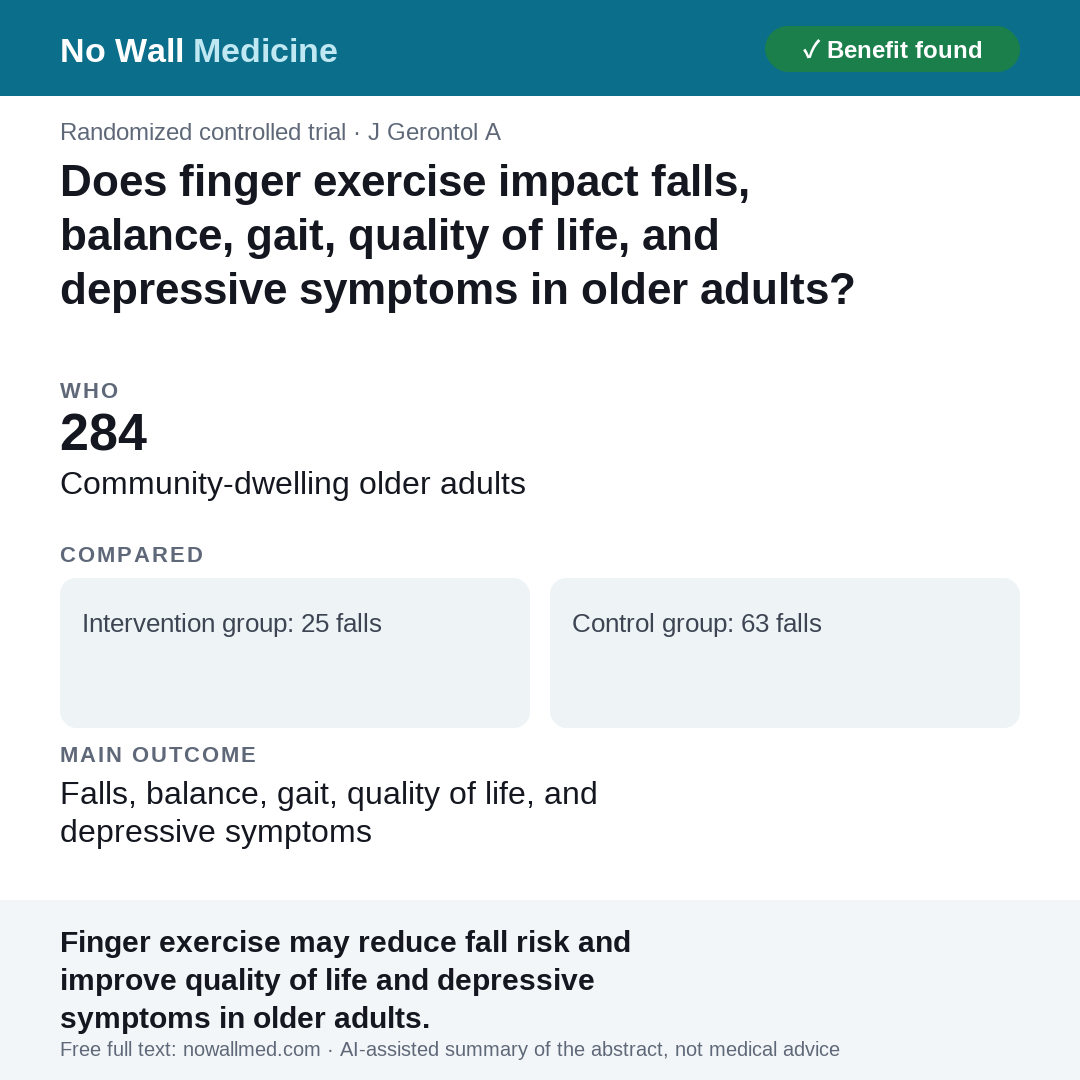
The impact of finger exercise on falls, balance, gait, quality of life, and depressive symptoms among community-dwelling older adults: a randomized controlled trial
Randomized controlled trialBenefit found
Does finger exercise impact falls, balance, gait, quality of life, and depressive symptoms in older adults?
Who
284
Community-dwelling older adults
Compared
Intervention group: 25 falls
Control group: 63 falls
Main outcome
Falls, balance, gait, quality of life, and depressive symptoms
Bottom line: Finger exercise may reduce fall risk and improve quality of life and depressive symptoms in older adults.
Limitation: Further research is needed to confirm findings and assess long-term impacts in diverse populations.
J Gerontol A · 2025-07-28Download image
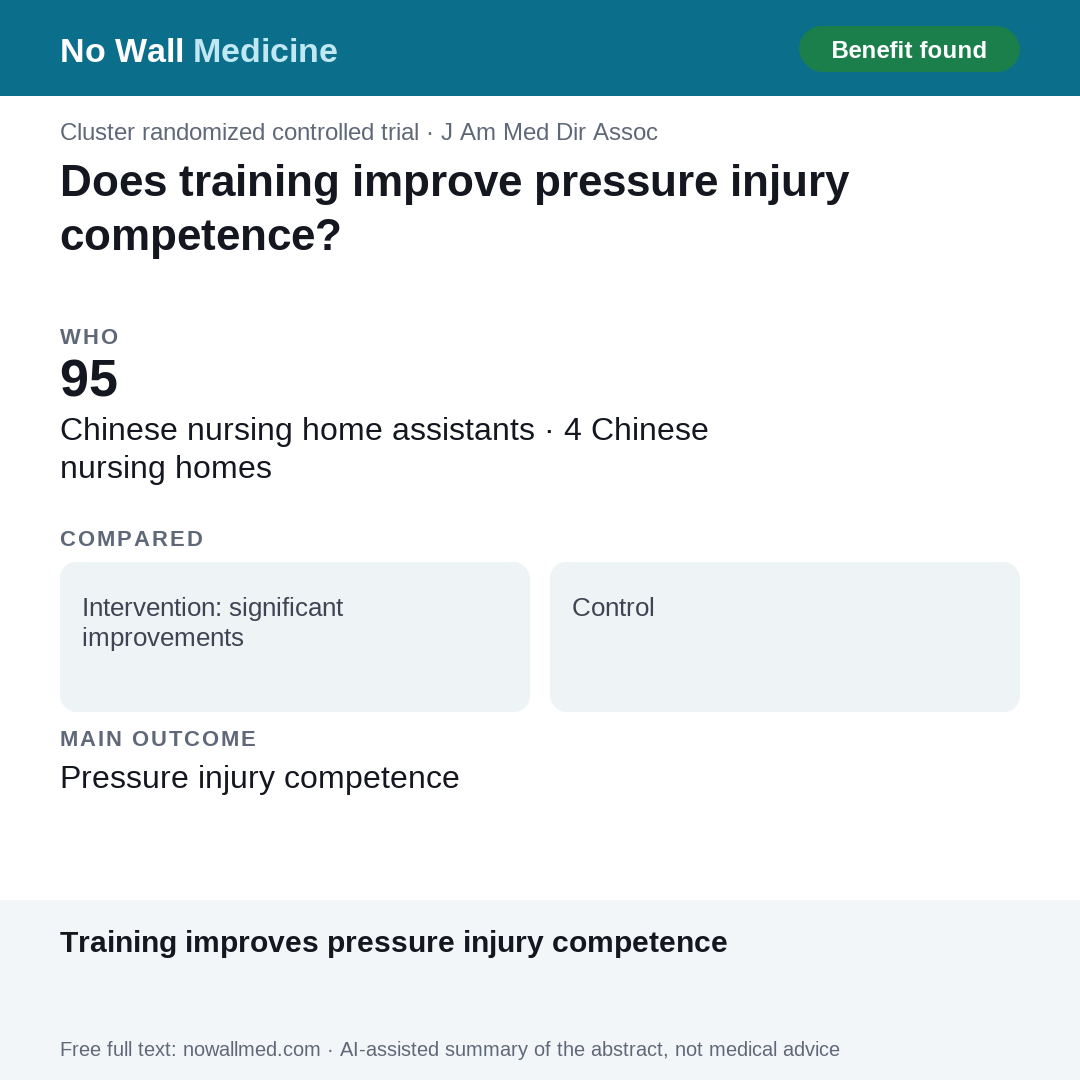
Effects of Social Learning Theory-Based Training on Pressure Injury Competence in Chinese Nursing Home Assistants: A Cluster RCT
Cluster randomized controlled trialBenefit found
Does training improve pressure injury competence?
Who
95
Chinese nursing home assistants · 4 Chinese nursing homes
Compared
Intervention: significant improvements
Control
Main outcome
Pressure injury competence
Bottom line: Training improves pressure injury competence
Limitation: Visual identification skill retention requires reinforcement
J Am Med Dir Assoc · 2025-07-28Download image
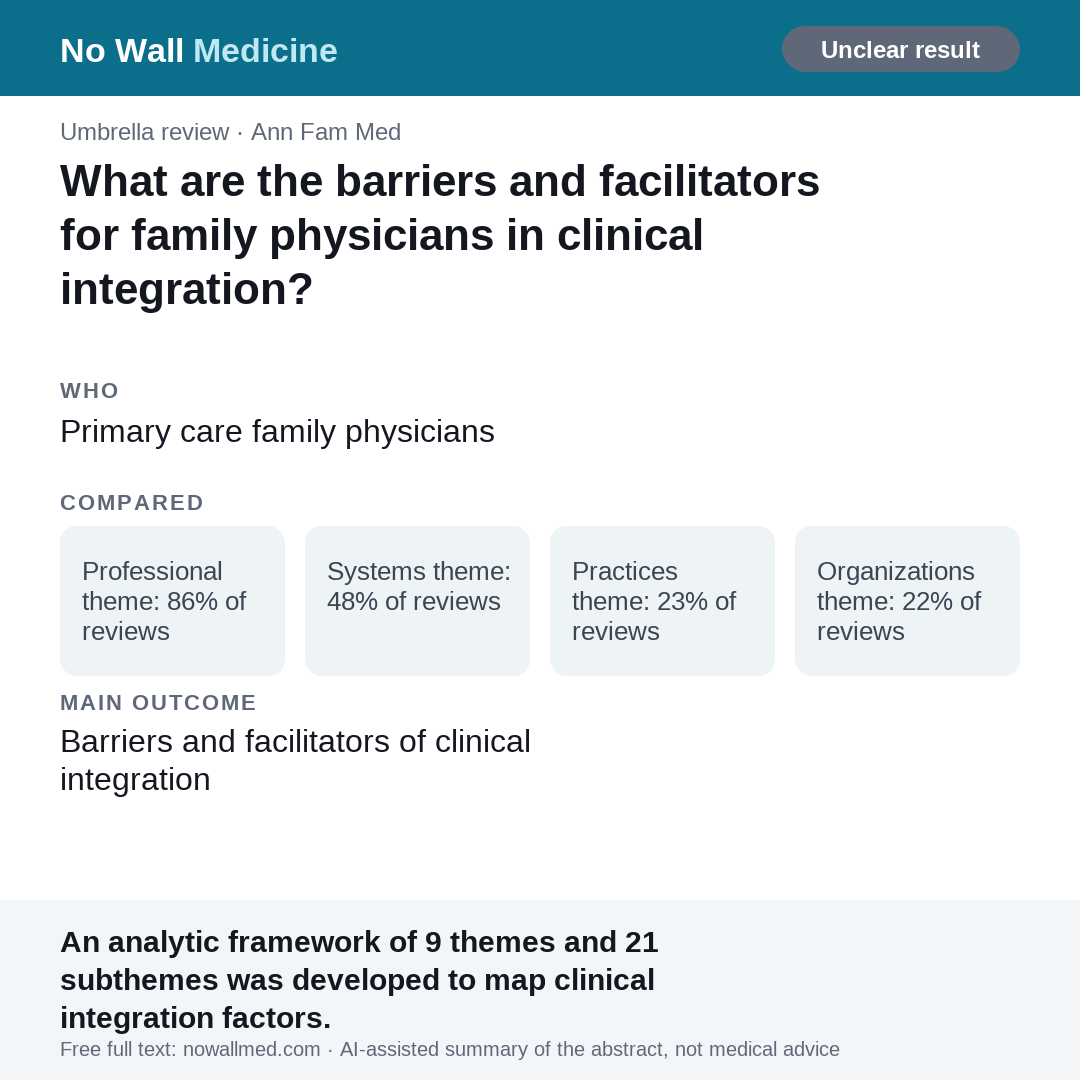
Mapping Evidence and Constructing an Analytic Framework: An Umbrella Review Summarizing Primary Care Family Physicians' Experiences With Clinical Integration
Umbrella reviewUnclear result
What are the barriers and facilitators for family physicians in clinical integration?
Who
Primary care family physicians
Compared
Professional theme: 86% of reviews
Systems theme: 48% of reviews
Practices theme: 23% of reviews
Organizations theme: 22% of reviews
Main outcome
Barriers and facilitators of clinical integration
Bottom line: An analytic framework of 9 themes and 21 subthemes was developed to map clinical integration factors.
Ann Fam Med · 2025-07-28Download image
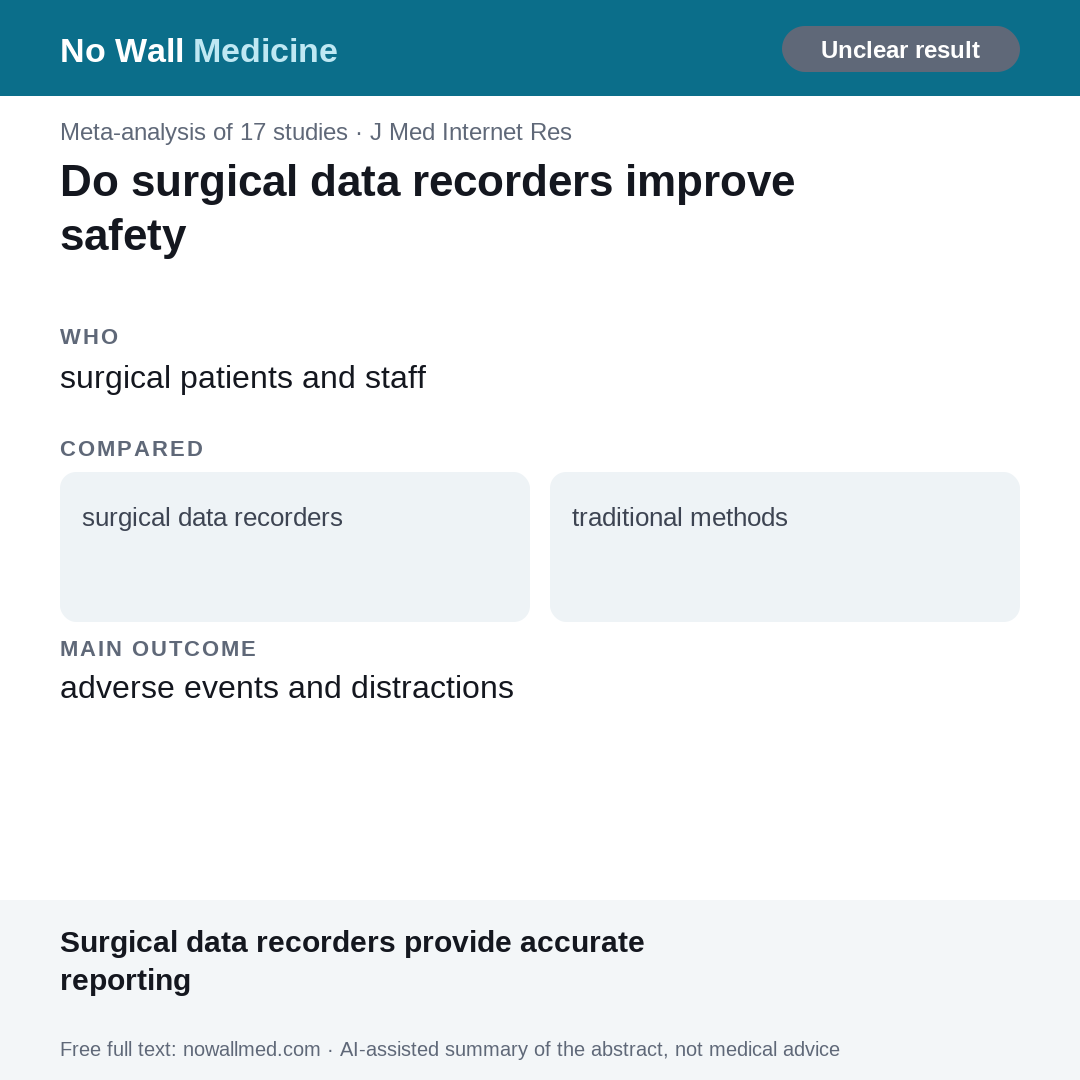
Enhancing Surgical Safety and Efficiency: Systematic Review and Single-Arm Meta-Analysis of Surgical Data Recorders
Meta-analysis of 17 studiesUnclear result
Do surgical data recorders improve safety
Who
surgical patients and staff
Compared
surgical data recorders
traditional methods
Main outcome
adverse events and distractions
Bottom line: Surgical data recorders provide accurate reporting
Limitation: confounding and small sample sizes
J Med Internet Res · 2025-07-28Download image
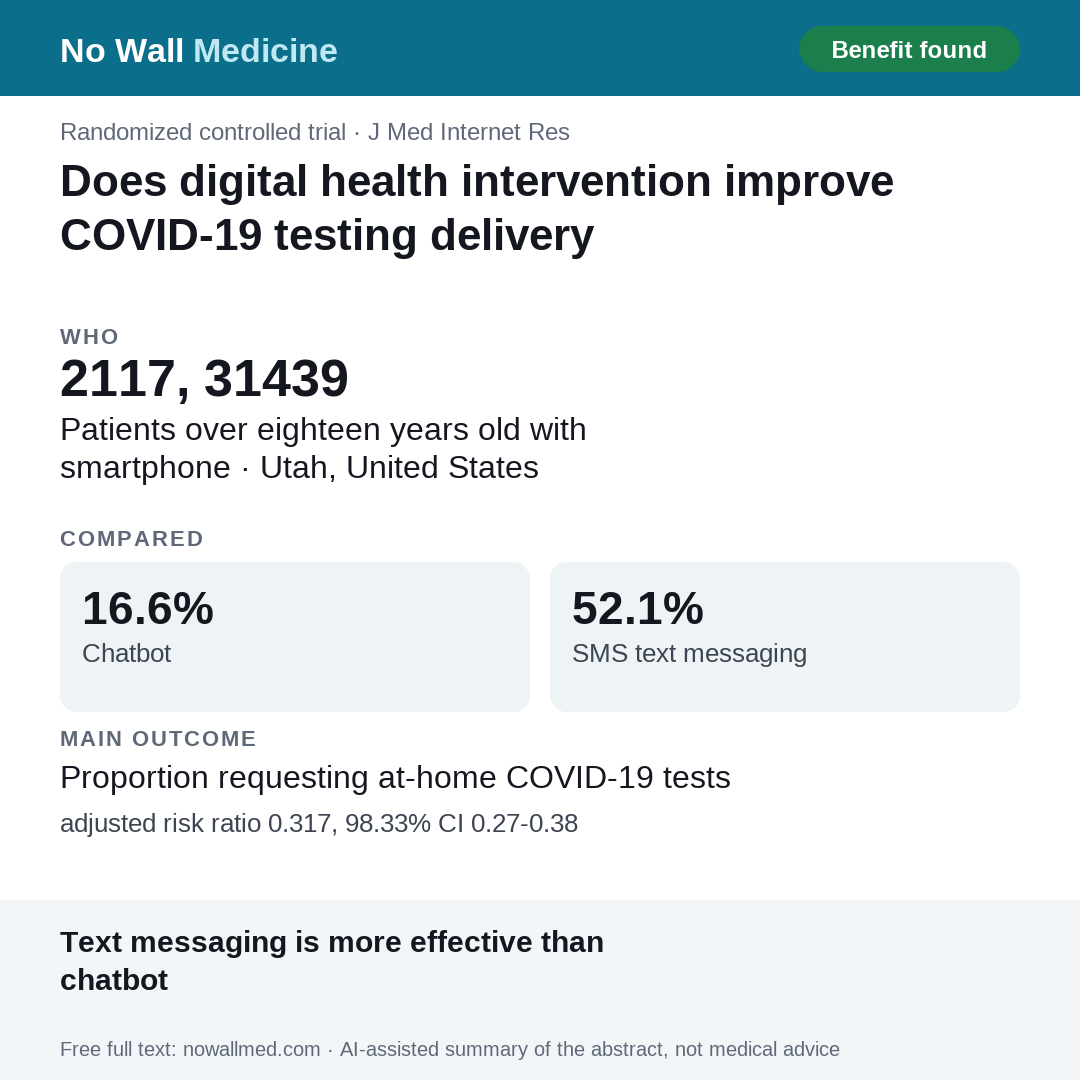
Population-Based Digital Health Interventions to Deliver at-Home COVID-19 Testing: SCALE-UP II Randomized Clinical Trial
Randomized controlled trialBenefit found
Does digital health intervention improve COVID-19 testing delivery
Who
2117, 31439
Patients over eighteen years old with smartphone · Utah, United States
Compared
16.6%Chatbot (174/1051)
52.1%SMS text messaging (555/1066)
Main outcome
Proportion requesting at-home COVID-19 tests
Result: adjusted risk ratio 0.317, 98.33% CI 0.27-0.38
Bottom line: Text messaging is more effective than chatbot
J Med Internet Res · 2025-07-28Download image