Visual abstracts
New randomized trials and meta-analyses from leading journals at a glance: who was studied, what was compared, and what was found. Every paper is free to read in full.
All specialtiesCardiology 4800Oncology 4084Gastroenterology & Hepatology 1917Infectious Disease 3789Neurology 1886Psychiatry & Mental Health 2240Pulmonology 2061Critical Care 1335Endocrinology & Diabetes 2553Pediatrics 2914Surgery 2500Orthopedics & Sports Medicine 923Neurosurgery 532Cardiothoracic & Vascular Surgery 665Plastic & Reconstructive Surgery 585Nephrology 1115Rheumatology 815Hematology 1099Dermatology 619Ophthalmology 539Obstetrics & Gynecology 1661Public & Global Health 1044Radiology & Imaging 637Anesthesiology 959Urology 751ENT (Otolaryngology) 497Emergency Medicine 484Allergy & Immunology 310Geriatrics 974Family Medicine & Primary Care 538Medical Genetics & Genomics 662Pathology & Laboratory Medicine 156Physical Medicine & Rehabilitation 746Palliative Care 422Nutrition 1566Digital Health & AI 2191General Medicine 319
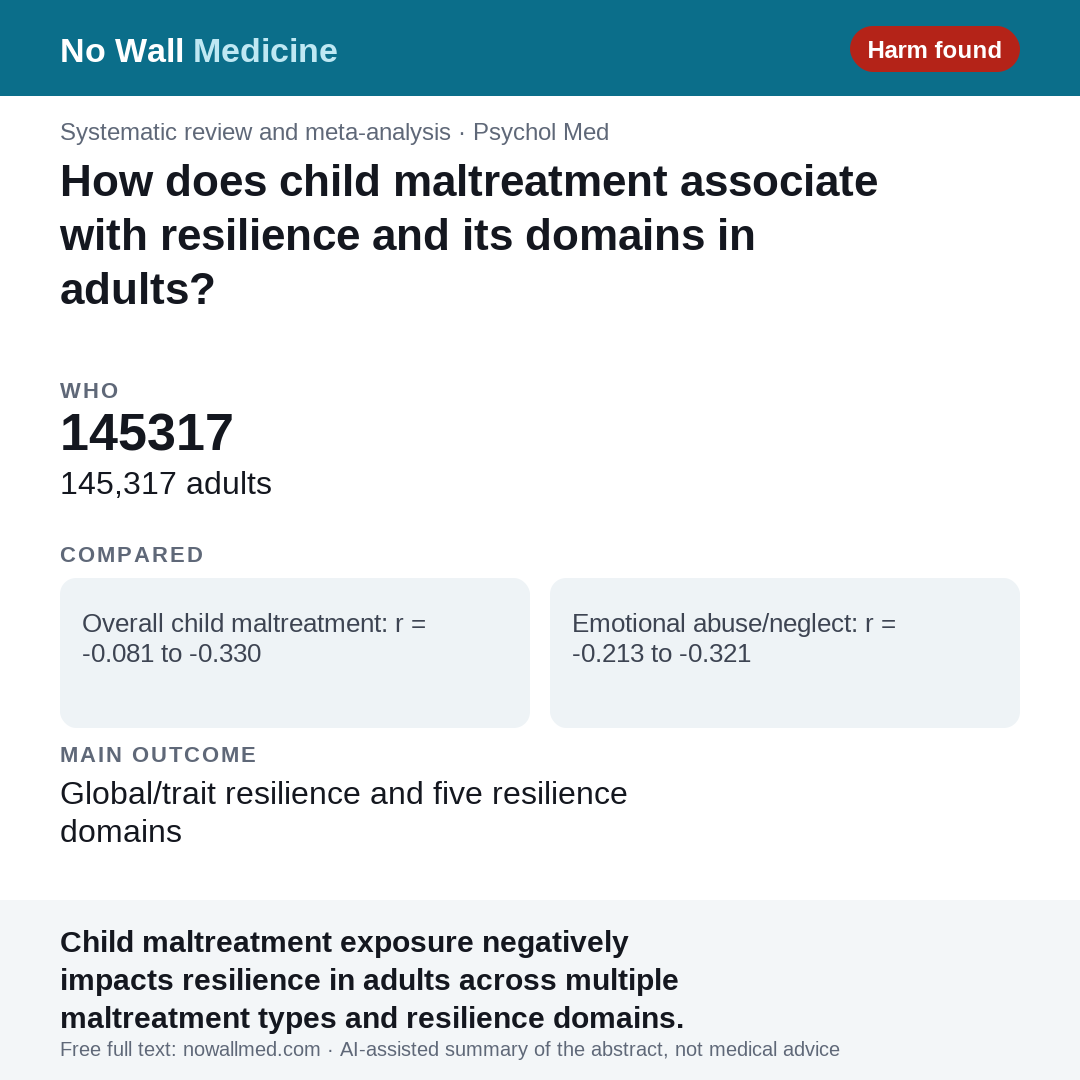
Child maltreatment and resilience in adulthood: a systematic review and meta-analysis
Systematic review and meta-analysisHarm found
How does child maltreatment associate with resilience and its domains in adults?
Who
145317
145,317 adults
Compared
Overall child maltreatment: r = -0.081 to -0.330
Emotional abuse/neglect: r = -0.213 to -0.321
Main outcome
Global/trait resilience and five resilience domains
Bottom line: Child maltreatment exposure negatively impacts resilience in adults across multiple maltreatment types and resilience domains.
Limitation: Limited studies assessing specific maltreatment subtypes, resilience domains in males, and clinical samples.
Psychol Med · 2025-06-02Download image
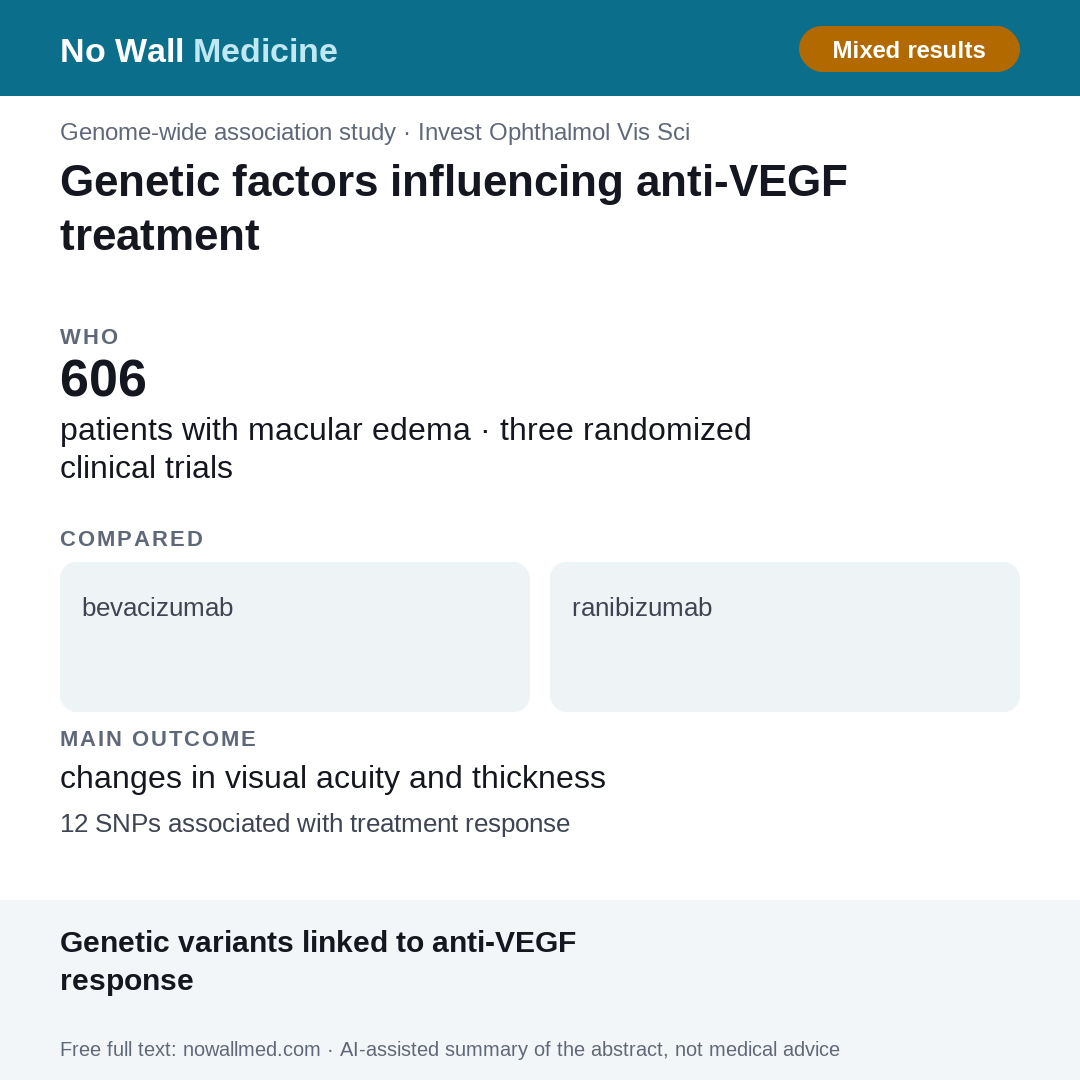
Several Common Genetic Variations Associate With Functional or Anatomic Effects of Anti-VEGF Treatment in Conditions With Macular Edema
Genome-wide association studyMixed results
Genetic factors influencing anti-VEGF treatment
Who
606
patients with macular edema · three randomized clinical trials
Compared
bevacizumab
ranibizumab
Main outcome
changes in visual acuity and thickness
Result: 12 SNPs associated with treatment response
Bottom line: Genetic variants linked to anti-VEGF response
Invest Ophthalmol Vis Sci · 2025-06-02Download image
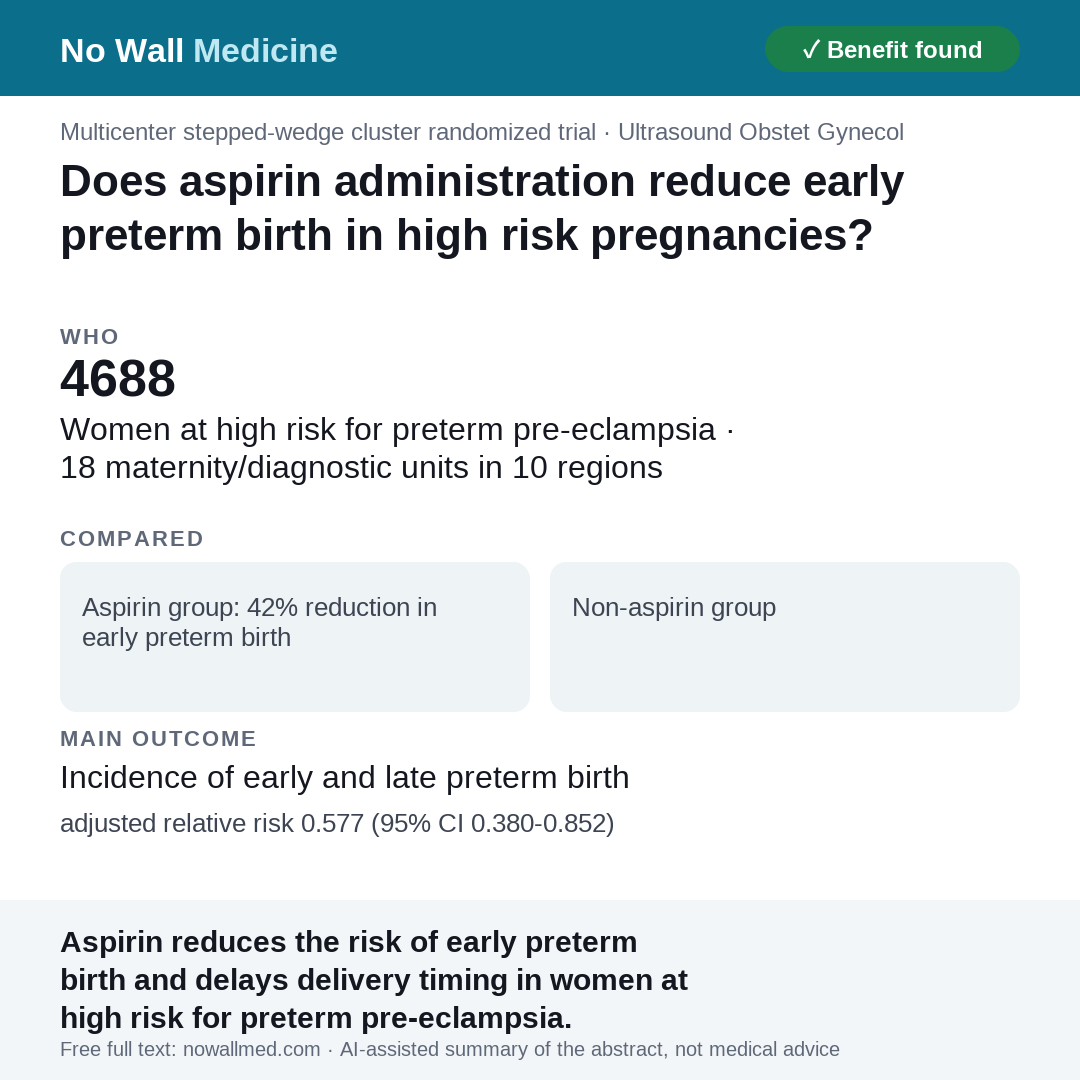
Aspirin delays preterm birth in pregnancies at high risk for preterm pre-eclampsia: evidence from randomized clinical trial in Asia
Multicenter stepped-wedge cluster randomized trialBenefit found
Does aspirin administration reduce early preterm birth in high risk pregnancies?
Who
4688
Women at high risk for preterm pre-eclampsia · 18 maternity/diagnostic units in 10 regions across Asia
Compared
Aspirin group: 42% reduction in early preterm birth
Non-aspirin group
Main outcome
Incidence of early and late preterm birth
Result: adjusted relative risk 0.577 (95% CI 0.380-0.852)
Bottom line: Aspirin reduces the risk of early preterm birth and delays delivery timing in women at high risk for preterm pre-eclampsia.
Ultrasound Obstet Gynecol · 2025-06-02Download image
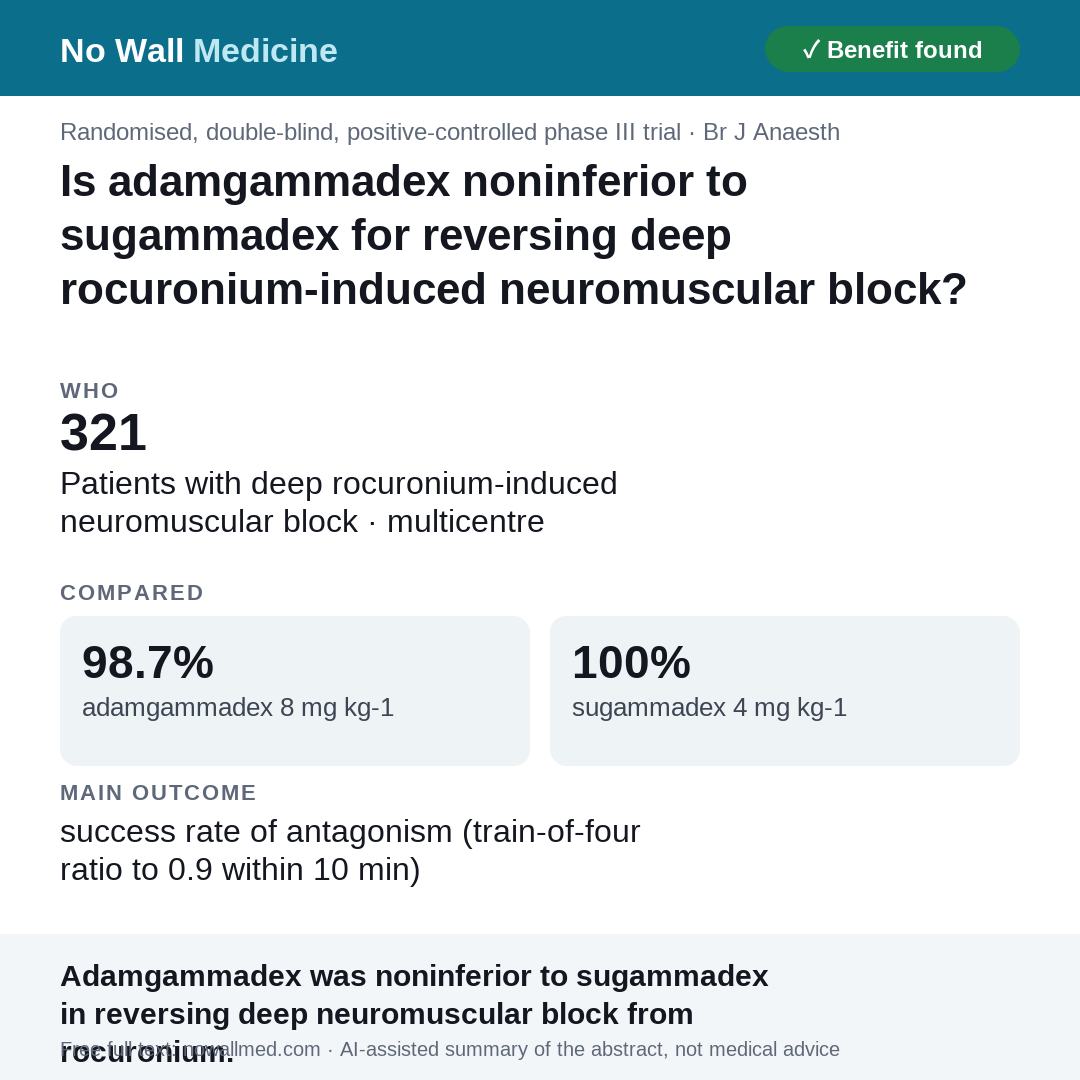
Efficacy and safety of adamgammadex for reversing rocuronium-induced deep neuromuscular block: a multicentre, randomised, double-blind, positive-controlled phase III trial
Randomised, double-blind, positive-controlled phase III trialBenefit found
Is adamgammadex noninferior to sugammadex for reversing deep rocuronium-induced neuromuscular block?
Who
321
Patients with deep rocuronium-induced neuromuscular block · multicentre
Compared
98.7%adamgammadex 8 mg kg-1
100%sugammadex 4 mg kg-1
Main outcome
success rate of antagonism (train-of-four ratio to 0.9 within 10 min)
Result: observed difference -1.3% (95% CI -4.6%, 1.2%)
Bottom line: Adamgammadex was noninferior to sugammadex in reversing deep neuromuscular block from rocuronium.
Br J Anaesth · 2025-06-02Download image
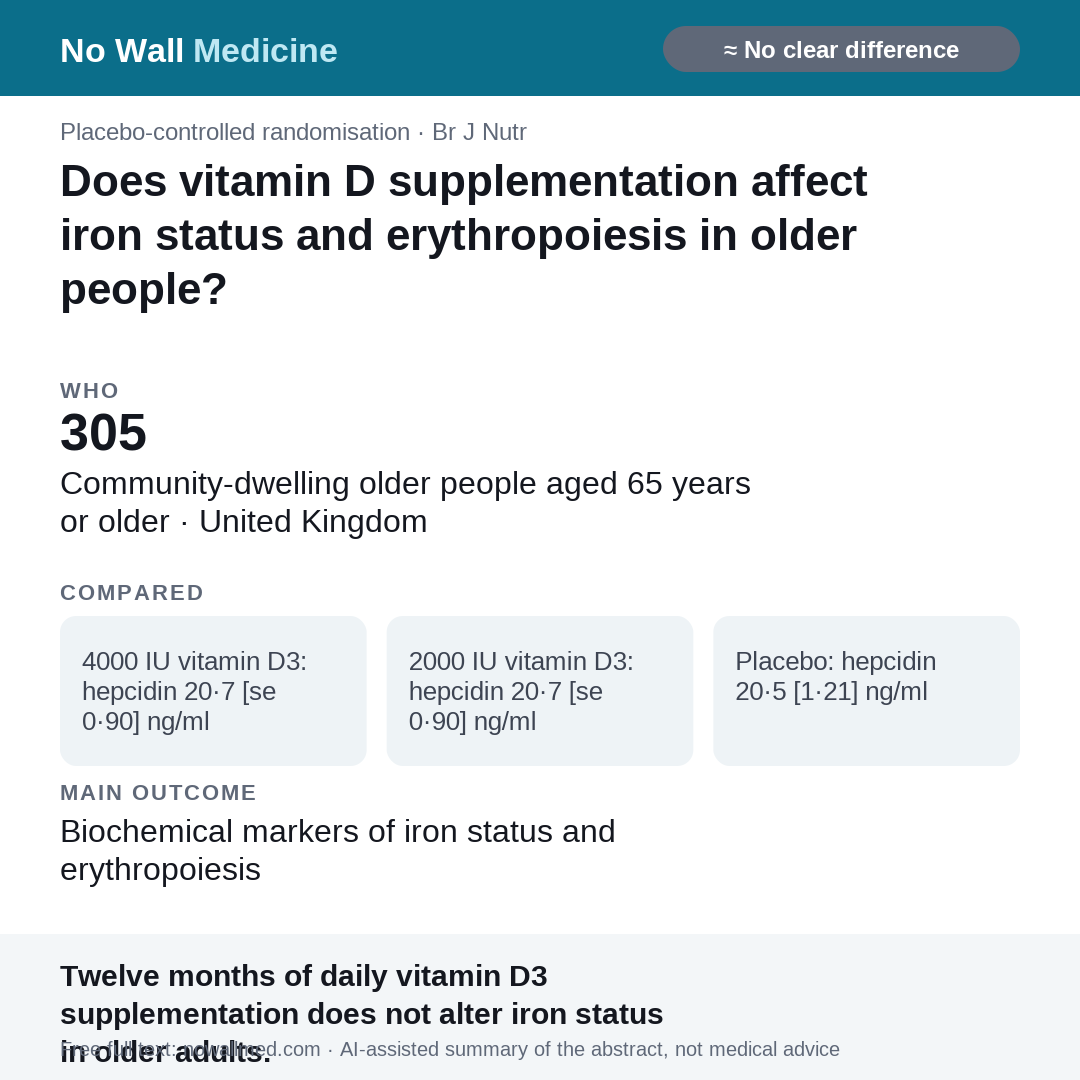
Effect of supplementation with vitamin D on biochemical markers of iron status and erythropoiesis in older people: BEST-D trial
Placebo-controlled randomisationNo clear difference
Does vitamin D supplementation affect iron status and erythropoiesis in older people?
Who
305
Community-dwelling older people aged 65 years or older · United Kingdom
Compared
4000 IU vitamin D3: hepcidin 20·7 [se 0·90] ng/ml
2000 IU vitamin D3: hepcidin 20·7 [se 0·90] ng/ml
Placebo: hepcidin 20·5 [1·21] ng/ml
Main outcome
Biochemical markers of iron status and erythropoiesis
Bottom line: Twelve months of daily vitamin D3 supplementation does not alter iron status in older adults.
Br J Nutr · 2025-06-02Download image
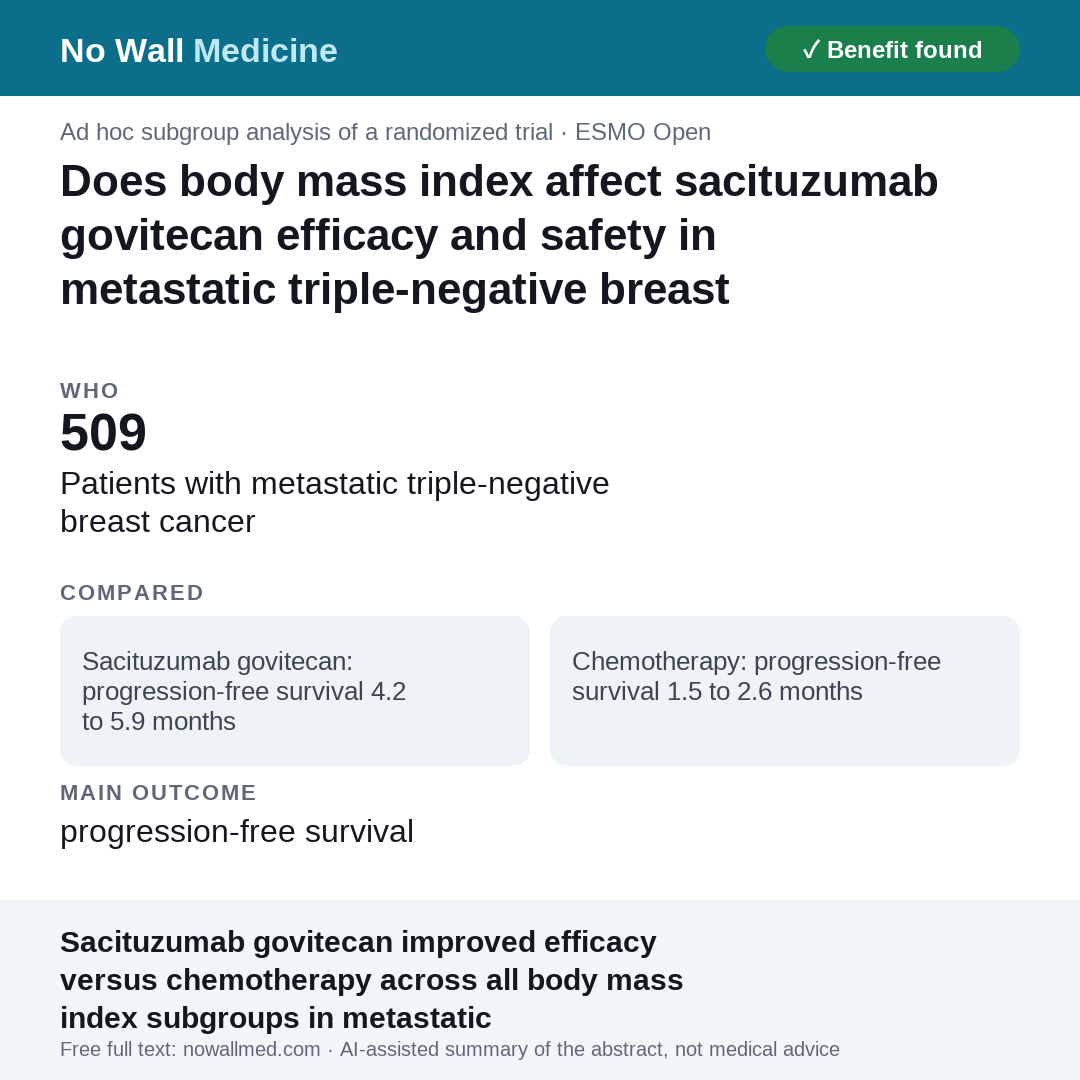
The association of high body mass index with the safety and efficacy of sacituzumab govitecan in patients with metastatic triple-negative breast cancer from the ASCENT study
Ad hoc subgroup analysis of a randomized trialBenefit found
Does body mass index affect sacituzumab govitecan efficacy and safety in metastatic triple-negative breast cancer?
Who
509
Patients with metastatic triple-negative breast cancer
Compared
Sacituzumab govitecan: progression-free survival 4.2 to 5.9 months
Chemotherapy: progression-free survival 1.5 to 2.6 months
Main outcome
progression-free survival
Result: hazard ratio 0.31 to 0.48
Bottom line: Sacituzumab govitecan improved efficacy versus chemotherapy across all body mass index subgroups in metastatic triple-negative breast cancer.
ESMO Open · 2025-06-02Download image
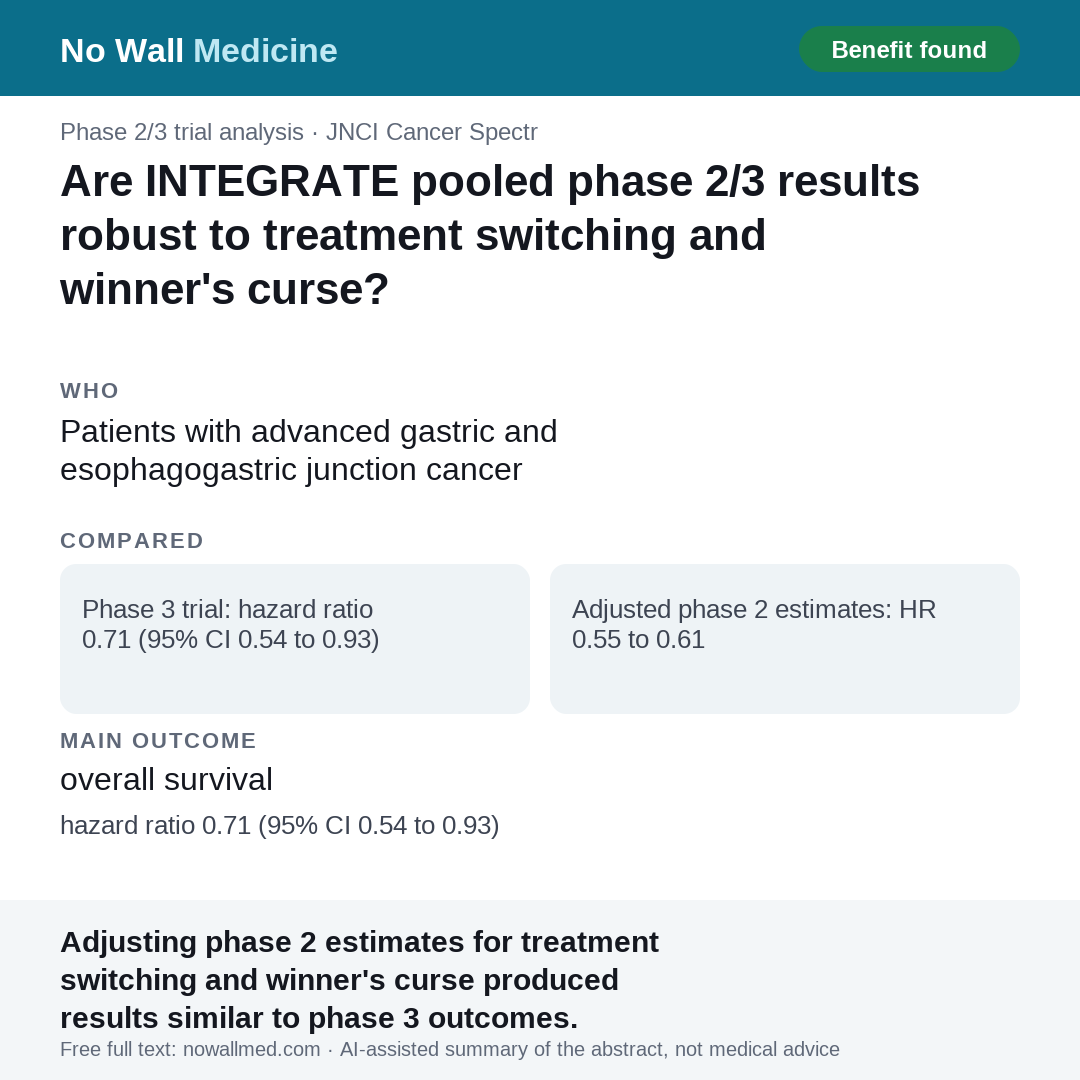
INTEGRATE pooled phase 2/3 results are robust to postprogression switching and the winner's curse
Phase 2/3 trial analysisBenefit found
Are INTEGRATE pooled phase 2/3 results robust to treatment switching and winner's curse?
Who
Patients with advanced gastric and esophagogastric junction cancer
Compared
Phase 3 trial: hazard ratio 0.71 (95% CI 0.54 to 0.93)
Adjusted phase 2 estimates: HR 0.55 to 0.61
Main outcome
overall survival
Result: hazard ratio 0.71 (95% CI 0.54 to 0.93)
Bottom line: Adjusting phase 2 estimates for treatment switching and winner's curse produced results similar to phase 3 outcomes.
JNCI Cancer Spectr · 2025-06-02Download image
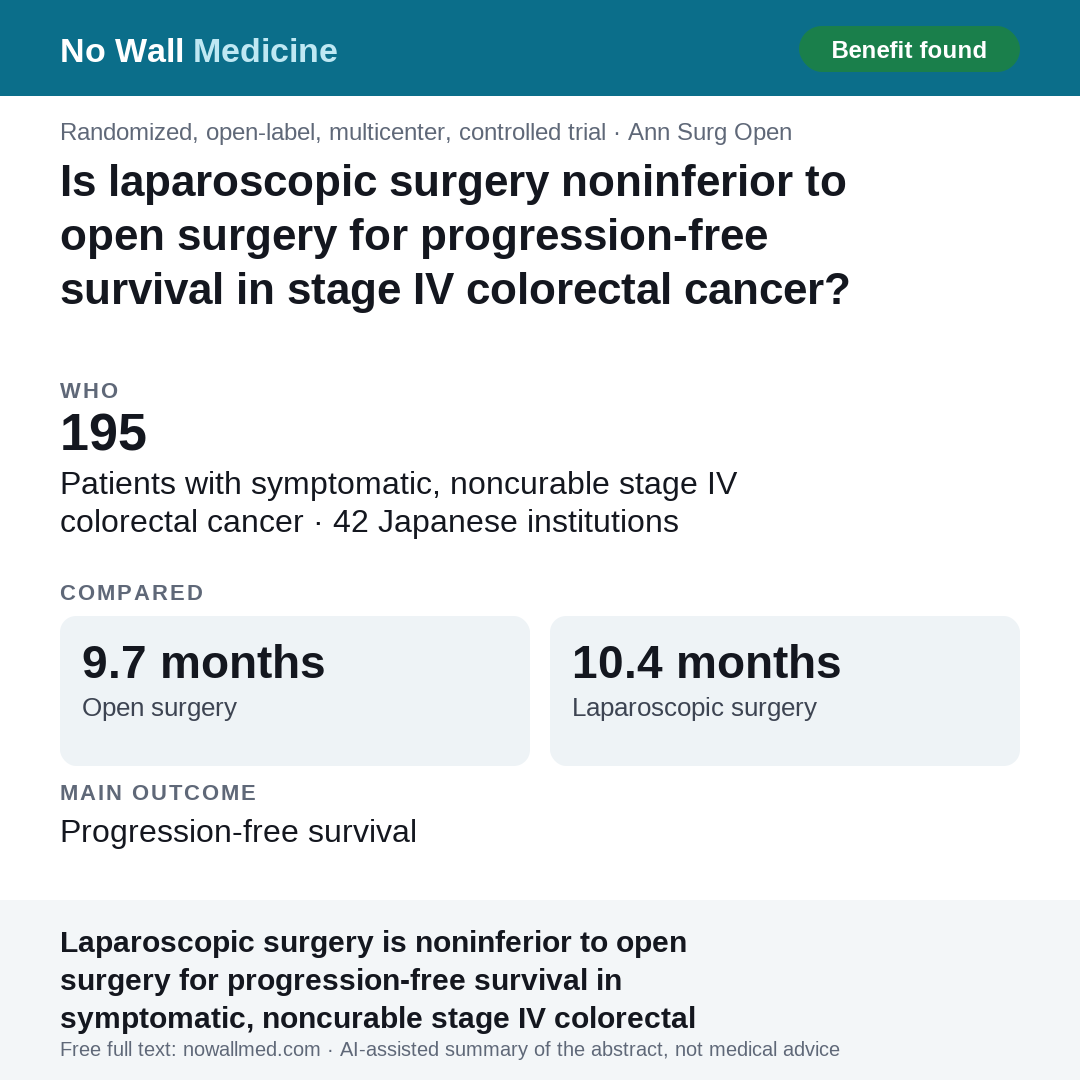
A Randomized Open-Label, Noninferiority, Phase 3, Multicenter, Controlled Trial to Compare Laparoscopic Surgery With Open Surgery for Symptomatic, Noncurable Stage IV Colorectal Cancer (JCOG1107)
Randomized, open-label, multicenter, controlled trialBenefit found
Is laparoscopic surgery noninferior to open surgery for progression-free survival in stage IV colorectal cancer?
Who
195
Patients with symptomatic, noncurable stage IV colorectal cancer · 42 Japanese institutions
Compared
9.7 monthsOpen surgery
10.4 monthsLaparoscopic surgery
Main outcome
Progression-free survival
Result: hazard ratio 1.02 (91.4% CI 0.79-1.32)
Bottom line: Laparoscopic surgery is noninferior to open surgery for progression-free survival in symptomatic, noncurable stage IV colorectal cancer.
Ann Surg Open · 2025-06-02Download image
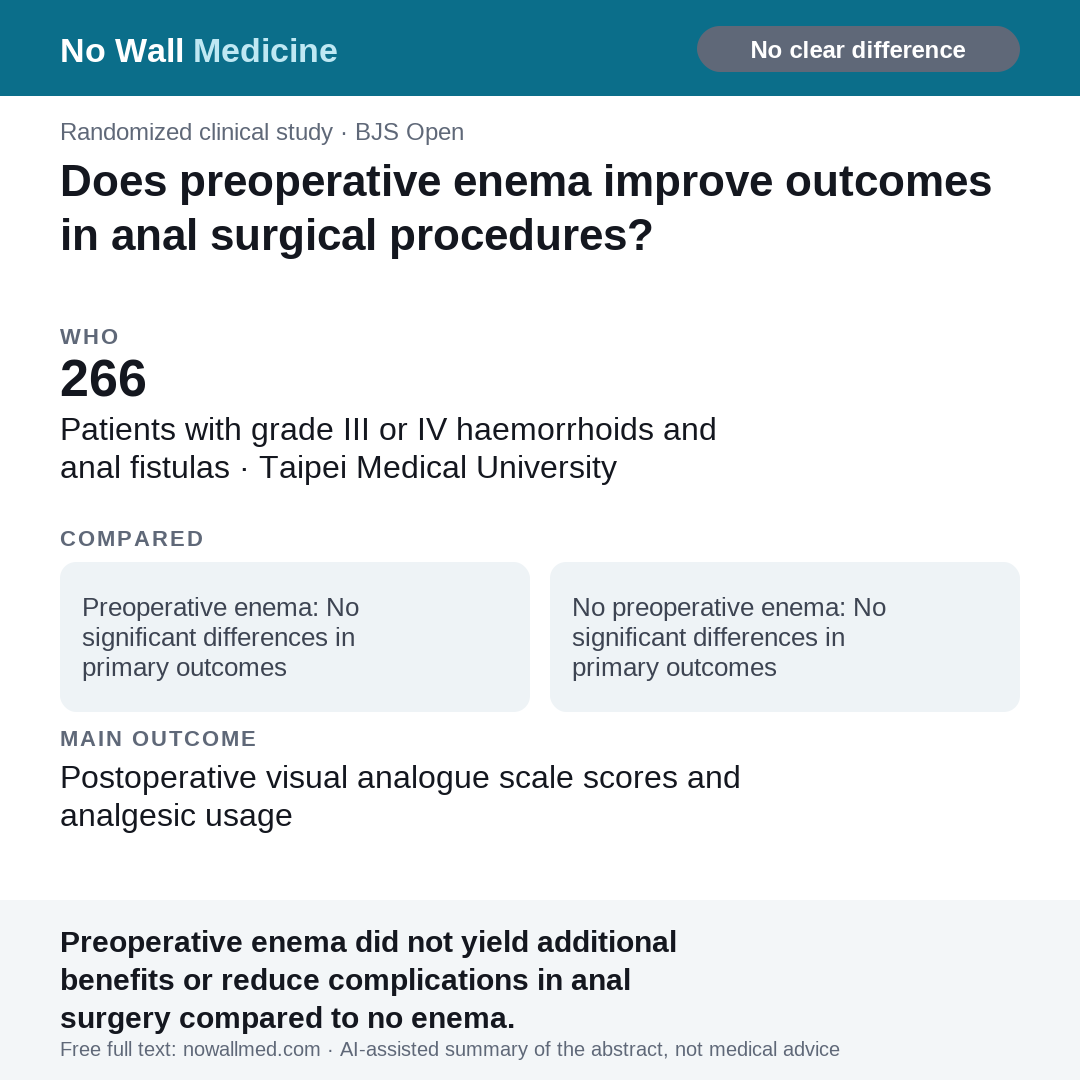
Preoperative enema for anal surgery: randomized clinical trial
Randomized clinical studyNo clear difference
Does preoperative enema improve outcomes in anal surgical procedures?
Who
266
Patients with grade III or IV haemorrhoids and anal fistulas · Taipei Medical University Shuang-Ho Hospital, Taiwan
Compared
Preoperative enema: No significant differences in primary outcomes
No preoperative enema: No significant differences in primary outcomes
Main outcome
Postoperative visual analogue scale scores and analgesic usage
Bottom line: Preoperative enema did not yield additional benefits or reduce complications in anal surgery compared to no enema.
BJS Open · 2025-06-02Download image
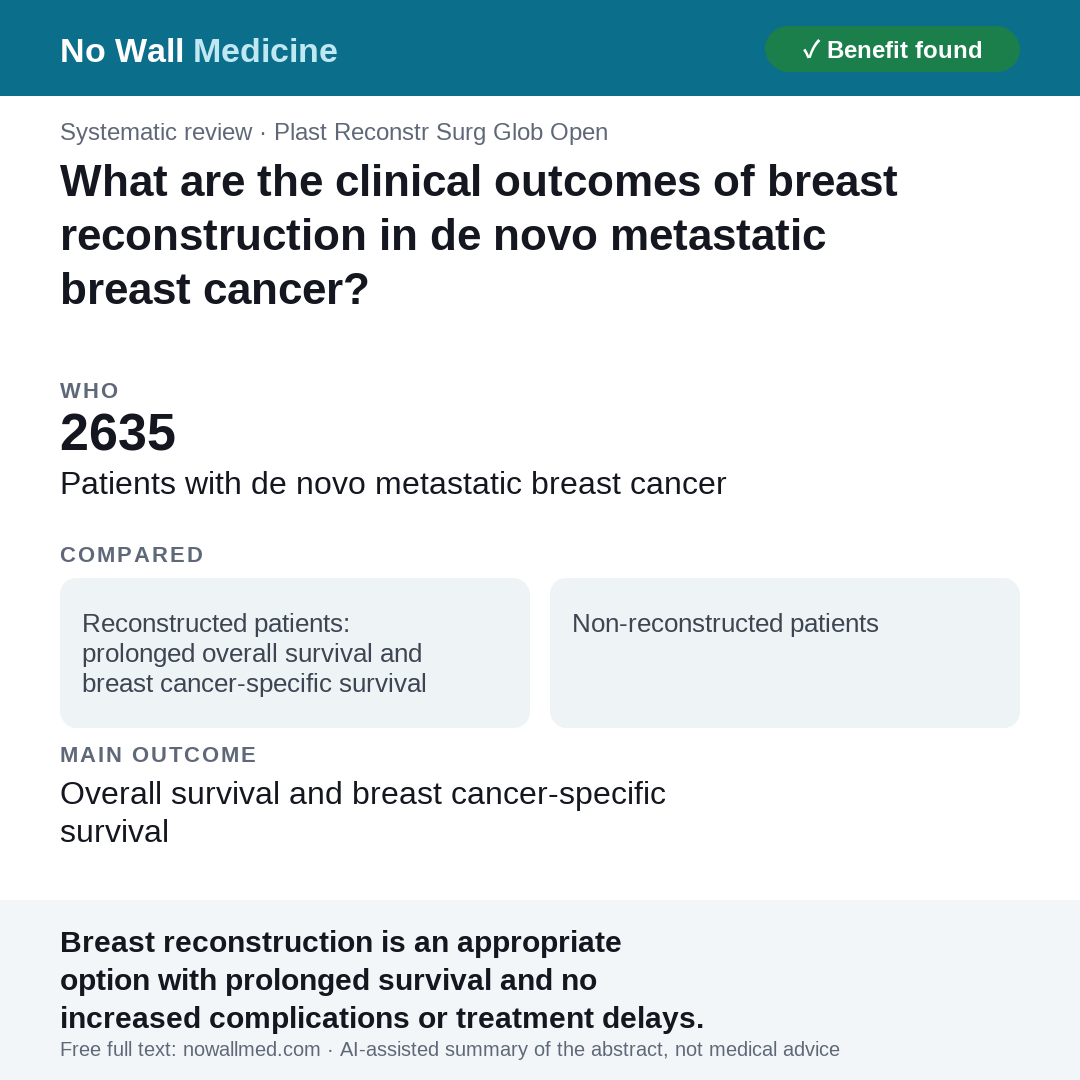
Breast Reconstruction in De Novo Metastatic Breast Cancer: A Systematic Review
Systematic reviewBenefit found
What are the clinical outcomes of breast reconstruction in de novo metastatic breast cancer?
Who
2635
Patients with de novo metastatic breast cancer
Compared
Reconstructed patients: prolonged overall survival and breast cancer-specific survival
Non-reconstructed patients
Main outcome
Overall survival and breast cancer-specific survival
Bottom line: Breast reconstruction is an appropriate option with prolonged survival and no increased complications or treatment delays.
Limitation: Survival benefits may be limited to low disease burden and hormone receptor-positive subtypes.
Plast Reconstr Surg Glob Open · 2025-06-02Download image
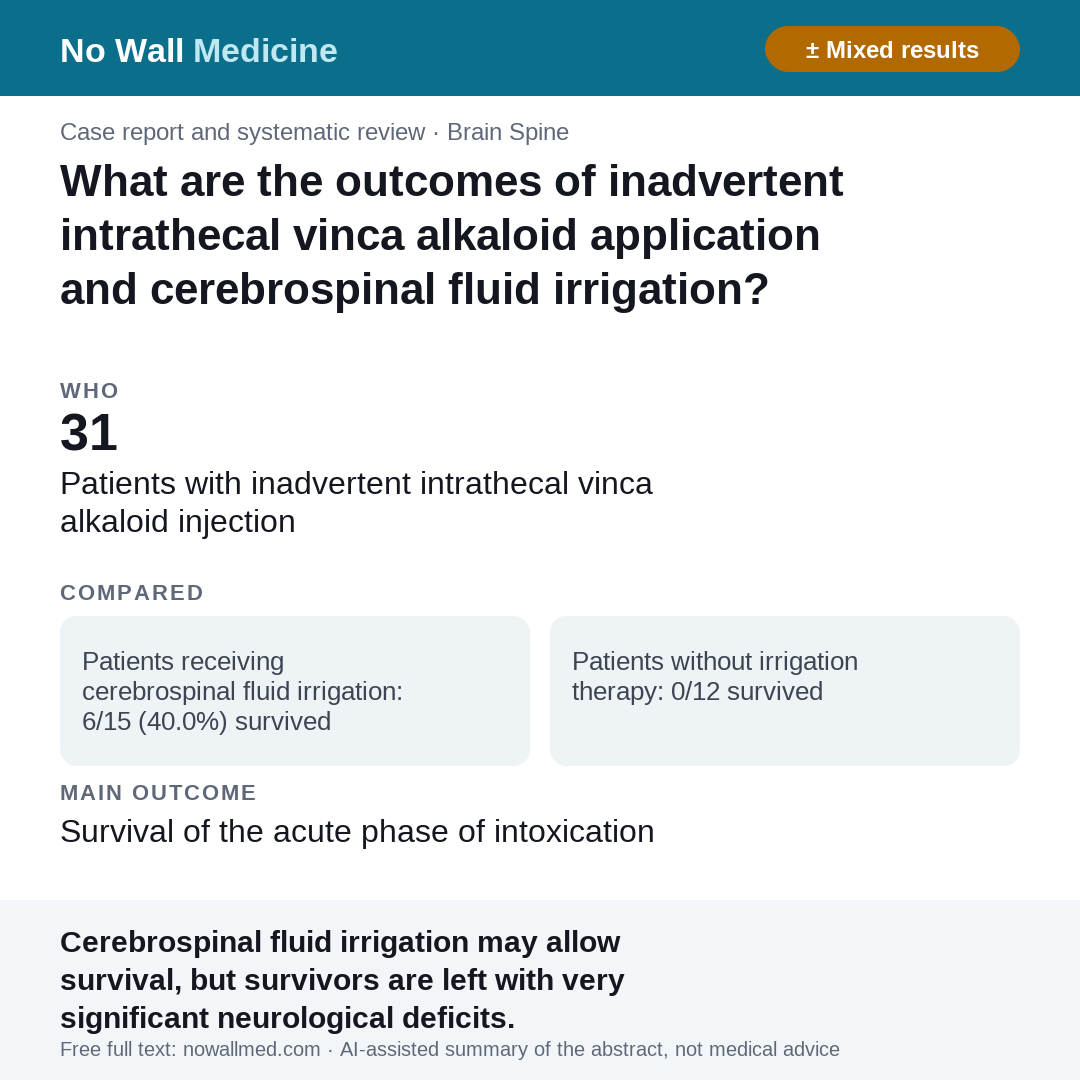
Inadvertent intrathecal application of vindesine and its neurological outcome: case report and systematic review of the literature
Case report and systematic reviewMixed results
What are the outcomes of inadvertent intrathecal vinca alkaloid application and cerebrospinal fluid irrigation?
Who
31
Patients with inadvertent intrathecal vinca alkaloid injection
Compared
Patients receiving cerebrospinal fluid irrigation: 6/15 (40.0%) survived
Patients without irrigation therapy: 0/12 survived
Main outcome
Survival of the acute phase of intoxication
Bottom line: Cerebrospinal fluid irrigation may allow survival, but survivors are left with very significant neurological deficits.
Limitation: The study is based on a small number of identified cases.
Brain Spine · 2025-06-02Download image
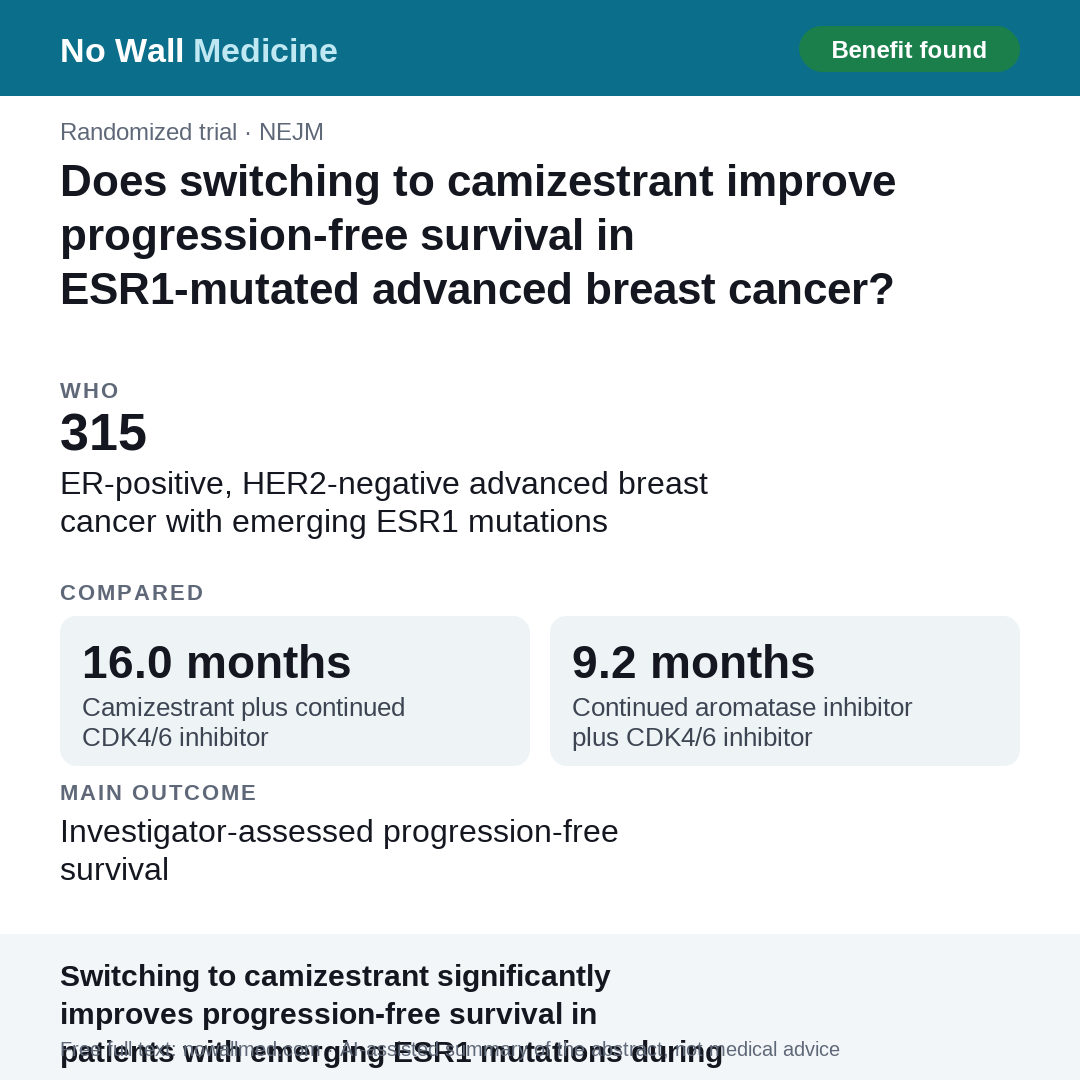
First-Line Camizestrant for Emerging ESR1-Mutated Advanced Breast Cancer
Randomized trialBenefit found
Does switching to camizestrant improve progression-free survival in ESR1-mutated advanced breast cancer?
Who
315
ER-positive, HER2-negative advanced breast cancer with emerging ESR1 mutations
Compared
16.0 monthsCamizestrant plus continued CDK4/6 inhibitor (95% CI, 12.7 to 18.2)
9.2 monthsContinued aromatase inhibitor plus CDK4/6 inhibitor (95% CI, 7.2 to 9.5)
Main outcome
Investigator-assessed progression-free survival
Result: hazard ratio 0.44 (95% CI 0.31 to 0.60)
Bottom line: Switching to camizestrant significantly improves progression-free survival in patients with emerging ESR1 mutations during first-line therapy.
Funded by: AstraZeneca
NEJM · 2025-06-01Download image
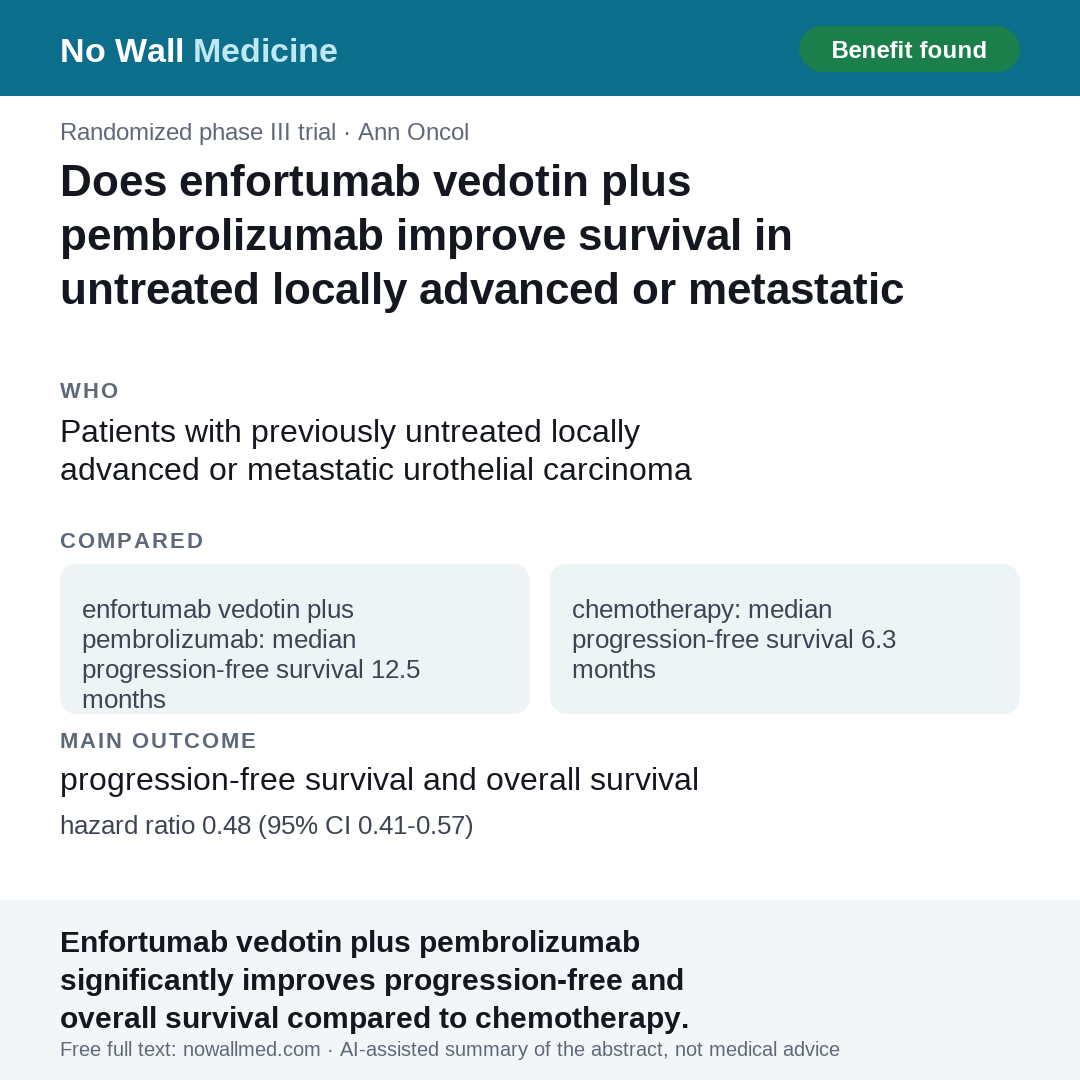
Enfortumab vedotin plus pembrolizumab in untreated locally advanced or metastatic urothelial carcinoma: 2.5-year median follow-up of the phase III EV-302/KEYNOTE-A39 trial
Randomized phase III trialBenefit found
Does enfortumab vedotin plus pembrolizumab improve survival in untreated locally advanced or metastatic urothelial carcinoma?
Who
Patients with previously untreated locally advanced or metastatic urothelial carcinoma
Compared
enfortumab vedotin plus pembrolizumab: median progression-free survival 12.5 months
chemotherapy: median progression-free survival 6.3 months
Main outcome
progression-free survival and overall survival
Result: hazard ratio 0.48 (95% CI 0.41-0.57)
Bottom line: Enfortumab vedotin plus pembrolizumab significantly improves progression-free and overall survival compared to chemotherapy.
Ann Oncol · 2025-06-01Download image
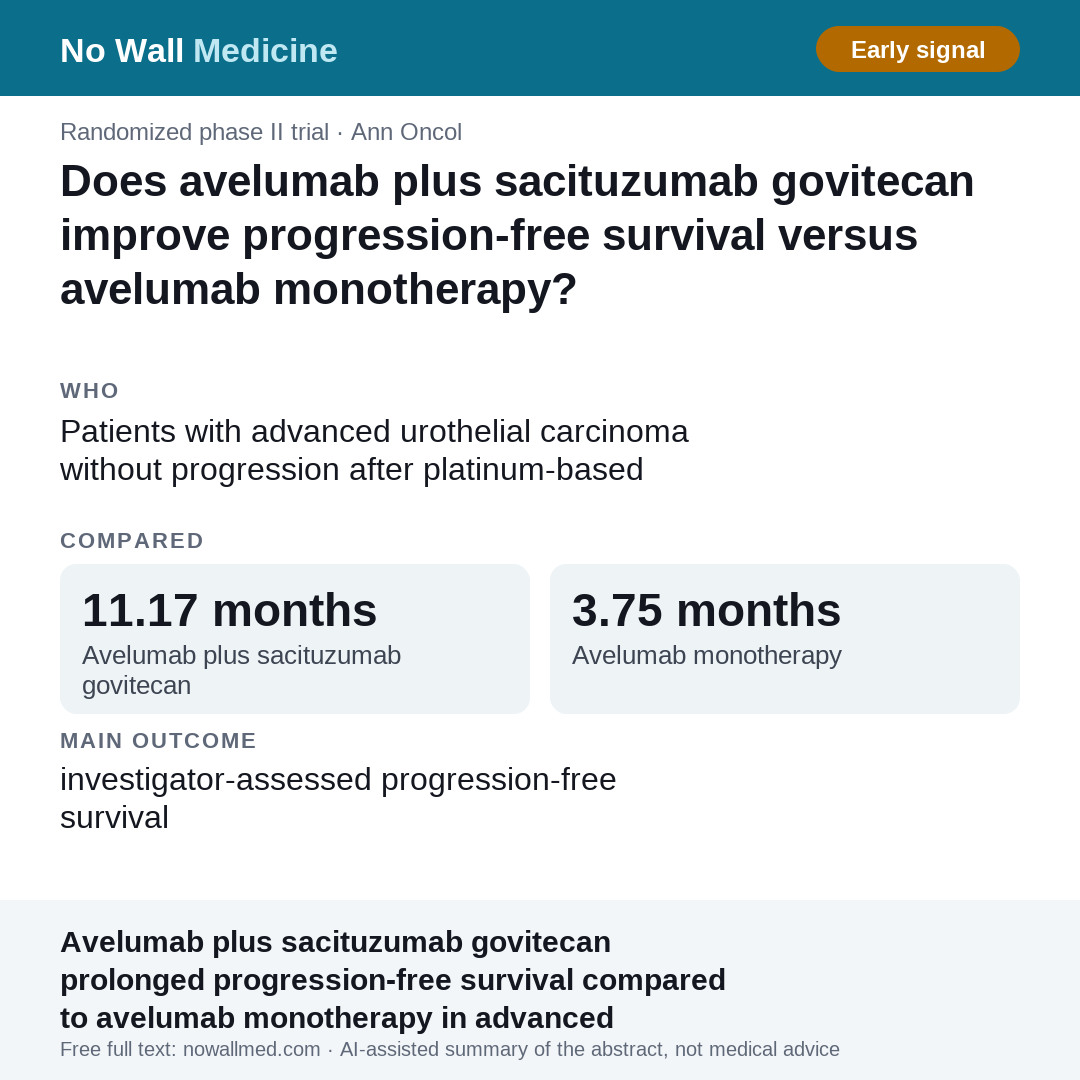
Avelumab plus sacituzumab govitecan versus avelumab monotherapy as first-line maintenance treatment in patients with advanced urothelial carcinoma: JAVELIN Bladder Medley interim analysis
Randomized phase II trialEarly signal
Does avelumab plus sacituzumab govitecan improve progression-free survival versus avelumab monotherapy?
Who
Patients with advanced urothelial carcinoma without progression after platinum-based chemotherapy
Compared
11.17 monthsAvelumab plus sacituzumab govitecan
3.75 monthsAvelumab monotherapy
Main outcome
investigator-assessed progression-free survival
Result: hazard ratio 0.49 (95% CI 0.31-0.76)
Bottom line: Avelumab plus sacituzumab govitecan prolonged progression-free survival compared to avelumab monotherapy in advanced urothelial carcinoma.
Ann Oncol · 2025-06-01Download image
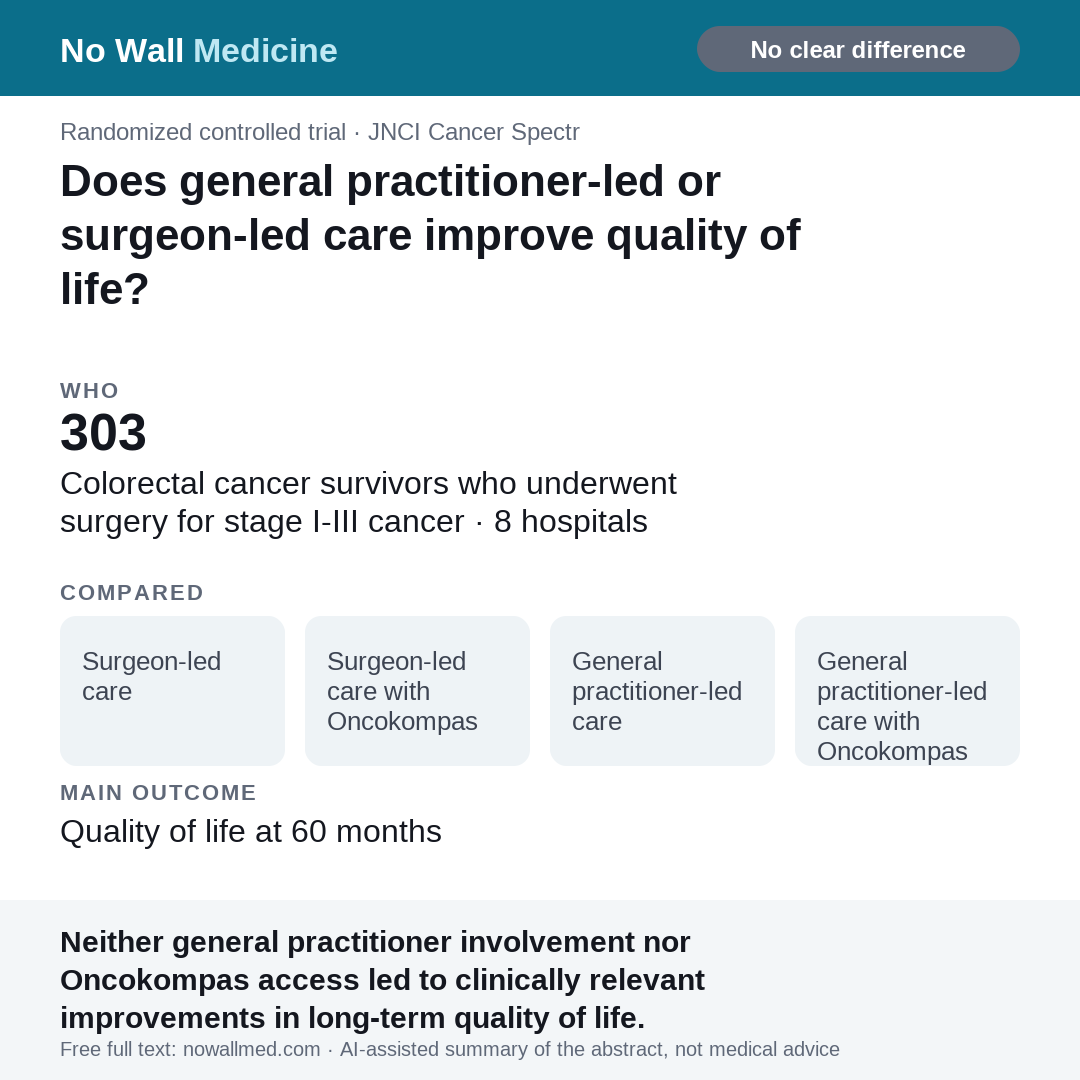
General practitioner-led vs surgeon-led colon cancer survivorship care: a randomized clinical trial
Randomized controlled trialNo clear difference
Does general practitioner-led or surgeon-led care improve quality of life?
Who
303
Colorectal cancer survivors who underwent surgery for stage I-III cancer · 8 hospitals and 225 general practices in the Netherlands
Compared
Surgeon-led care
Surgeon-led care with Oncokompas
General practitioner-led care
General practitioner-led care with Oncokompas
Main outcome
Quality of life at 60 months
Result: difference in summary score -0.5 (95% CI -1.6 to 0.5)
Bottom line: Neither general practitioner involvement nor Oncokompas access led to clinically relevant improvements in long-term quality of life.
JNCI Cancer Spectr · 2025-06-01Download image
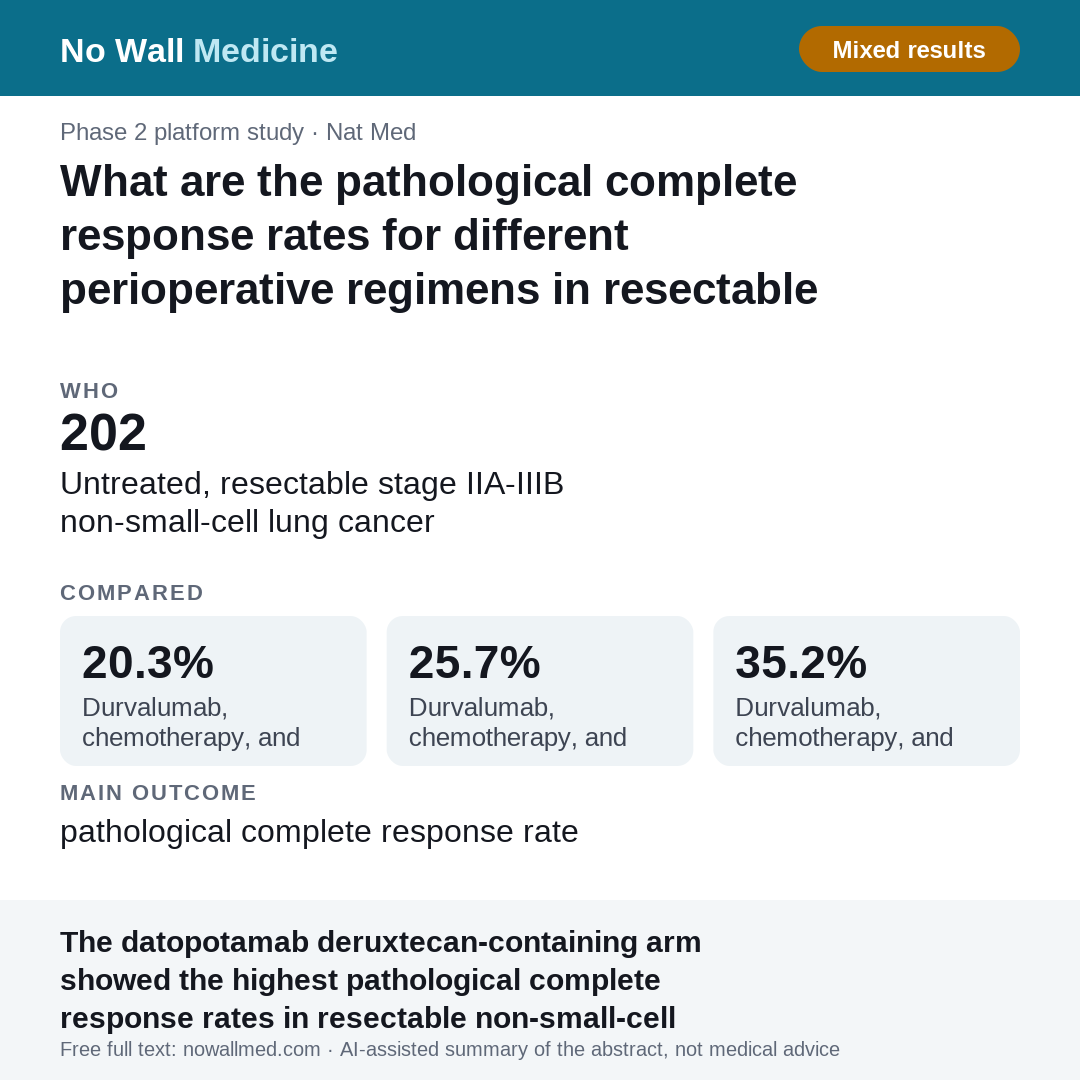
Perioperative durvalumab plus chemotherapy plus new agents for resectable non-small-cell lung cancer: the platform phase 2 NeoCOAST-2 trial
Phase 2 platform studyMixed results
What are the pathological complete response rates for different perioperative regimens in resectable non-small-cell lung cancer?
Who
202
Untreated, resectable stage IIA-IIIB non-small-cell lung cancer
Compared
20.3%Durvalumab, chemotherapy, and oleclumab (15/74; 95% CI, 11.8-31.2)
25.7%Durvalumab, chemotherapy, and monalizumab (18/70; 95% CI, 16.0-37.6)
35.2%Durvalumab, chemotherapy, and datopotamab deruxtecan (19/54; 95% CI, 22.7-49.4)
Main outcome
pathological complete response rate
Bottom line: The datopotamab deruxtecan-containing arm showed the highest pathological complete response rates in resectable non-small-cell lung cancer.
Nat Med · 2025-05-31Download image
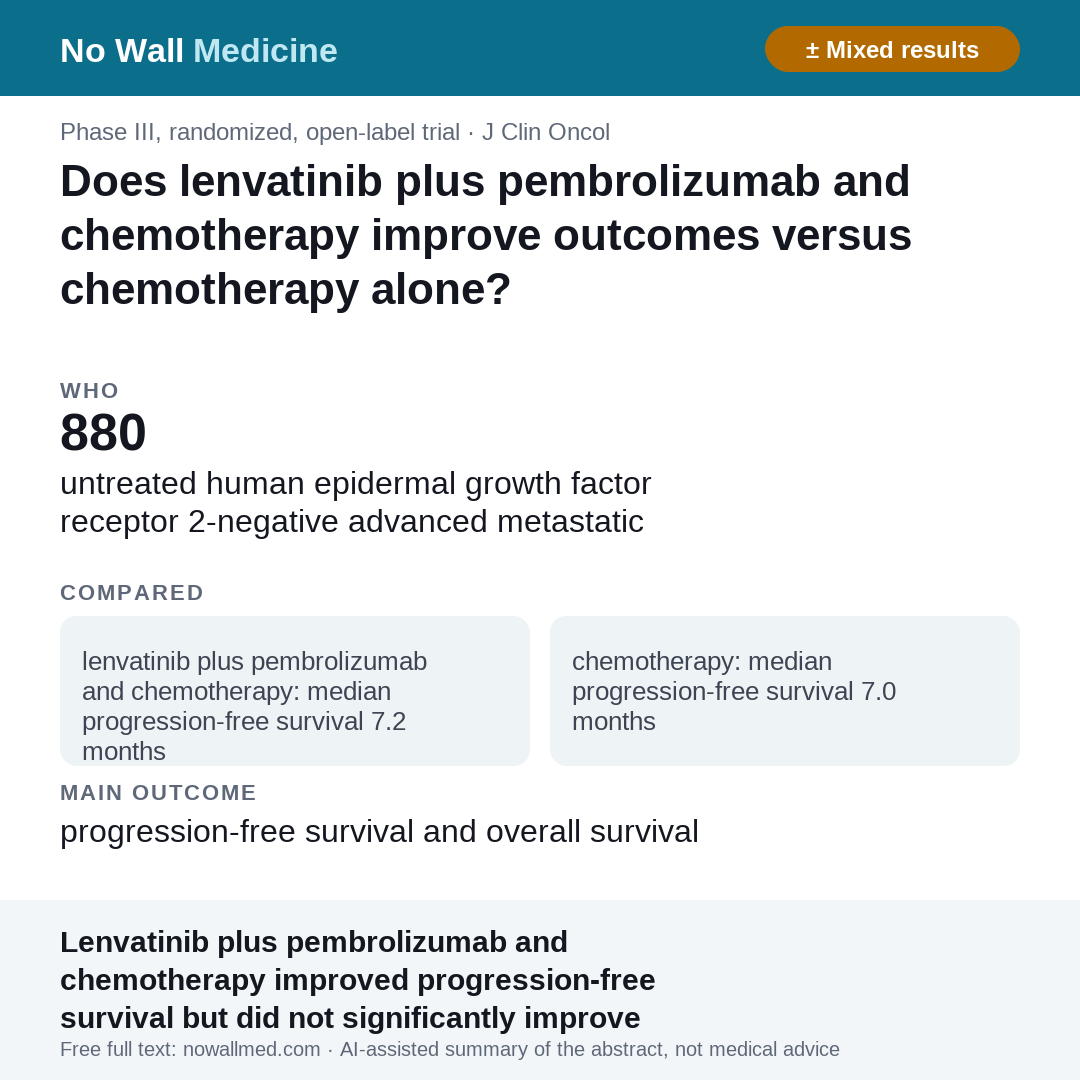
Lenvatinib Plus Pembrolizumab and Chemotherapy Versus Chemotherapy in Advanced Metastatic Gastroesophageal Adenocarcinoma: The Phase III, Randomized LEAP-015 Study
Phase III, randomized, open-label trialMixed results
Does lenvatinib plus pembrolizumab and chemotherapy improve outcomes versus chemotherapy alone?
Who
880
untreated human epidermal growth factor receptor 2-negative advanced metastatic gastroesophageal adenocarcinoma
Compared
lenvatinib plus pembrolizumab and chemotherapy: median progression-free survival 7.2 months
chemotherapy: median progression-free survival 7.0 months
Main outcome
progression-free survival and overall survival
Result: hazard ratio 0.78 (95% CI 0.66 to 0.92)
Bottom line: Lenvatinib plus pembrolizumab and chemotherapy improved progression-free survival but did not significantly improve overall survival.
Limitation: the clinical significance of the progression-free survival difference seems to be limited
J Clin Oncol · 2025-05-31Download image
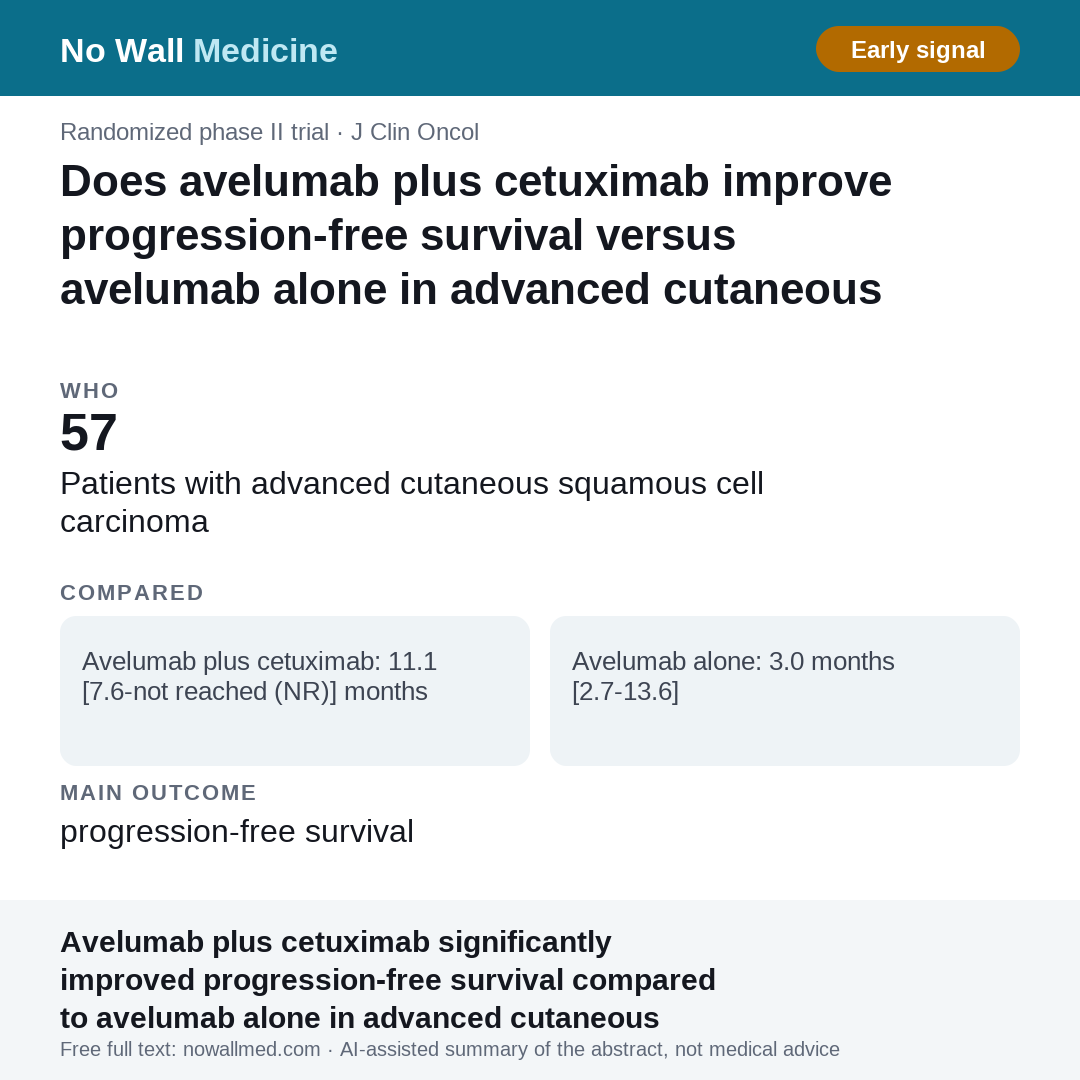
Phase II (Alliance A091802) Randomized Trial of Avelumab Plus Cetuximab Versus Avelumab Alone in Advanced Cutaneous Squamous Cell Carcinoma
Randomized phase II trialEarly signal
Does avelumab plus cetuximab improve progression-free survival versus avelumab alone in advanced cutaneous squamous cell carcinoma?
Who
57
Patients with advanced cutaneous squamous cell carcinoma
Compared
Avelumab plus cetuximab: 11.1 [7.6-not reached (NR)] months
Avelumab alone: 3.0 months [2.7-13.6]
Main outcome
progression-free survival
Result: hazard ratio 0.48 (95% CI 0.23 to 0.97)
Bottom line: Avelumab plus cetuximab significantly improved progression-free survival compared to avelumab alone in advanced cutaneous squamous cell carcinoma.
J Clin Oncol · 2025-05-31Download image
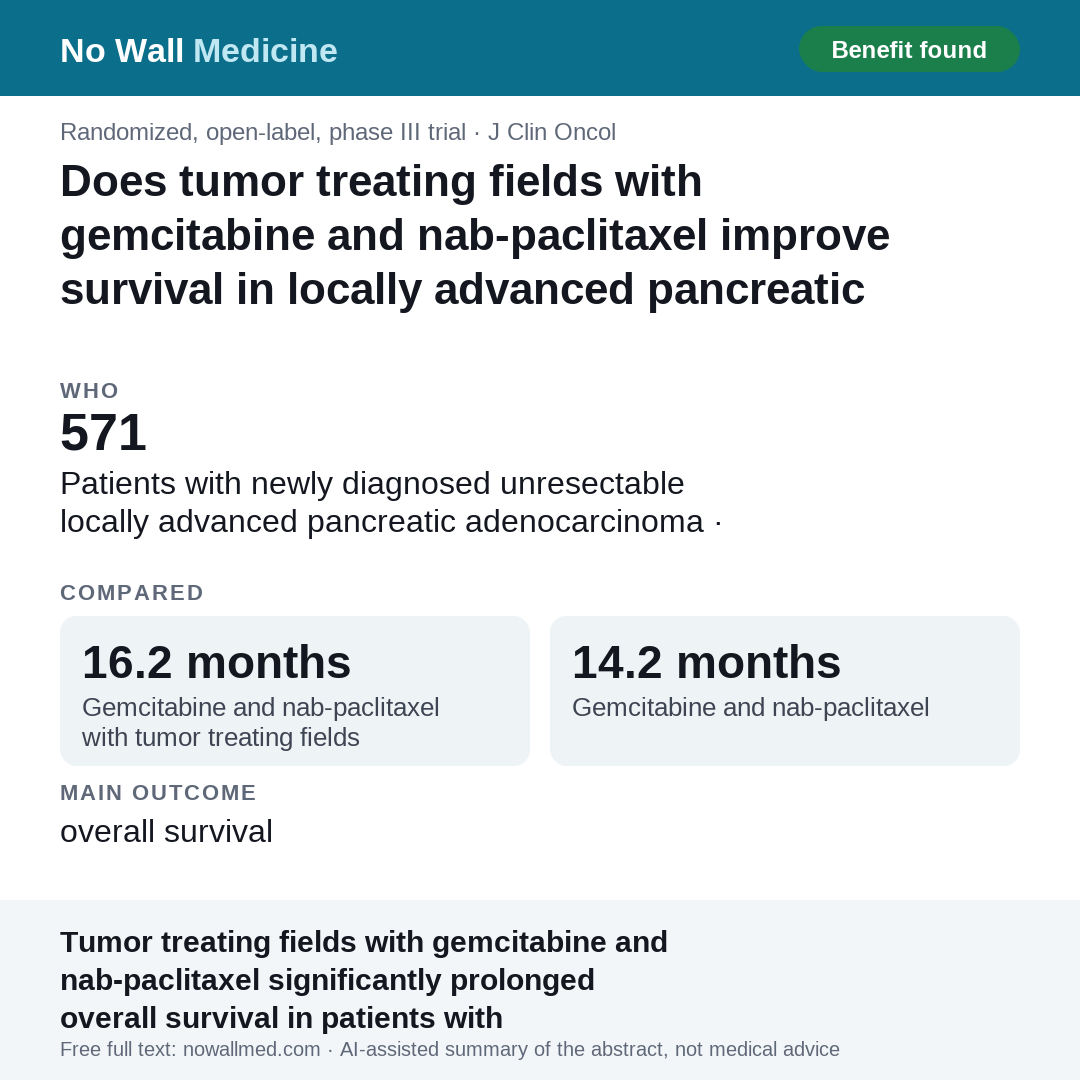
Tumor Treating Fields With Gemcitabine and Nab-Paclitaxel for Locally Advanced Pancreatic Adenocarcinoma: Randomized, Open-Label, Pivotal Phase III PANOVA-3 Study
Randomized, open-label, phase III trialBenefit found
Does tumor treating fields with gemcitabine and nab-paclitaxel improve survival in locally advanced pancreatic adenocarcinoma?
Who
571
Patients with newly diagnosed unresectable locally advanced pancreatic adenocarcinoma · Global
Compared
16.2 monthsGemcitabine and nab-paclitaxel with tumor treating fields
14.2 monthsGemcitabine and nab-paclitaxel
Main outcome
overall survival
Result: hazard ratio 0.82 (95% CI 0.68 to 0.99)
Bottom line: Tumor treating fields with gemcitabine and nab-paclitaxel significantly prolonged overall survival in patients with unresectable locally advanced pancreatic adenocarcinoma.
J Clin Oncol · 2025-05-31Download image
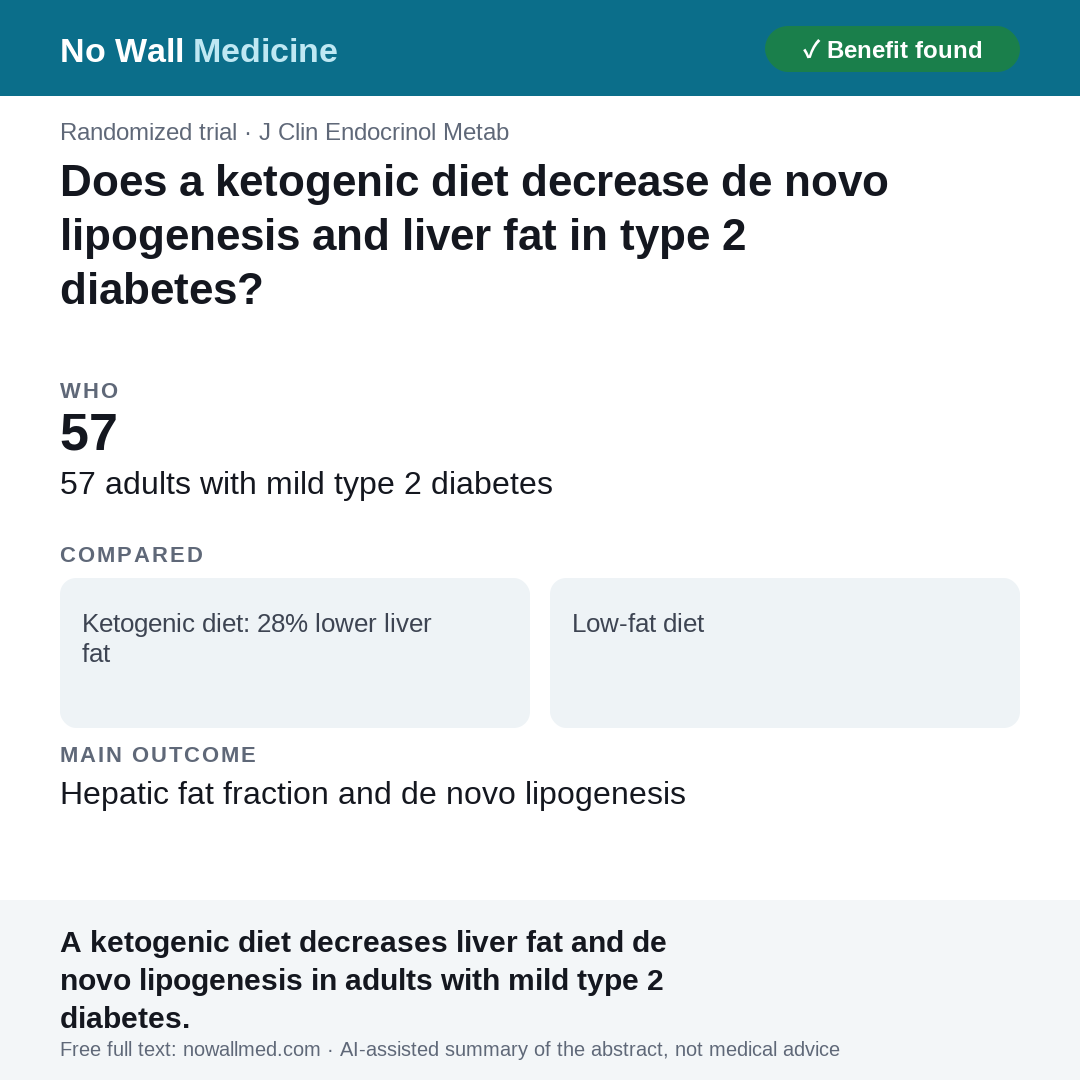
Beneficial Effects of Carbohydrate Restriction in Type 2 Diabetes Can Be Traced to Changes in Hepatic Metabolism
Randomized trialBenefit found
Does a ketogenic diet decrease de novo lipogenesis and liver fat in type 2 diabetes?
Who
57
57 adults with mild type 2 diabetes
Compared
Ketogenic diet: 28% lower liver fat
Low-fat diet
Main outcome
Hepatic fat fraction and de novo lipogenesis
Bottom line: A ketogenic diet decreases liver fat and de novo lipogenesis in adults with mild type 2 diabetes.
J Clin Endocrinol Metab · 2025-05-31Download image