Visual abstracts
New randomized trials and meta-analyses from leading journals at a glance: who was studied, what was compared, and what was found. Every paper is free to read in full.
All specialtiesCardiology 4877Oncology 4138Gastroenterology & Hepatology 1942Infectious Disease 3837Neurology 1905Psychiatry & Mental Health 2273Pulmonology 2143Critical Care 1365Endocrinology & Diabetes 2580Pediatrics 2980Surgery 2559Orthopedics & Sports Medicine 931Neurosurgery 537Cardiothoracic & Vascular Surgery 674Plastic & Reconstructive Surgery 591Nephrology 1133Rheumatology 823Hematology 1109Dermatology 621Ophthalmology 543Obstetrics & Gynecology 1686Public & Global Health 1058Radiology & Imaging 648Anesthesiology 986Urology 764ENT (Otolaryngology) 503Emergency Medicine 511Allergy & Immunology 313Geriatrics 981Family Medicine & Primary Care 562Medical Genetics & Genomics 676Pathology & Laboratory Medicine 159Physical Medicine & Rehabilitation 757Palliative Care 444Nutrition 1588Digital Health & AI 2201General Medicine 321
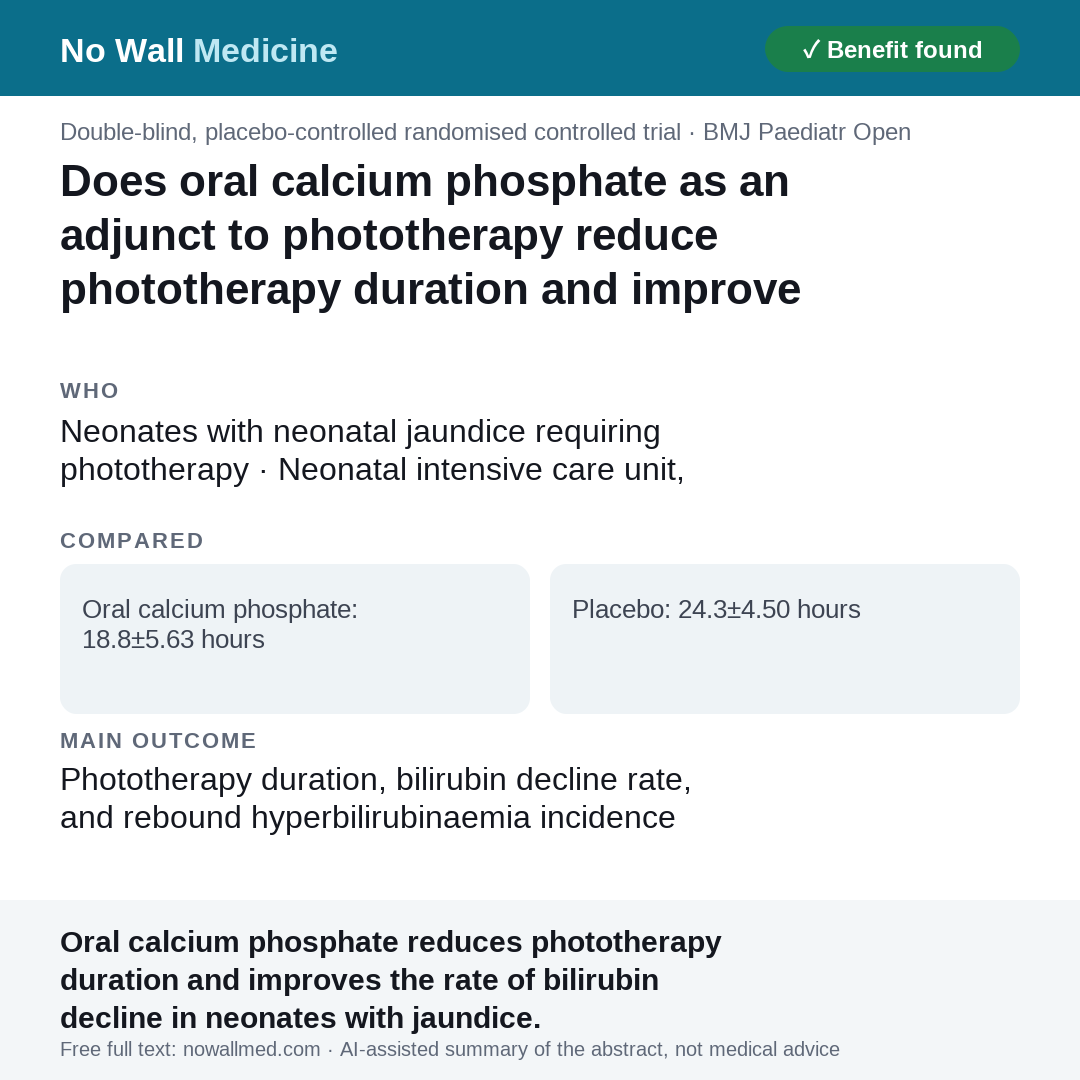
Evaluation of efficacy of oral calcium phosphate as an adjunct to standard-of-care regular phototherapy in cases of neonatal jaundice: a hospital-based double-blind, randomised, placebo-controlled trial
Double-blind, placebo-controlled randomised controlled trialBenefit found
Does oral calcium phosphate as an adjunct to phototherapy reduce phototherapy duration and improve bilirubin decline?
Who
Neonates with neonatal jaundice requiring phototherapy · Neonatal intensive care unit, tertiary care hospital, Eastern India
Compared
Oral calcium phosphate: 18.8±5.63 hours
Placebo: 24.3±4.50 hours
Main outcome
Phototherapy duration, bilirubin decline rate, and rebound hyperbilirubinaemia incidence
Result: mean difference=-5.55 (95% CI -7.82 to -3.28)
Bottom line: Oral calcium phosphate reduces phototherapy duration and improves the rate of bilirubin decline in neonates with jaundice.
BMJ Paediatr Open · 2024-10-11Download image
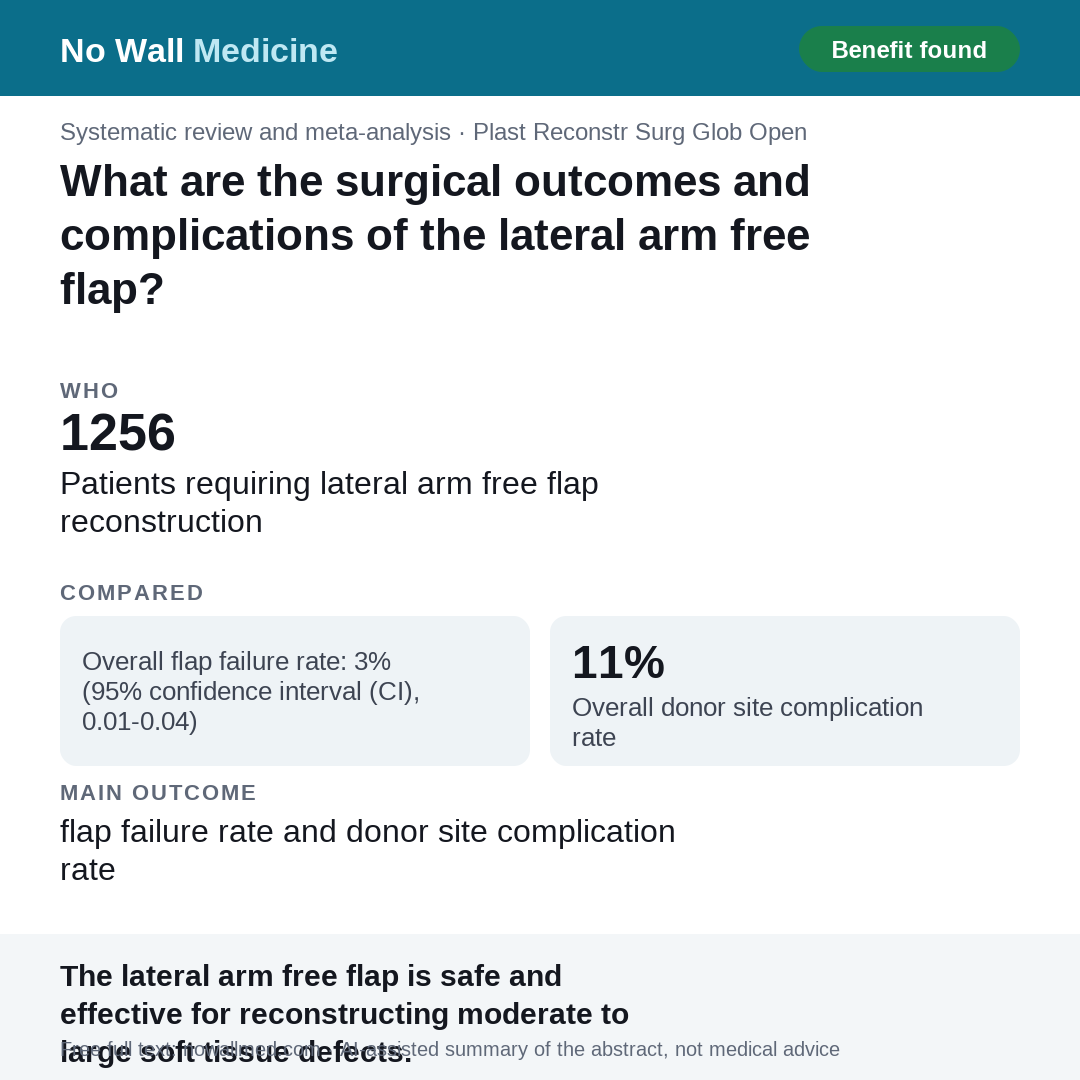
Indications, Postoperative Outcomes, and Complications of the Lateral Arm Free Flap: A Systematic Review and Meta-analysis
Systematic review and meta-analysisBenefit found
What are the surgical outcomes and complications of the lateral arm free flap?
Who
1256
Patients requiring lateral arm free flap reconstruction
Compared
Overall flap failure rate: 3% (95% confidence interval (CI), 0.01-0.04)
11%Overall donor site complication rate (95% CI, 0.03-0.21)
Main outcome
flap failure rate and donor site complication rate
Bottom line: The lateral arm free flap is safe and effective for reconstructing moderate to large soft tissue defects.
Plast Reconstr Surg Glob Open · 2024-10-11Download image
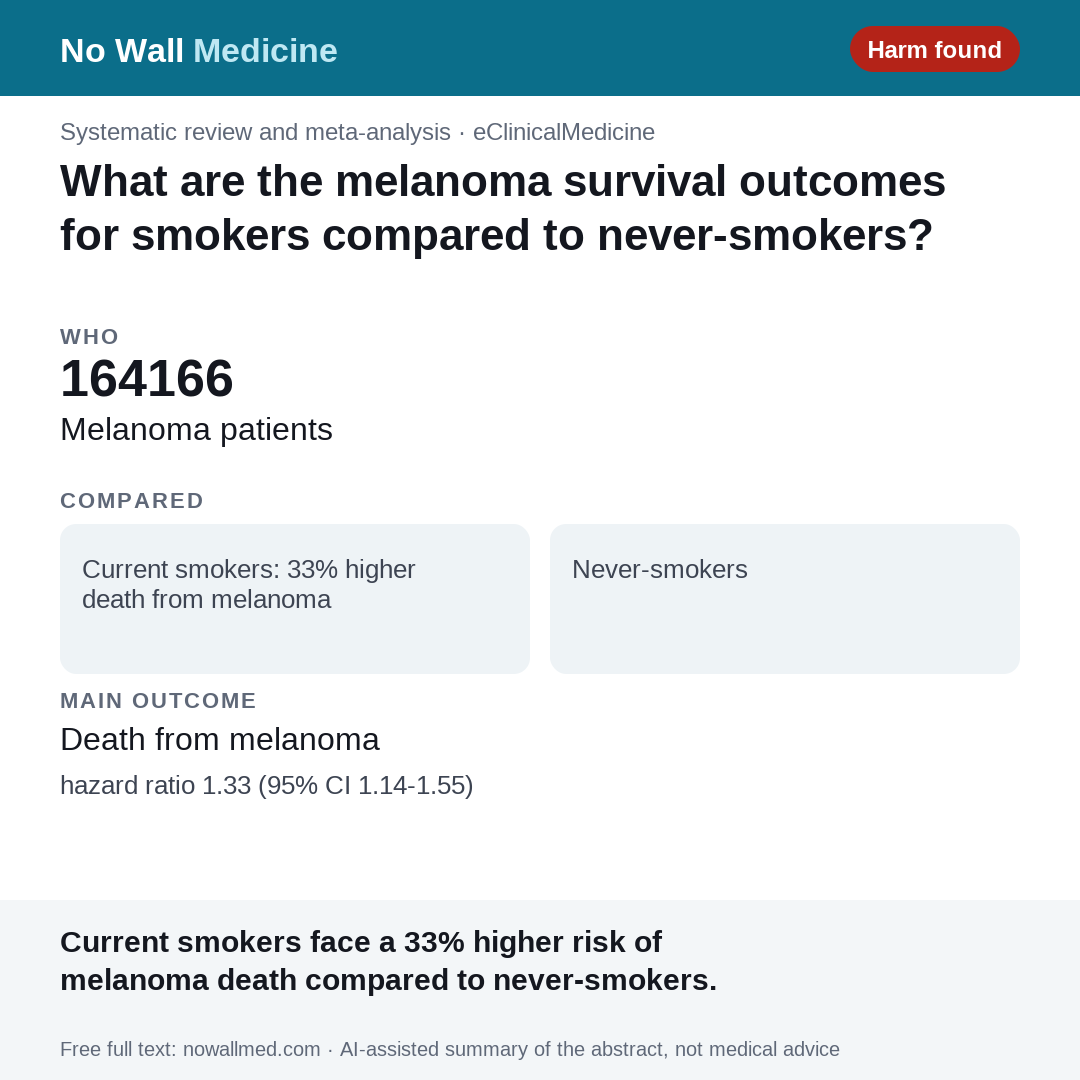
Outcomes for smokers who develop melanoma: a systematic review and meta-analysis
Systematic review and meta-analysisHarm found
What are the melanoma survival outcomes for smokers compared to never-smokers?
Who
164166
Melanoma patients
Compared
Current smokers: 33% higher death from melanoma
Never-smokers
Main outcome
Death from melanoma
Result: hazard ratio 1.33 (95% CI 1.14-1.55)
Bottom line: Current smokers face a 33% higher risk of melanoma death compared to never-smokers.
Limitation: Reliance on self-reporting of smoking status and limited studies on modern systemic therapies.
eClinicalMedicine · 2024-10-10Download image
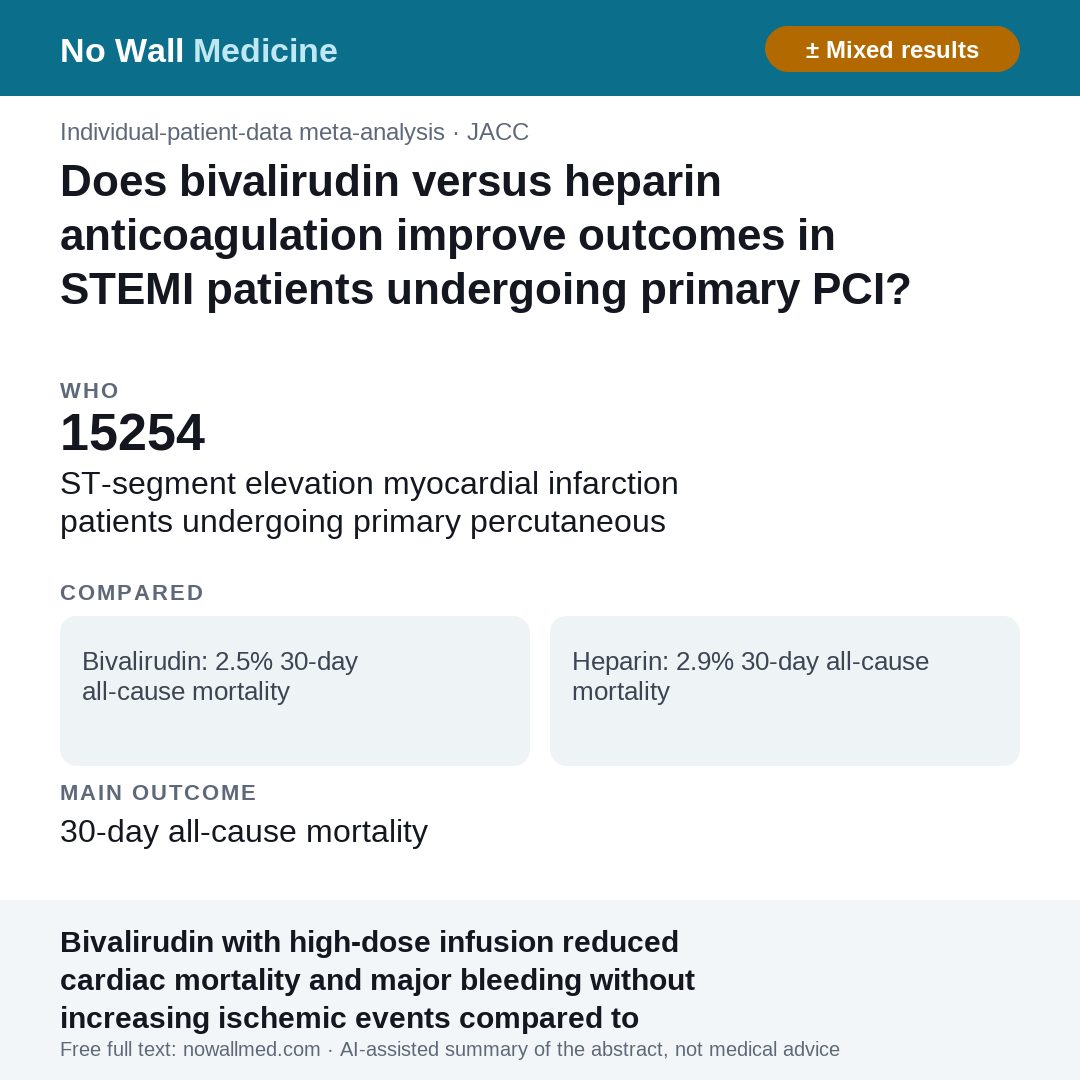
Bivalirudin vs Heparin Anticoagulation in STEMI: Confirmation of the BRIGHT-4 Results
Individual-patient-data meta-analysisMixed results
Does bivalirudin versus heparin anticoagulation improve outcomes in STEMI patients undergoing primary PCI?
Who
15254
ST-segment elevation myocardial infarction patients undergoing primary percutaneous coronary intervention
Compared
Bivalirudin: 2.5% 30-day all-cause mortality
Heparin: 2.9% 30-day all-cause mortality
Main outcome
30-day all-cause mortality
Result: adjusted OR: 0.78; 95% CI: 0.62-0.99
Bottom line: Bivalirudin with high-dose infusion reduced cardiac mortality and major bleeding without increasing ischemic events compared to heparin.
JACC · 2024-10-10Download image
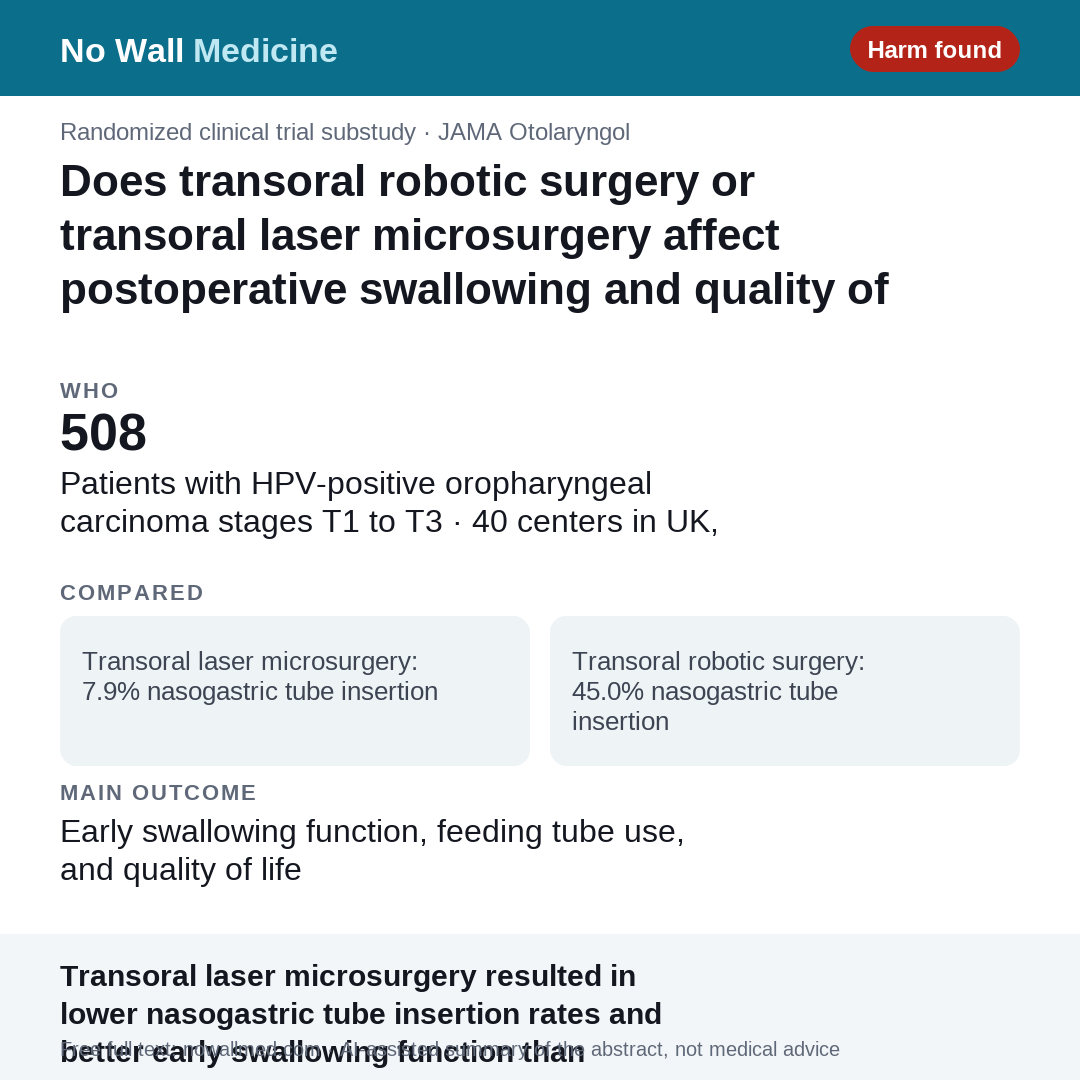
Transoral Laser or Robotic Surgery Outcomes for Oropharyngeal Carcinoma: Secondary Analysis of the PATHOS Randomized Clinical Trial
Randomized clinical trial substudyHarm found
Does transoral robotic surgery or transoral laser microsurgery affect postoperative swallowing and quality of life?
Who
508
Patients with HPV-positive oropharyngeal carcinoma stages T1 to T3 · 40 centers in UK, Germany, France, US, and Australia
Compared
Transoral laser microsurgery: 7.9% nasogastric tube insertion
Transoral robotic surgery: 45.0% nasogastric tube insertion
Main outcome
Early swallowing function, feeding tube use, and quality of life
Result: adjusted odds ratio 4.41 (95% CI 1.01-19.32)
Bottom line: Transoral laser microsurgery resulted in lower nasogastric tube insertion rates and better early swallowing function than transoral robotic surgery.
JAMA Otolaryngol · 2024-10-10Download image
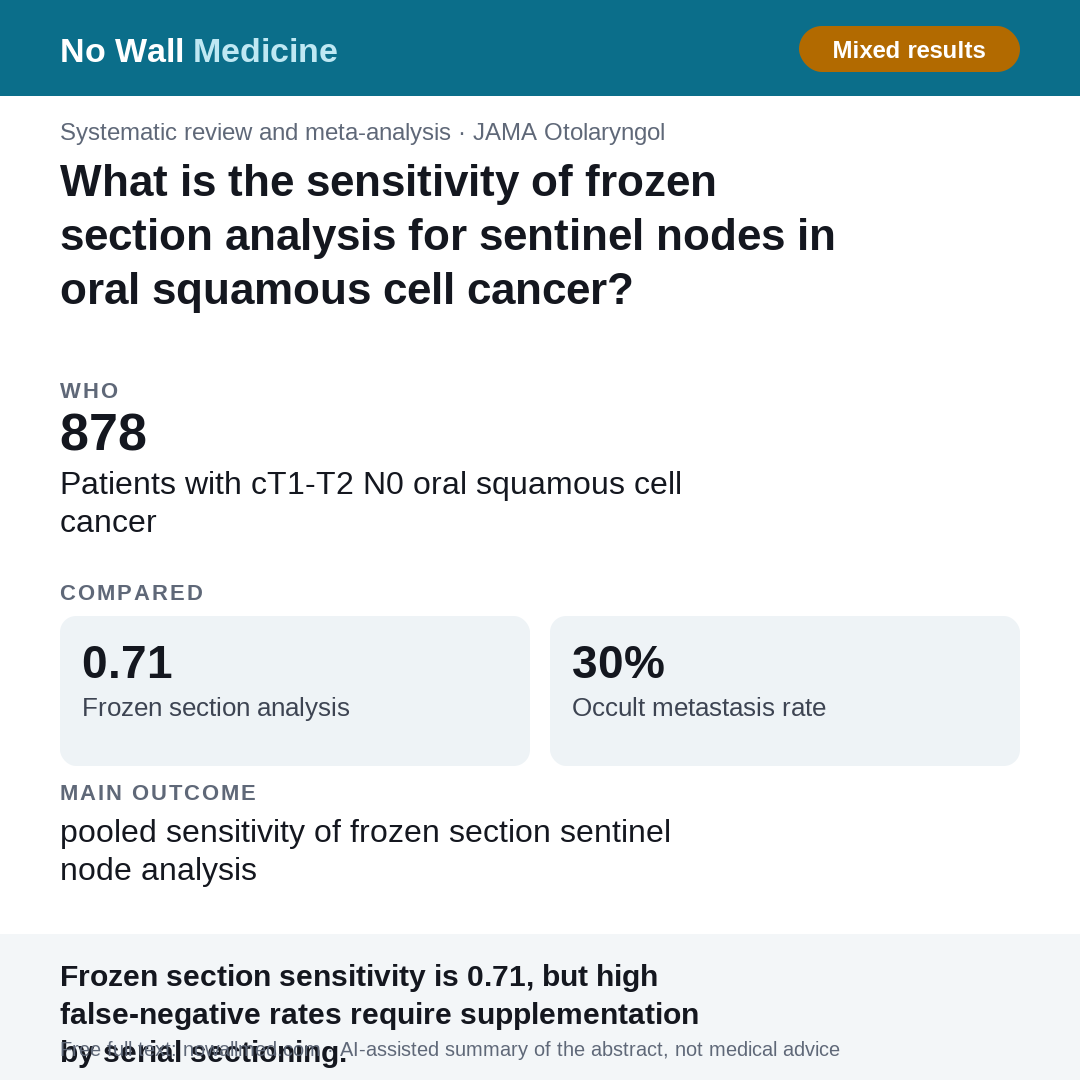
Frozen Section Analysis of Sentinel Nodes in Patients With Oral Squamous Cell Carcinoma: A Systematic Review and Meta-Analysis
Systematic review and meta-analysisMixed results
What is the sensitivity of frozen section analysis for sentinel nodes in oral squamous cell cancer?
Who
878
Patients with cT1-T2 N0 oral squamous cell cancer
Compared
0.71Frozen section analysis
30%Occult metastasis rate
Main outcome
pooled sensitivity of frozen section sentinel node analysis
Result: sensitivity 0.71 (95% CI, 0.60-0.80)
Bottom line: Frozen section sensitivity is 0.71, but high false-negative rates require supplementation by serial sectioning.
JAMA Otolaryngol · 2024-10-10Download image
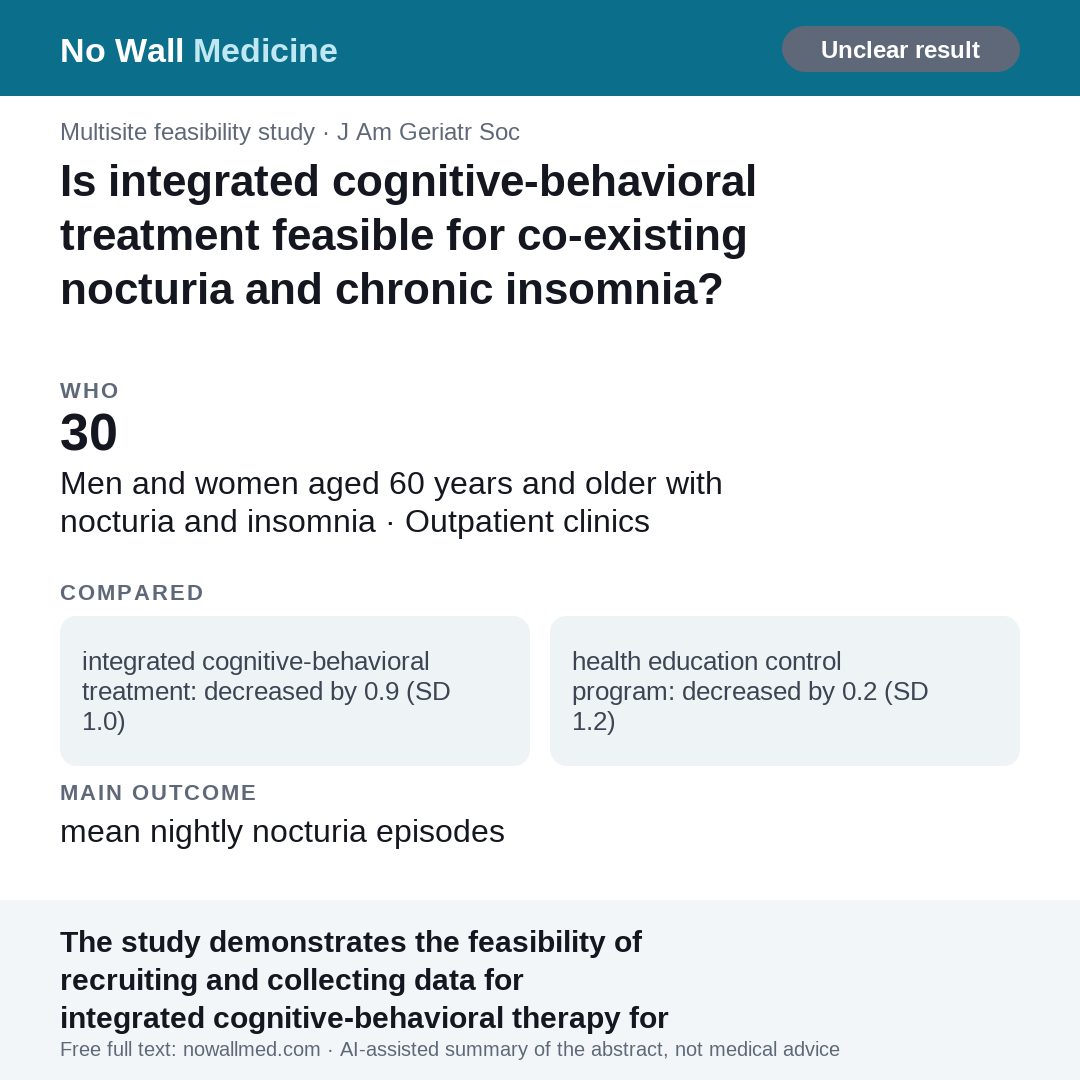
A multisite feasibility study of integrated cognitive-behavioral treatment for co-existing nocturia and chronic insomnia
Multisite feasibility studyUnclear result
Is integrated cognitive-behavioral treatment feasible for co-existing nocturia and chronic insomnia?
Who
30
Men and women aged 60 years and older with nocturia and insomnia · Outpatient clinics
Compared
integrated cognitive-behavioral treatment: decreased by 0.9 (SD 1.0)
health education control program: decreased by 0.2 (SD 1.2)
Main outcome
mean nightly nocturia episodes
Bottom line: The study demonstrates the feasibility of recruiting and collecting data for integrated cognitive-behavioral therapy for nocturia and insomnia.
J Am Geriatr Soc · 2024-10-10Download image
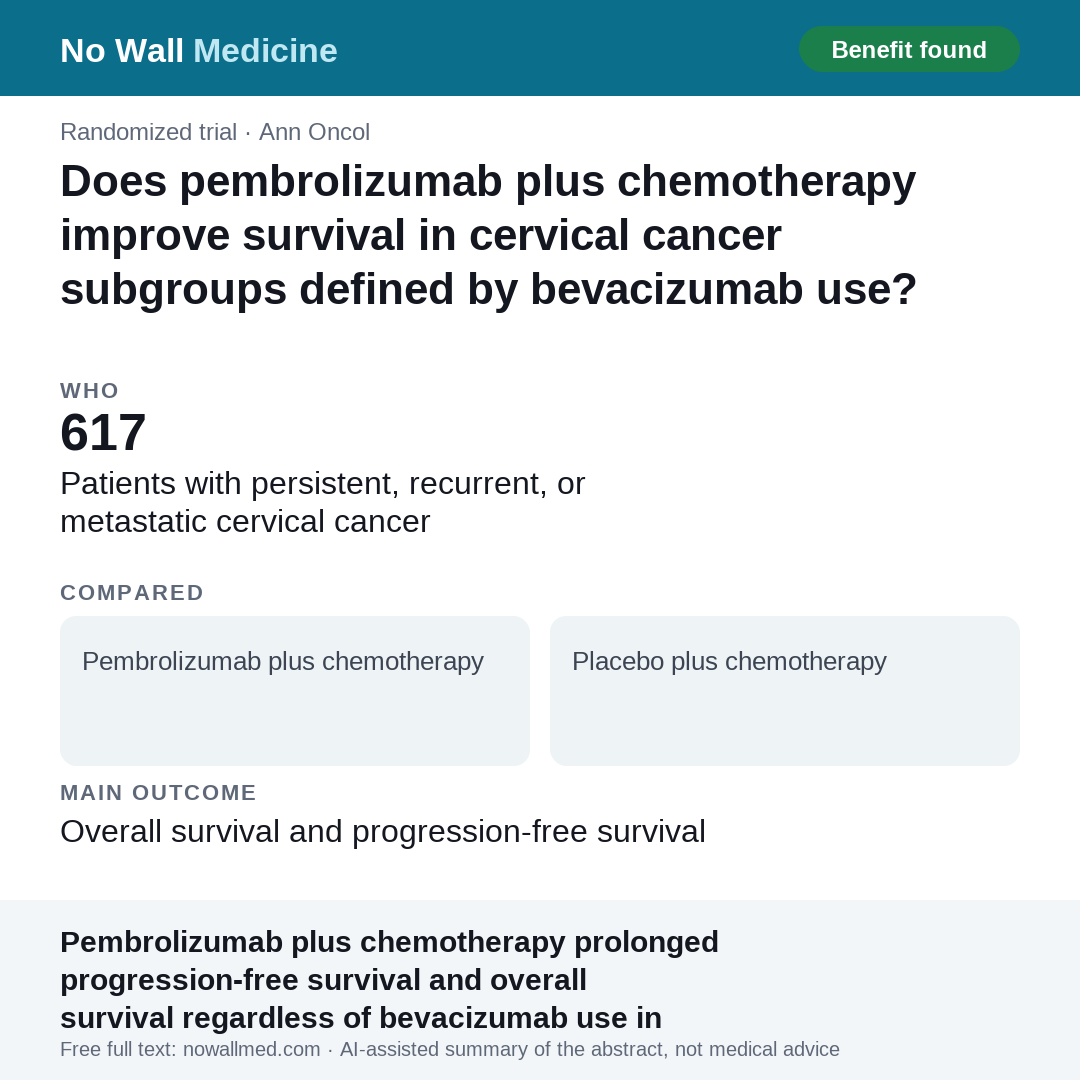
Pembrolizumab plus chemotherapy for advanced and recurrent cervical cancer: final analysis according to bevacizumab use in the randomized KEYNOTE-826 study
Randomized trialBenefit found
Does pembrolizumab plus chemotherapy improve survival in cervical cancer subgroups defined by bevacizumab use?
Who
617
Patients with persistent, recurrent, or metastatic cervical cancer
Compared
Pembrolizumab plus chemotherapy
Placebo plus chemotherapy
Main outcome
Overall survival and progression-free survival
Result: all-comer PFS hazard ratio 0.57 (95% CI 0.45 to 0.73) with bevacizumab; 0.69 (95% CI 0.50 to 0.94) without bevacizumab
Bottom line: Pembrolizumab plus chemotherapy prolonged progression-free survival and overall survival regardless of bevacizumab use in advanced cervical cancer.
Ann Oncol · 2024-10-10Download image
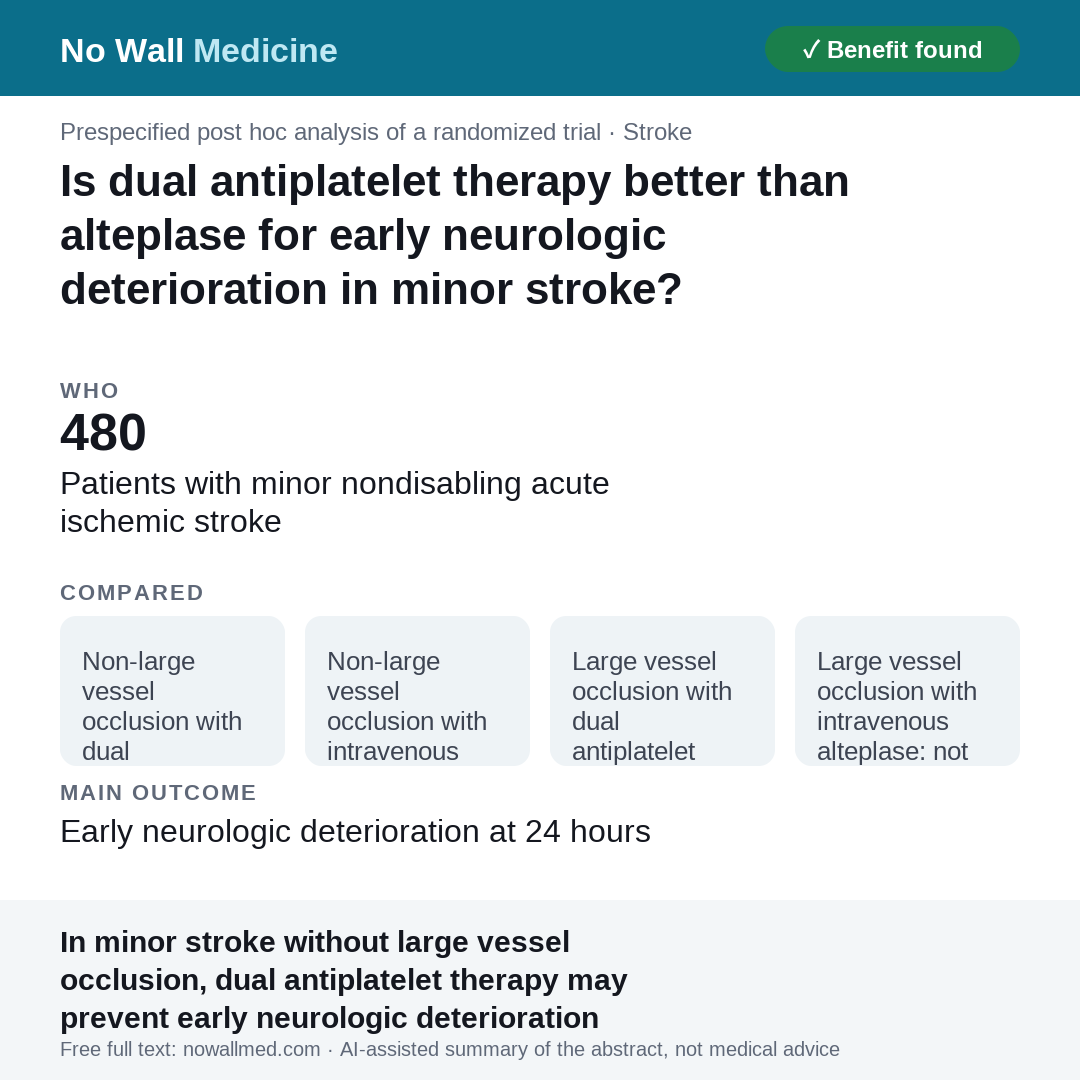
Dual Antiplatelet Versus Alteplase for Early Neurologic Deterioration in Minor Stroke With Versus Without Large Vessel Occlusion: Prespecified Post Hoc Analysis of the ARAMIS Trial
Prespecified post hoc analysis of a randomized trialBenefit found
Is dual antiplatelet therapy better than alteplase for early neurologic deterioration in minor stroke?
Who
480
Patients with minor nondisabling acute ischemic stroke
Compared
Non-large vessel occlusion with dual antiplatelet therapy: not specified
Non-large vessel occlusion with intravenous alteplase: not specified
Large vessel occlusion with dual antiplatelet therapy: not specified
Large vessel occlusion with intravenous alteplase: not specified
Main outcome
Early neurologic deterioration at 24 hours
Result: adjusted risk difference -4.8% (95% CI -6.9% to -2.6%) in non-LVO group
Bottom line: In minor stroke without large vessel occlusion, dual antiplatelet therapy may prevent early neurologic deterioration better than intravenous alteplase.
Limitation: This was a prespecified post hoc analysis of the ARAMIS trial.
Stroke · 2024-10-10Download image
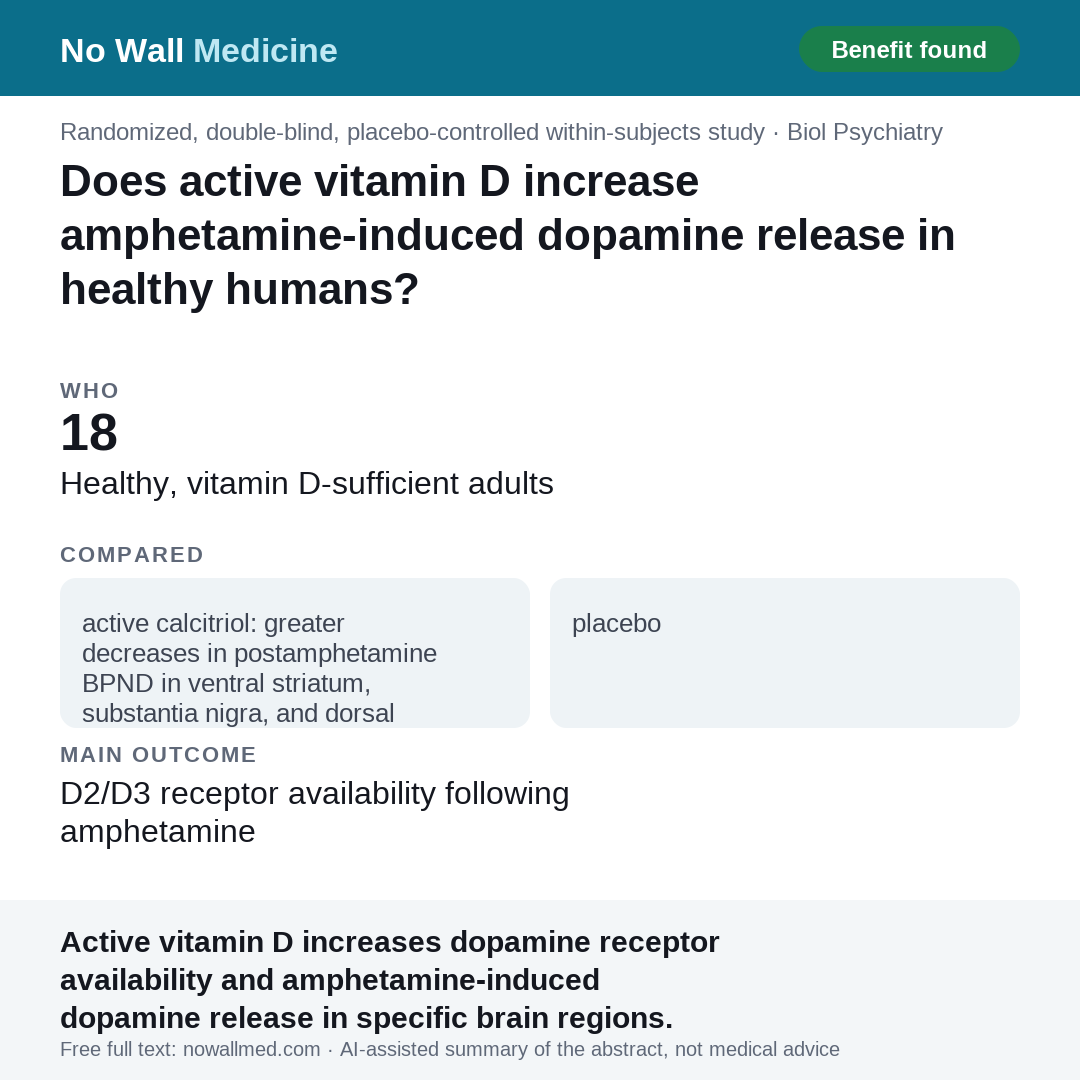
Vitamin D's Capacity to Increase Amphetamine-Induced Dopamine Release in Healthy Humans: A Clinical Translational [11C]-PHNO Positron Emission Tomography Study
Randomized, double-blind, placebo-controlled within-subjects studyBenefit found
Does active vitamin D increase amphetamine-induced dopamine release in healthy humans?
Who
18
Healthy, vitamin D-sufficient adults
Compared
active calcitriol: greater decreases in postamphetamine BPND in ventral striatum, substantia nigra, and dorsal caudate
placebo
Main outcome
D2/D3 receptor availability following amphetamine
Bottom line: Active vitamin D increases dopamine receptor availability and amphetamine-induced dopamine release in specific brain regions.
Biol Psychiatry · 2024-10-10Download image
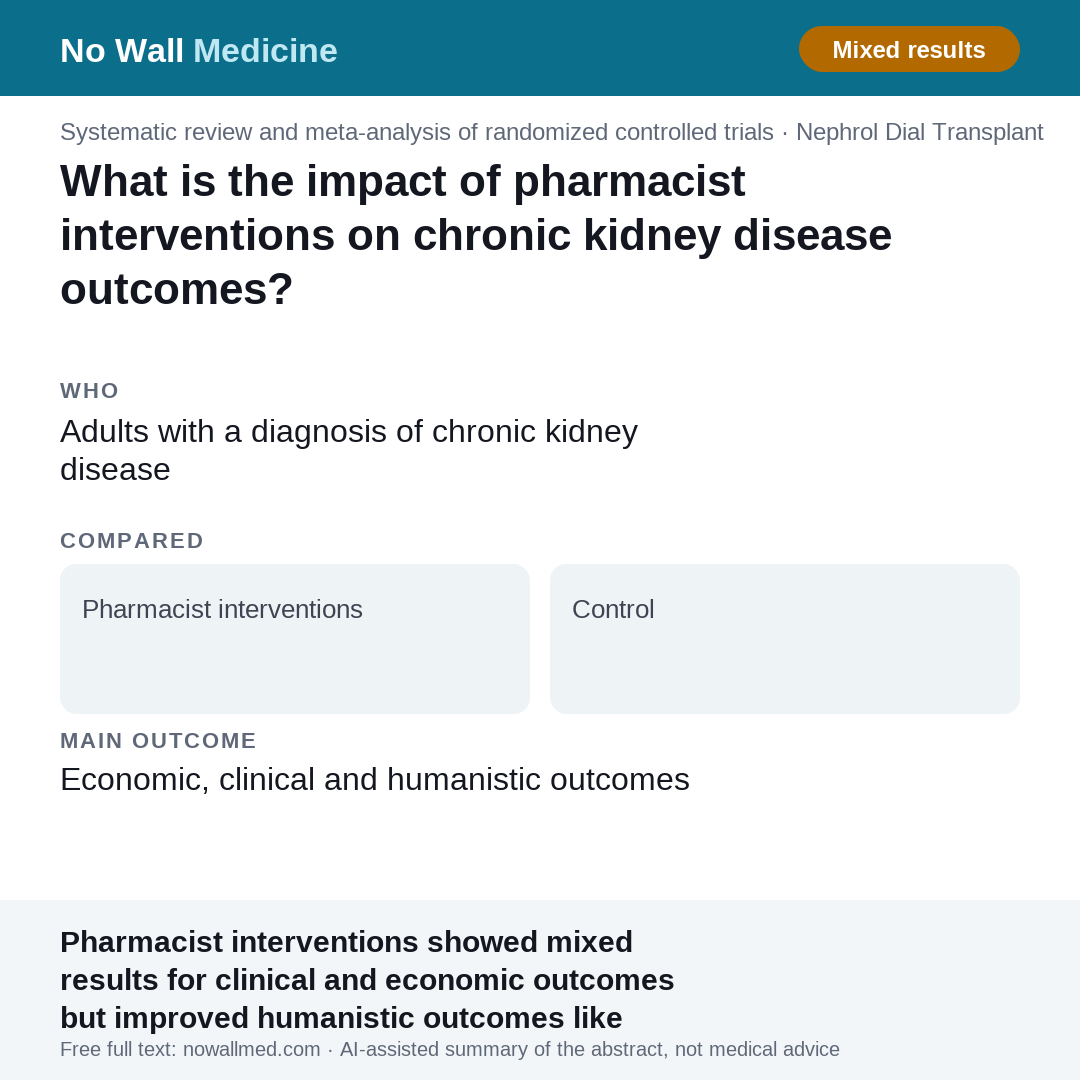
Effect of pharmacist interventions in chronic kidney disease: a meta-analysis
Systematic review and meta-analysis of randomized controlled trialsMixed results
What is the impact of pharmacist interventions on chronic kidney disease outcomes?
Who
Adults with a diagnosis of chronic kidney disease
Compared
Pharmacist interventions
Control
Main outcome
Economic, clinical and humanistic outcomes
Bottom line: Pharmacist interventions showed mixed results for clinical and economic outcomes but improved humanistic outcomes like patient satisfaction.
Limitation: Future studies should be more robustly designed and consider prescribing and deprescribing roles.
Nephrol Dial Transplant · 2024-10-10Download image
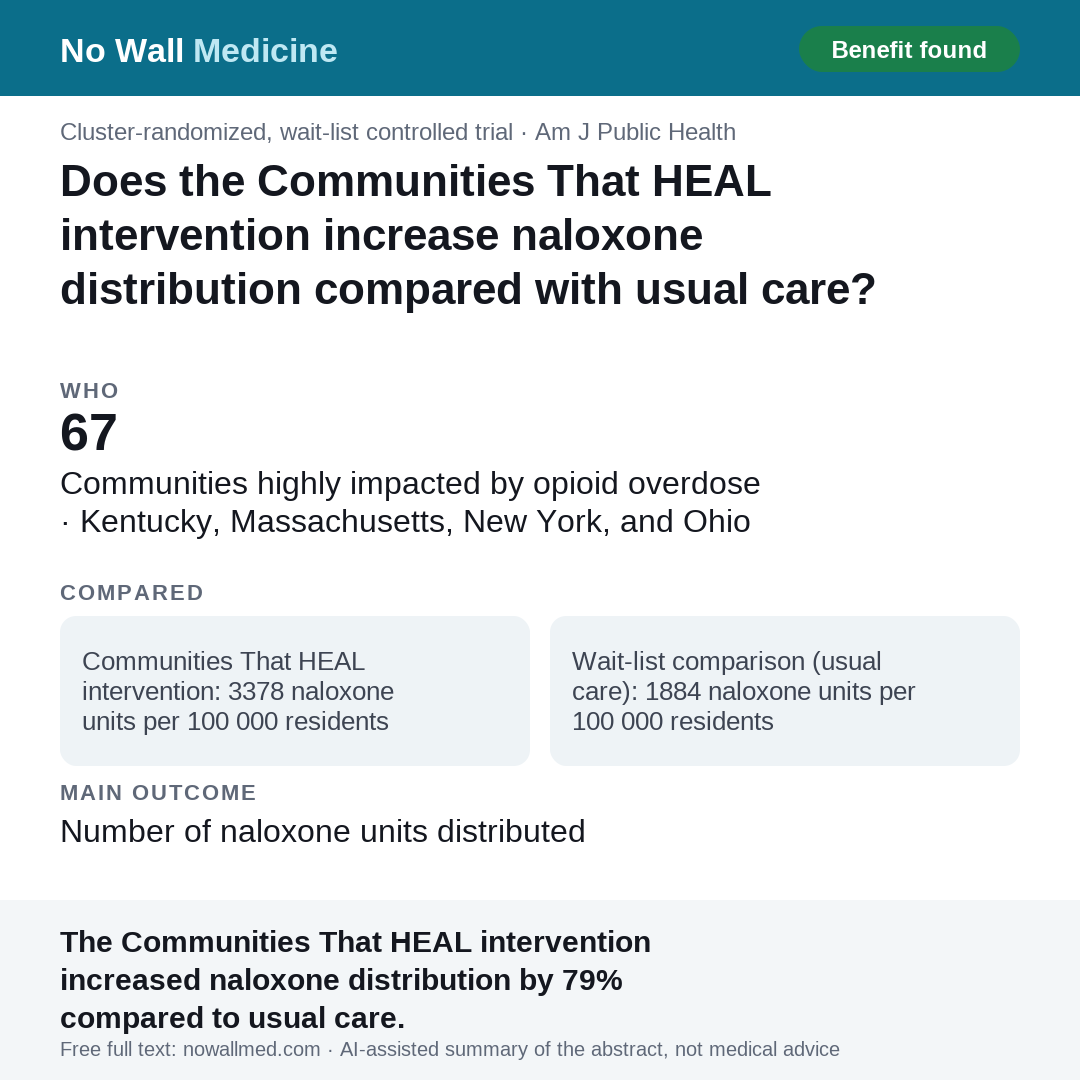
Effect of the Communities That HEAL Intervention on Overdose Education and Naloxone Distribution: A Cluster-Randomized, Wait-List Controlled Trial
Cluster-randomized, wait-list controlled trialBenefit found
Does the Communities That HEAL intervention increase naloxone distribution compared with usual care?
Who
67
Communities highly impacted by opioid overdose · Kentucky, Massachusetts, New York, and Ohio
Compared
Communities That HEAL intervention: 3378 naloxone units per 100 000 residents
Wait-list comparison (usual care): 1884 naloxone units per 100 000 residents
Main outcome
Number of naloxone units distributed
Result: adjusted relative rate 1.79 (95% confidence interval 1.28, 2.51)
Bottom line: The Communities That HEAL intervention increased naloxone distribution by 79% compared to usual care.
Am J Public Health · 2024-10-10Download image
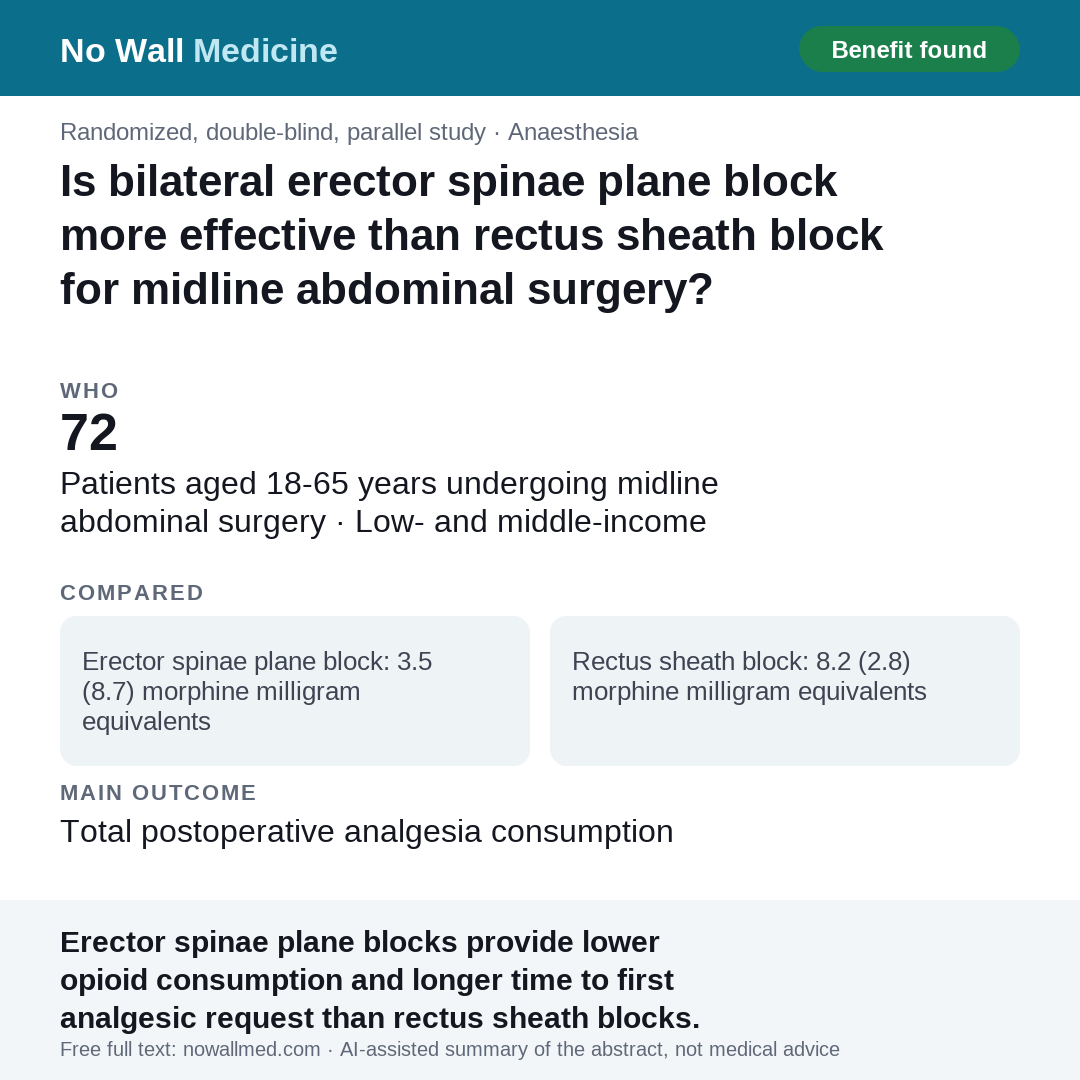
Postoperative analgesic effectiveness of ultrasound-guided bilateral erector spinae plane block vs. rectus sheath block for midline abdominal surgery in a low- and middle-income country: a randomised controlled trial
Randomized, double-blind, parallel studyBenefit found
Is bilateral erector spinae plane block more effective than rectus sheath block for midline abdominal surgery?
Who
72
Patients aged 18-65 years undergoing midline abdominal surgery · Low- and middle-income country
Compared
Erector spinae plane block: 3.5 (8.7) morphine milligram equivalents
Rectus sheath block: 8.2 (2.8) morphine milligram equivalents
Main outcome
Total postoperative analgesia consumption
Bottom line: Erector spinae plane blocks provide lower opioid consumption and longer time to first analgesic request than rectus sheath blocks.
Anaesthesia · 2024-10-10Download image
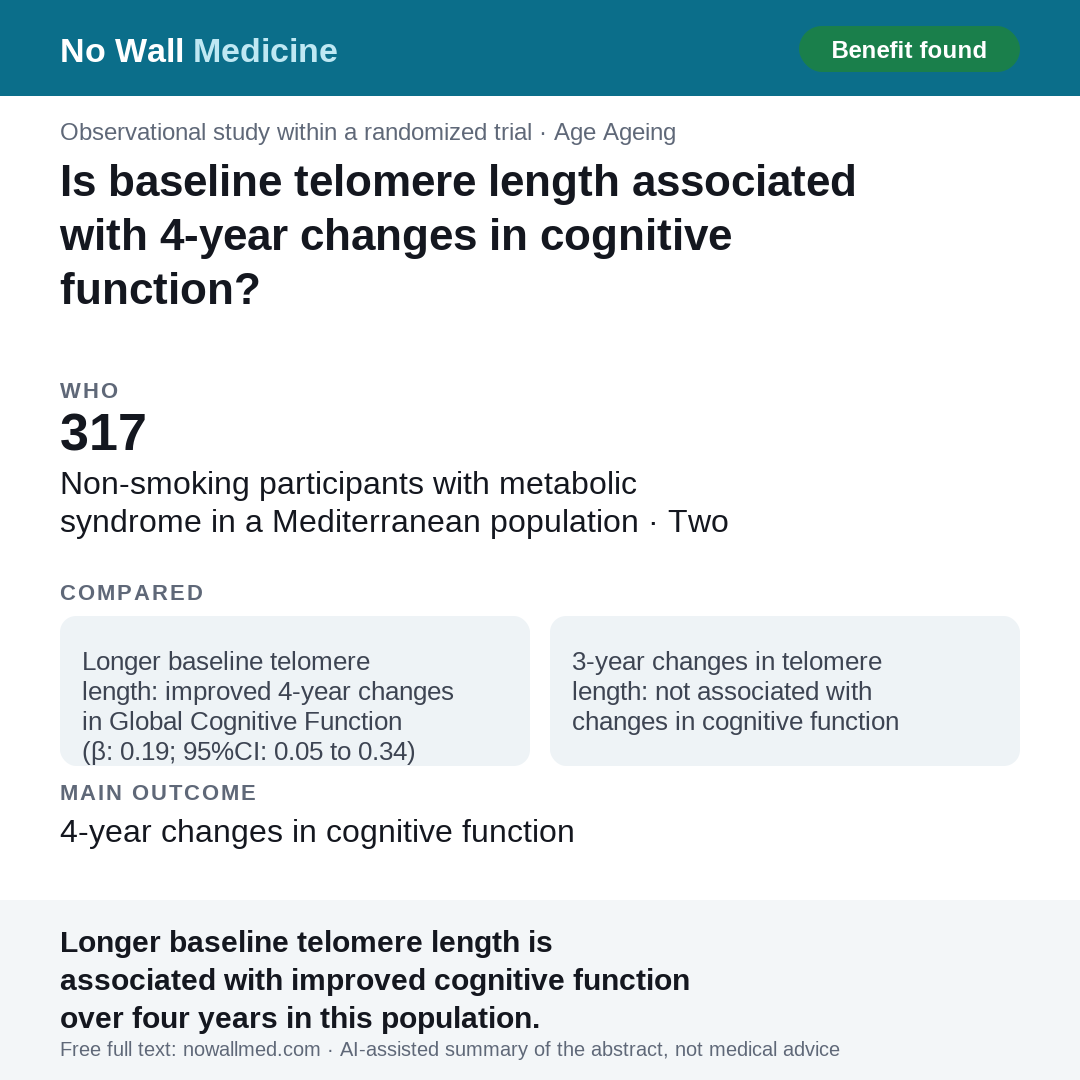
Telomere length and 4-year changes in cognitive function in an older Mediterranean population at high risk of cardiovascular disease
Observational study within a randomized trialBenefit found
Is baseline telomere length associated with 4-year changes in cognitive function?
Who
317
Non-smoking participants with metabolic syndrome in a Mediterranean population · Two trial centres
Compared
Longer baseline telomere length: improved 4-year changes in Global Cognitive Function (β: 0.19; 95%CI: 0.05 to 0.34)
3-year changes in telomere length: not associated with changes in cognitive function
Main outcome
4-year changes in cognitive function
Result: β: 0.19 (95%CI: 0.05 to 0.34) for global cognitive function
Bottom line: Longer baseline telomere length is associated with improved cognitive function over four years in this population.
Age Ageing · 2024-10-10Download image
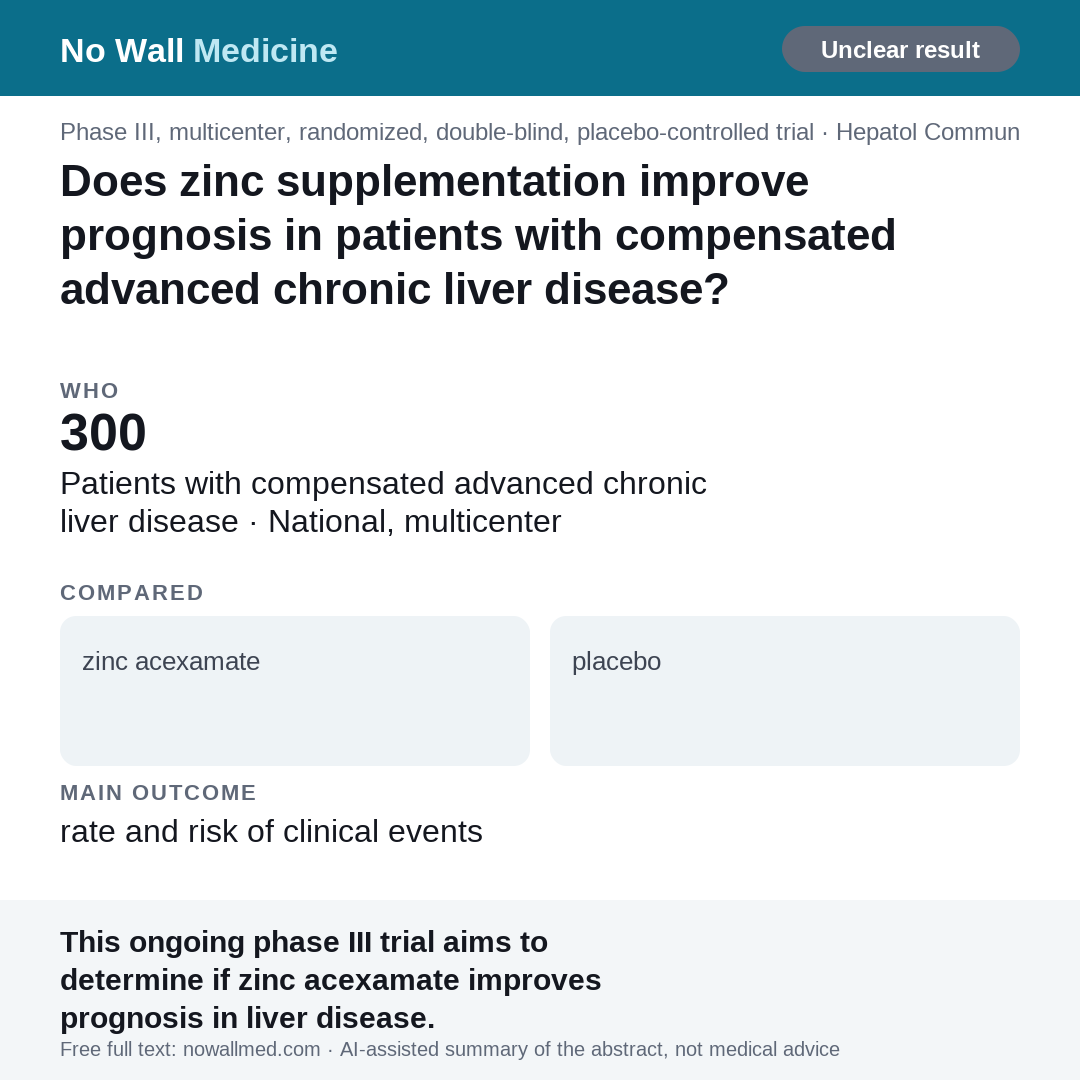
Zinc supplementation to improve prognosis in patients with compensated advanced chronic liver disease: a multicenter, randomized, double-blind, placebo-controlled clinical trial
Phase III, multicenter, randomized, double-blind, placebo-controlled trialUnclear result
Does zinc supplementation improve prognosis in patients with compensated advanced chronic liver disease?
Who
300
Patients with compensated advanced chronic liver disease · National, multicenter
Compared
zinc acexamate
placebo
Main outcome
rate and risk of clinical events
Bottom line: This ongoing phase III trial aims to determine if zinc acexamate improves prognosis in liver disease.
Hepatol Commun · 2024-10-10Download image
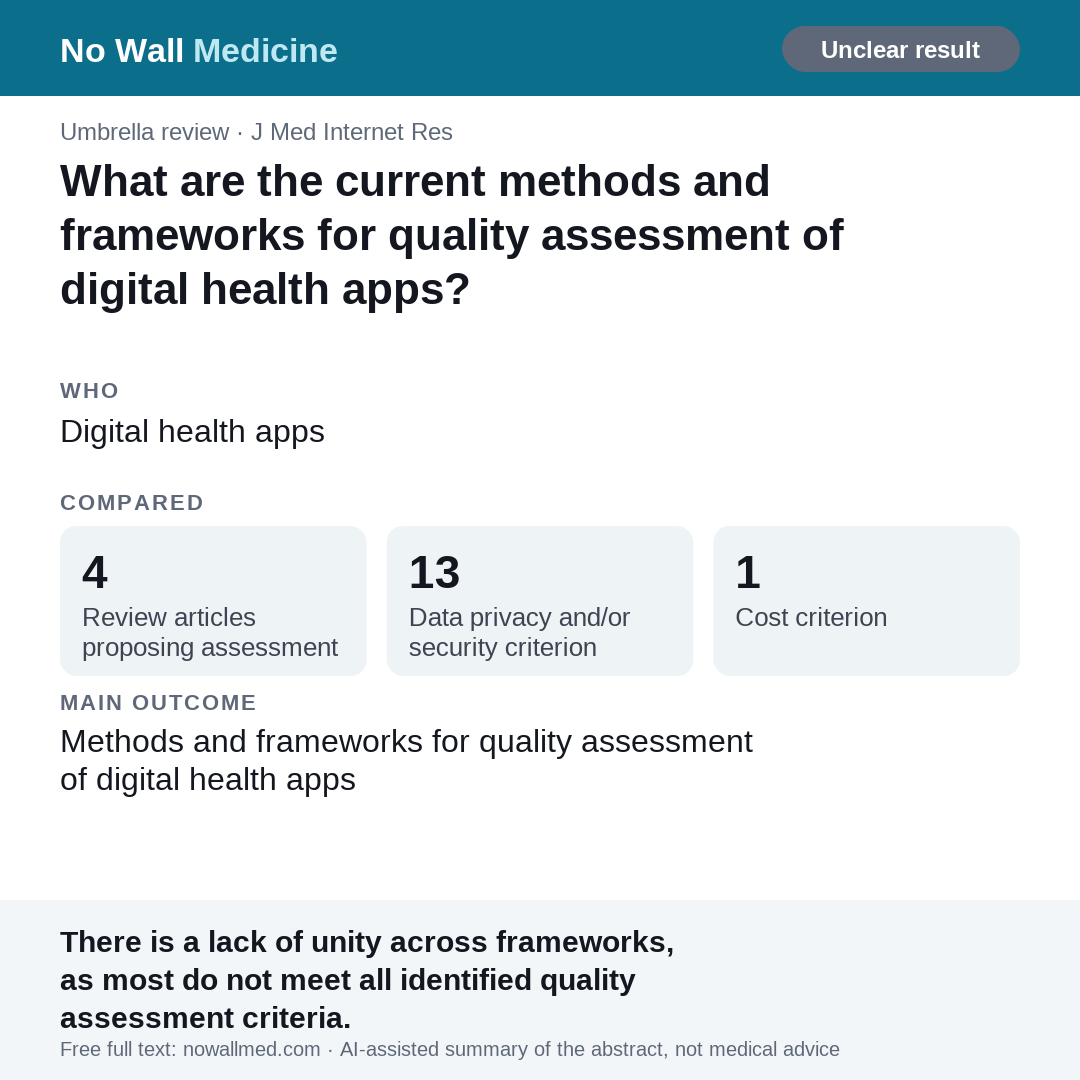
Quality Assessment of Digital Health Apps: Umbrella Review
Umbrella reviewUnclear result
What are the current methods and frameworks for quality assessment of digital health apps?
Who
15
Digital health apps
Compared
4Review articles proposing assessment criteria (27%)
13Data privacy and/or security criterion (87%)
1Cost criterion (7%)
Main outcome
Methods and frameworks for quality assessment of digital health apps
Bottom line: There is a lack of unity across frameworks, as most do not meet all identified quality assessment criteria.
J Med Internet Res · 2024-10-10Download image
Spaced Digital Education for Health Professionals: Systematic Review and Meta-Analysis
Systematic review and meta-analysisBenefit found
Is spaced digital education effective for health care professionals?
Who
pre- and postregistration health care professionals
Compared
Spaced online education
Massed online education
Main outcome
postintervention knowledge, clinical behavior change, and surgical skills
Result: standardized mean difference 0.32 (95% CI 0.13-0.51)
Bottom line: Spaced digital education improves knowledge, surgical skills, and clinical behavior change in health care professionals.
Limitation: Most studies had an unclear or a high risk of bias
J Med Internet Res · 2024-10-10Download image

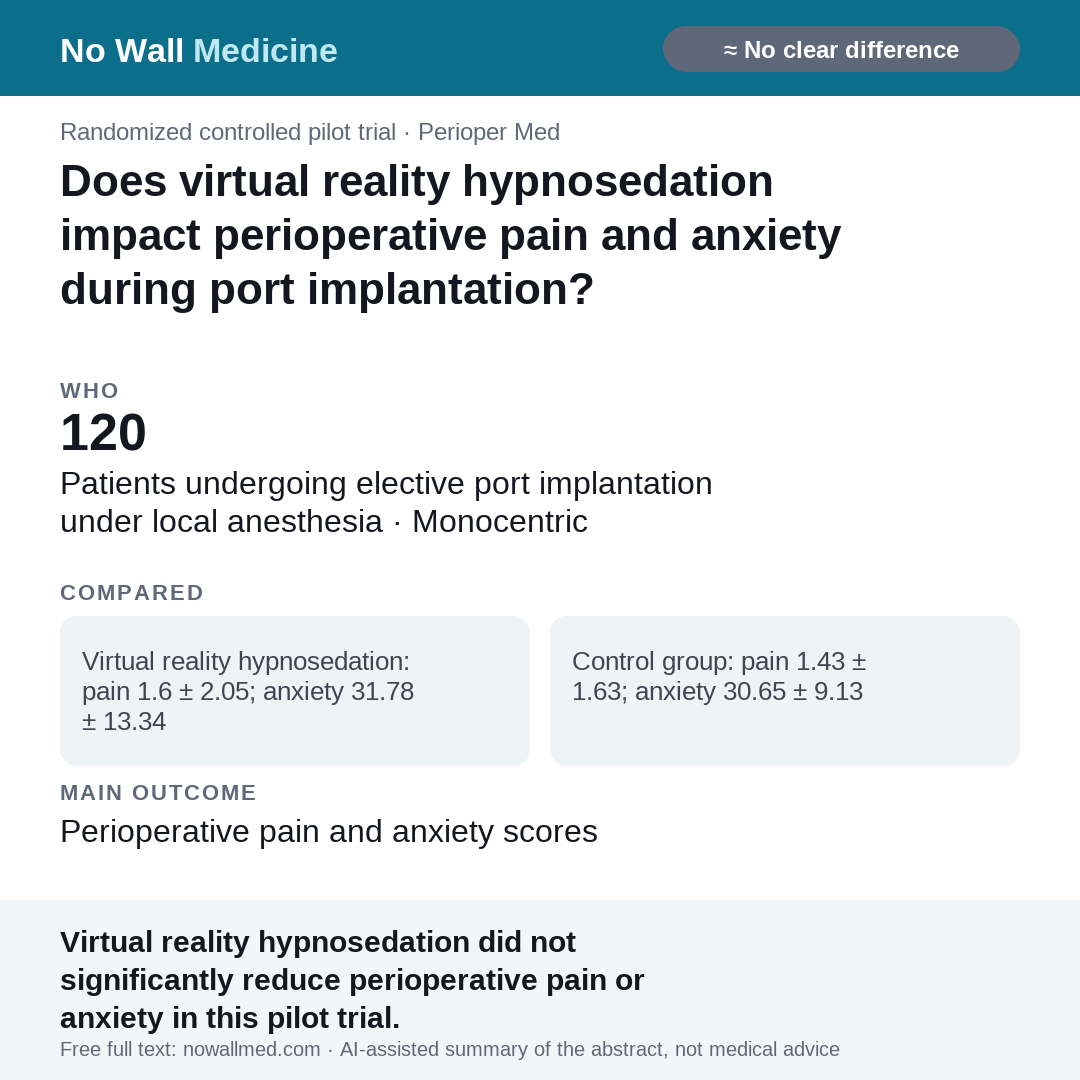
Impact of virtual reality hypnosedation on perioperative pain and anxiety in port implantation under local anesthesia: a randomized controlled pilot trial (VIP Trial)
Randomized controlled pilot trialNo clear difference
Does virtual reality hypnosedation impact perioperative pain and anxiety during port implantation?
Who
120
Patients undergoing elective port implantation under local anesthesia · Monocentric
Compared
Virtual reality hypnosedation: pain 1.6 ± 2.05; anxiety 31.78 ± 13.34
Control group: pain 1.43 ± 1.63; anxiety 30.65 ± 9.13
Main outcome
Perioperative pain and anxiety scores
Bottom line: Virtual reality hypnosedation did not significantly reduce perioperative pain or anxiety in this pilot trial.
Limitation: Blinding of patients and physicians was not feasible; study was descriptive and exploratory.
Perioper Med · 2024-10-10Download image
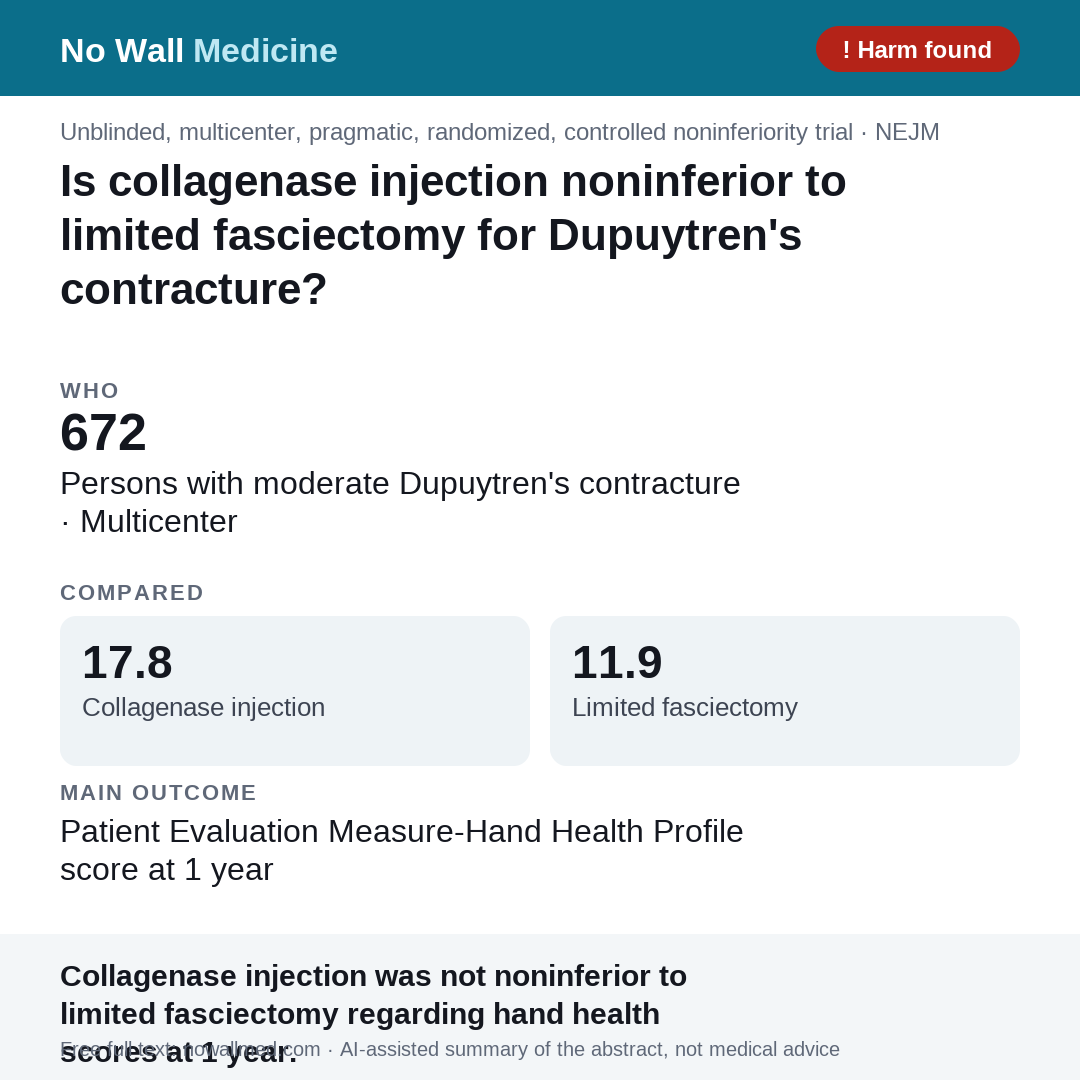
Collagenase Injection versus Limited Fasciectomy for Dupuytren's Contracture
Unblinded, multicenter, pragmatic, randomized, controlled noninferiority trialHarm found
Is collagenase injection noninferior to limited fasciectomy for Dupuytren's contracture?
Who
672
Persons with moderate Dupuytren's contracture · Multicenter
Compared
17.8Collagenase injection
11.9Limited fasciectomy
Main outcome
Patient Evaluation Measure-Hand Health Profile score at 1 year
Result: estimated difference, 5.9 points; 95% confidence interval [CI], 3.1 to 8.8
Bottom line: Collagenase injection was not noninferior to limited fasciectomy regarding hand health scores at 1 year.
Funded by: National Institute for Health and Care Research
NEJM · 2024-10-09Download image
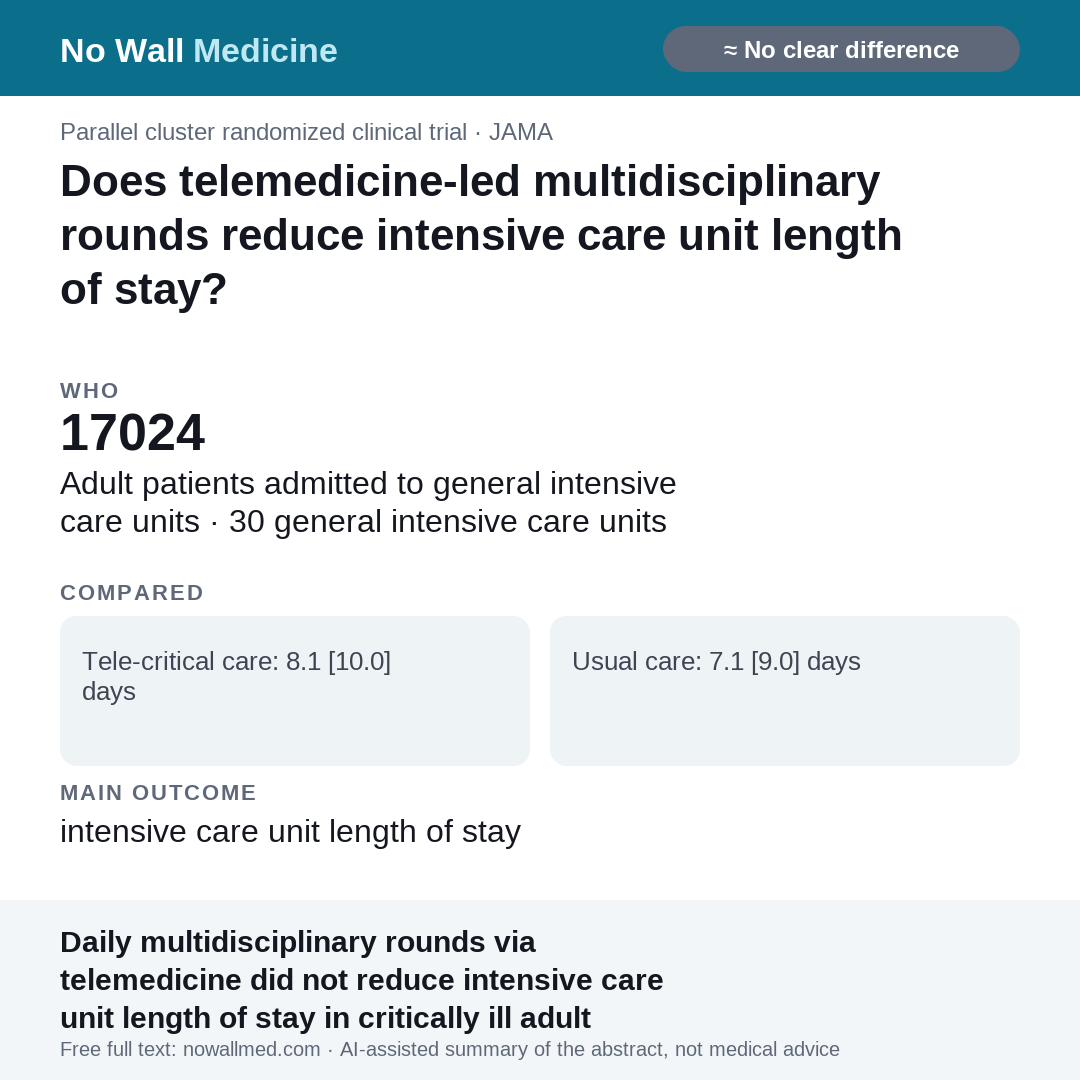
Effect of Tele-ICU on Clinical Outcomes of Critically Ill Patients: The TELESCOPE Randomized Clinical Trial
Parallel cluster randomized clinical trialNo clear difference
Does telemedicine-led multidisciplinary rounds reduce intensive care unit length of stay?
Who
17024
Adult patients admitted to general intensive care units · 30 general intensive care units in Brazil
Compared
Tele-critical care: 8.1 [10.0] days
Usual care: 7.1 [9.0] days
Main outcome
intensive care unit length of stay
Result: percentage change, 8.2% (95% CI, -5.4% to 23.8%)
Bottom line: Daily multidisciplinary rounds via telemedicine did not reduce intensive care unit length of stay in critically ill adult patients.
JAMA · 2024-10-09Download image