Visual abstracts
New randomized trials and meta-analyses from leading journals at a glance: who was studied, what was compared, and what was found. Every paper is free to read in full.
All specialtiesCardiology 842Oncology 763Gastroenterology & Hepatology 307Infectious Disease 626Neurology 350Psychiatry & Mental Health 430Pulmonology 366Critical Care 245Endocrinology & Diabetes 480Pediatrics 536Surgery 324Orthopedics & Sports Medicine 162Neurosurgery 93Cardiothoracic & Vascular Surgery 87Plastic & Reconstructive Surgery 124Nephrology 197Rheumatology 108Hematology 182Dermatology 80Ophthalmology 97Obstetrics & Gynecology 261Public & Global Health 167Radiology & Imaging 98Anesthesiology 114Urology 162ENT (Otolaryngology) 91Emergency Medicine 73Allergy & Immunology 58Geriatrics 160Family Medicine & Primary Care 111Medical Genetics & Genomics 91Pathology & Laboratory Medicine 24Physical Medicine & Rehabilitation 148Palliative Care 81Nutrition 223Digital Health & AI 460General Medicine 101
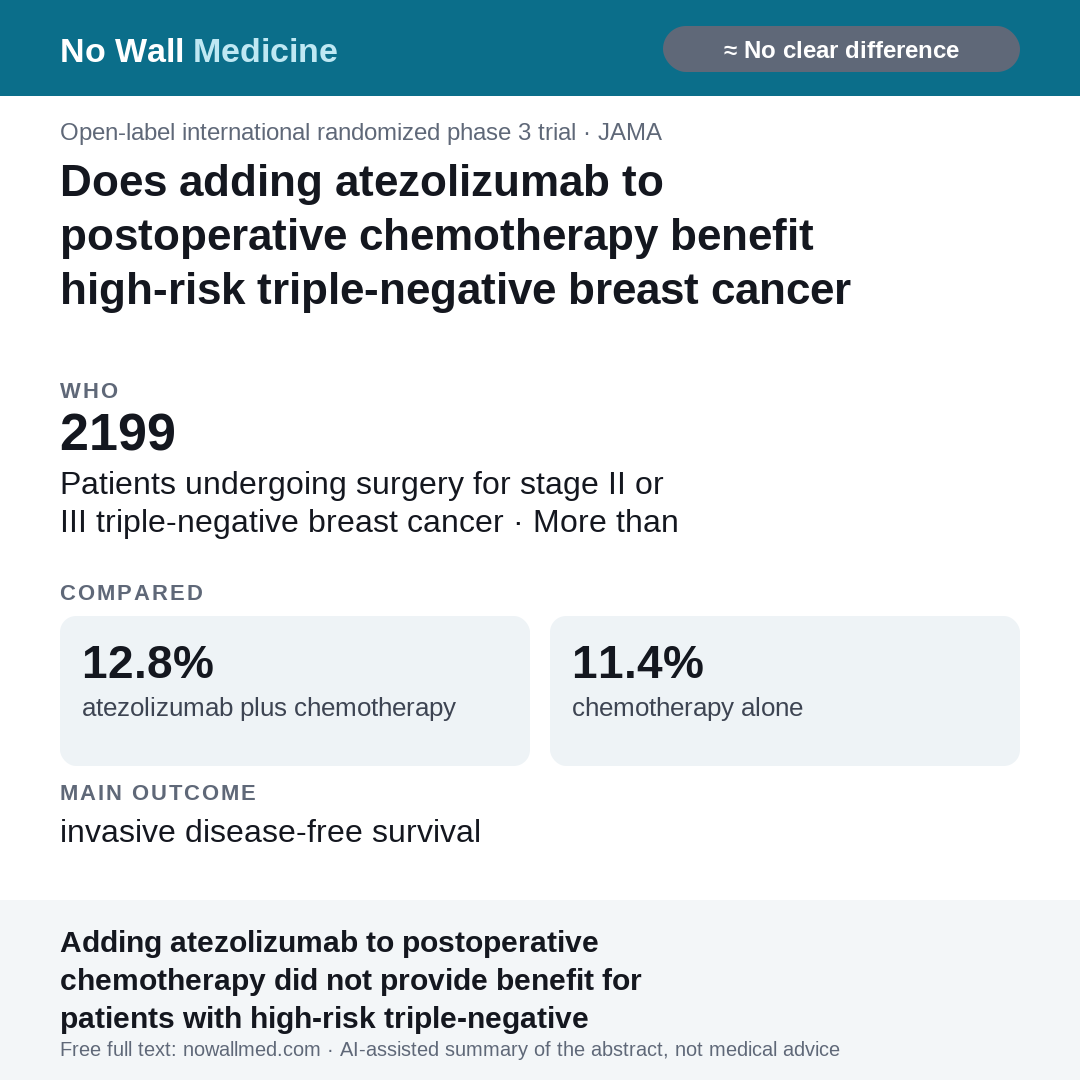
Adjuvant Atezolizumab for Early Triple-Negative Breast Cancer: The ALEXANDRA/IMpassion030 Randomized Clinical Trial
Open-label international randomized phase 3 trialNo clear difference
Does adding atezolizumab to postoperative chemotherapy benefit high-risk triple-negative breast cancer patients?
Who
2199
Patients undergoing surgery for stage II or III triple-negative breast cancer · More than 330 centers in 31 countries
Compared
12.8%atezolizumab plus chemotherapy
11.4%chemotherapy alone
Main outcome
invasive disease-free survival
Result: hazard ratio 1.11 (95% CI, 0.87-1.42)
Bottom line: Adding atezolizumab to postoperative chemotherapy did not provide benefit for patients with high-risk triple-negative breast cancer.
Limitation: The trial continued to a premature final analysis.
JAMA · 2025-01-30Download image
Palliative Care Program for Community-Dwelling Individuals With Dementia and Caregivers: The IN-PEACE Randomized Clinical Trial
Randomized clinical trialMixed results
Does integrated dementia palliative care reduce symptoms, caregiver distress, and healthcare utilization?
Who
201
Community-dwelling patients with moderate to severe dementia and their caregivers · 2 sites in central Indiana
Compared
9.15Dementia palliative care
9.39Usual care
Main outcome
Neuropsychiatric Inventory Questionnaire severity score
Result: -0.24 (95% CI, -2.33 to 1.84)
Bottom line: Palliative care did not improve neuropsychiatric symptoms but reduced combined emergency department and hospitalization events.
JAMA · 2025-01-29Download image

Health System, Community-Based, or Usual Dementia Care for Persons With Dementia and Caregivers: The D-CARE Randomized Clinical Trial
Randomized clinical trialNo clear difference
Are health system-based, community-based, or usual dementia care approaches effective?
Who
2176
Community-dwelling persons living with dementia and their caregivers · 4 sites in the US
Compared
Health system-based care: NPI-Q score 9.8
Community-based care: NPI-Q score 9.5
Usual care: NPI-Q score 10.1
Main outcome
Neuropsychiatric Inventory Questionnaire severity score and Modified Caregiver Strain Index
Result: difference between health system vs usual care, -0.33 (97.5% CI, -1.32 to 0.67)
Bottom line: Health system-based or community-based care did not improve behavioral symptoms or caregiver strain compared to usual care.
JAMA · 2025-01-29Download image

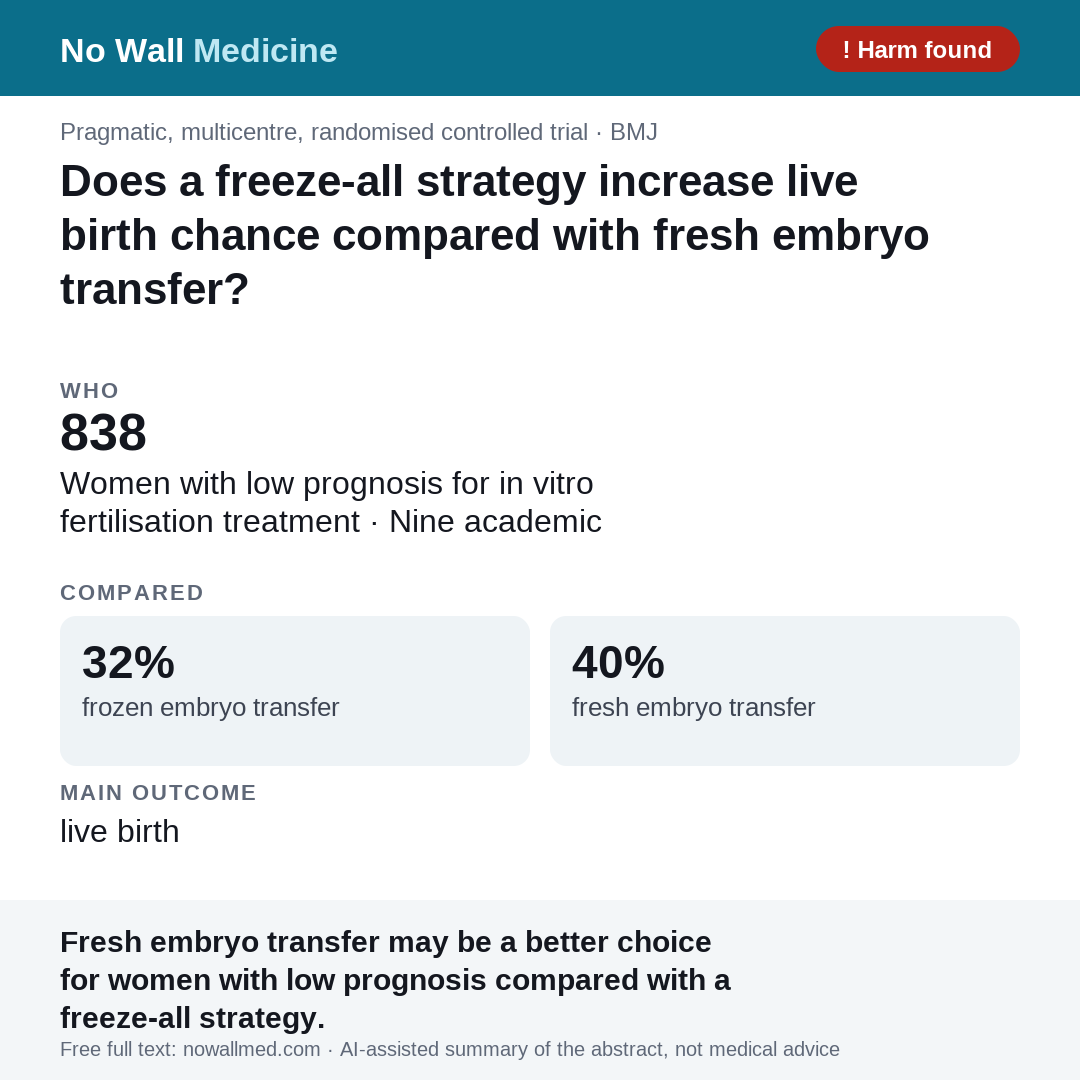
Frozen versus fresh embryo transfer in women with low prognosis for in vitro fertilisation treatment: pragmatic, multicentre, randomised controlled trial
Pragmatic, multicentre, randomised controlled trialHarm found
Does a freeze-all strategy increase live birth chance compared with fresh embryo transfer?
Who
838
Women with low prognosis for in vitro fertilisation treatment · Nine academic fertility centres in China
Compared
32%frozen embryo transfer (132 of 419)
40%fresh embryo transfer (168 of 419)
Main outcome
live birth
Result: relative ratio 0.79 (95% confidence interval 0.65 to 0.94)
Bottom line: Fresh embryo transfer may be a better choice for women with low prognosis compared with a freeze-all strategy.
BMJ · 2025-01-29Download image
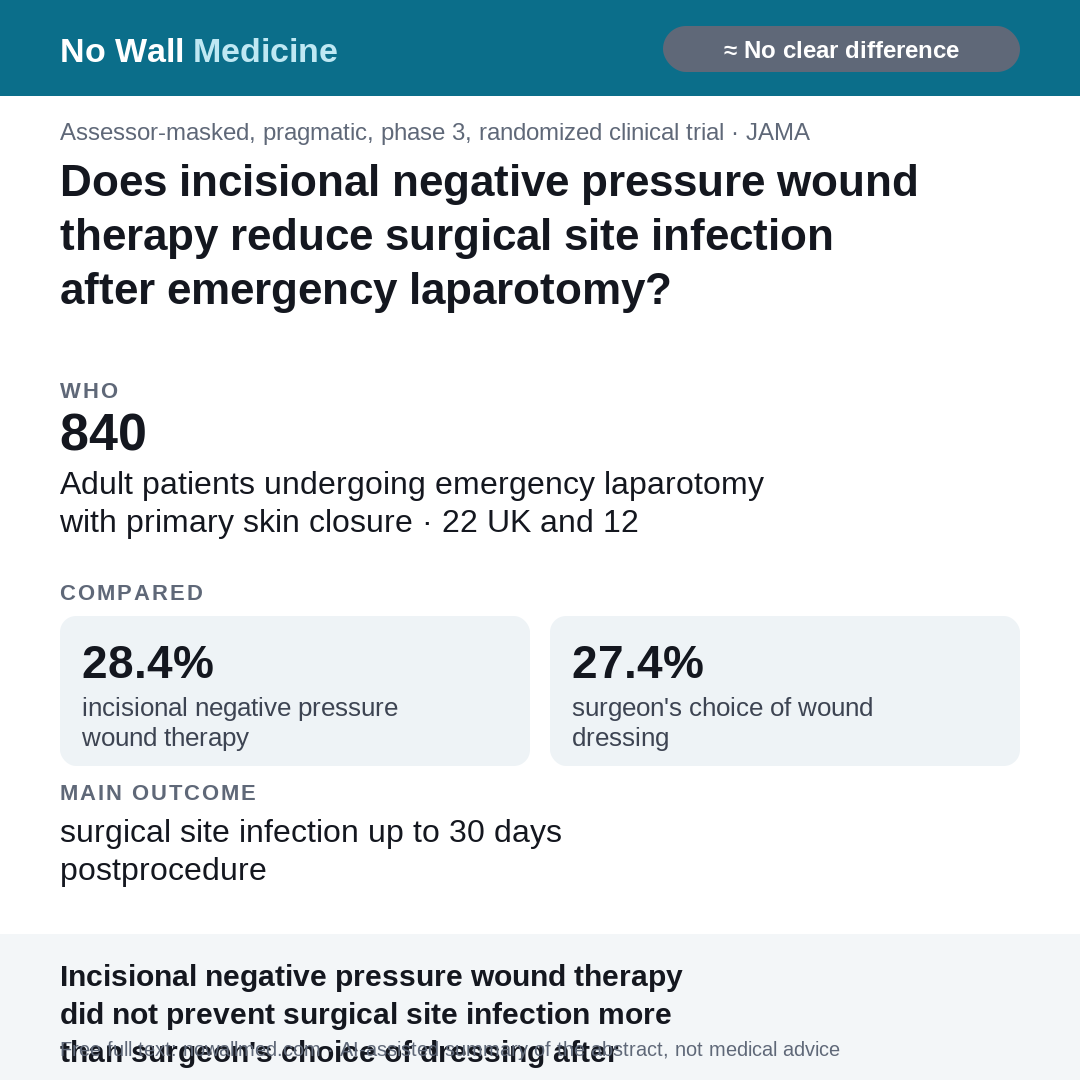
Negative Pressure Dressings to Prevent Surgical Site Infection After Emergency Laparotomy: The SUNRRISE Randomized Clinical Trial
Assessor-masked, pragmatic, phase 3, randomized clinical trialNo clear difference
Does incisional negative pressure wound therapy reduce surgical site infection after emergency laparotomy?
Who
840
Adult patients undergoing emergency laparotomy with primary skin closure · 22 UK and 12 Australian hospitals
Compared
28.4%incisional negative pressure wound therapy (112/394)
27.4%surgeon's choice of wound dressing (108/394)
Main outcome
surgical site infection up to 30 days postprocedure
Result: relative risk 1.03 (95% CI 0.83-1.28)
Bottom line: Incisional negative pressure wound therapy did not prevent surgical site infection more than surgeon's choice of dressing after emergency laparotomy.
JAMA · 2025-01-27Download image
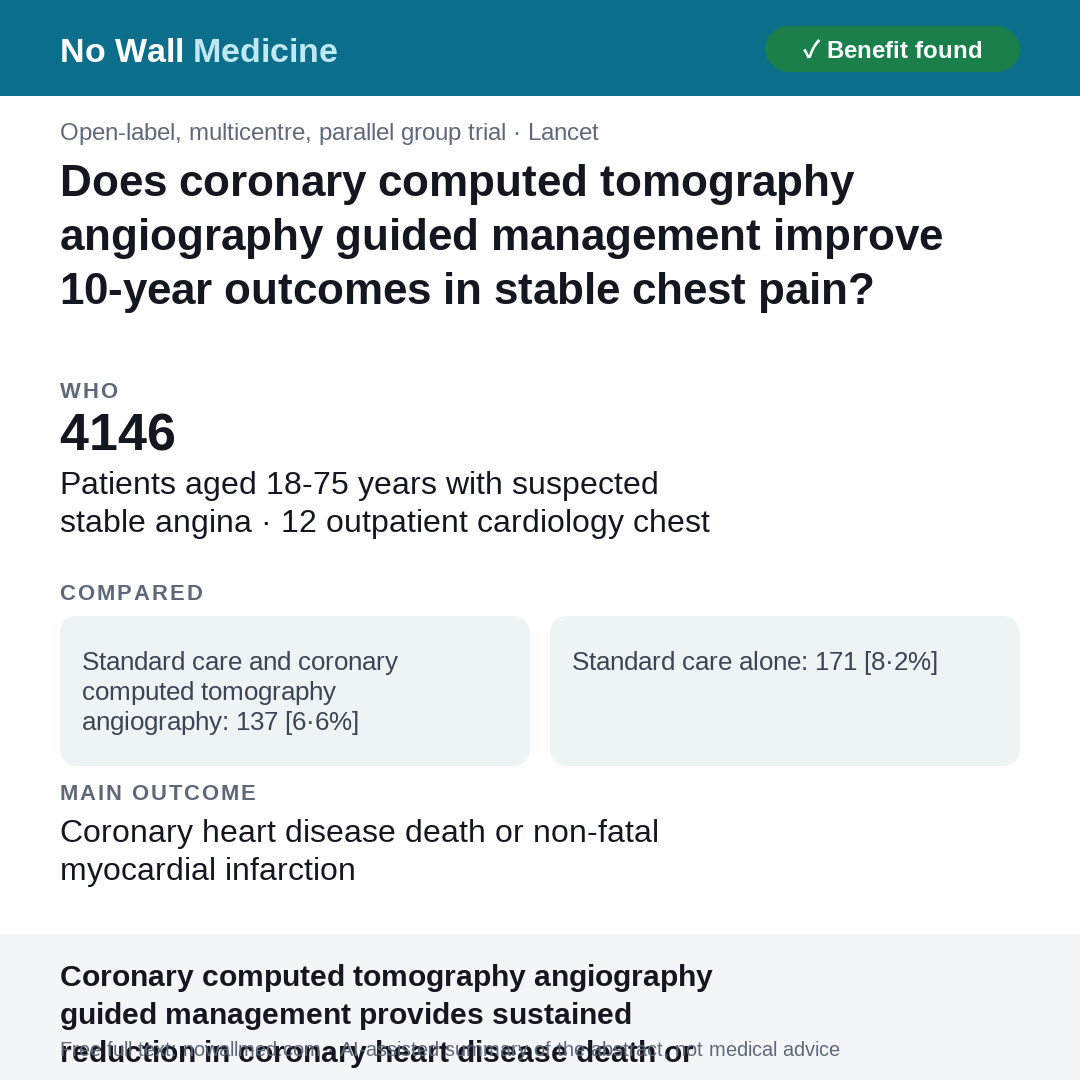
Coronary CT angiography-guided management of patients with stable chest pain: 10-year outcomes from the SCOT-HEART randomised controlled trial in Scotland
Open-label, multicentre, parallel group trialBenefit found
Does coronary computed tomography angiography guided management improve 10-year outcomes in stable chest pain?
Who
4146
Patients aged 18-75 years with suspected stable angina · 12 outpatient cardiology chest pain clinics in Scotland
Compared
Standard care and coronary computed tomography angiography: 137 [6·6%]
Standard care alone: 171 [8·2%]
Main outcome
Coronary heart disease death or non-fatal myocardial infarction
Result: hazard ratio 0·79 (95% CI 0·63-0·99)
Bottom line: Coronary computed tomography angiography guided management provides sustained reduction in coronary heart disease death or non-fatal myocardial infarction after 10 years.
Funded by: Scottish Government, Lothian's Health Foundation Trust, British Heart Foundation
Lancet · 2025-01-26Download image
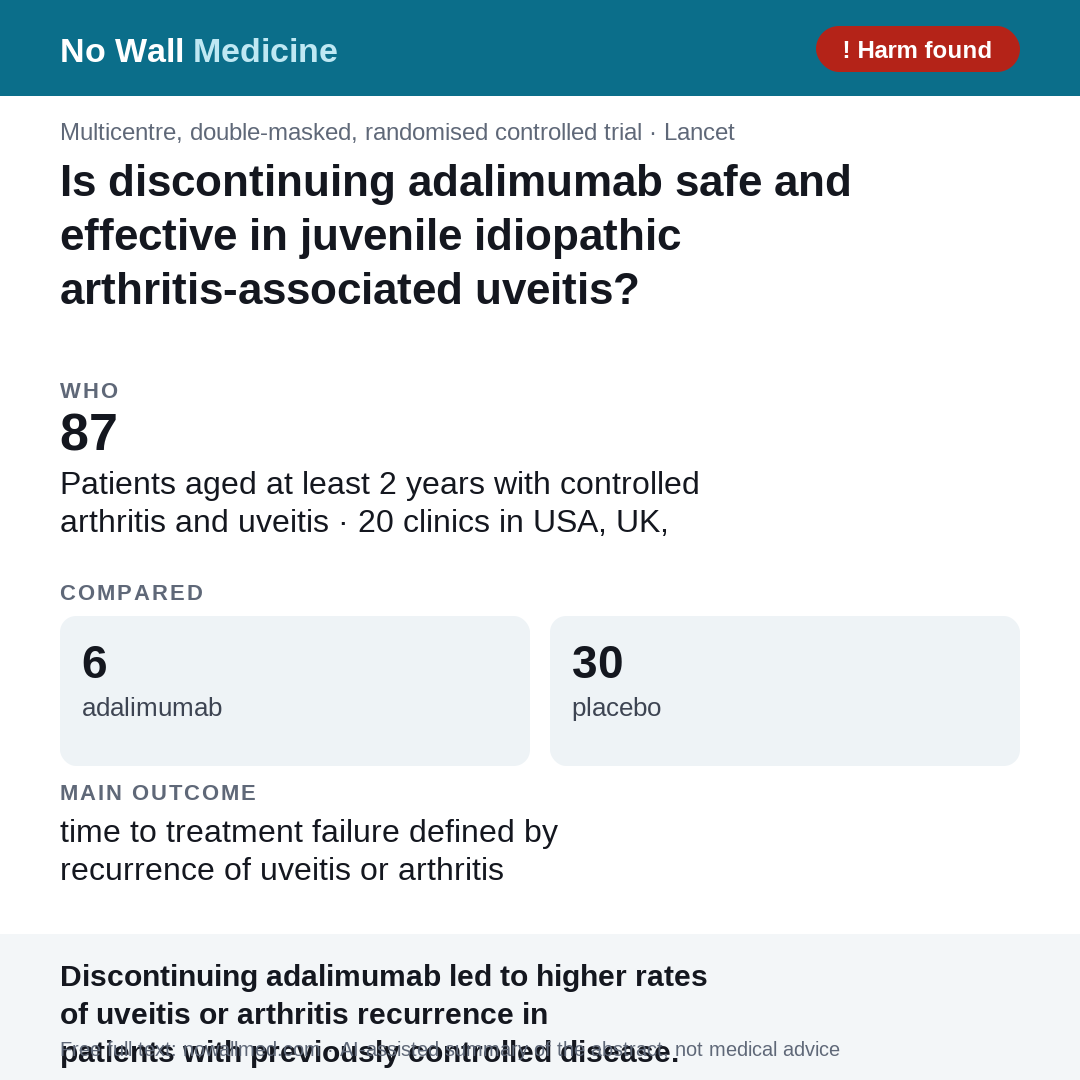
Stopping of adalimumab in juvenile idiopathic arthritis-associated uveitis (ADJUST): a multicentre, double-masked, randomised controlled trial
Multicentre, double-masked, randomised controlled trialHarm found
Is discontinuing adalimumab safe and effective in juvenile idiopathic arthritis-associated uveitis?
Who
87
Patients aged at least 2 years with controlled arthritis and uveitis · 20 clinics in USA, UK, and Australia
Compared
6adalimumab (14%)
30placebo (68%)
Main outcome
time to treatment failure defined by recurrence of uveitis or arthritis
Result: hazard ratio 8·7 (95% CI 3·6-21·2)
Bottom line: Discontinuing adalimumab led to higher rates of uveitis or arthritis recurrence in patients with previously controlled disease.
Funded by: US National Institutes of Health (National Eye Institute)
Lancet · 2025-01-26Download image
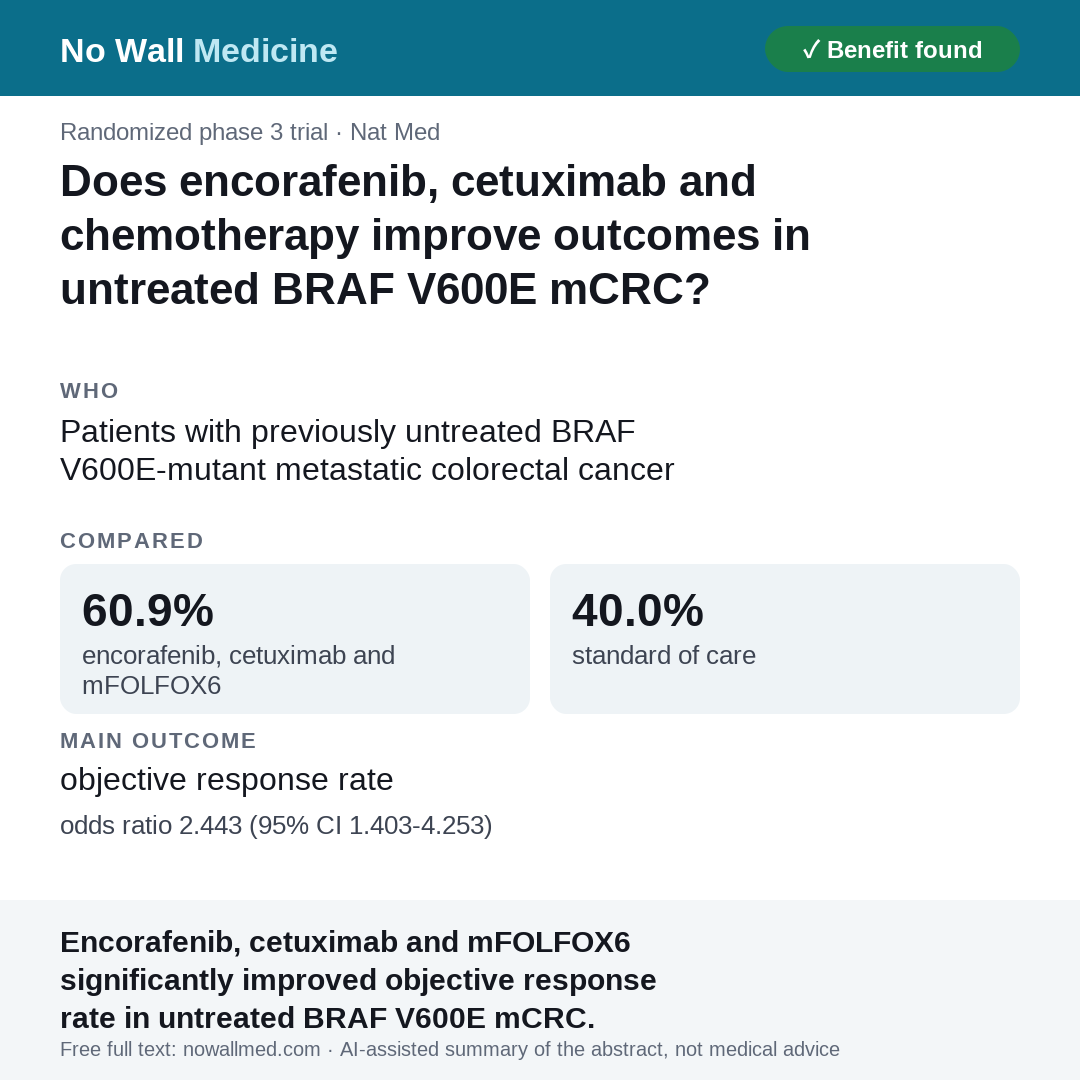
Encorafenib, cetuximab and chemotherapy in BRAF-mutant colorectal cancer: a randomized phase 3 trial
Randomized phase 3 trialBenefit found
Does encorafenib, cetuximab and chemotherapy improve outcomes in untreated BRAF V600E mCRC?
Who
Patients with previously untreated BRAF V600E-mutant metastatic colorectal cancer
Compared
60.9%encorafenib, cetuximab and mFOLFOX6
40.0%standard of care
Main outcome
objective response rate
Result: odds ratio 2.443 (95% CI 1.403-4.253)
Bottom line: Encorafenib, cetuximab and mFOLFOX6 significantly improved objective response rate in untreated BRAF V600E mCRC.
Limitation: data were not mature for the progression-free survival endpoint
Nat Med · 2025-01-25Download image
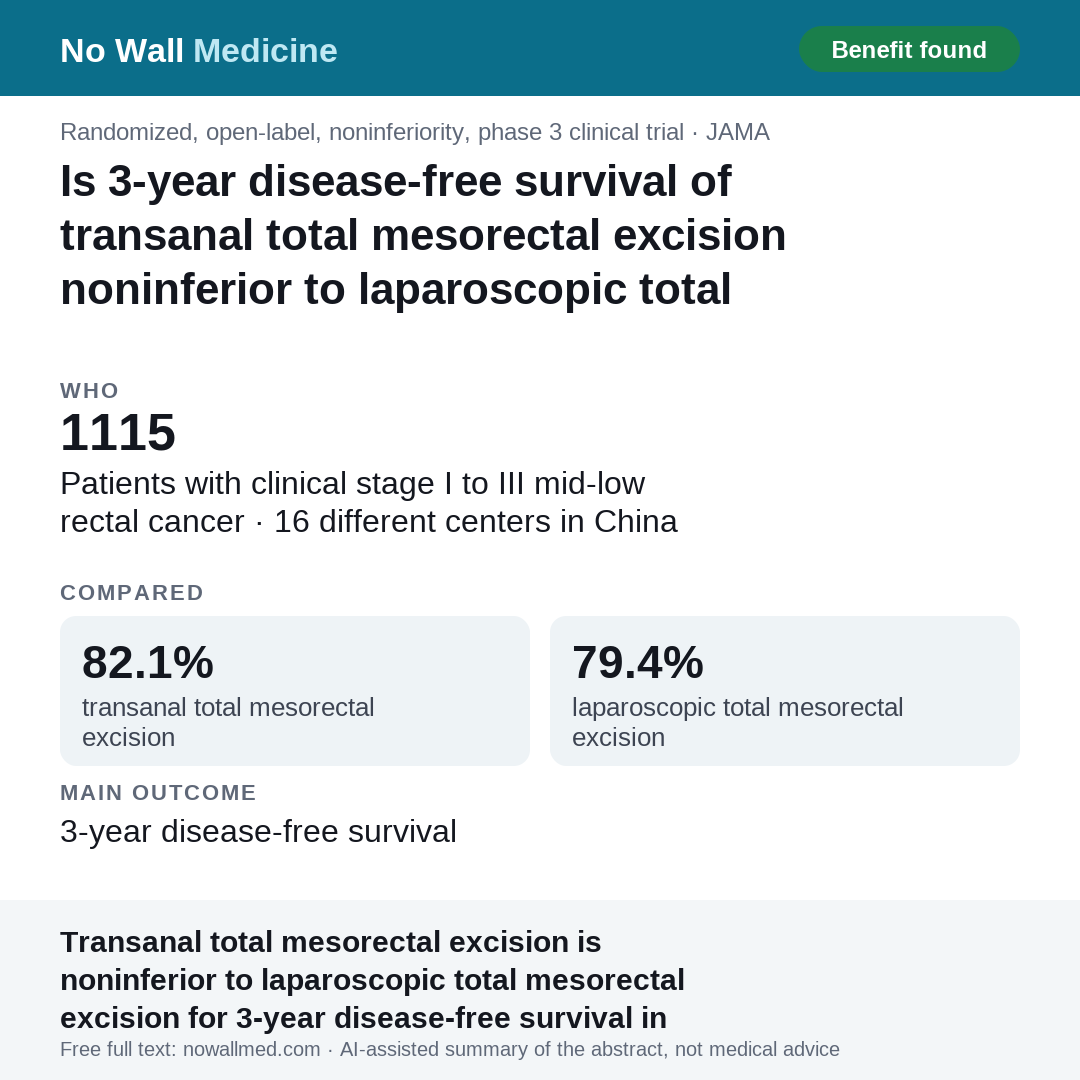
Transanal vs Laparoscopic Total Mesorectal Excision and 3-Year Disease-Free Survival in Rectal Cancer: The TaLaR Randomized Clinical Trial
Randomized, open-label, noninferiority, phase 3 clinical trialBenefit found
Is 3-year disease-free survival of transanal total mesorectal excision noninferior to laparoscopic total mesorectal excision?
Who
1115
Patients with clinical stage I to III mid-low rectal cancer · 16 different centers in China
Compared
82.1%transanal total mesorectal excision (97.5% CI, 78.4%-85.8%)
79.4%laparoscopic total mesorectal excision (97.5% CI, 75.6%-83.4%)
Main outcome
3-year disease-free survival
Result: difference of 2.7% (97.5% CI, -3.0% to 8.1%)
Bottom line: Transanal total mesorectal excision is noninferior to laparoscopic total mesorectal excision for 3-year disease-free survival in mid-low rectal cancer.
JAMA · 2025-01-23Download image
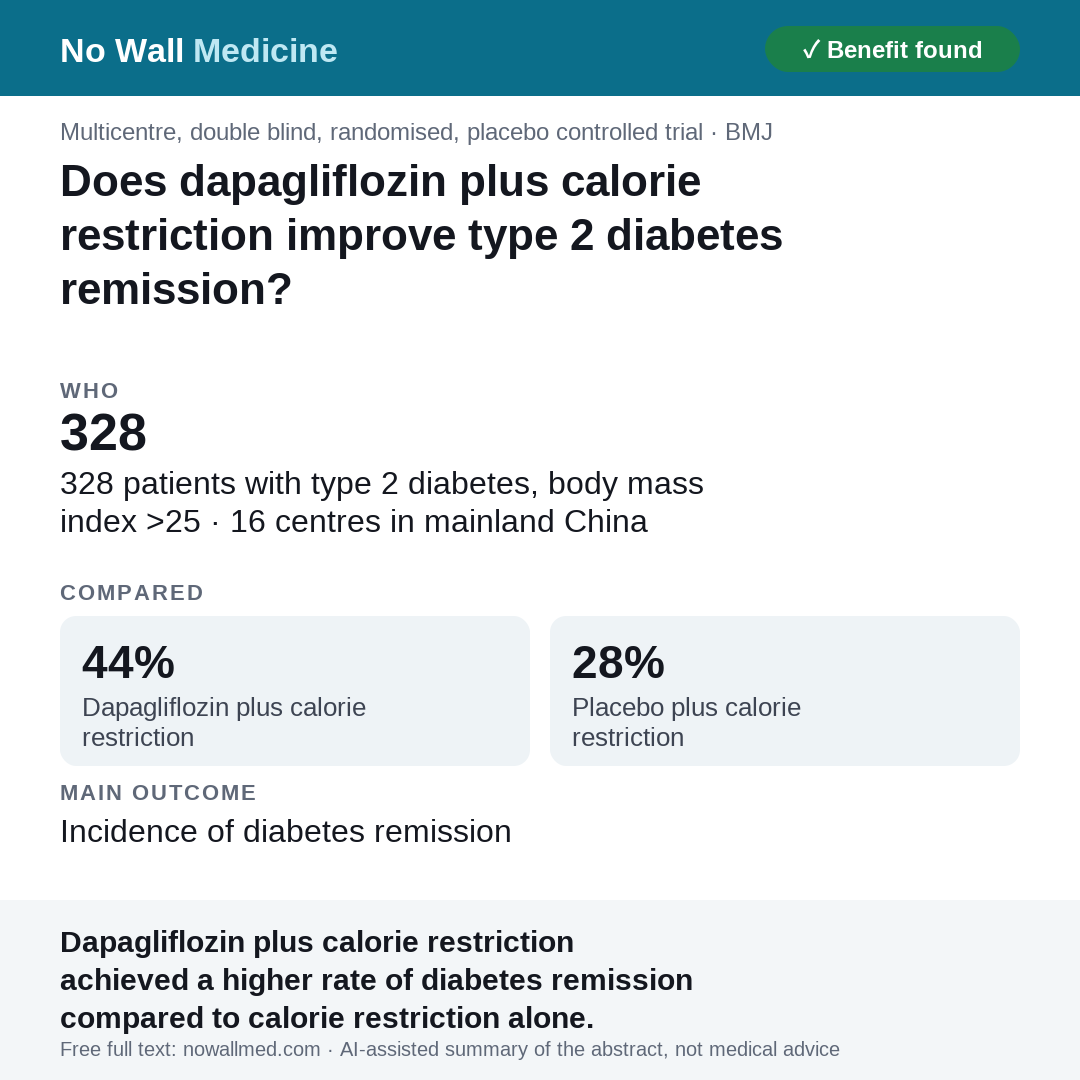
Dapagliflozin plus calorie restriction for remission of type 2 diabetes: multicentre, double blind, randomised, placebo controlled trial
Multicentre, double blind, randomised, placebo controlled trialBenefit found
Does dapagliflozin plus calorie restriction improve type 2 diabetes remission?
Who
328
328 patients with type 2 diabetes, body mass index >25 · 16 centres in mainland China
Compared
44%Dapagliflozin plus calorie restriction (73/165)
28%Placebo plus calorie restriction (46/163)
Main outcome
Incidence of diabetes remission
Result: risk ratio 1.56 (95% CI 1.17 to 2.09)
Bottom line: Dapagliflozin plus calorie restriction achieved a higher rate of diabetes remission compared to calorie restriction alone.
BMJ · 2025-01-22Download image
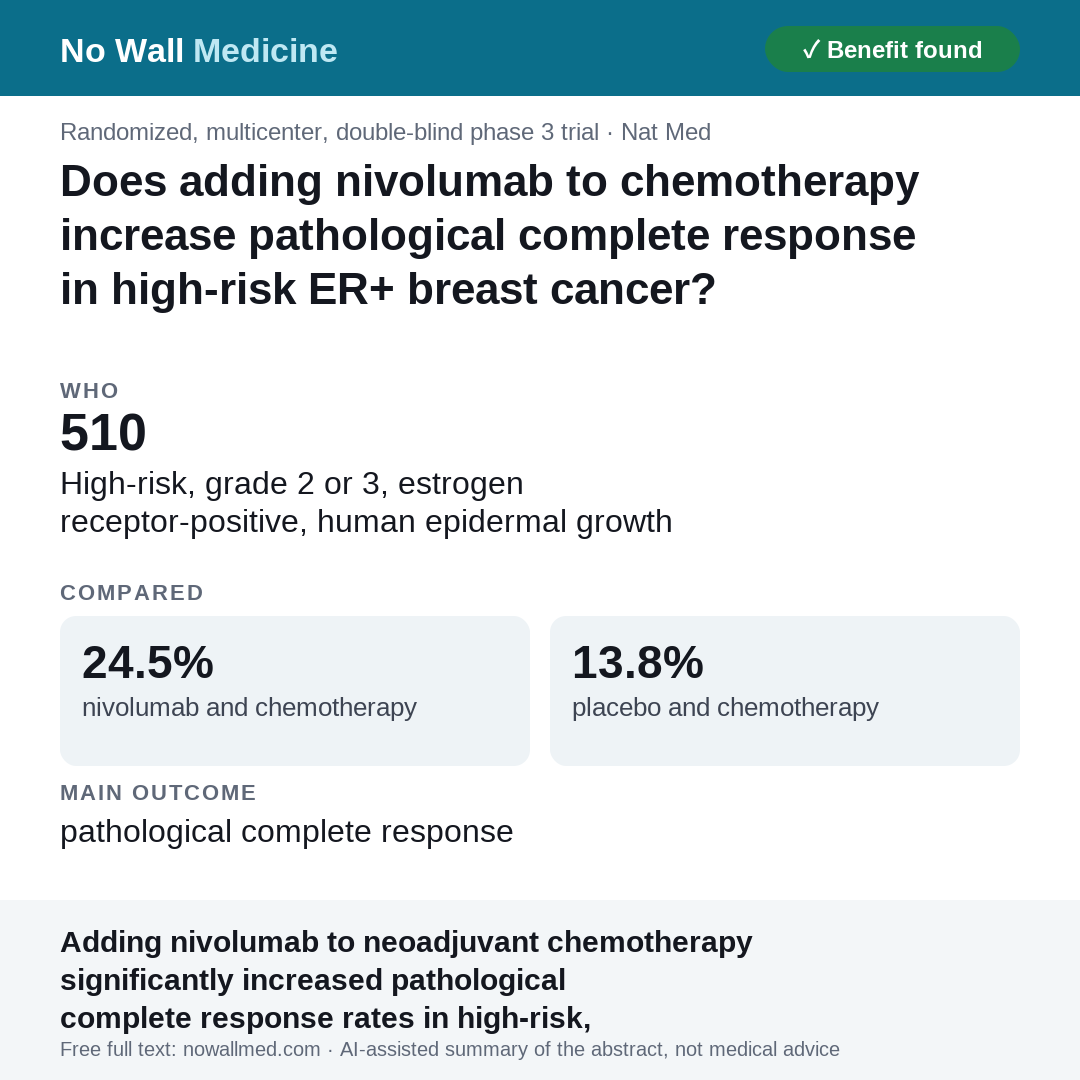
Neoadjuvant nivolumab and chemotherapy in early estrogen receptor-positive breast cancer: a randomized phase 3 trial
Randomized, multicenter, double-blind phase 3 trialBenefit found
Does adding nivolumab to chemotherapy increase pathological complete response in high-risk ER+ breast cancer?
Who
510
High-risk, grade 2 or 3, estrogen receptor-positive, human epidermal growth factor receptor 2-negative primary breast cancer · multicenter
Compared
24.5%nivolumab and chemotherapy
13.8%placebo and chemotherapy
Main outcome
pathological complete response
Bottom line: Adding nivolumab to neoadjuvant chemotherapy significantly increased pathological complete response rates in high-risk, early-stage estrogen receptor-positive breast cancer.
Nat Med · 2025-01-21Download image
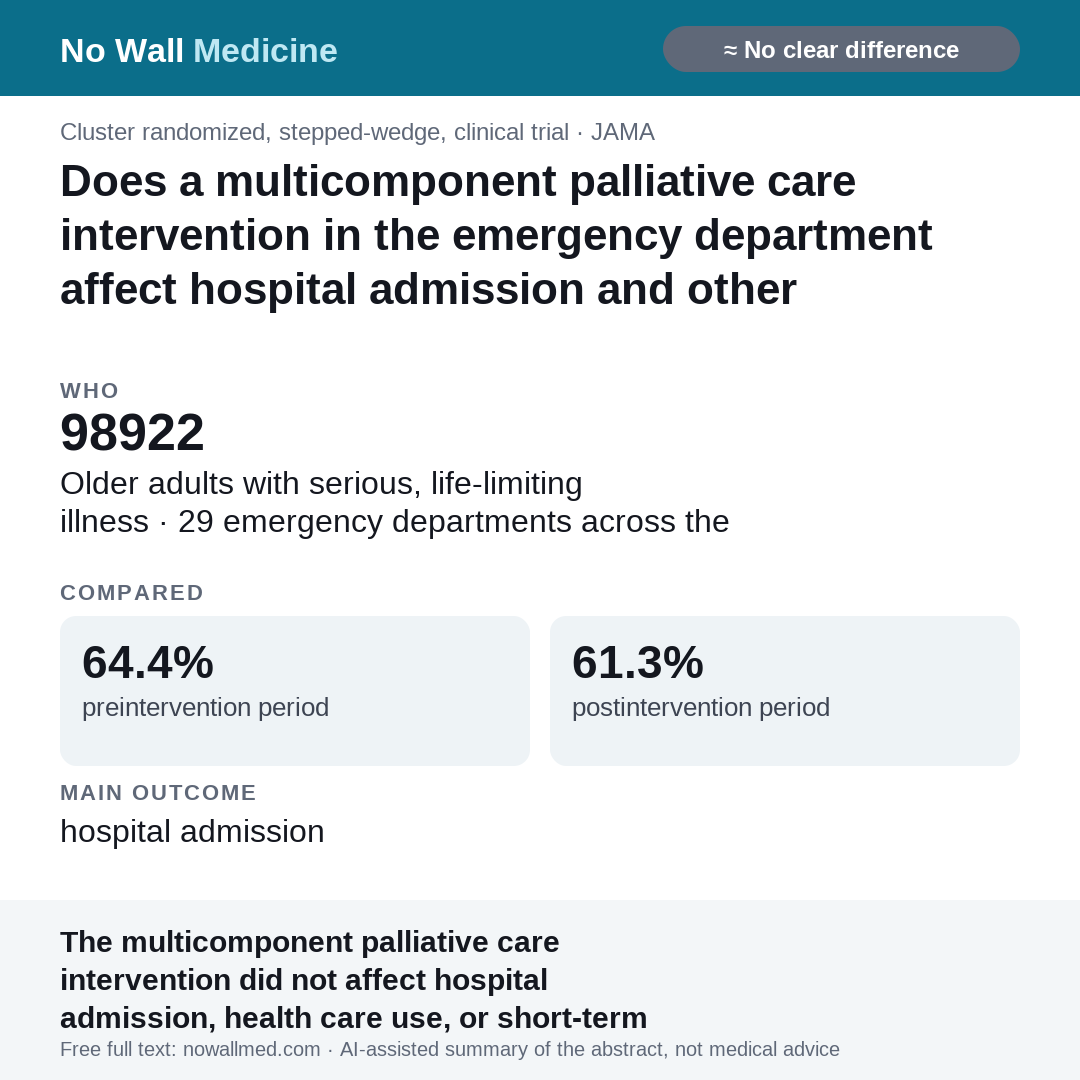
Palliative Care Initiated in the Emergency Department: A Cluster Randomized Clinical Trial
Cluster randomized, stepped-wedge, clinical trialNo clear difference
Does a multicomponent palliative care intervention in the emergency department affect hospital admission and other outcomes?
Who
98922
Older adults with serious, life-limiting illness · 29 emergency departments across the United States
Compared
64.4%preintervention period
61.3%postintervention period
Main outcome
hospital admission
Result: adjusted odds ratio 1.03 (95% CI 0.93 to 1.14)
Bottom line: The multicomponent palliative care intervention did not affect hospital admission, health care use, or short-term mortality.
JAMA · 2025-01-15Download image
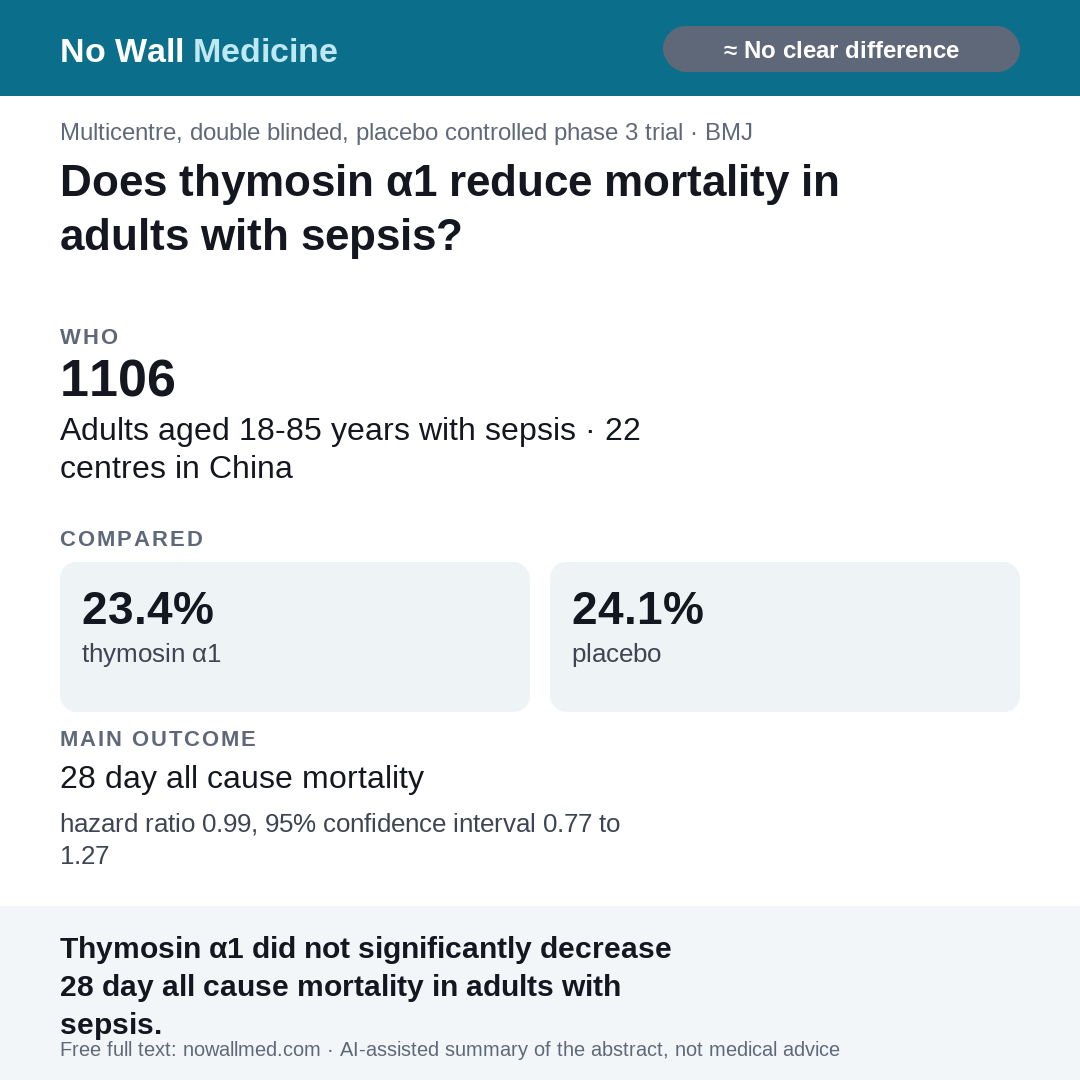
The efficacy and safety of thymosin α1 for sepsis (TESTS): multicentre, double blinded, randomised, placebo controlled, phase 3 trial
Multicentre, double blinded, placebo controlled phase 3 trialNo clear difference
Does thymosin α1 reduce mortality in adults with sepsis?
Who
1106
Adults aged 18-85 years with sepsis · 22 centres in China
Compared
23.4%thymosin α1
24.1%placebo
Main outcome
28 day all cause mortality
Result: hazard ratio 0.99, 95% confidence interval 0.77 to 1.27
Bottom line: Thymosin α1 did not significantly decrease 28 day all cause mortality in adults with sepsis.
BMJ · 2025-01-15Download image
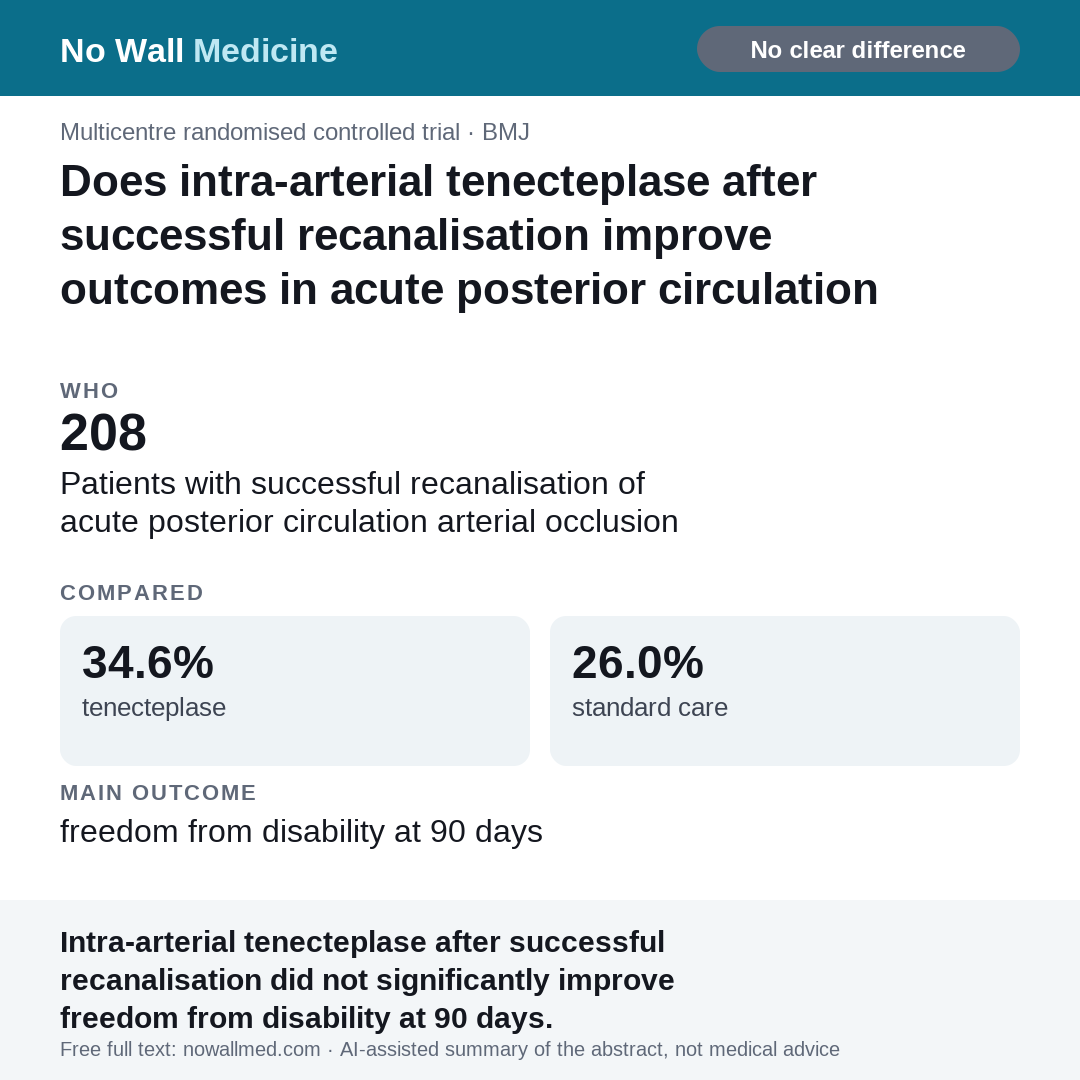
Intra-arterial tenecteplase after successful endovascular recanalisation in patients with acute posterior circulation arterial occlusion (ATTENTION-IA): multicentre randomised controlled trial
Multicentre randomised controlled trialNo clear difference
Does intra-arterial tenecteplase after successful recanalisation improve outcomes in acute posterior circulation occlusion?
Who
208
Patients with successful recanalisation of acute posterior circulation arterial occlusion · 31 hospitals in China
Compared
34.6%tenecteplase
26.0%standard care
Main outcome
freedom from disability at 90 days
Result: adjusted risk ratio 1.36 (95% confidence interval 0.92 to 2.02)
Bottom line: Intra-arterial tenecteplase after successful recanalisation did not significantly improve freedom from disability at 90 days.
BMJ · 2025-01-14Download image
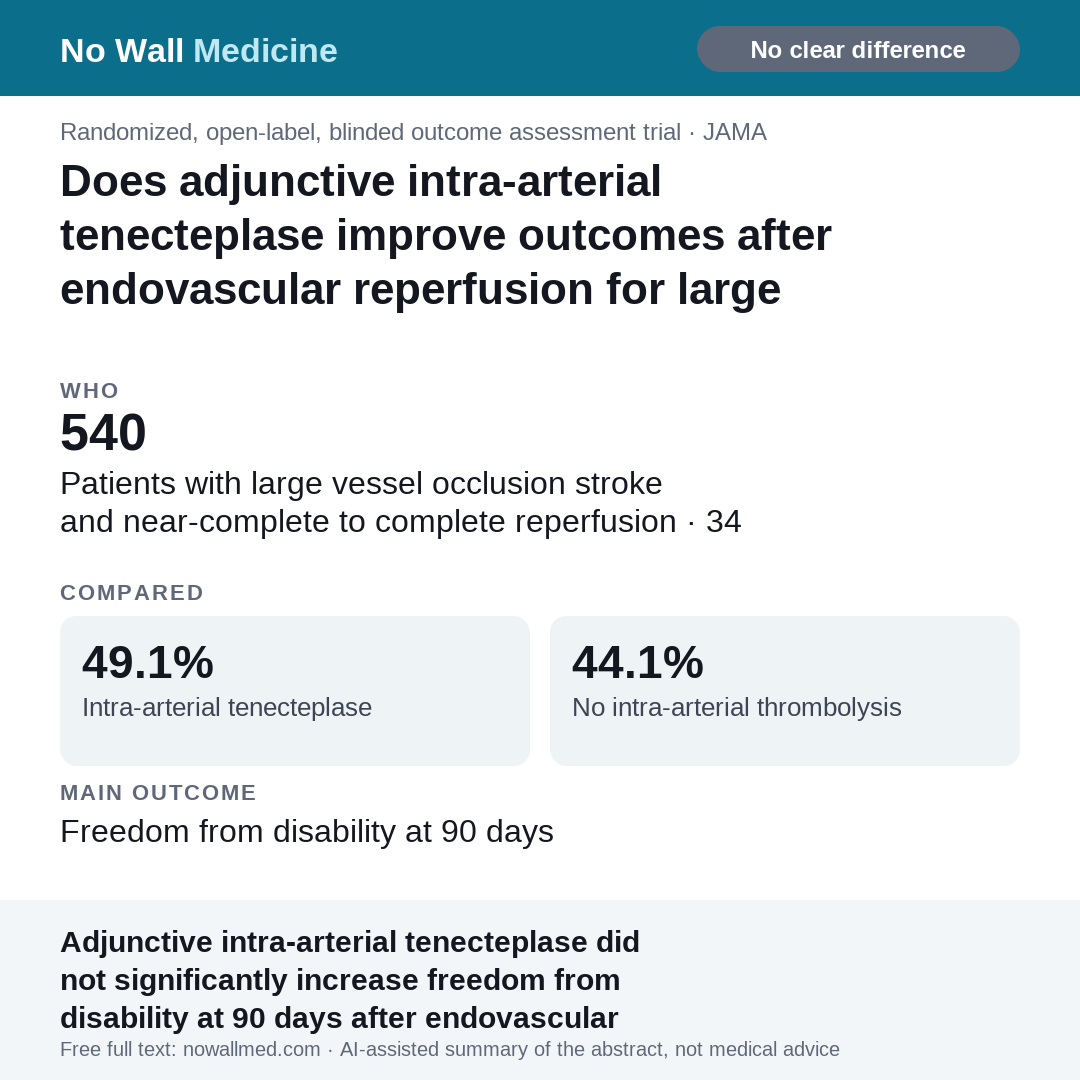
Intra-Arterial Tenecteplase Following Endovascular Reperfusion for Large Vessel Occlusion Acute Ischemic Stroke: The POST-TNK Randomized Clinical Trial
Randomized, open-label, blinded outcome assessment trialNo clear difference
Does adjunctive intra-arterial tenecteplase improve outcomes after endovascular reperfusion for large vessel occlusion stroke?
Who
540
Patients with large vessel occlusion stroke and near-complete to complete reperfusion · 34 hospitals in China
Compared
49.1%Intra-arterial tenecteplase (132/269)
44.1%No intra-arterial thrombolysis (119/270)
Main outcome
Freedom from disability at 90 days
Result: adjusted risk ratio, 1.15 (95% CI, 0.97-1.36)
Bottom line: Adjunctive intra-arterial tenecteplase did not significantly increase freedom from disability at 90 days after endovascular reperfusion.
JAMA · 2025-01-13Download image
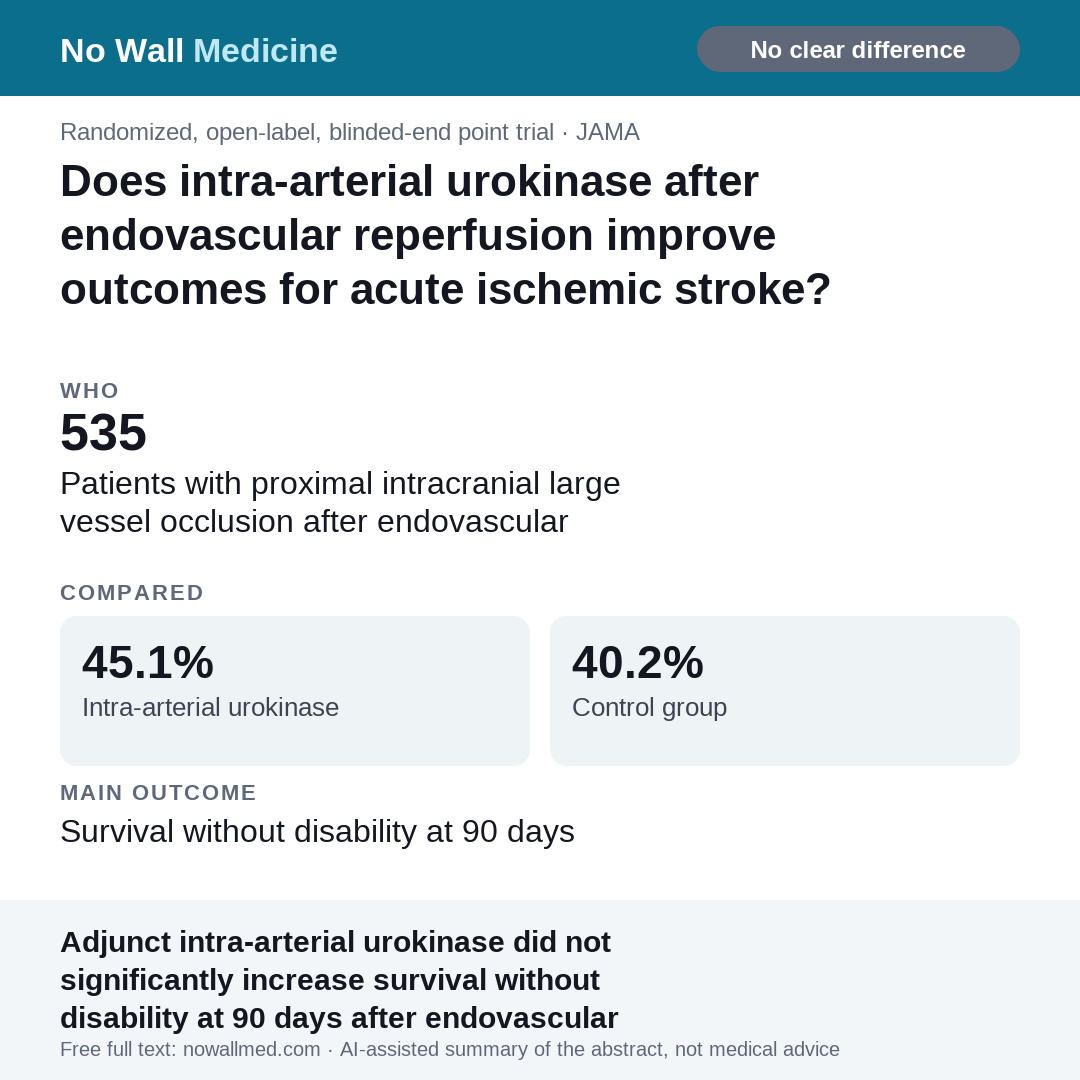
Intra-Arterial Urokinase After Endovascular Reperfusion for Acute Ischemic Stroke: The POST-UK Randomized Clinical Trial
Randomized, open-label, blinded-end point trialNo clear difference
Does intra-arterial urokinase after endovascular reperfusion improve outcomes for acute ischemic stroke?
Who
535
Patients with proximal intracranial large vessel occlusion after endovascular thrombectomy · 35 hospitals in China
Compared
45.1%Intra-arterial urokinase (120/266)
40.2%Control group (107/266)
Main outcome
Survival without disability at 90 days
Result: adjusted risk ratio, 1.13 (95% CI, 0.94-1.36)
Bottom line: Adjunct intra-arterial urokinase did not significantly increase survival without disability at 90 days after endovascular thrombectomy.
JAMA · 2025-01-13Download image
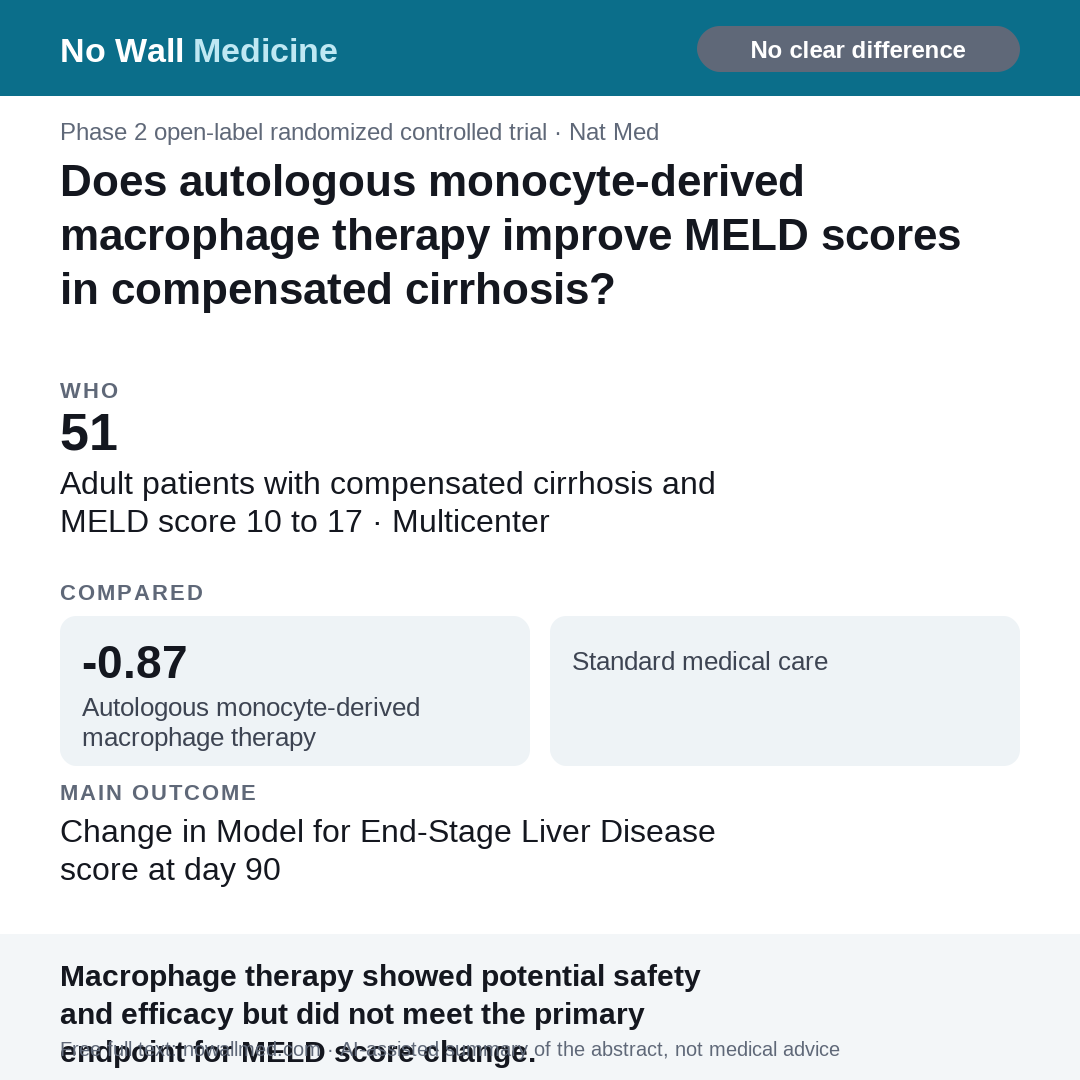
Autologous macrophage therapy for liver cirrhosis: a phase 2 open-label randomized controlled trial
Phase 2 open-label randomized controlled trialNo clear difference
Does autologous monocyte-derived macrophage therapy improve MELD scores in compensated cirrhosis?
Who
51
Adult patients with compensated cirrhosis and MELD score 10 to 17 · Multicenter
Compared
-0.87Autologous monocyte-derived macrophage therapy (95% confidence interval: -1.79, 0.0; P = 0.06)
Standard medical care
Main outcome
Change in Model for End-Stage Liver Disease score at day 90
Result: -0.87 (95% confidence interval: -1.79, 0.0; P = 0.06)
Bottom line: Macrophage therapy showed potential safety and efficacy but did not meet the primary endpoint for MELD score change.
Nat Med · 2025-01-10Download image
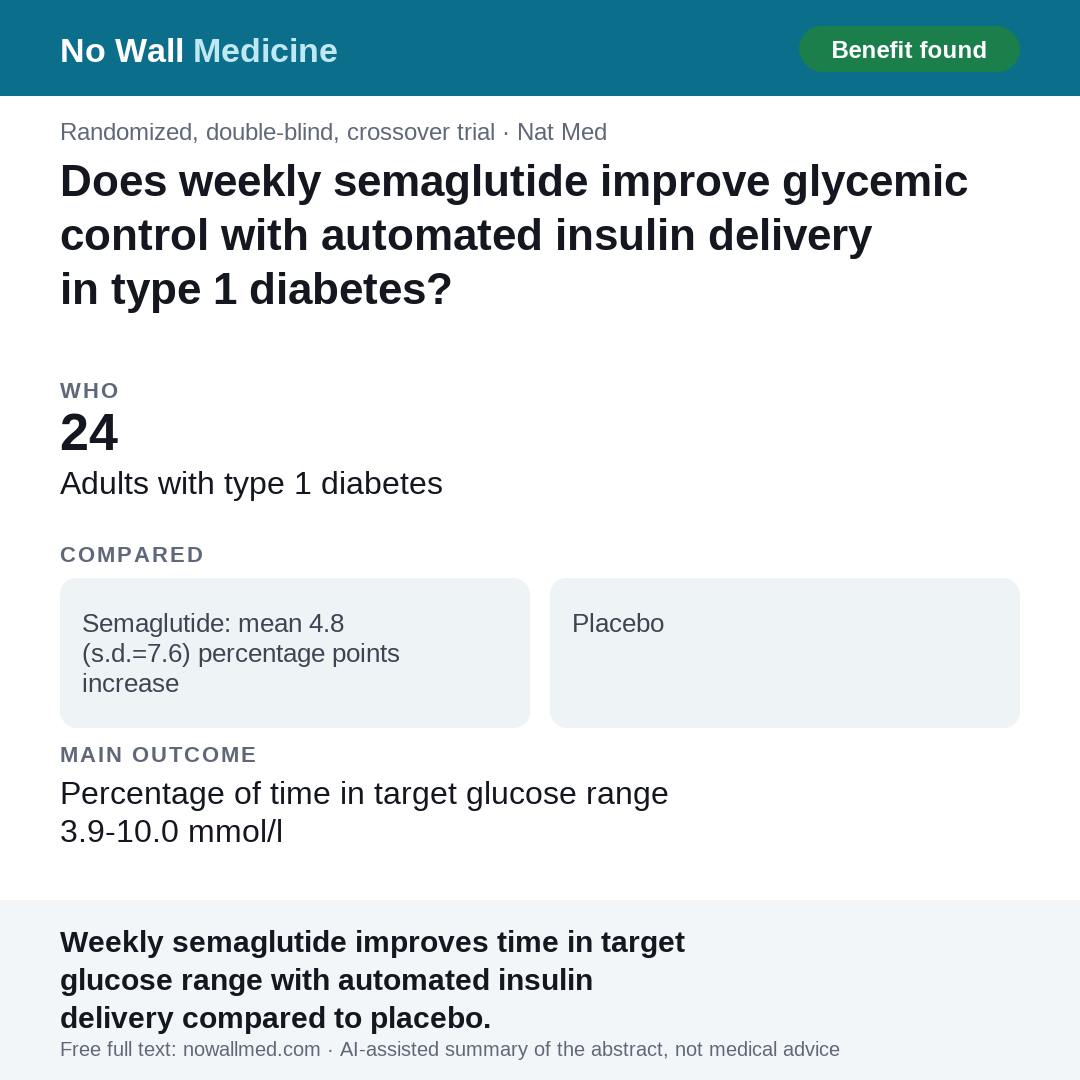
Subcutaneous weekly semaglutide with automated insulin delivery in type 1 diabetes: a double-blind, randomized, crossover trial
Randomized, double-blind, crossover trialBenefit found
Does weekly semaglutide improve glycemic control with automated insulin delivery in type 1 diabetes?
Who
24
Adults with type 1 diabetes
Compared
Semaglutide: mean 4.8 (s.d.=7.6) percentage points increase
Placebo
Main outcome
Percentage of time in target glucose range 3.9-10.0 mmol/l
Bottom line: Weekly semaglutide improves time in target glucose range with automated insulin delivery compared to placebo.
Nat Med · 2025-01-10Download image
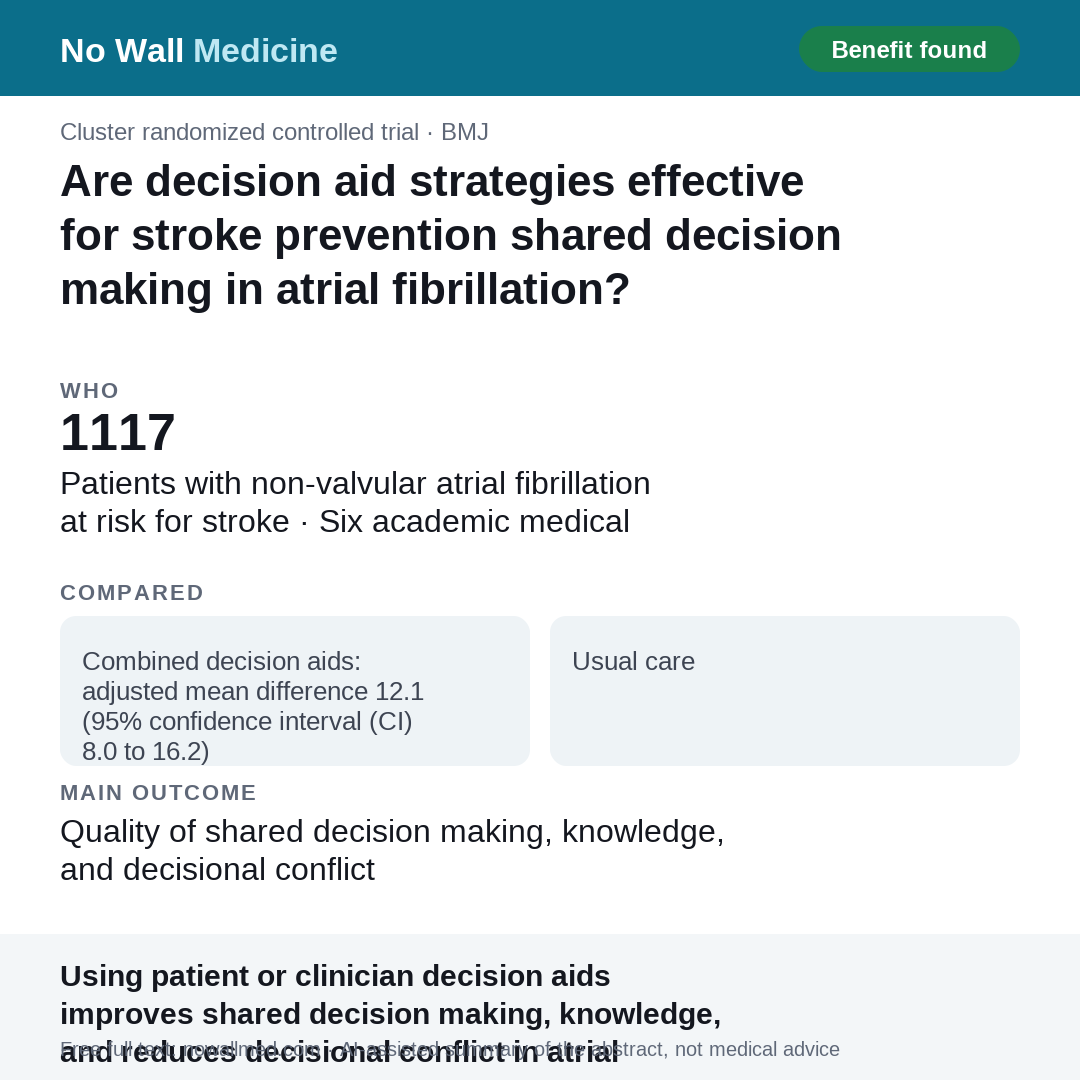
Effectiveness of shared decision making strategies for stroke prevention among patients with atrial fibrillation: cluster randomized controlled trial
Cluster randomized controlled trialBenefit found
Are decision aid strategies effective for stroke prevention shared decision making in atrial fibrillation?
Who
1117
Patients with non-valvular atrial fibrillation at risk for stroke · Six academic medical centers in the United States
Compared
Combined decision aids: adjusted mean difference 12.1 (95% confidence interval (CI) 8.0 to 16.2)
Usual care
Main outcome
Quality of shared decision making, knowledge, and decisional conflict
Result: adjusted mean difference 12.1 (95% confidence interval (CI) 8.0 to 16.2)
Bottom line: Using patient or clinician decision aids improves shared decision making, knowledge, and reduces decisional conflict in atrial fibrillation patients.
BMJ · 2025-01-09Download image
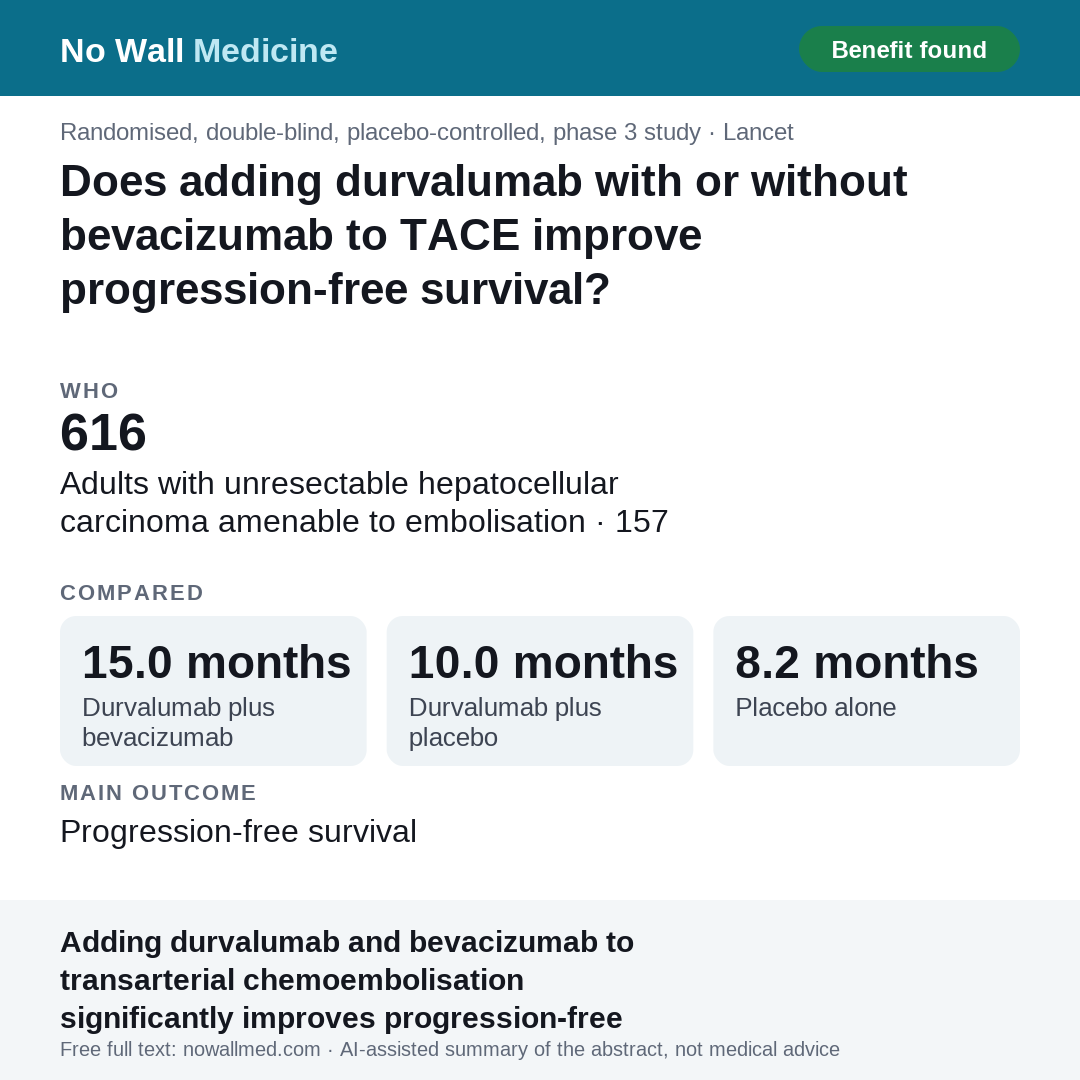
Durvalumab with or without bevacizumab with transarterial chemoembolisation in hepatocellular carcinoma (EMERALD-1): a multiregional, randomised, double-blind, placebo-controlled, phase 3 study
Randomised, double-blind, placebo-controlled, phase 3 studyBenefit found
Does adding durvalumab with or without bevacizumab to TACE improve progression-free survival?
Who
616
Adults with unresectable hepatocellular carcinoma amenable to embolisation · 157 medical sites in 18 countries
Compared
15.0 monthsDurvalumab plus bevacizumab (95% CI 11.1-18.9)
10.0 monthsDurvalumab plus placebo (9.0-12.7)
8.2 monthsPlacebo alone (6.9-11.1)
Main outcome
Progression-free survival
Result: hazard ratio 0.77 (95% CI 0.61-0.98)
Bottom line: Adding durvalumab and bevacizumab to transarterial chemoembolisation significantly improves progression-free survival in patients with unresectable hepatocellular carcinoma.
Lancet · 2025-01-08Download image