Visual abstracts
New randomized trials and meta-analyses from leading journals at a glance: who was studied, what was compared, and what was found. Every paper is free to read in full.
All specialtiesCardiology 4832Oncology 4114Gastroenterology & Hepatology 1934Infectious Disease 3824Neurology 1899Psychiatry & Mental Health 2256Pulmonology 2082Critical Care 1345Endocrinology & Diabetes 2572Pediatrics 2940Surgery 2525Orthopedics & Sports Medicine 926Neurosurgery 534Cardiothoracic & Vascular Surgery 671Plastic & Reconstructive Surgery 591Nephrology 1124Rheumatology 823Hematology 1104Dermatology 620Ophthalmology 543Obstetrics & Gynecology 1684Public & Global Health 1056Radiology & Imaging 641Anesthesiology 962Urology 754ENT (Otolaryngology) 503Emergency Medicine 489Allergy & Immunology 313Geriatrics 981Family Medicine & Primary Care 541Medical Genetics & Genomics 675Pathology & Laboratory Medicine 157Physical Medicine & Rehabilitation 751Palliative Care 424Nutrition 1580Digital Health & AI 2195General Medicine 321
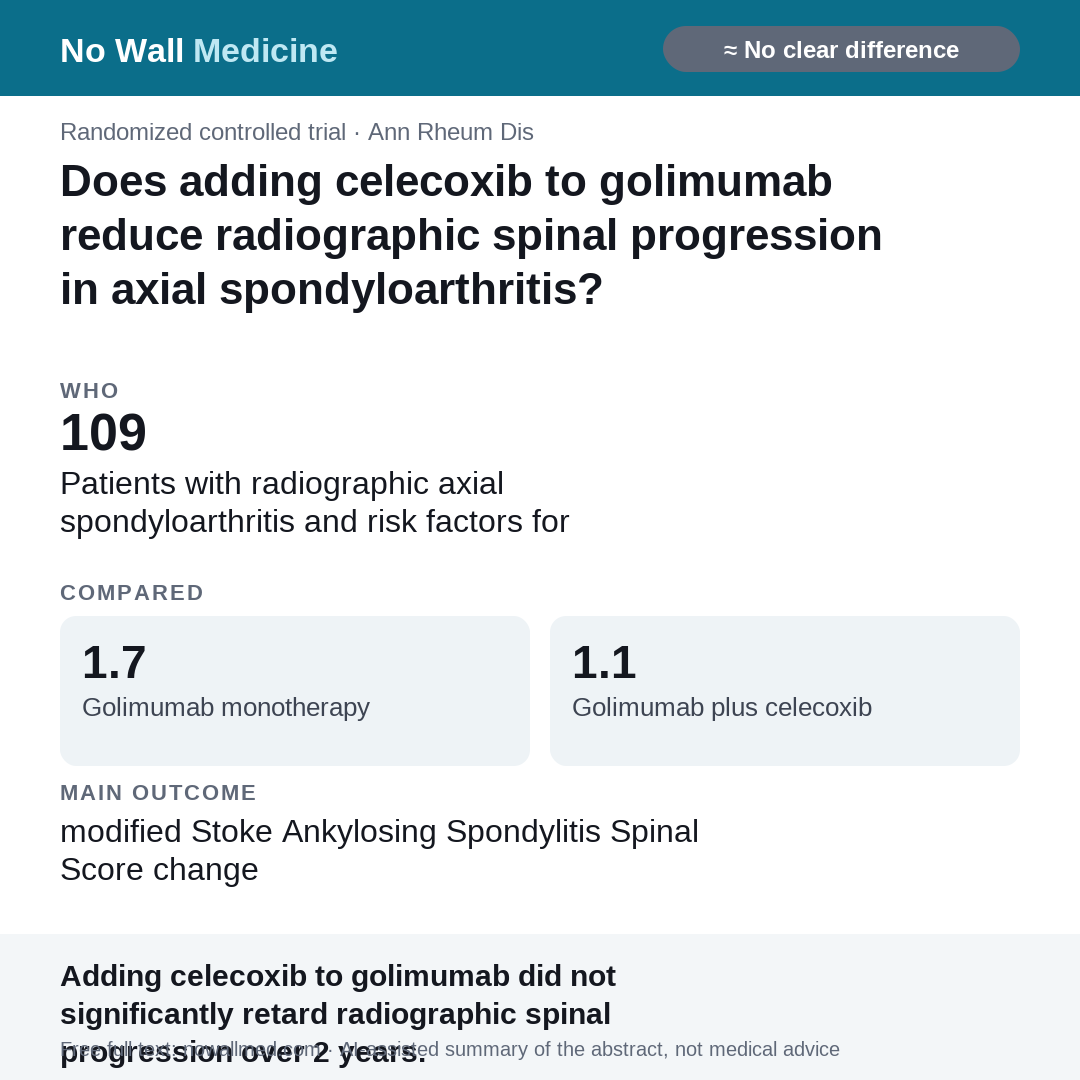
Comparison of the effect of treatment with NSAIDs added to anti-TNF therapy versus anti-TNF therapy alone on the progression of structural damage in the spine over 2 years in patients with radiographic axial spondyloarthritis from the randomised-controlled CONSUL trial
Randomized controlled trialNo clear difference
Does adding celecoxib to golimumab reduce radiographic spinal progression in axial spondyloarthritis?
Who
109
Patients with radiographic axial spondyloarthritis and risk factors for progression
Compared
1.7Golimumab monotherapy (95% CI 0.8 to 2.6)
1.1Golimumab plus celecoxib (95% CI 0.4 to 1.8)
Main outcome
modified Stoke Ankylosing Spondylitis Spinal Score change
Bottom line: Adding celecoxib to golimumab did not significantly retard radiographic spinal progression over 2 years.
Ann Rheum Dis · 2024-04-11Download image
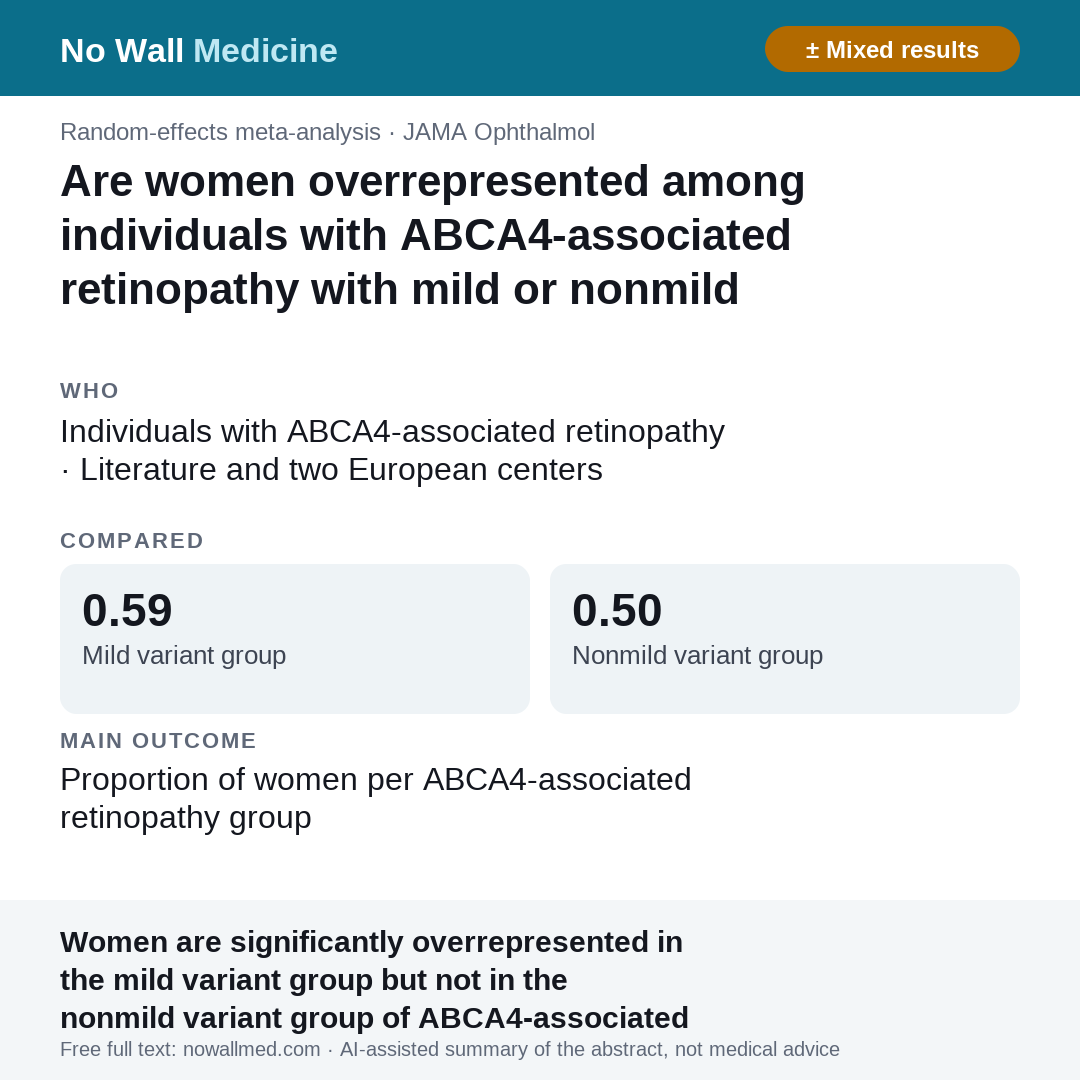
Representation of Women Among Individuals With Mild Variants in ABCA4-Associated Retinopathy: A Meta-Analysis
Random-effects meta-analysisMixed results
Are women overrepresented among individuals with ABCA4-associated retinopathy with mild or nonmild variants?
Who
Individuals with ABCA4-associated retinopathy · Literature and two European centers
Compared
0.59Mild variant group (95% CI, 0.56-0.62)
0.50Nonmild variant group (95% CI, 0.46-0.54)
Main outcome
Proportion of women per ABCA4-associated retinopathy group
Bottom line: Women are significantly overrepresented in the mild variant group but not in the nonmild variant group of ABCA4-associated retinopathy.
JAMA Ophthalmol · 2024-04-11Download image
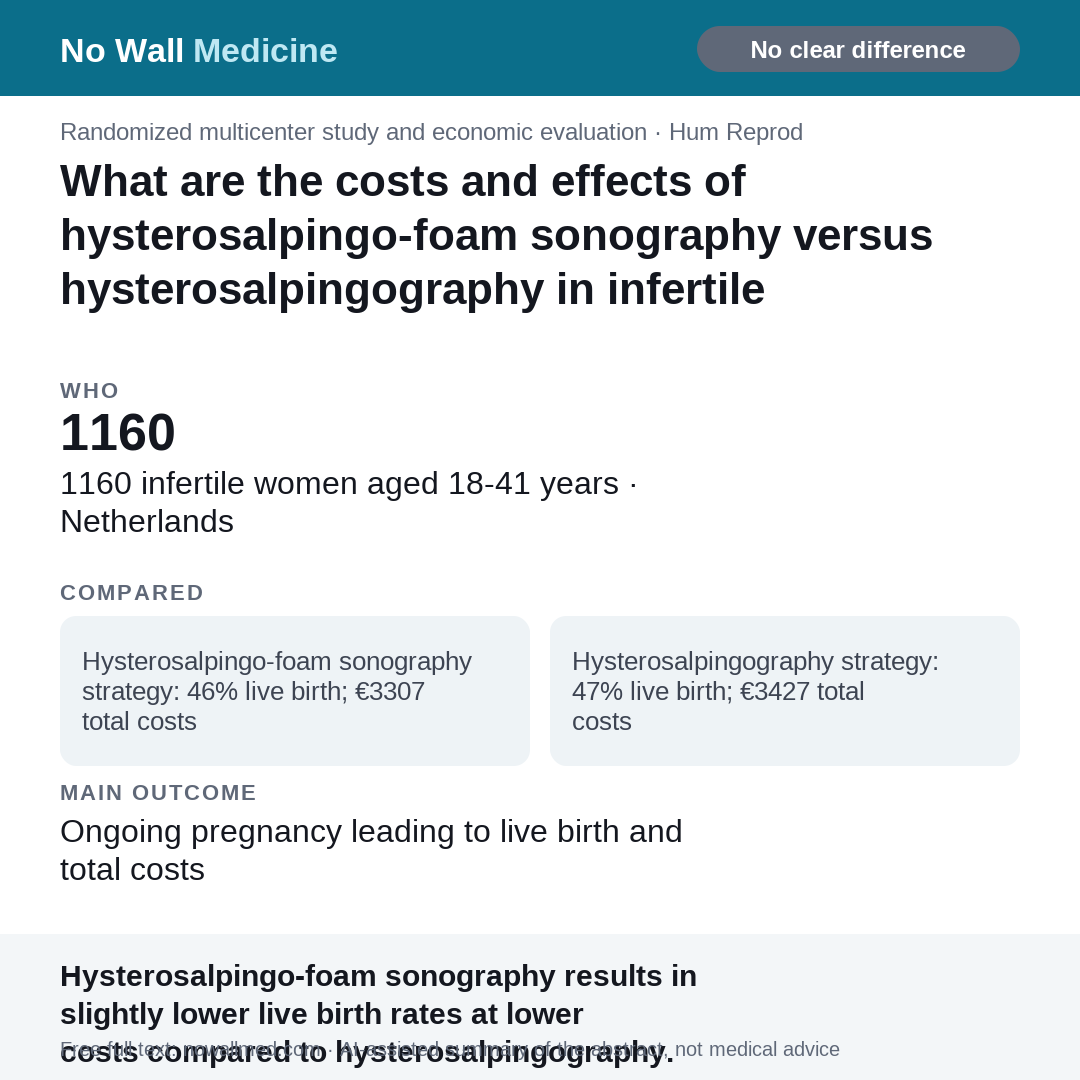
Hysterosalpingo-foam sonography versus hysterosalpingography during fertility work-up: an economic evaluation alongside a randomized controlled trial
Randomized multicenter study and economic evaluationNo clear difference
What are the costs and effects of hysterosalpingo-foam sonography versus hysterosalpingography in infertile women?
Who
1160
1160 infertile women aged 18-41 years · Netherlands
Compared
Hysterosalpingo-foam sonography strategy: 46% live birth; €3307 total costs
Hysterosalpingography strategy: 47% live birth; €3427 total costs
Main outcome
Ongoing pregnancy leading to live birth and total costs
Result: difference -1.2%; 95% CI: -3.4% to 1.5%
Bottom line: Hysterosalpingo-foam sonography results in slightly lower live birth rates at lower costs compared to hysterosalpingography.
Limitation: Considerable uncertainty around the incremental cost-effectiveness ratio and direct fertility enhancing effect not incorporated.
Funded by: ZonMw
Hum Reprod · 2024-04-11Download image
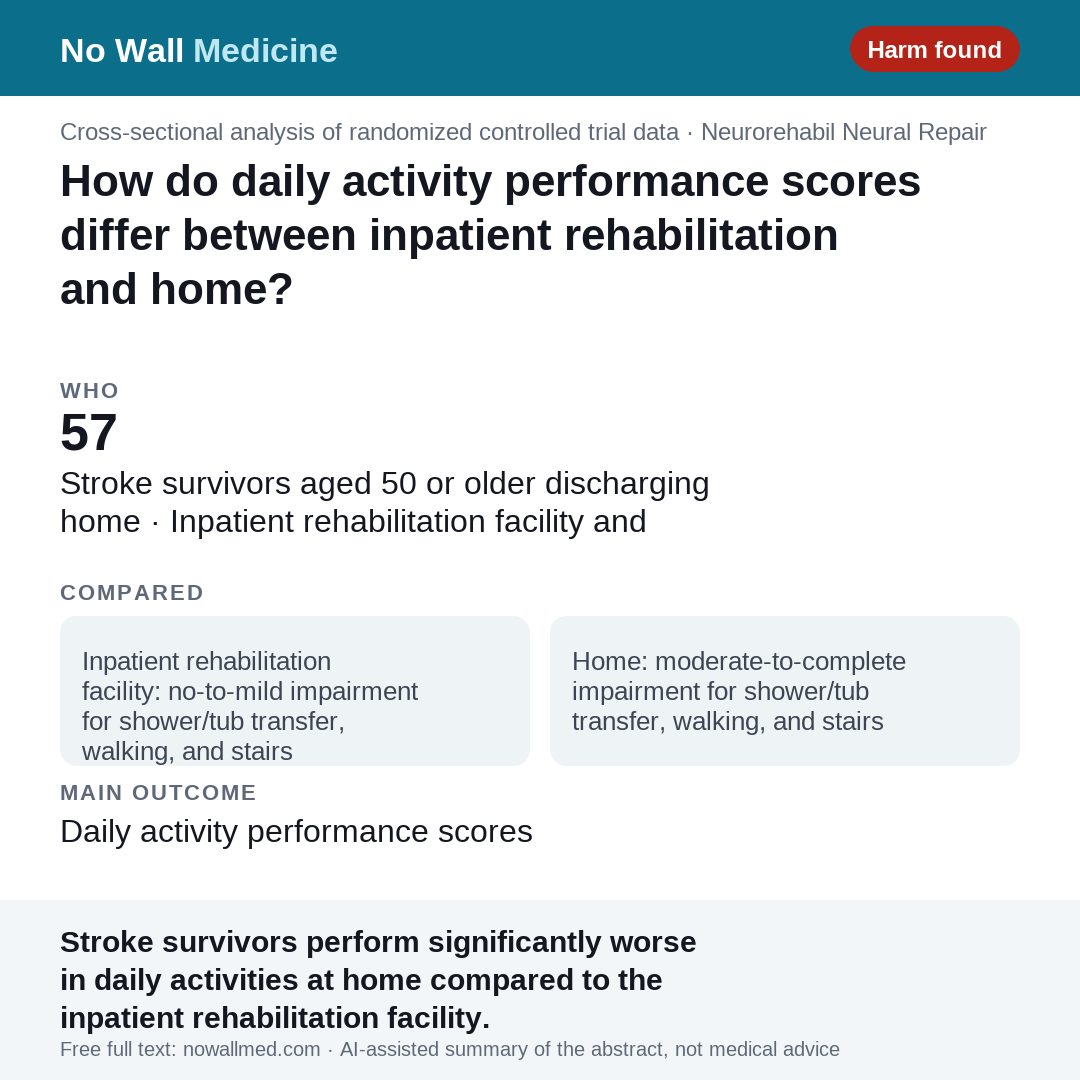
Differences in Daily Activity Performance Between Inpatient Rehabilitation Facility and Home Among Stroke Survivors
Cross-sectional analysis of randomized controlled trial dataHarm found
How do daily activity performance scores differ between inpatient rehabilitation and home?
Who
57
Stroke survivors aged 50 or older discharging home · Inpatient rehabilitation facility and home
Compared
Inpatient rehabilitation facility: no-to-mild impairment for shower/tub transfer, walking, and stairs
Home: moderate-to-complete impairment for shower/tub transfer, walking, and stairs
Main outcome
Daily activity performance scores
Result: median difference 1.5 (95% CI 1.00-2.00) for shower/tub transfer
Bottom line: Stroke survivors perform significantly worse in daily activities at home compared to the inpatient rehabilitation facility.
Neurorehabil Neural Repair · 2024-04-11Download image
Is Maternal Body Weight or Composition Associated with Onset of Lactogenesis II, Human Milk Production, or Infant Consumption of Mother's Own Milk? A Systematic Review and Meta-Analysis
Systematic review and meta-analysisMixed results
Is maternal adiposity associated with lactogenesis II, milk production, or infant milk consumption?
Who
Mothers with varying body mass index and fat mass
Compared
Underweight: RR 0.64 (95% CI 0.49, 0.83)
Healthy weight: RR 0.67 (95% CI 0.57, 0.79)
Overweight or obese
Main outcome
Delayed lactogenesis II, milk production, and infant milk consumption
Result: RR 0.64 (95% CI 0.49, 0.83) for underweight vs overweight/obese
Bottom line: Overweight or obese mothers may face delayed lactogenesis II, but data on milk production and consumption are inconclusive.
Limitation: The included studies do not adequately represent mothers with obesity and certainty of evidence was very low.
Adv Nutr · 2024-04-11Download image

Evidence-based brief interventions targeting acute mental health presentations for children and adolescents: systematic review
Systematic reviewBenefit found
Are brief interventions effective for children and adolescents with acute mental health conditions?
Who
Children and young people aged 0 to 17 years
Compared
Brief interventions
Control
Main outcome
Mental health outcomes
Bottom line: Brief interventions may reduce hospital length of stay and emergency department readmission rates.
BJPsych Open · 2024-04-11Download image

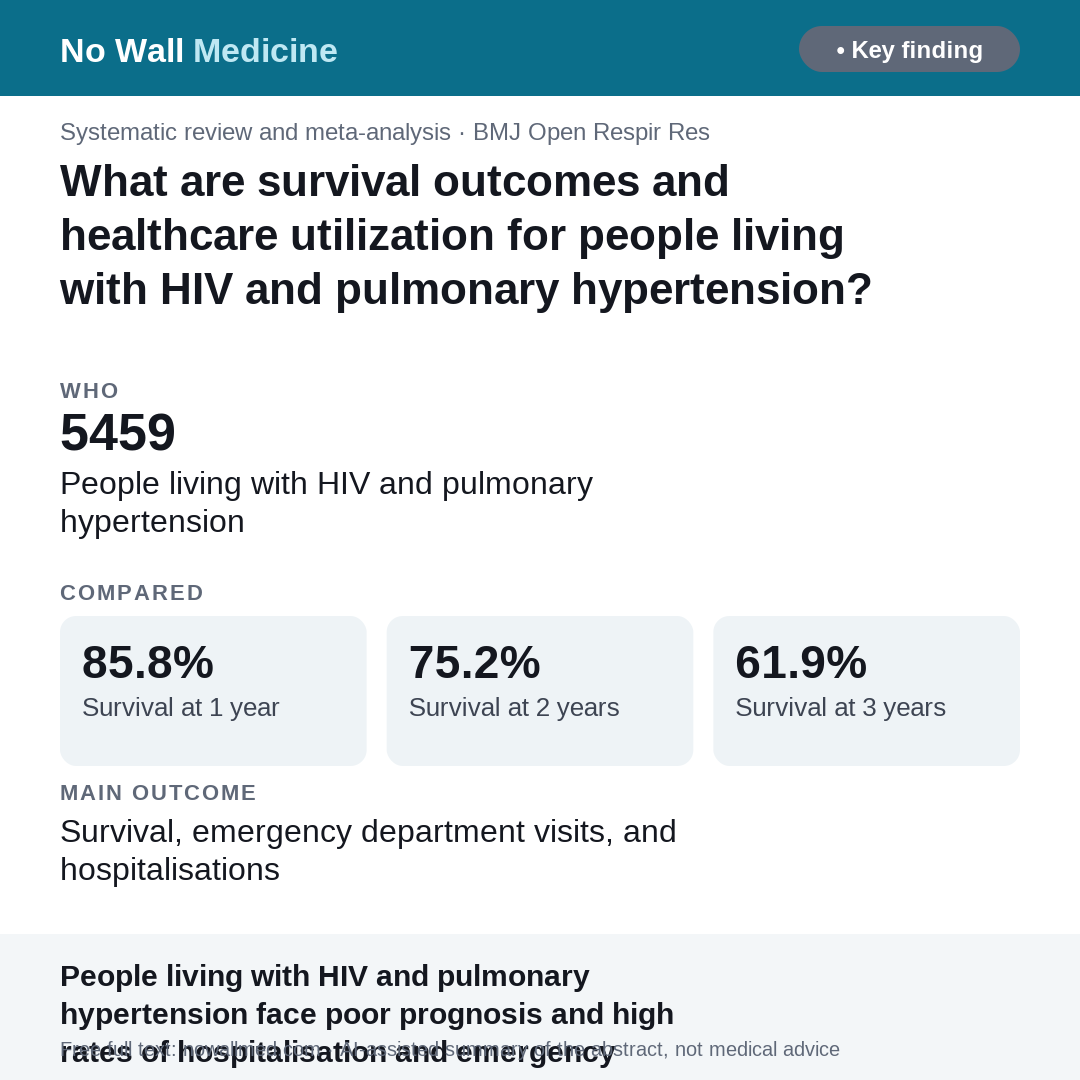
Pulmonary hypertension survival and hospitalisations in people living with HIV: a systematic review and meta-analysis
Systematic review and meta-analysisHarm found
What are survival outcomes and healthcare utilization for people living with HIV and pulmonary hypertension?
Who
5459
People living with HIV and pulmonary hypertension
Compared
85.8%Survival at 1 year (74.1% to 95.0%)
75.2%Survival at 2 years (61.9% to 86.7%)
61.9%Survival at 3 years (51.8% to 71.6%)
Main outcome
Survival, emergency department visits, and hospitalisations
Bottom line: People living with HIV and pulmonary hypertension face poor prognosis and high rates of hospitalisation and emergency department visits.
BMJ Open Respir Res · 2024-04-11Download image
Clinical and nutritional correlates of bacterial diarrhoea aetiology in young children: a secondary cross-sectional analysis of the ABCD trial
Secondary cross-sectional analysisBenefit found
What nutritional and clinical characteristics associate with bacterial diarrhoea in young children?
Who
6692
Children under 2 years with moderate to severe diarrhoea · Multicentre cohort
Compared
Moderate acute malnutrition: adjusted odds ratio 1.56 (95% CI 1.18 to 2.08)
Some or severe dehydration: adjusted odds ratio 1.66 (95% CI 1.25 to 2.22)
Both malnutrition and dehydration: adjusted odds ratio 2.21 (95% CI 1.61 to 3.06)
Main outcome
Likely bacterial diarrhoea aetiology
Bottom line: Malnutrition, dehydration, and high stool frequency may help identify children with bacterial diarrhoea who might benefit from antibiotics.
BMJ Paediatr Open · 2024-04-11Download image

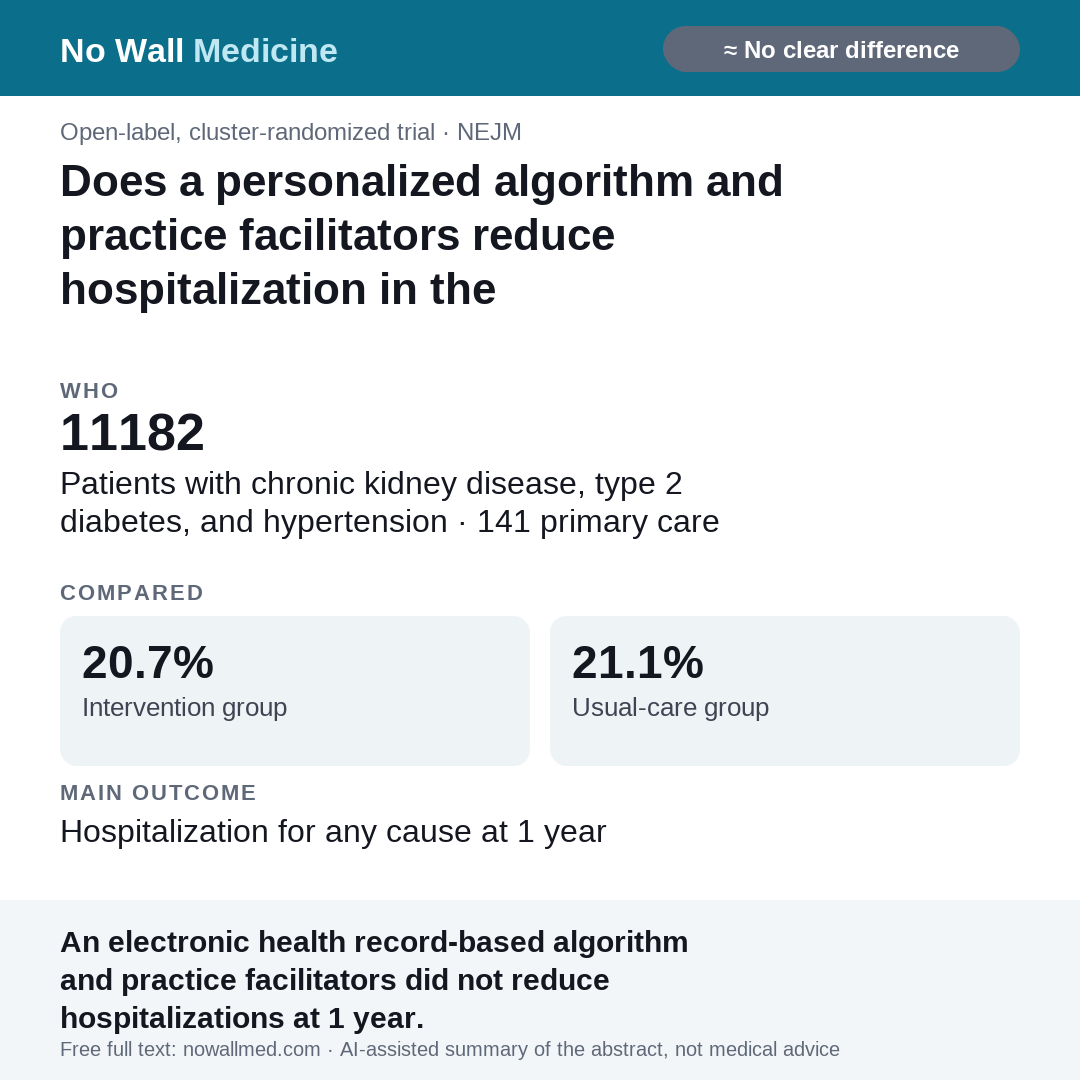
Pragmatic Trial of Hospitalization Rate in Chronic Kidney Disease
Open-label, cluster-randomized trialNo clear difference
Does a personalized algorithm and practice facilitators reduce hospitalization in the kidney-dysfunction triad?
Who
11182
Patients with chronic kidney disease, type 2 diabetes, and hypertension · 141 primary care clinics
Compared
20.7%Intervention group (95% confidence interval, 19.7 to 21.8)
21.1%Usual-care group (95% confidence interval, 20.1 to 22.2)
Main outcome
Hospitalization for any cause at 1 year
Result: between-group difference, 0.4 percentage points; P = 0.58
Bottom line: An electronic health record-based algorithm and practice facilitators did not reduce hospitalizations at 1 year.
Funded by: National Institutes of Health and others
NEJM · 2024-04-10Download image
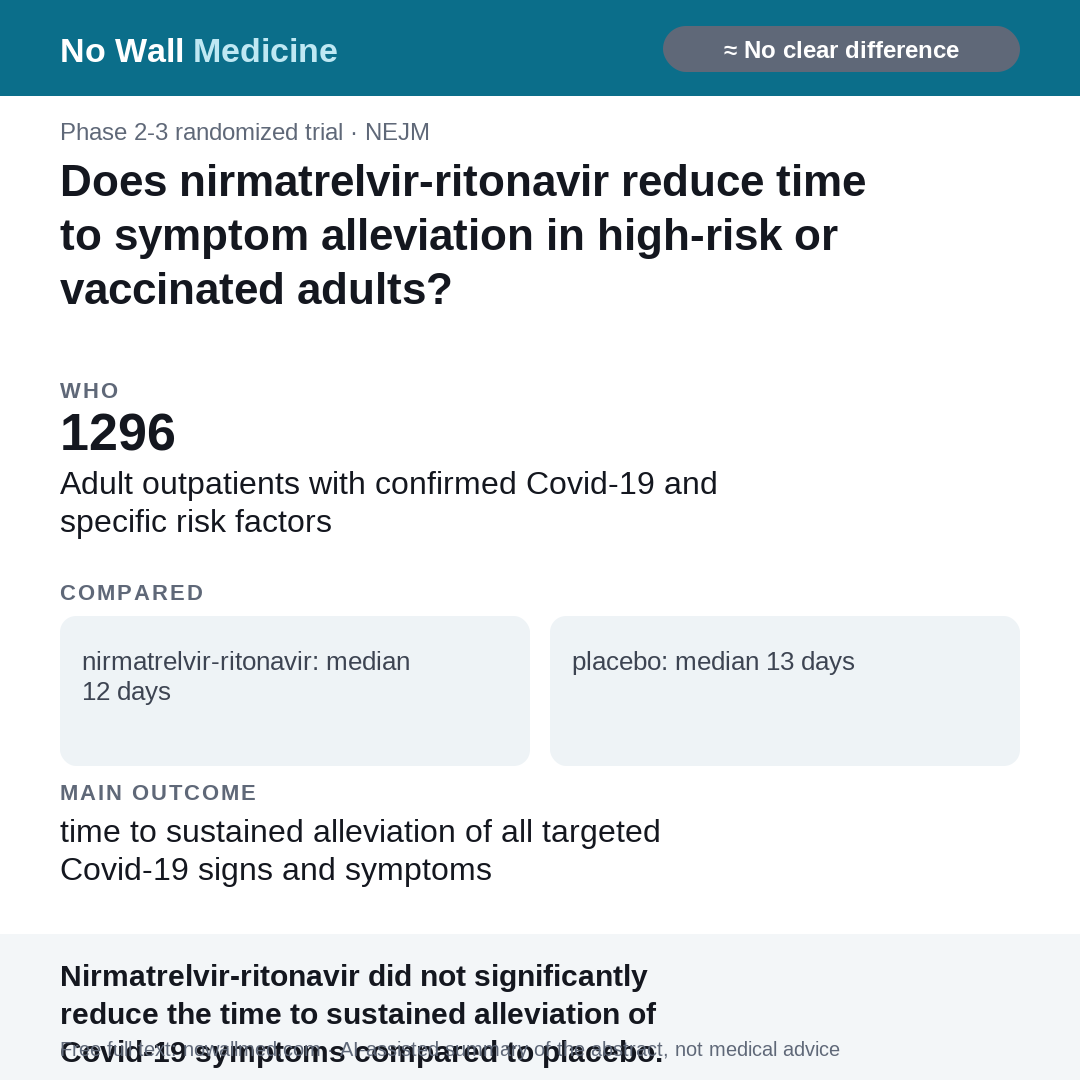
Nirmatrelvir for Vaccinated or Unvaccinated Adult Outpatients with Covid-19
Phase 2-3 randomized trialNo clear difference
Does nirmatrelvir-ritonavir reduce time to symptom alleviation in high-risk or vaccinated adults?
Who
1296
Adult outpatients with confirmed Covid-19 and specific risk factors
Compared
nirmatrelvir-ritonavir: median 12 days
placebo: median 13 days
Main outcome
time to sustained alleviation of all targeted Covid-19 signs and symptoms
Result: difference, -0.8 percentage points; 95% confidence interval, -2.0 to 0.4
Bottom line: Nirmatrelvir-ritonavir did not significantly reduce the time to sustained alleviation of Covid-19 symptoms compared to placebo.
Funded by: Pfizer
NEJM · 2024-04-10Download image
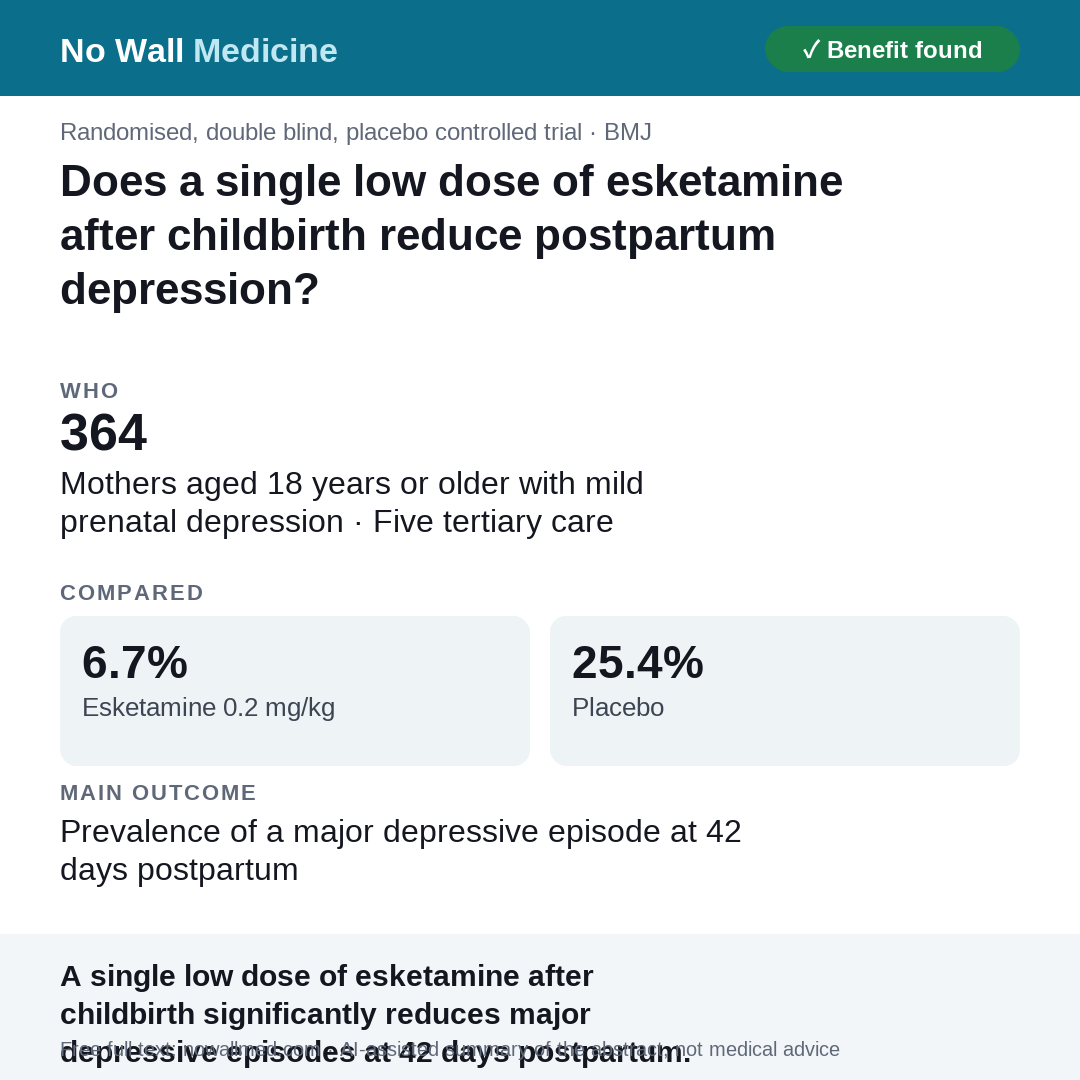
Efficacy of a single low dose of esketamine after childbirth for mothers with symptoms of prenatal depression: randomised clinical trial
Randomised, double blind, placebo controlled trialBenefit found
Does a single low dose of esketamine after childbirth reduce postpartum depression?
Who
364
Mothers aged 18 years or older with mild prenatal depression · Five tertiary care hospitals in China
Compared
6.7%Esketamine 0.2 mg/kg (12/180)
25.4%Placebo (46/181)
Main outcome
Prevalence of a major depressive episode at 42 days postpartum
Result: relative risk 0.26 (95% CI 0.14 to 0.48)
Bottom line: A single low dose of esketamine after childbirth significantly reduces major depressive episodes at 42 days postpartum.
BMJ · 2024-04-10Download image
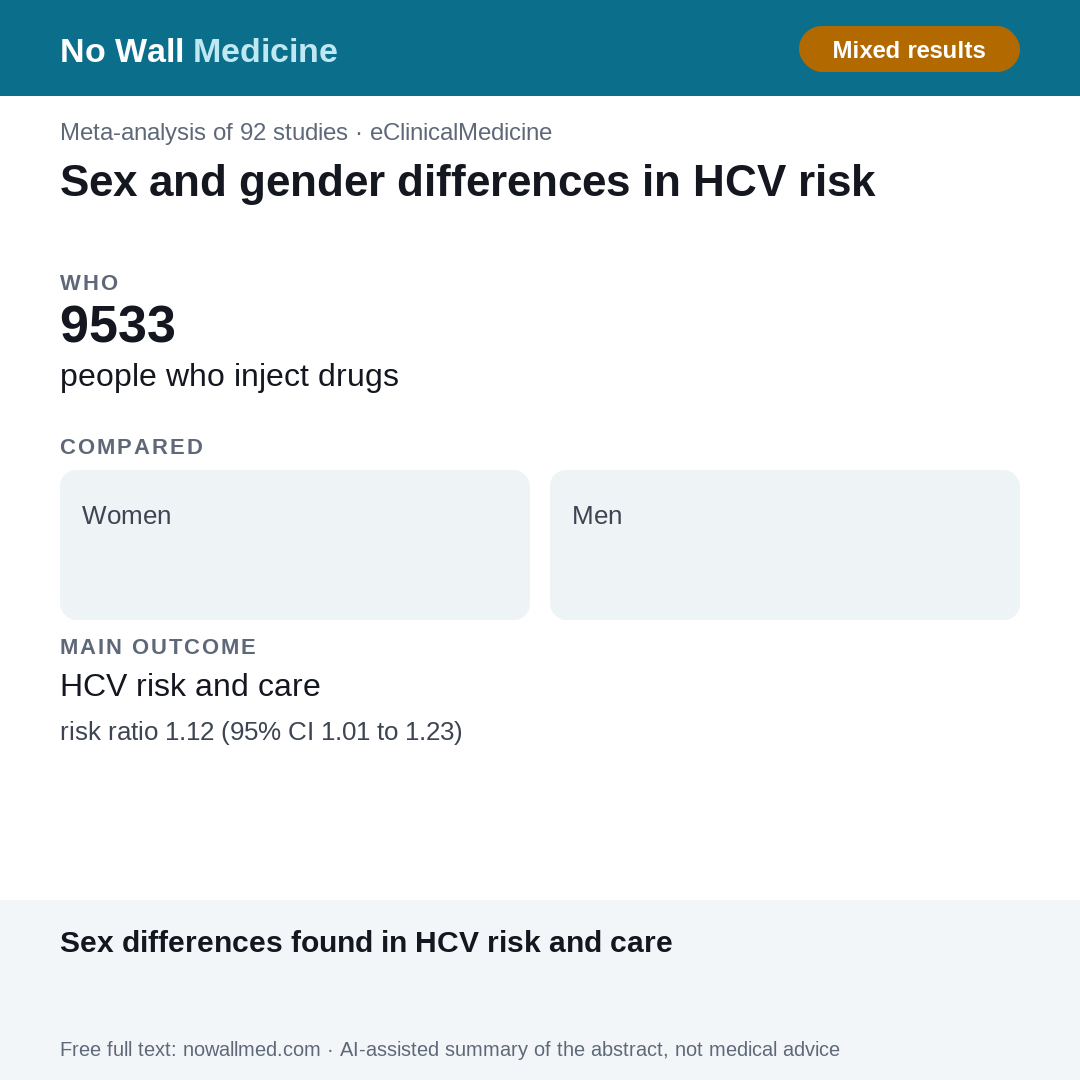
Sex and gender differences in hepatitis C virus risk, prevention, and cascade of care in people who inject drugs: systematic review and meta-analysis
Meta-analysis of 92 studiesMixed results
Sex and gender differences in HCV risk
Who
9533
people who inject drugs
Compared
Women
Men
Main outcome
HCV risk and care
Result: risk ratio 1.12 (95% CI 1.01 to 1.23)
Bottom line: Sex differences found in HCV risk and care
Funded by: Réseau SIDA-MI du Québec
eClinicalMedicine · 2024-04-10Download image
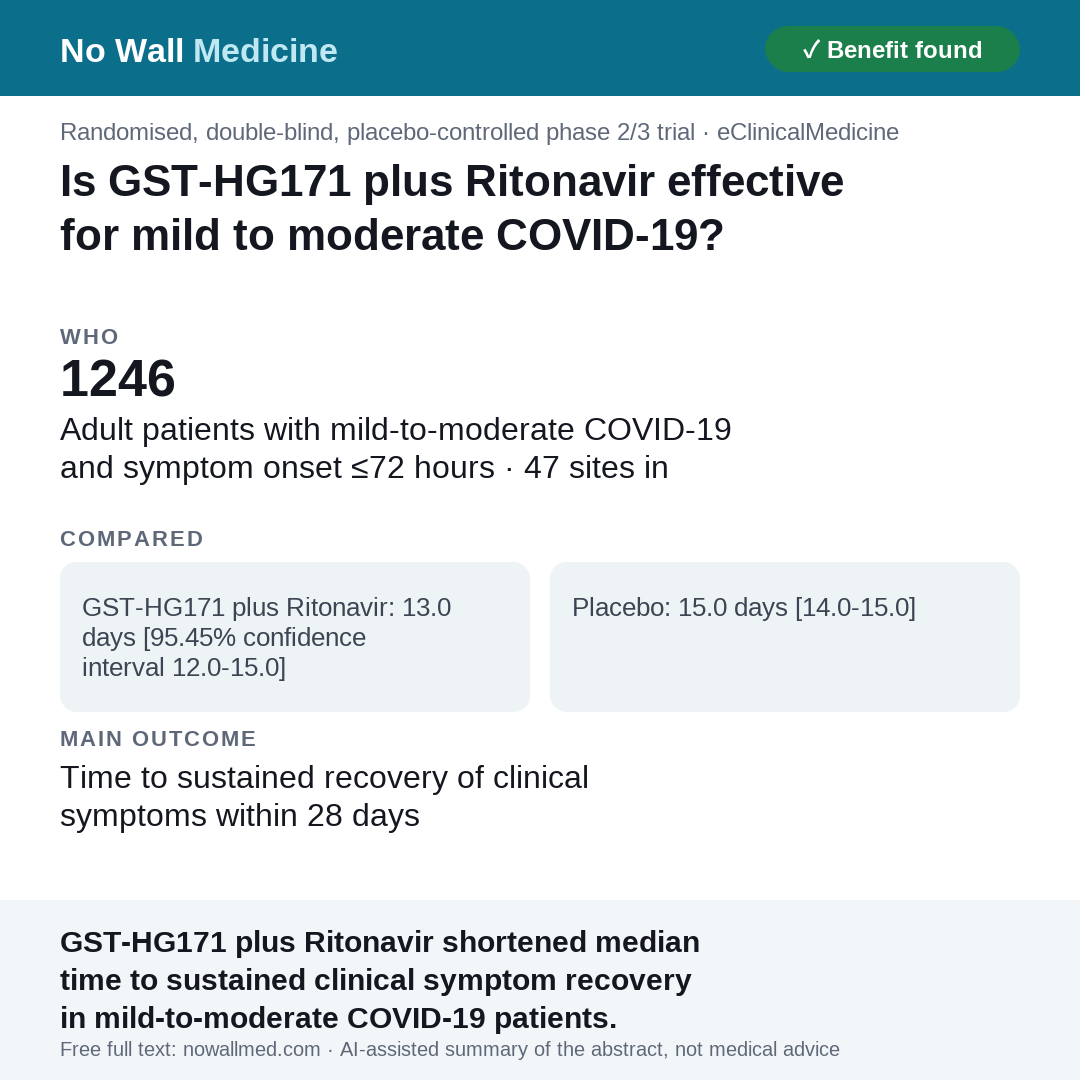
Efficacy and safety of GST-HG171 in adult patients with mild to moderate COVID-19: a randomised, double-blind, placebo-controlled phase 2/3 trial
Randomised, double-blind, placebo-controlled phase 2/3 trialBenefit found
Is GST-HG171 plus Ritonavir effective for mild to moderate COVID-19?
Who
1246
Adult patients with mild-to-moderate COVID-19 and symptom onset ≤72 hours · 47 sites in China
Compared
GST-HG171 plus Ritonavir: 13.0 days [95.45% confidence interval 12.0-15.0]
Placebo: 15.0 days [14.0-15.0]
Main outcome
Time to sustained recovery of clinical symptoms within 28 days
Result: P = 0.031
Bottom line: GST-HG171 plus Ritonavir shortened median time to sustained clinical symptom recovery in mild-to-moderate COVID-19 patients.
Funded by: Fujian Akeylink Biotechnology Co., Ltd.
eClinicalMedicine · 2024-04-10Download image
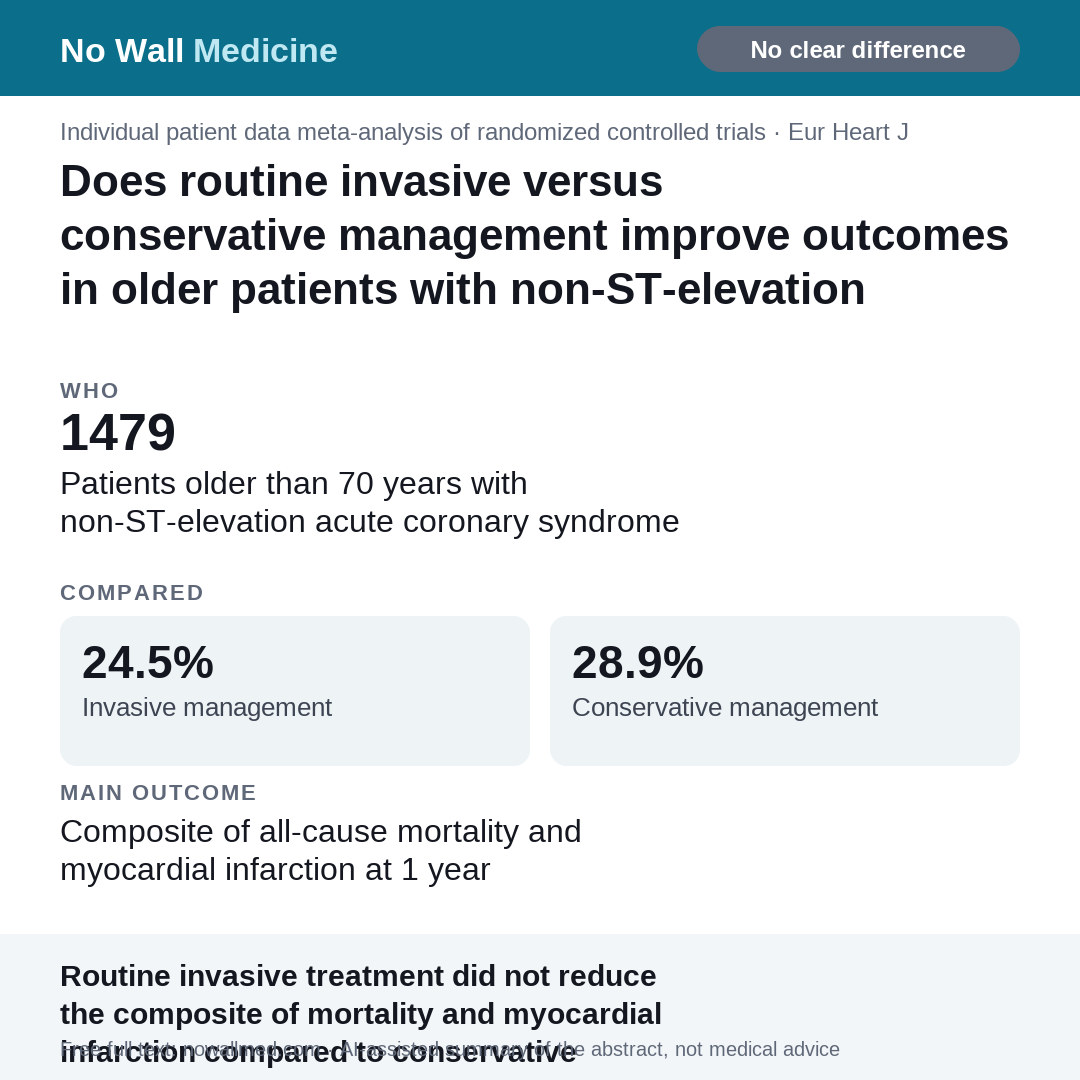
Invasive vs. conservative management of older patients with non-ST-elevation acute coronary syndrome: individual patient data meta-analysis
Individual patient data meta-analysis of randomized controlled trialsNo clear difference
Does routine invasive versus conservative management improve outcomes in older patients with non-ST-elevation acute coronary syndrome?
Who
1479
Patients older than 70 years with non-ST-elevation acute coronary syndrome
Compared
24.5%Invasive management (181/736)
28.9%Conservative management (215/743)
Main outcome
Composite of all-cause mortality and myocardial infarction at 1 year
Result: hazard ratio 0.87 (95% CI 0.63-1.22)
Bottom line: Routine invasive treatment did not reduce the composite of mortality and myocardial infarction compared to conservative management.
Limitation: Further evidence is needed from ongoing larger clinical trials.
Eur Heart J · 2024-04-10Download image
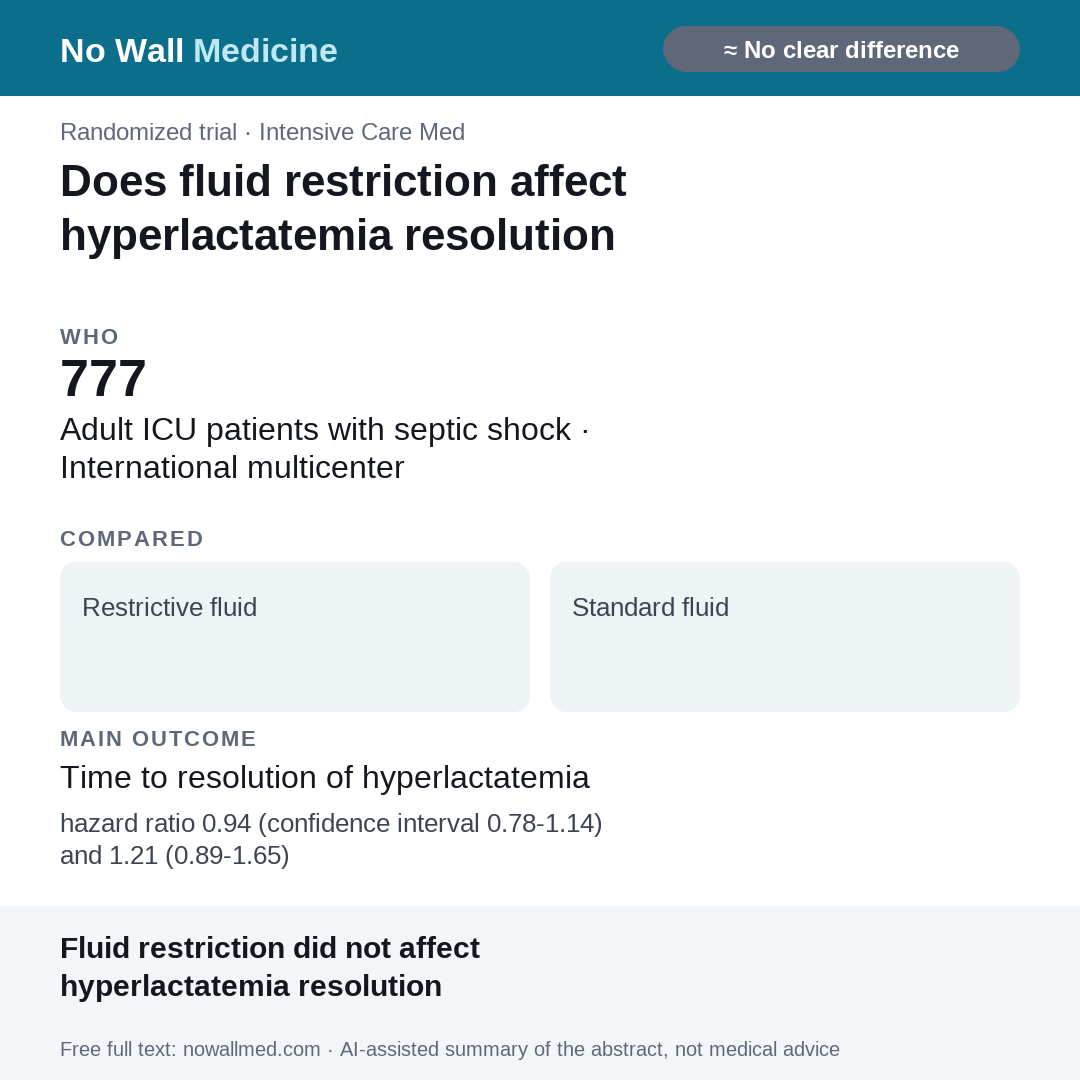
Effects of restrictive fluid therapy on the time to resolution of hyperlactatemia in ICU patients with septic shock. A secondary post hoc analysis of the CLASSIC randomized trial
Randomized trialNo clear difference
Does fluid restriction affect hyperlactatemia resolution
Who
777
Adult ICU patients with septic shock · International multicenter
Compared
Restrictive fluid
Standard fluid
Main outcome
Time to resolution of hyperlactatemia
Result: hazard ratio 0.94 (confidence interval 0.78-1.14) and 1.21 (0.89-1.65)
Bottom line: Fluid restriction did not affect hyperlactatemia resolution
Intensive Care Med · 2024-04-10Download image
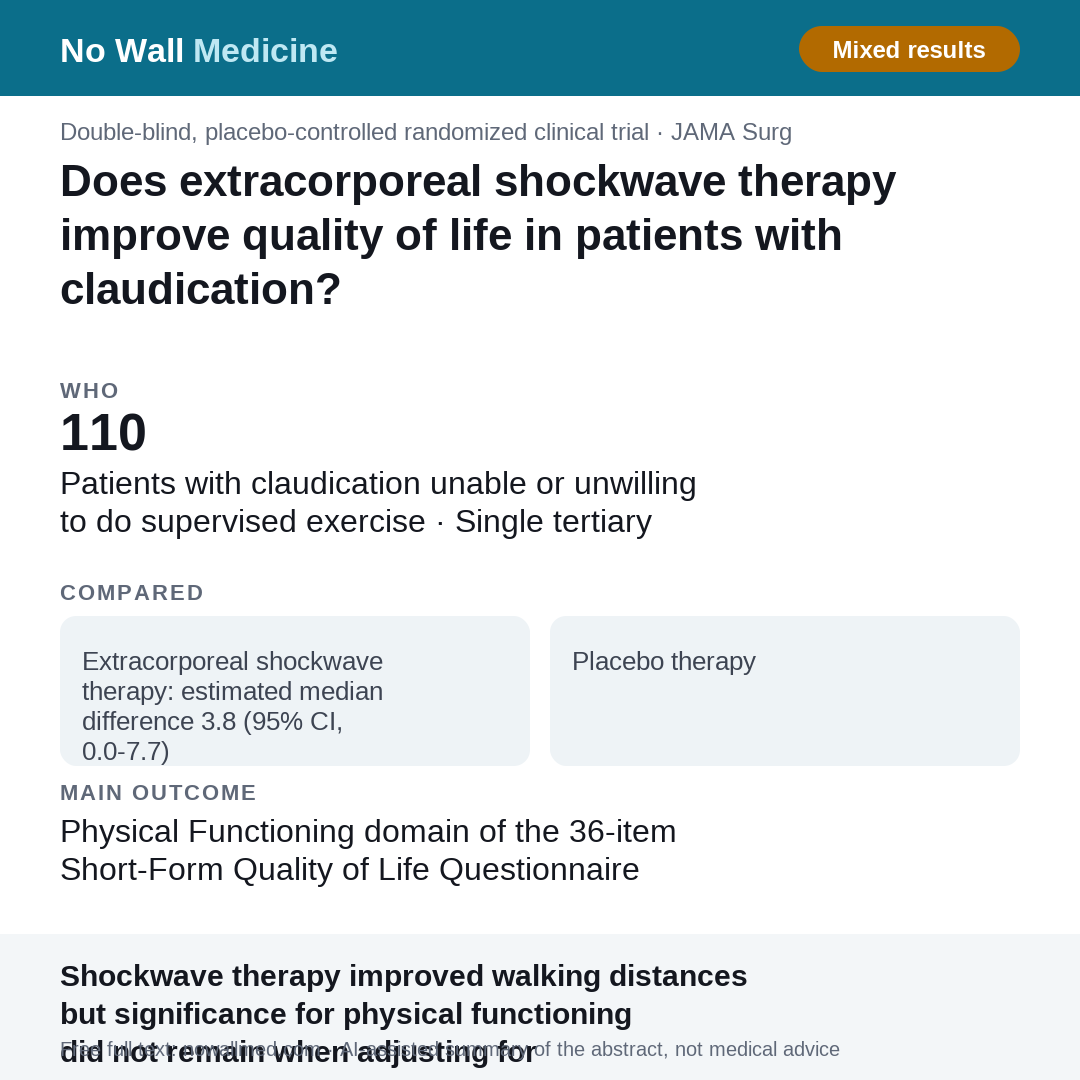
Extracorporeal Shockwave for Intermittent Claudication and Quality of Life: A Randomized Clinical Trial
Double-blind, placebo-controlled randomized clinical trialMixed results
Does extracorporeal shockwave therapy improve quality of life in patients with claudication?
Who
110
Patients with claudication unable or unwilling to do supervised exercise · Single tertiary center for vascular surgery
Compared
Extracorporeal shockwave therapy: estimated median difference 3.8 (95% CI, 0.0-7.7)
Placebo therapy
Main outcome
Physical Functioning domain of the 36-item Short-Form Quality of Life Questionnaire
Result: estimated median difference 3.8 (95% CI, 0.0-7.7)
Bottom line: Shockwave therapy improved walking distances but significance for physical functioning did not remain when adjusting for covariates.
Limitation: Significance for physical functioning did not remain when adjusting for covariates.
JAMA Surg · 2024-04-10Download image
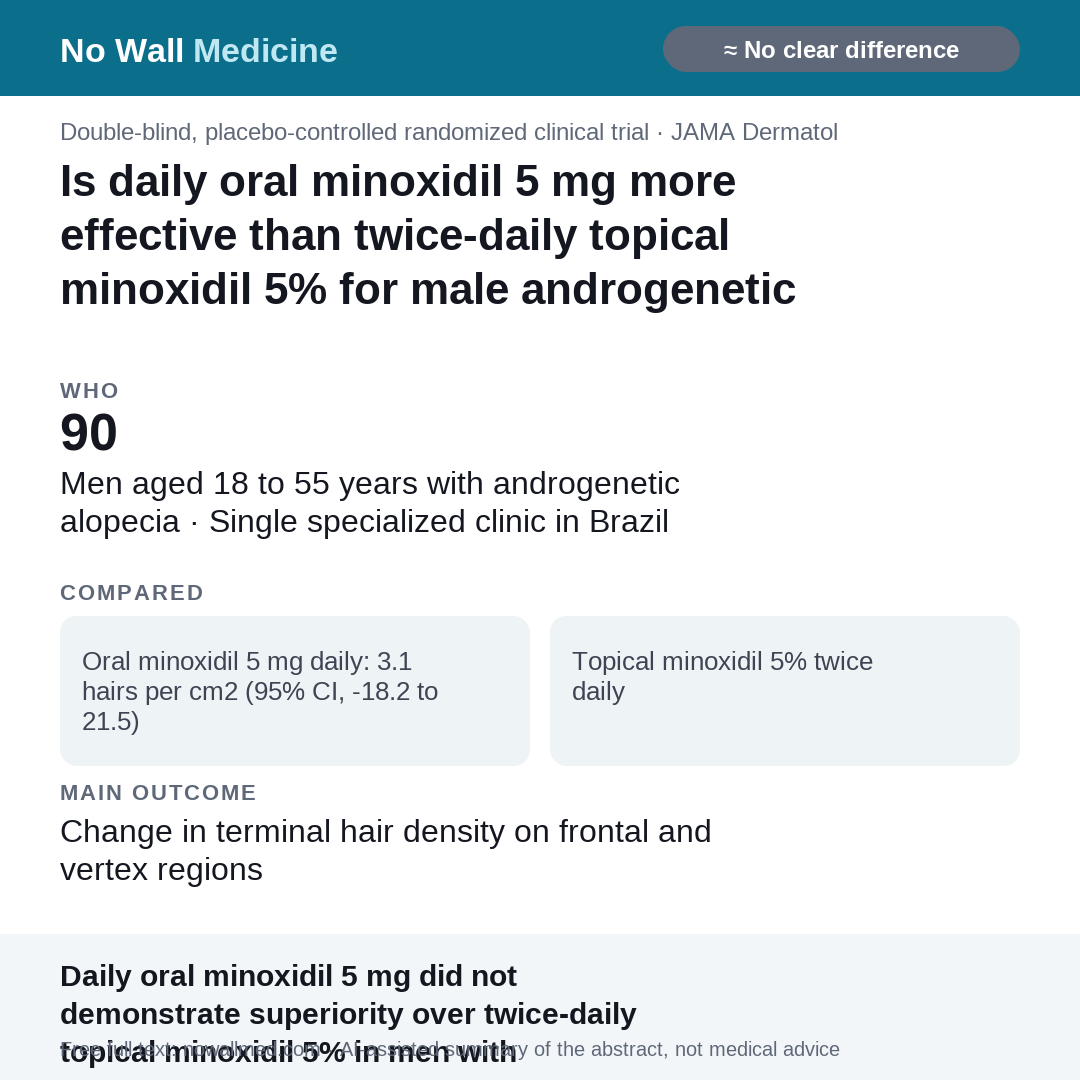
Oral Minoxidil vs Topical Minoxidil for Male Androgenetic Alopecia: A Randomized Clinical Trial
Double-blind, placebo-controlled randomized clinical trialNo clear difference
Is daily oral minoxidil 5 mg more effective than twice-daily topical minoxidil 5% for male androgenetic alopecia?
Who
90
Men aged 18 to 55 years with androgenetic alopecia · Single specialized clinic in Brazil
Compared
Oral minoxidil 5 mg daily: 3.1 hairs per cm2 (95% CI, -18.2 to 21.5)
Topical minoxidil 5% twice daily
Main outcome
Change in terminal hair density on frontal and vertex regions
Bottom line: Daily oral minoxidil 5 mg did not demonstrate superiority over twice-daily topical minoxidil 5% in men with androgenetic alopecia.
JAMA Dermatol · 2024-04-10Download image
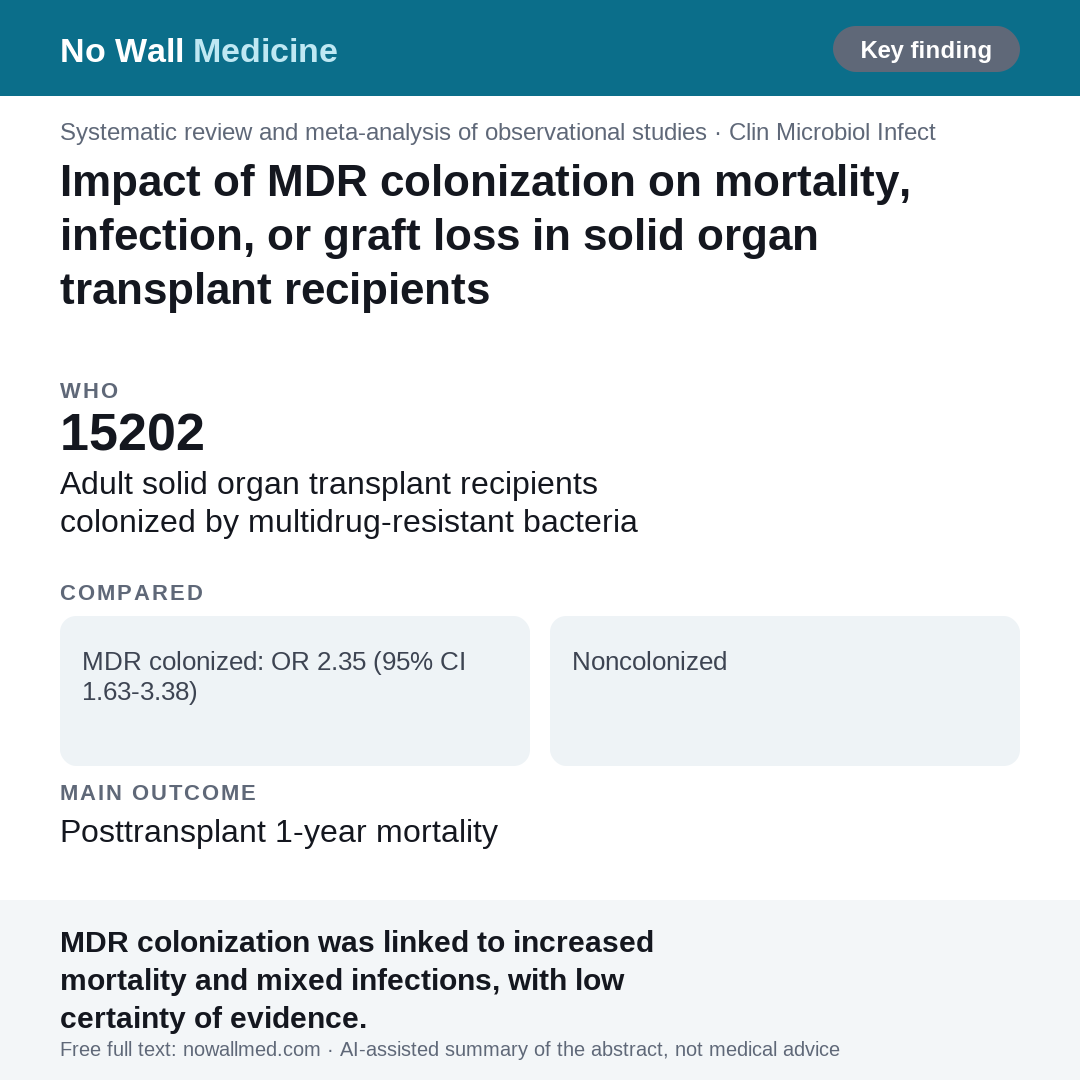
The impact of colonization by multidrug resistant bacteria on graft survival, risk of infection, and mortality in recipients of solid organ transplant: systematic review and meta-analysis
Systematic review and meta-analysisHarm found
Does multidrug resistant bacteria colonization impact mortality, infection, or graft loss in solid organ transplant recipients?
Who
15,202
Adult solid organ transplant recipients
Compared
Multidrug resistant colonization
Noncolonized
Main outcome
Mortality, infection, or graft loss
Result: mortality OR 2.35 (95% CI 1.63-3.38); mixed infections OR 10.74 (95% CI 7.56-12.26)
Bottom line: Multidrug resistant colonization increases mortality and mixed infections in solid organ transplant recipients, but shows no impact on graft loss.
Limitation: low certainty of the evidence
Clin Microbiol Infect · 2024-04-10Download image
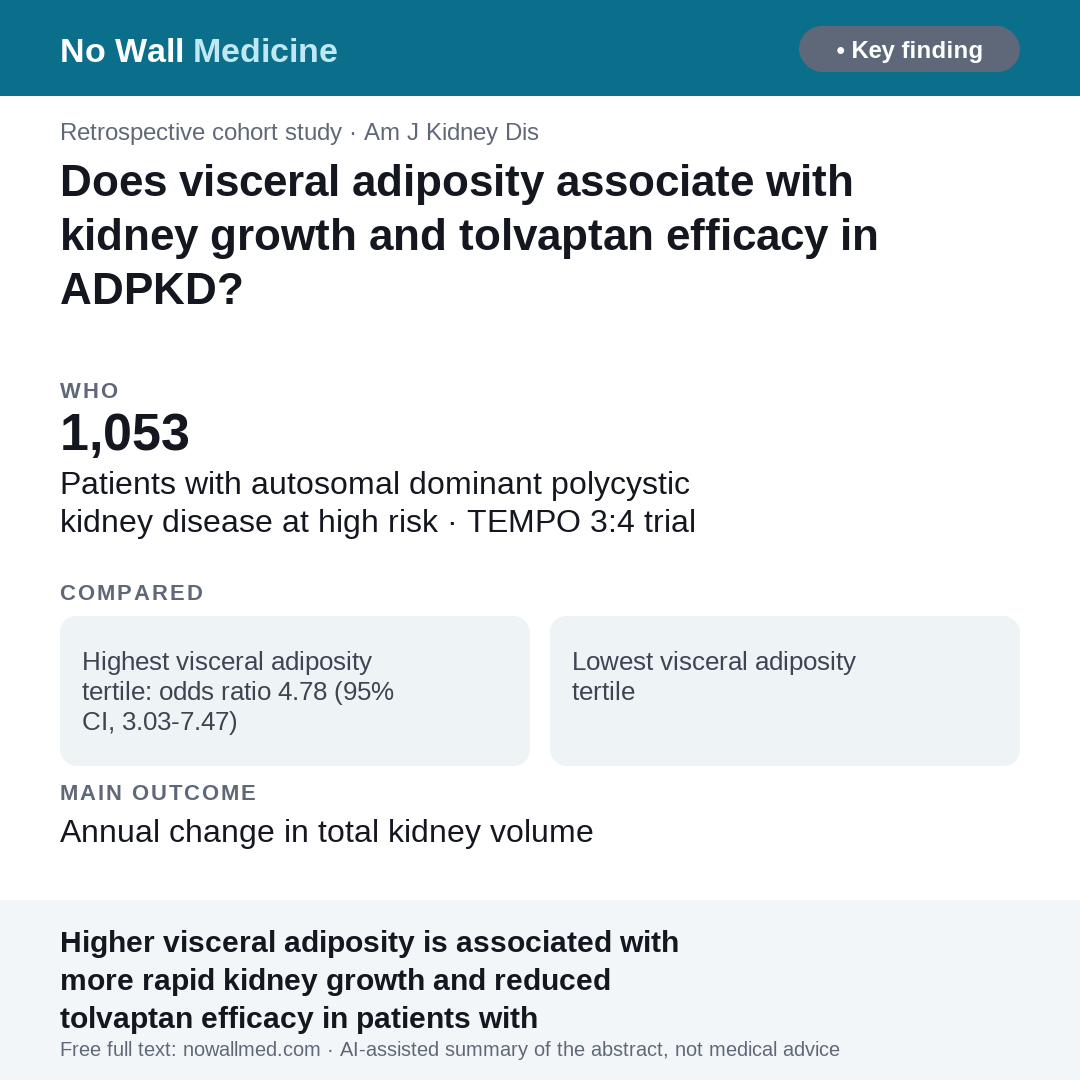
Visceral Adiposity and Progression of ADPKD: A Cohort Study of Patients From the TEMPO 3:4 Trial
Retrospective cohort studyHarm found
Does visceral adiposity associate with kidney growth and tolvaptan efficacy in ADPKD?
Who
1,053
Patients with autosomal dominant polycystic kidney disease at high risk · TEMPO 3:4 trial sites
Compared
Highest visceral adiposity tertile: odds ratio 4.78 (95% CI, 3.03-7.47)
Lowest visceral adiposity tertile
Main outcome
Annual change in total kidney volume
Result: odds ratio 4.78 (95% CI, 3.03-7.47)
Bottom line: Higher visceral adiposity is associated with more rapid kidney growth and reduced tolvaptan efficacy in patients with autosomal dominant polycystic kidney disease.
Limitation: Retrospective study design, rapid progressors, and computational demand of deep learning.
Am J Kidney Dis · 2024-04-10Download image
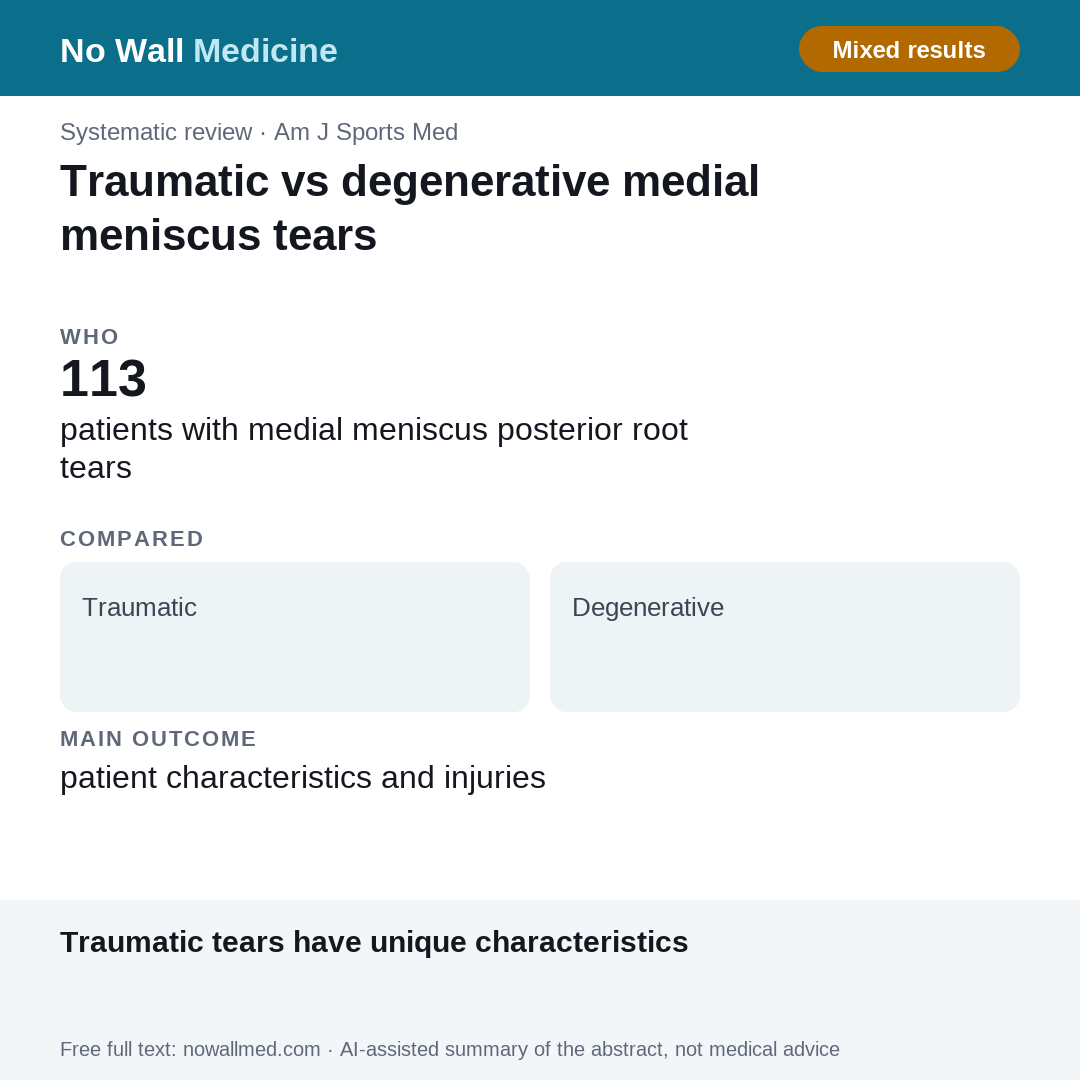
Differences Between Traumatic and Degenerative Medial Meniscus Posterior Root Tears: A Systematic Review
Systematic reviewMixed results
Traumatic vs degenerative medial meniscus tears
Who
113
patients with medial meniscus posterior root tears
Compared
Traumatic
Degenerative
Main outcome
patient characteristics and injuries
Bottom line: Traumatic tears have unique characteristics
Am J Sports Med · 2024-04-10Download image