Visual abstracts
New randomized trials and meta-analyses from leading journals at a glance: who was studied, what was compared, and what was found. Every paper is free to read in full.
All specialtiesCardiology 4765Oncology 4048Gastroenterology & Hepatology 1906Infectious Disease 3759Neurology 1874Psychiatry & Mental Health 2217Pulmonology 2046Critical Care 1323Endocrinology & Diabetes 2545Pediatrics 2891Surgery 2482Orthopedics & Sports Medicine 917Neurosurgery 526Cardiothoracic & Vascular Surgery 657Plastic & Reconstructive Surgery 574Nephrology 1108Rheumatology 810Hematology 1090Dermatology 611Ophthalmology 532Obstetrics & Gynecology 1646Public & Global Health 1037Radiology & Imaging 620Anesthesiology 958Urology 745ENT (Otolaryngology) 494Emergency Medicine 481Allergy & Immunology 309Geriatrics 973Family Medicine & Primary Care 534Medical Genetics & Genomics 659Pathology & Laboratory Medicine 156Physical Medicine & Rehabilitation 736Palliative Care 421Nutrition 1561Digital Health & AI 2136General Medicine 316
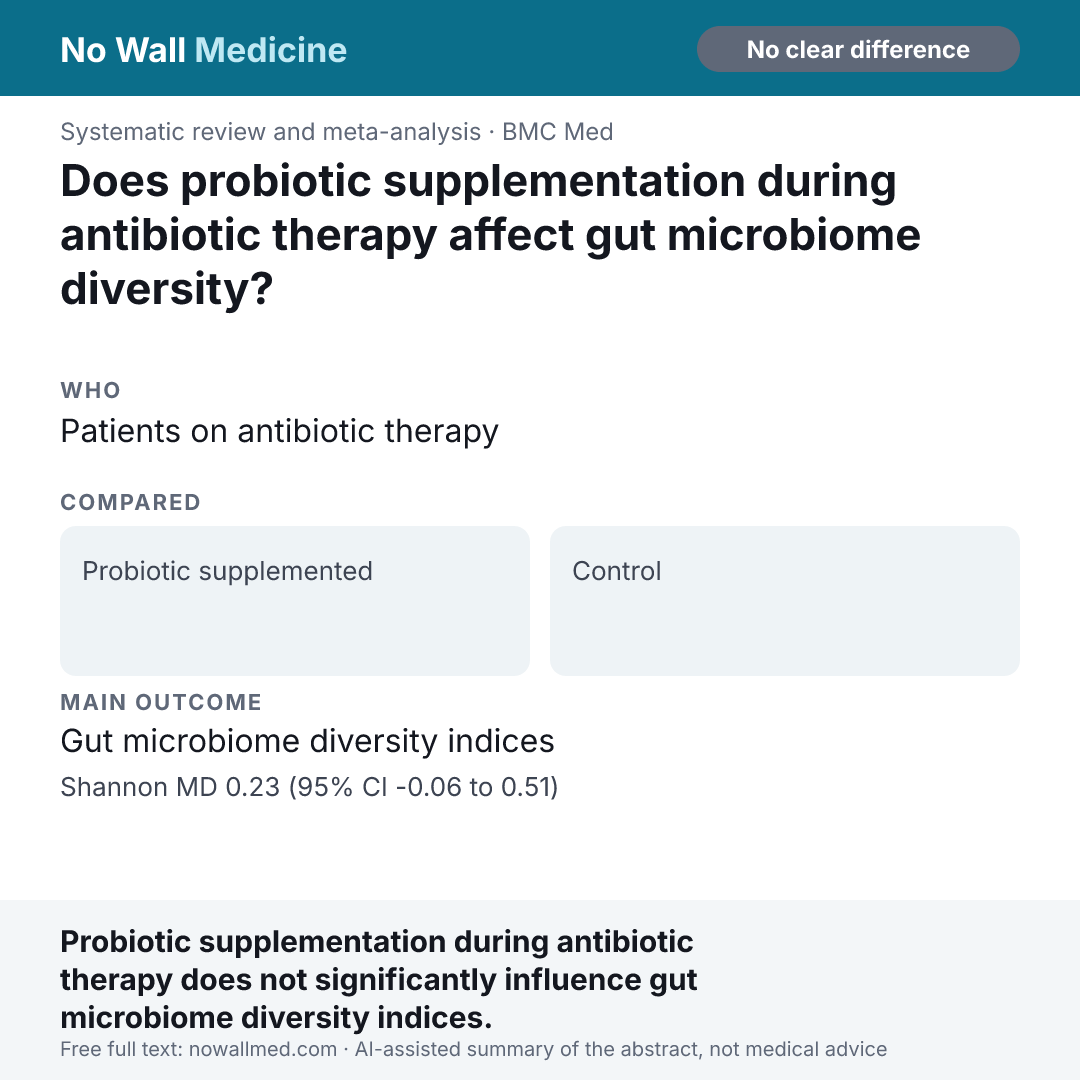
Probiotic supplementation during antibiotic treatment is unjustified in maintaining the gut microbiome diversity: a systematic review and meta-analysis
Systematic review and meta-analysisNo clear difference
Does probiotic supplementation during antibiotic therapy affect gut microbiome diversity?
Who
Patients on antibiotic therapy
Compared
Probiotic supplemented
Control
Main outcome
Gut microbiome diversity indices
Result: Shannon MD 0.23 (95% CI -0.06 to 0.51)
Bottom line: Probiotic supplementation during antibiotic therapy does not significantly influence gut microbiome diversity indices.
Limitation: Limited number of studies, low sample sizes, and high variability across studies.
BMC Med · 2023-07-19 · Save PNG
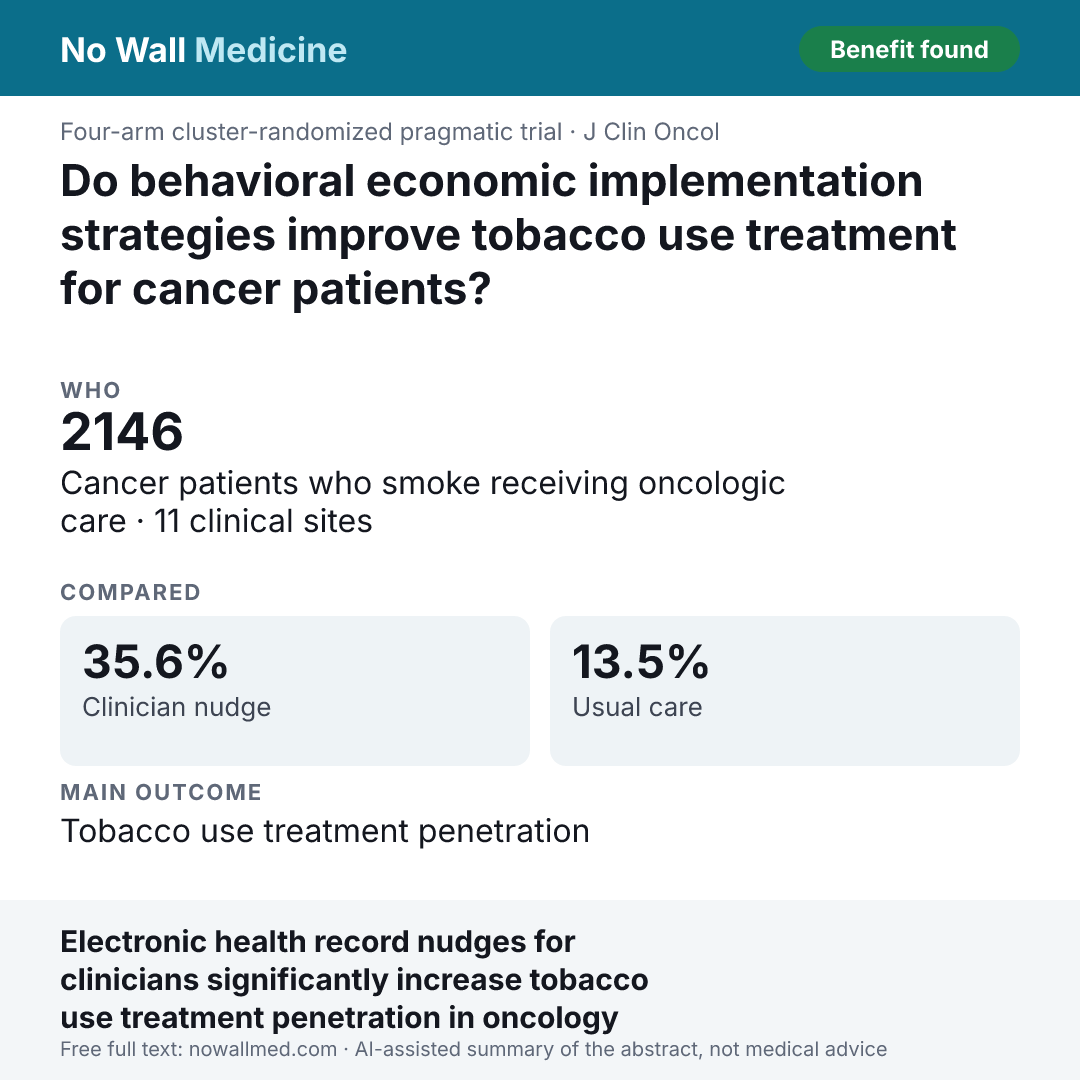
Cluster Randomized Pragmatic Clinical Trial Testing Behavioral Economic Implementation Strategies to Improve Tobacco Treatment for Patients With Cancer Who Smoke
Four-arm cluster-randomized pragmatic trialBenefit found
Do behavioral economic implementation strategies improve tobacco use treatment for cancer patients?
Who
2146
Cancer patients who smoke receiving oncologic care · 11 clinical sites
Compared
35.6%Clinician nudge
13.5%Usual care
Main outcome
Tobacco use treatment penetration
Result: OR = 3.64; 95% CI, 2.52 to 5.24
Bottom line: Electronic health record nudges for clinicians significantly increase tobacco use treatment penetration in oncology encounters.
J Clin Oncol · 2023-07-19 · Save PNG
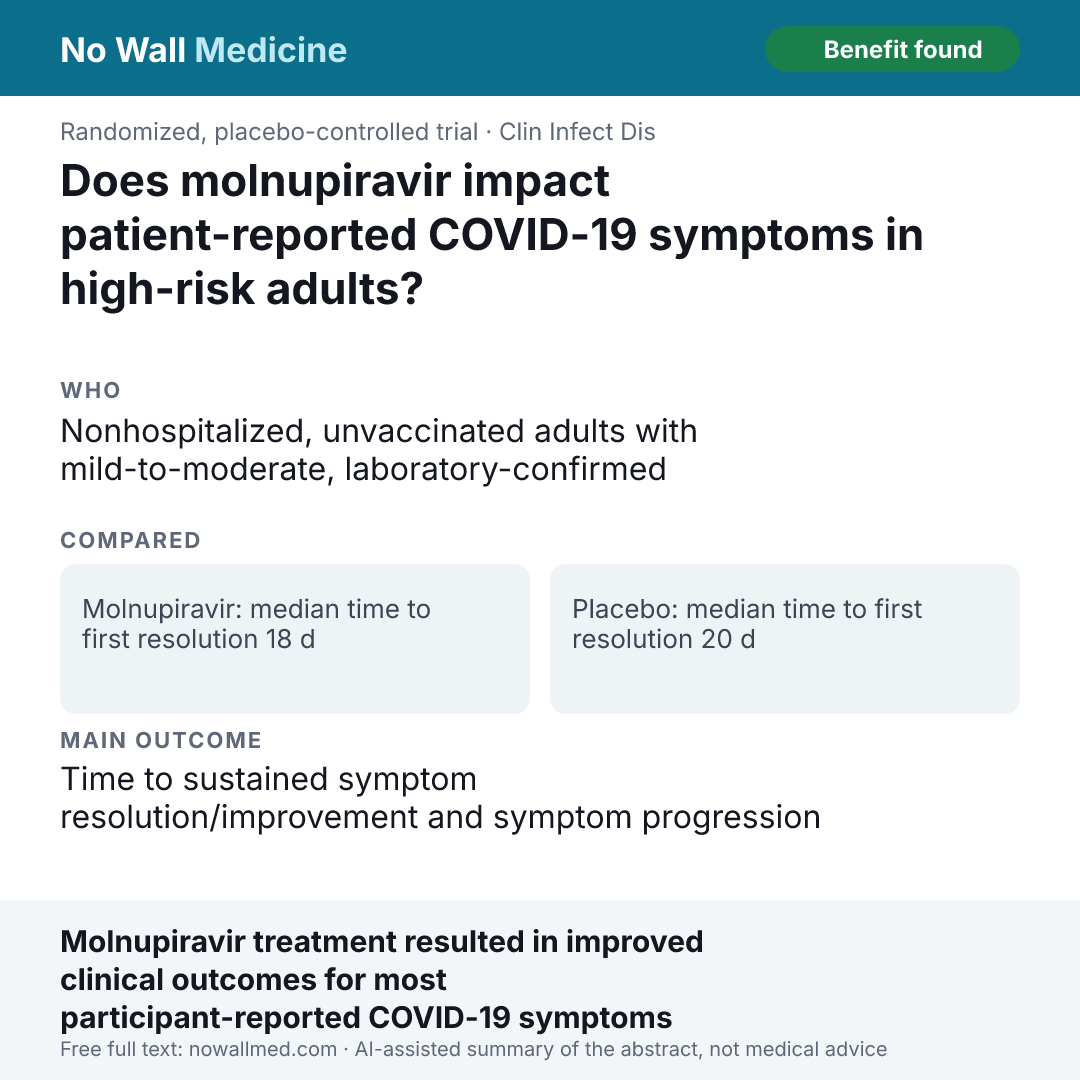
Impact of Molnupiravir Treatment on Patient-Reported COVID-19 Symptoms in the Phase 3 MOVe-OUT Trial: A Randomized, Placebo-Controlled Trial
Randomized, placebo-controlled trialBenefit found
Does molnupiravir impact patient-reported COVID-19 symptoms in high-risk adults?
Who
Nonhospitalized, unvaccinated adults with mild-to-moderate, laboratory-confirmed COVID-19
Compared
Molnupiravir: median time to first resolution 18 d
Placebo: median time to first resolution 20 d
Main outcome
Time to sustained symptom resolution/improvement and symptom progression
Bottom line: Molnupiravir treatment resulted in improved clinical outcomes for most participant-reported COVID-19 symptoms compared with placebo.
Clin Infect Dis · 2023-07-19 · Save PNG
Effects of a Contextual Adaptation of the Unified Protocol in Multiple Emotional Disorders in Individuals Exposed to Armed Conflict in Colombia: A Randomized Clinical Trial
Randomized clinical trialBenefit found
Does contextual adaptation of the Unified Protocol improve emotional disorders in individuals exposed to armed conflict?
Who
200
Individuals 18 years and older exposed to armed conflict in Colombia · Outpatient university center in Colombia
Compared
Contextual adaptation of the Unified Protocol: significant pretreatment-to-posttreatment reduction
Waitlist control
Main outcome
Changes in anxiety, depression, and somatic scores
Result: Cohen d, 0.90 (90% CI, 0.63-1.19) for posttraumatic stress disorder checklist
Bottom line: Contextual adaptation of the Unified Protocol significantly reduces posttraumatic stress disorder, anxiety, and depression in individuals exposed to armed conflict.
JAMA Psychiatry · 2023-07-19 · Save PNG
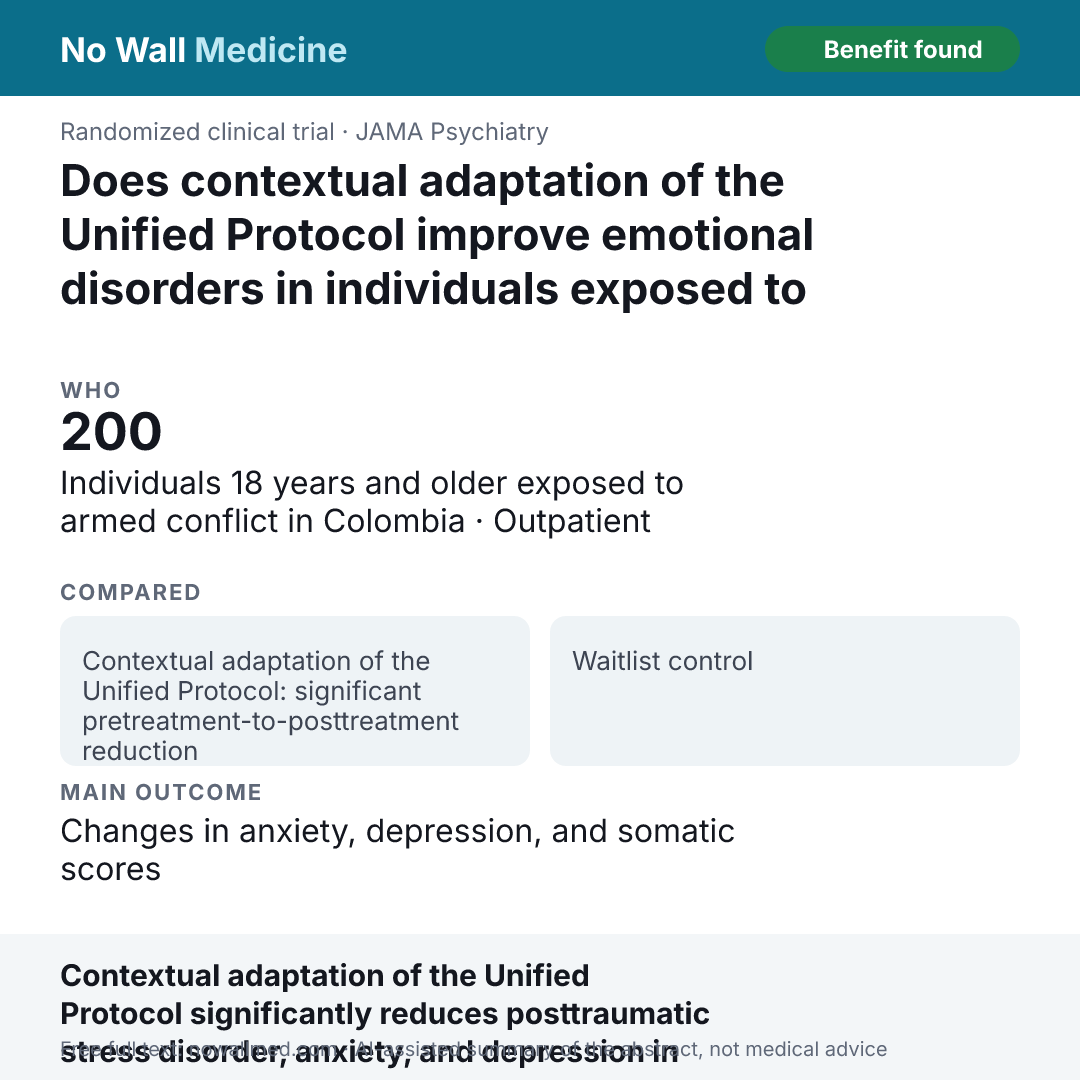
Association of Axillary Dissection With Systemic Therapy in Patients With Clinically Node-Positive Breast Cancer
Prospective, observational, cohort studyNo clear difference
Does axillary lymph node dissection associate with systemic therapy in clinically node-positive breast cancer?
Who
500
Patients with confirmed clinically node-positive breast cancer · 44 breast centers in 6 European countries
Compared
Axillary radiotherapy: 55.9% (81/145) adjuvant chemotherapy in upfront surgery
Axillary lymph node dissection: 60.3% (91/151) adjuvant chemotherapy in upfront surgery
Main outcome
Proportion of patients undergoing adjuvant chemotherapy and type of therapy
Result: adjusted odds ratio 0.72 (95% CI 0.19-2.67)
Bottom line: Axillary lymph node dissection did not inform systemic therapy recommendations despite patients without it being understaged.
JAMA Surg · 2023-07-19 · Save PNG
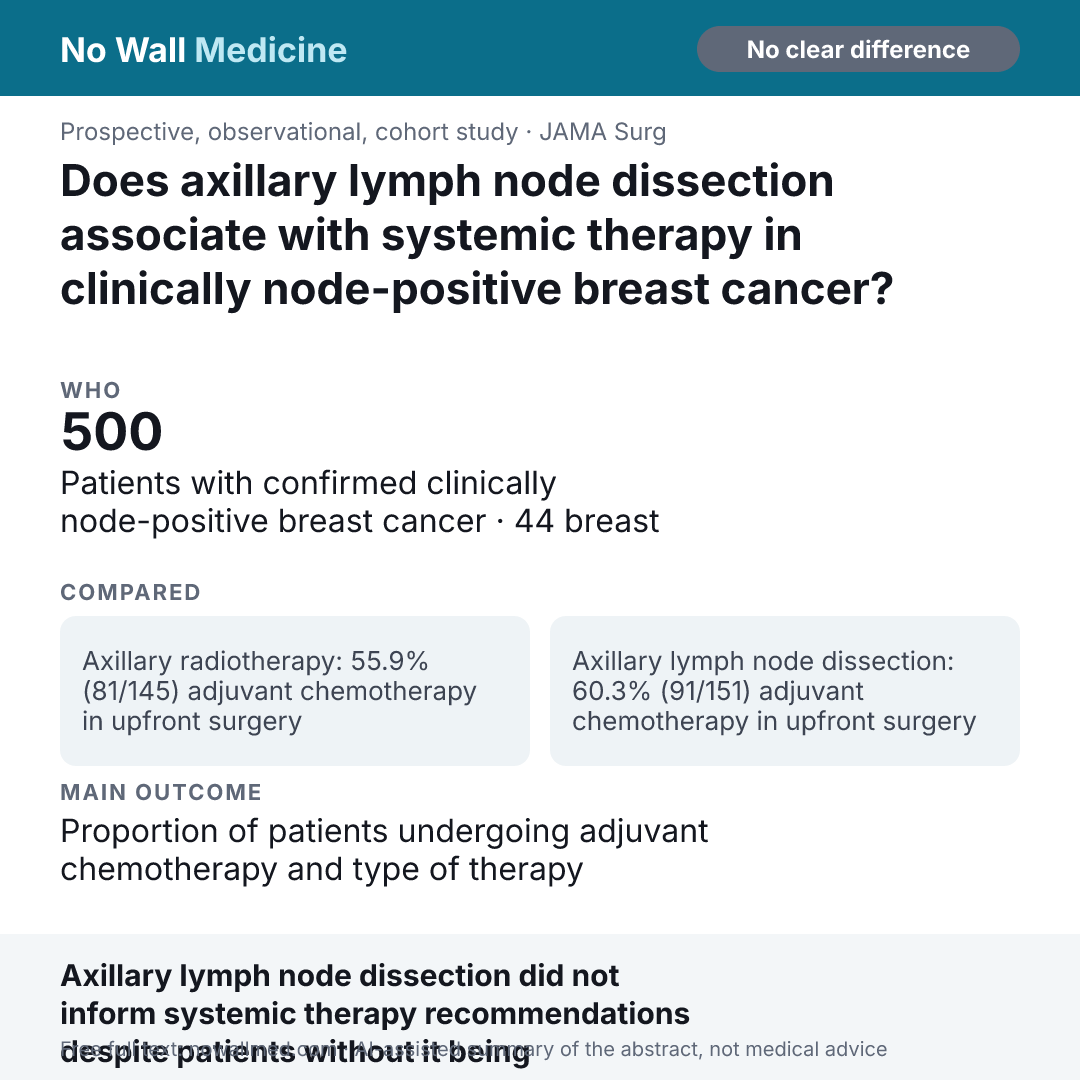
Self-Help Habit Replacement in Individuals With Body-Focused Repetitive Behaviors: A Proof-of-Concept Randomized Clinical Trial
Randomized clinical trialBenefit found
Does habit replacement improve body-focused repetitive behaviors compared to a wait-list control?
Who
268
Nonclinical sample with body-focused repetitive behaviors · Online
Compared
52.8%Habit replacement
19.6%Wait-list control
Main outcome
Clinical Global Impressions scale improvement
Bottom line: Habit replacement is a feasible and effective self-help strategy for reducing body-focused repetitive behaviors.
Limitation: Lack of external assessment, verified diagnoses, and missing follow-up data.
JAMA Dermatol · 2023-07-19 · Save PNG
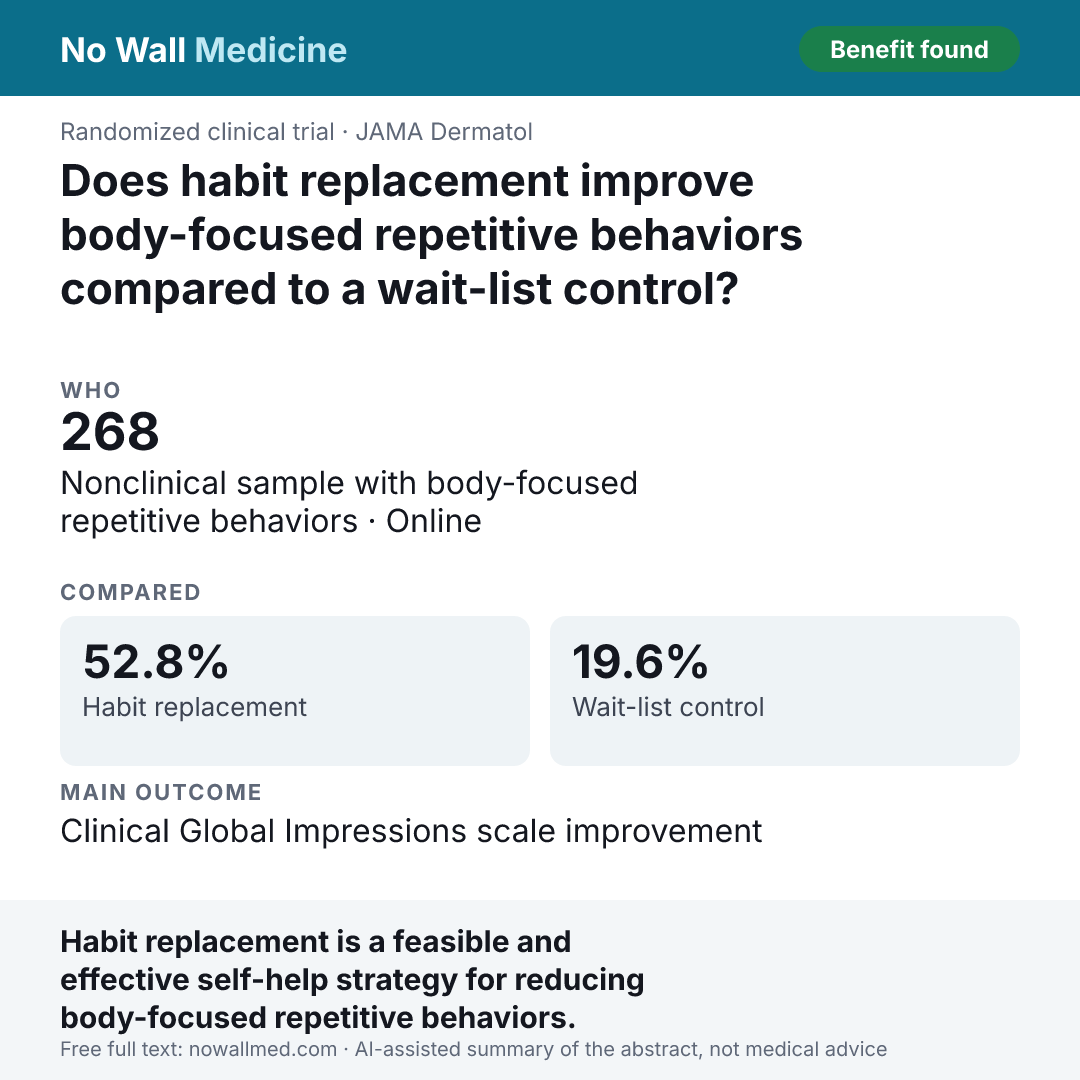
The Metabolic Vulnerability Index: A Novel Marker for Mortality Prediction in Heart Failure
Prospective population-based cohort studyKey finding
Does the metabolic vulnerability index predict mortality in heart failure patients?
Who
1,382
Patients with heart failure · Community cohort
Compared
Metabolic vulnerability index group 1
Metabolic vulnerability index group 2: hazard ratio 1.2 (95% CI: 0.9-1.4)
Metabolic vulnerability index group 3: hazard ratio 1.6 (95% CI: 1.3-2.0)
Metabolic vulnerability index group 4: hazard ratio 1.8 (95% CI: 1.4-2.2)
Main outcome
Mortality
Result: hazard ratio 1.8 (95% CI: 1.4-2.2) for group 4
Bottom line: Higher metabolic vulnerability index scores are strongly associated with increased mortality risk in heart failure patients.
JACC Heart Fail · 2023-07-19 · Save PNG
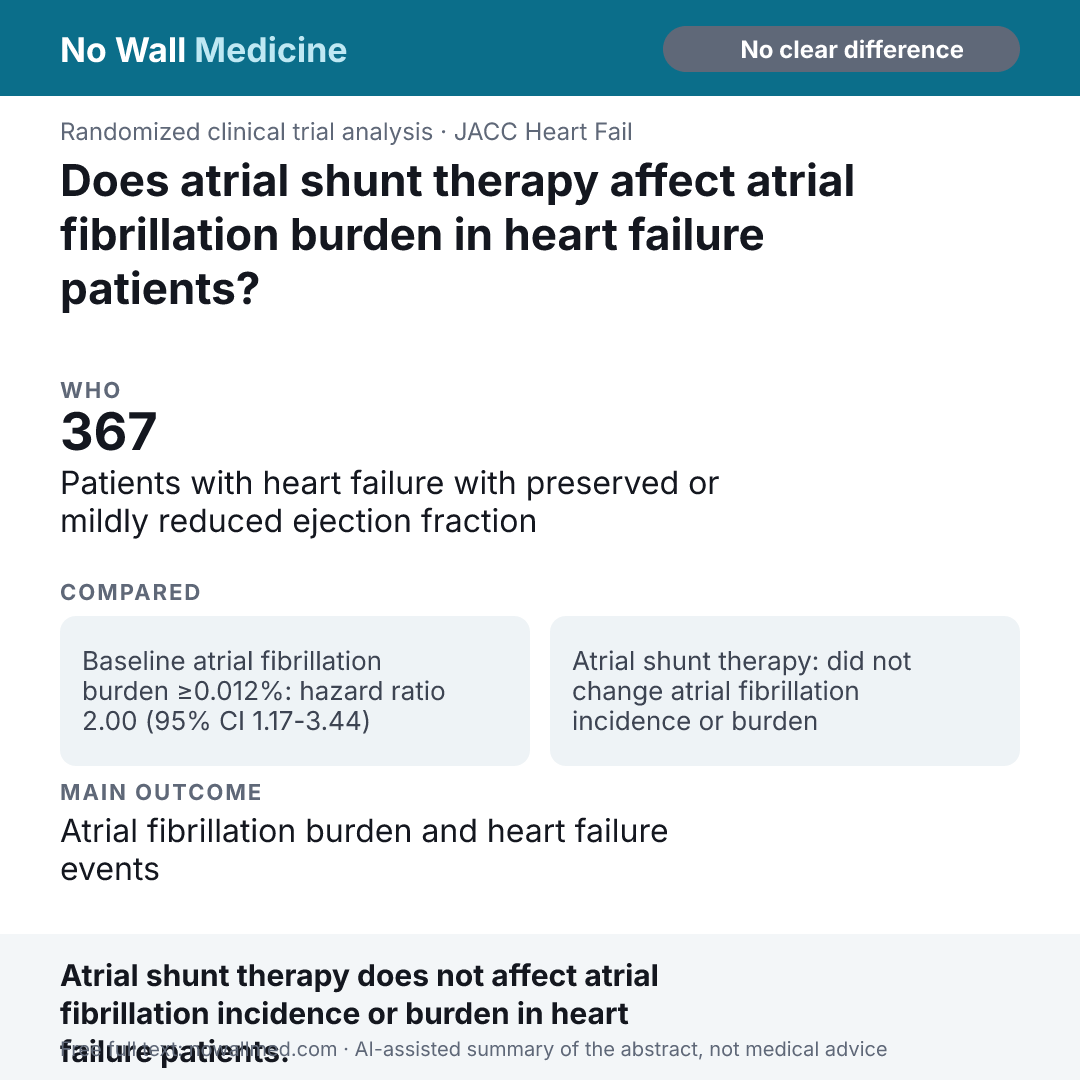
Atrial Fibrillation Burden and Atrial Shunt Therapy in Heart Failure With Preserved Ejection Fraction
Randomized clinical trial analysisNo clear difference
Does atrial shunt therapy affect atrial fibrillation burden in heart failure patients?
Who
367
Patients with heart failure with preserved or mildly reduced ejection fraction
Compared
Baseline atrial fibrillation burden ≥0.012%: hazard ratio 2.00 (95% CI 1.17-3.44)
Atrial shunt therapy: did not change atrial fibrillation incidence or burden
Main outcome
Atrial fibrillation burden and heart failure events
Result: hazard ratio 2.00 (95% CI 1.17-3.44)
Bottom line: Atrial shunt therapy does not affect atrial fibrillation incidence or burden in heart failure patients.
JACC Heart Fail · 2023-07-19 · Save PNG
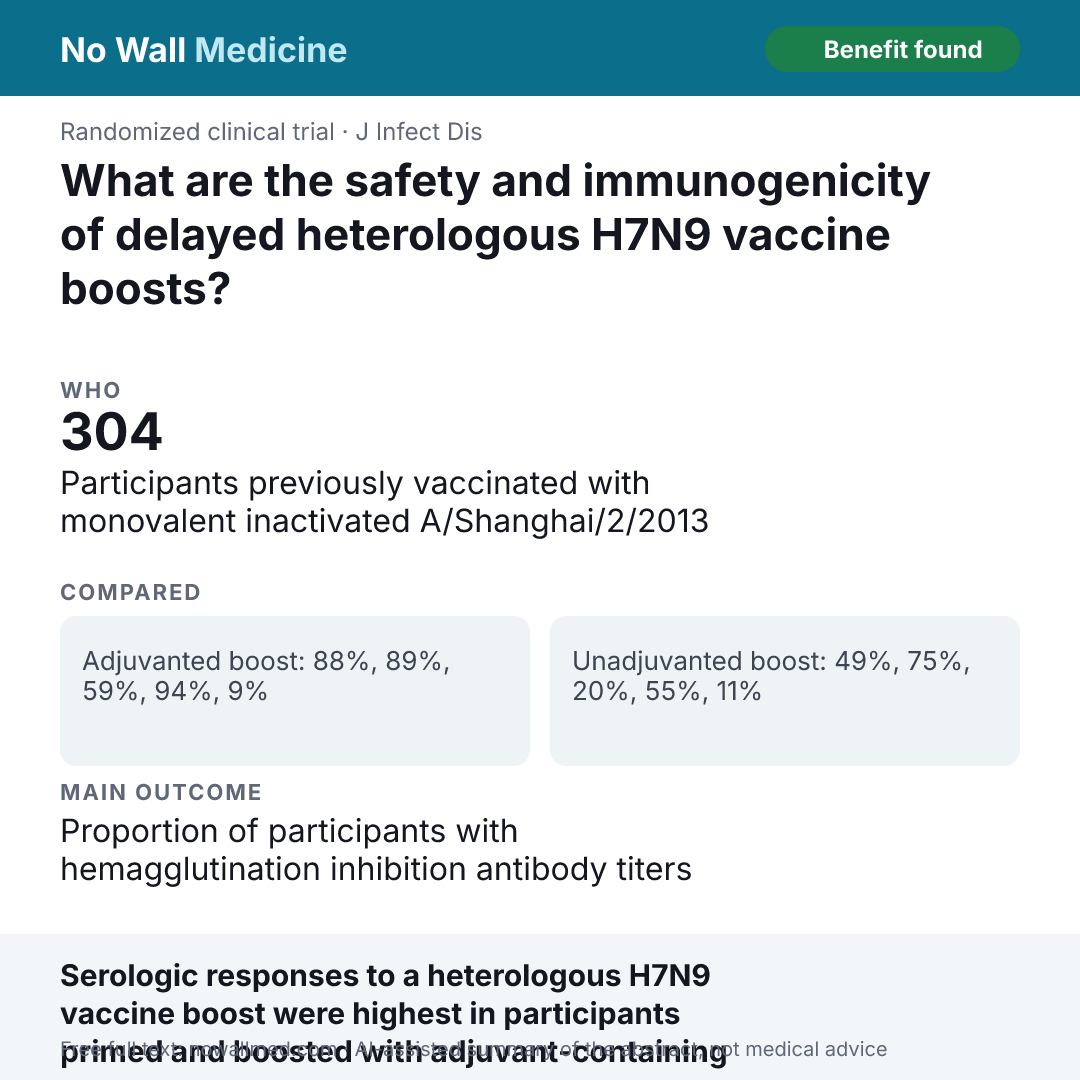
Safety and Immunogenicity of a Delayed Heterologous Avian Influenza A(H7N9) Vaccine Boost Following Different Priming Regimens: A Randomized Clinical Trial
Randomized clinical trialBenefit found
What are the safety and immunogenicity of delayed heterologous H7N9 vaccine boosts?
Who
304
Participants previously vaccinated with monovalent inactivated A/Shanghai/2/2013 (H7N9) vaccine
Compared
Adjuvanted boost: 88%, 89%, 59%, 94%, 9%
Unadjuvanted boost: 49%, 75%, 20%, 55%, 11%
Main outcome
Proportion of participants with hemagglutination inhibition antibody titers ≥40
Bottom line: Serologic responses to a heterologous H7N9 vaccine boost were highest in participants primed and boosted with adjuvant-containing regimens.
J Infect Dis · 2023-07-19 · Save PNG
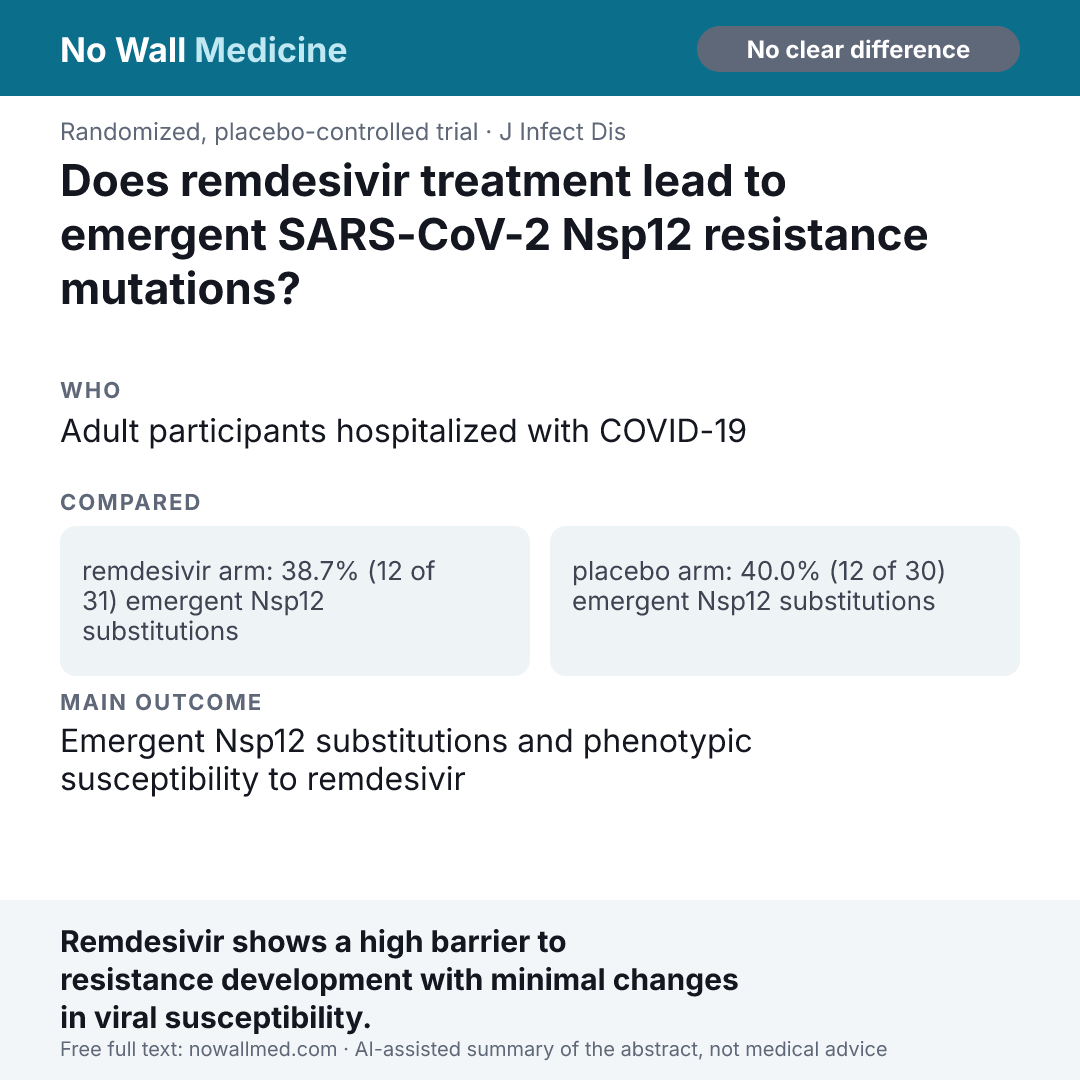
Viral Resistance Analyses From the Remdesivir Phase 3 Adaptive COVID-19 Treatment Trial-1 (ACTT-1)
Randomized, placebo-controlled trialNo clear difference
Does remdesivir treatment lead to emergent SARS-CoV-2 Nsp12 resistance mutations?
Who
Adult participants hospitalized with COVID-19
Compared
remdesivir arm: 38.7% (12 of 31) emergent Nsp12 substitutions
placebo arm: 40.0% (12 of 30) emergent Nsp12 substitutions
Main outcome
Emergent Nsp12 substitutions and phenotypic susceptibility to remdesivir
Bottom line: Remdesivir shows a high barrier to resistance development with minimal changes in viral susceptibility.
J Infect Dis · 2023-07-19 · Save PNG
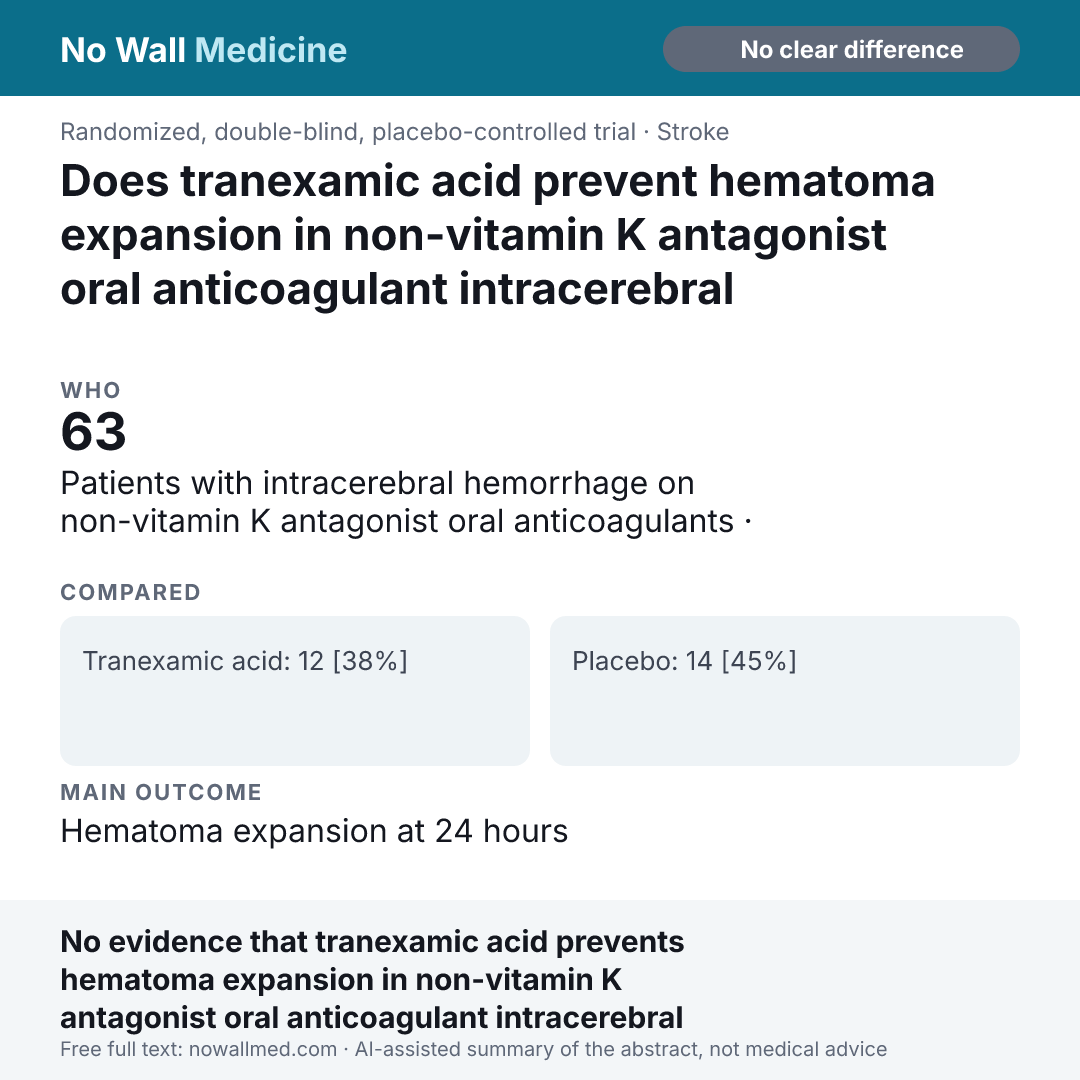
Tranexamic Acid for Intracerebral Hemorrhage in Patients on Non-Vitamin K Antagonist Oral Anticoagulants (TICH-NOAC): A Multicenter, Randomized, Placebo-Controlled, Phase 2 Trial
Randomized, double-blind, placebo-controlled trialNo clear difference
Does tranexamic acid prevent hematoma expansion in non-vitamin K antagonist oral anticoagulant intracerebral hemorrhage?
Who
63
Patients with intracerebral hemorrhage on non-vitamin K antagonist oral anticoagulants · 6 Swiss stroke centers
Compared
Tranexamic acid: 12 [38%]
Placebo: 14 [45%]
Main outcome
Hematoma expansion at 24 hours
Result: adjusted odds ratio, 0.63 [95% CI, 0.22-1.82]
Bottom line: No evidence that tranexamic acid prevents hematoma expansion in non-vitamin K antagonist oral anticoagulant intracerebral hemorrhage.
Stroke · 2023-07-19 · Save PNG
Operative Treatment and Outcomes of Pediatric Patients with an Extremity Bone Tumor: A Secondary Analysis of the PARITY Trial Data
Randomized trial secondary analysisNo clear difference
Does a 1-day or 5-day postoperative antibiotic regimen affect outcomes in pediatric bone tumor patients?
Who
151
Pediatric patients aged 12 to 18 years with bone tumors
Compared
5-day antibiotic course
1-day antibiotic course
Main outcome
Surgical site infection within 1 year
Result: hazard ratio 0.92 (95% CI 0.4 to 1.9)
Bottom line: A 1-day antibiotic regimen showed no difference in surgical or oncologic outcomes compared to a 5-day regimen.
J Bone Joint Surg Am · 2023-07-19 · Save PNG

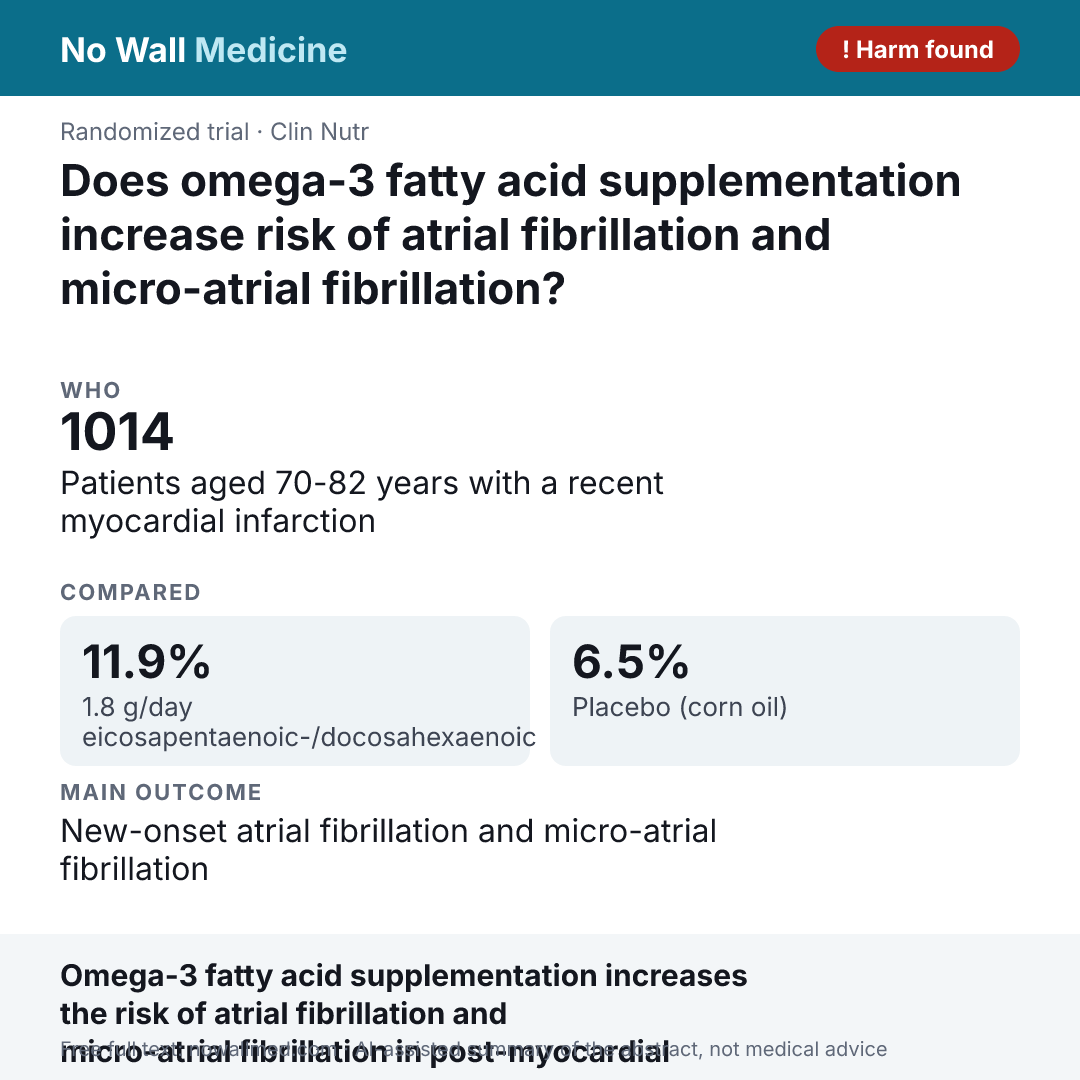
Omega-3 fatty acid supplements and risk of atrial fibrillation and 'micro-atrial fibrillation': A secondary analysis from the OMEMI trial
Randomized trialHarm found
Does omega-3 fatty acid supplementation increase risk of atrial fibrillation and micro-atrial fibrillation?
Who
1014
Patients aged 70-82 years with a recent myocardial infarction
Compared
11.9%1.8 g/day eicosapentaenoic-/docosahexaenoic acid
6.5%Placebo (corn oil)
Main outcome
New-onset atrial fibrillation and micro-atrial fibrillation
Result: hazard ratio 1.90 (95%CI 1.16-3.11)
Bottom line: Omega-3 fatty acid supplementation increases the risk of atrial fibrillation and micro-atrial fibrillation in post-myocardial infarction patients.
Clin Nutr · 2023-07-19 · Save PNG
Infections following bispecific antibodies in myeloma: a systematic review and meta-analysis
Systematic review and meta-analysisKey finding
What are the infection risks in myeloma patients treated with bispecific antibodies?
Who
1666
Patients with multiple myeloma treated with bispecific antibodies
Compared
BCMA-targeted bispecifics: 25% grade 3 or higher infections
non-BCMA bispecifics: 20% grade 3 or higher infections
bispecific combination therapy: 71% all-grade infection
bispecific monotherapy: 52% all-grade infection
Main outcome
Prevalence of all-grade and grade 3 or higher infections
Bottom line: BCMA-targeted bispecifics and combination therapies are associated with higher infection risks in multiple myeloma patients.
Blood Adv · 2023-07-19 · Save PNG

Applied Machine Learning Techniques to Diagnose Voice-Affecting Conditions and Disorders: Systematic Literature Review
Systematic literature reviewUnclear result
What is the state of machine learning for diagnosing and monitoring voice-affecting disorders?
Who
Studies on voice-affecting disorders using machine learning
Compared
Support vector machines: 51/145 (35.2%)
Parkinson disease: 87/145 (60%)
Main outcome
Machine learning techniques used for diagnosis and monitoring
Bottom line: Machine learning shows considerable interest for diagnosing voice-affecting disorders, particularly Parkinson disease, but faces data limitations.
Limitation: Constrained by only peer-reviewed publications written in English.
J Med Internet Res · 2023-07-19 · Save PNG

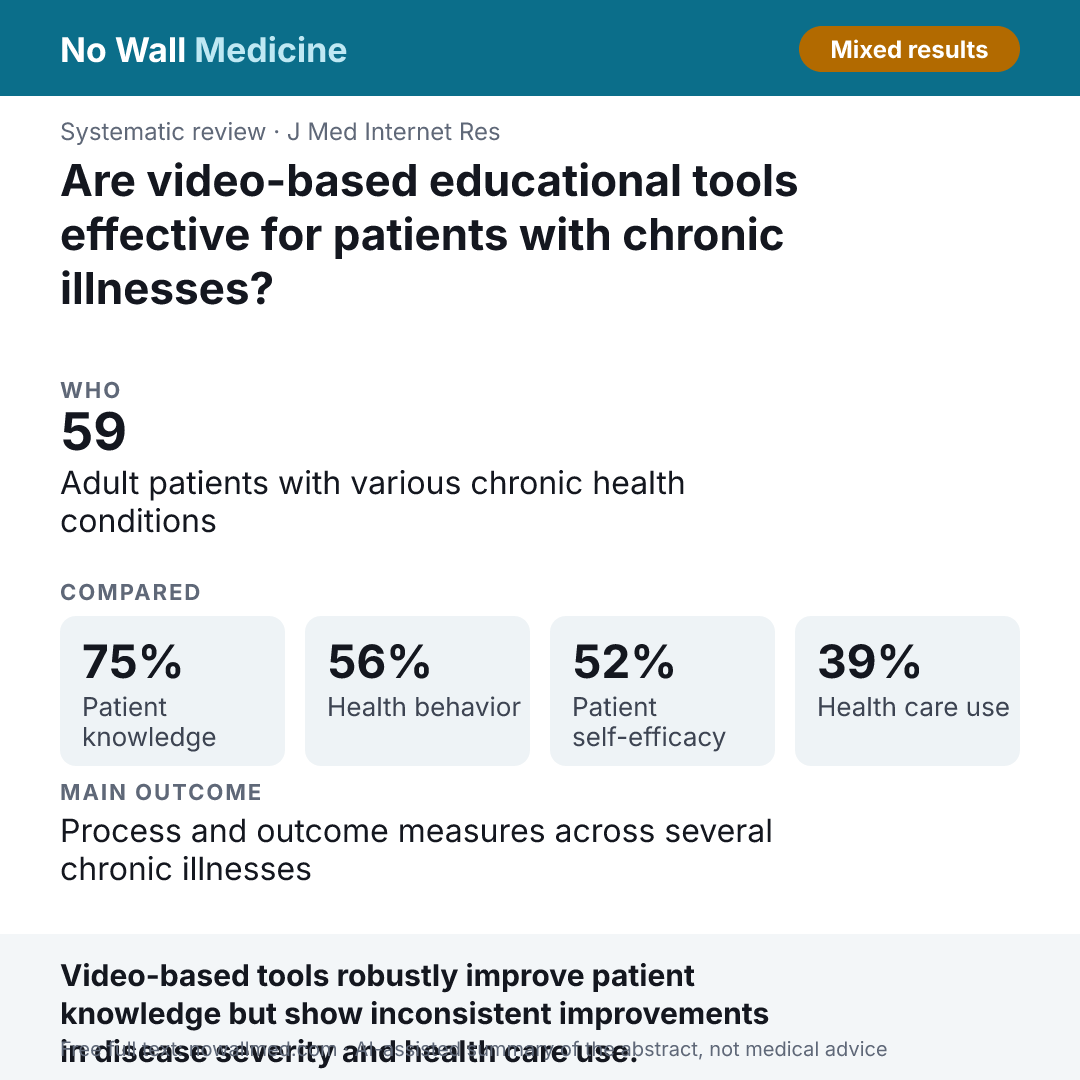
Video-Based Educational Interventions for Patients With Chronic Illnesses: Systematic Review
Systematic reviewMixed results
Are video-based educational tools effective for patients with chronic illnesses?
Who
59
Adult patients with various chronic health conditions
Compared
75%Patient knowledge (30/40)
56%Health behavior (21/38)
52%Patient self-efficacy (12/23)
39%Health care use (11/28)
Main outcome
Process and outcome measures across several chronic illnesses
Bottom line: Video-based tools robustly improve patient knowledge but show inconsistent improvements in disease severity and health care use.
Limitation: Moderate or high risk of bias in many included studies.
J Med Internet Res · 2023-07-19 · Save PNG
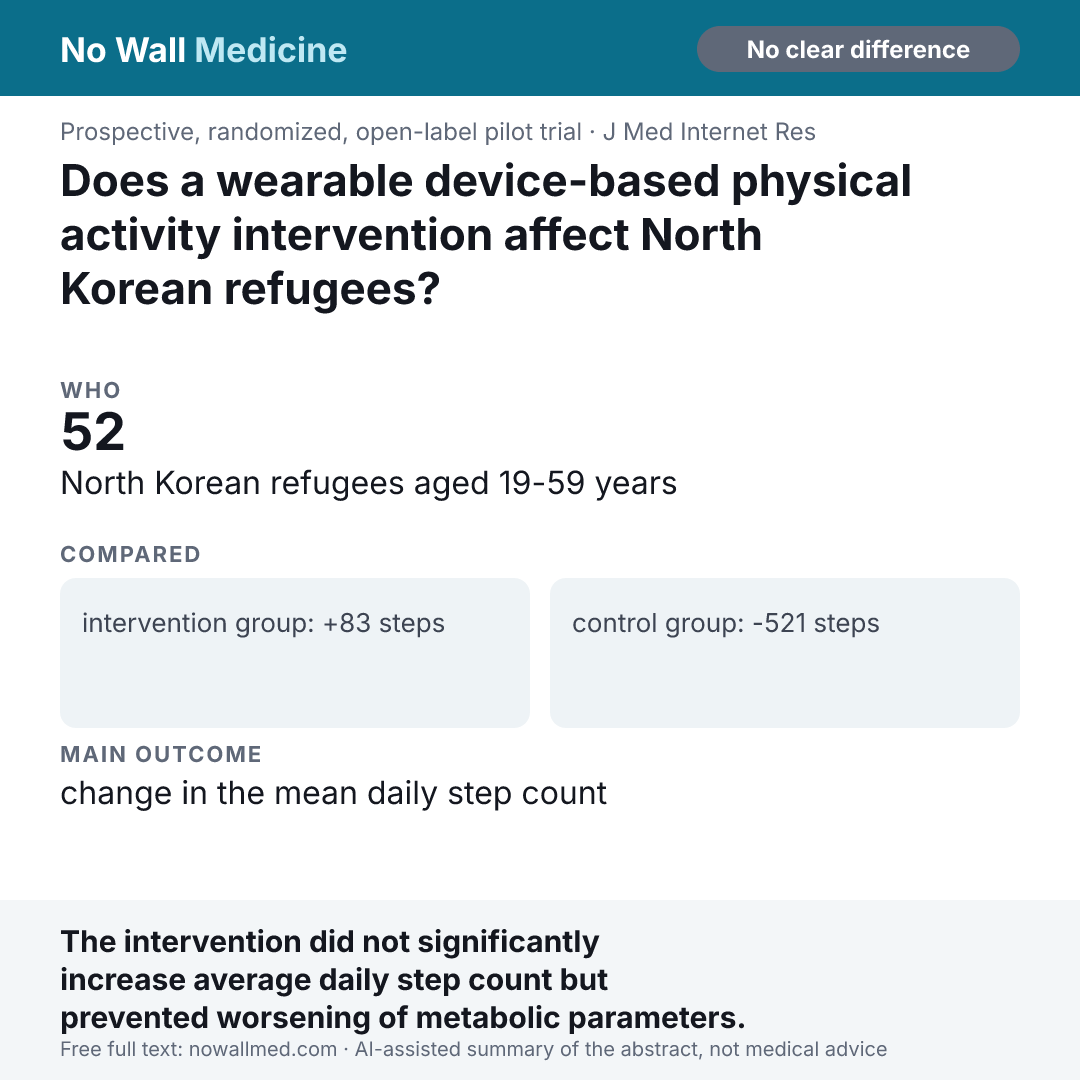
Effect of a Wearable Device-Based Physical Activity Intervention in North Korean Refugees: Pilot Randomized Controlled Trial
Prospective, randomized, open-label pilot trialNo clear difference
Does a wearable device-based physical activity intervention affect North Korean refugees?
Who
52
North Korean refugees aged 19-59 years
Compared
intervention group: +83 steps
control group: -521 steps
Main outcome
change in the mean daily step count
Bottom line: The intervention did not significantly increase average daily step count but prevented worsening of metabolic parameters.
Limitation: This was a pilot study; large-scale, long-term studies are warranted.
J Med Internet Res · 2023-07-19 · Save PNG
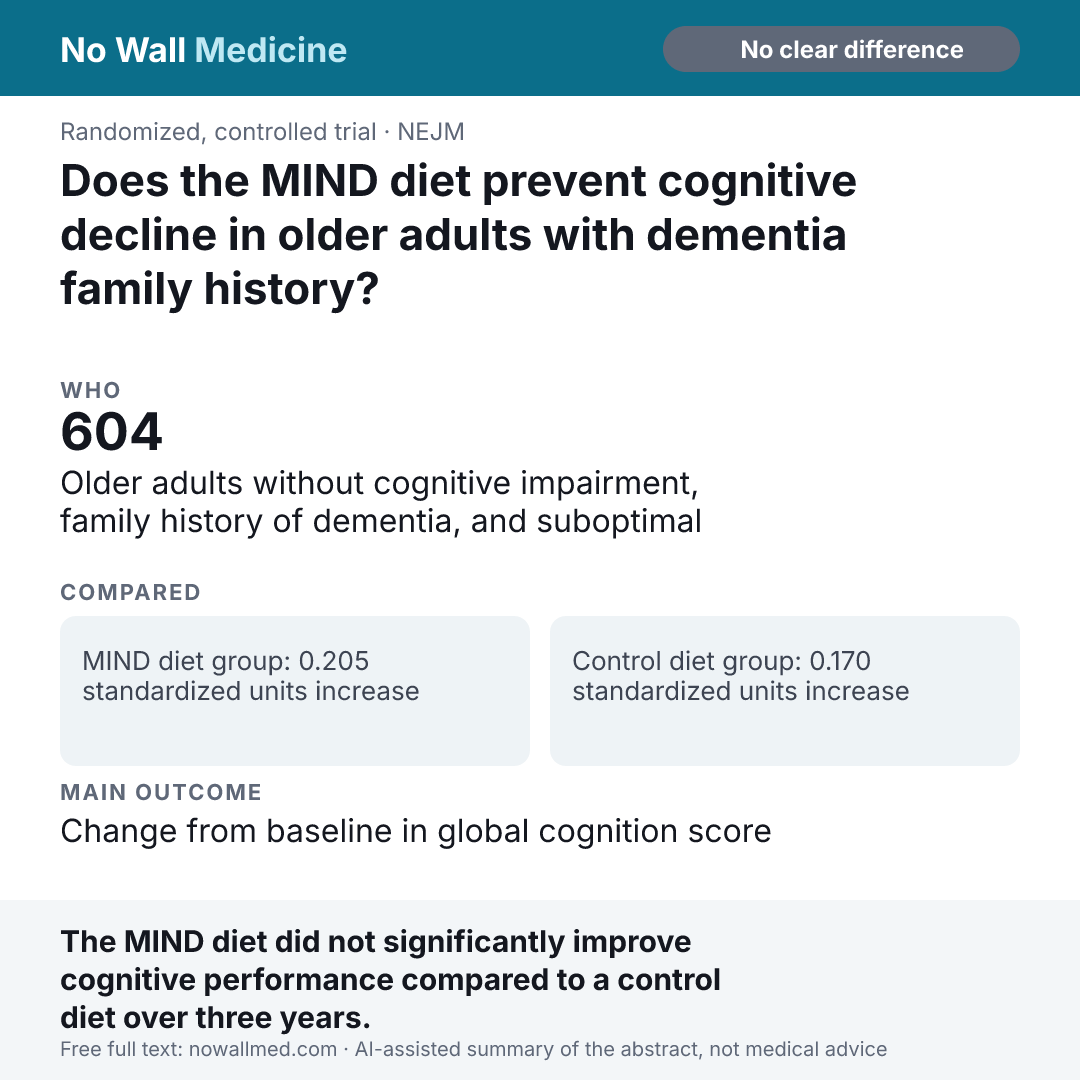
Trial of the MIND Diet for Prevention of Cognitive Decline in Older Persons
Randomized, controlled trialNo clear difference
Does the MIND diet prevent cognitive decline in older adults with dementia family history?
Who
604
Older adults without cognitive impairment, family history of dementia, and suboptimal diet · Two-site trial
Compared
MIND diet group: 0.205 standardized units increase
Control diet group: 0.170 standardized units increase
Main outcome
Change from baseline in global cognition score
Result: mean difference 0.035 standardized units (95% CI -0.022 to 0.092)
Bottom line: The MIND diet did not significantly improve cognitive performance compared to a control diet over three years.
Limitation: MRI outcomes were measured in a nonrandom sample of participants
Funded by: National Institute on Aging
NEJM · 2023-07-18 · Save PNG
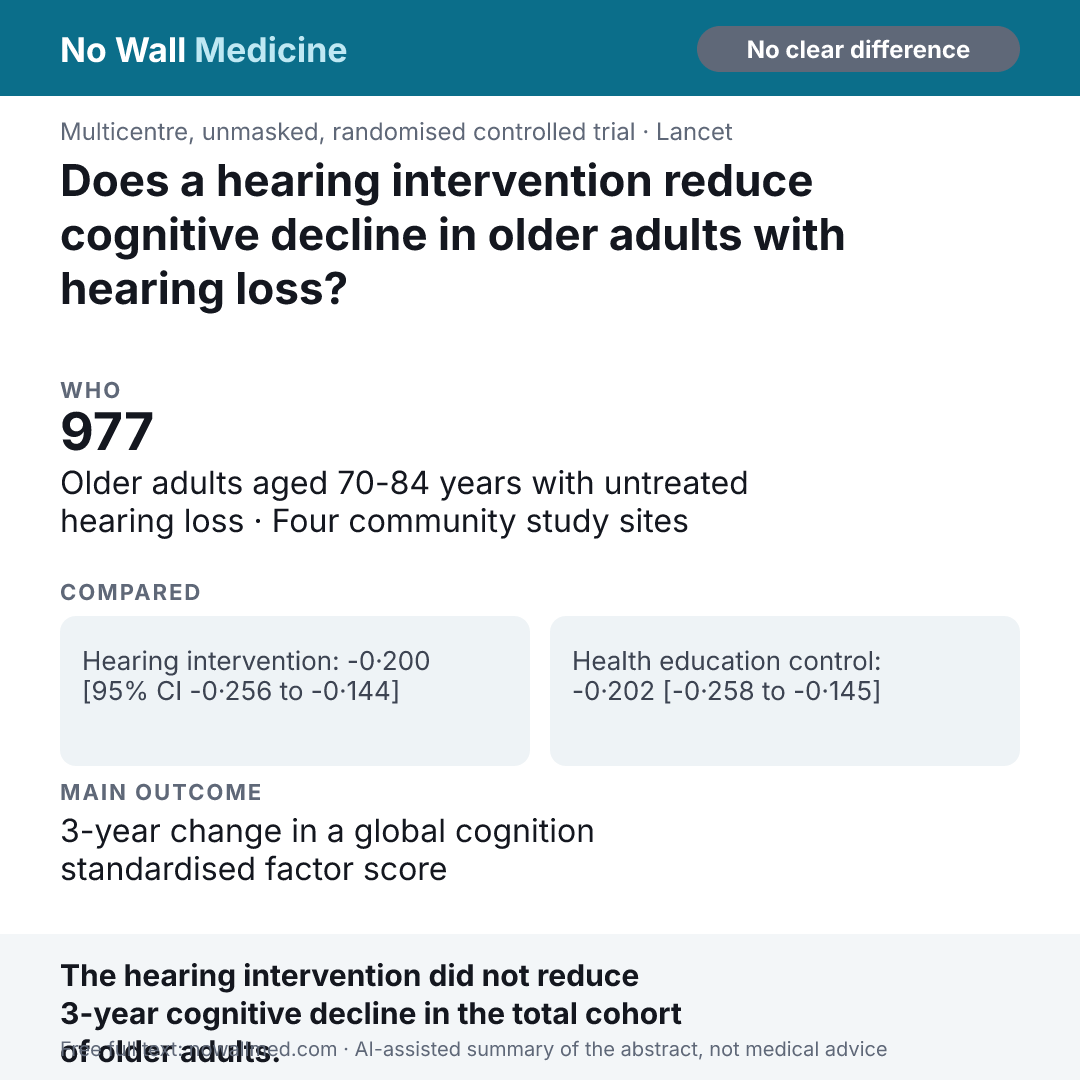
Hearing intervention versus health education control to reduce cognitive decline in older adults with hearing loss in the USA (ACHIEVE): a multicentre, randomised controlled trial
Multicentre, unmasked, randomised controlled trialNo clear difference
Does a hearing intervention reduce cognitive decline in older adults with hearing loss?
Who
977
Older adults aged 70-84 years with untreated hearing loss · Four community study sites across the USA
Compared
Hearing intervention: -0·200 [95% CI -0·256 to -0·144]
Health education control: -0·202 [-0·258 to -0·145]
Main outcome
3-year change in a global cognition standardised factor score
Result: difference 0·002 [-0·077 to 0·081]
Bottom line: The hearing intervention did not reduce 3-year cognitive decline in the total cohort of older adults.
Limitation: The effect of the hearing intervention differed between the ARIC and de novo study populations.
Funded by: US National Institutes of Health
Lancet · 2023-07-18 · Save PNG
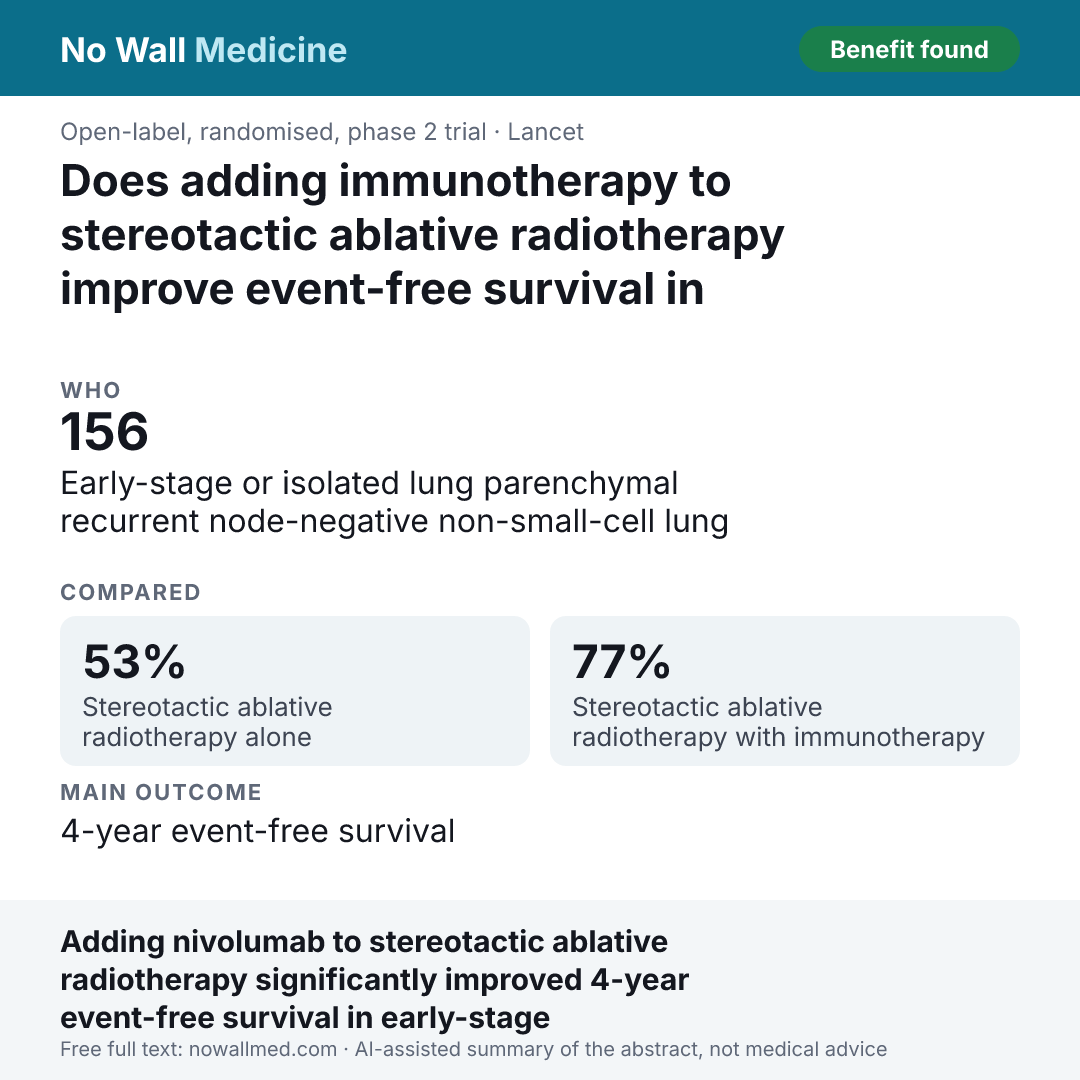
Stereotactic ablative radiotherapy with or without immunotherapy for early-stage or isolated lung parenchymal recurrent node-negative non-small-cell lung cancer: an open-label, randomised, phase 2 trial
Open-label, randomised, phase 2 trialBenefit found
Does adding immunotherapy to stereotactic ablative radiotherapy improve event-free survival in early-stage non-small-cell lung cancer?
Who
156
Early-stage or isolated lung parenchymal recurrent node-negative non-small-cell lung cancer · Three hospitals in Texas, USA
Compared
53%Stereotactic ablative radiotherapy alone (95% CI 42-67%)
77%Stereotactic ablative radiotherapy with immunotherapy (66-91%)
Main outcome
4-year event-free survival
Result: hazard ratio 0.38 (95% CI 0.19-0.75)
Bottom line: Adding nivolumab to stereotactic ablative radiotherapy significantly improved 4-year event-free survival in early-stage non-small-cell lung cancer.
Funded by: Bristol-Myers Squibb, MD Anderson Cancer Center Alliance, and National Cancer Institute
Lancet · 2023-07-18 · Save PNG