Visual abstracts
New randomized trials and meta-analyses from leading journals at a glance: who was studied, what was compared, and what was found. Every paper is free to read in full.
All specialtiesCardiology 4763Oncology 4043Gastroenterology & Hepatology 1903Infectious Disease 3756Neurology 1872Psychiatry & Mental Health 2216Pulmonology 2044Critical Care 1319Endocrinology & Diabetes 2544Pediatrics 2889Surgery 2480Orthopedics & Sports Medicine 917Neurosurgery 525Cardiothoracic & Vascular Surgery 656Plastic & Reconstructive Surgery 574Nephrology 1107Rheumatology 810Hematology 1090Dermatology 611Ophthalmology 532Obstetrics & Gynecology 1645Public & Global Health 1037Radiology & Imaging 619Anesthesiology 958Urology 745ENT (Otolaryngology) 494Emergency Medicine 481Allergy & Immunology 309Geriatrics 972Family Medicine & Primary Care 534Medical Genetics & Genomics 659Pathology & Laboratory Medicine 156Physical Medicine & Rehabilitation 734Palliative Care 421Nutrition 1560Digital Health & AI 2137General Medicine 318
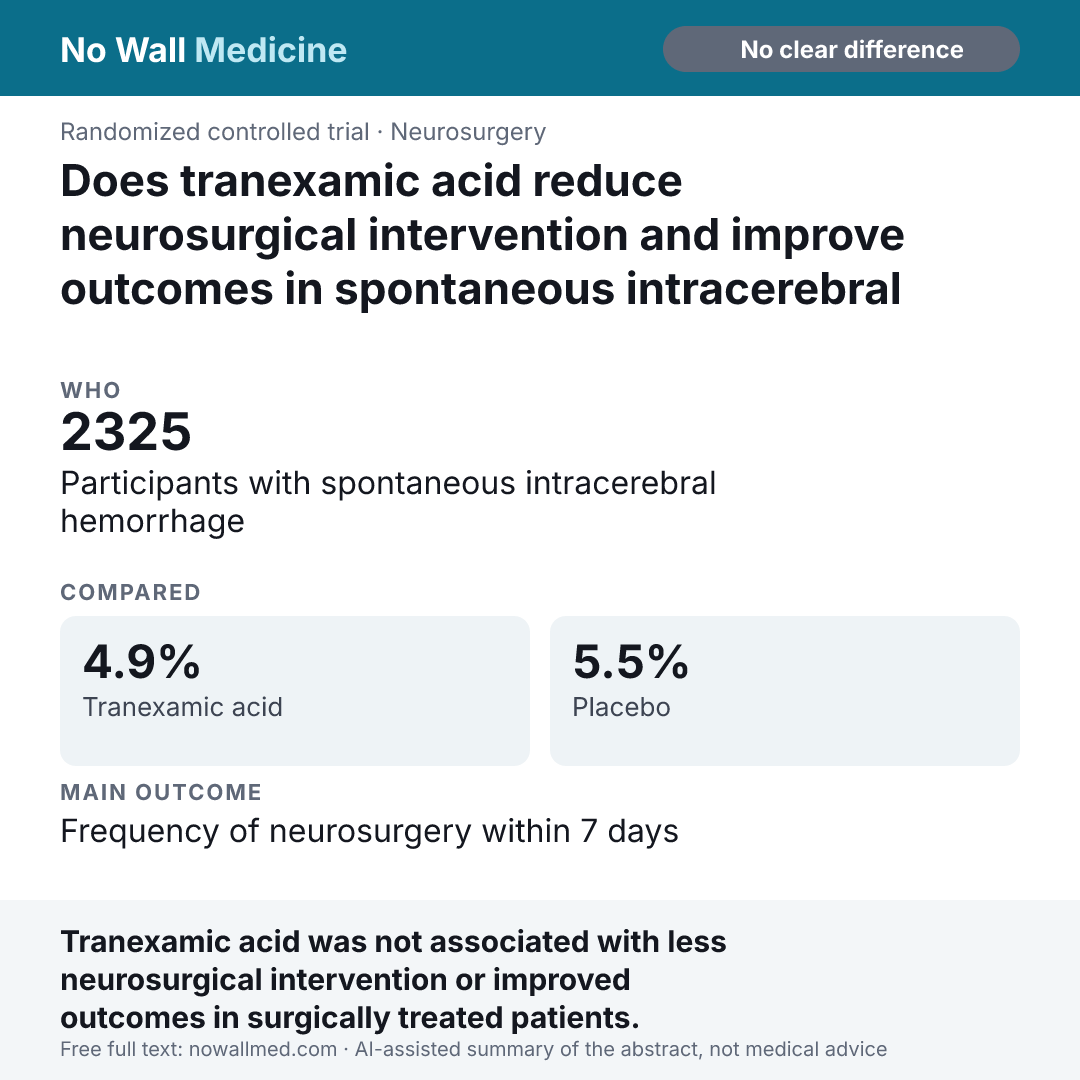
The Effect of Tranexamic Acid on Neurosurgical Intervention in Spontaneous Intracerebral Hematoma: Data From 121 Surgically Treated Participants From the Tranexamic Acid in IntraCerebral Hemorrhage-2 Randomized Controlled Trial
Randomized controlled trialNo clear difference
Does tranexamic acid reduce neurosurgical intervention and improve outcomes in spontaneous intracerebral hemorrhage?
Who
2325
Participants with spontaneous intracerebral hemorrhage
Compared
4.9%Tranexamic acid (57/1153)
5.5%Placebo (64/1163)
Main outcome
Frequency of neurosurgery within 7 days
Result: odds ratio 0.893 (95% CI 0.619-1.289)
Bottom line: Tranexamic acid was not associated with less neurosurgical intervention or improved outcomes in surgically treated patients.
Neurosurgery · 2024-05-24 · Save PNG
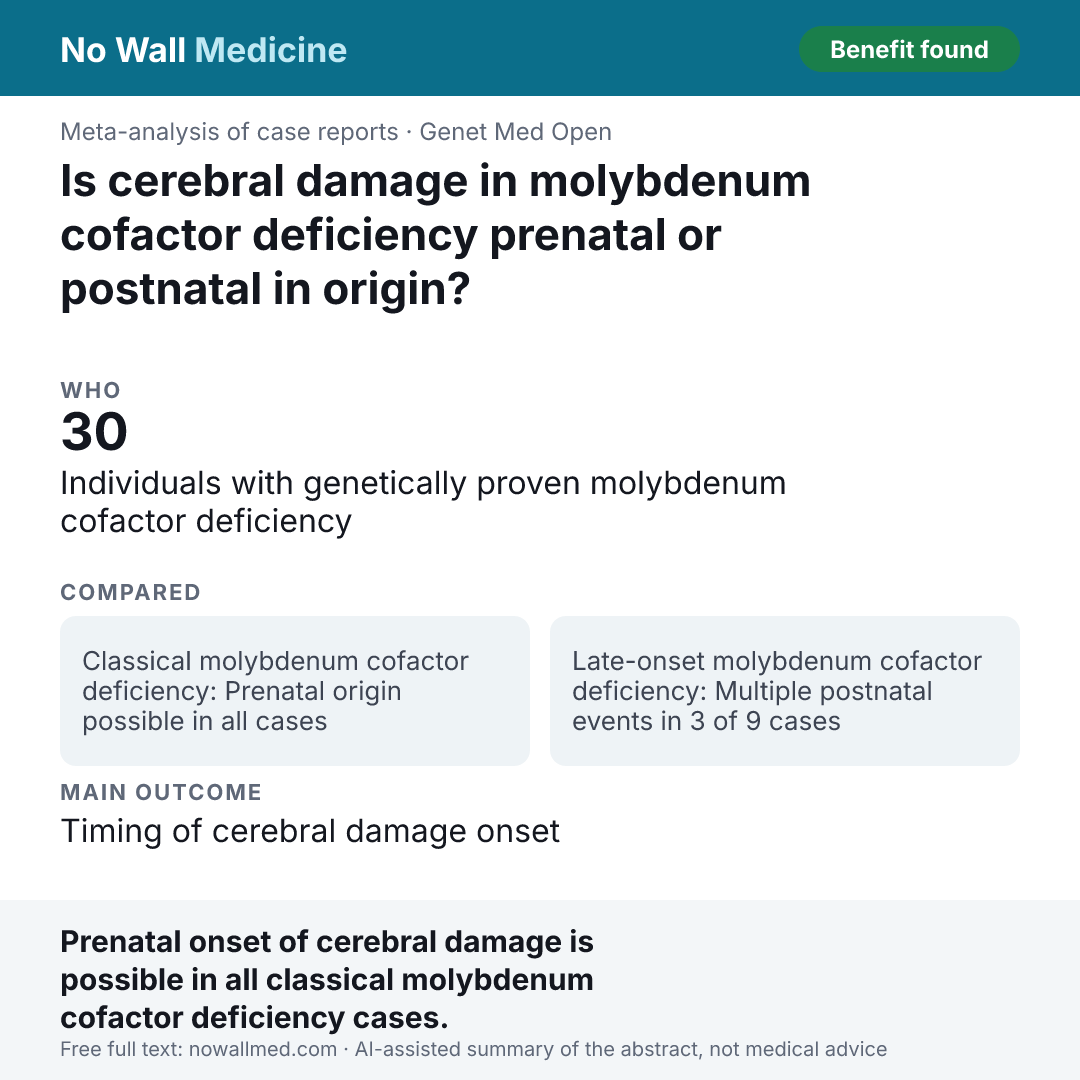
Timing of cerebral damage in molybdenum cofactor deficiency: A meta-analysis of case reports
Meta-analysis of case reportsBenefit found
Is cerebral damage in molybdenum cofactor deficiency prenatal or postnatal in origin?
Who
30
Individuals with genetically proven molybdenum cofactor deficiency
Compared
Classical molybdenum cofactor deficiency: Prenatal origin possible in all cases
Late-onset molybdenum cofactor deficiency: Multiple postnatal events in 3 of 9 cases
Main outcome
Timing of cerebral damage onset
Bottom line: Prenatal onset of cerebral damage is possible in all classical molybdenum cofactor deficiency cases.
Genet Med Open · 2024-05-24 · Save PNG
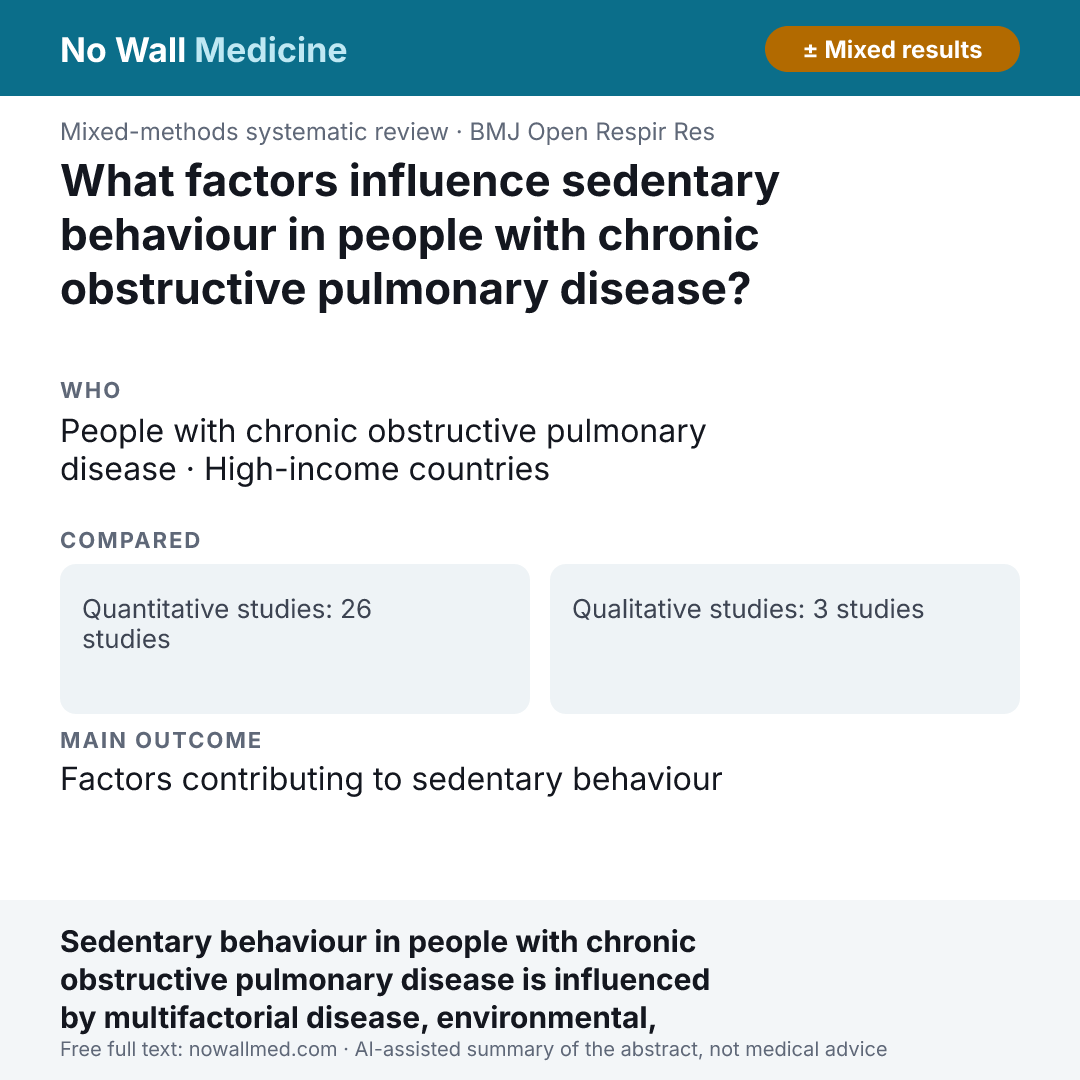
Influencing factors of sedentary behaviour in people with chronic obstructive pulmonary disease: a systematic review
Mixed-methods systematic reviewMixed results
What factors influence sedentary behaviour in people with chronic obstructive pulmonary disease?
Who
People with chronic obstructive pulmonary disease · High-income countries
Compared
Quantitative studies: 26 studies
Qualitative studies: 3 studies
Main outcome
Factors contributing to sedentary behaviour
Bottom line: Sedentary behaviour in people with chronic obstructive pulmonary disease is influenced by multifactorial disease, environmental, and psychological factors.
BMJ Open Respir Res · 2024-05-24 · Save PNG
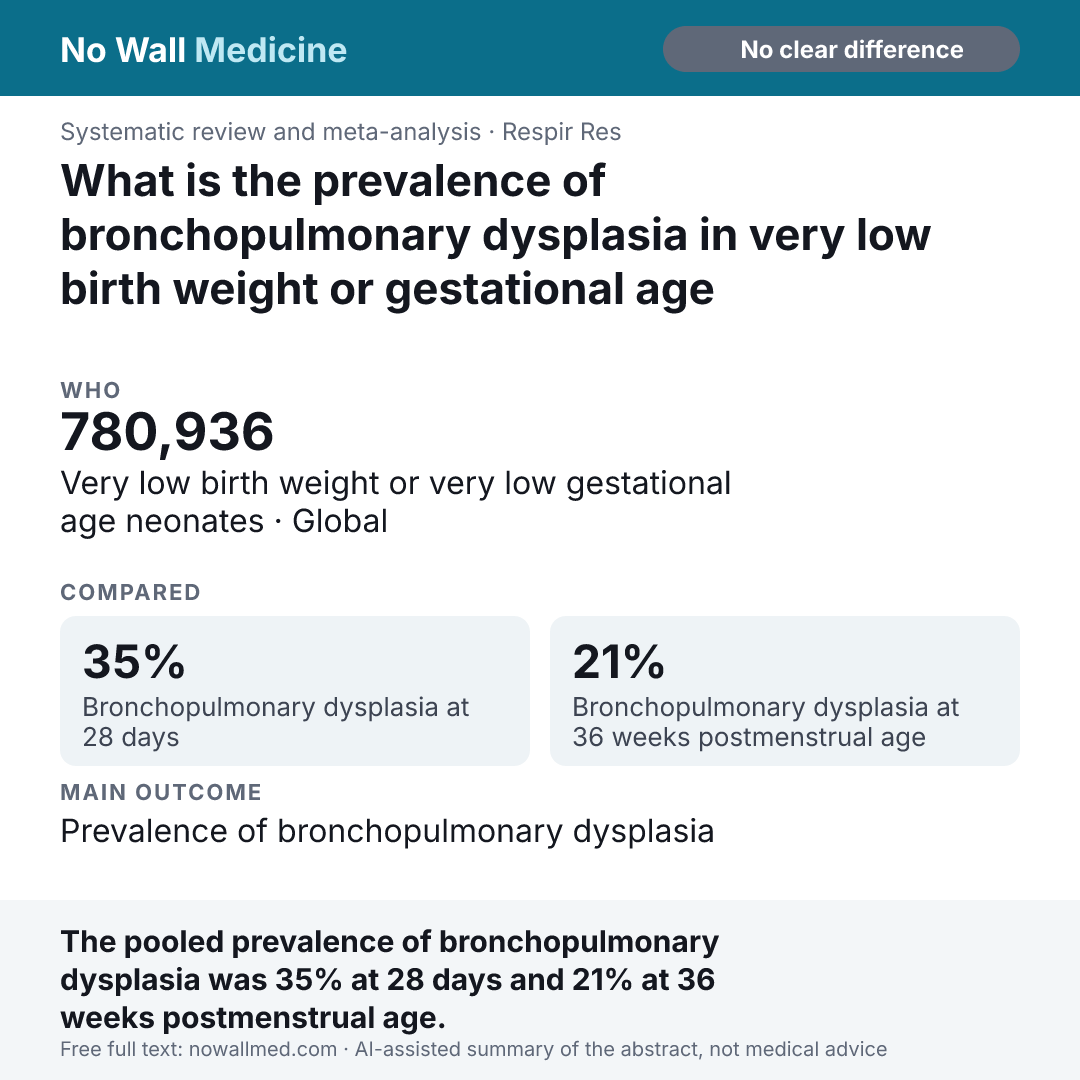
Rates of bronchopulmonary dysplasia in very low birth weight neonates: a systematic review and meta-analysis
Systematic review and meta-analysisNo clear difference
What is the prevalence of bronchopulmonary dysplasia in very low birth weight or gestational age neonates?
Who
780,936
Very low birth weight or very low gestational age neonates · Global
Compared
35%Bronchopulmonary dysplasia at 28 days (95% CI, 28-42%)
21%Bronchopulmonary dysplasia at 36 weeks postmenstrual age (95% CI, 19-24%)
Main outcome
Prevalence of bronchopulmonary dysplasia
Bottom line: The pooled prevalence of bronchopulmonary dysplasia was 35% at 28 days and 21% at 36 weeks postmenstrual age.
Respir Res · 2024-05-24 · Save PNG
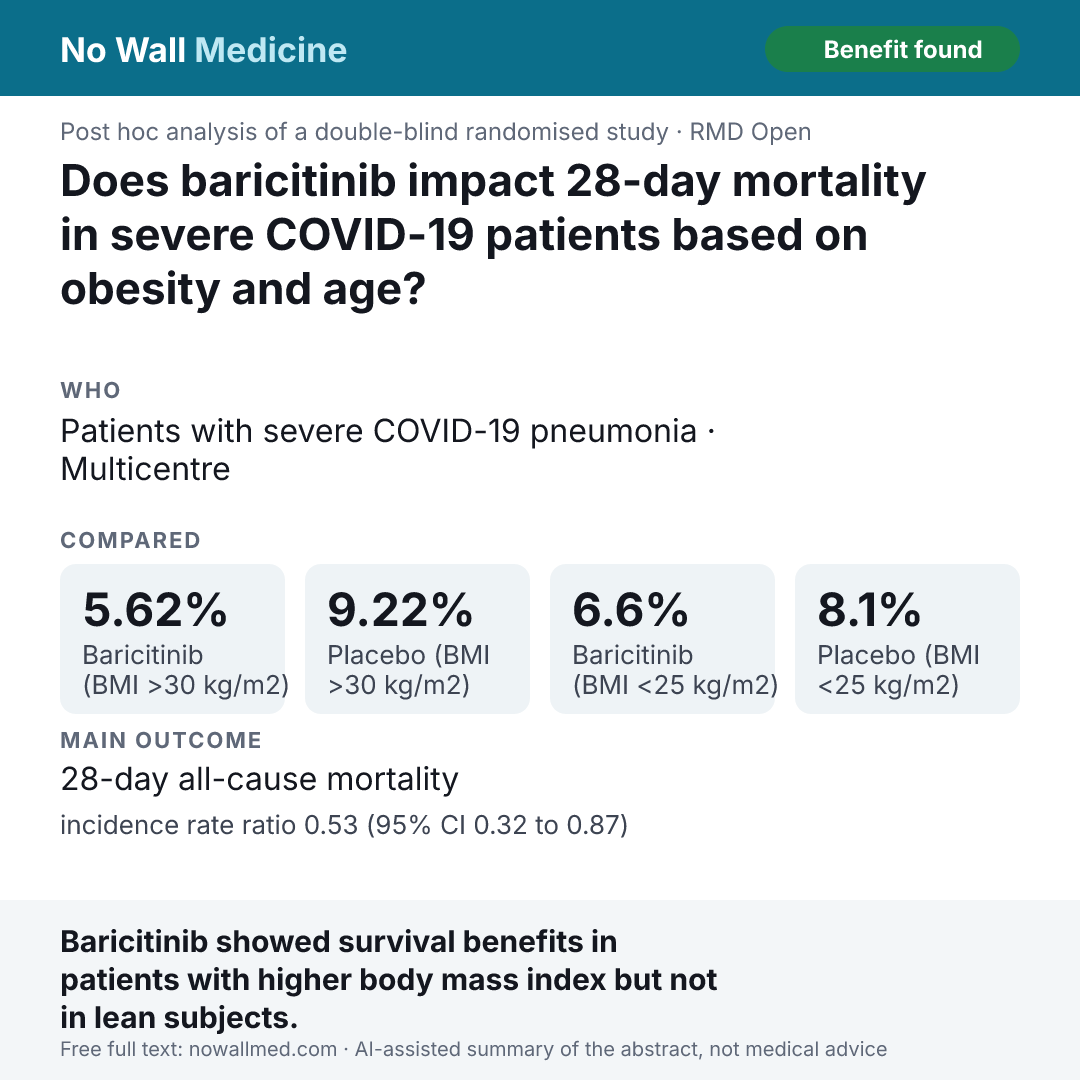
Pronounced benefits of JAK inhibition with baricitinib in COVID-19 pneumonia in obese but not lean subjects
Post hoc analysis of a double-blind randomised studyBenefit found
Does baricitinib impact 28-day mortality in severe COVID-19 patients based on obesity and age?
Who
Patients with severe COVID-19 pneumonia · Multicentre
Compared
5.62%Baricitinib (BMI >30 kg/m2)
9.22%Placebo (BMI >30 kg/m2)
6.6%Baricitinib (BMI <25 kg/m2)
8.1%Placebo (BMI <25 kg/m2)
Main outcome
28-day all-cause mortality
Result: incidence rate ratio 0.53 (95% CI 0.32 to 0.87)
Bottom line: Baricitinib showed survival benefits in patients with higher body mass index but not in lean subjects.
RMD Open · 2024-05-24 · Save PNG
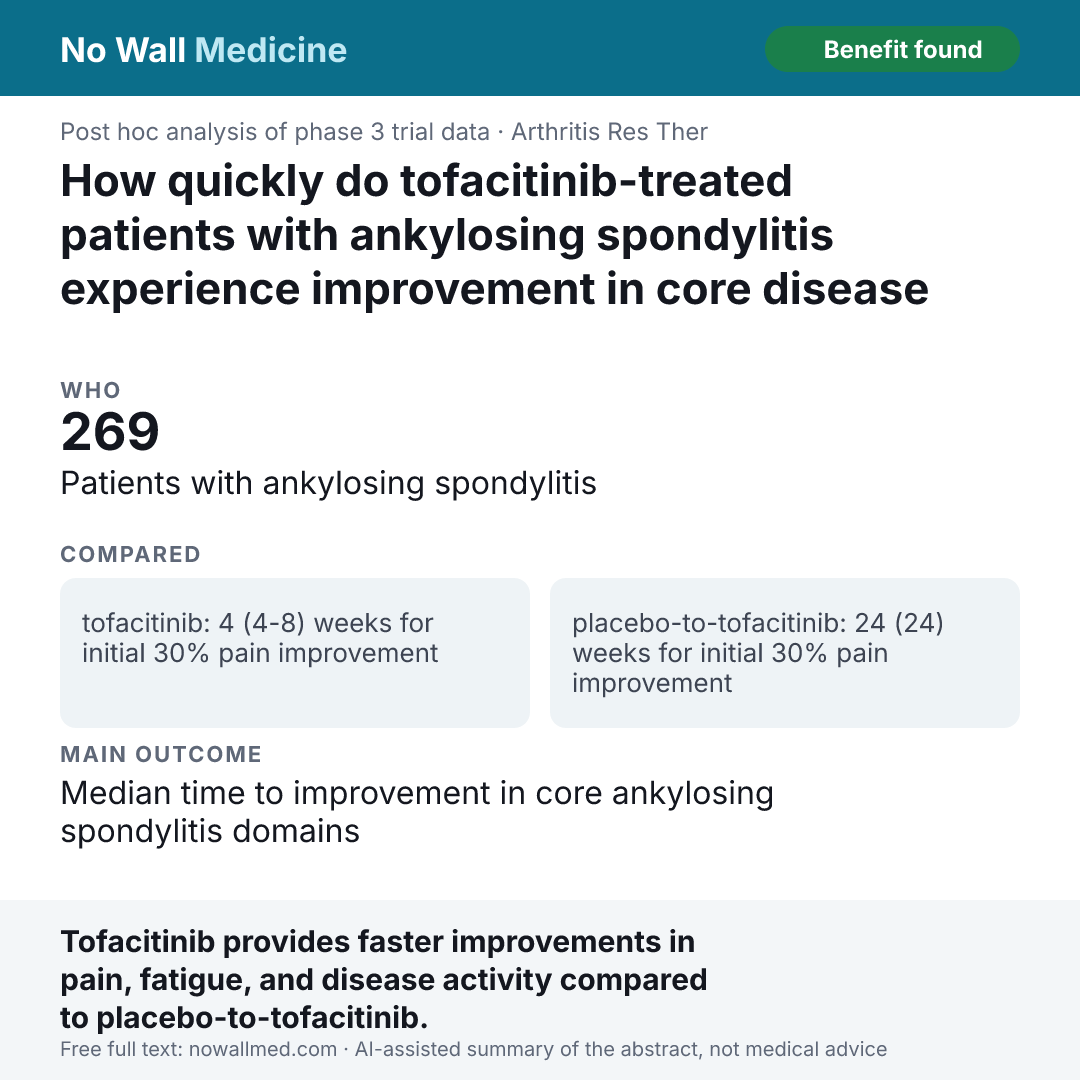
Time to improvement of pain, morning stiffness, fatigue, and disease activity in patients with ankylosing spondylitis treated with tofacitinib: a post hoc analysis
Post hoc analysis of phase 3 trial dataBenefit found
How quickly do tofacitinib-treated patients with ankylosing spondylitis experience improvement in core disease domains?
Who
269
Patients with ankylosing spondylitis
Compared
tofacitinib: 4 (4-8) weeks for initial 30% pain improvement
placebo-to-tofacitinib: 24 (24) weeks for initial 30% pain improvement
Main outcome
Median time to improvement in core ankylosing spondylitis domains
Bottom line: Tofacitinib provides faster improvements in pain, fatigue, and disease activity compared to placebo-to-tofacitinib.
Arthritis Res Ther · 2024-05-24 · Save PNG
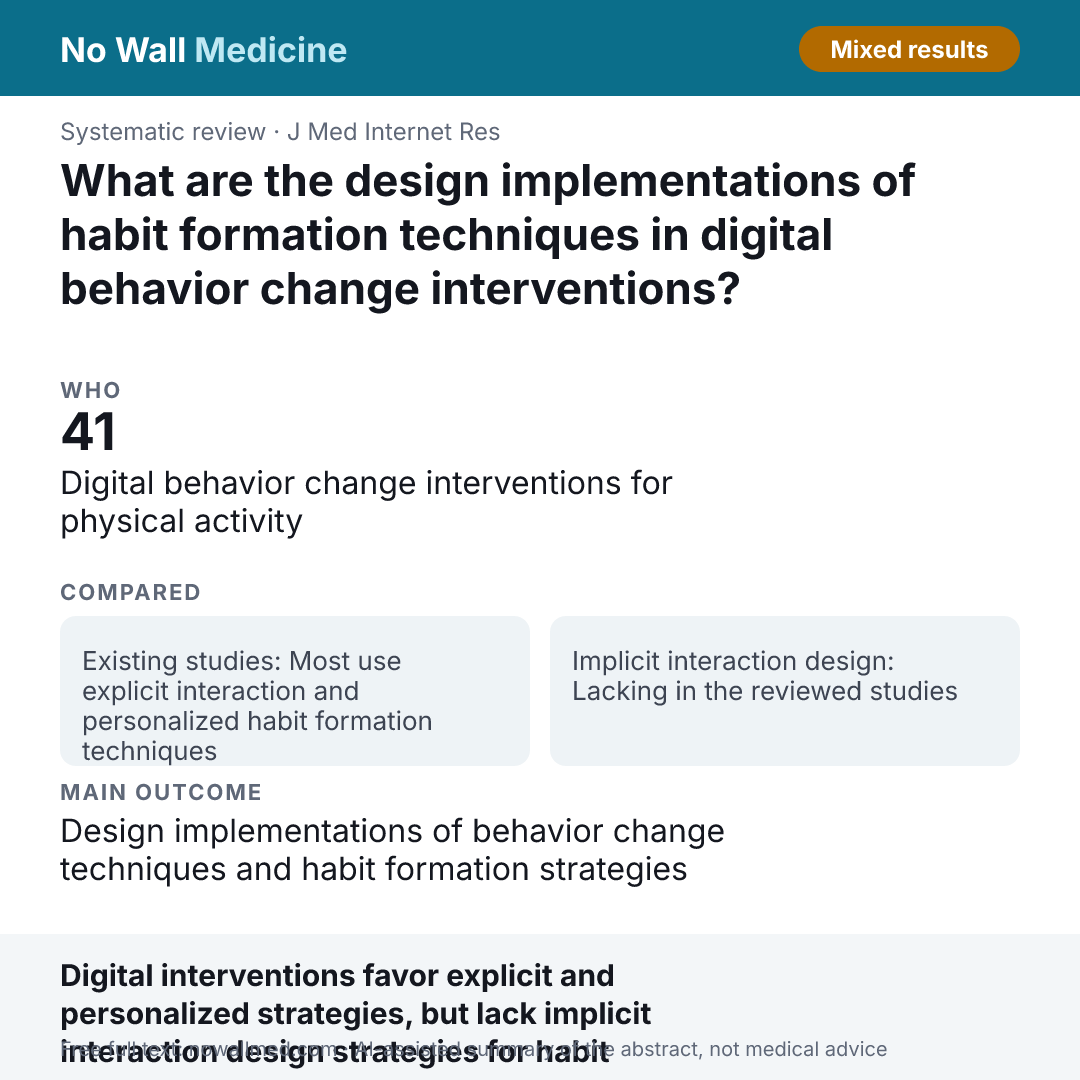
Digital Behavior Change Intervention Designs for Habit Formation: Systematic Review
Systematic reviewMixed results
What are the design implementations of habit formation techniques in digital behavior change interventions?
Who
41
Digital behavior change interventions for physical activity
Compared
Existing studies: Most use explicit interaction and personalized habit formation techniques
Implicit interaction design: Lacking in the reviewed studies
Main outcome
Design implementations of behavior change techniques and habit formation strategies
Bottom line: Digital interventions favor explicit and personalized strategies, but lack implicit interaction design strategies for habit formation.
J Med Internet Res · 2024-05-24 · Save PNG
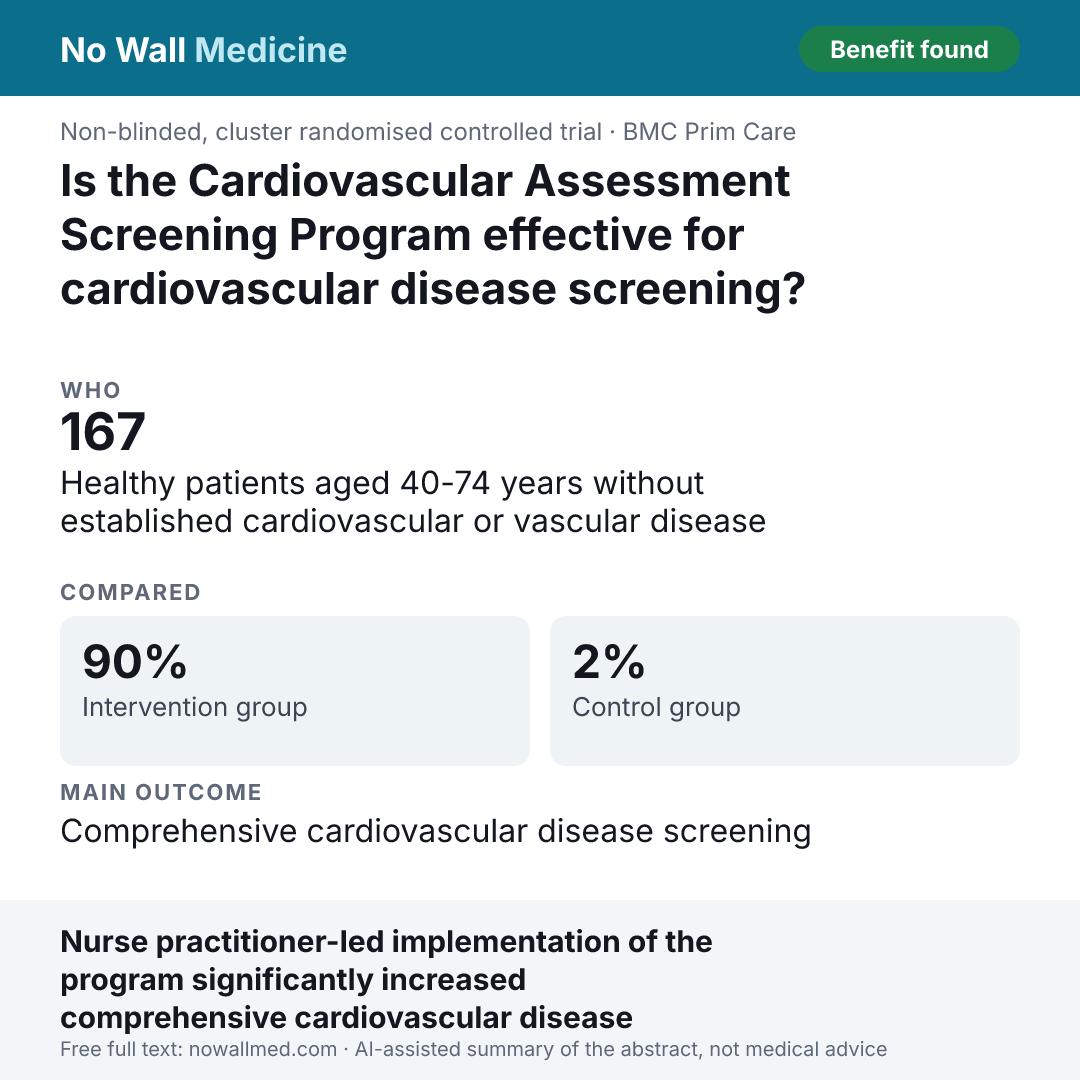
Evaluating the effectiveness of the cardiovascular assessment screening program with nurse practitioners and patients: results of a cluster randomised controlled trial
Non-blinded, cluster randomised controlled trialBenefit found
Is the Cardiovascular Assessment Screening Program effective for cardiovascular disease screening?
Who
167
Healthy patients aged 40-74 years without established cardiovascular or vascular disease · Community practice clinics across one Canadian province
Compared
90%Intervention group (n = 61)
2%Control group (n = 2)
Main outcome
Comprehensive cardiovascular disease screening
Result: relative risk 30.2 (95% CI 8.76 to 103.9)
Bottom line: Nurse practitioner-led implementation of the program significantly increased comprehensive cardiovascular disease screening compared to usual care.
BMC Prim Care · 2024-05-24 · Save PNG
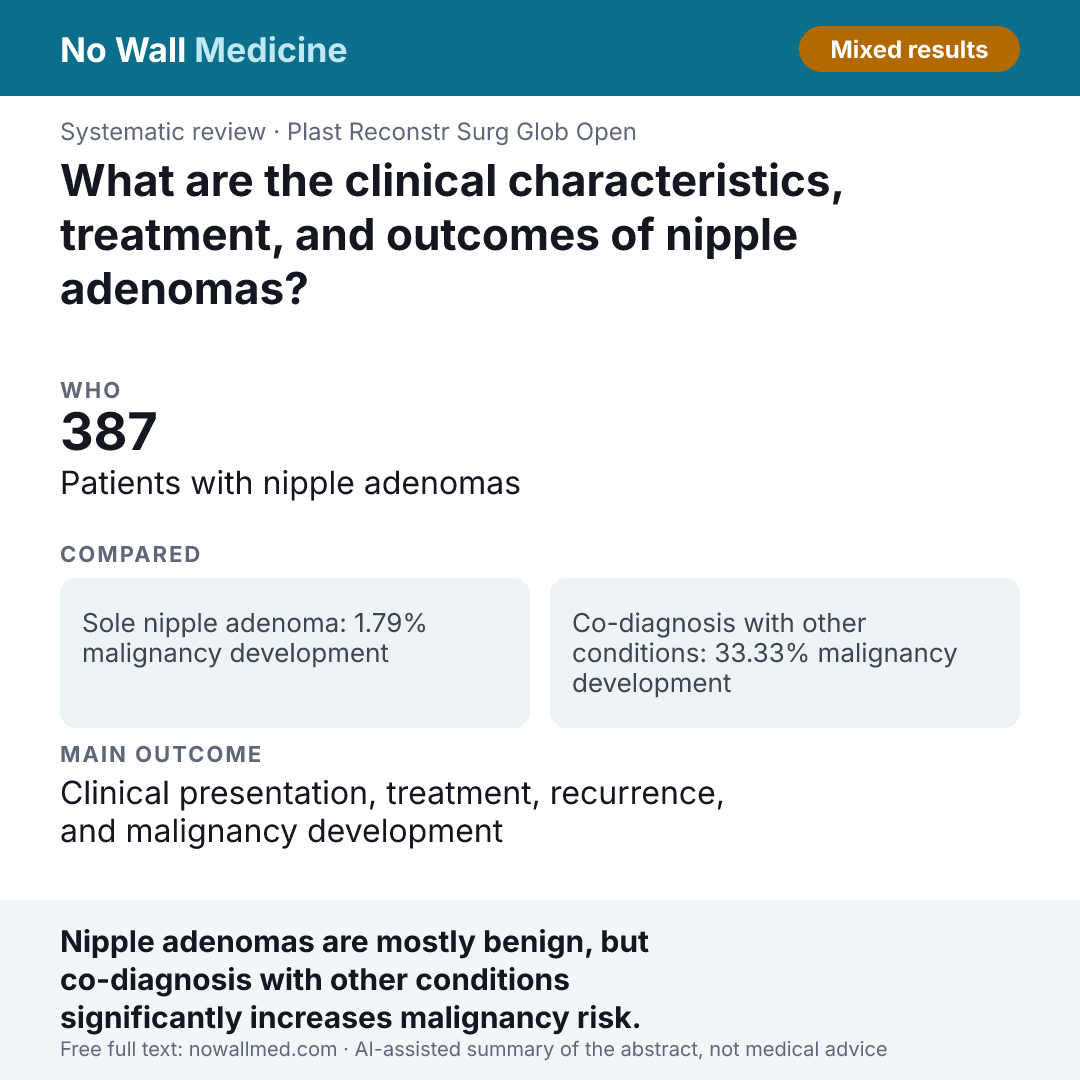
Nipple Adenoma: Systematic Review of Literature
Systematic reviewMixed results
What are the clinical characteristics, treatment, and outcomes of nipple adenomas?
Who
387
Patients with nipple adenomas
Compared
Sole nipple adenoma: 1.79% malignancy development
Co-diagnosis with other conditions: 33.33% malignancy development
Main outcome
Clinical presentation, treatment, recurrence, and malignancy development
Bottom line: Nipple adenomas are mostly benign, but co-diagnosis with other conditions significantly increases malignancy risk.
Limitation: Predominance of case reports may introduce bias.
Plast Reconstr Surg Glob Open · 2024-05-24 · Save PNG
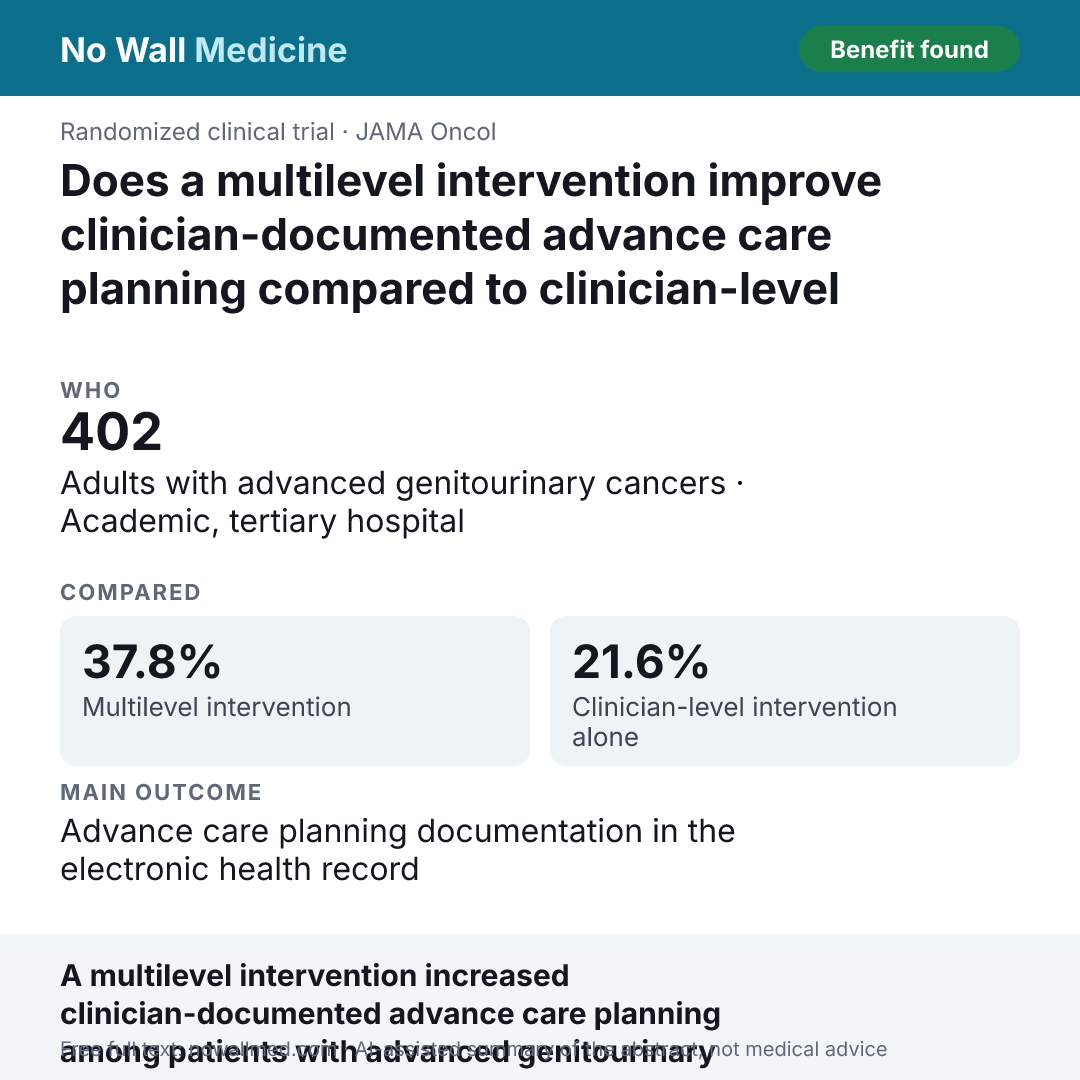
Coaches Activating, Reaching, and Engaging Patients to Engage in Advance Care Planning: A Randomized Clinical Trial
Randomized clinical trialBenefit found
Does a multilevel intervention improve clinician-documented advance care planning compared to clinician-level intervention alone?
Who
402
Adults with advanced genitourinary cancers · Academic, tertiary hospital
Compared
37.8%Multilevel intervention
21.6%Clinician-level intervention alone
Main outcome
Advance care planning documentation in the electronic health record
Result: odds ratio 2.29 (95% CI, 1.44-3.64)
Bottom line: A multilevel intervention increased clinician-documented advance care planning among patients with advanced genitourinary cancers.
JAMA Oncol · 2024-05-23 · Save PNG
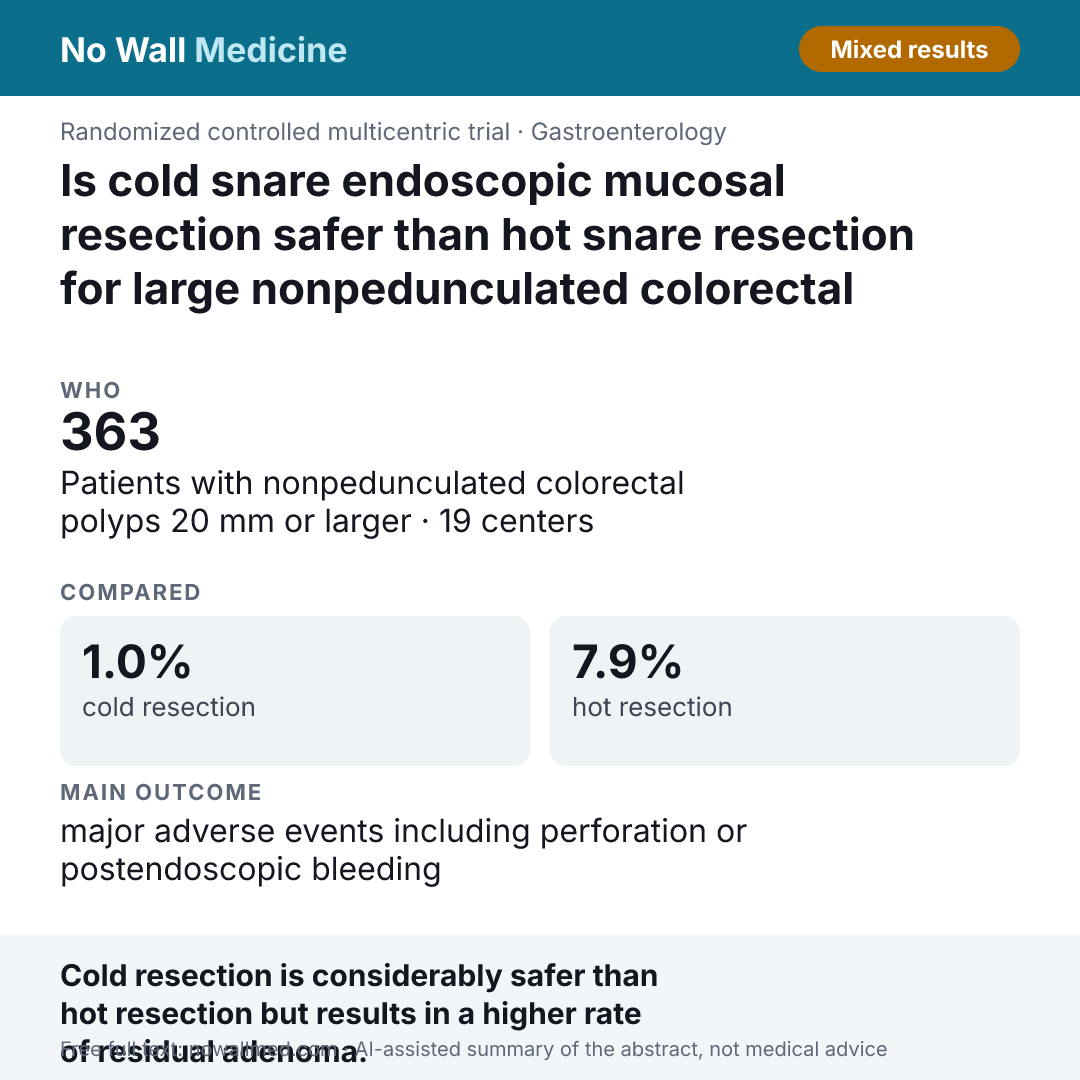
Cold Versus Hot Snare Endoscopic Resection of Large Nonpedunculated Colorectal Polyps: Randomized Controlled German CHRONICLE Trial
Randomized controlled multicentric trialMixed results
Is cold snare endoscopic mucosal resection safer than hot snare resection for large nonpedunculated colorectal polyps?
Who
363
Patients with nonpedunculated colorectal polyps 20 mm or larger · 19 centers
Compared
1.0%cold resection
7.9%hot resection
Main outcome
major adverse events including perforation or postendoscopic bleeding
Result: odds ratio 0.12 (95% CI, 0.03-0.54)
Bottom line: Cold resection is considerably safer than hot resection but results in a higher rate of residual adenoma.
Gastroenterology · 2024-05-23 · Save PNG
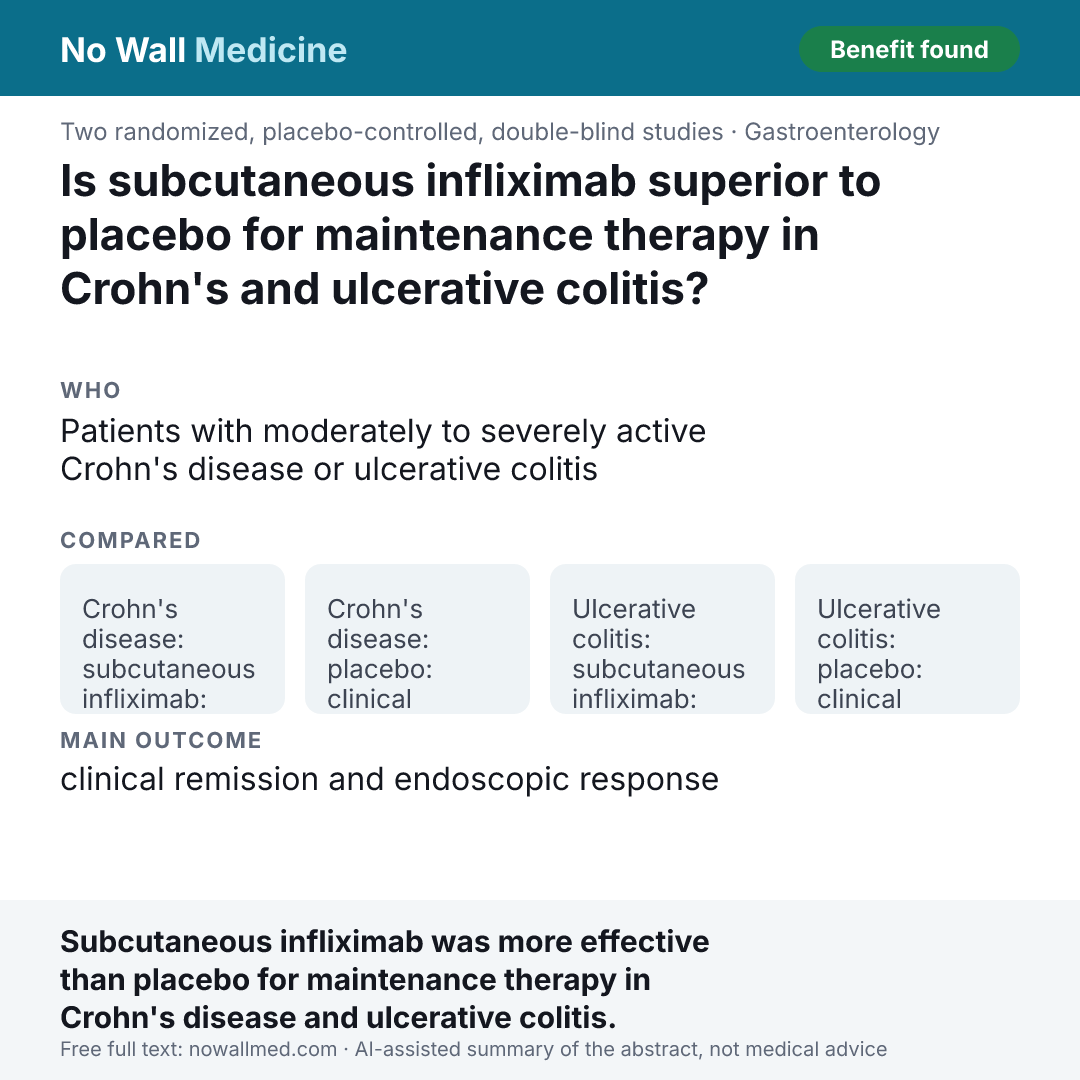
Subcutaneous Infliximab (CT-P13 SC) as Maintenance Therapy for Inflammatory Bowel Disease: Two Randomized Phase 3 Trials (LIBERTY)
Two randomized, placebo-controlled, double-blind studiesBenefit found
Is subcutaneous infliximab superior to placebo for maintenance therapy in Crohn's and ulcerative colitis?
Who
Patients with moderately to severely active Crohn's disease or ulcerative colitis
Compared
Crohn's disease: subcutaneous infliximab: clinical remission 62.3%
Crohn's disease: placebo: clinical remission 32.1%
Ulcerative colitis: subcutaneous infliximab: clinical remission 43.2%
Ulcerative colitis: placebo: clinical remission 20.8%
Main outcome
clinical remission and endoscopic response
Bottom line: Subcutaneous infliximab was more effective than placebo for maintenance therapy in Crohn's disease and ulcerative colitis.
Gastroenterology · 2024-05-23 · Save PNG
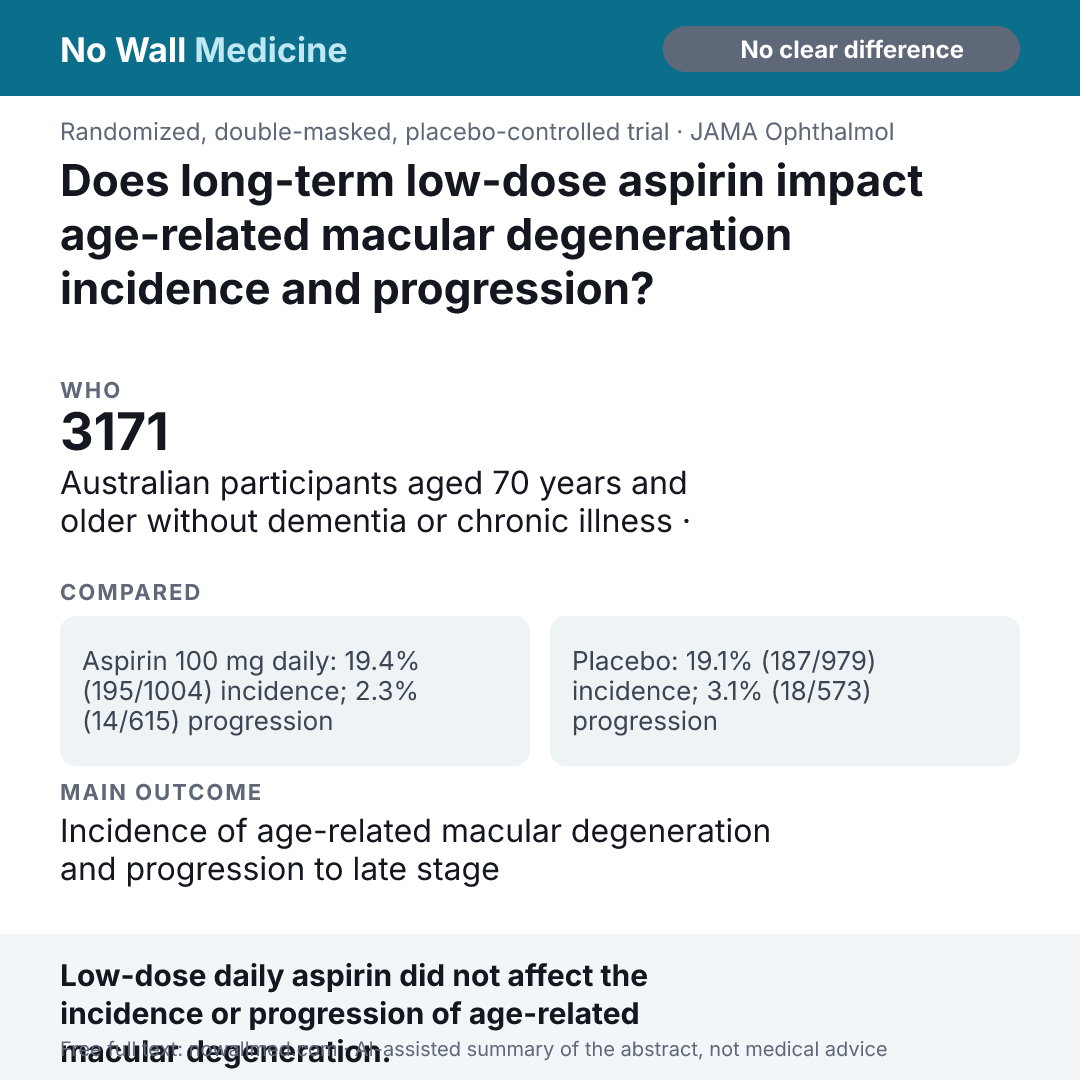
Effect of Low-Dose Aspirin on the Course of Age-Related Macular Degeneration: A Secondary Analysis of the ASPREE Randomized Clinical Trial
Randomized, double-masked, placebo-controlled trialNo clear difference
Does long-term low-dose aspirin impact age-related macular degeneration incidence and progression?
Who
3171
Australian participants aged 70 years and older without dementia or chronic illness · Multicenter, international, Australia
Compared
Aspirin 100 mg daily: 19.4% (195/1004) incidence; 2.3% (14/615) progression
Placebo: 19.1% (187/979) incidence; 3.1% (18/573) progression
Main outcome
Incidence of age-related macular degeneration and progression to late stage
Result: relative risk 1.02 (95% CI, 0.85-1.22) for incidence; RR 0.72 (95% CI, 0.36-1.44) for progression
Bottom line: Low-dose daily aspirin did not affect the incidence or progression of age-related macular degeneration.
JAMA Ophthalmol · 2024-05-23 · Save PNG
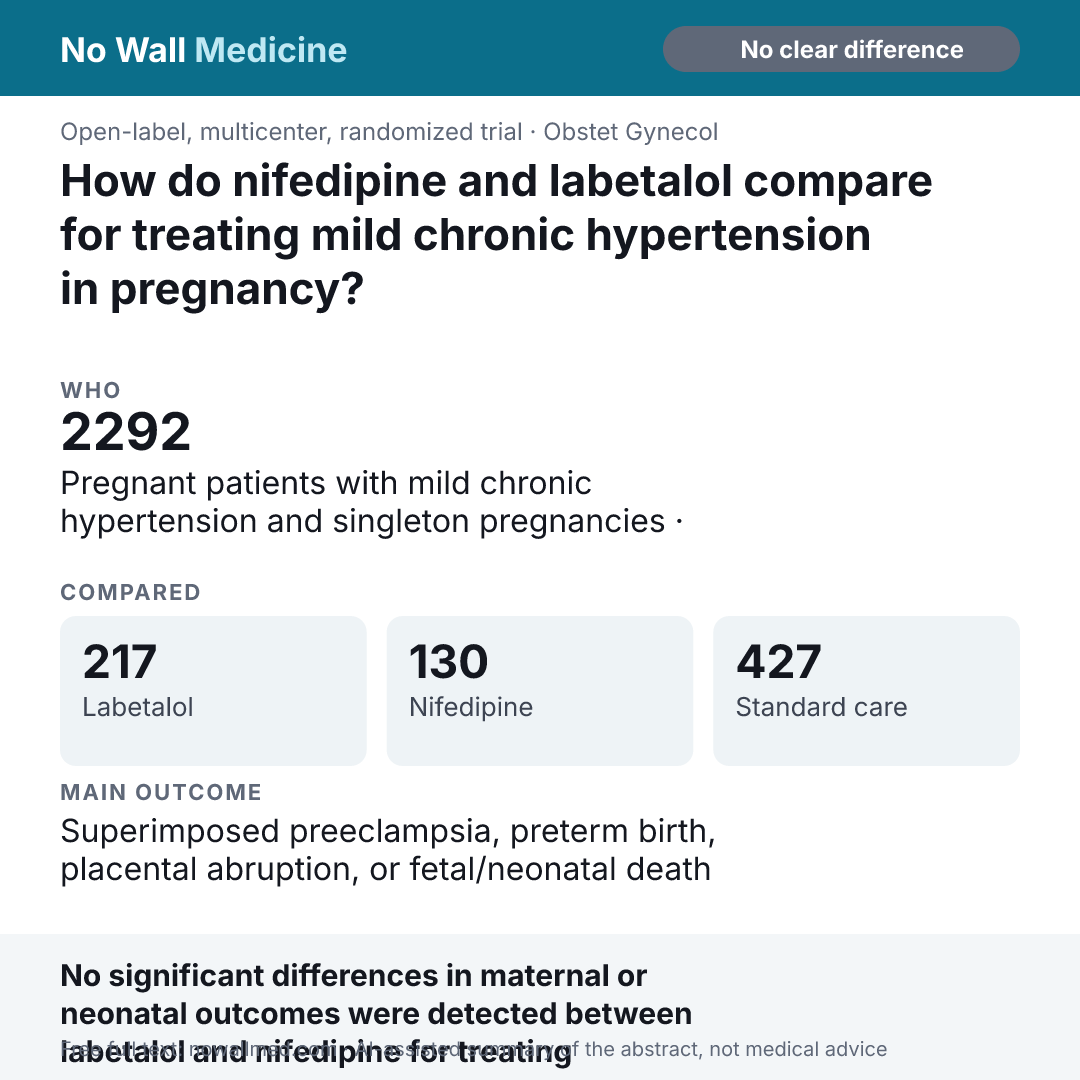
Pregnancy Outcomes of Nifedipine Compared With Labetalol for Oral Treatment of Mild Chronic Hypertension
Open-label, multicenter, randomized trialNo clear difference
How do nifedipine and labetalol compare for treating mild chronic hypertension in pregnancy?
Who
2292
Pregnant patients with mild chronic hypertension and singleton pregnancies · Multicenter
Compared
217Labetalol (30.1%)
130Nifedipine (31.2%)
427Standard care (37.0%)
Main outcome
Superimposed preeclampsia, preterm birth, placental abruption, or fetal/neonatal death
Result: adjusted RR 0.98 (95% CI 0.82 to 1.18)
Bottom line: No significant differences in maternal or neonatal outcomes were detected between labetalol and nifedipine for treating chronic hypertension.
Limitation: Medication assignment within the active treatment group was not random but based on clinician or patient preference.
Obstet Gynecol · 2024-05-23 · Save PNG
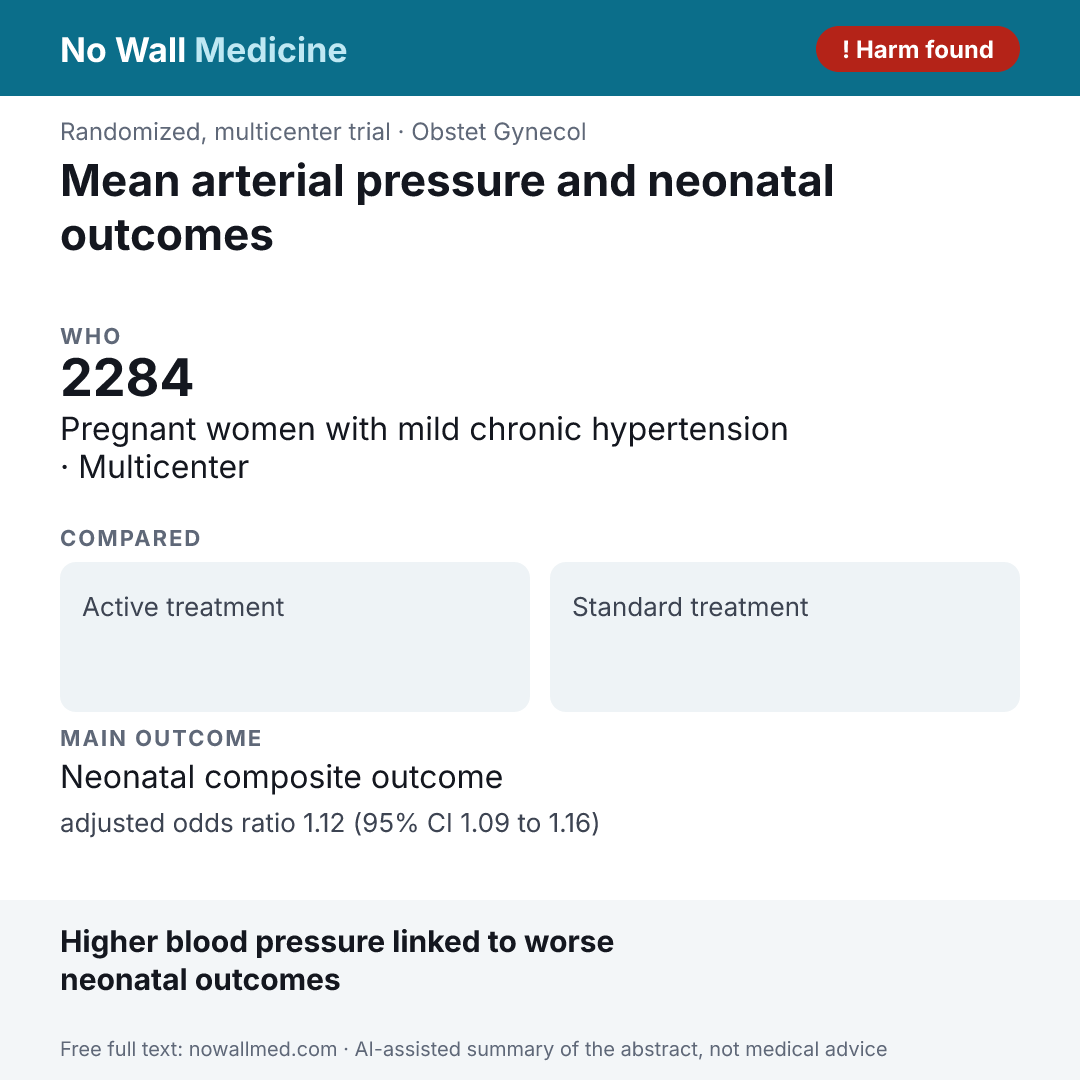
Mean Arterial Pressure and Neonatal Outcomes in Pregnancies Complicated by Mild Chronic Hypertension
Randomized, multicenter trialHarm found
Mean arterial pressure and neonatal outcomes
Who
2284
Pregnant women with mild chronic hypertension · Multicenter
Compared
Active treatment
Standard treatment
Main outcome
Neonatal composite outcome
Result: adjusted odds ratio 1.12 (95% CI 1.09 to 1.16)
Bottom line: Higher blood pressure linked to worse neonatal outcomes
Obstet Gynecol · 2024-05-23 · Save PNG
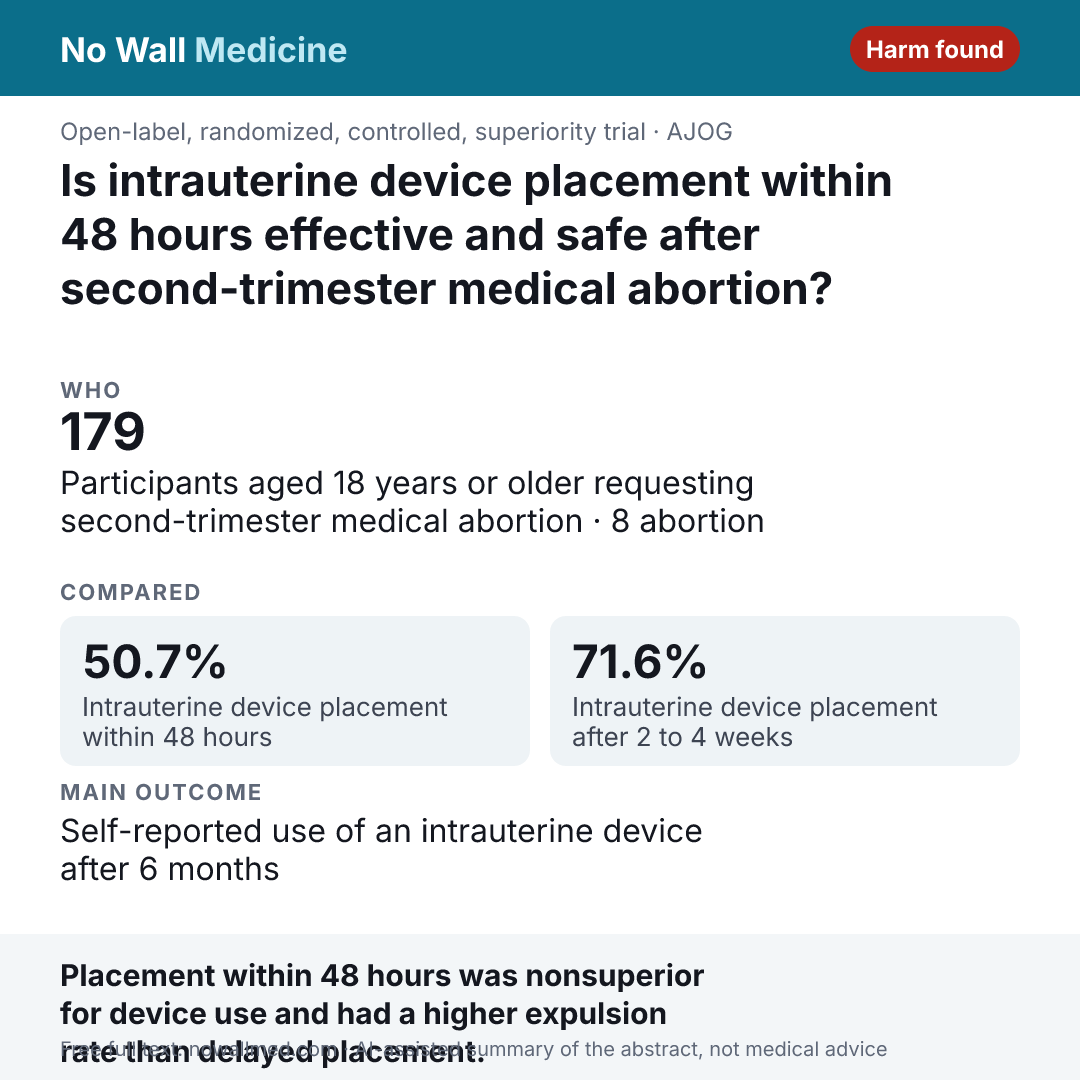
Placement of an intrauterine device within 48 hours after second-trimester medical abortion: a randomized controlled trial
Open-label, randomized, controlled, superiority trialHarm found
Is intrauterine device placement within 48 hours effective and safe after second-trimester medical abortion?
Who
179
Participants aged 18 years or older requesting second-trimester medical abortion · 8 abortion clinics in Sweden
Compared
50.7%Intrauterine device placement within 48 hours (34/67)
71.6%Intrauterine device placement after 2 to 4 weeks (48/67)
Main outcome
Self-reported use of an intrauterine device after 6 months
Result: proportion difference, 20.9%; 95% confidence interval, 4.4%-35.9%
Bottom line: Placement within 48 hours was nonsuperior for device use and had a higher expulsion rate than delayed placement.
AJOG · 2024-05-23 · Save PNG
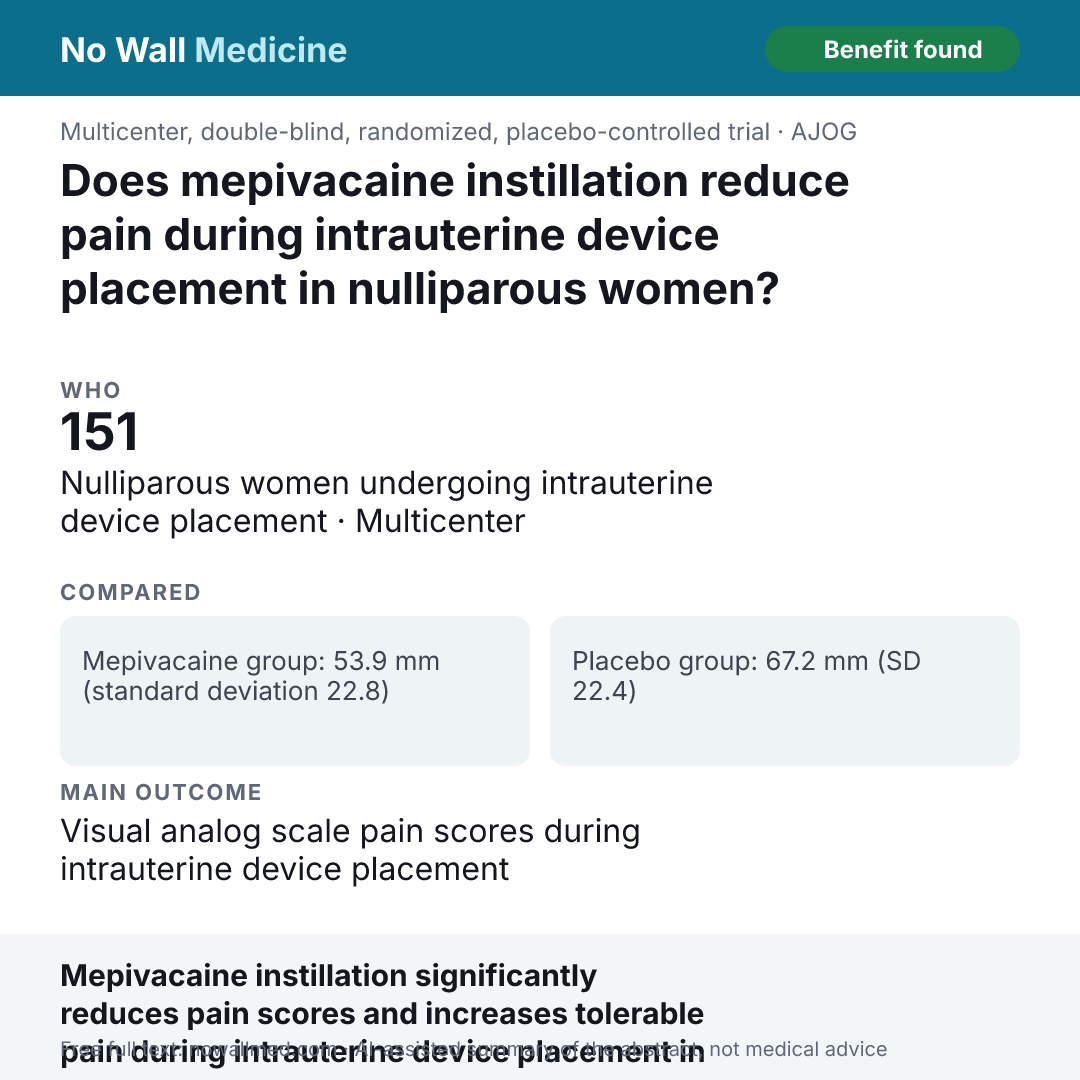
Mepivacaine instillation for pain reduction during intrauterine device placement in nulliparous women: a double-blinded randomized trial
Multicenter, double-blind, randomized, placebo-controlled trialBenefit found
Does mepivacaine instillation reduce pain during intrauterine device placement in nulliparous women?
Who
151
Nulliparous women undergoing intrauterine device placement · Multicenter
Compared
Mepivacaine group: 53.9 mm (standard deviation 22.8)
Placebo group: 67.2 mm (SD 22.4)
Main outcome
Visual analog scale pain scores during intrauterine device placement
Result: difference of 13.3 mm (95% confidence interval 5.75-20.87)
Bottom line: Mepivacaine instillation significantly reduces pain scores and increases tolerable pain during intrauterine device placement in nulliparous women.
AJOG · 2024-05-23 · Save PNG
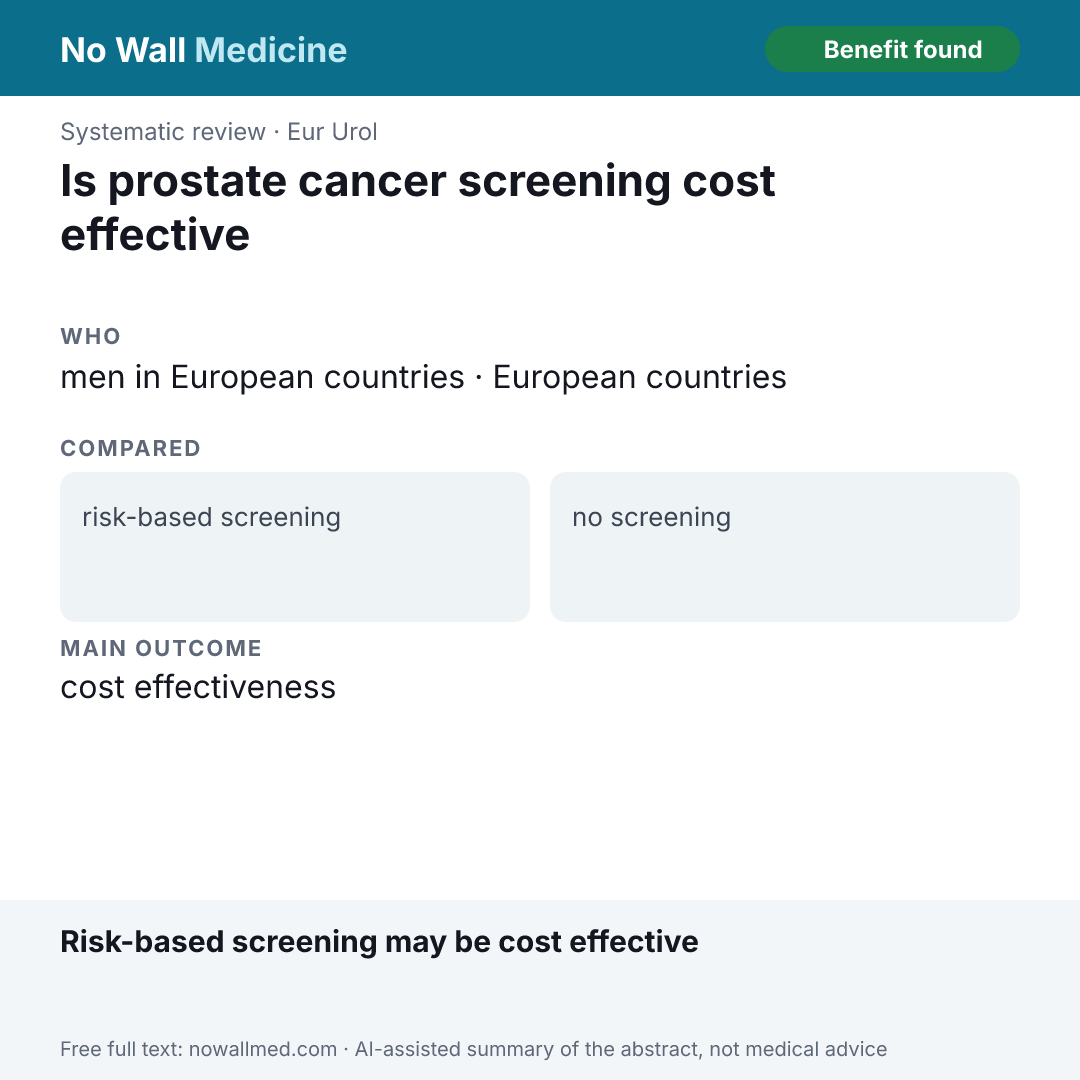
Systematic Review on the Cost Effectiveness of Prostate Cancer Screening in Europe
Systematic reviewBenefit found
Is prostate cancer screening cost effective
Who
men in European countries · European countries
Compared
risk-based screening
no screening
Main outcome
cost effectiveness
Bottom line: Risk-based screening may be cost effective
Limitation: knowledge gap remains
Eur Urol · 2024-05-23 · Save PNG
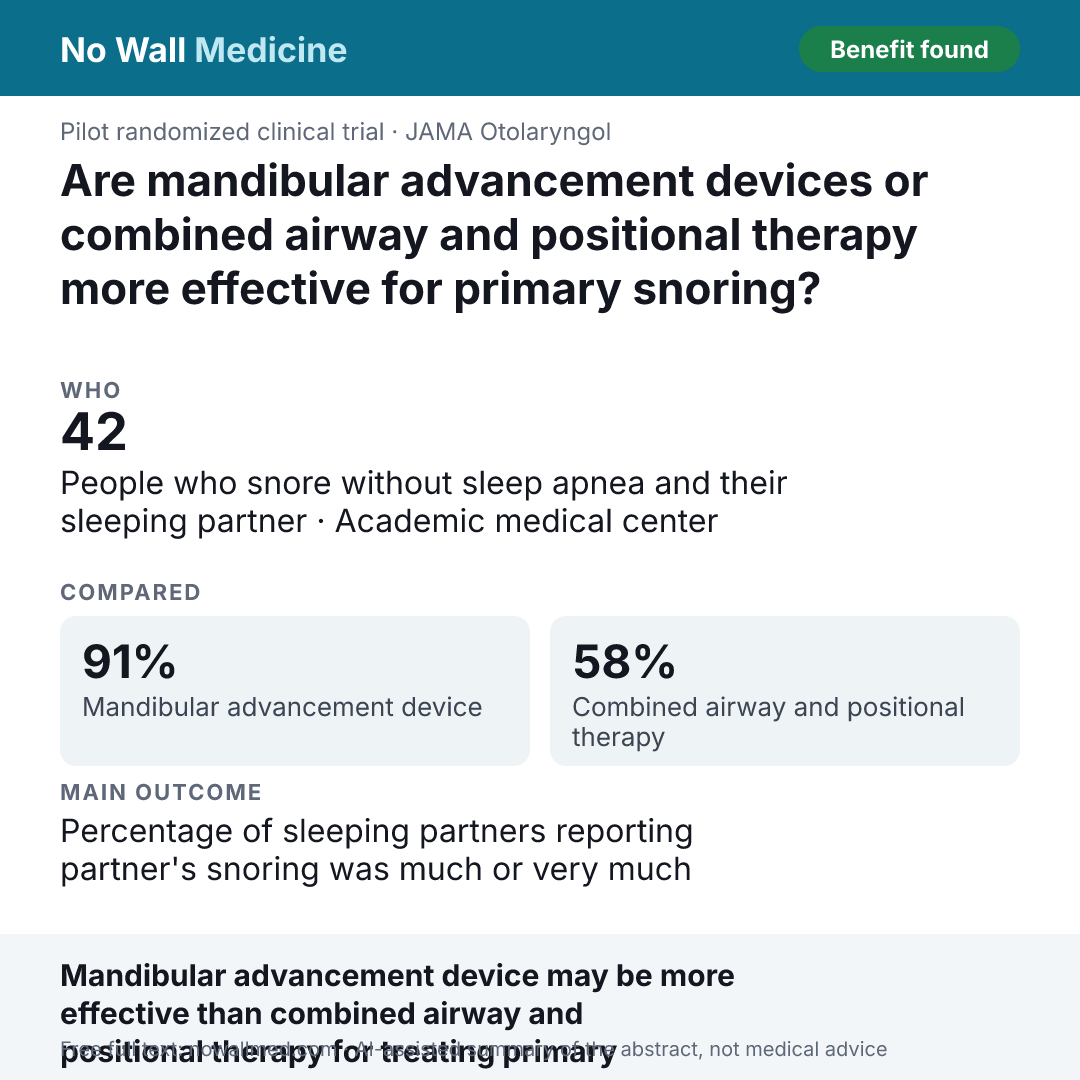
Mandibular Advancement vs Combined Airway and Positional Therapy for Snoring: A Randomized Clinical Trial
Pilot randomized clinical trialBenefit found
Are mandibular advancement devices or combined airway and positional therapy more effective for primary snoring?
Who
42
People who snore without sleep apnea and their sleeping partner · Academic medical center
Compared
91%Mandibular advancement device
58%Combined airway and positional therapy
Main outcome
Percentage of sleeping partners reporting partner's snoring was much or very much improved
Result: difference of 33 percentage points (95% CI, 8-58)
Bottom line: Mandibular advancement device may be more effective than combined airway and positional therapy for treating primary snoring.
JAMA Otolaryngol · 2024-05-23 · Save PNG
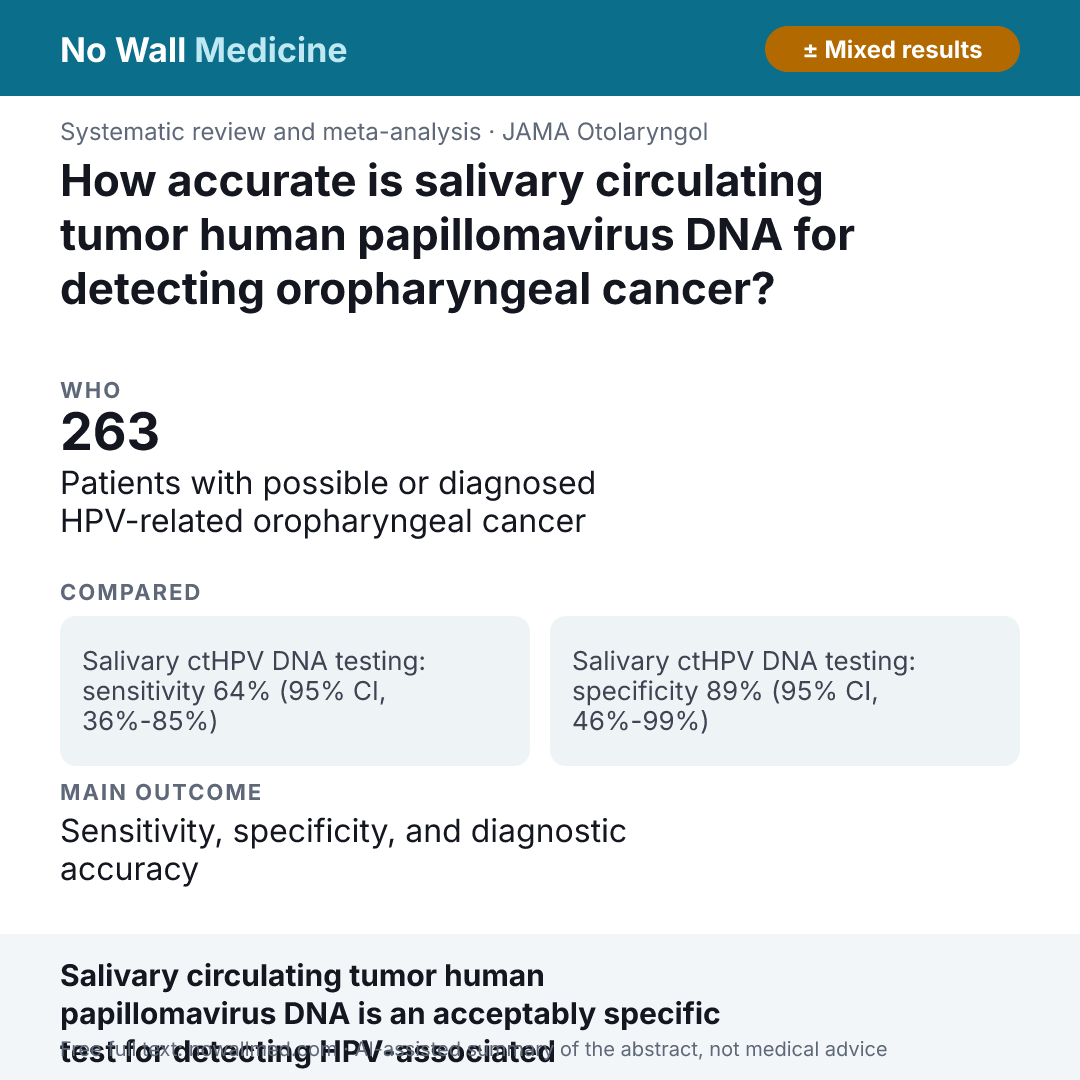
Accuracy of Salivary Circulating Tumor Human Papillomavirus DNA in Detecting Oropharyngeal Cancer: A Systematic Review and Meta-Analysis
Systematic review and meta-analysisMixed results
How accurate is salivary circulating tumor human papillomavirus DNA for detecting oropharyngeal cancer?
Who
263
Patients with possible or diagnosed HPV-related oropharyngeal cancer
Compared
Salivary ctHPV DNA testing: sensitivity 64% (95% CI, 36%-85%)
Salivary ctHPV DNA testing: specificity 89% (95% CI, 46%-99%)
Main outcome
Sensitivity, specificity, and diagnostic accuracy
Result: area under the curve 0.80
Bottom line: Salivary circulating tumor human papillomavirus DNA is an acceptably specific test for detecting HPV-associated oropharyngeal cancer.
JAMA Otolaryngol · 2024-05-23 · Save PNG