Visual abstracts
New randomized trials and meta-analyses from leading journals at a glance: who was studied, what was compared, and what was found. Every paper is free to read in full.
All specialtiesCardiology 4876Oncology 4133Gastroenterology & Hepatology 1942Infectious Disease 3833Neurology 1902Psychiatry & Mental Health 2273Pulmonology 2142Critical Care 1364Endocrinology & Diabetes 2579Pediatrics 2980Surgery 2556Orthopedics & Sports Medicine 931Neurosurgery 537Cardiothoracic & Vascular Surgery 674Plastic & Reconstructive Surgery 590Nephrology 1133Rheumatology 823Hematology 1109Dermatology 621Ophthalmology 543Obstetrics & Gynecology 1686Public & Global Health 1058Radiology & Imaging 648Anesthesiology 986Urology 764ENT (Otolaryngology) 503Emergency Medicine 511Allergy & Immunology 313Geriatrics 978Family Medicine & Primary Care 562Medical Genetics & Genomics 676Pathology & Laboratory Medicine 159Physical Medicine & Rehabilitation 757Palliative Care 444Nutrition 1588Digital Health & AI 2197General Medicine 319
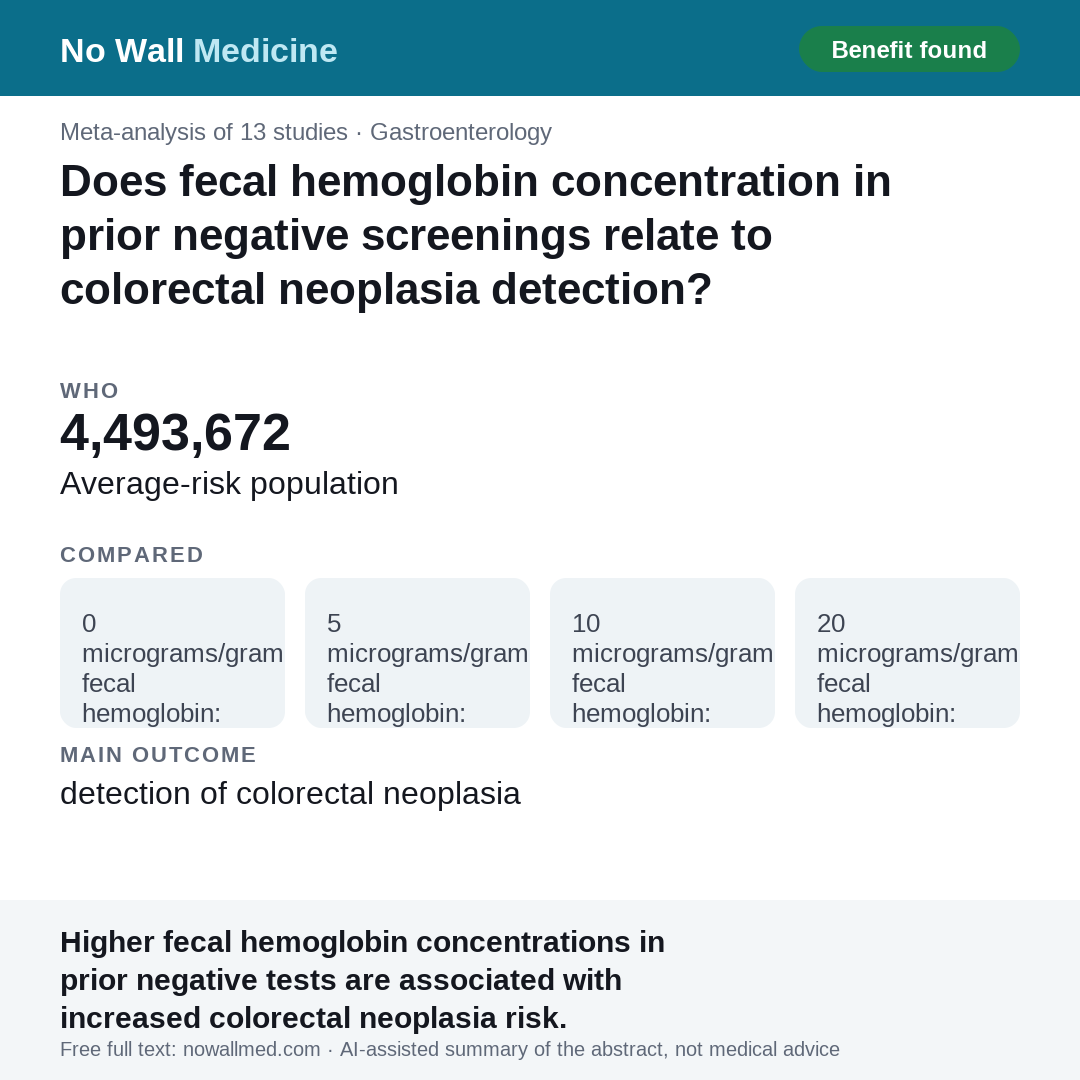
Fecal Hemoglobin Levels in Prior Negative Screening and Detection of Colorectal Neoplasia: A Dose-Response Meta-Analysis
Meta-analysis of 13 studiesBenefit found
Does fecal hemoglobin concentration in prior negative screenings relate to colorectal neoplasia detection?
Who
4,493,672
Average-risk population
Compared
0 micrograms/gram fecal hemoglobin: baseline risk
5 micrograms/gram fecal hemoglobin: 3-fold higher risk
10 micrograms/gram fecal hemoglobin: 5-fold higher risk
20 micrograms/gram fecal hemoglobin: 8-fold higher risk
Main outcome
detection of colorectal neoplasia
Bottom line: Higher fecal hemoglobin concentrations in prior negative tests are associated with increased colorectal neoplasia risk.
Gastroenterology · 2024-11-27Download image
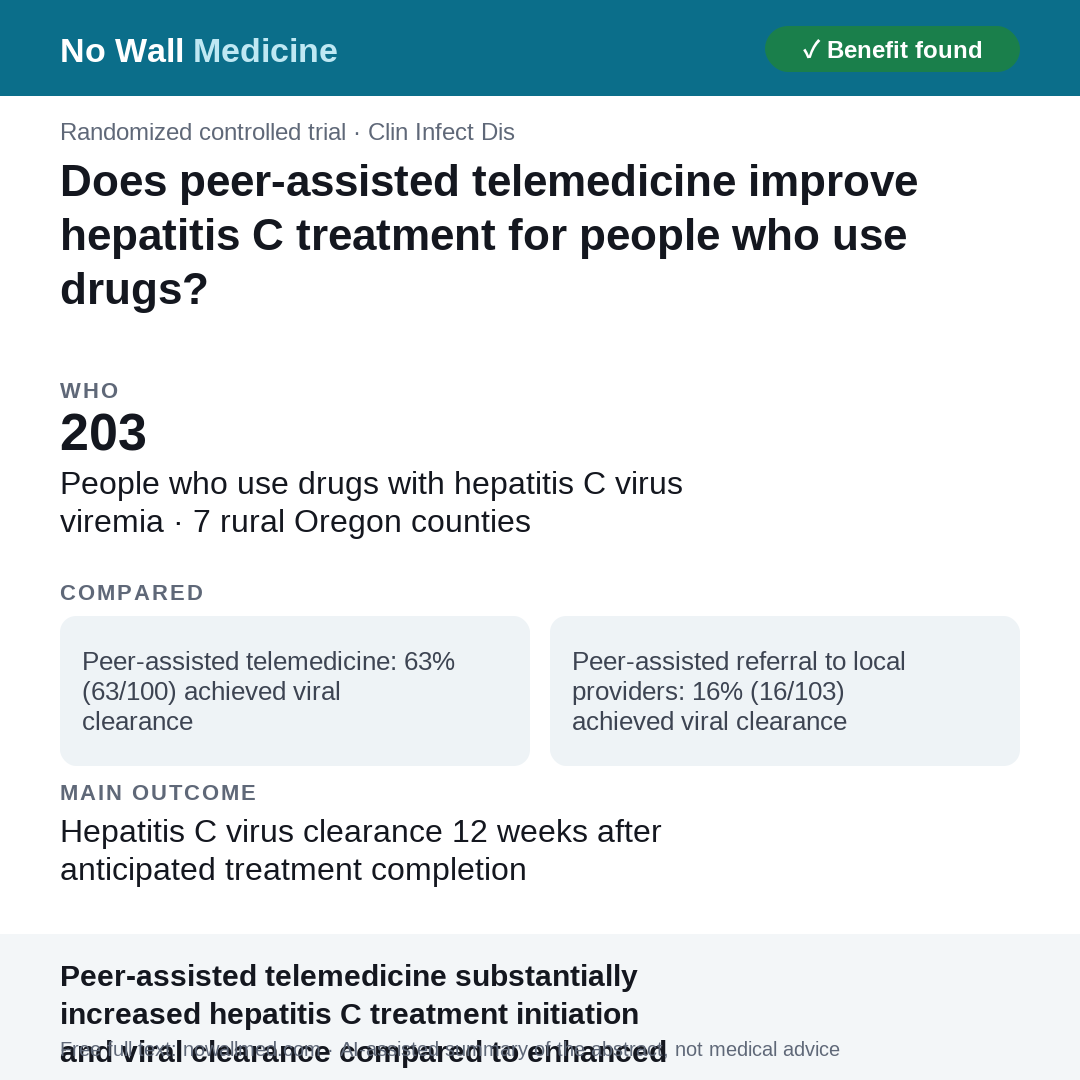
Peer-Assisted Telemedicine for Hepatitis C in People Who Use Drugs: A Randomized Controlled Trial
Randomized controlled trialBenefit found
Does peer-assisted telemedicine improve hepatitis C treatment for people who use drugs?
Who
203
People who use drugs with hepatitis C virus viremia · 7 rural Oregon counties
Compared
Peer-assisted telemedicine: 63% (63/100) achieved viral clearance
Peer-assisted referral to local providers: 16% (16/103) achieved viral clearance
Main outcome
Hepatitis C virus clearance 12 weeks after anticipated treatment completion
Result: relative risk 4.1 (95% CI: 2.5-6.5)
Bottom line: Peer-assisted telemedicine substantially increased hepatitis C treatment initiation and viral clearance compared to enhanced usual care.
Clin Infect Dis · 2024-11-27Download image
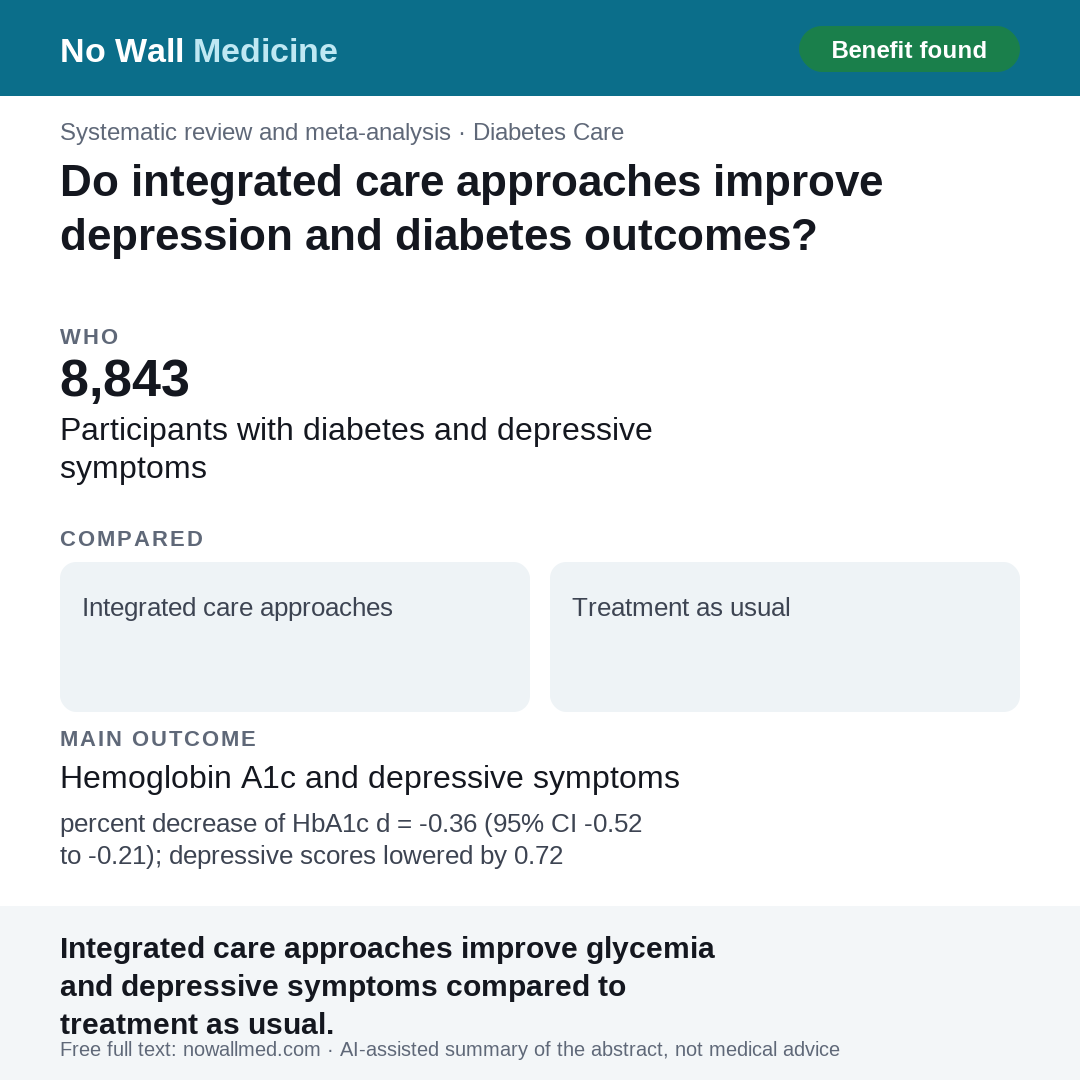
Effects of Integrated Care Approaches to Address Co-occurring Depression and Diabetes: A Systematic Review and Meta-analysis
Systematic review and meta-analysisBenefit found
Do integrated care approaches improve depression and diabetes outcomes?
Who
8,843
Participants with diabetes and depressive symptoms
Compared
Integrated care approaches
Treatment as usual
Main outcome
Hemoglobin A1c and depressive symptoms
Result: percent decrease of HbA1c d = -0.36 (95% CI -0.52 to -0.21); depressive scores lowered by 0.72 points (95% CI -1.15 to -0.28)
Bottom line: Integrated care approaches improve glycemia and depressive symptoms compared to treatment as usual.
Limitation: The inclusion of a wide range of integrated care approaches increased study heterogeneity.
Diabetes Care · 2024-11-27Download image
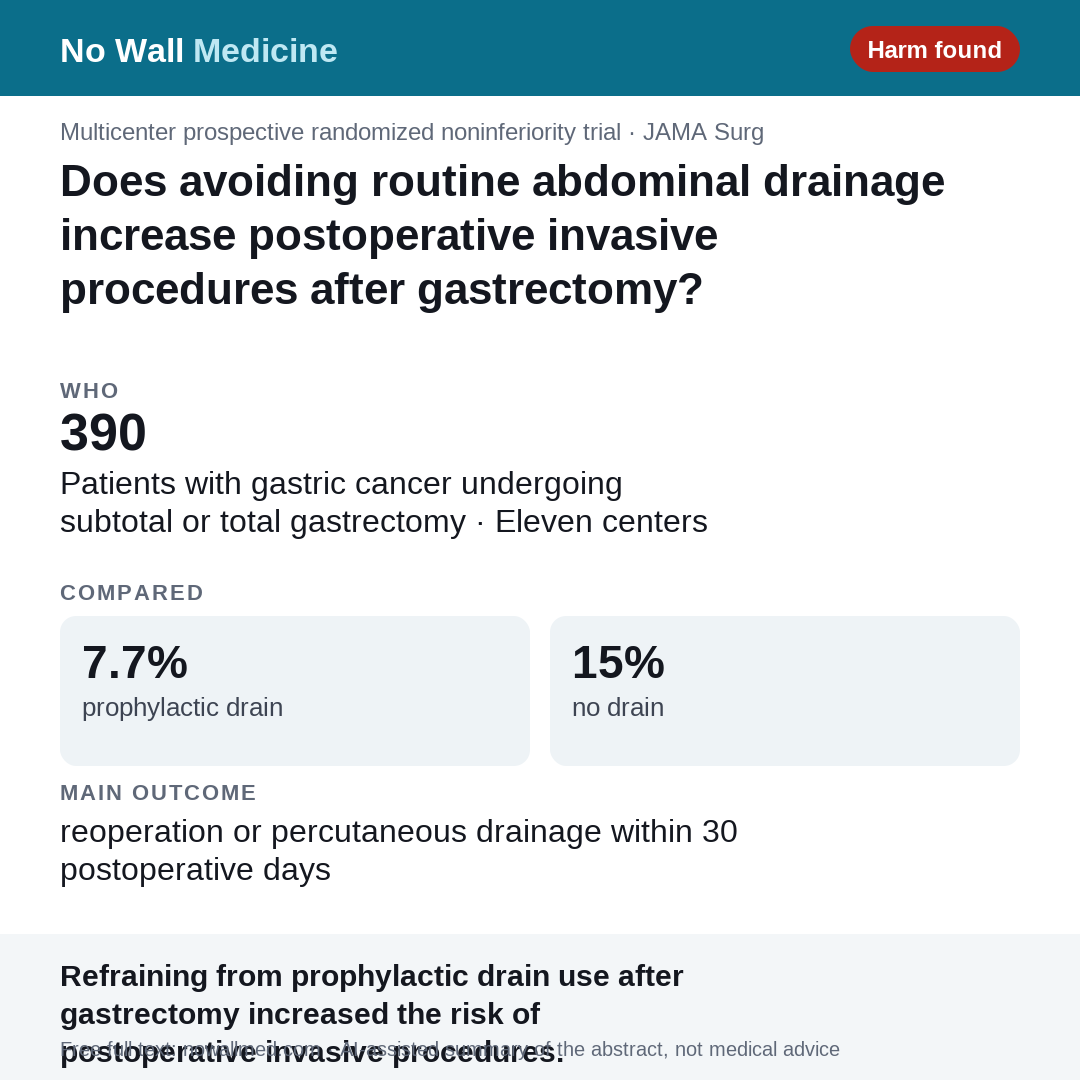
Prophylactic Drain Placement and Postoperative Invasive Procedures After Gastrectomy: The Abdominal Drain After Gastrectomy (ADIGE) Randomized Clinical Trial
Multicenter prospective randomized noninferiority trialHarm found
Does avoiding routine abdominal drainage increase postoperative invasive procedures after gastrectomy?
Who
390
Patients with gastric cancer undergoing subtotal or total gastrectomy · Eleven centers in Italy
Compared
7.7%prophylactic drain
15%no drain
Main outcome
reoperation or percutaneous drainage within 30 postoperative days
Result: difference, 7.2%; 90% CI, 2.1-12.4
Bottom line: Refraining from prophylactic drain use after gastrectomy increased the risk of postoperative invasive procedures.
JAMA Surg · 2024-11-27Download image
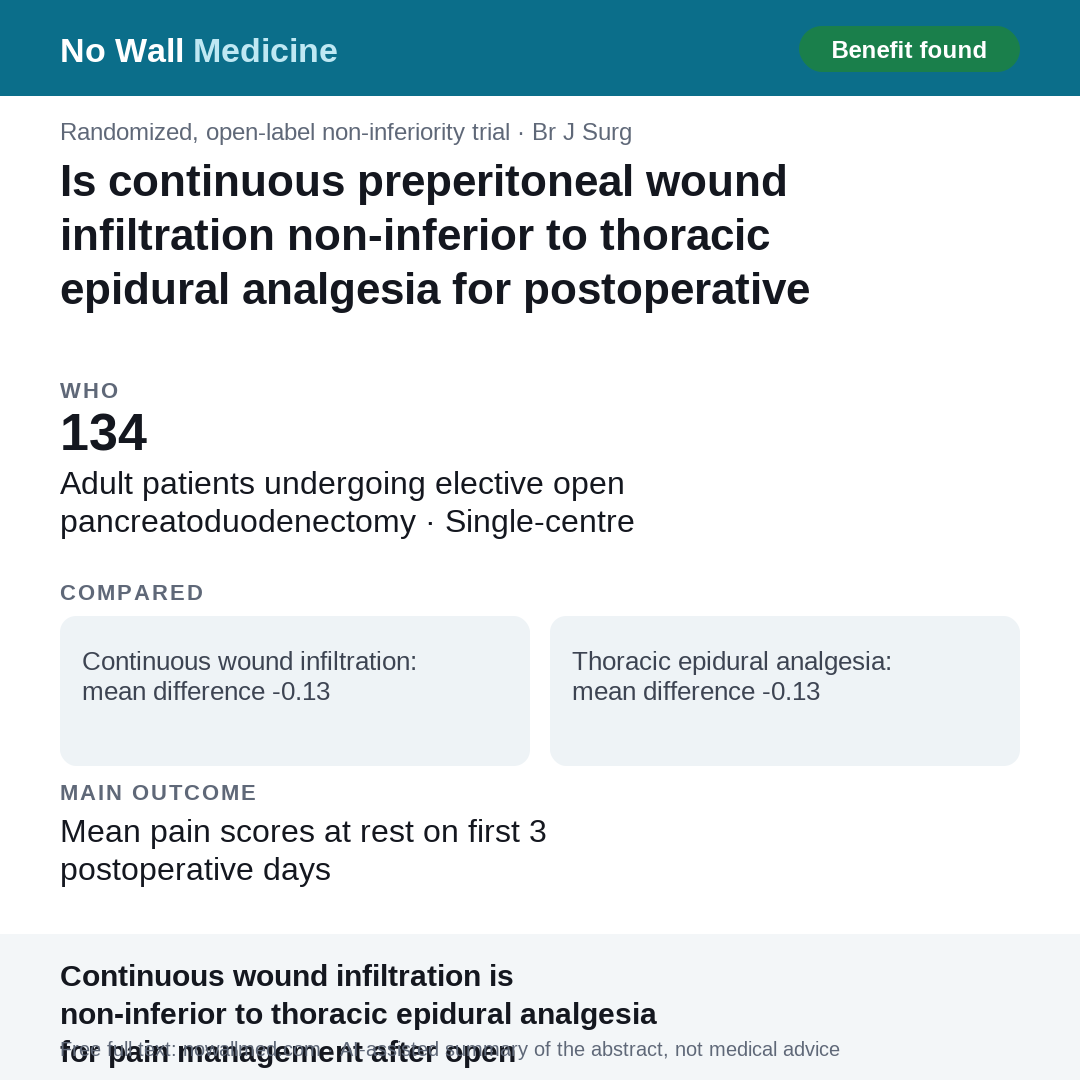
Continuous preperitoneal versus thoracic epidural analgesia in open pancreatoduodenectomy: randomized clinical trial
Randomized, open-label non-inferiority trialBenefit found
Is continuous preperitoneal wound infiltration non-inferior to thoracic epidural analgesia for postoperative pain?
Who
134
Adult patients undergoing elective open pancreatoduodenectomy · Single-centre
Compared
Continuous wound infiltration: mean difference -0.13
Thoracic epidural analgesia: mean difference -0.13
Main outcome
Mean pain scores at rest on first 3 postoperative days
Result: mean difference -0.13 (95% c.i. -0.72 to 0.47)
Bottom line: Continuous wound infiltration is non-inferior to thoracic epidural analgesia for pain management after open pancreatoduodenectomy.
Br J Surg · 2024-11-27Download image
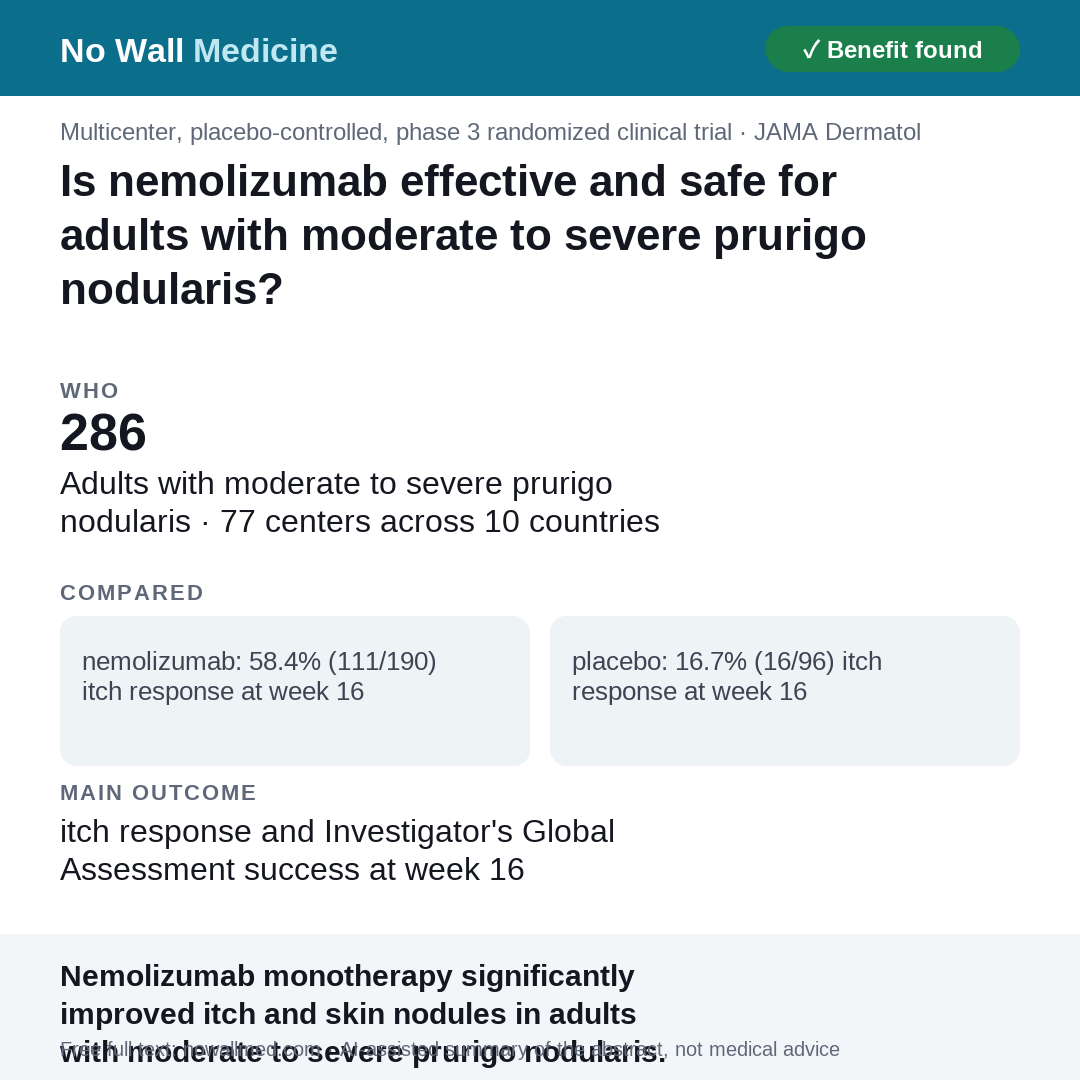
Efficacy and Safety of Nemolizumab in Patients With Moderate to Severe Prurigo Nodularis: The OLYMPIA 1 Randomized Clinical Phase 3 Trial
Multicenter, placebo-controlled, phase 3 randomized clinical trialBenefit found
Is nemolizumab effective and safe for adults with moderate to severe prurigo nodularis?
Who
286
Adults with moderate to severe prurigo nodularis · 77 centers across 10 countries
Compared
nemolizumab: 58.4% (111/190) itch response at week 16
placebo: 16.7% (16/96) itch response at week 16
Main outcome
itch response and Investigator's Global Assessment success at week 16
Result: itch response difference 40.1% (95% CI, 29.4%-50.8%)
Bottom line: Nemolizumab monotherapy significantly improved itch and skin nodules in adults with moderate to severe prurigo nodularis.
JAMA Dermatol · 2024-11-27Download image
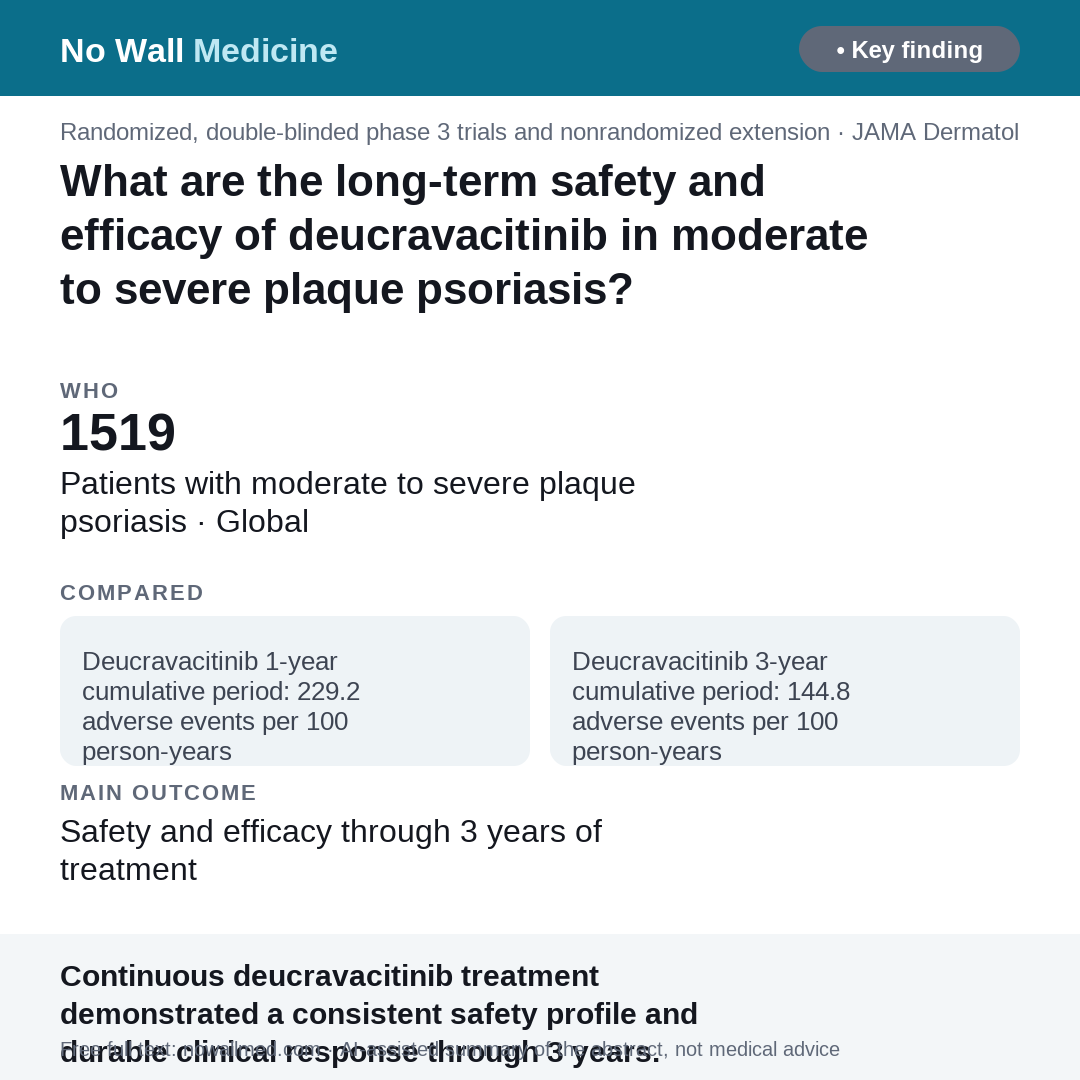
Safety and Efficacy of Deucravacitinib in Moderate to Severe Plaque Psoriasis for Up to 3 Years: An Open-Label Extension of Randomized Clinical Trials
Randomized, double-blinded phase 3 trials and nonrandomized extensionBenefit found
What are the long-term safety and efficacy of deucravacitinib in moderate to severe plaque psoriasis?
Who
1519
Patients with moderate to severe plaque psoriasis · Global
Compared
Deucravacitinib 1-year cumulative period: 229.2 adverse events per 100 person-years
Deucravacitinib 3-year cumulative period: 144.8 adverse events per 100 person-years
Main outcome
Safety and efficacy through 3 years of treatment
Bottom line: Continuous deucravacitinib treatment demonstrated a consistent safety profile and durable clinical response through 3 years.
JAMA Dermatol · 2024-11-27Download image
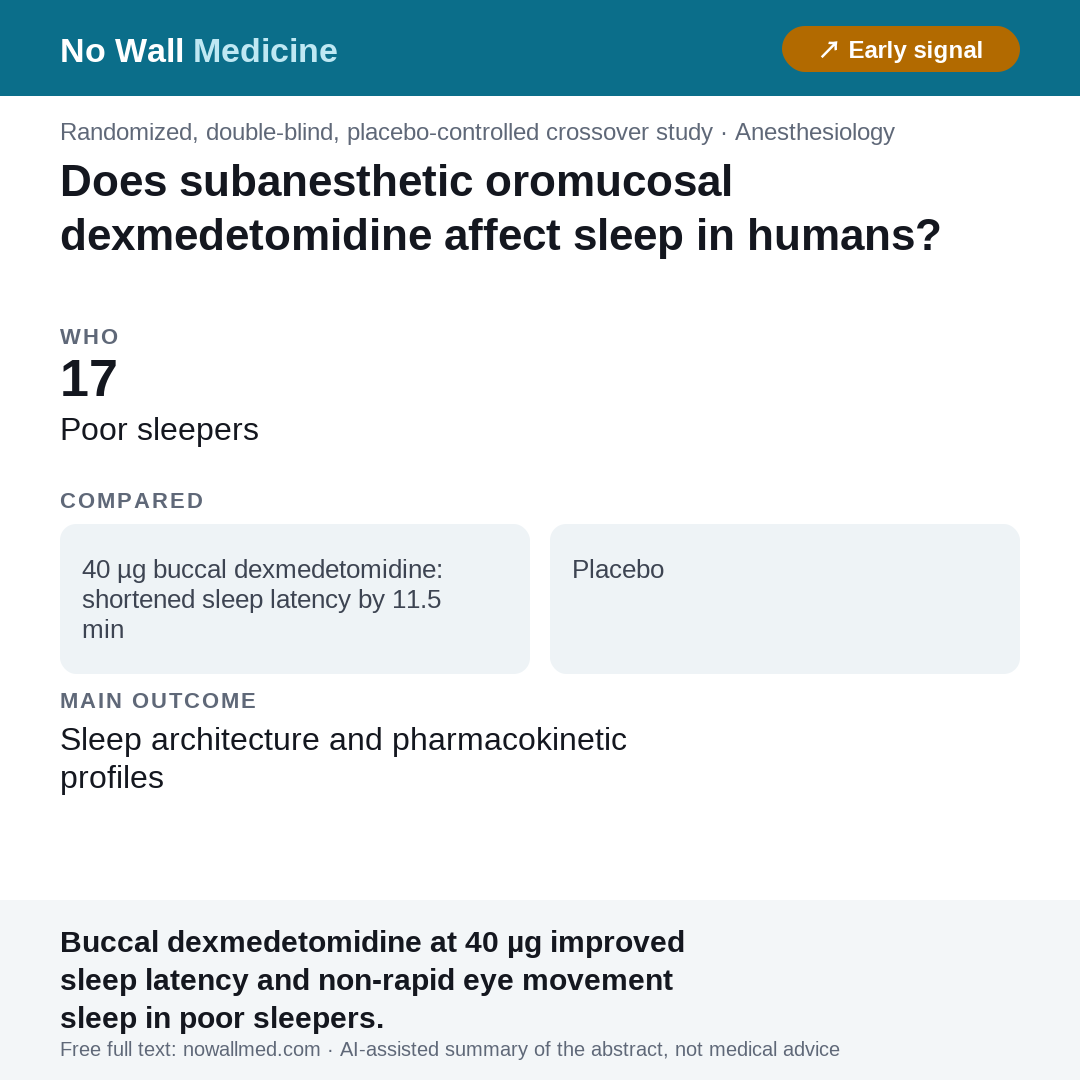
Effects of Subanesthetic Oromucosal Dexmedetomidine on Sleep in Humans: A Randomized, Controlled Pharmacokinetics-Pharmacodynamics Study
Randomized, double-blind, placebo-controlled crossover studyBenefit found
Does subanesthetic oromucosal dexmedetomidine affect sleep in humans?
Who
17
Poor sleepers
Compared
40 µg buccal dexmedetomidine: shortened sleep latency by 11.5 min
Placebo
Main outcome
Sleep architecture and pharmacokinetic profiles
Bottom line: Buccal dexmedetomidine at 40 µg improved sleep latency and non-rapid eye movement sleep in poor sleepers.
Anesthesiology · 2024-11-27Download image
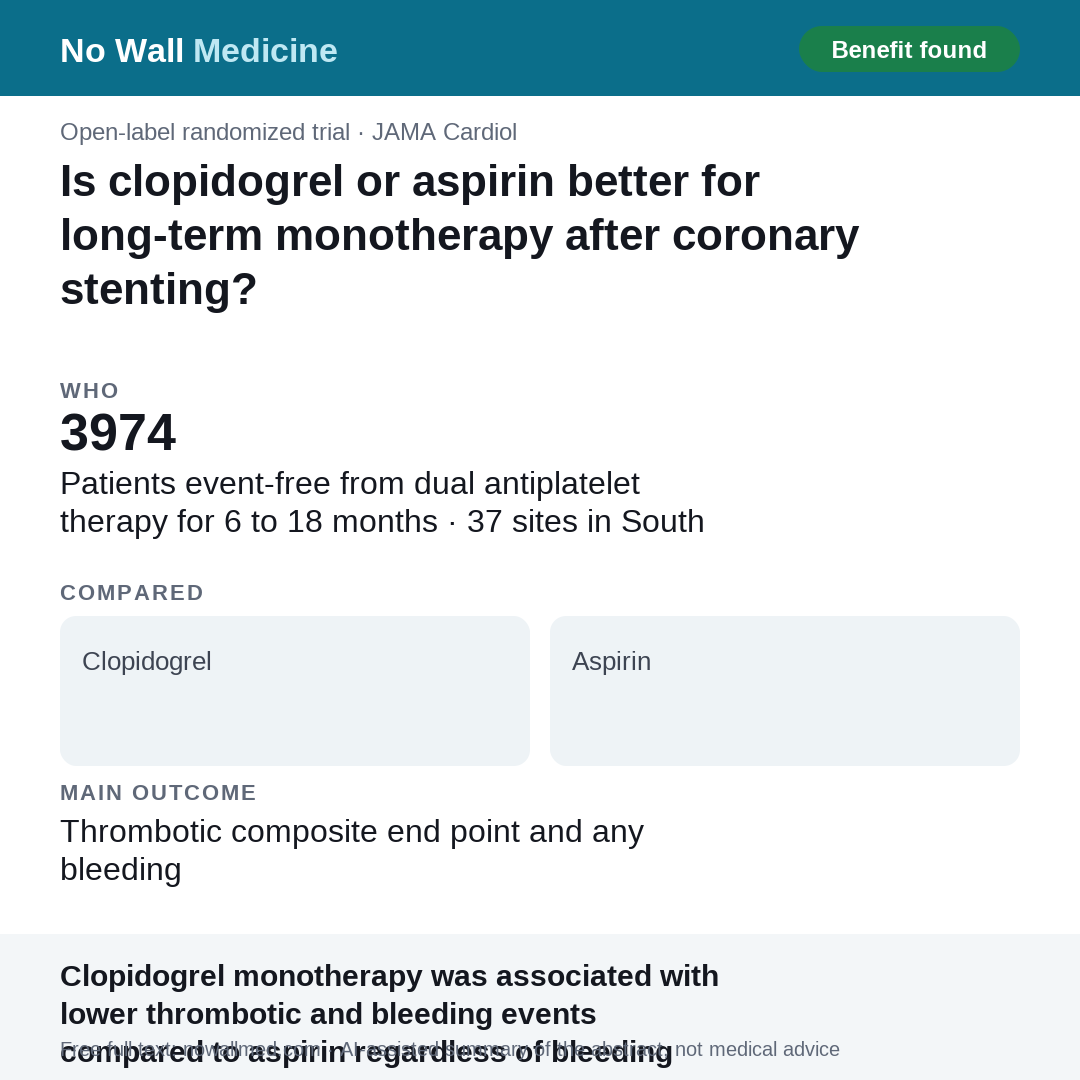
Long-Term Aspirin vs Clopidogrel After Coronary Stenting by Bleeding Risk and Procedural Complexity
Open-label randomized trialBenefit found
Is clopidogrel or aspirin better for long-term monotherapy after coronary stenting?
Who
3974
Patients event-free from dual antiplatelet therapy for 6 to 18 months · 37 sites in South Korea
Compared
Clopidogrel
Aspirin
Main outcome
Thrombotic composite end point and any bleeding
Result: hazard ratio 0.75 (95% CI, 0.53-1.04) for thrombotic end point in HBR
Bottom line: Clopidogrel monotherapy was associated with lower thrombotic and bleeding events compared to aspirin regardless of bleeding risk or complexity.
JAMA Cardiol · 2024-11-27Download image
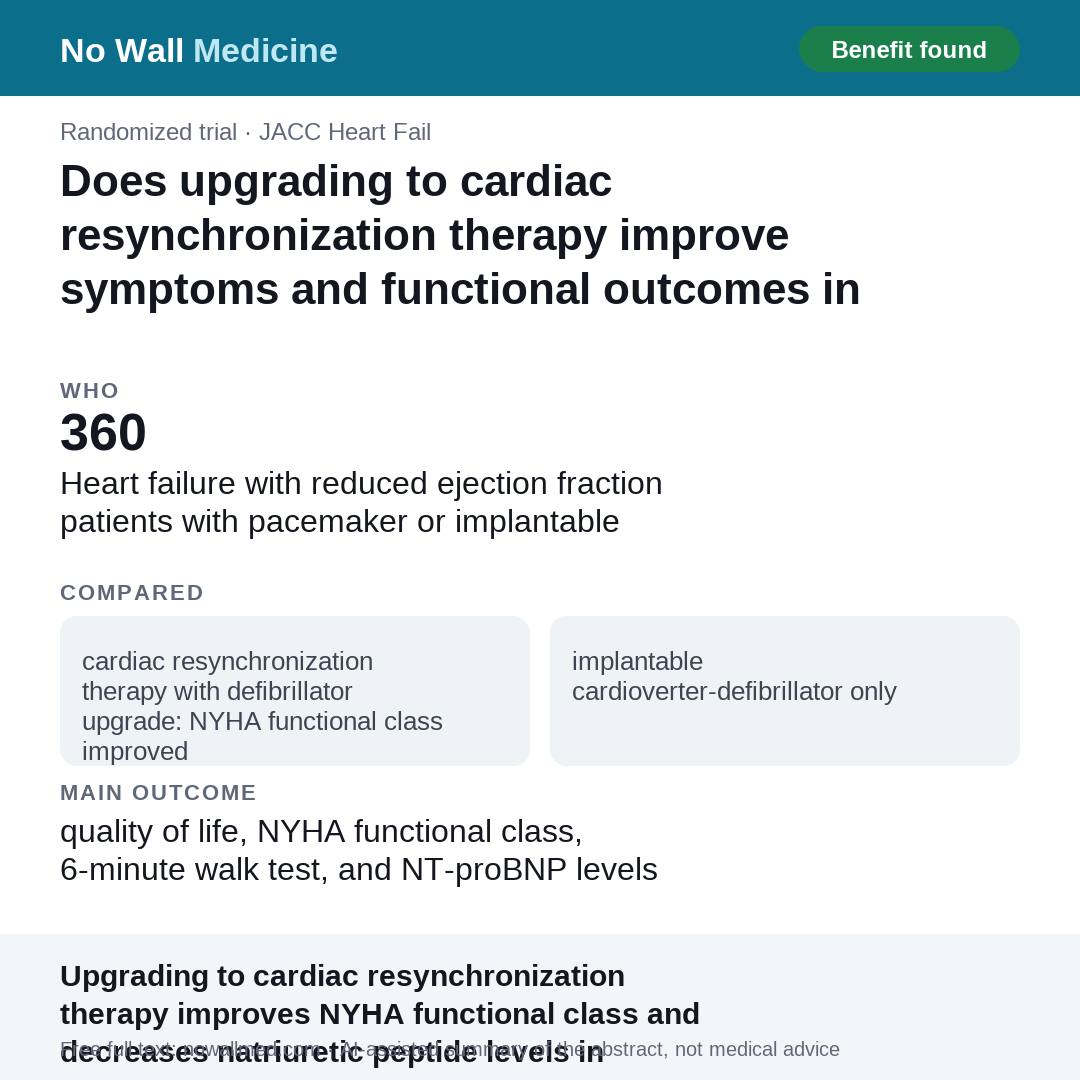
Upgrading Right Ventricular Pacing to Cardiac Resynchronization in HFrEF Patients Improves Symptoms and Functional Outcomes
Randomized trialBenefit found
Does upgrading to cardiac resynchronization therapy improve symptoms and functional outcomes in HFrEF patients?
Who
360
Heart failure with reduced ejection fraction patients with pacemaker or implantable cardioverter-defibrillator and ≥20% right ventricular pacing burden
Compared
cardiac resynchronization therapy with defibrillator upgrade: NYHA functional class improved
implantable cardioverter-defibrillator only
Main outcome
quality of life, NYHA functional class, 6-minute walk test, and NT-proBNP levels
Result: adjusted OR: 0.50 (95% CI: 0.32-0.80) for NYHA functional class
Bottom line: Upgrading to cardiac resynchronization therapy improves NYHA functional class and decreases natriuretic peptide levels in HFrEF patients.
JACC Heart Fail · 2024-11-27Download image
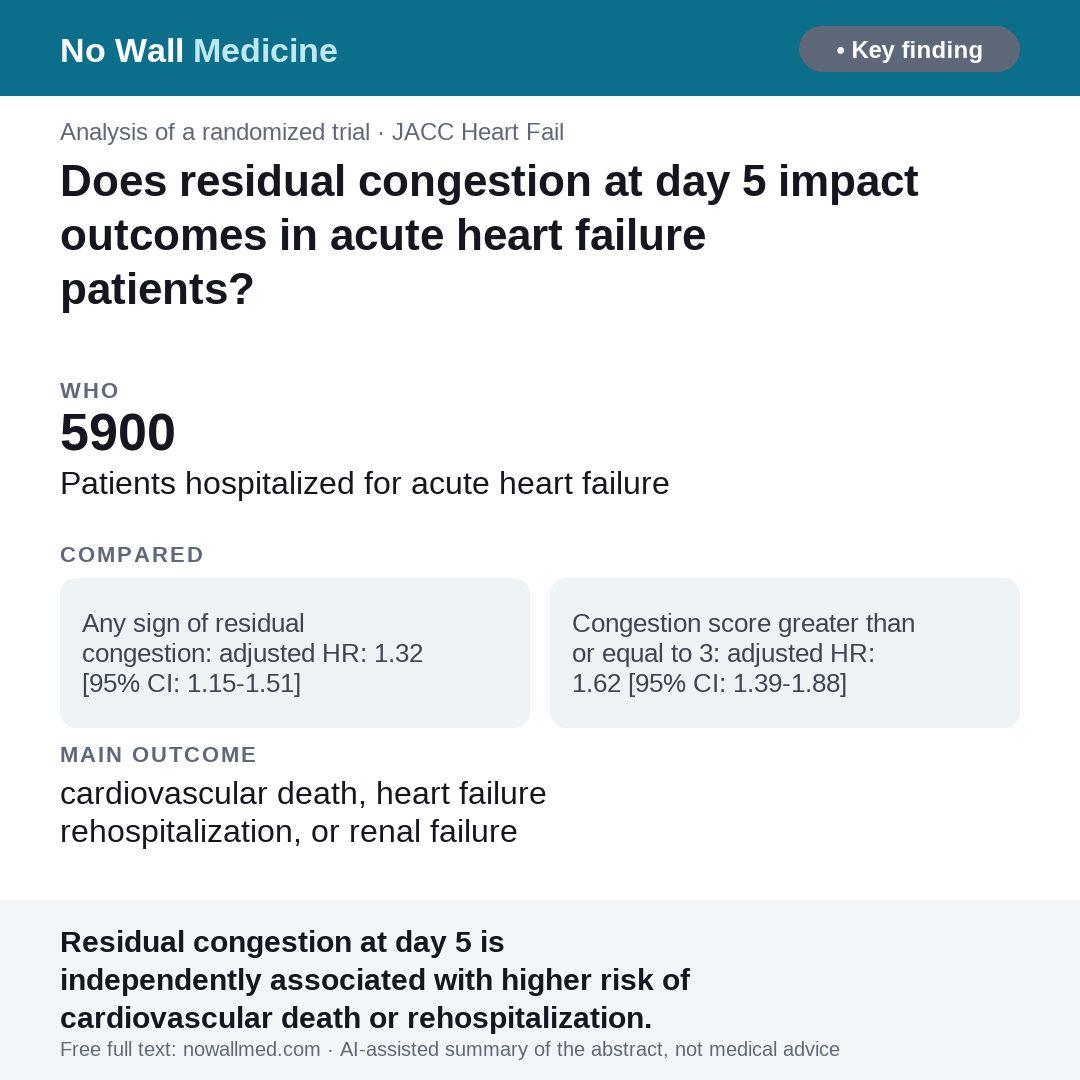
Decongestion and Outcomes in Patients Hospitalized for Acute Heart Failure: Insights From the RELAX-AHF-2 Trial
Analysis of a randomized trialHarm found
Does residual congestion at day 5 impact outcomes in acute heart failure patients?
Who
5900
Patients hospitalized for acute heart failure
Compared
Any sign of residual congestion: adjusted HR: 1.32 [95% CI: 1.15-1.51]
Congestion score greater than or equal to 3: adjusted HR: 1.62 [95% CI: 1.39-1.88]
Main outcome
cardiovascular death, heart failure rehospitalization, or renal failure rehospitalization
Result: adjusted HR: 1.32 (95% CI 1.15-1.51) and 1.62 (95% CI 1.39-1.88)
Bottom line: Residual congestion at day 5 is independently associated with higher risk of cardiovascular death or rehospitalization.
JACC Heart Fail · 2024-11-27Download image
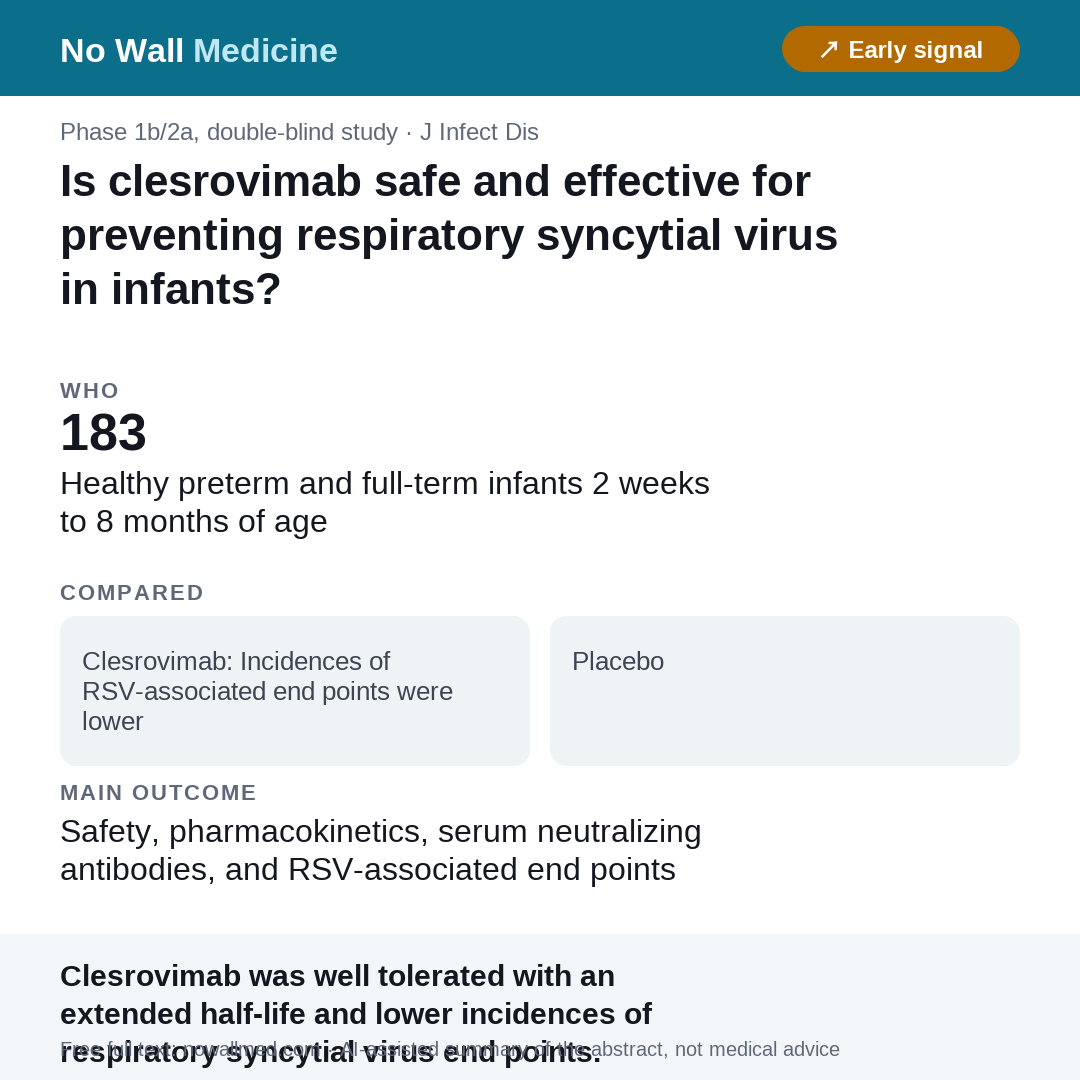
A Phase 1b/2a Trial of a Half-life Extended Respiratory Syncytial Virus Neutralizing Antibody, Clesrovimab, in Healthy Preterm and Full-term Infants
Phase 1b/2a, double-blind studyBenefit found
Is clesrovimab safe and effective for preventing respiratory syncytial virus in infants?
Who
183
Healthy preterm and full-term infants 2 weeks to 8 months of age
Compared
Clesrovimab: Incidences of RSV-associated end points were lower
Placebo
Main outcome
Safety, pharmacokinetics, serum neutralizing antibodies, and RSV-associated end points
Bottom line: Clesrovimab was well tolerated with an extended half-life and lower incidences of respiratory syncytial virus end points.
J Infect Dis · 2024-11-27Download image
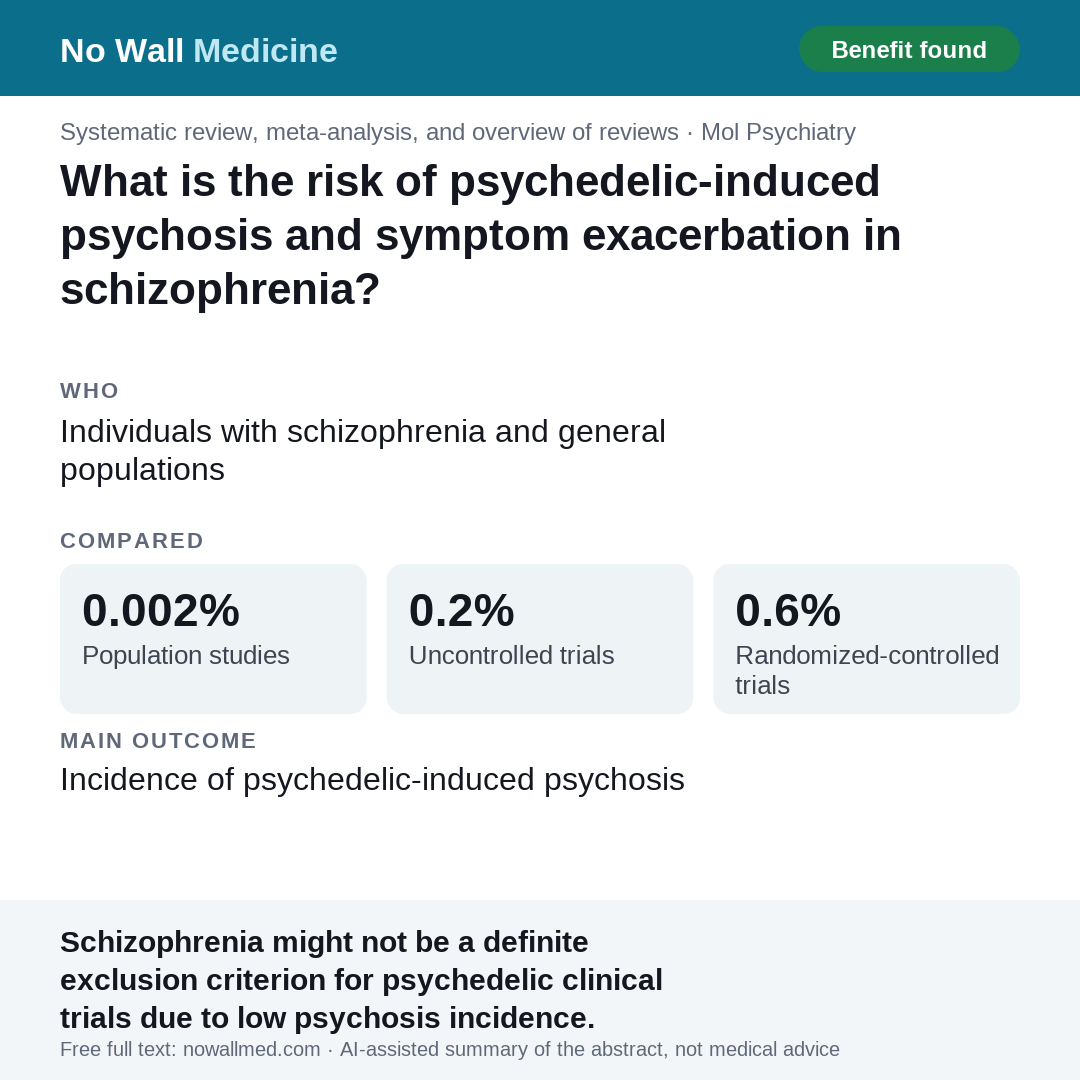
Reconsidering evidence for psychedelic-induced psychosis: an overview of reviews, a systematic review, and meta-analysis of human studies
Systematic review, meta-analysis, and overview of reviewsBenefit found
What is the risk of psychedelic-induced psychosis and symptom exacerbation in schizophrenia?
Who
Individuals with schizophrenia and general populations
Compared
0.002%Population studies
0.2%Uncontrolled trials
0.6%Randomized-controlled trials
Main outcome
Incidence of psychedelic-induced psychosis
Bottom line: Schizophrenia might not be a definite exclusion criterion for psychedelic clinical trials due to low psychosis incidence.
Limitation: Most studies were low quality and there is a limited number of studies.
Mol Psychiatry · 2024-11-27Download image
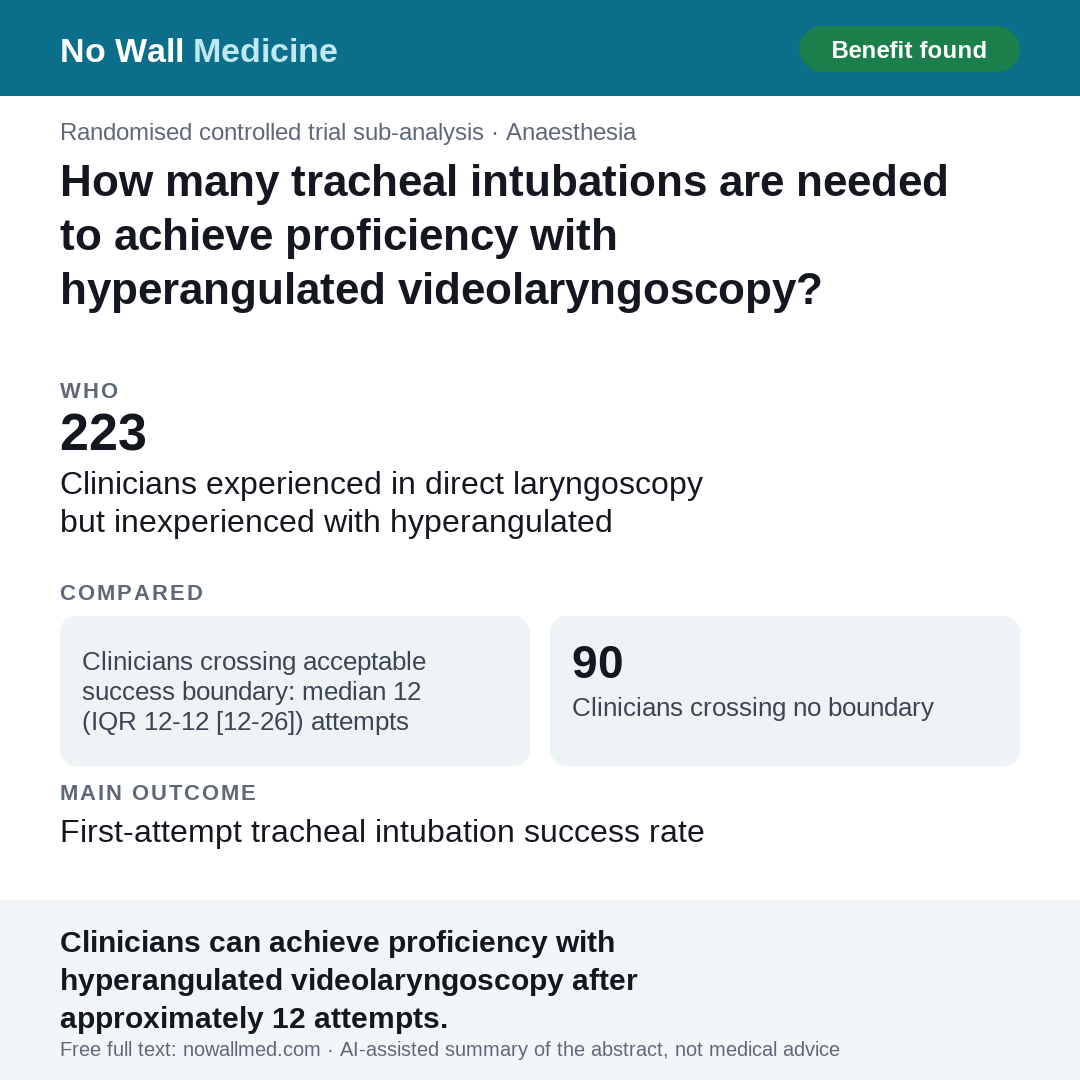
Learning tracheal intubation with a hyperangulated videolaryngoscopy blade: sub-analysis of a randomised controlled trial
Randomised controlled trial sub-analysisBenefit found
How many tracheal intubations are needed to achieve proficiency with hyperangulated videolaryngoscopy?
Who
223
Clinicians experienced in direct laryngoscopy but inexperienced with hyperangulated videolaryngoscopy
Compared
Clinicians crossing acceptable success boundary: median 12 (IQR 12-12 [12-26]) attempts
90Clinicians crossing no boundary (40%)
Main outcome
First-attempt tracheal intubation success rate
Bottom line: Clinicians can achieve proficiency with hyperangulated videolaryngoscopy after approximately 12 attempts.
Anaesthesia · 2024-11-27Download image
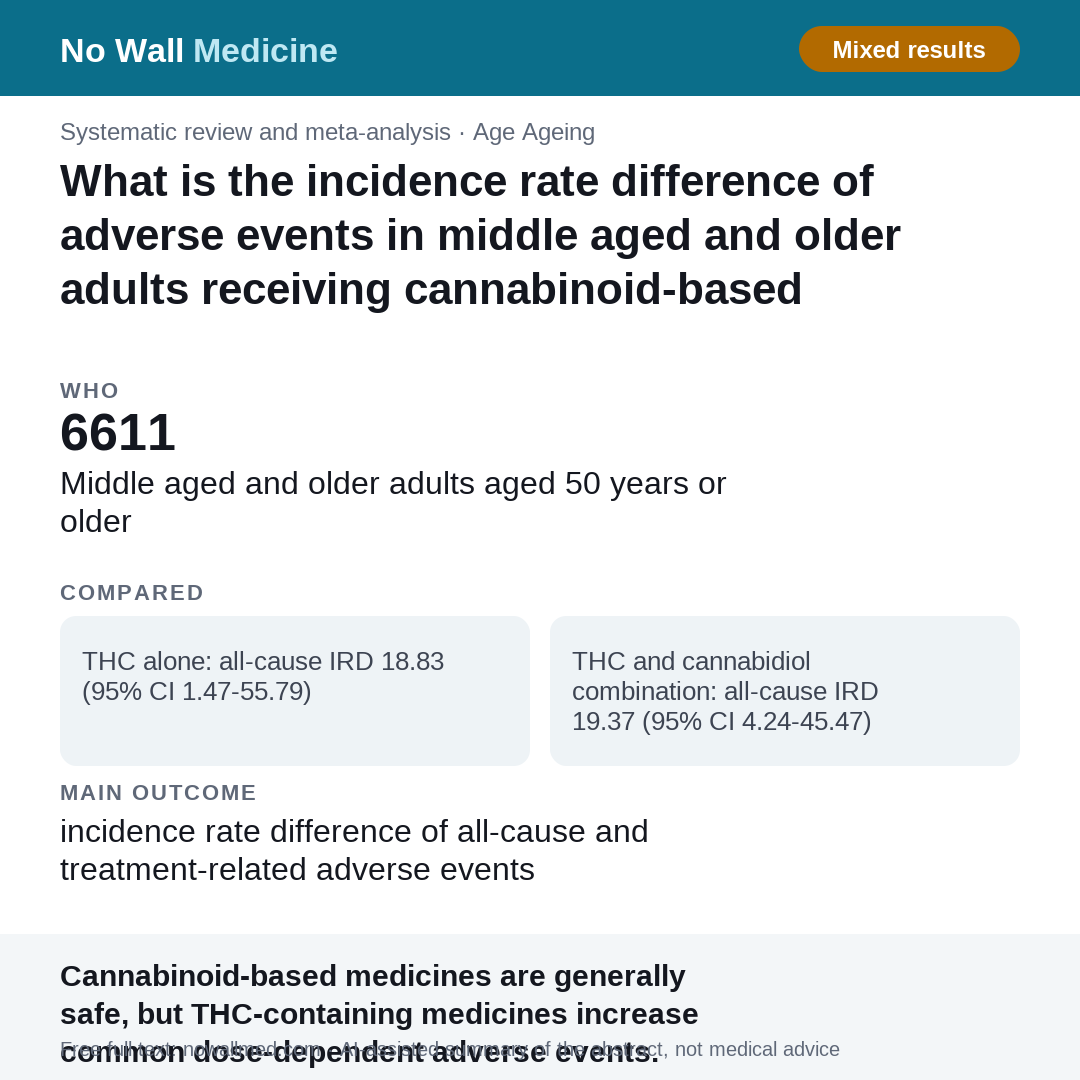
Adverse events caused by cannabinoids in middle aged and older adults for all indications: a meta-analysis of incidence rate difference
Systematic review and meta-analysisMixed results
What is the incidence rate difference of adverse events in middle aged and older adults receiving cannabinoid-based medicines?
Who
6611
Middle aged and older adults aged 50 years or older
Compared
THC alone: all-cause IRD 18.83 (95% CI 1.47-55.79)
THC and cannabidiol combination: all-cause IRD 19.37 (95% CI 4.24-45.47)
Main outcome
incidence rate difference of all-cause and treatment-related adverse events
Result: all-cause IRD 18.83 (95% CI 1.47-55.79) for THC alone
Bottom line: Cannabinoid-based medicines are generally safe, but THC-containing medicines increase common dose-dependent adverse events.
Age Ageing · 2024-11-27Download image
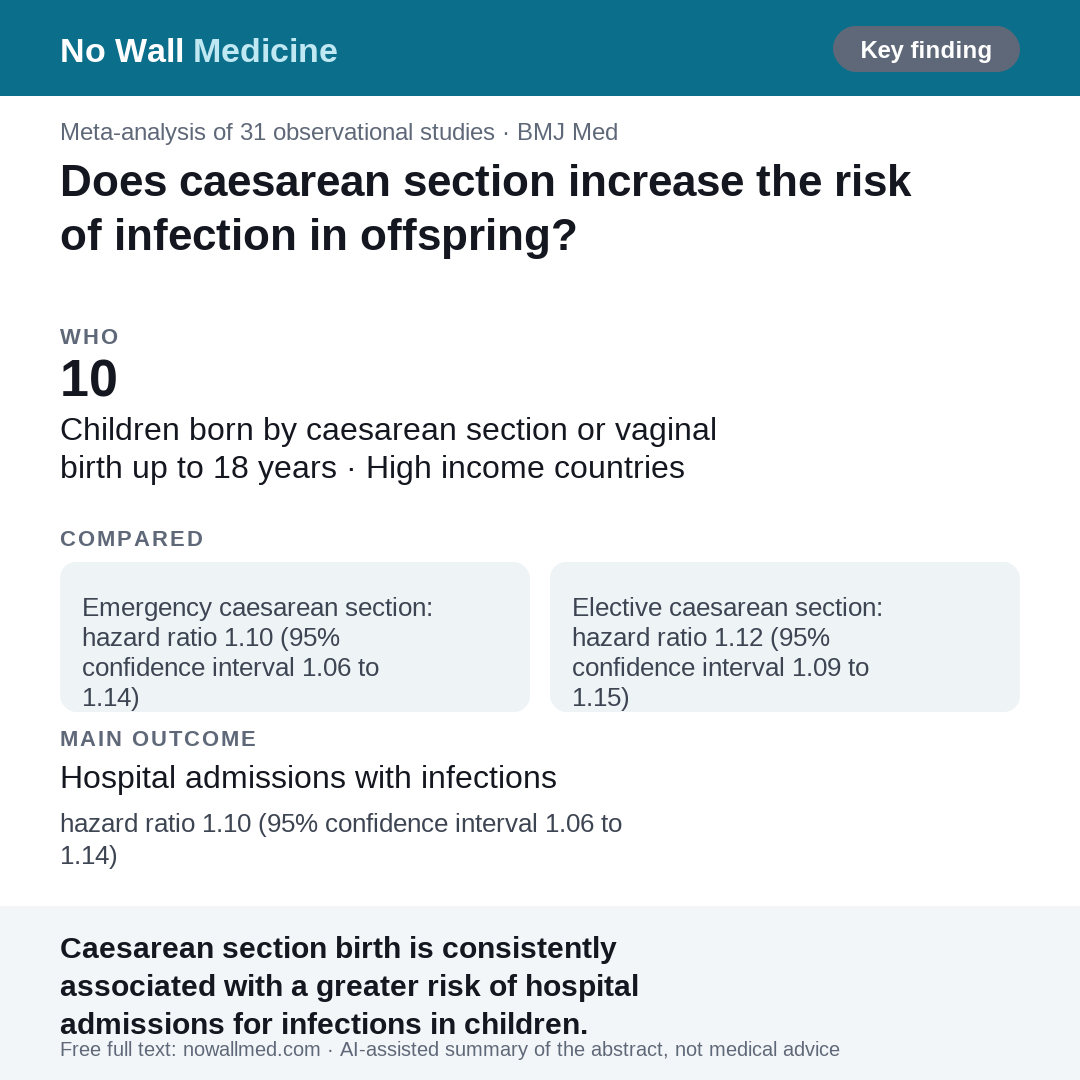
Caesarean section and risk of infection in offspring: systematic review and meta-analysis of observational studies
Meta-analysis of 31 observational studiesHarm found
Does caesarean section increase the risk of infection in offspring?
Who
10
Children born by caesarean section or vaginal birth up to 18 years · High income countries
Compared
Emergency caesarean section: hazard ratio 1.10 (95% confidence interval 1.06 to 1.14)
Elective caesarean section: hazard ratio 1.12 (95% confidence interval 1.09 to 1.15)
Main outcome
Hospital admissions with infections
Result: hazard ratio 1.10 (95% confidence interval 1.06 to 1.14)
Bottom line: Caesarean section birth is consistently associated with a greater risk of hospital admissions for infections in children.
Limitation: Potential for unmeasured confounding and scarcity of studies from low and middle income countries.
BMJ Med · 2024-11-27Download image
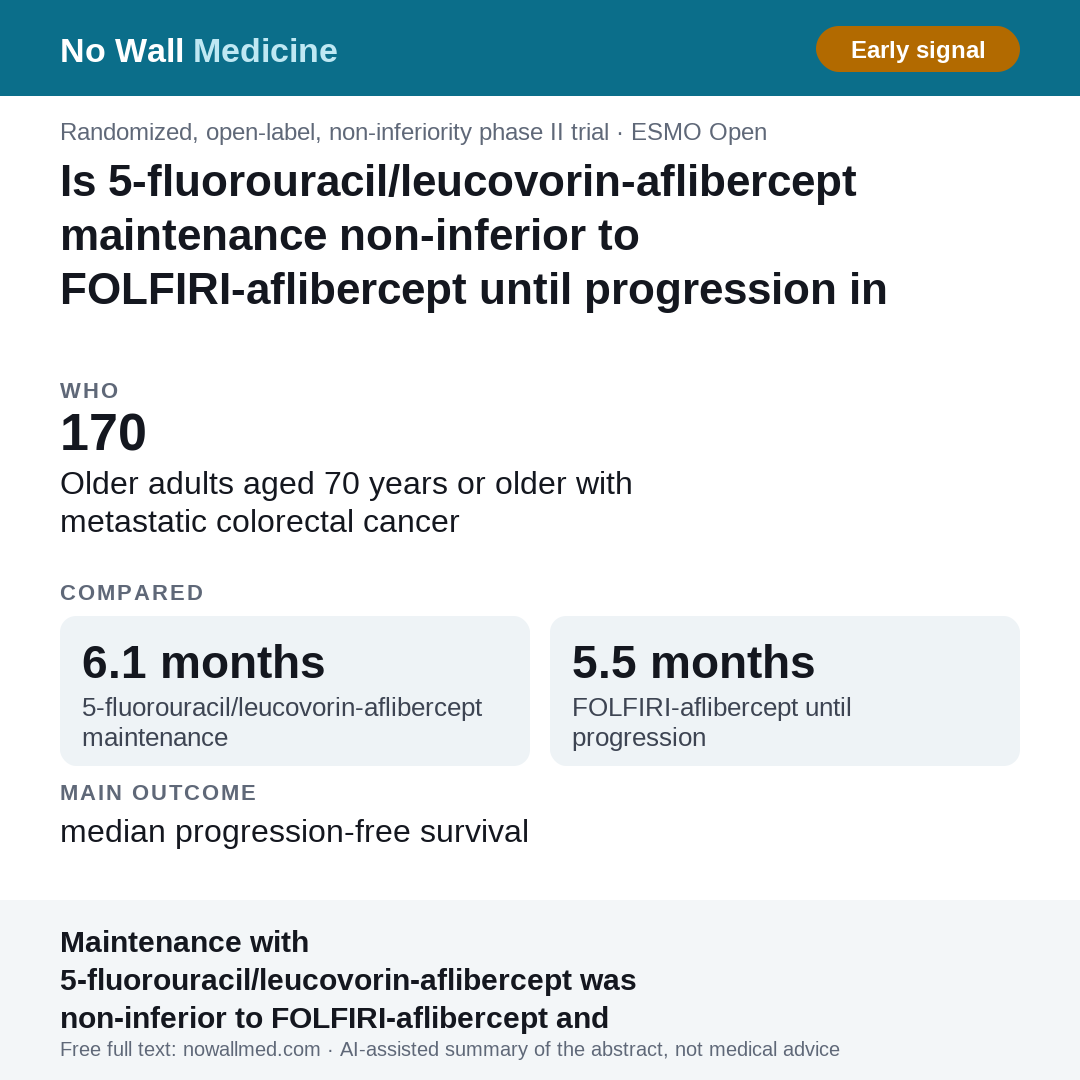
Maintenance with 5-FU/LV-aflibercept after induction with FOLFIRI-aflibercept versus FOLFIRI-aflibercept until progression as second-line treatment in older adults with metastatic colorectal cancer: the AFEMA phase II randomized trial
Randomized, open-label, non-inferiority phase II trialBenefit found
Is 5-fluorouracil/leucovorin-aflibercept maintenance non-inferior to FOLFIRI-aflibercept until progression in older adults?
Who
170
Older adults aged 70 years or older with metastatic colorectal cancer
Compared
6.1 months5-fluorouracil/leucovorin-aflibercept maintenance
5.5 monthsFOLFIRI-aflibercept until progression
Main outcome
median progression-free survival
Result: hazard ratio 0.78 (95% CI 0.566-1.076)
Bottom line: Maintenance with 5-fluorouracil/leucovorin-aflibercept was non-inferior to FOLFIRI-aflibercept and reduced serious adverse events.
ESMO Open · 2024-11-27Download image
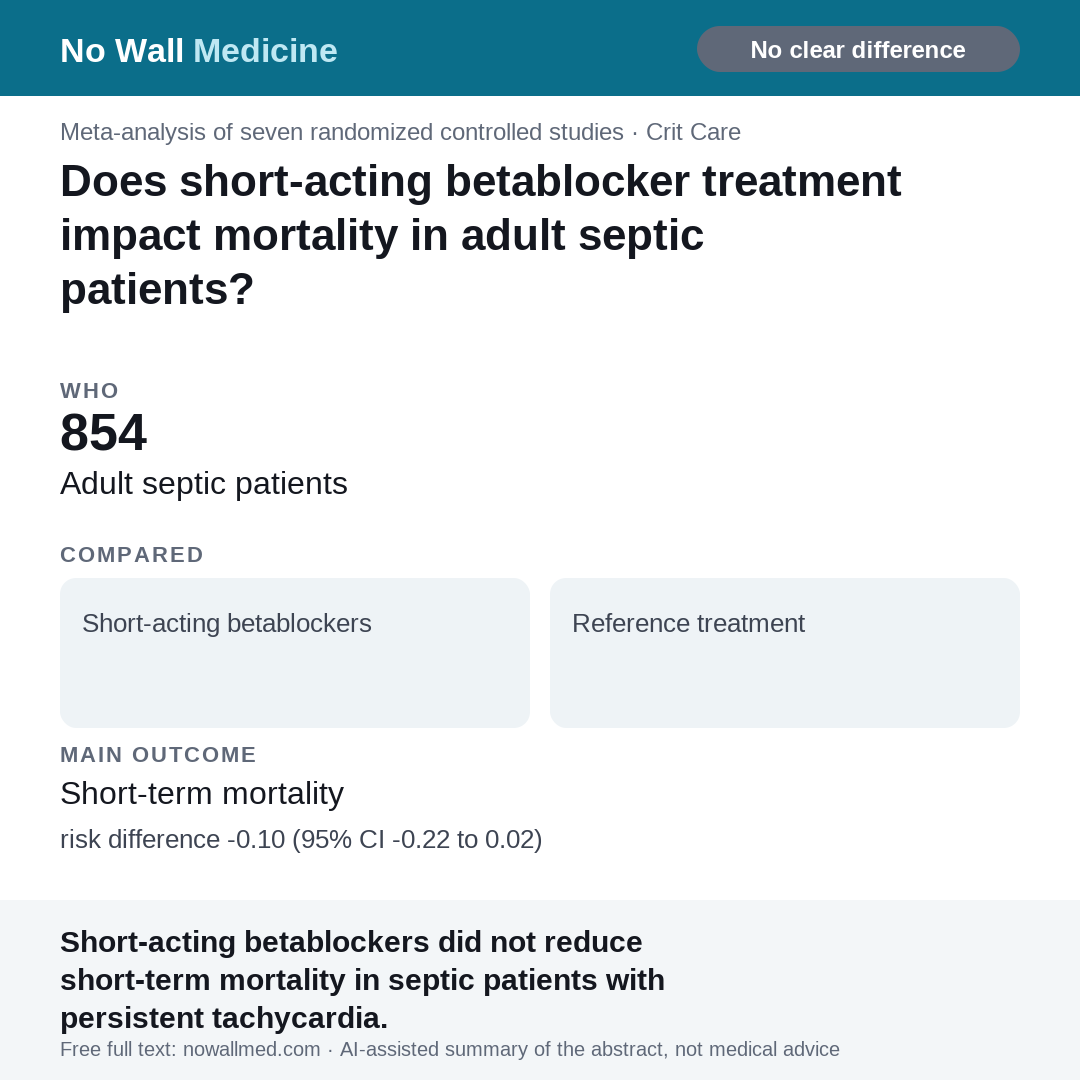
Mortality in septic patients treated with short-acting betablockers: a comprehensive meta-analysis of randomized controlled trials
Meta-analysis of seven randomized controlled trialsNo clear difference
Does short-acting betablocker treatment impact mortality in adult septic patients?
Who
854
Adult septic patients
Compared
Short-acting betablockers
Reference treatment
Main outcome
Short-term mortality
Result: risk difference -0.10 (95% CI -0.22 to 0.02)
Bottom line: Short-acting betablockers did not reduce short-term mortality in septic patients with persistent tachycardia.
Limitation: Statistical heterogeneity was present among the included studies.
Crit Care · 2024-11-27Download image
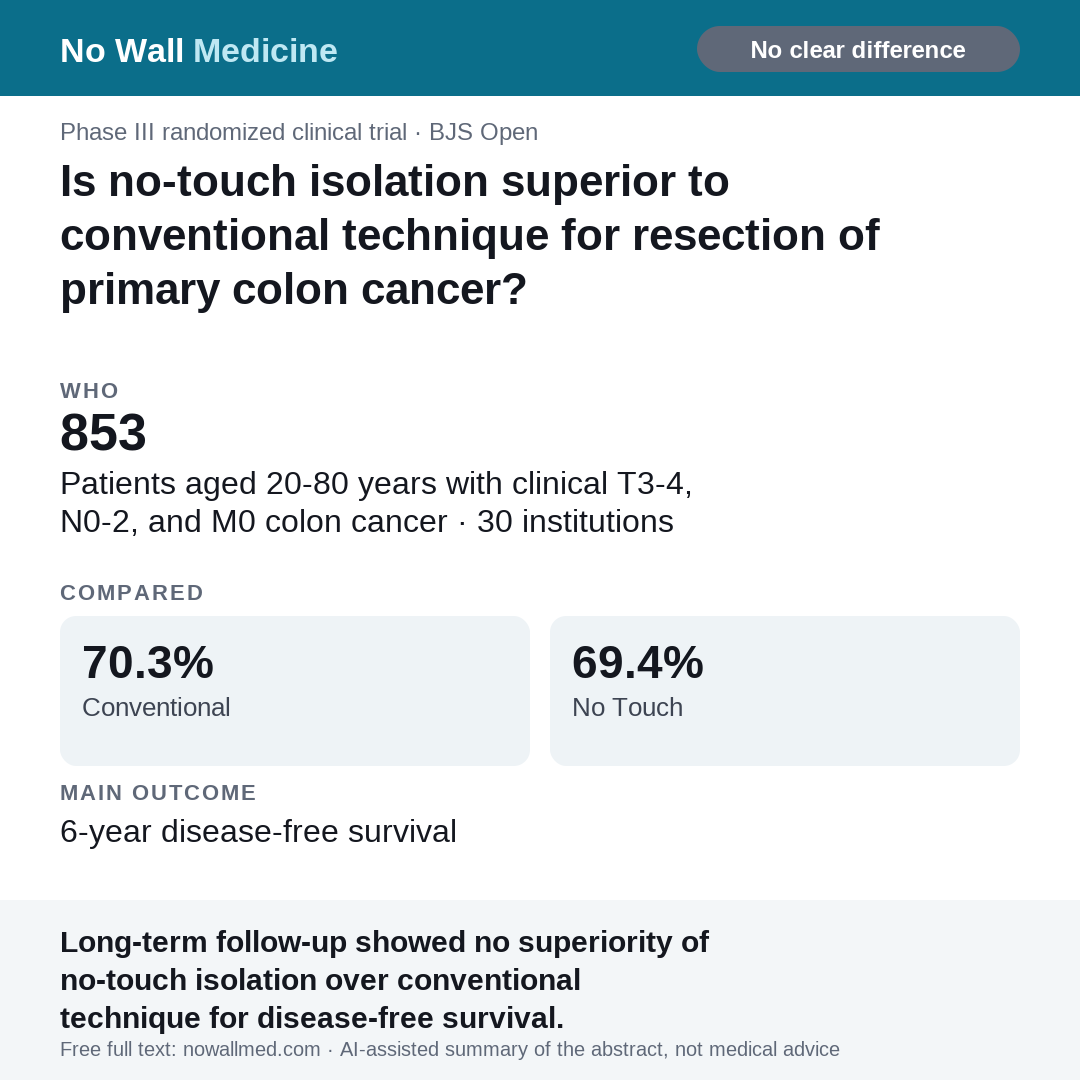
Long-term follow-up of the conventional versus no-touch isolation technique for resection of primary colon cancer (JCOG1006): randomized clinical trial
Phase III randomized clinical trialNo clear difference
Is no-touch isolation superior to conventional technique for resection of primary colon cancer?
Who
853
Patients aged 20-80 years with clinical T3-4, N0-2, and M0 colon cancer · 30 institutions
Compared
70.3%Conventional
69.4%No Touch
Main outcome
6-year disease-free survival
Result: hazard ratio 1.030 (95% c.i. 0.813 to 1.304)
Bottom line: Long-term follow-up showed no superiority of no-touch isolation over conventional technique for disease-free survival.
BJS Open · 2024-11-27Download image
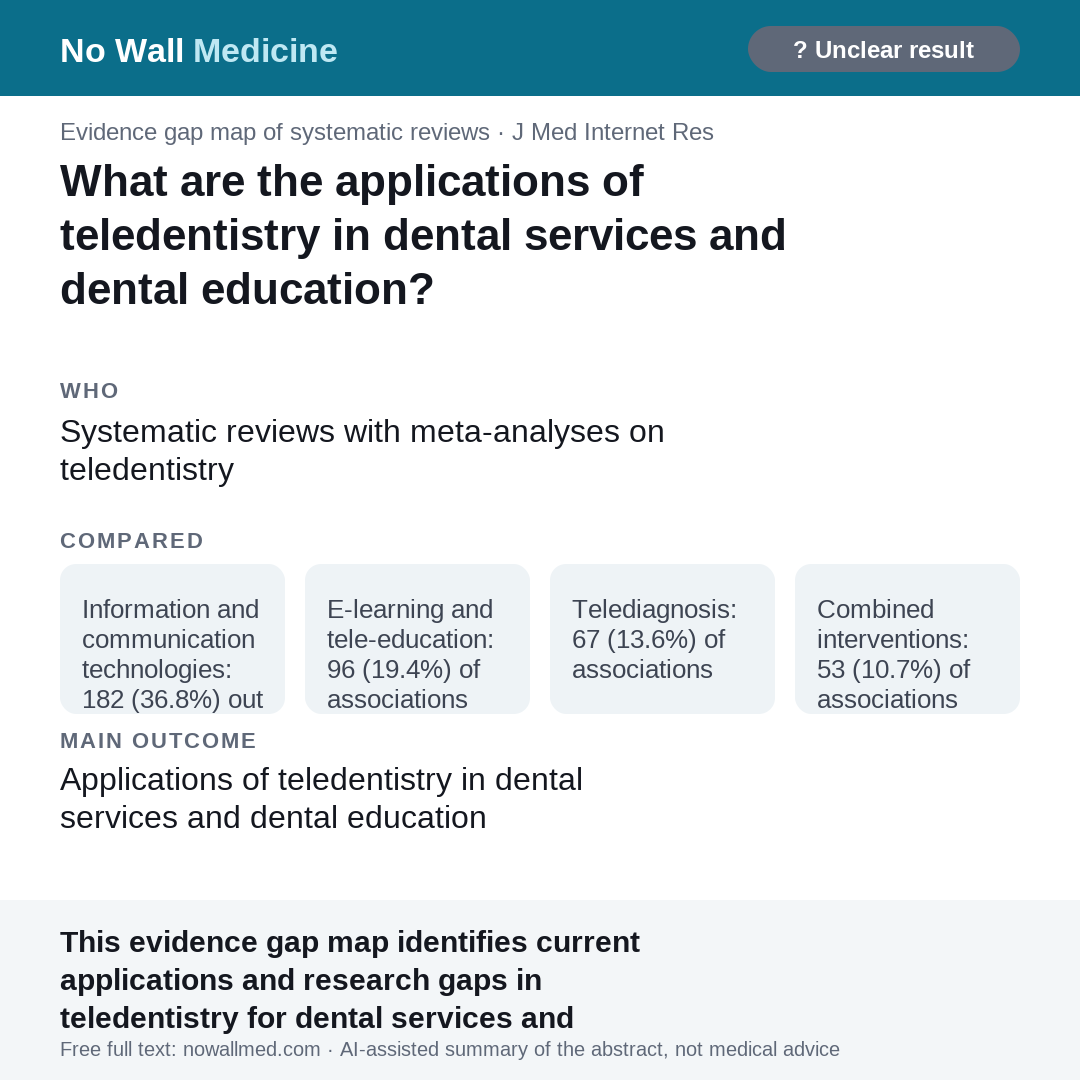
Teledentistry Applied to Health and Education Outcomes: Evidence Gap Map
Evidence gap map of systematic reviewsUnclear result
What are the applications of teledentistry in dental services and dental education?
Who
Systematic reviews with meta-analyses on teledentistry
Compared
Information and communication technologies: 182 (36.8%) out of 494 associations
E-learning and tele-education: 96 (19.4%) of associations
Telediagnosis: 67 (13.6%) of associations
Combined interventions: 53 (10.7%) of associations
Main outcome
Applications of teledentistry in dental services and dental education
Bottom line: This evidence gap map identifies current applications and research gaps in teledentistry for dental services and education.
J Med Internet Res · 2024-11-27Download image