Visual abstracts
New randomized trials and meta-analyses from leading journals at a glance: who was studied, what was compared, and what was found. Every paper is free to read in full.
All specialtiesCardiology 4877Oncology 4138Gastroenterology & Hepatology 1942Infectious Disease 3837Neurology 1905Psychiatry & Mental Health 2273Pulmonology 2143Critical Care 1365Endocrinology & Diabetes 2580Pediatrics 2980Surgery 2559Orthopedics & Sports Medicine 931Neurosurgery 537Cardiothoracic & Vascular Surgery 674Plastic & Reconstructive Surgery 591Nephrology 1133Rheumatology 823Hematology 1109Dermatology 621Ophthalmology 543Obstetrics & Gynecology 1686Public & Global Health 1058Radiology & Imaging 648Anesthesiology 986Urology 764ENT (Otolaryngology) 503Emergency Medicine 511Allergy & Immunology 313Geriatrics 981Family Medicine & Primary Care 562Medical Genetics & Genomics 676Pathology & Laboratory Medicine 159Physical Medicine & Rehabilitation 757Palliative Care 444Nutrition 1588Digital Health & AI 2201General Medicine 321
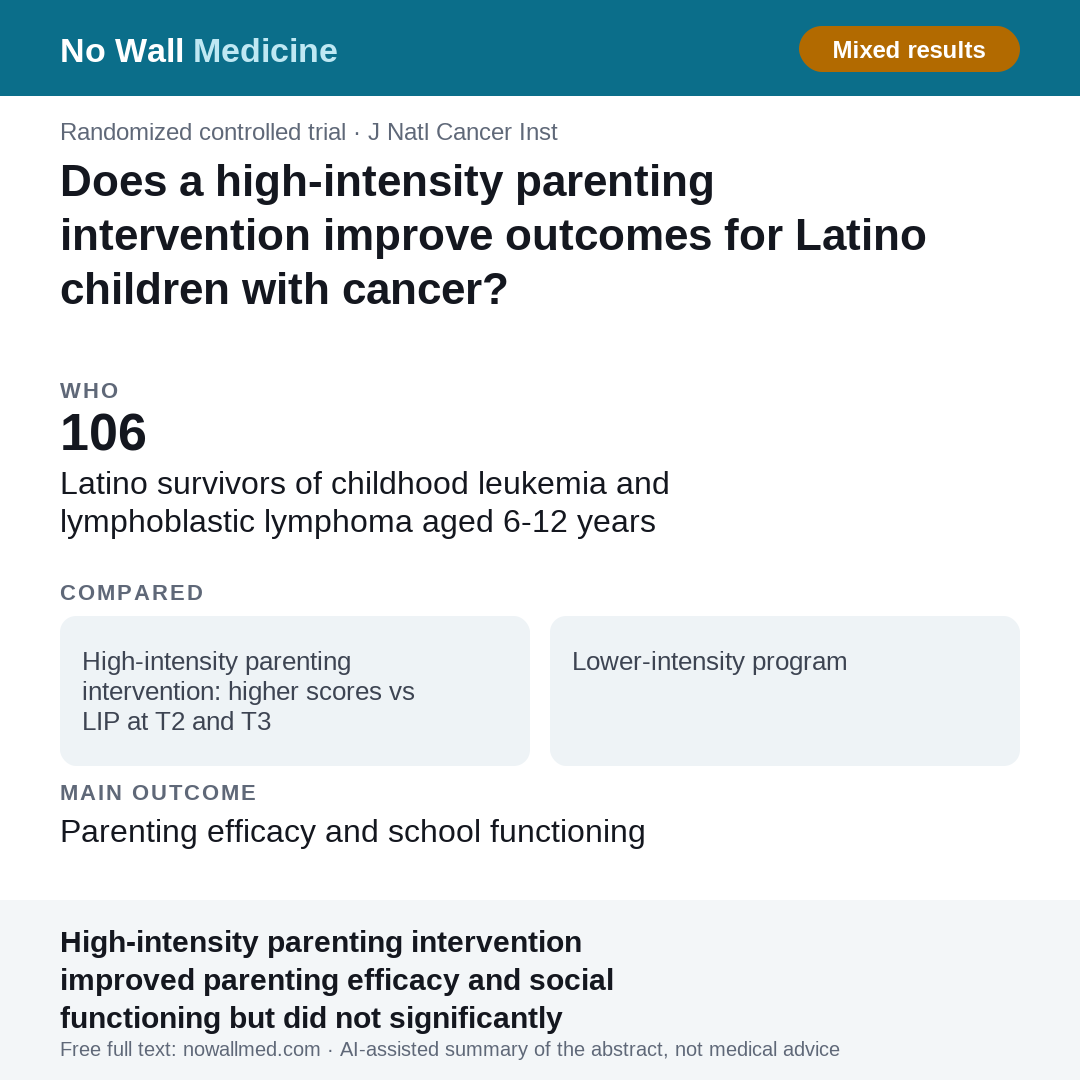
Reducing learning and psychosocial disparities in Latino children with cancer: a randomized intervention trial
Randomized controlled trialMixed results
Does a high-intensity parenting intervention improve outcomes for Latino children with cancer?
Who
106
Latino survivors of childhood leukemia and lymphoblastic lymphoma aged 6-12 years
Compared
High-intensity parenting intervention: higher scores vs LIP at T2 and T3
Lower-intensity program
Main outcome
Parenting efficacy and school functioning
Bottom line: High-intensity parenting intervention improved parenting efficacy and social functioning but did not significantly improve school functioning.
Limitation: Adherence challenges were observed, with only 61% completing the intervention.
J Natl Cancer Inst · 2024-10-16Download image
Medical Therapies for Prevention and Treatment of Inflammatory Pouch Disorders-A Systematic Review and Meta-Analysis
Systematic review and meta-analysisBenefit found
How effective are medical therapies for preventing and treating pouchitis and Crohn's-like disease?
Who
Patients with pouchitis or Crohn's-like disease of the pouch
Compared
Probiotics for prevention: relative risk 0.18 (95% confidence interval 0.05-0.62)
Antibiotics for treatment: response rate 65% (95% CI 52-75)
Advanced therapies for treatment: response rate 74% (95% CI 68-79)
Main outcome
occurrence of pouchitis and clinical response
Result: relative risk 1.71 (95% CI 1.28-2.56) for chronic antibiotic-refractory pouchitis
Bottom line: Multiple medical interventions are effective for prevention and treatment of pouchitis and Crohn's-like disease of the pouch.
Am J Gastroenterol · 2024-10-16Download image

Population pharmacokinetics/pharmacodynamics of minocycline plus rifampicin in patients with complicated skin and skin structure infections caused by MRSA
Phase 4 studyNo clear difference
What are the population pharmacokinetics and pharmacodynamics of minocycline, rifampicin, and linezolid?
Who
Patients with complicated skin and soft tissue infections caused by MRSA
Compared
minocycline plus rifampicin: 96% (49/51) reached minocycline fAUC24h/MIC target of >0.5
linezolid
Main outcome
pharmacokinetics, pharmacodynamics, and clinical outcome
Bottom line: Pharmacokinetic indices were not related to clinical outcome in patients with MRSA skin infections.
J Antimicrob Chemother · 2024-10-16Download image

Effect of mesenchymal stem cells on the host response in severe community-acquired pneumonia
Randomized trialMixed results
Does allogeneic adipose-derived mesenchymal stem cells affect the host response in severe community-acquired pneumonia?
Who
82
Patients with sepsis due to community-acquired bacterial pneumonia
Compared
Cx611: enhanced several endothelial cell and procoagulant response plasma biomarkers
placebo
Main outcome
29 plasma biomarkers and blood transcriptomes
Bottom line: Mesenchymal stem cell infusion is associated with broad host response alterations in sepsis due to community-acquired bacterial pneumonia.
Thorax · 2024-10-16Download image

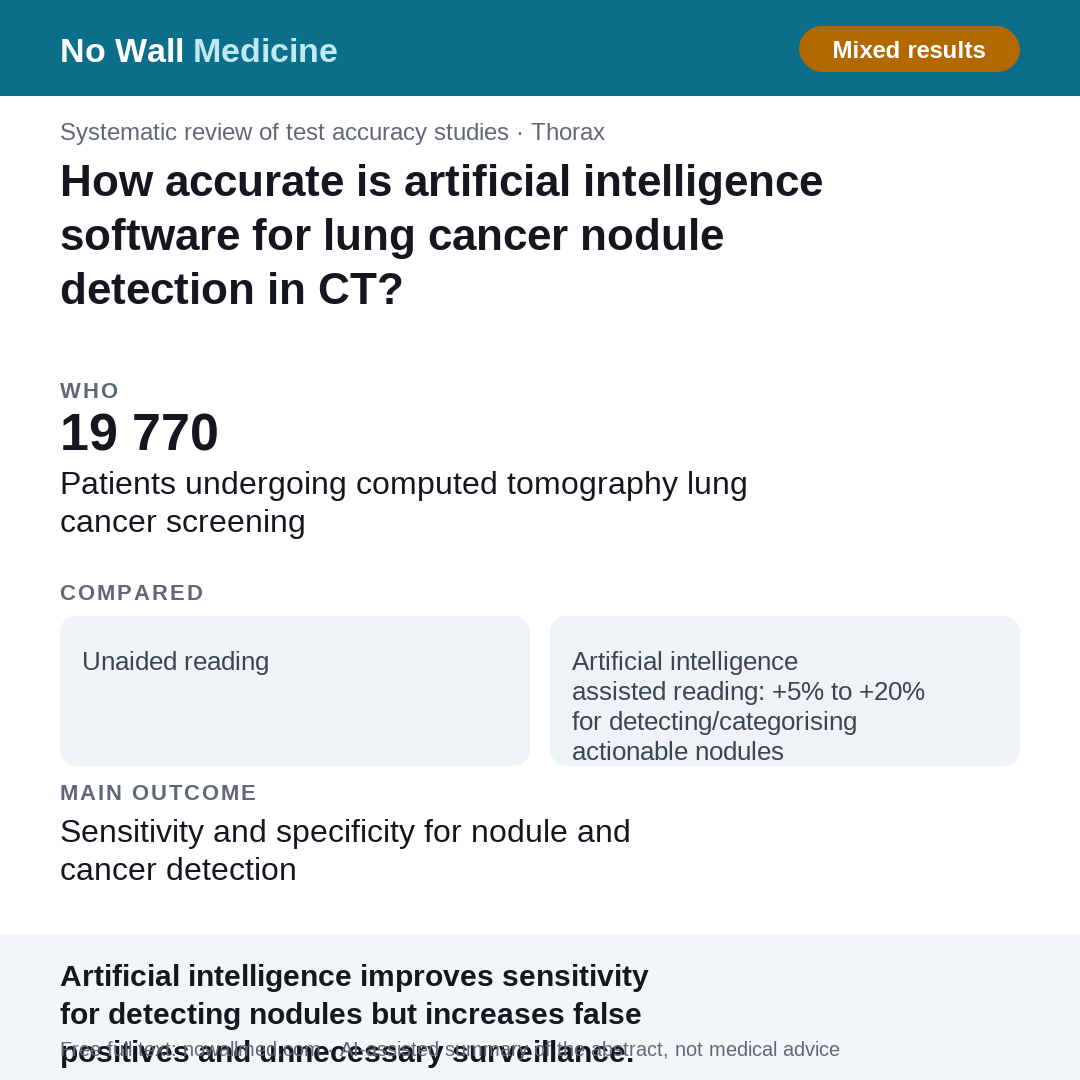
Software using artificial intelligence for nodule and cancer detection in CT lung cancer screening: systematic review of test accuracy studies
Systematic review of test accuracy studiesMixed results
How accurate is artificial intelligence software for lung cancer nodule detection in CT?
Who
19 770
Patients undergoing computed tomography lung cancer screening
Compared
Unaided reading
Artificial intelligence assisted reading: +5% to +20% for detecting/categorising actionable nodules
Main outcome
Sensitivity and specificity for nodule and cancer detection
Bottom line: Artificial intelligence improves sensitivity for detecting nodules but increases false positives and unnecessary surveillance.
Limitation: All studies were at high risk of bias with multiple applicability concerns.
Thorax · 2024-10-16Download image
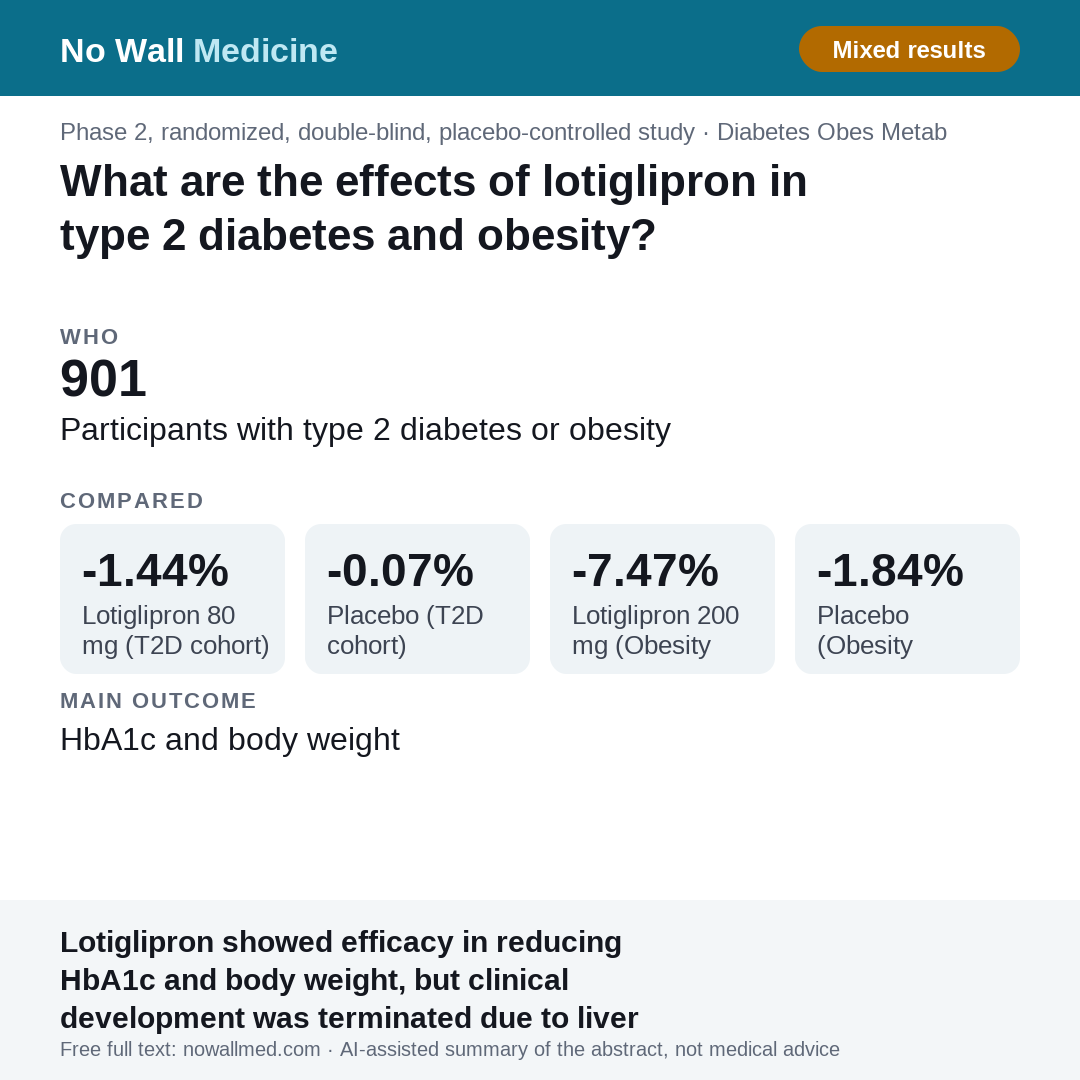
Evaluation of an oral small-molecule glucagon-like peptide-1 receptor agonist, lotiglipron, for type 2 diabetes and obesity: A dose-ranging, phase 2, randomized, placebo-controlled study
Phase 2, randomized, double-blind, placebo-controlled studyMixed results
What are the effects of lotiglipron in type 2 diabetes and obesity?
Who
901
Participants with type 2 diabetes or obesity
Compared
-1.44%Lotiglipron 80 mg (T2D cohort) (90% CI: -1.63, -1.26)
-0.07%Placebo (T2D cohort) (90% CI: -0.25, 0.11)
-7.47%Lotiglipron 200 mg (Obesity cohort) (90% CI: -8.50, -6.43)
-1.84%Placebo (Obesity cohort) (90% CI: -2.85, -0.83)
Main outcome
HbA1c and body weight
Bottom line: Lotiglipron showed efficacy in reducing HbA1c and body weight, but clinical development was terminated due to liver transaminase elevations.
Diabetes Obes Metab · 2024-10-16Download image
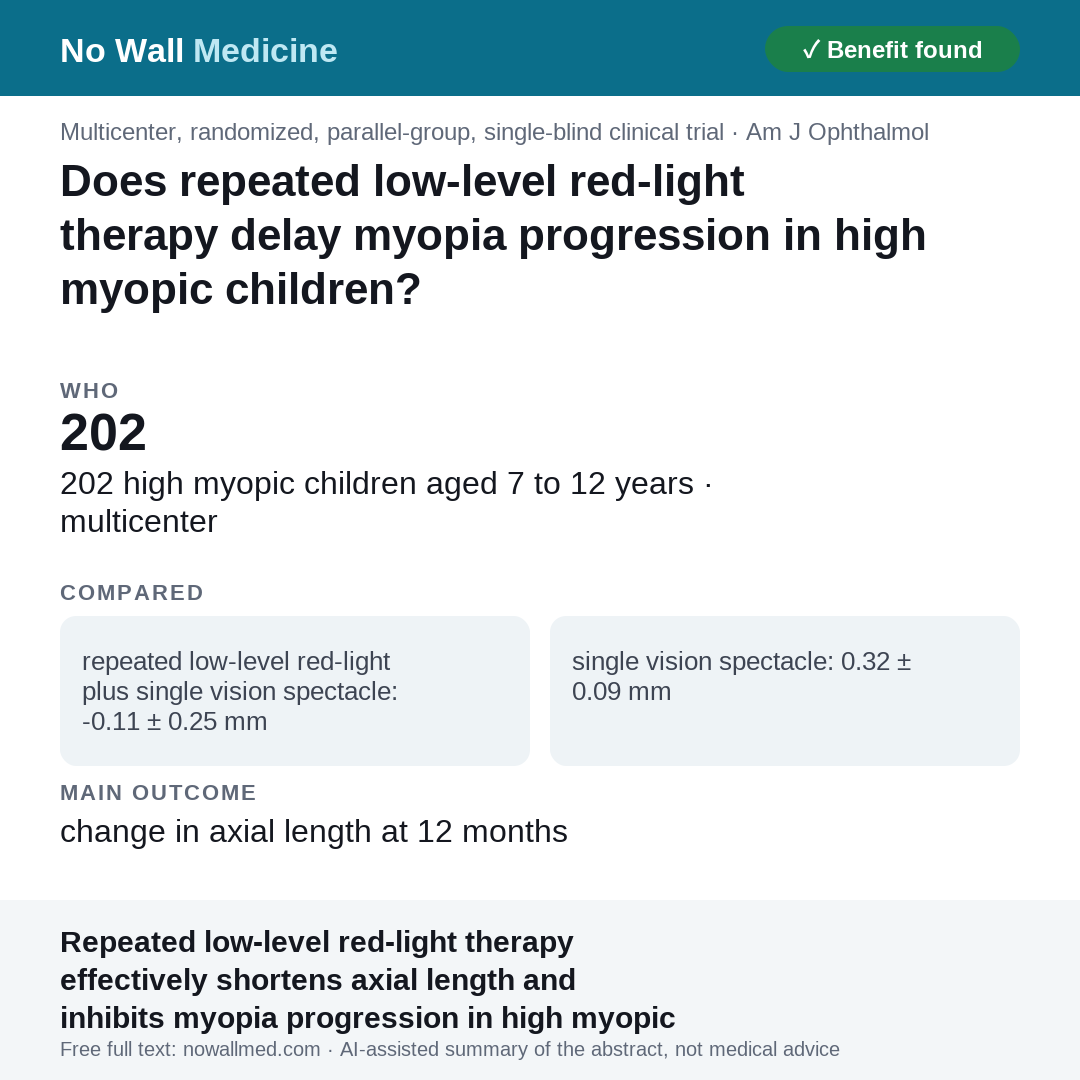
Axial Shortening Effects of Repeated Low-level Red-light Therapy in Children With High Myopia: A Multicenter Randomized Controlled Trial
Multicenter, randomized, parallel-group, single-blind clinical trialBenefit found
Does repeated low-level red-light therapy delay myopia progression in high myopic children?
Who
202
202 high myopic children aged 7 to 12 years · multicenter
Compared
repeated low-level red-light plus single vision spectacle: -0.11 ± 0.25 mm
single vision spectacle: 0.32 ± 0.09 mm
Main outcome
change in axial length at 12 months
Bottom line: Repeated low-level red-light therapy effectively shortens axial length and inhibits myopia progression in high myopic children.
Am J Ophthalmol · 2024-10-16Download image
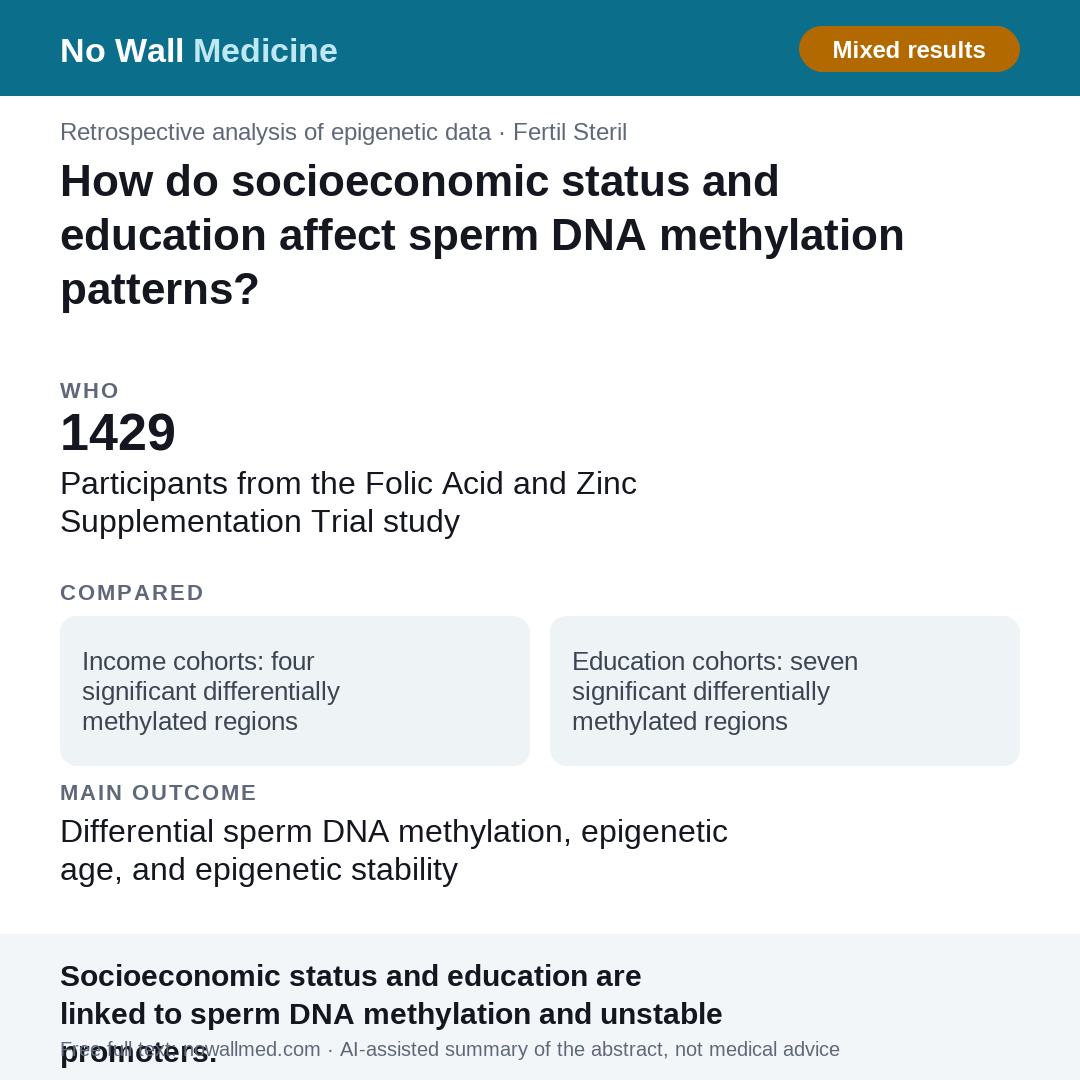
Epigenetic implications of socioeconomic status and education on sperm DNA methylation patterns
Retrospective analysis of epigenetic dataMixed results
How do socioeconomic status and education affect sperm DNA methylation patterns?
Who
1429
Participants from the Folic Acid and Zinc Supplementation Trial study
Compared
Income cohorts: four significant differentially methylated regions
Education cohorts: seven significant differentially methylated regions
Main outcome
Differential sperm DNA methylation, epigenetic age, and epigenetic stability
Bottom line: Socioeconomic status and education are linked to sperm DNA methylation and unstable promoters.
Limitation: Lifestyle factors and environmental exposures may be underlying causes.
Fertil Steril · 2024-10-16Download image
Molecular Correlates of Prostate Cancer Visibility on Multiparametric Magnetic Resonance Imaging: A Systematic Review
Systematic reviewMixed results
What are the molecular correlates of prostate cancer visibility on multiparametric magnetic resonance imaging?
Who
25
Prostate cancer lesions categorized by Prostate Imaging Reporting and Data System score
Compared
MRI-visible lesions: associated with lethal disease
MRI-invisible lesions: generally less aggressive and had a more favorable prognosis
Main outcome
genomic, transcriptomic, and proteomic characteristics
Bottom line: High Prostate Imaging Reporting and Data System scores associate with aggressive phenotypes, but MRI-invisible lesions can harbor adverse features.
Limitation: Further research to refine the integration of imaging data to prognostic assessment is warranted.
Eur Urol Oncol · 2024-10-16Download image

Defining and Categorizing Nonpharmacologic Interventions in the Older Population: A Systematic Review
Systematic reviewUnclear result
How are nonpharmacologic interventions defined and categorized in the older population?
Who
People 60 years of age or older
Compared
Nonpharmacologic interventions not involving medication
Elaborated multidomain definitions
Main outcome
Definitions and characteristics of nonpharmacologic interventions
Bottom line: Current literature lacks an unambiguous definition for nonpharmacologic interventions in older adults, requiring new proposed criteria and consensus.
J Am Med Dir Assoc · 2024-10-16Download image

Efficacy of spiritual interventions in palliative care: An umbrella review of systematic reviews
Umbrella review of systematic reviewsBenefit found
What is the efficacy of spiritual care interventions in specialist palliative care settings?
Who
55,759
People receiving specialist palliative care
Compared
Spiritual care interventions: positive effects on spiritual wellbeing, quality of life and mood
Control conditions
Main outcome
Spiritual wellbeing, emotional symptoms, quality-of-life and physical symptoms
Bottom line: Spiritual care interventions, especially dignity therapy and life-review, improve spiritual wellbeing, quality of life, and mood.
Limitation: Under half of included reviews report follow-up data.
Palliat Med · 2024-10-16Download image

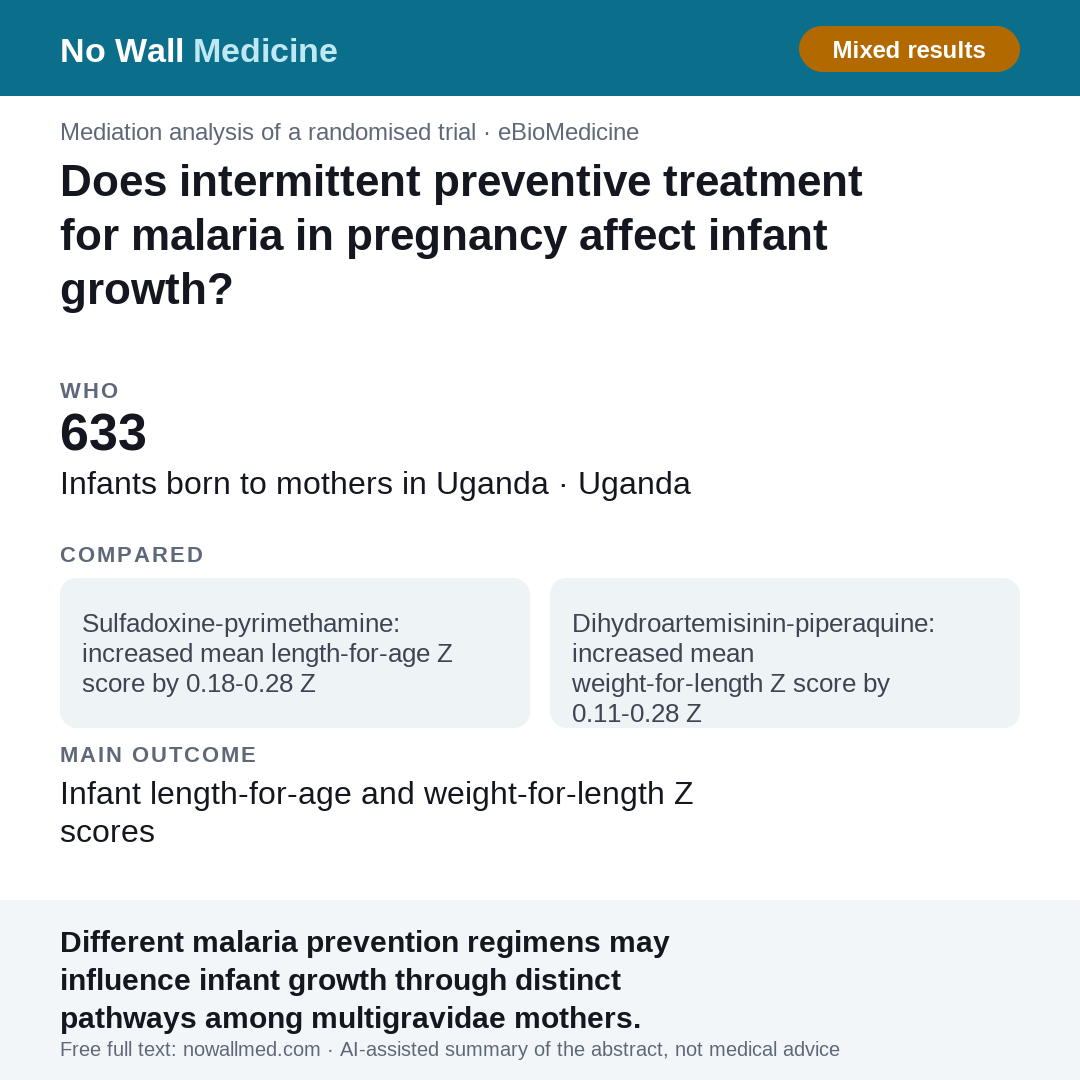
Intermittent preventive treatment for malaria in pregnancy and infant growth: a mediation analysis of a randomised trial
Mediation analysis of a randomised trialMixed results
Does intermittent preventive treatment for malaria in pregnancy affect infant growth?
Who
633
Infants born to mothers in Uganda · Uganda
Compared
Sulfadoxine-pyrimethamine: increased mean length-for-age Z score by 0.18-0.28 Z
Dihydroartemisinin-piperaquine: increased mean weight-for-length Z score by 0.11-0.28 Z
Main outcome
Infant length-for-age and weight-for-length Z scores
Bottom line: Different malaria prevention regimens may influence infant growth through distinct pathways among multigravidae mothers.
Funded by: Stanford, Eunice Kennedy Shriver NIH, Bill & Melinda Gates Foundation
eBioMedicine · 2024-10-16Download image
The impact of temperature on non-typhoidal Salmonella and Campylobacter infections: an updated systematic review and meta-analysis of epidemiological evidence
Systematic review and random-effects meta-analysisHarm found
How does ambient temperature affect non-typhoidal Salmonella and Campylobacter infections?
Who
General population in 27 countries across five continents · 27 countries across five continents
Compared
5%Salmonella per 1 °C rise (RR: 1.05, 95% CI: 1.04-1.06)
5%Campylobacter per 1 °C rise (RR: 1.05, 95% CI: 1.04-1.07%)
Main outcome
Risk of non-typhoidal Salmonella and Campylobacter infections
Result: RR 1.05 (95% CI 1.04-1.06) for Salmonella; RR 1.05 (95% CI 1.04-1.07%) for Campylobacter
Bottom line: Each 1 °C temperature increase is associated with a 5% increased risk of Salmonella and Campylobacter infections.
Limitation: Limited number of studies conducted in low and middle-income countries.
Funded by: Australian Research Council Discovery Projects grant
eBioMedicine · 2024-10-16Download image

Psychological interventions for suicidal behavior in adolescents: a comprehensive systematic review
Systematic reviewMixed results
What is the efficacy of psychological interventions for suicidal behavior in adolescents?
Who
40
Adolescents with suicidal behaviors
Compared
Dialectical behavior therapy: effective for adolescents at high risk of suicide and suicide attempts
Other psychological interventions: inconclusive
Main outcome
Efficacy of psychological interventions for suicide attempts
Bottom line: Dialectical behavior therapy is effective for high-risk adolescents, but other interventions for self-harm remain inconclusive.
Limitation: Replication and dismantling studies are needed to identify specific intervention effects and components.
Transl Psychiatry · 2024-10-16Download image

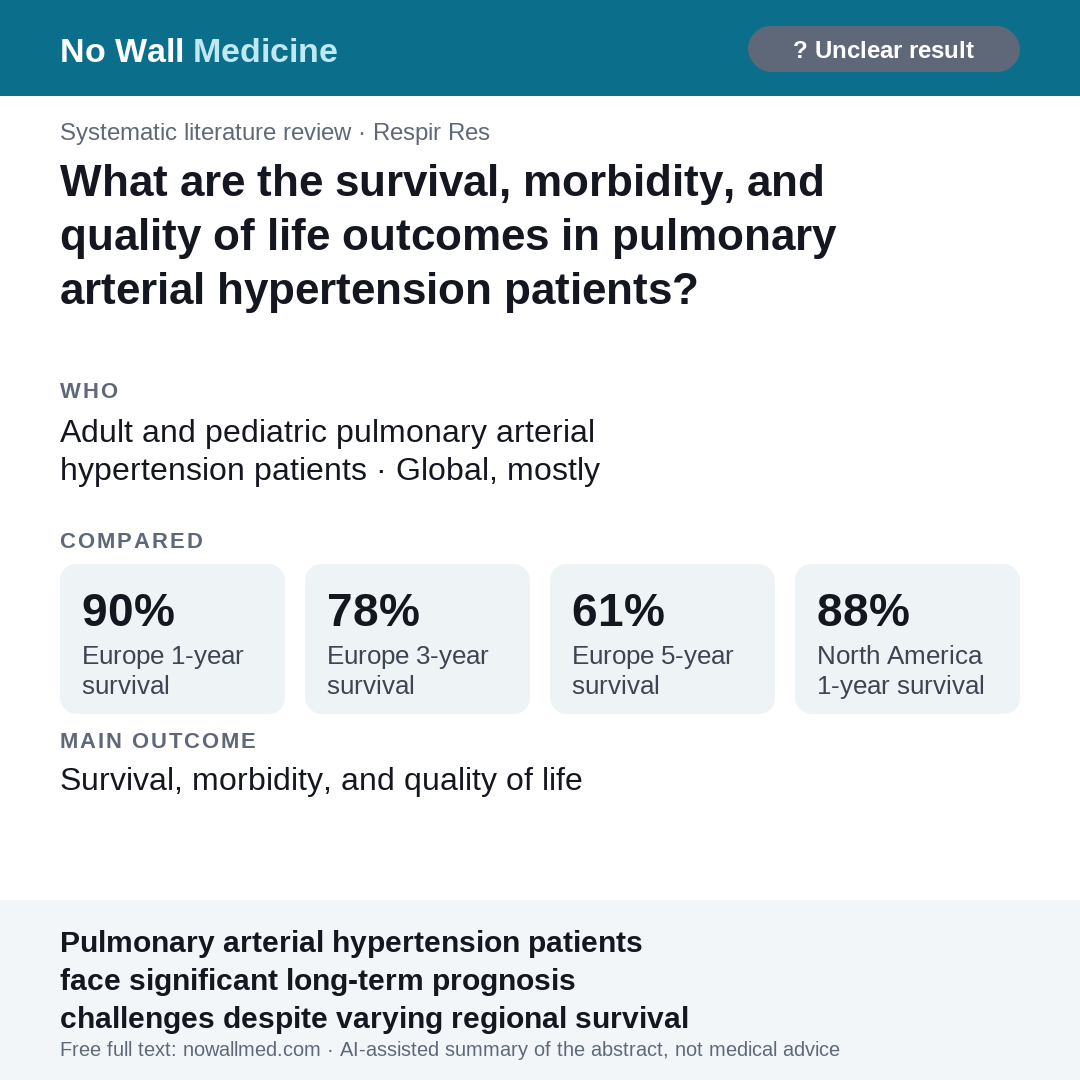
Survival, morbidity, and quality of life in pulmonary arterial hypertension patients: a systematic review of outcomes reported by population-based observational studies
Systematic literature reviewUnclear result
What are the survival, morbidity, and quality of life outcomes in pulmonary arterial hypertension patients?
Who
Adult and pediatric pulmonary arterial hypertension patients · Global, mostly national registries
Compared
90%Europe 1-year survival (95% CI 86-94%)
78%Europe 3-year survival (95% CI 68-86%)
61%Europe 5-year survival (95% CI 49-72%)
88%North America 1-year survival (95% CI 83-93%)
Main outcome
Survival, morbidity, and quality of life
Bottom line: Pulmonary arterial hypertension patients face significant long-term prognosis challenges despite varying regional survival rates.
Limitation: Large subgroup heterogeneity, potential missingness of data, and scarce pediatric survival estimates.
Respir Res · 2024-10-16Download image
Effect of peritoneal and wound lavage with super-oxidized solution on surgical-site infection after open appendicectomy in perforated appendicitis (PLaSSo): randomized clinical trial
Multicentre randomized clinical trialBenefit found
Does super-oxidized solution lavage reduce surgical-site infection after open appendicectomy for perforated appendicitis?
Who
102
Patients aged 13 years and older with perforated appendicitis · Multicentre
Compared
8Super-oxidized solution (15.6%)
19Normal saline (37.2%)
Main outcome
Surgical-site infection within 30 days after surgery
Result: relative risk 0.42 (95% c.i. 0.20 to 0.87)
Bottom line: Peritoneal and wound lavage with super-oxidized solution reduces surgical-site infection risk compared to normal saline.
BJS Open · 2024-10-16Download image

Recurrence and Risk Factors of Giant Cell Tumors in Hand Bones: A Systematic Review
Systematic reviewMixed results
What are the recurrence rates and risk factors for giant cell tumors in hand bones?
Who
244
Patients with giant cell tumor of bone in the hand
Compared
19.57%Overall
Curettage: higher recurrence rates
Main outcome
Postsurgical recurrence of giant cell tumor of bone
Bottom line: Giant cell tumors of the hand have a 19.57% recurrence rate, with curettage increasing risk.
Limitation: Sparse data in the primary studies
Plast Reconstr Surg Glob Open · 2024-10-16Download image

Optimizing Corticosteroid Sinonasal Irrigation Outcomes Through 3D Printing: A Randomized Pilot Clinical Trial
Randomized, single-blinded clinical trialBenefit found
Does 3D-printed nasal modeling optimize corticosteroid irrigation outcomes in chronic rhinosinusitis?
Who
36
Patients with chronic rhinosinusitis · Tertiary medical center
Compared
Control group
Backfill group
-3.73Model group (95% confidence interval = -5.71, -1.75)
Main outcome
Lund-Mackay scoring
Result: -3.73 (95% confidence interval = -5.71, -1.75)
Bottom line: Personalized 3D-printed models significantly improve objective corticosteroid irrigation outcomes via Lund-Mackay scoring.
Limitation: Small sample size with only 36 patients completing the trial
OTO Open · 2024-10-16Download image

Testing and Evaluation of Health Care Applications of Large Language Models: A Systematic Review
Systematic reviewMixed results
How are large language models currently evaluated in health care settings?
Who
519
Studies evaluating one or more large language models in health care
Compared
5%Studies using real patient care data
95.4%Studies using accuracy as primary dimension
Main outcome
Evaluation components including data type, task, and dimension
Bottom line: Evaluations mostly focus on accuracy in question answering for medical exams rather than real patient care data.
JAMA · 2024-10-15Download image

Intense simplified strategy for newly diagnosed type 2 diabetes in patients with severe hyperglycaemia: multicentre, open label, randomised trial
Multicentre, open label, randomised trialBenefit found
Does an intense simplified strategy improve long term glycaemic outcomes in newly diagnosed type 2 diabetes?
Who
412
412 patients with newly diagnosed type 2 diabetes and severe hyperglycaemia · 15 hospitals in China
Compared
80%Linagliptin plus metformin (78/97)
72%Linagliptin (63/88)
73%Metformin (69/95)
60%Control (lifestyle modification) (56/93)
Main outcome
Percentage of participants achieving HbA1c <7.0% at week 48
Result: odds ratio 2.78 (95% confidence interval 1.37 to 5.65)
Bottom line: Linagliptin plus metformin after short term intensive insulin therapy improved glycaemic control in newly diagnosed type 2 diabetes.
BMJ · 2024-10-15Download image