Visual abstracts
New randomized trials and meta-analyses from leading journals at a glance: who was studied, what was compared, and what was found. Every paper is free to read in full.
All specialtiesCardiology 2081Oncology 1780Gastroenterology & Hepatology 781Infectious Disease 1304Neurology 846Psychiatry & Mental Health 1014Pulmonology 877Critical Care 588Endocrinology & Diabetes 1101Pediatrics 1213Surgery 1051Orthopedics & Sports Medicine 386Neurosurgery 256Cardiothoracic & Vascular Surgery 220Plastic & Reconstructive Surgery 315Nephrology 437Rheumatology 290Hematology 456Dermatology 238Ophthalmology 237Obstetrics & Gynecology 675Public & Global Health 393Radiology & Imaging 288Anesthesiology 414Urology 366ENT (Otolaryngology) 272Emergency Medicine 228Allergy & Immunology 131Geriatrics 441Family Medicine & Primary Care 241Medical Genetics & Genomics 225Pathology & Laboratory Medicine 69Physical Medicine & Rehabilitation 360Palliative Care 178Nutrition 560Digital Health & AI 1067General Medicine 162
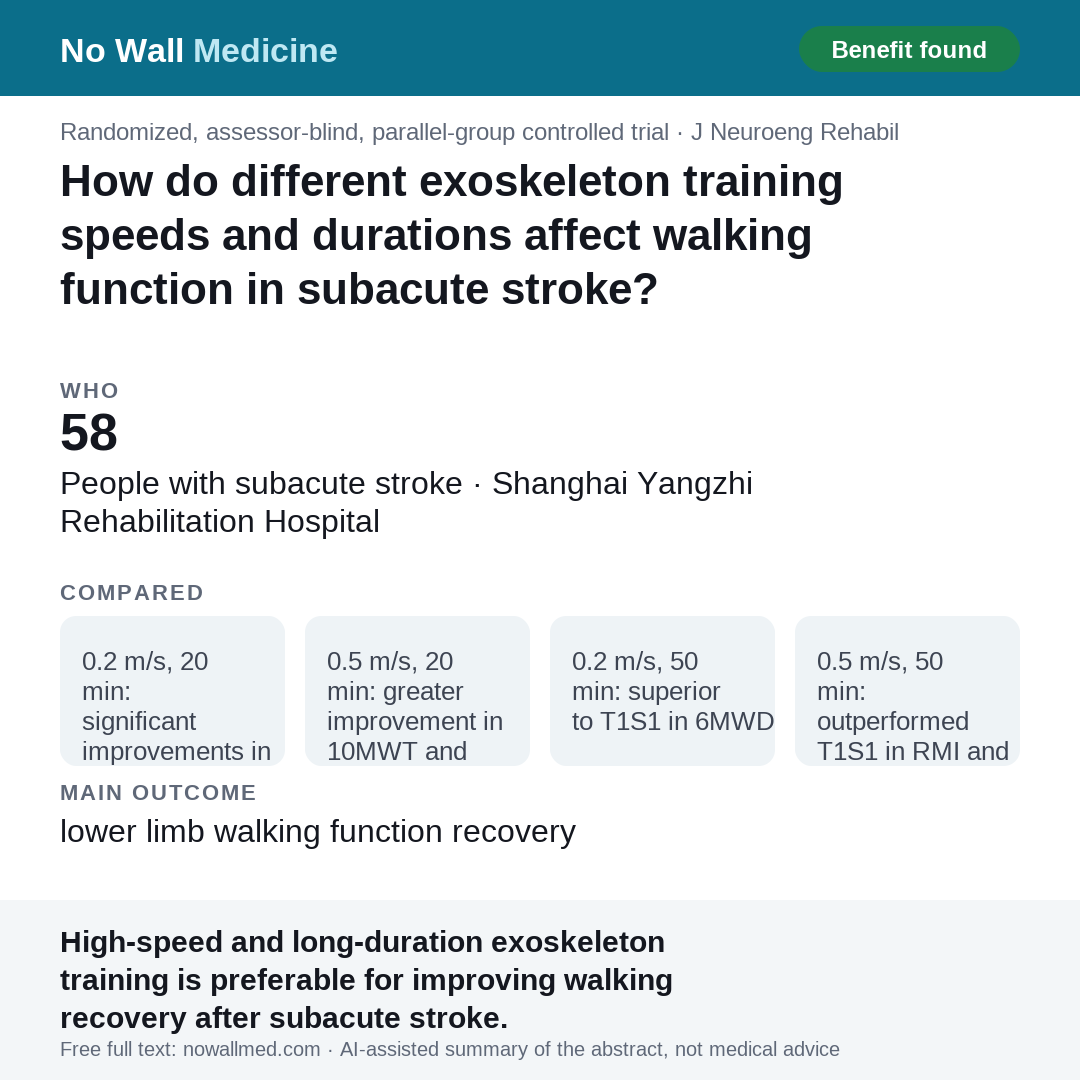
Effects of different intensity training with a lower limb exoskeleton robot on walking function in people with subacute stroke: a randomized controlled trial
Randomized, assessor-blind, parallel-group controlled trialBenefit found
How do different exoskeleton training speeds and durations affect walking function in subacute stroke?
Who
58
People with subacute stroke · Shanghai Yangzhi Rehabilitation Hospital
Compared
0.2 m/s, 20 min: significant improvements in all clinical outcomes
0.5 m/s, 20 min: greater improvement in 10MWT and FMA-LE than T1S1
0.2 m/s, 50 min: superior to T1S1 in 6MWD
0.5 m/s, 50 min: outperformed T1S1 in RMI and greatest improvement in gait speed
Main outcome
lower limb walking function recovery
Bottom line: High-speed and long-duration exoskeleton training is preferable for improving walking recovery after subacute stroke.
J Neuroeng Rehabil · 2026-03-19Download image
Approaches to Occipital Neuralgia Treatment: A Systematic Review and Case Examples
Systematic review and narrative synthesisUnclear result
What are the best approaches to managing occipital neuralgia?
Who
Patients with occipital neuralgia
Compared
Existing literature
Proposed clinical framework
Main outcome
Management, diagnostic evaluation, and treatment escalation
Bottom line: A structured, patient-specific framework is proposed to guide diagnosis and treatment escalation for occipital neuralgia.
Limitation: Only a minority of existing studies proposed structured algorithms.
Plast Reconstr Surg Glob Open · 2026-03-19Download image

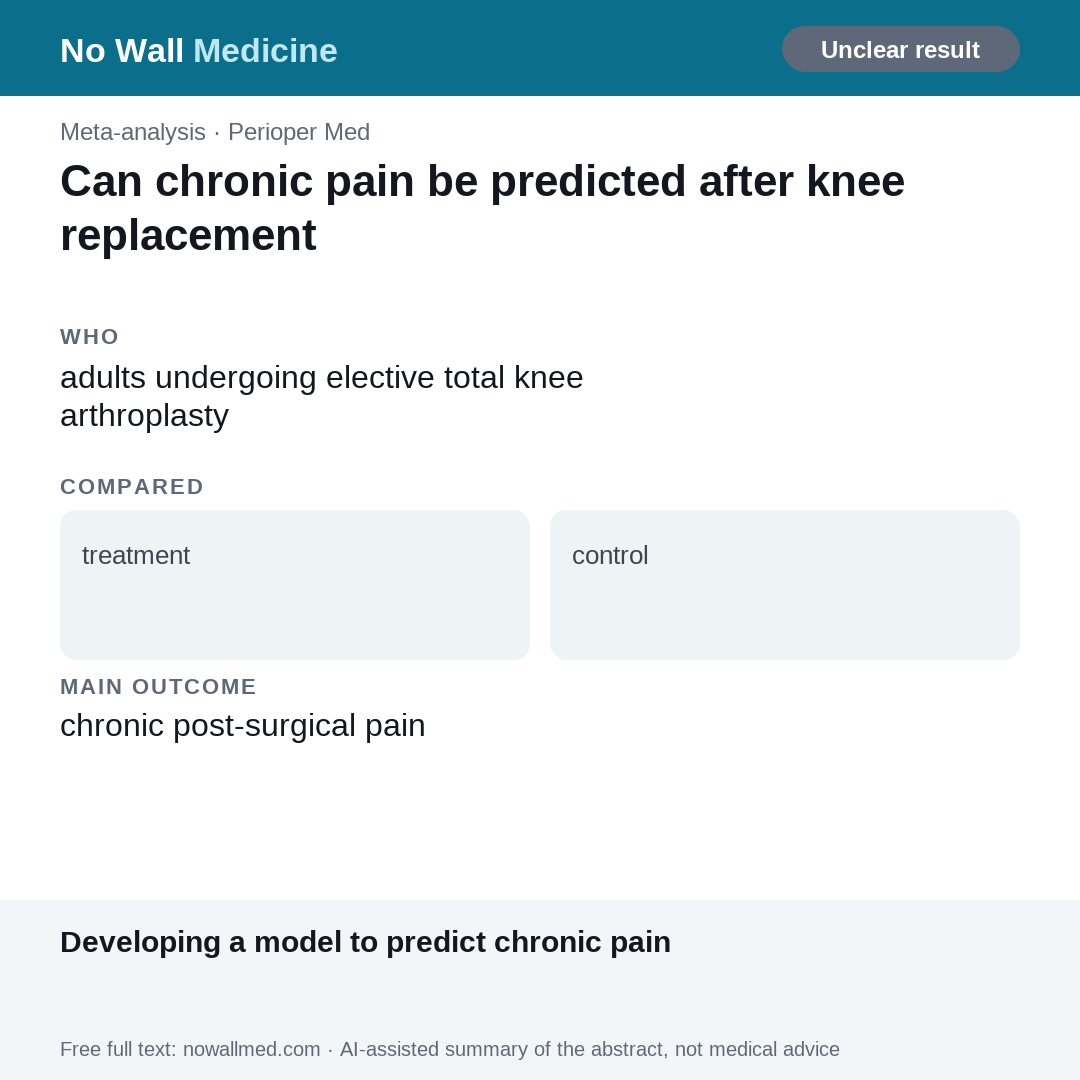
Development of risk prediction model for chronic pain after knee replacement surgery: protocol for an individual patient data meta-analysis
Meta-analysisUnclear result
Can chronic pain be predicted after knee replacement
Who
adults undergoing elective total knee arthroplasty
Compared
treatment
control
Main outcome
chronic post-surgical pain
Bottom line: Developing a model to predict chronic pain
Perioper Med · 2026-03-19Download image
Effect of ice-lollies on the recovery time after anaesthesia: protocol for a cluster-randomised trial (Icesthesia)
Monocentric cluster-randomised single-blinded controlled clinical superiority trialUnclear result
Do ice-lollies shorten length of stay in post-anaesthesia care?
Who
3140
Patients admitted to the post-anaesthesia care unit after anaesthesia · Large university medical centre
Compared
Ice-lollies plus standard of care
Standard of care only
Main outcome
Length of time spent in post-anaesthesia care until discharge
Bottom line: This protocol describes a trial to test if ice-lollies reduce post-anaesthesia care stay.
Perioper Med · 2026-03-19Download image

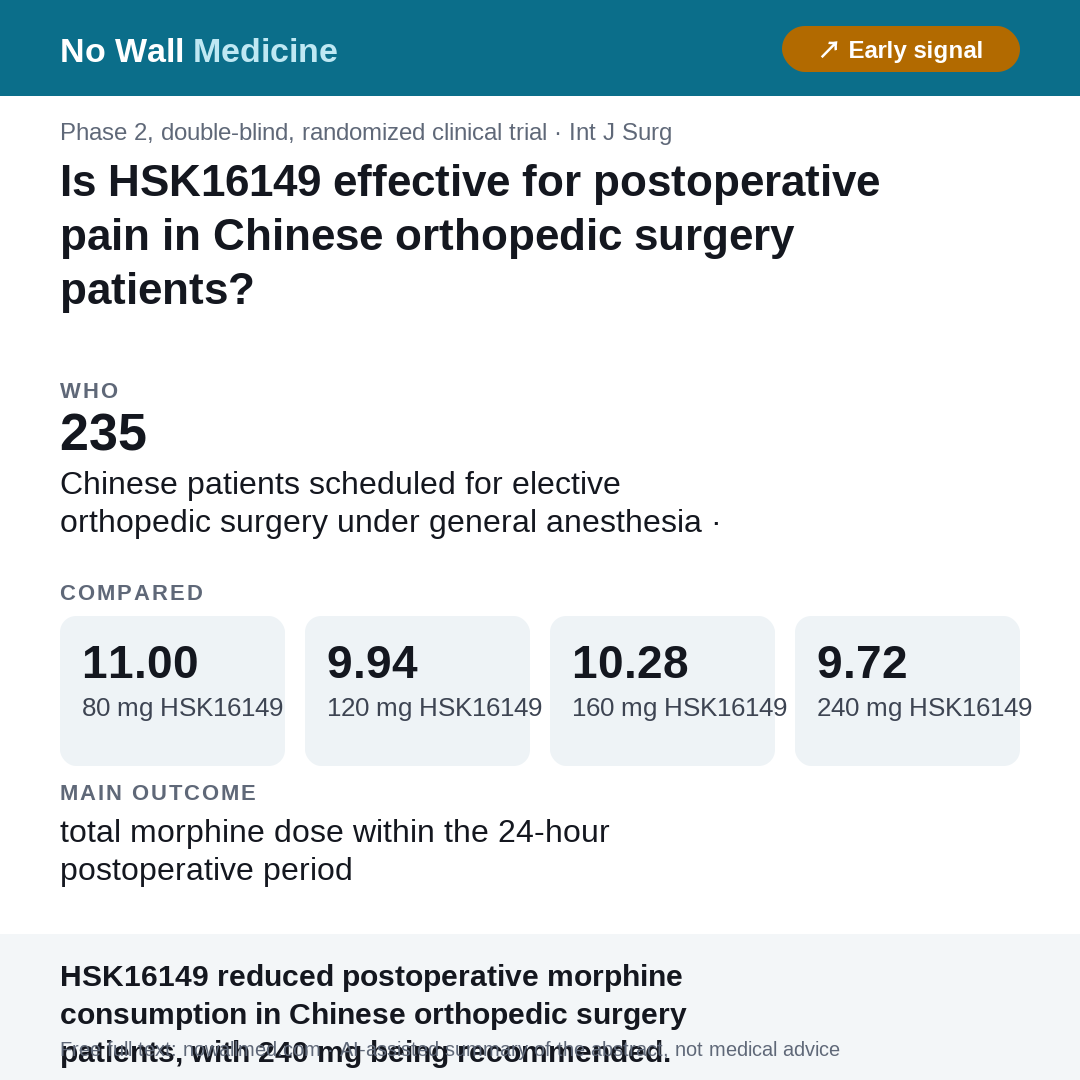
Efficacy and safety of HSK16149 for postoperative pain in Chinese patients after orthopedic surgery: a phase 2 randomized clinical trial
Phase 2, double-blind, randomized clinical trialBenefit found
Is HSK16149 effective for postoperative pain in Chinese orthopedic surgery patients?
Who
235
Chinese patients scheduled for elective orthopedic surgery under general anesthesia · 20 clinical hospitals in China
Compared
11.0080 mg HSK16149 (7.59)
9.94120 mg HSK16149 (8.15)
10.28160 mg HSK16149 (8.80)
9.72240 mg HSK16149 (10.07)
Main outcome
total morphine dose within the 24-hour postoperative period
Bottom line: HSK16149 reduced postoperative morphine consumption in Chinese orthopedic surgery patients, with 240 mg being recommended.
Int J Surg · 2026-03-18Download image
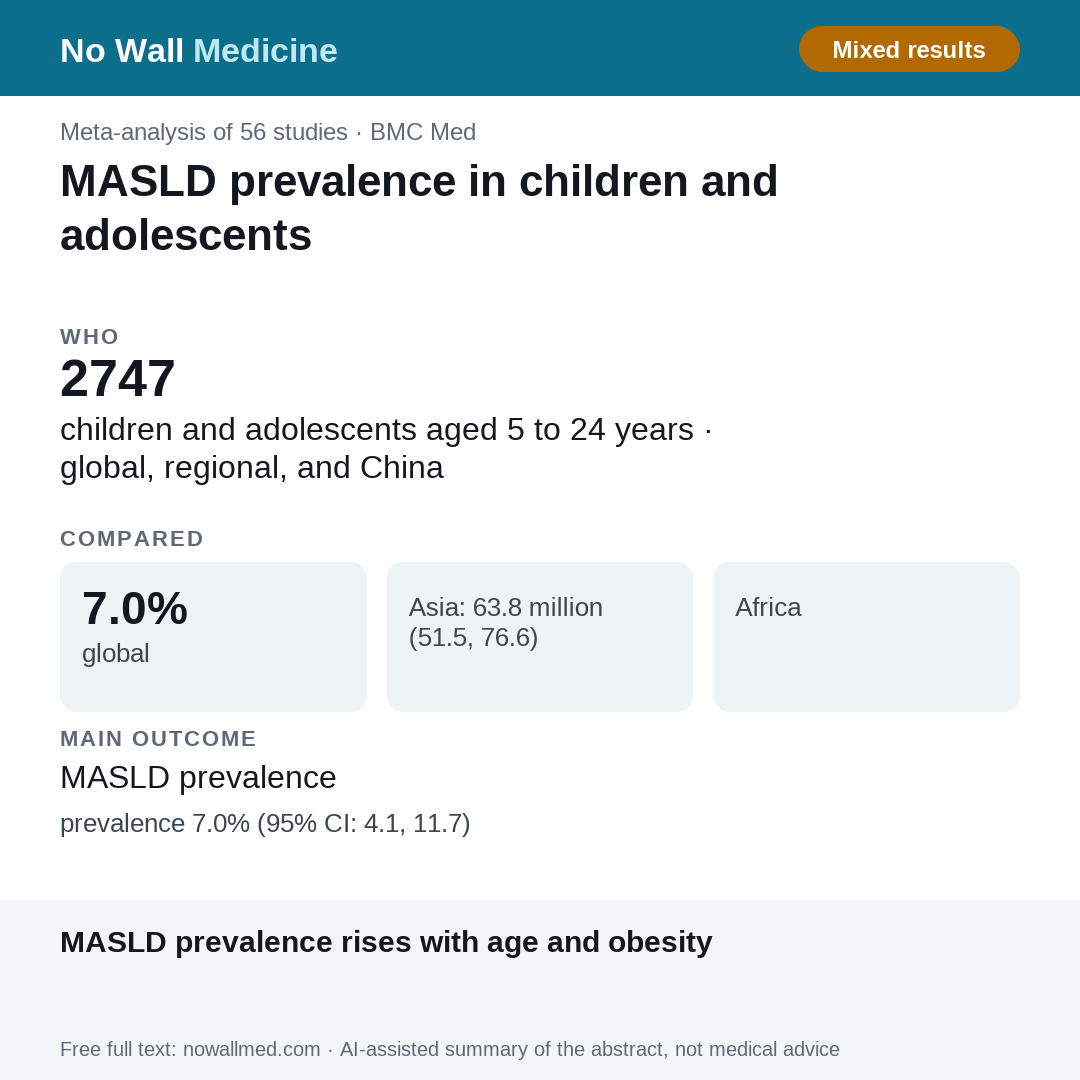
Global and regional prevalence, burden, and risk factors for MASLD in children and adolescents aged 5 to 24 years: a systematic review, meta-analysis, and modeling study
Meta-analysis of 56 studiesMixed results
MASLD prevalence in children and adolescents
Who
2747
children and adolescents aged 5 to 24 years · global, regional, and China
Compared
7.0%global (95% CI: 4.1, 11.7)
Asia: 63.8 million (51.5, 76.6)
Africa
Main outcome
MASLD prevalence
Result: prevalence 7.0% (95% CI: 4.1, 11.7)
Bottom line: MASLD prevalence rises with age and obesity
BMC Med · 2026-03-18Download image
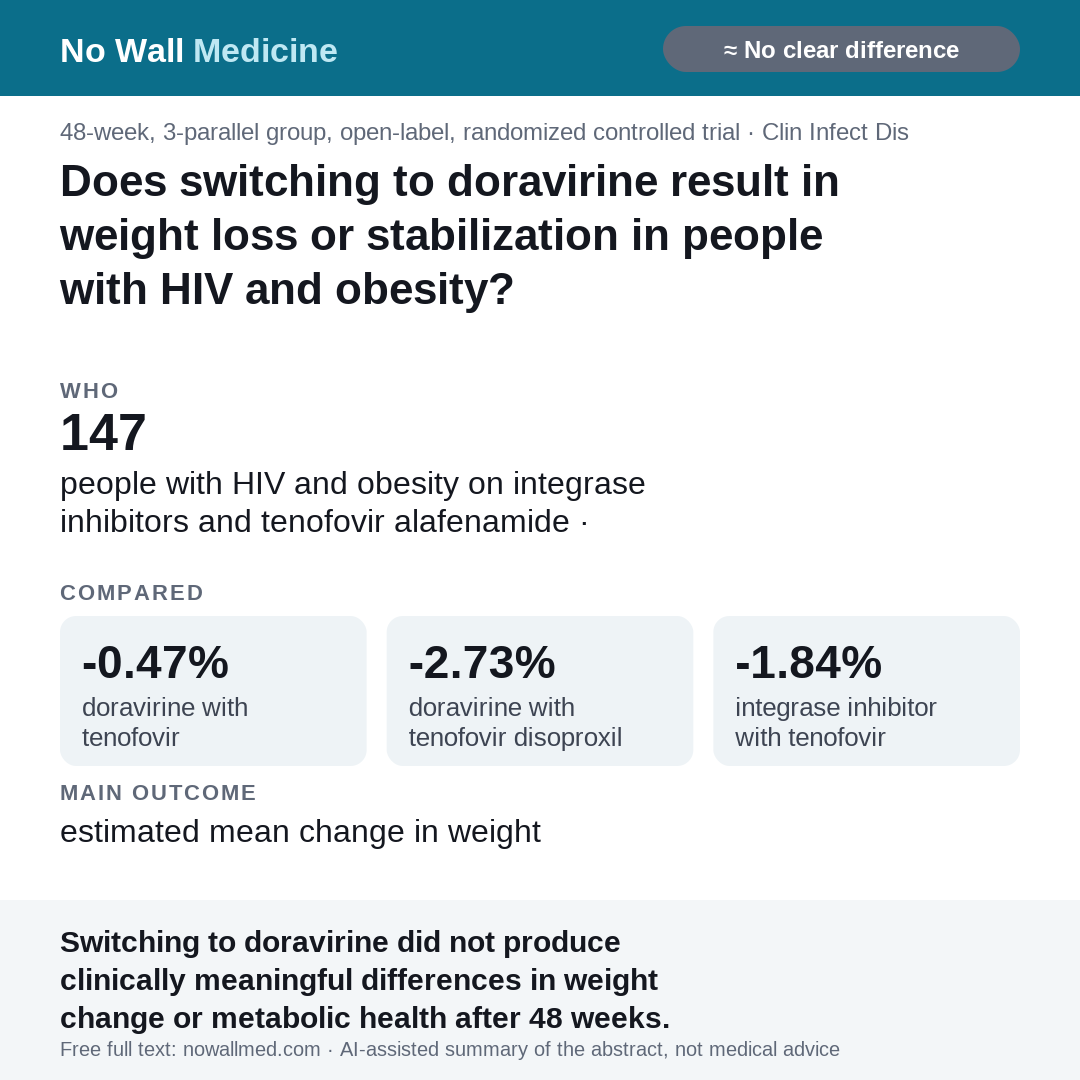
A 48-Week, Randomized Controlled Trial of Doravirine for Individuals With HIV and Obesity on Integrase Inhibitors and Tenofovir Alafenamide: The Do IT Study (ACTG A5391)
48-week, 3-parallel group, open-label, randomized controlled trialNo clear difference
Does switching to doravirine result in weight loss or stabilization in people with HIV and obesity?
Who
147
people with HIV and obesity on integrase inhibitors and tenofovir alafenamide · multicenter
Compared
-0.47%doravirine with tenofovir alafenamide and emtricitabine (95% CI: -2.09, 1.14)
-2.73%doravirine with tenofovir disoproxil fumarate and emtricitabine (-4.22, -1.23)
-1.84%integrase inhibitor with tenofovir alafenamide and emtricitabine (-3.37, -0.30)
Main outcome
estimated mean change in weight
Result: 1.36 percentage points (97.5% CI: -1.20, 3.92) for DOR versus INSTI (both with TAF/FTC)
Bottom line: Switching to doravirine did not produce clinically meaningful differences in weight change or metabolic health after 48 weeks.
Clin Infect Dis · 2026-03-18Download image
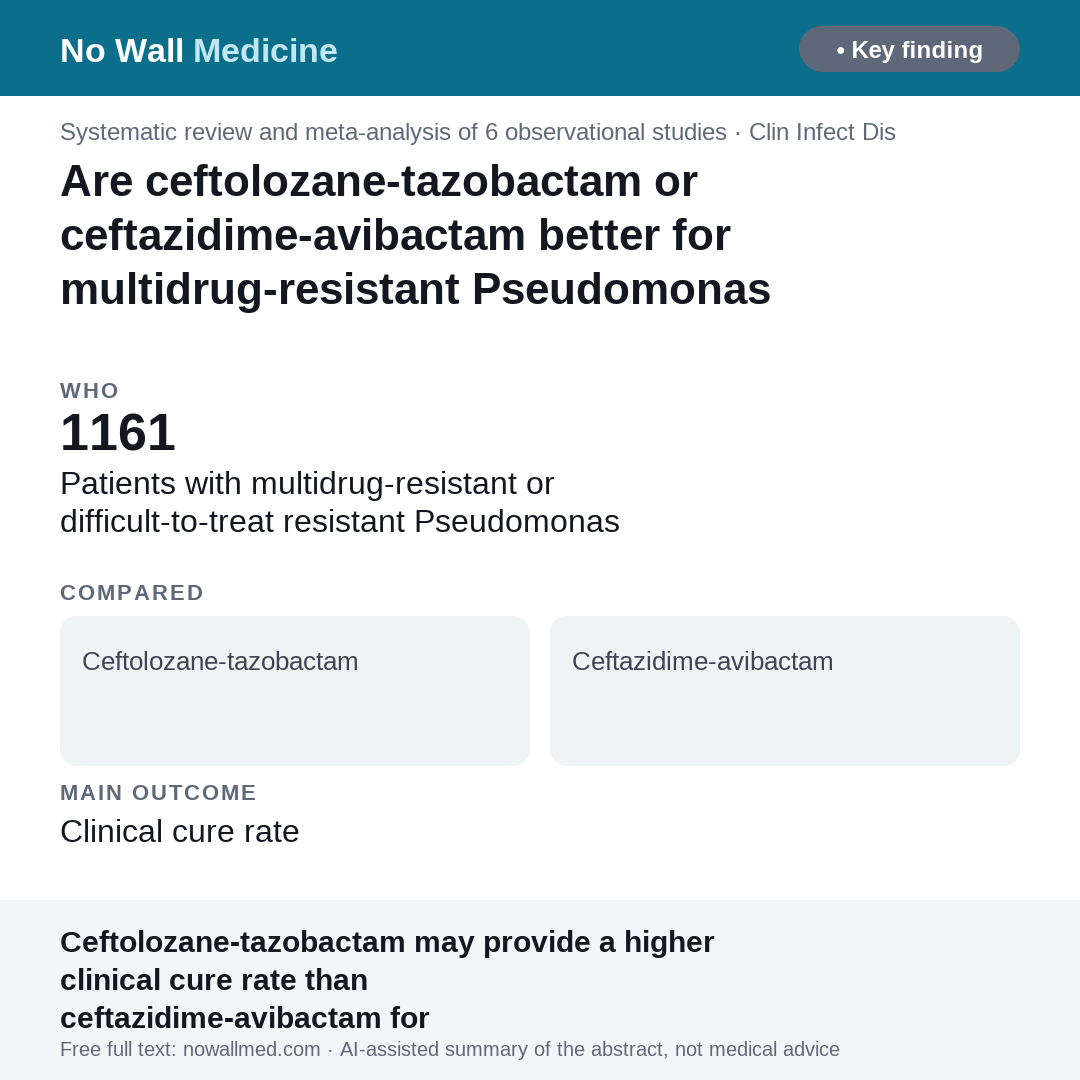
Comparison of Ceftolozane-Tazobactam and Ceftazidime-Avibactam in the Treatment of Multidrug-Resistant/Difficult-to-Treat Resistant Pseudomonas aeruginosa Infections: A Systematic Review and Meta-analysis
Systematic review and meta-analysis of 6 observational studiesBenefit found
Are ceftolozane-tazobactam or ceftazidime-avibactam better for multidrug-resistant Pseudomonas aeruginosa infections?
Who
1161
Patients with multidrug-resistant or difficult-to-treat resistant Pseudomonas aeruginosa infections
Compared
Ceftolozane-tazobactam
Ceftazidime-avibactam
Main outcome
Clinical cure rate
Result: odds ratio 1.82 (95% confidence interval 1.10-2.99)
Bottom line: Ceftolozane-tazobactam may provide a higher clinical cure rate than ceftazidime-avibactam for multidrug-resistant Pseudomonas aeruginosa infections.
Limitation: The analysis was based on 6 observational studies.
Clin Infect Dis · 2026-03-18Download image
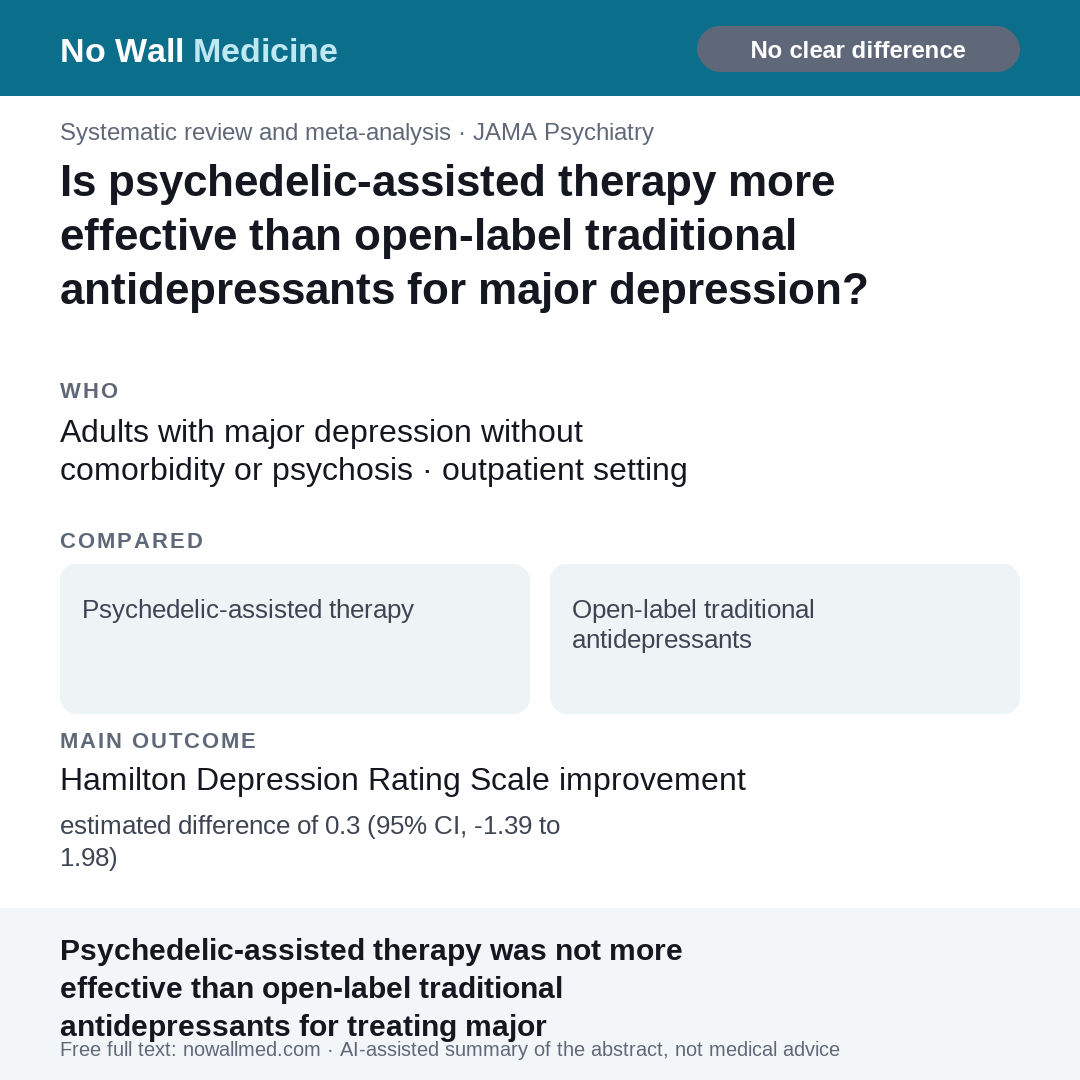
Psychedelic Therapy vs Antidepressants for the Treatment of Depression Under Equal Unblinding Conditions: A Systematic Review and Meta-Analysis
Systematic review and meta-analysisNo clear difference
Is psychedelic-assisted therapy more effective than open-label traditional antidepressants for major depression?
Who
Adults with major depression without comorbidity or psychosis · outpatient setting
Compared
Psychedelic-assisted therapy
Open-label traditional antidepressants
Main outcome
Hamilton Depression Rating Scale improvement
Result: estimated difference of 0.3 (95% CI, -1.39 to 1.98)
Bottom line: Psychedelic-assisted therapy was not more effective than open-label traditional antidepressants for treating major depression.
JAMA Psychiatry · 2026-03-18Download image
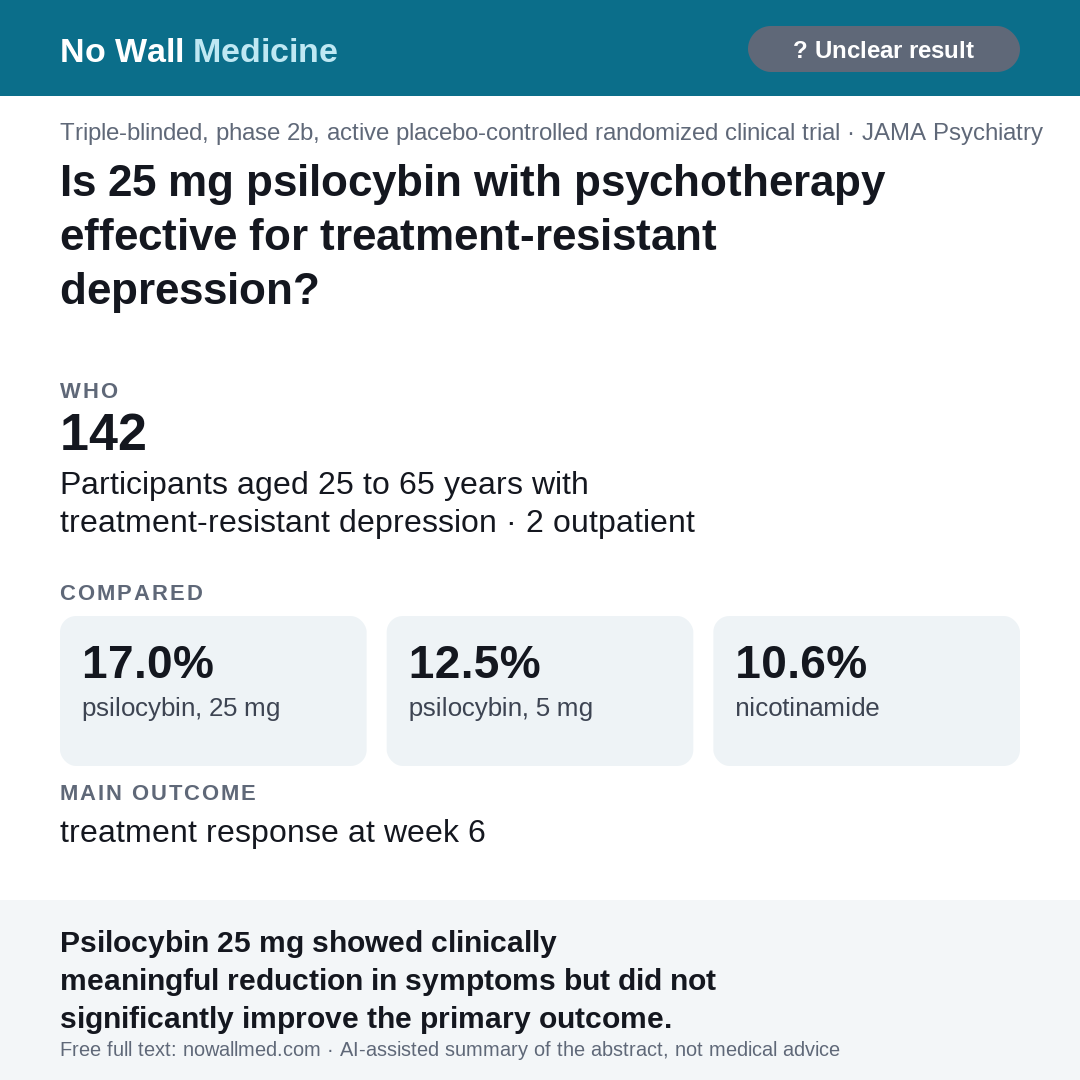
Efficacy and Safety of Psilocybin in Treatment-Resistant Major Depression: The EPISODE Randomized Clinical Trial
Triple-blinded, phase 2b, active placebo-controlled randomized clinical trialUnclear result
Is 25 mg psilocybin with psychotherapy effective for treatment-resistant depression?
Who
142
Participants aged 25 to 65 years with treatment-resistant depression · 2 outpatient settings in Germany
Compared
17.0%psilocybin, 25 mg
12.5%psilocybin, 5 mg
10.6%nicotinamide
Main outcome
treatment response at week 6
Result: adjusted odds ratio 1.73 (95% CI, 0.53-6.23)
Bottom line: Psilocybin 25 mg showed clinically meaningful reduction in symptoms but did not significantly improve the primary outcome.
Limitation: Findings did not show a significant effect on the primary outcome.
JAMA Psychiatry · 2026-03-18Download image
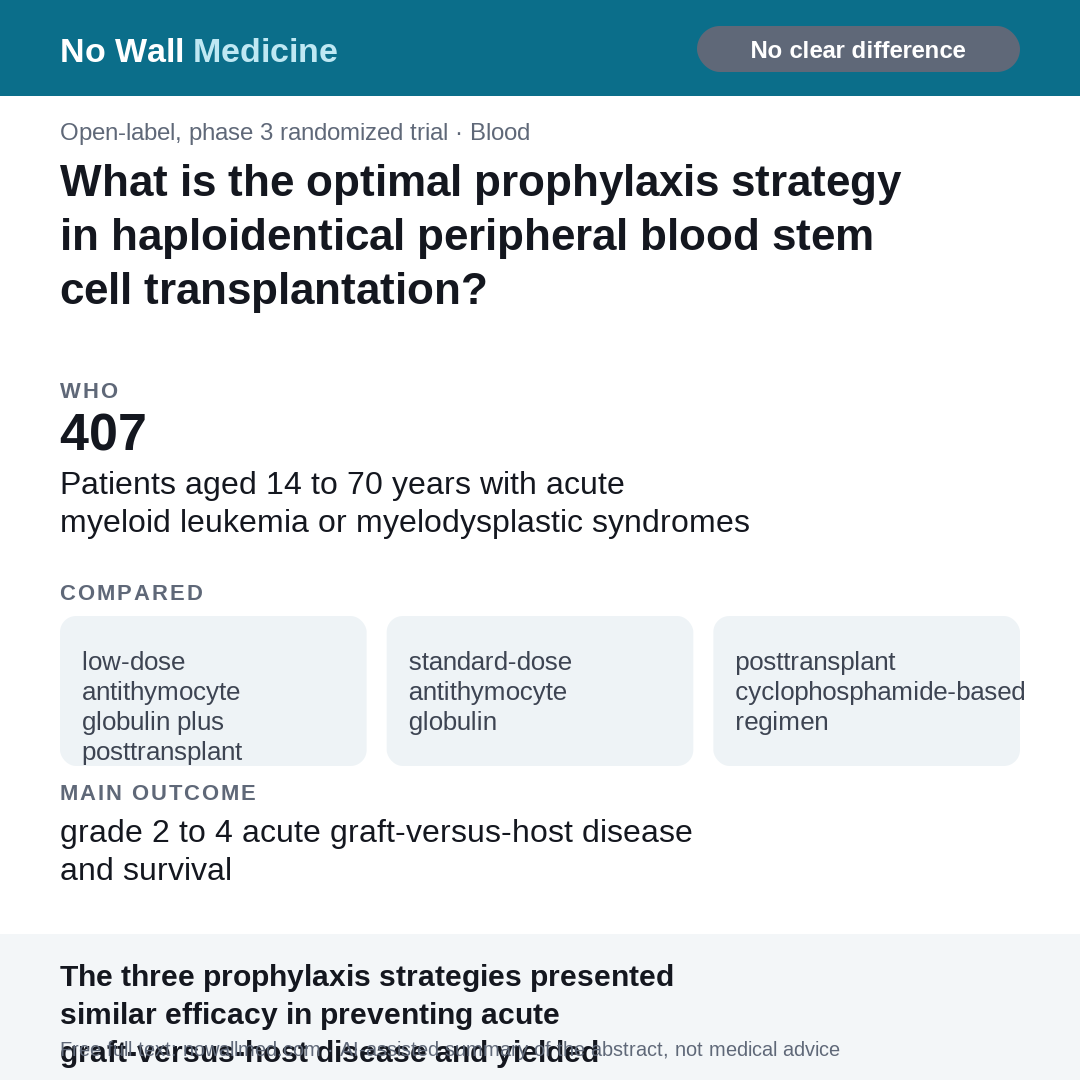
A randomized trial of GVHD prophylaxis in haploidentical PBSC transplantation: ATG, PTCy, and low-dose combination therapy
Open-label, phase 3 randomized trialNo clear difference
What is the optimal prophylaxis strategy in haploidentical peripheral blood stem cell transplantation?
Who
407
Patients aged 14 to 70 years with acute myeloid leukemia or myelodysplastic syndromes
Compared
low-dose antithymocyte globulin plus posttransplant cyclophosphamide
standard-dose antithymocyte globulin
posttransplant cyclophosphamide-based regimen
Main outcome
grade 2 to 4 acute graft-versus-host disease and survival
Bottom line: The three prophylaxis strategies presented similar efficacy in preventing acute graft-versus-host disease and yielded comparable survival.
Blood · 2026-03-18Download image
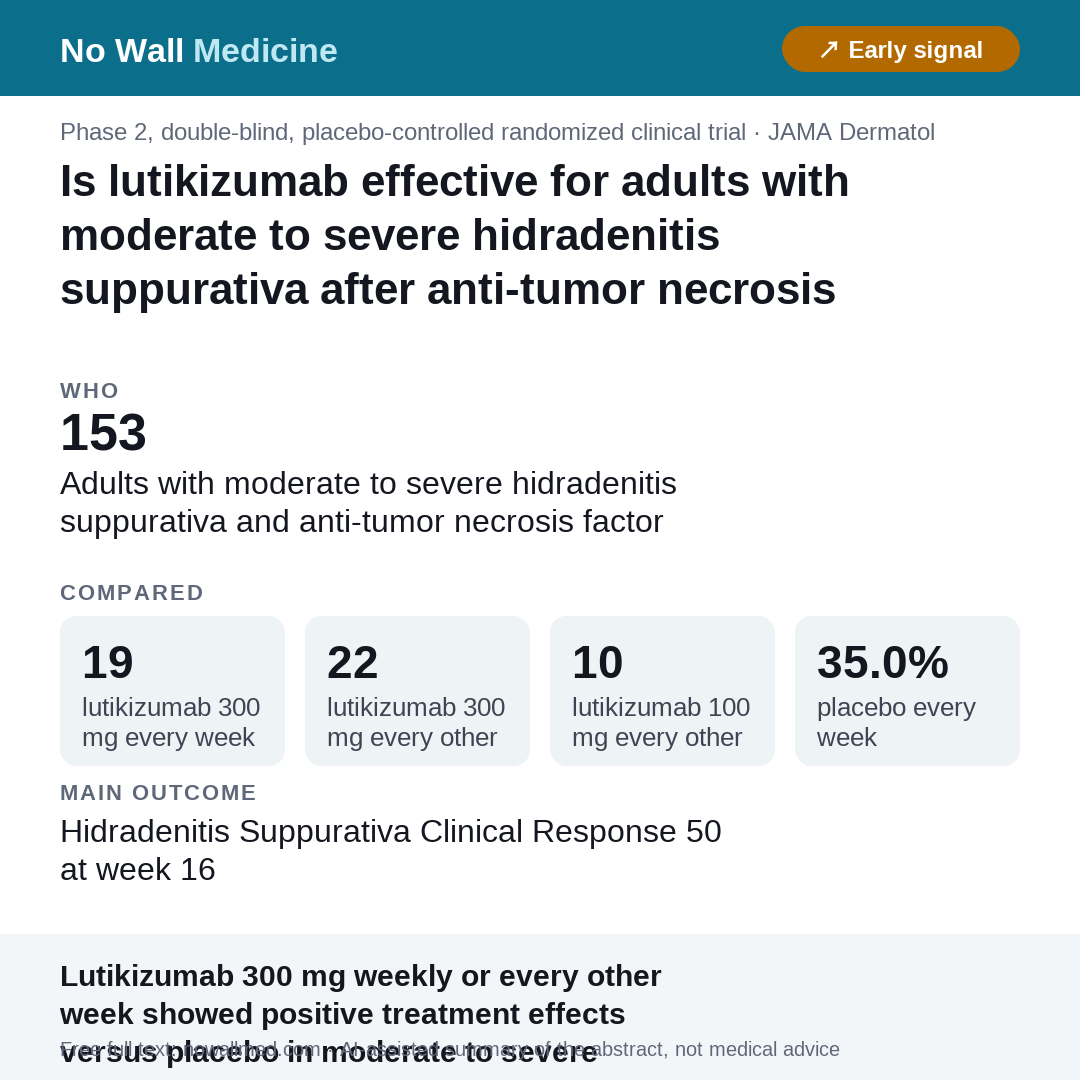
Lutikizumab in Adults With Moderate to Severe Hidradenitis Suppurativa After Anti-TNF Therapy Failure: A Phase 2 Randomized Clinical Trial
Phase 2, double-blind, placebo-controlled randomized clinical trialBenefit found
Is lutikizumab effective for adults with moderate to severe hidradenitis suppurativa after anti-tumor necrosis factor failure?
Who
153
Adults with moderate to severe hidradenitis suppurativa and anti-tumor necrosis factor failure · 45 sites in 8 countries or territories
Compared
19lutikizumab 300 mg every week (48.7%)
22lutikizumab 300 mg every other week (59.5%)
10lutikizumab 100 mg every other week (27.0%)
35.0%placebo every week
Main outcome
Hidradenitis Suppurativa Clinical Response 50 at week 16
Bottom line: Lutikizumab 300 mg weekly or every other week showed positive treatment effects versus placebo in moderate to severe hidradenitis suppurativa.
JAMA Dermatol · 2026-03-18Download image
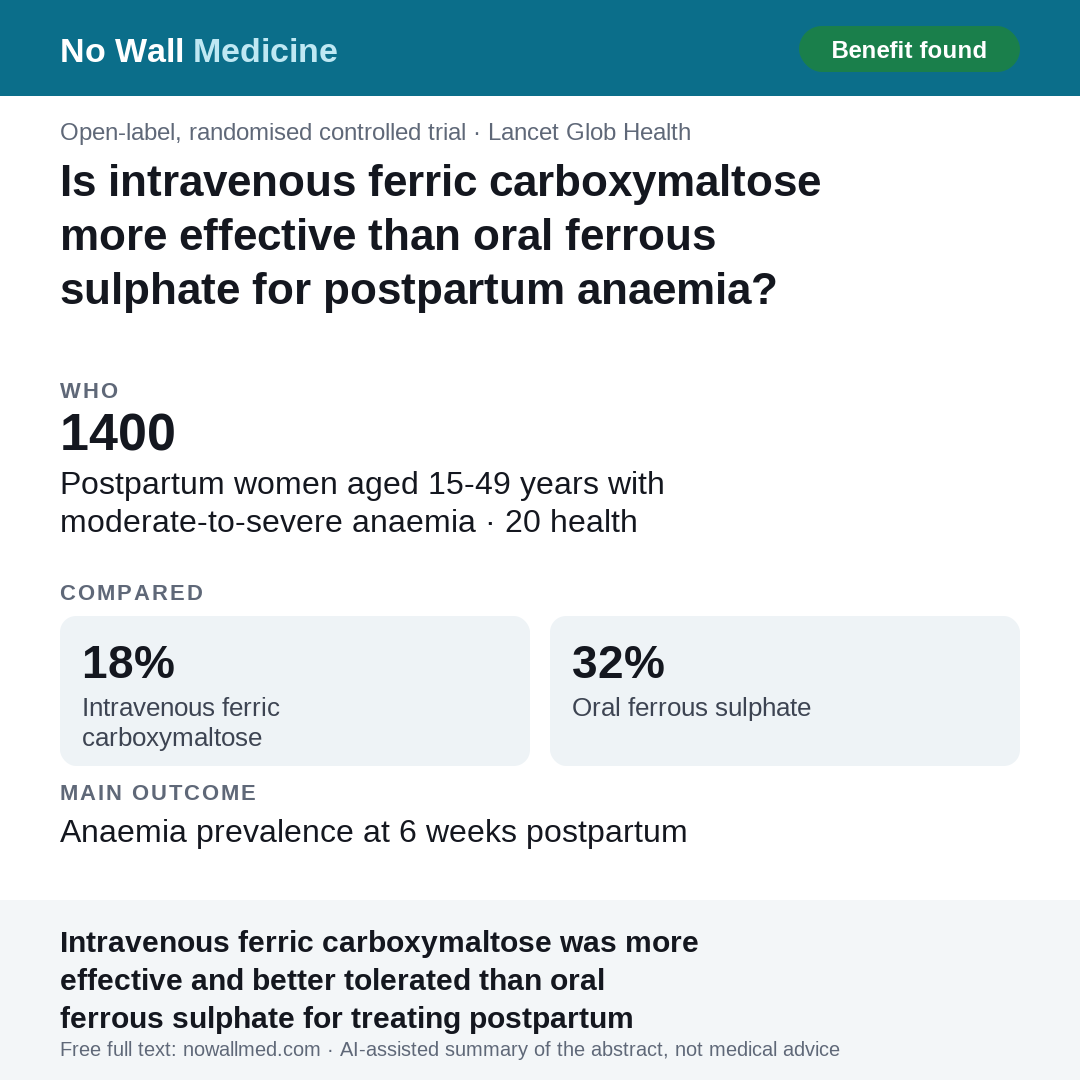
Intravenous ferric carboxymaltose versus oral ferrous sulphate for the treatment of moderate-to-severe postpartum anaemia in Nigerian women (IVON-PP): an open-label, randomised controlled trial
Open-label, randomised controlled trialBenefit found
Is intravenous ferric carboxymaltose more effective than oral ferrous sulphate for postpartum anaemia?
Who
1400
Postpartum women aged 15-49 years with moderate-to-severe anaemia · 20 health facilities across Nigeria
Compared
18%Intravenous ferric carboxymaltose (115 of 655)
32%Oral ferrous sulphate (214 of 662)
Main outcome
Anaemia prevalence at 6 weeks postpartum
Result: risk ratio 0·54, 95% CI 0·44-0·66
Bottom line: Intravenous ferric carboxymaltose was more effective and better tolerated than oral ferrous sulphate for treating postpartum anaemia.
Funded by: Bill & Melinda Gates Foundation
Lancet Glob Health · 2026-03-18Download image
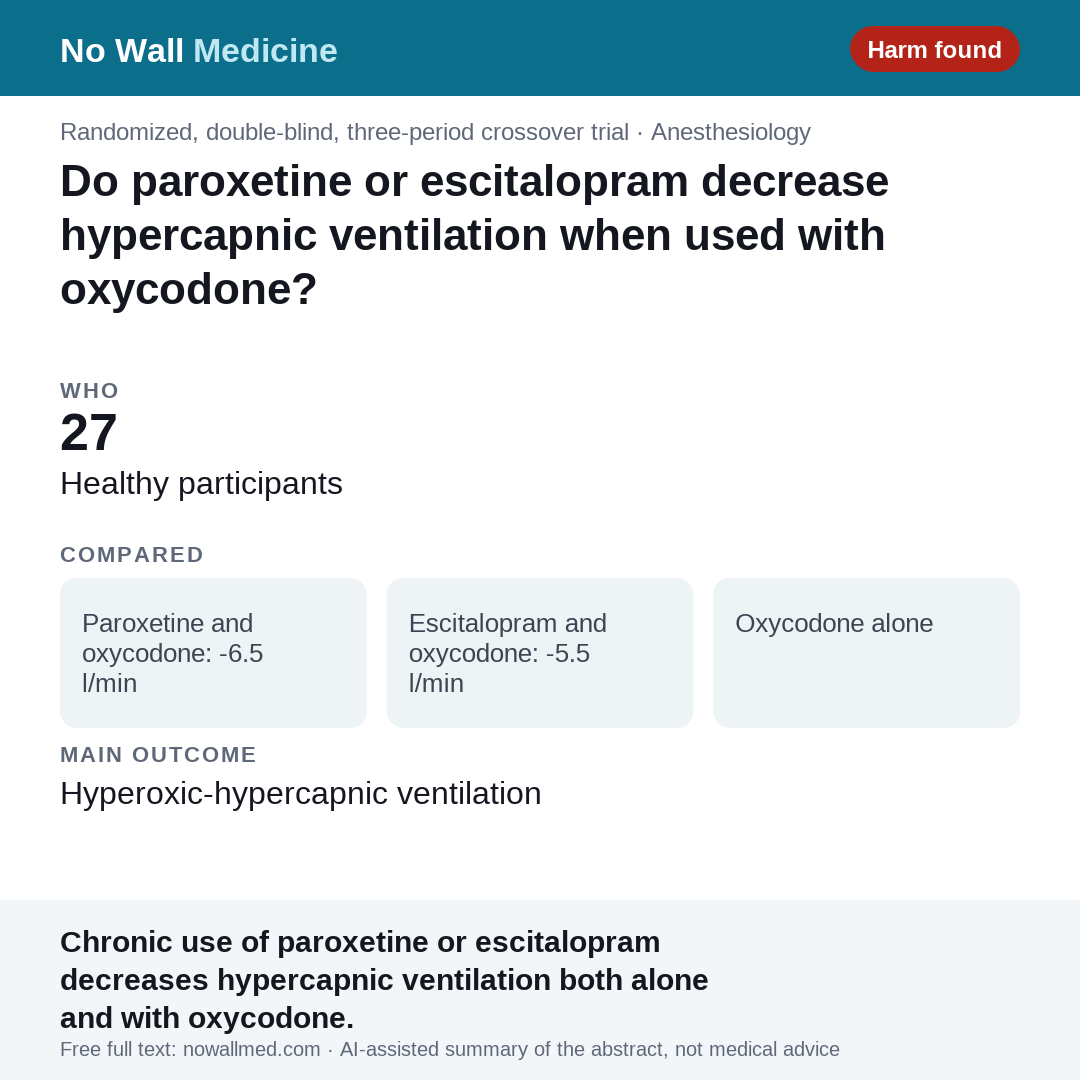
Effect of Paroxetine or Escitalopram Coadministered with Oxycodone versus Oxycodone Alone on Ventilation during Hypercapnia: A Randomized Clinical Trial
Randomized, double-blind, three-period crossover trialHarm found
Do paroxetine or escitalopram decrease hypercapnic ventilation when used with oxycodone?
Who
27
Healthy participants
Compared
Paroxetine and oxycodone: -6.5 l/min
Escitalopram and oxycodone: -5.5 l/min
Oxycodone alone
Main outcome
Hyperoxic-hypercapnic ventilation
Bottom line: Chronic use of paroxetine or escitalopram decreases hypercapnic ventilation both alone and with oxycodone.
Anesthesiology · 2026-03-18Download image
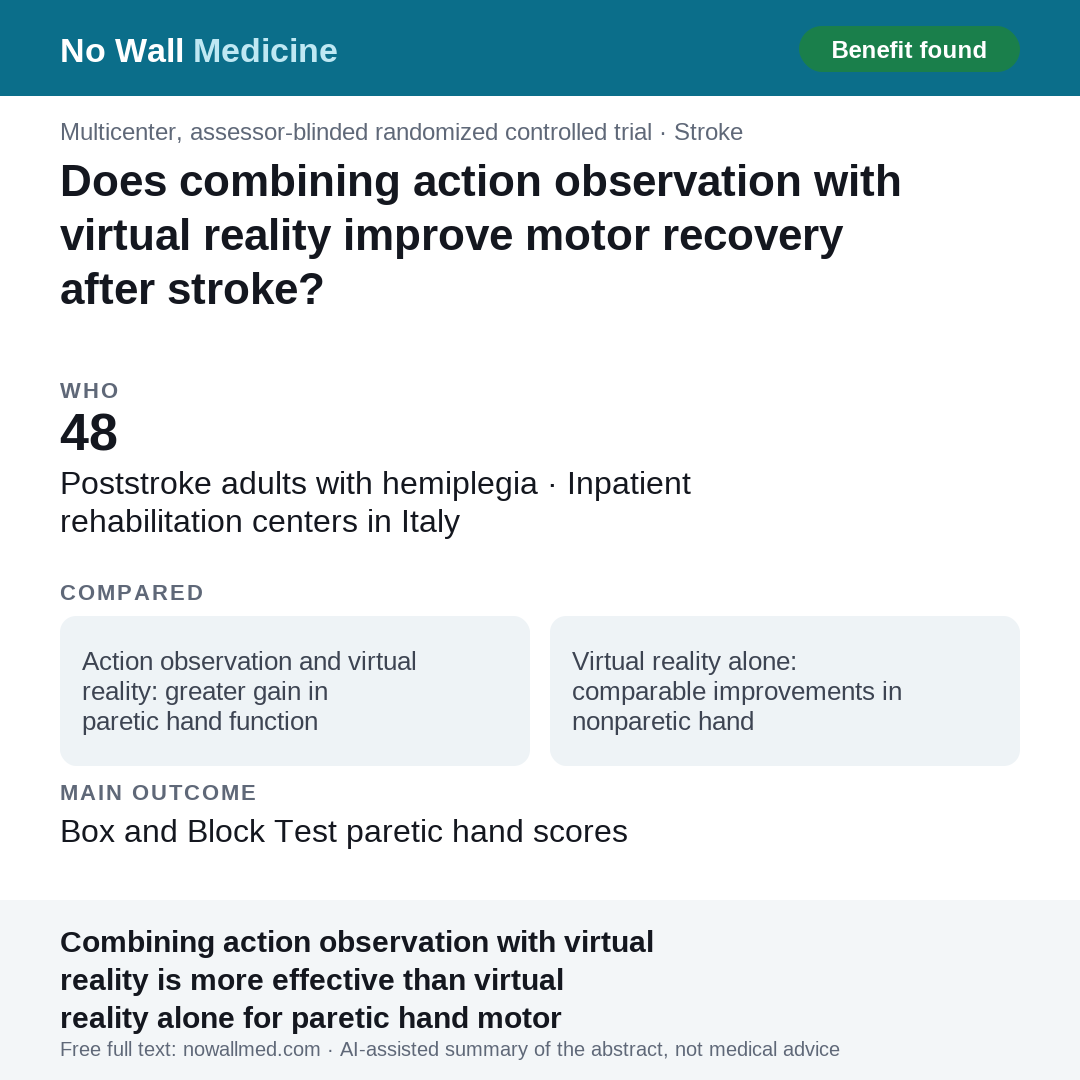
Action Observation Combined With Virtual Reality Promotes Motor Recovery After Stroke: A Randomized Controlled Trial
Multicenter, assessor-blinded randomized controlled trialBenefit found
Does combining action observation with virtual reality improve motor recovery after stroke?
Who
48
Poststroke adults with hemiplegia · Inpatient rehabilitation centers in Italy
Compared
Action observation and virtual reality: greater gain in paretic hand function
Virtual reality alone: comparable improvements in nonparetic hand
Main outcome
Box and Block Test paretic hand scores
Result: between-group difference in change of 7.8 blocks (95% CI, 7.1-7.9)
Bottom line: Combining action observation with virtual reality is more effective than virtual reality alone for paretic hand motor recovery.
Limitation: Treatment effects varied according to age and time from stroke.
Stroke · 2026-03-18Download image
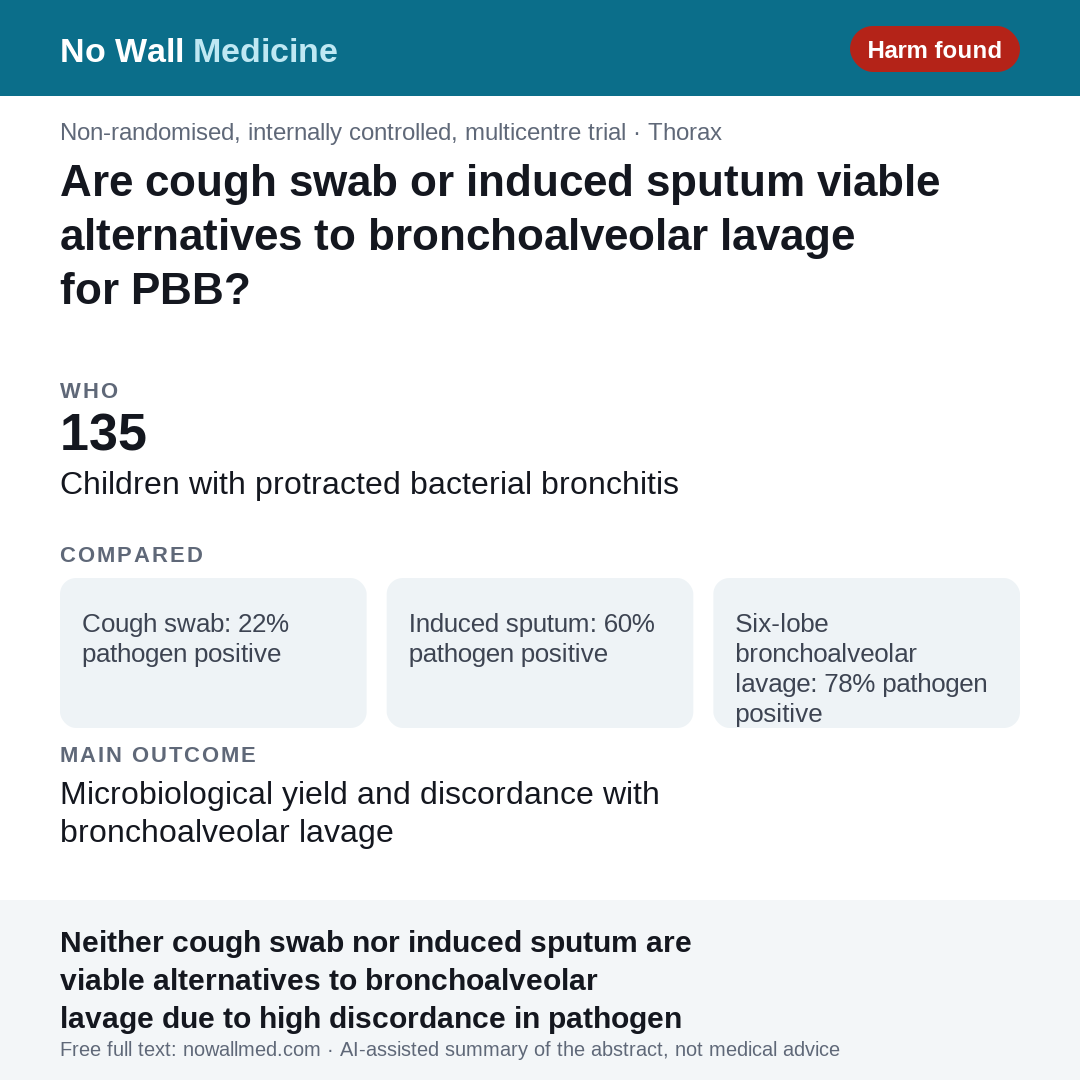
Comparison of Lower Airway Sampling Strategies in Children with Protracted Bacterial Bronchitis (CLASSIC-PBB): a non-randomised, internally controlled, multicentre trial
Non-randomised, internally controlled, multicentre trialHarm found
Are cough swab or induced sputum viable alternatives to bronchoalveolar lavage for PBB?
Who
135
Children with protracted bacterial bronchitis
Compared
Cough swab: 22% pathogen positive
Induced sputum: 60% pathogen positive
Six-lobe bronchoalveolar lavage: 78% pathogen positive
Main outcome
Microbiological yield and discordance with bronchoalveolar lavage
Result: cough swab/BAL6 discordance OR 30.3 (95% CI 9.6 to 95.8)
Bottom line: Neither cough swab nor induced sputum are viable alternatives to bronchoalveolar lavage due to high discordance in pathogen yield.
Thorax · 2026-03-18Download image
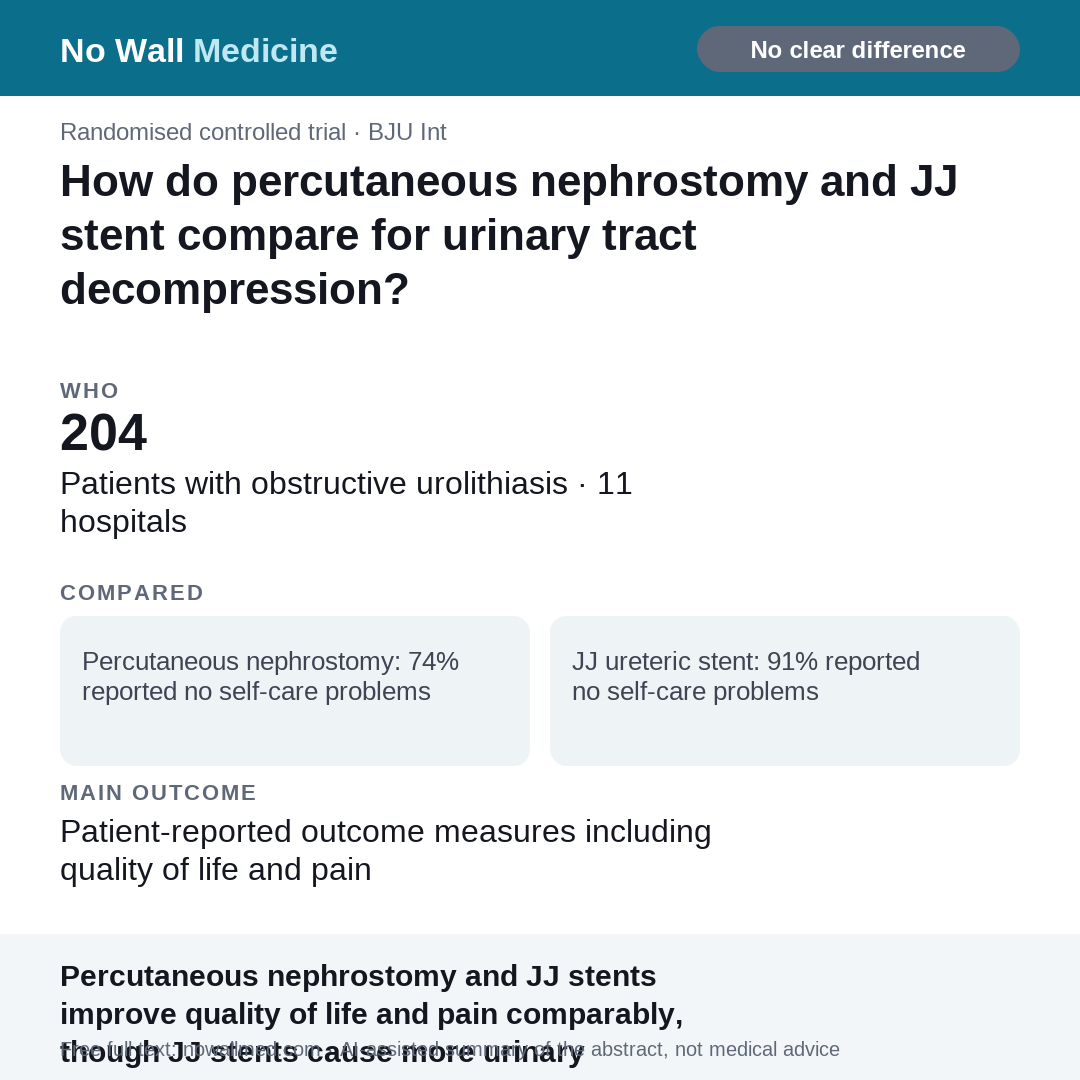
Patient-reported outcome measures of percutaneous nephrostomy vs JJ stent in obstructive urolithiasis: results of the STent Or NEphrostomy (STONE) randomised controlled trial
Randomised controlled trialNo clear difference
How do percutaneous nephrostomy and JJ stent compare for urinary tract decompression?
Who
204
Patients with obstructive urolithiasis · 11 hospitals
Compared
Percutaneous nephrostomy: 74% reported no self-care problems
JJ ureteric stent: 91% reported no self-care problems
Main outcome
Patient-reported outcome measures including quality of life and pain
Bottom line: Percutaneous nephrostomy and JJ stents improve quality of life and pain comparably, though JJ stents cause more urinary symptoms.
Limitation: Survey-based data collection may introduce response bias with a 59% response rate.
BJU Int · 2026-03-18Download image
Unequal ends: A systematic review comparing place of death in rural, coastal and urban areas for older people with dementia to cancer
Systematic reviewMixed results
How does location impact where people with dementia and cancer die?
Who
6,988,050
Older people with dementia and people with cancer · Not specified
Compared
Dementia in rural areas: more likely to die in residential care
Dementia in urban areas: more likely to die in hospital
Main outcome
Place of death across rural, coastal and urban areas
Bottom line: Urban residents die more often in hospitals, while rural residents die more often in residential care or home.
Palliat Med · 2026-03-18Download image

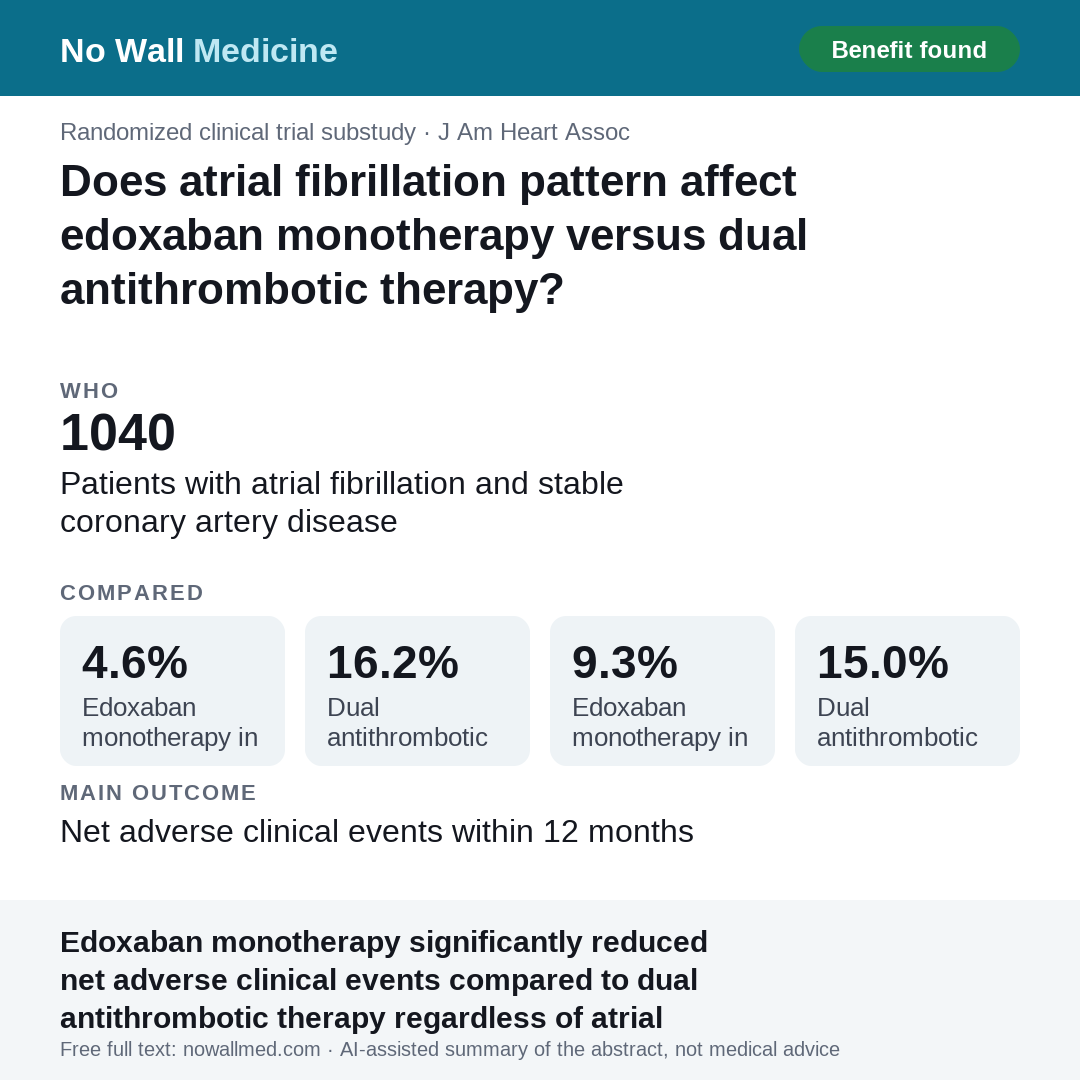
Impact of Atrial Fibrillation Pattern on Edoxaban Antithrombotic Therapy in Patients With Atrial Fibrillation and Stable Coronary Artery Disease: A Secondary Analysis of the EPIC-CAD Randomized Clinical Trial
Randomized clinical trial substudyBenefit found
Does atrial fibrillation pattern affect edoxaban monotherapy versus dual antithrombotic therapy?
Who
1040
Patients with atrial fibrillation and stable coronary artery disease
Compared
4.6%Edoxaban monotherapy in paroxysmal AF
16.2%Dual antithrombotic therapy in paroxysmal AF
9.3%Edoxaban monotherapy in nonparoxysmal AF
15.0%Dual antithrombotic therapy in nonparoxysmal AF
Main outcome
Net adverse clinical events within 12 months
Result: adjusted hazard ratio 0.23 (95% CI 0.12-0.42) and 0.56 (95% CI 0.32-0.87)
Bottom line: Edoxaban monotherapy significantly reduced net adverse clinical events compared to dual antithrombotic therapy regardless of atrial fibrillation pattern.
J Am Heart Assoc · 2026-03-18Download image
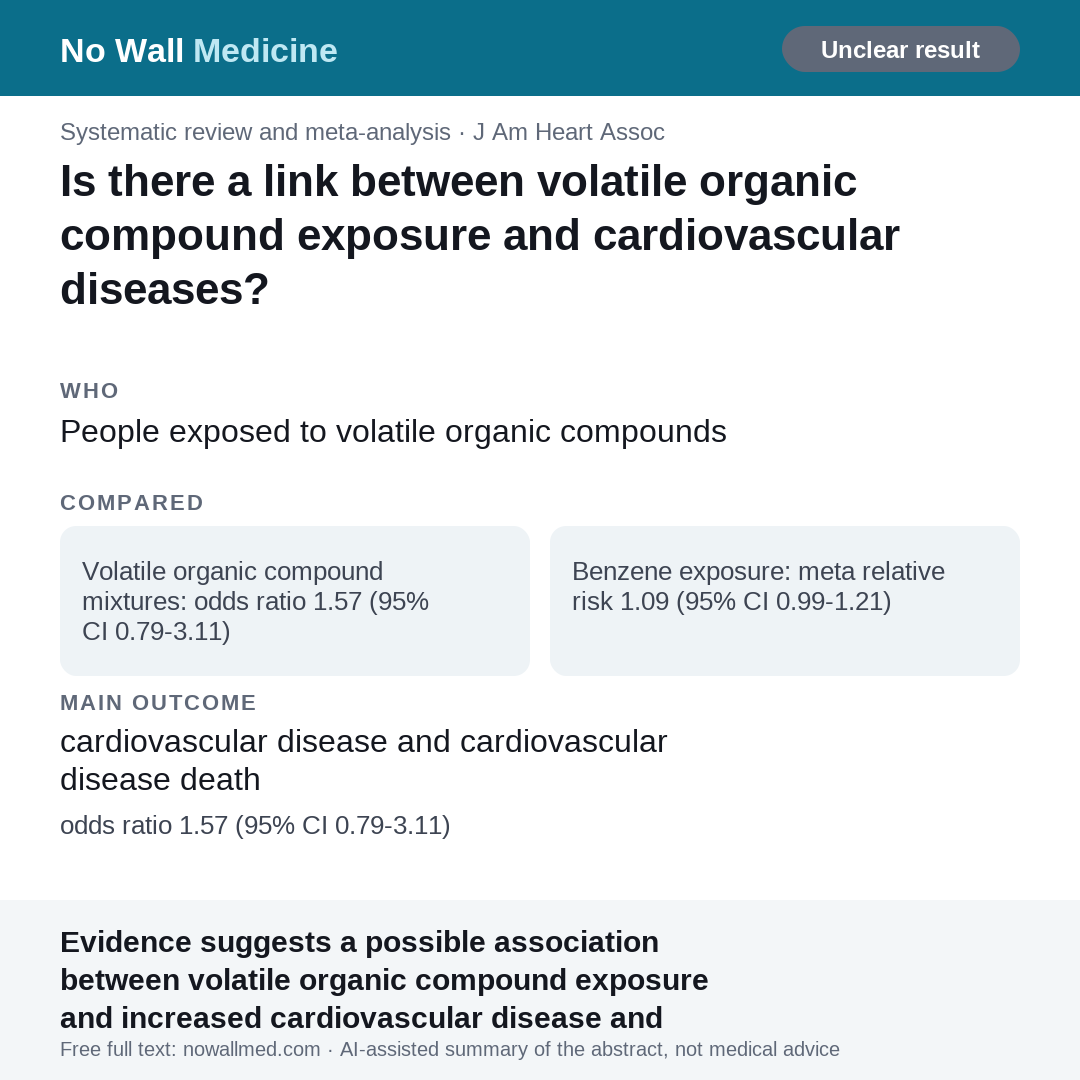
Exposure to Volatile Organic Compounds and Cardiovascular Diseases: A Systematic Review and Meta-Analysis
Systematic review and meta-analysisUnclear result
Is there a link between volatile organic compound exposure and cardiovascular diseases?
Who
People exposed to volatile organic compounds
Compared
Volatile organic compound mixtures: odds ratio 1.57 (95% CI 0.79-3.11)
Benzene exposure: meta relative risk 1.09 (95% CI 0.99-1.21)
Main outcome
cardiovascular disease and cardiovascular disease death
Result: odds ratio 1.57 (95% CI 0.79-3.11)
Bottom line: Evidence suggests a possible association between volatile organic compound exposure and increased cardiovascular disease and death.
Limitation: Heterogeneity between specific effects, possible confounding, and limited long-term exposure assessment.
J Am Heart Assoc · 2026-03-18Download image