Visual abstracts
New randomized trials and meta-analyses from leading journals at a glance: who was studied, what was compared, and what was found. Every paper is free to read in full.
All specialtiesCardiology 3634Oncology 3115Gastroenterology & Hepatology 1429Infectious Disease 2585Neurology 1462Psychiatry & Mental Health 1724Pulmonology 1557Critical Care 1034Endocrinology & Diabetes 1858Pediatrics 2207Surgery 1920Orthopedics & Sports Medicine 683Neurosurgery 429Cardiothoracic & Vascular Surgery 439Plastic & Reconstructive Surgery 498Nephrology 796Rheumatology 588Hematology 814Dermatology 452Ophthalmology 402Obstetrics & Gynecology 1246Public & Global Health 696Radiology & Imaging 504Anesthesiology 746Urology 594ENT (Otolaryngology) 399Emergency Medicine 390Allergy & Immunology 224Geriatrics 767Family Medicine & Primary Care 419Medical Genetics & Genomics 473Pathology & Laboratory Medicine 121Physical Medicine & Rehabilitation 563Palliative Care 334Nutrition 1095Digital Health & AI 1703General Medicine 260
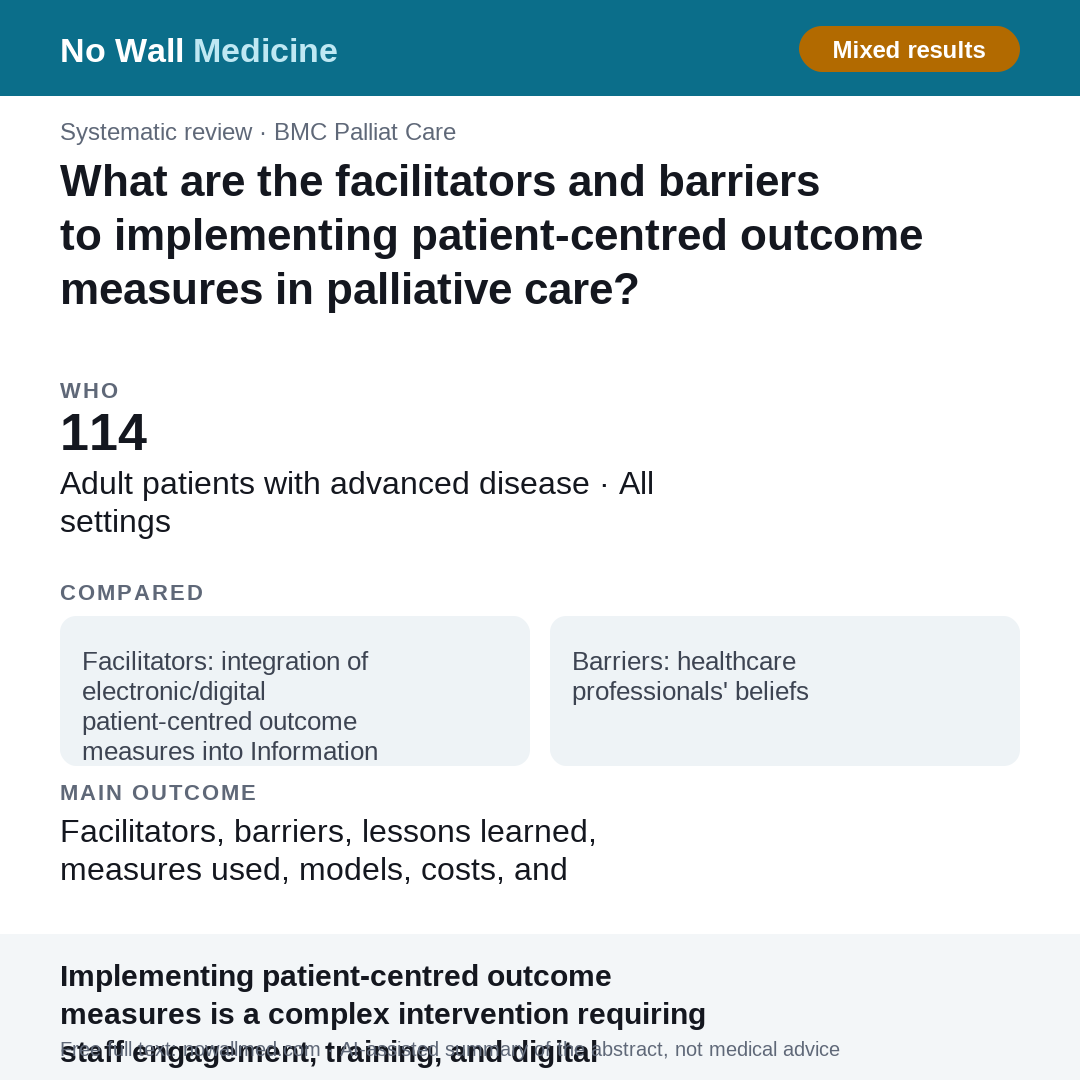
Implementing patient-centred outcome measures in palliative care clinical practice. An updated systematic review of facilitators and barriers
Systematic reviewMixed results
What are the facilitators and barriers to implementing patient-centred outcome measures in palliative care?
Who
114
Adult patients with advanced disease · All settings
Compared
Facilitators: integration of electronic/digital patient-centred outcome measures into Information Technology systems
Barriers: healthcare professionals' beliefs
Main outcome
Facilitators, barriers, lessons learned, measures used, models, costs, and implementation outcomes
Bottom line: Implementing patient-centred outcome measures is a complex intervention requiring staff engagement, training, and digital integration.
BMC Palliat Care · 2026-02-12Download image
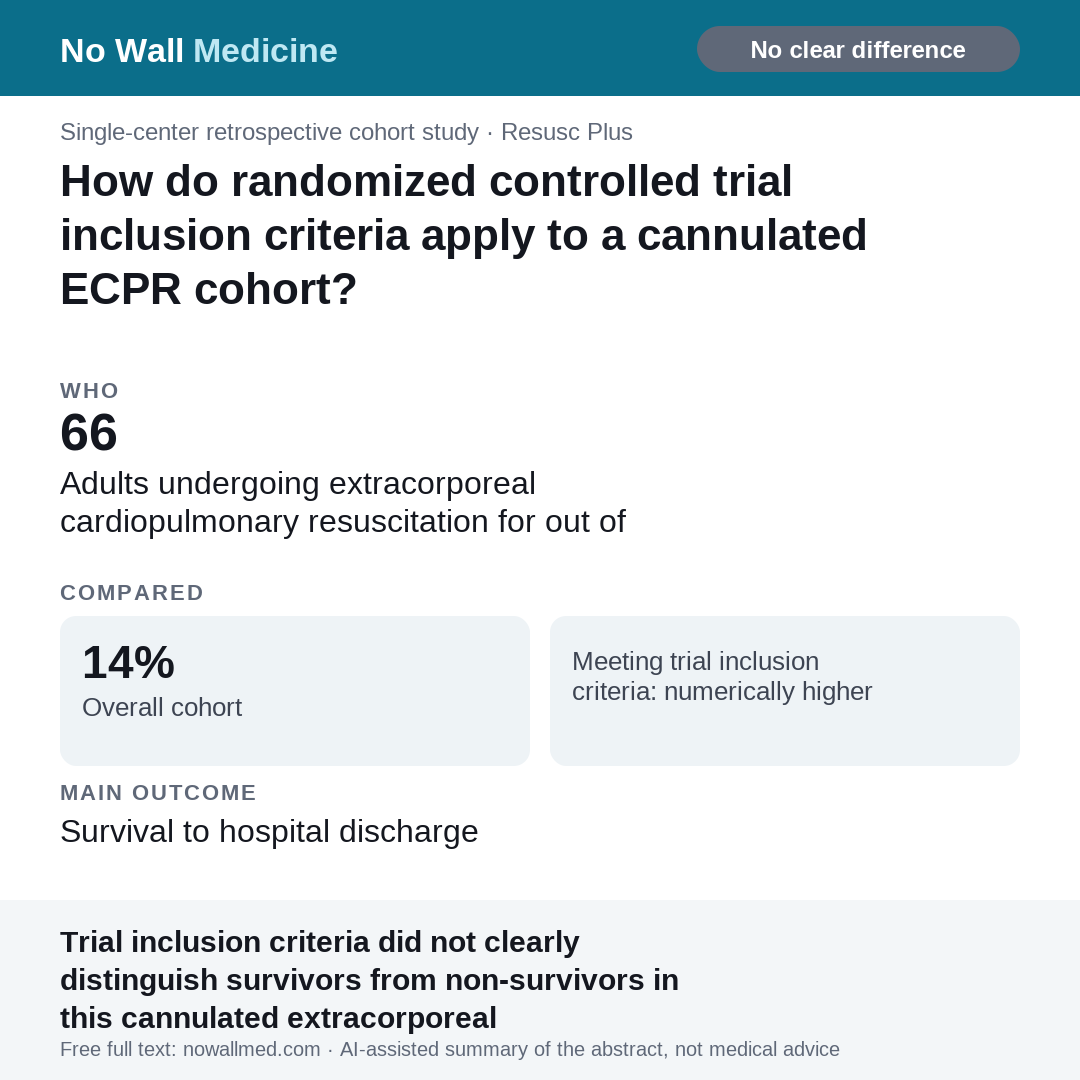
Applying randomized control trial criteria to an ECPR cohort
Single-center retrospective cohort studyNo clear difference
How do randomized controlled trial inclusion criteria apply to a cannulated ECPR cohort?
Who
66
Adults undergoing extracorporeal cardiopulmonary resuscitation for out of hospital cardiac arrest · Single 1,000-bed tertiary medical center
Compared
14%Overall cohort (9/66; 95% CI 6.4-24.3%)
Meeting trial inclusion criteria: numerically higher
Main outcome
Survival to hospital discharge
Bottom line: Trial inclusion criteria did not clearly distinguish survivors from non-survivors in this cannulated extracorporeal cardiopulmonary resuscitation cohort.
Resusc Plus · 2026-02-12Download image
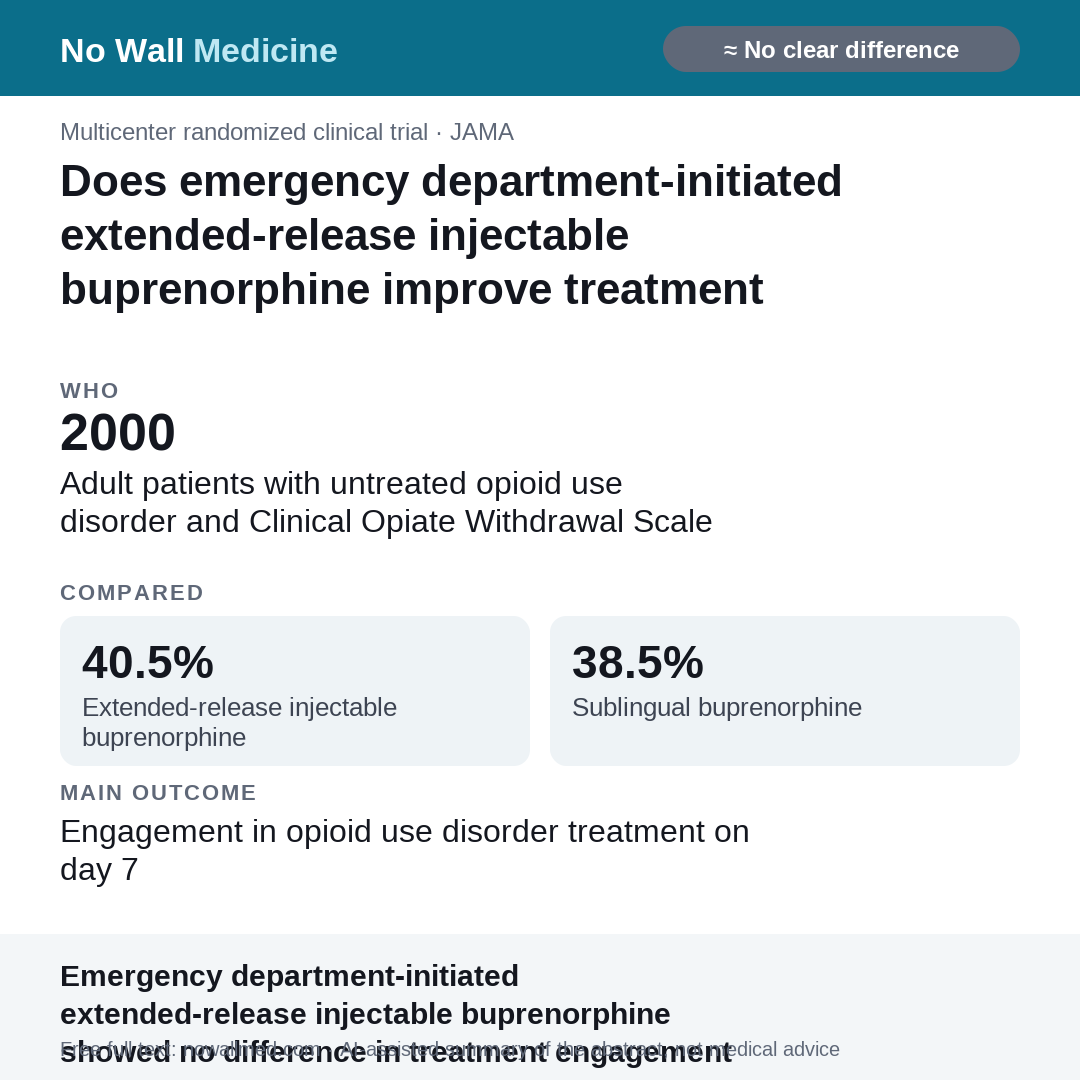
Emergency Department-Initiated Buprenorphine for Opioid Use Disorder: A Randomized Clinical Trial
Multicenter randomized clinical trialNo clear difference
Does emergency department-initiated extended-release injectable buprenorphine improve treatment engagement compared to sublingual buprenorphine?
Who
2000
Adult patients with untreated opioid use disorder and Clinical Opiate Withdrawal Scale score ≥4 · 29 emergency departments in the United States
Compared
40.5%Extended-release injectable buprenorphine
38.5%Sublingual buprenorphine
Main outcome
Engagement in opioid use disorder treatment on day 7
Result: adjusted difference, 1.6%; 95% CI, -2.8% to 6.0%
Bottom line: Emergency department-initiated extended-release injectable buprenorphine showed no difference in treatment engagement at 7 days compared to sublingual buprenorphine.
JAMA · 2026-02-11Download image
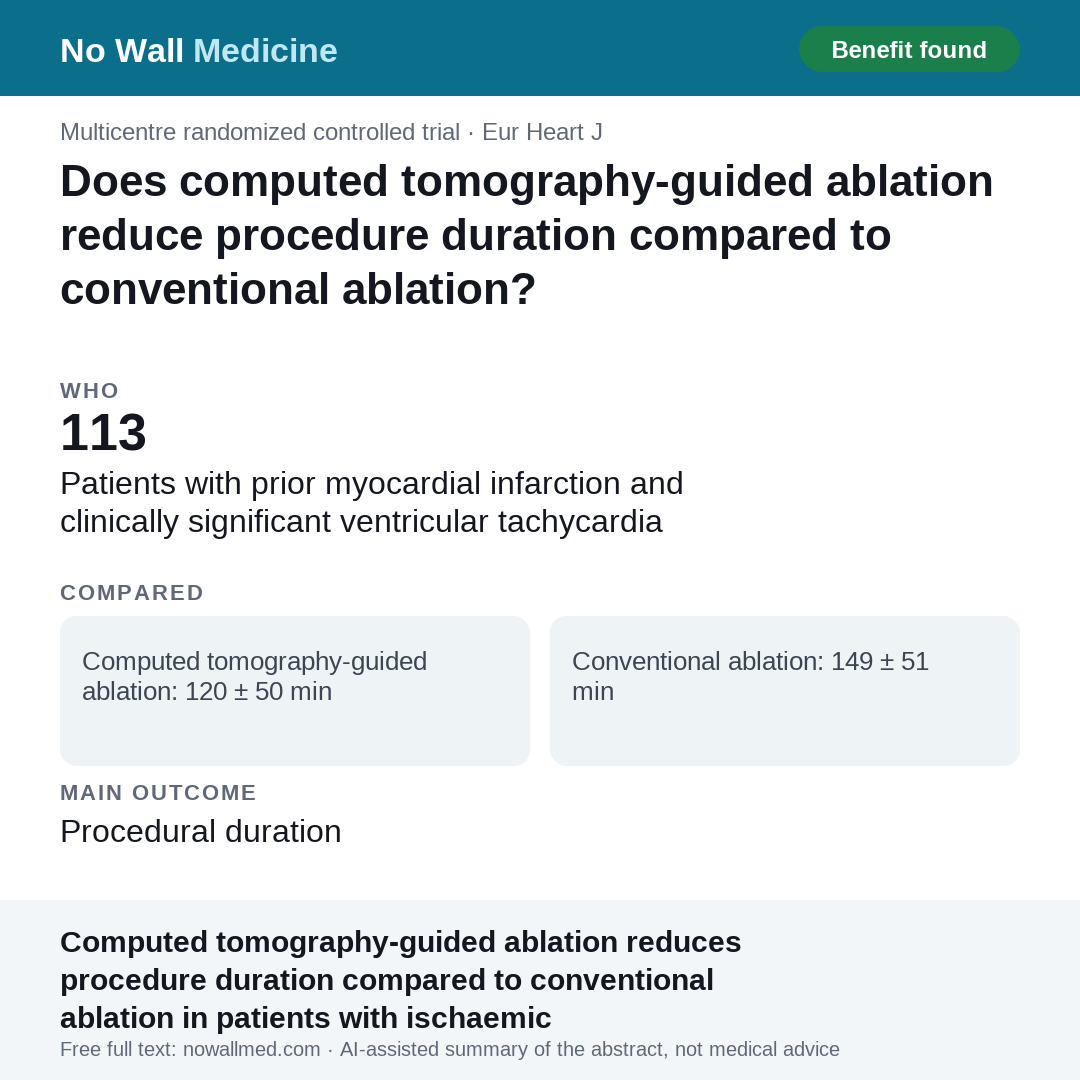
Computed tomography-guided vs conventional catheter ablation for ventricular tachycardia: the InEurHeart trial
Multicentre randomized controlled trialBenefit found
Does computed tomography-guided ablation reduce procedure duration compared to conventional ablation?
Who
113
Patients with prior myocardial infarction and clinically significant ventricular tachycardia · 14 European centres
Compared
Computed tomography-guided ablation: 120 ± 50 min
Conventional ablation: 149 ± 51 min
Main outcome
Procedural duration
Result: -19% [95% confidence interval (CI) -32; -7]
Bottom line: Computed tomography-guided ablation reduces procedure duration compared to conventional ablation in patients with ischaemic cardiomyopathy.
Eur Heart J · 2026-02-11Download image
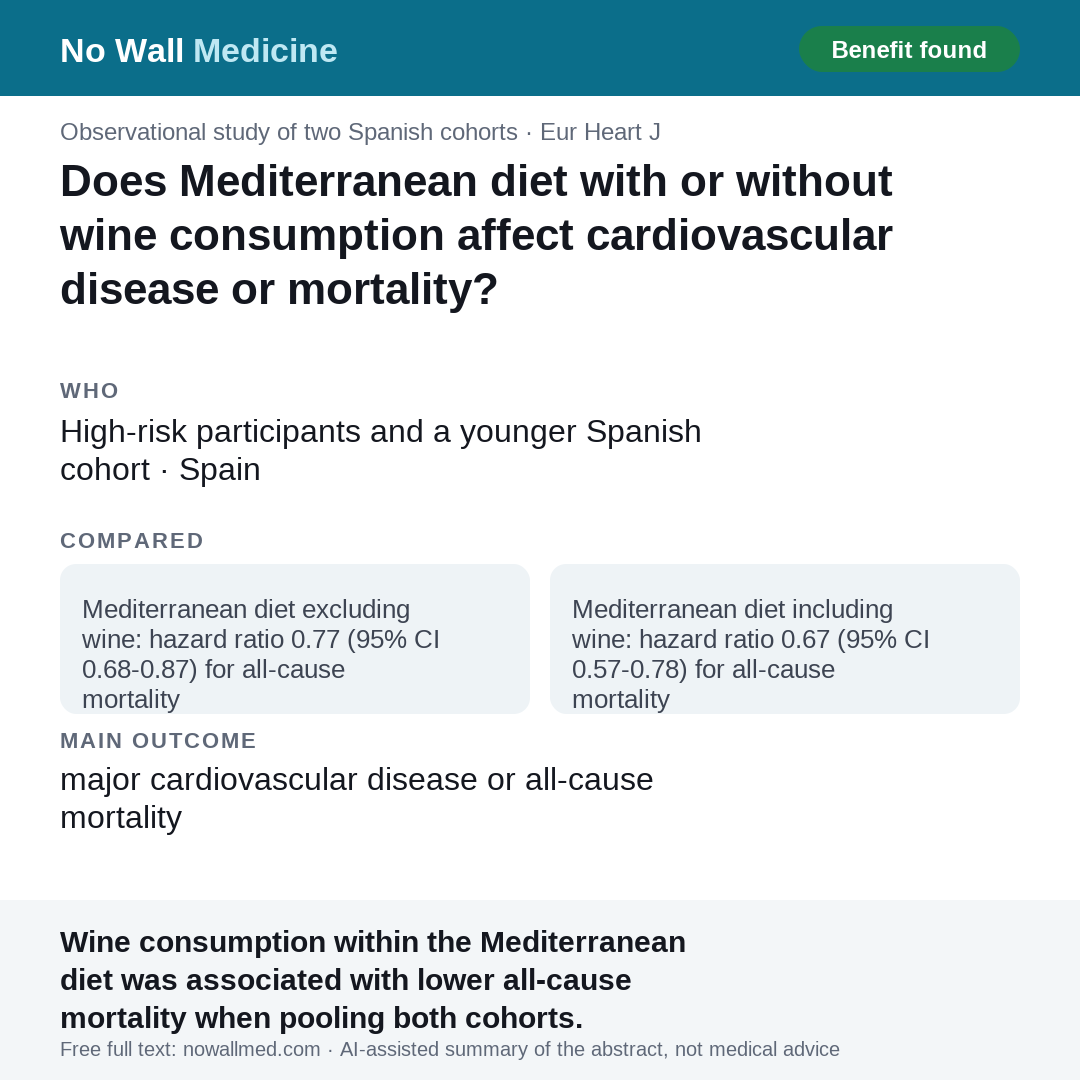
Wine consumption, Mediterranean diet, and cardiovascular risk in two Spanish cohorts
Observational study of two Spanish cohortsBenefit found
Does Mediterranean diet with or without wine consumption affect cardiovascular disease or mortality?
Who
High-risk participants and a younger Spanish cohort · Spain
Compared
Mediterranean diet excluding wine: hazard ratio 0.77 (95% CI 0.68-0.87) for all-cause mortality
Mediterranean diet including wine: hazard ratio 0.67 (95% CI 0.57-0.78) for all-cause mortality
Main outcome
major cardiovascular disease or all-cause mortality
Result: hazard ratio 0.67 (95% CI 0.57-0.78) for all-cause mortality
Bottom line: Wine consumption within the Mediterranean diet was associated with lower all-cause mortality when pooling both cohorts.
Limitation: Non-significant associations and interactions advise caution in interpretation of these findings.
Eur Heart J · 2026-02-11Download image
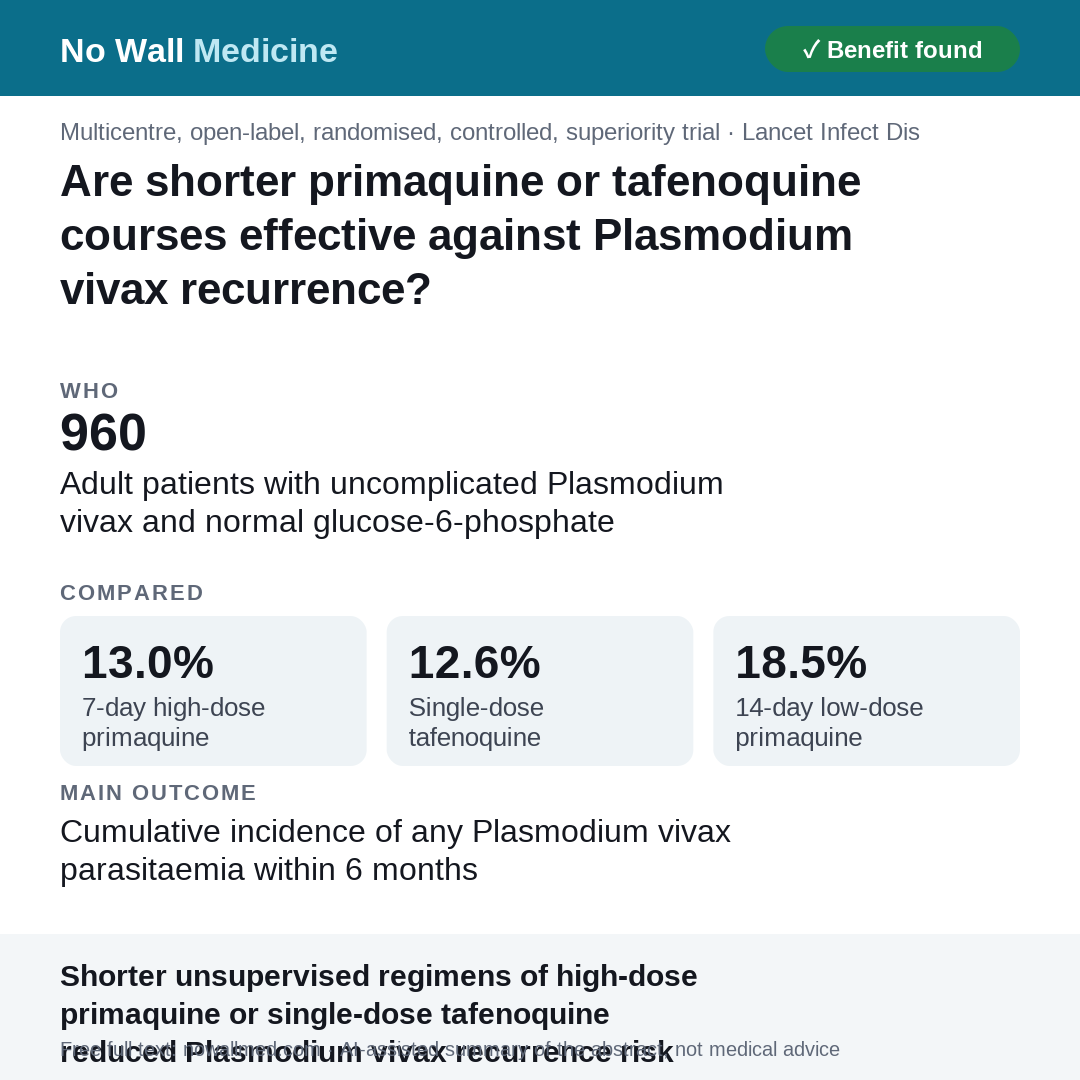
Effectiveness and safety of 7-day high-dose primaquine and single-dose tafenoquine versus 14-day low-dose primaquine in patients with Plasmodium vivax malaria (EFFORT): a multicentre, open-label, randomised, controlled, superiority trial
Multicentre, open-label, randomised, controlled, superiority trialBenefit found
Are shorter primaquine or tafenoquine courses effective against Plasmodium vivax recurrence?
Who
960
Adult patients with uncomplicated Plasmodium vivax and normal glucose-6-phosphate dehydrogenase activity · Ethiopia, Pakistan, Indonesia, and Cambodia
Compared
13.0%7-day high-dose primaquine (97.55% CI 9.0-18.5)
12.6%Single-dose tafenoquine (97.55% CI 8.8-18.0)
18.5%14-day low-dose primaquine (13.8-24.6)
Main outcome
Cumulative incidence of any Plasmodium vivax parasitaemia within 6 months
Result: hazard ratio 0.64 (97.55% CI 0.39-1.05)
Bottom line: Shorter unsupervised regimens of high-dose primaquine or single-dose tafenoquine reduced Plasmodium vivax recurrence risk compared to 14-day low-dose primaquine.
Funded by: National Health and Medical Research Council of Australia and Bill and Melinda Gates Foundation
Lancet Infect Dis · 2026-02-11Download image
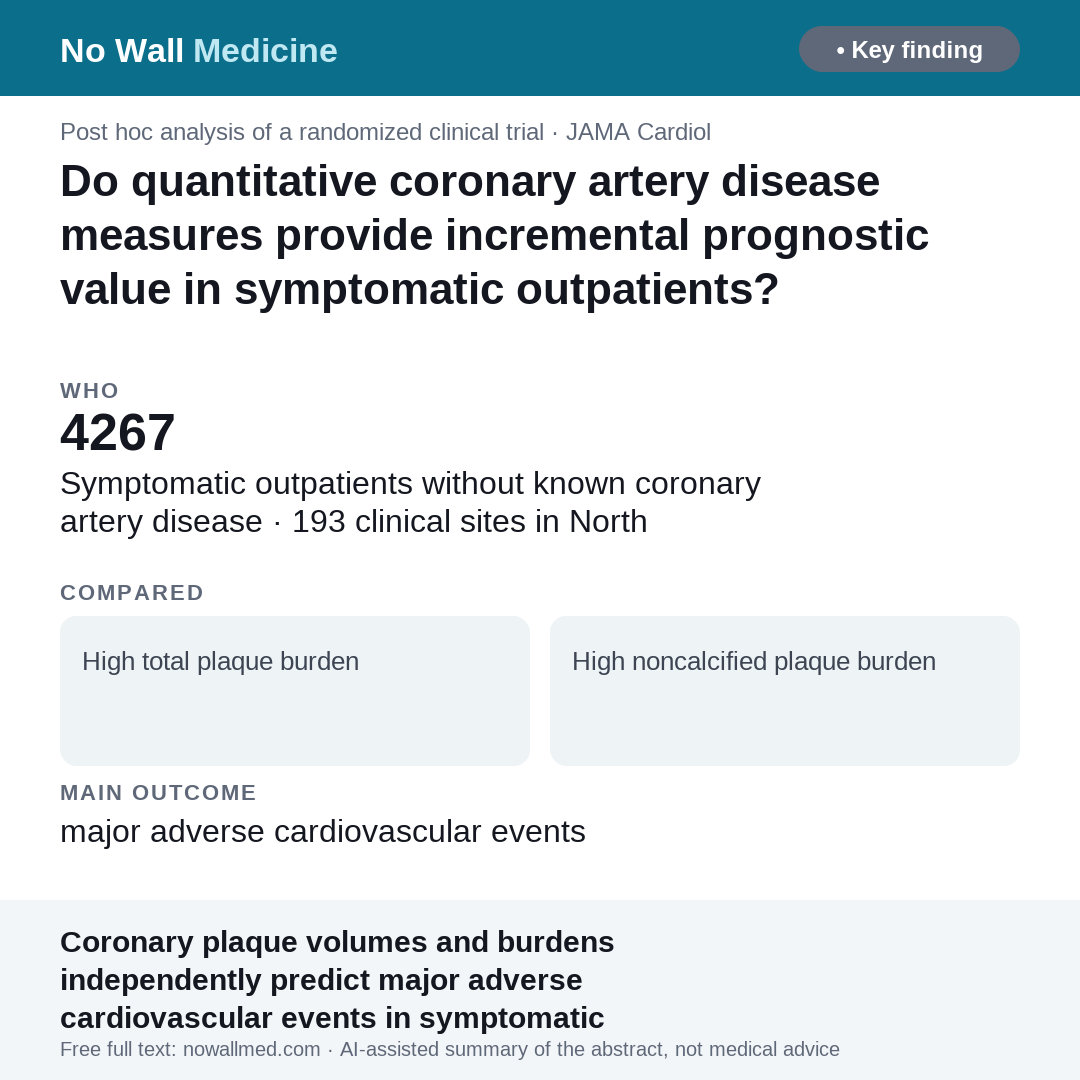
Prognostic Value of Plaque Volume in Patients With First Diagnosis of Coronary Artery Disease: A Substudy of the PROMISE Randomized Clinical Trial
Post hoc analysis of a randomized clinical trialBenefit found
Do quantitative coronary artery disease measures provide incremental prognostic value in symptomatic outpatients?
Who
4267
Symptomatic outpatients without known coronary artery disease · 193 clinical sites in North America
Compared
High total plaque burden
High noncalcified plaque burden
Main outcome
major adverse cardiovascular events
Result: TPB: adjusted HR 1.18 (95% CI 1.05-1.34); NCPB: adjusted HR 1.20 (95% CI 1.05-1.37)
Bottom line: Coronary plaque volumes and burdens independently predict major adverse cardiovascular events in symptomatic patients without known disease.
JAMA Cardiol · 2026-02-11Download image
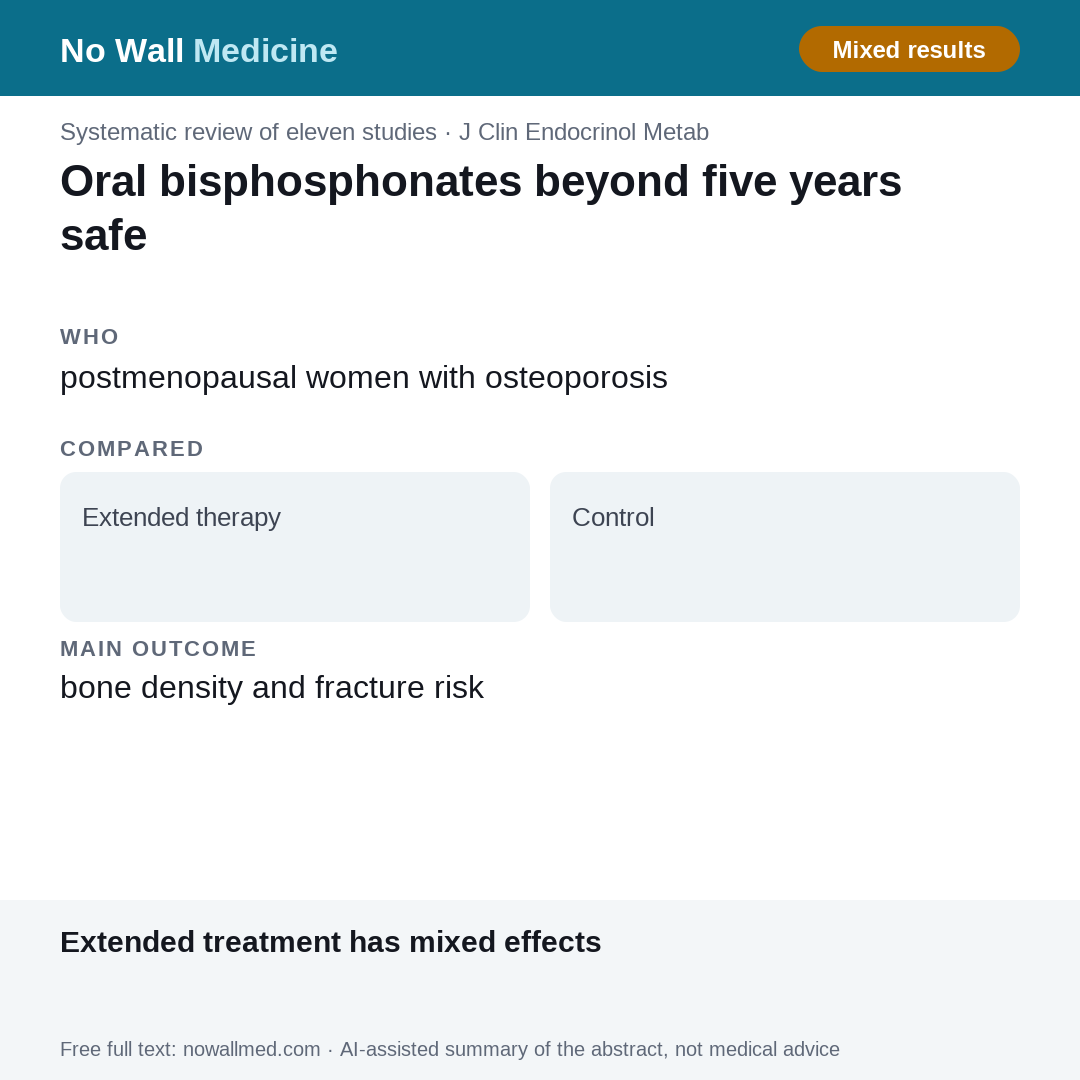
Health and adverse events associated with extended oral bisphosphonates among postmenopausal women: a systematic review
Systematic review of eleven studiesMixed results
Oral bisphosphonates beyond five years safe
Who
postmenopausal women with osteoporosis
Compared
Extended therapy
Control
Main outcome
bone density and fracture risk
Bottom line: Extended treatment has mixed effects
Limitation: substantial heterogeneity and limited evidence
J Clin Endocrinol Metab · 2026-02-11Download image
Phase 1 study of balinatunfib, an oral inhibitor of TNFR1 signal in mild-to-moderate psoriasis
Randomized, double-blind, placebo-controlled pilot studyBenefit found
Is balinatunfib safe and effective for mild-to-moderate psoriasis?
Who
38
Patients aged 18-65 years with mild-to-moderate chronic plaque-type psoriasis
Compared
200-mg balinatunfib: 38.18% change in Target Lesion Severity Score at Week 4
Placebo: 20.44% change in Target Lesion Severity Score at Week 4
Main outcome
Safety, tolerability, and Target Lesion Severity Score change
Bottom line: Balinatunfib showed promising clinical responses and was well tolerated in patients with mild-to-moderate psoriasis.
J Eur Acad Dermatol Venereol · 2026-02-11Download image

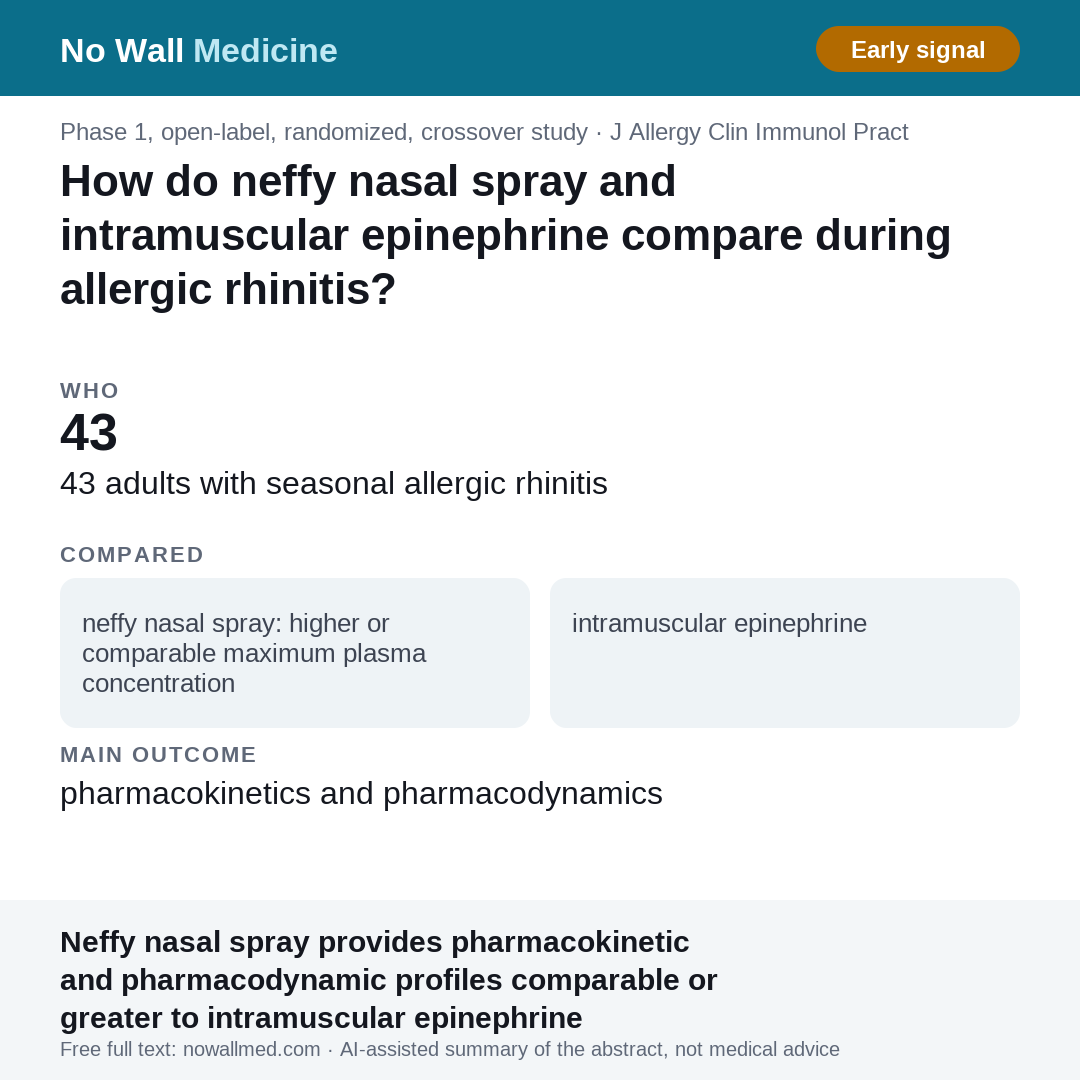
Pharmacokinetics and Pharmacodynamics Following Repeat Dosing of neffy (Epinephrine Nasal Spray) Versus Intramuscular Injection During Induced Allergic Rhinitis
Phase 1, open-label, randomized, crossover studyBenefit found
How do neffy nasal spray and intramuscular epinephrine compare during allergic rhinitis?
Who
43
43 adults with seasonal allergic rhinitis
Compared
neffy nasal spray: higher or comparable maximum plasma concentration
intramuscular epinephrine
Main outcome
pharmacokinetics and pharmacodynamics
Bottom line: Neffy nasal spray provides pharmacokinetic and pharmacodynamic profiles comparable or greater to intramuscular epinephrine injection.
J Allergy Clin Immunol Pract · 2026-02-11Download image
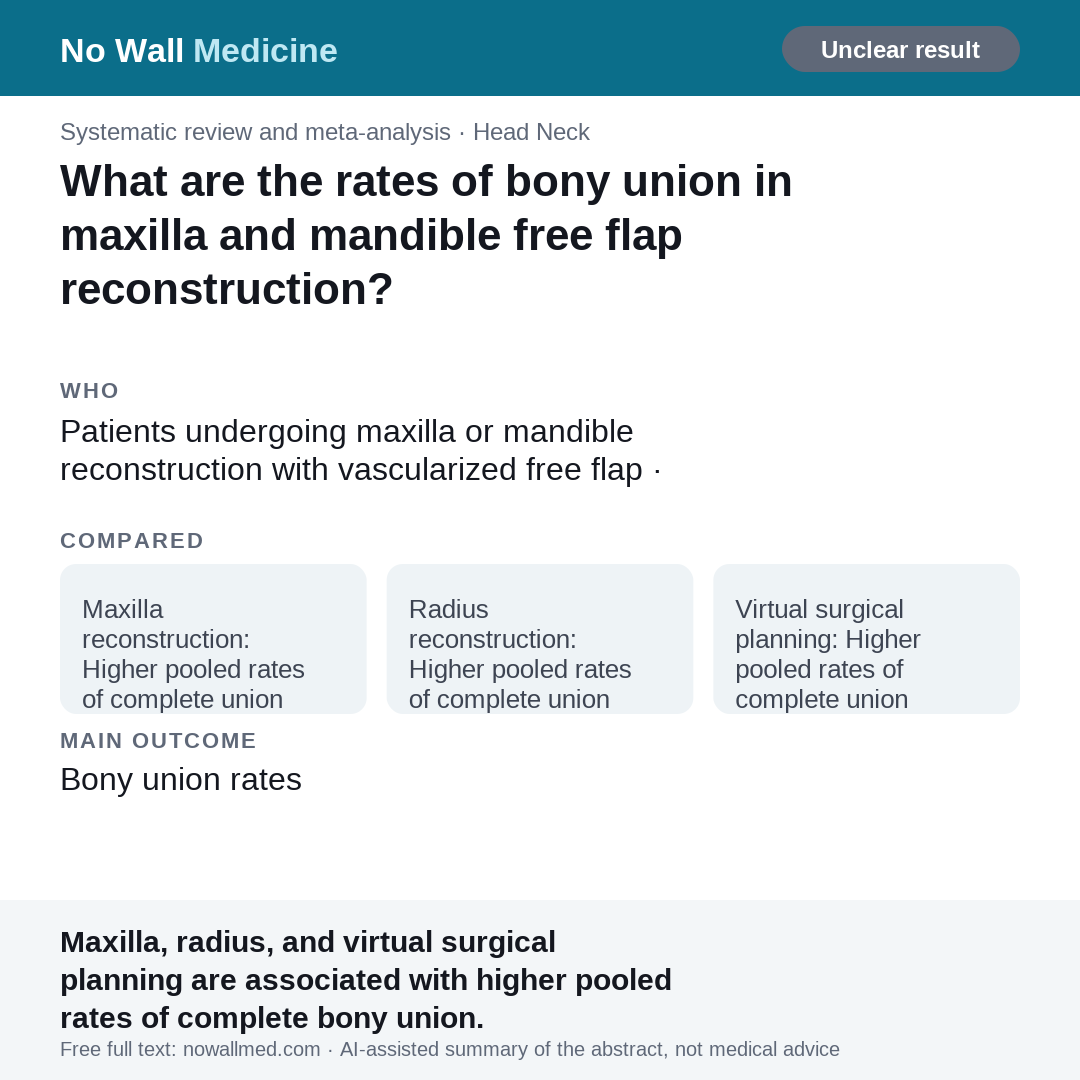
Bony Union in Maxilla and Mandible Free Flap Reconstruction: A Systematic Review and Meta-Analysis
Systematic review and meta-analysisUnclear result
What are the rates of bony union in maxilla and mandible free flap reconstruction?
Who
Patients undergoing maxilla or mandible reconstruction with vascularized free flap · Not specified
Compared
Maxilla reconstruction: Higher pooled rates of complete union
Radius reconstruction: Higher pooled rates of complete union
Virtual surgical planning: Higher pooled rates of complete union
Main outcome
Bony union rates
Bottom line: Maxilla, radius, and virtual surgical planning are associated with higher pooled rates of complete bony union.
Head Neck · 2026-02-11Download image
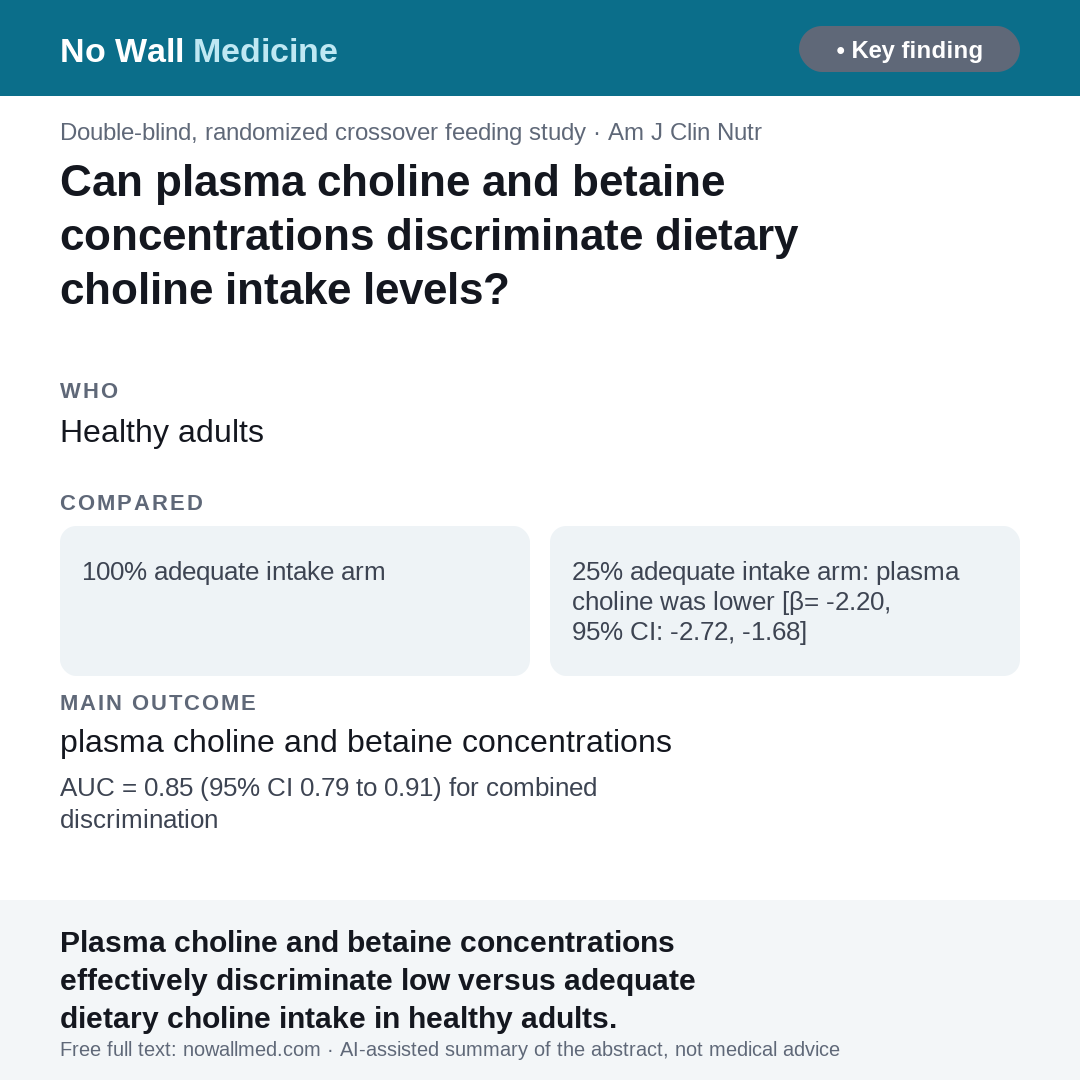
Choline and betaine concentrations in plasma discriminate levels of dietary choline intake in healthy adults: analysis of a double-blind randomized crossover controlled feeding study
Double-blind, randomized crossover feeding studyBenefit found
Can plasma choline and betaine concentrations discriminate dietary choline intake levels?
Who
Healthy adults
Compared
100% adequate intake arm
25% adequate intake arm: plasma choline was lower [β= -2.20, 95% CI: -2.72, -1.68]
Main outcome
plasma choline and betaine concentrations
Result: AUC = 0.85 (95% CI 0.79 to 0.91) for combined discrimination
Bottom line: Plasma choline and betaine concentrations effectively discriminate low versus adequate dietary choline intake in healthy adults.
Am J Clin Nutr · 2026-02-11Download image
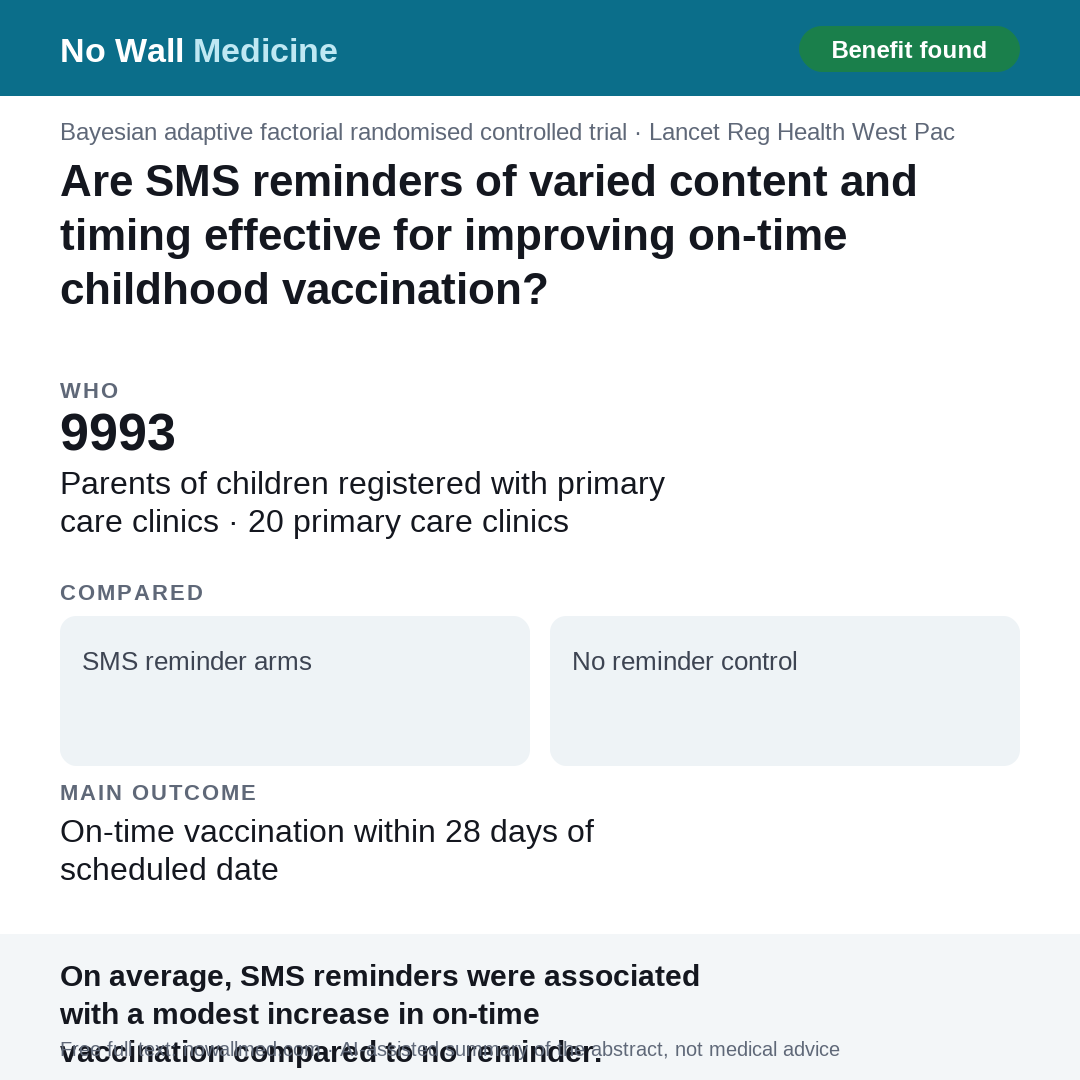
The AuTOMATIC trial: a multicentre digitally-automated, Bayesian, adaptive, parallel, factorial randomised controlled trial of SMS reminders for childhood vaccination
Bayesian adaptive factorial randomised controlled trialBenefit found
Are SMS reminders of varied content and timing effective for improving on-time childhood vaccination?
Who
9993
Parents of children registered with primary care clinics · 20 primary care clinics Australia-wide
Compared
SMS reminder arms
No reminder control
Main outcome
On-time vaccination within 28 days of scheduled date
Result: adjusted odds ratio 1.29 [95% CrI 1.06, 1.55]
Bottom line: On average, SMS reminders were associated with a modest increase in on-time vaccination compared to no reminder.
Funded by: Ramaciotti Foundations, Royal Australasian College of Physicians, Western Australia Department of Health
Lancet Reg Health West Pac · 2026-02-11Download image
Echocardiographic Indices of Cardiac Remodeling Following Transcatheter Edge-to-Edge Repair for Secondary Mitral Regurgitation: A Systematic Review and Meta-Analysis
Systematic review and meta-analysisBenefit found
Does transcatheter edge-to-edge repair impact echocardiographic indices of cardiac remodeling?
Who
3987
Patients with secondary mitral regurgitation
Compared
Before transcatheter edge-to-edge repair
After transcatheter edge-to-edge repair: significant increase in left ventricular ejection fraction
Main outcome
echocardiographic indices of cardiac remodeling
Result: mean difference 1.51% (95% CI 0.47-2.55) for left ventricular ejection fraction
Bottom line: Transcatheter edge-to-edge repair promotes significant cardiac remodeling in patients with secondary mitral regurgitation.
J Am Heart Assoc · 2026-02-11Download image

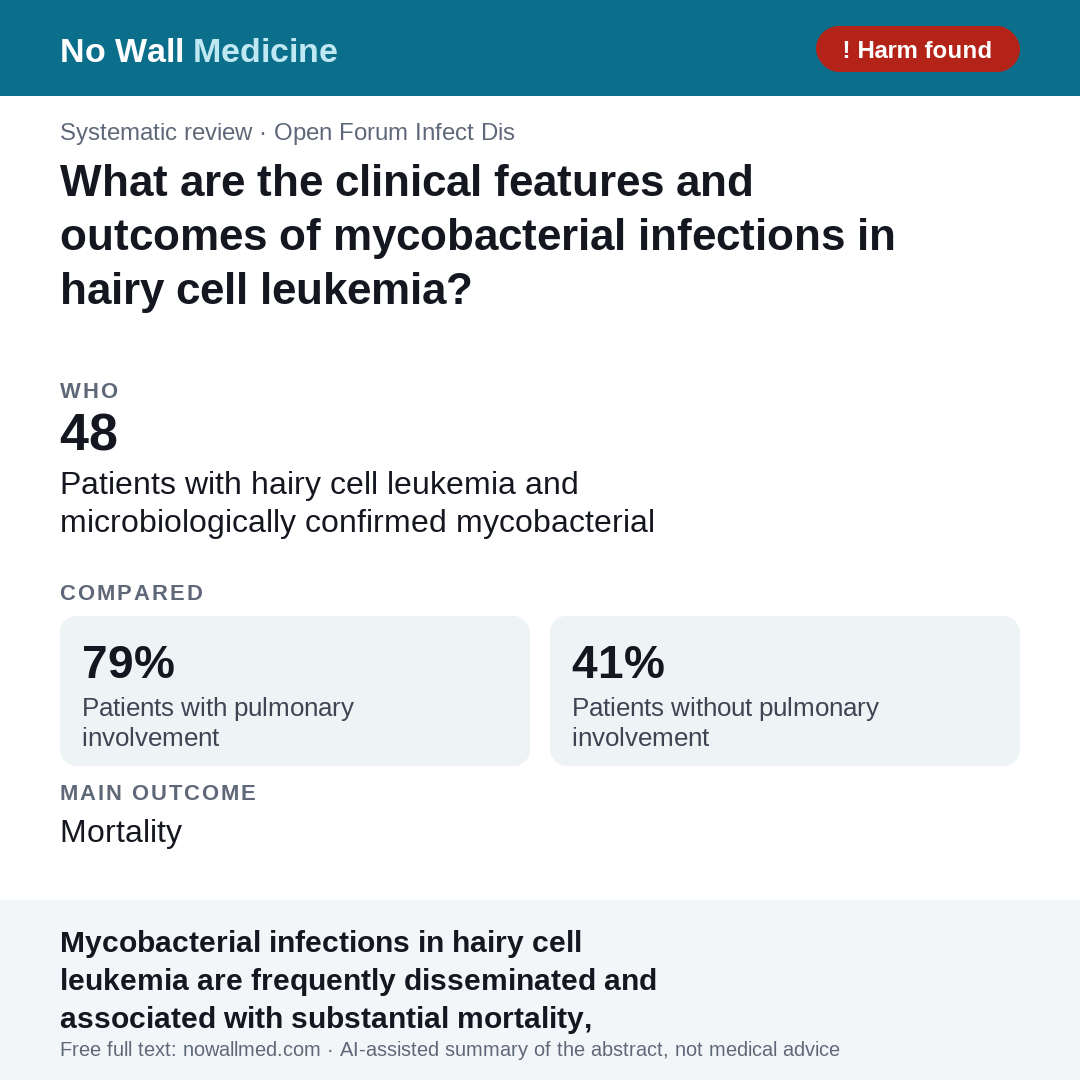
Mycobacterial Infections in Patients With Hairy Cell Leukemia: A Systematic Review of Published Cases
Systematic reviewHarm found
What are the clinical features and outcomes of mycobacterial infections in hairy cell leukemia?
Who
48
Patients with hairy cell leukemia and microbiologically confirmed mycobacterial infection
Compared
79%Patients with pulmonary involvement
41%Patients without pulmonary involvement
Main outcome
Mortality
Bottom line: Mycobacterial infections in hairy cell leukemia are frequently disseminated and associated with substantial mortality, especially with pulmonary involvement.
Open Forum Infect Dis · 2026-02-11Download image
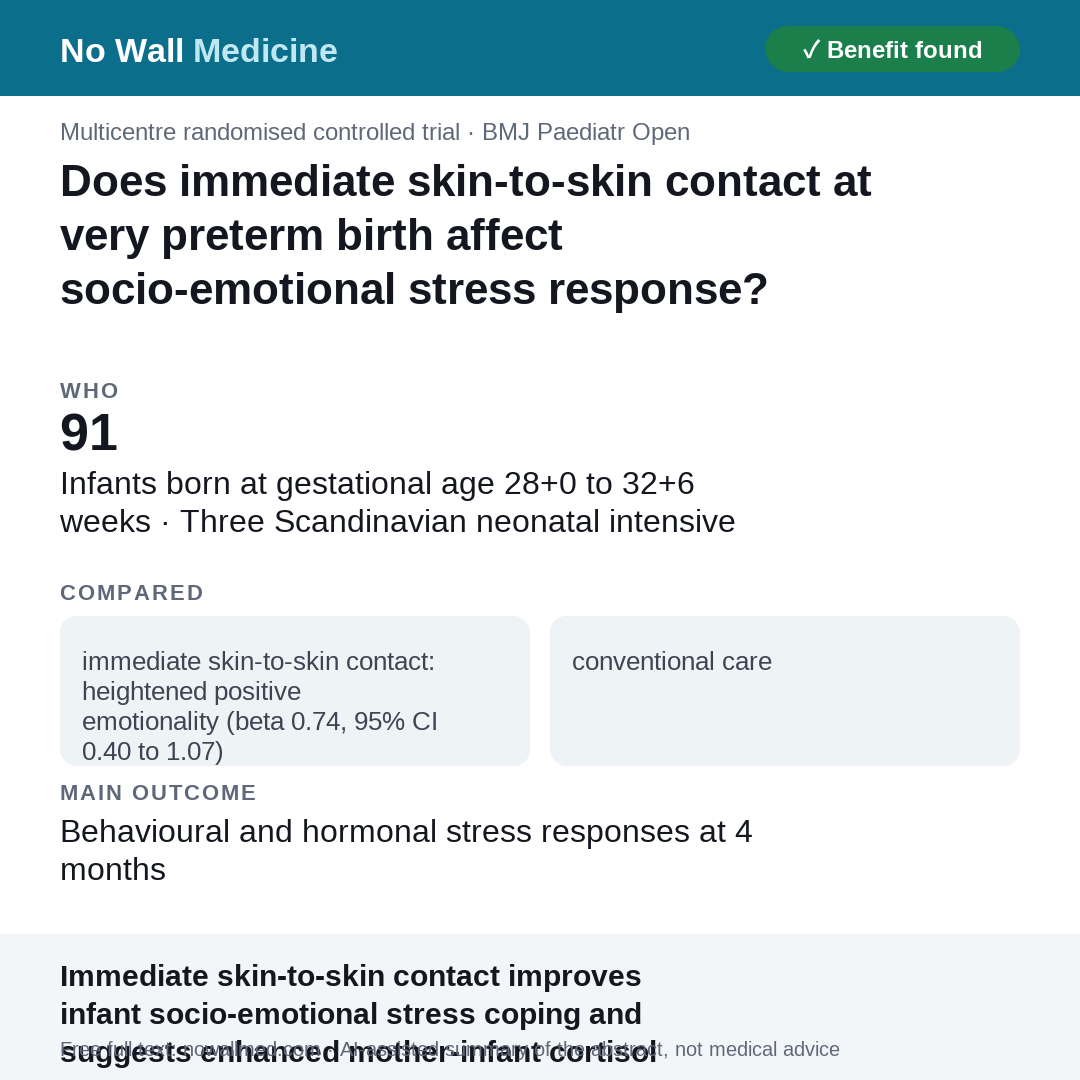
Immediate skin-to-skin contact at very preterm birth and effect on infant socio-emotional stress response and mother-infant cortisol co-regulation: secondary outcomes from the randomised clinical Immediate Parent-Infant Skin-To-Skin Study (IPISTOSS)
Multicentre randomised controlled trialBenefit found
Does immediate skin-to-skin contact at very preterm birth affect socio-emotional stress response?
Who
91
Infants born at gestational age 28+0 to 32+6 weeks · Three Scandinavian neonatal intensive care units
Compared
immediate skin-to-skin contact: heightened positive emotionality (beta 0.74, 95% CI 0.40 to 1.07)
conventional care
Main outcome
Behavioural and hormonal stress responses at 4 months
Result: beta 0.74 (95% CI 0.40 to 1.07)
Bottom line: Immediate skin-to-skin contact improves infant socio-emotional stress coping and suggests enhanced mother-infant cortisol synchrony.
BMJ Paediatr Open · 2026-02-11Download image
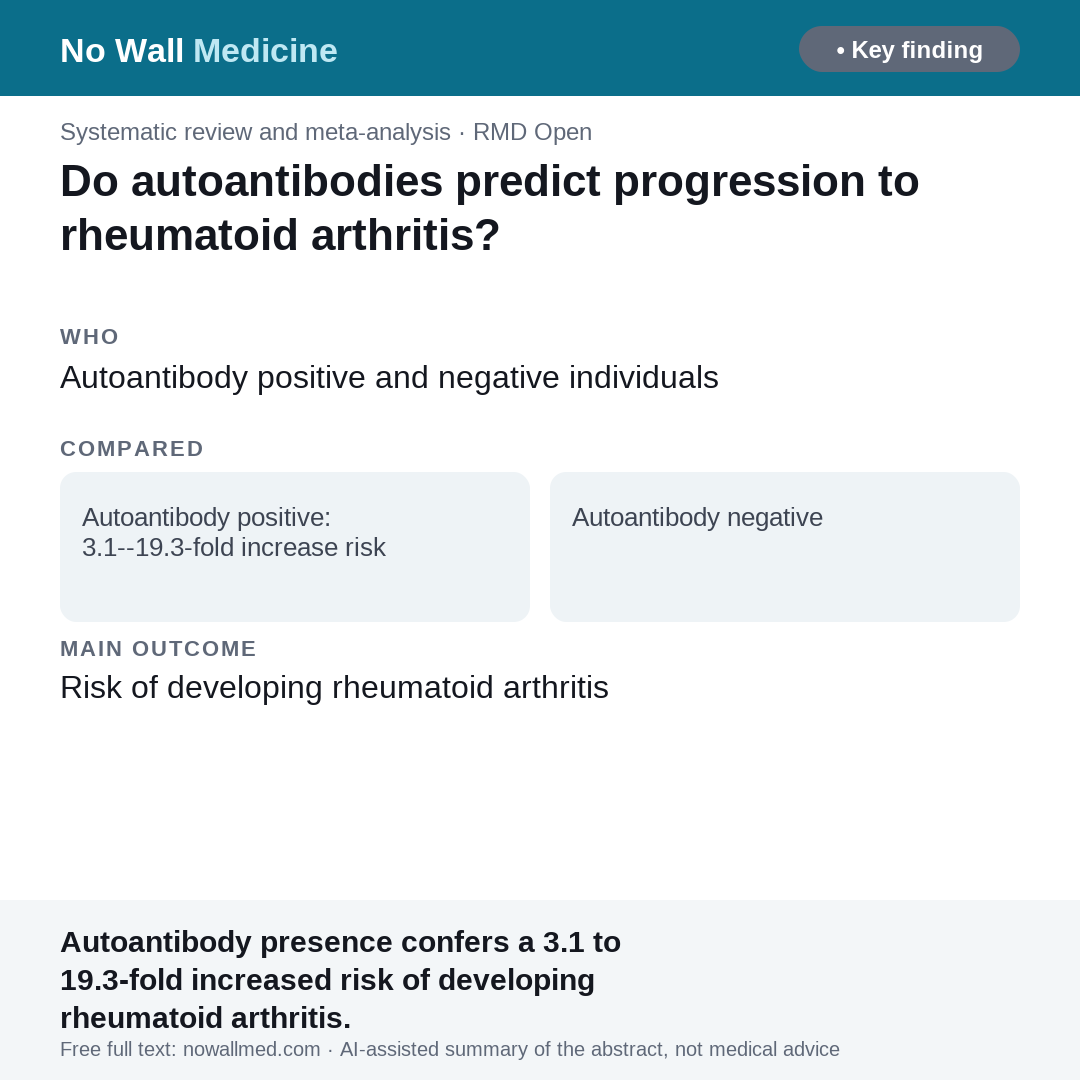
Autoantibodies as predictors of progression to rheumatoid arthritis: a systematic review and meta-analysis
Systematic review and meta-analysisBenefit found
Do autoantibodies predict progression to rheumatoid arthritis?
Who
Autoantibody positive and negative individuals
Compared
Autoantibody positive: 3.1--19.3-fold increase risk
Autoantibody negative
Main outcome
Risk of developing rheumatoid arthritis
Bottom line: Autoantibody presence confers a 3.1 to 19.3-fold increased risk of developing rheumatoid arthritis.
RMD Open · 2026-02-11Download image
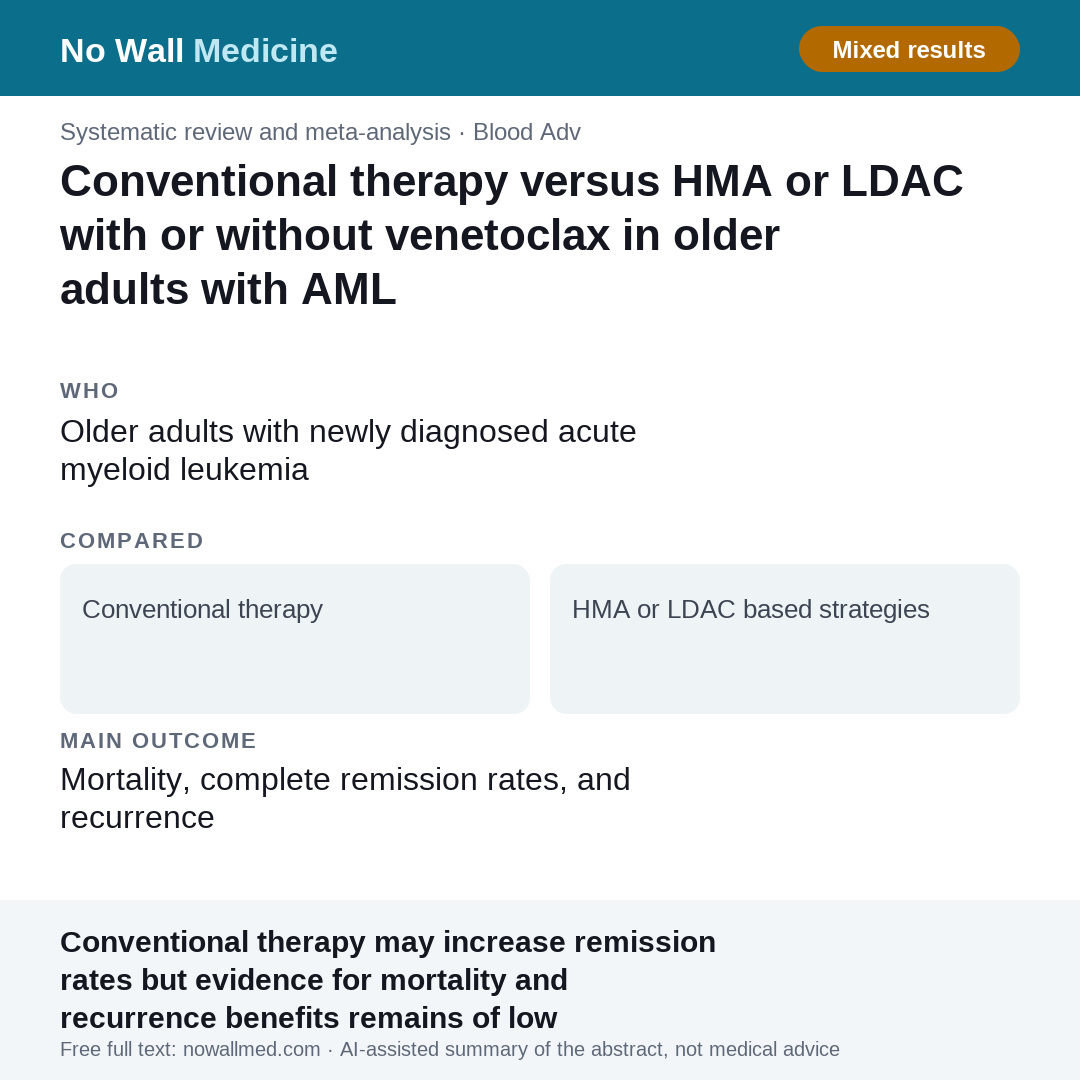
Conventional therapy vs HMA or LDAC with or without venetoclax in older adults with AML: systematic review and meta-analysis
Systematic review and meta-analysisMixed results
Conventional therapy versus HMA or LDAC with or without venetoclax in older adults with AML
Who
Older adults with newly diagnosed acute myeloid leukemia
Compared
Conventional therapy
HMA or LDAC based strategies
Main outcome
Mortality, complete remission rates, and recurrence
Result: risk ratio 0.94 (95% CI 0.85-1.04)
Bottom line: Conventional therapy may increase remission rates but evidence for mortality and recurrence benefits remains of low certainty.
Limitation: Evidence for comparisons with venetoclax is of very low certainty.
Blood Adv · 2026-02-11Download image
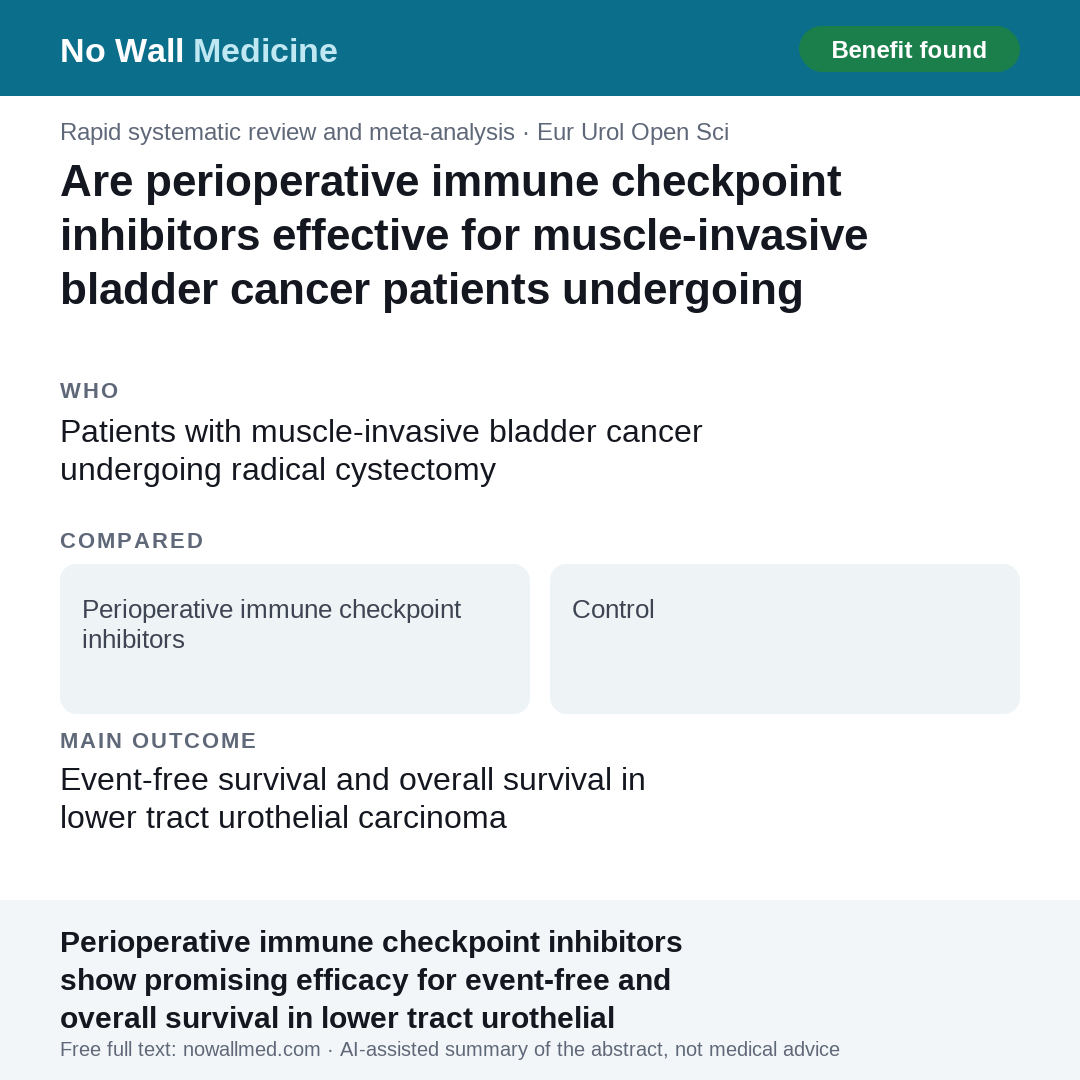
Perioperative Immune Checkpoint Inhibitors Combined with Radical Cystectomy: A Rapid Systematic Review and Meta-analysis
Rapid systematic review and meta-analysisBenefit found
Are perioperative immune checkpoint inhibitors effective for muscle-invasive bladder cancer patients undergoing radical cystectomy?
Who
Patients with muscle-invasive bladder cancer undergoing radical cystectomy
Compared
Perioperative immune checkpoint inhibitors
Control
Main outcome
Event-free survival and overall survival in lower tract urothelial carcinoma
Result: event-free survival hazard ratio 0.53 (95% CI 0.32-0.87); overall survival hazard ratio 0.70 (95% CI 0.51-0.96)
Bottom line: Perioperative immune checkpoint inhibitors show promising efficacy for event-free and overall survival in lower tract urothelial carcinoma.
Limitation: High heterogeneity in treatment regimens, endpoint definitions, and follow-up durations limits interpretability.
Eur Urol Open Sci · 2026-02-11Download image
Advancing healthcare AI governance through a comprehensive maturity model based on systematic review
Systematic reviewBenefit found
How can healthcare artificial intelligence governance be improved through a maturity model?
Who
35
Thirty-five artificial intelligence implementation frameworks
Compared
Existing frameworks
Healthcare AI Governance Readiness Assessment
Main outcome
Identification of critical governance domains and a maturity model
Bottom line: A new five-level maturity model provides actionable governance pathways based on organizational resources.
NPJ Digit Med · 2026-02-11Download image