Visual abstracts
New randomized trials and meta-analyses from leading journals at a glance: who was studied, what was compared, and what was found. Every paper is free to read in full.
All specialtiesCardiology 840Oncology 760Gastroenterology & Hepatology 306Infectious Disease 626Neurology 350Psychiatry & Mental Health 430Pulmonology 365Critical Care 243Endocrinology & Diabetes 480Pediatrics 534Surgery 319Orthopedics & Sports Medicine 161Neurosurgery 89Cardiothoracic & Vascular Surgery 87Plastic & Reconstructive Surgery 118Nephrology 197Rheumatology 108Hematology 181Dermatology 78Ophthalmology 97Obstetrics & Gynecology 261Public & Global Health 167Radiology & Imaging 96Anesthesiology 107Urology 162ENT (Otolaryngology) 86Emergency Medicine 68Allergy & Immunology 58Geriatrics 160Family Medicine & Primary Care 111Medical Genetics & Genomics 91Pathology & Laboratory Medicine 24Physical Medicine & Rehabilitation 148Palliative Care 81Nutrition 223Digital Health & AI 460General Medicine 101
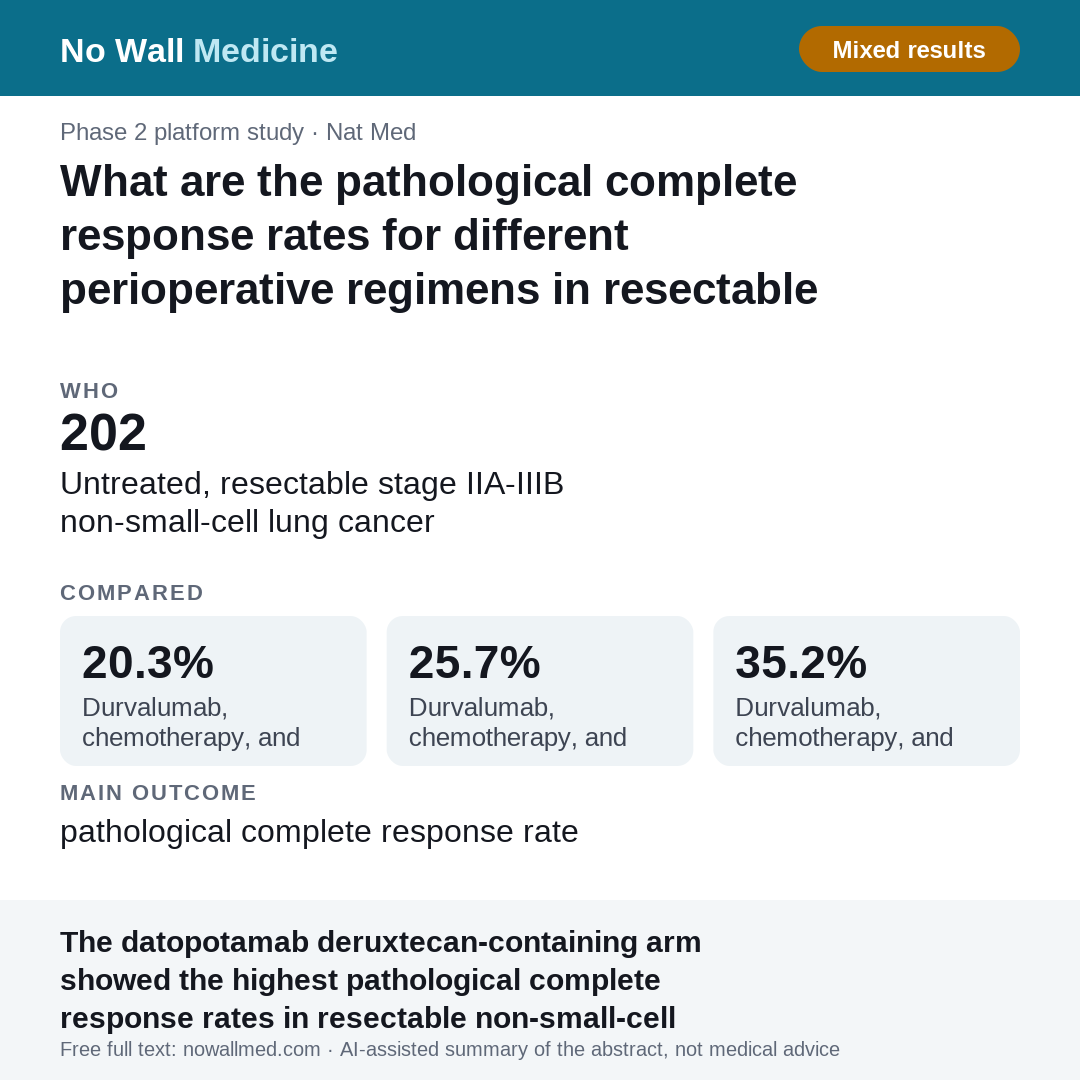
Perioperative durvalumab plus chemotherapy plus new agents for resectable non-small-cell lung cancer: the platform phase 2 NeoCOAST-2 trial
Phase 2 platform studyMixed results
What are the pathological complete response rates for different perioperative regimens in resectable non-small-cell lung cancer?
Who
202
Untreated, resectable stage IIA-IIIB non-small-cell lung cancer
Compared
20.3%Durvalumab, chemotherapy, and oleclumab (15/74; 95% CI, 11.8-31.2)
25.7%Durvalumab, chemotherapy, and monalizumab (18/70; 95% CI, 16.0-37.6)
35.2%Durvalumab, chemotherapy, and datopotamab deruxtecan (19/54; 95% CI, 22.7-49.4)
Main outcome
pathological complete response rate
Bottom line: The datopotamab deruxtecan-containing arm showed the highest pathological complete response rates in resectable non-small-cell lung cancer.
Nat Med · 2025-05-31Download image
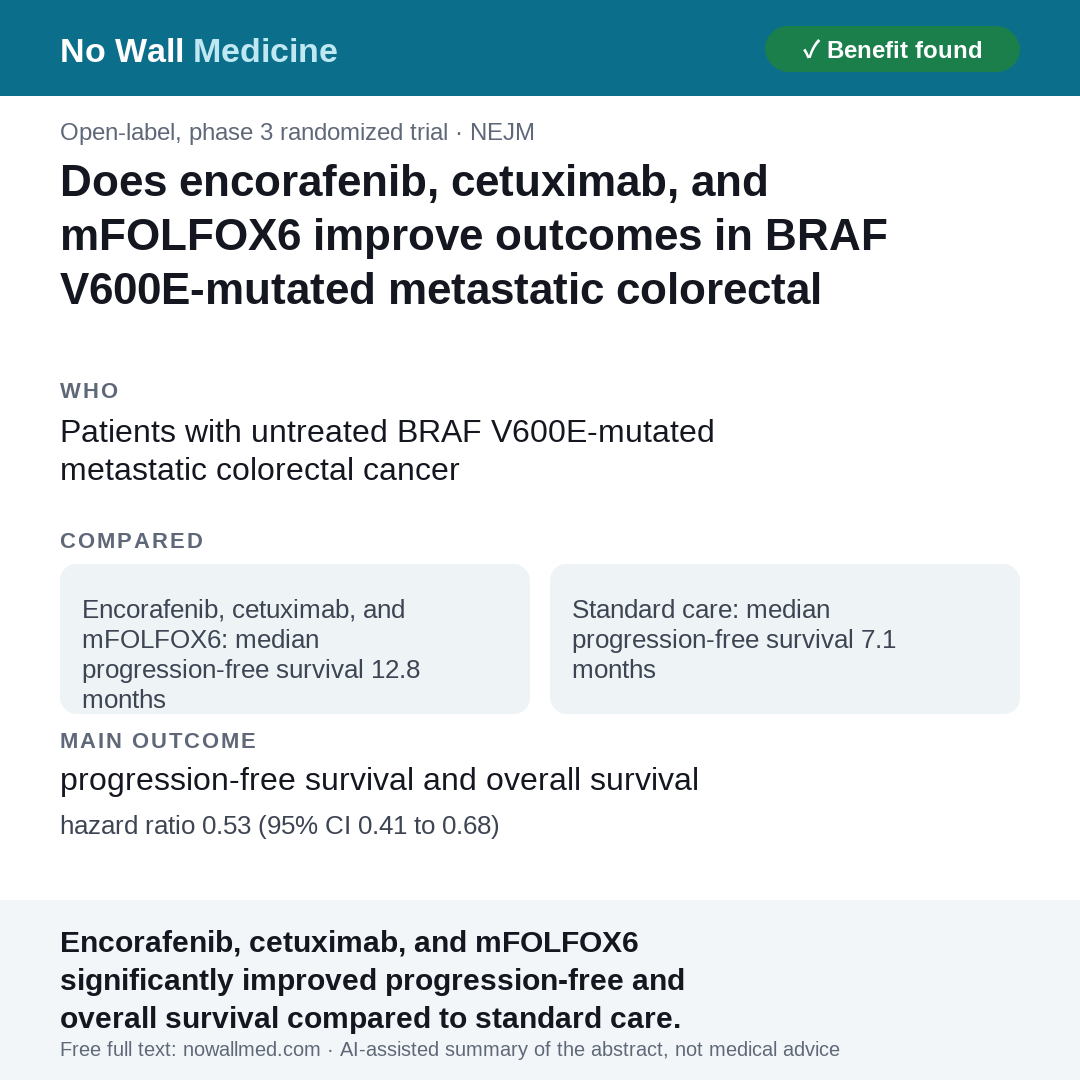
Encorafenib, Cetuximab, and mFOLFOX6 in BRAF-Mutated Colorectal Cancer
Open-label, phase 3 randomized trialBenefit found
Does encorafenib, cetuximab, and mFOLFOX6 improve outcomes in BRAF V600E-mutated metastatic colorectal cancer?
Who
Patients with untreated BRAF V600E-mutated metastatic colorectal cancer
Compared
Encorafenib, cetuximab, and mFOLFOX6: median progression-free survival 12.8 months
Standard care: median progression-free survival 7.1 months
Main outcome
progression-free survival and overall survival
Result: hazard ratio 0.53 (95% CI 0.41 to 0.68)
Bottom line: Encorafenib, cetuximab, and mFOLFOX6 significantly improved progression-free and overall survival compared to standard care.
Funded by: Pfizer and others
NEJM · 2025-05-30Download image
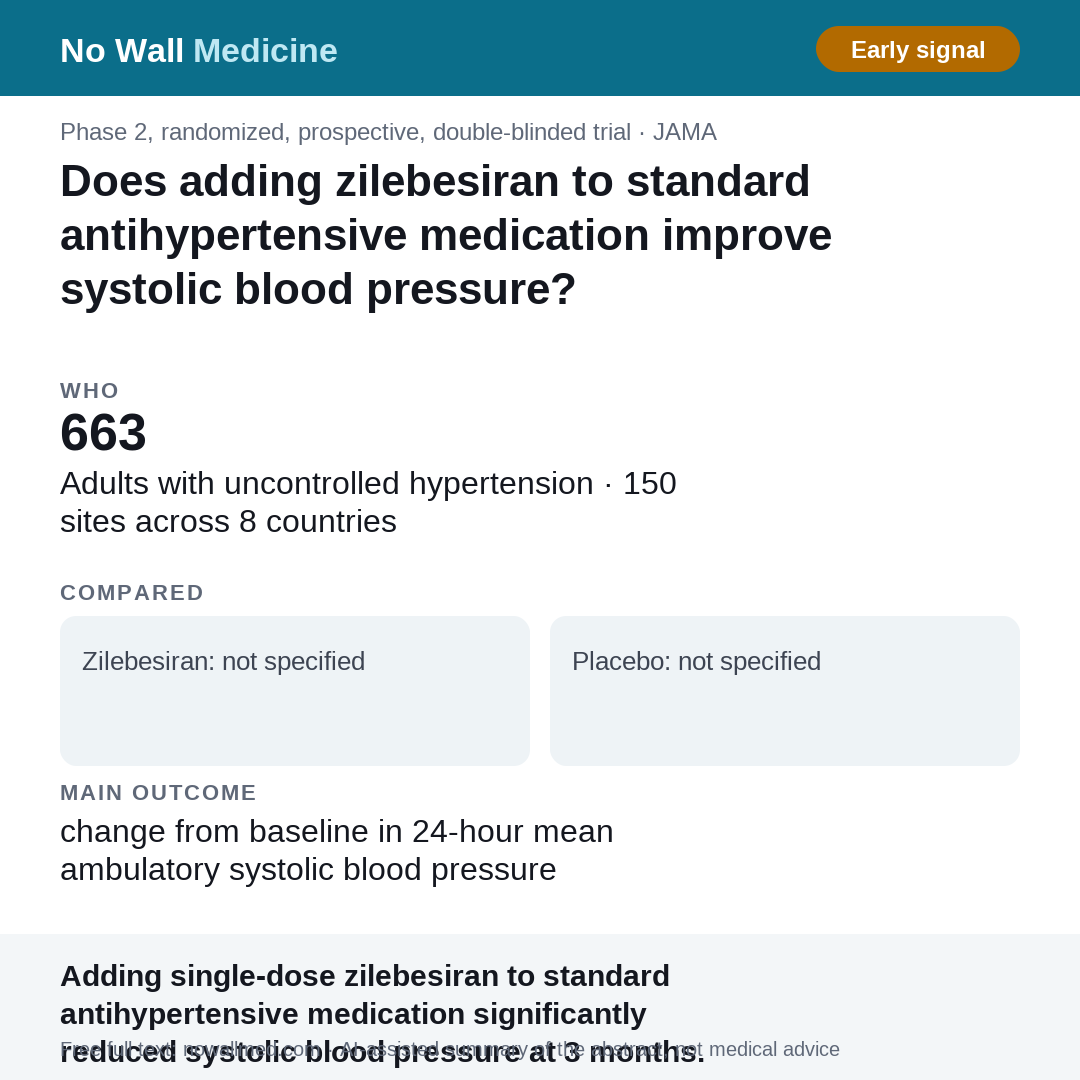
Add-On Treatment With Zilebesiran for Inadequately Controlled Hypertension: The KARDIA-2 Randomized Clinical Trial
Phase 2, randomized, prospective, double-blinded trialBenefit found
Does adding zilebesiran to standard antihypertensive medication improve systolic blood pressure?
Who
663
Adults with uncontrolled hypertension · 150 sites across 8 countries
Compared
Zilebesiran: not specified
Placebo: not specified
Main outcome
change from baseline in 24-hour mean ambulatory systolic blood pressure
Result: -12.1 mm Hg (95% CI, -16.5 to -7.6)
Bottom line: Adding single-dose zilebesiran to standard antihypertensive medication significantly reduced systolic blood pressure at 3 months.
JAMA · 2025-05-28Download image
A village doctor-led mobile health intervention for cardiovascular risk reduction in rural China: cluster randomised controlled trial
Cluster randomised controlled trialBenefit found
Does a village doctor-led mobile health intervention reduce cardiovascular risk in rural China?
Who
4533
Residents aged 35+ with 10 year atherosclerotic cardiovascular disease risk ≥10% · 127 villages from five provinces and autonomous regions in China
Compared
11.7%intervention group
13.6%control group
Main outcome
Mean change in predicted 10 year risk of atherosclerotic cardiovascular disease
Result: absolute difference -1.88% (95% CI -2.57% to -1.19%)
Bottom line: A village doctor-led mobile health intervention effectively reduced predicted 10 year cardiovascular disease risk in rural China.
BMJ · 2025-05-27Download image

Comparison of supplemental breast cancer imaging techniques-interim results from the BRAID randomised controlled trial
Randomized controlled trialMixed results
Which supplemental imaging technique is most beneficial for women with dense breasts?
Who
9361
Women aged 50-70 years with dense breasts and negative mammograms · United Kingdom, ten breast screening sites
Compared
Abbreviated MRI: 17·4 (95% CI 12·2-23·9, n=37) per 1000 examinations
Automated whole breast ultrasound: 4·2 (1·9-8·0, n=9) per 1000 examinations
Contrast-enhanced mammography: 19·2 (13·7-26·1, n=39) per 1000 examinations
Standard of care
Main outcome
Cancer detection rate
Bottom line: Abbreviated MRI and contrast-enhanced mammography detected more invasive cancers than automated whole breast ultrasound.
Funded by: Cancer Research UK, GE Healthcare, and Bayer Healthcare
Lancet · 2025-05-21Download image

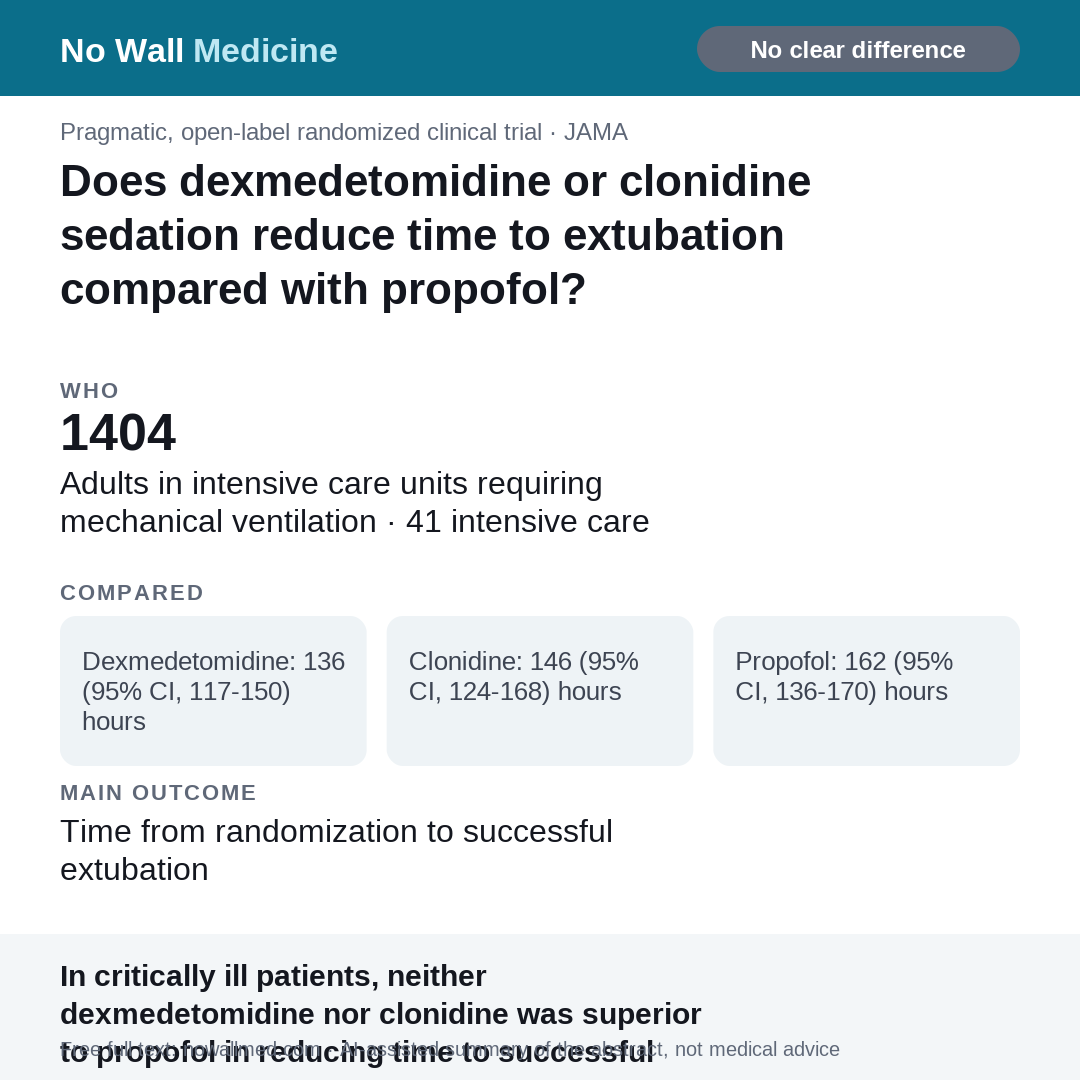
Dexmedetomidine- or Clonidine-Based Sedation Compared With Propofol in Critically Ill Patients: The A2B Randomized Clinical Trial
Pragmatic, open-label randomized clinical trialNo clear difference
Does dexmedetomidine or clonidine sedation reduce time to extubation compared with propofol?
Who
1404
Adults in intensive care units requiring mechanical ventilation · 41 intensive care units in the United Kingdom
Compared
Dexmedetomidine: 136 (95% CI, 117-150) hours
Clonidine: 146 (95% CI, 124-168) hours
Propofol: 162 (95% CI, 136-170) hours
Main outcome
Time from randomization to successful extubation
Result: subdistribution hazard ratio 1.09 (95% CI, 0.96-1.25) for dexmedetomidine vs propofol
Bottom line: In critically ill patients, neither dexmedetomidine nor clonidine was superior to propofol in reducing time to successful extubation.
JAMA · 2025-05-20Download image
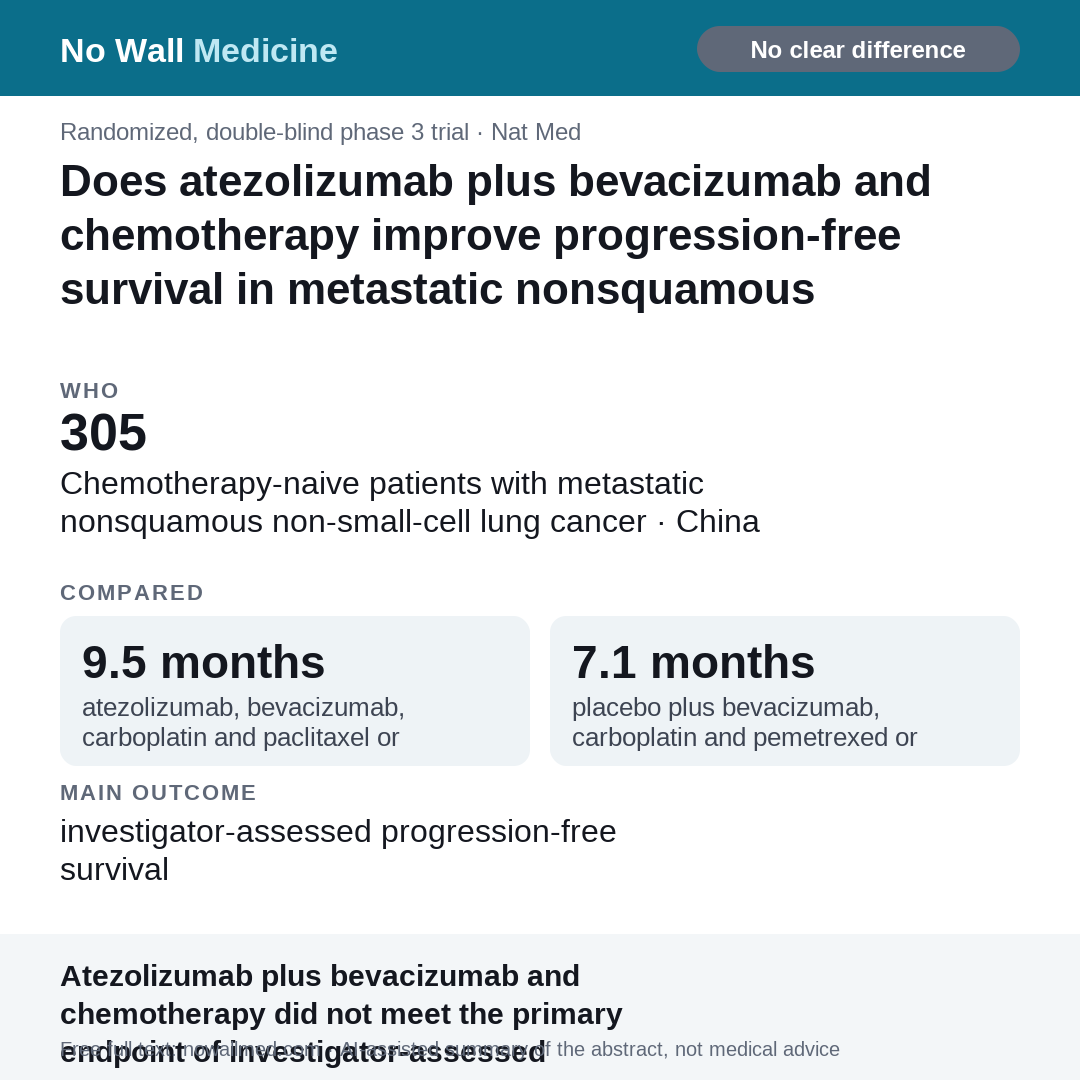
Atezolizumab plus bevacizumab and chemotherapy in metastatic nonsquamous NSCLC: the randomized double-blind phase 3 IMpower151 trial
Randomized, double-blind phase 3 trialNo clear difference
Does atezolizumab plus bevacizumab and chemotherapy improve progression-free survival in metastatic nonsquamous non-small-cell lung cancer?
Who
305
Chemotherapy-naive patients with metastatic nonsquamous non-small-cell lung cancer · China
Compared
9.5 monthsatezolizumab, bevacizumab, carboplatin and paclitaxel or pemetrexed
7.1 monthsplacebo plus bevacizumab, carboplatin and pemetrexed or paclitaxel
Main outcome
investigator-assessed progression-free survival
Result: stratified hazard ratio: 0.84 (95% confidence interval: 0.65, 1.09)
Bottom line: Atezolizumab plus bevacizumab and chemotherapy did not meet the primary endpoint of investigator-assessed progression-free survival.
Nat Med · 2025-05-16Download image
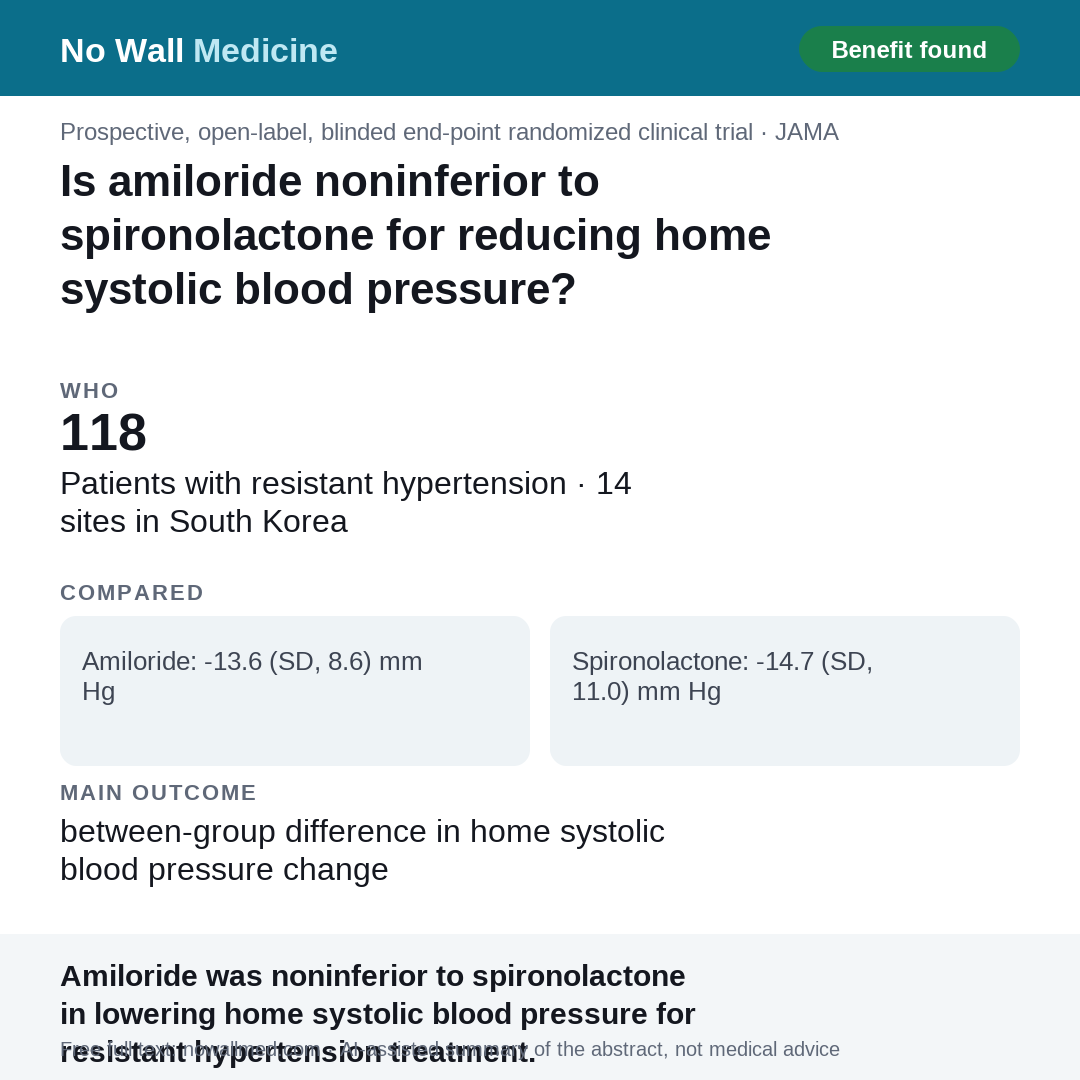
Spironolactone vs Amiloride for Resistant Hypertension: A Randomized Clinical Trial
Prospective, open-label, blinded end-point randomized clinical trialBenefit found
Is amiloride noninferior to spironolactone for reducing home systolic blood pressure?
Who
118
Patients with resistant hypertension · 14 sites in South Korea
Compared
Amiloride: -13.6 (SD, 8.6) mm Hg
Spironolactone: -14.7 (SD, 11.0) mm Hg
Main outcome
between-group difference in home systolic blood pressure change
Result: -0.68 mm Hg; 90% CI, -3.50 to 2.14 mm Hg
Bottom line: Amiloride was noninferior to spironolactone in lowering home systolic blood pressure for resistant hypertension treatment.
JAMA · 2025-05-14Download image
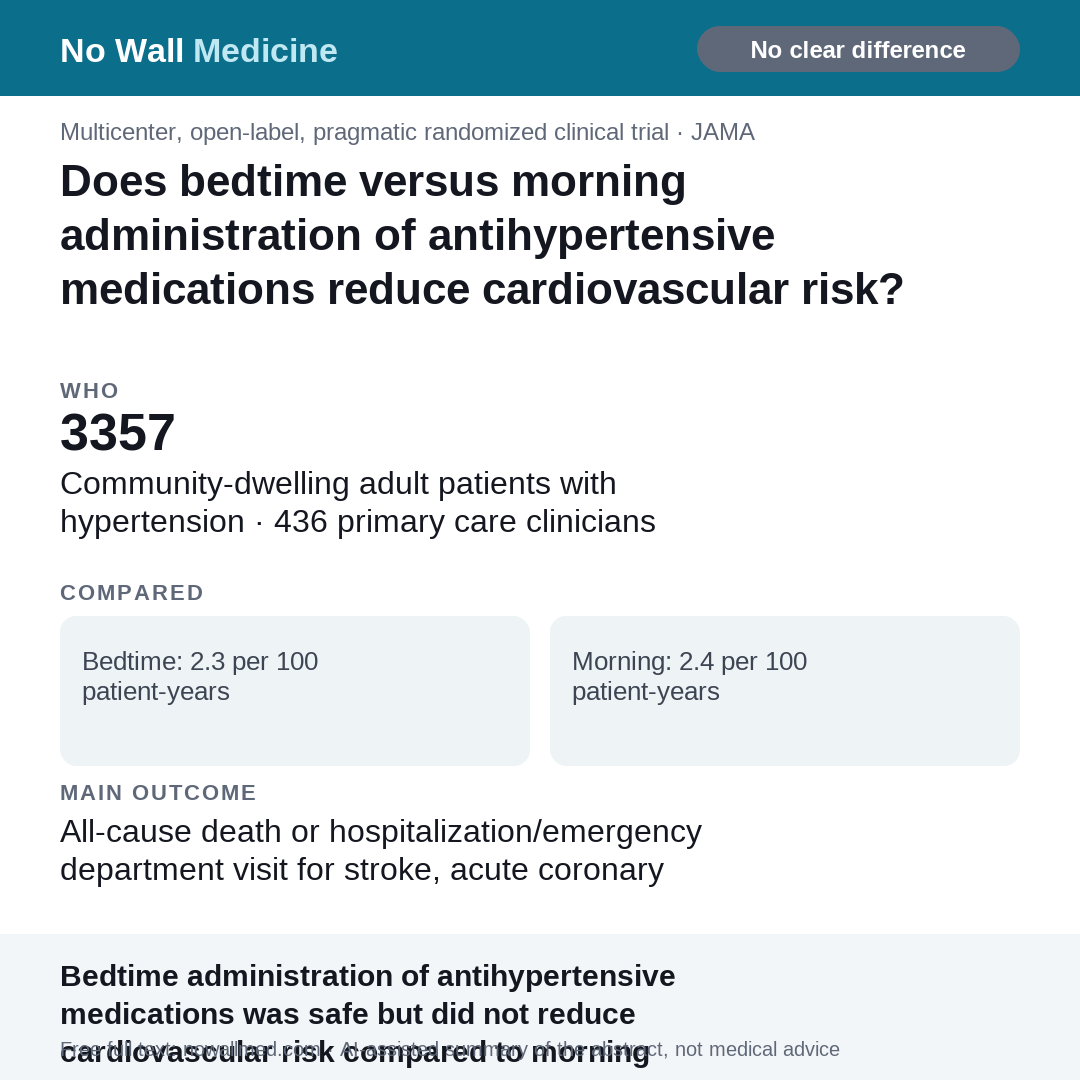
Antihypertensive Medication Timing and Cardiovascular Events and Death: The BedMed Randomized Clinical Trial
Multicenter, open-label, pragmatic randomized clinical trialNo clear difference
Does bedtime versus morning administration of antihypertensive medications reduce cardiovascular risk?
Who
3357
Community-dwelling adult patients with hypertension · 436 primary care clinicians across 5 Canadian provinces
Compared
Bedtime: 2.3 per 100 patient-years
Morning: 2.4 per 100 patient-years
Main outcome
All-cause death or hospitalization/emergency department visit for stroke, acute coronary syndrome, or heart failure
Result: adjusted hazard ratio 0.96 (95% CI 0.77-1.19)
Bottom line: Bedtime administration of antihypertensive medications was safe but did not reduce cardiovascular risk compared to morning administration.
JAMA · 2025-05-12Download image
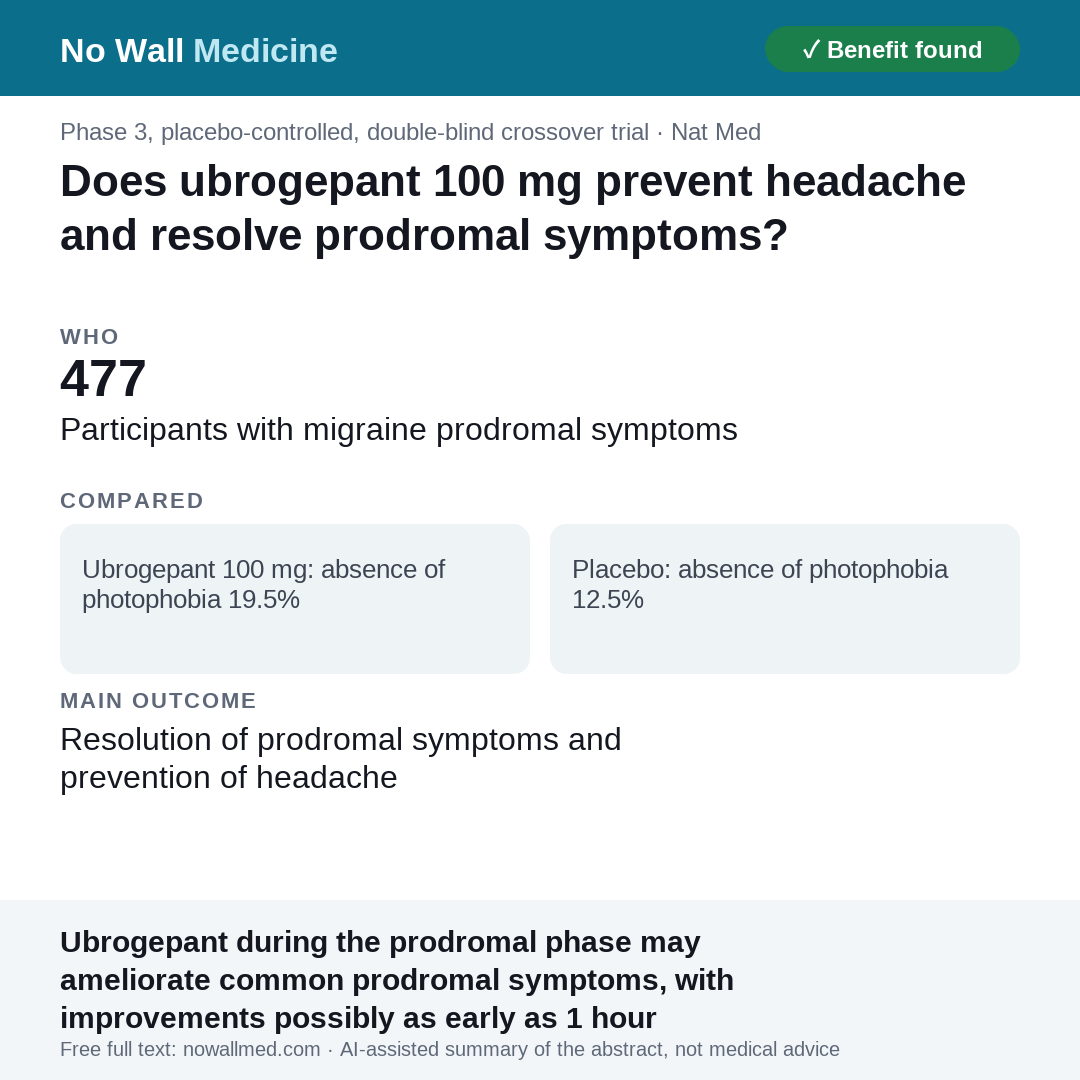
Ubrogepant for the treatment of migraine prodromal symptoms: an exploratory analysis from the randomized phase 3 PRODROME trial
Phase 3, placebo-controlled, double-blind crossover trialBenefit found
Does ubrogepant 100 mg prevent headache and resolve prodromal symptoms?
Who
477
Participants with migraine prodromal symptoms
Compared
Ubrogepant 100 mg: absence of photophobia 19.5%
Placebo: absence of photophobia 12.5%
Main outcome
Resolution of prodromal symptoms and prevention of headache
Bottom line: Ubrogepant during the prodromal phase may ameliorate common prodromal symptoms, with improvements possibly as early as 1 hour post-dose.
Nat Med · 2025-05-12Download image
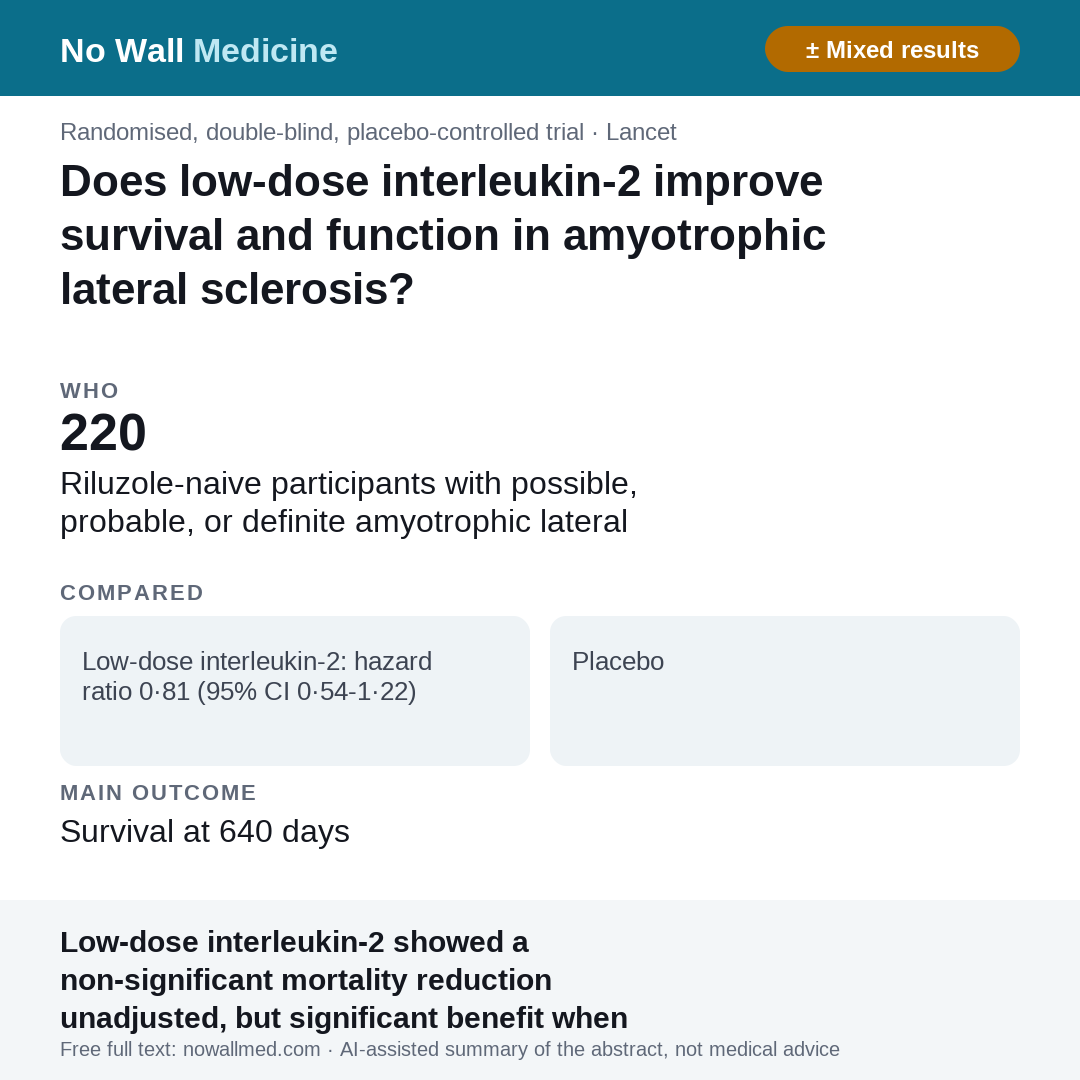
Efficacy and safety of low-dose IL-2 as an add-on therapy to riluzole (MIROCALS): a phase 2b, double-blind, randomised, placebo-controlled trial
Randomised, double-blind, placebo-controlled trialMixed results
Does low-dose interleukin-2 improve survival and function in amyotrophic lateral sclerosis?
Who
220
Riluzole-naive participants with possible, probable, or definite amyotrophic lateral sclerosis
Compared
Low-dose interleukin-2: hazard ratio 0·81 (95% CI 0·54-1·22)
Placebo
Main outcome
Survival at 640 days
Result: hazard ratio 0·32 (95% CI 0·14-0·73)
Bottom line: Low-dose interleukin-2 showed a non-significant mortality reduction unadjusted, but significant benefit when adjusted for prognostic covariates.
Limitation: The primary unadjusted analysis failed to demonstrate the expected two-fold decrease in risk of death.
Funded by: European Commission, French Health Ministry, Motor Neurone Disease Association
Lancet · 2025-05-09Download image
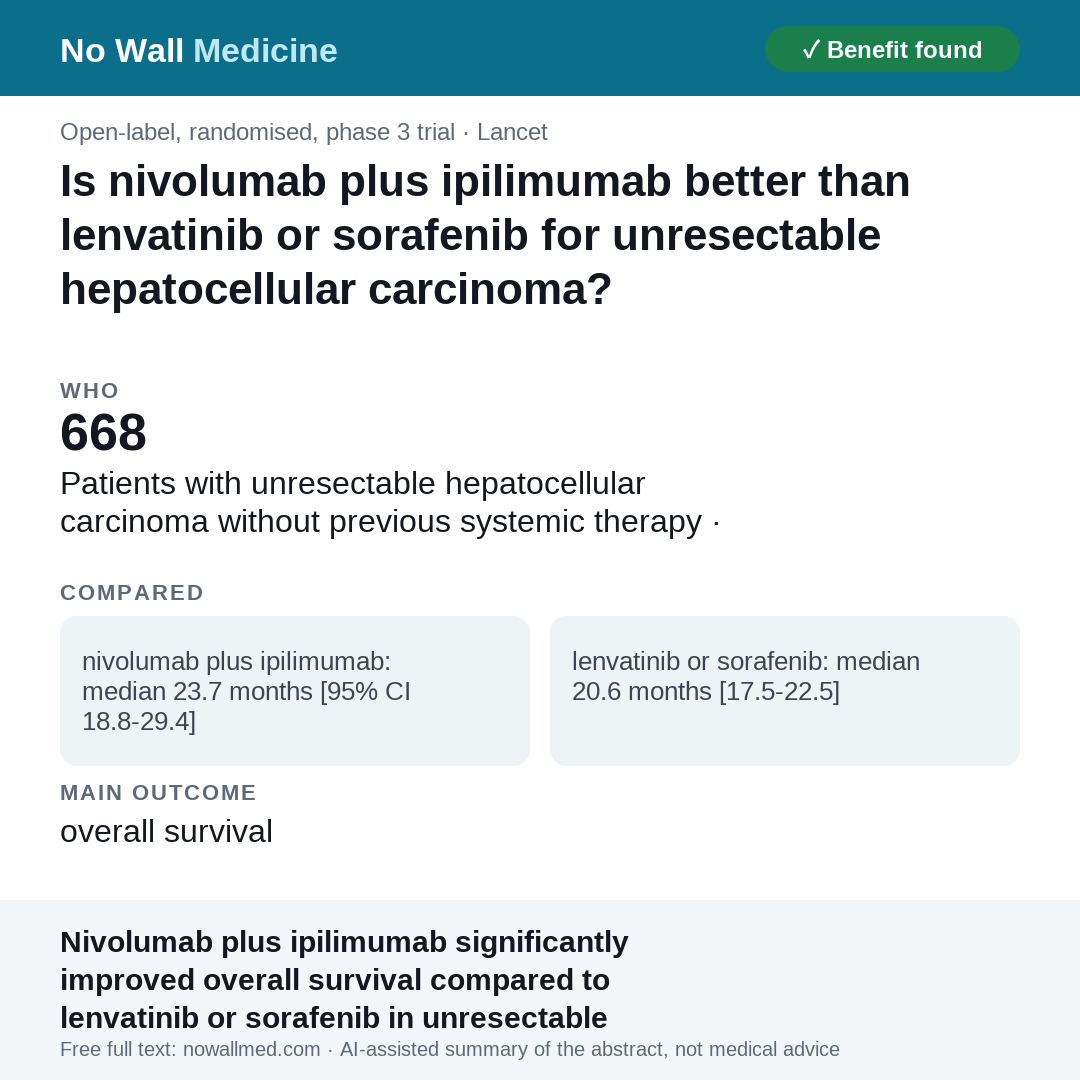
Nivolumab plus ipilimumab versus lenvatinib or sorafenib as first-line treatment for unresectable hepatocellular carcinoma (CheckMate 9DW): an open-label, randomised, phase 3 trial
Open-label, randomised, phase 3 trialBenefit found
Is nivolumab plus ipilimumab better than lenvatinib or sorafenib for unresectable hepatocellular carcinoma?
Who
668
Patients with unresectable hepatocellular carcinoma without previous systemic therapy · 163 hospitals and cancer centres across 25 countries
Compared
nivolumab plus ipilimumab: median 23.7 months [95% CI 18.8-29.4]
lenvatinib or sorafenib: median 20.6 months [17.5-22.5]
Main outcome
overall survival
Result: hazard ratio 0.79 [0.65-0.96]
Bottom line: Nivolumab plus ipilimumab significantly improved overall survival compared to lenvatinib or sorafenib in unresectable hepatocellular carcinoma.
Funded by: Bristol Myers Squibb
Lancet · 2025-05-08Download image
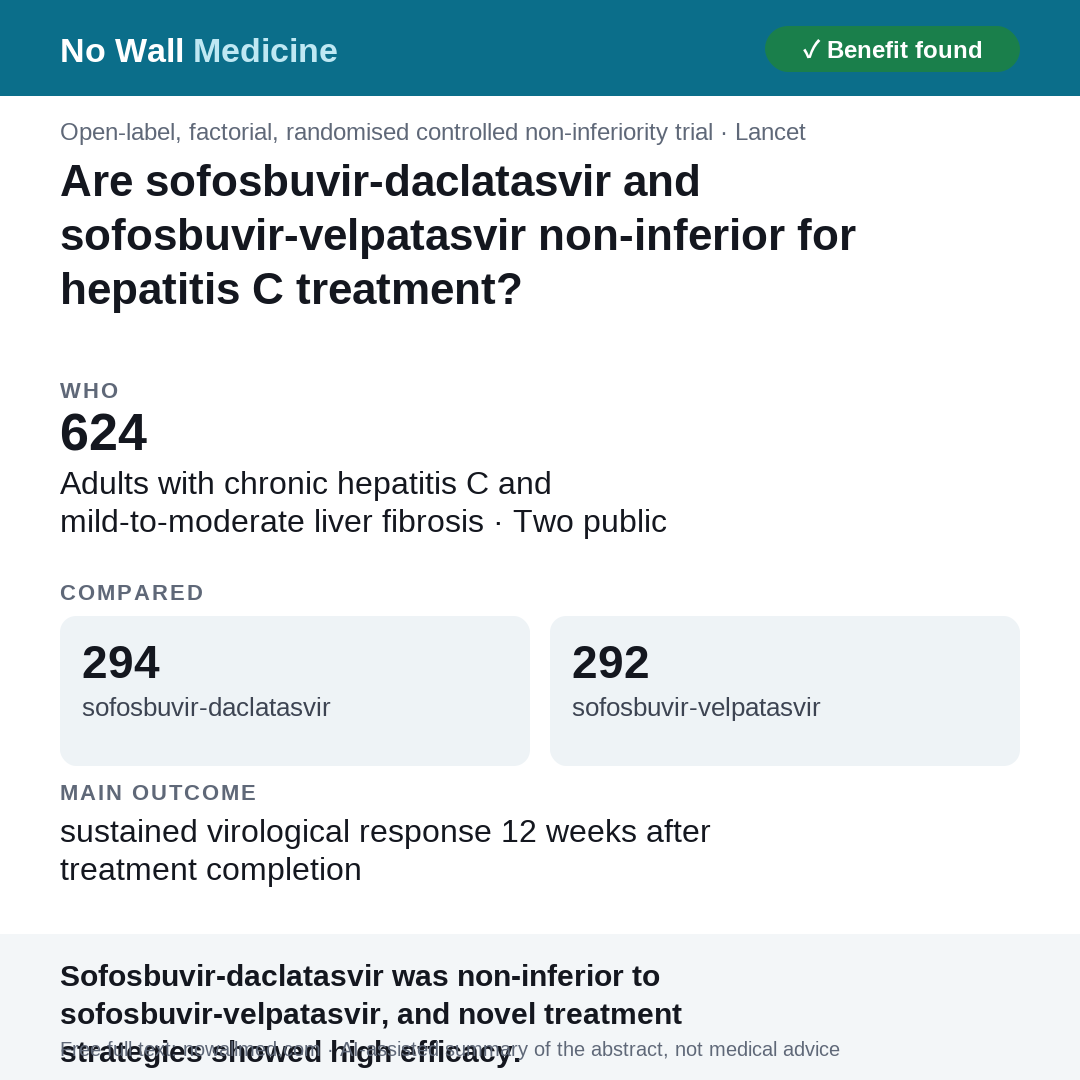
Treatment options to support the elimination of hepatitis C: an open-label, factorial, randomised controlled non-inferiority trial
Open-label, factorial, randomised controlled non-inferiority trialBenefit found
Are sofosbuvir-daclatasvir and sofosbuvir-velpatasvir non-inferior for hepatitis C treatment?
Who
624
Adults with chronic hepatitis C and mild-to-moderate liver fibrosis · Two public hospitals in Viet Nam
Compared
294sofosbuvir-daclatasvir (97%)
292sofosbuvir-velpatasvir (95%)
Main outcome
sustained virological response 12 weeks after treatment completion
Result: risk difference 2·2%, 90% credible interval -0·2 to 4·8
Bottom line: Sofosbuvir-daclatasvir was non-inferior to sofosbuvir-velpatasvir, and novel treatment strategies showed high efficacy.
Funded by: Wellcome Trust
Lancet · 2025-05-08Download image
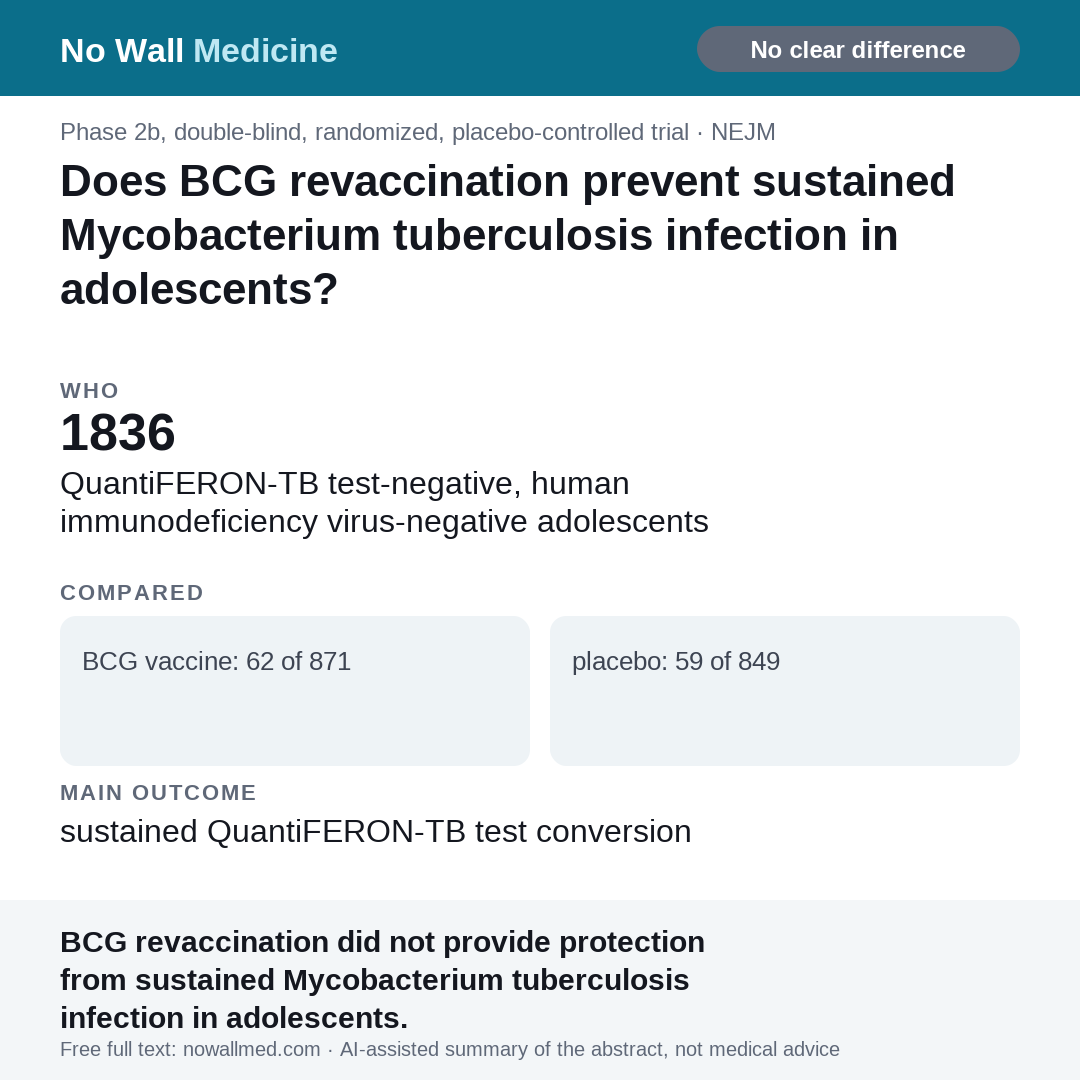
BCG Revaccination for the Prevention of Mycobacterium tuberculosis Infection
Phase 2b, double-blind, randomized, placebo-controlled trialNo clear difference
Does BCG revaccination prevent sustained Mycobacterium tuberculosis infection in adolescents?
Who
1836
QuantiFERON-TB test-negative, human immunodeficiency virus-negative adolescents
Compared
BCG vaccine: 62 of 871
placebo: 59 of 849
Main outcome
sustained QuantiFERON-TB test conversion
Result: hazard ratio 1.04 (95% CI, 0.73 to 1.48)
Bottom line: BCG revaccination did not provide protection from sustained Mycobacterium tuberculosis infection in adolescents.
Funded by: Gates Foundation
NEJM · 2025-05-07Download image
Immunogenicity and Safety of Influenza and COVID-19 Multicomponent Vaccine in Adults ≥50 Years: A Randomized Clinical Trial
Phase 3, randomized, observer-blinded trialBenefit found
Is the mRNA-1083 vaccine immunogenic and safe compared to standard influenza and COVID-19 vaccines?
Who
8015
Adults 50 years and older · 146 US sites
Compared
mRNA-1083: Noninferior immunogenicity demonstrated against all vaccine-matched strains
Comparators: Standard or high-dose influenza and COVID-19 vaccines
Main outcome
Humoral immune responses and reactogenicity/safety
Bottom line: mRNA-1083 met noninferiority and showed superior immune responses compared to standard vaccines with an acceptable safety profile.
JAMA · 2025-05-07Download image

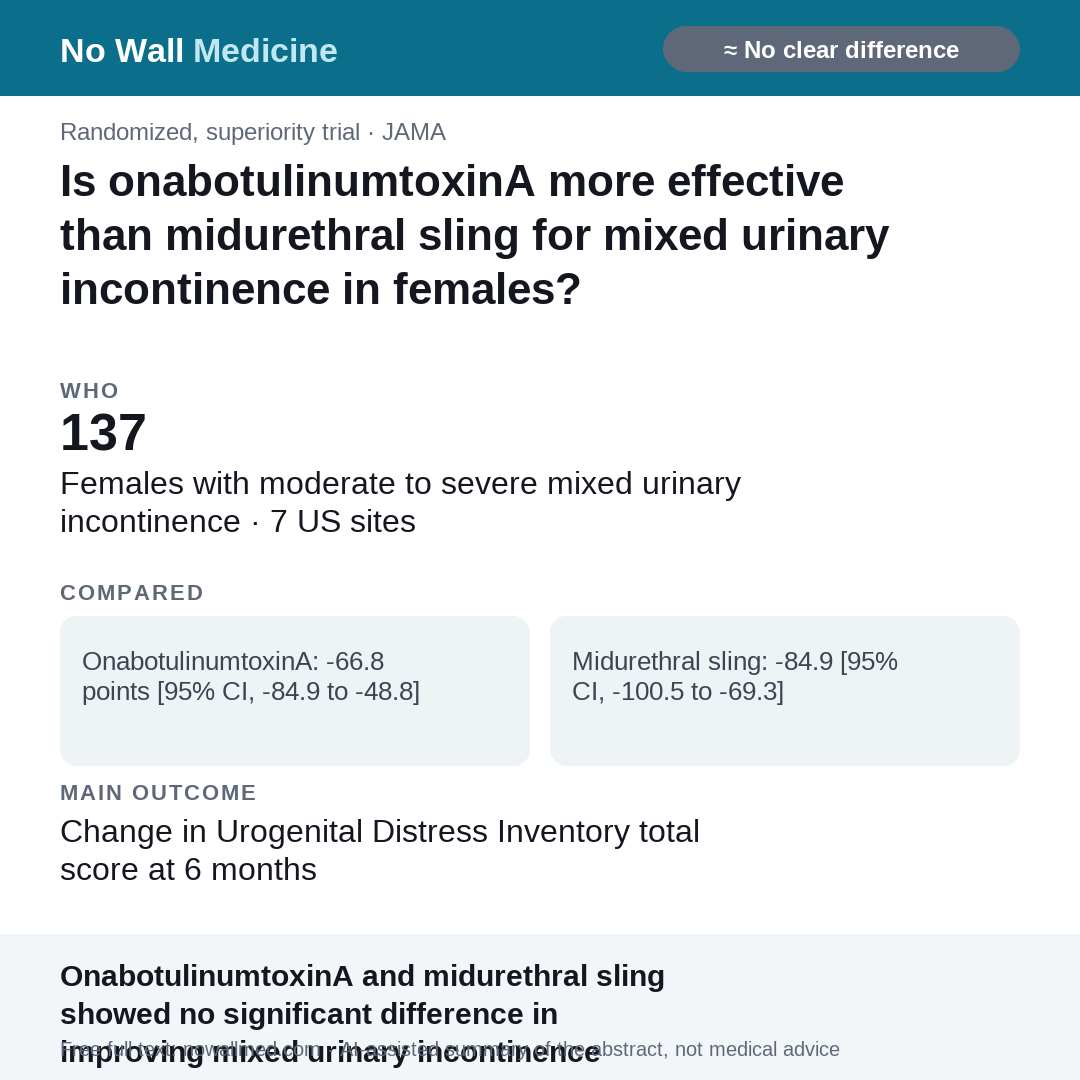
Midurethral Sling vs OnabotulinumtoxinA in Females With Urinary Incontinence: The MUSA Randomized Clinical Trial
Randomized, superiority trialNo clear difference
Is onabotulinumtoxinA more effective than midurethral sling for mixed urinary incontinence in females?
Who
137
Females with moderate to severe mixed urinary incontinence · 7 US sites
Compared
OnabotulinumtoxinA: -66.8 points [95% CI, -84.9 to -48.8]
Midurethral sling: -84.9 [95% CI, -100.5 to -69.3]
Main outcome
Change in Urogenital Distress Inventory total score at 6 months
Result: mean difference, 18.1 points [95% CI, -4.6 to 40.7]
Bottom line: OnabotulinumtoxinA and midurethral sling showed no significant difference in improving mixed urinary incontinence symptoms at 6 months.
JAMA · 2025-05-05Download image
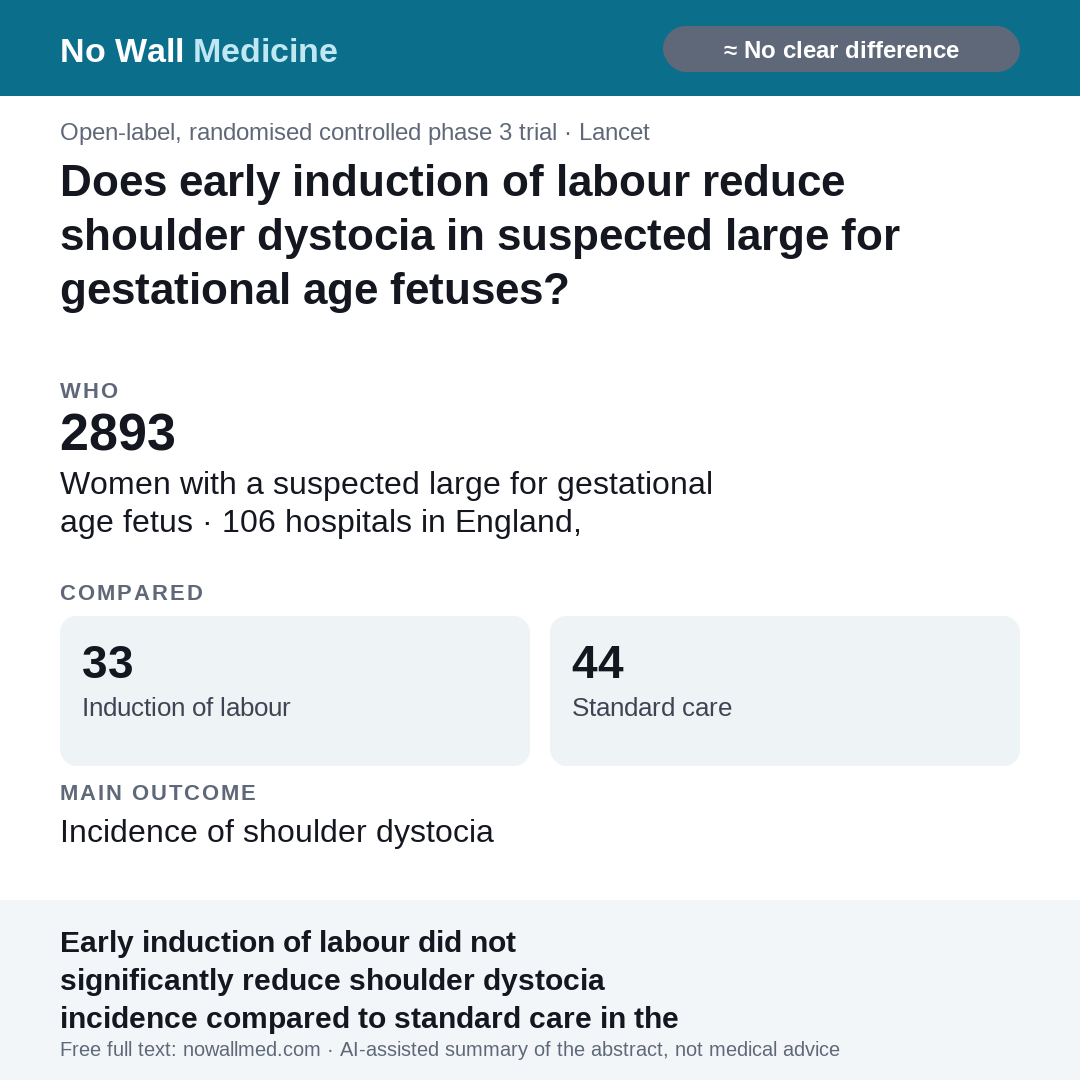
Induction of labour versus standard care to prevent shoulder dystocia in fetuses suspected to be large for gestational age in the UK (the Big Baby trial): a multicentre, open-label, randomised controlled trial
Open-label, randomised controlled phase 3 trialNo clear difference
Does early induction of labour reduce shoulder dystocia in suspected large for gestational age fetuses?
Who
2893
Women with a suspected large for gestational age fetus · 106 hospitals in England, Scotland, and Wales
Compared
33Induction of labour (2·3%)
44Standard care (3·1%)
Main outcome
Incidence of shoulder dystocia
Result: risk ratio 0·75 (95% CI 0·51-1·09)
Bottom line: Early induction of labour did not significantly reduce shoulder dystocia incidence compared to standard care in the intention-to-treat analysis.
Limitation: High proportion of earlier-than-expected deliveries in standard care reduced intended between-group differences.
Lancet · 2025-05-01Download image
Infant mental health services for birth and foster families of maltreated pre-school children in foster care (BeST?): a cluster-randomized phase 3 clinical effectiveness trial
Single-blind, cluster-randomized phase 3 trialNo clear difference
Does the New Orleans Intervention Model improve child mental health in foster care?
Who
488
Birth and foster families of maltreated 0-5-year-old children entering foster care
Compared
New Orleans Intervention Model: mean (s.d.) 11.5 (7.6)
social work services as usual: mean (s.d.) 11.1 (7.2)
Main outcome
child mental health measured by Strengths and Difficulties Questionnaire Total Difficulties scale
Result: adjusted mean difference 1.4 (95% CI -0.63, 3.53)
Bottom line: The New Orleans Intervention Model showed no significant effect on child mental health compared to usual social work services.
Nat Med · 2025-05-01Download image

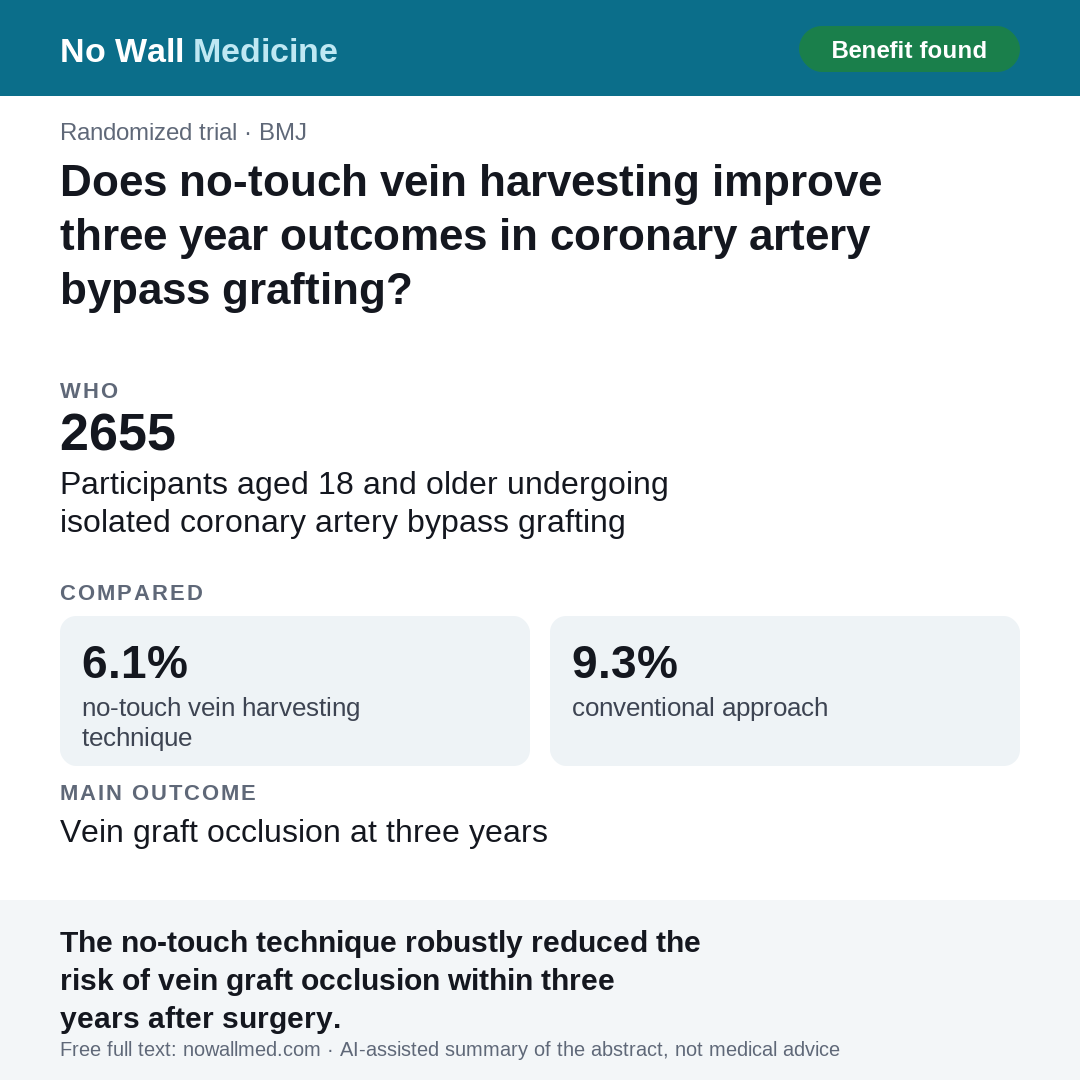
No-touch versus conventional vein in coronary artery bypass grafting: three year follow-up of multicentre randomised PATENCY trial
Randomized trialBenefit found
Does no-touch vein harvesting improve three year outcomes in coronary artery bypass grafting?
Who
2655
Participants aged 18 and older undergoing isolated coronary artery bypass grafting surgery · Seven cardiac surgery centres in China
Compared
6.1%no-touch vein harvesting technique
9.3%conventional approach
Main outcome
Vein graft occlusion at three years
Result: odds ratio 0.63 (95% confidence interval 0.51 to 0.81)
Bottom line: The no-touch technique robustly reduced the risk of vein graft occlusion within three years after surgery.
BMJ · 2025-04-30Download image
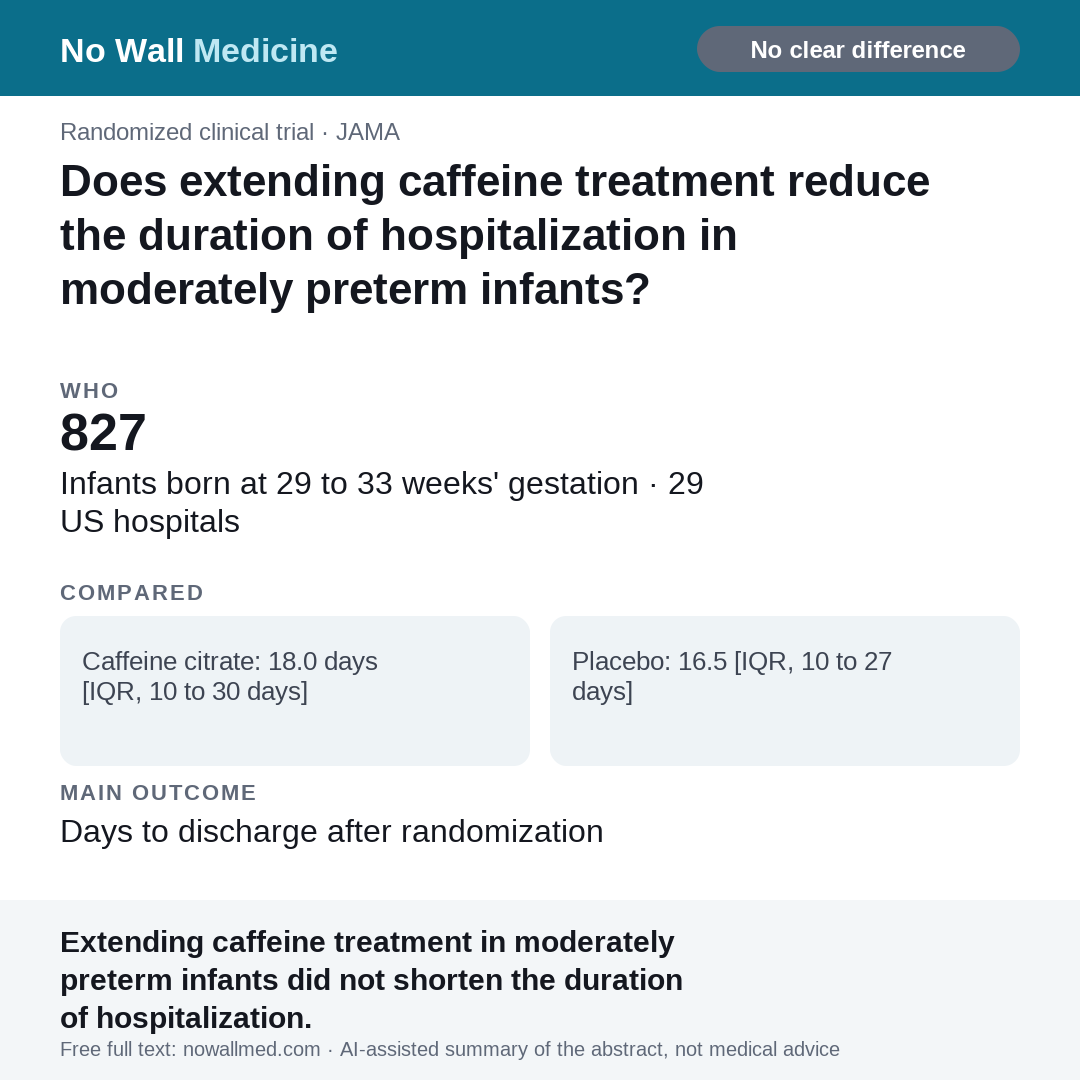
Extended Caffeine for Apnea in Moderately Preterm Infants: The MoCHA Randomized Clinical Trial
Randomized clinical trialNo clear difference
Does extending caffeine treatment reduce the duration of hospitalization in moderately preterm infants?
Who
827
Infants born at 29 to 33 weeks' gestation · 29 US hospitals
Compared
Caffeine citrate: 18.0 days [IQR, 10 to 30 days]
Placebo: 16.5 [IQR, 10 to 27 days]
Main outcome
Days to discharge after randomization
Result: adjusted median difference, 0 days (95% CI, -1.7 to 1.7 days)
Bottom line: Extending caffeine treatment in moderately preterm infants did not shorten the duration of hospitalization.
JAMA · 2025-04-28Download image