Visual abstracts
New randomized trials and meta-analyses from leading journals at a glance: who was studied, what was compared, and what was found. Every paper is free to read in full.
All specialtiesCardiology 1670Oncology 1451Gastroenterology & Hepatology 626Infectious Disease 1068Neurology 688Psychiatry & Mental Health 837Pulmonology 721Critical Care 488Endocrinology & Diabetes 912Pediatrics 989Surgery 831Orthopedics & Sports Medicine 314Neurosurgery 213Cardiothoracic & Vascular Surgery 190Plastic & Reconstructive Surgery 261Nephrology 343Rheumatology 228Hematology 367Dermatology 182Ophthalmology 198Obstetrics & Gynecology 547Public & Global Health 325Radiology & Imaging 229Anesthesiology 336Urology 299ENT (Otolaryngology) 225Emergency Medicine 189Allergy & Immunology 109Geriatrics 362Family Medicine & Primary Care 206Medical Genetics & Genomics 180Pathology & Laboratory Medicine 53Physical Medicine & Rehabilitation 294Palliative Care 150Nutrition 447Digital Health & AI 887General Medicine 135
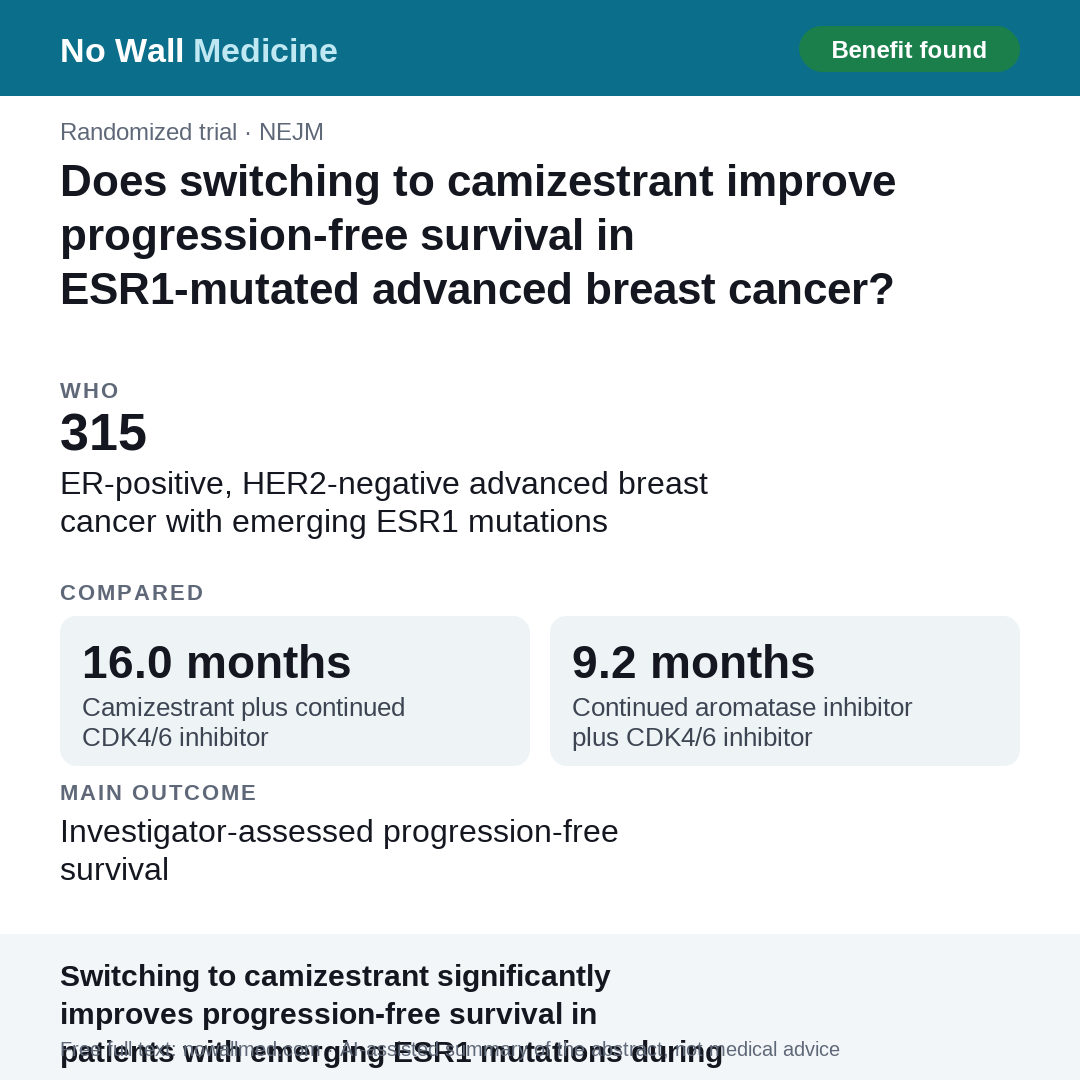
First-Line Camizestrant for Emerging ESR1-Mutated Advanced Breast Cancer
Randomized trialBenefit found
Does switching to camizestrant improve progression-free survival in ESR1-mutated advanced breast cancer?
Who
315
ER-positive, HER2-negative advanced breast cancer with emerging ESR1 mutations
Compared
16.0 monthsCamizestrant plus continued CDK4/6 inhibitor (95% CI, 12.7 to 18.2)
9.2 monthsContinued aromatase inhibitor plus CDK4/6 inhibitor (95% CI, 7.2 to 9.5)
Main outcome
Investigator-assessed progression-free survival
Result: hazard ratio 0.44 (95% CI 0.31 to 0.60)
Bottom line: Switching to camizestrant significantly improves progression-free survival in patients with emerging ESR1 mutations during first-line therapy.
Funded by: AstraZeneca
NEJM · 2025-06-01Download image
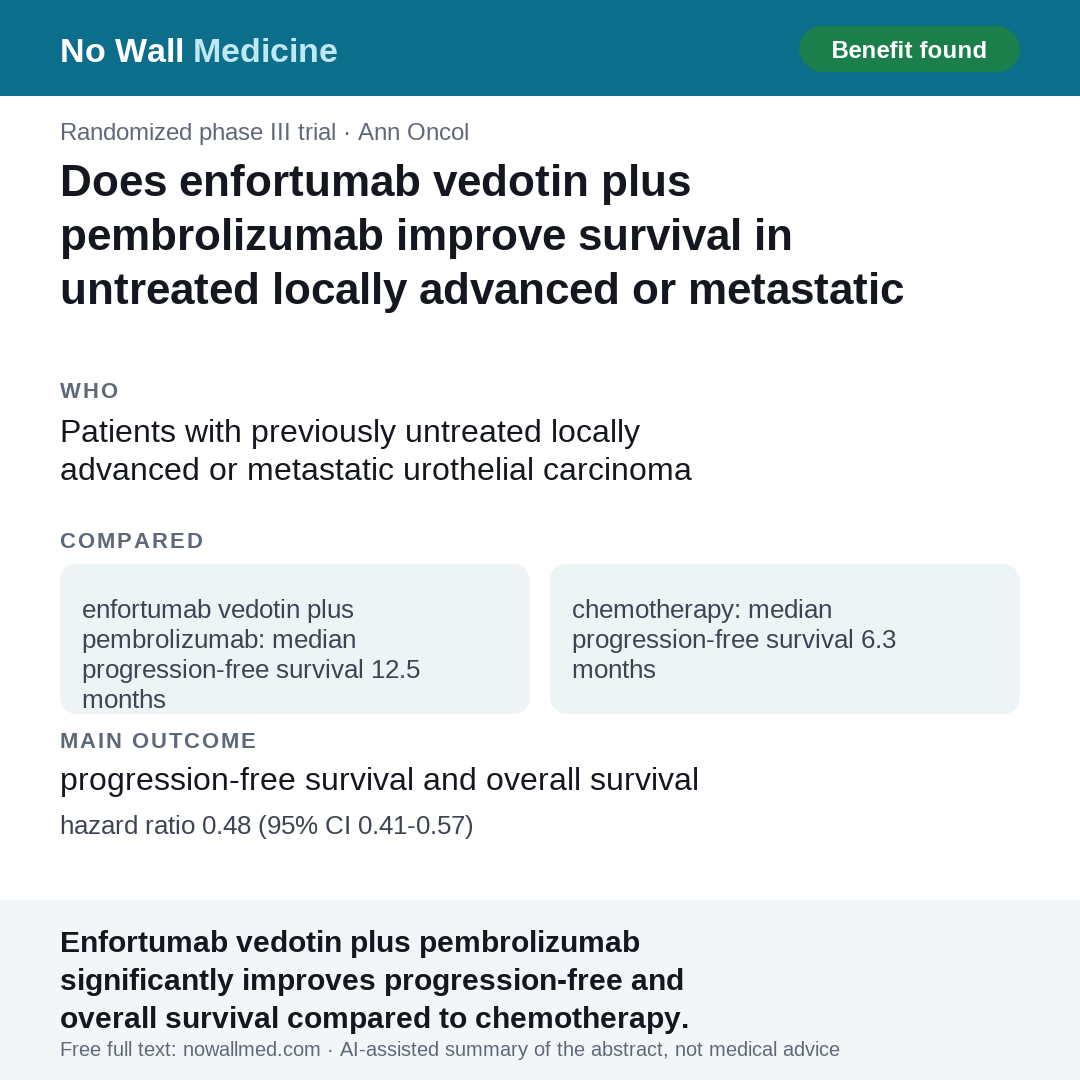
Enfortumab vedotin plus pembrolizumab in untreated locally advanced or metastatic urothelial carcinoma: 2.5-year median follow-up of the phase III EV-302/KEYNOTE-A39 trial
Randomized phase III trialBenefit found
Does enfortumab vedotin plus pembrolizumab improve survival in untreated locally advanced or metastatic urothelial carcinoma?
Who
Patients with previously untreated locally advanced or metastatic urothelial carcinoma
Compared
enfortumab vedotin plus pembrolizumab: median progression-free survival 12.5 months
chemotherapy: median progression-free survival 6.3 months
Main outcome
progression-free survival and overall survival
Result: hazard ratio 0.48 (95% CI 0.41-0.57)
Bottom line: Enfortumab vedotin plus pembrolizumab significantly improves progression-free and overall survival compared to chemotherapy.
Ann Oncol · 2025-06-01Download image
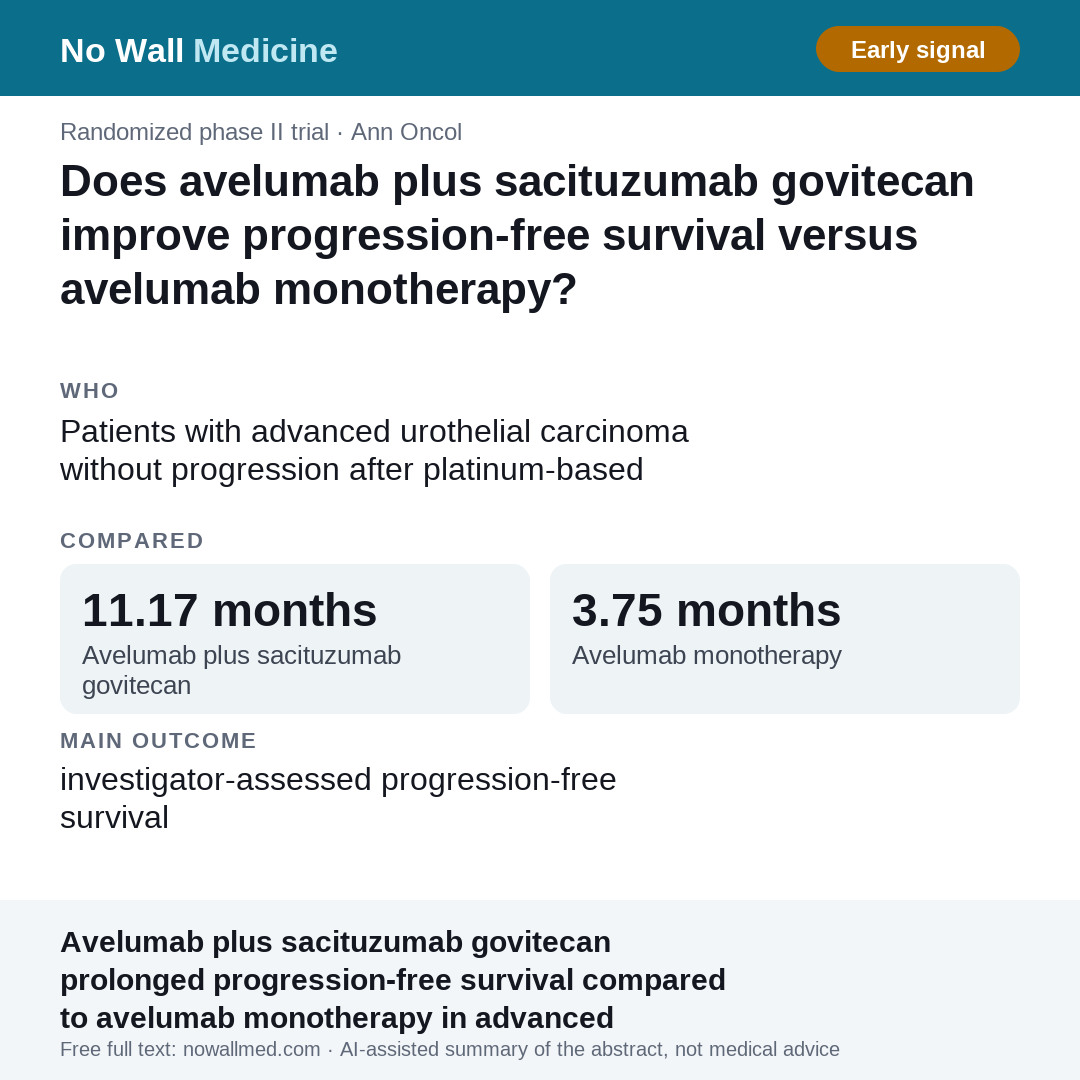
Avelumab plus sacituzumab govitecan versus avelumab monotherapy as first-line maintenance treatment in patients with advanced urothelial carcinoma: JAVELIN Bladder Medley interim analysis
Randomized phase II trialBenefit found
Does avelumab plus sacituzumab govitecan improve progression-free survival versus avelumab monotherapy?
Who
Patients with advanced urothelial carcinoma without progression after platinum-based chemotherapy
Compared
11.17 monthsAvelumab plus sacituzumab govitecan
3.75 monthsAvelumab monotherapy
Main outcome
investigator-assessed progression-free survival
Result: hazard ratio 0.49 (95% CI 0.31-0.76)
Bottom line: Avelumab plus sacituzumab govitecan prolonged progression-free survival compared to avelumab monotherapy in advanced urothelial carcinoma.
Ann Oncol · 2025-06-01Download image
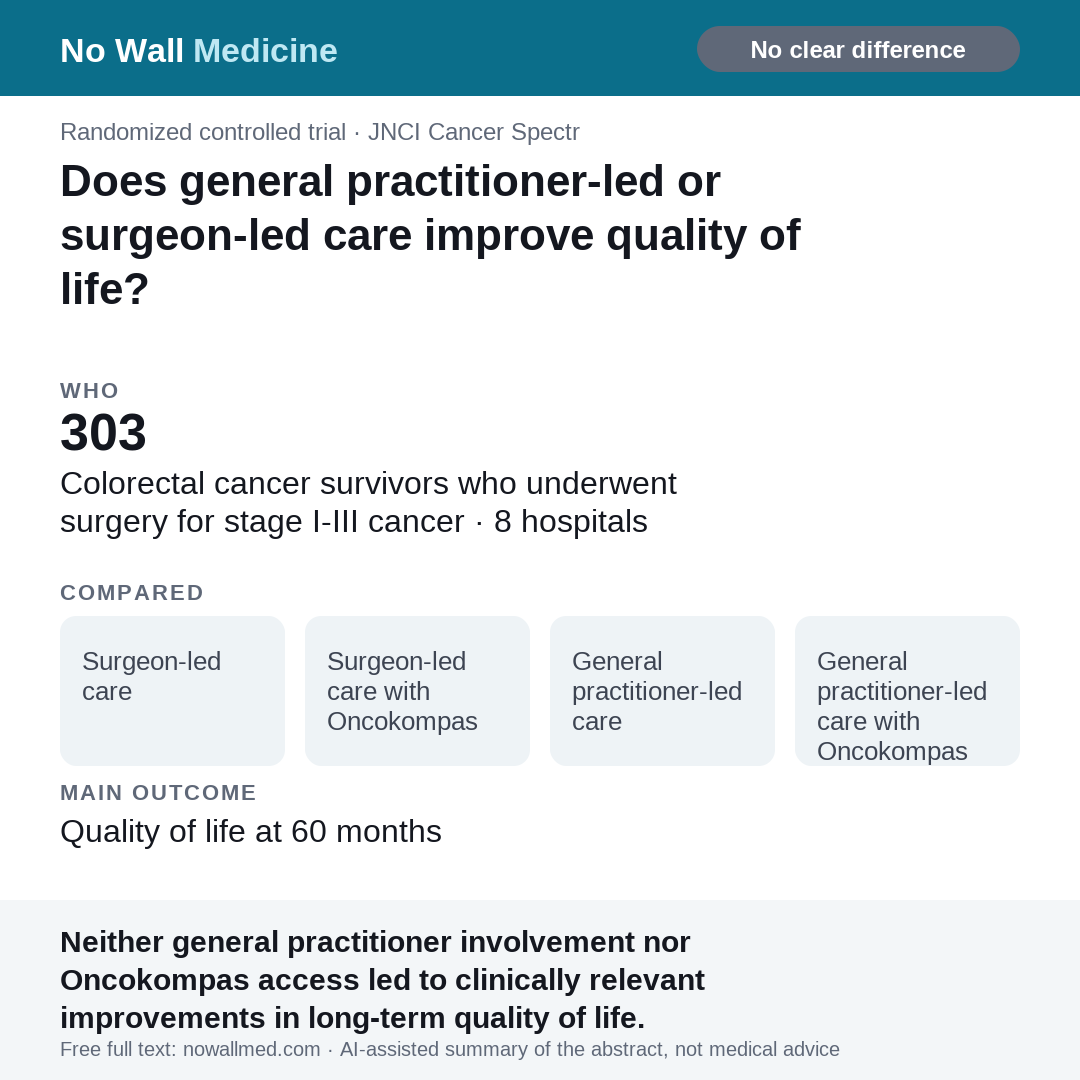
General practitioner-led vs surgeon-led colon cancer survivorship care: a randomized clinical trial
Randomized controlled trialNo clear difference
Does general practitioner-led or surgeon-led care improve quality of life?
Who
303
Colorectal cancer survivors who underwent surgery for stage I-III cancer · 8 hospitals and 225 general practices in the Netherlands
Compared
Surgeon-led care
Surgeon-led care with Oncokompas
General practitioner-led care
General practitioner-led care with Oncokompas
Main outcome
Quality of life at 60 months
Result: difference in summary score -0.5 (95% CI -1.6 to 0.5)
Bottom line: Neither general practitioner involvement nor Oncokompas access led to clinically relevant improvements in long-term quality of life.
JNCI Cancer Spectr · 2025-06-01Download image
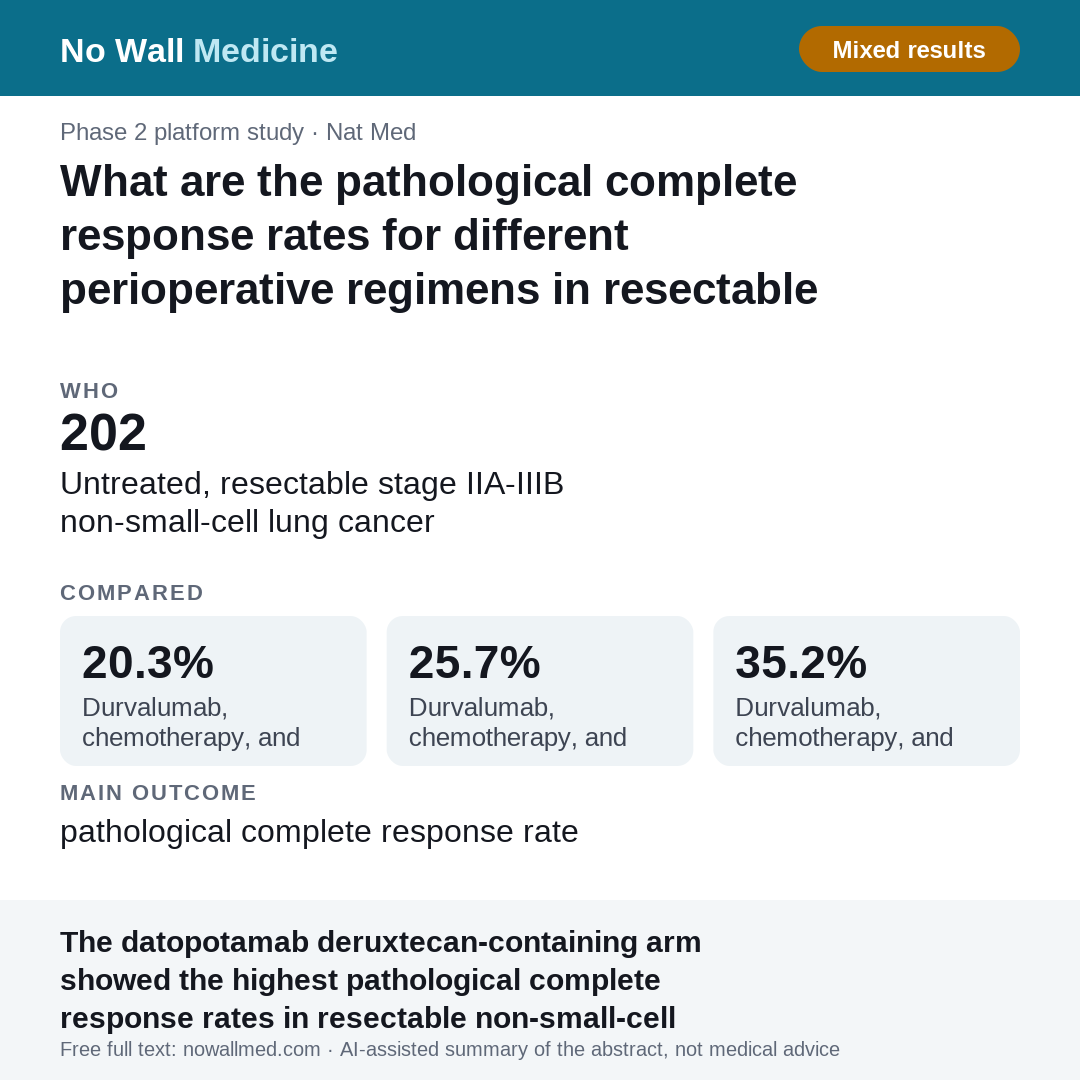
Perioperative durvalumab plus chemotherapy plus new agents for resectable non-small-cell lung cancer: the platform phase 2 NeoCOAST-2 trial
Phase 2 platform studyMixed results
What are the pathological complete response rates for different perioperative regimens in resectable non-small-cell lung cancer?
Who
202
Untreated, resectable stage IIA-IIIB non-small-cell lung cancer
Compared
20.3%Durvalumab, chemotherapy, and oleclumab (15/74; 95% CI, 11.8-31.2)
25.7%Durvalumab, chemotherapy, and monalizumab (18/70; 95% CI, 16.0-37.6)
35.2%Durvalumab, chemotherapy, and datopotamab deruxtecan (19/54; 95% CI, 22.7-49.4)
Main outcome
pathological complete response rate
Bottom line: The datopotamab deruxtecan-containing arm showed the highest pathological complete response rates in resectable non-small-cell lung cancer.
Nat Med · 2025-05-31Download image
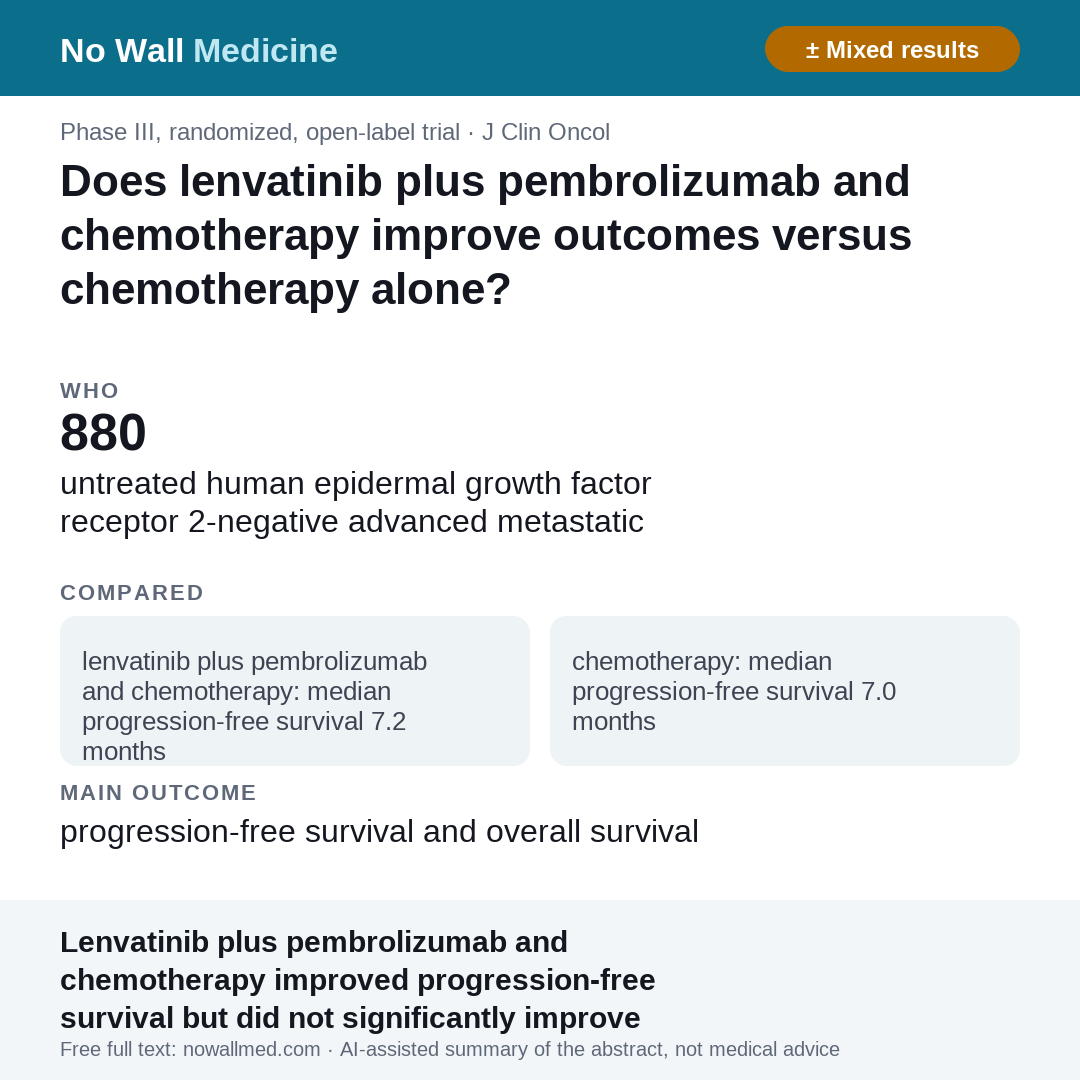
Lenvatinib Plus Pembrolizumab and Chemotherapy Versus Chemotherapy in Advanced Metastatic Gastroesophageal Adenocarcinoma: The Phase III, Randomized LEAP-015 Study
Phase III, randomized, open-label trialMixed results
Does lenvatinib plus pembrolizumab and chemotherapy improve outcomes versus chemotherapy alone?
Who
880
untreated human epidermal growth factor receptor 2-negative advanced metastatic gastroesophageal adenocarcinoma
Compared
lenvatinib plus pembrolizumab and chemotherapy: median progression-free survival 7.2 months
chemotherapy: median progression-free survival 7.0 months
Main outcome
progression-free survival and overall survival
Result: hazard ratio 0.78 (95% CI 0.66 to 0.92)
Bottom line: Lenvatinib plus pembrolizumab and chemotherapy improved progression-free survival but did not significantly improve overall survival.
Limitation: the clinical significance of the progression-free survival difference seems to be limited
J Clin Oncol · 2025-05-31Download image
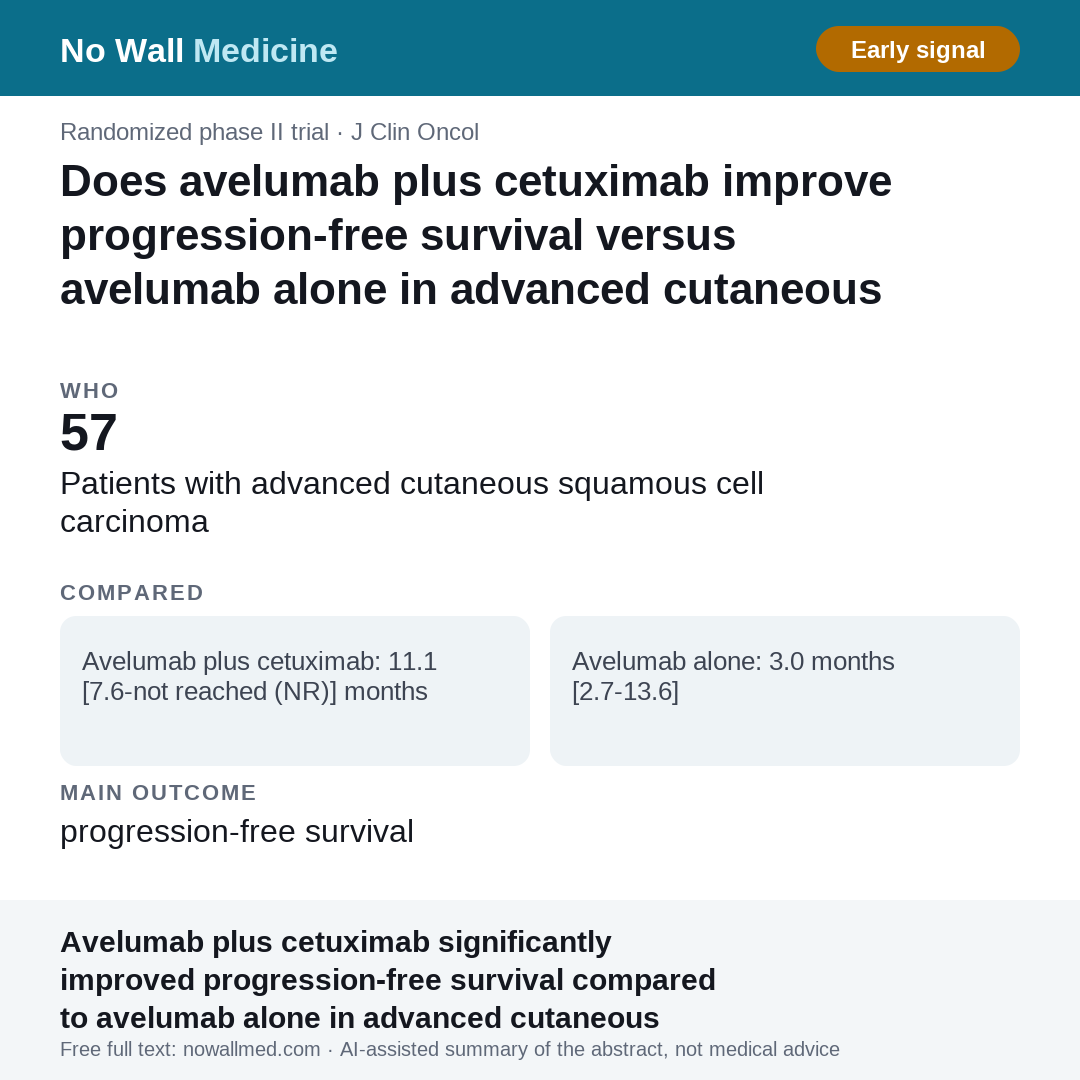
Phase II (Alliance A091802) Randomized Trial of Avelumab Plus Cetuximab Versus Avelumab Alone in Advanced Cutaneous Squamous Cell Carcinoma
Randomized phase II trialBenefit found
Does avelumab plus cetuximab improve progression-free survival versus avelumab alone in advanced cutaneous squamous cell carcinoma?
Who
57
Patients with advanced cutaneous squamous cell carcinoma
Compared
Avelumab plus cetuximab: 11.1 [7.6-not reached (NR)] months
Avelumab alone: 3.0 months [2.7-13.6]
Main outcome
progression-free survival
Result: hazard ratio 0.48 (95% CI 0.23 to 0.97)
Bottom line: Avelumab plus cetuximab significantly improved progression-free survival compared to avelumab alone in advanced cutaneous squamous cell carcinoma.
J Clin Oncol · 2025-05-31Download image
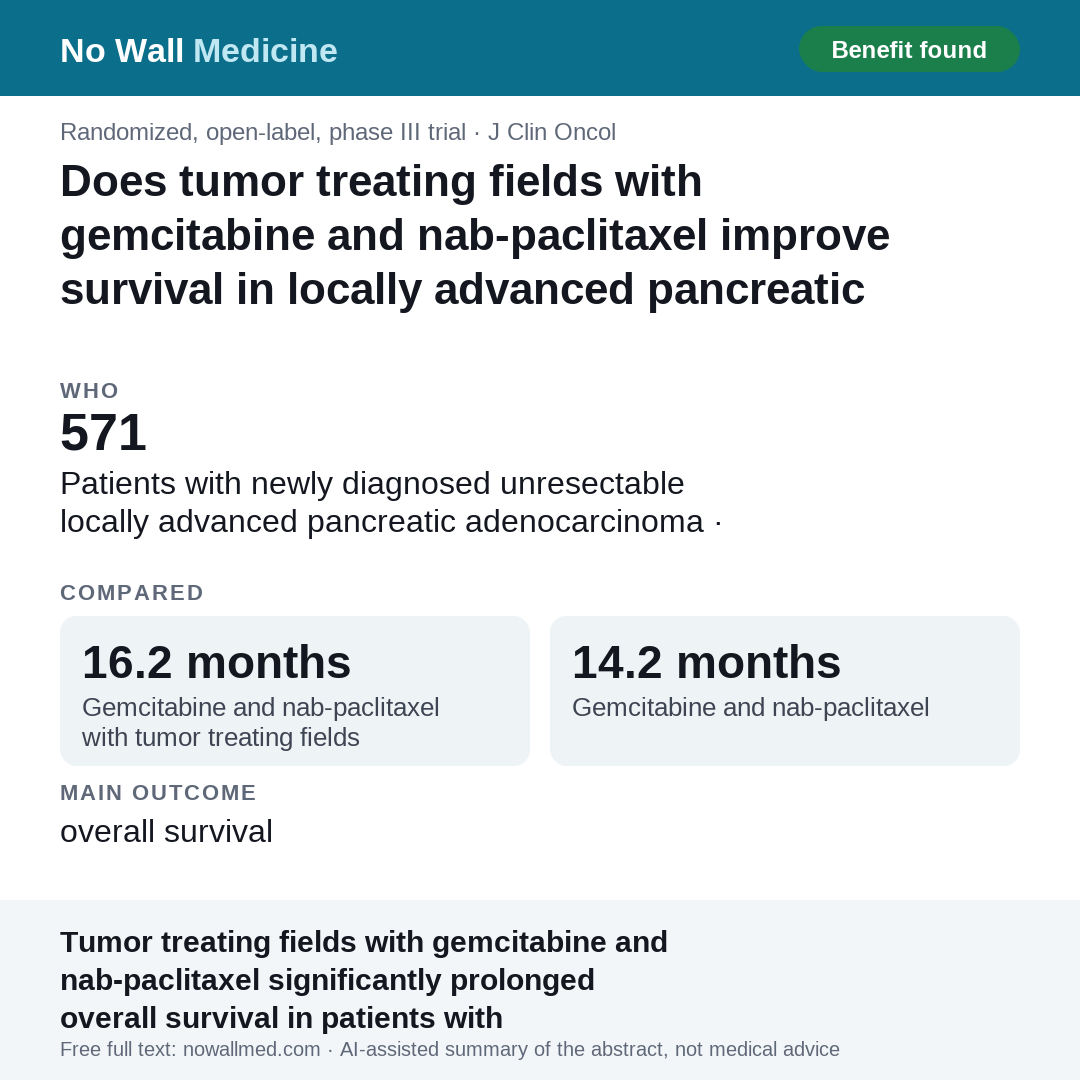
Tumor Treating Fields With Gemcitabine and Nab-Paclitaxel for Locally Advanced Pancreatic Adenocarcinoma: Randomized, Open-Label, Pivotal Phase III PANOVA-3 Study
Randomized, open-label, phase III trialBenefit found
Does tumor treating fields with gemcitabine and nab-paclitaxel improve survival in locally advanced pancreatic adenocarcinoma?
Who
571
Patients with newly diagnosed unresectable locally advanced pancreatic adenocarcinoma · Global
Compared
16.2 monthsGemcitabine and nab-paclitaxel with tumor treating fields
14.2 monthsGemcitabine and nab-paclitaxel
Main outcome
overall survival
Result: hazard ratio 0.82 (95% CI 0.68 to 0.99)
Bottom line: Tumor treating fields with gemcitabine and nab-paclitaxel significantly prolonged overall survival in patients with unresectable locally advanced pancreatic adenocarcinoma.
J Clin Oncol · 2025-05-31Download image
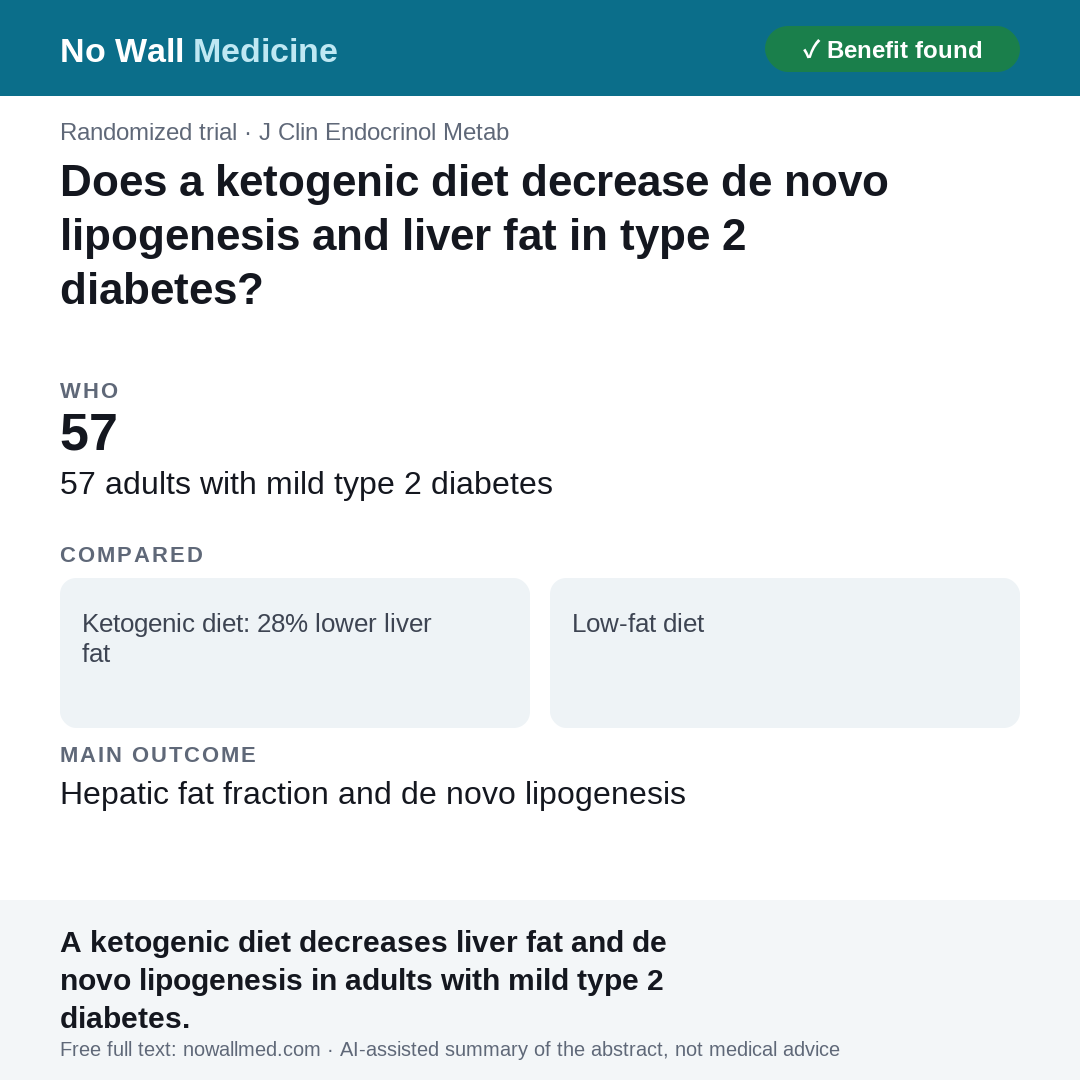
Beneficial Effects of Carbohydrate Restriction in Type 2 Diabetes Can Be Traced to Changes in Hepatic Metabolism
Randomized trialBenefit found
Does a ketogenic diet decrease de novo lipogenesis and liver fat in type 2 diabetes?
Who
57
57 adults with mild type 2 diabetes
Compared
Ketogenic diet: 28% lower liver fat
Low-fat diet
Main outcome
Hepatic fat fraction and de novo lipogenesis
Bottom line: A ketogenic diet decreases liver fat and de novo lipogenesis in adults with mild type 2 diabetes.
J Clin Endocrinol Metab · 2025-05-31Download image
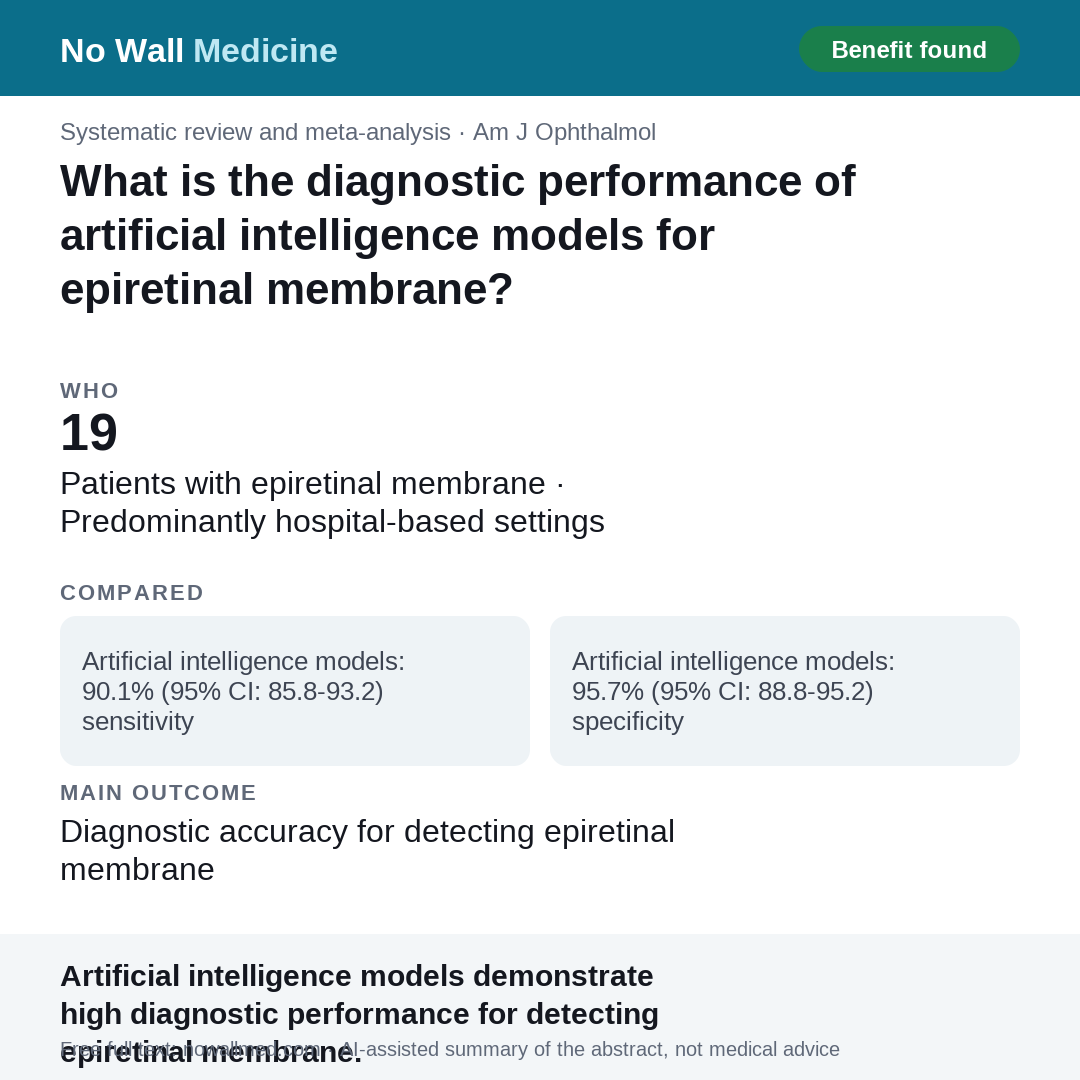
Performance of Artificial Intelligence-Based Models for Epiretinal Membrane Diagnosis: A Systematic Review and Meta-Analysis
Systematic review and meta-analysisBenefit found
What is the diagnostic performance of artificial intelligence models for epiretinal membrane?
Who
19
Patients with epiretinal membrane · Predominantly hospital-based settings
Compared
Artificial intelligence models: 90.1% (95% CI: 85.8-93.2) sensitivity
Artificial intelligence models: 95.7% (95% CI: 88.8-95.2) specificity
Main outcome
Diagnostic accuracy for detecting epiretinal membrane
Result: sensitivity 90.1% (95% CI: 85.8-93.2), specificity 95.7% (95% CI: 88.8-95.2)
Bottom line: Artificial intelligence models demonstrate high diagnostic performance for detecting epiretinal membrane.
Limitation: Limited external validation and variability in development methodologies limits real-world applicability.
Am J Ophthalmol · 2025-05-31Download image
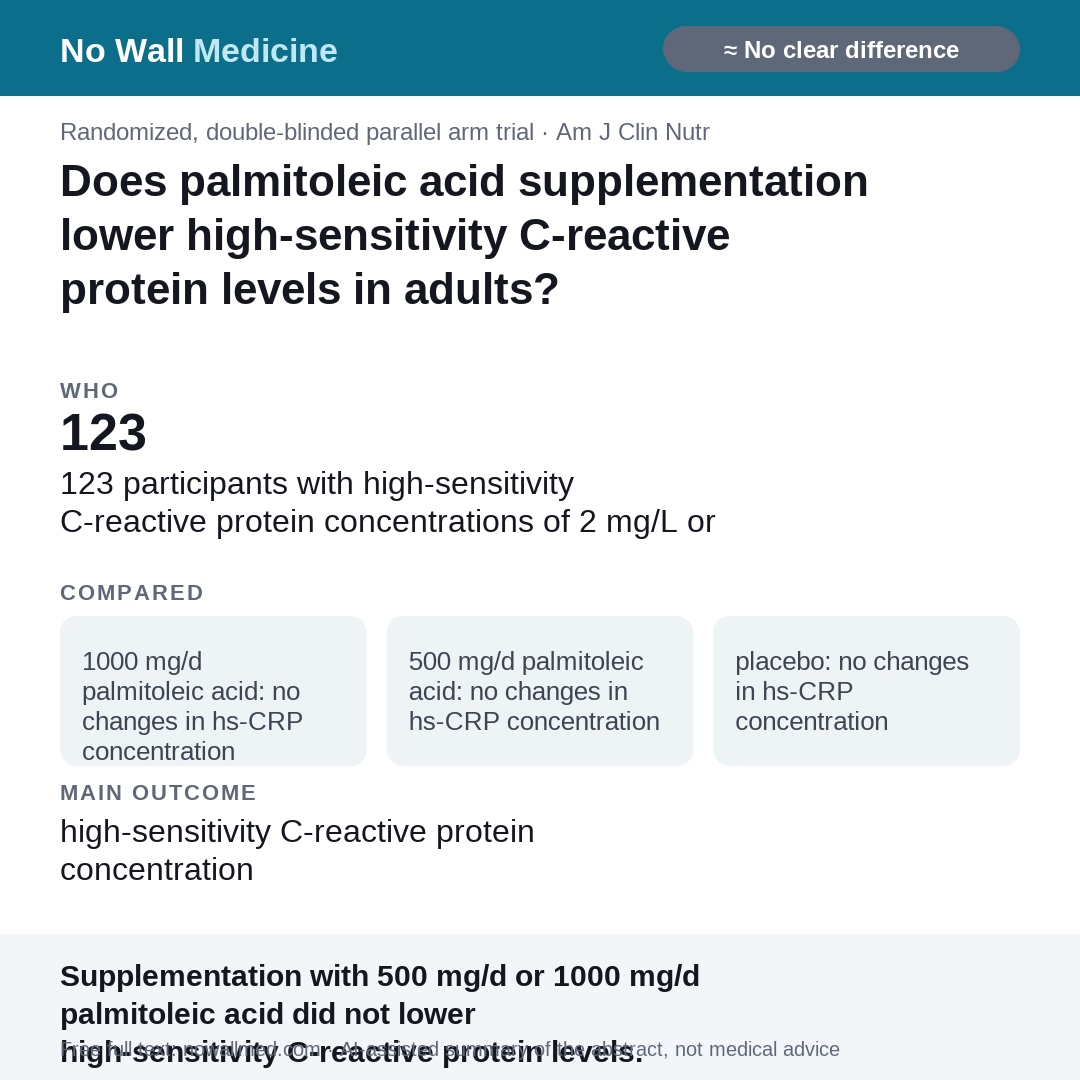
Effects of a palmitoleic acid concentrated oil on C-reactive protein levels in adults: A randomized, double-blind placebo-controlled clinical trial
Randomized, double-blinded parallel arm trialNo clear difference
Does palmitoleic acid supplementation lower high-sensitivity C-reactive protein levels in adults?
Who
123
123 participants with high-sensitivity C-reactive protein concentrations of 2 mg/L or higher
Compared
1000 mg/d palmitoleic acid: no changes in hs-CRP concentration
500 mg/d palmitoleic acid: no changes in hs-CRP concentration
placebo: no changes in hs-CRP concentration
Main outcome
high-sensitivity C-reactive protein concentration
Bottom line: Supplementation with 500 mg/d or 1000 mg/d palmitoleic acid did not lower high-sensitivity C-reactive protein levels.
Am J Clin Nutr · 2025-05-31Download image
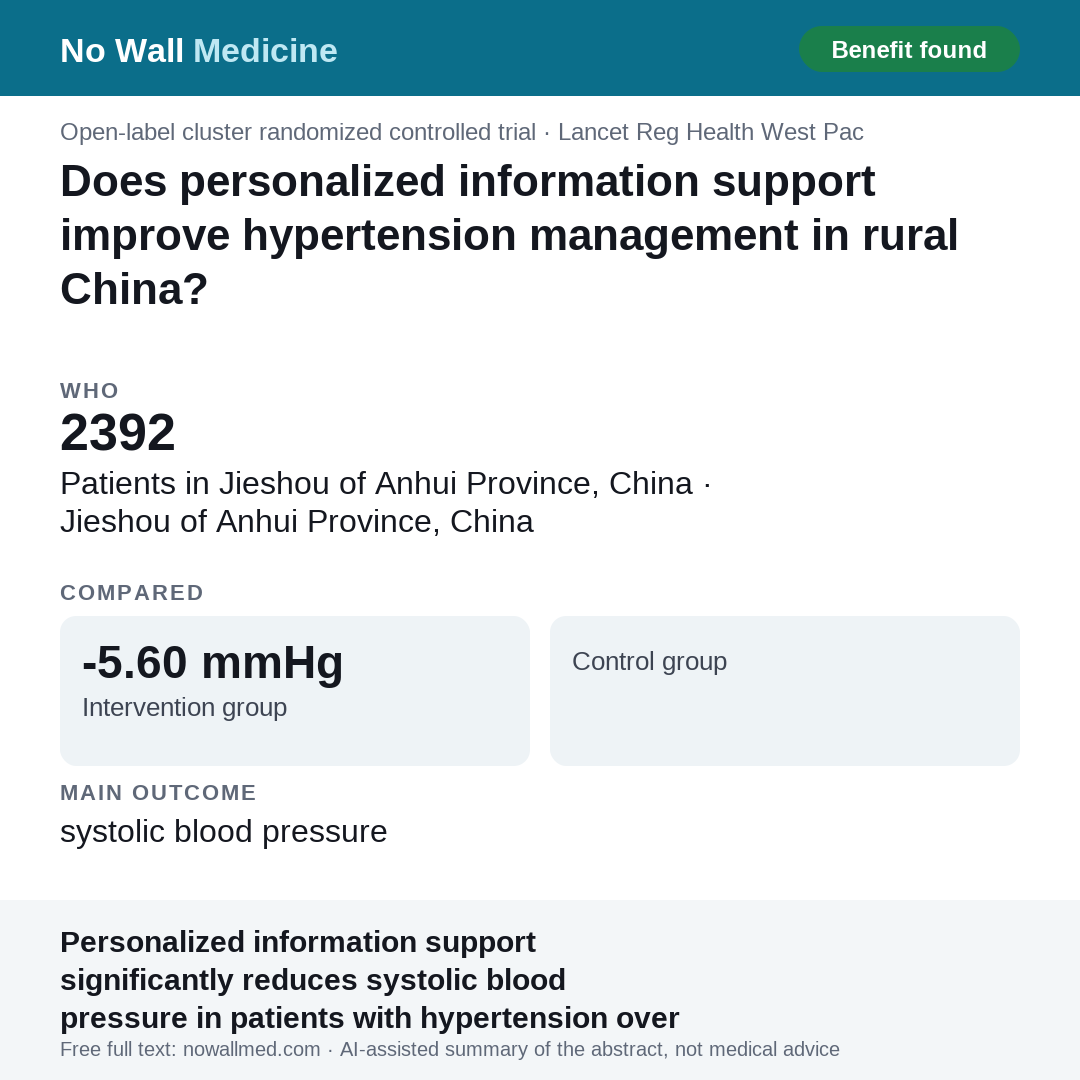
Personalized information support for hypertension management: an open-label cluster randomized controlled trial in rural Anhui, China
Open-label cluster randomized controlled trialBenefit found
Does personalized information support improve hypertension management in rural China?
Who
2392
Patients in Jieshou of Anhui Province, China · Jieshou of Anhui Province, China
Compared
-5.60 mmHgIntervention group (95% CI: -8.10, -3.09)
Control group
Main outcome
systolic blood pressure
Result: -5.60 mmHg (95% CI: -8.10, -3.09)
Bottom line: Personalized information support significantly reduces systolic blood pressure in patients with hypertension over twelve months.
Funded by: National Natural Science Foundation of China and Anhui Province
Lancet Reg Health West Pac · 2025-05-31Download image
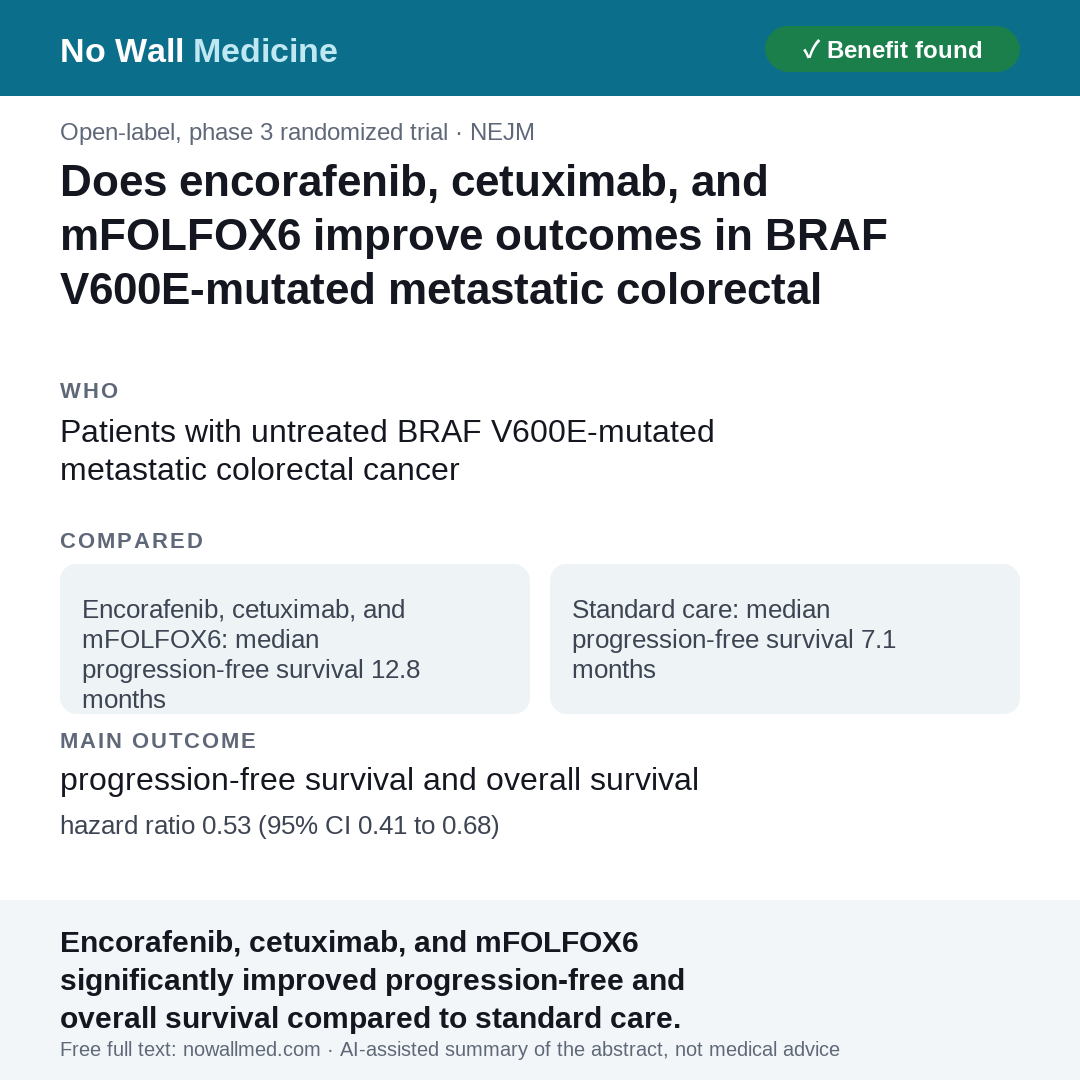
Encorafenib, Cetuximab, and mFOLFOX6 in BRAF-Mutated Colorectal Cancer
Open-label, phase 3 randomized trialBenefit found
Does encorafenib, cetuximab, and mFOLFOX6 improve outcomes in BRAF V600E-mutated metastatic colorectal cancer?
Who
Patients with untreated BRAF V600E-mutated metastatic colorectal cancer
Compared
Encorafenib, cetuximab, and mFOLFOX6: median progression-free survival 12.8 months
Standard care: median progression-free survival 7.1 months
Main outcome
progression-free survival and overall survival
Result: hazard ratio 0.53 (95% CI 0.41 to 0.68)
Bottom line: Encorafenib, cetuximab, and mFOLFOX6 significantly improved progression-free and overall survival compared to standard care.
Funded by: Pfizer and others
NEJM · 2025-05-30Download image
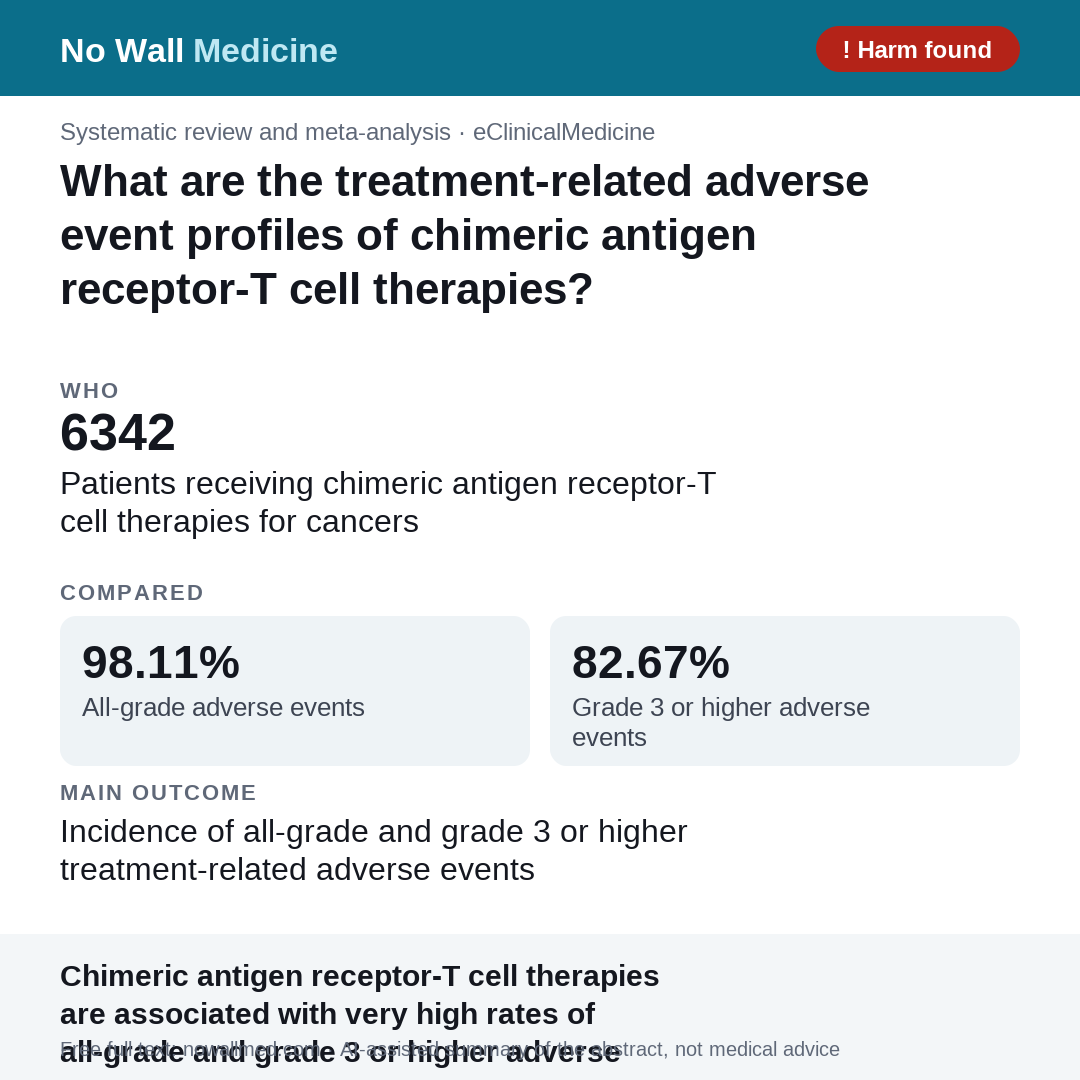
Treatment-related adverse events of chimeric antigen receptor-T therapies for cancers in clinical trials: a systematic review and meta-analysis
Systematic review and meta-analysisHarm found
What are the treatment-related adverse event profiles of chimeric antigen receptor-T cell therapies?
Who
6342
Patients receiving chimeric antigen receptor-T cell therapies for cancers
Compared
98.11%All-grade adverse events (4312/4395)
82.67%Grade 3 or higher adverse events (3512/4248)
Main outcome
Incidence of all-grade and grade 3 or higher treatment-related adverse events
Bottom line: Chimeric antigen receptor-T cell therapies are associated with very high rates of all-grade and grade 3 or higher adverse events.
Funded by: Changsha Natural Science Foundation of Hunan Provincial of China
eClinicalMedicine · 2025-05-30Download image
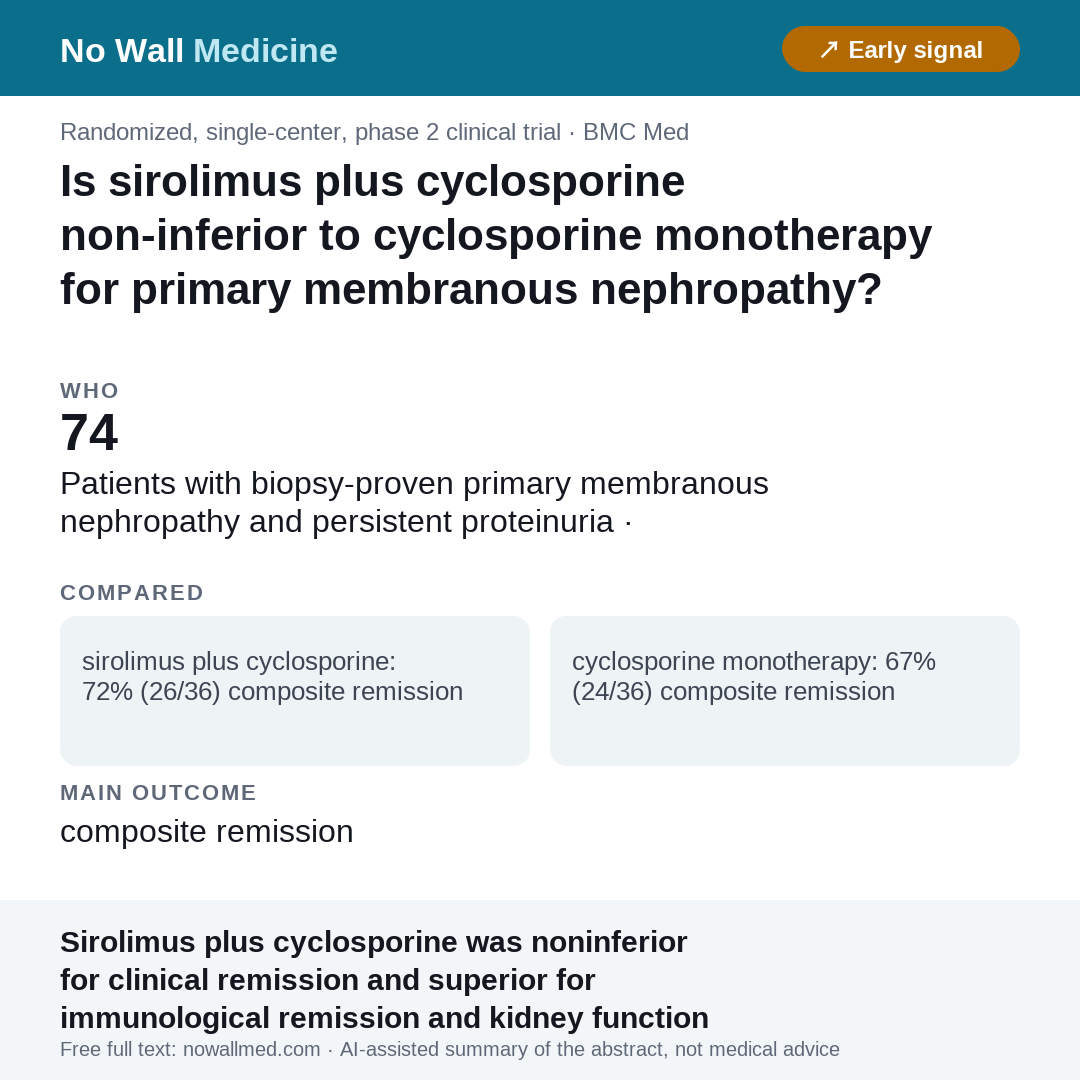
Safety and efficacy of sirolimus combined with cyclosporine in primary membranous nephropathy: a randomized controlled trial
Randomized, single-center, phase 2 clinical trialBenefit found
Is sirolimus plus cyclosporine non-inferior to cyclosporine monotherapy for primary membranous nephropathy?
Who
74
Patients with biopsy-proven primary membranous nephropathy and persistent proteinuria · Single-center
Compared
sirolimus plus cyclosporine: 72% (26/36) composite remission
cyclosporine monotherapy: 67% (24/36) composite remission
Main outcome
composite remission
Result: 95% confidence interval for noninferiority: 0.48-3.56
Bottom line: Sirolimus plus cyclosporine was noninferior for clinical remission and superior for immunological remission and kidney function preservation.
BMC Med · 2025-05-30Download image
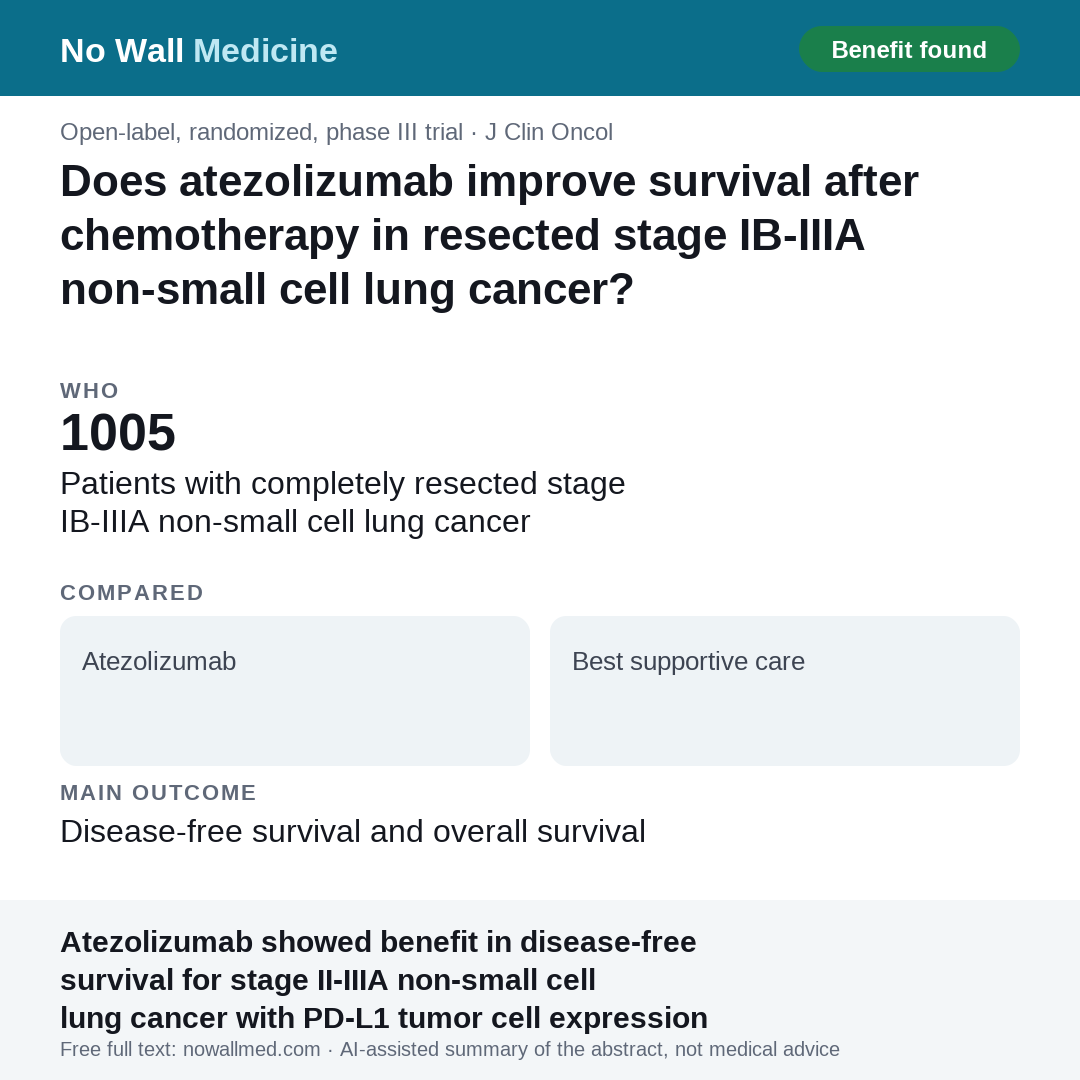
The effect of clonal hematopoiesis on long-term outcomes in patients undergoing coronary artery bypass grafting
Nested case-control studyHarm found
Does clonal hematopoiesis impact long-term outcomes in coronary artery bypass grafting patients?
Who
497
Patients undergoing coronary artery bypass grafting · STICS cohort and UK Biobank
Compared
CHIP (variant allele frequency ≥2%): aHR 1.73 (95% CI 1.08-2.78) for all-cause death
Counterparts
Main outcome
Major adverse cardiovascular and cerebrovascular events and mortality
Result: aHR 1.73 (95% CI 1.08-2.78) for all-cause death
Bottom line: Clonal hematopoiesis with variant allele frequency ≥2% is associated with increased all-cause and cardiovascular death after bypass surgery.
BMC Med · 2025-05-30Download image
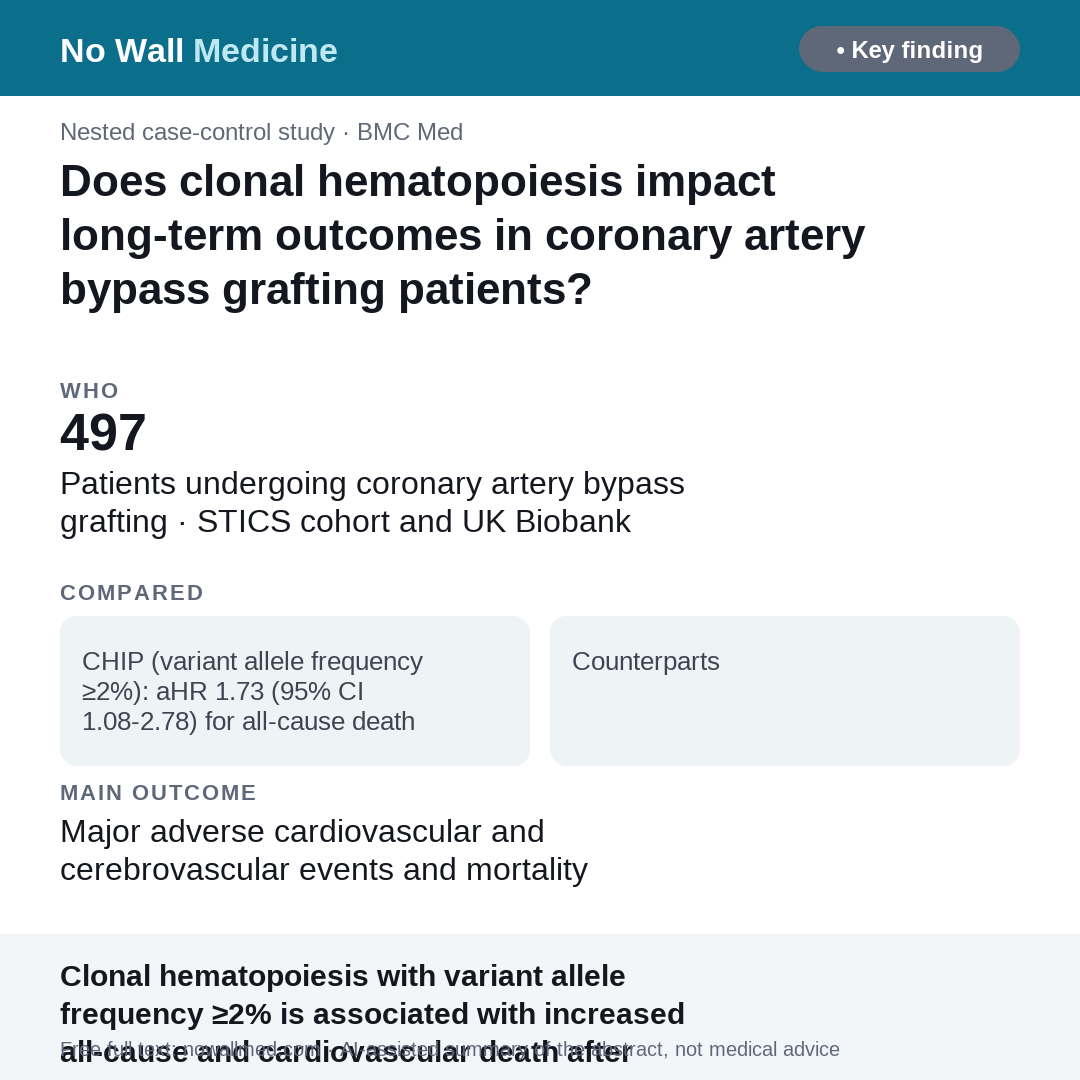
Pre-treatment lysis time of plasma-derived fibrin clots and bleeding in patients on oral anticoagulants for atrial fibrillation in the ARISTOTLE trial
Observational study of randomized trial participantsHarm found
Does pre-treatment fibrin clot lysis time predict bleeding in patients with atrial fibrillation?
Who
1841
Anticoagulation-naïve participants with atrial fibrillation
Compared
Shortest lysis time (Q1): 6.3%/yr
Longest lysis time (Q4): 2.1%/yr
Main outcome
Major and clinically relevant non-major bleeding
Result: hazard ratio 2.99 (95% CI, 1.75-5.12)
Bottom line: Shorter pre-treatment fibrin clot lysis time independently predicted higher bleeding risk in patients receiving oral anticoagulation.
Eur Heart J · 2025-05-30Download image
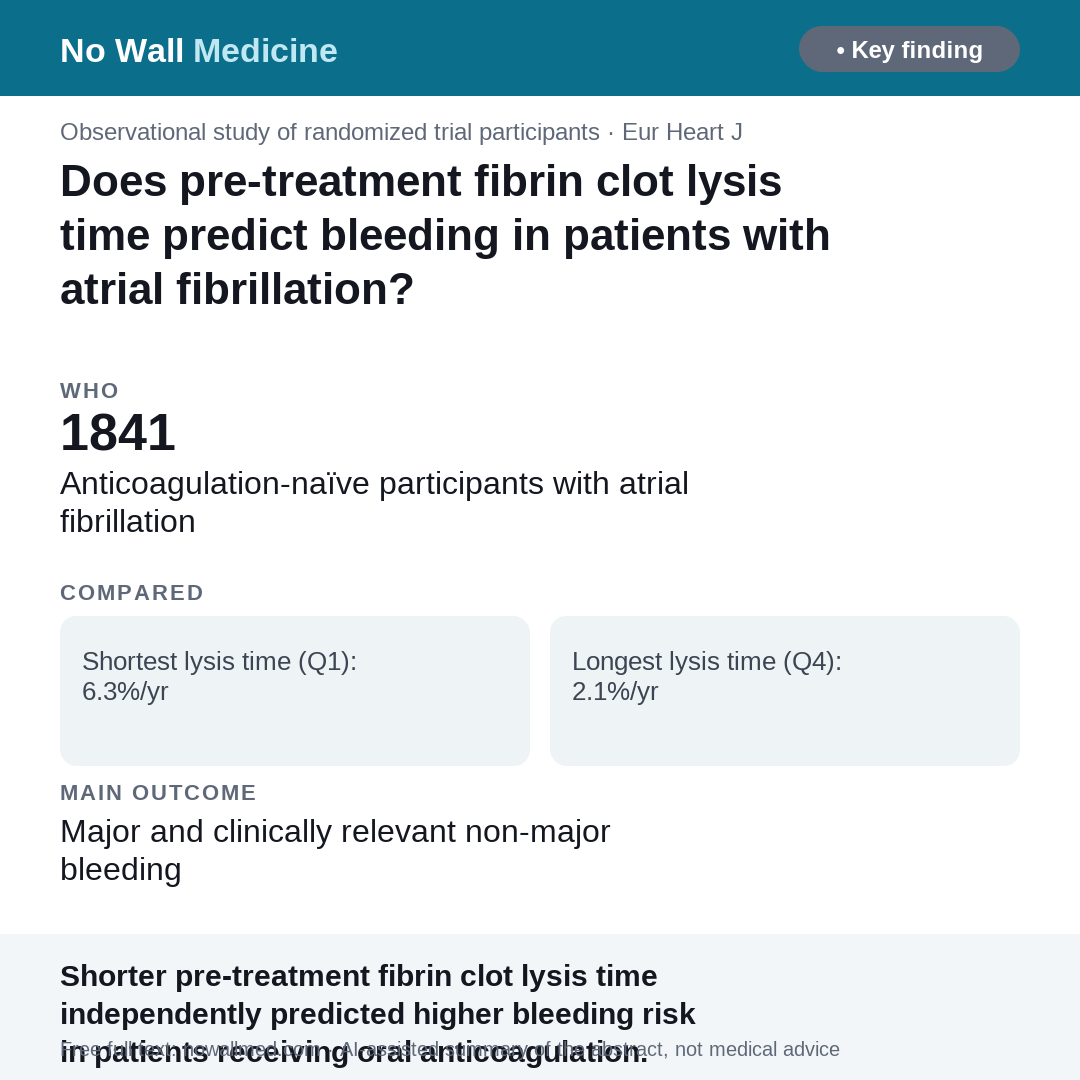
Heart failure: assessment of the global economic burden
Systematic review and meta-analysisHarm found
What is the global economic impact of heart failure?
Who
Heart failure patients across 179 countries · 179 countries
Compared
Very high and high Human Development Index countries: 1.07% direct cost and 0.09% indirect cost
Low Human Development Index countries: 8.85% direct cost and 0.29% indirect cost
Main outcome
Direct and indirect economic costs of heart failure
Bottom line: Heart failure cost $284.17 billion in 2021, with low development countries bearing a disproportionate burden.
Eur Heart J · 2025-05-30Download image
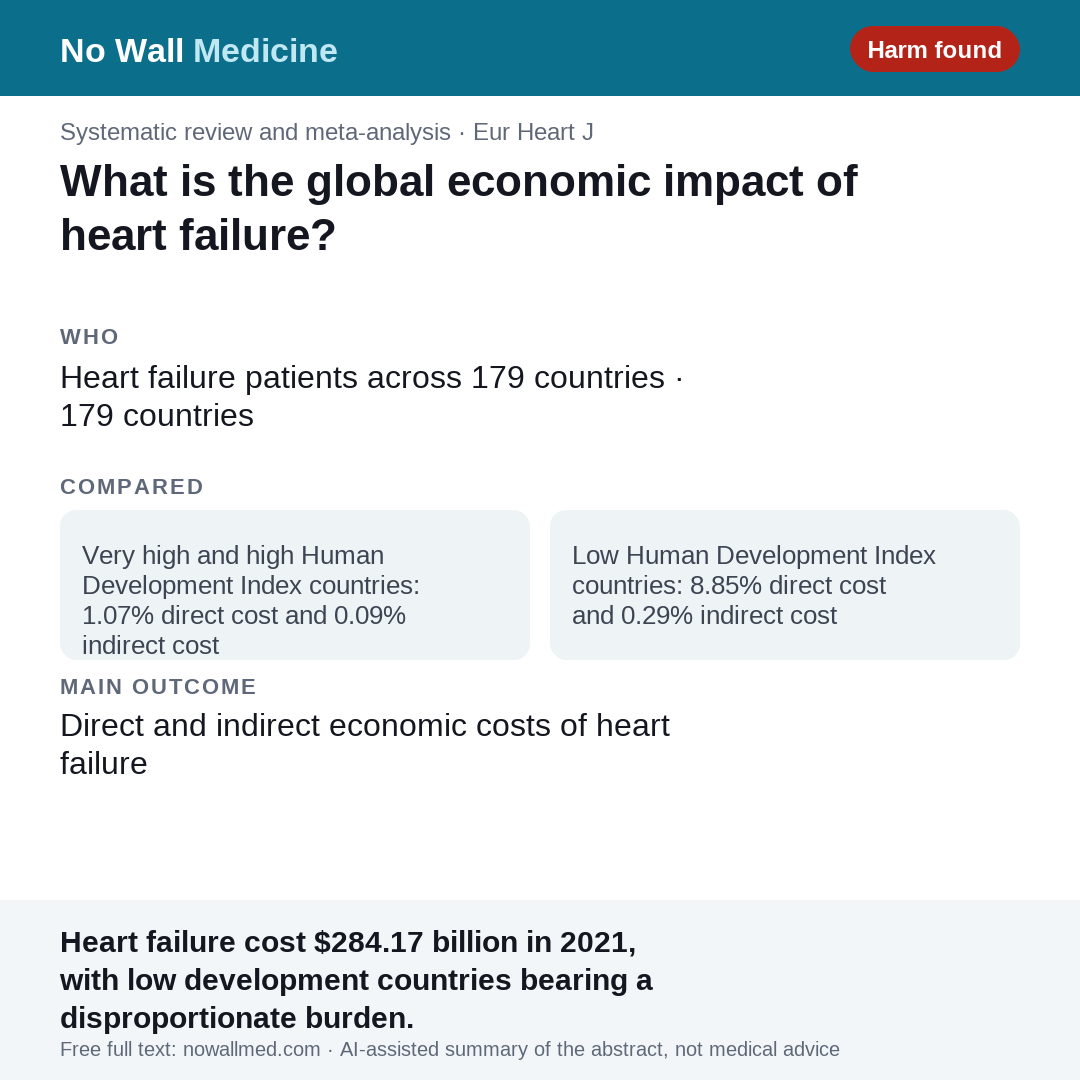
Five-Year Survival Outcomes With Atezolizumab After Chemotherapy in Resected Stage IB-IIIA Non-Small Cell Lung Cancer (IMpower010): An Open-Label, Randomized, Phase III Trial
Open-label, randomized, phase III trialBenefit found
Does atezolizumab improve survival after chemotherapy in resected stage IB-IIIA non-small cell lung cancer?
Who
1005
Patients with completely resected stage IB-IIIA non-small cell lung cancer
Compared
Atezolizumab
Best supportive care
Main outcome
Disease-free survival and overall survival
Result: hazard ratio 0.70 (95% CI, 0.55 to 0.91) for stage II-IIIA PD-L1 tumor cell ≥1%
Bottom line: Atezolizumab showed benefit in disease-free survival for stage II-IIIA non-small cell lung cancer with PD-L1 tumor cell expression ≥1%.
J Clin Oncol · 2025-05-30Download image
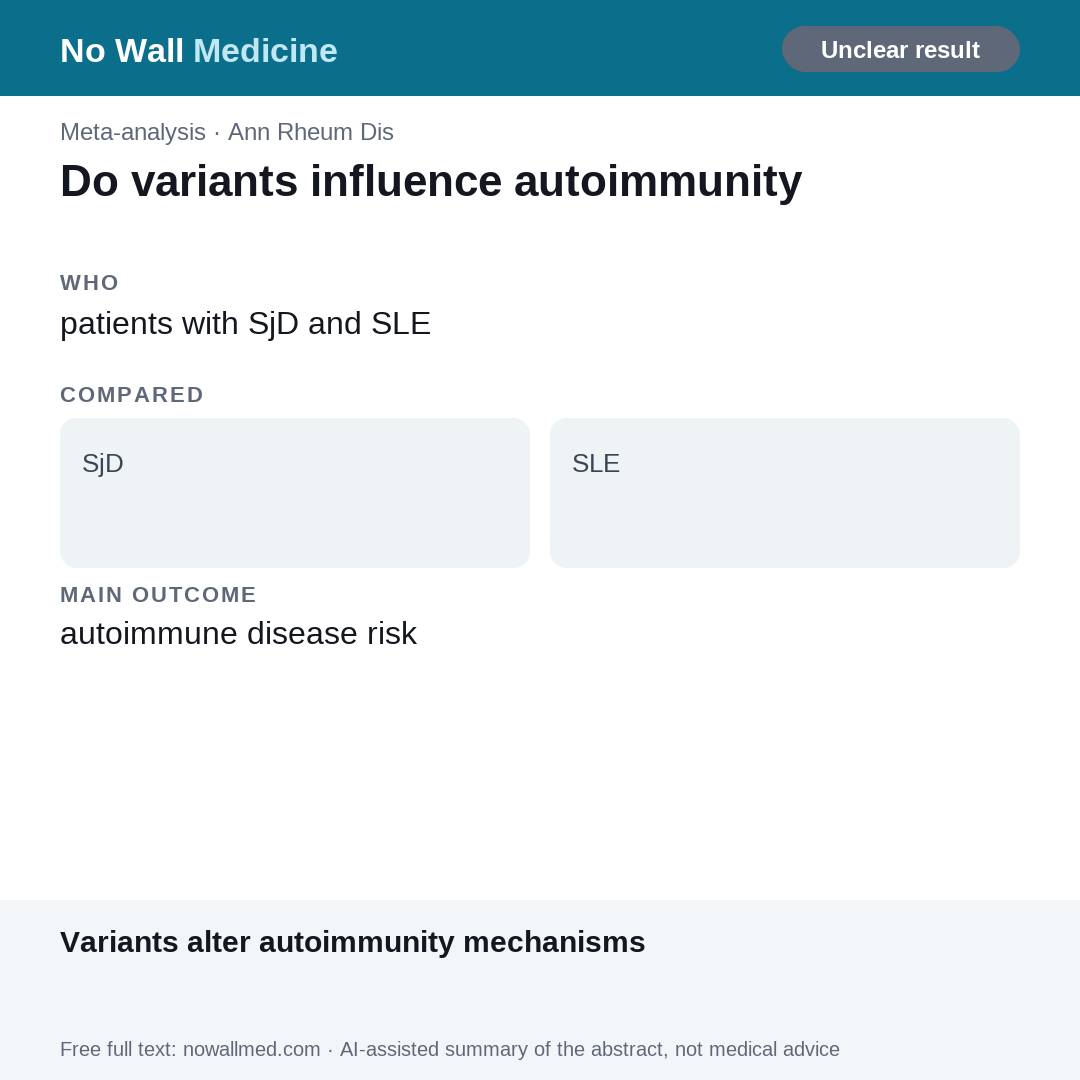
Variants in the DDX6-CXCR5 autoimmune disease risk locus influence the regulatory network in immune cells and salivary gland
Meta-analysisUnclear result
Do variants influence autoimmunity
Who
patients with SjD and SLE
Compared
SjD
SLE
Main outcome
autoimmune disease risk
Bottom line: Variants alter autoimmunity mechanisms
Ann Rheum Dis · 2025-05-30Download image