Visual abstracts
New randomized trials and meta-analyses from leading journals at a glance: who was studied, what was compared, and what was found. Every paper is free to read in full.
All specialtiesCardiology 4763Oncology 4043Gastroenterology & Hepatology 1903Infectious Disease 3756Neurology 1872Psychiatry & Mental Health 2216Pulmonology 2044Critical Care 1319Endocrinology & Diabetes 2544Pediatrics 2889Surgery 2480Orthopedics & Sports Medicine 917Neurosurgery 525Cardiothoracic & Vascular Surgery 656Plastic & Reconstructive Surgery 574Nephrology 1107Rheumatology 810Hematology 1090Dermatology 611Ophthalmology 532Obstetrics & Gynecology 1645Public & Global Health 1037Radiology & Imaging 619Anesthesiology 958Urology 745ENT (Otolaryngology) 494Emergency Medicine 481Allergy & Immunology 309Geriatrics 972Family Medicine & Primary Care 534Medical Genetics & Genomics 659Pathology & Laboratory Medicine 156Physical Medicine & Rehabilitation 734Palliative Care 421Nutrition 1560Digital Health & AI 2137General Medicine 318
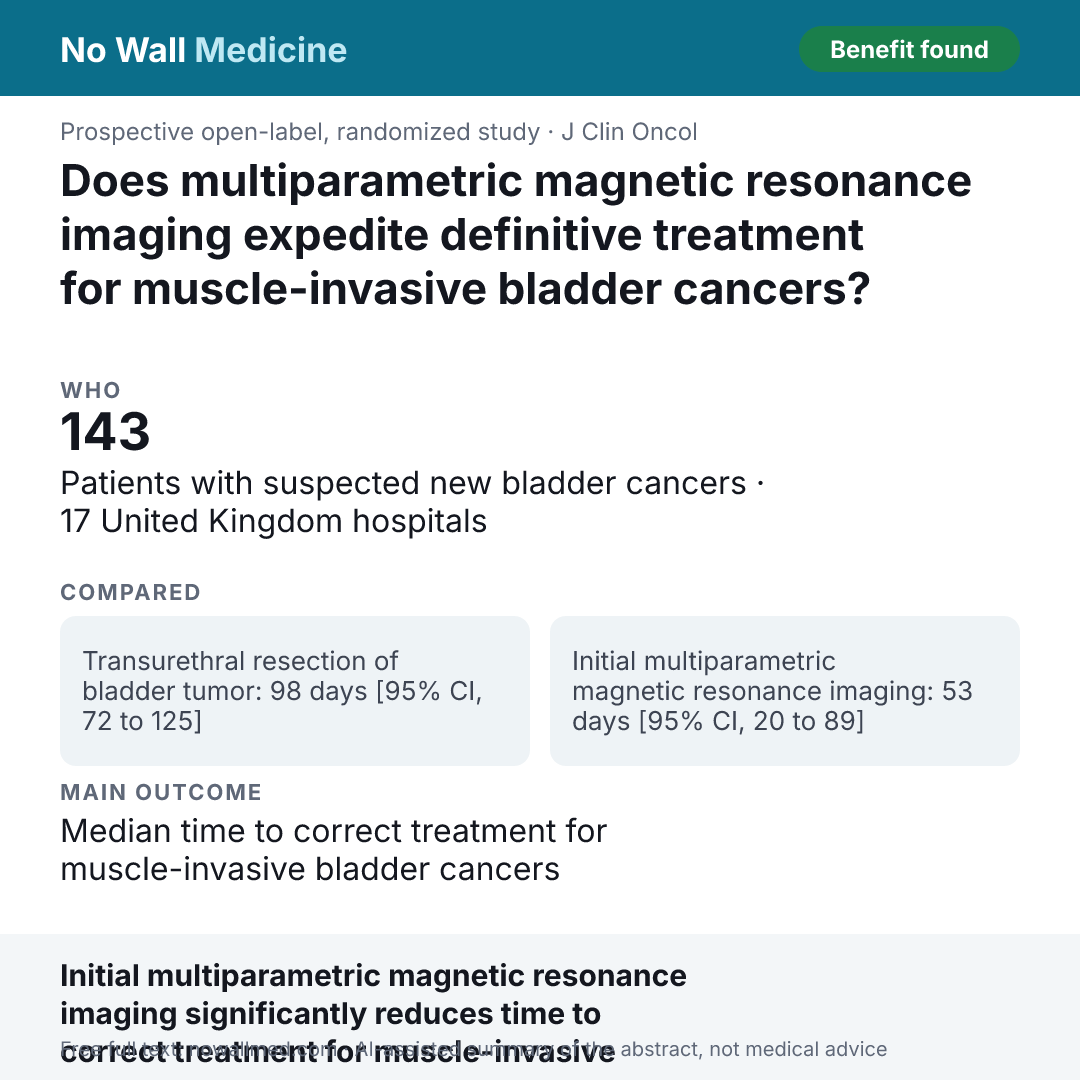
Randomized Comparison of Magnetic Resonance Imaging Versus Transurethral Resection for Staging New Bladder Cancers: Results From the Prospective BladderPath Trial
Prospective open-label, randomized studyBenefit found
Does multiparametric magnetic resonance imaging expedite definitive treatment for muscle-invasive bladder cancers?
Who
143
Patients with suspected new bladder cancers · 17 United Kingdom hospitals
Compared
Transurethral resection of bladder tumor: 98 days [95% CI, 72 to 125]
Initial multiparametric magnetic resonance imaging: 53 days [95% CI, 20 to 89]
Main outcome
Median time to correct treatment for muscle-invasive bladder cancers
Result: 53 days [95% CI, 20 to 89] vs 98 days [95% CI, 72 to 125]
Bottom line: Initial multiparametric magnetic resonance imaging significantly reduces time to correct treatment for muscle-invasive bladder cancers compared to transurethral resection.
J Clin Oncol · 2025-01-14 · Save PNG
Antiseizure Medications in Poststroke Seizures: A Systematic Review and Network Meta-Analysis
Systematic review and network meta-analysisMixed results
Which antiseizure medications are most effective for poststroke seizures?
Who
18,676
Patients with poststroke seizures
Compared
Levetiracetam: 24.8% seizure recurrence
Phenytoin: OR 7.3 (95% CI 3.7-14.5) seizure recurrence
Carbamazepine: OR 1.8 (95% CI 1.5-2.2) drug discontinuation
Valproic acid: OR 4.7 (95% CI 3.6-6.3) mortality
Main outcome
Seizure recurrence, adverse events, drug discontinuation, and mortality
Bottom line: Levetiracetam and lamotrigine may be safe and tolerable antiseizure medications for poststroke seizures.
Limitation: Findings should be interpreted cautiously owing to bias and confounding risks.
Neurology · 2025-01-14 · Save PNG

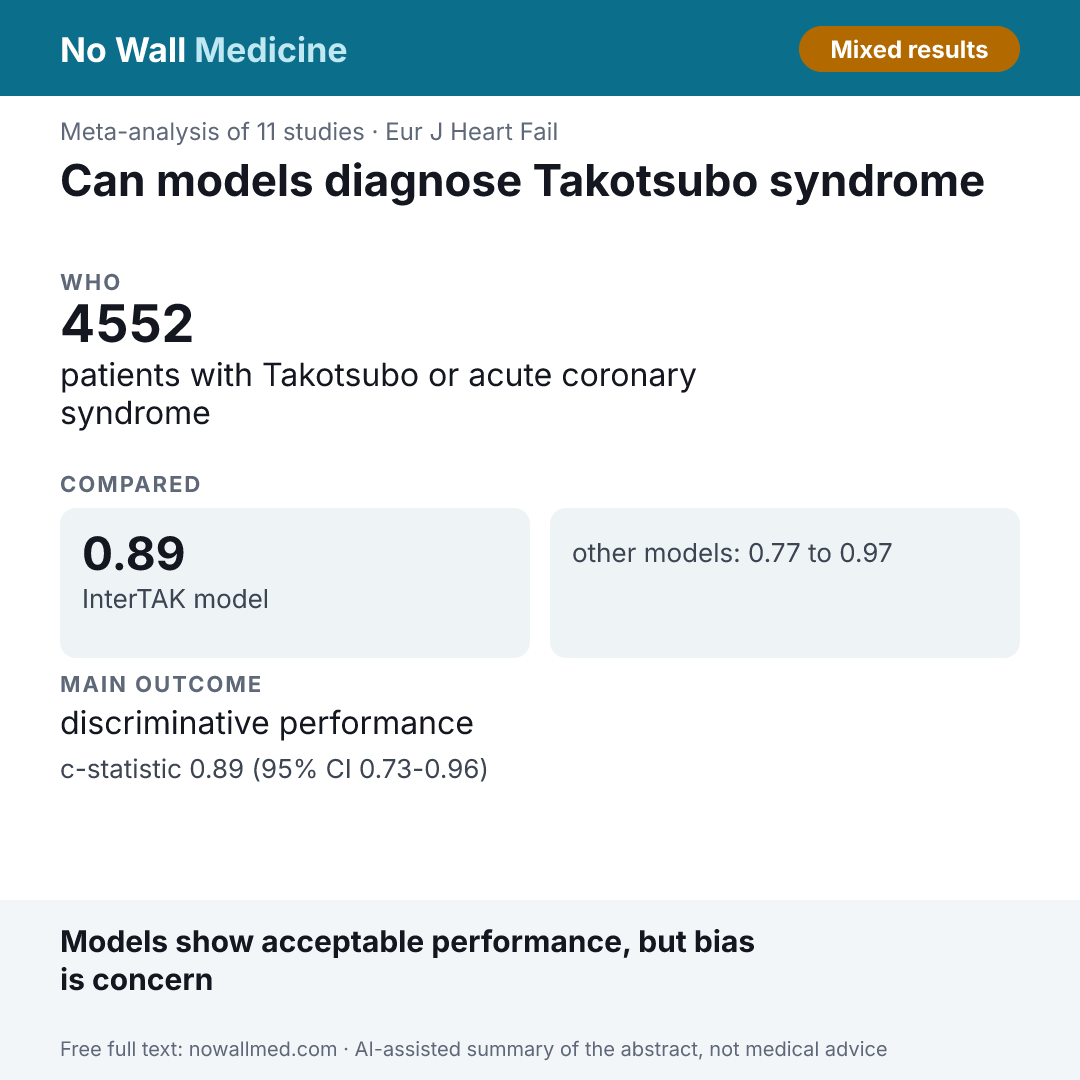
Diagnostic models to differentiate Takotsubo syndrome from acute coronary syndrome: A systematic review and meta-analysis
Meta-analysis of 11 studiesMixed results
Can models diagnose Takotsubo syndrome
Who
4552
patients with Takotsubo or acute coronary syndrome
Compared
0.89InterTAK model (95% CI 0.73-0.96)
other models: 0.77 to 0.97
Main outcome
discriminative performance
Result: c-statistic 0.89 (95% CI 0.73-0.96)
Bottom line: Models show acceptable performance, but bias is concern
Limitation: high risk of bias
Eur J Heart Fail · 2025-01-14 · Save PNG
Unlocking the power of empagliflozin: Rescuing inflammation in hyperglycaemia-exposed human cardiomyocytes through comprehensive multi-level analysis
Meta-analysis and in vitro studyBenefit found
Does empagliflozin exert anti-inflammatory effects in diabetic patients and human cardiomyocytes?
Who
Diabetic patients and human cardiomyocyte AC16 cells
Compared
Empagliflozin
High glucose exposure
Main outcome
Inflammatory, metabolic, and aging signatures
Bottom line: Empagliflozin exerts anti-inflammatory effects both systemically and directly in cardiac tissue and cardiomyocytes.
Eur J Heart Fail · 2025-01-14 · Save PNG

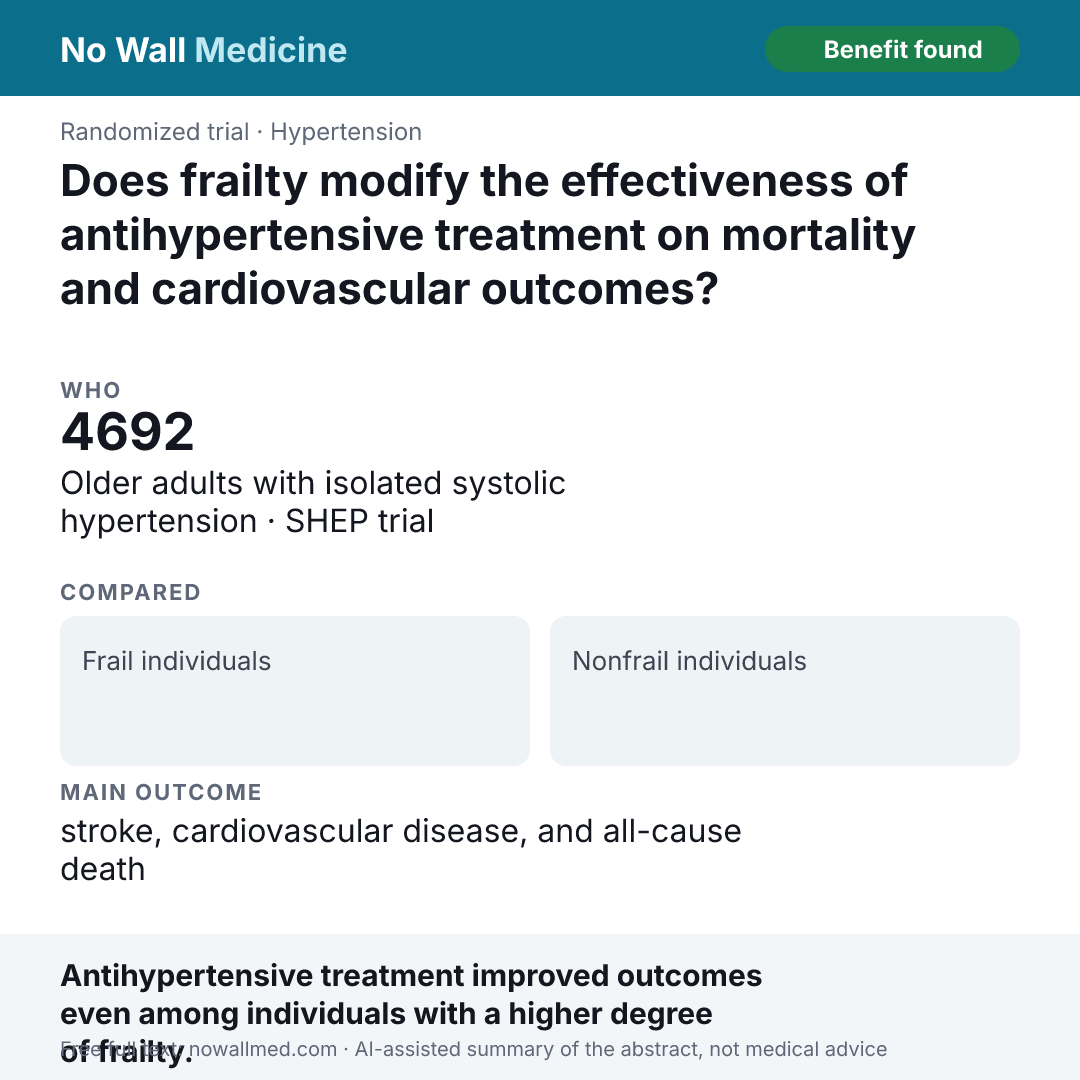
Impact of Frailty on Antihypertensive Treatment in Older Adults
Randomized trialBenefit found
Does frailty modify the effectiveness of antihypertensive treatment on mortality and cardiovascular outcomes?
Who
4692
Older adults with isolated systolic hypertension · SHEP trial
Compared
Frail individuals
Nonfrail individuals
Main outcome
stroke, cardiovascular disease, and all-cause death
Result: P for interaction >0.05 for all outcomes
Bottom line: Antihypertensive treatment improved outcomes even among individuals with a higher degree of frailty.
Hypertension · 2025-01-14 · Save PNG
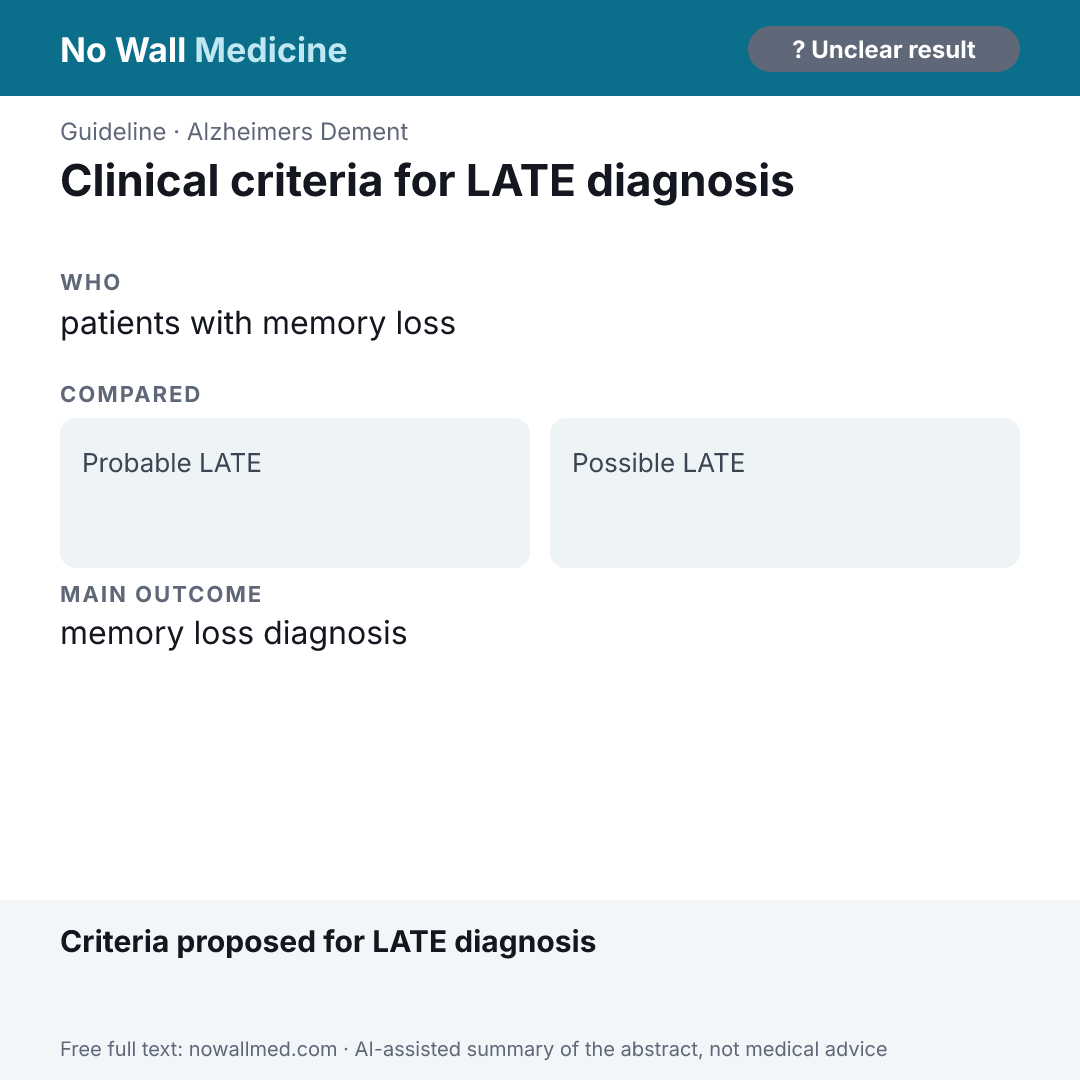
Clinical criteria for limbic-predominant age-related TDP-43 encephalopathy
GuidelineUnclear result
Clinical criteria for LATE diagnosis
Who
patients with memory loss
Compared
Probable LATE
Possible LATE
Main outcome
memory loss diagnosis
Bottom line: Criteria proposed for LATE diagnosis
Alzheimers Dement · 2025-01-14 · Save PNG
Unraveling the bidirectional link between cancer and dementia and the impact of cancer therapies on dementia risk: A systematic review and meta-analysis
Systematic review and meta-analysisMixed results
What is the bidirectional relationship between cancer and dementia and the impact of therapies?
Who
Cancer survivors and patients with dementia
Compared
Cancer survivors: 8% to 14% lower risk of dementia
Patients with dementia: 25% lower cancer risk
Main outcome
Risk of dementia and cancer
Bottom line: Cancer survivors have lower dementia risk, while dementia patients have lower cancer risk, with varying impacts from specific therapies.
Alzheimers Dement · 2025-01-14 · Save PNG

Unraveling the transcriptomic landscape of brain vascular cells in dementia: A systematic review
Systematic reviewUnclear result
What are the transcriptomic changes in brain vascular cells across neurodegenerative conditions?
Who
Brain vascular endothelial cells and pericytes from postmortem human tissue
Compared
Alzheimer's disease
Huntington's disease
Arteriovenous malformation
Main outcome
Differentially expressed genes in endothelial cells and pericytes
Bottom line: Consistently dysregulated genes in vascular cells are linked to vascular zonation and genetic risks for dementia.
Alzheimers Dement · 2025-01-14 · Save PNG

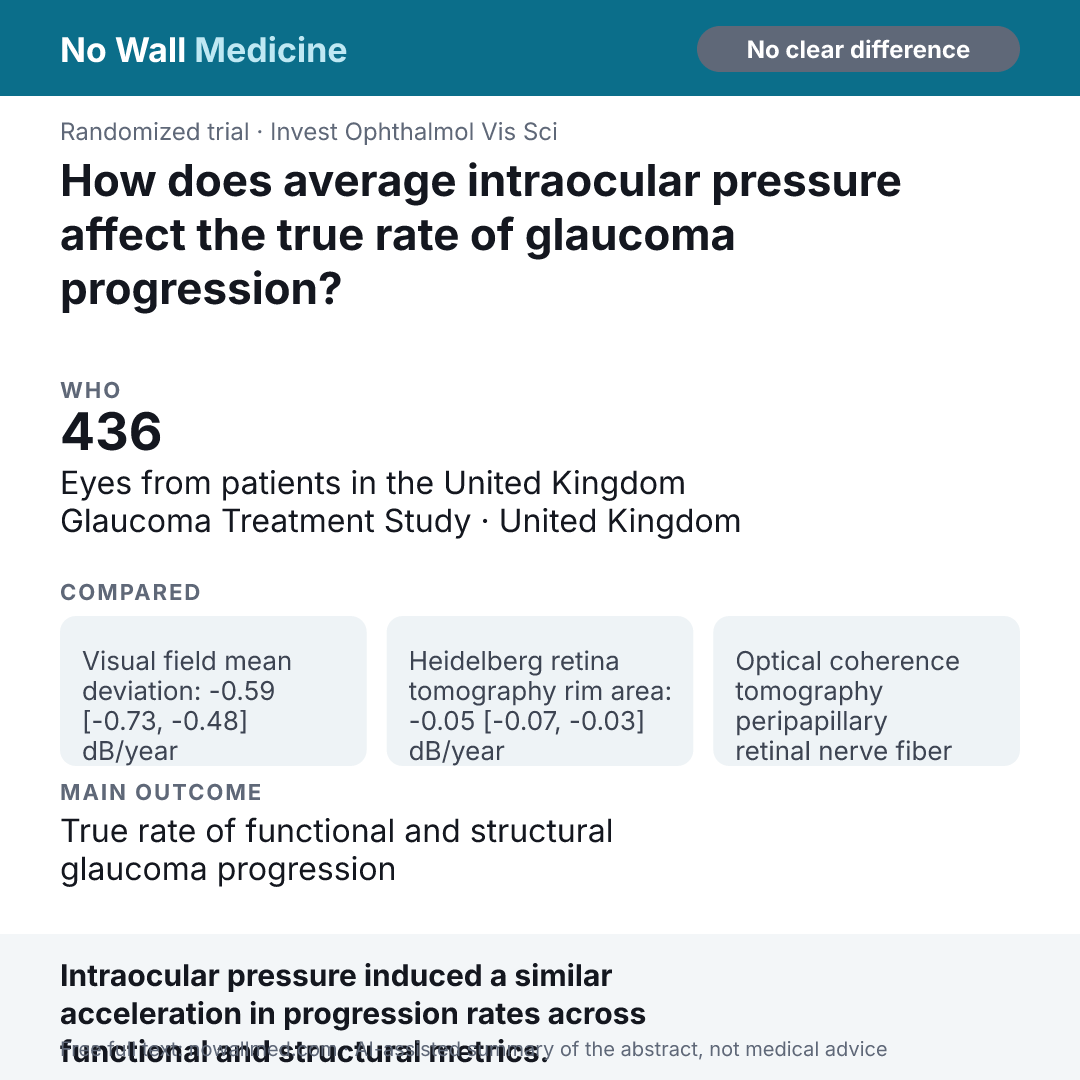
Relationship Between Intraocular Pressure and the True Rate of Functional and Structural Progression in the United Kingdom Glaucoma Treatment Study
Randomized trialNo clear difference
How does average intraocular pressure affect the true rate of glaucoma progression?
Who
436
Eyes from patients in the United Kingdom Glaucoma Treatment Study · United Kingdom
Compared
Visual field mean deviation: -0.59 [-0.73, -0.48] dB/year
Heidelberg retina tomography rim area: -0.05 [-0.07, -0.03] dB/year
Optical coherence tomography peripapillary retinal nerve fiber layer: -0.08 [-0.11, -0.06] dB/year
Main outcome
True rate of functional and structural glaucoma progression
Bottom line: Intraocular pressure induced a similar acceleration in progression rates across functional and structural metrics.
Limitation: Structural floor-effect may explain differences in observed progression rates.
Invest Ophthalmol Vis Sci · 2025-01-14 · Save PNG
Benchmarking the efficacy of salvage systemic therapies for recurrent meningioma: A RANO group systematic review and meta-analysis to guide clinical trial design
Systematic review and meta-analysisMixed results
What are the efficacy benchmarks for systemic therapies in recurrent meningioma?
Who
Adults with recurrent meningiomas
Compared
Grade 1 meningiomas: PFS-6 43.6% (95% CI: 22.7-67.0%)
Grades 2-3 meningiomas: PFS-6 38.0% (95% CI: 28.3-48.8%)
Grade 1 targeted therapy: PFS-6 62.0%
Main outcome
Progression-free survival at 6-months and 1-year
Bottom line: Systemic therapies show modest and variable activity, leading to proposed new efficacy benchmarks for future clinical trials.
Neuro Oncol · 2025-01-14 · Save PNG

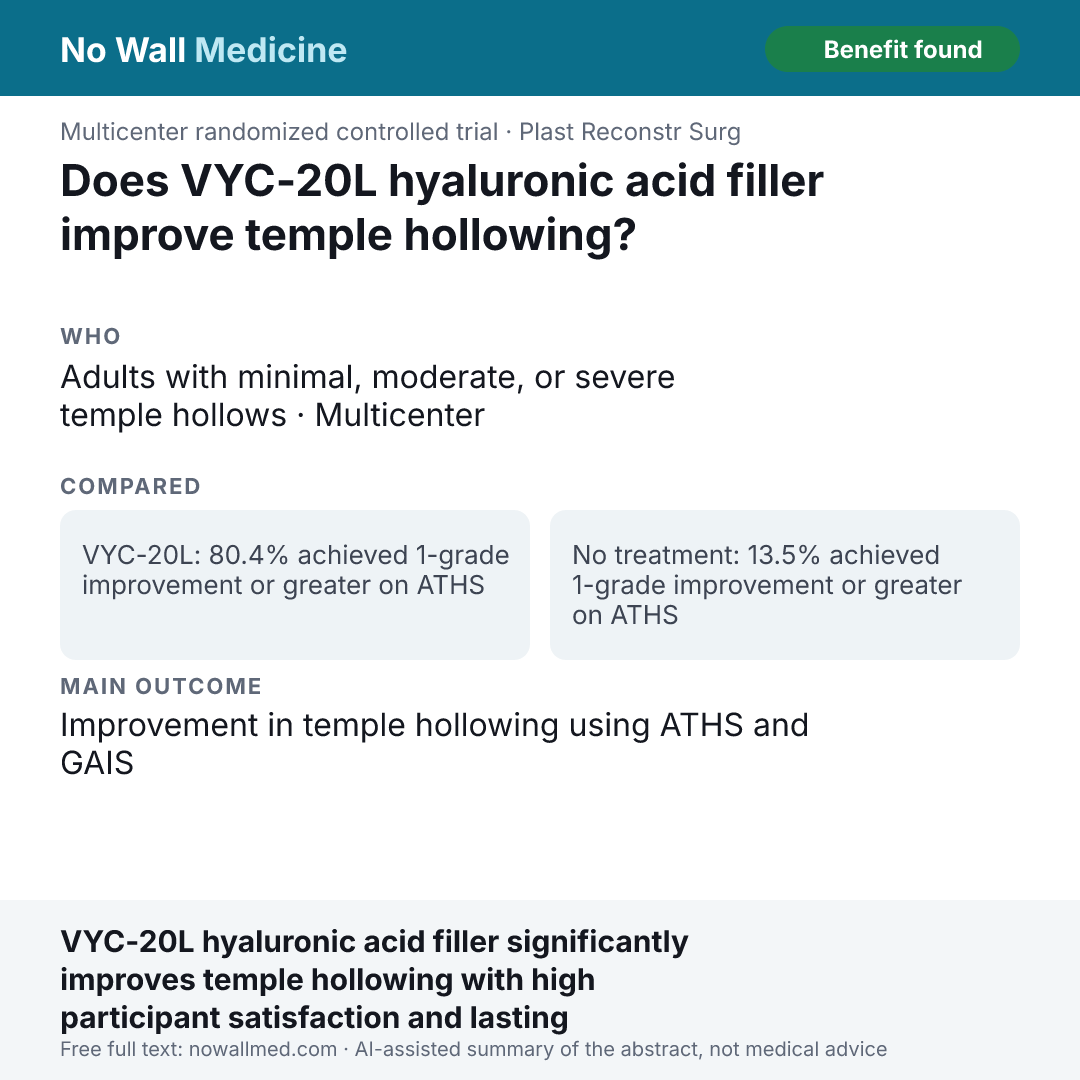
Improvement in Temple Hollowing with VYC-20L Hyaluronic Acid Filler: A Multicenter Randomized Controlled Trial of Safety and Effectiveness
Multicenter randomized controlled trialBenefit found
Does VYC-20L hyaluronic acid filler improve temple hollowing?
Who
Adults with minimal, moderate, or severe temple hollows · Multicenter
Compared
VYC-20L: 80.4% achieved 1-grade improvement or greater on ATHS
No treatment: 13.5% achieved 1-grade improvement or greater on ATHS
Main outcome
Improvement in temple hollowing using ATHS and GAIS
Bottom line: VYC-20L hyaluronic acid filler significantly improves temple hollowing with high participant satisfaction and lasting effects.
Plast Reconstr Surg · 2025-01-14 · Save PNG
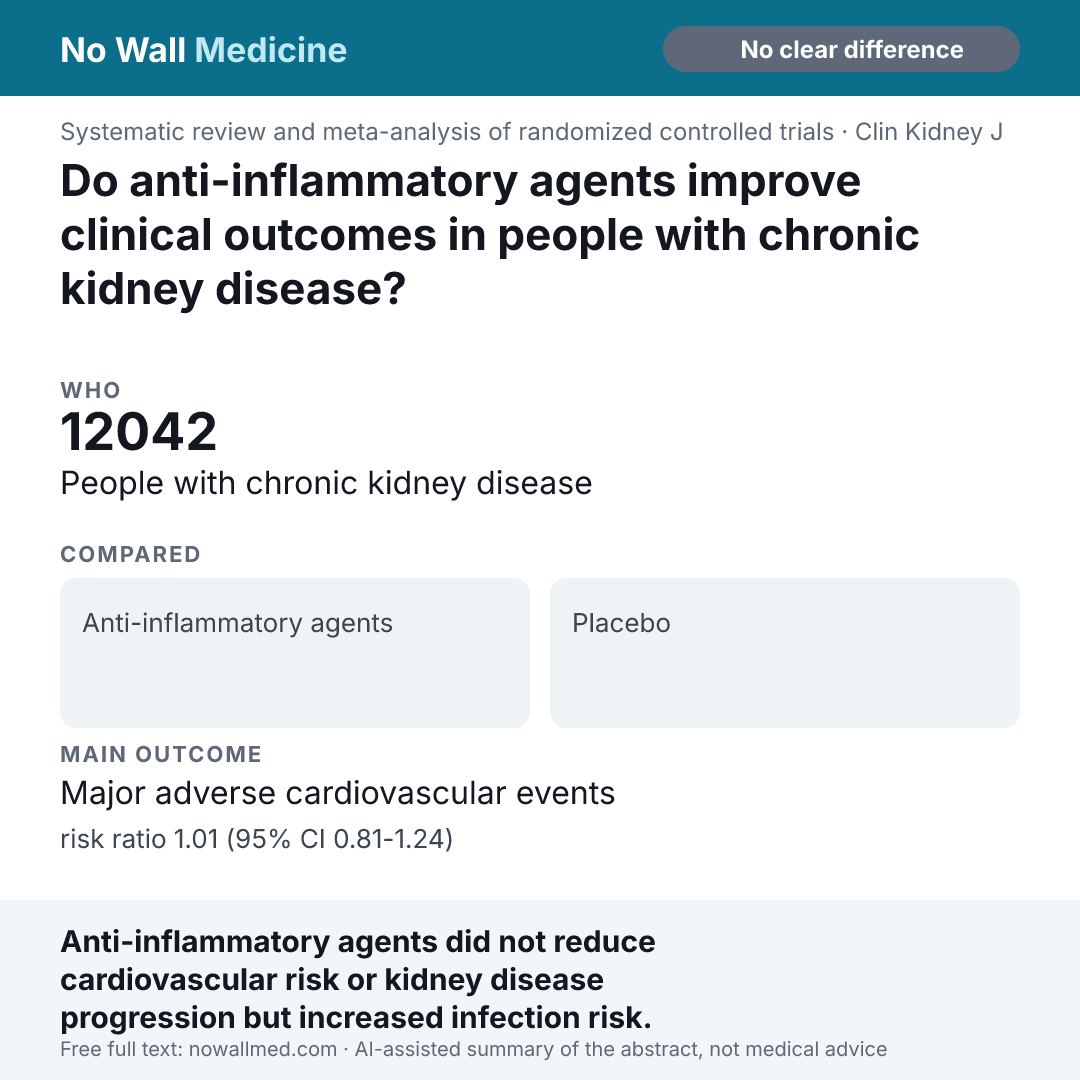
Effects of anti-inflammatory agents on clinical outcomes in people with chronic kidney disease: a systematic review and meta-analysis of randomized control trials
Systematic review and meta-analysis of randomized controlled trialsNo clear difference
Do anti-inflammatory agents improve clinical outcomes in people with chronic kidney disease?
Who
12042
People with chronic kidney disease
Compared
Anti-inflammatory agents
Placebo
Main outcome
Major adverse cardiovascular events
Result: risk ratio 1.01 (95% CI 0.81-1.24)
Bottom line: Anti-inflammatory agents did not reduce cardiovascular risk or kidney disease progression but increased infection risk.
Clin Kidney J · 2025-01-14 · Save PNG
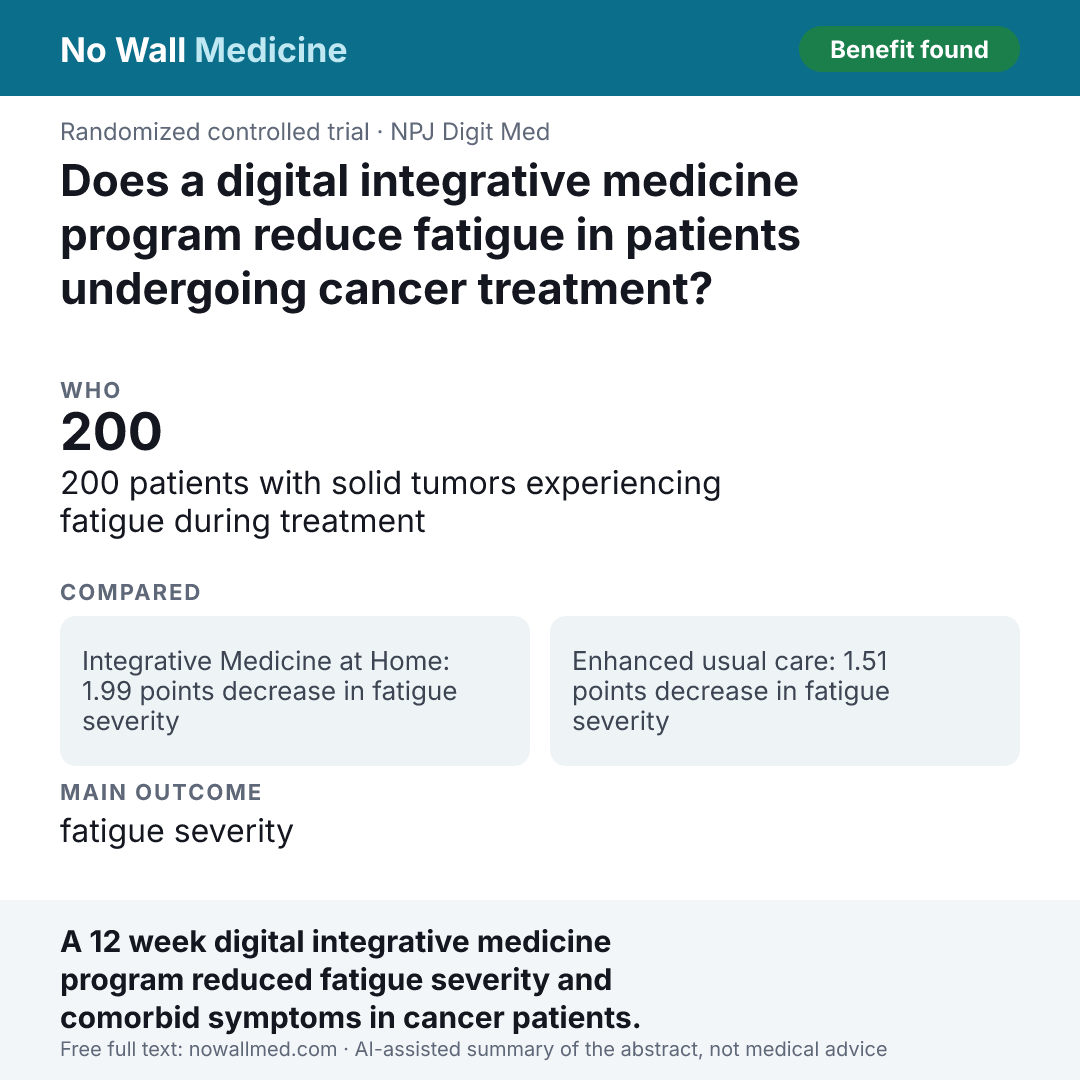
Randomized clinical trial of a digital integrative medicine intervention among patients undergoing active cancer treatment
Randomized controlled trialBenefit found
Does a digital integrative medicine program reduce fatigue in patients undergoing cancer treatment?
Who
200
200 patients with solid tumors experiencing fatigue during treatment
Compared
Integrative Medicine at Home: 1.99 points decrease in fatigue severity
Enhanced usual care: 1.51 points decrease in fatigue severity
Main outcome
fatigue severity
Bottom line: A 12 week digital integrative medicine program reduced fatigue severity and comorbid symptoms in cancer patients.
Limitation: These promising findings should be confirmed in phase III clinical trials.
NPJ Digit Med · 2025-01-14 · Save PNG
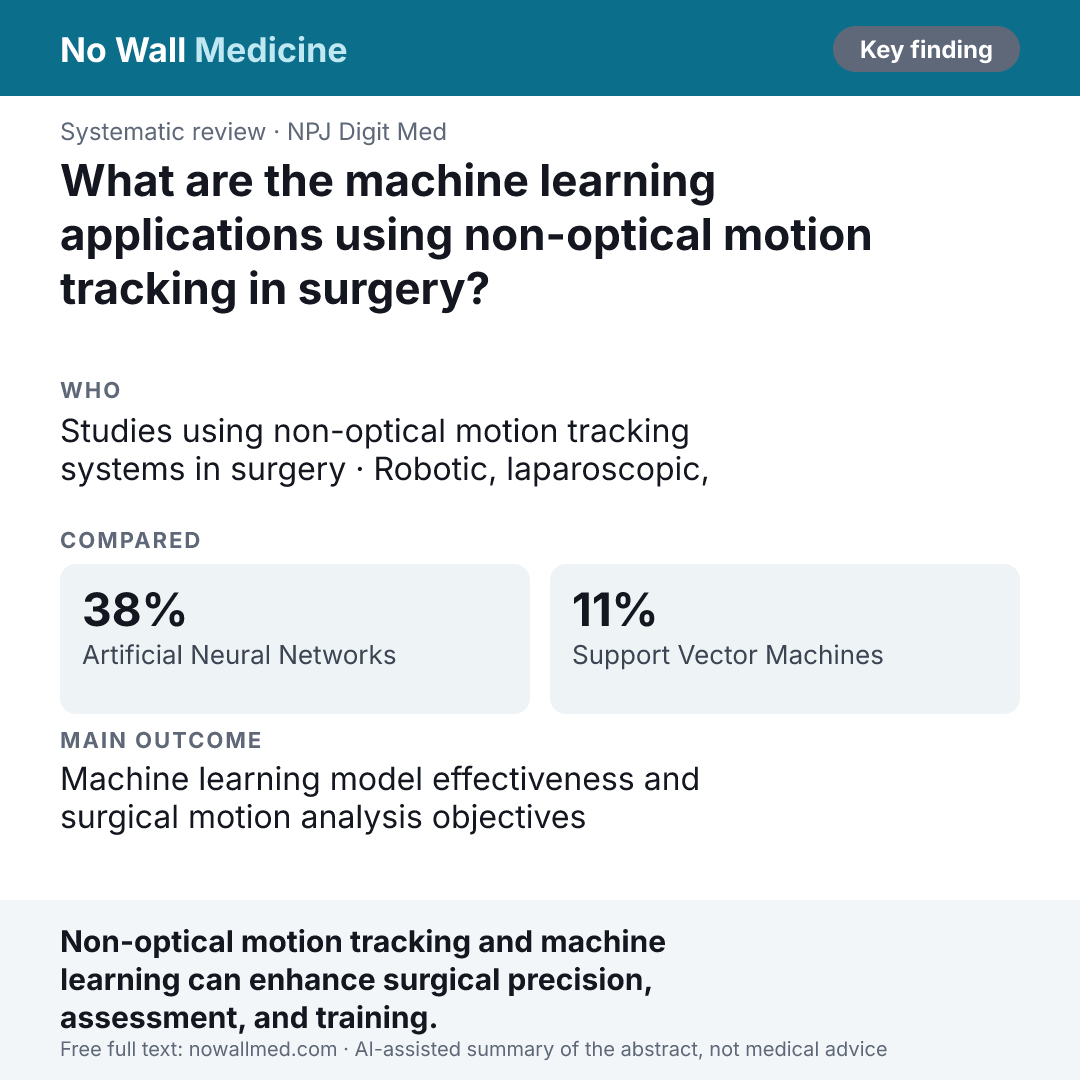
Systematic review of machine learning applications using nonoptical motion tracking in surgery
Systematic reviewKey finding
What are the machine learning applications using non-optical motion tracking in surgery?
Who
Studies using non-optical motion tracking systems in surgery · Robotic, laparoscopic, open, and other surgical settings
Compared
38%Artificial Neural Networks
11%Support Vector Machines
Main outcome
Machine learning model effectiveness and surgical motion analysis objectives
Bottom line: Non-optical motion tracking and machine learning can enhance surgical precision, assessment, and training.
NPJ Digit Med · 2025-01-14 · Save PNG
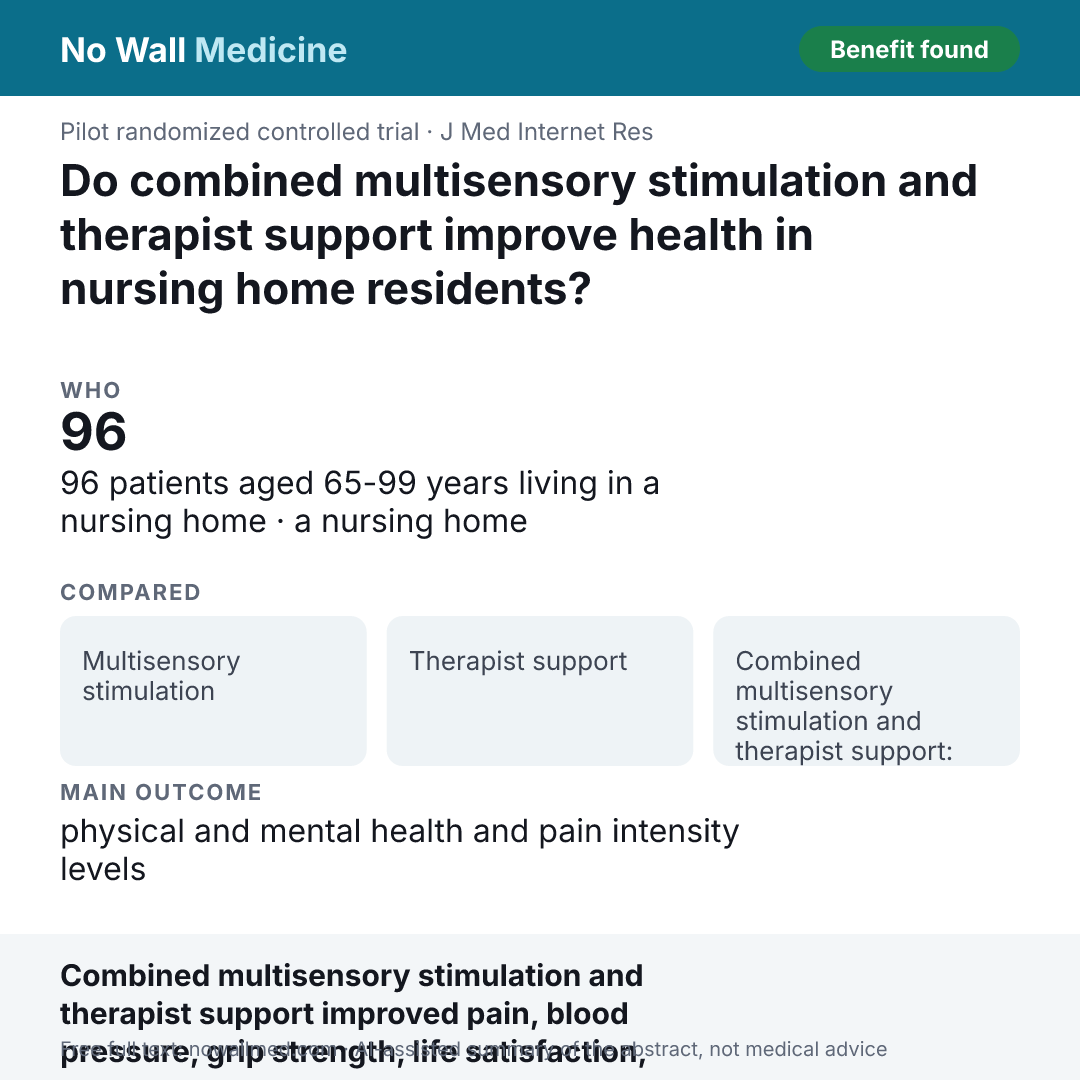
The Combined Effect of Multisensory Stimulation and Therapist Support on Physical and Mental Health of Older Adults Living in Nursing Homes: Pilot Randomized Controlled Trial
Pilot randomized controlled trialBenefit found
Do combined multisensory stimulation and therapist support improve health in nursing home residents?
Who
96
96 patients aged 65-99 years living in a nursing home · a nursing home
Compared
Multisensory stimulation
Therapist support
Combined multisensory stimulation and therapist support: improved pain, blood pressure, grip strength, life satisfaction, and anxiety
Main outcome
physical and mental health and pain intensity levels
Bottom line: Combined multisensory stimulation and therapist support improved pain, blood pressure, grip strength, life satisfaction, and anxiety in older adults.
J Med Internet Res · 2025-01-14 · Save PNG
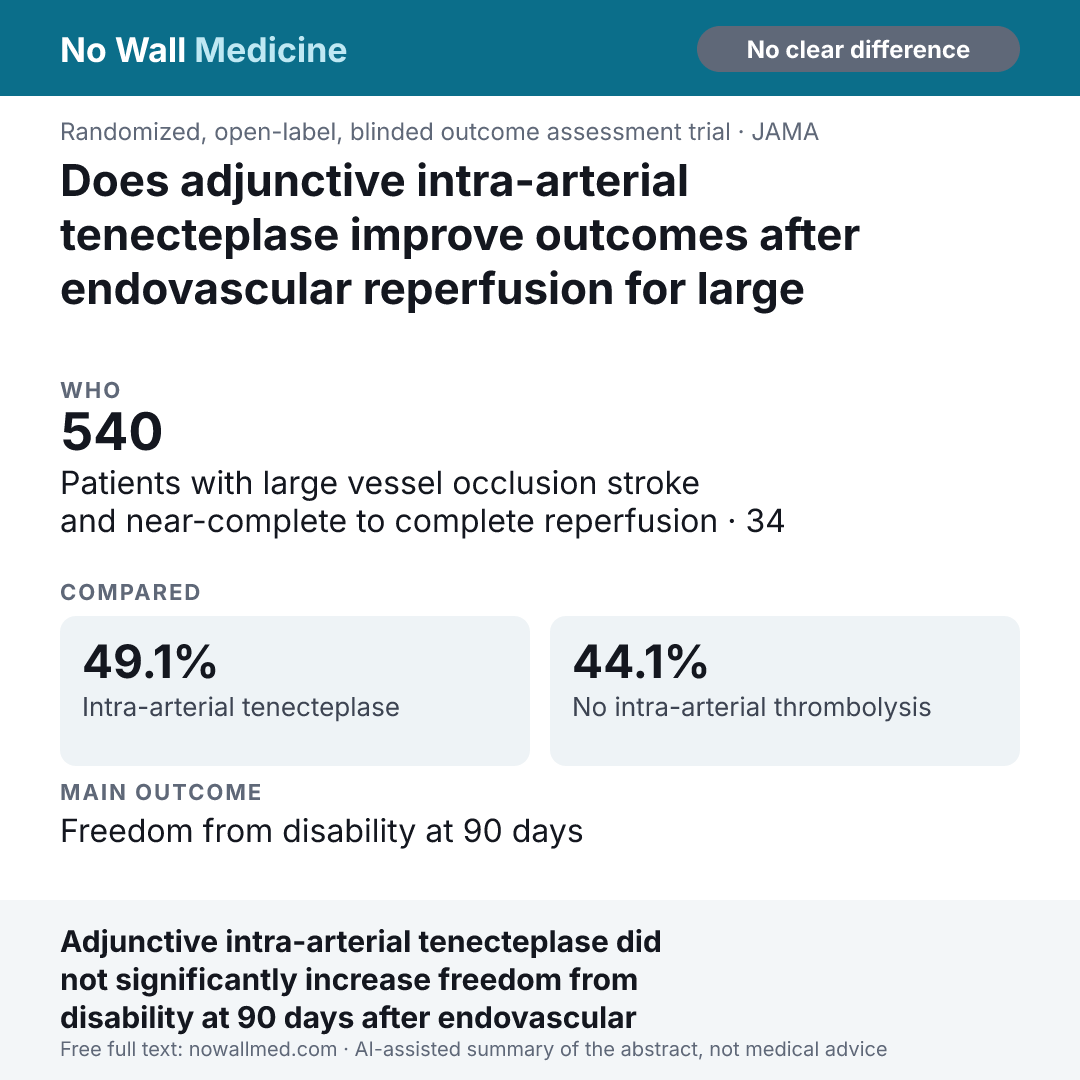
Intra-Arterial Tenecteplase Following Endovascular Reperfusion for Large Vessel Occlusion Acute Ischemic Stroke: The POST-TNK Randomized Clinical Trial
Randomized, open-label, blinded outcome assessment trialNo clear difference
Does adjunctive intra-arterial tenecteplase improve outcomes after endovascular reperfusion for large vessel occlusion stroke?
Who
540
Patients with large vessel occlusion stroke and near-complete to complete reperfusion · 34 hospitals in China
Compared
49.1%Intra-arterial tenecteplase (132/269)
44.1%No intra-arterial thrombolysis (119/270)
Main outcome
Freedom from disability at 90 days
Result: adjusted risk ratio, 1.15 (95% CI, 0.97-1.36)
Bottom line: Adjunctive intra-arterial tenecteplase did not significantly increase freedom from disability at 90 days after endovascular reperfusion.
JAMA · 2025-01-13 · Save PNG
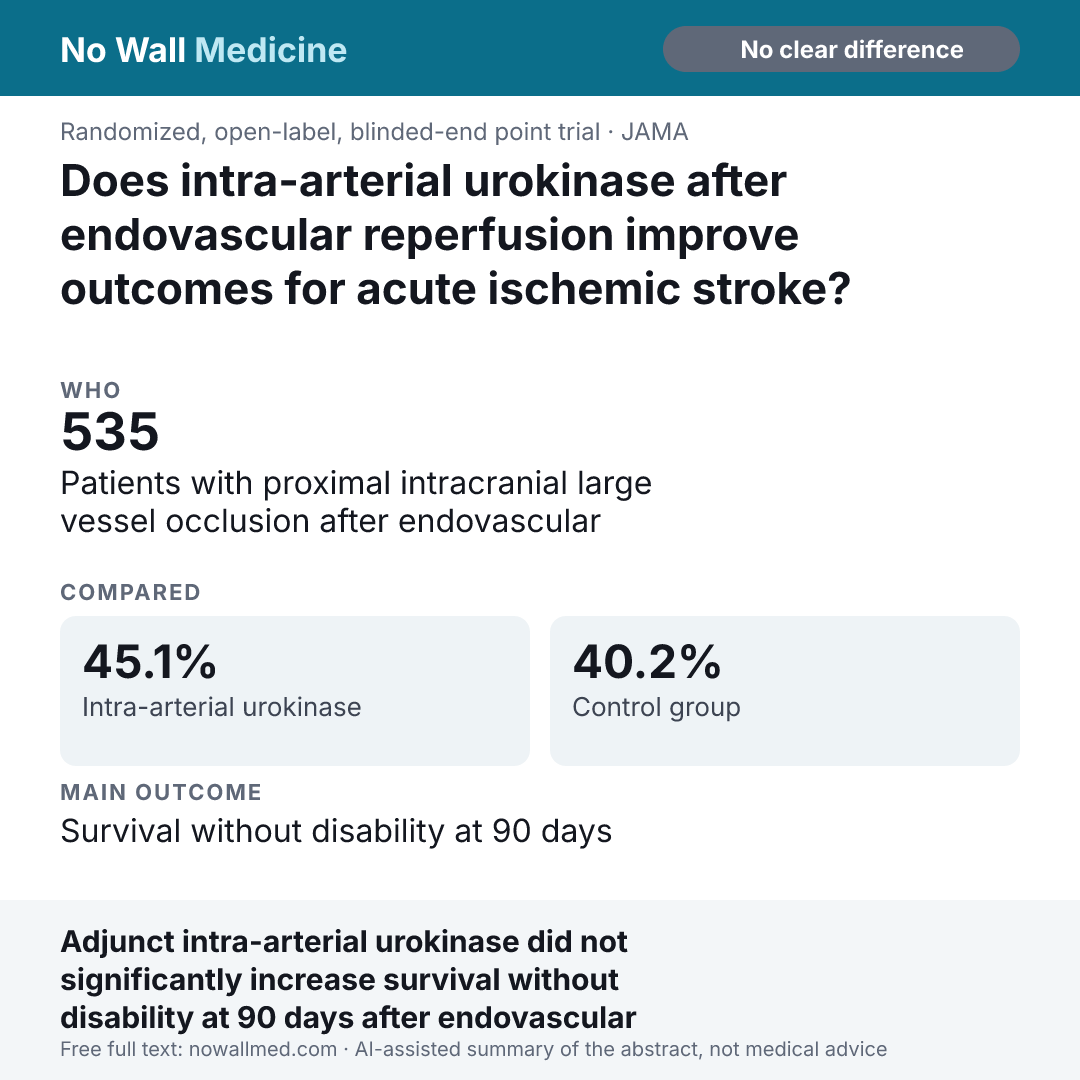
Intra-Arterial Urokinase After Endovascular Reperfusion for Acute Ischemic Stroke: The POST-UK Randomized Clinical Trial
Randomized, open-label, blinded-end point trialNo clear difference
Does intra-arterial urokinase after endovascular reperfusion improve outcomes for acute ischemic stroke?
Who
535
Patients with proximal intracranial large vessel occlusion after endovascular thrombectomy · 35 hospitals in China
Compared
45.1%Intra-arterial urokinase (120/266)
40.2%Control group (107/266)
Main outcome
Survival without disability at 90 days
Result: adjusted risk ratio, 1.13 (95% CI, 0.94-1.36)
Bottom line: Adjunct intra-arterial urokinase did not significantly increase survival without disability at 90 days after endovascular thrombectomy.
JAMA · 2025-01-13 · Save PNG
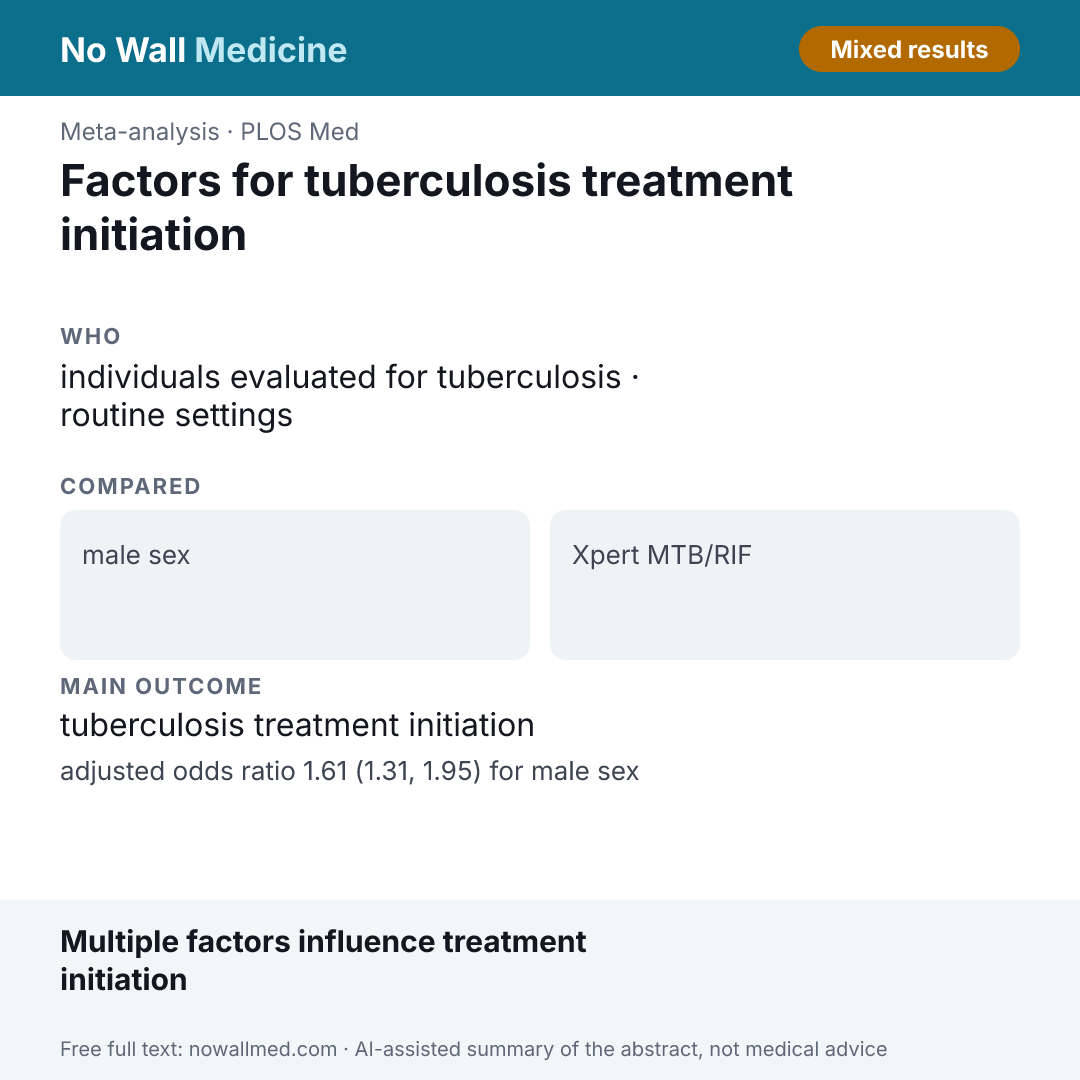
Factors associated with tuberculosis treatment initiation among bacteriologically negative individuals evaluated for tuberculosis: An individual patient data meta-analysis
Meta-analysisMixed results
Factors for tuberculosis treatment initiation
Who
individuals evaluated for tuberculosis · routine settings
Compared
male sex
Xpert MTB/RIF
Main outcome
tuberculosis treatment initiation
Result: adjusted odds ratio 1.61 (1.31, 1.95) for male sex
Bottom line: Multiple factors influence treatment initiation
Limitation: could not assess clinicians' decision making
PLOS Med · 2025-01-13 · Save PNG
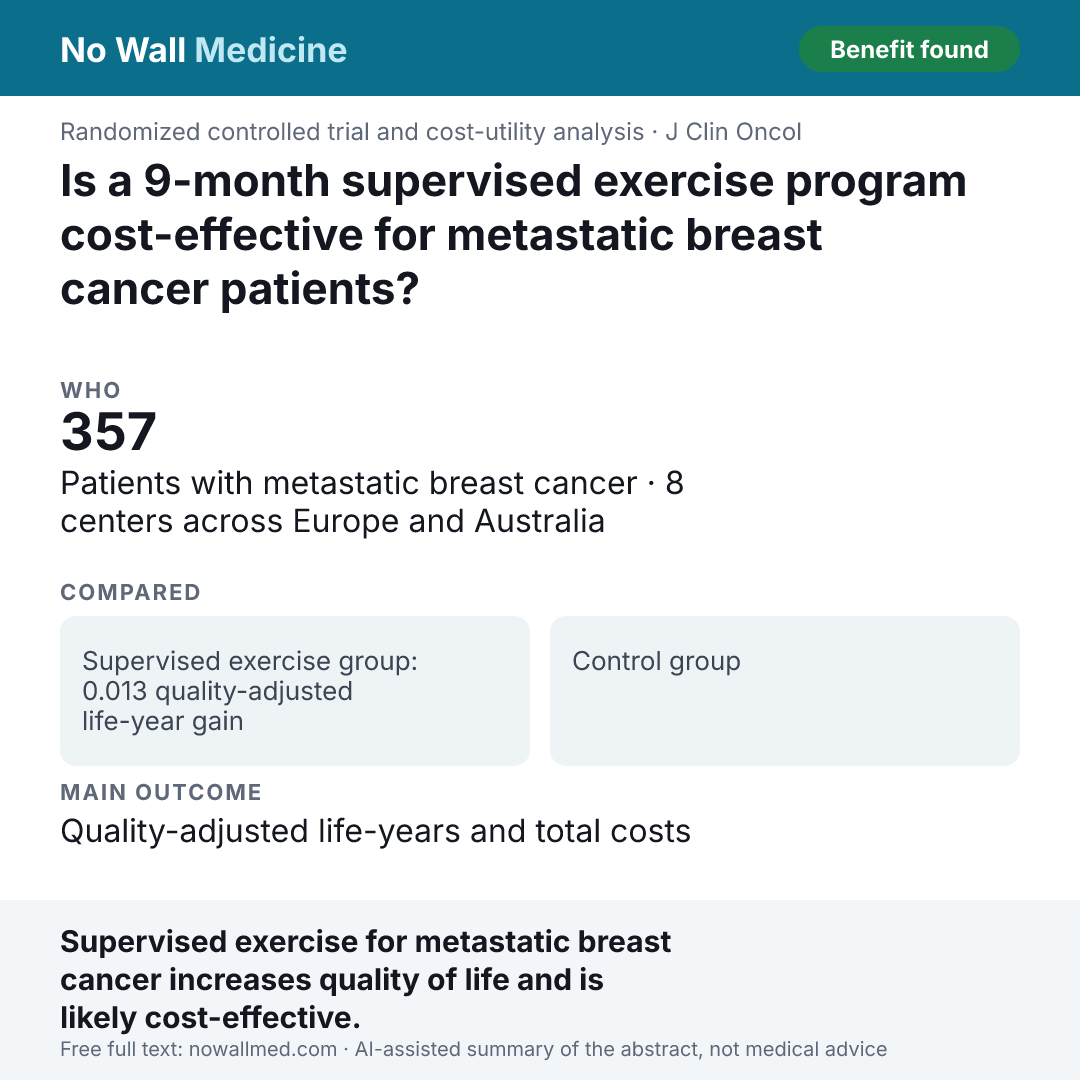
Supervised Exercise for Patients With Metastatic Breast Cancer: A Cost-Utility Analysis Alongside the PREFERABLE-EFFECT Randomized Controlled Trial
Randomized controlled trial and cost-utility analysisBenefit found
Is a 9-month supervised exercise program cost-effective for metastatic breast cancer patients?
Who
357
Patients with metastatic breast cancer · 8 centers across Europe and Australia
Compared
Supervised exercise group: 0.013 quality-adjusted life-year gain
Control group
Main outcome
Quality-adjusted life-years and total costs
Result: quality-adjusted life-year gain of 0.013 (95% CI, -0.02 to 0.05)
Bottom line: Supervised exercise for metastatic breast cancer increases quality of life and is likely cost-effective.
J Clin Oncol · 2025-01-13 · Save PNG
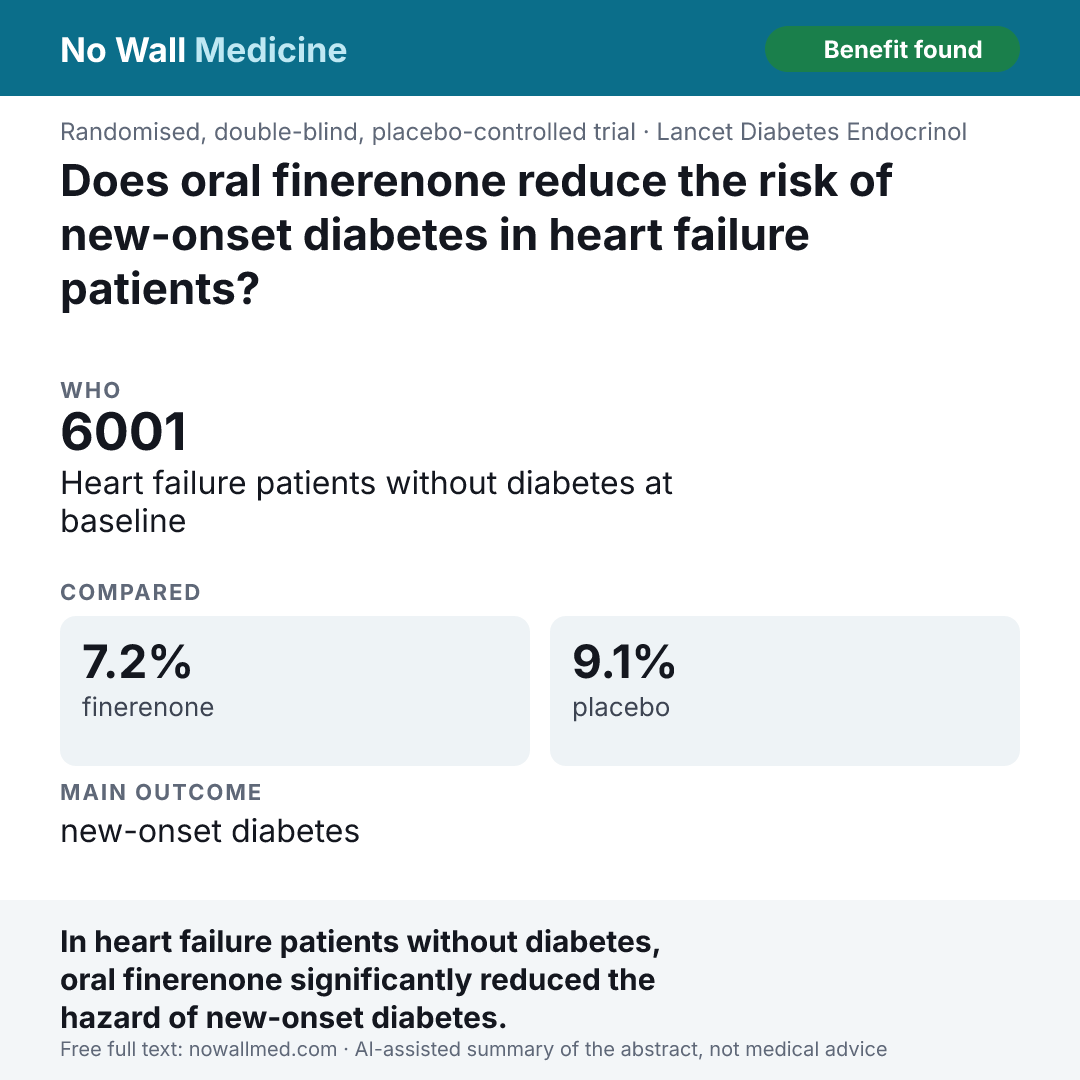
Finerenone and new-onset diabetes in heart failure: a prespecified analysis of the FINEARTS-HF trial
Randomised, double-blind, placebo-controlled trialBenefit found
Does oral finerenone reduce the risk of new-onset diabetes in heart failure patients?
Who
6001
Heart failure patients without diabetes at baseline
Compared
7.2%finerenone
9.1%placebo
Main outcome
new-onset diabetes
Result: hazard ratio 0.76 (95% CI 0.59-0.97)
Bottom line: In heart failure patients without diabetes, oral finerenone significantly reduced the hazard of new-onset diabetes.
Funded by: Bayer
Lancet Diabetes Endocrinol · 2025-01-13 · Save PNG