Visual abstracts
New randomized trials and meta-analyses from leading journals at a glance: who was studied, what was compared, and what was found. Every paper is free to read in full.
All specialtiesCardiology 4763Oncology 4043Gastroenterology & Hepatology 1903Infectious Disease 3756Neurology 1872Psychiatry & Mental Health 2216Pulmonology 2044Critical Care 1319Endocrinology & Diabetes 2544Pediatrics 2889Surgery 2480Orthopedics & Sports Medicine 917Neurosurgery 525Cardiothoracic & Vascular Surgery 656Plastic & Reconstructive Surgery 574Nephrology 1107Rheumatology 810Hematology 1090Dermatology 611Ophthalmology 532Obstetrics & Gynecology 1645Public & Global Health 1037Radiology & Imaging 619Anesthesiology 958Urology 745ENT (Otolaryngology) 494Emergency Medicine 481Allergy & Immunology 309Geriatrics 972Family Medicine & Primary Care 534Medical Genetics & Genomics 659Pathology & Laboratory Medicine 156Physical Medicine & Rehabilitation 734Palliative Care 421Nutrition 1560Digital Health & AI 2137General Medicine 318
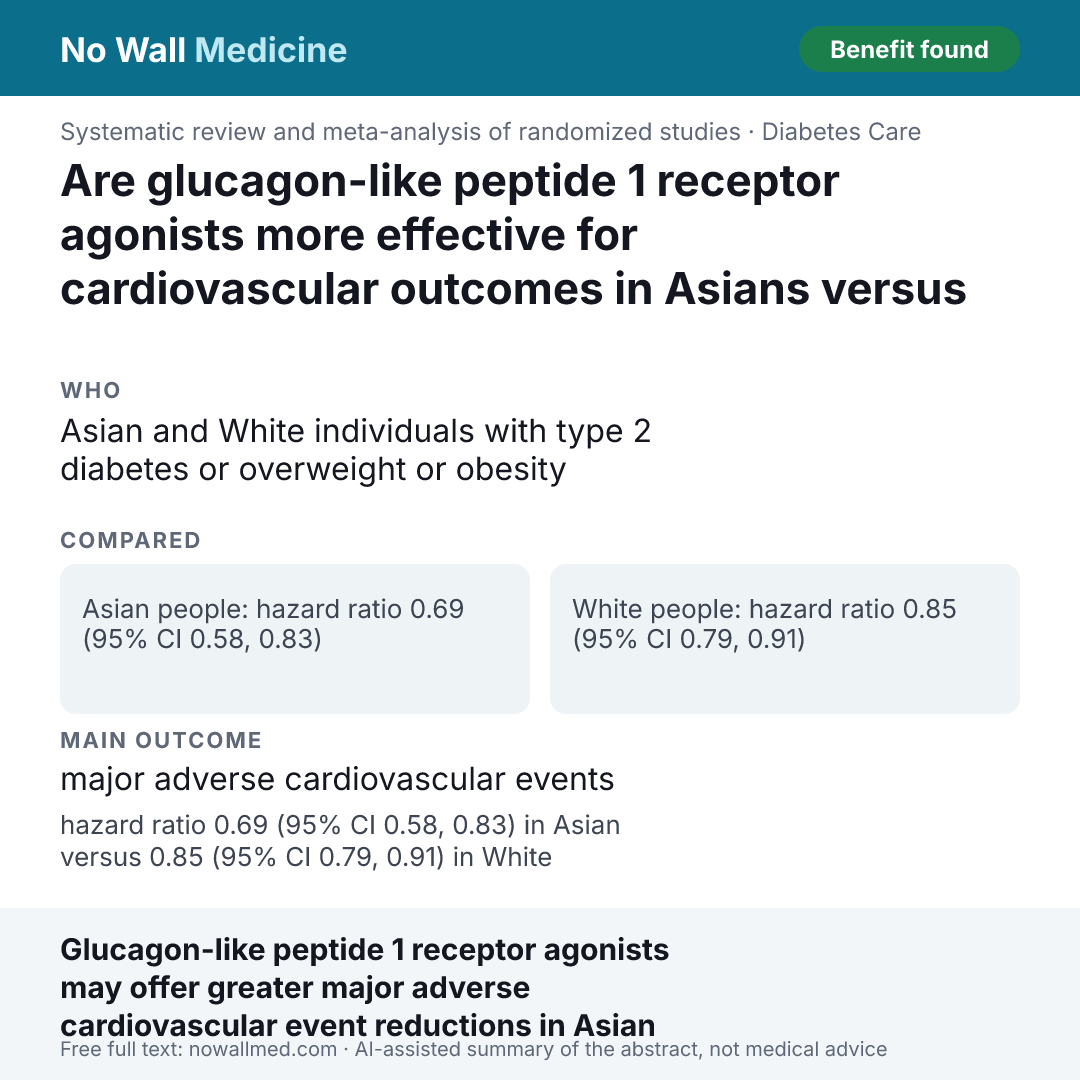
Comparative Efficacy of Glucagon-Like Peptide 1 Receptor Agonists for Cardiovascular Outcomes in Asian Versus White Populations: Systematic Review and Meta-analysis of Randomized Trials of Populations With or Without Type 2 Diabetes and/or Overweight or Obesity
Systematic review and meta-analysis of randomized studiesBenefit found
Are glucagon-like peptide 1 receptor agonists more effective for cardiovascular outcomes in Asians versus Whites?
Who
Asian and White individuals with type 2 diabetes or overweight or obesity
Compared
Asian people: hazard ratio 0.69 (95% CI 0.58, 0.83)
White people: hazard ratio 0.85 (95% CI 0.79, 0.91)
Main outcome
major adverse cardiovascular events
Result: hazard ratio 0.69 (95% CI 0.58, 0.83) in Asian versus 0.85 (95% CI 0.79, 0.91) in White
Bottom line: Glucagon-like peptide 1 receptor agonists may offer greater major adverse cardiovascular event reductions in Asian compared with White individuals.
Limitation: Lack of individual patient-level data precluded detailed subclassification of the Asian group.
Diabetes Care · 2025-02-20 · Save PNG
Low blood pressure and the effect of empagliflozin in acute heart failure: An EMPULSE analysis
Randomized trial analysisBenefit found
Is empagliflozin effective and safe in acute heart failure patients with low blood pressure?
Who
530
Patients with acute heart failure
Compared
Empagliflozin: WR = 1.48 (95% CI 1.15-1.90)
Placebo
Main outcome
Composite of mortality, heart failure events, and symptom score changes
Result: win ratio 1.48 (95% CI 1.15-1.90)
Bottom line: Empagliflozin improved clinical outcomes in acute heart failure patients regardless of blood pressure at randomization.
Eur J Heart Fail · 2025-02-20 · Save PNG

Prevalence and Management of Complications of Laser Ablation for Benign Thyroid Nodules
Systematic review and meta-analysisBenefit found
What is the prevalence and management of complications from laser ablation for benign thyroid nodules?
Who
4745
Patients with benign and solid noncystic thyroid nodules
Compared
23%Overall complications ([CI, 17%-30%])
21%Minor complications ([CI, 15%-27%])
2%Major complications ([CI, 1%-3%])
Main outcome
Prevalence of complications from laser ablation
Bottom line: Laser ablation for benign solid thyroid nodules is a generally safe technique with rare major complications.
J Clin Endocrinol Metab · 2025-02-20 · Save PNG

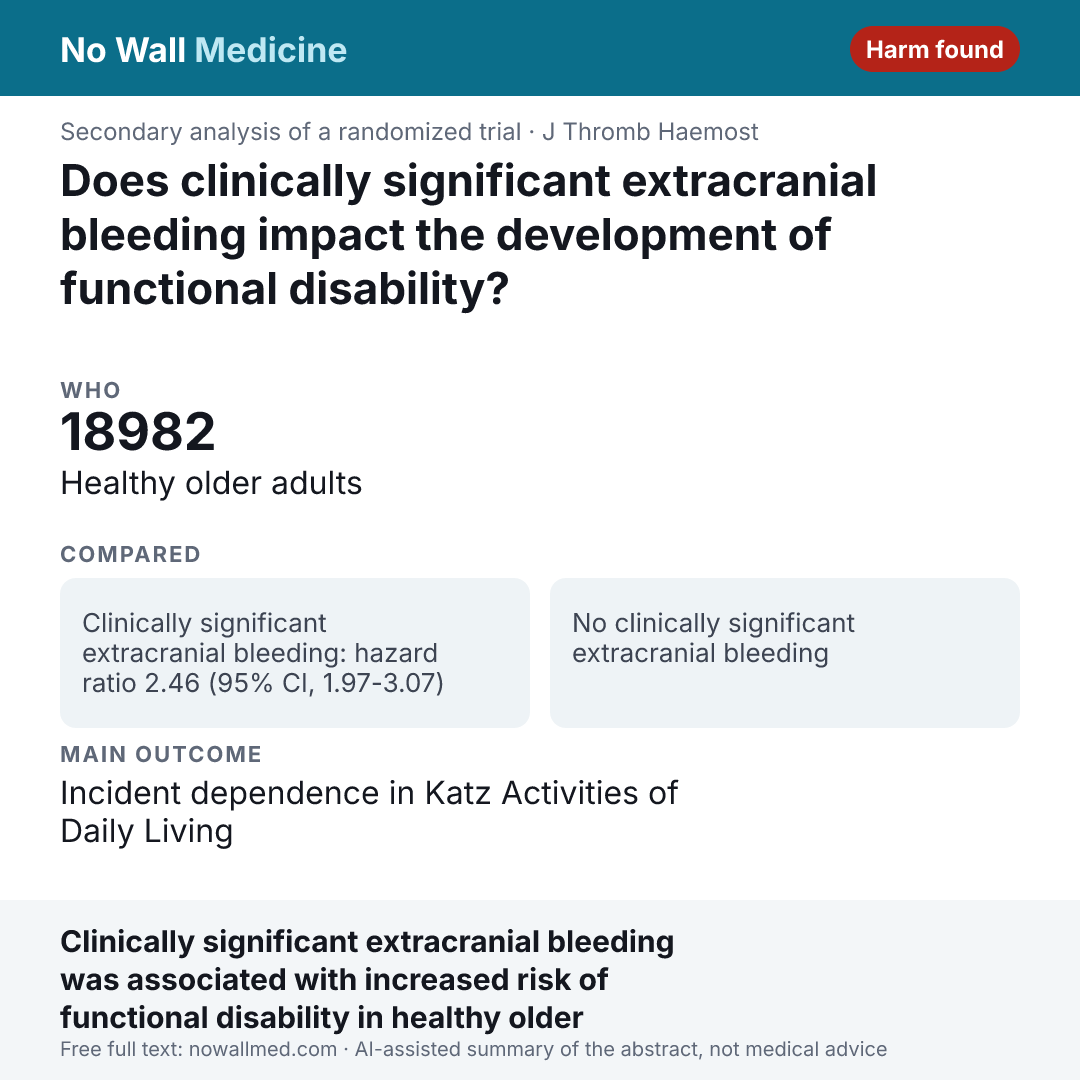
Functional disability after clinically significant extracranial bleeding: a secondary analysis of the Aspirin in Reducing Events in the Elderly (ASPREE) Trial
Secondary analysis of a randomized trialHarm found
Does clinically significant extracranial bleeding impact the development of functional disability?
Who
18982
Healthy older adults
Compared
Clinically significant extracranial bleeding: hazard ratio 2.46 (95% CI, 1.97-3.07)
No clinically significant extracranial bleeding
Main outcome
Incident dependence in Katz Activities of Daily Living
Result: hazard ratio 2.46 (95% CI, 1.97-3.07)
Bottom line: Clinically significant extracranial bleeding was associated with increased risk of functional disability in healthy older adults.
J Thromb Haemost · 2025-02-20 · Save PNG
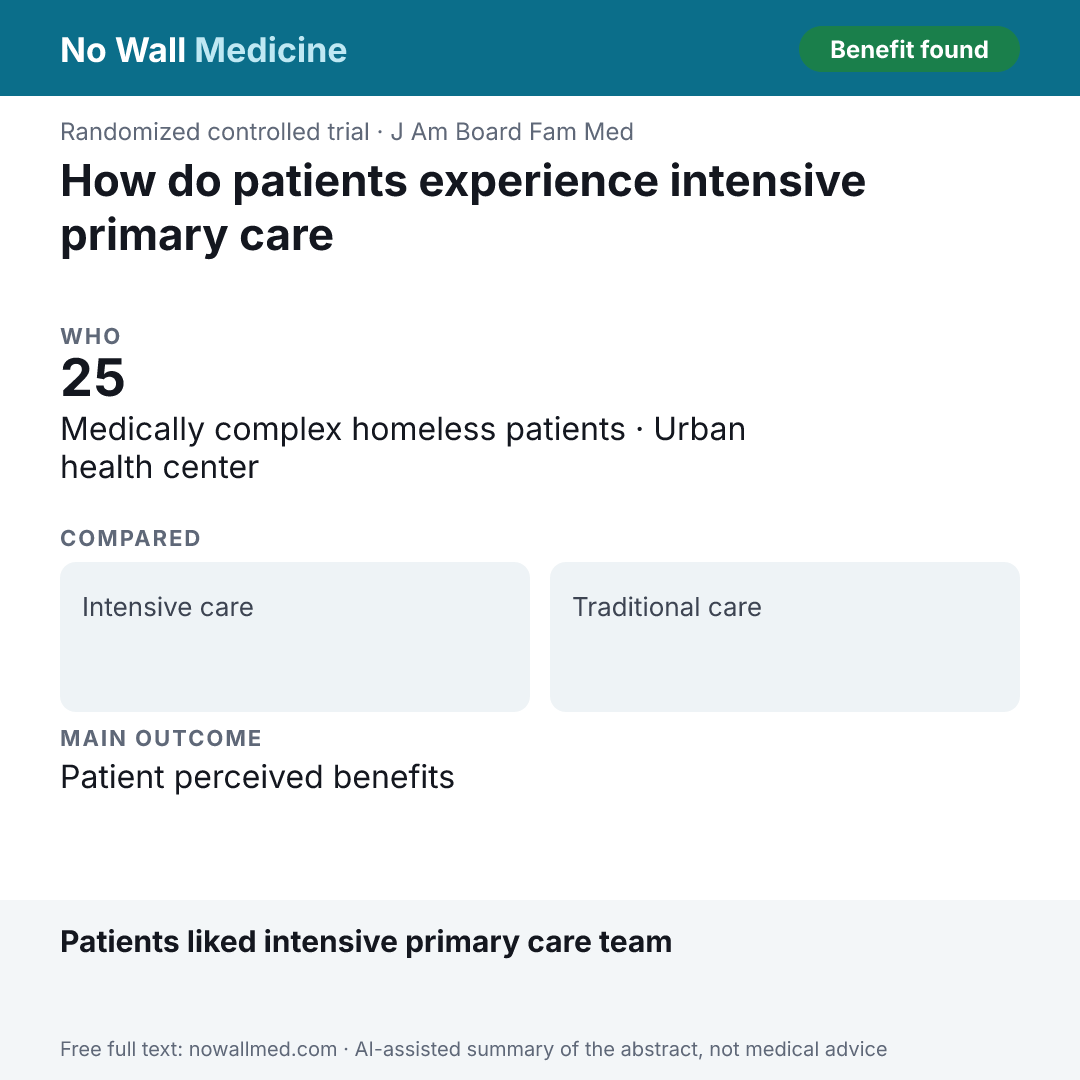
Perceptions of Medically Complex Patients Enrolled in an Ambulatory Intensive Care Unit at a Healthcare-for-the-Homeless Clinic
Randomized controlled trialBenefit found
How do patients experience intensive primary care
Who
25
Medically complex homeless patients · Urban health center
Compared
Intensive care
Traditional care
Main outcome
Patient perceived benefits
Bottom line: Patients liked intensive primary care team
J Am Board Fam Med · 2025-02-20 · Save PNG
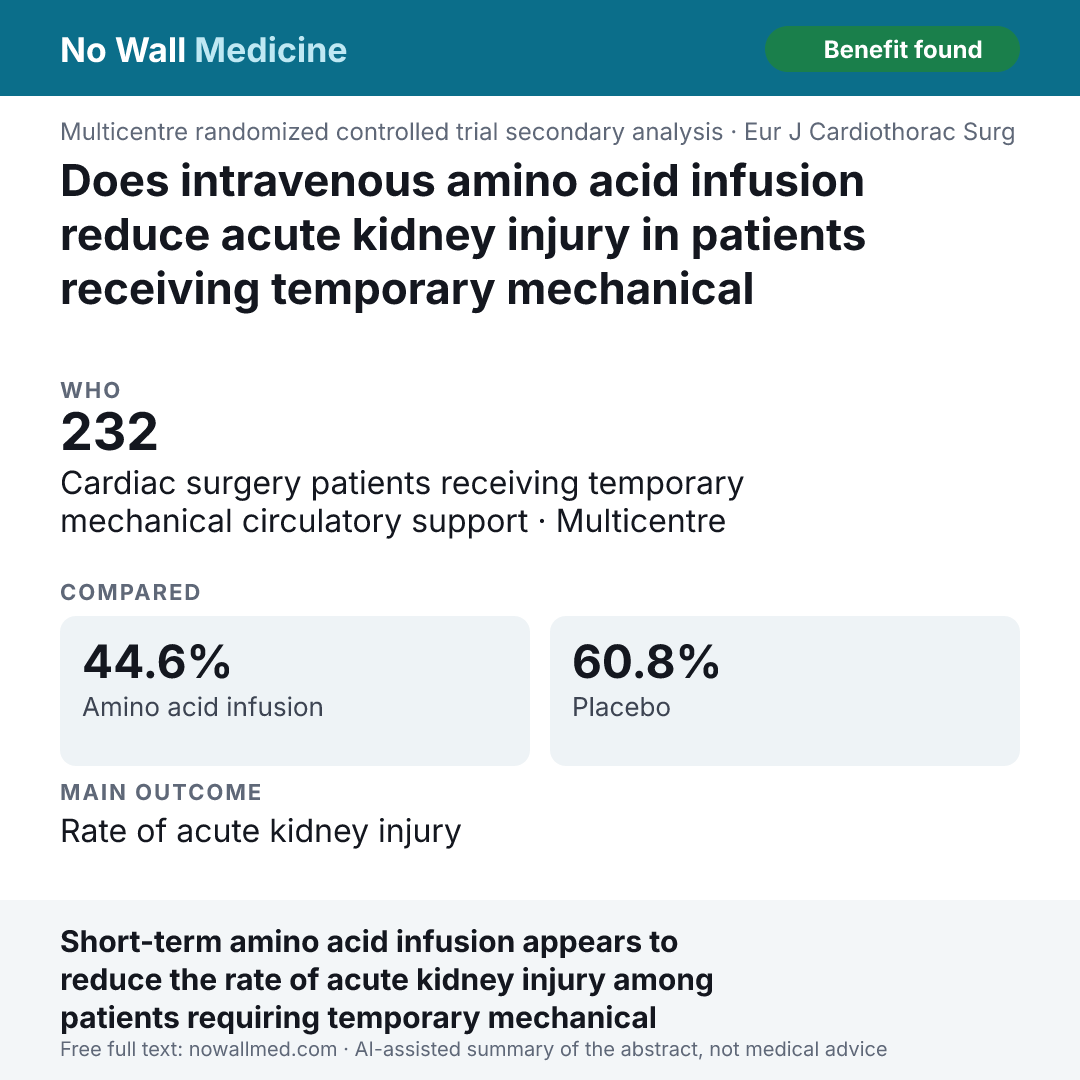
Intravenous amino acids for renal protection in patients receiving temporary mechanical circulatory support: a secondary subgroup analysis of the PROTECTION study
Multicentre randomized controlled trial secondary analysisBenefit found
Does intravenous amino acid infusion reduce acute kidney injury in patients receiving temporary mechanical circulatory support?
Who
232
Cardiac surgery patients receiving temporary mechanical circulatory support · Multicentre
Compared
44.6%Amino acid infusion
60.8%Placebo
Main outcome
Rate of acute kidney injury
Result: relative risk 0.73 (95% confidence interval 0.57-0.94)
Bottom line: Short-term amino acid infusion appears to reduce the rate of acute kidney injury among patients requiring temporary mechanical circulatory support.
Eur J Cardiothorac Surg · 2025-02-20 · Save PNG
Effects of dietary recommendations for reducing free sugar intakes, on free sugar intakes, dietary profiles and anthropometry: a randomised controlled trial
Randomised controlled parallel-group designBenefit found
Do different dietary recommendations reduce free sugar intakes in United Kingdom adults?
Who
242
United Kingdom adults consuming more than 5 percent total energy intake from free sugars · United Kingdom
Compared
Nutrient-based, food-based, or substitution-based recommendations: %FSchange = -2·5 to -3·3 %
No recommendations: %FSchange = -1·2 %
Main outcome
Free sugar intakes as a percentage of total energy intake
Result: smallest B = -0·573, P = 0·03
Bottom line: Dietary recommendations effectively reduce free sugar intake and body weight in United Kingdom adults.
Limitation: Limited advantages were found for the different dietary recommendations.
Br J Nutr · 2025-02-20 · Save PNG

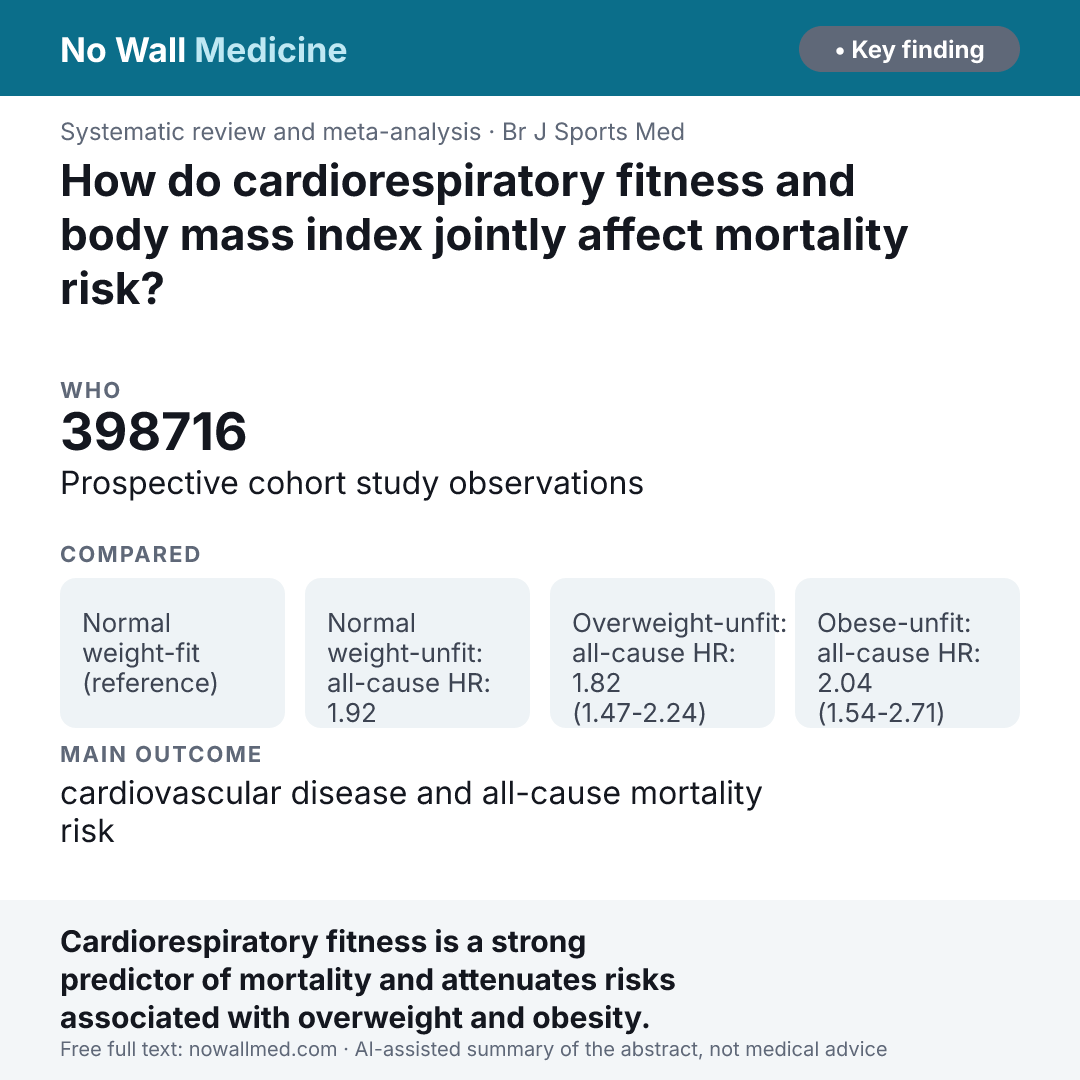
Cardiorespiratory fitness, body mass index and mortality: a systematic review and meta-analysis
Systematic review and meta-analysisKey finding
How do cardiorespiratory fitness and body mass index jointly affect mortality risk?
Who
398716
Prospective cohort study observations
Compared
Normal weight-fit (reference)
Normal weight-unfit: all-cause HR: 1.92 (1.43-2.57)
Overweight-unfit: all-cause HR: 1.82 (1.47-2.24)
Obese-unfit: all-cause HR: 2.04 (1.54-2.71)
Main outcome
cardiovascular disease and all-cause mortality risk
Bottom line: Cardiorespiratory fitness is a strong predictor of mortality and attenuates risks associated with overweight and obesity.
Br J Sports Med · 2025-02-20 · Save PNG
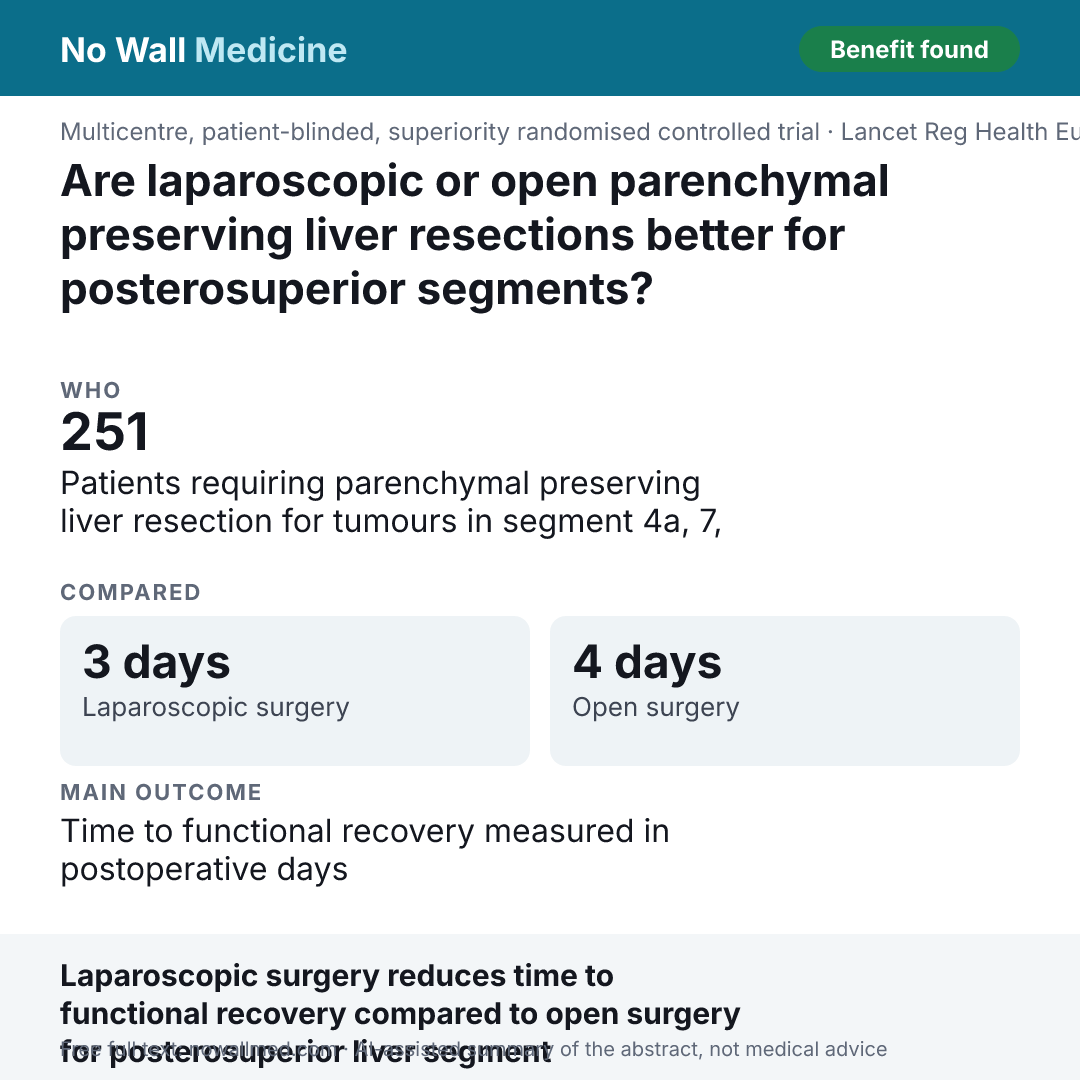
Laparoscopic versus open parenchymal preserving liver resections in the posterosuperior segments (ORANGE Segments): a multicentre, single-blind, randomised controlled trial
Multicentre, patient-blinded, superiority randomised controlled trialBenefit found
Are laparoscopic or open parenchymal preserving liver resections better for posterosuperior segments?
Who
251
Patients requiring parenchymal preserving liver resection for tumours in segment 4a, 7, or 8 · 17 centres
Compared
3 daysLaparoscopic surgery (IQR 3-5)
4 daysOpen surgery (IQR 3-5)
Main outcome
Time to functional recovery measured in postoperative days
Result: difference -19.2%, 96% CI -28.8% to -8.4%
Bottom line: Laparoscopic surgery reduces time to functional recovery compared to open surgery for posterosuperior liver segment resections.
Limitation: The reduction in time to functional recovery did not meet the hypothesized difference of two days.
Funded by: Ethicon, Cancer Research United Kingdom, and Maastricht University Medical Centre+
Lancet Reg Health Eur · 2025-02-20 · Save PNG
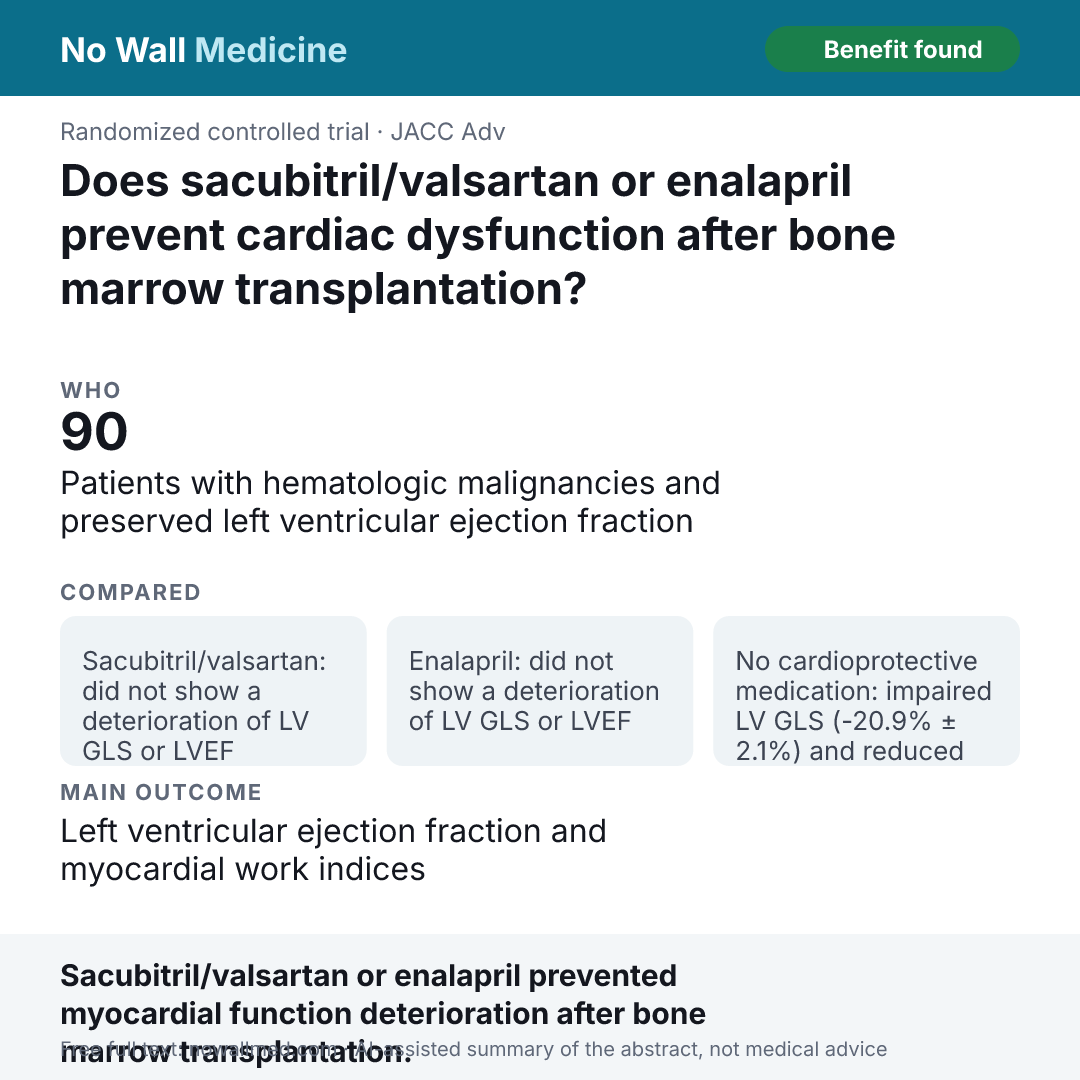
Effect of Sacubitril/Valsartan or Enalapril on Left Ventricular Function in Patients With Hematologic Malignancies Treated With Bone Marrow Transplantation: A Randomized Controlled Trial
Randomized controlled trialBenefit found
Does sacubitril/valsartan or enalapril prevent cardiac dysfunction after bone marrow transplantation?
Who
90
Patients with hematologic malignancies and preserved left ventricular ejection fraction after bone marrow transplantation
Compared
Sacubitril/valsartan: did not show a deterioration of LV GLS or LVEF
Enalapril: did not show a deterioration of LV GLS or LVEF
No cardioprotective medication: impaired LV GLS (-20.9% ± 2.1%) and reduced LVEF
Main outcome
Left ventricular ejection fraction and myocardial work indices
Bottom line: Sacubitril/valsartan or enalapril prevented myocardial function deterioration after bone marrow transplantation.
JACC Adv · 2025-02-20 · Save PNG
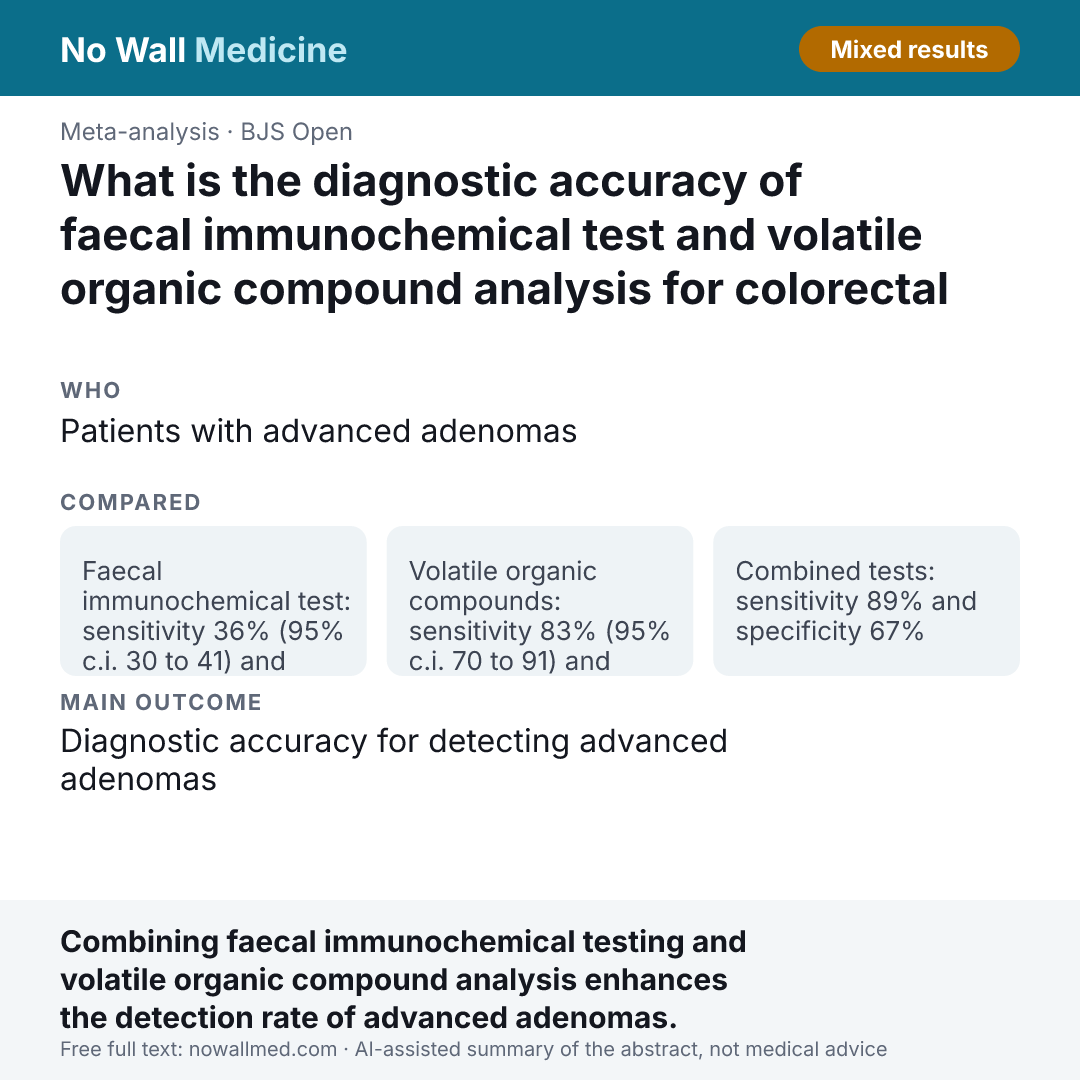
Diagnostic accuracy of the faecal immunochemical test and volatile organic compound analysis in detecting colorectal polyps: meta-analysis
Meta-analysisMixed results
What is the diagnostic accuracy of faecal immunochemical test and volatile organic compound analysis for colorectal polyps?
Who
Patients with advanced adenomas
Compared
Faecal immunochemical test: sensitivity 36% (95% c.i. 30 to 41) and specificity 89% (95% c.i. 86 to 91)
Volatile organic compounds: sensitivity 83% (95% c.i. 70 to 91) and specificity 76% (95% c.i. 60 to 87)
Combined tests: sensitivity 89% and specificity 67%
Main outcome
Diagnostic accuracy for detecting advanced adenomas
Bottom line: Combining faecal immunochemical testing and volatile organic compound analysis enhances the detection rate of advanced adenomas.
BJS Open · 2025-02-20 · Save PNG
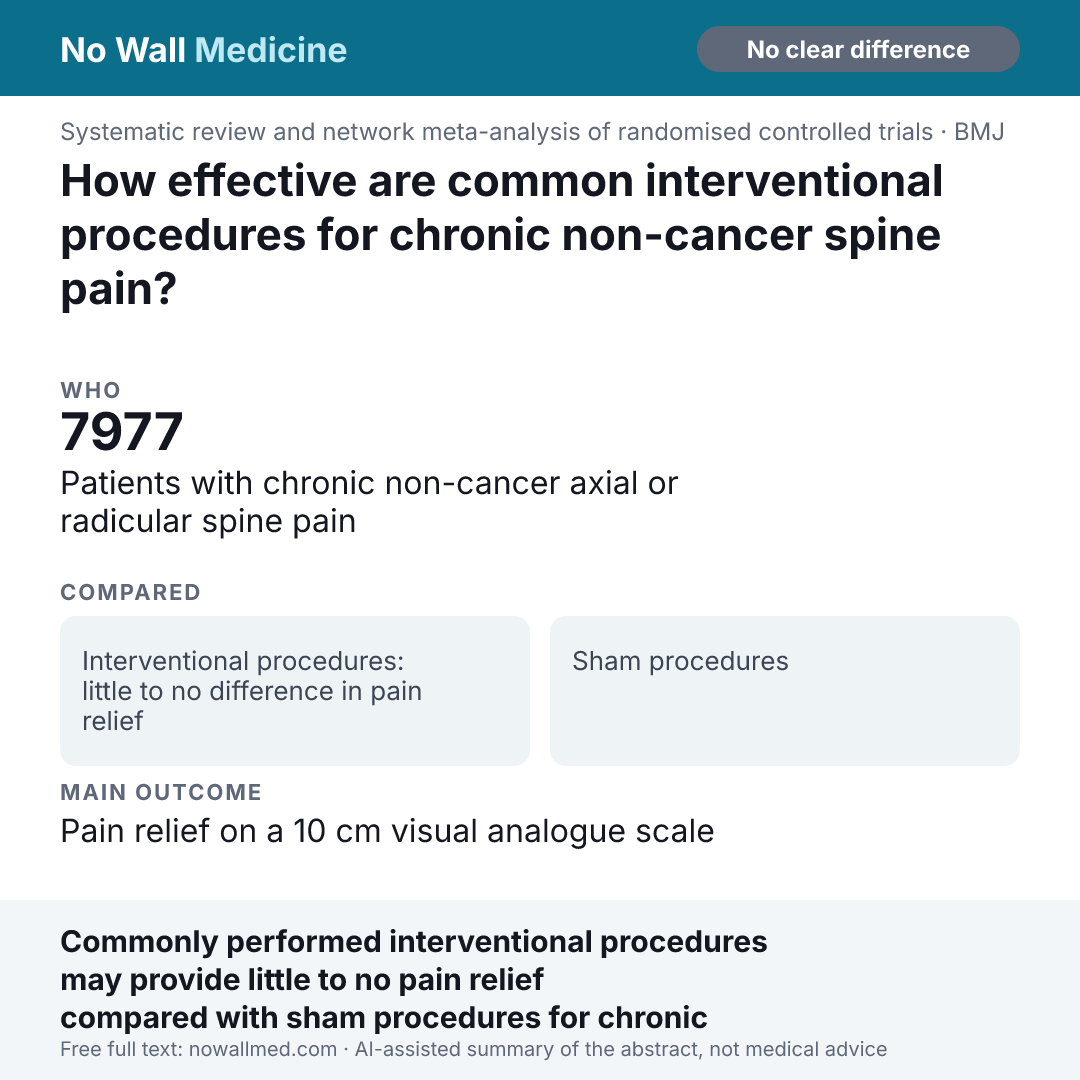
Common interventional procedures for chronic non-cancer spine pain: a systematic review and network meta-analysis of randomised trials
Systematic review and network meta-analysis of randomised controlled trialsNo clear difference
How effective are common interventional procedures for chronic non-cancer spine pain?
Who
7977
Patients with chronic non-cancer axial or radicular spine pain
Compared
Interventional procedures: little to no difference in pain relief
Sham procedures
Main outcome
Pain relief on a 10 cm visual analogue scale
Bottom line: Commonly performed interventional procedures may provide little to no pain relief compared with sham procedures for chronic spine pain.
Limitation: Certainty of evidence ranged from very low to moderate.
BMJ · 2025-02-19 · Save PNG
Reduced-energy diet in women with gestational diabetes: the dietary intervention in gestational diabetes DiGest randomized clinical trial
Multicentre parallel, randomized, controlled, double-blind trialNo clear difference
Does a reduced-energy diet improve perinatal outcomes in women with gestational diabetes?
Who
425
Women with singleton pregnancies, gestational diabetes and body mass index ≥25 kg m-2 · Multicentre
Compared
Standard-energy control diet
Reduced-energy intervention diet
Main outcome
Maternal weight change and offspring birth weight
Result: intervention effect -0.20 (95% confidence interval -1.01, 0.61)
Bottom line: A reduced-energy diet showed no difference in maternal weight change or offspring standardized birth weight.
Nat Med · 2025-02-19 · Save PNG

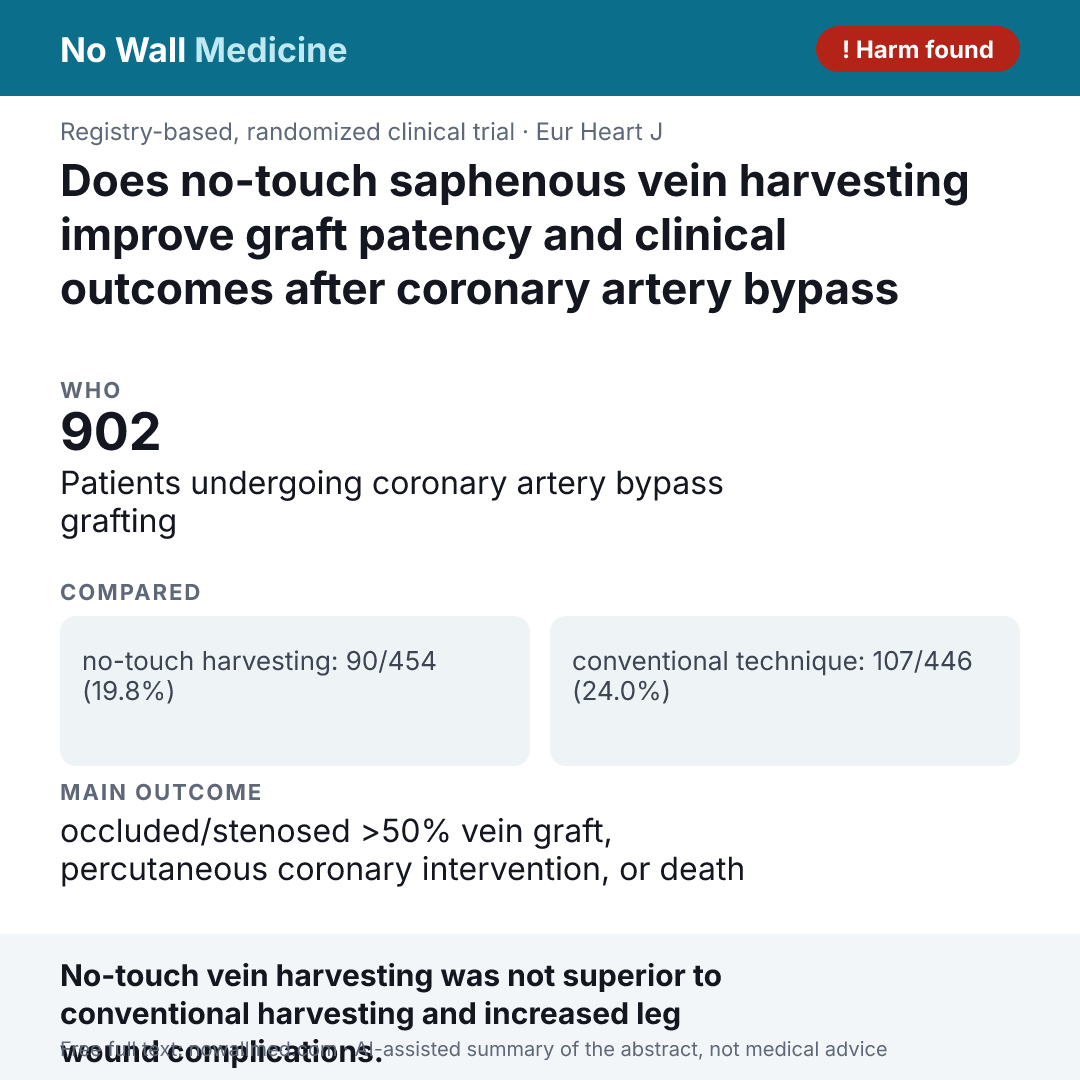
No-touch vein grafts in coronary artery bypass surgery: a registry-based randomized clinical trial
Registry-based, randomized clinical trialHarm found
Does no-touch saphenous vein harvesting improve graft patency and clinical outcomes after coronary artery bypass grafting?
Who
902
Patients undergoing coronary artery bypass grafting
Compared
no-touch harvesting: 90/454 (19.8%)
conventional technique: 107/446 (24.0%)
Main outcome
occluded/stenosed >50% vein graft, percutaneous coronary intervention, or death
Result: difference, -4.3 percentage points; 95% confidence interval -10.1-1.6
Bottom line: No-touch vein harvesting was not superior to conventional harvesting and increased leg wound complications.
Eur Heart J · 2025-02-19 · Save PNG
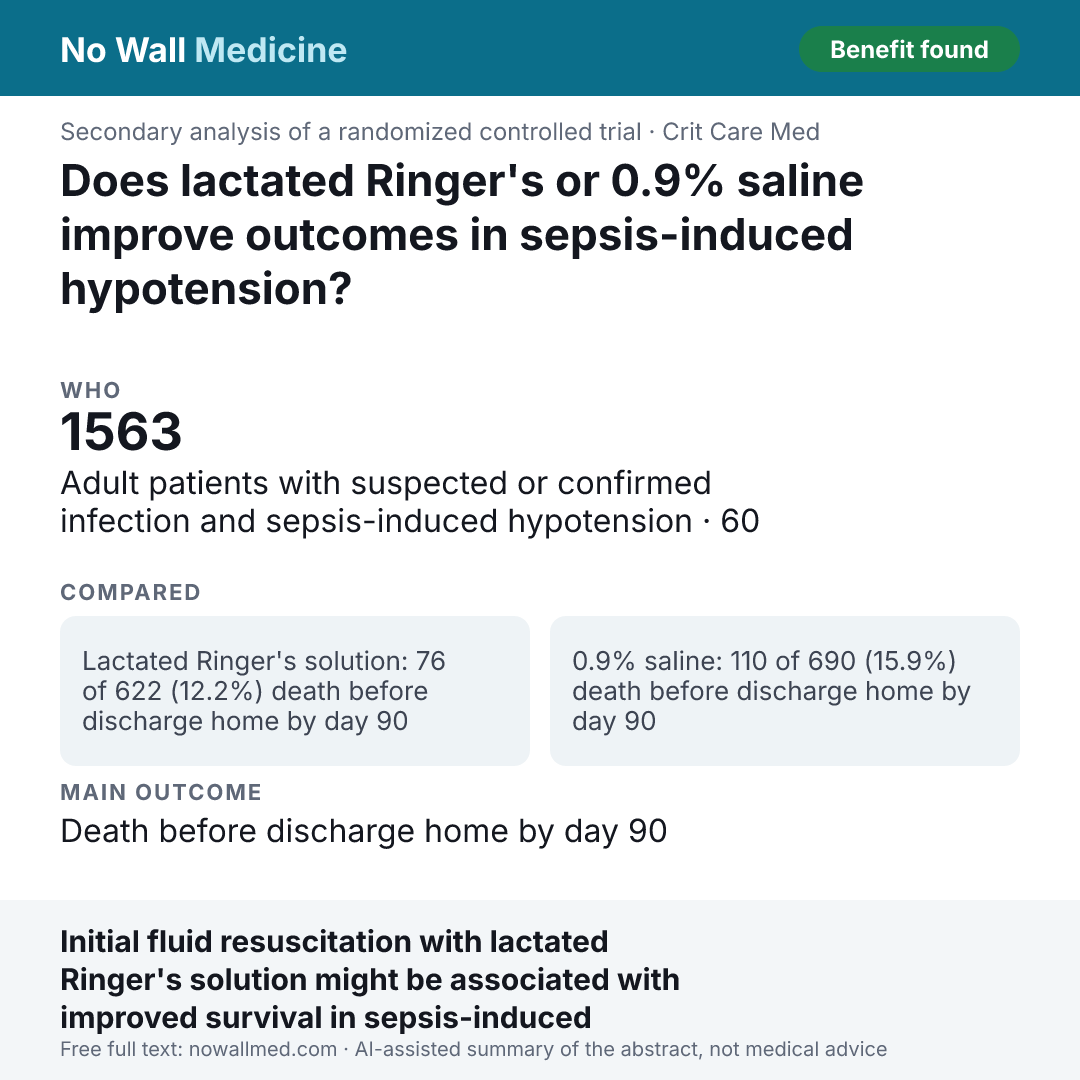
Lactated Ringer's or Normal Saline for Initial Fluid Resuscitation in Sepsis-Induced Hypotension
Secondary analysis of a randomized controlled trialBenefit found
Does lactated Ringer's or 0.9% saline improve outcomes in sepsis-induced hypotension?
Who
1563
Adult patients with suspected or confirmed infection and sepsis-induced hypotension · 60 United States centers
Compared
Lactated Ringer's solution: 76 of 622 (12.2%) death before discharge home by day 90
0.9% saline: 110 of 690 (15.9%) death before discharge home by day 90
Main outcome
Death before discharge home by day 90
Result: adjusted hazard ratio 0.71 (95% CI, 0.51-0.99)
Bottom line: Initial fluid resuscitation with lactated Ringer's solution might be associated with improved survival in sepsis-induced hypotension.
Crit Care Med · 2025-02-19 · Save PNG
Early vs Delayed Bypass Surgery in Patients With Acute Coronary Syndrome Receiving Ticagrelor: The RAPID CABG Randomized Open-Label Noninferiority Trial
Open-label randomized noninferiority trialBenefit found
Is early versus delayed bypass surgery noninferior regarding perioperative bleeding?
Who
143
Patients with acute coronary syndrome who received ticagrelor and required bypass surgery · Tertiary centers in Canada
Compared
4.6%Early surgery (2 to 3 days)
5.2%Delayed surgery (5 to 7 days)
Main outcome
Class 3 or 4 universal definition of perioperative bleeding
Result: between-group difference, -0.6%; 95% CI, -8.3% to 7.1%
Bottom line: Early bypass surgery 2 to 3 days after ticagrelor cessation is noninferior to delayed surgery regarding perioperative bleeding.
JAMA Surg · 2025-02-19 · Save PNG

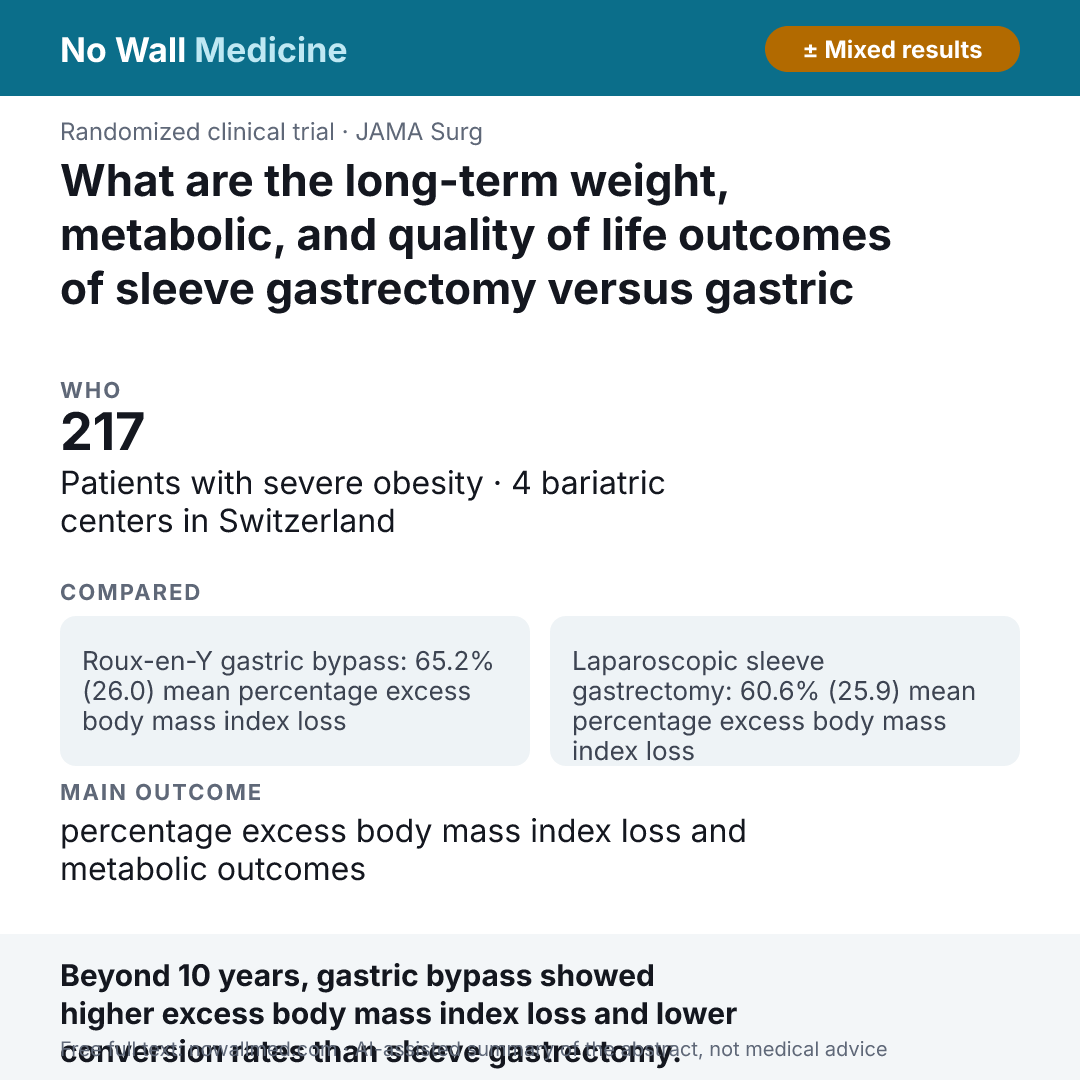
Long-Term Outcomes of Laparoscopic Roux-en-Y Gastric Bypass vs Laparoscopic Sleeve Gastrectomy for Obesity: The SM-BOSS Randomized Clinical Trial
Randomized clinical trialMixed results
What are the long-term weight, metabolic, and quality of life outcomes of sleeve gastrectomy versus gastric bypass?
Who
217
Patients with severe obesity · 4 bariatric centers in Switzerland
Compared
Roux-en-Y gastric bypass: 65.2% (26.0) mean percentage excess body mass index loss
Laparoscopic sleeve gastrectomy: 60.6% (25.9) mean percentage excess body mass index loss
Main outcome
percentage excess body mass index loss and metabolic outcomes
Bottom line: Beyond 10 years, gastric bypass showed higher excess body mass index loss and lower conversion rates than sleeve gastrectomy.
Limitation: Complete 10-year follow-up is available for 65.4% of patients.
JAMA Surg · 2025-02-19 · Save PNG
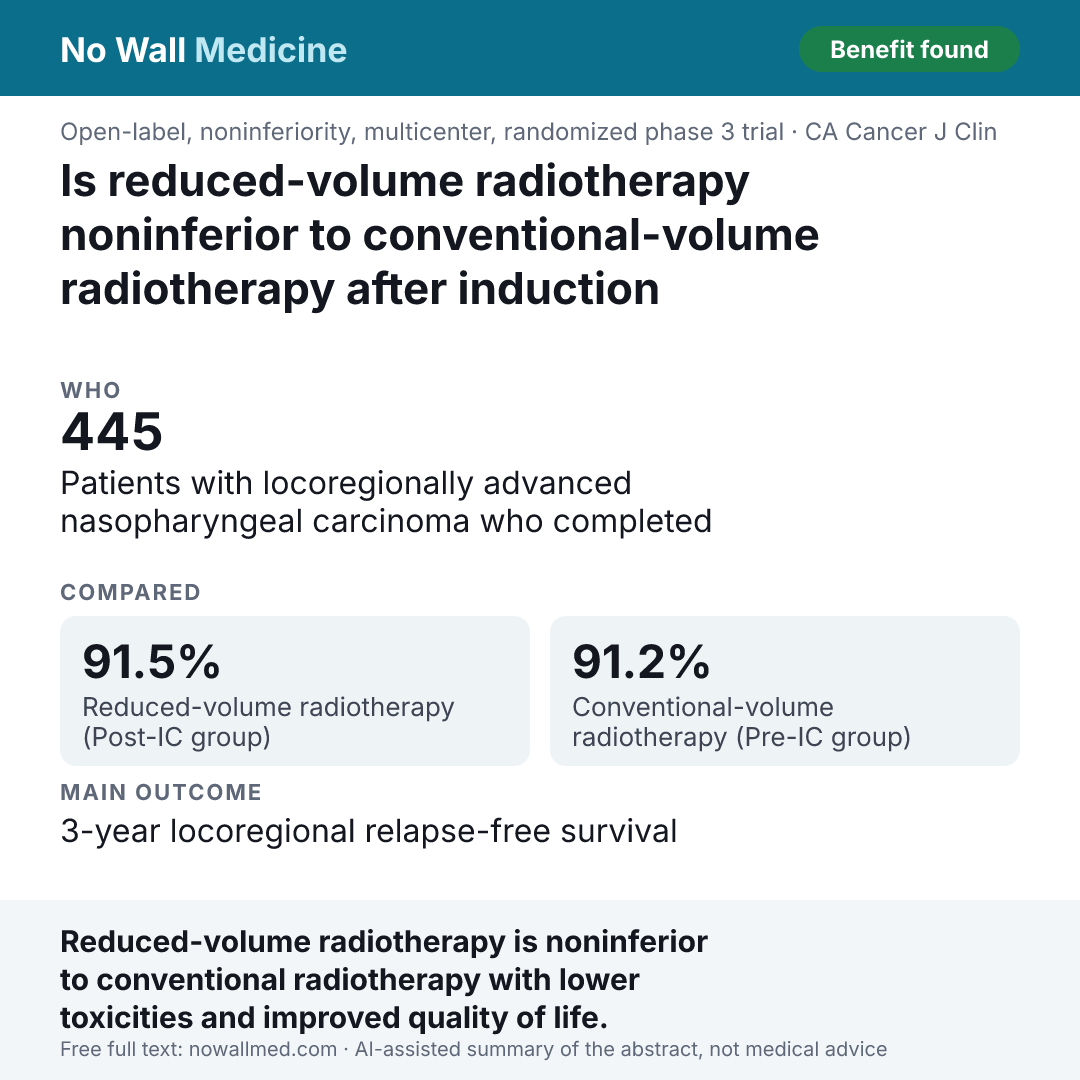
Reduced-volume radiotherapy versus conventional-volume radiotherapy after induction chemotherapy in nasopharyngeal carcinoma: An open-label, noninferiority, multicenter, randomized phase 3 trial
Open-label, noninferiority, multicenter, randomized phase 3 trialBenefit found
Is reduced-volume radiotherapy noninferior to conventional-volume radiotherapy after induction chemotherapy in nasopharyngeal carcinoma?
Who
445
Patients with locoregionally advanced nasopharyngeal carcinoma who completed induction chemotherapy · Multicenter
Compared
91.5%Reduced-volume radiotherapy (Post-IC group)
91.2%Conventional-volume radiotherapy (Pre-IC group)
Main outcome
3-year locoregional relapse-free survival
Result: difference of 0.3% (95% confidence interval -4.9% to 5.5%)
Bottom line: Reduced-volume radiotherapy is noninferior to conventional radiotherapy with lower toxicities and improved quality of life.
CA Cancer J Clin · 2025-02-19 · Save PNG
A systematic review of studies using network analysis to assess dynamics of psychotic-like experiences in community samples
Systematic reviewMixed results
What are the dynamics and determinants of psychotic-like experiences in community samples?
Who
Community samples
Compared
23.5%Strength centrality (20 studies)
26.0%Betweenness centrality (5 studies)
29.7%Closeness centrality (6 studies)
26.9%Expected influence (7 studies)
Main outcome
Centrality metrics and determinants of psychotic-like experiences
Bottom line: Psychotic-like experiences are transdiagnostic phenomena associated with childhood trauma and suicide risk in community samples.
Psychol Med · 2025-02-19 · Save PNG

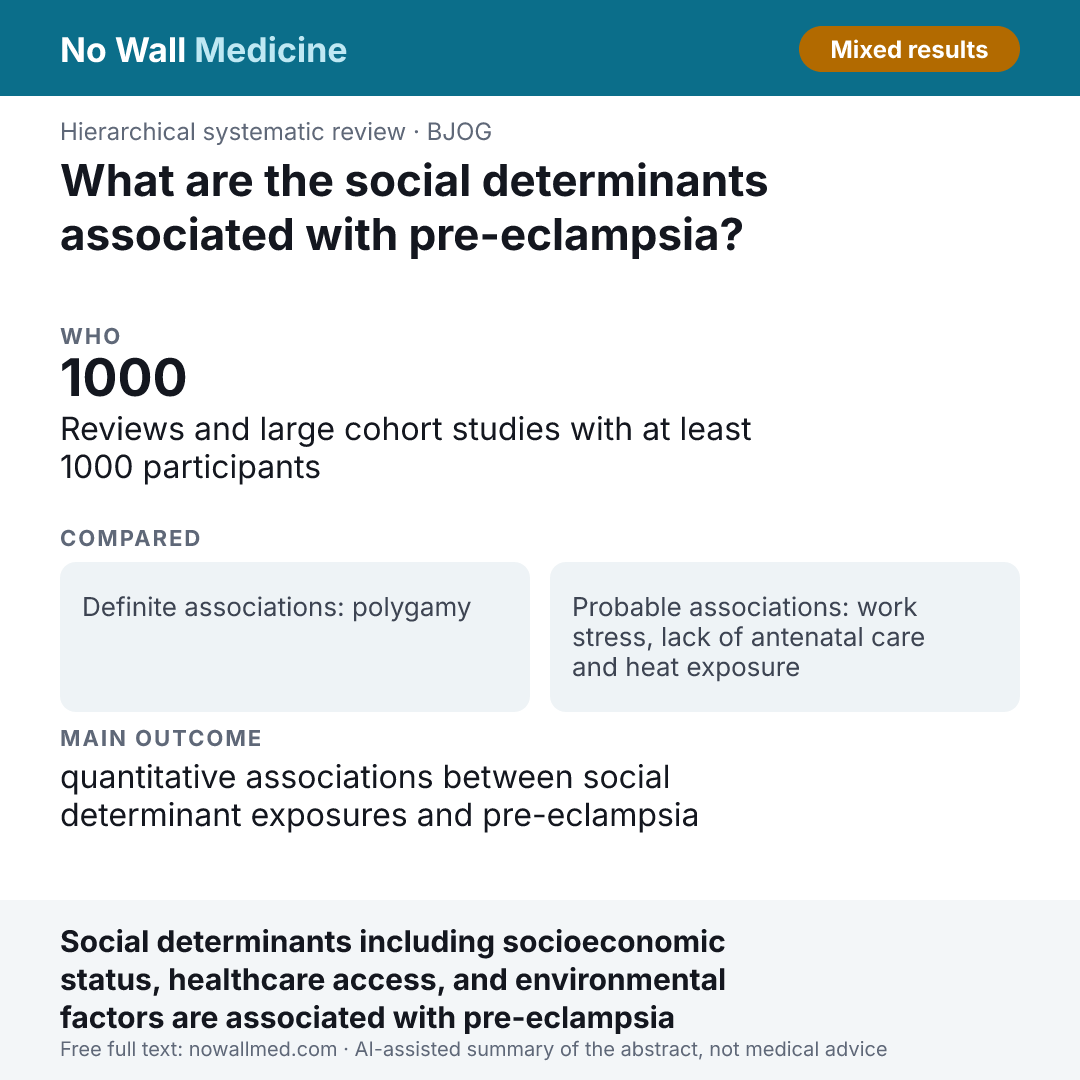
Towards the Development of a Conceptual Framework of the Determinants of Pre-Eclampsia: A Hierarchical Systematic Review of Social Determinants
Hierarchical systematic reviewMixed results
What are the social determinants associated with pre-eclampsia?
Who
1000
Reviews and large cohort studies with at least 1000 participants
Compared
Definite associations: polygamy
Probable associations: work stress, lack of antenatal care and heat exposure
Main outcome
quantitative associations between social determinant exposures and pre-eclampsia
Bottom line: Social determinants including socioeconomic status, healthcare access, and environmental factors are associated with pre-eclampsia risk.
BJOG · 2025-02-19 · Save PNG