Visual abstracts
New randomized trials and meta-analyses from leading journals at a glance: who was studied, what was compared, and what was found. Every paper is free to read in full.
All specialtiesCardiology 4877Oncology 4138Gastroenterology & Hepatology 1942Infectious Disease 3837Neurology 1905Psychiatry & Mental Health 2273Pulmonology 2143Critical Care 1365Endocrinology & Diabetes 2580Pediatrics 2980Surgery 2559Orthopedics & Sports Medicine 931Neurosurgery 537Cardiothoracic & Vascular Surgery 674Plastic & Reconstructive Surgery 591Nephrology 1133Rheumatology 823Hematology 1109Dermatology 621Ophthalmology 543Obstetrics & Gynecology 1686Public & Global Health 1058Radiology & Imaging 648Anesthesiology 986Urology 764ENT (Otolaryngology) 503Emergency Medicine 511Allergy & Immunology 313Geriatrics 981Family Medicine & Primary Care 562Medical Genetics & Genomics 676Pathology & Laboratory Medicine 159Physical Medicine & Rehabilitation 757Palliative Care 444Nutrition 1588Digital Health & AI 2201General Medicine 321
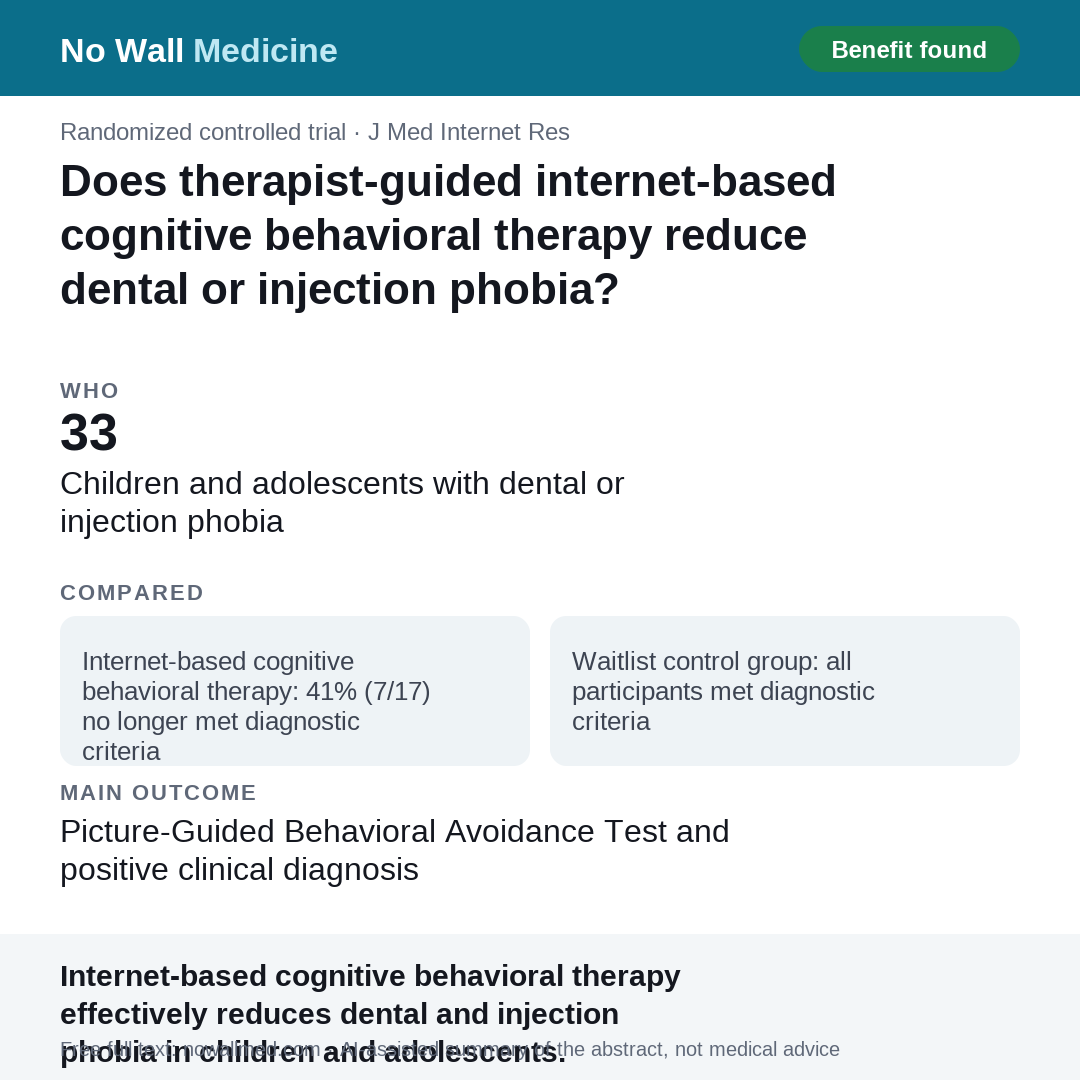
Internet-Based Cognitive Behavioral Therapy for Children and Adolescents With Dental or Injection Phobia: Randomized Controlled Trial
Randomized controlled trialBenefit found
Does therapist-guided internet-based cognitive behavioral therapy reduce dental or injection phobia?
Who
33
Children and adolescents with dental or injection phobia
Compared
Internet-based cognitive behavioral therapy: 41% (7/17) no longer met diagnostic criteria
Waitlist control group: all participants met diagnostic criteria
Main outcome
Picture-Guided Behavioral Avoidance Test and positive clinical diagnosis
Bottom line: Internet-based cognitive behavioral therapy effectively reduces dental and injection phobia in children and adolescents.
J Med Internet Res · 2024-02-21Download image
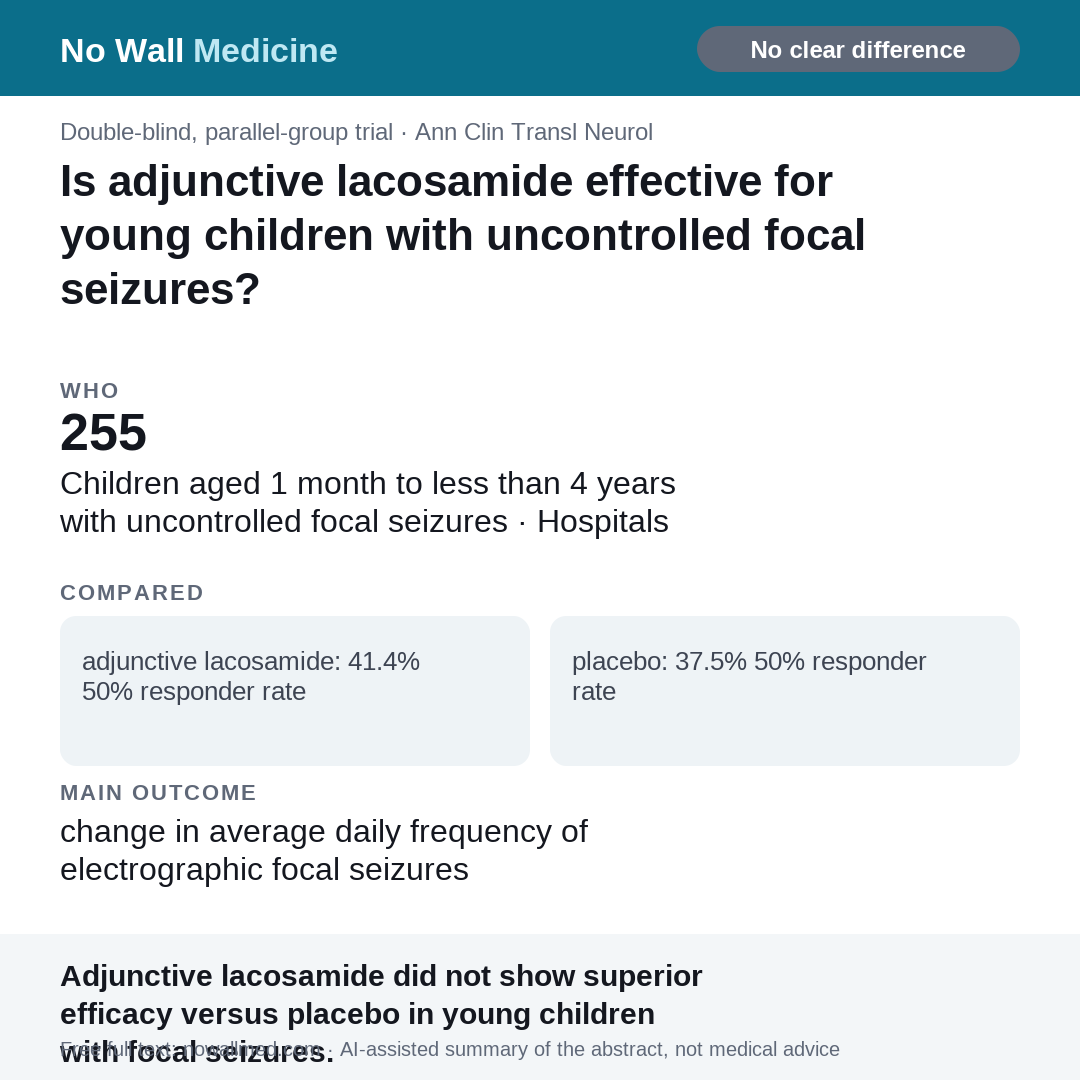
Efficacy and tolerability of adjunctive lacosamide in patients aged <4 years with focal seizures
Double-blind, parallel-group trialNo clear difference
Is adjunctive lacosamide effective for young children with uncontrolled focal seizures?
Who
255
Children aged 1 month to less than 4 years with uncontrolled focal seizures · Hospitals and clinics in 25 countries
Compared
adjunctive lacosamide: 41.4% 50% responder rate
placebo: 37.5% 50% responder rate
Main outcome
change in average daily frequency of electrographic focal seizures
Bottom line: Adjunctive lacosamide did not show superior efficacy versus placebo in young children with focal seizures.
Limitation: High variability and low reliability between readers in video-electroencephalogram interpretation.
Ann Clin Transl Neurol · 2024-02-20Download image
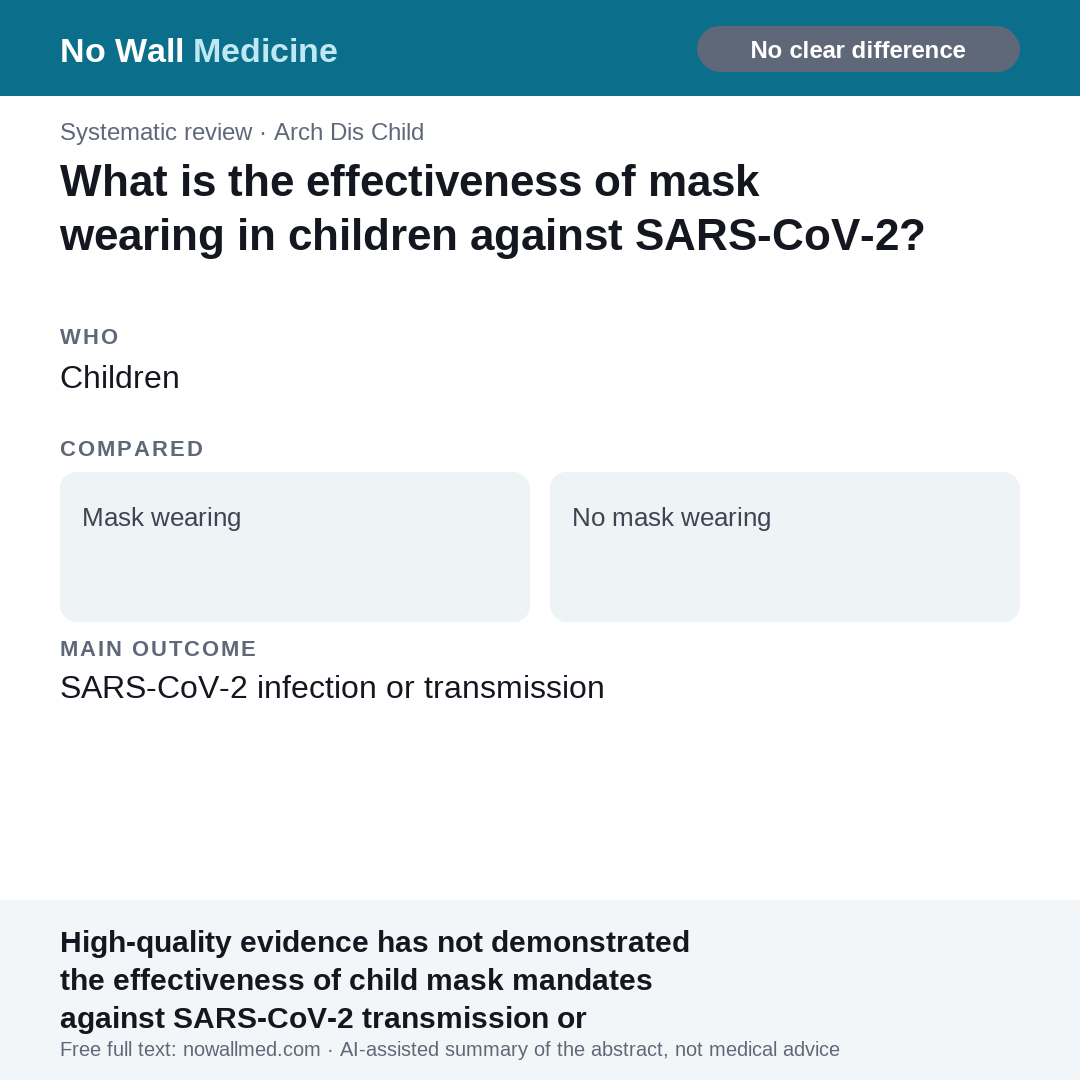
Child mask mandates for COVID-19: a systematic review
Systematic reviewNo clear difference
What is the effectiveness of mask wearing in children against SARS-CoV-2?
Who
Children
Compared
Mask wearing
No mask wearing
Main outcome
SARS-CoV-2 infection or transmission
Bottom line: High-quality evidence has not demonstrated the effectiveness of child mask mandates against SARS-CoV-2 transmission or infection.
Limitation: Included observational studies had critical or serious risk of bias and potential confounding.
Arch Dis Child · 2024-02-19Download image
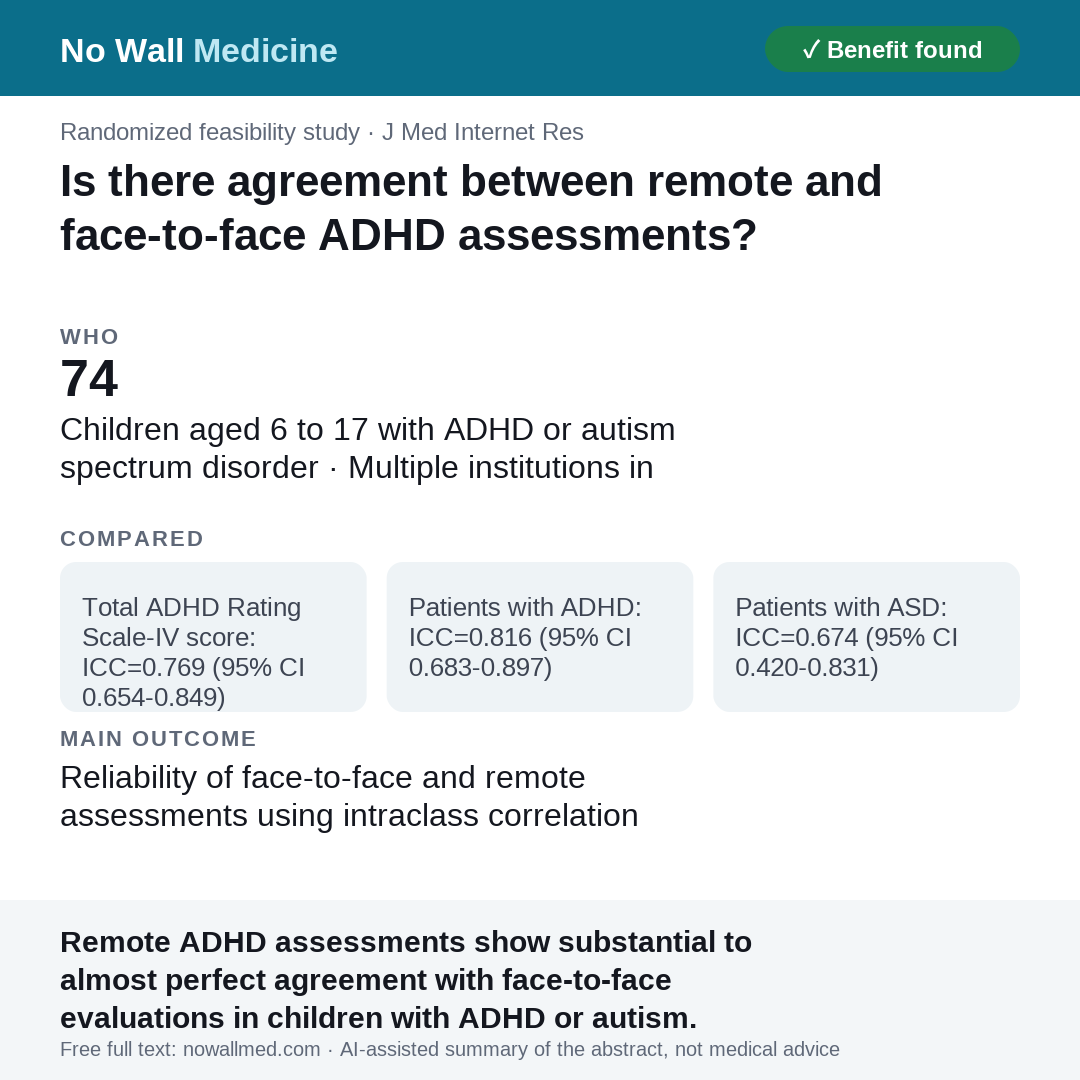
Reliability of Telepsychiatry Assessments Using the Attention-Deficit/Hyperactivity Disorder Rating Scale-IV for Children With Neurodevelopmental Disorders and Their Caregivers: Randomized Feasibility Study
Randomized feasibility studyBenefit found
Is there agreement between remote and face-to-face ADHD assessments?
Who
74
Children aged 6 to 17 with ADHD or autism spectrum disorder · Multiple institutions in Japan
Compared
Total ADHD Rating Scale-IV score: ICC=0.769 (95% CI 0.654-0.849)
Patients with ADHD: ICC=0.816 (95% CI 0.683-0.897)
Patients with ASD: ICC=0.674 (95% CI 0.420-0.831)
Main outcome
Reliability of face-to-face and remote assessments using intraclass correlation coefficient
Result: ICC=0.769 (95% CI 0.654-0.849)
Bottom line: Remote ADHD assessments show substantial to almost perfect agreement with face-to-face evaluations in children with ADHD or autism.
J Med Internet Res · 2024-02-19Download image
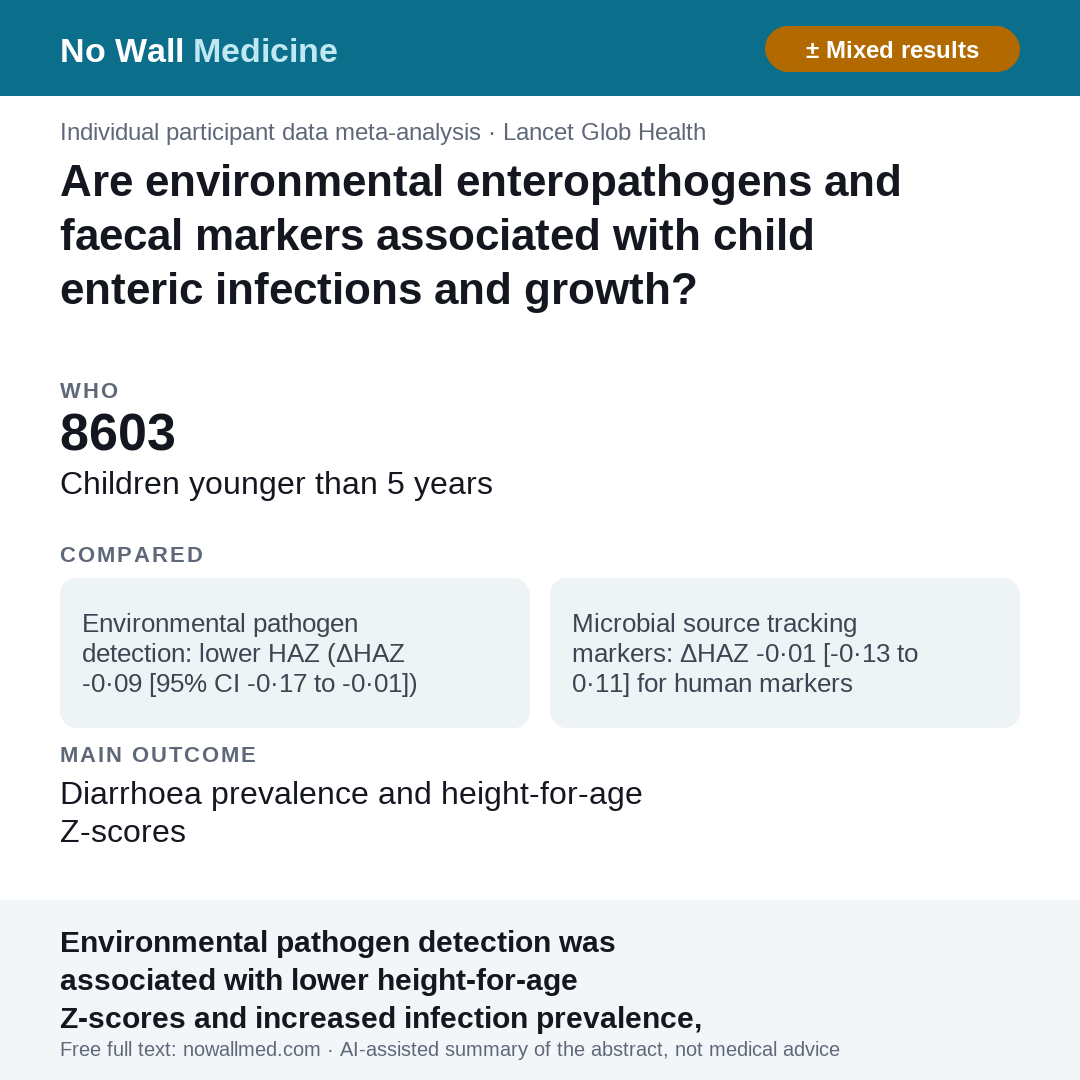
Is detection of enteropathogens and human or animal faecal markers in the environment associated with subsequent child enteric infections and growth: an individual participant data meta-analysis
Individual participant data meta-analysisMixed results
Are environmental enteropathogens and faecal markers associated with child enteric infections and growth?
Who
8603
Children younger than 5 years
Compared
Environmental pathogen detection: lower HAZ (ΔHAZ -0·09 [95% CI -0·17 to -0·01])
Microbial source tracking markers: ΔHAZ -0·01 [-0·13 to 0·11] for human markers
Main outcome
Diarrhoea prevalence and height-for-age Z-scores
Result: ΔHAZ -0·09 (95% CI -0·17 to -0·01)
Bottom line: Environmental pathogen detection was associated with lower height-for-age Z-scores and increased infection prevalence, but not diarrhoea.
Funded by: Bill & Melinda Gates Foundation and UK FCDO
Lancet Glob Health · 2024-02-17Download image
Effect of skin tone on the accuracy of the estimation of arterial oxygen saturation by pulse oximetry: a systematic review
Systematic reviewHarm found
Does skin tone affect the accuracy of pulse oximetry in estimating arterial oxygen saturation?
Who
222644
Adults and children
Compared
Participants with darker skin tones: overestimation of arterial oxygen saturation
Participants with lighter skin tones
Main outcome
Accuracy of pulse oximetry compared with co-oximetry arterial oxygen saturation
Bottom line: Pulse oximetry can overestimate true arterial oxygen saturation in people with darker skin tones.
Limitation: High risk of bias in 64% of studies and considerable heterogeneity.
Br J Anaesth · 2024-02-17Download image

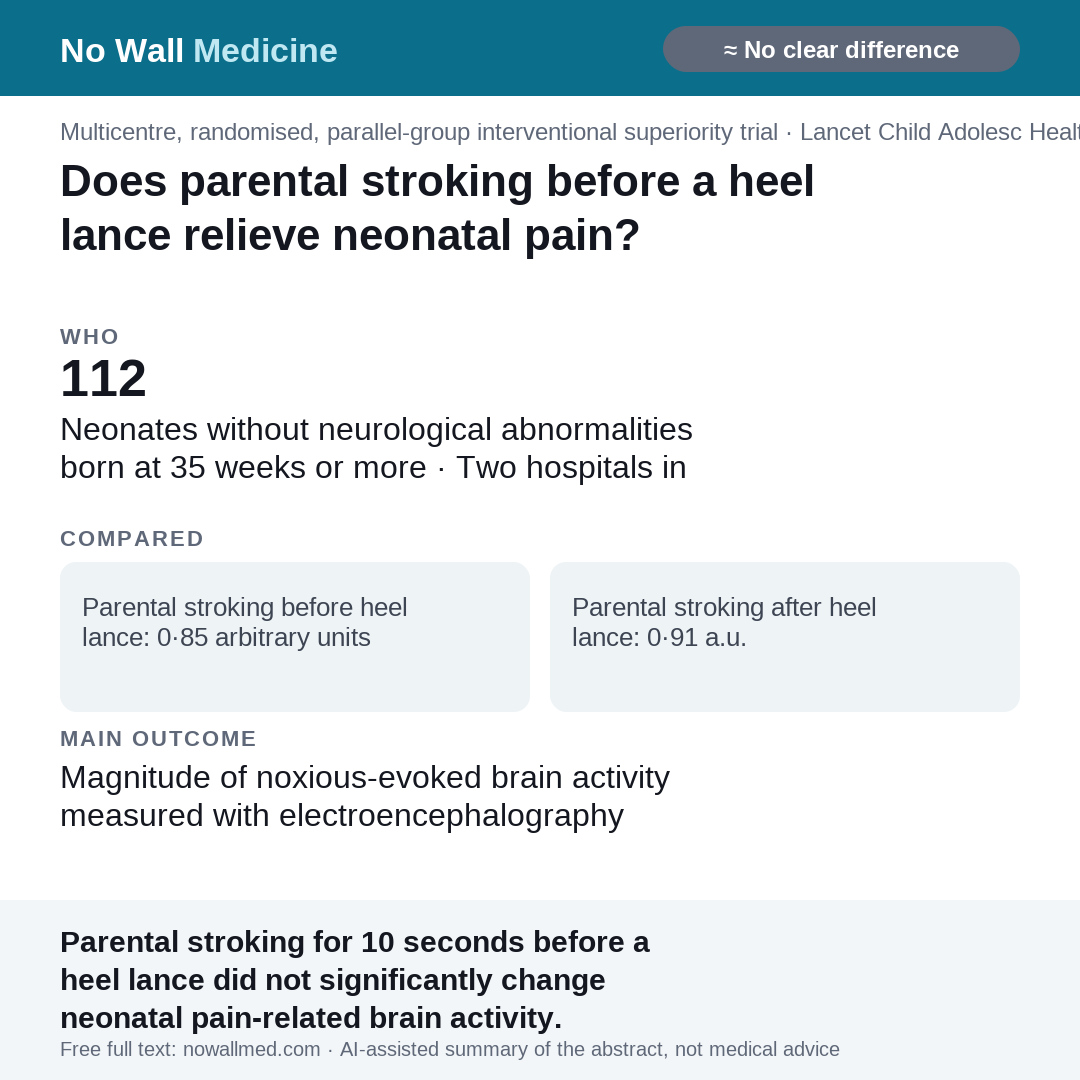
Effect of parental touch on relieving acute procedural pain in neonates and parental anxiety (Petal): a multicentre, randomised controlled trial in the UK
Multicentre, randomised, parallel-group interventional superiority trialNo clear difference
Does parental stroking before a heel lance relieve neonatal pain?
Who
112
Neonates without neurological abnormalities born at 35 weeks or more · Two hospitals in the United Kingdom
Compared
Parental stroking before heel lance: 0·85 arbitrary units
Parental stroking after heel lance: 0·91 a.u.
Main outcome
Magnitude of noxious-evoked brain activity measured with electroencephalography
Result: mean difference of -0·11 a.u. (95% CI -0·42 to 0·20)
Bottom line: Parental stroking for 10 seconds before a heel lance did not significantly change neonatal pain-related brain activity.
Funded by: Wellcome Trust and Bliss
Lancet Child Adolesc Health · 2024-02-16Download image
Are custodial-based mothers and children's units evaluated, effective and aligned with a human rights-based approach? - A systematic review of the evidence
Systematic reviewUnclear result
Are custody-based units effective
Who
incarcerated mothers and children
Compared
Mothers and children
Control
Main outcome
effectiveness of units
Bottom line: Evidence gaps found in custody-based units
Funded by: Corrective Services NSW
eClinicalMedicine · 2024-02-15Download image

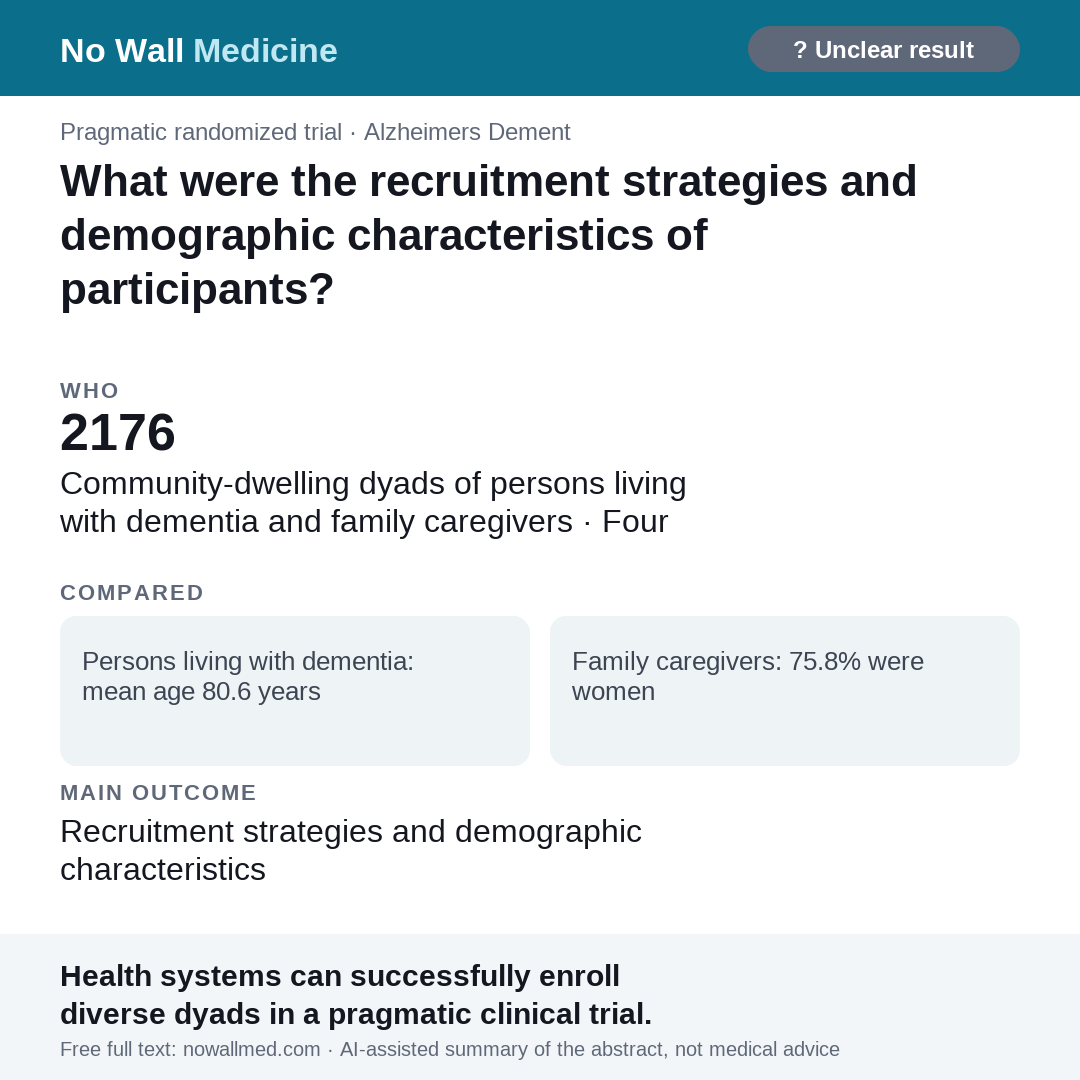
The dementia care study (D-CARE): Recruitment strategies and demographic characteristics of participants in a pragmatic randomized trial of dementia care
Pragmatic randomized trialUnclear result
What were the recruitment strategies and demographic characteristics of participants?
Who
2176
Community-dwelling dyads of persons living with dementia and family caregivers · Four clinical trial sites
Compared
Persons living with dementia: mean age 80.6 years
Family caregivers: 75.8% were women
Main outcome
Recruitment strategies and demographic characteristics
Bottom line: Health systems can successfully enroll diverse dyads in a pragmatic clinical trial.
Alzheimers Dement · 2024-02-15Download image
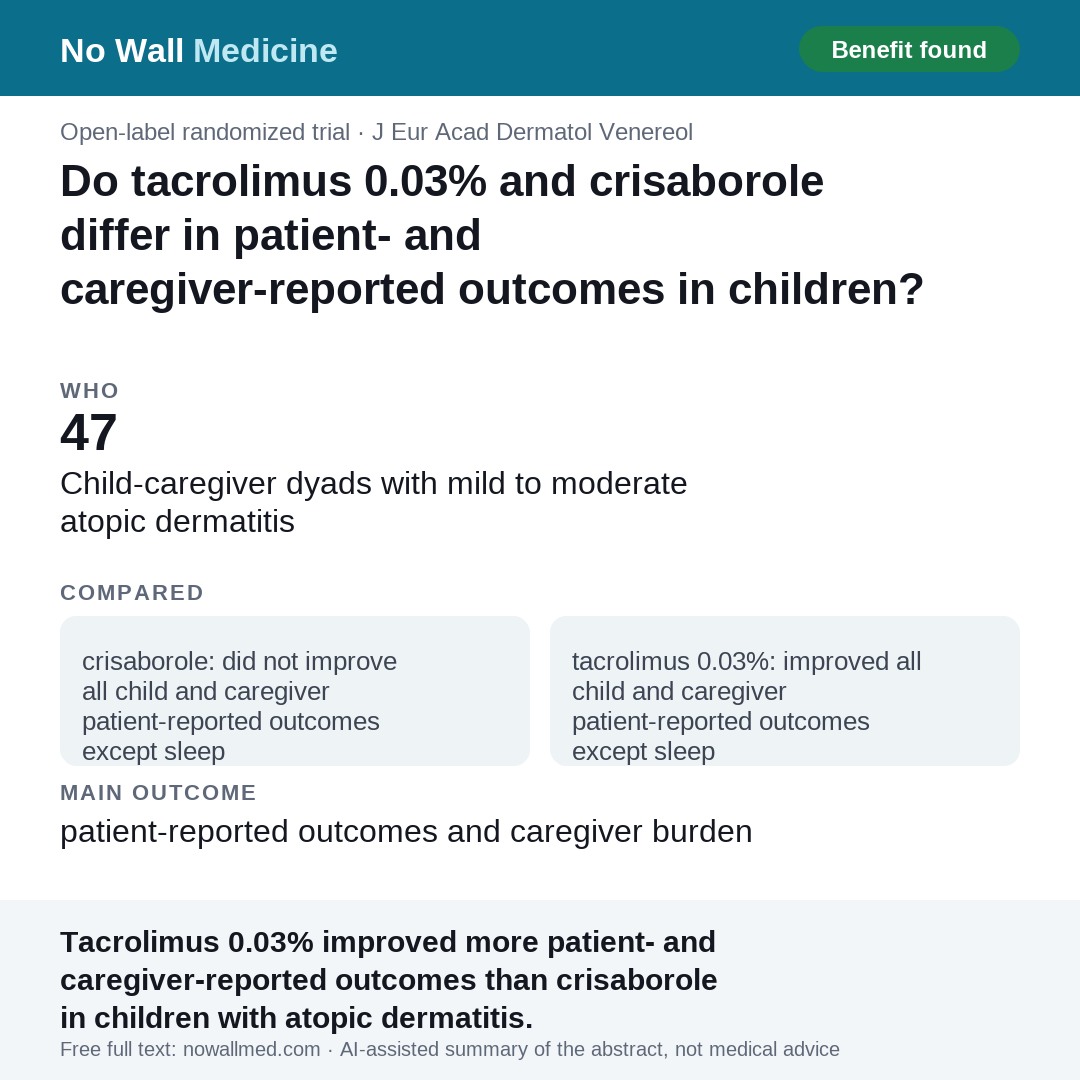
Improved patient- and caregiver-reported outcomes distinguish tacrolimus 0.03% from crisaborole in children with atopic dermatitis
Open-label randomized trialBenefit found
Do tacrolimus 0.03% and crisaborole differ in patient- and caregiver-reported outcomes in children?
Who
47
Child-caregiver dyads with mild to moderate atopic dermatitis
Compared
crisaborole: did not improve all child and caregiver patient-reported outcomes except sleep
tacrolimus 0.03%: improved all child and caregiver patient-reported outcomes except sleep
Main outcome
patient-reported outcomes and caregiver burden
Bottom line: Tacrolimus 0.03% improved more patient- and caregiver-reported outcomes than crisaborole in children with atopic dermatitis.
J Eur Acad Dermatol Venereol · 2024-02-15Download image
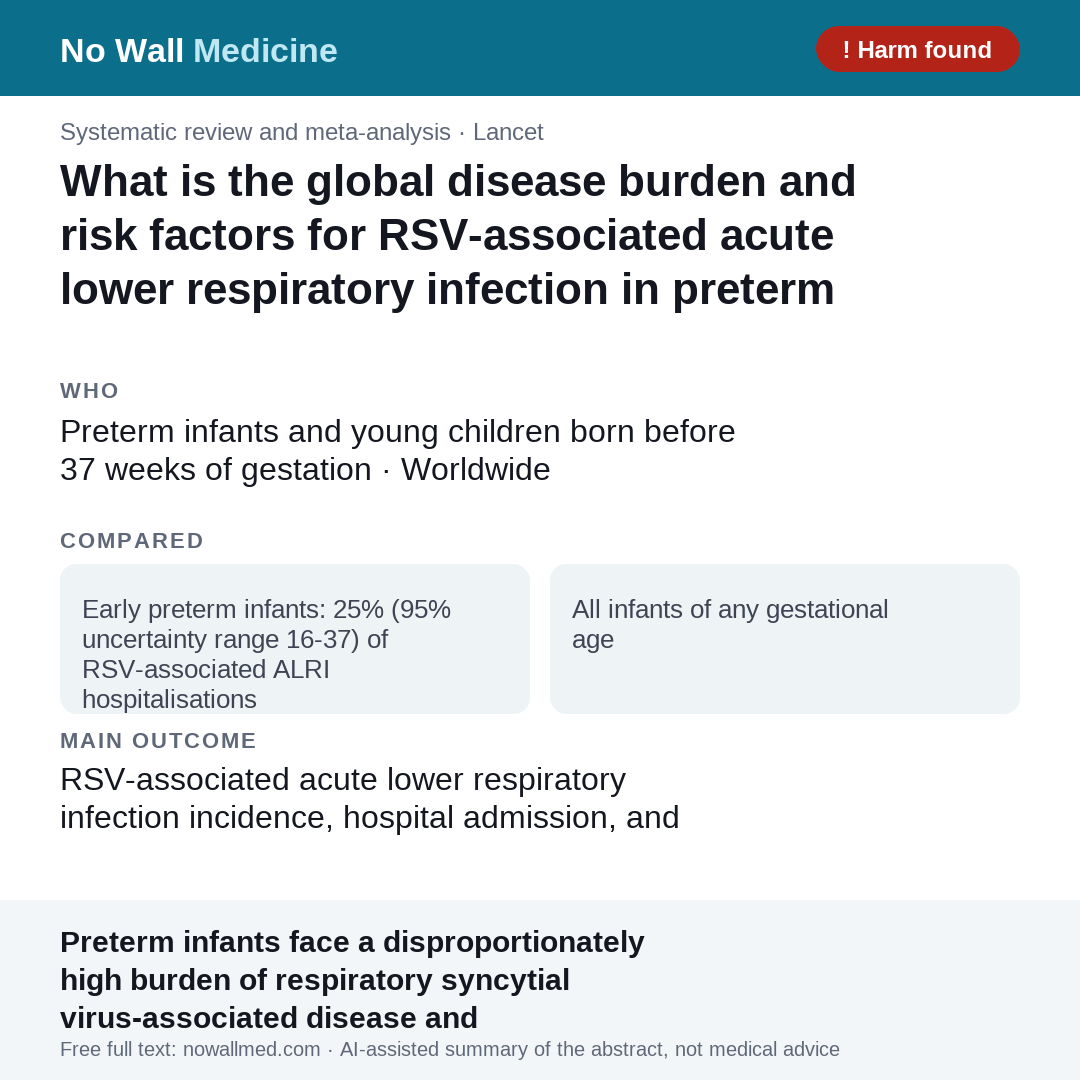
Global disease burden of and risk factors for acute lower respiratory infections caused by respiratory syncytial virus in preterm infants and young children in 2019: a systematic review and meta-analysis of aggregated and individual participant data
Systematic review and meta-analysisHarm found
What is the global disease burden and risk factors for RSV-associated acute lower respiratory infection in preterm infants?
Who
Preterm infants and young children born before 37 weeks of gestation · Worldwide
Compared
Early preterm infants: 25% (95% uncertainty range 16-37) of RSV-associated ALRI hospitalisations
All infants of any gestational age
Main outcome
RSV-associated acute lower respiratory infection incidence, hospital admission, and mortality
Result: rate ratio 2.26 (95% uncertainty range 1.27-3.98)
Bottom line: Preterm infants face a disproportionately high burden of respiratory syncytial virus-associated disease and hospitalisations worldwide.
Funded by: EU Innovative Medicines Initiative Respiratory Syncytial Virus Consortium in Europe
Lancet · 2024-02-14Download image
Efficacy of virtual reality for pain relief in medical procedures: a systematic review and meta-analysis
Meta-analysis of 92 randomized clinical trialsBenefit found
Does immersive virtual reality reduce pain perception during various medical procedures?
Who
7133
Patients undergoing various medical procedures
Compared
Virtual reality
Control
Main outcome
Pain perception scores
Result: standardised mean difference -0.78 (95% CI -1.00 to -0.57)
Bottom line: Immersive virtual reality technology effectively reduces pain perception across various medical procedures despite statistical heterogeneity.
BMC Med · 2024-02-14Download image

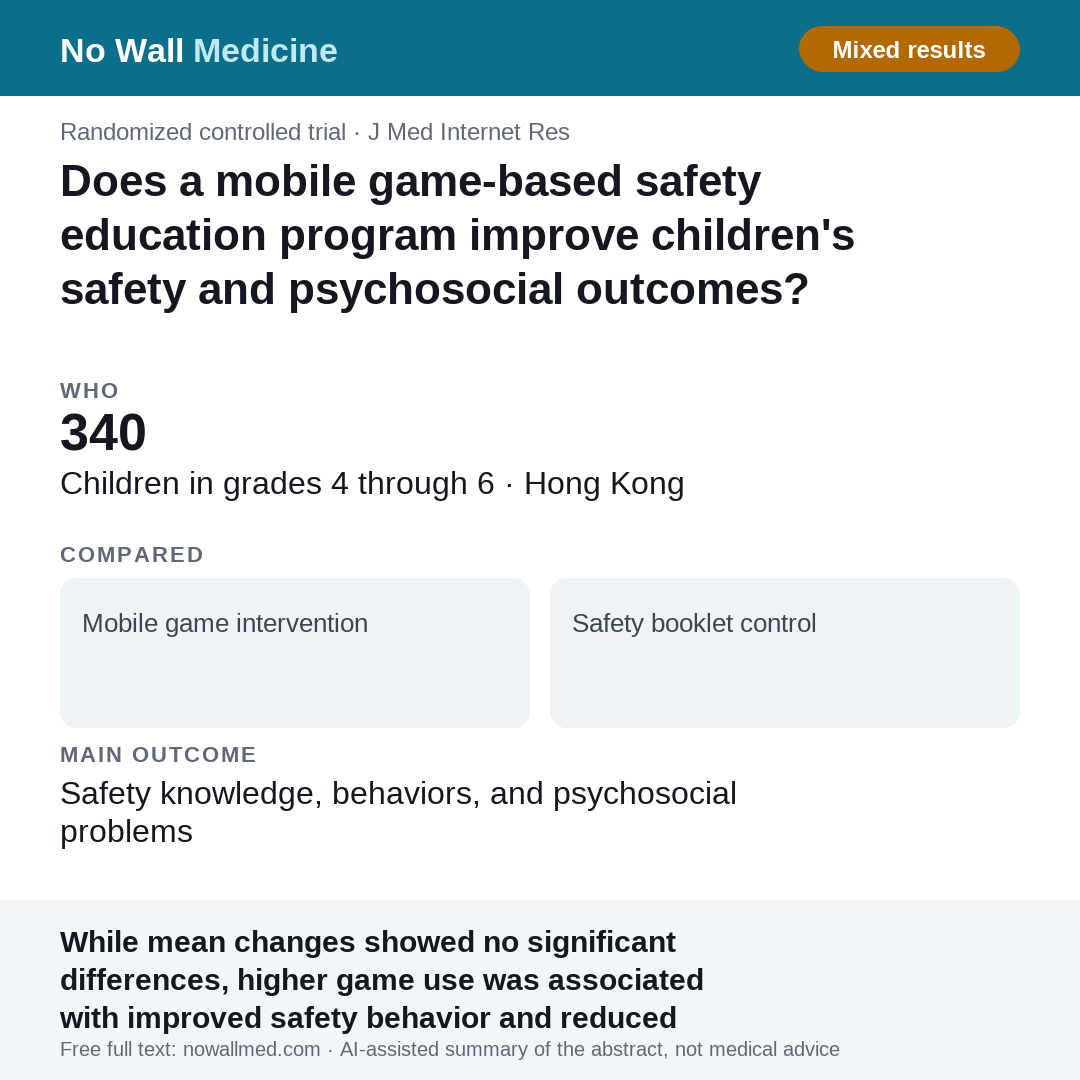
Effect of a Mobile Game-Based Intervention to Enhance Child Safety: Randomized Controlled Trial
Randomized controlled trialMixed results
Does a mobile game-based safety education program improve children's safety and psychosocial outcomes?
Who
340
Children in grades 4 through 6 · Hong Kong
Compared
Mobile game intervention
Safety booklet control
Main outcome
Safety knowledge, behaviors, and psychosocial problems
Bottom line: While mean changes showed no significant differences, higher game use was associated with improved safety behavior and reduced internalizing problems.
J Med Internet Res · 2024-02-14Download image
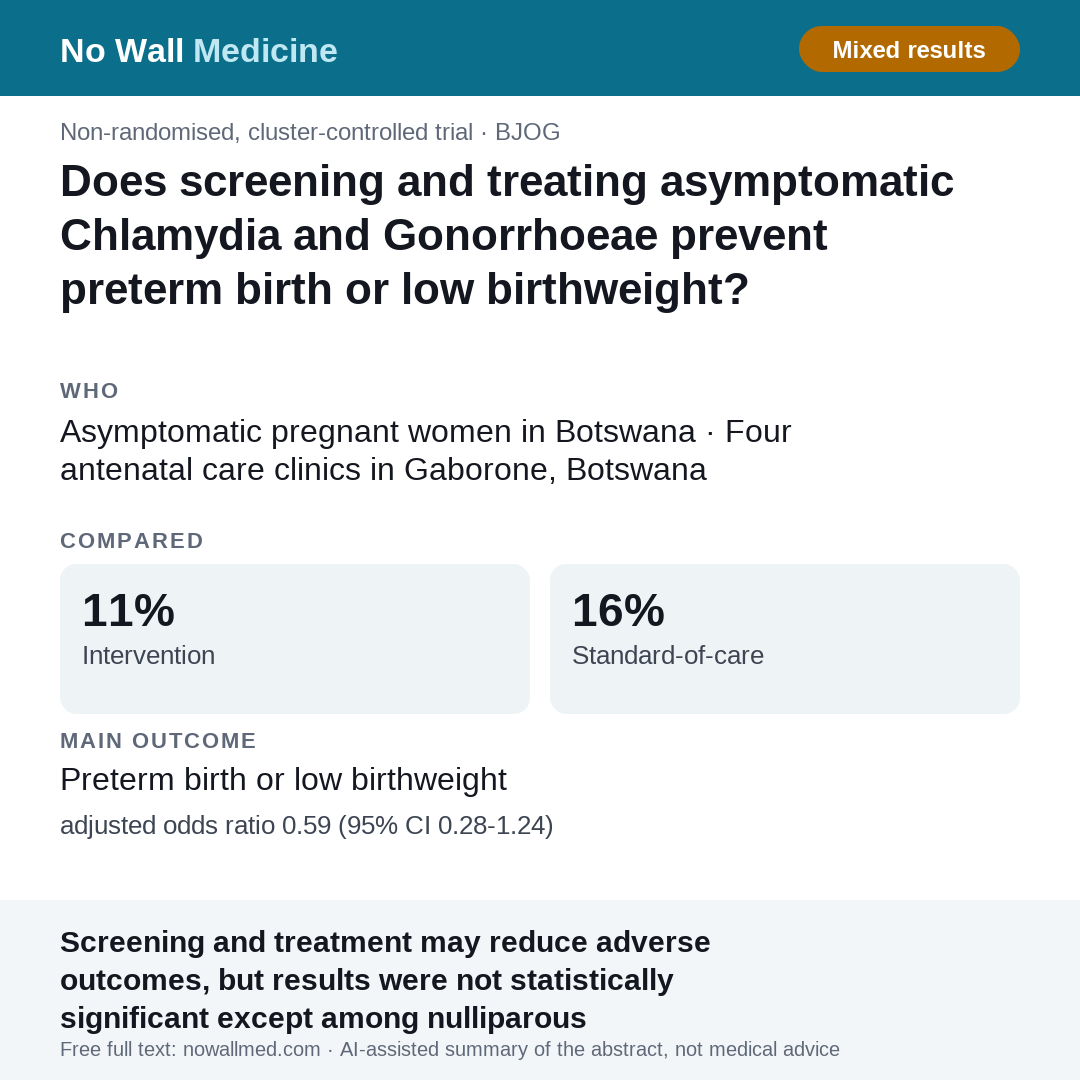
Evaluating Chlamydia trachomatis and Neisseria gonorrhoeae screening and treatment among asymptomatic pregnant women to prevent preterm birth and low birthweight in Gaborone, Botswana: A secondary analysis from a non-randomised, cluster-controlled trial
Non-randomised, cluster-controlled trialMixed results
Does screening and treating asymptomatic Chlamydia and Gonorrhoeae prevent preterm birth or low birthweight?
Who
Asymptomatic pregnant women in Botswana · Four antenatal care clinics in Gaborone, Botswana
Compared
11%Intervention
16%Standard-of-care
Main outcome
Preterm birth or low birthweight
Result: adjusted odds ratio 0.59 (95% CI 0.28-1.24)
Bottom line: Screening and treatment may reduce adverse outcomes, but results were not statistically significant except among nulliparous participants.
BJOG · 2024-02-13Download image
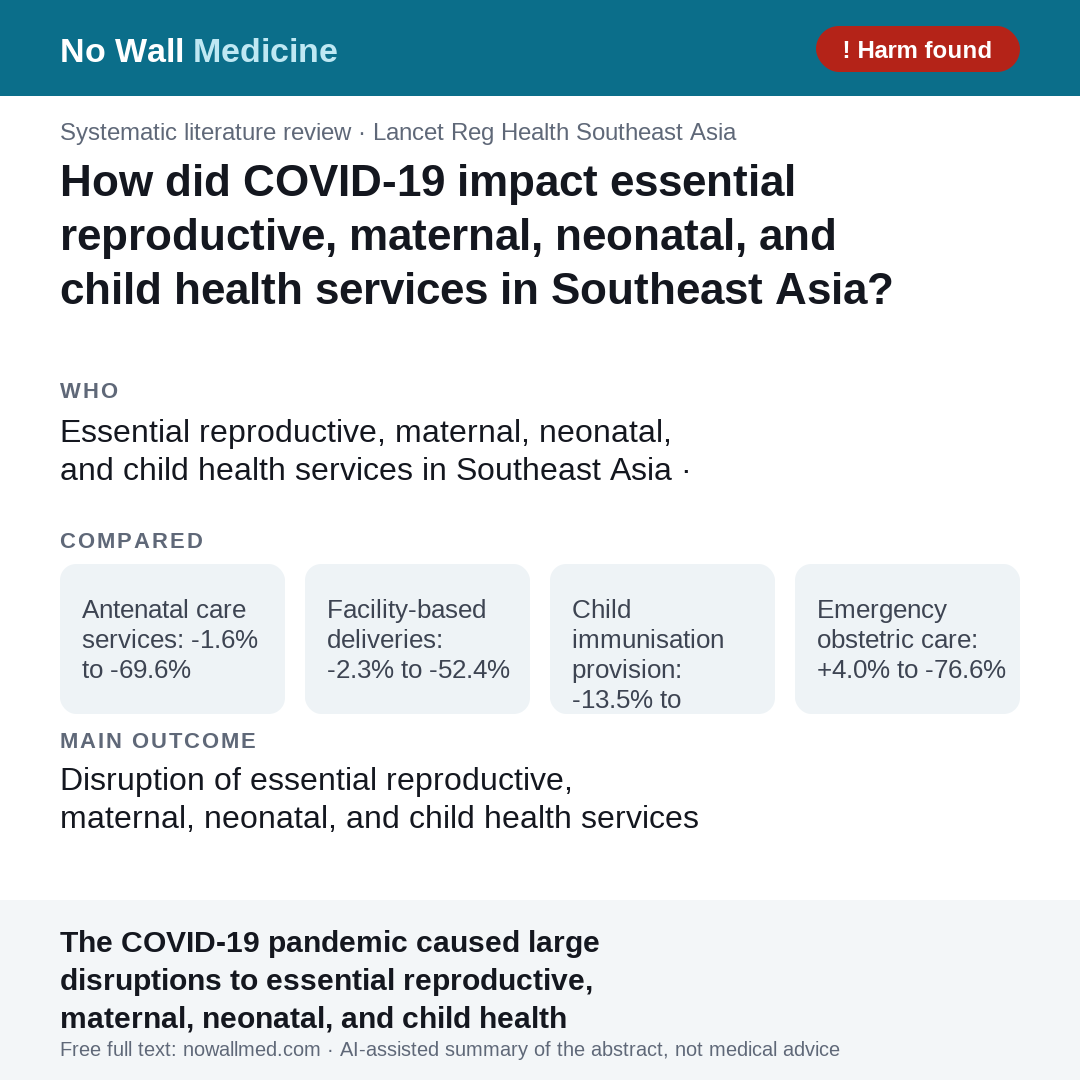
Impact of COVID-19 on essential service provision for reproductive, maternal, neonatal, and child health in the Southeast Asia region: a systematic review
Systematic literature reviewHarm found
How did COVID-19 impact essential reproductive, maternal, neonatal, and child health services in Southeast Asia?
Who
Essential reproductive, maternal, neonatal, and child health services in Southeast Asia · Six countries in the Southeast Asia region
Compared
Antenatal care services: -1.6% to -69.6%
Facility-based deliveries: -2.3% to -52.4%
Child immunisation provision: -13.5% to -87.7%
Emergency obstetric care: +4.0% to -76.6%
Main outcome
Disruption of essential reproductive, maternal, neonatal, and child health services
Bottom line: The COVID-19 pandemic caused large disruptions to essential reproductive, maternal, neonatal, and child health services across Southeast Asia.
Funded by: WHO Sri Lanka Country Office
Lancet Reg Health Southeast Asia · 2024-02-12Download image
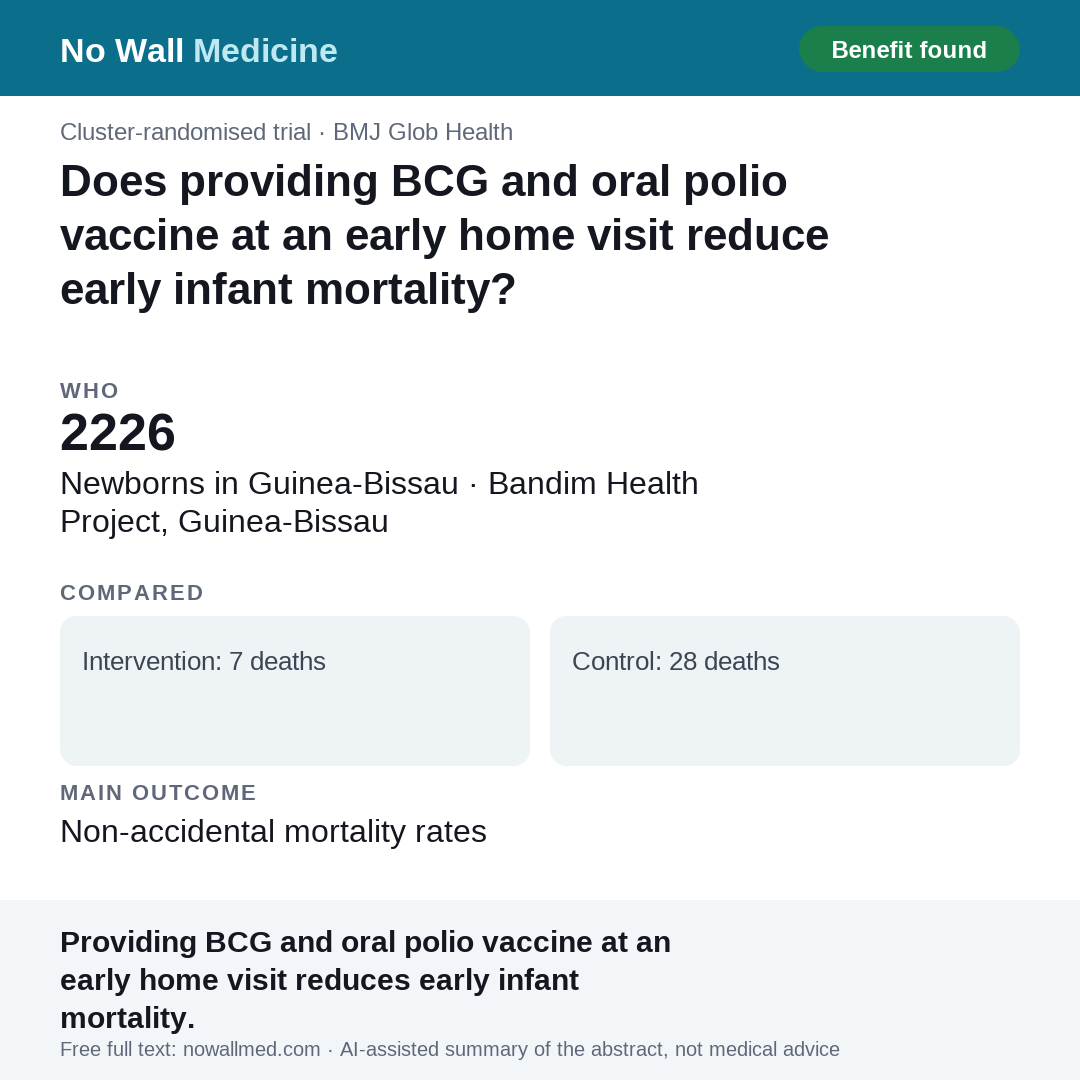
Can earlier BCG-Japan and OPV vaccination reduce early infant mortality? A cluster-randomised trial in Guinea-Bissau
Cluster-randomised trialBenefit found
Does providing BCG and oral polio vaccine at an early home visit reduce early infant mortality?
Who
2226
Newborns in Guinea-Bissau · Bandim Health Project, Guinea-Bissau
Compared
Intervention: 7 deaths
Control: 28 deaths
Main outcome
Non-accidental mortality rates
Result: 59% (8-82%) reduction
Bottom line: Providing BCG and oral polio vaccine at an early home visit reduces early infant mortality.
BMJ Glob Health · 2024-02-12Download image
Pharmacokinetics and Optimal Dosing of Levofloxacin in Children for Drug-Resistant Tuberculosis: An Individual Patient Data Meta-Analysis
Individual patient data meta-analysisBenefit found
What are the optimal levofloxacin doses for children with drug-resistant tuberculosis?
Who
242
Children with rifampicin- or multidrug-resistant tuberculosis
Compared
World Health Organization recommended doses: approximately half of the exposure in adults
Model-informed optimized doses: 16-33 mg/kg for dispersible or 16-50 mg/kg for nondispersible
Main outcome
Levofloxacin pharmacokinetics and area under the time-concentration curve
Bottom line: Revised weight-band dosing of more than 20 mg/kg is required to ensure adequate levofloxacin exposure in children.
Clin Infect Dis · 2024-02-10Download image

Efficacy and Safety of Vamorolone Over 48 Weeks in Boys With Duchenne Muscular Dystrophy: A Randomized Controlled Trial
Randomized, double-blind, placebo-controlled and prednisone-controlled trialBenefit found
Is vamorolone effective and safe in boys with Duchenne muscular dystrophy?
Who
121
Boys with Duchenne muscular dystrophy aged 4 to 7 years
Compared
Vamorolone 6 mg/kg/d: maintenance of improvement for all motor outcomes
Vamorolone 2 mg/kg/d: similar improvements as 6 mg/kg/d for North Star Ambulatory Assessment
Prednisone
Placebo
Main outcome
gross motor outcomes, safety, growth velocity, BMI, and bone turnover biomarkers
Bottom line: Vamorolone at 6 mg/kg/d maintained motor outcome improvements and reversed prednisone-induced bone and growth declines over 48 weeks.
Neurology · 2024-02-09Download image

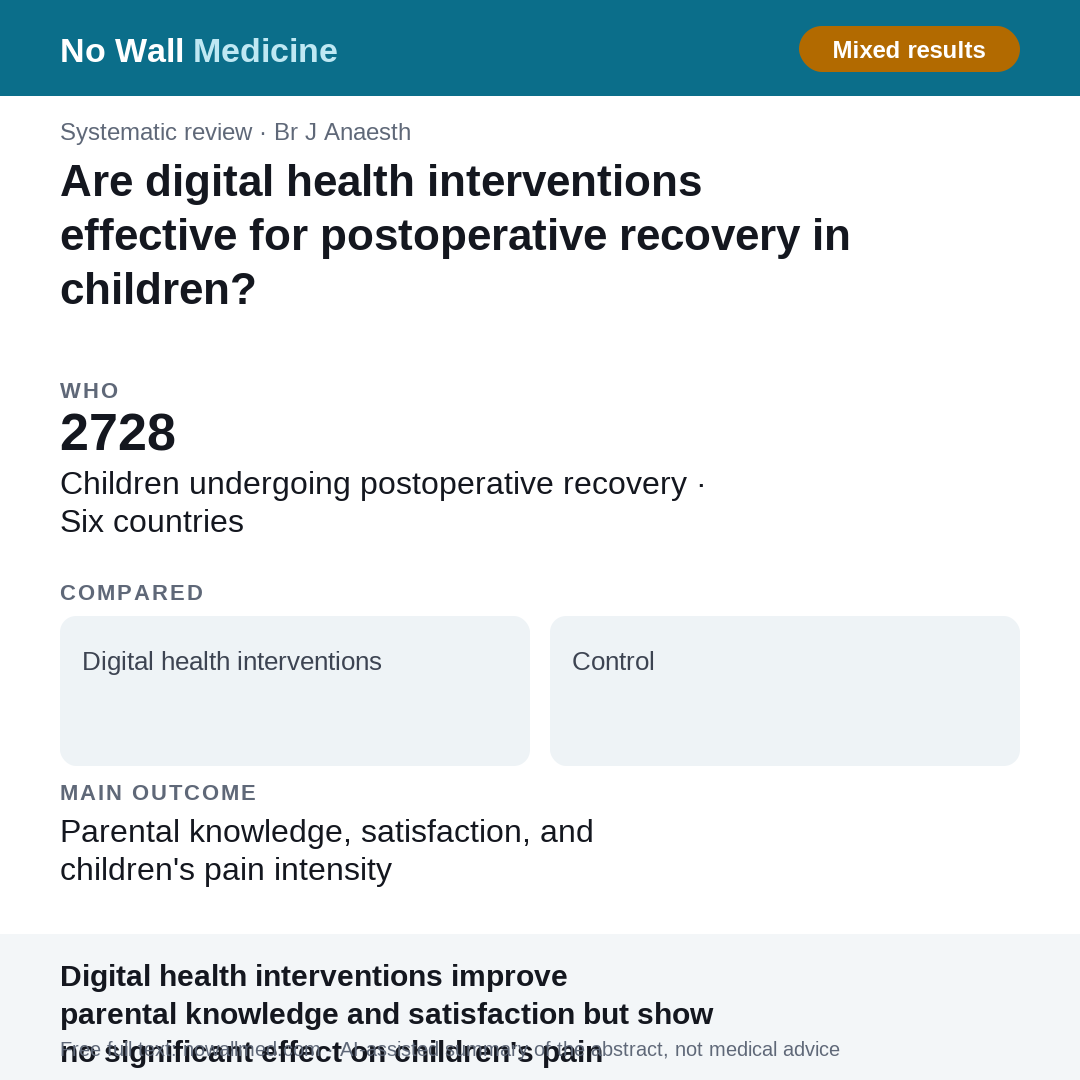
Digital health interventions for postoperative recovery in children: a systematic review
Systematic reviewMixed results
Are digital health interventions effective for postoperative recovery in children?
Who
2728
Children undergoing postoperative recovery · Six countries
Compared
Digital health interventions
Control
Main outcome
Parental knowledge, satisfaction, and children's pain intensity
Result: standard mean difference 2.16 (95% confidence interval 1.45-2.87) for knowledge and satisfaction
Bottom line: Digital health interventions improve parental knowledge and satisfaction but show no significant effect on children's pain intensity.
Limitation: More research is needed for child-centric interventions with validated outcome measures.
Br J Anaesth · 2024-02-09Download image
Repeat placental growth factor-based testing in women with suspected preterm pre-eclampsia (PARROT-2): a multicentre, parallel-group, superiority, randomised controlled trial
Multicentre, parallel-group, superiority, randomised controlled trialNo clear difference
Does repeat placental growth factor-based testing reduce adverse perinatal outcomes in suspected preterm pre-eclampsia?
Who
1253
Women aged 18 or older with suspected pre-eclampsia · 22 maternity units across England, Scotland, and Wales
Compared
Revealed repeat placental growth factor-based testing: 195 [31.2%] of 625 women
Concealed repeat testing with usual care: 174 [27.8%] of 626 women
Main outcome
Perinatal composite of stillbirth, early neonatal death, or neonatal unit admission
Result: relative risk 1.21 (95% CI 0.95-1.33)
Bottom line: Repeat placental growth factor-based testing did not improve perinatal outcomes in women with suspected preterm pre-eclampsia.
Funded by: Tommy's Charity, Jon Moulton Charitable Trust, and NIHR
Lancet · 2024-02-08Download image