Visual abstracts
New randomized trials and meta-analyses from leading journals at a glance: who was studied, what was compared, and what was found. Every paper is free to read in full.
All specialtiesCardiology 4877Oncology 4138Gastroenterology & Hepatology 1942Infectious Disease 3837Neurology 1905Psychiatry & Mental Health 2273Pulmonology 2143Critical Care 1365Endocrinology & Diabetes 2580Pediatrics 2980Surgery 2559Orthopedics & Sports Medicine 931Neurosurgery 537Cardiothoracic & Vascular Surgery 674Plastic & Reconstructive Surgery 591Nephrology 1133Rheumatology 823Hematology 1109Dermatology 621Ophthalmology 543Obstetrics & Gynecology 1686Public & Global Health 1058Radiology & Imaging 648Anesthesiology 986Urology 764ENT (Otolaryngology) 503Emergency Medicine 511Allergy & Immunology 313Geriatrics 981Family Medicine & Primary Care 562Medical Genetics & Genomics 676Pathology & Laboratory Medicine 159Physical Medicine & Rehabilitation 757Palliative Care 444Nutrition 1588Digital Health & AI 2201General Medicine 321
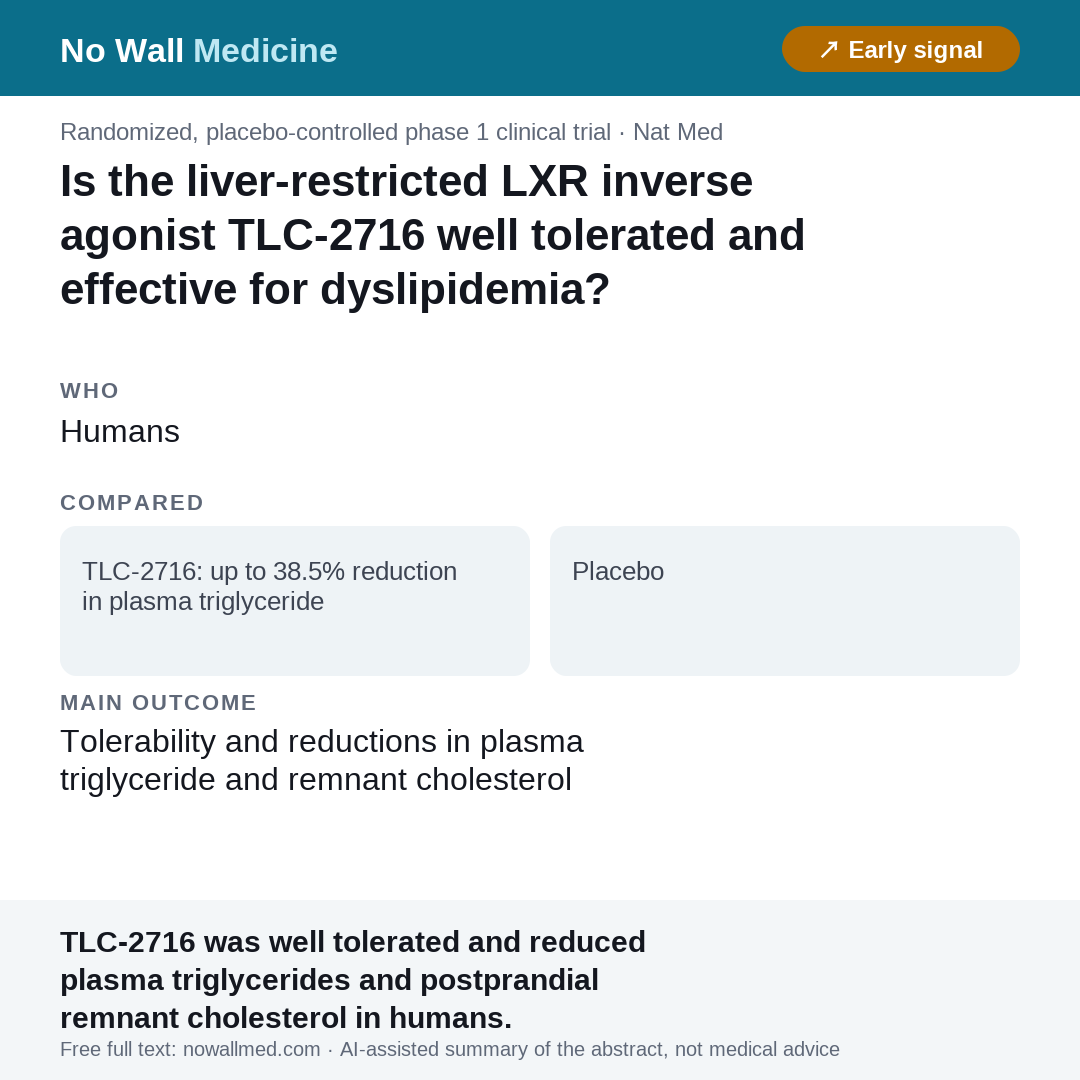
An oral, liver-restricted LXR inverse agonist for dyslipidemia: preclinical development and phase 1 trial
Randomized, placebo-controlled phase 1 clinical trialBenefit found
Is the liver-restricted LXR inverse agonist TLC-2716 well tolerated and effective for dyslipidemia?
Who
Humans
Compared
TLC-2716: up to 38.5% reduction in plasma triglyceride
Placebo
Main outcome
Tolerability and reductions in plasma triglyceride and remnant cholesterol
Bottom line: TLC-2716 was well tolerated and reduced plasma triglycerides and postprandial remnant cholesterol in humans.
Nat Med · 2026-01-16Download image
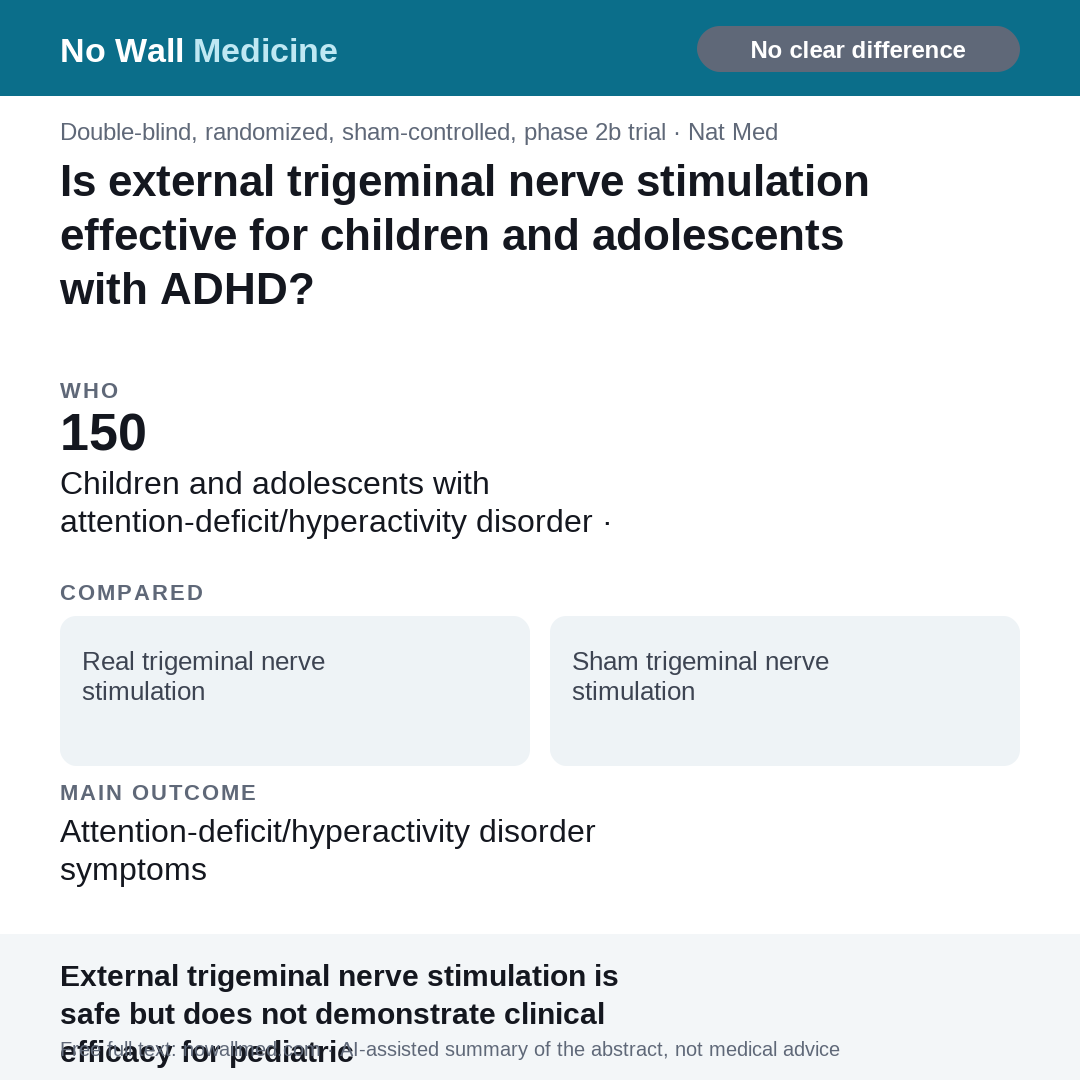
External trigeminal nerve stimulation in youth with ADHD: a randomized, sham-controlled, phase 2b trial
Double-blind, randomized, sham-controlled, phase 2b trialNo clear difference
Is external trigeminal nerve stimulation effective for children and adolescents with ADHD?
Who
150
Children and adolescents with attention-deficit/hyperactivity disorder · Multicenter
Compared
Real trigeminal nerve stimulation
Sham trigeminal nerve stimulation
Main outcome
Attention-deficit/hyperactivity disorder symptoms
Result: estimated adjusted mean difference 0.83 (95% confidence interval: -2.47 to 4.13)
Bottom line: External trigeminal nerve stimulation is safe but does not demonstrate clinical efficacy for pediatric attention-deficit/hyperactivity disorder.
Nat Med · 2026-01-16Download image
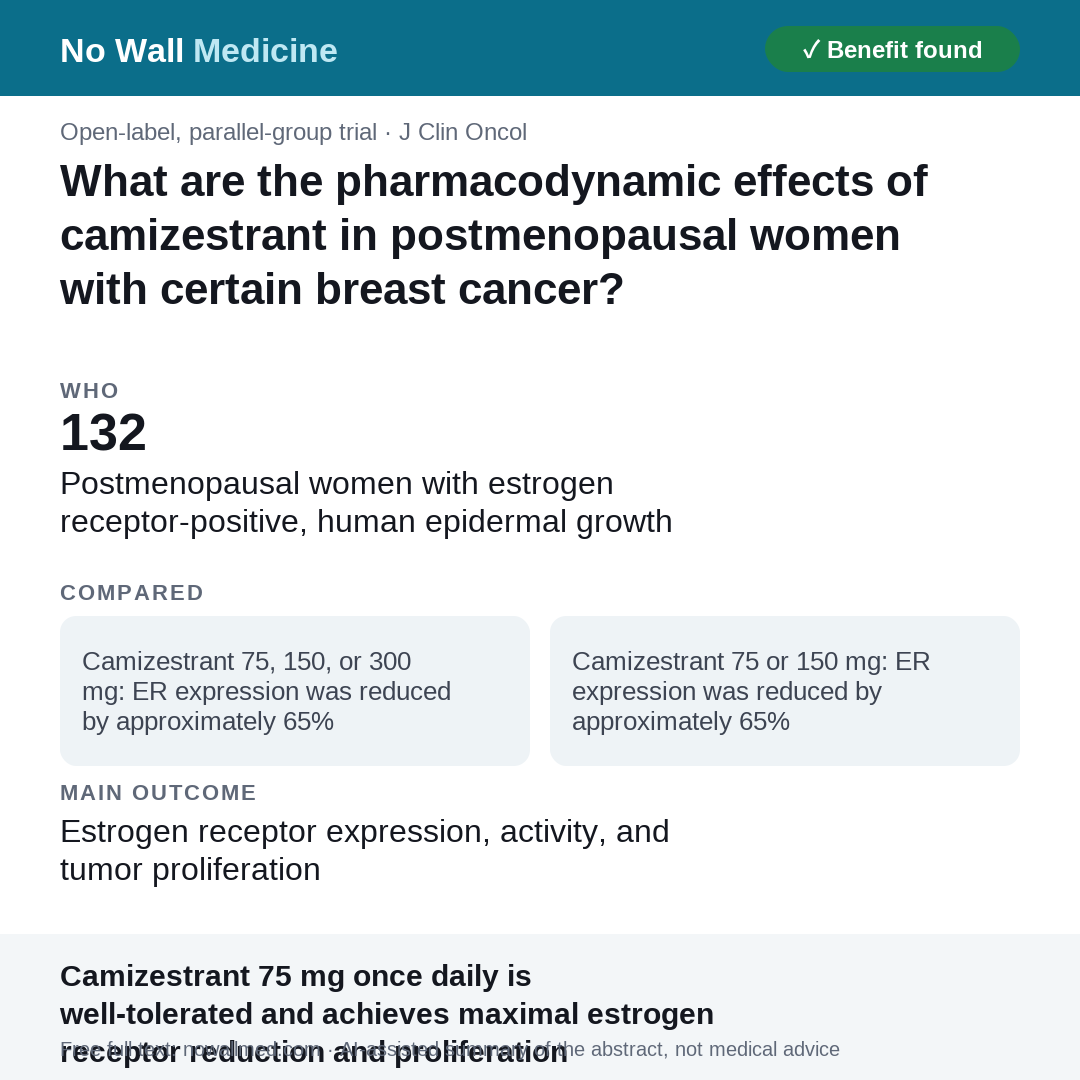
Pharmacodynamics of Camizestrant Treatment in Postmenopausal Women With Estrogen Receptor-Positive, Human Epidermal Growth Factor Receptor 2-Negative Primary Breast Cancer: Results From the Randomized, Presurgical SERENA-3 Study
Open-label, parallel-group trialBenefit found
What are the pharmacodynamic effects of camizestrant in postmenopausal women with certain breast cancer?
Who
132
Postmenopausal women with estrogen receptor-positive, human epidermal growth factor receptor 2-negative breast cancer
Compared
Camizestrant 75, 150, or 300 mg: ER expression was reduced by approximately 65%
Camizestrant 75 or 150 mg: ER expression was reduced by approximately 65%
Main outcome
Estrogen receptor expression, activity, and tumor proliferation
Bottom line: Camizestrant 75 mg once daily is well-tolerated and achieves maximal estrogen receptor reduction and proliferation suppression.
J Clin Oncol · 2026-01-16Download image
Exploratory Analysis of Biomarkers and Treatment Outcomes from the COLUMBUS Study in BRAF V600E/K-Mutant Advanced or Metastatic Melanoma
Retrospective analysis of phase III trial dataMixed results
What molecular correlates are associated with treatment benefit in BRAF mutant advanced melanoma?
Who
921
Patients with BRAF V600E/K-mutant advanced or metastatic melanoma
Compared
encorafenib plus binimetinib
vemurafenib
Main outcome
progression-free and overall survival
Bottom line: Encorafenib plus binimetinib benefits were greatest in patients with high tumor mutational burden or tumor-immune infiltration.
Clin Cancer Res · 2026-01-16Download image

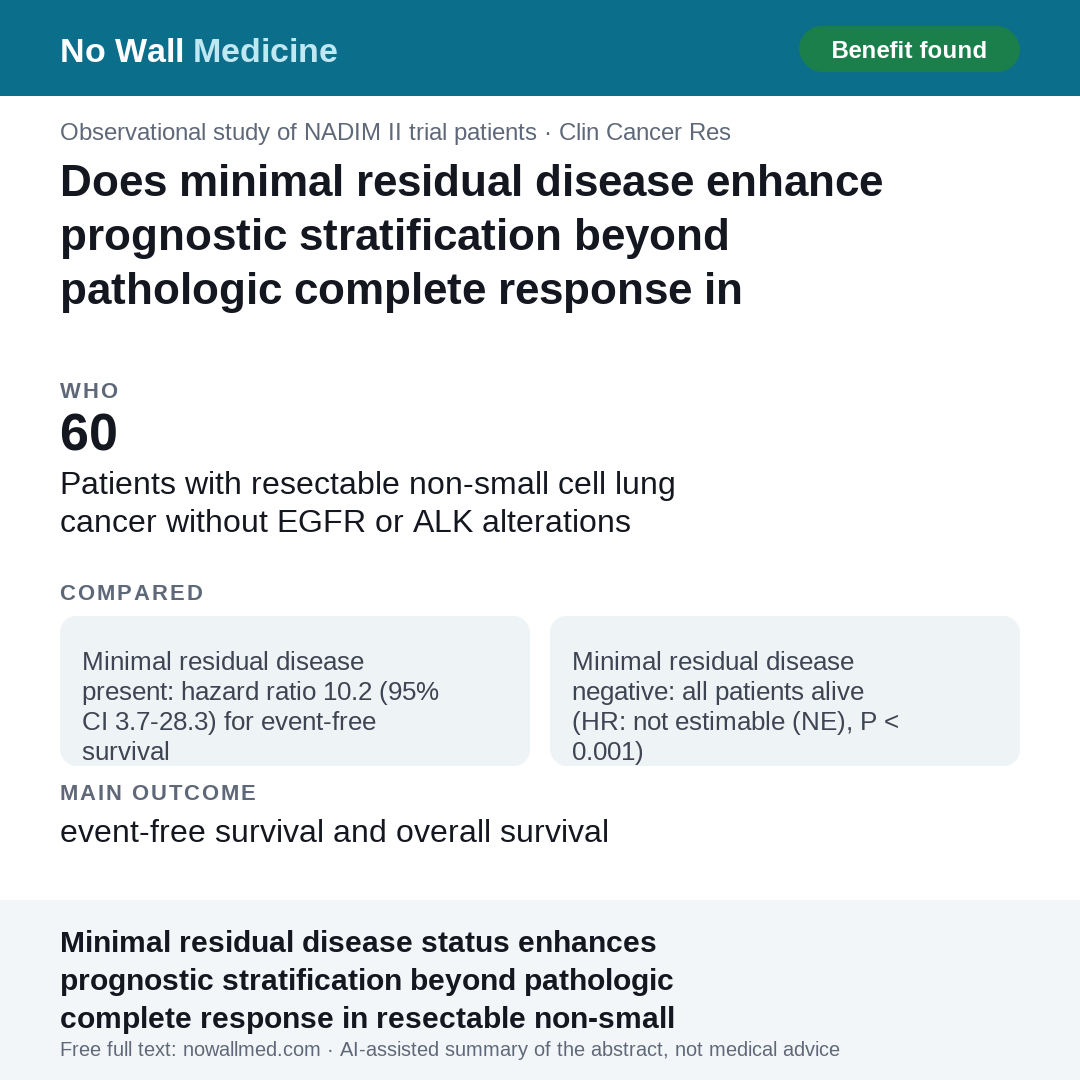
Minimal Residual Disease Enhances Prognostic Stratification beyond Pathologic Response in Resectable Non-Small Cell Lung Cancer
Observational study of NADIM II trial patientsBenefit found
Does minimal residual disease enhance prognostic stratification beyond pathologic complete response in resectable non-small cell lung cancer?
Who
60
Patients with resectable non-small cell lung cancer without EGFR or ALK alterations
Compared
Minimal residual disease present: hazard ratio 10.2 (95% CI 3.7-28.3) for event-free survival
Minimal residual disease negative: all patients alive (HR: not estimable (NE), P < 0.001)
Main outcome
event-free survival and overall survival
Result: hazard ratio 10.2 (95% CI 3.7-28.3)
Bottom line: Minimal residual disease status enhances prognostic stratification beyond pathologic complete response in resectable non-small cell lung cancer.
Clin Cancer Res · 2026-01-16Download image
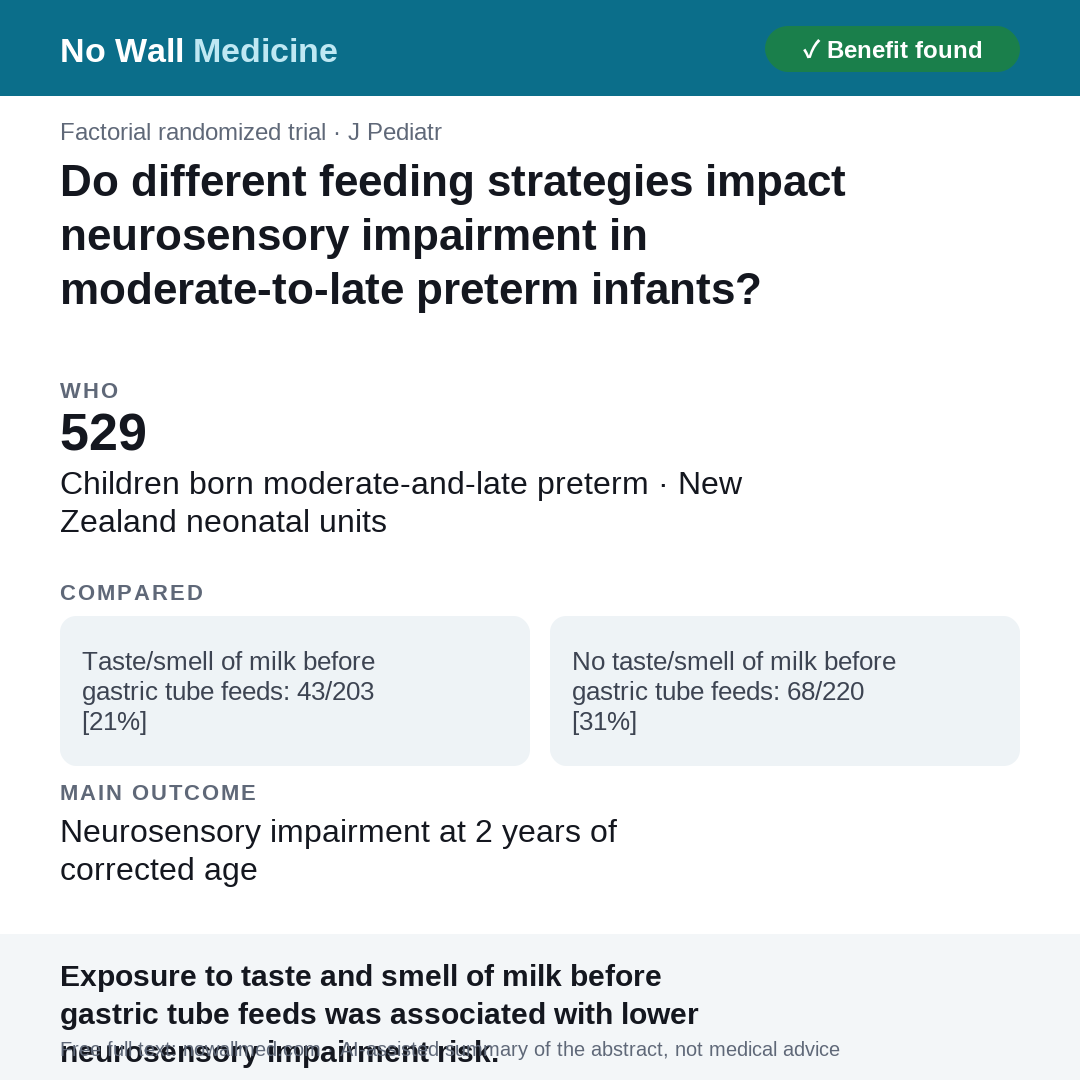
Two-Year Follow-Up of the Different Approaches to Feeding Infants Born Moderate-to-Late Preterm: Determinants of Feed Intolerance, Body Composition, and Development (DIAMOND) Randomized Trial
Factorial randomized trialBenefit found
Do different feeding strategies impact neurosensory impairment in moderate-to-late preterm infants?
Who
529
Children born moderate-and-late preterm · New Zealand neonatal units
Compared
Taste/smell of milk before gastric tube feeds: 43/203 [21%]
No taste/smell of milk before gastric tube feeds: 68/220 [31%]
Main outcome
Neurosensory impairment at 2 years of corrected age
Result: adjusted risk ratio 0.7 (95% CI 0.5-0.9)
Bottom line: Exposure to taste and smell of milk before gastric tube feeds was associated with lower neurosensory impairment risk.
J Pediatr · 2026-01-16Download image
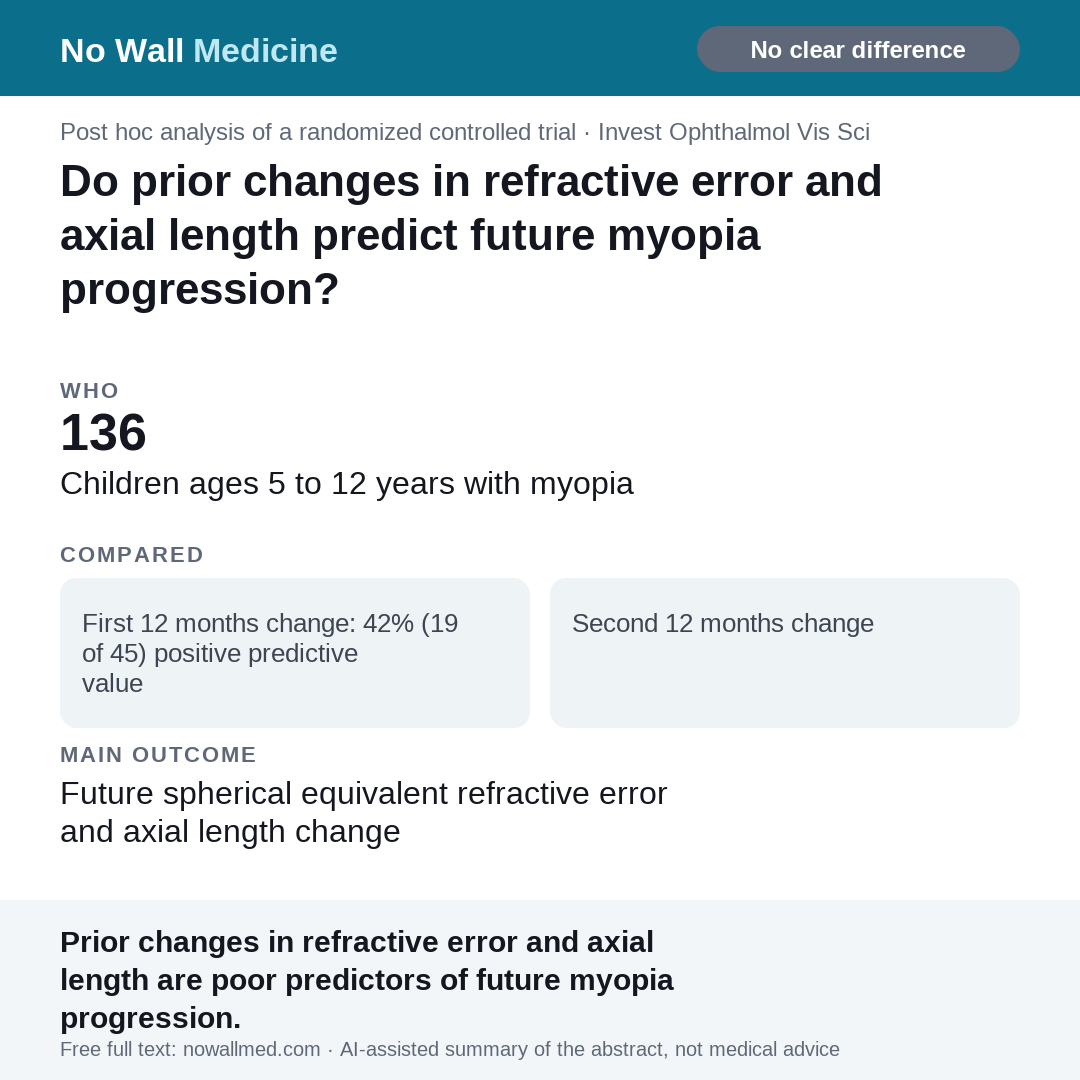
Does Past Myopia Progression Predict Future Progression?
Post hoc analysis of a randomized controlled trialNo clear difference
Do prior changes in refractive error and axial length predict future myopia progression?
Who
136
Children ages 5 to 12 years with myopia
Compared
First 12 months change: 42% (19 of 45) positive predictive value
Second 12 months change
Main outcome
Future spherical equivalent refractive error and axial length change
Result: 0.20 D per additional 1.00 D (95% CI, 0.02 to 0.39)
Bottom line: Prior changes in refractive error and axial length are poor predictors of future myopia progression.
Limitation: This was a post hoc analysis of a randomized controlled trial.
Invest Ophthalmol Vis Sci · 2026-01-16Download image
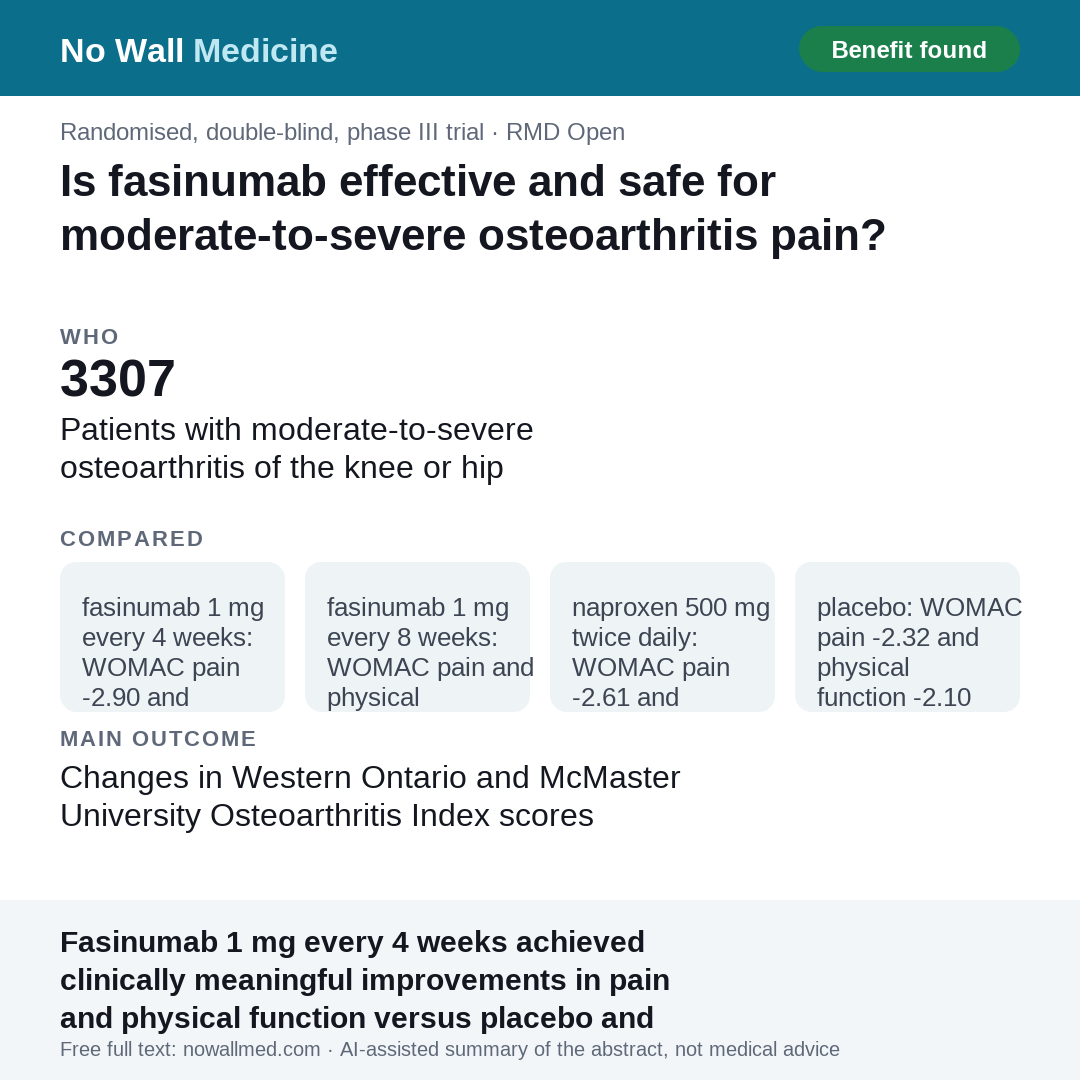
A phase III, randomised, double-blind, multi-dose, placebo- and naproxen-controlled study to evaluate the efficacy and safety of fasinumab in patients with pain due to osteoarthritis of the knee or hip
Randomised, double-blind, phase III trialBenefit found
Is fasinumab effective and safe for moderate-to-severe osteoarthritis pain?
Who
3307
Patients with moderate-to-severe osteoarthritis of the knee or hip
Compared
fasinumab 1 mg every 4 weeks: WOMAC pain -2.90 and physical function -2.78
fasinumab 1 mg every 8 weeks: WOMAC pain and physical function not specified
naproxen 500 mg twice daily: WOMAC pain -2.61 and physical function -2.41
placebo: WOMAC pain -2.32 and physical function -2.10
Main outcome
Changes in Western Ontario and McMaster University Osteoarthritis Index scores
Bottom line: Fasinumab 1 mg every 4 weeks achieved clinically meaningful improvements in pain and physical function versus placebo and naproxen.
Limitation: Adjudicated arthropathies and joint replacements were higher in fasinumab groups than placebo and naproxen groups.
RMD Open · 2026-01-16Download image
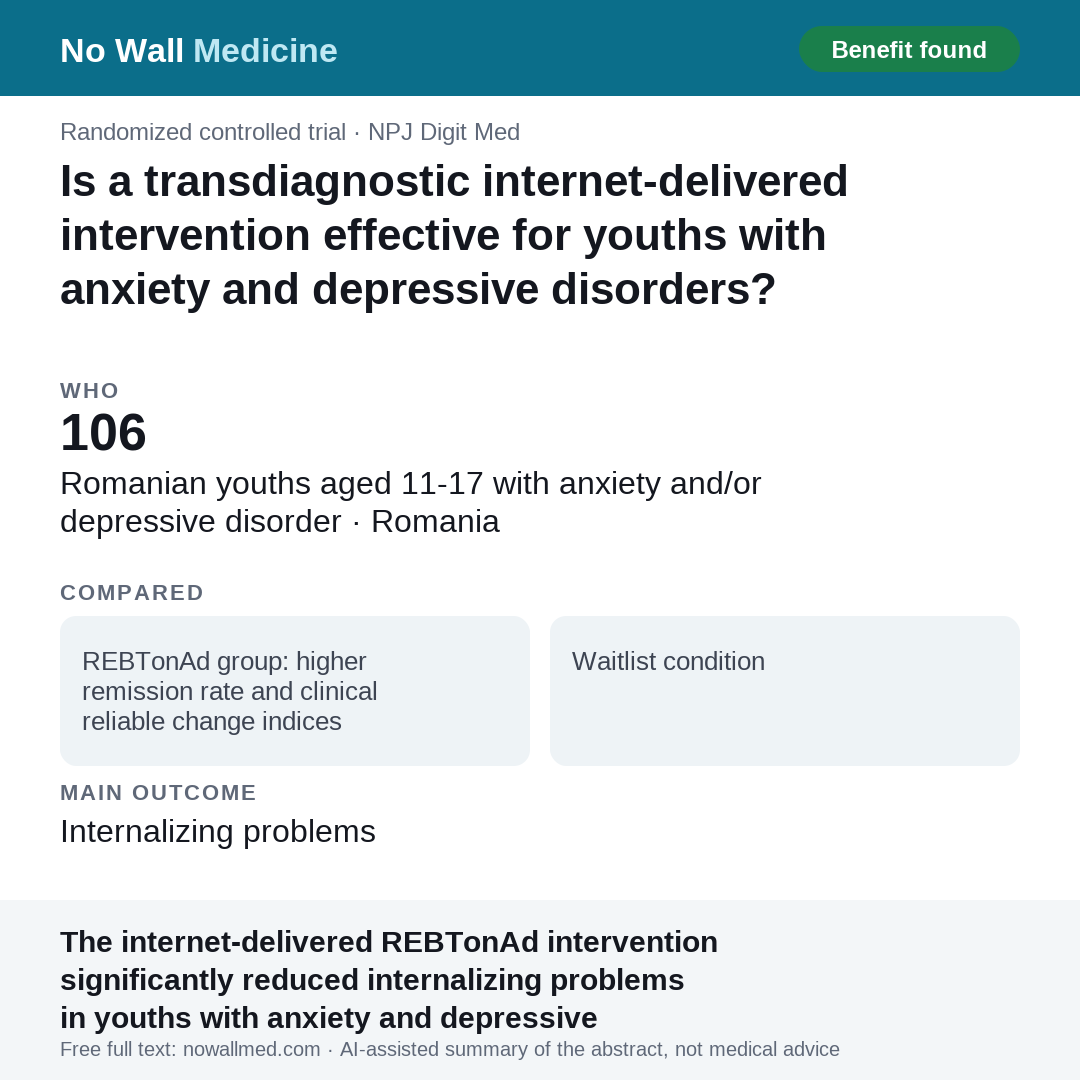
Transdiagnostic Internet-delivered intervention for children and adolescents with anxiety and depressive disorders: a randomized controlled trial
Randomized controlled trialBenefit found
Is a transdiagnostic internet-delivered intervention effective for youths with anxiety and depressive disorders?
Who
106
Romanian youths aged 11-17 with anxiety and/or depressive disorder · Romania
Compared
REBTonAd group: higher remission rate and clinical reliable change indices
Waitlist condition
Main outcome
Internalizing problems
Result: standardized mean difference -0.60 (95% CI -0.96 to -0.25)
Bottom line: The internet-delivered REBTonAd intervention significantly reduced internalizing problems in youths with anxiety and depressive disorders.
NPJ Digit Med · 2026-01-16Download image
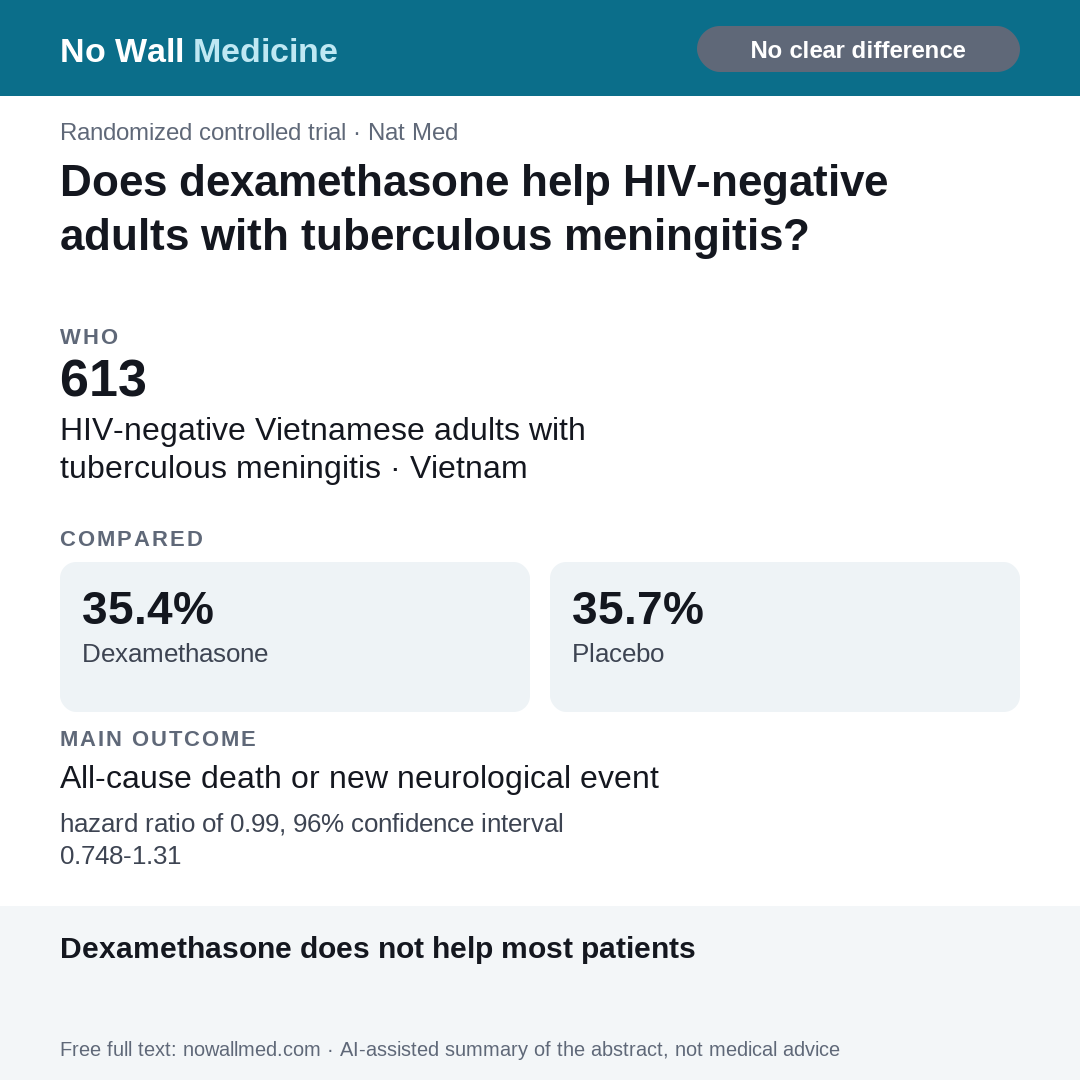
Genotype-stratified adjunctive dexamethasone for tuberculous meningitis in HIV-negative adults: a randomized controlled phase 3 trial
Randomized controlled trialNo clear difference
Does dexamethasone help HIV-negative adults with tuberculous meningitis?
Who
613
HIV-negative Vietnamese adults with tuberculous meningitis · Vietnam
Compared
35.4%Dexamethasone (108/305)
35.7%Placebo (110/308)
Main outcome
All-cause death or new neurological event
Result: hazard ratio of 0.99, 96% confidence interval 0.748-1.31
Bottom line: Dexamethasone does not help most patients
Nat Med · 2026-01-15Download image
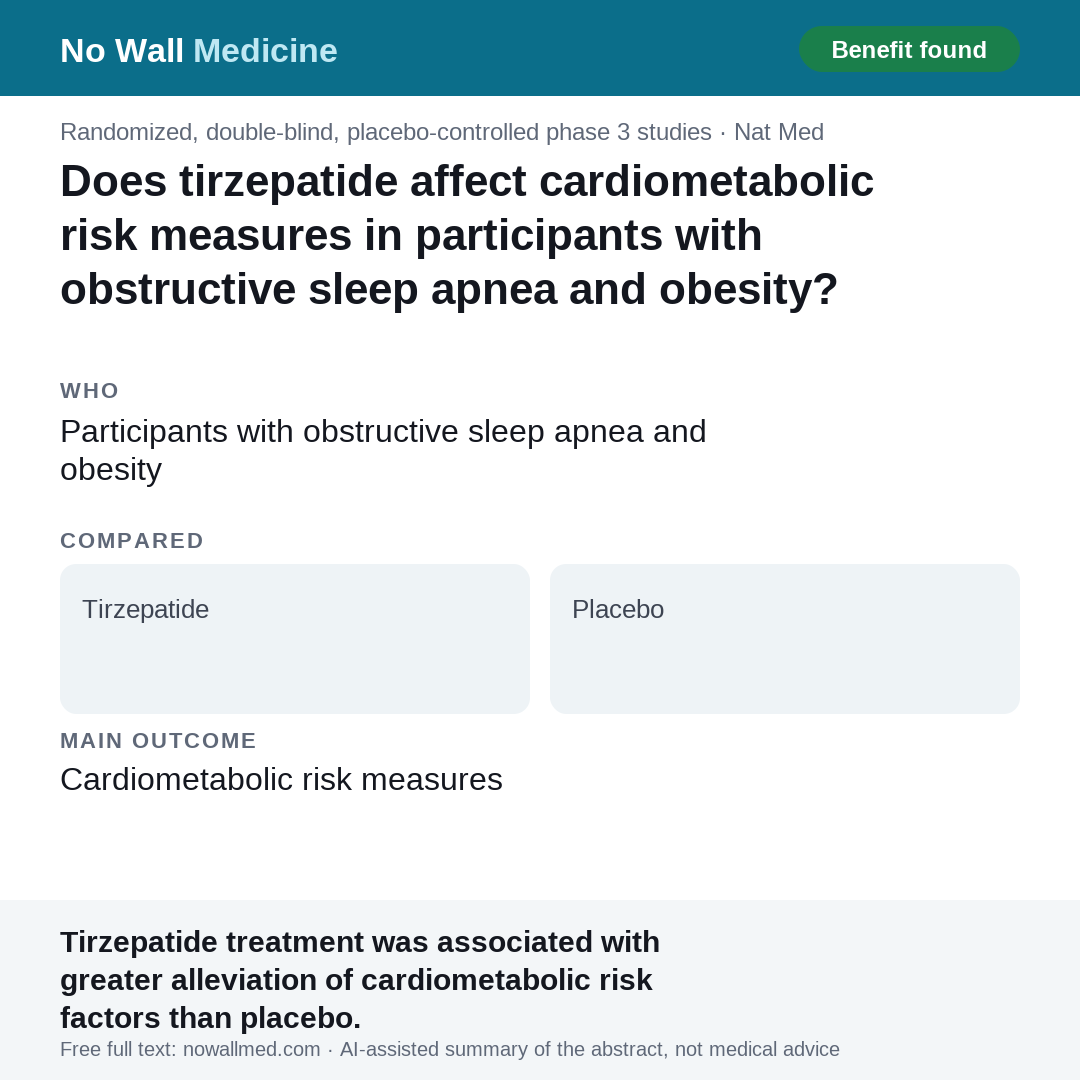
Tirzepatide on obstructive sleep apnea-related cardiometabolic risk: secondary outcomes of the SURMOUNT-OSA randomized trial
Randomized, double-blind, placebo-controlled phase 3 studiesBenefit found
Does tirzepatide affect cardiometabolic risk measures in participants with obstructive sleep apnea and obesity?
Who
Participants with obstructive sleep apnea and obesity
Compared
Tirzepatide
Placebo
Main outcome
Cardiometabolic risk measures
Bottom line: Tirzepatide treatment was associated with greater alleviation of cardiometabolic risk factors than placebo.
Nat Med · 2026-01-15Download image
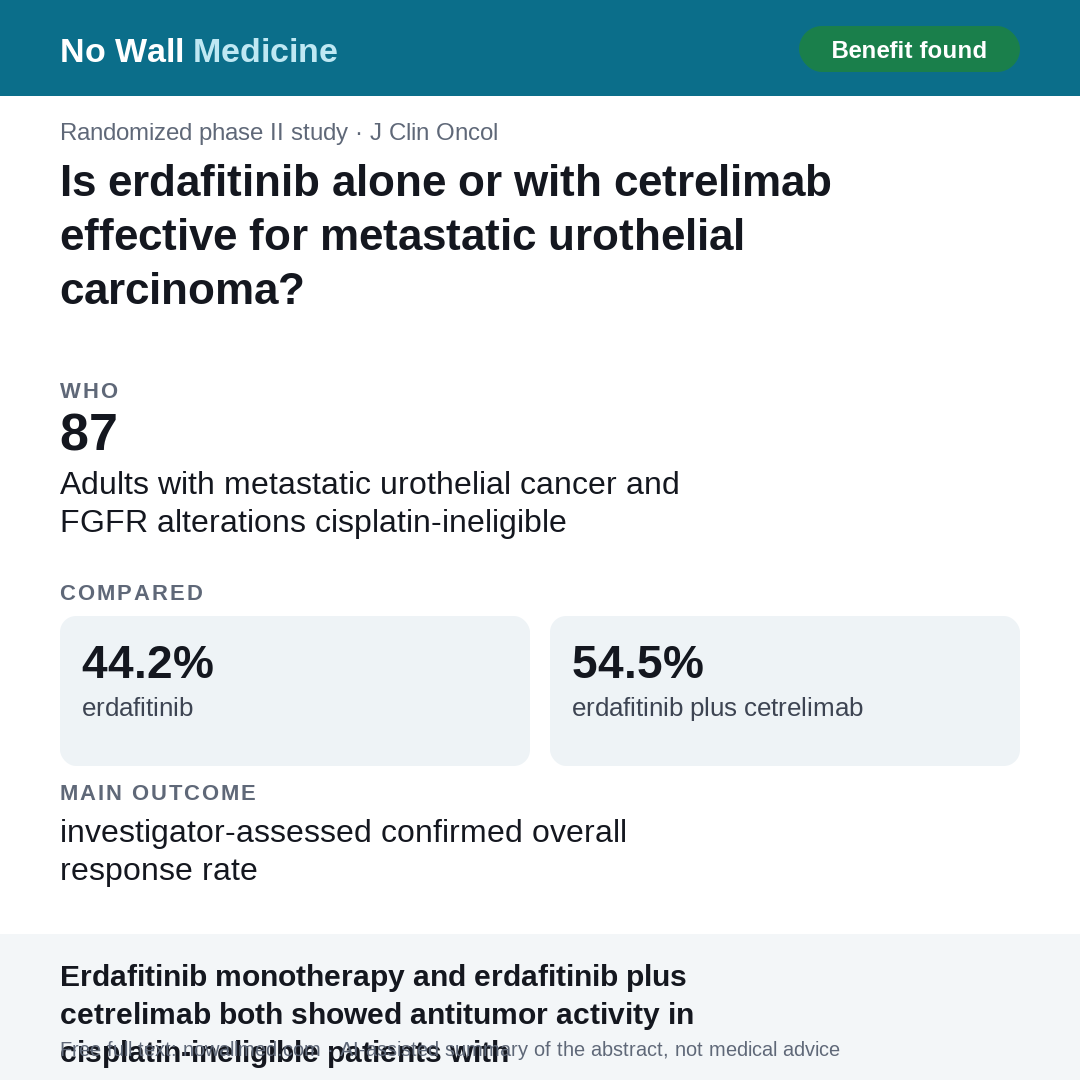
Erdafitinib or Erdafitinib Plus Cetrelimab for Patients With Metastatic Urothelial Carcinoma and FGFR Alterations: Final Results From the Phase II NORSE Study
Randomized phase II studyBenefit found
Is erdafitinib alone or with cetrelimab effective for metastatic urothelial carcinoma?
Who
87
Adults with metastatic urothelial cancer and FGFR alterations cisplatin-ineligible
Compared
44.2%erdafitinib (95% CI, 29.1 to 60.1)
54.5%erdafitinib plus cetrelimab (95% CI, 38.8 to 69.6)
Main outcome
investigator-assessed confirmed overall response rate
Bottom line: Erdafitinib monotherapy and erdafitinib plus cetrelimab both showed antitumor activity in cisplatin-ineligible patients with metastatic urothelial cancer.
Limitation: No statistical hypotheses were tested
J Clin Oncol · 2026-01-15Download image
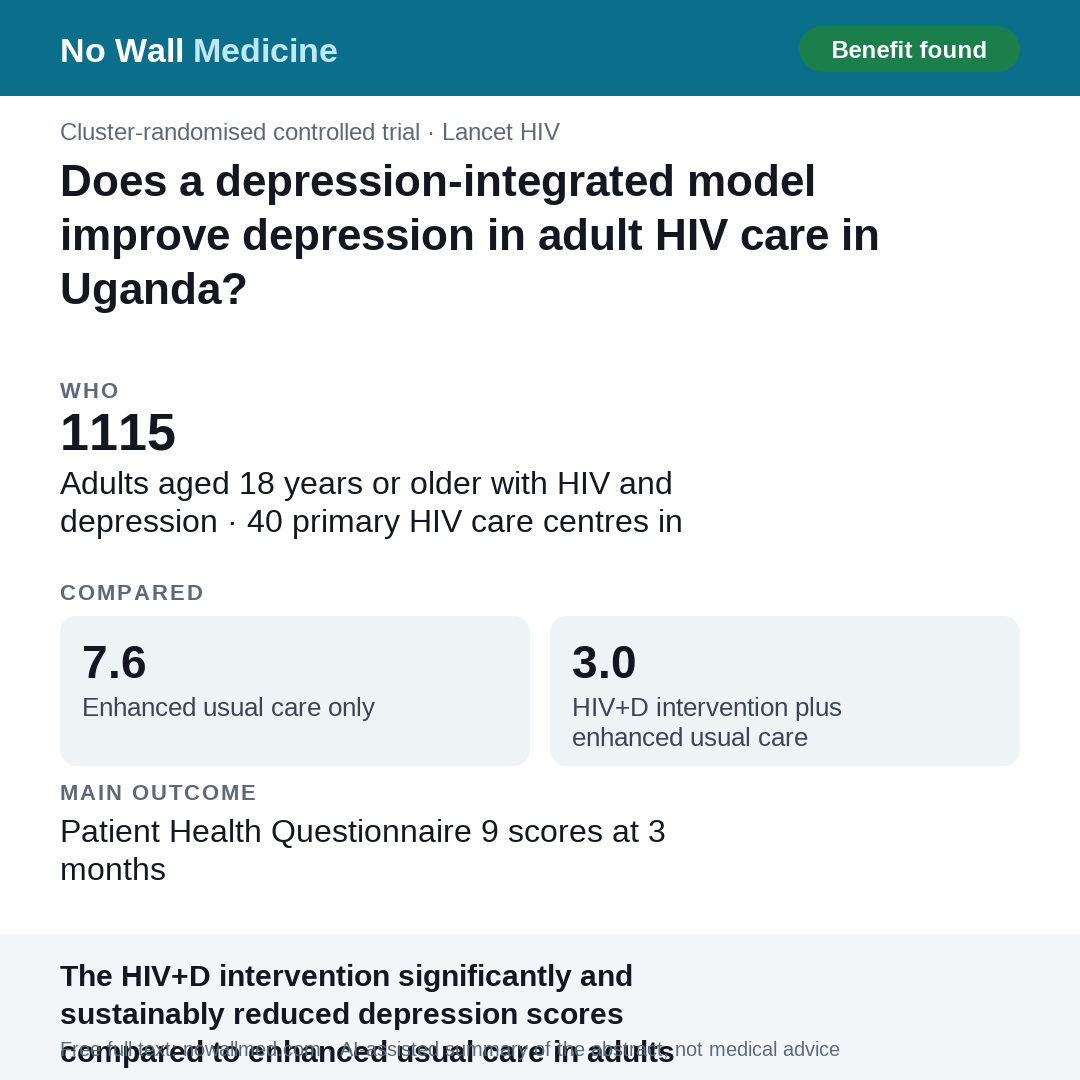
Assessing the effectiveness of a depression-integrated model in adult HIV care in Uganda (the HIV+D trial): a cluster-randomised controlled trial
Cluster-randomised controlled trialBenefit found
Does a depression-integrated model improve depression in adult HIV care in Uganda?
Who
1115
Adults aged 18 years or older with HIV and depression · 40 primary HIV care centres in three districts in Uganda
Compared
7.6Enhanced usual care only (SD 4.2)
3.0HIV+D intervention plus enhanced usual care (SD 3.2)
Main outcome
Patient Health Questionnaire 9 scores at 3 months
Result: adjusted mean difference 4.4; 95% CI 3.4-5.5
Bottom line: The HIV+D intervention significantly and sustainably reduced depression scores compared to enhanced usual care in adults with HIV.
Funded by: Wellcome Trust
Lancet HIV · 2026-01-15Download image
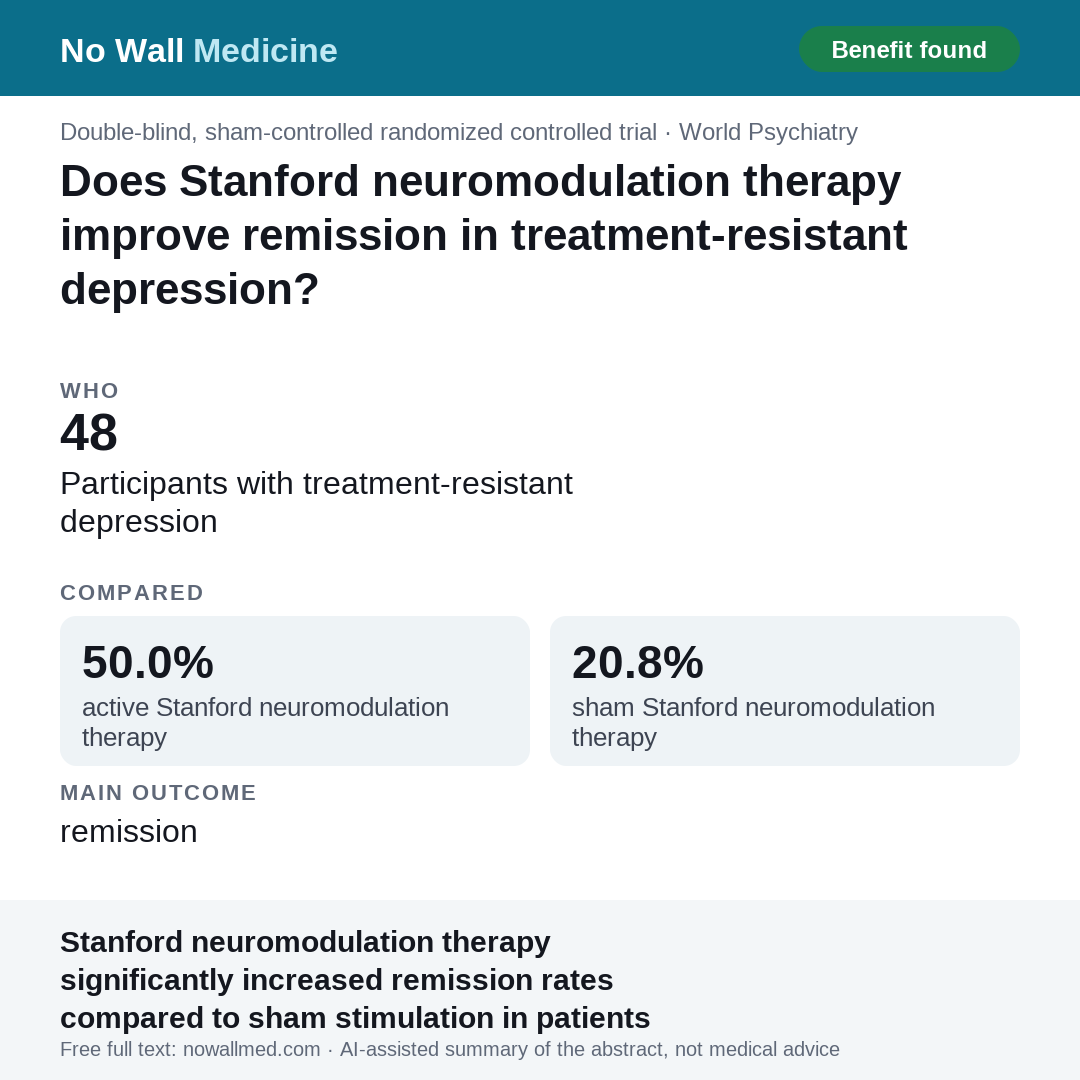
Stanford neuromodulation therapy for treatment-resistant depression: a randomized controlled trial confirming efficacy, and an EEG study providing insight into mechanism of action and a potentially predictive biomarker of efficacy
Double-blind, sham-controlled randomized controlled trialBenefit found
Does Stanford neuromodulation therapy improve remission in treatment-resistant depression?
Who
48
Participants with treatment-resistant depression
Compared
50.0%active Stanford neuromodulation therapy
20.8%sham Stanford neuromodulation therapy
Main outcome
remission
Bottom line: Stanford neuromodulation therapy significantly increased remission rates compared to sham stimulation in patients with treatment-resistant depression.
World Psychiatry · 2026-01-15Download image
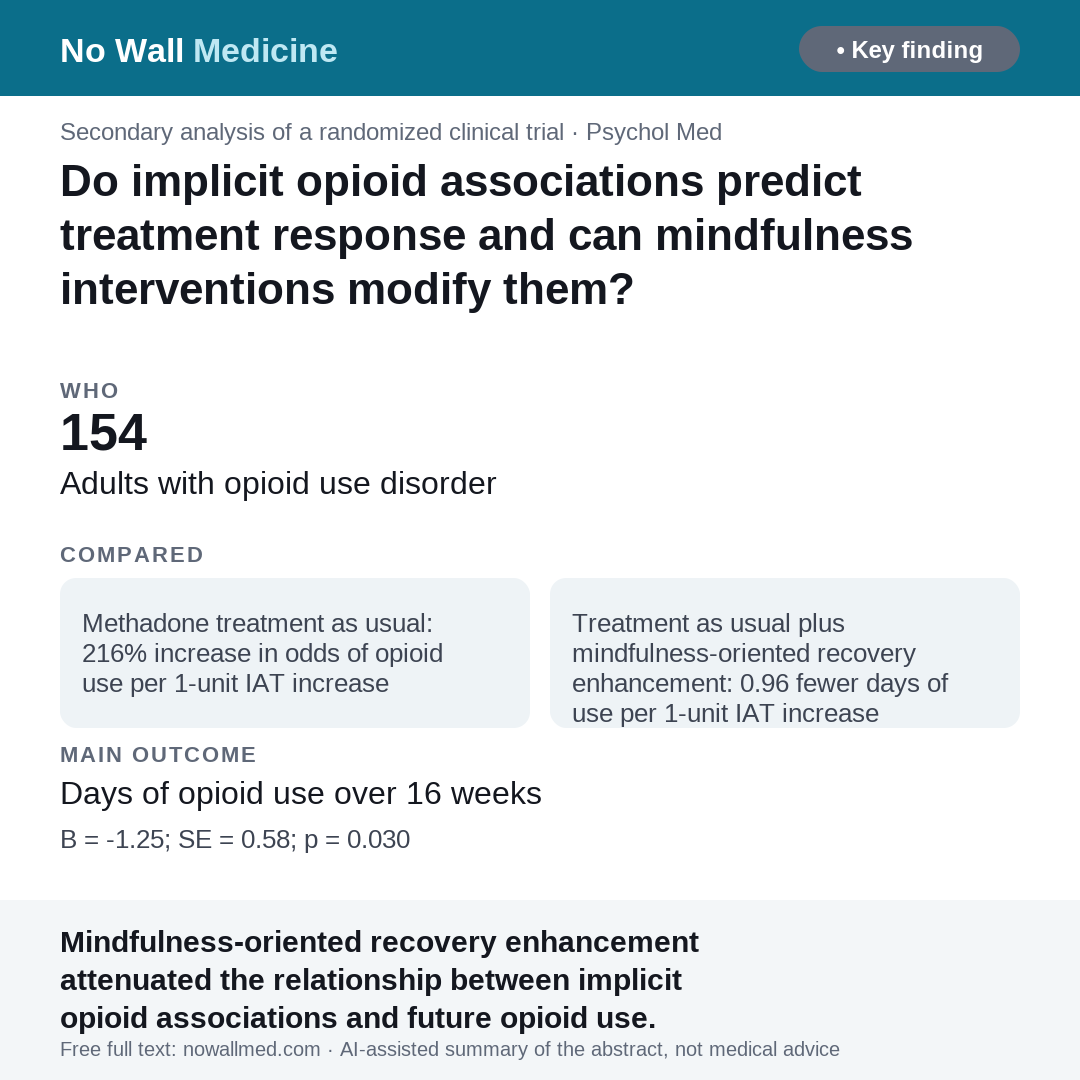
Implicit opioid associations in OUD treatment: prediction of treatment response and moderation by mindfulness-oriented recovery enhancement
Secondary analysis of a randomized clinical trialBenefit found
Do implicit opioid associations predict treatment response and can mindfulness interventions modify them?
Who
154
Adults with opioid use disorder
Compared
Methadone treatment as usual: 216% increase in odds of opioid use per 1-unit IAT increase
Treatment as usual plus mindfulness-oriented recovery enhancement: 0.96 fewer days of use per 1-unit IAT increase
Main outcome
Days of opioid use over 16 weeks
Result: B = -1.25; SE = 0.58; p = 0.030
Bottom line: Mindfulness-oriented recovery enhancement attenuated the relationship between implicit opioid associations and future opioid use.
Psychol Med · 2026-01-15Download image
Retinal Neurovascular and Mitochondrial Function Signatures in Response to a 24-Week Yoga Intervention in Healthy Adults
Randomized trialBenefit found
How does a 24-week yoga intervention affect retinal neurovascular and mitochondrial function?
Who
30
Healthy older adults
Compared
Cue-based yoga program
Traditional Hatha yoga
Main outcome
Retinal neurovascular and mitochondrial function
Bottom line: A 24-week yoga intervention improved retinal blood flow, capillary efficiency, tissue perfusion, and mitochondrial function.
Invest Ophthalmol Vis Sci · 2026-01-15Download image

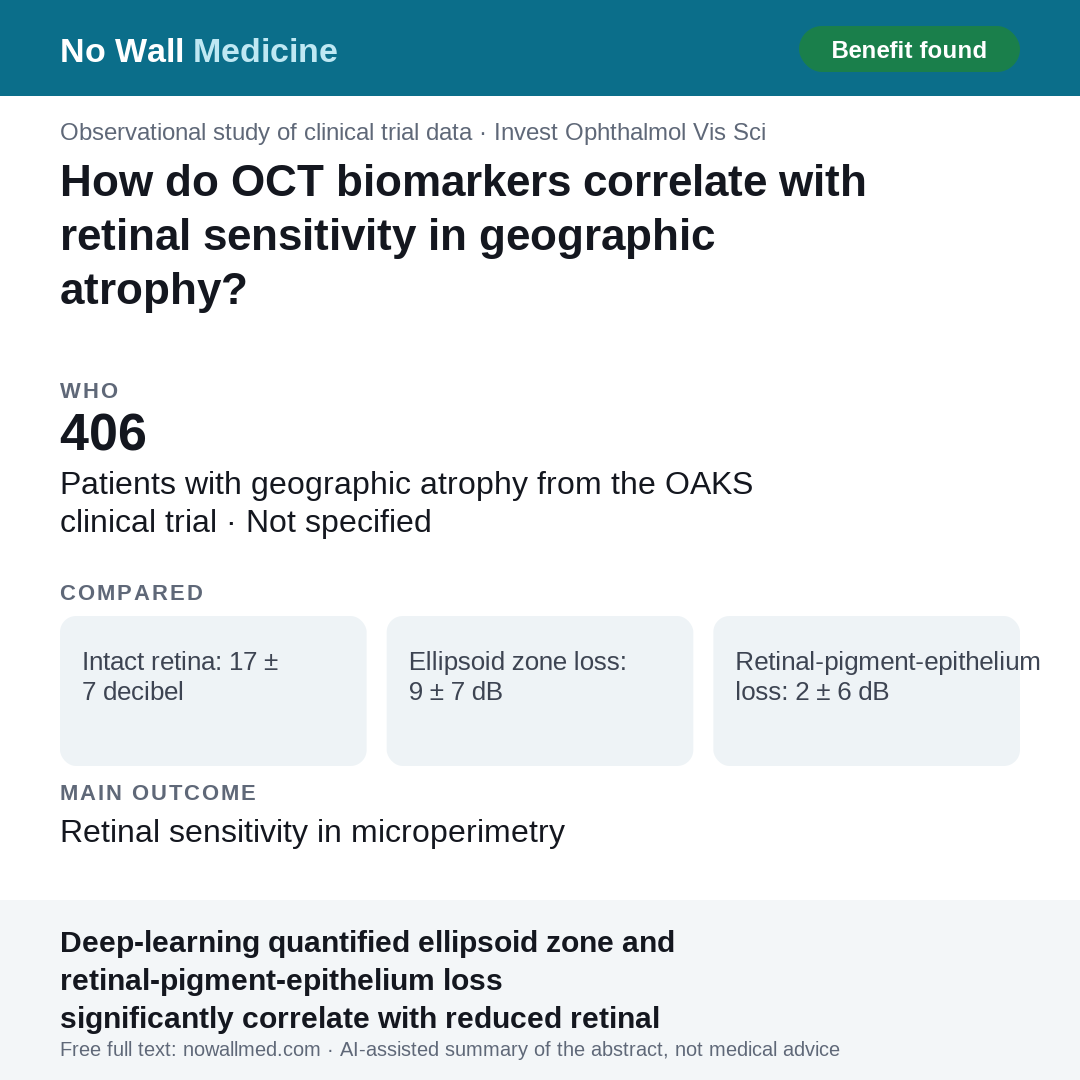
Exploring Trial Endpoints in Geographic Atrophy Based on Localized Functional Changes in Microperimetry and AI-Quantified OCT Biomarkers
Observational study of clinical trial dataBenefit found
How do OCT biomarkers correlate with retinal sensitivity in geographic atrophy?
Who
406
Patients with geographic atrophy from the OAKS clinical trial · Not specified
Compared
Intact retina: 17 ± 7 decibel
Ellipsoid zone loss: 9 ± 7 dB
Retinal-pigment-epithelium loss: 2 ± 6 dB
Main outcome
Retinal sensitivity in microperimetry
Result: RPE loss decreased retinal sensitivity by -14 dB (95% CI -15 to -14)
Bottom line: Deep-learning quantified ellipsoid zone and retinal-pigment-epithelium loss significantly correlate with reduced retinal sensitivity.
Invest Ophthalmol Vis Sci · 2026-01-15Download image
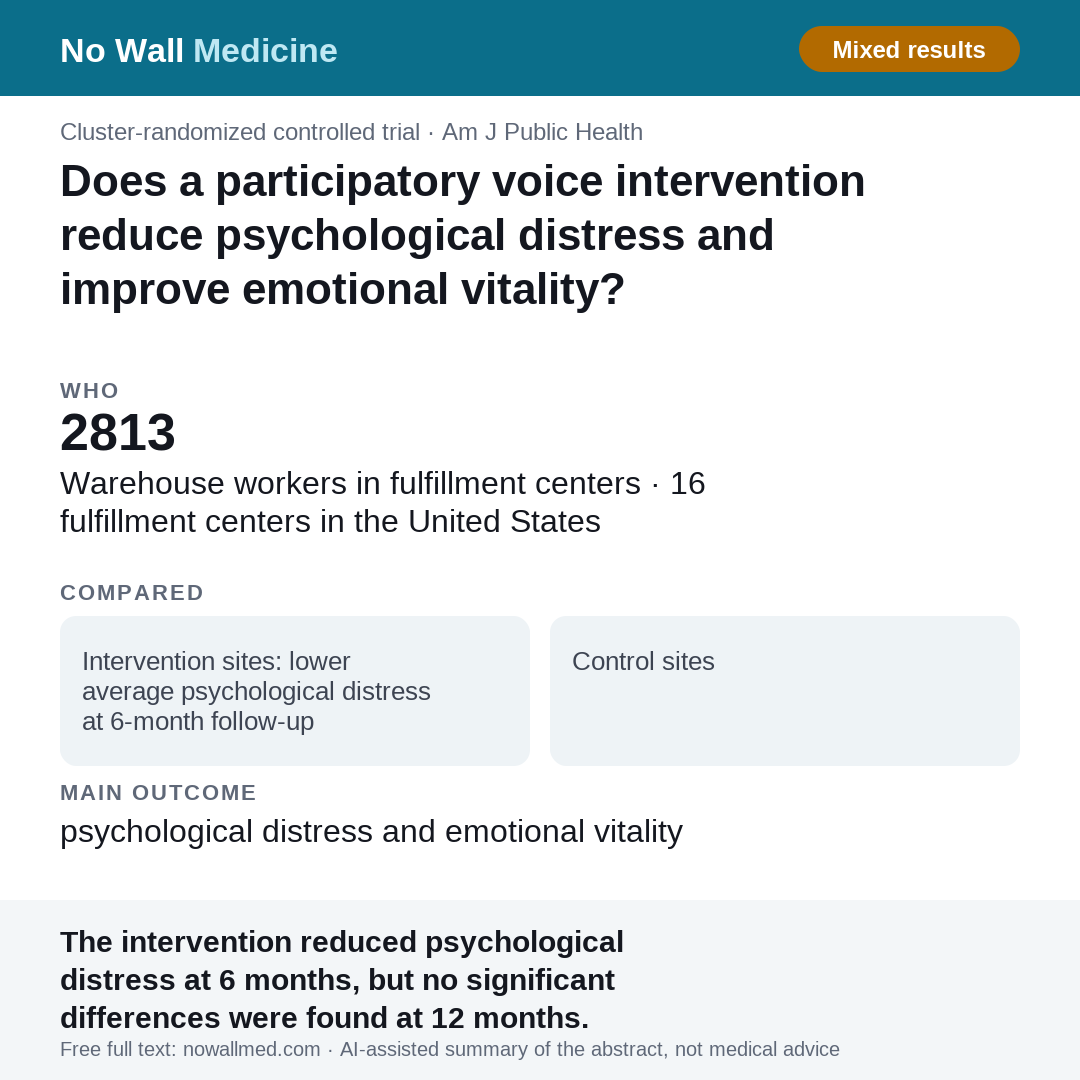
Effectiveness of a Participatory Voice Intervention on Psychological Well-Being Among Warehouse Workers: Results From the Fulfillment Center Intervention Study, United States, 2021‒2023
Cluster-randomized controlled trialMixed results
Does a participatory voice intervention reduce psychological distress and improve emotional vitality?
Who
2813
Warehouse workers in fulfillment centers · 16 fulfillment centers in the United States
Compared
Intervention sites: lower average psychological distress at 6-month follow-up
Control sites
Main outcome
psychological distress and emotional vitality
Bottom line: The intervention reduced psychological distress at 6 months, but no significant differences were found at 12 months.
Am J Public Health · 2026-01-15Download image
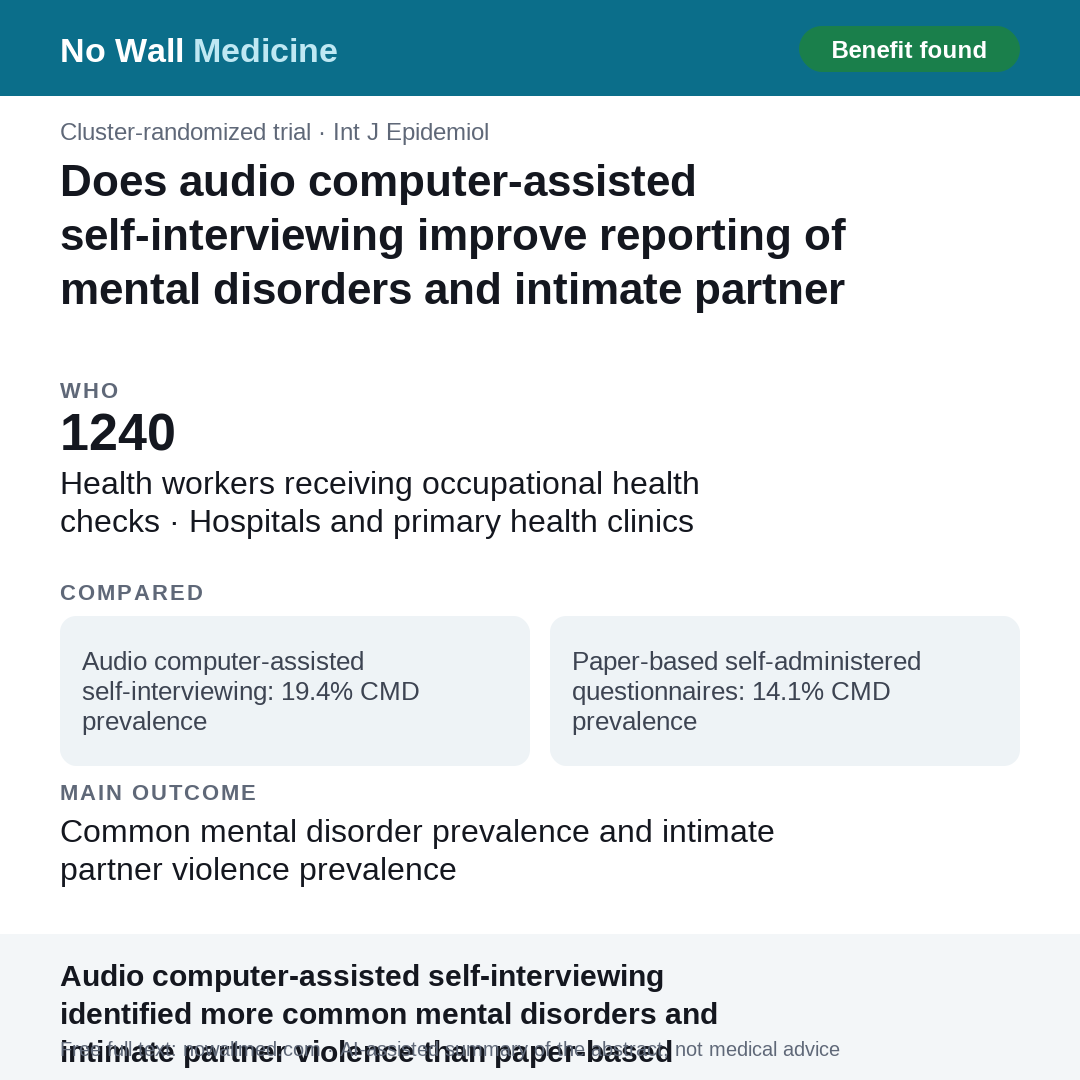
Effect of data-collection method on reporting of common mental disorder symptoms and intimate partner violence in Zimbabwe: a cluster-randomized trial
Cluster-randomized trialBenefit found
Does audio computer-assisted self-interviewing improve reporting of mental disorders and intimate partner violence?
Who
1240
Health workers receiving occupational health checks · Hospitals and primary health clinics in Zimbabwe
Compared
Audio computer-assisted self-interviewing: 19.4% CMD prevalence
Paper-based self-administered questionnaires: 14.1% CMD prevalence
Main outcome
Common mental disorder prevalence and intimate partner violence prevalence
Result: adjusted risk ratio 1.37 (95% CI 0.99, 1.89) for CMD; adjusted risk ratio 1.81 (95% CI 1.40, 2.35) for IPV
Bottom line: Audio computer-assisted self-interviewing identified more common mental disorders and intimate partner violence than paper-based questionnaires.
Int J Epidemiol · 2026-01-15Download image
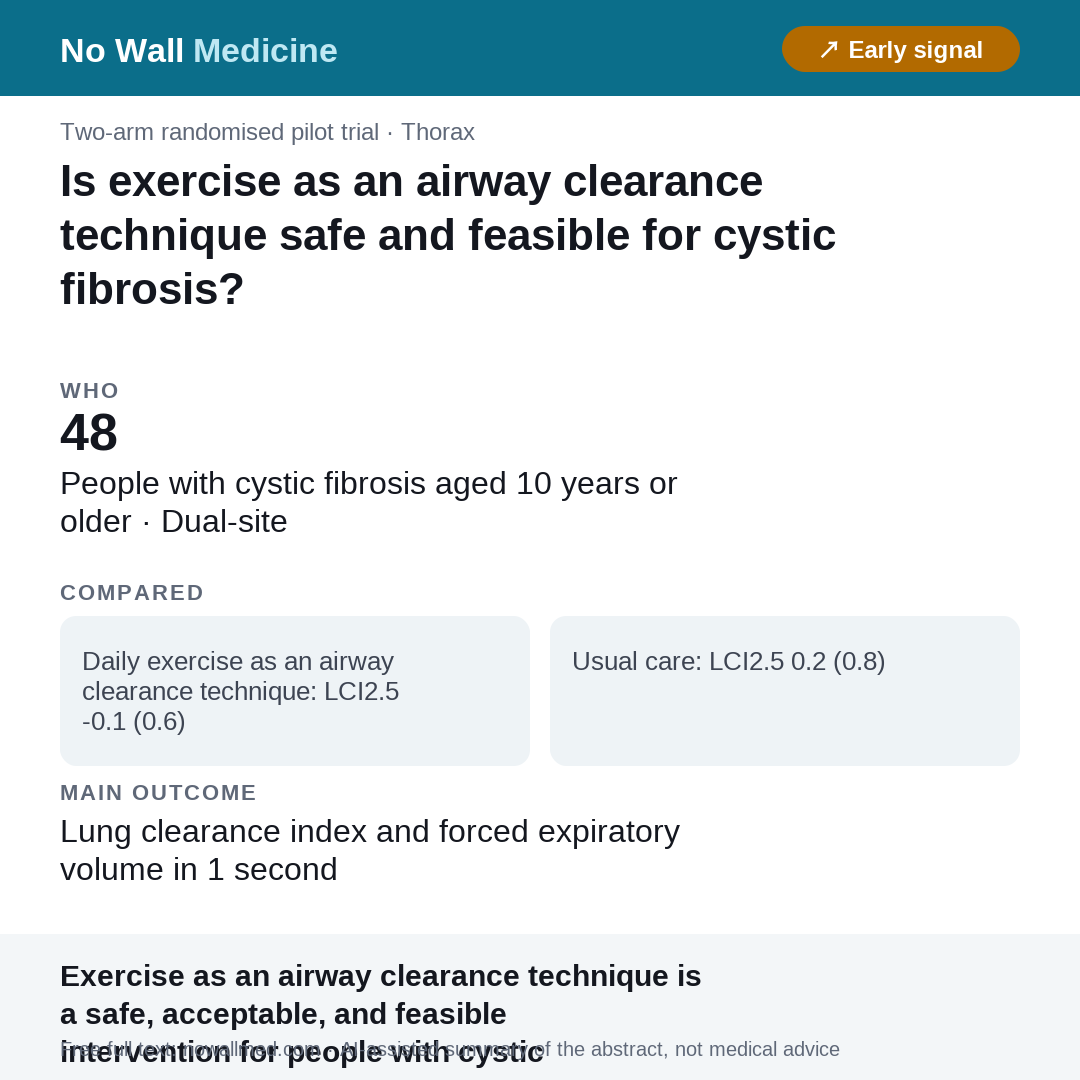
Safety, feasibility and efficacy of exercise as an airway clearance technique in cystic fibrosis: a randomised pilot feasibility trial
Two-arm randomised pilot trialBenefit found
Is exercise as an airway clearance technique safe and feasible for cystic fibrosis?
Who
48
People with cystic fibrosis aged 10 years or older · Dual-site
Compared
Daily exercise as an airway clearance technique: LCI2.5 -0.1 (0.6)
Usual care: LCI2.5 0.2 (0.8)
Main outcome
Lung clearance index and forced expiratory volume in 1 second
Result: relative differences of 0.97 (0.92, 1.02) for LCI2.5
Bottom line: Exercise as an airway clearance technique is a safe, acceptable, and feasible intervention for people with cystic fibrosis.
Thorax · 2026-01-15Download image