Visual abstracts
New randomized trials and meta-analyses from leading journals at a glance: who was studied, what was compared, and what was found. Every paper is free to read in full.
All specialtiesCardiology 4877Oncology 4138Gastroenterology & Hepatology 1942Infectious Disease 3837Neurology 1905Psychiatry & Mental Health 2273Pulmonology 2143Critical Care 1365Endocrinology & Diabetes 2580Pediatrics 2980Surgery 2559Orthopedics & Sports Medicine 931Neurosurgery 537Cardiothoracic & Vascular Surgery 674Plastic & Reconstructive Surgery 591Nephrology 1133Rheumatology 823Hematology 1109Dermatology 621Ophthalmology 543Obstetrics & Gynecology 1686Public & Global Health 1058Radiology & Imaging 648Anesthesiology 986Urology 764ENT (Otolaryngology) 503Emergency Medicine 511Allergy & Immunology 313Geriatrics 981Family Medicine & Primary Care 562Medical Genetics & Genomics 676Pathology & Laboratory Medicine 159Physical Medicine & Rehabilitation 757Palliative Care 444Nutrition 1588Digital Health & AI 2201General Medicine 321
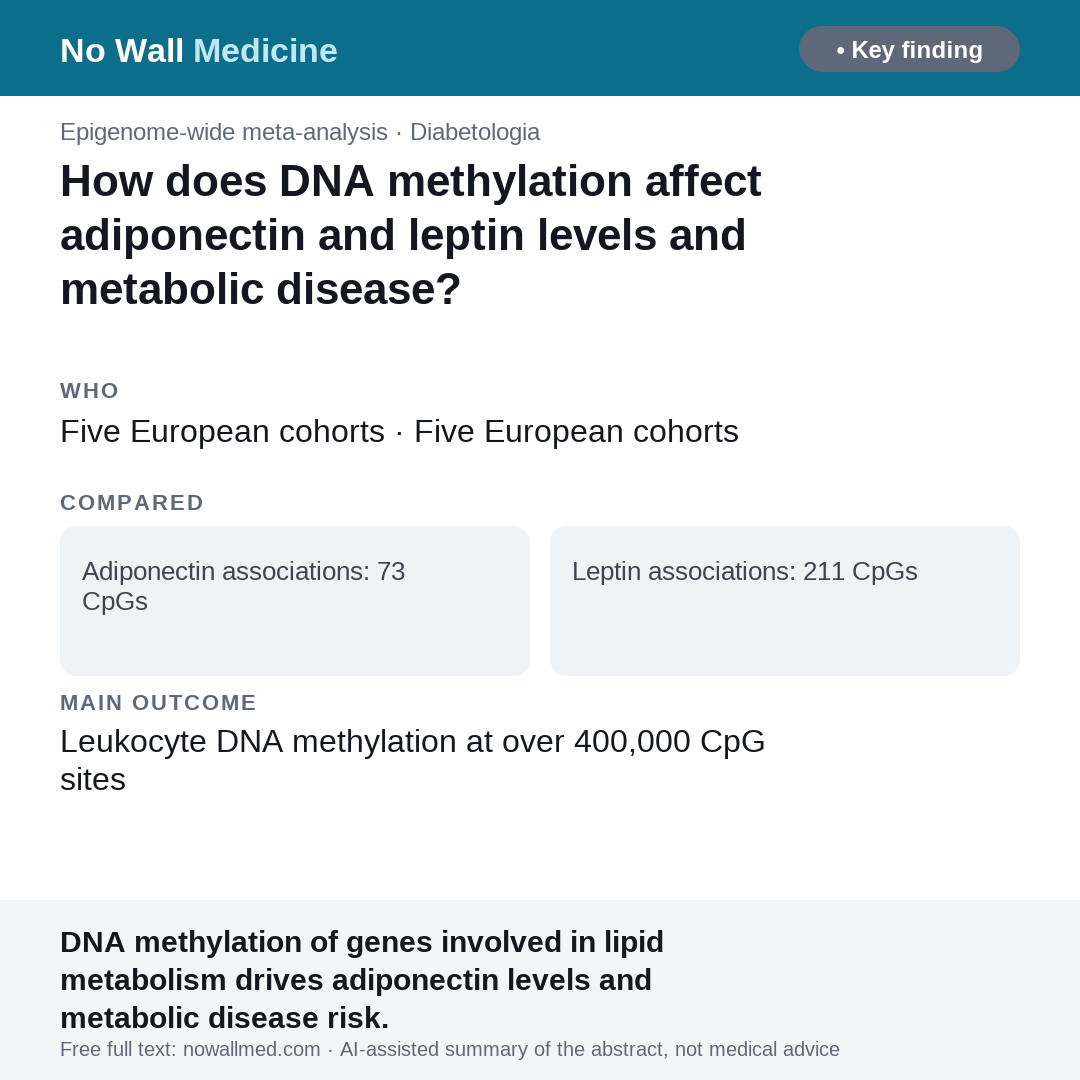
DNA methylation of genes involved in lipid metabolism drives adiponectin levels and metabolic disease
Epigenome-wide meta-analysisBenefit found
How does DNA methylation affect adiponectin and leptin levels and metabolic disease?
Who
Five European cohorts · Five European cohorts
Compared
Adiponectin associations: 73 CpGs
Leptin associations: 211 CpGs
Main outcome
Leukocyte DNA methylation at over 400,000 CpG sites
Bottom line: DNA methylation of genes involved in lipid metabolism drives adiponectin levels and metabolic disease risk.
Diabetologia · 2025-10-08Download image
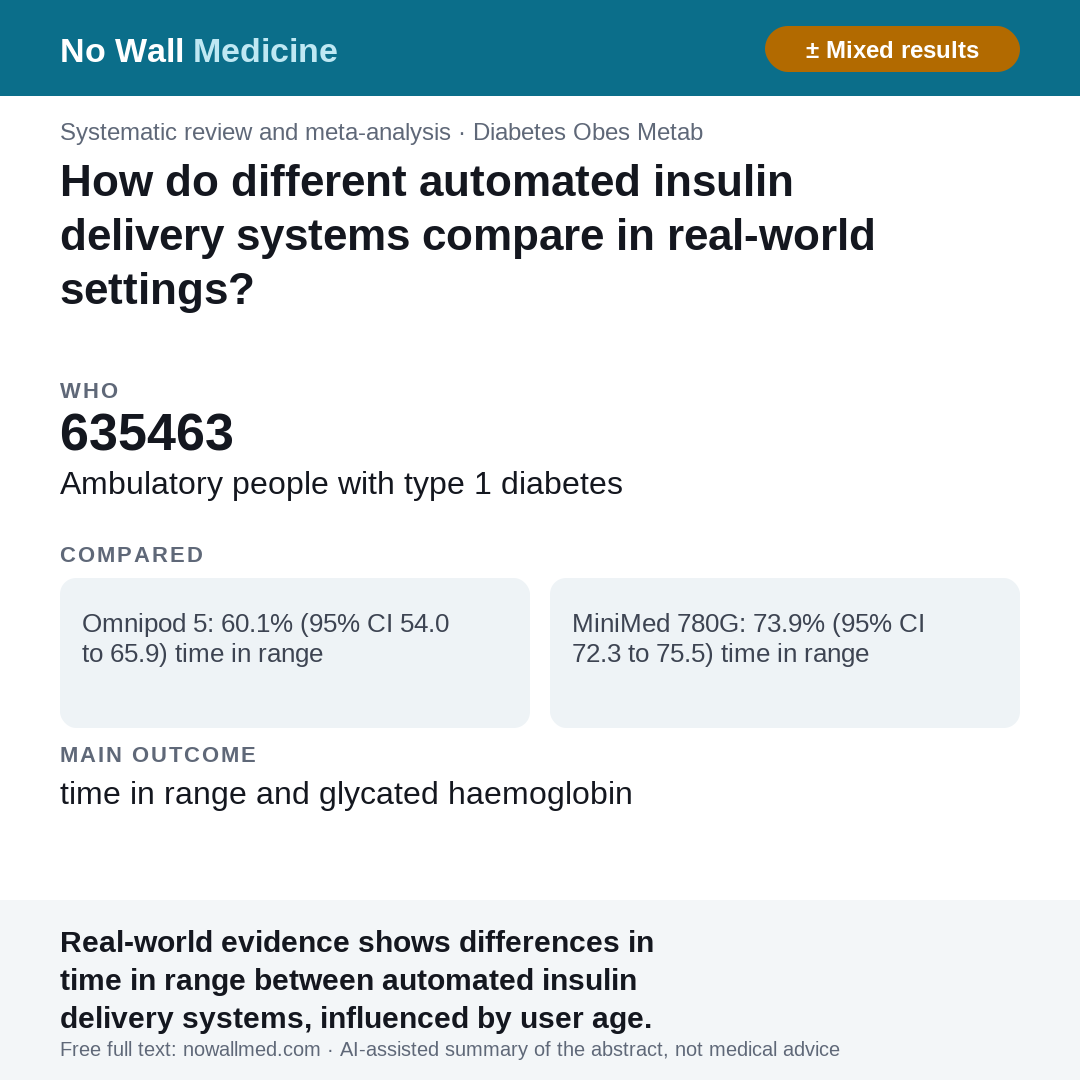
A systematic literature review and meta-analysis of real-world evidence on commercially available automated insulin delivery systems in people with type 1 diabetes
Systematic review and meta-analysisMixed results
How do different automated insulin delivery systems compare in real-world settings?
Who
635463
Ambulatory people with type 1 diabetes
Compared
Omnipod 5: 60.1% (95% CI 54.0 to 65.9) time in range
MiniMed 780G: 73.9% (95% CI 72.3 to 75.5) time in range
Main outcome
time in range and glycated haemoglobin
Bottom line: Real-world evidence shows differences in time in range between automated insulin delivery systems, influenced by user age.
Limitation: Results must be interpreted cautiously given challenges and potential biases with real-world evidence.
Diabetes Obes Metab · 2025-10-08Download image
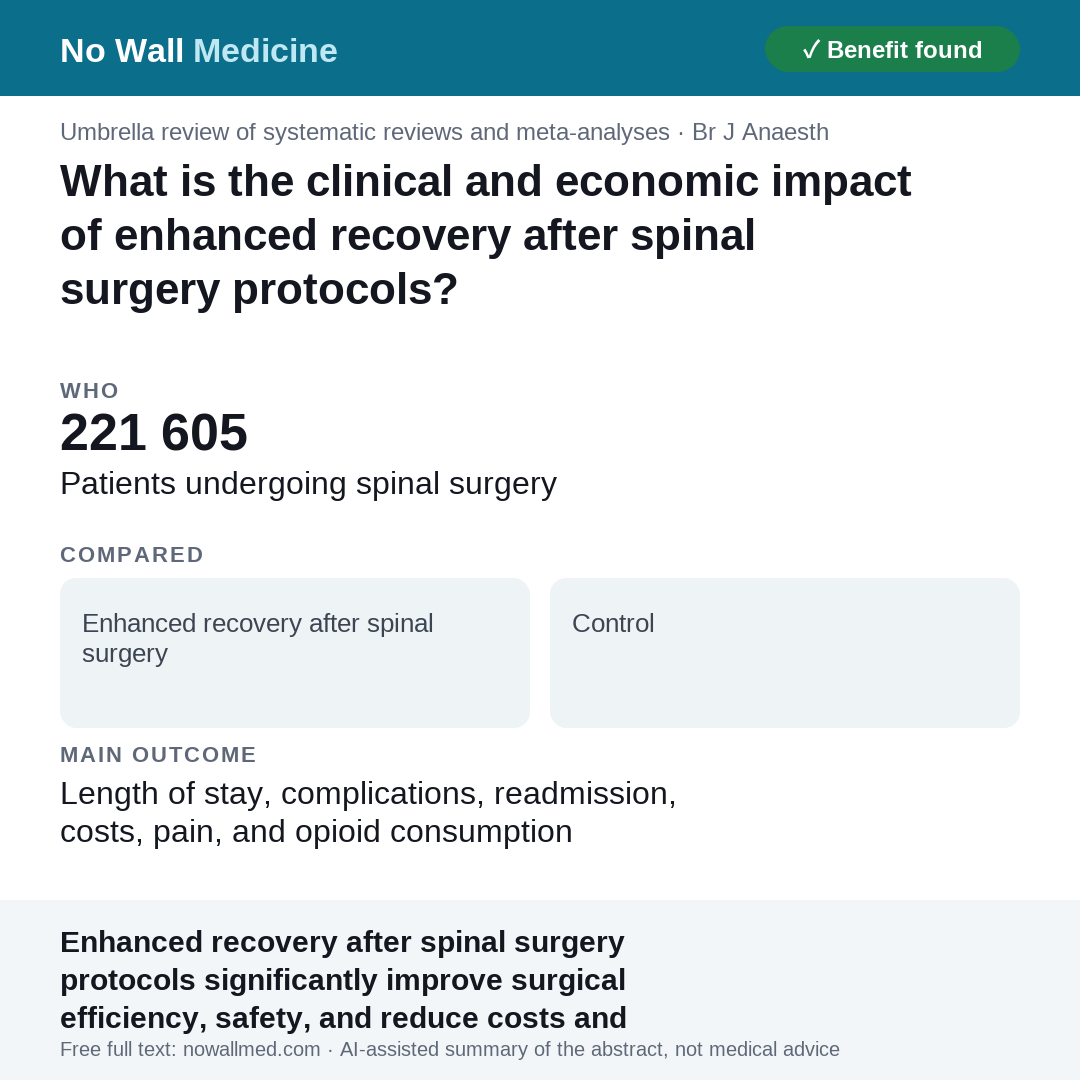
Optimising postoperative spine outcomes: an umbrella review of enhanced recovery after spinal surgery (ERASS) protocols
Umbrella review of systematic reviews and meta-analysesBenefit found
What is the clinical and economic impact of enhanced recovery after spinal surgery protocols?
Who
221 605
Patients undergoing spinal surgery
Compared
Enhanced recovery after spinal surgery
Control
Main outcome
Length of stay, complications, readmission, costs, pain, and opioid consumption
Result: length of stay -1.55 days (95% CI -1.83 to -1.27 days); postoperative complications relative risk 0.61 (95% CI 0.52-0.72); opioid consumption -7.26 mg morphine equivalents (95% CI -10.82 to -3.70 mg); healthcare costs -$1029.41 (95% CI -$1630.17 to -$428.65)
Bottom line: Enhanced recovery after spinal surgery protocols significantly improve surgical efficiency, safety, and reduce costs and opioid consumption.
Limitation: High heterogeneity was observed, reflecting protocol and design variation.
Br J Anaesth · 2025-10-08Download image
The Performance of Automatic Speaking Valves and Fixation Devices Enabling Hands-Free Speech Following Total Laryngectomy-A Systematic Review
Systematic reviewNo clear difference
How do automatic speaking valves and fixation devices perform in laryngectomized patients?
Who
Laryngectomized patients
Compared
Automatic speaking valve use: 3-13.25 h/day
Fixation device lifetime: 0.17-24 h/day
Main outcome
Automatic valve use, fixation lifetime, compliance, and voice assessment outcomes
Bottom line: No single automatic speaking valve or fixation device outperformed others in performance or voice outcomes.
Head Neck · 2025-10-08Download image

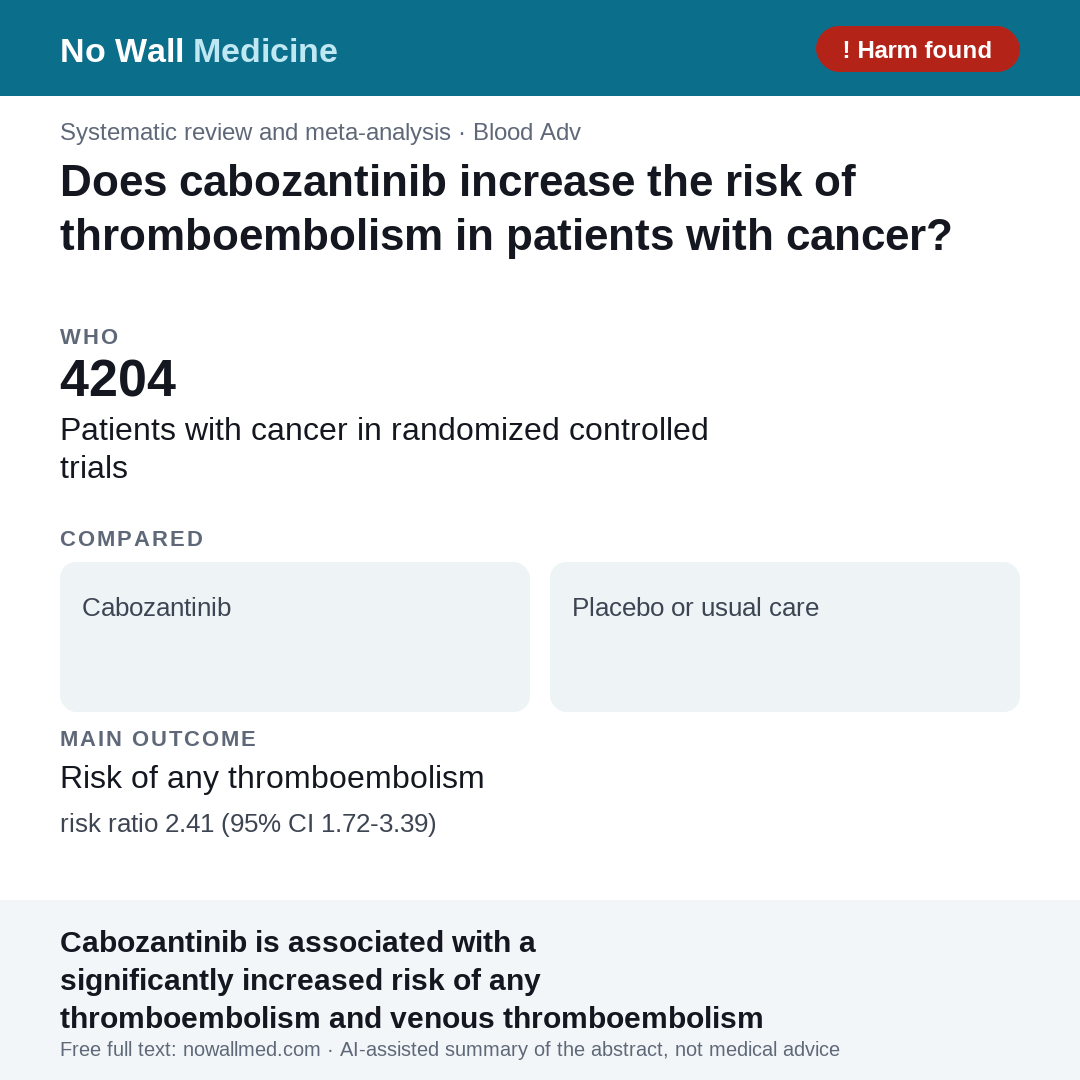
Cabozantinib and thromboembolism in patients with cancer: a systematic review, meta-analysis, and retrospective study
Systematic review and meta-analysisHarm found
Does cabozantinib increase the risk of thromboembolism in patients with cancer?
Who
4204
Patients with cancer in randomized controlled trials
Compared
Cabozantinib
Placebo or usual care
Main outcome
Risk of any thromboembolism
Result: risk ratio 2.41 (95% CI 1.72-3.39)
Bottom line: Cabozantinib is associated with a significantly increased risk of any thromboembolism and venous thromboembolism in cancer patients.
Blood Adv · 2025-10-08Download image
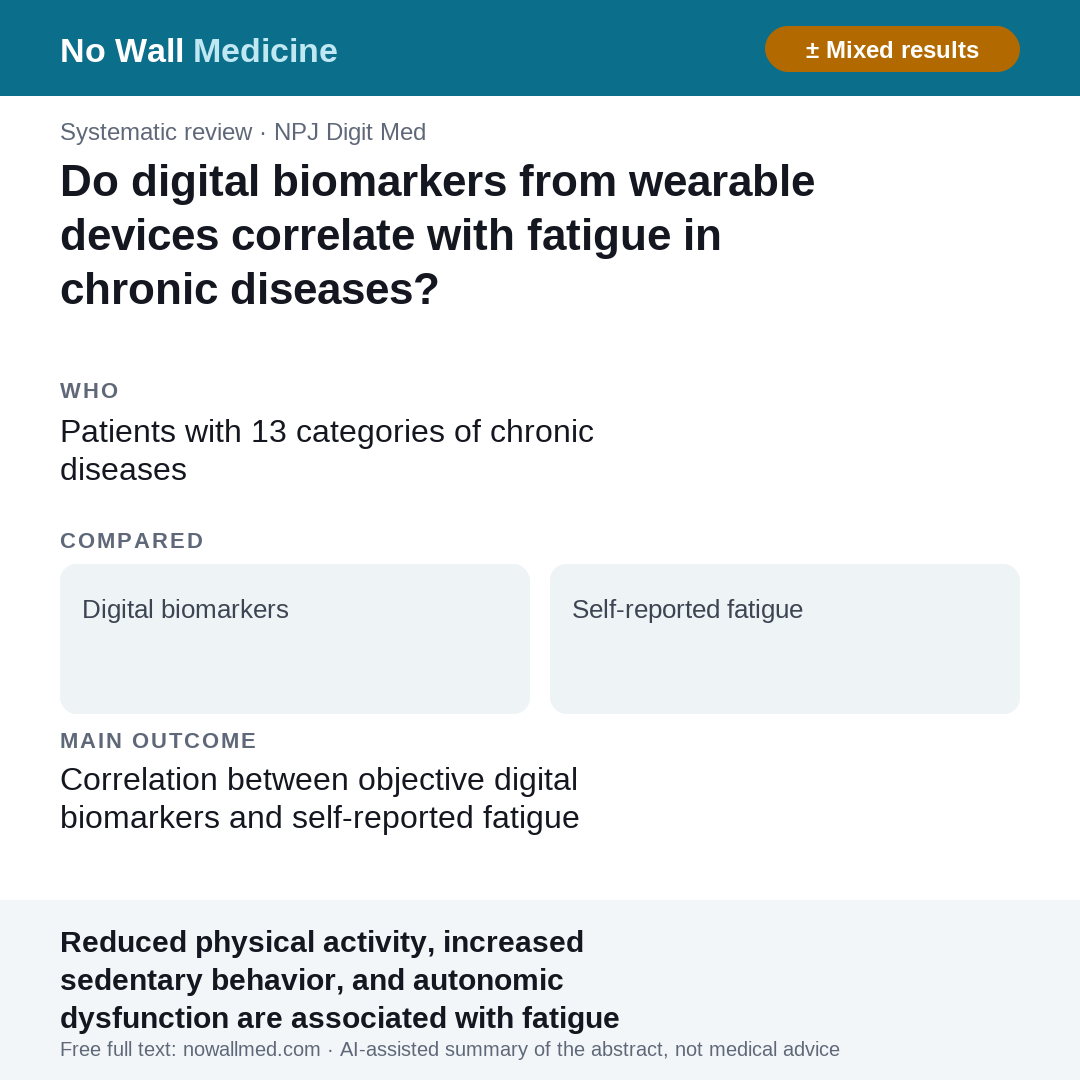
Systematic review: digital biomarkers of fatigue in chronic diseases
Systematic reviewMixed results
Do digital biomarkers from wearable devices correlate with fatigue in chronic diseases?
Who
Patients with 13 categories of chronic diseases
Compared
Digital biomarkers
Self-reported fatigue
Main outcome
Correlation between objective digital biomarkers and self-reported fatigue
Bottom line: Reduced physical activity, increased sedentary behavior, and autonomic dysfunction are associated with fatigue across multiple chronic diseases.
NPJ Digit Med · 2025-10-08Download image
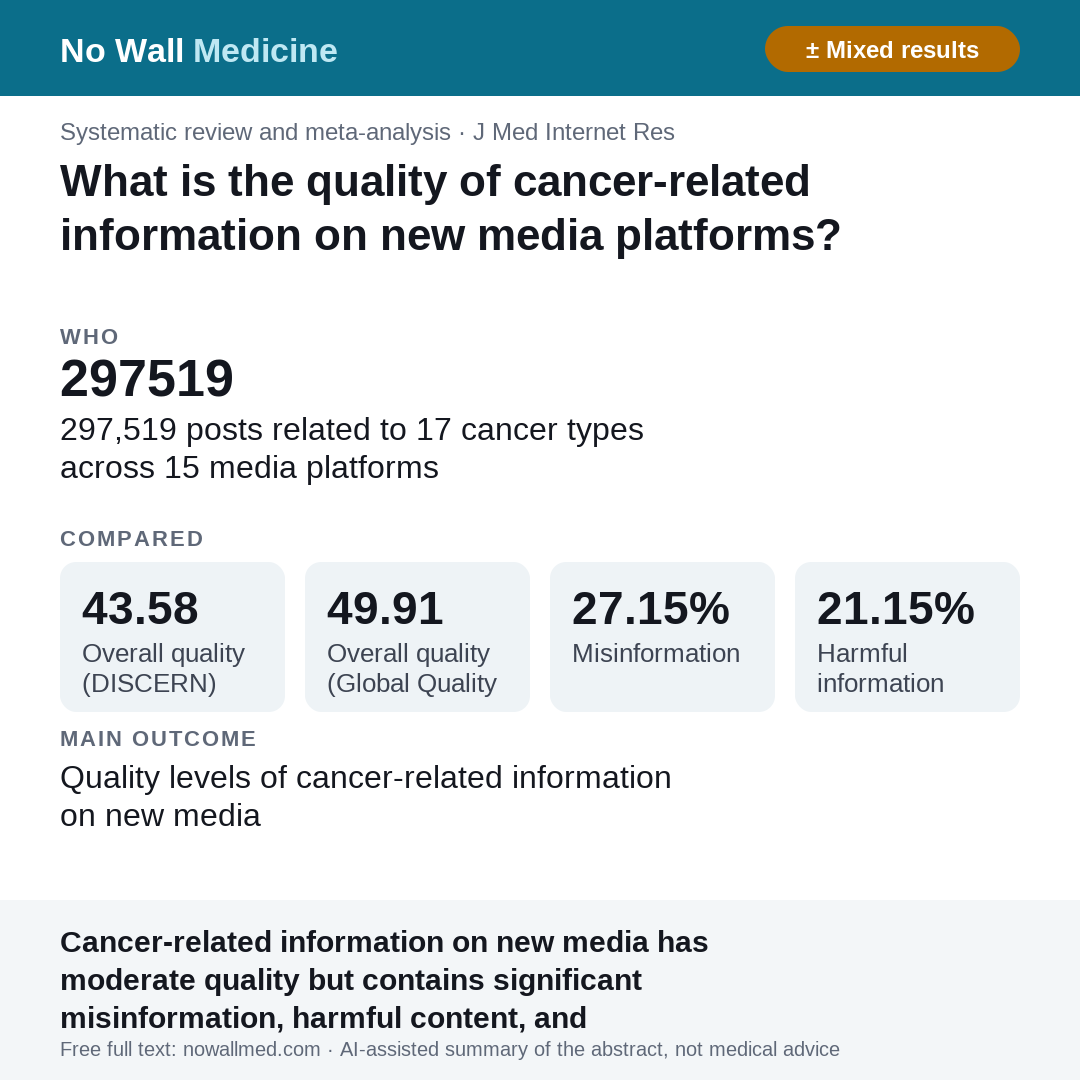
Quality of Cancer-Related Information on New Media (2014-2023): Systematic Review and Meta-Analysis
Systematic review and meta-analysisMixed results
What is the quality of cancer-related information on new media platforms?
Who
297519
297,519 posts related to 17 cancer types across 15 media platforms
Compared
43.58Overall quality (DISCERN) (95% CI 37.80-49.35)
49.91Overall quality (Global Quality Score) (95% CI 43.31-56.50)
27.15%Misinformation (95% CI 21.36-33.35)
21.15%Harmful information (95% CI 8.96-36.50)
Main outcome
Quality levels of cancer-related information on new media
Bottom line: Cancer-related information on new media has moderate quality but contains significant misinformation, harmful content, and commercial bias.
Limitation: High heterogeneity across most outcomes (I²>75%)
J Med Internet Res · 2025-10-08Download image
Clinical utility of diffusion tensor imaging in sport-related concussion: a systematic review
Systematic reviewUnclear result
What is the clinical utility of diffusion tensor imaging in sport-related concussion?
Who
26
Subjects with sport-related concussion
Compared
Acute injury: heterogenous changes in diffusion tensor imaging parameters
Chronic injury: reduced fractional anisotropy and elevated mean diffusivity
Main outcome
diffusion tensor imaging parameters
Bottom line: Diffusion tensor imaging shows heterogeneous changes in acute injury and more consistent alterations in chronic injury.
BJR Open · 2025-10-08Download image

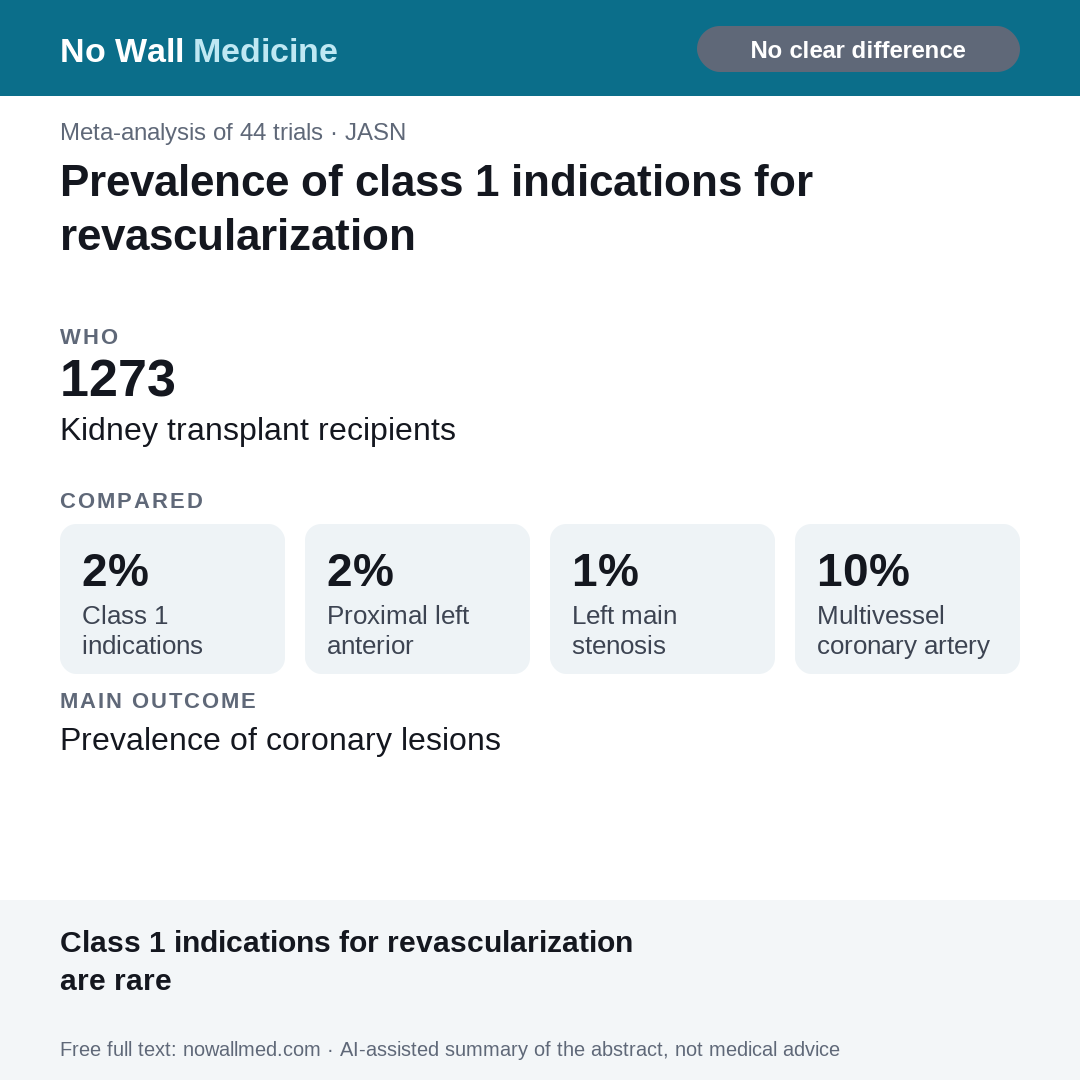
Class 1 Indications for Coronary Revascularization Identified in Prekidney Transplant Screening
Meta-analysis of 44 trialsNo clear difference
Prevalence of class 1 indications for revascularization
Who
1273
Kidney transplant recipients
Compared
2%Class 1 indications
2%Proximal left anterior descending disease
1%Left main stenosis
10%Multivessel coronary artery disease
Main outcome
Prevalence of coronary lesions
Bottom line: Class 1 indications for revascularization are rare
JASN · 2025-10-07Download image
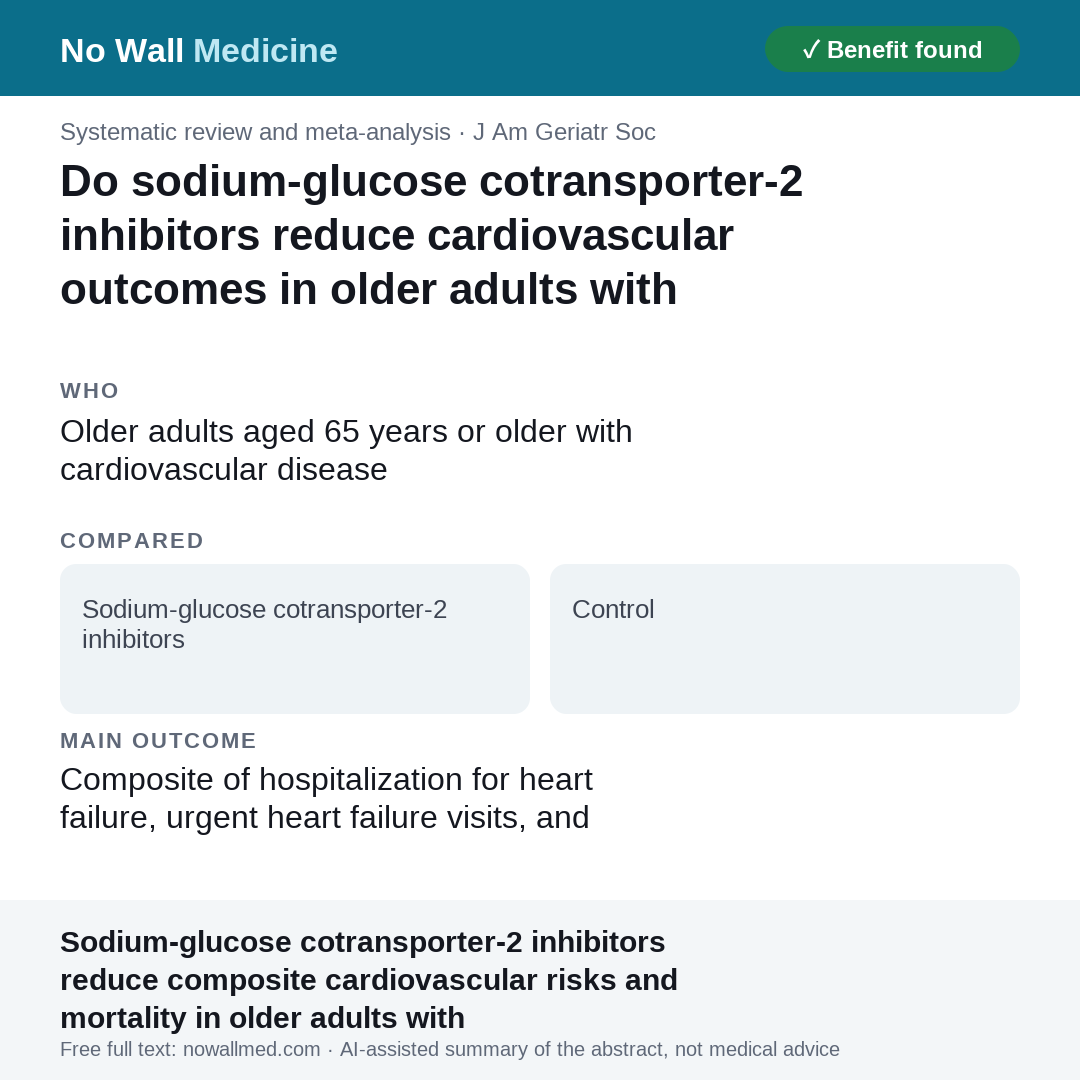
SGLT2 Inhibitors in Older Adults With Cardiovascular Disease: A Systematic Review and Meta-Analysis
Systematic review and meta-analysisBenefit found
Do sodium-glucose cotransporter-2 inhibitors reduce cardiovascular outcomes in older adults with cardiovascular disease?
Who
Older adults aged 65 years or older with cardiovascular disease
Compared
Sodium-glucose cotransporter-2 inhibitors
Control
Main outcome
Composite of hospitalization for heart failure, urgent heart failure visits, and cardiovascular death
Result: hazard ratio 0.75 (95% CI 0.67-0.83)
Bottom line: Sodium-glucose cotransporter-2 inhibitors reduce composite cardiovascular risks and mortality in older adults with cardiovascular disease.
J Am Geriatr Soc · 2025-10-07Download image
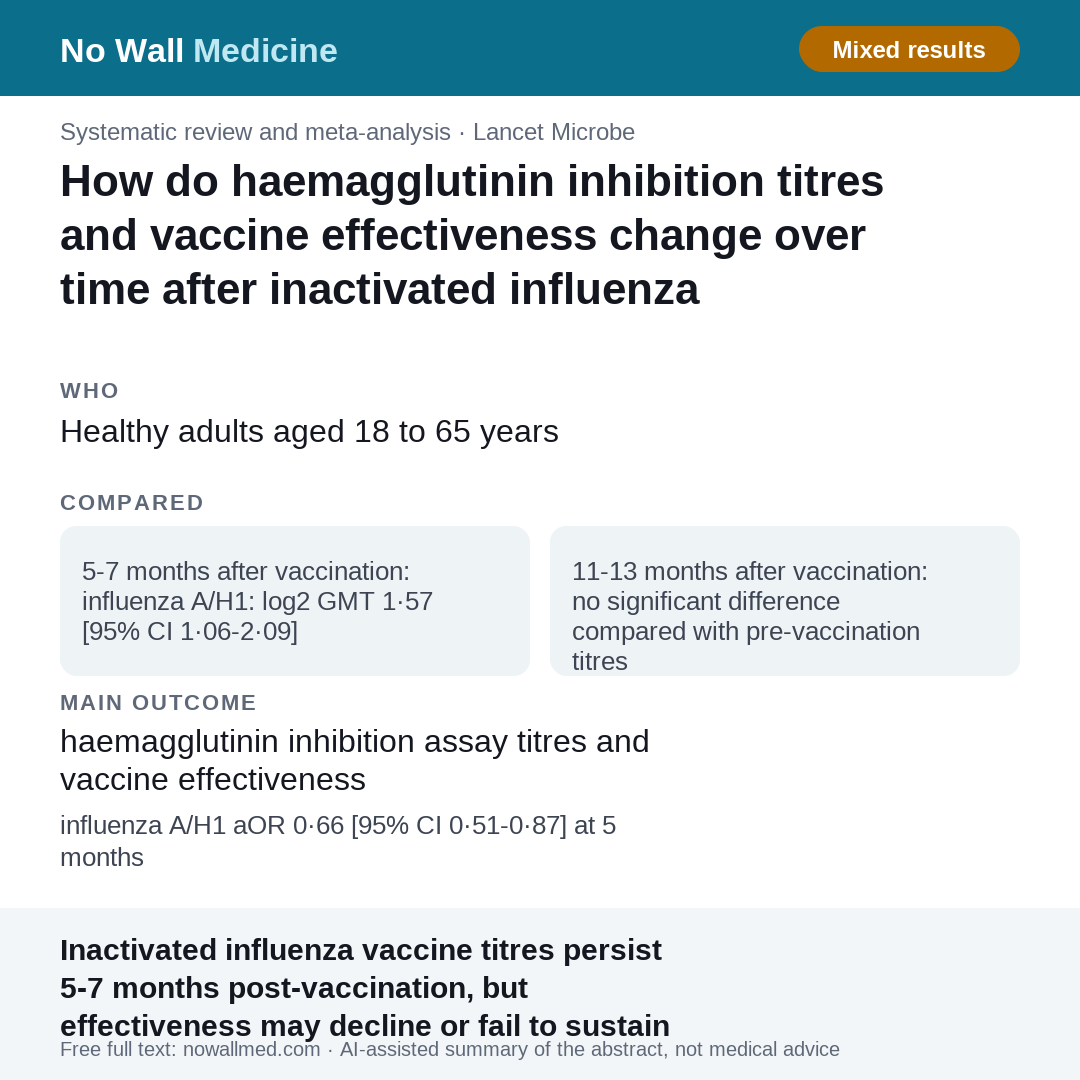
Duration of the serological response and effectiveness of the inactivated influenza vaccine in healthy adults aged 18-65 years: a systematic review and meta-analysis
Systematic review and meta-analysisMixed results
How do haemagglutinin inhibition titres and vaccine effectiveness change over time after inactivated influenza vaccine?
Who
Healthy adults aged 18 to 65 years
Compared
5-7 months after vaccination: influenza A/H1: log2 GMT 1·57 [95% CI 1·06-2·09]
11-13 months after vaccination: no significant difference compared with pre-vaccination titres
Main outcome
haemagglutinin inhibition assay titres and vaccine effectiveness
Result: influenza A/H1 aOR 0·66 [95% CI 0·51-0·87] at 5 months
Bottom line: Inactivated influenza vaccine titres persist 5-7 months post-vaccination, but effectiveness may decline or fail to sustain by 11-13 months.
Limitation: Evaluating temporal changes remains challenging due to methodological biases.
Lancet Microbe · 2025-10-07Download image
Genome-wide meta-analyses of cross substance use disorders in diverse populations
Genome-wide meta-analysisBenefit found
What are the shared genes across different substance use disorders in diverse populations?
Who
European, African, and American mixed populations
Compared
Concordant variants: 220 loci identified
SUD-shared genes: 785 genes
Main outcome
Identification of shared genetic loci and genes across substance use disorders
Bottom line: The study identified 220 loci and 785 shared genes across substance use disorders in diverse populations.
Mol Psychiatry · 2025-10-07Download image

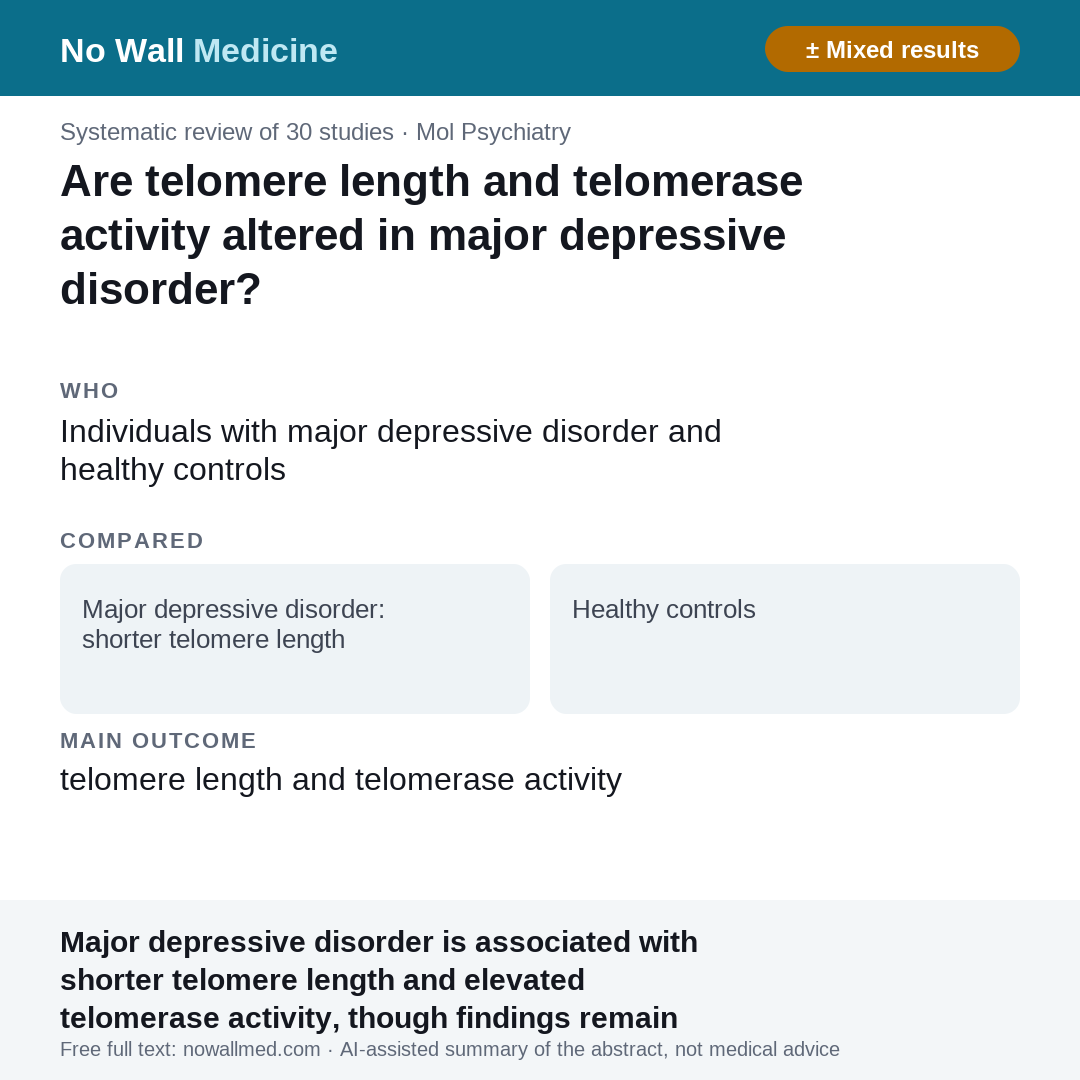
Role of telomere length and telomerase activity in accelerated cellular aging and major depressive disorder: a systematic review
Systematic review of 30 studiesMixed results
Are telomere length and telomerase activity altered in major depressive disorder?
Who
30
Individuals with major depressive disorder and healthy controls
Compared
Major depressive disorder: shorter telomere length
Healthy controls
Main outcome
telomere length and telomerase activity
Bottom line: Major depressive disorder is associated with shorter telomere length and elevated telomerase activity, though findings remain complex.
Limitation: conflicting findings and methodological variations
Mol Psychiatry · 2025-10-07Download image
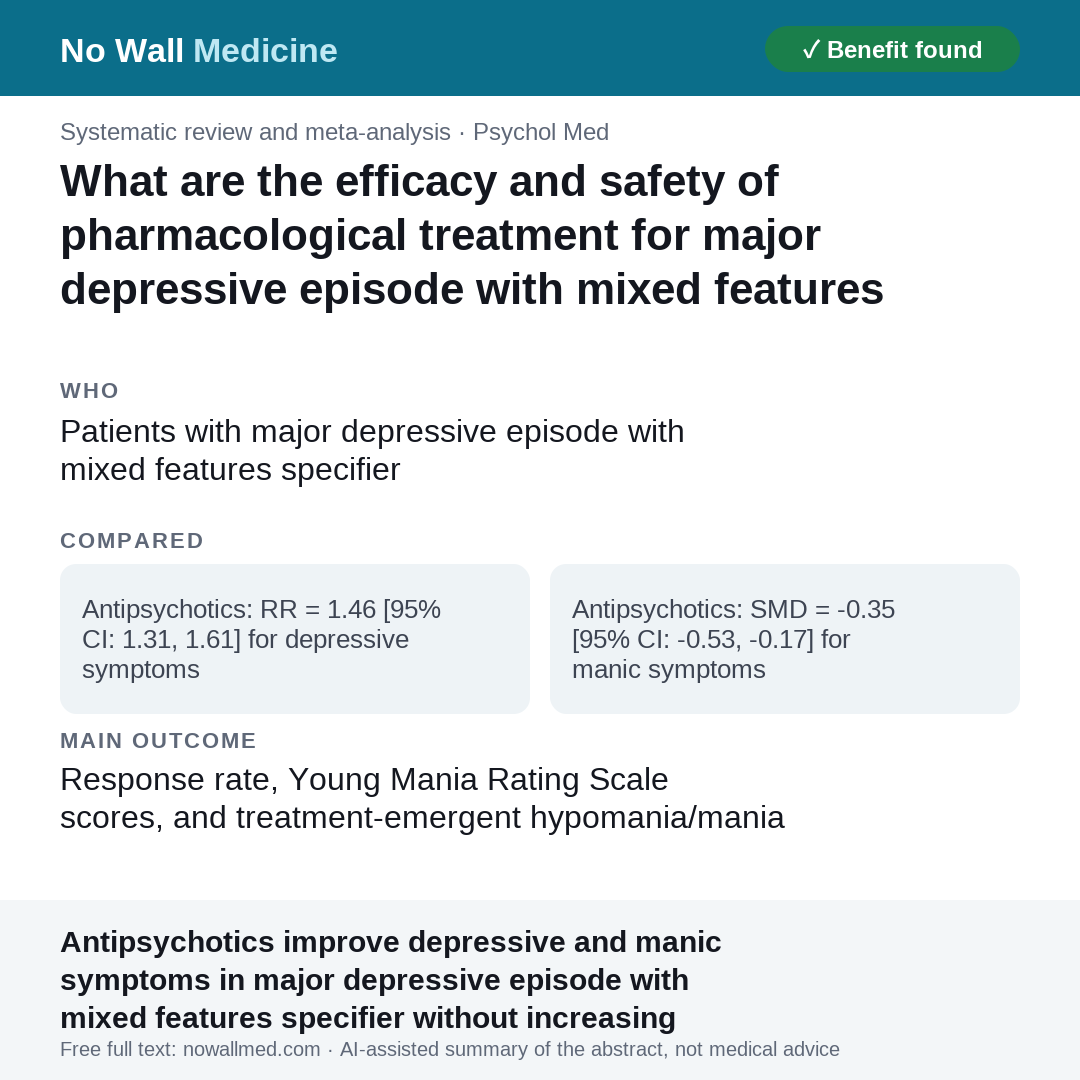
The efficacy and safety of pharmacological treatment for major depressive episode with mixed features specifier: a systematic review and meta-analysis
Systematic review and meta-analysisBenefit found
What are the efficacy and safety of pharmacological treatment for major depressive episode with mixed features specifier?
Who
Patients with major depressive episode with mixed features specifier
Compared
Antipsychotics: RR = 1.46 [95% CI: 1.31, 1.61] for depressive symptoms
Antipsychotics: SMD = -0.35 [95% CI: -0.53, -0.17] for manic symptoms
Main outcome
Response rate, Young Mania Rating Scale scores, and treatment-emergent hypomania/mania
Result: RR = 1.46 [95% CI: 1.31, 1.61] for depressive symptoms
Bottom line: Antipsychotics improve depressive and manic symptoms in major depressive episode with mixed features specifier without increasing manic switch risk.
Limitation: Findings are mostly based on post-hoc analyses, so evidence remains preliminary.
Psychol Med · 2025-10-07Download image
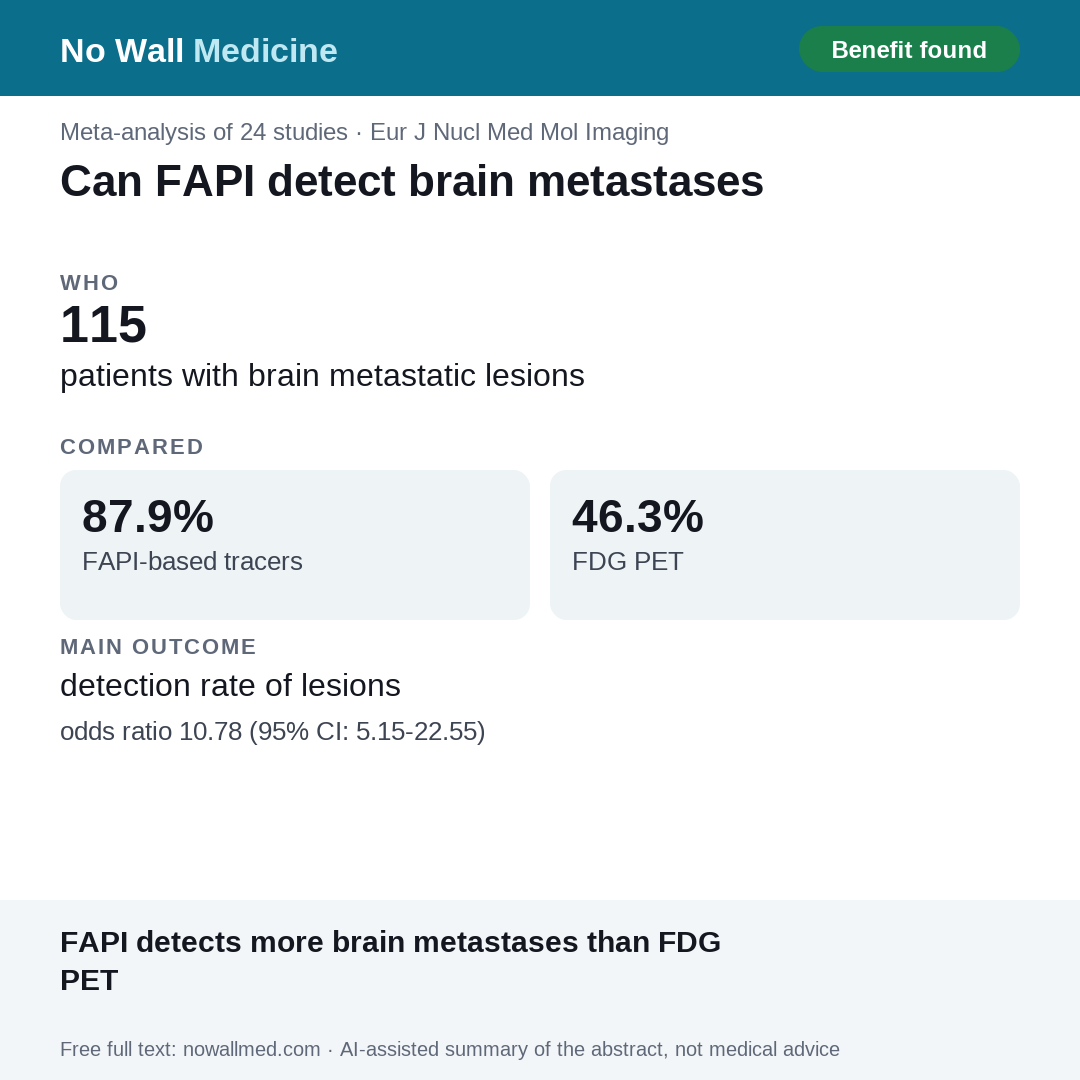
Revealing the hidden: A systematic review and meta-analysis of FAPI-based tracers imaging for brain metastatic lesions
Meta-analysis of 24 studiesBenefit found
Can FAPI detect brain metastases
Who
115
patients with brain metastatic lesions
Compared
87.9%FAPI-based tracers (95% CI: 76.1-94.3%)
46.3%FDG PET (95% CI: 30.6-62.8%)
Main outcome
detection rate of lesions
Result: odds ratio 10.78 (95% CI: 5.15-22.55)
Bottom line: FAPI detects more brain metastases than FDG PET
Eur J Nucl Med Mol Imaging · 2025-10-07Download image
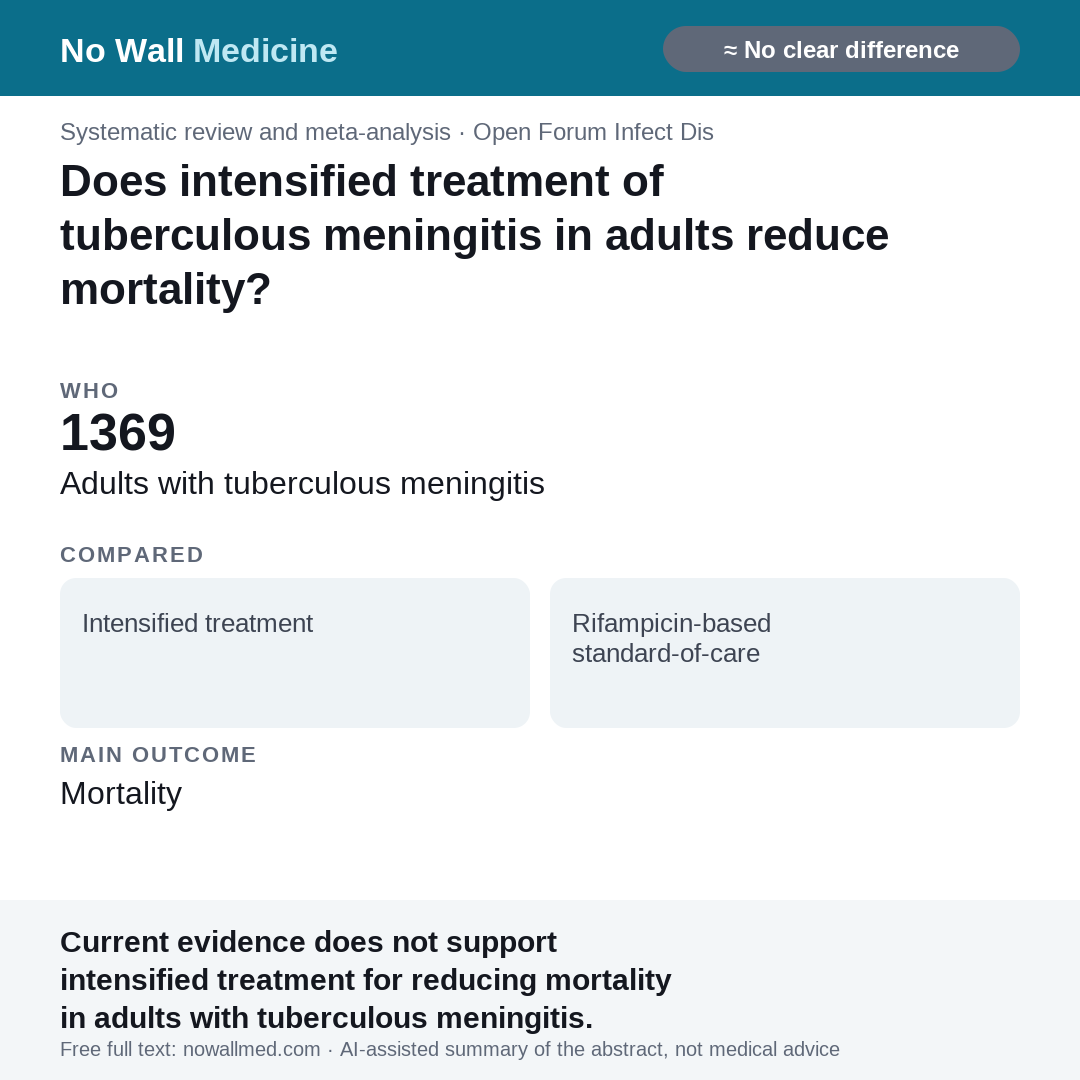
Intensified Treatment of Tuberculous Meningitis in Adults: A Systematic Review and Meta-analysis
Systematic review and meta-analysisNo clear difference
Does intensified treatment of tuberculous meningitis in adults reduce mortality?
Who
1369
Adults with tuberculous meningitis
Compared
Intensified treatment
Rifampicin-based standard-of-care
Main outcome
Mortality
Bottom line: Current evidence does not support intensified treatment for reducing mortality in adults with tuberculous meningitis.
Limitation: Diverse case definitions, variable dosing, and heterogeneous disability and safety outcomes.
Open Forum Infect Dis · 2025-10-07Download image
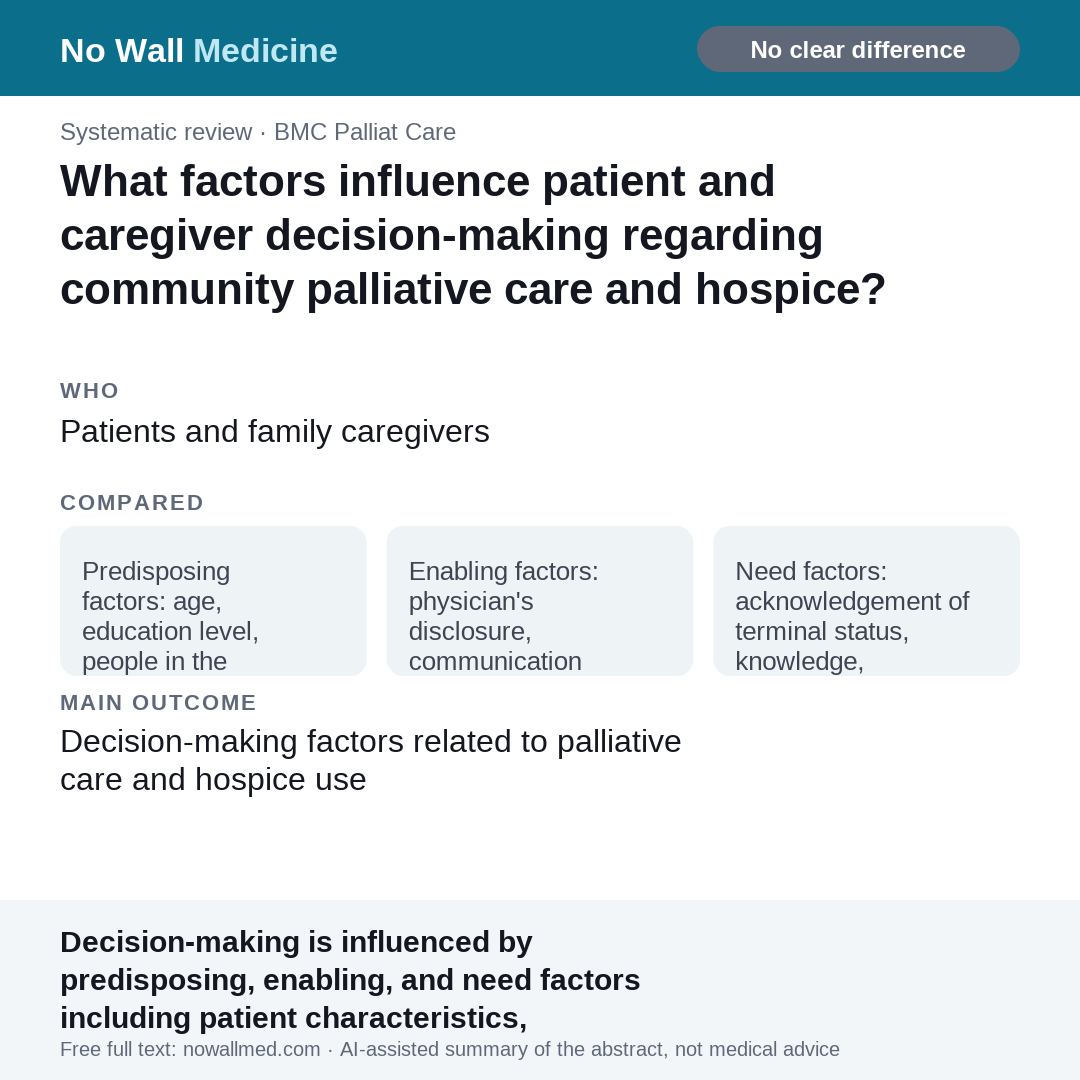
Decision-making factors related to palliative care and hospice use in the community: a systematic review based on Andersen's behavioural model of health services use
Systematic reviewNo clear difference
What factors influence patient and caregiver decision-making regarding community palliative care and hospice?
Who
Patients and family caregivers
Compared
Predisposing factors: age, education level, people in the household, experiences with institutional care, and death experience
Enabling factors: physician's disclosure, communication partner, communication context, and information about options
Need factors: acknowledgement of terminal status, knowledge, perception, end-of-life wishes, caregiver's commitment, preference for dying at home, and health condition
Main outcome
Decision-making factors related to palliative care and hospice use
Bottom line: Decision-making is influenced by predisposing, enabling, and need factors including patient characteristics, communication, and health status.
BMC Palliat Care · 2025-10-07Download image
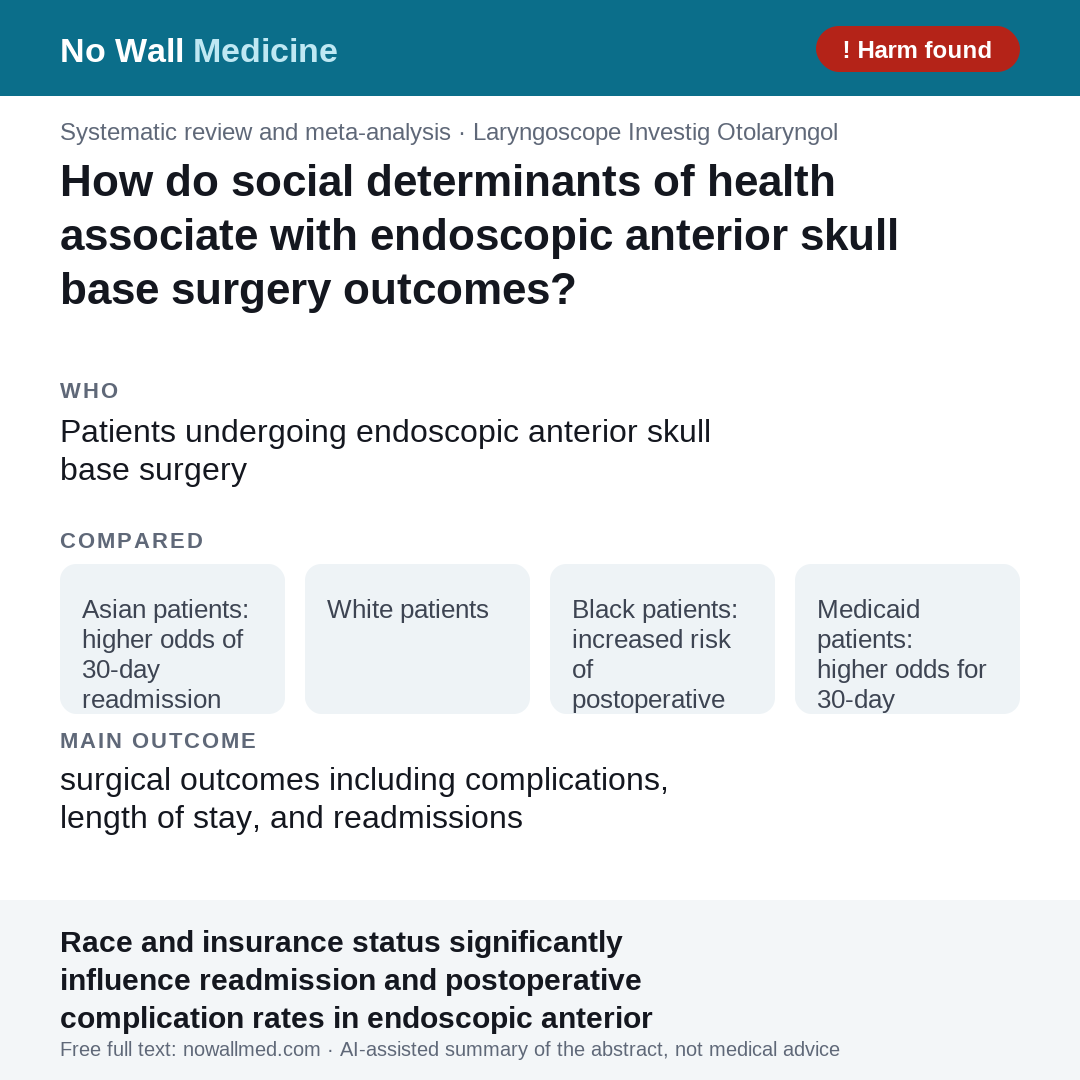
Social Determinants of Health in Endoscopic Anterior Skull Base Surgery: A Systematic Review and Meta-Analysis
Systematic review and meta-analysisHarm found
How do social determinants of health associate with endoscopic anterior skull base surgery outcomes?
Who
Patients undergoing endoscopic anterior skull base surgery
Compared
Asian patients: higher odds of 30-day readmission
White patients
Black patients: increased risk of postoperative diabetes insipidus
Medicaid patients: higher odds for 30-day readmission and greater risk of postoperative diabetes insipidus
Main outcome
surgical outcomes including complications, length of stay, and readmissions
Result: OR 1.30 (95% CI: 1.04-1.62) for Asian 30-day readmission; RR 1.32 (95% CI: 1.09-1.59) for Black postoperative diabetes insipidus
Bottom line: Race and insurance status significantly influence readmission and postoperative complication rates in endoscopic anterior skull base surgery.
Limitation: The heterogeneity of other social determinants of health suggests further research is needed.
Laryngoscope Investig Otolaryngol · 2025-10-07Download image
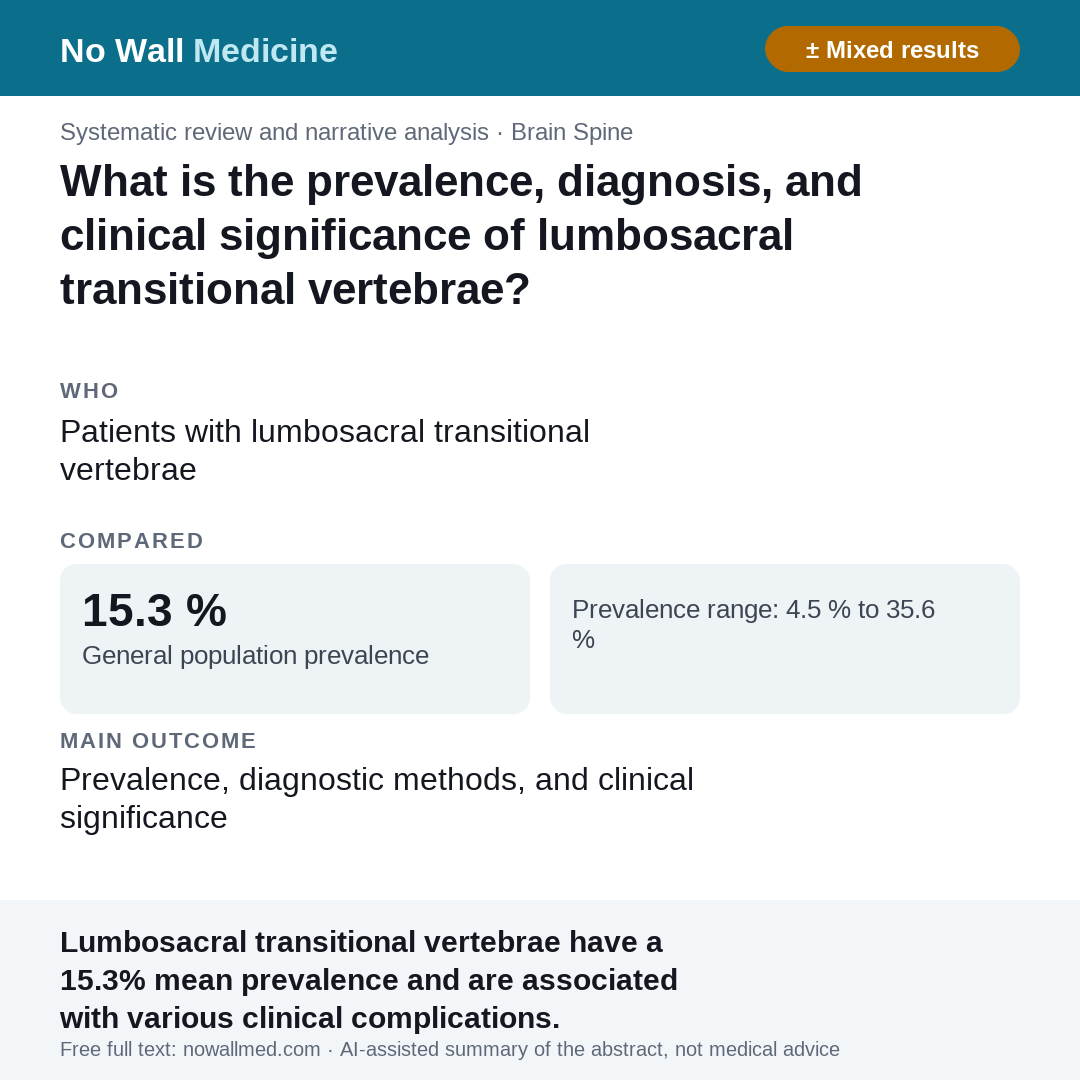
Prevalence, diagnosis, and clinical significance of lumbosacral transitional vertebrae: A systematic review and narrative analysis
Systematic review and narrative analysisMixed results
What is the prevalence, diagnosis, and clinical significance of lumbosacral transitional vertebrae?
Who
Patients with lumbosacral transitional vertebrae
Compared
15.3 %General population prevalence
Prevalence range: 4.5 % to 35.6 %
Main outcome
Prevalence, diagnostic methods, and clinical significance
Bottom line: Lumbosacral transitional vertebrae have a 15.3% mean prevalence and are associated with various clinical complications.
Limitation: More research with larger samples and longer follow-ups is needed.
Brain Spine · 2025-10-07Download image
Facilitators of and barriers to patient and public involvement in mental health research within university settings: a systematic review and meta-synthesis
Systematic review and meta-synthesisMixed results
What are the facilitators and barriers to patient and public involvement in mental health research?
Who
51
Mental health research within university settings · University settings
Compared
Barriers: research environment, organizational culture, and individual needs
Facilitators: not explicitly listed as individual values
Main outcome
Facilitators and barriers of patient and public involvement
Bottom line: Power imbalances and the research environment constrain patient involvement, requiring power redistribution and wider inclusion.
Psychol Med · 2025-10-06Download image