Visual abstracts
New randomized trials and meta-analyses from leading journals at a glance: who was studied, what was compared, and what was found. Every paper is free to read in full.
All specialtiesCardiology 361Oncology 283Gastroenterology & Hepatology 148Infectious Disease 276Neurology 164Psychiatry & Mental Health 230Pulmonology 166Critical Care 110Endocrinology & Diabetes 212Pediatrics 157Surgery 106Orthopedics & Sports Medicine 66Neurosurgery 21Cardiothoracic & Vascular Surgery 36Plastic & Reconstructive Surgery 68Nephrology 71Rheumatology 69Hematology 82Dermatology 34Ophthalmology 60Obstetrics & Gynecology 103Public & Global Health 105Radiology & Imaging 29Anesthesiology 61Urology 78ENT (Otolaryngology) 44Emergency Medicine 34Allergy & Immunology 39Geriatrics 100Family Medicine & Primary Care 55Medical Genetics & Genomics 32Pathology & Laboratory Medicine 5Physical Medicine & Rehabilitation 88Palliative Care 55Nutrition 121Digital Health & AI 303General Medicine 42
A systematic review of global mental health service utilisation in young refugees and asylum seekers
Systematic reviewHarm found
What is the mental health service utilisation and access among young refugees and asylum seekers?
Who
Young refugees and asylum seekers · Global
Compared
Young refugees: underutilisation of services in comparison with majority population peers
Majority population peers
Main outcome
Mental health service utilisation and access
Bottom line: Young refugees underutilise outpatient services and medication but show increased emergency service use compared to majority population peers.
BJPsych Open · 2026-03-02Download image

Antidepressant prescribing trends for adult patients in the UK and Ireland during the COVID-19 pandemic: systematic review
Systematic reviewBenefit found
What were antidepressant prescribing trends for adults in the UK and Ireland during and after the pandemic?
Who
Adults in the United Kingdom and Republic of Ireland · United Kingdom and Republic of Ireland
Compared
Pre-pandemic trends
During and after pandemic: Most studies demonstrated increased antidepressant prescribing over time
Main outcome
Antidepressant prescribing trends
Bottom line: Most studies showed increased antidepressant prescribing during and after the COVID-19 pandemic in the UK and Ireland.
BJPsych Open · 2026-03-02Download image

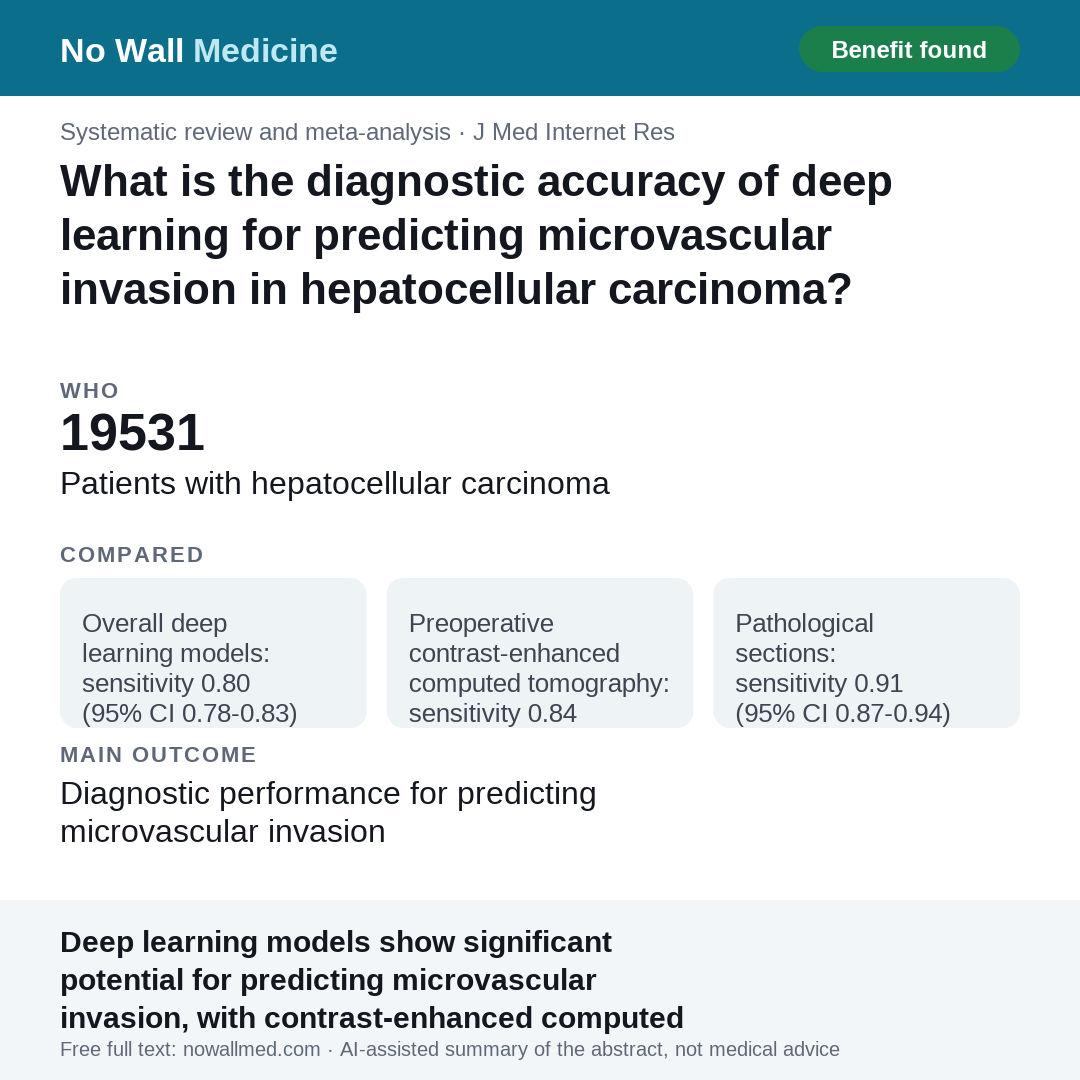
Accuracy of Medical Image-Based Deep Learning for Detecting Microvascular Invasion in Hepatocellular Carcinoma: Systematic Review and Meta-Analysis
Systematic review and meta-analysisBenefit found
What is the diagnostic accuracy of deep learning for predicting microvascular invasion in hepatocellular carcinoma?
Who
19531
Patients with hepatocellular carcinoma
Compared
Overall deep learning models: sensitivity 0.80 (95% CI 0.78-0.83)
Preoperative contrast-enhanced computed tomography: sensitivity 0.84 (95% CI 0.79-0.88)
Pathological sections: sensitivity 0.91 (95% CI 0.87-0.94)
Main outcome
Diagnostic performance for predicting microvascular invasion
Result: SROC 0.88
Bottom line: Deep learning models show significant potential for predicting microvascular invasion, with contrast-enhanced computed tomography being a promising noninvasive method.
Limitation: Scarcity of independent external validation cohorts and notable heterogeneity among them.
J Med Internet Res · 2026-03-02Download image
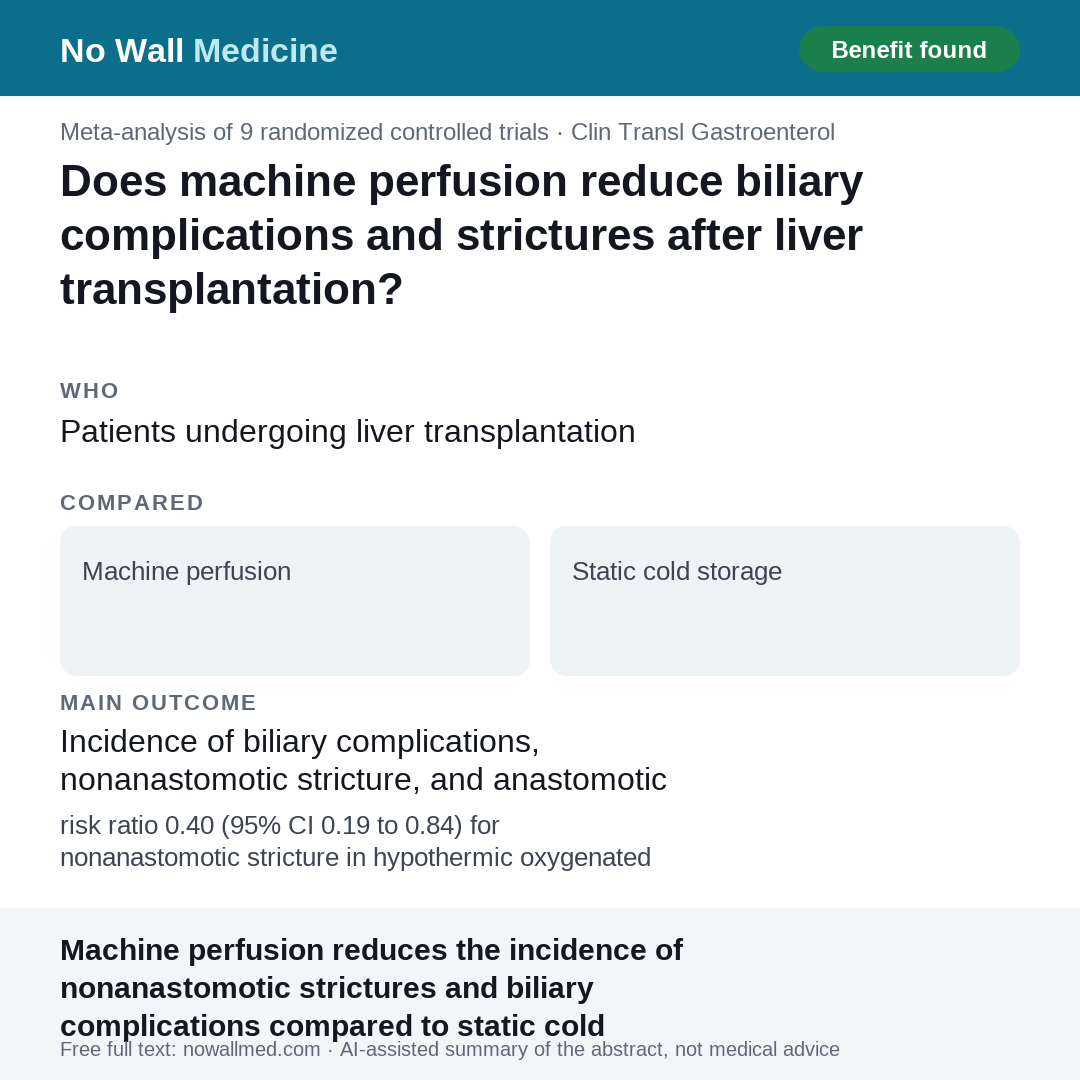
Machine Perfusion Ameliorates Nonanastomotic Strictures After Liver Transplantation: A Systematic Review and Meta-analysis of Randomized Controlled Trials
Meta-analysis of 9 randomized controlled trialsBenefit found
Does machine perfusion reduce biliary complications and strictures after liver transplantation?
Who
Patients undergoing liver transplantation
Compared
Machine perfusion
Static cold storage
Main outcome
Incidence of biliary complications, nonanastomotic stricture, and anastomotic stricture
Result: risk ratio 0.40 (95% CI 0.19 to 0.84) for nonanastomotic stricture in hypothermic oxygenated perfusion
Bottom line: Machine perfusion reduces the incidence of nonanastomotic strictures and biliary complications compared to static cold storage.
Clin Transl Gastroenterol · 2026-03-01Download image
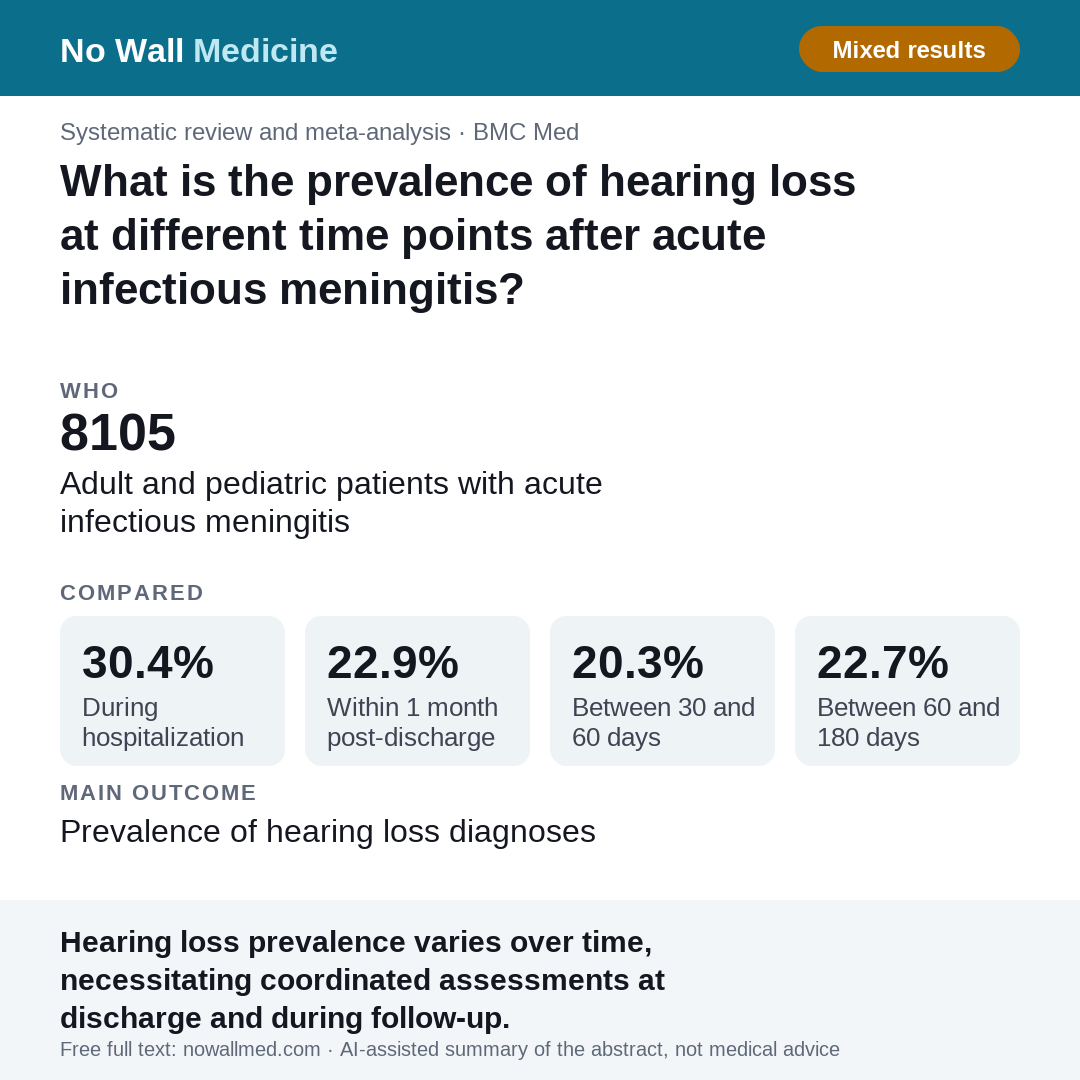
Detection of hearing loss by formal audiological testing after acute infectious meningitis: a global systematic review and meta-analysis
Systematic review and meta-analysisMixed results
What is the prevalence of hearing loss at different time points after acute infectious meningitis?
Who
8105
Adult and pediatric patients with acute infectious meningitis
Compared
30.4%During hospitalization or at discharge (95% CI 22.9-38%)
22.9%Within 1 month post-discharge (95% CI 12.6-33.1%)
20.3%Between 30 and 60 days post-discharge (95% CI 8.8-31.9%)
22.7%Between 60 and 180 days post-discharge (95% CI 12.1-33.4%)
Main outcome
Prevalence of hearing loss diagnoses
Bottom line: Hearing loss prevalence varies over time, necessitating coordinated assessments at discharge and during follow-up.
BMC Med · 2026-02-28Download image
IDSA 2025 Guideline on the Use of Vaccines for the Prevention of Seasonal Influenza Infections in Immunocompromised Patients
Expert panel systematic reviewBenefit found
Should immunocompromised individuals receive influenza vaccines for prevention?
Who
Immunocompromised adults and children aged 6 months or older
Compared
Influenza vaccination: 32% reduction in influenza-associated hospitalization
No vaccination
Main outcome
Influenza-associated hospitalization
Bottom line: The Infectious Diseases Society of America strongly recommends influenza vaccination for all immunocompromised individuals aged 6 months or older.
Limitation: Direct evidence in immunocompromised populations was limited.
Clin Infect Dis · 2026-02-28Download image

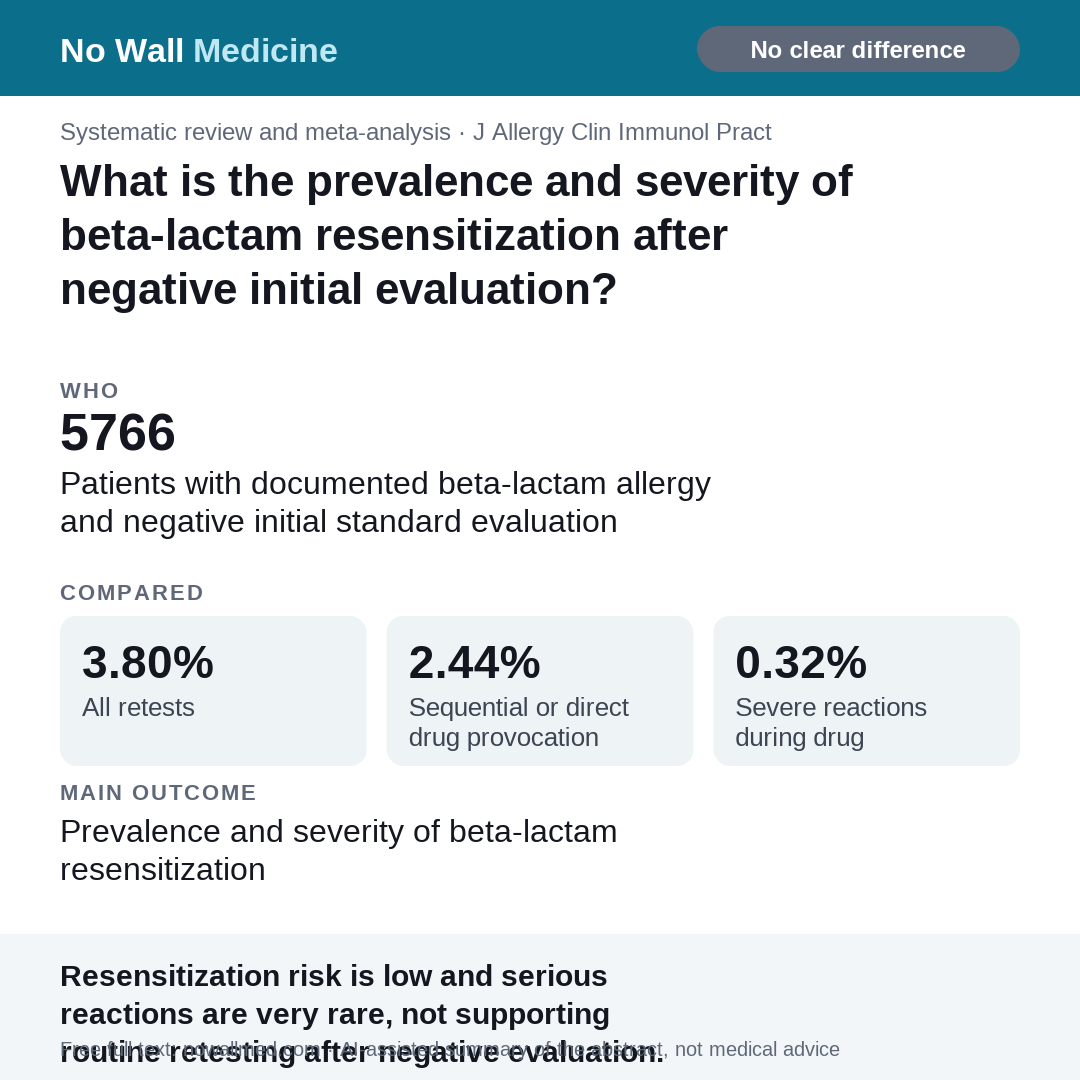
Resensitization of β-Lactams After Negative Initial Standard Evaluation: A Systematic Review and Meta-Analysis
Systematic review and meta-analysisNo clear difference
What is the prevalence and severity of beta-lactam resensitization after negative initial evaluation?
Who
5766
Patients with documented beta-lactam allergy and negative initial standard evaluation
Compared
3.80%All retests (95% CI, 2.35-5.50)
2.44%Sequential or direct drug provocation test (95% CI, 0.99-4.43)
0.32%Severe reactions during drug provocation testing (95% CI, 0.18-0.58)
Main outcome
Prevalence and severity of beta-lactam resensitization
Result: 3.80% (95% CI, 2.35-5.50)
Bottom line: Resensitization risk is low and serious reactions are very rare, not supporting routine retesting after negative evaluation.
J Allergy Clin Immunol Pract · 2026-02-28Download image
Optimizing Elastic Band Resistance Training for Metabolic Syndrome Components in Older Adults: A Systematic Review, Meta-Analysis, and Meta-Regression of Randomized Controlled Trials
Meta-analysis of 23 trialsBenefit found
Does elastic band training help older adults
Who
1134
older adults with metabolic syndrome
Compared
Elastic band training
Nonactive controls
Main outcome
metabolic syndrome components
Result: standardized mean difference=-0.47 (-0.65 to -0.30) for body fat
Bottom line: Elastic band training helps older adults
Arch Phys Med Rehabil · 2026-02-28Download image

Artificial intelligence for predicting paediatric acute kidney injury: a systematic review and meta-analysis
Systematic review and meta-analysisBenefit found
How well do artificial intelligence models predict acute kidney injury in children?
Who
33949
Paediatric patients
Compared
0.873Gradient boosting
Neural network
Logistic regression
Main outcome
Area under the curve for predicting acute kidney injury
Result: area under the curve 0.873 (95% confidence interval 0.836-0.909)
Bottom line: Artificial intelligence models show reasonable performance for predicting acute kidney injury in paediatric populations.
Limitation: Small sample size, heterogeneity, lack of validation cohorts, and inconsistent diagnostic criteria.
Clin Kidney J · 2026-02-28Download image

Multi-ancestry genome-wide association study and meta-analysis of lung function decline
Meta-analysis of genome-wide studiesMixed results
Genetic associations with lung function decline
Who
52056
White, Black, Hispanic, Chinese American participants · seven general population cohorts
Compared
Genetic variants
10.3%Replication cohorts
Main outcome
Lung function decline
Result: 361 distinct genome-wide significant variants
Bottom line: Numerous genetic loci associated with lung decline
Respir Res · 2026-02-28Download image

Matching heterogeneous cohorts by projected principal components reveals two novel Alzheimer's disease-associated genes in the Hispanic population
Genome-wide association studies and meta-analysesBenefit found
What are the Alzheimer's disease-associated genes in the Hispanic population?
Who
Hispanic individuals from Alzheimer's Disease Sequencing Project and All of Us · Alzheimer's Disease Sequencing Project and All of Us biobanks
Compared
Alzheimer's Disease Sequencing Project: PIEZO2 p = 5.4 × 10 - 8
Meta-analysis with matched All of Us: three genome-wide significant loci
Main outcome
Alzheimer's disease-associated genetic loci
Bottom line: Matching heterogeneous cohorts revealed two novel Alzheimer's disease-associated genes in the Hispanic population.
Alzheimers Dement · 2026-02-27Download image

Modulating the endocannabinoid system in alcohol use disorder: A translational systematic review and meta-analysis of preclinical and human studies
Systematic review and meta-analysisMixed results
Can modulating the endocannabinoid system reduce alcohol use disorder behaviors?
Who
Preclinical models and humans with alcohol use disorder
Compared
Cannabinoid receptor 1 receptor inverse agonists: SMD = -1.21
Cannabidiol: SMD = -0.70
Cannabinoid receptor 1 receptor agonists: SMD = +0.66
Main outcome
Alcohol intake and consumption
Bottom line: Preclinical evidence shows endocannabinoid modulation reduces alcohol intake, but human studies show inconsistent and generally null effects.
Limitation: Clinical translation limited by safety concerns, methodological inconsistencies, and under-investigation of novel compounds.
Mol Psychiatry · 2026-02-27Download image

Dose-Escalation Regimens for Incretin Mimetics in Type 2 Diabetes Are Associated With Tolerance for Nausea and Vomiting
Non-linear regression analysis of Phase 1 and Phase 3 trialsBenefit found
Do dose-escalation regimens improve tolerance for nausea and vomiting with incretin mimetics?
Who
People treated with approved incretin mimetics for Type 2 diabetes
Compared
Phase 1 trials
Phase 3 trials
Main outcome
Proportion of participants reporting nausea and vomiting
Bottom line: Optimised dose-escalation regimens may increase tolerance for nausea and vomiting, allowing higher, more effective doses.
Diabetes Obes Metab · 2026-02-27Download image

Psychological factors associated with postoperative cognitive outcomes in older adults: a systematic review and meta-analysis
Systematic review and meta-analysisNo clear difference
Are preoperative psychological factors associated with postoperative cognitive outcomes in older adults?
Who
6714
Adults aged 60 years or older
Compared
Depression: odds ratio, 1.08
Postoperative delirium: 9% to 55.6%
Main outcome
Postoperative cognitive outcomes
Result: odds ratio, 1.08 (95% confidence interval, 0.97-1.20)
Bottom line: Psychological factors were associated with cognitive outcomes, but depression showed a non-significant association with postoperative delirium.
Limitation: Evidence for anxiety, personality traits, and stress is limited.
Br J Anaesth · 2026-02-27Download image

Promoting genetic and genomic practices among allied healthcare professionals and nurses: a systematic review
Systematic reviewUnclear result
genetic practices among healthcare professionals
Who
allied health professionals and nurses
Compared
workshops
online learning
Main outcome
genetic integration into practice
Bottom line: strategies support genetic integration
Limitation: lack evaluation and focus
Eur J Hum Genet · 2026-02-27Download image

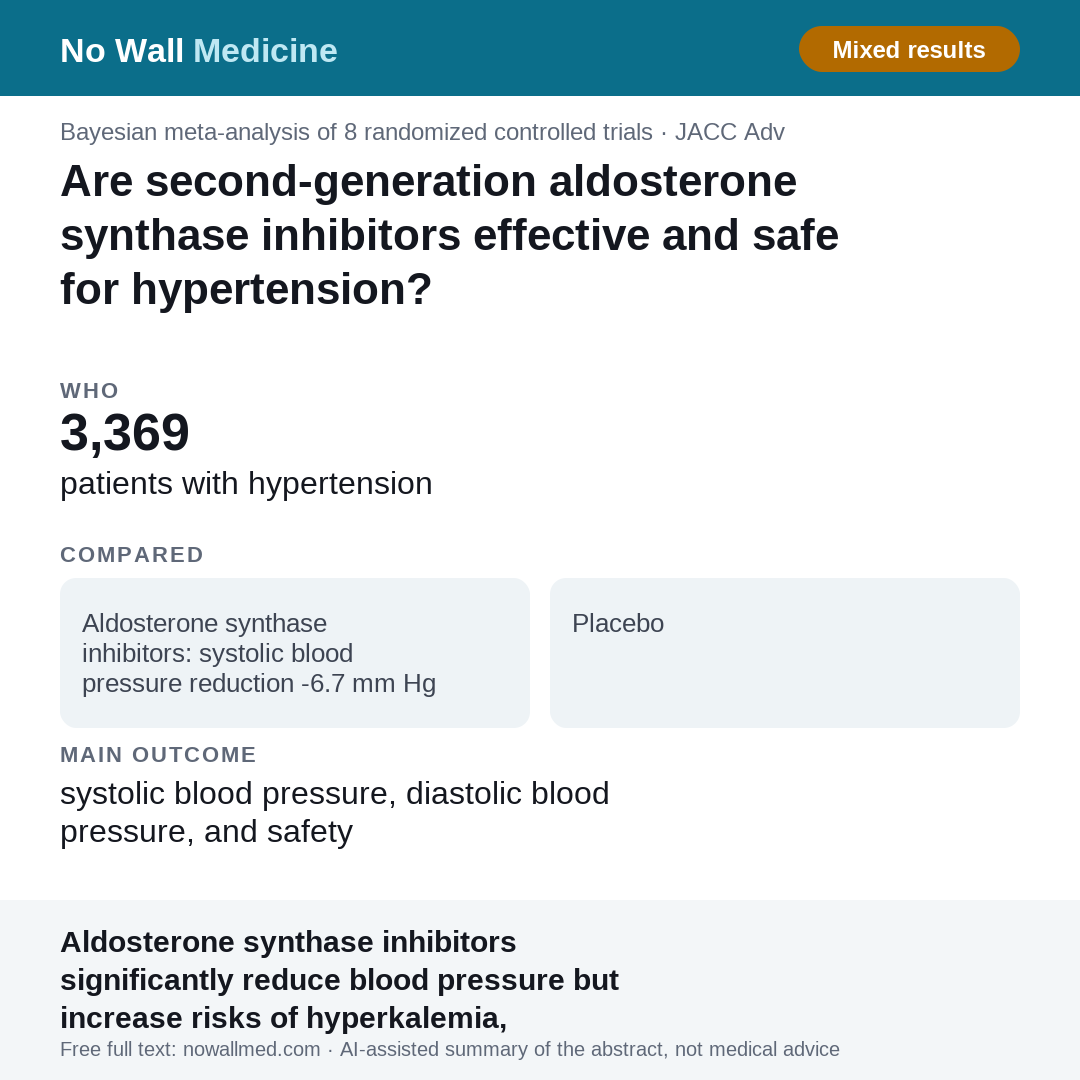
Second-Generation Aldosterone Synthase Inhibitors for Hypertension: A Bayesian Meta-Analysis of Randomized Trials
Bayesian meta-analysis of 8 randomized controlled trialsMixed results
Are second-generation aldosterone synthase inhibitors effective and safe for hypertension?
Who
3,369
patients with hypertension
Compared
Aldosterone synthase inhibitors: systolic blood pressure reduction -6.7 mm Hg
Placebo
Main outcome
systolic blood pressure, diastolic blood pressure, and safety
Result: mean difference -6.7 mm Hg (95% CrI -8.78, -4.59)
Bottom line: Aldosterone synthase inhibitors significantly reduce blood pressure but increase risks of hyperkalemia, hyponatremia, and hypotension.
JACC Adv · 2026-02-27Download image
Comparative efficacy of tirzepatide and glucagon-like peptide-1 receptor agonists on cardiovascular outcomes in patients with type 2 diabetes: a systematic review and network meta-analysis
Systematic review and network meta-analysisBenefit found
How does tirzepatide compare to placebo and glucagon-like peptide-1 receptor agonists for cardiovascular outcomes?
Who
Adults with type 2 diabetes and established atherosclerotic cardiovascular disease or high cardiovascular risk
Compared
Tirzepatide
Placebo
Glucagon-like peptide-1 receptor agonists
Main outcome
Major adverse cardiovascular events, cardiovascular mortality, all-cause mortality, non-fatal myocardial infarction, or non-fatal stroke
Result: hazard ratio 0.79 (95% CI 0.69-0.91) for MACE (tirzepatide vs placebo)
Bottom line: Tirzepatide significantly reduces cardiovascular event risk compared to placebo and provides efficacy comparable to glucagon-like peptide-1 receptor agonists.
Limitation: Formal statistical comparisons between tirzepatide and the glucagon-like peptide-1 receptor agonist class could not be performed
Cardiovasc Diabetol · 2026-02-27Download image

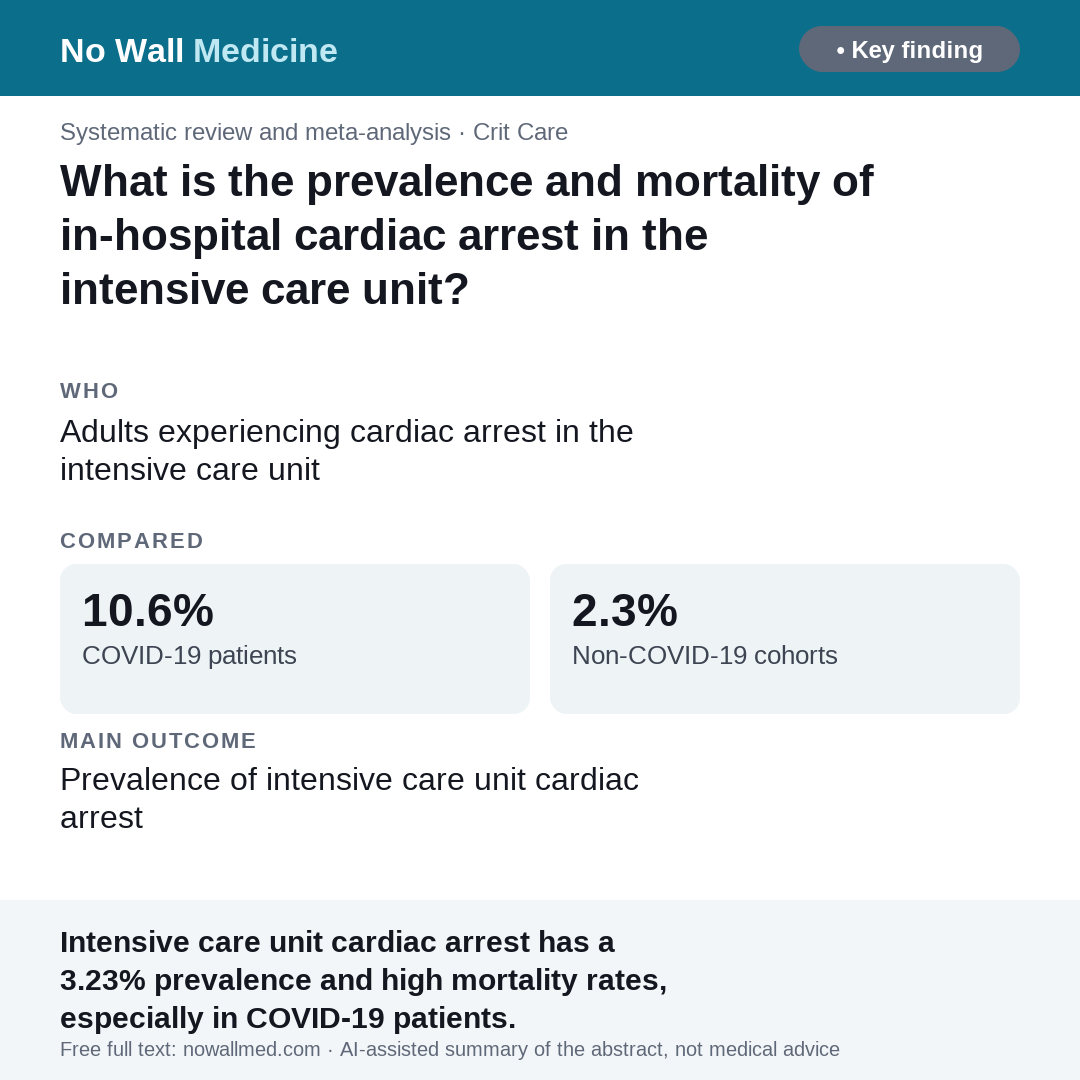
Prevalence and outcomes of in-hospital cardiac arrest in the intensive care unit: a systematic review and meta-analysis
Systematic review and meta-analysisHarm found
What is the prevalence and mortality of in-hospital cardiac arrest in the intensive care unit?
Who
Adults experiencing cardiac arrest in the intensive care unit
Compared
10.6%COVID-19 patients (95%-CI: 5.4–19.7)
2.3%Non-COVID-19 cohorts (95%-CI: 1.5–3.5)
Main outcome
Prevalence of intensive care unit cardiac arrest
Result: pooled proportion 3.23% (95% CI: 2.08–4.98)
Bottom line: Intensive care unit cardiac arrest has a 3.23% prevalence and high mortality rates, especially in COVID-19 patients.
Crit Care · 2026-02-27Download image
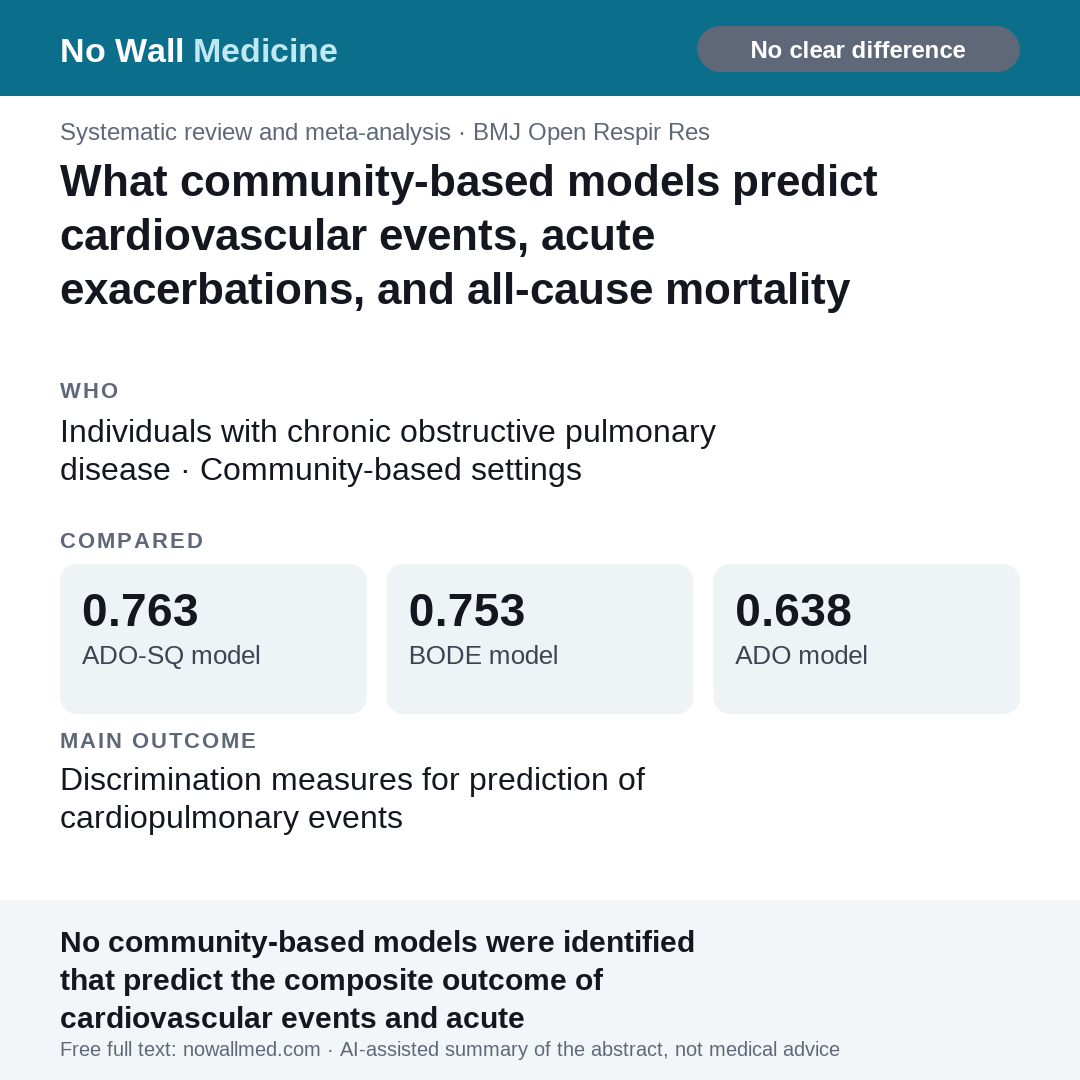
Community-based prediction models of cardiovascular events, acute exacerbations and all-cause mortality in individuals with chronic obstructive pulmonary disease: a systematic review and meta-analysis on behalf of the International Cardiovascular and Respiratory Alliance
Systematic review and meta-analysisNo clear difference
What community-based models predict cardiovascular events, acute exacerbations, and all-cause mortality in COPD?
Who
Individuals with chronic obstructive pulmonary disease · Community-based settings
Compared
0.763ADO-SQ model (95% CI 0.533 to 0.942)
0.753BODE model (95% CI 0.583 to 0.907)
0.638ADO model (95% CI 0.443 to 0.827)
Main outcome
Discrimination measures for prediction of cardiopulmonary events
Bottom line: No community-based models were identified that predict the composite outcome of cardiovascular events and acute exacerbations in COPD.
Limitation: Risk of bias was high for 57.9% of studies and none evaluated clinical utility.
BMJ Open Respir Res · 2026-02-27Download image
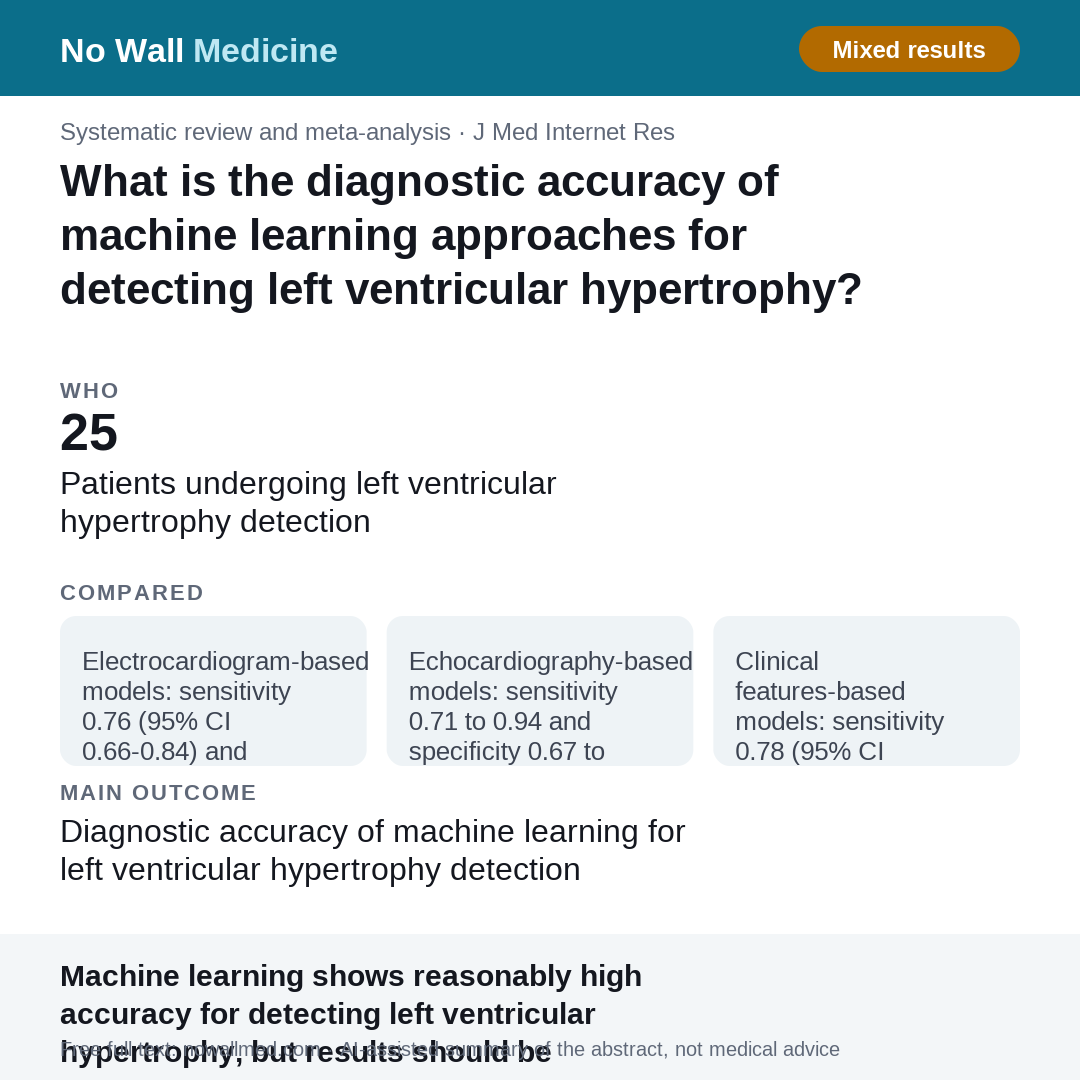
Machine Learning in Left Ventricular Hypertrophy Detection: Systematic Review and Meta-Analysis
Systematic review and meta-analysisMixed results
What is the diagnostic accuracy of machine learning approaches for detecting left ventricular hypertrophy?
Who
25
Patients undergoing left ventricular hypertrophy detection
Compared
Electrocardiogram-based models: sensitivity 0.76 (95% CI 0.66-0.84) and specificity 0.84 (95% CI 0.78-0.89)
Echocardiography-based models: sensitivity 0.71 to 0.94 and specificity 0.67 to 0.96
Clinical features-based models: sensitivity 0.78 (95% CI 0.69-0.85) and specificity 0.71 (95% CI 0.65-0.76)
Main outcome
Diagnostic accuracy of machine learning for left ventricular hypertrophy detection
Bottom line: Machine learning shows reasonably high accuracy for detecting left ventricular hypertrophy, but results should be interpreted with caution.
Limitation: Extreme heterogeneity reported in the meta-analysis and limited evidence.
J Med Internet Res · 2026-02-27Download image