Visual abstracts
New randomized trials and meta-analyses from leading journals at a glance: who was studied, what was compared, and what was found. Every paper is free to read in full.
All specialtiesCardiology 400Oncology 322Gastroenterology & Hepatology 162Infectious Disease 320Neurology 183Psychiatry & Mental Health 269Pulmonology 183Critical Care 125Endocrinology & Diabetes 242Pediatrics 193Surgery 134Orthopedics & Sports Medicine 81Neurosurgery 24Cardiothoracic & Vascular Surgery 47Plastic & Reconstructive Surgery 81Nephrology 78Rheumatology 82Hematology 96Dermatology 42Ophthalmology 71Obstetrics & Gynecology 125Public & Global Health 124Radiology & Imaging 37Anesthesiology 72Urology 91ENT (Otolaryngology) 48Emergency Medicine 41Allergy & Immunology 49Geriatrics 118Family Medicine & Primary Care 68Medical Genetics & Genomics 37Pathology & Laboratory Medicine 6Physical Medicine & Rehabilitation 98Palliative Care 61Nutrition 136Digital Health & AI 348General Medicine 49
Molecular Relatedness of Maternal and Neonatal Multidrug-Resistant Gram-Negative Colonization Isolates in Low- and Middle-Income Countries: A Systematic Review
Systematic reviewNo clear difference
Is MDR-GN transmitted vertically
Who
11
Mother-neonate dyads in low-income countries · low- and middle-income countries
Compared
Maternal
Neonatal
Main outcome
MDR-GN colonization
Result: rarely related
Bottom line: Vertical transmission is rare
Limitation: literature remains scarce
Open Forum Infect Dis · 2026-01-14Download image

Systematic review on relapse-prevention strategies following successful electroconvulsive therapy for major depressive disorder
Systematic review and narrative synthesisBenefit found
What strategies prevent relapse following successful electroconvulsive therapy for major depressive disorder?
Who
11119
Adults with unipolar major depressive disorder responding to acute electroconvulsive therapy
Compared
Lithium and pharmacotherapy: most consistently associated with reduced relapse
Continuation electroconvulsive therapy and medication: reduced relapse
Psychotherapy: limited evidence
Main outcome
Relapse prevention following successful electroconvulsive therapy
Bottom line: Lithium and combination continuation electroconvulsive therapy with medication show the strongest evidence for preventing relapse.
Limitation: Heterogeneity, small sample sizes, and inconsistent definitions of relapse.
BJPsych Open · 2026-01-14Download image

Accuracy of Deep Learning in Diagnosing Chronic Obstructive Pulmonary Disease: Systematic Review and Meta-Analysis
Systematic review and meta-analysis of 56 studiesMixed results
What is the accuracy of deep learning for diagnosing and grading chronic obstructive pulmonary disease?
Who
886753
886,753 participants across various imaging and audio modalities
Compared
Binary COPD classification: AUC 0.93
Multiclass GOLD staging: limited accuracy
Main outcome
diagnostic accuracy for COPD detection and severity grading
Result: sensitivity 0.87 (95% CI 0.85-0.90), specificity 0.88 (95% CI 0.84-0.92)
Bottom line: Deep learning shows high accuracy for binary COPD detection but limited accuracy for grading disease severity stages.
Limitation: substantial heterogeneity and limited external validation
J Med Internet Res · 2026-01-14Download image

Effectiveness of Machine Learning in Detecting Vessels Encapsulating Tumor Clusters in Hepatocellular Carcinoma: Systematic Review and Meta-Analysis
Systematic review and meta-analysis of 31 studiesBenefit found
What is the diagnostic accuracy of machine learning for detecting vessels encapsulating tumor clusters in hepatocellular carcinoma?
Who
6755
6755 patients with hepatocellular carcinoma
Compared
Nonradiomic models: area under the summary receiver operating characteristic curve 0.80 (95% CI 0.76-0.83)
Radiomic models: area under the summary receiver operating characteristic curve 0.84 (95% CI 0.80-0.87)
Main outcome
diagnostic accuracy for detecting vessels encapsulating tumor clusters
Bottom line: Machine learning shows potential for detecting vessels encapsulating tumor clusters in hepatocellular carcinoma, though clinical translation requires more research.
Limitation: Methodological heterogeneity, limited validation, and a high risk of bias.
J Med Internet Res · 2026-01-14Download image

Psychosocial Factors Surrounding Aesthetic Rhinoplasty: A Systematic Review
Systematic reviewMixed results
How do psychosocial factors influence aesthetic rhinoplasty outcomes and patient satisfaction?
Who
Patients undergoing aesthetic rhinoplasty
Compared
Patients with preexisting mental health conditions: lower postoperative satisfaction
Patients with psychological readiness: significantly influenced perceived outcomes
Main outcome
Postoperative satisfaction and perceived surgical outcomes
Bottom line: Preexisting mental health conditions like depression and anxiety are associated with lower postoperative satisfaction despite successful surgery.
Plast Reconstr Surg Glob Open · 2026-01-14Download image

Deaths potentially averted by small changes in physical activity and sedentary time: an individual participant data meta-analysis of prospective cohort studies
Meta-analysis of cohort studiesBenefit found
Deaths prevented by physical activity
Who
40327
adults with device-measured physical activity · Norway, Sweden, USA
Compared
6.0%least active (95% CI 4.3-7.4)
10.0%all except most active (6.3-13.4)
Main outcome
all cause mortality
Result: hazard ratio not given
Bottom line: Small physical activity increases prevent deaths
Lancet · 2026-01-13Download image

Pharmacological therapy for preventing esophageal stricture after endoscopic submucosal dissection: a systematic review and network meta-analysis
Network meta-analysisBenefit found
Which pharmacological therapies best prevent esophageal stricture after endoscopic submucosal dissection?
Who
3085
Patients who underwent endoscopic submucosal dissection
Compared
Oral hydrocortisone sodium succinate and aluminum phosphate gel: RR = 0.075 (95% CrI: 0.017, 0.24)
Standard care
Main outcome
Incidence of esophageal stricture
Result: RR = 0.075 (95% CrI: 0.017, 0.24)
Bottom line: Oral hydrocortisone sodium succinate combined with aluminum phosphate gel most effectively reduces esophageal stricture incidence after endoscopic submucosal dissection.
Int J Surg · 2026-01-13Download image

Testing and evaluation of generative large language models in electronic health record applications: a systematic review
Systematic reviewUnclear result
How are generative large language models evaluated in electronic health record applications?
Who
196
Articles using generative large language models to analyze real-world electronic health record data · PubMed and Web of Science
Compared
62.2%Clinical decision support tasks
5.6%Summarizations tasks
5.1%Patient communications tasks
Main outcome
Clinical specialties, use cases, and evaluation methods used
Bottom line: Generative large language models are used across various specialties, but standardized and clinically meaningful evaluation frameworks are urgently needed.
J Am Med Inform Assoc · 2026-01-13Download image

Preoperative Nonopioid Analgesia Reduces Postoperative Opioid Consumption After Arthroscopic Surgery: A Systematic Review and Meta-analysis of Randomized Controlled Trials
Systematic review and meta-analysisBenefit found
Does preoperative nonopioid analgesia reduce postoperative opioid consumption after arthroscopic surgery?
Who
22
Patients undergoing arthroscopic surgery
Compared
Preoperative nonopioid medication: 4.3 mg reduction in oral morphine equivalents
Control
Main outcome
Postoperative opioid consumption in oral morphine equivalents
Result: mean reduction 4.3 mg of oral morphine equivalents (95% CI, -6.1 to -2.5)
Bottom line: Preoperative nonopioid medications reduce postoperative opioid consumption after arthroscopic surgery, though improvements may not be clinically meaningful.
Limitation: The current available literature is highly heterogeneous.
Am J Sports Med · 2026-01-13Download image

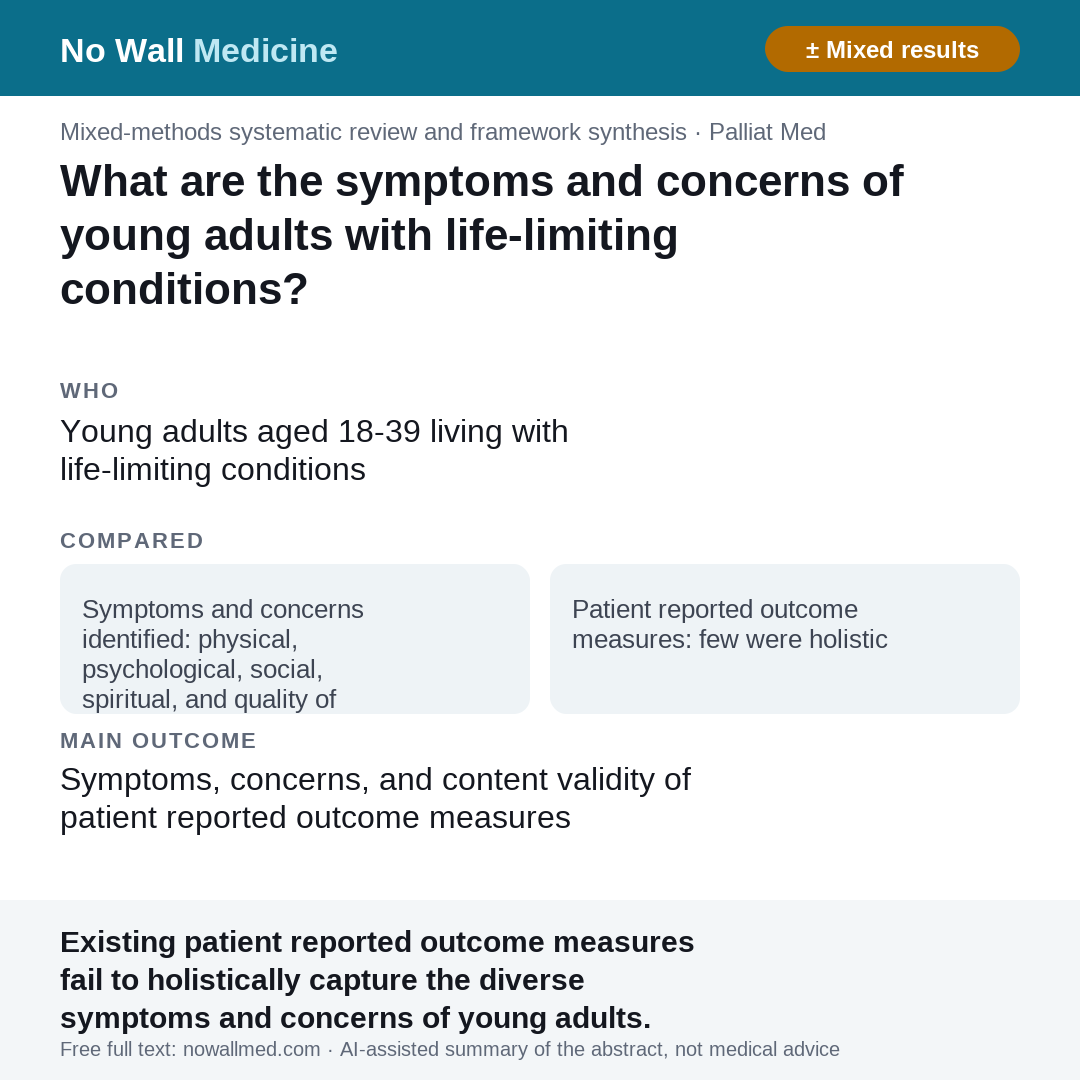
What are the symptoms and concerns of young adults living with life-limiting conditions and how well are they captured by patient reported outcome measures? A mixed-methods systematic review and framework synthesis
Mixed-methods systematic review and framework synthesisMixed results
What are the symptoms and concerns of young adults with life-limiting conditions?
Who
Young adults aged 18-39 living with life-limiting conditions
Compared
Symptoms and concerns identified: physical, psychological, social, spiritual, and quality of healthcare concerns
Patient reported outcome measures: few were holistic
Main outcome
Symptoms, concerns, and content validity of patient reported outcome measures
Bottom line: Existing patient reported outcome measures fail to holistically capture the diverse symptoms and concerns of young adults.
Palliat Med · 2026-01-13Download image
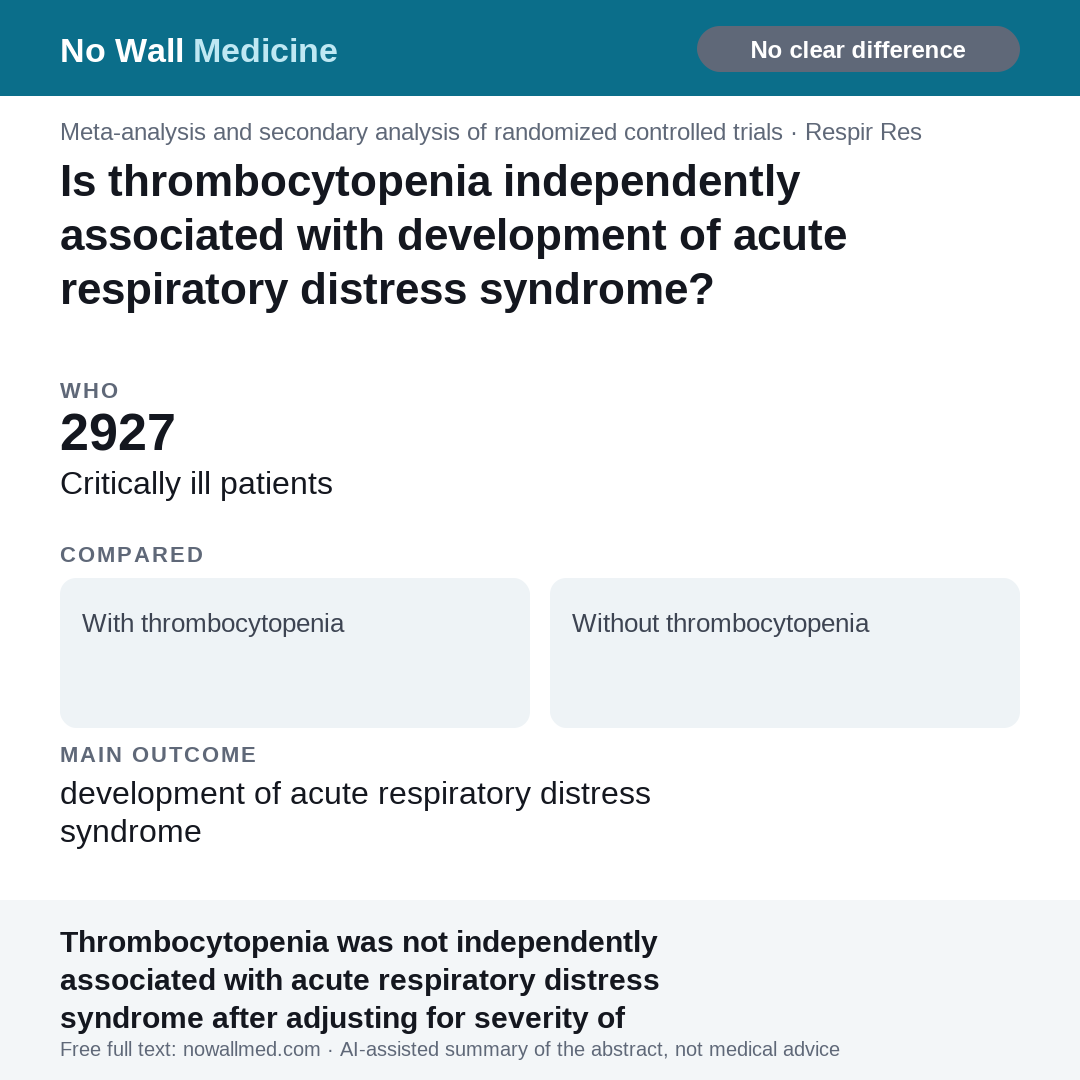
Association between thrombocytopenia and development of acute respiratory distress syndrome
Meta-analysis and secondary analysis of randomized controlled trialsNo clear difference
Is thrombocytopenia independently associated with development of acute respiratory distress syndrome?
Who
2927
Critically ill patients
Compared
With thrombocytopenia
Without thrombocytopenia
Main outcome
development of acute respiratory distress syndrome
Result: odds ratio 1.57 (95% CI 0.95–2.60)
Bottom line: Thrombocytopenia was not independently associated with acute respiratory distress syndrome after adjusting for severity of illness.
Limitation: The association may represent a marker of severe illness rather than a mechanistic relationship.
Respir Res · 2026-01-13Download image
Medication-related problems and their associated factors among paediatric patients in Ethiopia: a systematic review and meta-analysis
Meta-analysis of 21 studiesHarm found
Medication problems in Ethiopian children
Who
5969
paediatric patients in Ethiopia · hospitals in Ethiopia
Compared
53%with medication problems (95% CI 45% to 61%)
without medication problems
Main outcome
medication-related problems
Result: pooled prevalence 53% (95% CI 45% to 61%)
Bottom line: More than half experience medication problems
BMJ Paediatr Open · 2026-01-13Download image

Assessment of the Diagnostic Performance and Clinical Impact of AI in Hepatic Steatosis: Systematic Review and Meta-Analysis
Meta-analysis of 36 studiesBenefit found
AI for hepatic steatosis diagnosis accurate
Who
patients with hepatic steatosis
Compared
AI models
traditional machine learning
Main outcome
diagnostic accuracy
Result: AUC 0.98 (95% CI 0.96-0.99)
Bottom line: AI shows remarkable potential for HS diagnosis
Limitation: high risk of bias and heterogeneity
J Med Internet Res · 2026-01-13Download image

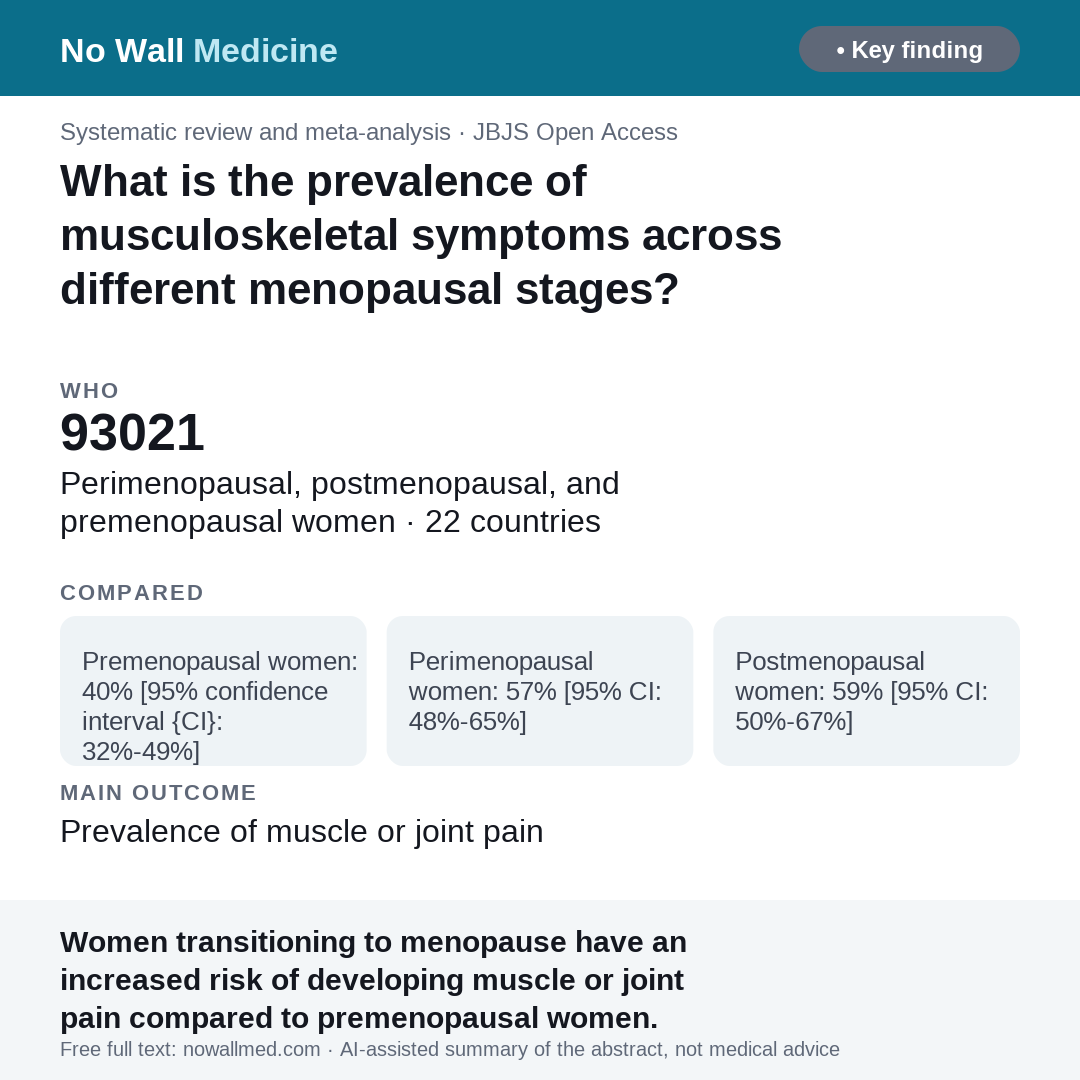
Musculoskeletal Manifestations of Perimenopause: A Systematic Review and Meta-Analysis of 93,021 Women
Systematic review and meta-analysisHarm found
What is the prevalence of musculoskeletal symptoms across different menopausal stages?
Who
93021
Perimenopausal, postmenopausal, and premenopausal women · 22 countries
Compared
Premenopausal women: 40% [95% confidence interval {CI}: 32%-49%]
Perimenopausal women: 57% [95% CI: 48%-65%]
Postmenopausal women: 59% [95% CI: 50%-67%]
Main outcome
Prevalence of muscle or joint pain
Result: risk ratio 1.35 (95% CI 1.25-1.46) for perimenopause; risk ratio 1.40 (95% CI 1.28-1.53) for postmenopause
Bottom line: Women transitioning to menopause have an increased risk of developing muscle or joint pain compared to premenopausal women.
Limitation: Findings are based on observational studies with significant heterogeneity and underreporting of specific conditions.
JBJS Open Access · 2026-01-13Download image
Associations of perfluoroalkyl and polyfluoroalkyl substances with markers of glycaemic control, insulin secretion and sensitivity, and diabetes risk: a systematic review and meta-analyses
Systematic review and meta-analysisMixed results
How do perfluoroalkyl and polyfluoroalkyl substances associate with diabetes risk and glycemic markers?
Who
Epidemiological study participants
Compared
Higher perfluoroalkyl and polyfluoroalkyl substances exposure
Lower perfluoroalkyl and polyfluoroalkyl substances exposure
Main outcome
Gestational diabetes mellitus, type 2 diabetes, and glycemic markers
Bottom line: Perfluoroalkyl and polyfluoroalkyl substances are associated with higher gestational diabetes risk and increased insulin resistance markers.
Limitation: Evidence was of low-moderate quality and limited strength, with small effect sizes for some markers.
Funded by: National Institutes of Health and National Institute of Environmental Health Sciences
eClinicalMedicine · 2026-01-12Download image

Distribution of capsule and O types in Klebsiella pneumoniae causing neonatal sepsis in Africa and South Asia: A meta-analysis of genome-predicted serotype prevalence to inform potential vaccine coverage
Meta-analysis of 13 surveillance studiesBenefit found
What is the prevalence of capsule and O types in Klebsiella pneumoniae causing neonatal sepsis?
Who
1,930
Klebsiella pneumoniae neonate blood isolates · 35 sites in 13 countries in Africa and South Asia
Compared
72.9%20 K loci (95% credible interval: [69.4%, 76.5%])
Top-5 O types: 86.2% [82.6, 89.9%]
Top-10 O types: ~99%
Main outcome
Prevalence of capsule and lipopolysaccharide serotypes
Bottom line: A 20-valent capsule vaccine could cover at least 70% of infections in target regions.
Limitation: Reliance on genome sequences to predict serotypes and lack of longitudinal data.
PLOS Med · 2026-01-12Download image

A systematic review of glucocorticoid use in type 1 diabetes: Glycaemic effects and clinical management strategies
Systematic reviewHarm found
What are the glycaemic effects of glucocorticoids in people with type 1 diabetes?
Who
368
Adult people with type 1 diabetes exposed to glucocorticoids
Compared
Glucocorticoid exposure: marked hyperglycaemia and increased insulin requirements
Oral and intravenous regimens: insulin dose escalation up to 70% from baseline
Main outcome
glycaemic effects and management strategies
Bottom line: Glucocorticoid therapy destabilises glycaemic management in people with type 1 diabetes, requiring proactive insulin adjustments and frequent monitoring.
Diabetes Obes Metab · 2026-01-12Download image

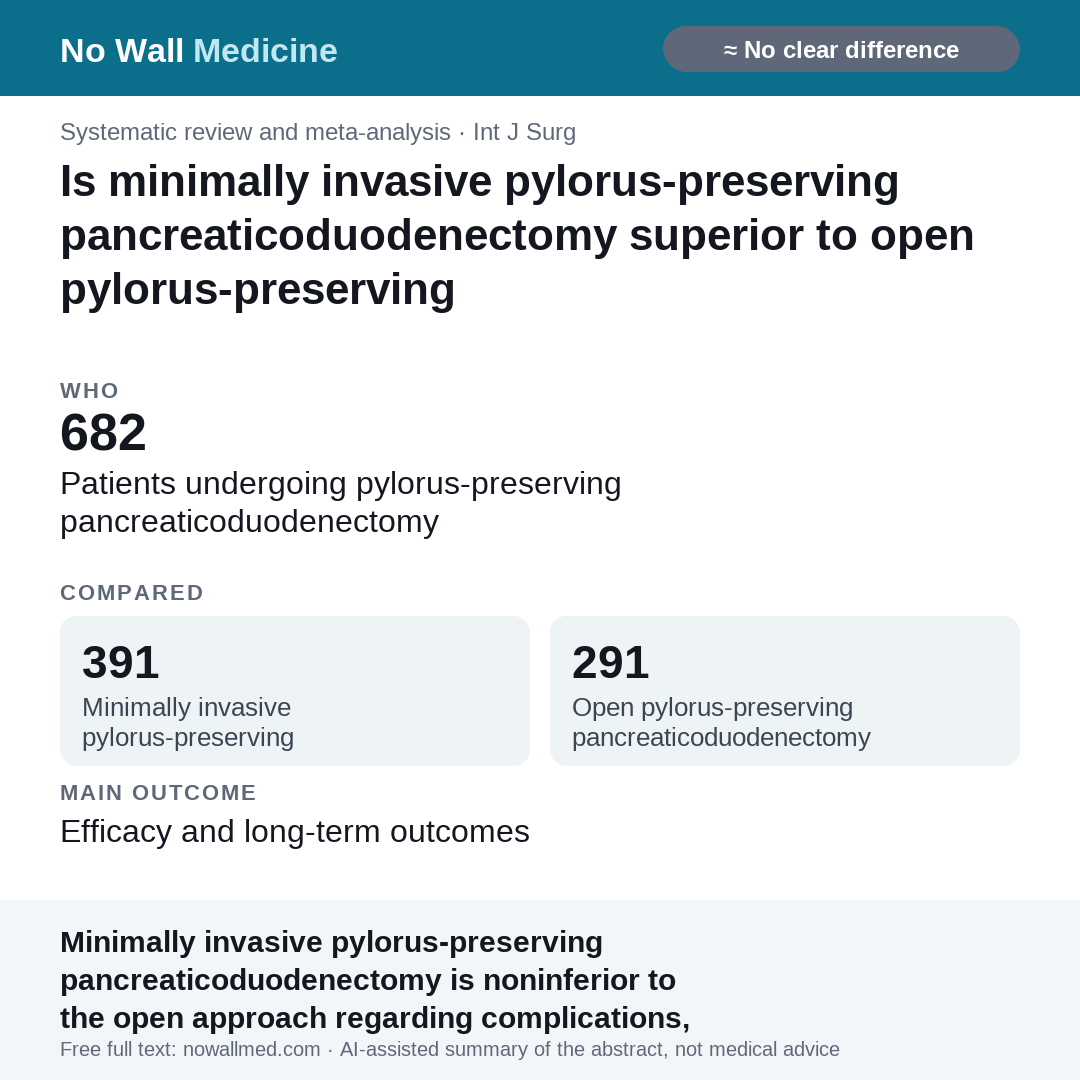
Does minimally invasive pylorus-preserving pancreaticoduodenectomy (MI-PPPD) triumph over open pylorus-preserving pancreaticoduodenectomy (O-PPPD)? A systematic review and meta-analysis
Systematic review and meta-analysisNo clear difference
Is minimally invasive pylorus-preserving pancreaticoduodenectomy superior to open pylorus-preserving pancreaticoduodenectomy?
Who
682
Patients undergoing pylorus-preserving pancreaticoduodenectomy
Compared
391Minimally invasive pylorus-preserving pancreaticoduodenectomy
291Open pylorus-preserving pancreaticoduodenectomy
Main outcome
Efficacy and long-term outcomes
Bottom line: Minimally invasive pylorus-preserving pancreaticoduodenectomy is noninferior to the open approach regarding complications, hospital stay, and oncological outcomes.
Limitation: Outcomes have been influenced by high complexity and steep learning curve.
Int J Surg · 2026-01-12Download image
Risk Factors and Outcomes Associated With Delayed Villous Maturation in Placenta: A Systematic Review and Meta-Analysis
Systematic review and meta-analysisHarm found
What are the risk factors and outcomes associated with delayed villous maturation?
Who
Observational studies reporting histopathological findings of delayed villous maturation
Compared
Delayed villous maturation
Control
Main outcome
Risk factors and clinical outcomes associated with delayed villous maturation
Result: stillbirth OR 4.89 (95% CI 3.55, 6.72)
Bottom line: Delayed villous maturation is associated with maternal diabetes, obesity, fetal malformations, stillbirth, and preterm birth.
BJOG · 2026-01-12Download image

Pain management after open thoracotomy 2025: procedure-specific postoperative pain management (PROSPECT) recommendations
Systematic review and modified Delphi approachBenefit found
What are the recommended postoperative pain management strategies for patients undergoing open thoracotomy?
Who
Patients undergoing open thoracotomy
Compared
First-line regional analgesia: thoracic epidural analgesia or paravertebral blockade
Second-line regional analgesia: erector spinae plane, rhomboid intercostal or intercostal nerve blockade
Alternative when regional analgesia unavailable: acupuncture or cryoanalgesia
Main outcome
Postoperative pain management recommendations
Bottom line: Thoracic epidural analgesia or paravertebral blockade are recommended as first-line interventions combined with basic systemic analgesia.
Limitation: Acupuncture or cryoanalgesia recommendations have a low level of supportive evidence.
Anaesthesia · 2026-01-12Download image