Visual abstracts
New randomized trials and meta-analyses from leading journals at a glance: who was studied, what was compared, and what was found. Every paper is free to read in full.
All specialtiesCardiology 4763Oncology 4042Gastroenterology & Hepatology 1902Infectious Disease 3756Neurology 1872Psychiatry & Mental Health 2214Pulmonology 2042Critical Care 1319Endocrinology & Diabetes 2544Pediatrics 2889Surgery 2479Orthopedics & Sports Medicine 917Neurosurgery 525Cardiothoracic & Vascular Surgery 656Plastic & Reconstructive Surgery 574Nephrology 1107Rheumatology 810Hematology 1090Dermatology 611Ophthalmology 532Obstetrics & Gynecology 1645Public & Global Health 1037Radiology & Imaging 617Anesthesiology 957Urology 745ENT (Otolaryngology) 494Emergency Medicine 481Allergy & Immunology 309Geriatrics 972Family Medicine & Primary Care 533Medical Genetics & Genomics 659Pathology & Laboratory Medicine 156Physical Medicine & Rehabilitation 734Palliative Care 421Nutrition 1560Digital Health & AI 2133General Medicine 318
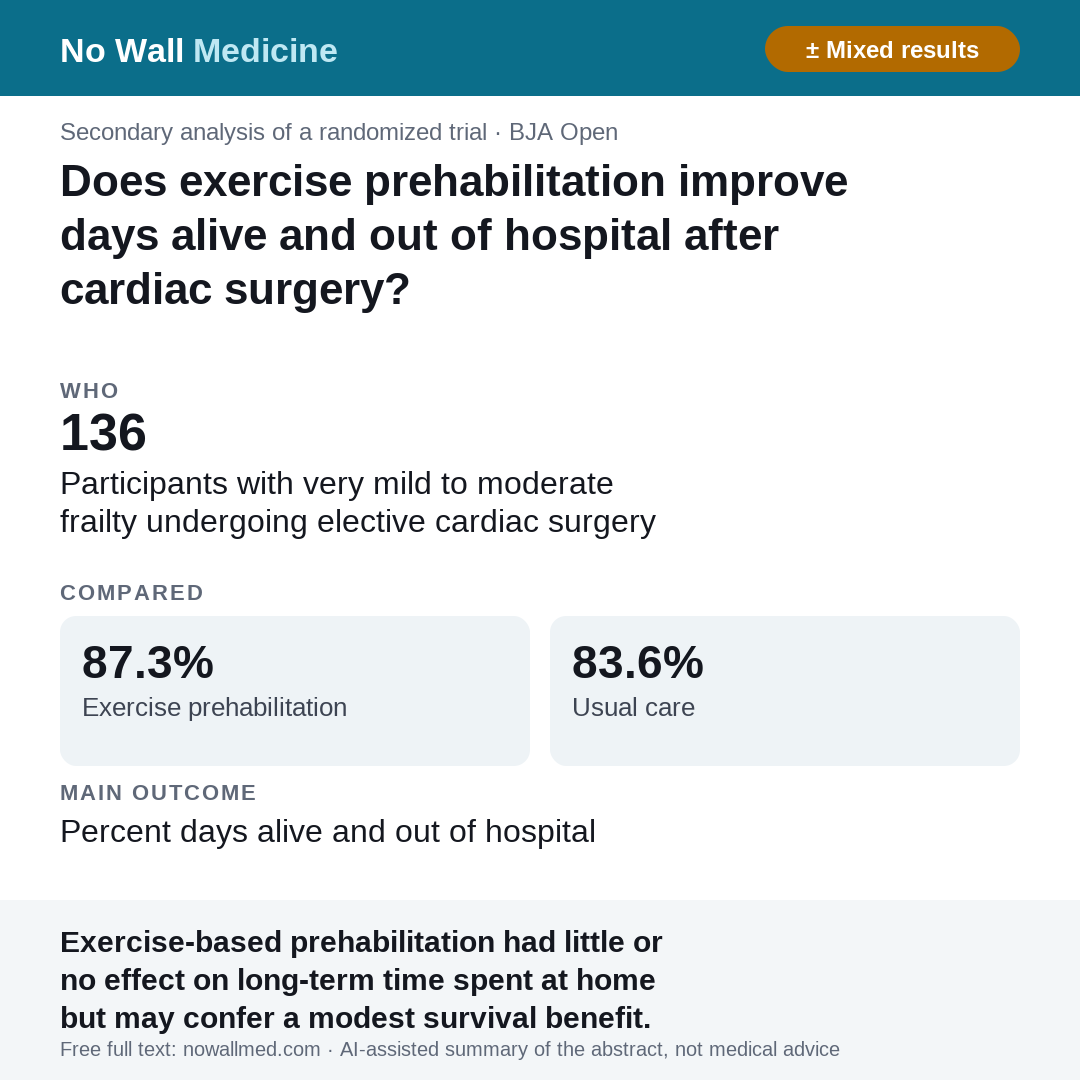
Effect of exercise prehabilitation on days alive and out of hospital after cardiac surgery: a secondary analysis of the randomised PRE-habilitation for improving QUality of recovery after ELective cardiac surgery trial
Secondary analysis of a randomized trialMixed results
Does exercise prehabilitation improve days alive and out of hospital after cardiac surgery?
Who
136
Participants with very mild to moderate frailty undergoing elective cardiac surgery
Compared
87.3%Exercise prehabilitation
83.6%Usual care
Main outcome
Percent days alive and out of hospital
Result: mean difference: 0.22 yr, 95% CI: 0.01-0.44
Bottom line: Exercise-based prehabilitation had little or no effect on long-term time spent at home but may confer a modest survival benefit.
Limitation: Secondary exploratory analysis with limited sample size
BJA Open · 2026-03-03Download image
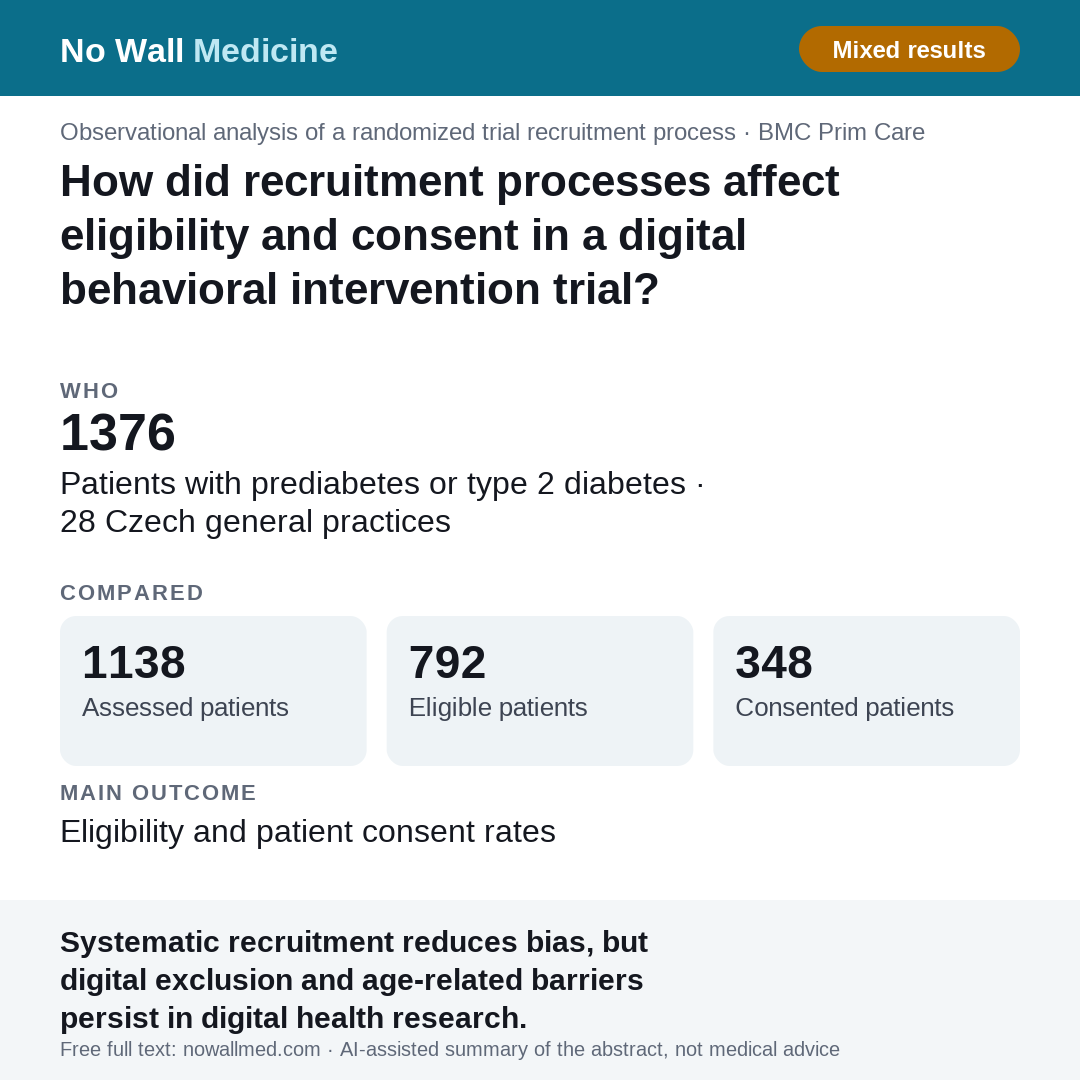
Recruiting patients into a digital behavioural intervention in general practice: insights from the ENERGISED trial
Observational analysis of a randomized trial recruitment processMixed results
How did recruitment processes affect eligibility and consent in a digital behavioral intervention trial?
Who
1376
Patients with prediabetes or type 2 diabetes · 28 Czech general practices
Compared
1138Assessed patients (83%)
792Eligible patients (70% of assessed)
348Consented patients (44% of eligible)
Main outcome
Eligibility and patient consent rates
Bottom line: Systematic recruitment reduces bias, but digital exclusion and age-related barriers persist in digital health research.
Limitation: Digital exclusion, particularly in older adults, persists.
BMC Prim Care · 2026-03-03Download image
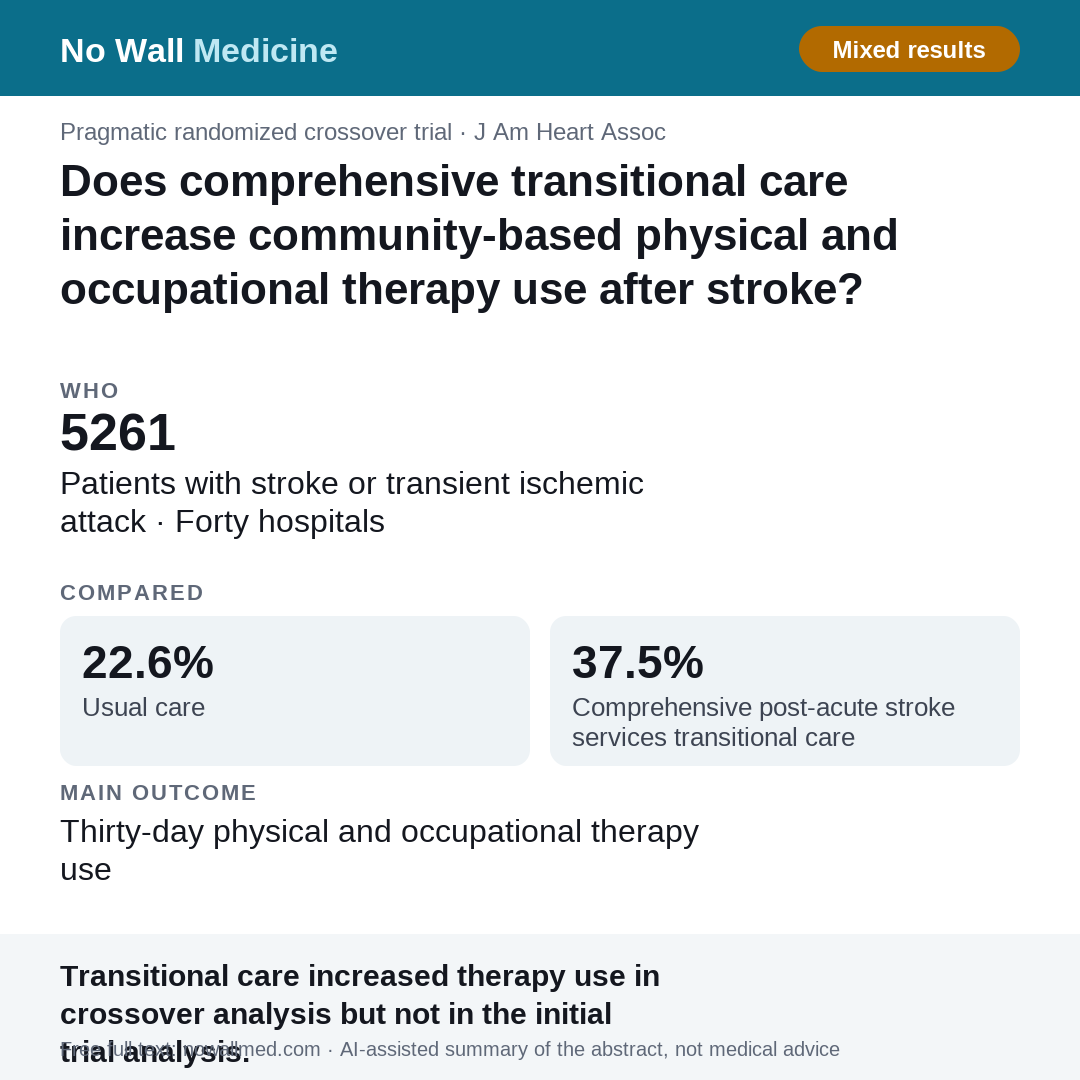
Impact of a Comprehensive Transitional Care Management Model on Use of Community-Based Rehabilitation After Stroke
Pragmatic randomized crossover trialMixed results
Does comprehensive transitional care increase community-based physical and occupational therapy use after stroke?
Who
5261
Patients with stroke or transient ischemic attack · Forty hospitals
Compared
22.6%Usual care
37.5%Comprehensive post-acute stroke services transitional care
Main outcome
Thirty-day physical and occupational therapy use
Result: 9.4% (95% CI, 5.6-13.3%) at 30 days
Bottom line: Transitional care increased therapy use in crossover analysis but not in the initial trial analysis.
Limitation: Inconsistencies may reflect confounding or differences in hospitals that chose to adopt the intervention.
J Am Heart Assoc · 2026-03-03Download image
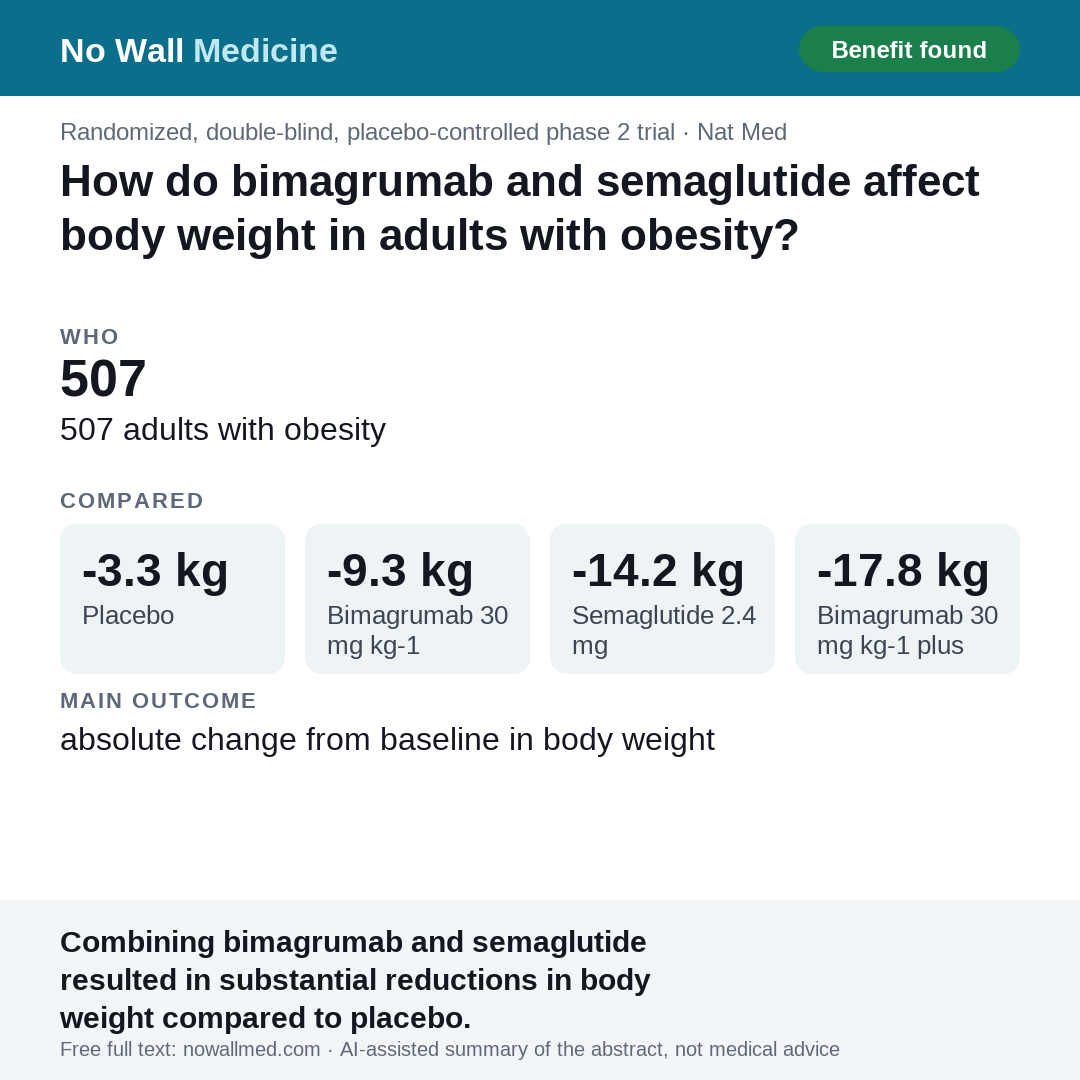
Bimagrumab plus semaglutide alone or in combination for the treatment of obesity: a randomized phase 2 trial
Randomized, double-blind, placebo-controlled phase 2 trialEarly signal
How do bimagrumab and semaglutide affect body weight in adults with obesity?
Who
507
507 adults with obesity
Compared
-3.3 kgPlacebo
-9.3 kgBimagrumab 30 mg kg-1
-14.2 kgSemaglutide 2.4 mg
-17.8 kgBimagrumab 30 mg kg-1 plus semaglutide 2.4 mg
Main outcome
absolute change from baseline in body weight
Bottom line: Combining bimagrumab and semaglutide resulted in substantial reductions in body weight compared to placebo.
Nat Med · 2026-03-02Download image
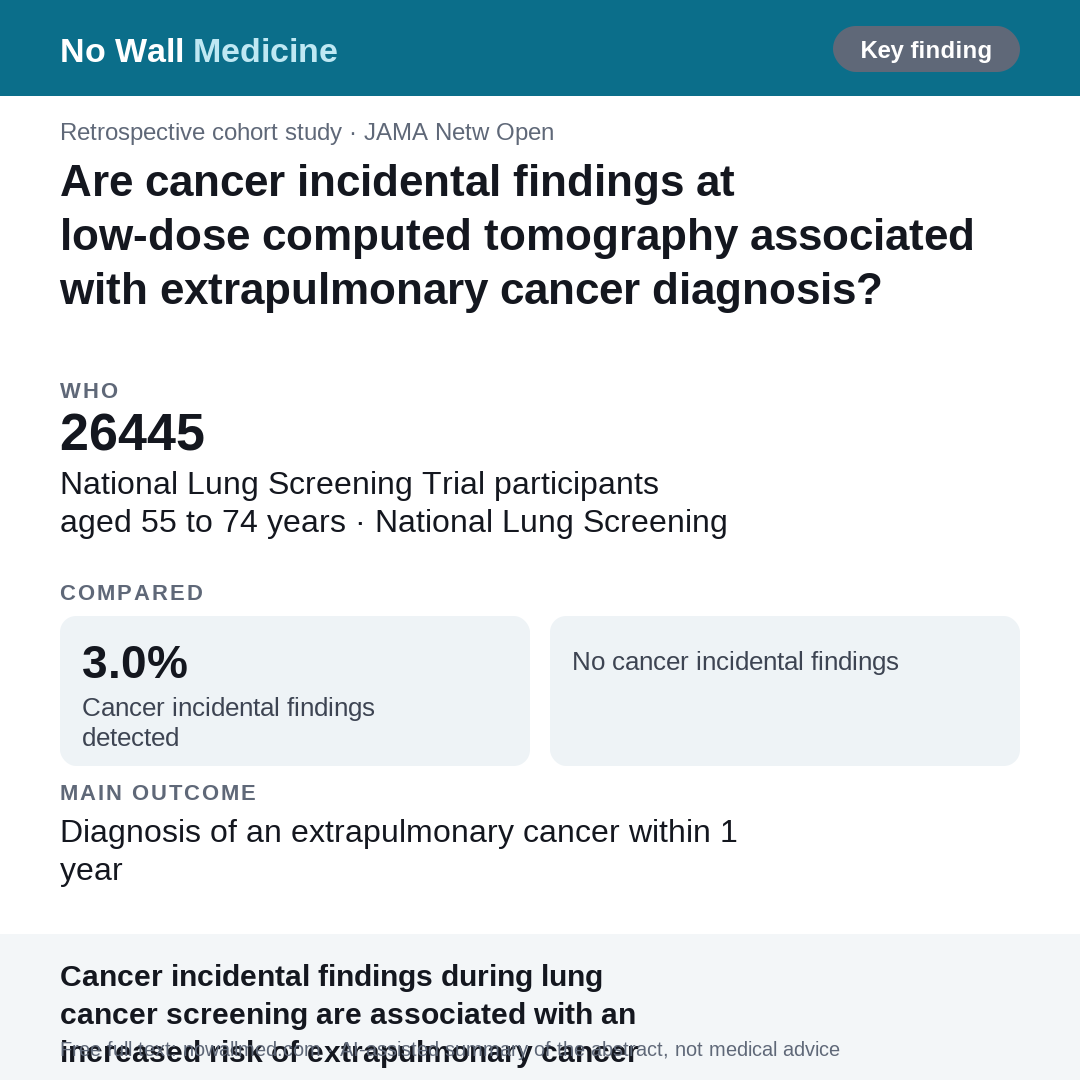
Significant Incidental Findings in the National Lung Screening Trial and Diagnosis of Extrapulmonary Cancer
Retrospective cohort studyKey finding
Are cancer incidental findings at low-dose computed tomography associated with extrapulmonary cancer diagnosis?
Who
26445
National Lung Screening Trial participants aged 55 to 74 years · National Lung Screening Trial
Compared
3.0%Cancer incidental findings detected
No cancer incidental findings
Main outcome
Diagnosis of an extrapulmonary cancer within 1 year
Result: marginal risk difference 13.89 (95% CL, 7.03-20.75) per 1000 participants
Bottom line: Cancer incidental findings during lung cancer screening are associated with an increased risk of extrapulmonary cancer diagnosis within one year.
JAMA Netw Open · 2026-03-02Download image
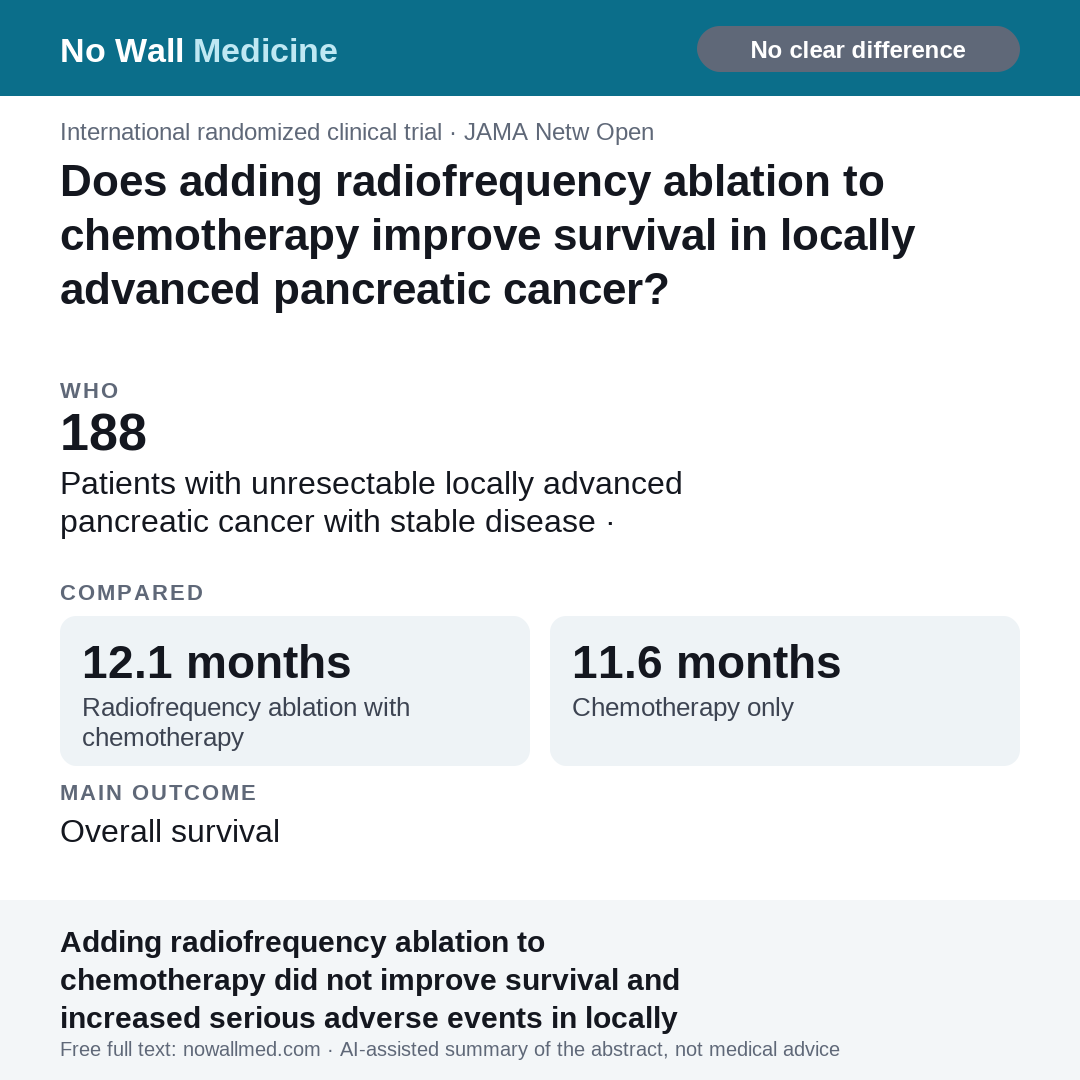
Radiofrequency Ablation and Chemotherapy vs Chemotherapy Only in Locally Advanced Pancreatic Cancer: The PELICAN Randomized Clinical Trial
International randomized clinical trialNo clear difference
Does adding radiofrequency ablation to chemotherapy improve survival in locally advanced pancreatic cancer?
Who
188
Patients with unresectable locally advanced pancreatic cancer with stable disease · International
Compared
12.1 monthsRadiofrequency ablation with chemotherapy
11.6 monthsChemotherapy only
Main outcome
Overall survival
Result: hazard ratio 1.07 (95% CI 0.80-1.45)
Bottom line: Adding radiofrequency ablation to chemotherapy did not improve survival and increased serious adverse events in locally advanced pancreatic cancer.
JAMA Netw Open · 2026-03-02Download image
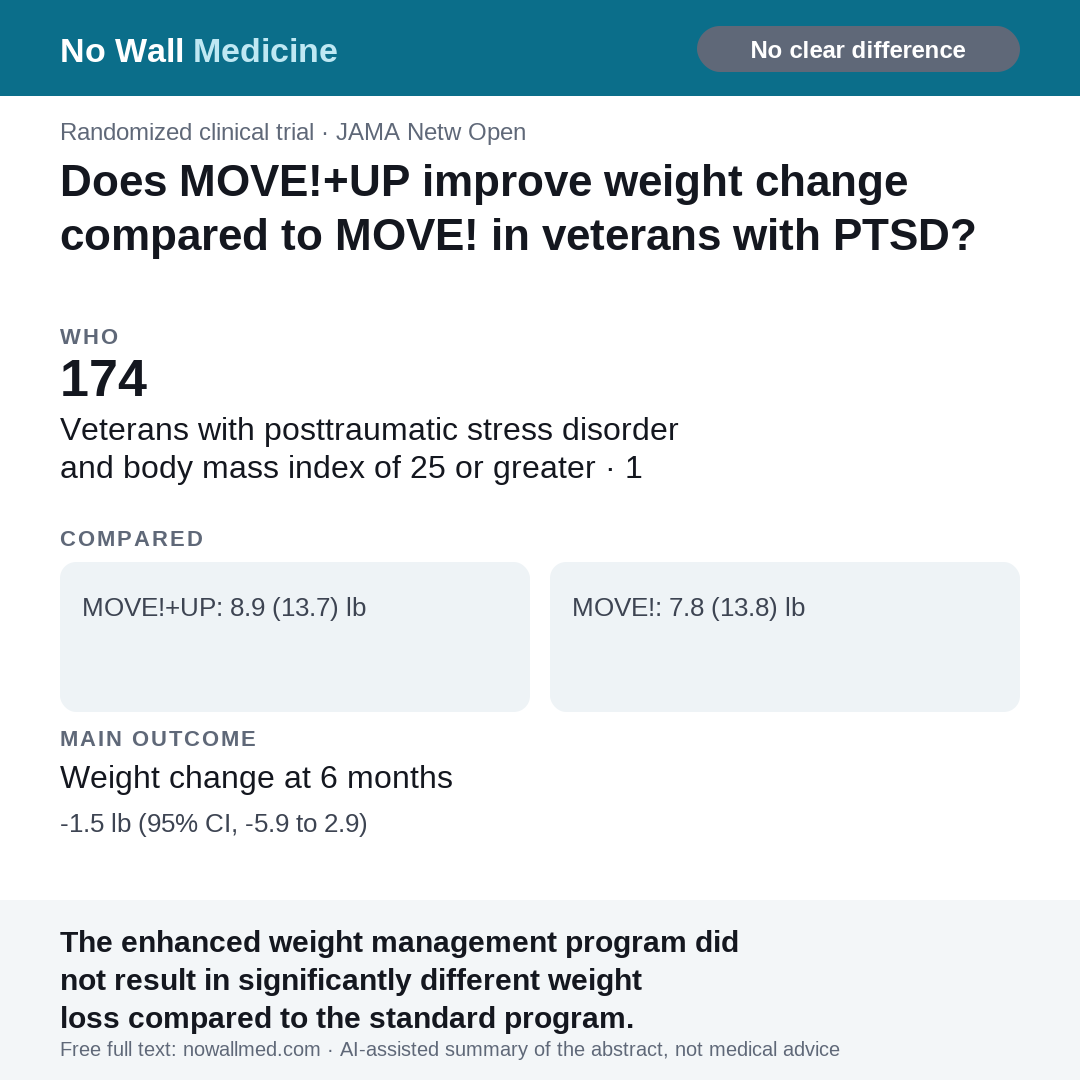
Enhanced Weight Management Program for Veterans With Posttraumatic Stress Disorder: A Randomized Clinical Trial
Randomized clinical trialNo clear difference
Does MOVE!+UP improve weight change compared to MOVE! in veterans with PTSD?
Who
174
Veterans with posttraumatic stress disorder and body mass index of 25 or greater · 1 Veterans Health Administration site
Compared
MOVE!+UP: 8.9 (13.7) lb
MOVE!: 7.8 (13.8) lb
Main outcome
Weight change at 6 months
Result: -1.5 lb (95% CI, -5.9 to 2.9)
Bottom line: The enhanced weight management program did not result in significantly different weight loss compared to the standard program.
JAMA Netw Open · 2026-03-02Download image
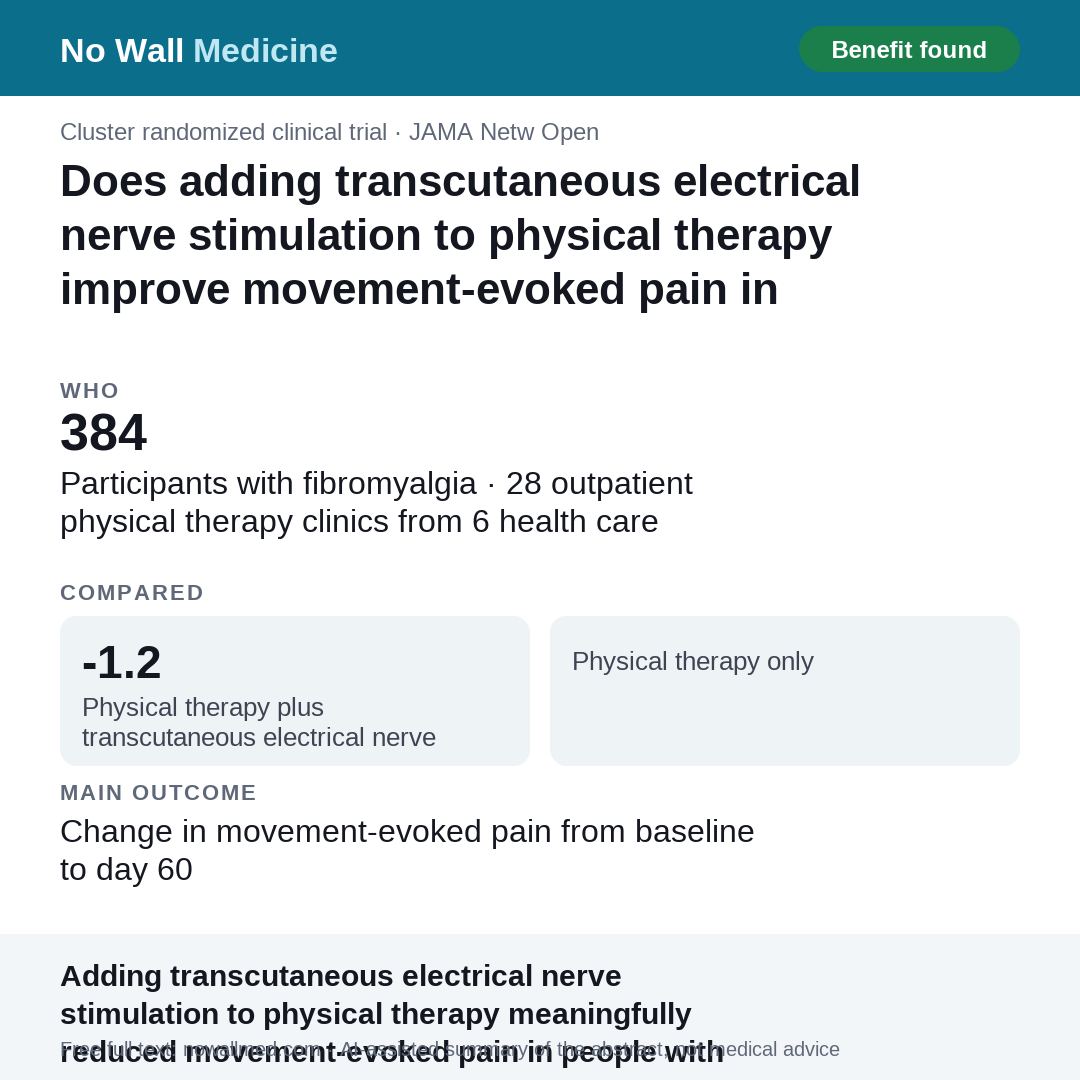
Transcutaneous Electrical Nerve Stimulation and Pain With Movement in People With Fibromyalgia: A Cluster Randomized Clinical Trial
Cluster randomized clinical trialBenefit found
Does adding transcutaneous electrical nerve stimulation to physical therapy improve movement-evoked pain in fibromyalgia?
Who
384
Participants with fibromyalgia · 28 outpatient physical therapy clinics from 6 health care systems
Compared
-1.2Physical therapy plus transcutaneous electrical nerve stimulation (95% CI, -1.6 to -0.7)
Physical therapy only
Main outcome
Change in movement-evoked pain from baseline to day 60
Result: group mean difference, -1.2; 95% CI, -1.6 to -0.7
Bottom line: Adding transcutaneous electrical nerve stimulation to physical therapy meaningfully reduced movement-evoked pain in people with fibromyalgia.
JAMA Netw Open · 2026-03-02Download image
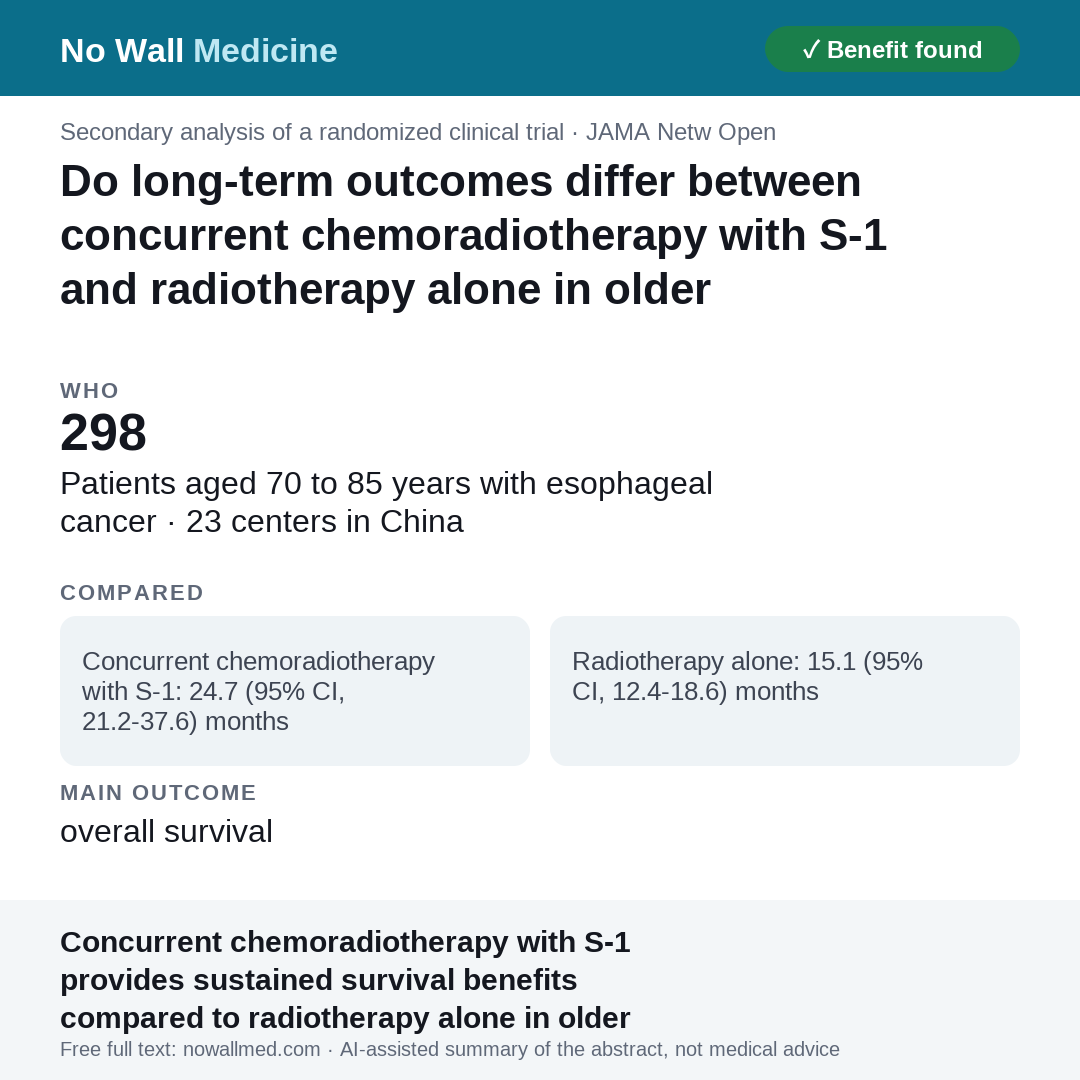
Long-Term Outcomes of Concurrent Chemoradiotherapy With S-1 in Older Patients With Esophageal Cancer: A Secondary Analysis of a Randomized Clinical Trial
Secondary analysis of a randomized clinical trialBenefit found
Do long-term outcomes differ between concurrent chemoradiotherapy with S-1 and radiotherapy alone in older esophageal cancer patients?
Who
298
Patients aged 70 to 85 years with esophageal cancer · 23 centers in China
Compared
Concurrent chemoradiotherapy with S-1: 24.7 (95% CI, 21.2-37.6) months
Radiotherapy alone: 15.1 (95% CI, 12.4-18.6) months
Main outcome
overall survival
Result: hazard ratio 0.69 (95% CI 0.53-0.90)
Bottom line: Concurrent chemoradiotherapy with S-1 provides sustained survival benefits compared to radiotherapy alone in older patients with esophageal cancer.
Limitation: This secondary analysis was not prespecified in the trial protocol.
JAMA Netw Open · 2026-03-02Download image
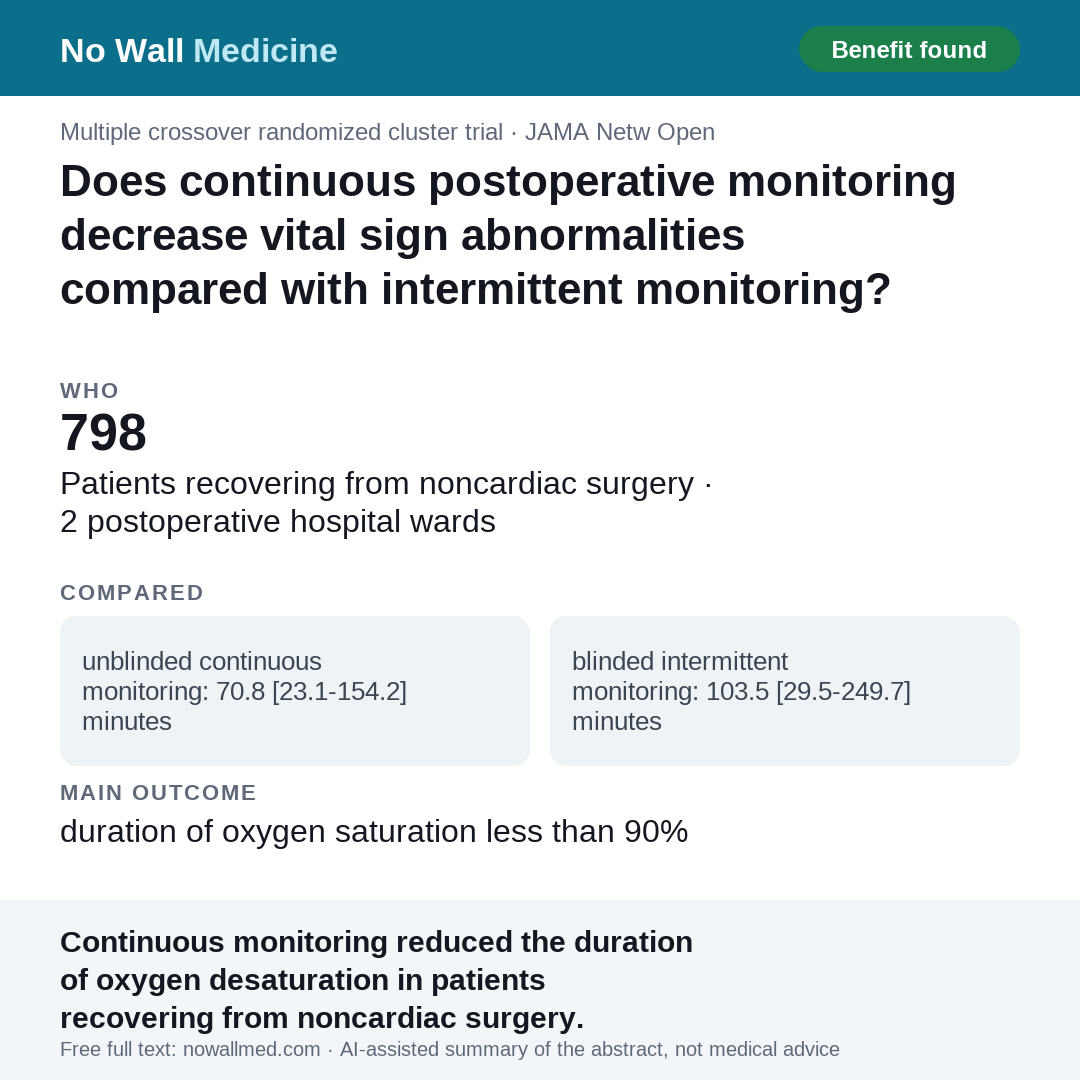
Continuous vs Intermittent Postoperative Vital Sign Monitoring: A Cluster Randomized Crossover Trial
Multiple crossover randomized cluster trialBenefit found
Does continuous postoperative monitoring decrease vital sign abnormalities compared with intermittent monitoring?
Who
798
Patients recovering from noncardiac surgery · 2 postoperative hospital wards
Compared
unblinded continuous monitoring: 70.8 [23.1-154.2] minutes
blinded intermittent monitoring: 103.5 [29.5-249.7] minutes
Main outcome
duration of oxygen saturation less than 90%
Result: geometric means ratio, 0.86 [95% CI, 0.78-0.95]
Bottom line: Continuous monitoring reduced the duration of oxygen desaturation in patients recovering from noncardiac surgery.
JAMA Netw Open · 2026-03-02Download image
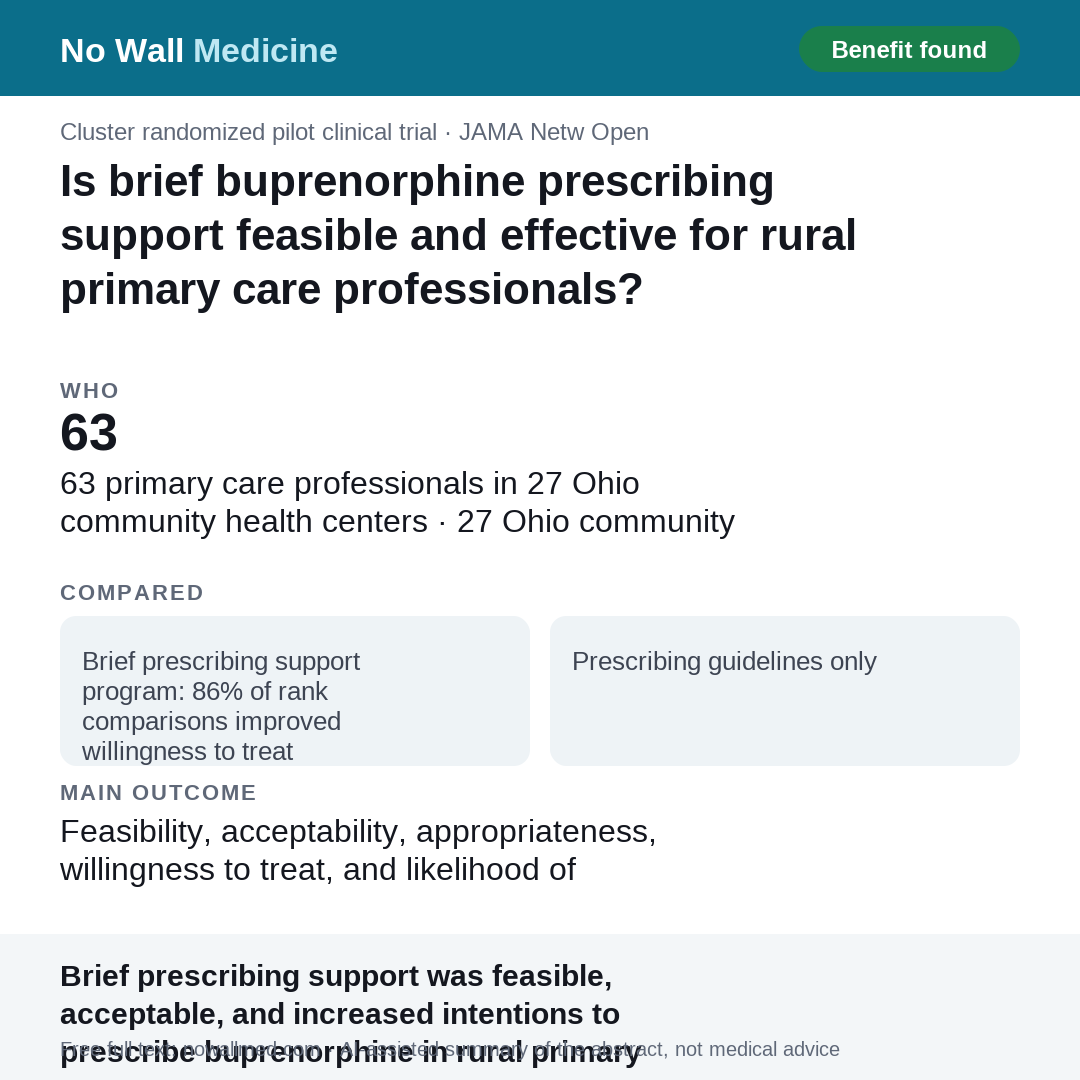
Brief Prescribing Support and Buprenorphine Adoption in Rural Primary Care: A Cluster Randomized Clinical Trial
Cluster randomized pilot clinical trialBenefit found
Is brief buprenorphine prescribing support feasible and effective for rural primary care professionals?
Who
63
63 primary care professionals in 27 Ohio community health centers · 27 Ohio community health centers
Compared
Brief prescribing support program: 86% of rank comparisons improved willingness to treat
Prescribing guidelines only
Main outcome
Feasibility, acceptability, appropriateness, willingness to treat, and likelihood of prescribing
Bottom line: Brief prescribing support was feasible, acceptable, and increased intentions to prescribe buprenorphine in rural primary care.
Limitation: A larger trial is needed to confirm preliminary findings.
JAMA Netw Open · 2026-03-02Download image
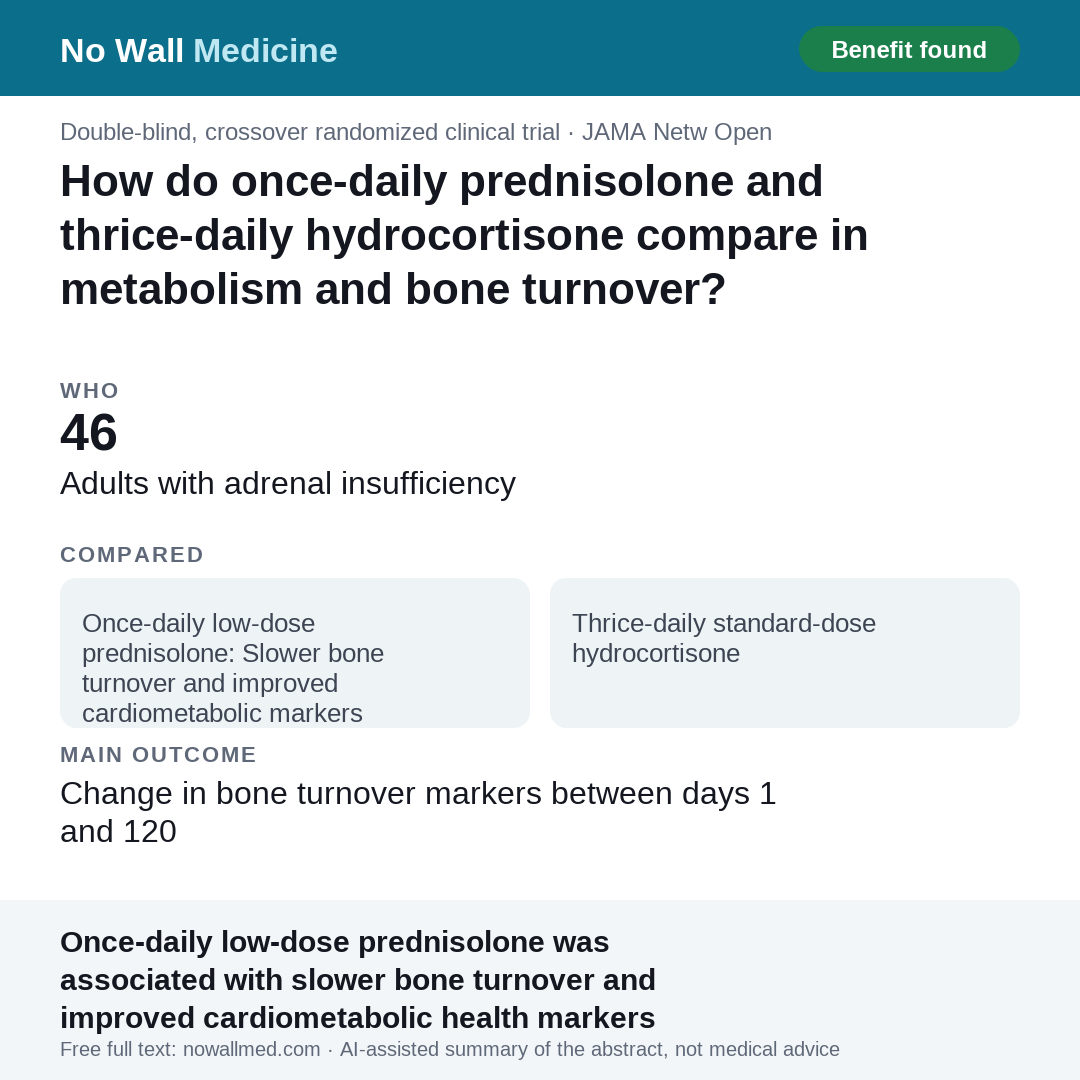
Prednisolone Once Daily vs Hydrocortisone Thrice Daily in Hypoadrenalism: A Randomized Clinical Trial
Double-blind, crossover randomized clinical trialBenefit found
How do once-daily prednisolone and thrice-daily hydrocortisone compare in metabolism and bone turnover?
Who
46
Adults with adrenal insufficiency
Compared
Once-daily low-dose prednisolone: Slower bone turnover and improved cardiometabolic markers
Thrice-daily standard-dose hydrocortisone
Main outcome
Change in bone turnover markers between days 1 and 120
Result: mean treatment difference for carboxylated osteocalcin -1.22 ng/mL (95% CI -2.35 to -0.10 ng/mL)
Bottom line: Once-daily low-dose prednisolone was associated with slower bone turnover and improved cardiometabolic health markers compared to hydrocortisone.
JAMA Netw Open · 2026-03-02Download image
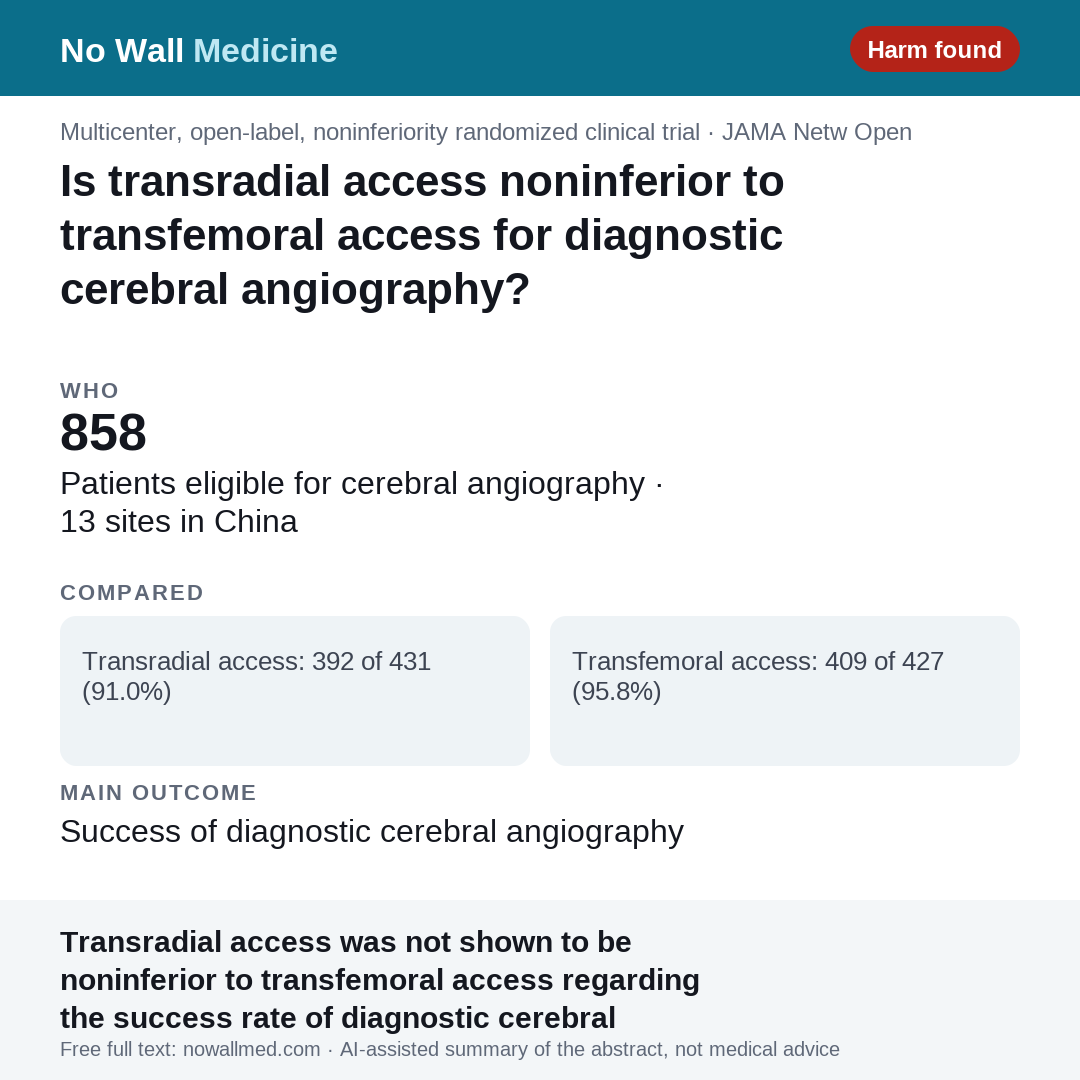
Transradial vs Transfemoral Access for Cerebral Angiography: A Randomized Noninferiority Clinical Trial
Multicenter, open-label, noninferiority randomized clinical trialHarm found
Is transradial access noninferior to transfemoral access for diagnostic cerebral angiography?
Who
858
Patients eligible for cerebral angiography · 13 sites in China
Compared
Transradial access: 392 of 431 (91.0%)
Transfemoral access: 409 of 427 (95.8%)
Main outcome
Success of diagnostic cerebral angiography
Result: difference, -4.8 percentage points (95% CI, -8.1 to -1.5 pp)
Bottom line: Transradial access was not shown to be noninferior to transfemoral access regarding the success rate of diagnostic cerebral angiography.
JAMA Netw Open · 2026-03-02Download image
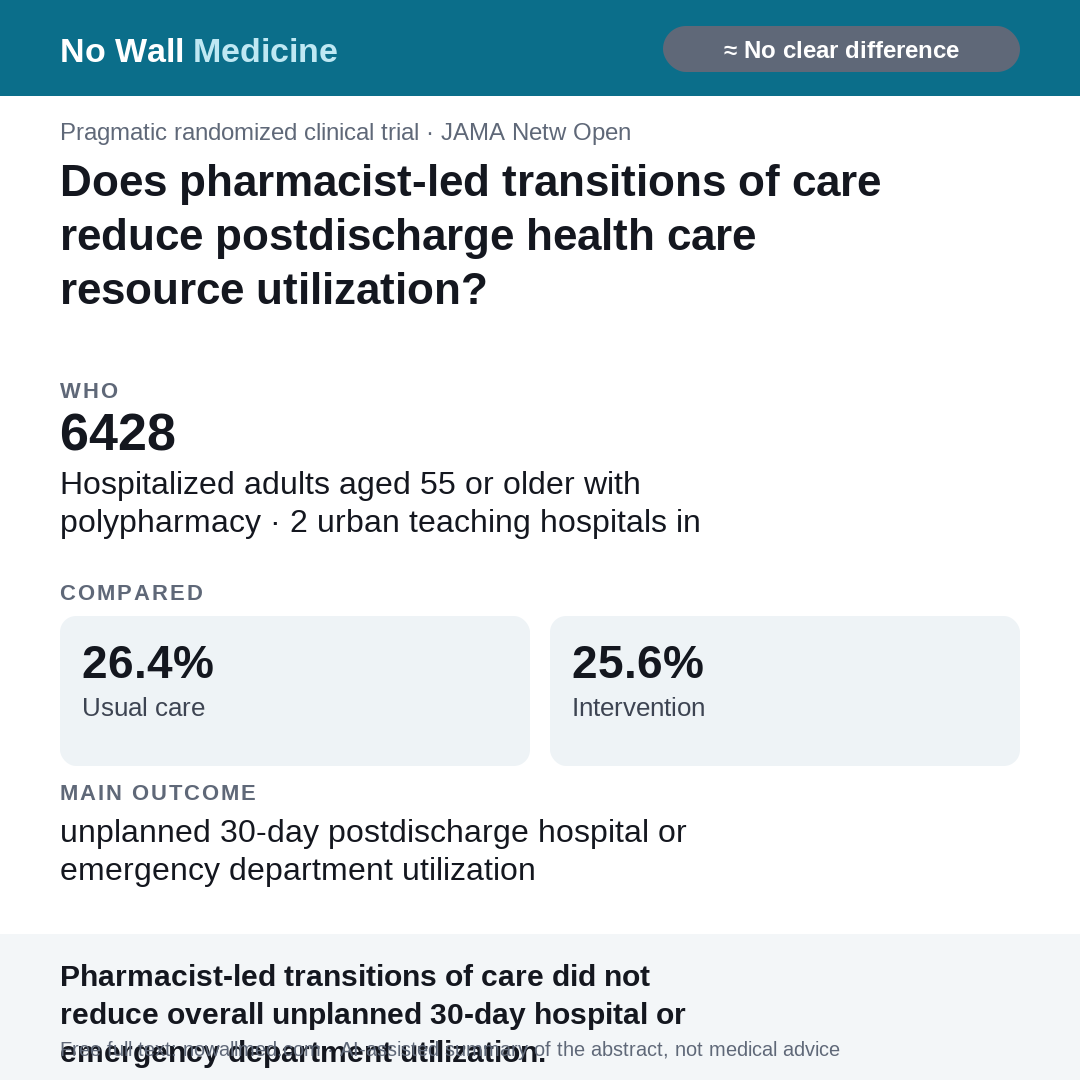
Pharmacist-Led Discharge Care to Reduce Postdischarge Health Care Utilization: A Randomized Clinical Trial
Pragmatic randomized clinical trialNo clear difference
Does pharmacist-led transitions of care reduce postdischarge health care resource utilization?
Who
6428
Hospitalized adults aged 55 or older with polypharmacy · 2 urban teaching hospitals in the US
Compared
26.4%Usual care (593/2242)
25.6%Intervention (570/2230)
Main outcome
unplanned 30-day postdischarge hospital or emergency department utilization
Result: difference, 0.9 percentage points [pp]; 95% CI, -1.7 to 3.5 pp
Bottom line: Pharmacist-led transitions of care did not reduce overall unplanned 30-day hospital or emergency department utilization.
JAMA Netw Open · 2026-03-02Download image
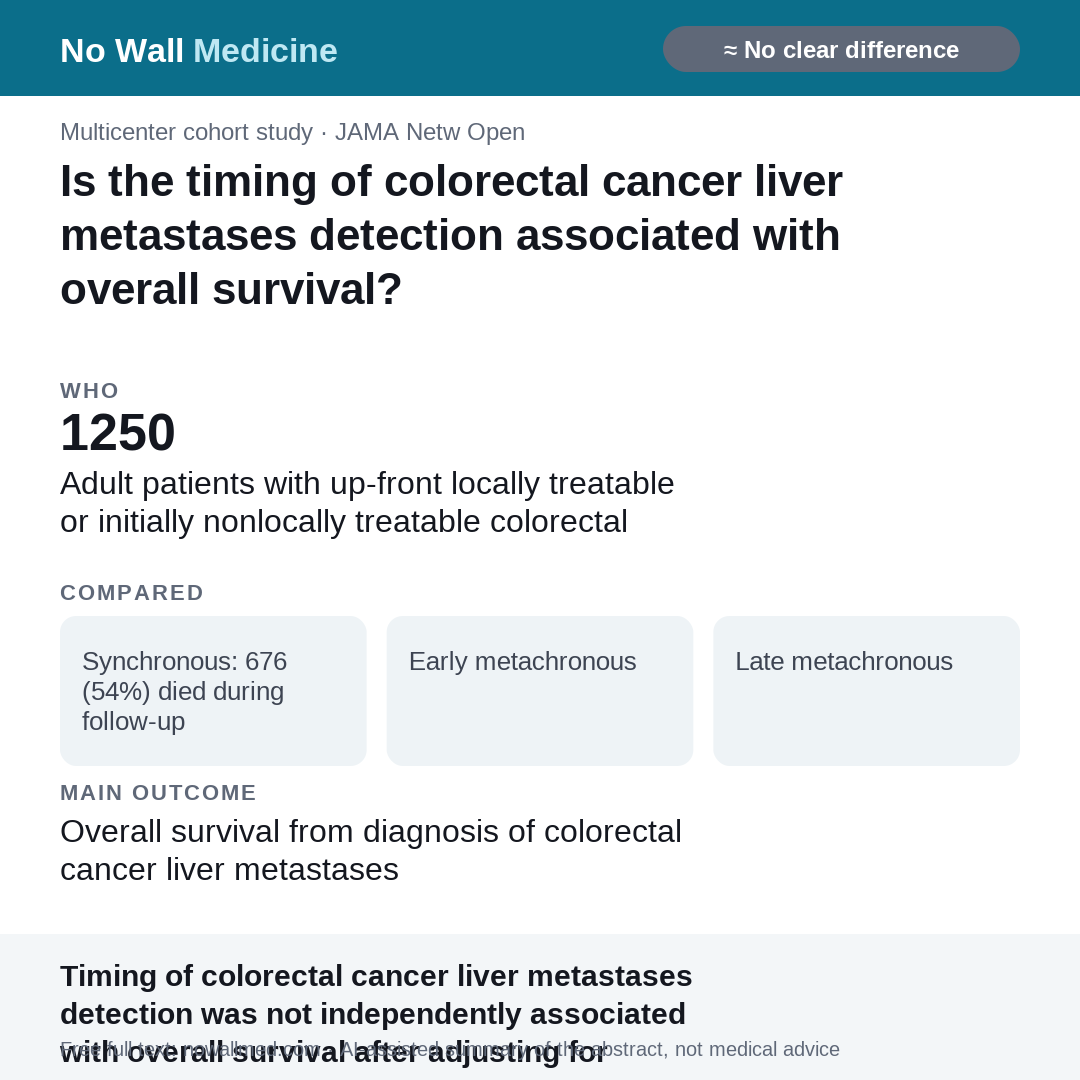
Time of Detection of Liver Metastases and Survival in Patients With Colorectal Cancer
Multicenter cohort studyNo clear difference
Is the timing of colorectal cancer liver metastases detection associated with overall survival?
Who
1250
Adult patients with up-front locally treatable or initially nonlocally treatable colorectal cancer liver metastases · Multicenter
Compared
Synchronous: 676 (54%) died during follow-up
Early metachronous
Late metachronous
Main outcome
Overall survival from diagnosis of colorectal cancer liver metastases
Result: not independently associated with overall survival
Bottom line: Timing of colorectal cancer liver metastases detection was not independently associated with overall survival after adjusting for tumor and treatment factors.
JAMA Netw Open · 2026-03-02Download image
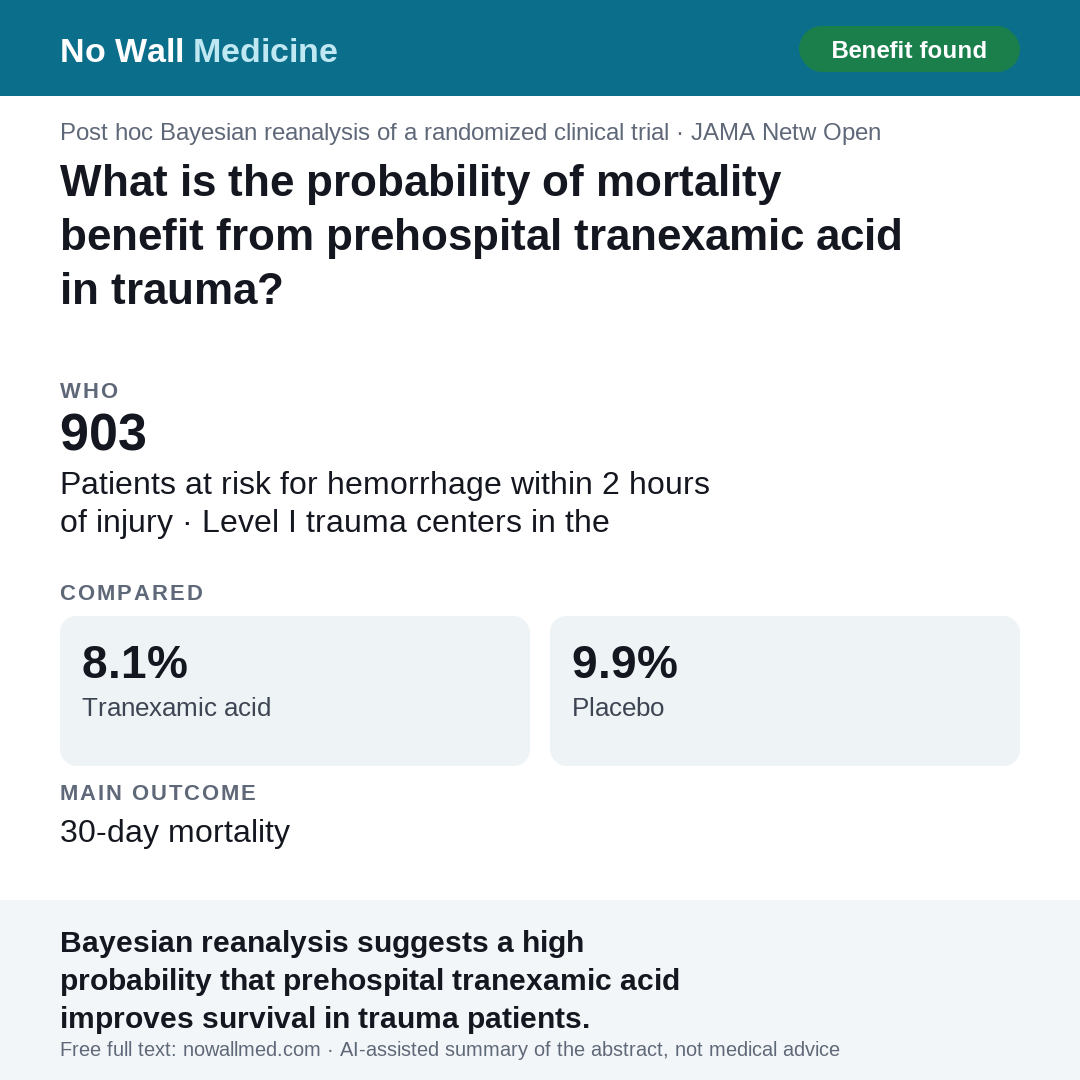
Bayesian Statistics to Reanalyze Data From the STAAMP Trial
Post hoc Bayesian reanalysis of a randomized clinical trialBenefit found
What is the probability of mortality benefit from prehospital tranexamic acid in trauma?
Who
903
Patients at risk for hemorrhage within 2 hours of injury · Level I trauma centers in the United States
Compared
8.1%Tranexamic acid
9.9%Placebo
Main outcome
30-day mortality
Result: posterior risk ratios 0.91 (95% CrI, 0.85-0.97) with a CRASH-2 prior
Bottom line: Bayesian reanalysis suggests a high probability that prehospital tranexamic acid improves survival in trauma patients.
Limitation: This was a post hoc Bayesian reanalysis of existing trial data.
JAMA Netw Open · 2026-03-02Download image
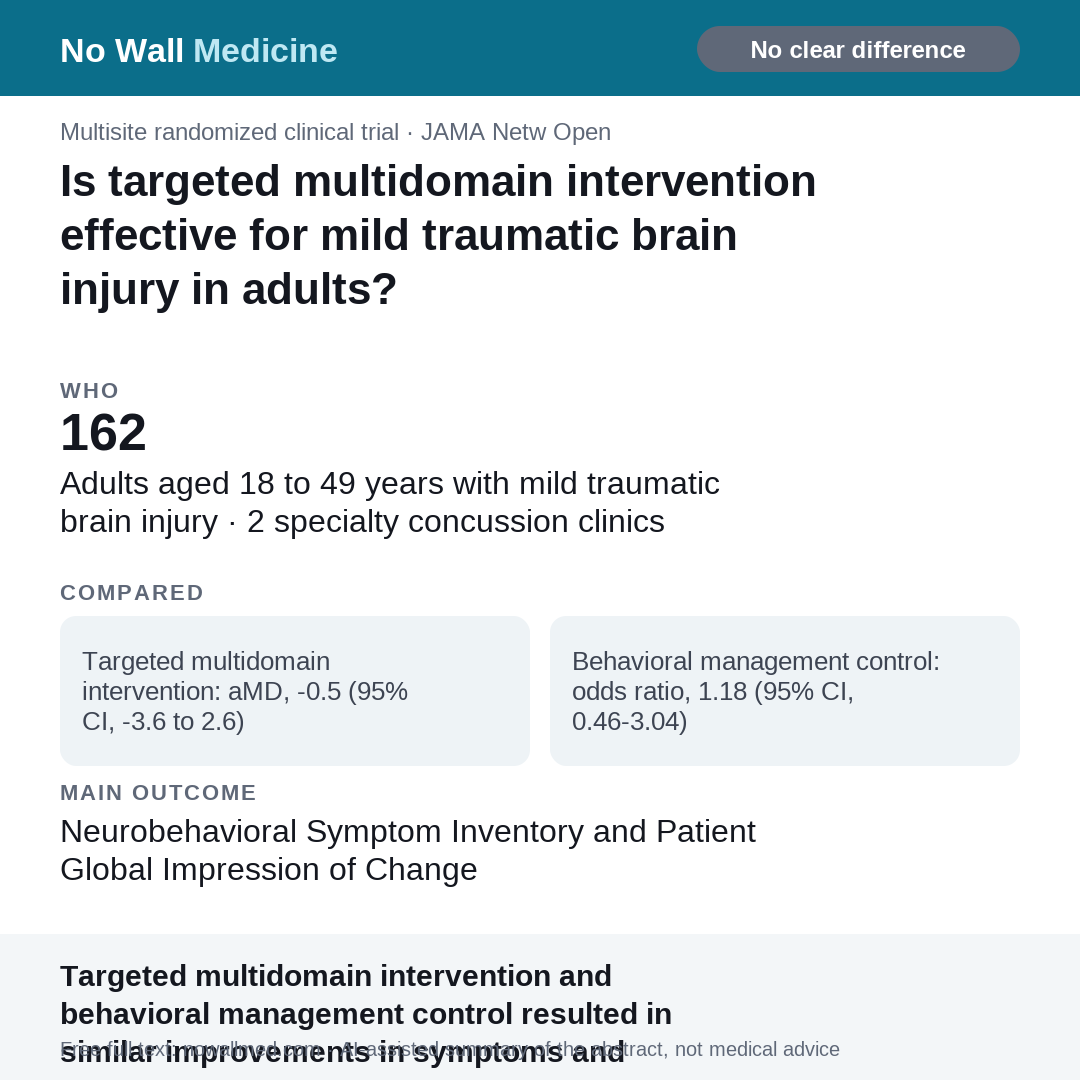
Targeted Multidomain Treatment for Mild Traumatic Brain Injury: A Randomized Clinical Trial
Multisite randomized clinical trialNo clear difference
Is targeted multidomain intervention effective for mild traumatic brain injury in adults?
Who
162
Adults aged 18 to 49 years with mild traumatic brain injury · 2 specialty concussion clinics
Compared
Targeted multidomain intervention: aMD, -0.5 (95% CI, -3.6 to 2.6)
Behavioral management control: odds ratio, 1.18 (95% CI, 0.46-3.04)
Main outcome
Neurobehavioral Symptom Inventory and Patient Global Impression of Change
Result: aMD, -0.5 (95% CI, -3.6 to 2.6)
Bottom line: Targeted multidomain intervention and behavioral management control resulted in similar improvements in symptoms and perceived change.
JAMA Netw Open · 2026-03-02Download image
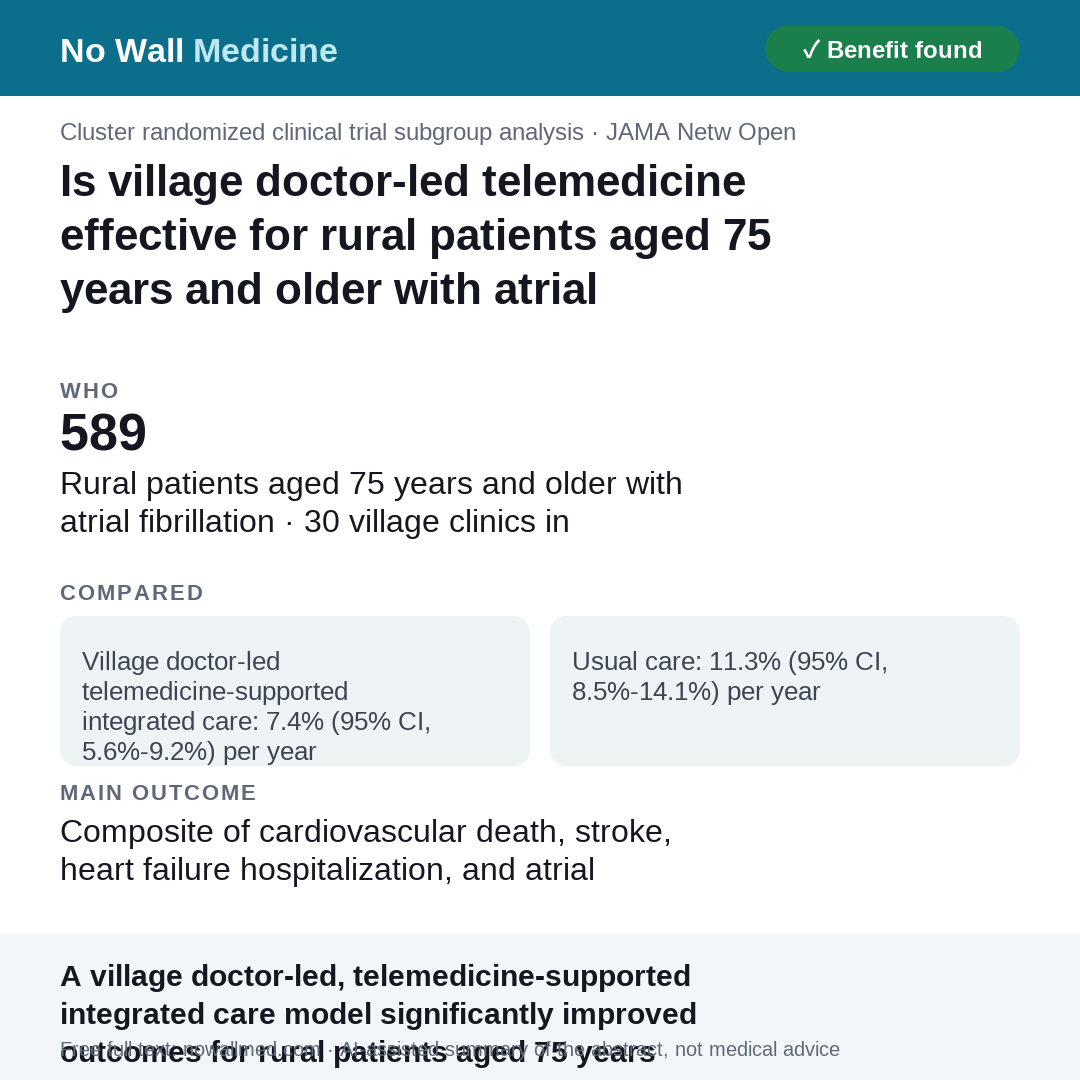
Village Doctor-Led Telemedicine for Rural Patients Aged 75 Years and Older With AF: A Prespecified Secondary Analysis of the MIRACLE-AF Trial
Cluster randomized clinical trial subgroup analysisBenefit found
Is village doctor-led telemedicine effective for rural patients aged 75 years and older with atrial fibrillation?
Who
589
Rural patients aged 75 years and older with atrial fibrillation · 30 village clinics in Jiangdu County, China
Compared
Village doctor-led telemedicine-supported integrated care: 7.4% (95% CI, 5.6%-9.2%) per year
Usual care: 11.3% (95% CI, 8.5%-14.1%) per year
Main outcome
Composite of cardiovascular death, stroke, heart failure hospitalization, and atrial fibrillation emergency visits
Result: adjusted hazard ratio 0.70 (95% CI 0.49 to 0.98)
Bottom line: A village doctor-led, telemedicine-supported integrated care model significantly improved outcomes for rural patients aged 75 years and older.
JAMA Netw Open · 2026-03-02Download image
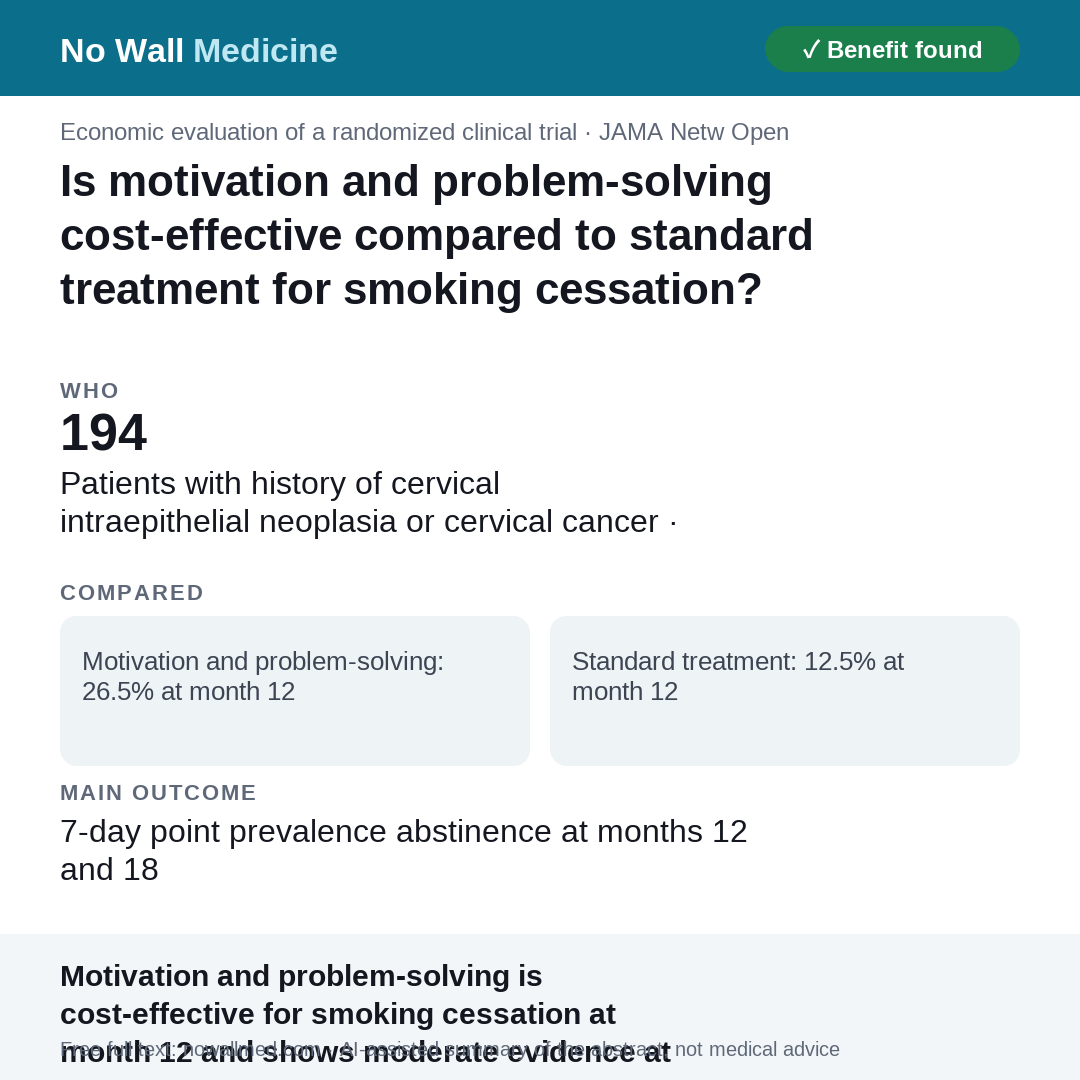
Cost-Effectiveness of Smoking Cessation Among Survivors of Cervical Intraepithelial Neoplasia or Cervical Cancer
Economic evaluation of a randomized clinical trialBenefit found
Is motivation and problem-solving cost-effective compared to standard treatment for smoking cessation?
Who
194
Patients with history of cervical intraepithelial neoplasia or cervical cancer · Cancer centers
Compared
Motivation and problem-solving: 26.5% at month 12
Standard treatment: 12.5% at month 12
Main outcome
7-day point prevalence abstinence at months 12 and 18
Bottom line: Motivation and problem-solving is cost-effective for smoking cessation at month 12 and shows moderate evidence at month 18.
JAMA Netw Open · 2026-03-02Download image
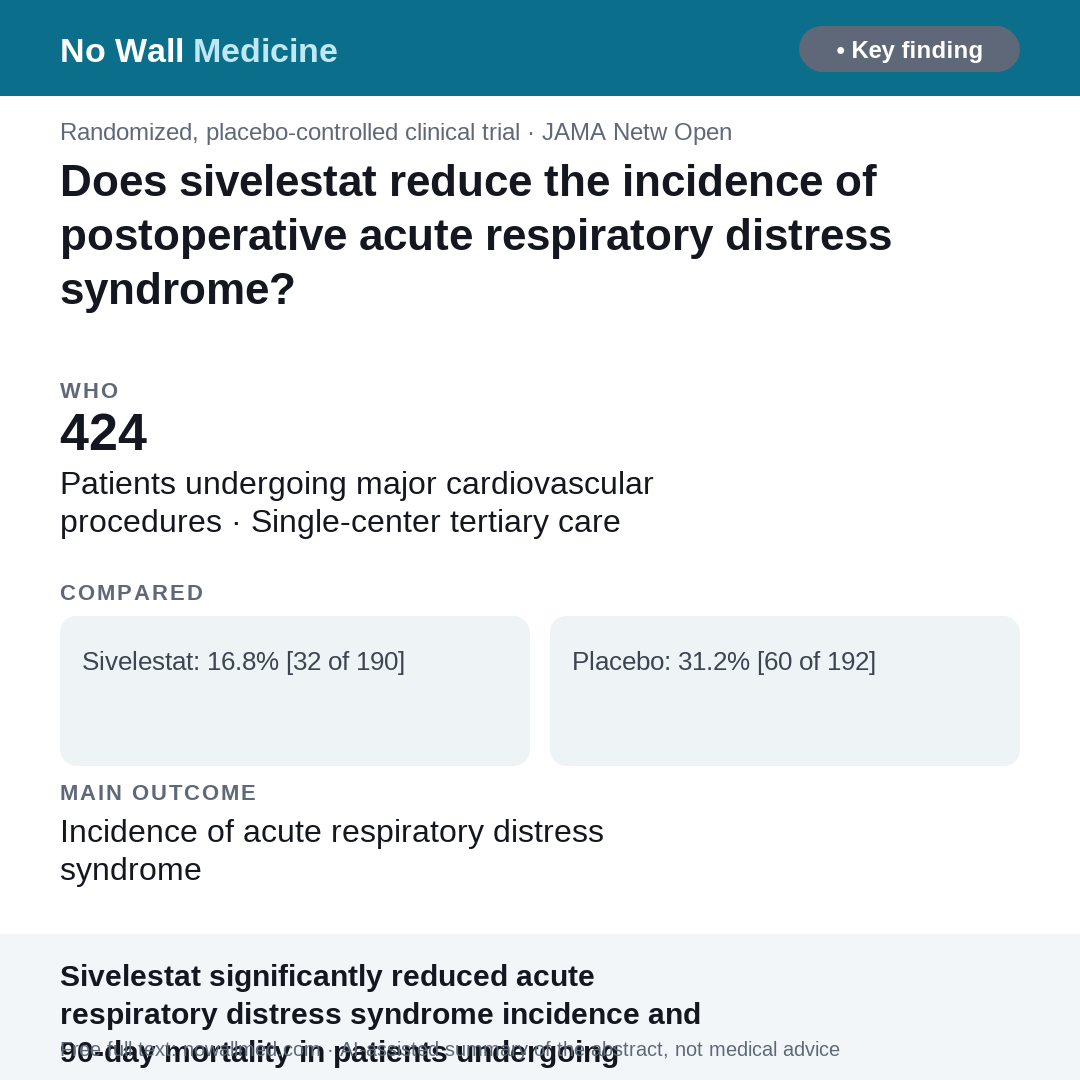
Sivelestat and Incidence of Acute Respiratory Distress Syndrome After Cardiovascular Surgery: A Randomized Clinical Trial
Randomized, placebo-controlled clinical trialKey finding
Does sivelestat reduce the incidence of postoperative acute respiratory distress syndrome?
Who
424
Patients undergoing major cardiovascular procedures · Single-center tertiary care academic medical center in China
Compared
Sivelestat: 16.8% [32 of 190]
Placebo: 31.2% [60 of 192]
Main outcome
Incidence of acute respiratory distress syndrome
Bottom line: Sivelestat significantly reduced acute respiratory distress syndrome incidence and 90-day mortality in patients undergoing cardiovascular surgery.
Limitation: This was a single-center trial.
JAMA Netw Open · 2026-03-02Download image