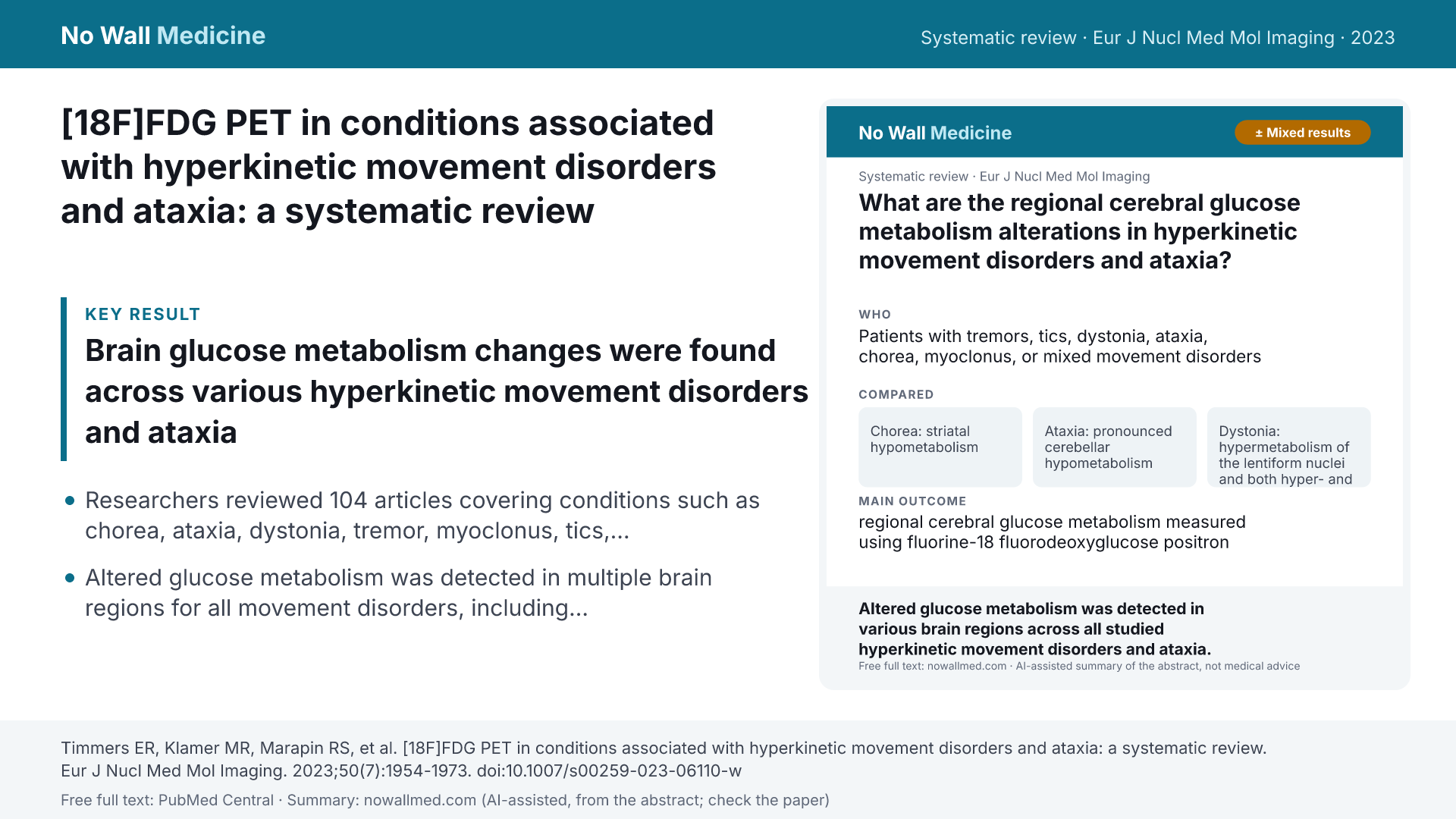
[18F]FDG PET in conditions associated with hyperkinetic movement disorders and ataxia: a systematic review
Key result: Brain glucose metabolism changes were found across various hyperkinetic movement disorders and ataxia
Key points
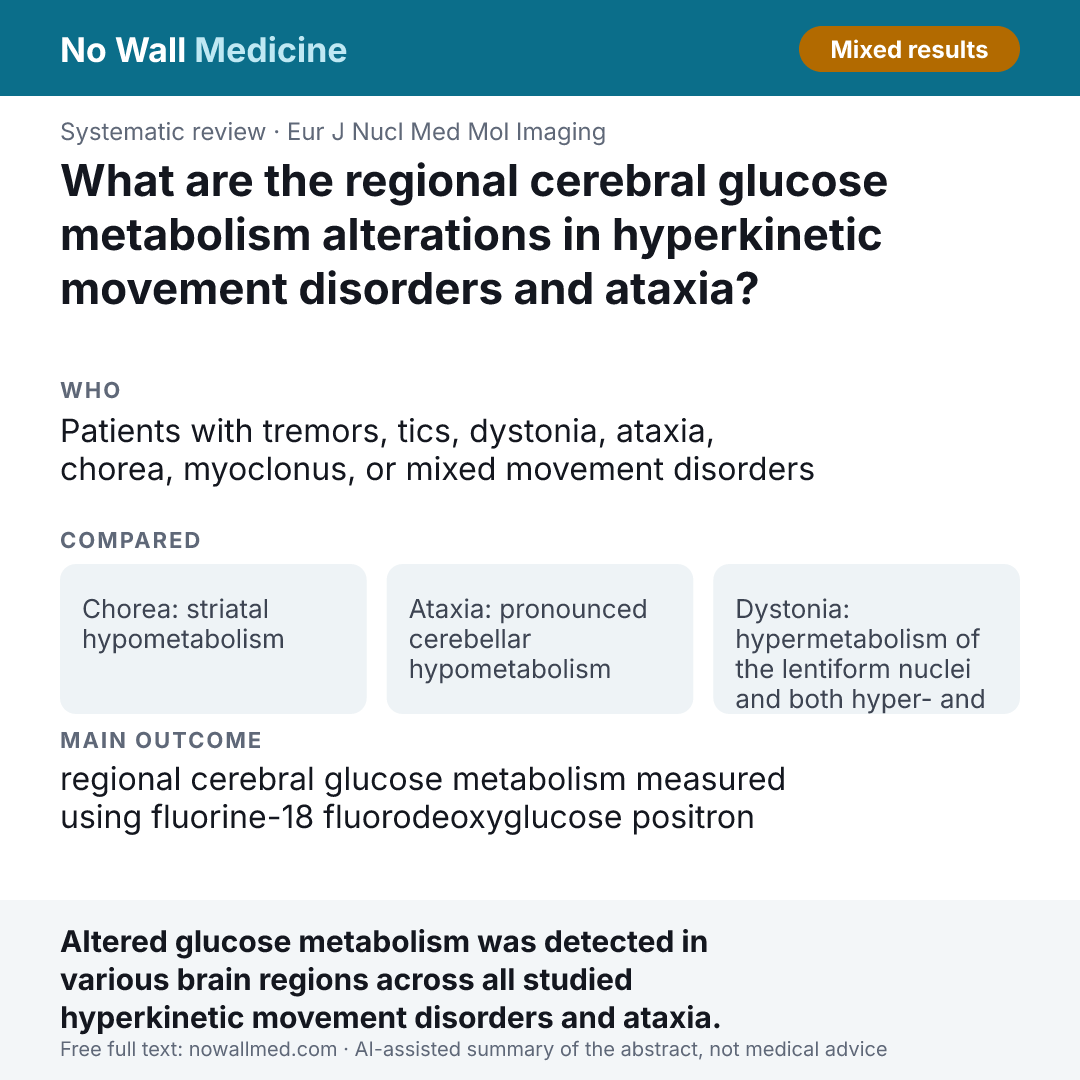
- Researchers reviewed 104 articles covering conditions such as chorea, ataxia, dystonia, tremor, myoclonus, tics, and autoimmune or metabolic disorders.
- Altered glucose metabolism was detected in multiple brain regions for all movement disorders, including cerebellar hypometabolism in ataxia and striatal hypometabolism in chorea.
- Normalization of metabolic alterations after treatment was observed in patients with tremors, ataxia, and chorea.
Why it matters: The specific patterns of regional cerebral glucose metabolism, measured by positron emission tomography, across different hyperkinetic movement disorders and ataxia were not comprehensively summarized.
Discussion prompts
- Would these patients look like yours? Who was left out?
- Is the main outcome one that matters to patients?
- Is the difference large enough to change what you do?
Cite: Timmers ER, Klamer MR, Marapin RS, et al. [18F]FDG PET in conditions associated with hyperkinetic movement disorders and ataxia: a systematic review. Eur J Nucl Med Mol Imaging. 2023;50(7):1954-1973. doi:10.1007/s00259-023-06110-w
Free full text: PubMed Central · Summary and visual abstract: nowallmed.com/a/18f-fdg-pet-in-conditions-associated-with-hyperkinetic-movement-10umn9n/ (AI-assisted from the abstract; check the paper before relying on it).