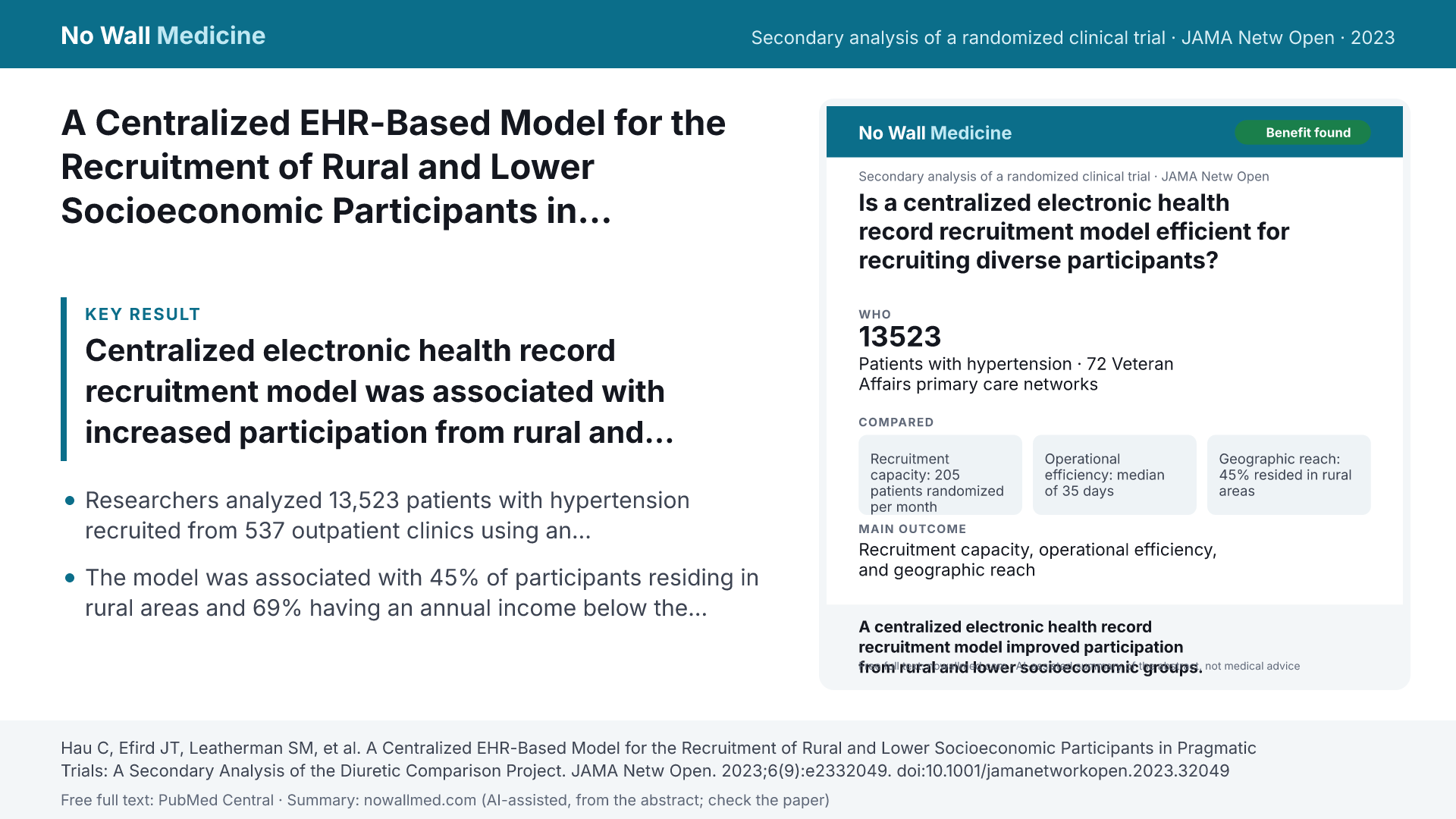
Centralized electronic health record recruitment model was associated with increased participation from rural and lower income patients
A Centralized EHR-Based Model for the Recruitment of Rural and Lower Socioeconomic Participants in Pragmatic Trials: A Secondary Analysis of the Diuretic Comparison Project
Secondary analysis of a randomized clinical trialBenefit found
Is a centralized electronic health record recruitment model efficient for recruiting diverse participants?
Who
13523
Patients with hypertension · 72 Veteran Affairs primary care networks
Compared
Recruitment capacity: 205 patients randomized per month
Operational efficiency: median of 35 days
Geographic reach: 45% resided in rural areas
Main outcome
Recruitment capacity, operational efficiency, and geographic reach
Bottom line: A centralized electronic health record recruitment model improved participation from rural and lower socioeconomic groups.
JAMA Netw Open · 2023-09-05Download image
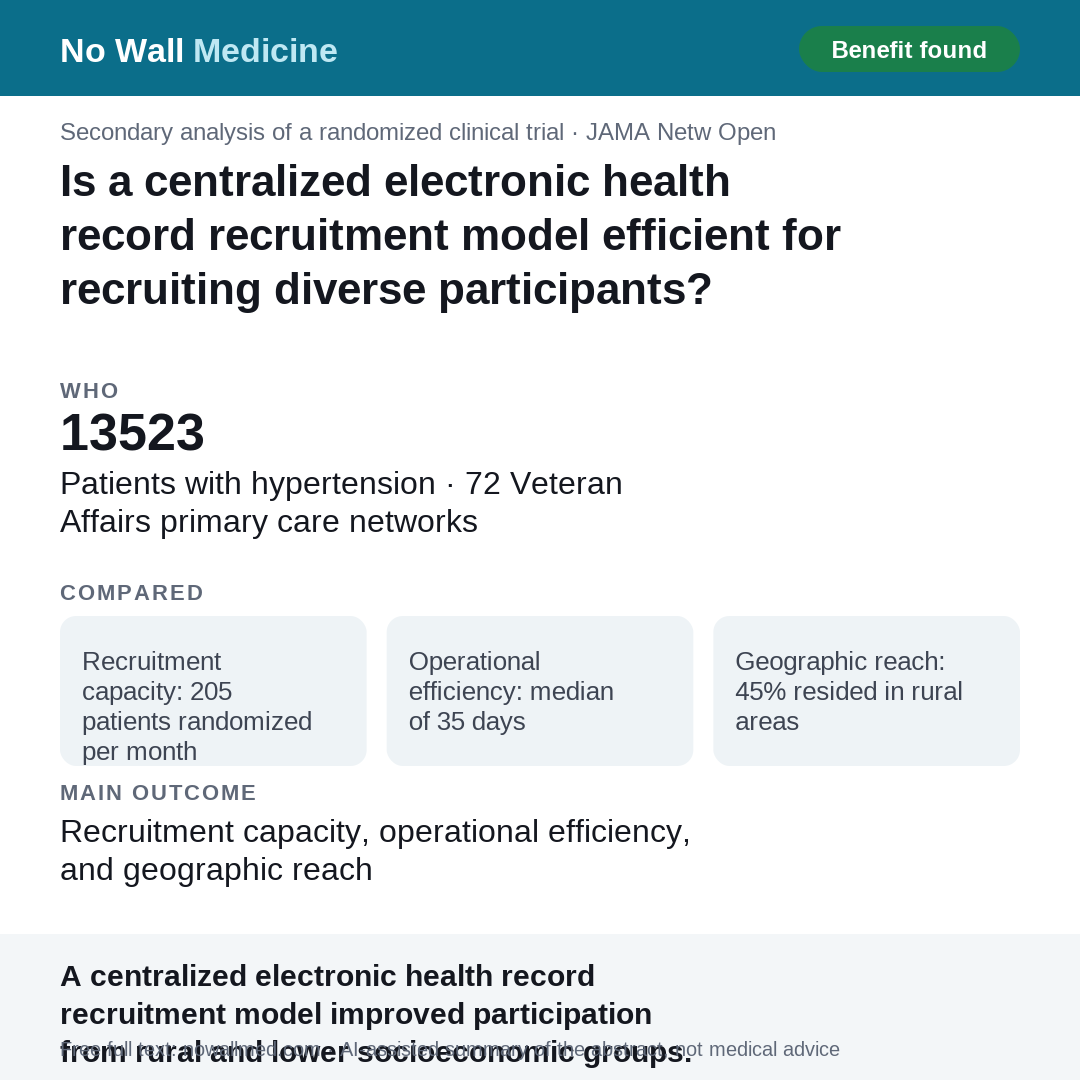
Clinical question: Is a centralized electronic health record recruitment model efficient for recruiting diverse participants?
Why it matters: The exclusion of patients from rural and lower socioeconomic areas can potentially bias trial results and limit the generalizability of comparative effectiveness research.
Key points
- Researchers analyzed 13,523 patients with hypertension recruited from 537 outpatient clinics using an electronic health record recruitment model.
- The model was associated with 45% of participants residing in rural areas and 69% having an annual income below the national median.
- The recruitment process randomized approximately 205 patients per month with a median of 35 days needed to complete electronic procedures.
Headline and key points written with AI from the paper’s abstract, with every number checked against it. Read the paper before relying on them.
Was this summary helpful?
Subject terms
Cite this article
Hau C, Efird JT, Leatherman SM, et al. A Centralized EHR-Based Model for the Recruitment of Rural and Lower Socioeconomic Participants in Pragmatic Trials: A Secondary Analysis of the Diuretic Comparison Project. JAMA Netw Open. 2023. doi:10.1001/jamanetworkopen.2023.32049
Spotted a mistake? Suggest a correction