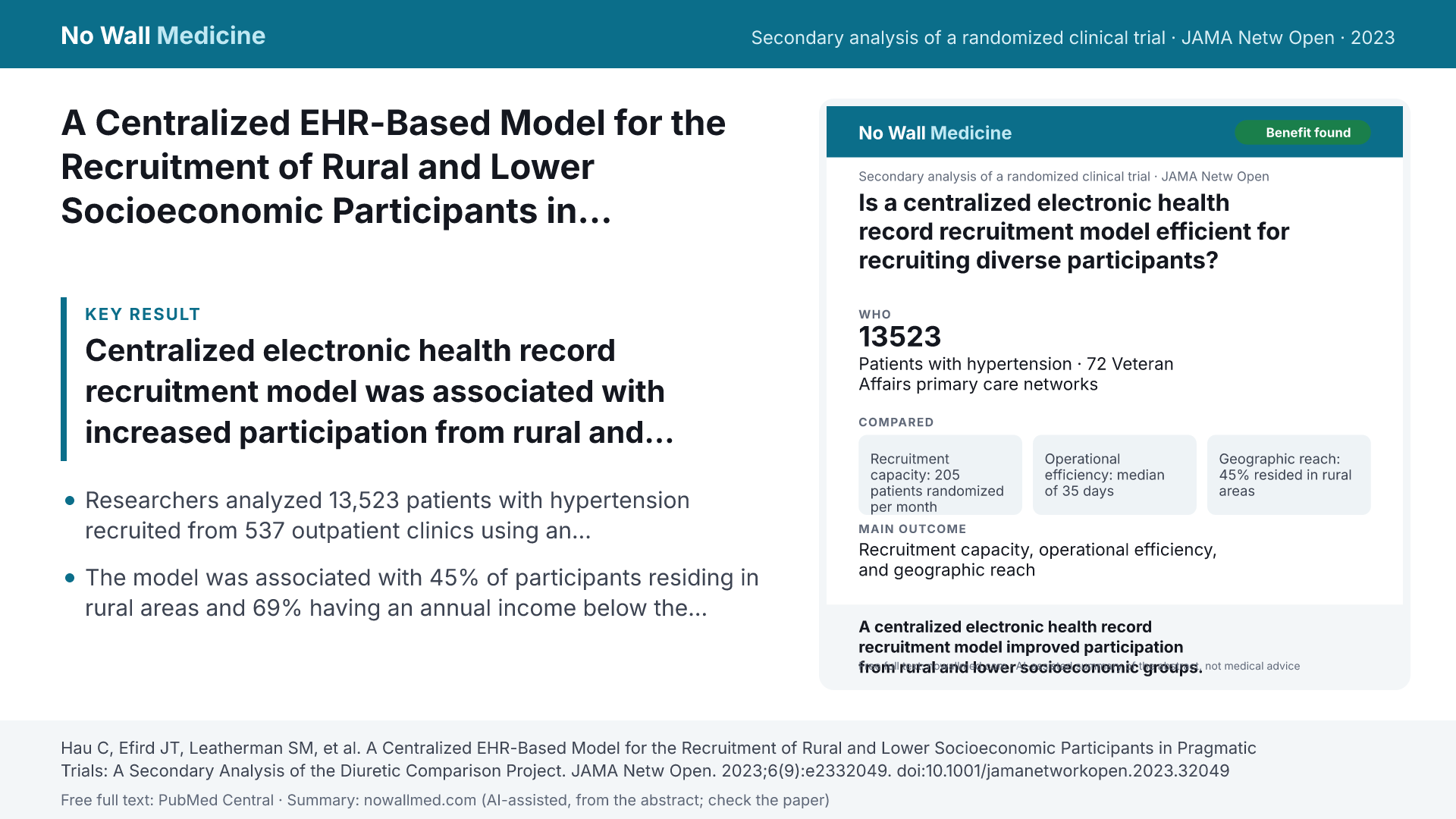
A Centralized EHR-Based Model for the Recruitment of Rural and Lower Socioeconomic Participants in Pragmatic Trials: A Secondary Analysis of the Diuretic Comparison Project
Key result: Centralized electronic health record recruitment model was associated with increased participation from rural and lower income patients
Key points
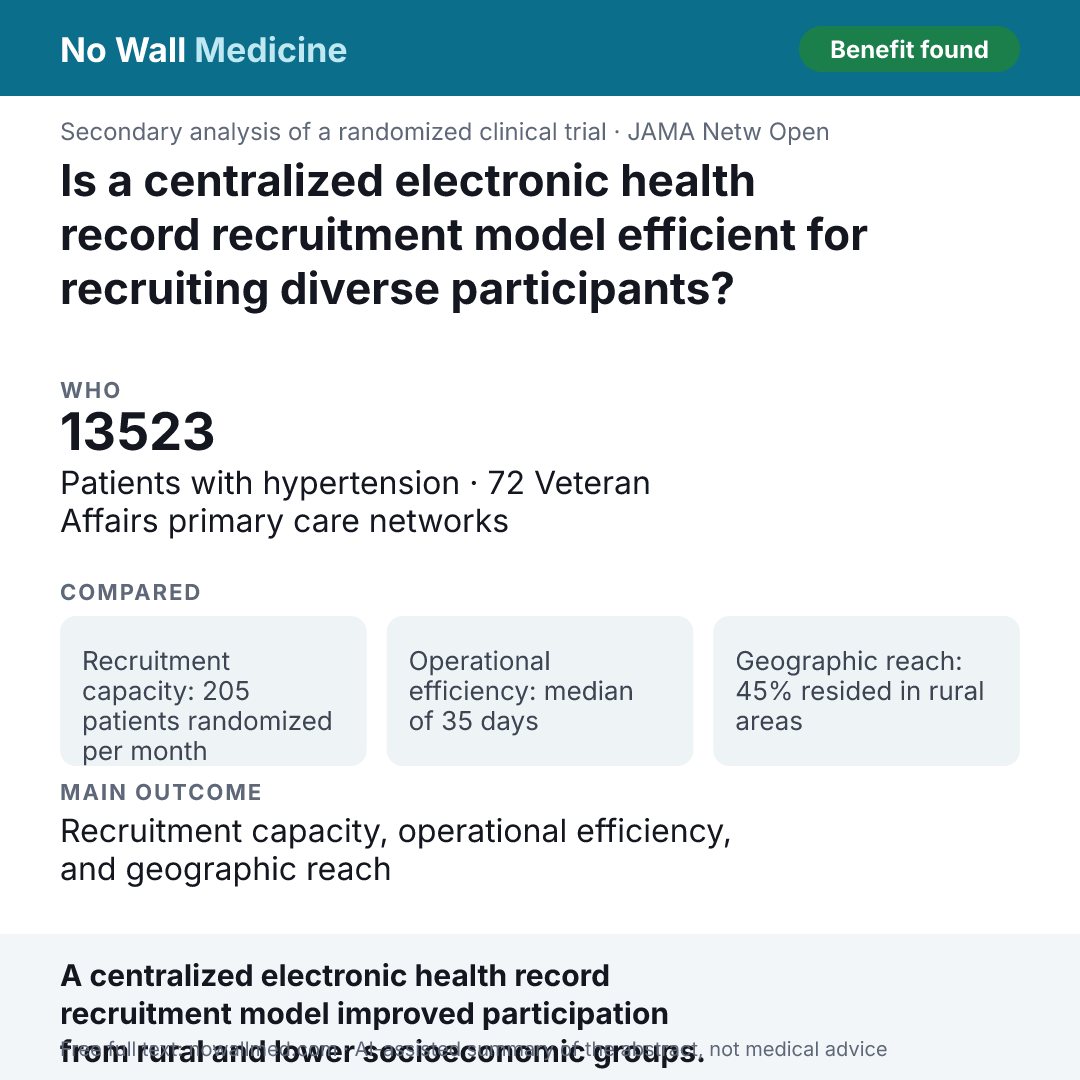
- Researchers analyzed 13,523 patients with hypertension recruited from 537 outpatient clinics using an electronic health record recruitment model.
- The model was associated with 45% of participants residing in rural areas and 69% having an annual income below the national median.
- The recruitment process randomized approximately 205 patients per month with a median of 35 days needed to complete electronic procedures.
Why it matters: The exclusion of patients from rural and lower socioeconomic areas can potentially bias trial results and limit the generalizability of comparative effectiveness research.
Discussion prompts
- Would these patients look like yours? Who was left out?
- Is the main outcome one that matters to patients?
- Is the difference large enough to change what you do?
Cite: Hau C, Efird JT, Leatherman SM, et al. A Centralized EHR-Based Model for the Recruitment of Rural and Lower Socioeconomic Participants in Pragmatic Trials: A Secondary Analysis of the Diuretic Comparison Project. JAMA Netw Open. 2023;6(9):e2332049. doi:10.1001/jamanetworkopen.2023.32049
Free full text: PubMed Central · Summary and visual abstract: nowallmed.com/a/a-centralized-ehr-based-model-for-the-recruitment-of-rural-and-lower-1vts1u1/ (AI-assisted from the abstract; check the paper before relying on it).