A cluster-randomised controlled equivalence trial of the Surprise Soap handwashing intervention among older children living in a refugee settlement in Sudan
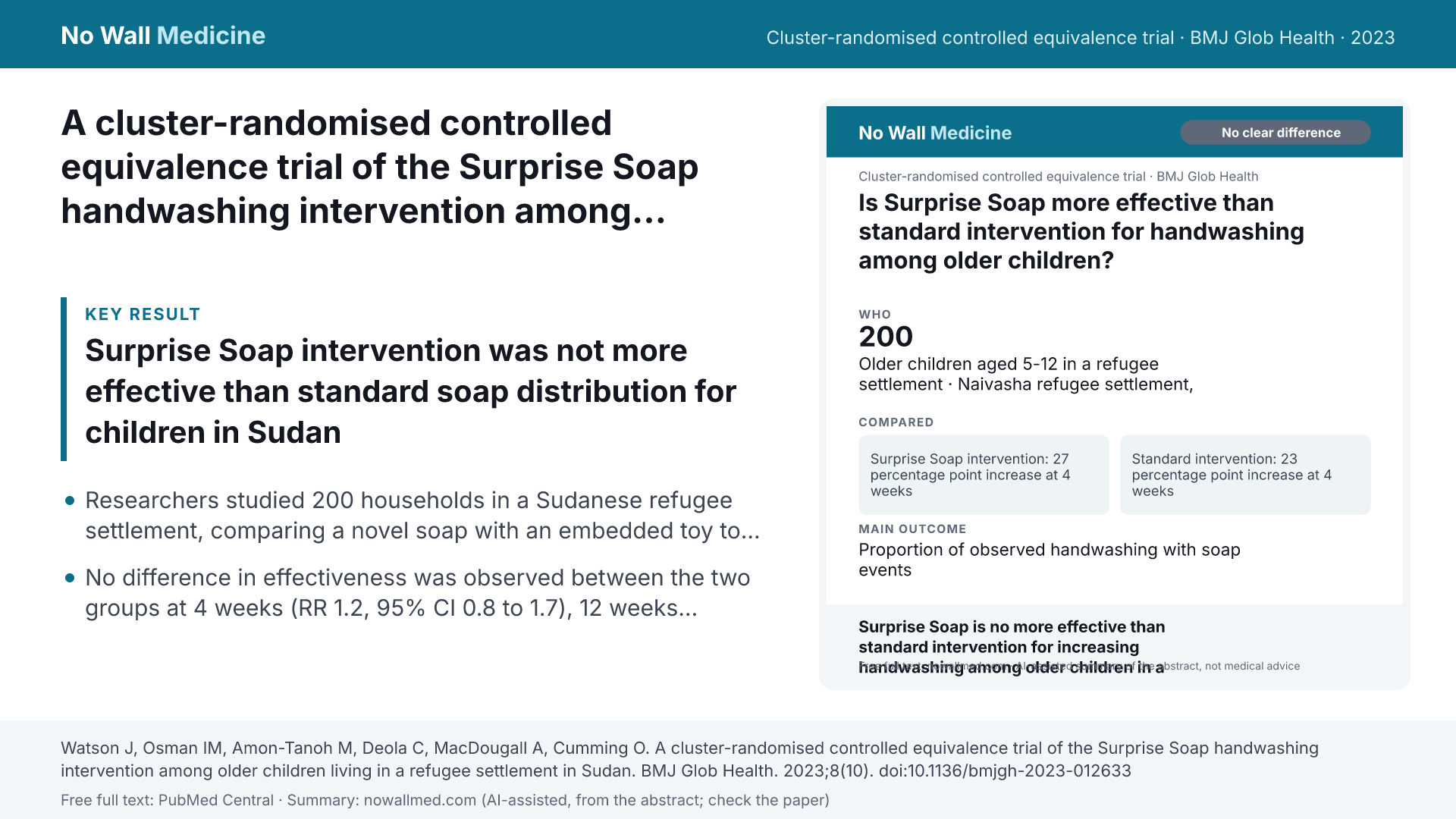
Key result: Surprise Soap intervention was not more effective than standard soap distribution for children in Sudan
Key points
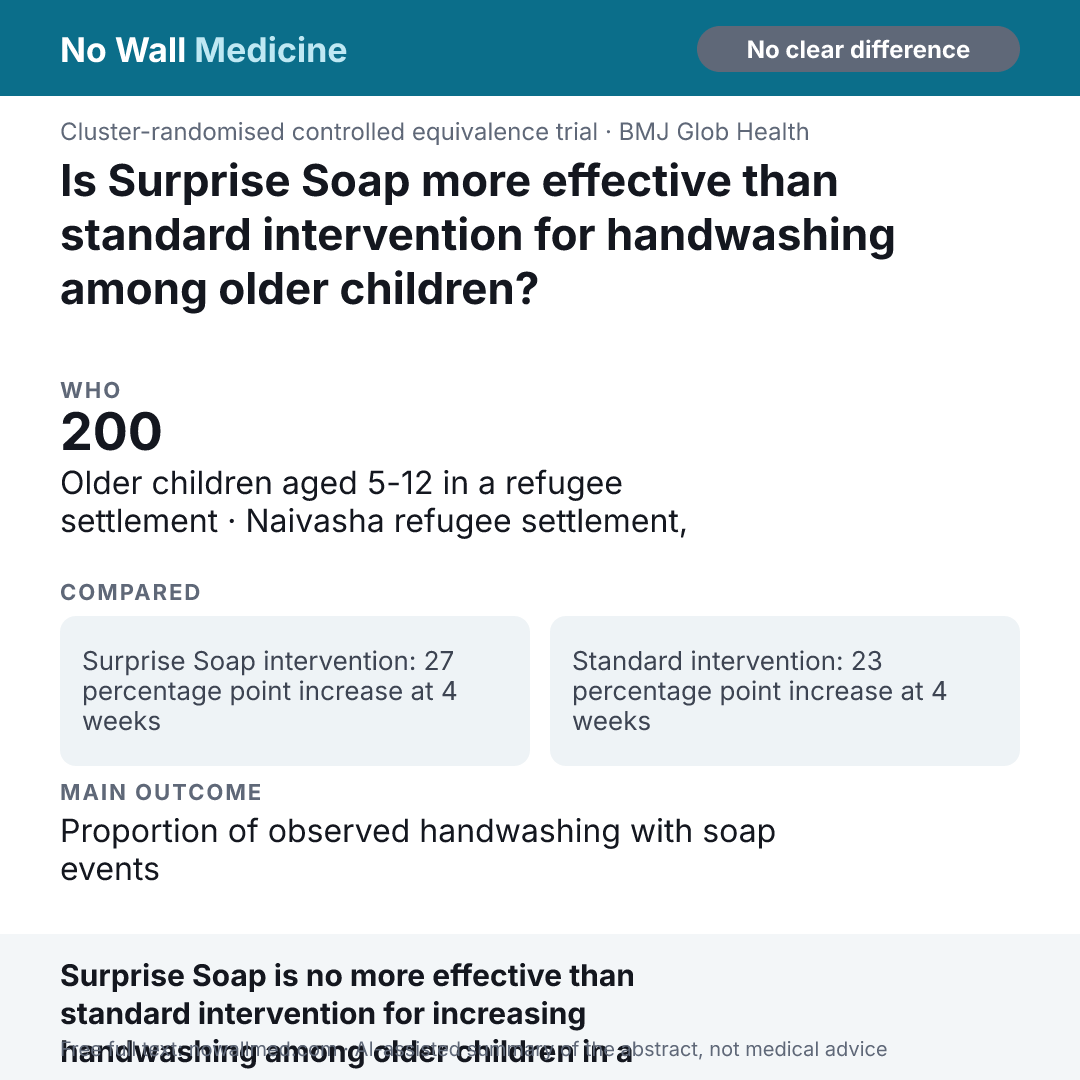
- Researchers studied 200 households in a Sudanese refugee settlement, comparing a novel soap with an embedded toy to a standard intervention of health messaging and plain soap.
- No difference in effectiveness was observed between the two groups at 4 weeks (RR 1.2, 95% CI 0.8 to 1.7), 12 weeks (RR 0.8, 95% CI 0.5 to 1.1), or 16 weeks (RR 1.1, 95% CI 0.8 to 1.5).
- Both groups showed increased handwashing with soap at 4 weeks, with a 27 percentage point increase in the intervention arm and a 23 percentage point increase in the control arm.
Limitation the authors note: The authors state that further trials including a passive control arm are needed to determine the independent effects of each intervention.
Discussion prompts
- Would these patients look like yours? Who was left out?
- Is the main outcome one that matters to patients?
- Is the difference large enough to change what you do?
Cite: Watson J, Osman IM, Amon-Tanoh M, Deola C, MacDougall A, Cumming O. A cluster-randomised controlled equivalence trial of the Surprise Soap handwashing intervention among older children living in a refugee settlement in Sudan. BMJ Glob Health. 2023;8(10). doi:10.1136/bmjgh-2023-012633
Free full text: PubMed Central · Summary and visual abstract: nowallmed.com/a/a-cluster-randomised-controlled-equivalence-trial-of-the-surprise-ezl700/ (AI-assisted from the abstract; check the paper before relying on it).