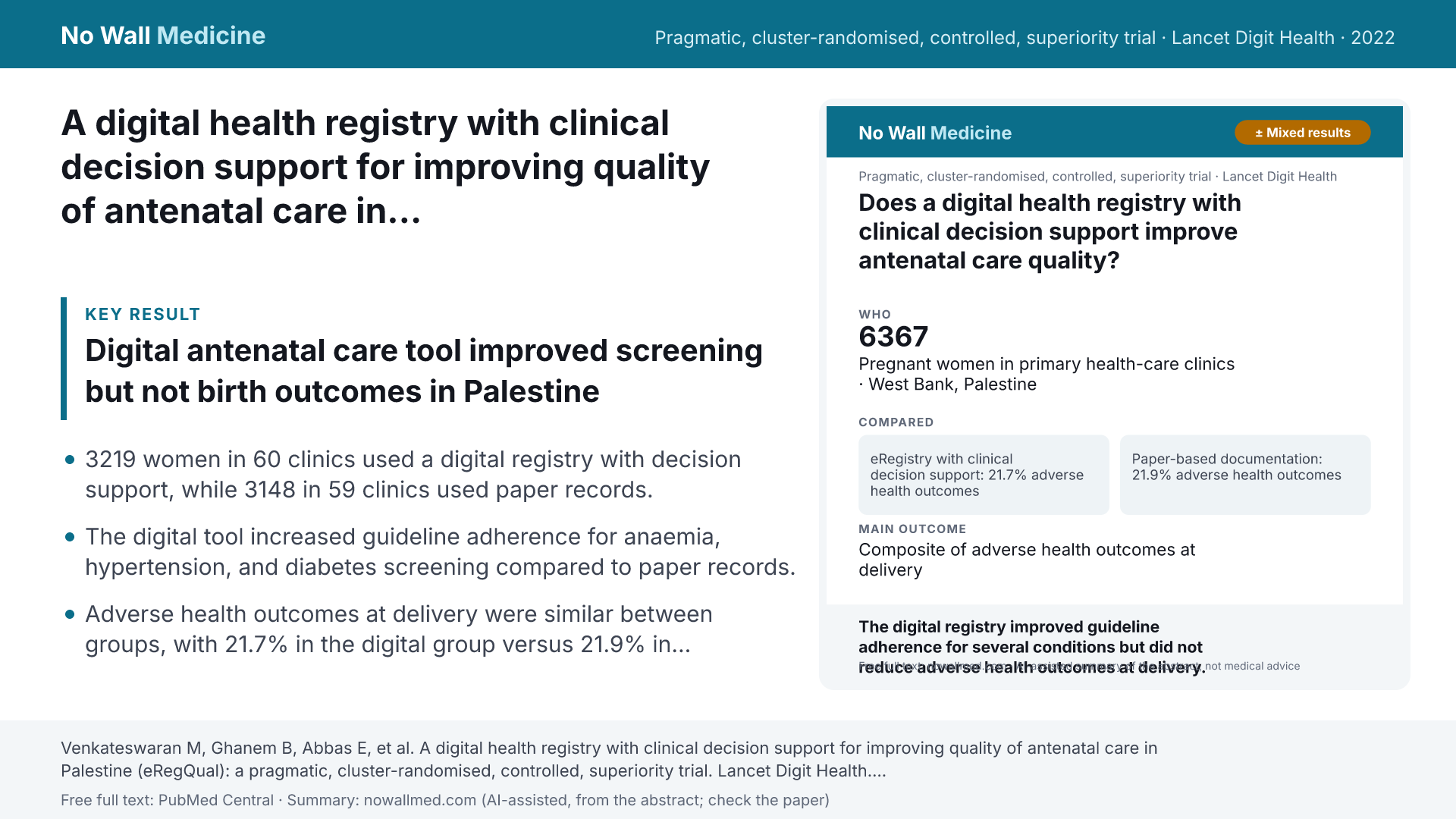
A digital health registry with clinical decision support for improving quality of antenatal care in Palestine (eRegQual): a pragmatic, cluster-randomised, controlled, superiority trial
Key result: Digital antenatal care tool improved screening but not birth outcomes in Palestine
Key points
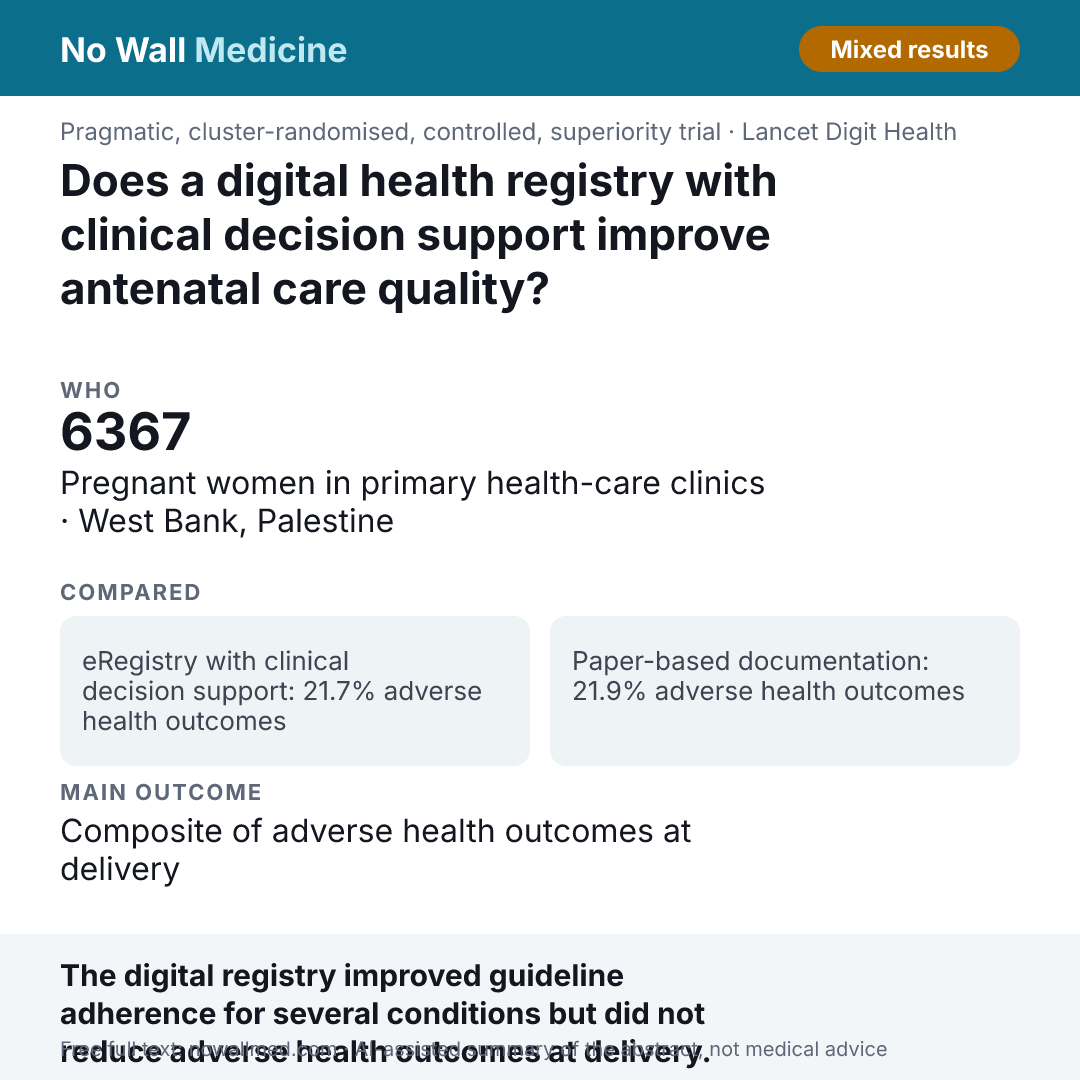
- 3219 women in 60 clinics used a digital registry with decision support, while 3148 in 59 clinics used paper records.
- The digital tool increased guideline adherence for anaemia, hypertension, and diabetes screening compared to paper records.
- Adverse health outcomes at delivery were similar between groups, with 21.7% in the digital group versus 21.9% in the paper group.
Limitation the authors note: Only 9.4% of women attended the full antenatal care schedule, limiting the impact on final health outcomes.
Discussion prompts
- Would these patients look like yours? Who was left out?
- Is the main outcome one that matters to patients?
- Is the difference large enough to change what you do?
Cite: Venkateswaran M, Ghanem B, Abbas E, et al. A digital health registry with clinical decision support for improving quality of antenatal care in Palestine (eRegQual): a pragmatic, cluster-randomised, controlled, superiority trial. Lancet Digit Health. 2022;4(2):e126-e136. doi:10.1016/S2589-7500(21)00269-7
Free full text: PubMed Central · Summary and visual abstract: nowallmed.com/a/a-digital-health-registry-with-clinical-decision-support-for-15rd9oi/ (AI-assisted from the abstract; check the paper before relying on it).