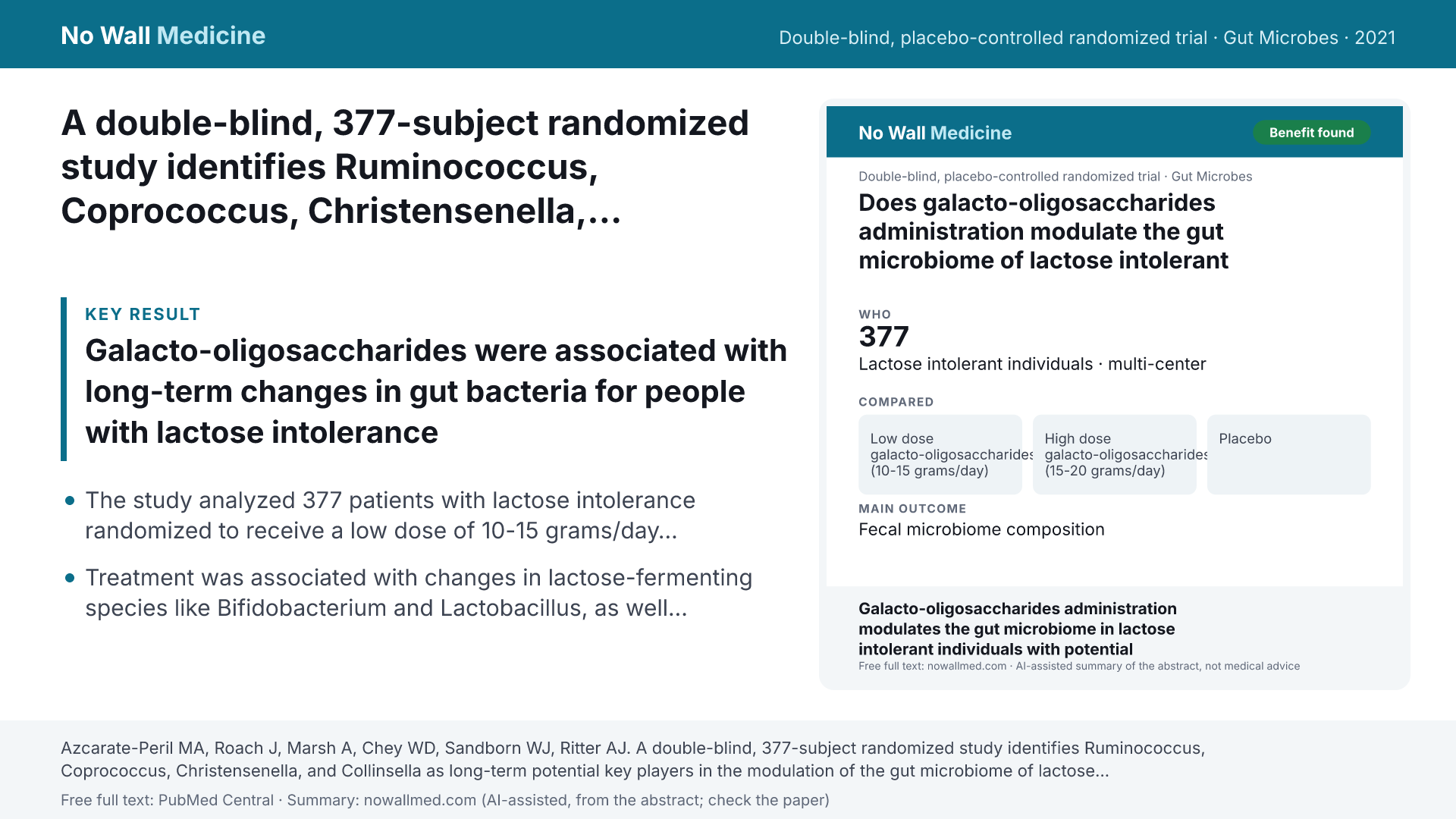
Galacto-oligosaccharides were associated with long-term changes in gut bacteria for people with lactose intolerance
A double-blind, 377-subject randomized study identifies Ruminococcus, Coprococcus, Christensenella, and Collinsella as long-term potential key players in the modulation of the gut microbiome of lactose intolerant individuals by galacto-oligosaccharides
Double-blind, placebo-controlled randomized trialBenefit found
Does galacto-oligosaccharides administration modulate the gut microbiome of lactose intolerant individuals?
Who
377
Lactose intolerant individuals · multi-center
Compared
Low dose galacto-oligosaccharides (10-15 grams/day)
High dose galacto-oligosaccharides (15-20 grams/day)
Placebo
Main outcome
Fecal microbiome composition
Bottom line: Galacto-oligosaccharides administration modulates the gut microbiome in lactose intolerant individuals with potential long-term benefits.
Gut Microbes · 2021-08-09Download image
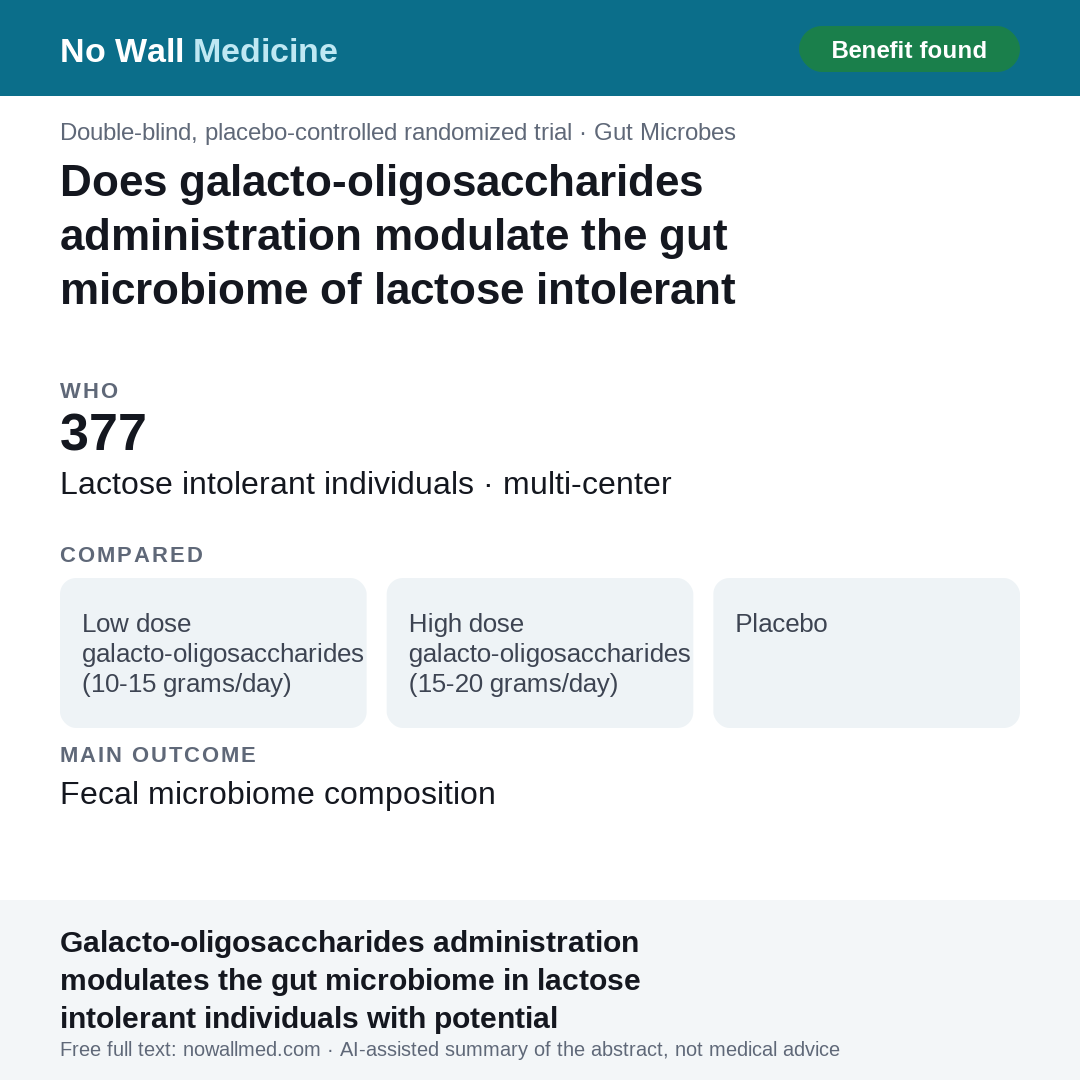
Clinical question: Does galacto-oligosaccharides administration modulate the gut microbiome of lactose intolerant individuals?
Why it matters: It was unknown if galacto-oligosaccharides could provide long-term modulation of the gut microbiome in individuals with lactose intolerance.
Key points
- The study analyzed 377 patients with lactose intolerance randomized to receive a low dose of 10-15 grams/day of galacto-oligosaccharides, a high dose of 15-20 grams/day, or a placebo.
- Treatment was associated with changes in lactose-fermenting species like Bifidobacterium and Lactobacillus, as well as increases in secondary fermenters like Coprococcus and Ruminococcus species.
- Microbiome changes were observed at 16 and 22 weeks after treatment when individuals continued to consume dairy products.
Headline and key points written with AI from the paper’s abstract, with every number checked against it. Read the paper before relying on them.
Was this summary helpful?
Subject terms
Cite this article
Azcarate-Peril MA, Roach J, Marsh A, Chey WD, Sandborn WJ, Ritter AJ. A double-blind, 377-subject randomized study identifies Ruminococcus, Coprococcus, Christensenella, and Collinsella as long-term potential key players in the modulation of the gut microbiome of lactose intolerant individuals by galacto-oligosaccharides. Gut Microbes. 2021. doi:10.1080/19490976.2021.1957536
Spotted a mistake? Suggest a correction