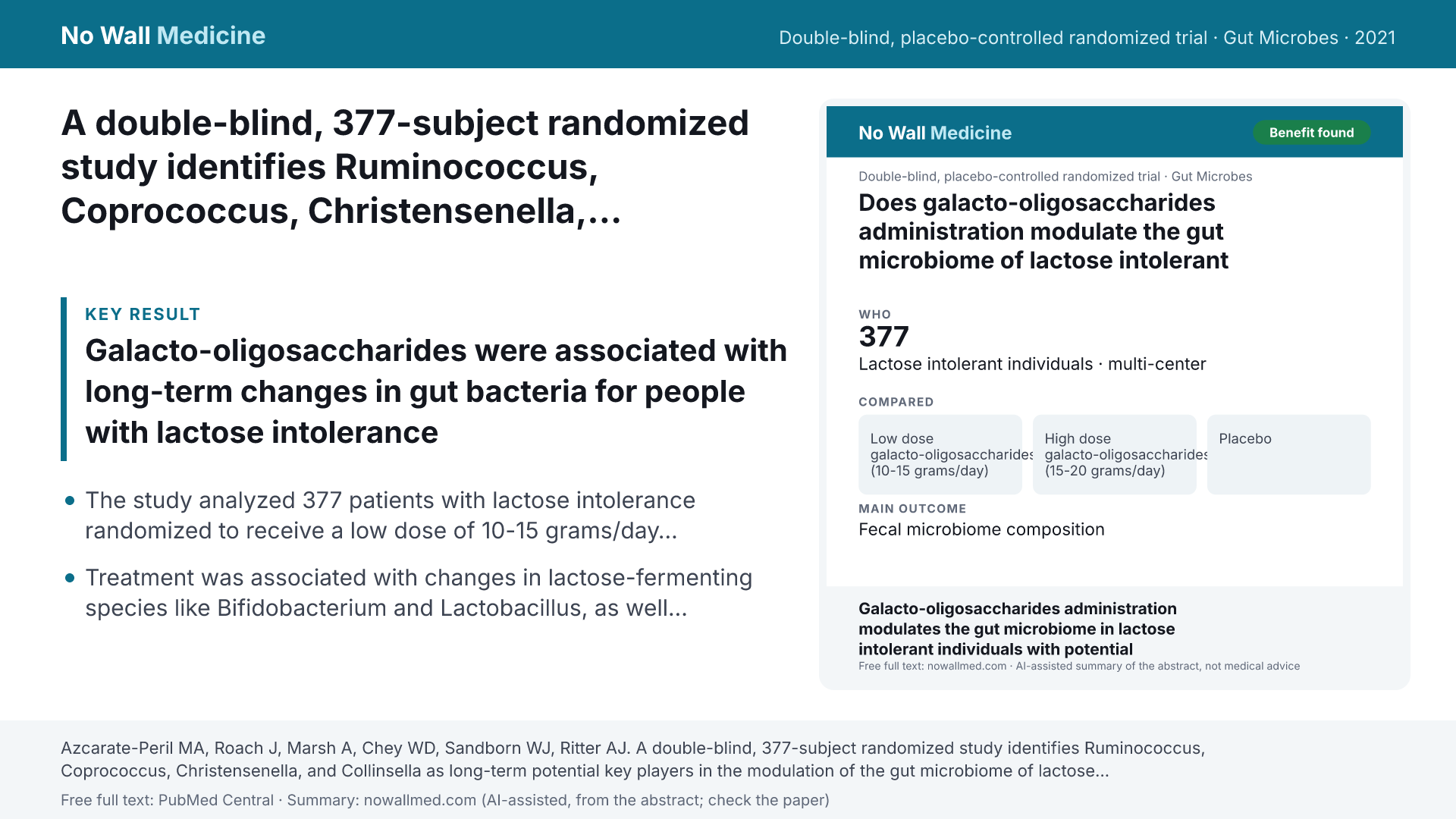
A double-blind, 377-subject randomized study identifies Ruminococcus, Coprococcus, Christensenella, and Collinsella as long-term potential key players in the modulation of the gut microbiome of lactose intolerant individuals by galacto-oligosaccharides
Key result: Galacto-oligosaccharides were associated with long-term changes in gut bacteria for people with lactose intolerance
Key points
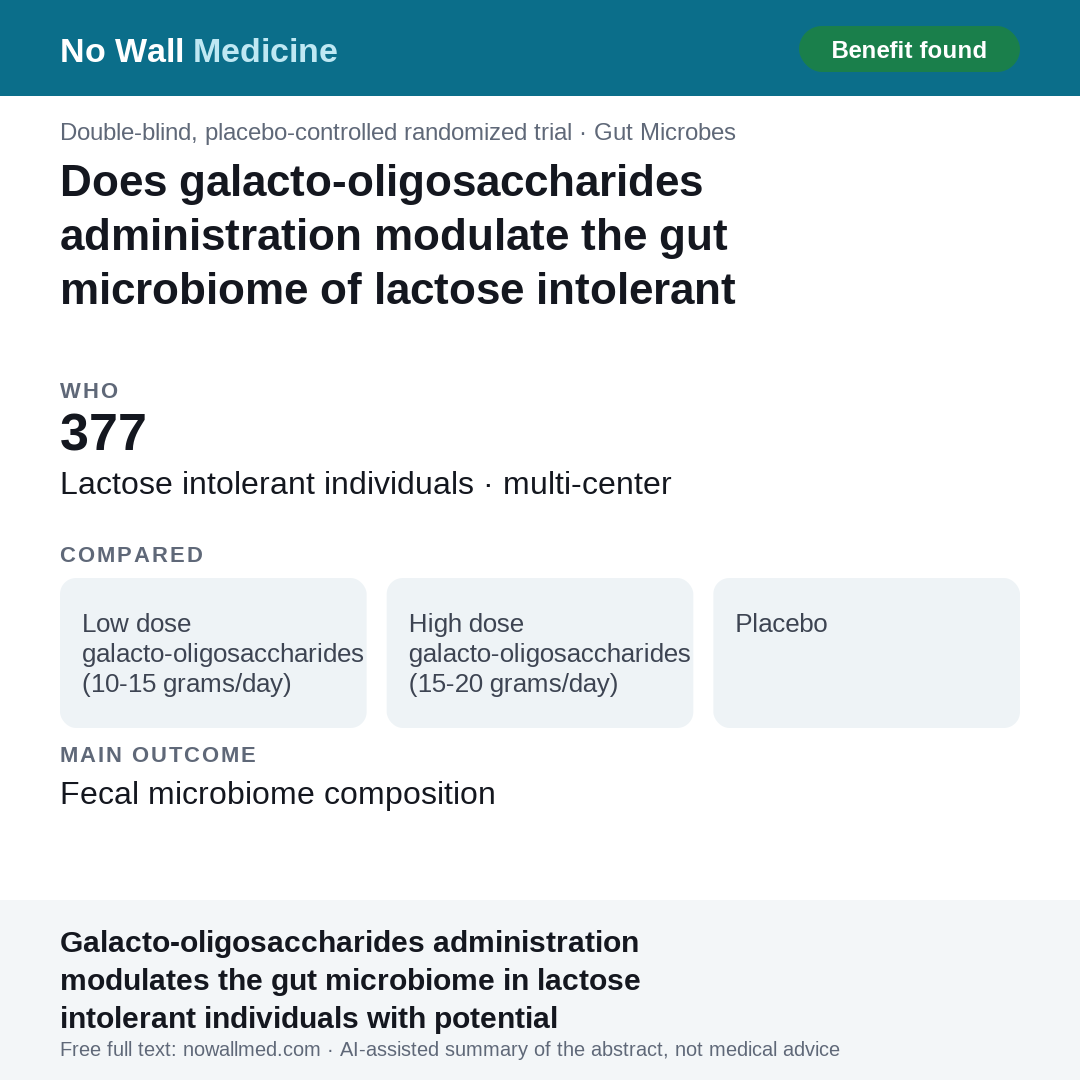
- The study analyzed 377 patients with lactose intolerance randomized to receive a low dose of 10-15 grams/day of galacto-oligosaccharides, a high dose of 15-20 grams/day, or a placebo.
- Treatment was associated with changes in lactose-fermenting species like Bifidobacterium and Lactobacillus, as well as increases in secondary fermenters like Coprococcus and Ruminococcus species.
- Microbiome changes were observed at 16 and 22 weeks after treatment when individuals continued to consume dairy products.
Why it matters: It was unknown if galacto-oligosaccharides could provide long-term modulation of the gut microbiome in individuals with lactose intolerance.
Discussion prompts
- Would these patients look like yours? Who was left out?
- Is the main outcome one that matters to patients?
- Is the difference large enough to change what you do?
Cite: Azcarate-Peril MA, Roach J, Marsh A, Chey WD, Sandborn WJ, Ritter AJ. A double-blind, 377-subject randomized study identifies Ruminococcus, Coprococcus, Christensenella, and Collinsella as long-term potential key players in the modulation of the gut microbiome of lactose intolerant individuals by galacto-oligosaccharides. Gut Microbes. 2021. doi:10.1080/19490976.2021.1957536
Free full text: PubMed Central · Summary and visual abstract: nowallmed.com/a/a-double-blind-377-subject-randomized-study-identifies-ruminococcus-q5tiuq/ (AI-assisted from the abstract; check the paper before relying on it).