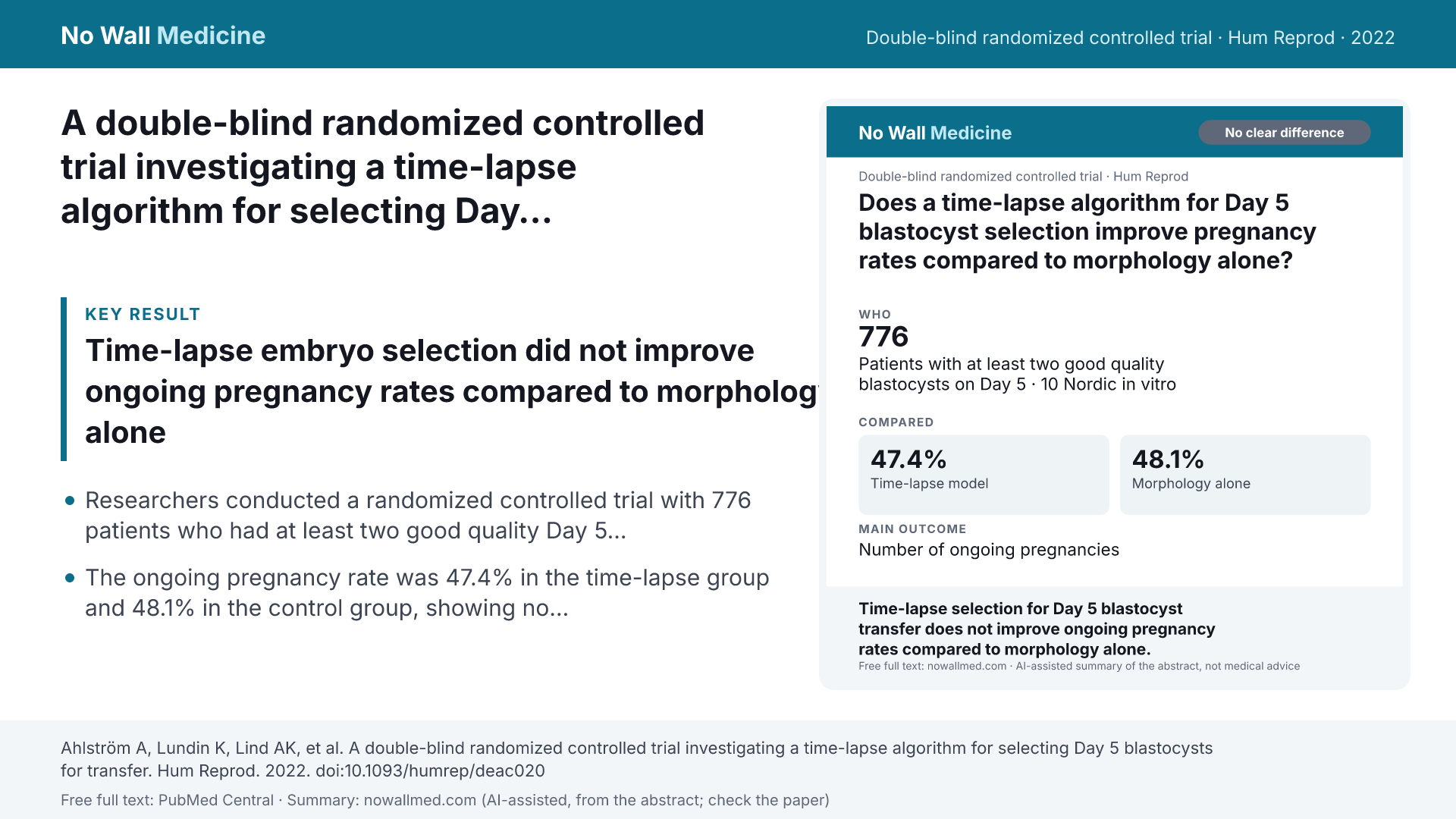
A double-blind randomized controlled trial investigating a time-lapse algorithm for selecting Day 5 blastocysts for transfer
Key result: Time-lapse embryo selection did not improve ongoing pregnancy rates compared to morphology alone
Key points
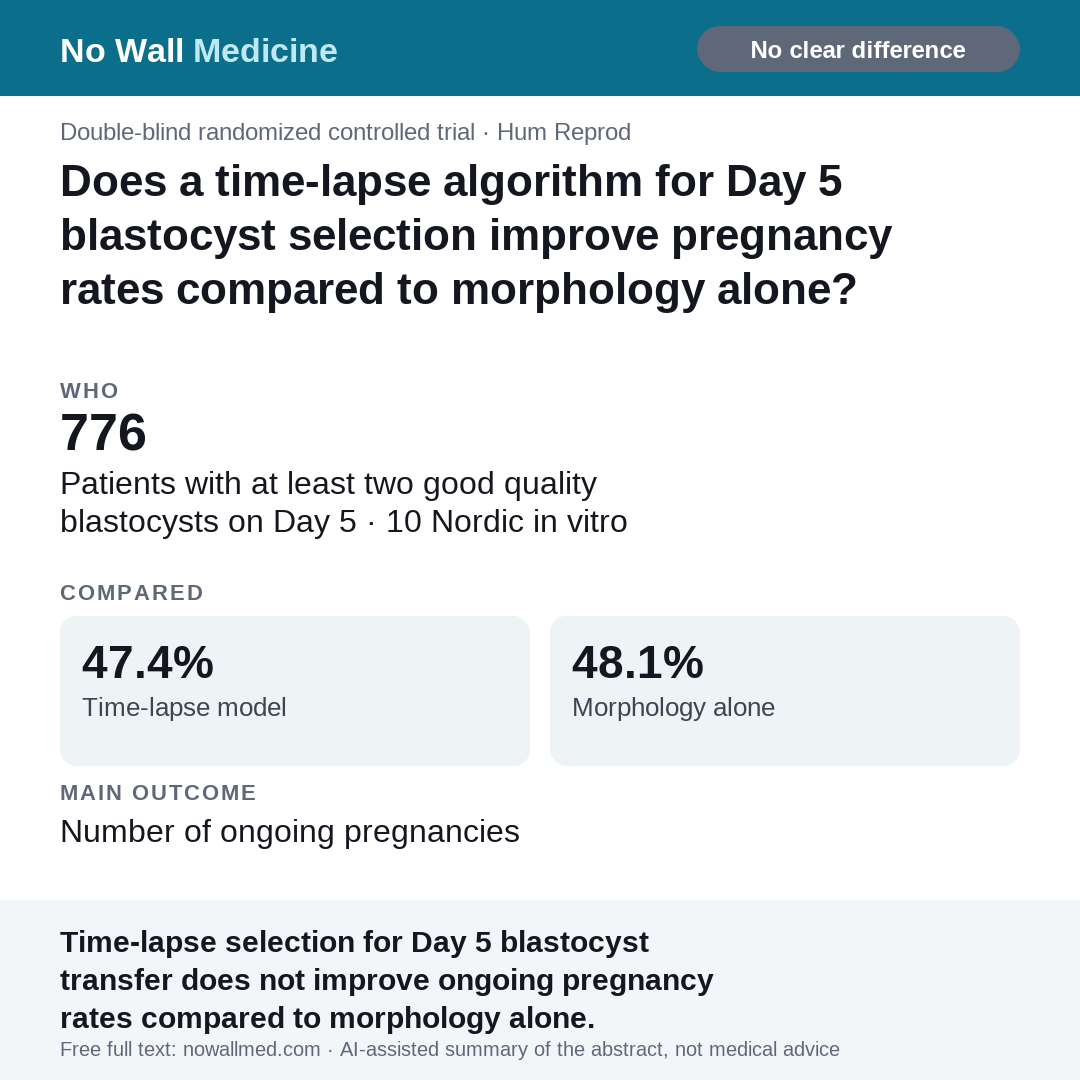
- Researchers conducted a randomized controlled trial with 776 patients who had at least two good quality Day 5 blastocysts, comparing a time-lapse algorithm to manual morphological scoring.
- The ongoing pregnancy rate was 47.4% in the time-lapse group and 48.1% in the control group, showing no statistically significant difference (P = 0.90).
- Pregnancy rates and early pregnancy loss rates were also similar between the two groups, with pregnancy rates at 60.2% versus 59.0% and early loss at 21.2% versus 18.5%.
Limitation the authors note: The trial was stopped prematurely because patient recruitment slowed during 2020 due to coronavirus disease-19 restrictions, and the study only included embryos of good morphological quality.
Discussion prompts
- Would these patients look like yours? Who was left out?
- Is the main outcome one that matters to patients?
- Is the difference large enough to change what you do?
Cite: Ahlström A, Lundin K, Lind AK, et al. A double-blind randomized controlled trial investigating a time-lapse algorithm for selecting Day 5 blastocysts for transfer. Hum Reprod. 2022. doi:10.1093/humrep/deac020
Free full text: PubMed Central · Summary and visual abstract: nowallmed.com/a/a-double-blind-randomized-controlled-trial-investigating-a-time-lapse-s7ufk9/ (AI-assisted from the abstract; check the paper before relying on it).