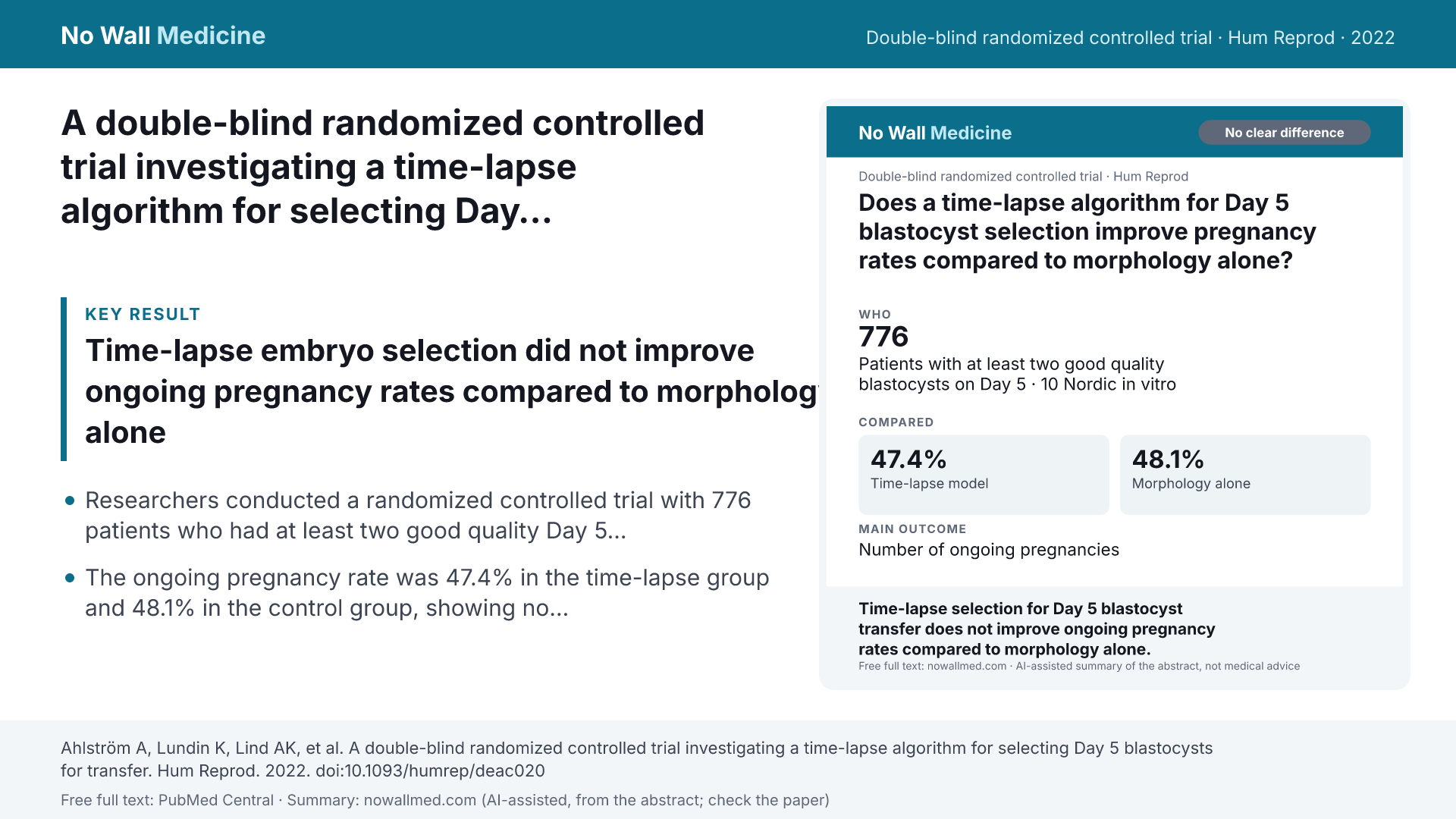
Time-lapse embryo selection did not improve ongoing pregnancy rates compared to morphology alone
A double-blind randomized controlled trial investigating a time-lapse algorithm for selecting Day 5 blastocysts for transfer
Double-blind randomized controlled trialNo clear difference
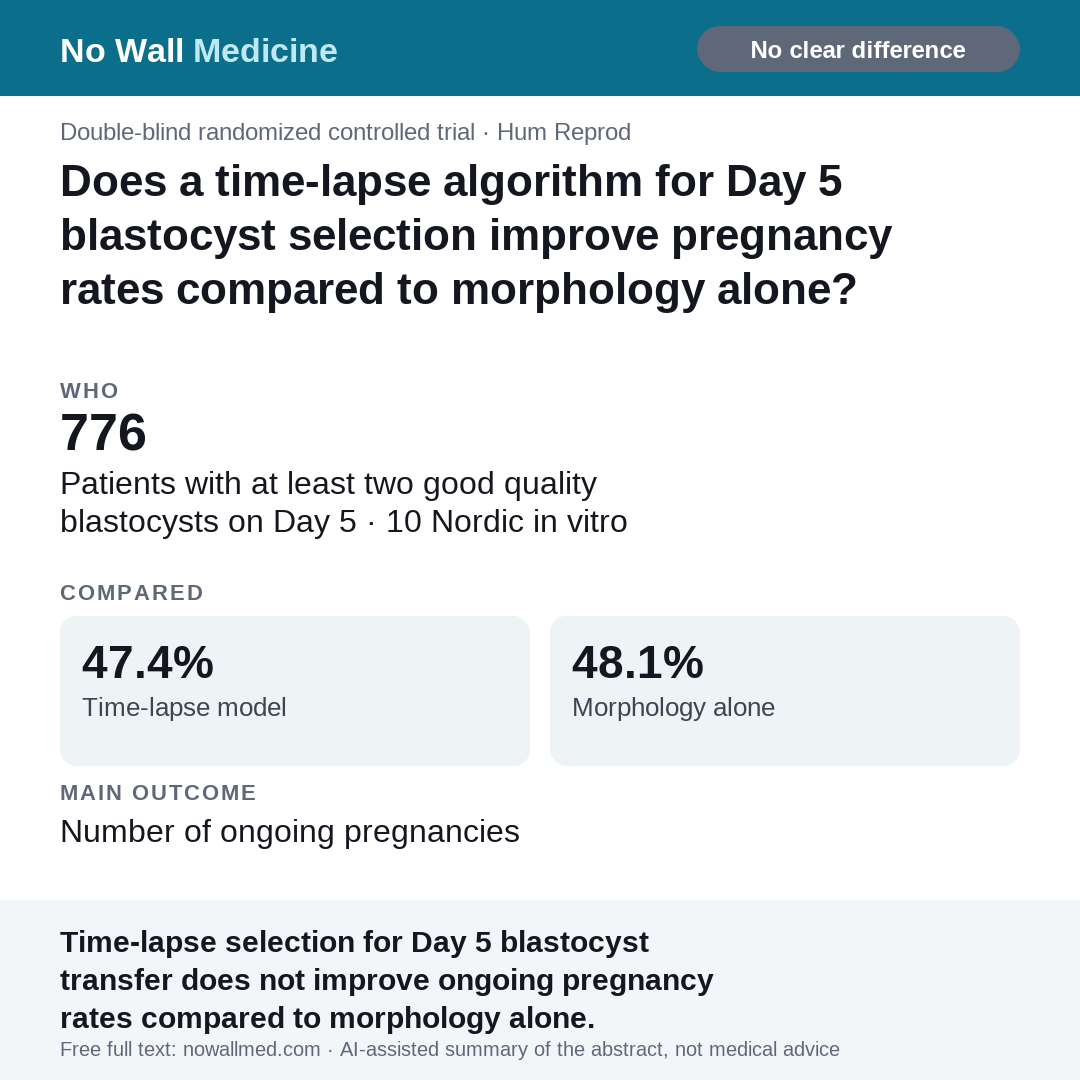
Does a time-lapse algorithm for Day 5 blastocyst selection improve pregnancy rates compared to morphology alone?
Who
776
Patients with at least two good quality blastocysts on Day 5 · 10 Nordic in vitro fertilization clinics
Compared
47.4%Time-lapse model (175/369)
48.1%Morphology alone (181/376)
Main outcome
Number of ongoing pregnancies
Result: mean difference -0.7% (95% CI -8.2, 6.7, P = 0.90)
Bottom line: Time-lapse selection for Day 5 blastocyst transfer does not improve ongoing pregnancy rates compared to morphology alone.
Limitation: Trial stopped prematurely due to coronavirus disease-19 restrictions and only included good quality blastocysts.
Hum Reprod · 2022-02-11Download image
Clinical question: Does a time-lapse algorithm for Day 5 blastocyst selection improve pregnancy rates compared to morphology alone?
Key points
- Researchers conducted a randomized controlled trial with 776 patients who had at least two good quality Day 5 blastocysts, comparing a time-lapse algorithm to manual morphological scoring.
- The ongoing pregnancy rate was 47.4% in the time-lapse group and 48.1% in the control group, showing no statistically significant difference (P = 0.90).
- Pregnancy rates and early pregnancy loss rates were also similar between the two groups, with pregnancy rates at 60.2% versus 59.0% and early loss at 21.2% versus 18.5%.
Limitation the authors note: The trial was stopped prematurely because patient recruitment slowed during 2020 due to coronavirus disease-19 restrictions, and the study only included embryos of good morphological quality.
Headline and key points written with AI from the paper’s abstract, with every number checked against it. Read the paper before relying on them.
Was this summary helpful?
Subject terms
Cite this article
Ahlström A, Lundin K, Lind AK, et al. A double-blind randomized controlled trial investigating a time-lapse algorithm for selecting Day 5 blastocysts for transfer. Hum Reprod. 2022. doi:10.1093/humrep/deac020
Spotted a mistake? Suggest a correction