A hydrogel vascular closure device for hemostasis after transfemoral intervention: a randomized controlled clinical trial
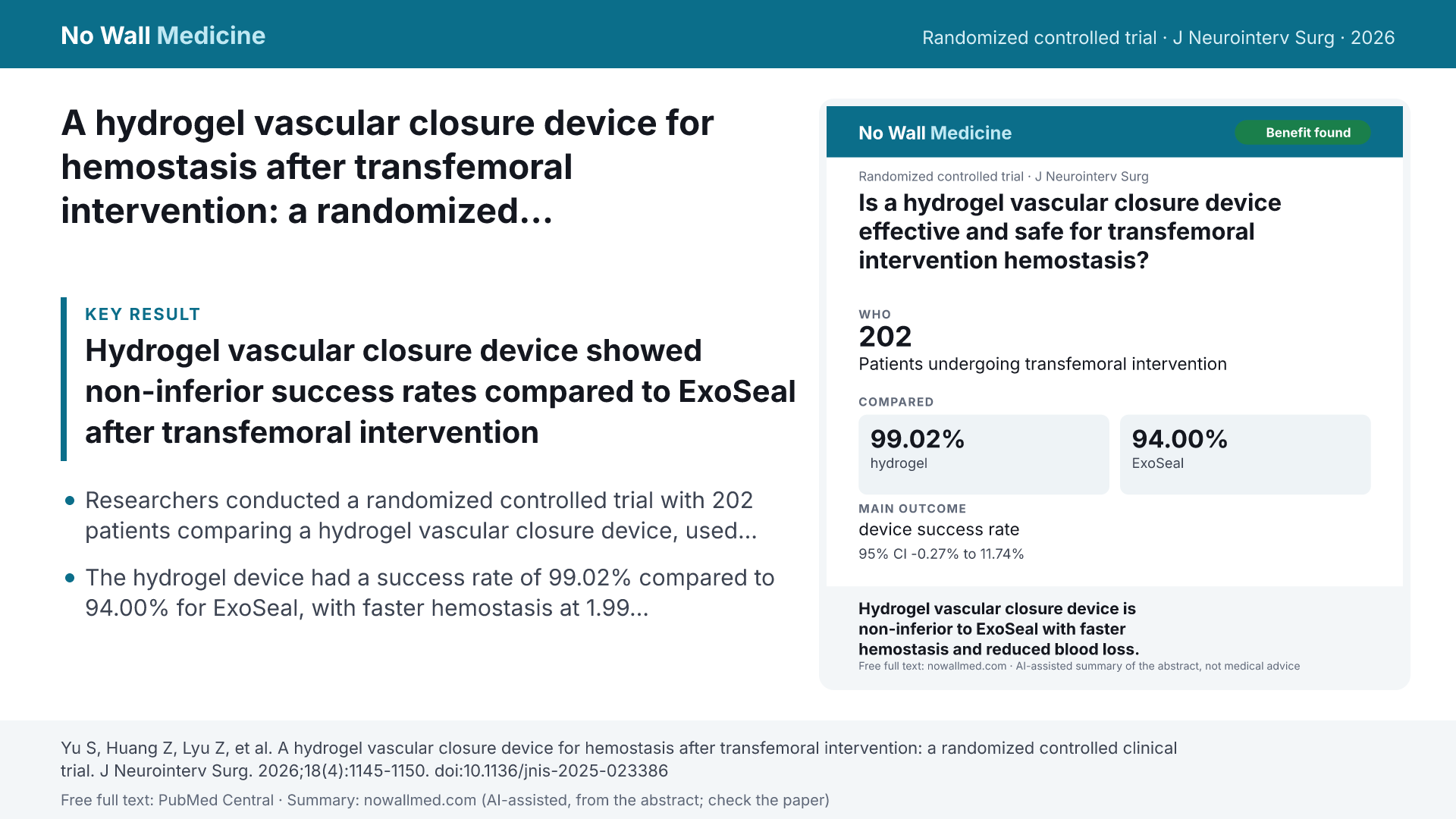
Key result: Hydrogel vascular closure device showed non-inferior success rates compared to ExoSeal after transfemoral intervention
Randomized controlled trialBenefit found
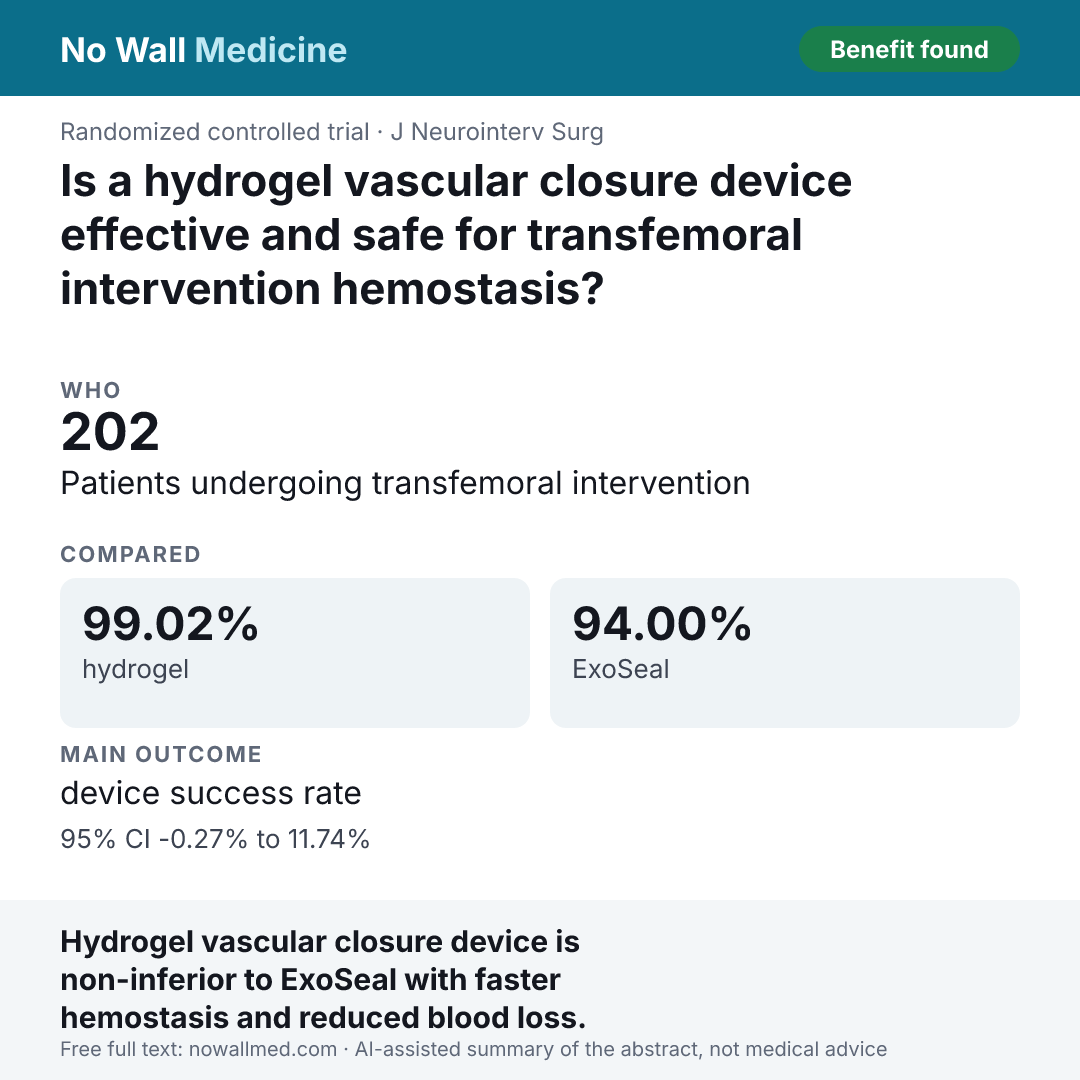
Is a hydrogel vascular closure device effective and safe for transfemoral intervention hemostasis?
Who
202
Patients undergoing transfemoral intervention
Compared
99.02%hydrogel
94.00%ExoSeal
Main outcome
device success rate
Result: 95% CI -0.27% to 11.74%
Bottom line: Hydrogel vascular closure device is non-inferior to ExoSeal with faster hemostasis and reduced blood loss.
J Neurointerv Surg · 2026-03-13 · Save PNG
Key points
- Researchers conducted a randomized controlled trial with 202 patients comparing a hydrogel vascular closure device, used to stop bleeding, to the ExoSeal device.
- The hydrogel device had a success rate of 99.02% compared to 94.00% for ExoSeal, with faster hemostasis at 1.99 minutes versus 3.14 minutes.
- Blood loss was 0.83 mL in the hydrogel group compared to 8.93 mL in the ExoSeal group, and no major access site complications occurred in either group.
Why it matters: The efficacy and safety of a hydrogel vascular closure device for stopping bleeding after transfemoral interventions needed validation.
Discussion prompts
- Would these patients look like yours? Who was left out?
- Is the main outcome one that matters to patients?
- Is the difference large enough to change what you do?
Cite: Yu S, Huang Z, Lyu Z, et al. A hydrogel vascular closure device for hemostasis after transfemoral intervention: a randomized controlled clinical trial. J Neurointerv Surg. 2026;18(4):1145-1150. doi:10.1136/jnis-2025-023386
Free full text: PubMed Central · Summary and visual abstract: nowallmed.com/a/a-hydrogel-vascular-closure-device-for-hemostasis-after-transfemoral-xneh7/ (AI-assisted from the abstract; check the paper before relying on it).