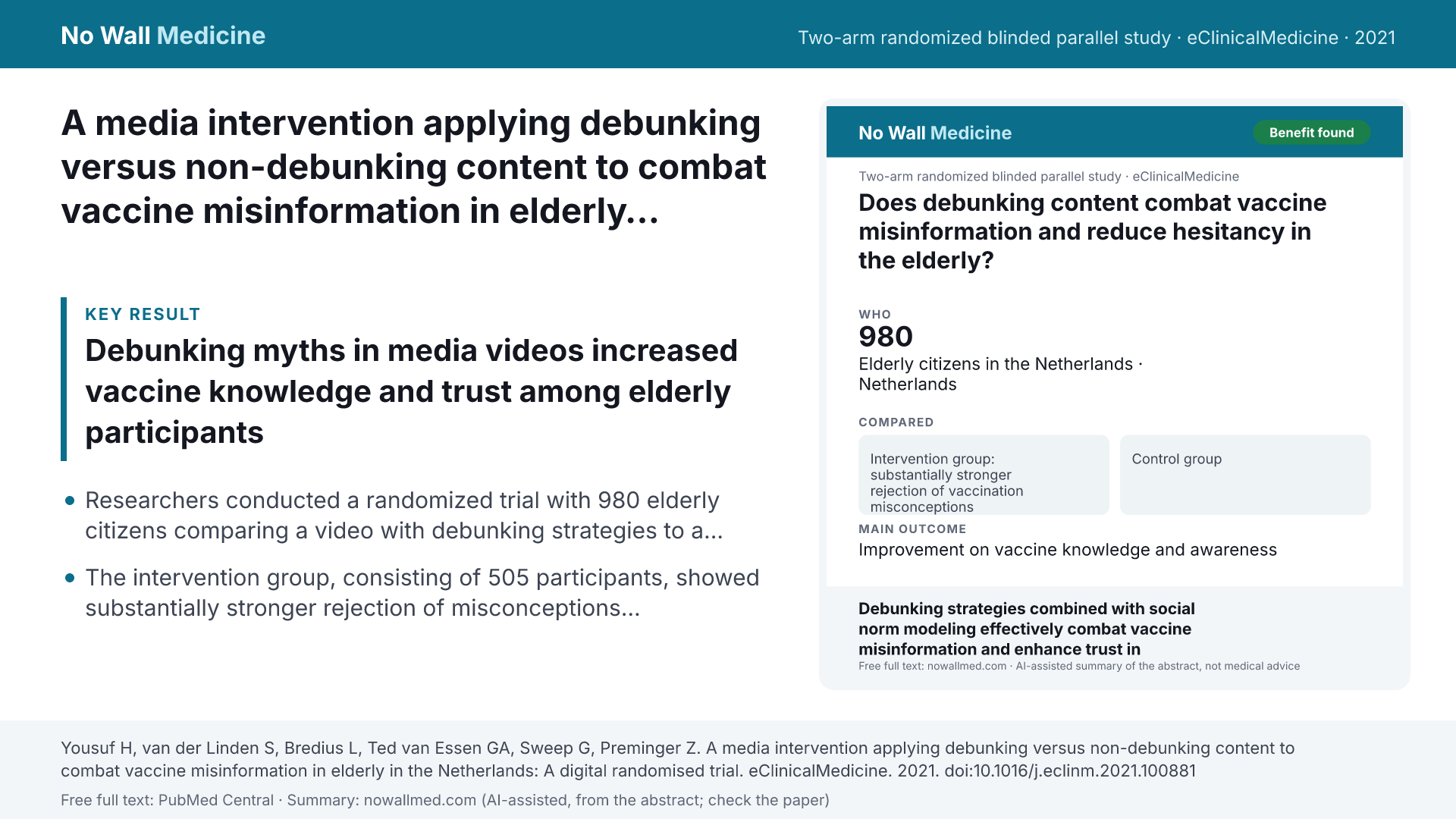
A media intervention applying debunking versus non-debunking content to combat vaccine misinformation in elderly in the Netherlands: A digital randomised trial
Key result: Debunking myths in media videos increased vaccine knowledge and trust among elderly participants
Key points
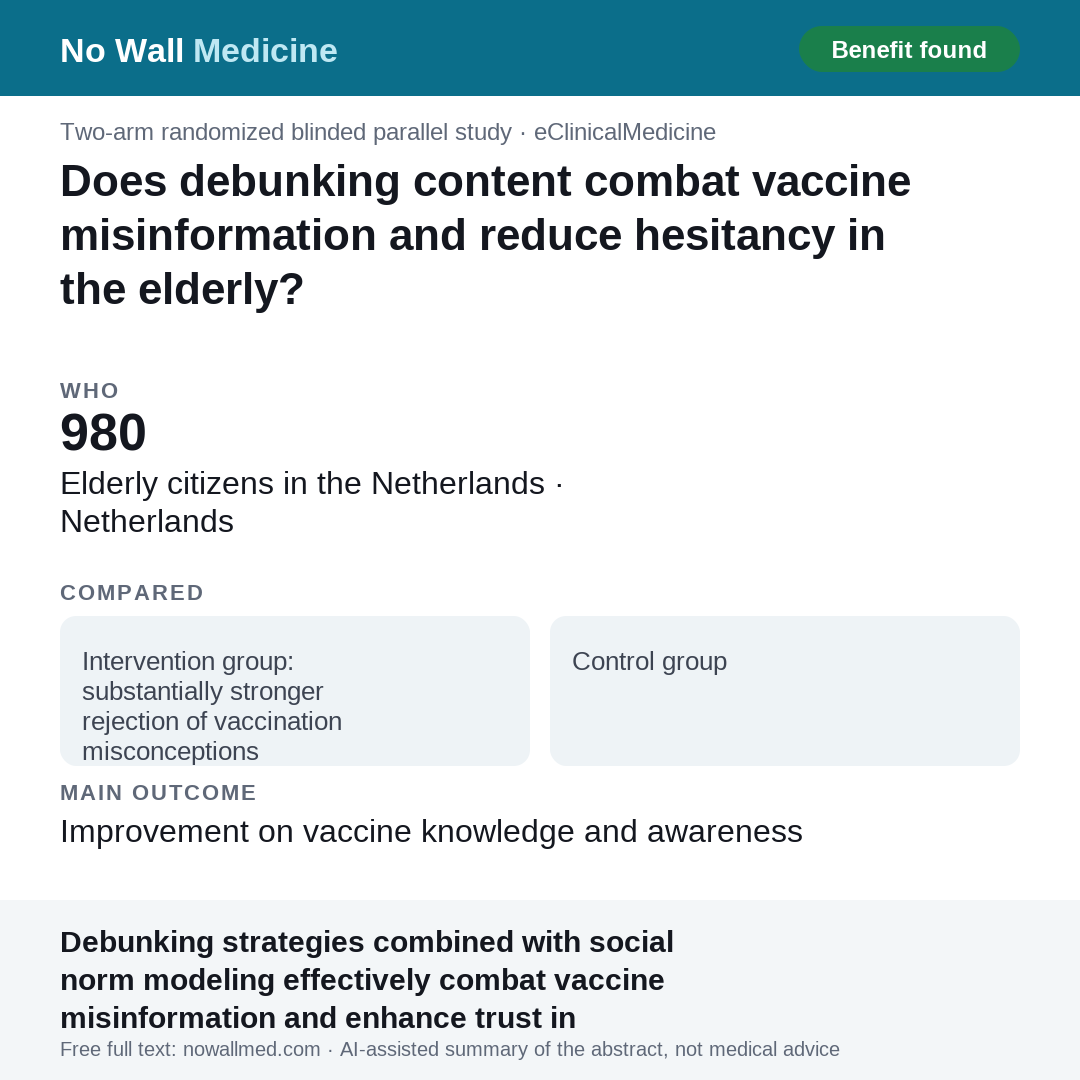
- Researchers conducted a randomized trial with 980 elderly citizens comparing a video with debunking strategies to a video containing only vaccine information and social norms.
- The intervention group, consisting of 505 participants, showed substantially stronger rejection of misconceptions regarding autism, immune system weakening, and influenza vaccine efficacy.
- Exposure to the debunking intervention was also associated with enhanced trust in the government.
Why it matters: It was unknown if applying debunking strategies to media content could effectively combat vaccine misinformation and reduce hesitancy in elderly populations.
Discussion prompts
- Would these patients look like yours? Who was left out?
- Is the main outcome one that matters to patients?
- Is the difference large enough to change what you do?
Cite: Yousuf H, van der Linden S, Bredius L, Ted van Essen GA, Sweep G, Preminger Z. A media intervention applying debunking versus non-debunking content to combat vaccine misinformation in elderly in the Netherlands: A digital randomised trial. eClinicalMedicine. 2021. doi:10.1016/j.eclinm.2021.100881
Free full text: PubMed Central · Summary and visual abstract: nowallmed.com/a/a-media-intervention-applying-debunking-versus-non-debunking-content-1fl25yk/ (AI-assisted from the abstract; check the paper before relying on it).