A Meta-analysis of Functional Outcomes and Recovery Metrics Comparing Transoral Robotic Surgery and (Chemo)Radiotherapy
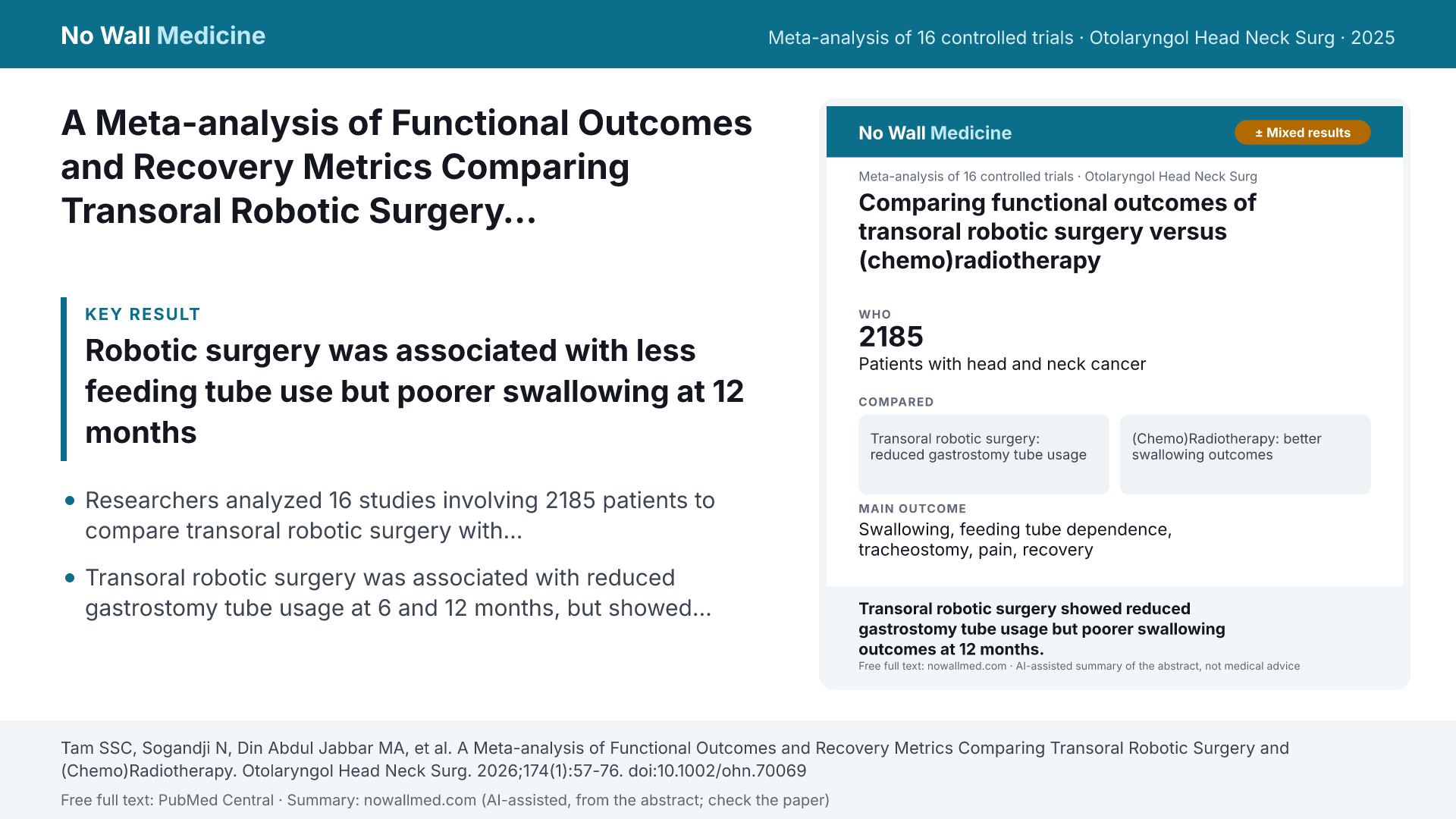
Key result: Robotic surgery was associated with less feeding tube use but poorer swallowing at 12 months
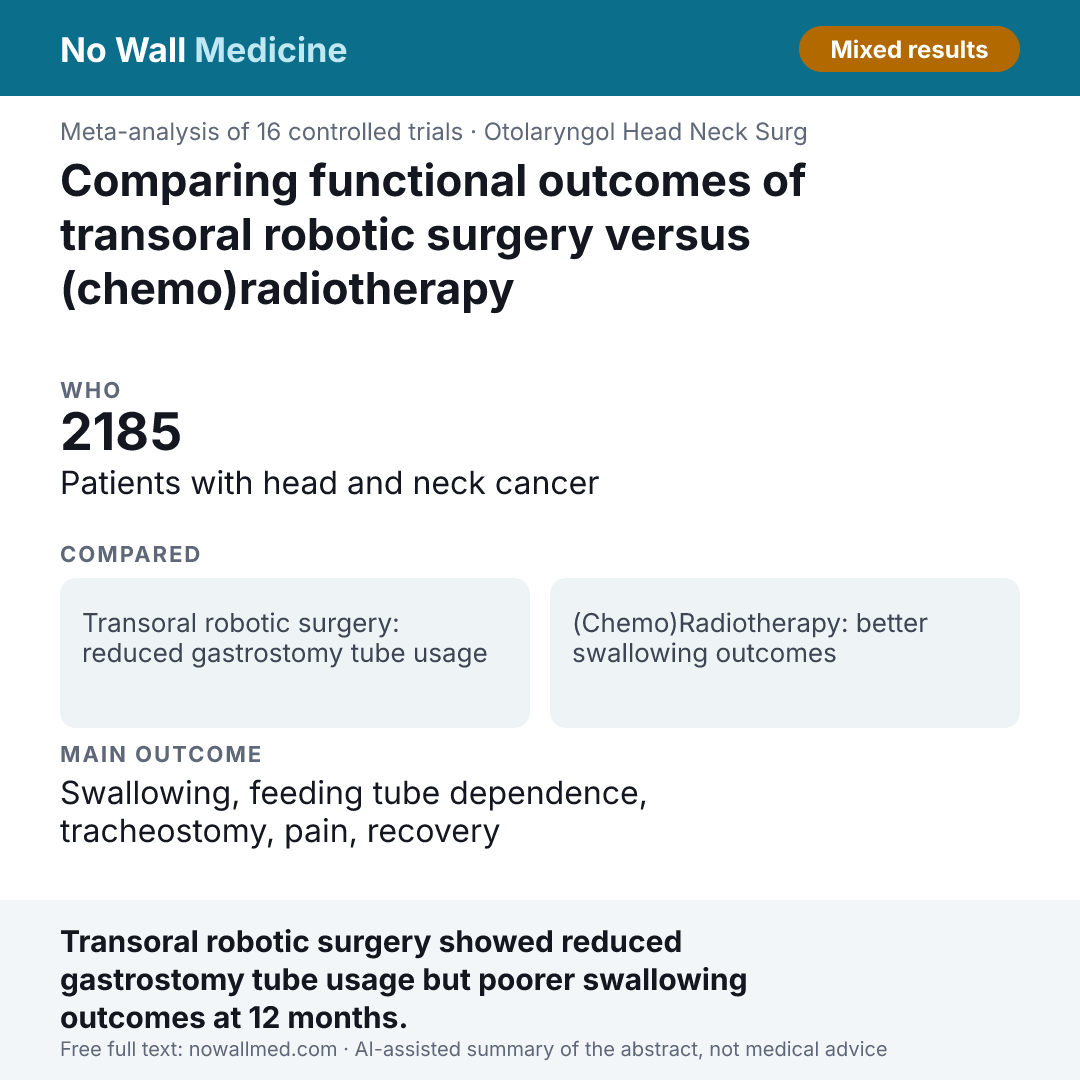
Meta-analysis of 16 controlled trialsMixed results
Comparing functional outcomes of transoral robotic surgery versus (chemo)radiotherapy
Who
2185
Patients with head and neck cancer
Compared
Transoral robotic surgery: reduced gastrostomy tube usage
(Chemo)Radiotherapy: better swallowing outcomes
Main outcome
Swallowing, feeding tube dependence, tracheostomy, pain, recovery
Bottom line: Transoral robotic surgery showed reduced gastrostomy tube usage but poorer swallowing outcomes at 12 months.
Limitation: Methodological inconsistencies in eligibility criteria and human papillomavirus p16 status
Otolaryngol Head Neck Surg · 2025-12-07 · Save PNG
Key points
- Researchers analyzed 16 studies involving 2185 patients to compare transoral robotic surgery with (chemo)radiotherapy, which is a combination of chemotherapy and radiation therapy.
- Transoral robotic surgery was associated with reduced gastrostomy tube usage at 6 and 12 months, but showed poorer swallowing outcomes at 12 months on the MD Anderson Dysphagia Index.
- Long-term pain levels were generally lower in the group receiving transoral robotic surgery.
Discussion prompts
- Would these patients look like yours? Who was left out?
- Is the main outcome one that matters to patients?
- Is the difference large enough to change what you do?
Cite: Tam SSC, Sogandji N, Din Abdul Jabbar MA, et al. A Meta-analysis of Functional Outcomes and Recovery Metrics Comparing Transoral Robotic Surgery and (Chemo)Radiotherapy. Otolaryngol Head Neck Surg. 2026;174(1):57-76. doi:10.1002/ohn.70069
Free full text: PubMed Central · Summary and visual abstract: nowallmed.com/a/a-meta-analysis-of-functional-outcomes-and-recovery-metrics-comparing-1l76jef/ (AI-assisted from the abstract; check the paper before relying on it).