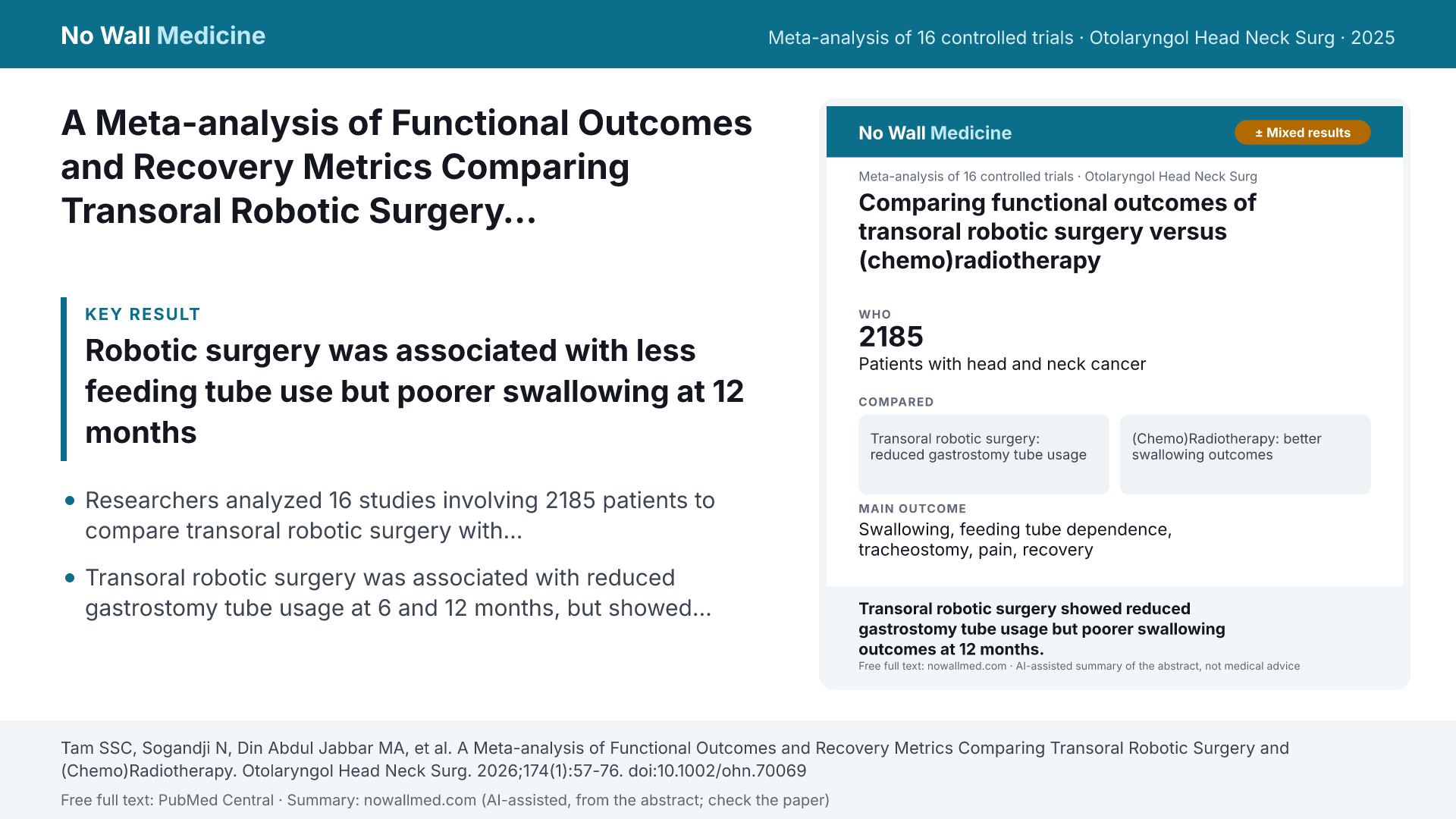
Robotic surgery was associated with less feeding tube use but poorer swallowing at 12 months
A Meta-analysis of Functional Outcomes and Recovery Metrics Comparing Transoral Robotic Surgery and (Chemo)Radiotherapy
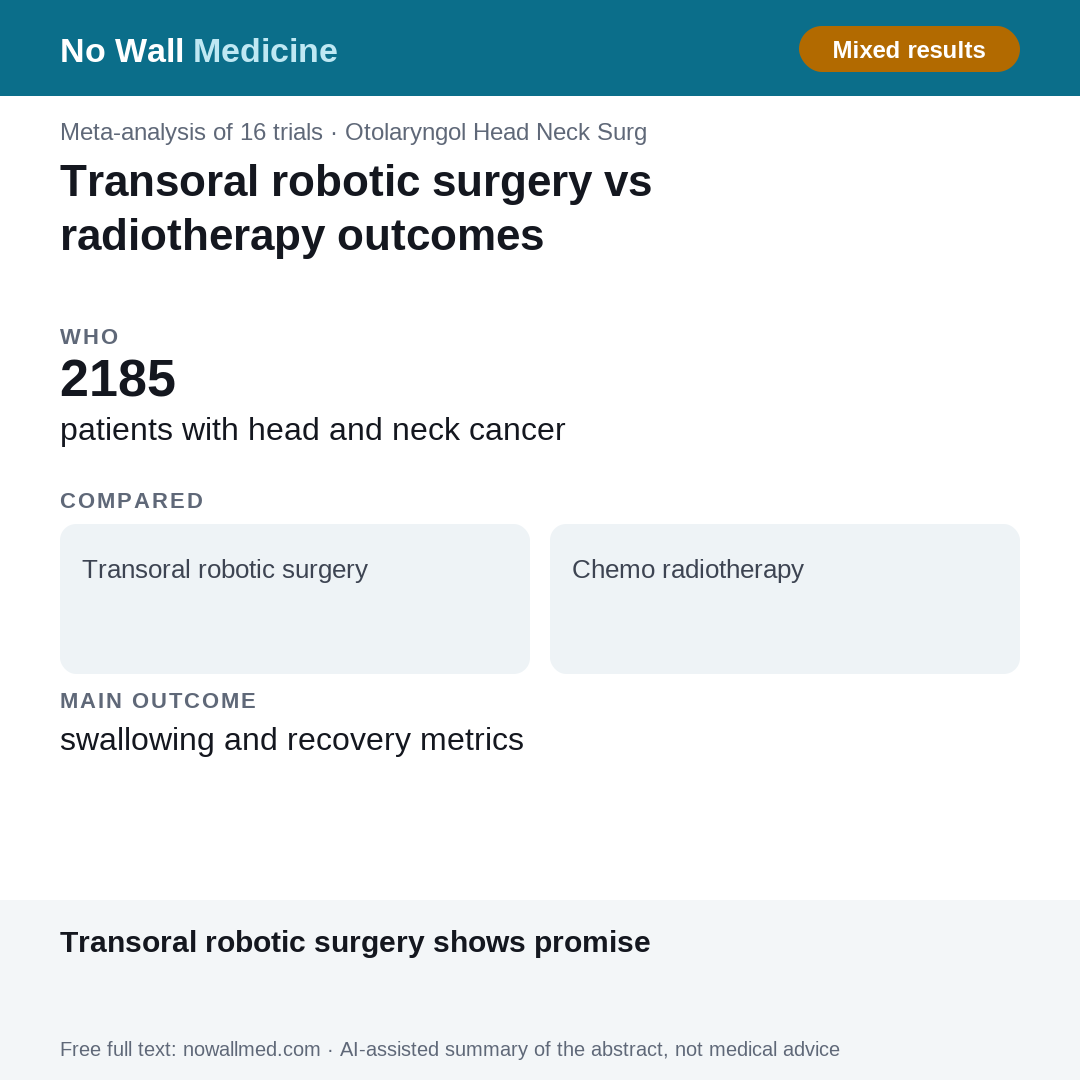
Meta-analysis of 16 trialsMixed results
Transoral robotic surgery vs radiotherapy outcomes
Who
2185
patients with head and neck cancer
Compared
Transoral robotic surgery
Chemo radiotherapy
Main outcome
swallowing and recovery metrics
Bottom line: Transoral robotic surgery shows promise
Limitation: methodological inconsistencies
Otolaryngol Head Neck Surg · 2025-12-07Download image
Why it matters: Clinicians need to understand how transoral robotic surgery compares to (chemo)radiotherapy regarding swallowing, feeding tube dependence, and recovery metrics.
Key points
- Researchers analyzed 16 studies involving 2185 patients to compare transoral robotic surgery with (chemo)radiotherapy, which is a combination of chemotherapy and radiation therapy.
- Transoral robotic surgery was associated with reduced gastrostomy tube usage at 6 and 12 months, but showed poorer swallowing outcomes at 12 months on the MD Anderson Dysphagia Index.
- Long-term pain levels were generally lower in the group receiving transoral robotic surgery.
Headline and key points written with AI from the paper’s abstract, with every number checked against it. Read the paper before relying on them.
Was this summary helpful?
Subject terms
Cite this article
Tam SSC, Sogandji N, Din Abdul Jabbar MA, et al. A Meta-analysis of Functional Outcomes and Recovery Metrics Comparing Transoral Robotic Surgery and (Chemo)Radiotherapy. Otolaryngol Head Neck Surg. 2025. doi:10.1002/ohn.70069
Spotted a mistake? Suggest a correction