A meta-analysis of randomized controlled trials on therapeutic efficacy and safety of autologous cell therapy for atherosclerosis obliterans
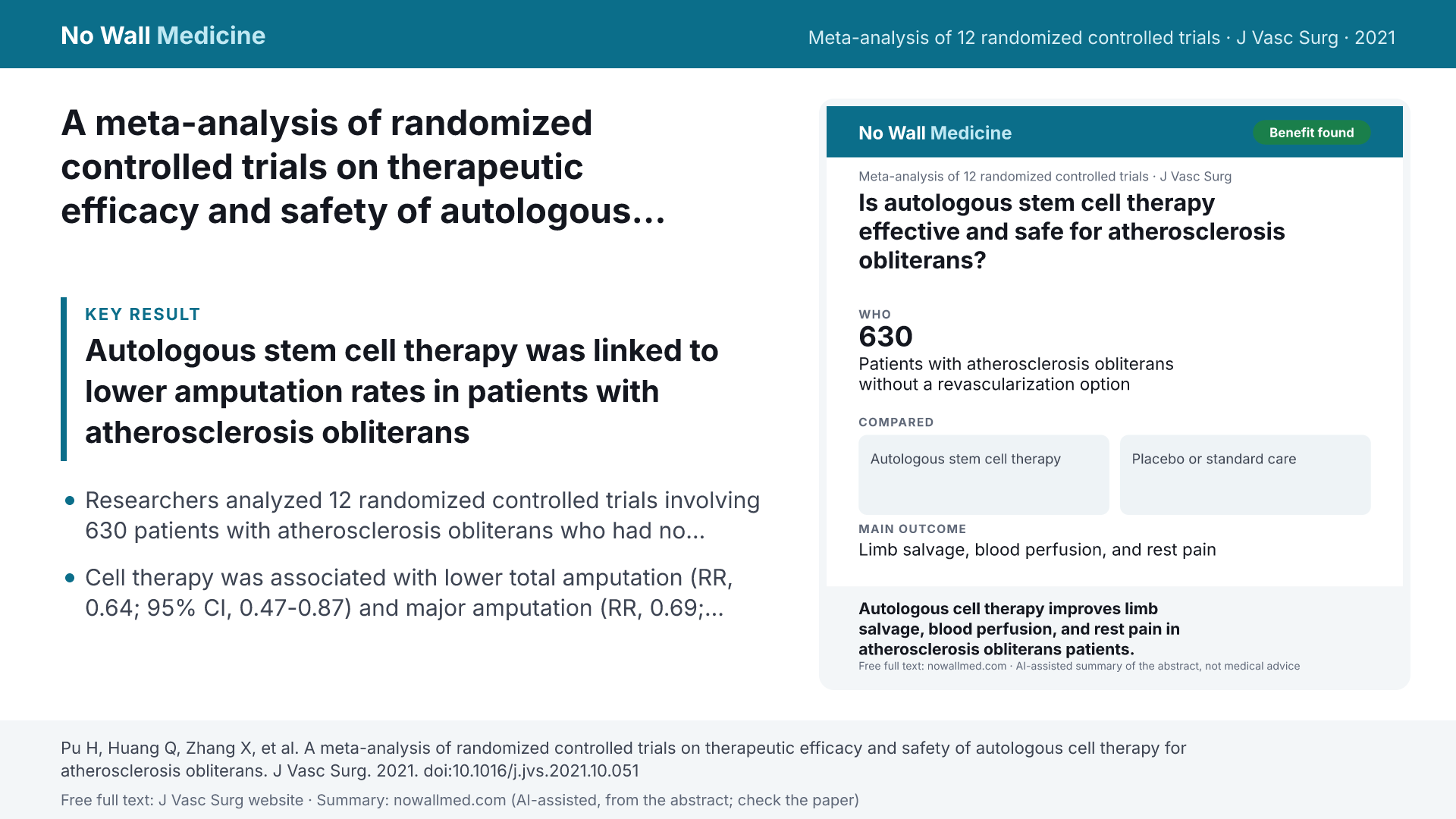
Key result: Autologous stem cell therapy was linked to lower amputation rates in patients with atherosclerosis obliterans
Key points
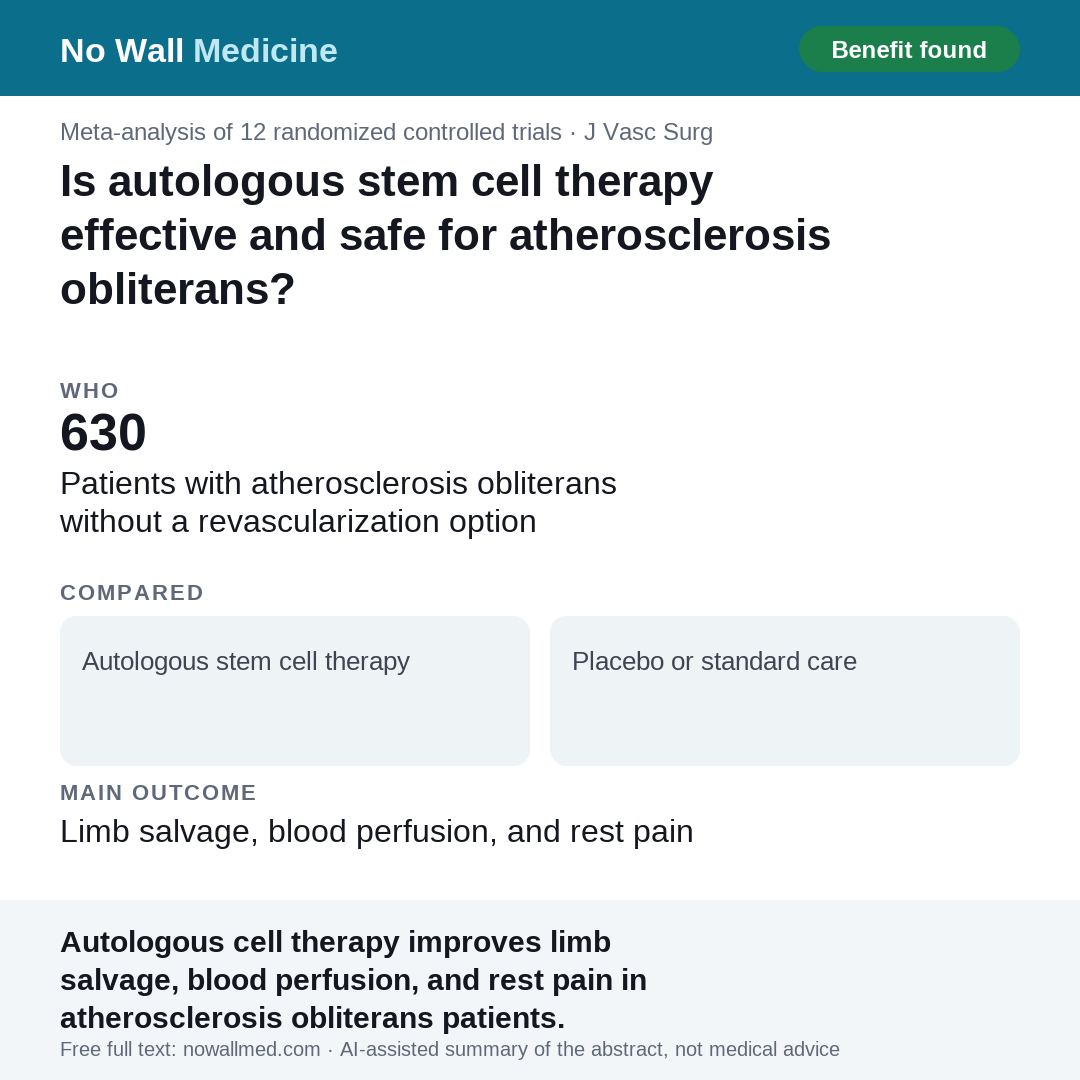
- Researchers analyzed 12 randomized controlled trials involving 630 patients with atherosclerosis obliterans who had no other revascularization options.
- Cell therapy was associated with lower total amputation (RR, 0.64; 95% CI, 0.47-0.87) and major amputation (RR, 0.69; 95% CI, 0.50-0.94) risks.
- The therapy was linked to improved ankle-brachial index, transcutaneous oxygen tension, and rest pain scores, but showed no significant difference in all-cause death or ulcer size.
Why it matters: The application and efficacy of stem cell therapy for patients with atherosclerosis obliterans who have no other treatment options have not been standardized.
Limitation the authors note: The number of trials included was limited and most were designed for no-option patients, meaning results may not apply to all patients with peripheral arterial disease.
Discussion prompts
- Would these patients look like yours? Who was left out?
- Is the main outcome one that matters to patients?
- Is the difference large enough to change what you do?
Cite: Pu H, Huang Q, Zhang X, et al. A meta-analysis of randomized controlled trials on therapeutic efficacy and safety of autologous cell therapy for atherosclerosis obliterans. J Vasc Surg. 2021. doi:10.1016/j.jvs.2021.10.051
Free full text: J Vasc Surg website · Summary and visual abstract: nowallmed.com/a/a-meta-analysis-of-randomized-controlled-trials-on-therapeutic-2hb9y2/ (AI-assisted from the abstract; check the paper before relying on it).