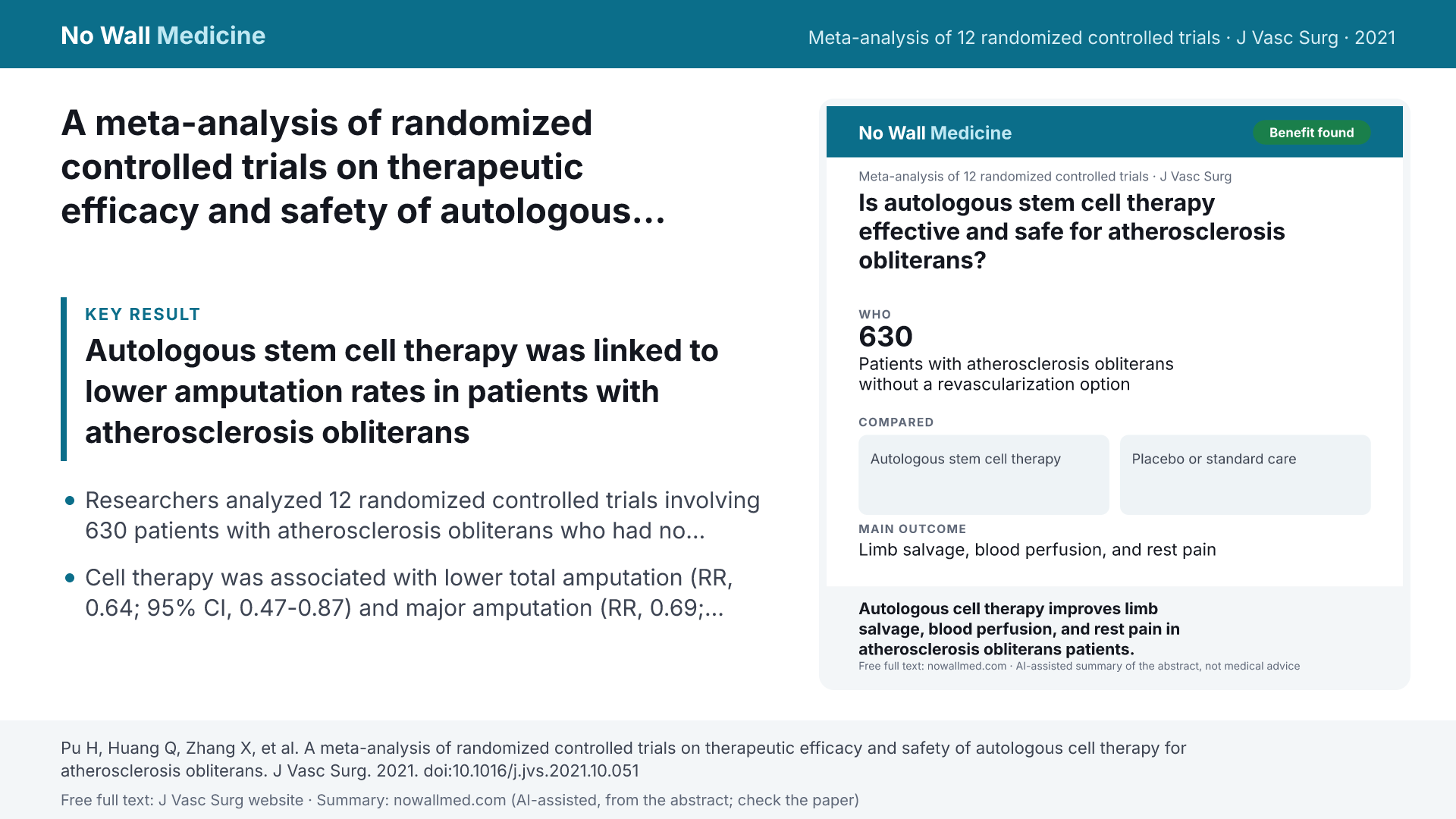
Autologous stem cell therapy was linked to lower amputation rates in patients with atherosclerosis obliterans
A meta-analysis of randomized controlled trials on therapeutic efficacy and safety of autologous cell therapy for atherosclerosis obliterans
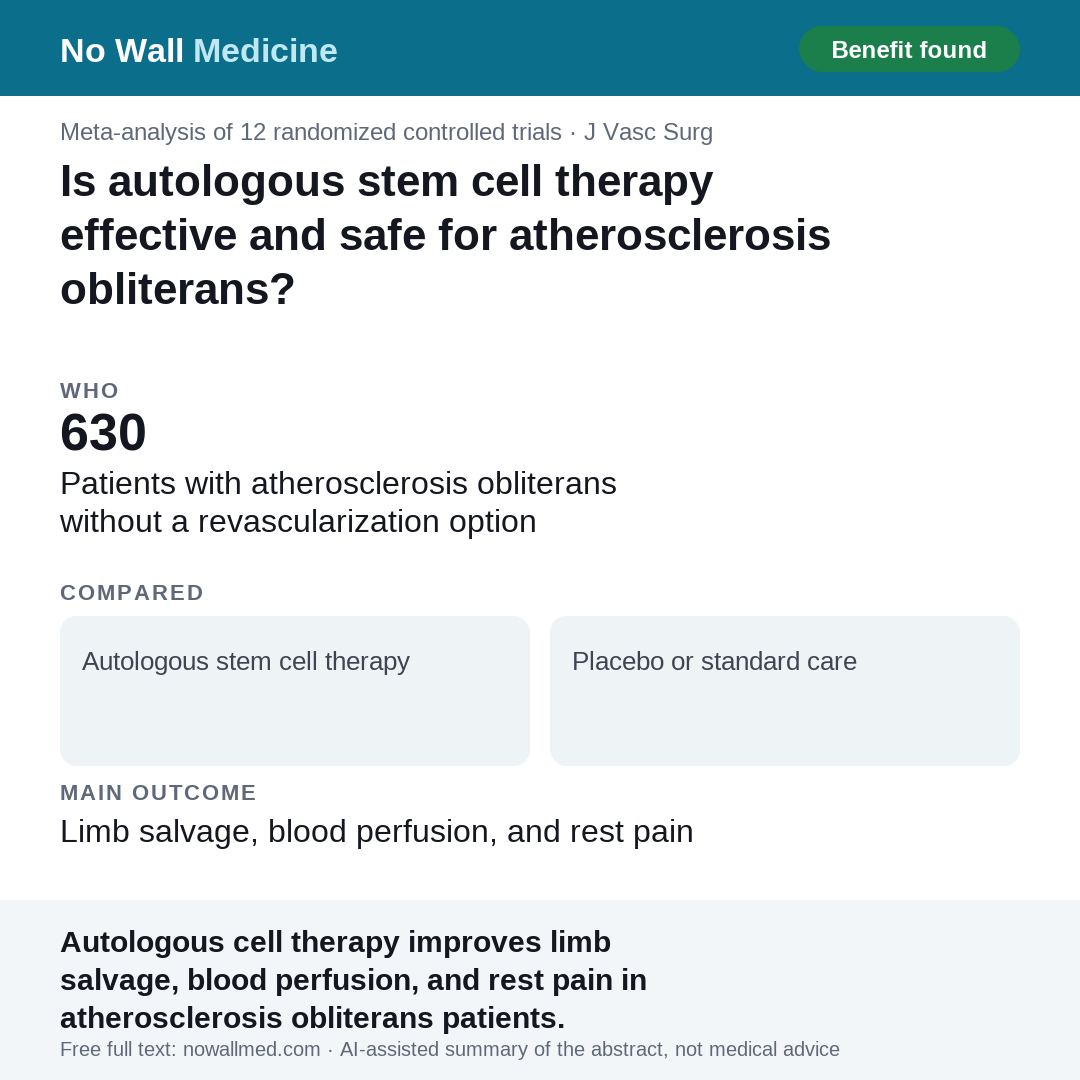
Meta-analysis of 12 randomized controlled trialsBenefit found
Is autologous stem cell therapy effective and safe for atherosclerosis obliterans?
Who
630
Patients with atherosclerosis obliterans without a revascularization option
Compared
Autologous stem cell therapy
Placebo or standard care
Main outcome
Limb salvage, blood perfusion, and rest pain
Result: relative risk 0.64 (95% CI 0.47-0.87) for total amputation
Bottom line: Autologous cell therapy improves limb salvage, blood perfusion, and rest pain in atherosclerosis obliterans patients.
Limitation: The number of trials was limited and most were for no-option patients.
J Vasc Surg · 2021-11-14Download image
Clinical question: Is autologous stem cell therapy effective and safe for atherosclerosis obliterans?
Why it matters: The application and efficacy of stem cell therapy for patients with atherosclerosis obliterans who have no other treatment options have not been standardized.
Key points
- Researchers analyzed 12 randomized controlled trials involving 630 patients with atherosclerosis obliterans who had no other revascularization options.
- Cell therapy was associated with lower total amputation (RR, 0.64; 95% CI, 0.47-0.87) and major amputation (RR, 0.69; 95% CI, 0.50-0.94) risks.
- The therapy was linked to improved ankle-brachial index, transcutaneous oxygen tension, and rest pain scores, but showed no significant difference in all-cause death or ulcer size.
Limitation the authors note: The number of trials included was limited and most were designed for no-option patients, meaning results may not apply to all patients with peripheral arterial disease.
Headline and key points written with AI from the paper’s abstract, with every number checked against it. Read the paper before relying on them.
Was this summary helpful?
Subject terms
Headline, design, result, key points, caveat and citation as plain text.
Cite this article
Pu H, Huang Q, Zhang X, et al. A meta-analysis of randomized controlled trials on therapeutic efficacy and safety of autologous cell therapy for atherosclerosis obliterans. J Vasc Surg. 2021. doi:10.1016/j.jvs.2021.10.051
Spotted a mistake? Suggest a correction