A meta-analysis of the diagnostic performance of machine learning-based MRI in the prediction of axillary lymph node metastasis in breast cancer patients
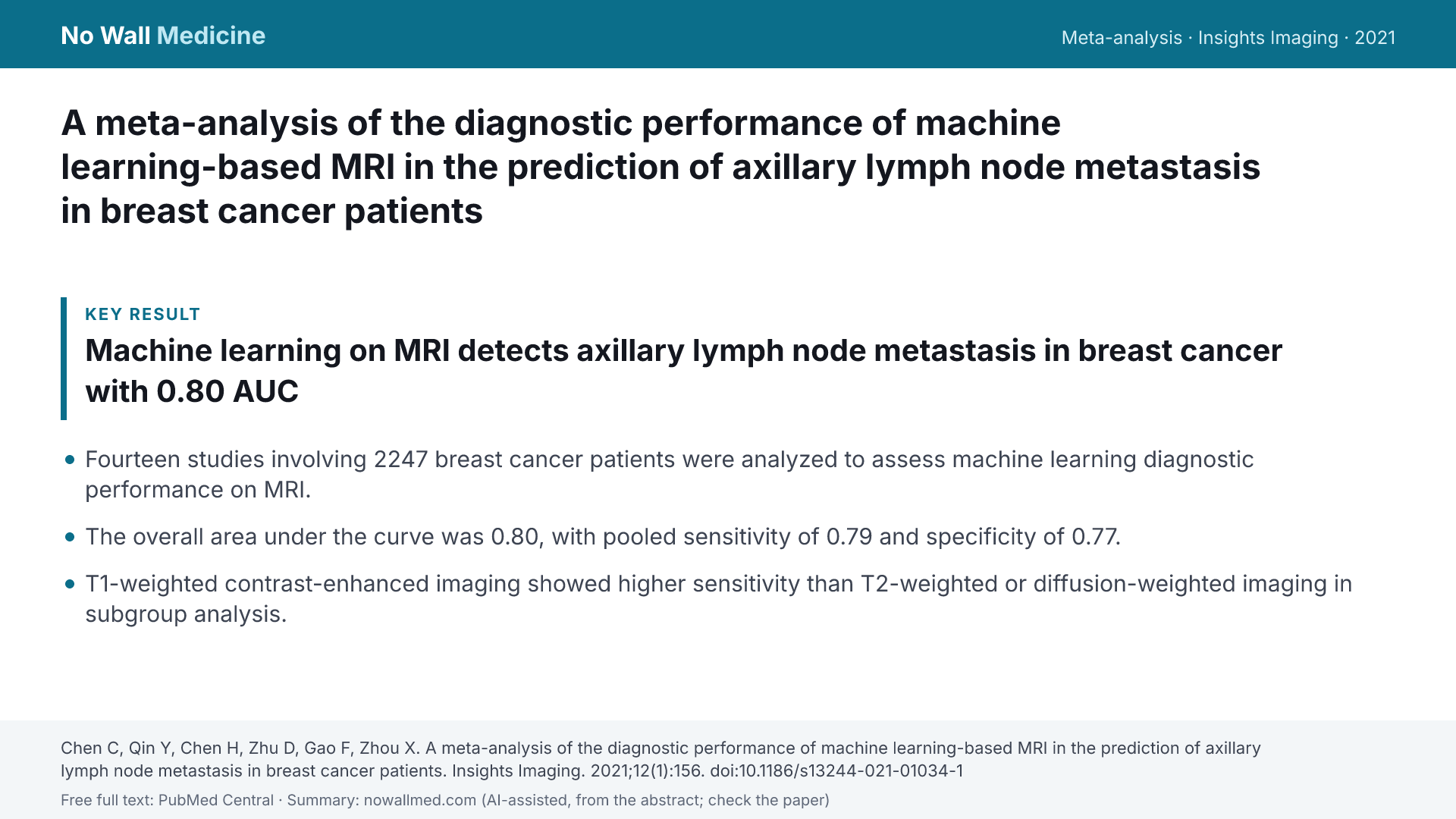
Key result: Machine learning on MRI detects axillary lymph node metastasis in breast cancer with 0.80 AUC
Key points
- Fourteen studies involving 2247 breast cancer patients were analyzed to assess machine learning diagnostic performance on MRI.
- The overall area under the curve was 0.80, with pooled sensitivity of 0.79 and specificity of 0.77.
- T1-weighted contrast-enhanced imaging showed higher sensitivity than T2-weighted or diffusion-weighted imaging in subgroup analysis.
Why it matters: Previous evaluations of machine learning for axillary lymph node metastasis showed variable diagnostic values, making the overall performance unclear.
Discussion prompts
- Would these patients look like yours? Who was left out?
- Is the main outcome one that matters to patients?
- Is the difference large enough to change what you do?
Cite: Chen C, Qin Y, Chen H, Zhu D, Gao F, Zhou X. A meta-analysis of the diagnostic performance of machine learning-based MRI in the prediction of axillary lymph node metastasis in breast cancer patients. Insights Imaging. 2021;12(1):156. doi:10.1186/s13244-021-01034-1
Free full text: PubMed Central · Summary and visual abstract: nowallmed.com/a/a-meta-analysis-of-the-diagnostic-performance-of-machine-learning-jd6aw3/ (AI-assisted from the abstract; check the paper before relying on it).