A multi-centre randomised controlled trial of respiratory function monitoring during stabilisation of very preterm infants at birth
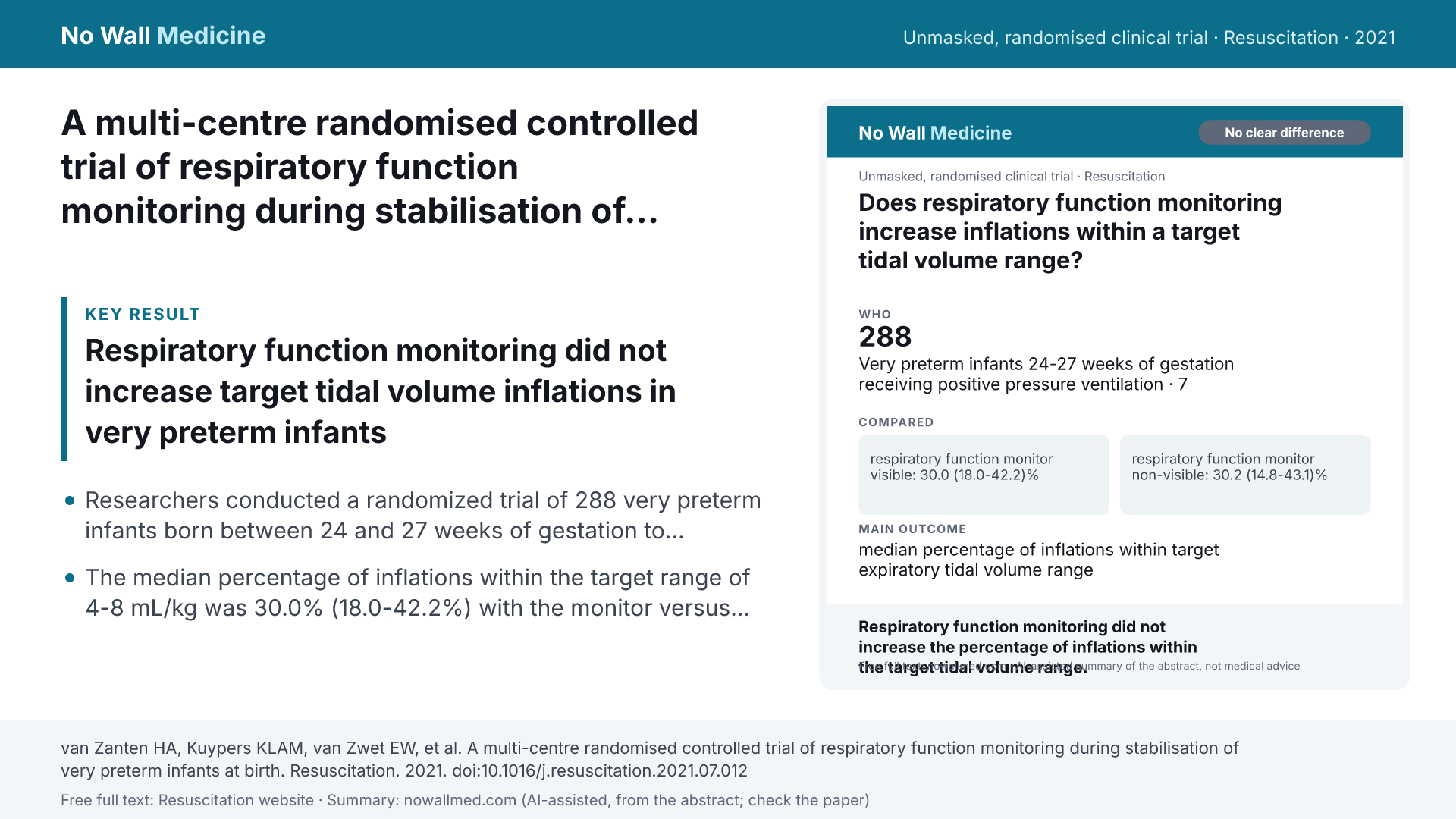
Key result: Respiratory function monitoring did not increase target tidal volume inflations in very preterm infants
Key points
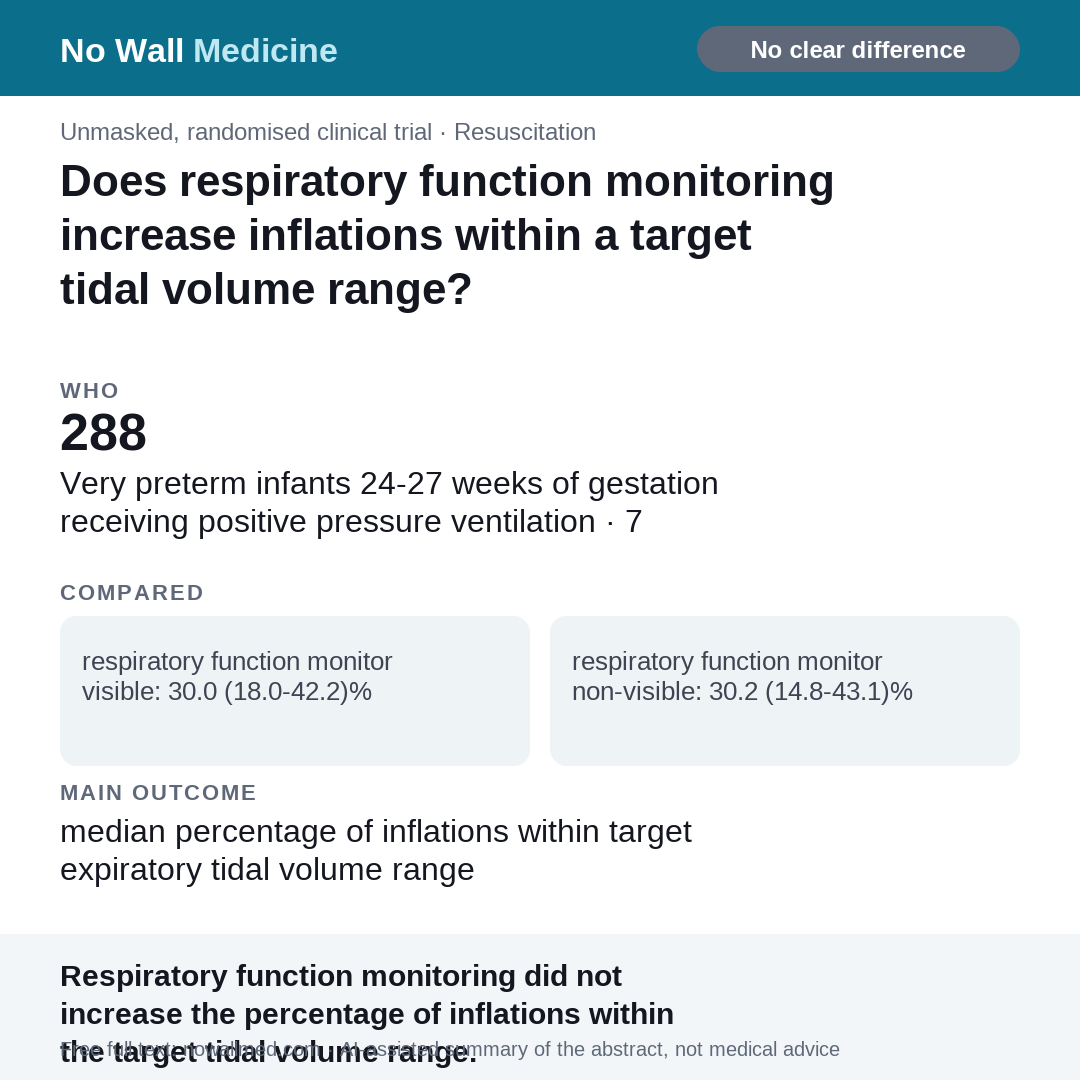
- Researchers conducted a randomized trial of 288 very preterm infants born between 24 and 27 weeks of gestation to compare respiratory function monitoring with no monitoring during positive pressure ventilation.
- The median percentage of inflations within the target range of 4-8 mL/kg was 30.0% (18.0-42.2%) with the monitor versus 30.2% (14.8-43.1%) without the monitor.
- The use of the monitor was associated with a lower incidence of intraventricular haemorrhage and/or cystic periventricular leukomalacia, which are types of brain injury, at 26.7% versus 39.0%.
Why it matters: It was unknown if using a respiratory function monitor during positive pressure ventilation helps clinicians deliver a target amount of air to extremely preterm infants at birth.
Discussion prompts
- Would these patients look like yours? Who was left out?
- Is the main outcome one that matters to patients?
- Is the difference large enough to change what you do?
Cite: van Zanten HA, Kuypers KLAM, van Zwet EW, et al. A multi-centre randomised controlled trial of respiratory function monitoring during stabilisation of very preterm infants at birth. Resuscitation. 2021. doi:10.1016/j.resuscitation.2021.07.012
Free full text: Resuscitation website · Summary and visual abstract: nowallmed.com/a/a-multi-centre-randomised-controlled-trial-of-respiratory-function-nlzhgt/ (AI-assisted from the abstract; check the paper before relying on it).