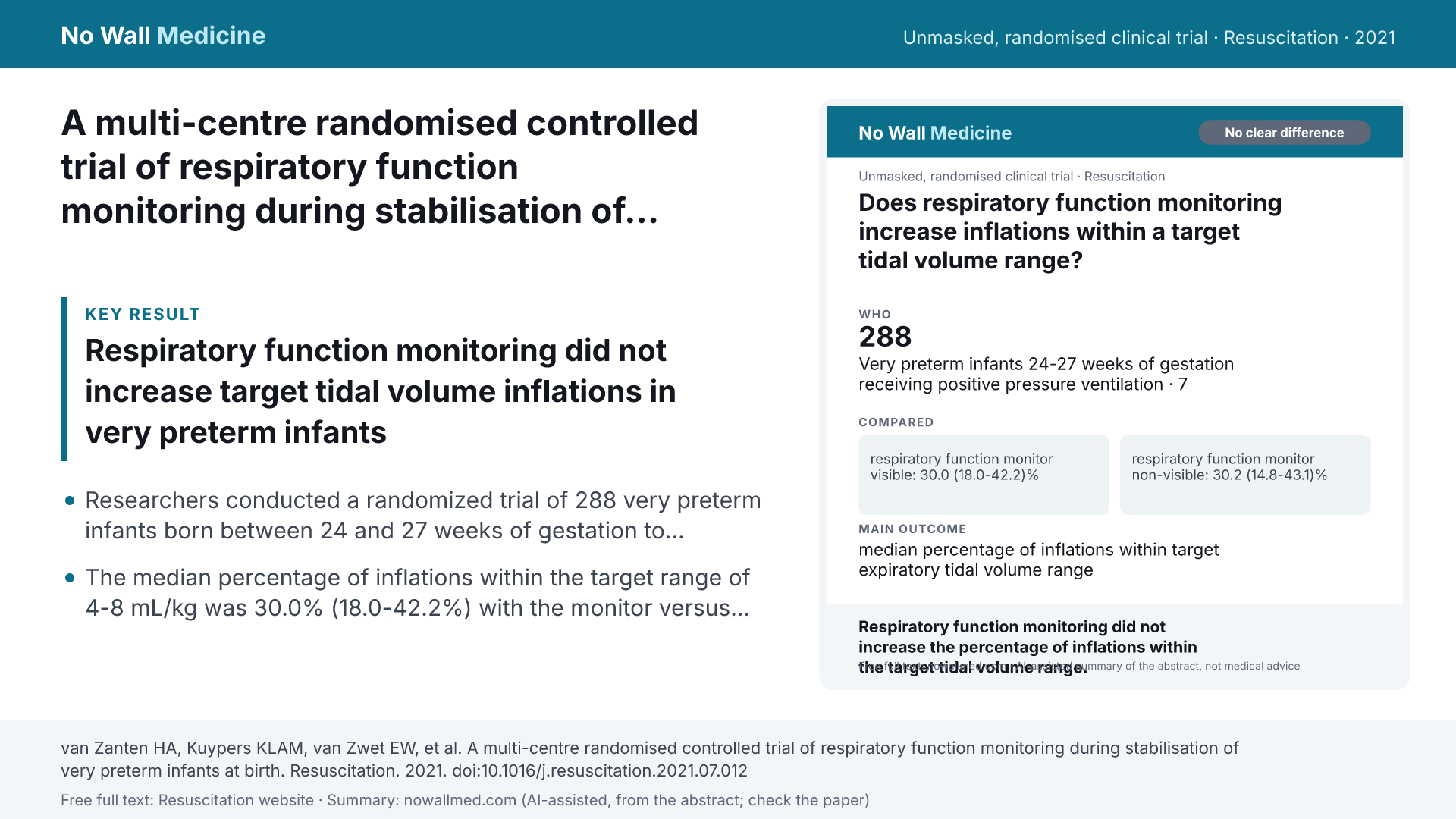
Respiratory function monitoring did not increase target tidal volume inflations in very preterm infants
A multi-centre randomised controlled trial of respiratory function monitoring during stabilisation of very preterm infants at birth
Unmasked, randomised clinical trialNo clear difference
Does respiratory function monitoring increase inflations within a target tidal volume range?
Who
288
Very preterm infants 24-27 weeks of gestation receiving positive pressure ventilation · 7 neonatal intensive care units in 6 countries
Compared
respiratory function monitor visible: 30.0 (18.0-42.2)%
respiratory function monitor non-visible: 30.2 (14.8-43.1)%
Main outcome
median percentage of inflations within target expiratory tidal volume range
Bottom line: Respiratory function monitoring did not increase the percentage of inflations within the target tidal volume range.
Resuscitation · 2021-07-22Download image
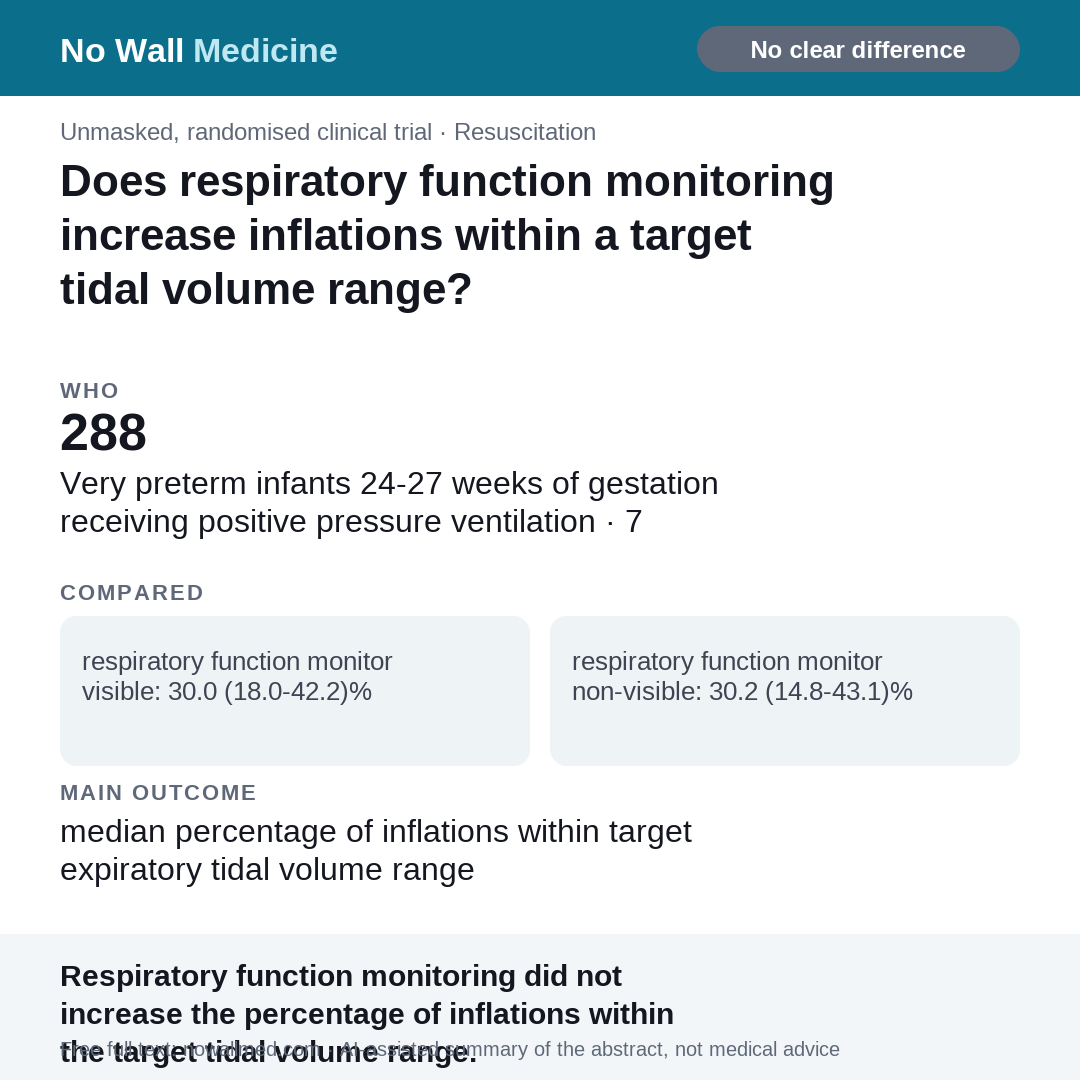
Clinical question: Does respiratory function monitoring increase inflations within a target tidal volume range?
Why it matters: It was unknown if using a respiratory function monitor during positive pressure ventilation helps clinicians deliver a target amount of air to extremely preterm infants at birth.
Key points
- Researchers conducted a randomized trial of 288 very preterm infants born between 24 and 27 weeks of gestation to compare respiratory function monitoring with no monitoring during positive pressure ventilation.
- The median percentage of inflations within the target range of 4-8 mL/kg was 30.0% (18.0-42.2%) with the monitor versus 30.2% (14.8-43.1%) without the monitor.
- The use of the monitor was associated with a lower incidence of intraventricular haemorrhage and/or cystic periventricular leukomalacia, which are types of brain injury, at 26.7% versus 39.0%.
Headline and key points written with AI from the paper’s abstract, with every number checked against it. Read the paper before relying on them.
Was this summary helpful?
Subject terms
Cite this article
van Zanten HA, Kuypers KLAM, van Zwet EW, et al. A multi-centre randomised controlled trial of respiratory function monitoring during stabilisation of very preterm infants at birth. Resuscitation. 2021. doi:10.1016/j.resuscitation.2021.07.012
Spotted a mistake? Suggest a correction